Hubbry Logo
Georgios GrivasGeorgios GrivasMain
Open search
Georgios Grivas
Community hub
Georgios Grivas
logo
8 pages, 0 posts
0 subscribers
Be the first to start a discussion here.
Georgios Grivas
Georgios Grivas
from Wikipedia

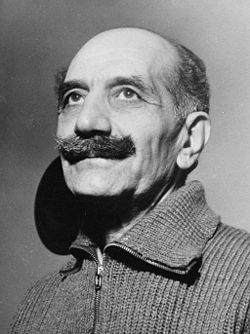
Georgios Grivas (Greek: Γεώργιος Γρίβας; 6 June 1897 – 27 January 1974), also known by his nickname Digenis (Greek: Διγενής), was a Greek Cypriot officer of the Hellenic Army and founder and leader of the Greek and Greek Cypriot paramilitary organisations Organization X (1942–1949), EOKA (1955–1959) and EOKA B (1971–1974). He was also the Commander-in-Chief of the Armed Forces in Cyprus, then-known as the Supreme Military Defence Command of Cyprus (ASDAK), which in the event of war would lead the Cyprus National Guard and the Hellenic Force in Cyprus (ELDYK).[1]

Key Information

A specialist of guerrilla and asymmetric warfare, he was one of the main actors in the Cypriot War of Independence, securing the independence of Cyprus against the British Empire.[2][3] He died only six months prior to the 1974 Cypriot coup and subsequent Turkish invasion of Cyprus.[3]

Early life

[edit]

Grivas was born in Trikomo on 23 May 1897 Julian calendar,[4][5] and was thought to be the fourth child of Greek Cypriot parents Kalomira Hatzimichael and Theodoros Grivas. (Nevertheless later when he enrolled at the Hellenic Military Academy at the age of 19 he stated that his birthday was 23 May 1898 for unknown reasons). He grew up in Trikomo as a child,[6] after attending his village school, he studied at the Pancyprian Gymnasium in Nicosia from 1909 to 1915, living with his grandmother during this time at Chrysaliniotissa, Nicosia.[7]

Early military career

[edit]

In 1916, Grivas moved to Greece; according to his obituary in The Times of London, he had left the family home after learning that his father intended him to become a physician. He took Greek citizenship and enrolled at the Hellenic Military Academy.[8] He completed his military studies at the École Militaire in Paris.[9] He graduated in 1919, and joined the Hellenic Army with the rank of Sub-Lieutenant and was immediately posted on the Asia Minor front of the Greco-Turkish War. He served in the Hellenic Army's 10th Division and participated in its advance from Smyrna to Panormos (today Bandirma) and Eskişehir, past Bursa and the Battle of Sakarya. With the subsequent retreat of the Hellenic Army from Asia Minor in 1922 (because of the Treaty of Lausanne), he was placed at Redestos in Thrace.[10] He was decorated for his bravery and promoted to Lieutenant. He was later selected to study at the French Military Academy and upon his return to Greece he served in a number of posts, including that of a lecturer at the Hellenic Military Academy.[11] He was promoted to captain in 1925 and to Major in 1935. In 1938, he married Vasiliki Deka, the daughter of an Athenian pharmacist.[12]

World War II and German occupation

[edit]

With the beginning of World War II, Grivas was transferred to the operations department of the central headquarters of the Hellenic Army, working on the strategic defensive plans for Northern Greece. When the Greco-Italian War broke out, Grivas was deployed to the Albanian front in December 1940, and served as Chief of Staff of the 2nd Division.[13][14]

Following the German-Italian-Bulgarian occupation of Greece during World War II, Grivas founded and led the Organisation X, a guerrilla organisation made up of officers of the Greek Army, playing a role in the Greek Resistance to the Axis occupation of Greece.[15] Its activities included spying for the Allied powers and launching attacks and sabotage operations against the occupiers. During the events of December 1944, members of Organisation X, using weapons recovered from the retreating Germans, fought at the Theseon alongside Greek and British monarchist forces to prevent EAM/ELAS fighters to take control of Athens.[16][17][18]

In 1946, he retired from the Hellenic Army on his own request with subsequent attempts to enter politics being unsuccessful.[19]

The EOKA guerrilla campaign

[edit]

One does not use a tank to catch field mice—a cat will do the job better.

– Grivas discussing British military strategies in his book Guerrilla Warfare and EOKA's Struggle: A Politicomilitary Study[20]

Following his retirement, Grivas focused on the idea of ridding Cyprus of British colonial rule and eventually uniting it with Greece (Enosis).[21] As a member of the secret Committee for the Cyprus Struggle he took the oath of Enosis together with the newly elected Archbishop Makarios III, with whom he collaborated for preparing the armed struggle.[22] He arrived secretly in Cyprus in October 1954 and began immediately the formation of his guerrilla organisation EOKA.[23] On 1 April 1955 with a declaration that he signed as DIGENIS and a number of bombings against various targets in the four major cities and military installations, he announced the beginning of his campaign for Self Determination – Union with Greece.[24][25]

He directed the first EOKA operations from his hideout in Nicosia but soon after he moved to the Troodos mountains to lead his guerrilla teams.[26] At the time he wanted only British soldiers and their Greek collaborators to be targeted and prohibited attacks on the Turkish Cypriots.[27] He recruited Grigoris Afxentiou as one of the team leaders, initially of the Famagusta district.[18] Grivas escaped capture twice after he was surrounded by British forces at Spilia in December 1955, leading to the Battle of Spilia, and at Kykkos in May 1956. A month later, chased by the British forces, he was secretly transferred from the mountains by the car of a passionate EOKA fighter, Kostis Efstathiou, also known as "Pachykostis", and found refuge in a hideout at Limassol from where he directed not only the military activities but also the political campaign, since Archbishop Makarios in March 1956 was exiled by the authorities.

During the struggle, the British colonial administration had offered a reward of £10,000 plus passage to anywhere in the world for information leading to the arrest of Colonel Grivas.[28]

Return to Greece

[edit]

With the signing of the Zurich-London agreements in early 1959 and the declaration of Cyprus as an independent state Grivas reluctantly ordered cease-fire. His views were at odds with those of Makarios who had accepted the above agreements on behalf of the Greek Cypriot population. In March 1959, Grivas came out of his hideout and departed (in exile, requested by the UK as part of the cease fire agreement) for Athens where he received a hero's welcome as the liberator of the Greek Cypriots and was subsequently decorated with the highest honours by the Greek Parliament and the Athens Academy and promoted to the rank of General. Not long after his return, Grivas was persuaded to enter politics as head of a coalition party but soon abandoned this route after the disappointing percentage his party obtained in the general election of 1963.

Grivas returned to Cyprus in 1964 after the outbreak of intercommunal violence between Turkish Cypriots and Greek Cypriots to take over the Supreme Command of the Greek Cypriot forces organised under the National Guard as well as the Greek military division sent to Cyprus by the government of George Papandreou to assist in the island's defence against a possible Turkish attack.[29] He directed the construction of defence forts and complexes aiming at withstanding a Turkish invasion.[30] On 15 November 1967, Greek Cypriot National Guard under his direct command overran two small villages on the critical Larnaca, Limassol, Nicosia intersection, resulting in the deaths of 27 people, mostly armed Turkish Cypriots as well as Turkish Cypriot paramilitaries at Kofinou and Agios Theodoros.[31][32] The immediate result of this event was Turkey's ultimatum, which prompted the Greek military government to recall both the Greek Division and General Grivas to Athens.[33][34]

From 1968 to 1969, under strict surveillance, Grivas participated in a resistance movement aiming at deposing the ruling military junta and restoring democracy in Greece, along with a number of Greek Army officers including Colonel Dimitrios Opropoulos and Majors Spyros Moustaklis, Nikolaos Lytras and George Karousos as well as Greek Cypriot students and professionals many of them former EOKA fighters. Grivas began the formation of armed resistance cells in a number of neighbourhoods in Athens which were armed with guns and explosives that were brought in secretly from Cyprus. The organisation, however, was discovered by the authorities and many of its members were arrested.[35][36][37][38]

A monument to Georgios Grivas in Paphos

Later life and death

[edit]

After the discovery of Grivas' plans by the authorities, he secretly returned to Cyprus on 31 August 1971, where he formed the armed organisation EOKA B, which he used as leverage in his attempts to persuade or force Makarios to change his policy and adopt the line of "Self Determination – Union" with Greece.[39] EOKA B did not overthrow Makarios but the armed struggle led to a vicious circle of violence and anti-violence that amounted to civil war among the Greek-Cypriot Community from 1971 to 1974.[40]

While hiding at a house in Limassol on 27 January 1974, Grivas died of heart failure at the age of 76.[9] The post-Grivas EOKA B then signed a secret agreement with Brigadier Dimitrios Ioannidis, the "invisible dictator" of Greece, and was controlled directly from Athens. Grivas' funeral and burial was held on 29 January 1974, in the garden of the house that had been Grivas' last hideout during the EOKA struggle (1955–1959) and was attended by tens of thousands of Greek Cypriots. Upon his death, the Cypriot Government declared a three-day official mourning and three days later, the Parliament of Cyprus declared General Grivas "A worthy son of the motherland". The government of Makarios, the target of Grivas' campaign for enosis, formally boycotted the event.[41]

Aftermath

[edit]

The Second Junta of Greece, under Ioannidis, overthrew Makarios just six months after Grivas' death.[42] Ioannidis had been planning to overthrow Makarios in spring 1974, but the final decision to act was made on 2 July 1974 after Makarios decided to directly oppose the Ioannidis regime by expelling from the Cypriot National Guard 550 Greek officers. That meant the loss of military control of Cyprus for Greece as well as the humiliation of Ioannidis.[43] The coup d'état of 15 July 1974 that overthrew Makarios was executed by forces of the Cypriot National Guard under direct instructions from Greece. The National Guard was led by Greek officers and consisted of Greek-Cypriot conscripts. The EOKA B members and other pro-enosis forces joined the National Guard in the afternoon of Monday 15 July 1974 in the fight against Makarios' forces. The coup was swiftly followed by the Turkish invasion of Cyprus on 20 July. This invasion took Ioannides by surprise, who failed to prepare Cyprus for a Turkish invasion and failed to coerce the Greek generals whom he had appointed to apply "Plan K" and provide military assistance to Cyprus. That marked the downfall of Ioannidis.[40]

References

[edit]

Sources

[edit]
  • Grivas-Digenis Georgios, Apomnimoneumata Agonos E.O.K.A. 1955–59, Athina 1961. third publishing, Athina 2013.
  • Grivas-Digenis Georgios, Chronikon Agonos E.O.K.A. 1955–1959, Lefkosia 1971. second publishing, Lefkosia 1997
  • Grivas George, General Grivas on Guerrilla Warfare. Translated by A. A. Palis, New York, N.Y., USA, Praeger, 1965
  • Grivas George, Guerrilla warfare and EOKA's struggle: a politico-military study. (Translated by A. A. Pallis). London, G.B.: Longmans, Green, 1964
  • Grivas George, The Memoirs of General Grivas. Edited by Charles Foley, New York, Frederick A. Praeger, 1965
  • Papageorgiou Spyros, O Grivas kai i "X", To Chameno Archeio, Athens 2004
  • Woodhouse, Christopher Montague (1948). Apple of Discord: A Survey of Recent Greek Politics in their International Setting. London
  • H Tragiki Anametrisi kai i Prodosia tis Kyprou-Marios Adamides-Nicosia-2011-E-Book.
Revisions and contributorsEdit on WikipediaRead on Wikipedia
from Grokipedia
Georgios Grivas Digenis (1897–1974) was a Cyprus-born officer in the Hellenic Army who founded and commanded the Ethniki Organosis Kyprion Agoniston (EOKA), leading its guerrilla campaign against British colonial rule from 1955 to 1959 with the objective of achieving enosis, or political union with Greece. Born in Cyprus, Grivas pursued a military career in Greece after leaving the island as a youth, graduating from the Hellenic Military Academy in 1919 and participating in the Greco-Turkish War of 1919–1922 as well as operations during the Second World War, including anti-communist resistance efforts. Following Cyprus's independence in 1960 without enosis, Grivas returned clandestinely in 1964 to assume command of the Greek Cypriot National Guard amid escalating intercommunal clashes with Turkish Cypriots, directing operations that intensified ethnic tensions. In 1971, he established EOKA B as an underground organization to revive the push for union with Greece against the policies of President Makarios III, conducting sabotage and propaganda until his death from a heart attack in Limassol on 27 January 1974, months before the Turkish invasion of the island. Grivas's uncompromising commitment to enosis defined his legacy, though it contributed to the failure of Greek Cypriot irredentist aims and the island's partition.

Background and Early Career

Early Life and Education

Georgios Grivas was born on 23 May 1898 in Trikomo, , Cyprus, then a under Ottoman suzerainty until 1914. He was the fourth child of Theodoros Grivas, a local businessman and grain merchant, and Kalomira Hatzimichael. Raised in a Greek Cypriot family amid aspirations for (union with Greece), Grivas attended primary and secondary schools in and , developing early nationalist sentiments influenced by the . In 1916, at age 18, Grivas fled for to evade his parents' plans to send him to school in , instead pursuing a military career aligned with Greek . He enrolled that year at the (Scholi Evelpidon) in , graduating in 1919 with the rank of in the infantry. His training emphasized conventional tactics and officer leadership, preparing him for service in the during the ongoing Greco-Turkish War.

Initial Military Service in Greece

Grivas enrolled in the in in 1916, acquiring Greek citizenship to do so, and graduated in 1919 with the rank of . He was immediately assigned to the Asia Minor front amid the , serving in the 10th Infantry Division. Grivas participated in the division's advance from Smyrna () toward Panormos and , progressing past to the , where Greek forces suffered a major defeat in the Battle of Sakarya in August–September 1921, leading to the eventual Greek retreat and the Asia Minor Catastrophe in 1922. Following the war's conclusion, Grivas continued his service in the , receiving promotions to lieutenant in 1923 and captain in 1926. He furthered his military education, completing studies at the in . By 1938, he had advanced to the rank of major, reflecting steady progression through staff and command roles during the . These years solidified his commitment to Greek nationalist ideals, including the of territorial expansion.

World War II and Post-War Conflicts

Resistance Against Axis Occupation

Following the Italian invasion of Greece on October 28, 1940, Grivas served in the Hellenic Army during the Greco-Italian War, initially in the operations office of the General Staff and later as a staff officer in Albania from December 1940 to April 1941. After the German invasion in April 1941 led to the capitulation of Greek forces on April 23, 1941, and the subsequent Axis occupation by Italian, German, and Bulgarian troops, Grivas returned to Athens as a demobilized officer. In late 1941, Grivas co-founded Organization X (Χ), initially under General Georgios Lavdas, serving as its chief of operations before assuming leadership; the group consisted primarily of reserve officers and soldiers loyal to the Greek monarchy and government-in-exile. Operating clandestinely in urban Athens, particularly in affluent districts, Organization X focused on intelligence gathering, minor sabotage, and securing arms caches, while prioritizing preparations to counter communist-led resistance groups like ELAS rather than direct confrontations with Axis forces to conserve strength for anticipated post-liberation conflicts. The organization received arms and support from British Special Operations Executive agents, enabling it to expand to approximately 2,000–3,000 members by 1944, though its role in anti-Axis guerrilla warfare remained limited compared to larger rural-based groups. Grivas directed Organization X's activities toward maintaining order in right-wing circles and suppressing leftist influence during the occupation, including clashes with communist partisans; some historical accounts note instances of tactical accommodation with German authorities to target units, reflecting a strategic emphasis on internal security over broad anti-occupation . This approach positioned X as a nationalist, anti-communist force aligned with British interests, contributing marginally to resistance efforts such as disrupting supply lines but avoiding the high-risk operations that characterized communist-dominated networks. By the time of liberation in , Organization X had established a network that transitioned into active participation against communist forces in the ensuing events and .

Participation in the Greek Civil War

During the prelude to the full-scale Greek Civil War, Grivas commanded Organization X, a right-wing royalist paramilitary group he had established in 1941, which focused on combating communist influence rather than directly engaging Axis occupation forces. In the Dekemvriana events from December 3, 1944, to January 14, 1945, X units under Grivas's direction fortified positions in central Athens neighborhoods, including Theseion, to counter advances by the communist-dominated ELAS (Hellenic People's National Liberation Army). These actions involved clashes that resulted in significant casualties, with X forces holding out against ELAS assaults for days alongside Greek police and British troops until Allied intervention stabilized government control of the capital. Grivas's strategy emphasized urban defense to prevent EAM-ELAS (National Liberation Front) seizure of power, aligning with British and royalist efforts to avert a communist takeover amid the power vacuum following Axis withdrawal. The Varkiza Agreement of February 12, 1945, mandated disarmament of all irregular forces, including X, but compliance was uneven, with Organization X remnants continuing anti-communist operations during the "White Terror" period of 1945–1946. These activities targeted perceived leftist sympathizers in Athens and surrounding areas, contributing to the suppression of communist networks before the Democratic Army of Greece (DSE) relaunched insurgency in late 1946. Grivas, as X leader, coordinated these efforts, drawing on the group's estimated 2,000–3,000 members armed via pre-war stockpiles and British contacts, though the organization faced accusations of collaborationist ties from critics due to its selective avoidance of Axis confrontations. Such paramilitary actions underscored causal tensions between royalist-nationalist factions and communist guerrillas, rooted in ideological rivalry over post-liberation governance rather than unified resistance against occupiers. By 1946, as the Civil War intensified into conventional engagements between the National Army and DSE, Grivas retired from active service, shifting focus from frontline command to political advocacy against . His earlier X operations had fortified anti-communist structures in urban centers, influencing the government's ability to mobilize against rural DSE strongholds, but lacked direct involvement in the 1947–1949 mountain campaigns that decided the conflict. Grivas later founded the Agrarian Party to oppose leftist elements, reflecting his commitment to monarchist and nationalist principles amid the war's resolution through U.S.-backed victories.

Leadership in the Cyprus Struggle

Formation of EOKA and Enosis Campaign

In the early 1950s, the Enosis movement among Greek Cypriots sought political union with Greece as a means to end British colonial rule over Cyprus, which had been a crown colony since 1925. This aspiration gained momentum following a 1950 plebiscite organized by Archbishop Makarios III, where over 95% of Greek Cypriots reportedly voted in favor of Enosis, though the ballot lacked Turkish Cypriot participation and was rejected by Britain. Grivas, drawing from his experience in Greek nationalist organizations like X during World War II, aligned with this cause after retiring from the Greek army in 1953, viewing armed resistance as necessary due to Britain's refusal to negotiate self-determination. Grivas arrived clandestinely in Cyprus on November 10, 1954, aboard a boat named Siren, evading British detection to establish a network. He adopted the nom de guerre "Digenis" and began recruiting from Greek Cypriot communities, emphasizing secrecy and oaths of allegiance to prioritize over independence or partition. By January 13, 1955, —Ethniki Organosis Kyprion Agoniston (National Organisation of Cypriot Fighters)—was formally structured under Grivas's command, with an initial focus on and gathering rather than open confrontation. The group drew support from the Greek government and Cypriot ethnarchy led by Makarios, who coordinated political pressure alongside Grivas's military preparations, though British later uncovered evidence of Makarios's direct involvement in EOKA's founding through seized documents. EOKA's campaign commenced on April 1, 1955, with coordinated bomb attacks on British targets in , marking the shift from preparation to active aimed at forcing British withdrawal and advancing . Grivas's strategy emphasized in rural areas, targeting and security forces while avoiding pitched battles, and relied on local volunteers who swore oaths pledging loyalty to the Greek Cypriot cause. This phase intensified ethnic tensions, as EOKA's actions provoked British reprisals and Turkish Cypriot countermeasures, but Grivas maintained that the primary objective remained union with , rejecting compromises like dominion status.

Guerrilla Operations and British Response

Grivas, operating under the pseudonym Digenis from hidden bases primarily in the , orchestrated 's asymmetric guerrilla campaign emphasizing mobility, surprise, and minimal direct confrontation with superior British forces. fighters, organized in small, self-contained cells of 3-10 men armed with smuggled weapons including guns, pistols, and explosives, focused on against infrastructure such as power stations, pipelines, and communication lines; hit-and-run ambushes on isolated patrols; and targeted killings of British soldiers, , and Greek Cypriot informants deemed . These operations aimed to erode British morale, disrupt administration, and provoke overreactions that could internationalize the cause, with Grivas directing via couriers and coded radio messages to avoid detection. By mid-1956, 's active fighters numbered around 300, supported by an of thousands providing logistics, intelligence, and recruitment, though the group avoided pitched battles to preserve its limited manpower. The campaign commenced on April 1, 1955, with coordinated strikes on 12 British targets island-wide, including bombings of police stations in , , and , an assault on a radio transmitter, and attacks on armories and military vehicles, causing minimal casualties but signaling widespread capability. Escalation followed, with claiming responsibility for over 1,000 incidents by 1957, including the March 1956 assassination of British intelligence officer Reading in and repeated bombings of RAF facilities. A surge occurred in November 1956—termed "Black November" by British forces—featuring 416 attacks in one month, including ambushes that killed 21 British personnel among 39 total deaths, alongside widespread sabotage that crippled utilities and transport. From January 1957, extended operations against Turkish Cypriot police and civilians, killing at least 55 in ambushes and bombings through March, heightening intercommunal strife as Turkish auxiliaries bolstered British ranks. Britain countered with a multifaceted escalation after declaring a on November 26, 1955, under new Sir John Harding, who deployed up to 40,000 troops and police by 1956—roughly one per 14 Cypriots—for cordon-and-search sweeps, village relocations, and curfews. Tactics included intelligence-driven raids yielding over 1,000 arrests, the deportation of 1,400 Greek Cypriot suspects to camps in the UK by 1956, and incentives for informants via amnesties, which fractured 's support base. Harding authorized 13 public hangings of captured members between October 1956 and July 1957, including leader Michalakis Karaolis on May 10, 1957, intended as deterrents but fueling recruitment and . British forces inflicted heavy losses, killing approximately 300 fighters and wounding hundreds more, while suffering 371 military deaths, 21 police fatalities, and 26 civilian losses from 1955 to 1959. Despite these measures, 's evasion of decisive engagements prolonged the , with Grivas surviving multiple attempts, including a failed under Harding's bed in March 1956.

Path to Cypriot Independence

As the insurgency persisted into 1958, British authorities faced mounting operational challenges, with the campaign inflicting significant casualties—over 100 British deaths—and disrupting amid an estimated 20,000 troops deployed on the . Grivas, directing operations from concealed locations, emphasized and ambushes to erode British resolve, rejecting partition proposals like the Macmillan Plan of June 1958, which envisioned tripartite division among , , and the . This sustained pressure, coupled with considerations amid tensions, compelled Britain to pivot toward multilateral diplomacy excluding full . Diplomatic breakthroughs occurred in early 1959: and signed the Zurich Agreement on February 11, outlining a for an independent with power-sharing between Greek and , including a 70-30 legislative , Turkish veto rights on key issues, and separate municipalities. This was ratified in the London Agreement on February 19, incorporating the , , , and Cypriot leaders, establishing the Republic of effective August 16, 1960, with British sovereign bases retained. , exiled since 1956, returned in March and reluctantly endorsed the accords despite enosis's omission, viewing as a pragmatic interim amid Turkish opposition to union. Grivas, who had evaded capture until smuggling himself to in March 1957 before resuming remote command, initially condemned the agreements in July 1959 for betraying and undermining sacrifices. He ordered a unilateral in late March 1959, facilitating the transition, but only formally accepted the settlement after Makarios's endorsement, framing it as a foundational step rather than the ultimate goal. The insurgency's toll—approximately 443 Greek Cypriot fighters killed—forced Britain's exit after four years, though Grivas later reflected that institutionalized ethnic divisions without resolving underlying Greek Cypriot aspirations.

Post-Independence Period

Return to Greece and Promotions

Grivas emerged from hiding in Cyprus on 17 March 1959 and departed the island two days later under the terms of a British amnesty tied to the Zurich-London agreements, arriving in on 20 March to widespread acclaim as a national hero by Greek authorities and the public. The Greek Parliament had promoted him to —the highest rank available to officers in the —on 18 March 1959, recognizing his leadership in the campaign. King Paul personally awarded Grivas the Medal of Bravery upon his arrival, while enacted legislation granting him a lifetime equivalent to full general's pay, reflecting his status as a symbol of Greek nationalist resistance. These honors positioned him for potential influence in Greek and political circles, though Cyprus's formal on 16 August 1960, without union () with Greece, deepened his opposition to the settlement. In the years immediately following independence, Grivas resided in , leveraging his elevated rank to advocate for and engage in right-wing nationalist activities, but his bid for a parliamentary seat proved unsuccessful. His promotions and pension secured financial stability and symbolic prestige, yet they underscored the Greek establishment's alignment with his irredentist goals amid ongoing tensions over .

Clandestine Activities and Exile

Following the escalation of intercommunal violence in , particularly after clashes in Kophinou in early 1967 that prompted a Turkish threatening invasion, the Greek military government recalled Grivas from his position as commander of the on November 19, 1967, withdrawing him and the Greek contingent from the island to avert war. This recall effectively placed Grivas in a form of internal in , where he faced surveillance by junta authorities while chafing at the failure to achieve and criticizing President Makarios's policies as a deviation from union with . From Greece, Grivas maintained clandestine contacts with enosis supporters in Cyprus, directing the smuggling of automatic weapons from Lebanon to arm irregular units opposed to Makarios's government, actions that heightened tensions on the island by the early 1970s. These operations, conducted through secret networks, reflected Grivas's ongoing commitment to forcible enosis despite the junta's nominal control, as he viewed Makarios's independentist stance and accommodations with Turkish Cypriots as betrayals; the junta, while monitoring him, tacitly aligned with his anti-Makarios efforts to pressure Cypriot leadership toward union. Grivas's writings and directives from this period emphasized armed preparation against perceived internal threats, including potential Turkish Cypriot separatism, framing his exile as a temporary setback in the irredentist struggle. By 1970–1971, Grivas's clandestine preparations intensified, involving coordination with Cypriot hardliners and receipt of arms shipments, setting the stage for his covert reentry to the island despite official Greek restraint under international pressure. These activities underscored his rejection of the 1960 settlement, which he deemed a compromise short of full , and positioned him as a figurehead for militant Greek amid growing friction with Makarios's administration.

EOKA B and Final Engagements

Establishment of EOKA B

Following the 1960 Zurich and London Agreements that granted Cyprus independence rather than enosis (union with Greece), Grivas viewed President Archbishop Makarios III's acceptance of the settlement as a betrayal of the Greek Cypriot nationalist cause, prompting him to seek renewed armed struggle. Grivas returned clandestinely to Cyprus on 31 August 1971, entering via a Greek military aircraft and establishing a secret base in the Troodos Mountains to reorganize supporters disillusioned with independence. There, he founded EOKA B—formally the Ethniki Organosis Kyprion Agoniston B (National Organization of Cypriot Fighters B)—as a successor to the original EOKA, drawing on a core of about 200-300 initial members primarily from ex-EOKA fighters, Greek Cypriot National Guard elements, and ultra-nationalist youth committed to immediate enosis. EOKA B's establishment was facilitated by covert backing from the Greek (1967-1974), which supplied arms, training, and logistics, viewing Grivas' efforts as aligned with their irredentist goals despite tensions with Makarios over his pragmatic diplomacy toward and non-alignment policies. Grivas, adopting the nom de guerre "Digenis" once more, structured the group hierarchically with regional commands, emphasizing guerrilla tactics, sabotage, and psychological operations to undermine the Cypriot government and pressure for constitutional changes favoring Greek Cypriot dominance. The organization's manifesto, disseminated via underground leaflets starting in late 1971, explicitly rejected the 1960 constitution's power-sharing with as unworkable and demanded Makarios' resignation or alignment with , framing independence as a "temporary compromise" that had outlived its utility. By early 1972, EOKA B had expanded its recruitment through appeals to anti-communist sentiment and nostalgia for the 1955-1959 struggle, establishing caches of weapons smuggled from and conducting initial low-level operations like bombings of Turkish Cypriot properties to assert territorial claims. Grivas maintained operational secrecy by limiting direct contact with and focusing on indigenous Cypriot cadres, though internal divisions emerged over tactics, with some members favoring outright against Turkish communities while Grivas prioritized political destabilization of Makarios. The group's formation escalated intercommunal tensions, contributing to over 100 incidents of violence by mid-1973, as documented in UN reports on ' deteriorating security.

Escalation Toward the 1974 Events

Following his clandestine return to Cyprus on 31 August 1971, Grivas reorganized dormant Greek Cypriot paramilitary networks into , explicitly aimed at reviving the agenda against President Makarios's acceptance of Cypriot independence under the 1960 and agreements. Operating from hidden bases and leveraging ties to the , Grivas initiated propaganda broadcasts and ultimatums demanding via union with , while building an arms cache that included a January 1972 shipment of 287 tons of Czech-origin small arms and crew-served weapons stockpiled near . EOKA B raided this stockpile in spring 1972 to equip its fighters, marking an early escalation from rhetoric to material preparation for confrontation with government forces. By 1973, 's operations intensified into direct assaults on state infrastructure, including a coordinated 7 February attack on 17 Cypriot National Police stations across the island, which aimed to intimidate pro-Makarios elements and disrupt administrative control. Grivas oversaw a broader campaign of bombings, kidnappings, and multiple attempts targeting Makarios and his supporters, with the first such effort against the president failing narrowly in 1971 due to logistical mishaps. These actions, documented in Grivas's own directives and intercepted communications, sought to portray Makarios as a betrayer of Hellenic interests, fostering internal divisions among and drawing covert support from elements of the . When initial demands for policy reversal were ignored, extended strikes to police outposts and pro-government media outlets, eroding public order and priming conditions for broader unrest. Grivas's death from heart failure on 27 January 1974 did not immediately halt EOKA B's momentum, as successors like inherited a network of over 1,000 armed operatives integrated with units dominated by Greek officers. Makarios responded by officially proscribing as an illegal organization in April 1974, prompting further and infiltration efforts that aligned with junta plans in . This phase of heightened violence, including ambushes and propaganda offensives, directly facilitated the 15 July 1974 executed by the in coordination with remnants, which deposed Makarios and installed Sampson, thereby triggering the Turkish military intervention five days later. Grivas's prior buildup of arsenals and ideological mobilization proved instrumental in enabling these events, though his absence shifted operational control toward junta-directed escalation.

Controversies and Assessments

Accusations of Violence and Terrorism

The British colonial administration in officially designated , under Grivas's command, as a terrorist due to its systematic use of bombings, ambushes, and targeted killings against and perceived collaborators from April 1955 onward. Grivas's operational directives, as revealed in his personal diaries, explicitly endorsed violence including sabotage and assassinations to coerce , with instructions to eliminate informants and opponents within the Greek Cypriot community, resulting in dozens of intra-community executions by 1957. EOKA's tactics encompassed over 1,000 bombings and grenade attacks on infrastructure, military installations, and civilian targets between 1955 and 1959, alongside assassinations of British personnel such as officers and police, which the UK government attributed directly to Grivas's centralized command structure. These actions, including the 1958 daylight murder of Greek Cypriot timber merchant Christos Englezos in Nicosia's ""—a zone notorious for EOKA-enforced —exemplified the group's strategy of terrorizing dissenters to maintain cohesion and public compliance. British officials, including Foreign Office records, condemned Grivas as the architect of this "guerrilla ," linking it to broader instability that claimed over 500 lives across communities by in 1960. In the post-independence era, Grivas revived these methods with in 1971, launching a campaign of over 200 bombings, kidnappings, and assassination attempts against President Makarios's administration, which he viewed as obstructing ; this included strikes on facilities and civilian sites, escalating intercommunal tensions. Turkish Cypriot sources have accused and under Grivas of orchestrating mass killings, such as the 1958 murders of Turkish Cypriot families, framing them as ethnic terror to suppress minority opposition, though Greek Cypriot narratives often recast these as retaliatory or wartime necessities. Grivas's unrepentant advocacy for such violence in his writings and orders underscores the accusations, with contemporary analyses from documents portraying 's operations as blending with deliberate civilian endangerment to force political concessions.

Ideological Stance and Relations with Minorities

Grivas espoused a fervent Greek nationalist ideology centered on , the unification of Cyprus with , viewing the island as an integral part of Hellenic territory historically and culturally tied to the Greek world. This stance aligned with irredentist aspirations akin to the , prioritizing ethnic Greek over bi-communal accommodations. His nationalism was intertwined with Orthodox Christian conservatism, emphasizing cultural and religious unity among as a bulwark against colonial rule and partitionist alternatives. Complementing this was Grivas' staunch , forged during his command against communist forces in the Greek Civil War (1946–1949), where he led anti-communist guerrilla operations. He regarded the Communist Party of Cyprus (AKEL) as inherently disloyal, accusing it of collaborating with British authorities to undermine and foster division; this led to target AKEL members perceived as informants or saboteurs. U.S. assessments during the era noted Grivas' utility in countering communist influence on the island, though his methods drew criticism for exacerbating instability. Grivas' relations with Cyprus' primary minority, the (approximately 18% of the population in the ), were marked by antagonism, as he saw them as instruments of British divide-and-rule tactics and barriers to due to their advocacy for taksim (partition). While 's initial campaign from November 1955 focused on British targets, Turkish Cypriot support for colonial forces prompted Grivas to classify armed Turkish elements as enemies, resulting in clashes with emerging Turkish paramilitaries like TMT by . Intercommunal violence surged, with over 100 deaths reported in alone, though Grivas' directives nominally restricted attacks to combatants rather than civilians. This approach, however, fueled reciprocal Turkish mobilization and long-term ethnic polarization, as evidenced by hardened community lines post-1955. Smaller minorities, such as and , generally aligned with Greek Cypriot goals and faced no systematic opposition.

Death and Enduring Legacy

Illness and Death

Grivas, who had returned to in 1971 to lead amid deteriorating health from prior military strains, experienced a sudden heart attack on 27 January while in hiding at a in . He was 75 years old at the time of death. The occurred without prior public disclosure of acute medical conditions, though his age and history of high-stress clandestine operations likely contributed to cardiovascular vulnerability. His passing was announced by , which continued operations under his successors despite the leadership vacuum just months before the Turkish invasion of Cyprus in July 1974. Grivas's body lay in state briefly before burial on 30 January 1974 in the garden of his hideout, drawing thousands of mourners in a reflecting his status as a nationalist icon among . The event underscored the ongoing tensions on the island, with his funeral serving as a rallying point for advocates.

Historical Evaluations and Influence on Cyprus

Georgios Grivas is assessed by historians as a pivotal of Cyprus's from British rule, leading 's guerrilla campaign from 1955 to 1959 through targeted and ambushes that inflicted over 1,100 casualties on British forces and compelled negotiations culminating in the 1960 and agreements. Greek Cypriot narratives portray him as a strategic genius who rallied irregular fighters against a superior colonial power, with his operational directives emphasizing mobility and morale to avoid direct confrontations. However, evaluations from Turkish Cypriot perspectives and certain academic analyses criticize under Grivas for retaliatory strikes against Turkish villages, such as the June 1958 incidents that killed dozens and deepened communal rifts, framing his tactics as ethnically targeted rather than purely anti-colonial. Grivas's post-independence activities via , established after his clandestine return on August 21, 1971, exerted profound influence by rejecting the 1960 settlement's power-sharing framework in favor of renewed agitation. The group's estimated 500-1,000 members conducted assassinations, including that of minister Georgios Ladas in 1972, and over 150 bombings between 1971 and 1974, eroding trust in Archbishop Makarios's governance and provoking constitutional crises. This escalation aligned with Greece's , fostering the conditions for the July 15, 1974, coup that installed pro- figure , directly precipitating Turkey's military intervention five days later under the 1960 Treaty of Guarantee. The ensuing conflict displaced roughly 180,000 and entrenched the island's north-south divide, with Grivas's irredentist legacy cited as a causal factor in foreclosing early compromises. In contemporary Cyprus, Grivas's influence persists in polarized commemorations, including monuments like the Paphos statue marking his 1971 arrival, which evoke heroism among nationalists but contention among advocates for bi-communal federation, as evidenced by debates over statue placements symbolizing unresolved aspirations amid partition's realities. His diaries, published posthumously, reveal a commitment to armed struggle over , informing assessments that his absolutism prioritized ideological purity over pragmatic coexistence, thereby shaping enduring Greek Cypriot resistance to concessions in UN-led talks.

References

Add your contribution
Related Hubs
User Avatar
No comments yet.