Hubbry Logo
Hartsdale, New YorkHartsdale, New YorkMain
Open search
Hartsdale, New York
Community hub
Hartsdale, New York
logo
8 pages, 0 posts
0 subscribers
Be the first to start a discussion here.
Hartsdale, New York
Hartsdale, New York
from Wikipedia

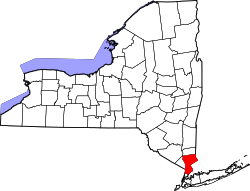
Hartsdale is a hamlet located in the town of Greenburgh, Westchester County, New York, United States. The population was 5,293 at the 2010 census.[2] It is a suburb of New York City.

Key Information

History

[edit]

Hartsdale, a CDP/hamlet/post-office in the town of Greenburgh, New York, lies on the Bronx River 20 miles (32 km) north of New York City. It is served by the Metro-North Harlem River commuter rail line into Grand Central Terminal. Hartsdale is the home of America's first canine pet cemetery (started by veterinarian Samuel Johnson in 1896), and the world's first Carvel Ice Cream store (1934), which closed in 2008.[3]

Pre-Colonial Period

[edit]

Hartsdale's earliest known settlers were the Wecquaesgeek (sometimes spelled Weckquaesgeek), a band of the Wappinger people, an Algonquian tribe.

Hartsdale Pet Cemetery

Colonial Era and American Revolution

[edit]

After British settlers arrived, the area was developed under the manor system when Frederick Philipse, a Dutch merchant and British Loyalist, was granted the land by the British government. As lord of his Philipse Manor, he leased his land to tenant farmers.

On October 28, 1776, a battle was fought alongside the Bronx River, near the site of the current Hartsdale train station. The Odell House (on Ridge Road, built in 1732) served as the headquarters for the French general the Comte de Rochambeau.

19th Century

[edit]

The area remained largely agrarian until 1865, when Eleazar Hart deeded land for the development of the New York and Harlem Railroad line into Manhattan, setting the stage for Hartsdale's change into a more cosmopolitan commuter village. Between 1880 and 1940, large tracts of farmland and estates were subdivided and converted into private houses and apartments at a furious pace.[4]

20th Century

[edit]

In 1904, the German banker Felix M. Warburg (1871–1937) purchased large tracts of land to build his 500-acre (2.0 km2) "Woodlands" estate in Hartsdale.

In 1932, Henry Jacques Gaisman, inventor and founder of the Gillette safety razor blade, purchased 136 acres (0.55 km2) of land along Ridge Road which he sold in 1952 to the New York Archdiocese for $600,000. In 1999 the estate was sold to the Town of Greenburgh which reopened it as the Hart's Brook Nature Preserve.

In 1936 Greek immigrant and ice cream salesman Tom Carvel opened the world's first Carvel ice cream store in Hartsdale.

Geography

[edit]

Hartsdale has several parks, including the 25-acre (100,000 m2) Secor Woods Park, the 170-acre (0.69 km2) Ridge Road Park, and 86-acre (350,000 m2) Rumbrook Park.[citation needed]

Some notable people are buried in Ferncliff Cemetery on Secor Road in Hartsdale.

The Hartsdale Railroad Station was listed on the National Register of Historic Places in 2011, as was the Evangeline Booth House in Hartsdale hamlet.[5]

According to the United States Census Bureau, the community has a total area of 0.9 square miles (2.3 km2), all land.[6]

Demographics

[edit]
Historical population
CensusPop.Note
20203,377
U.S. Decennial Census[7]

As of the census[8] of 2000, there were 9,830 people, 4,314 households, and 2,756 families residing in the community. The population density was 3,068.0 inhabitants per square mile (1,184.6/km2). There were 4,478 housing units at an average density of 1,397.6 per square mile (539.6/km2). The racial makeup of the community was 76.14% White, 8.71% African American, 0.19% Native American, 10.17% Asian, 0.04% Pacific Islander, 2.64% from other races, and 2.10% from two or more races. Hispanic or Latino of any race were 9.55% of the population.

There were 4,314 households, out of which 24.3% had children under the age of 18 living with them, 53.1% were married couples living together, 8.6% had a female householder with no husband present, and 36.1% were non-families. 31.8% of all households were made up of individuals, and 12.7% had someone living alone who was 65 years of age or older. The average household size was 2.27 and the average family size was 2.86.

In the CDP the population was spread out, with 18.2% under the age of 18, 4.8% from 18 to 24, 30.3% from 25 to 44, 28.8% from 45 to 64, and 17.9% who were 65 years of age or older. The median age was 43 years. For every 100 females there were 86.2 males. For every 100 females age 18 and over, there were 81.2 males.

The median income for a household in the community was $81,824, and the median income for a family was $100,330. Males had a median income of $62,362 versus $47,380 for females. The per capita income for the community was $45,691. About 1.6% of families and 2.6% of the population were below the poverty line, including 1.5% of those under age 18 and 4.6% of those age 65 or over.

As of 1991 Hartsdale has a sizable Japanese American community.[9]

Education

[edit]

The census-designated place is divided between Greenburgh Central School District and Edgemont Union Free School District.[10]

Notable people

[edit]
[edit]

The popular J-pop rap/R&B duo Heartsdales borrow their name from Hartsdale, as the two members spent considerable time here.

On the NBC series Heroes, The Company's Primatech Research facility and home of Level 5 is located in Hartsdale.

One scene from the comedy film The Other Guys was filmed at the Harmon Discount in Hartsdale.

References

[edit]
[edit]
Revisions and contributorsEdit on WikipediaRead on Wikipedia
from Grokipedia
Hartsdale is a and located in the town of Greenburgh, , , approximately 20 miles north of along the Bronx River. It serves as a suburban commuter community with a population of 3,377 as of the . The area is known for its residential neighborhoods, proximity to major highways and rail lines, and notable landmarks including the Hartsdale Pet Cemetery, the oldest operating pet cemetery in the , established in 1896. Historically, the land was originally inhabited by the people before European settlement, and it became part of during the colonial era. The name Hartsdale derives from the Hart family, early landowners associated with the area during the Revolutionary War period, when portions of the manor were confiscated and redistributed. Development accelerated in the late with the arrival of the in 1865, leading to the construction of the current Hartsdale station in 1912, a Tudor Revival structure listed on the in 2011. Today, Hartsdale remains unincorporated within Greenburgh, governed by the town's board, and features several parks such as Hart's Brook Nature Preserve and Secor Woods. Demographically, Hartsdale has a median age of 48.4 years and a predominantly population (58.2% non-Hispanic as of 2020), followed by Asian (17.1%), (15.8%), and (5.5%) residents. The community boasts a high median household income of $152,619 in 2023, reflecting its affluent suburban character, with a rate of just 3.5%. Education levels are elevated, with many residents holding bachelor's degrees or higher, and the area is served primarily by the Greenburgh Central School District. Hartsdale's central avenue serves as a commercial hub with shops and restaurants, while its residential areas include a mix of single-family homes, apartments, and co-ops, attracting families and professionals commuting to via the Metro-North .

Geography

Location and Physical Features

Hartsdale is an unincorporated hamlet and situated within the Town of Greenburgh in . As a suburban enclave, it operates without its own municipal government, falling under the jurisdiction of the town while maintaining a distinct community identity centered around its central avenues. The area is assigned 10530 and telephone , facilitating its integration into the broader regional infrastructure. Geographically, Hartsdale lies at approximately 41°02′N 73°48′W, positioning it about 20 miles north of in , making it a convenient residential base for commuters. The hamlet encompasses a compact total land area of approximately 0.85 square miles, entirely consisting of land with no significant water bodies within its boundaries. Its elevation averages around 200 feet above , contributing to a gently undulating landscape typical of southern Westchester County's glacial terrain, with local streams such as Hart's Brook enhancing the ecological features. Hartsdale's boundaries adjoin the Village of Scarsdale to the east across the Bronx River, the Village of Ardsley to the west, and unincorporated sections of the Town of Greenburgh to the north and south, creating a patchwork of residential neighborhoods amid the county's suburban mosaic. The local topography includes rolling hills that rise and fall modestly, shaped by ancient glacial deposits, with the Bronx River forming a natural eastern edge and providing ecological continuity to the region. This positioning enhances Hartsdale's role as a commuter suburb, evidenced by its residential density of about 3,980 people per square mile according to 2020 census figures.

Parks and Landmarks

Hartsdale features several notable parks and landmarks that provide recreational opportunities and preserve the area's natural and architectural heritage. These sites, managed primarily by the of Greenburgh and Westchester County, offer a mix of athletic facilities, nature preserves, and historic structures, contributing to the hamlet's appeal as a suburban retreat. Secor Woods Park, spanning approximately 19 acres along Secor Road, serves as a key recreational hub with amenities tailored for families and sports enthusiasts. The park includes a baseball/ field, a , a reservable pavilion, picnic areas equipped with tables and grills, a horseshoe pit, restrooms, and ample parking. Access to the picnic groves requires a Town Unicard for residents, emphasizing community-oriented use. Ridge Road Park, an expansive 236-acre county-managed property at 287 Ridge Road, emphasizes group outings and inclusive activities amid wooded trails and historic elements from the era. It features three reservable pavilions, a , athletic fields including a specialized Miracle Field for individuals with disabilities, picnic areas, restrooms, and nature study spots, all accessible via wheelchair-friendly paths. The park operates from 8 a.m. to dusk year-round, requiring a county park pass or proof of residency for entry. Rumbrook Park, encompassing 86 acres divided between East and West sections near Dobbs Ferry Road, blends athletic facilities with preserved natural areas, with approximately half designated as a preserve featuring trails. East Rumbrook includes / fields, courts, courts, a with separate areas for small and large dogs, restrooms, parking, and trails, supporting diverse outdoor pursuits. Hart's Brook Park & Preserve, covering 123 acres off Ridge Road, was established in 1999 through a cooperative purchase by New York State, Westchester County, and the Town of Greenburgh, transforming the former Woodlands estate into a protected natural area. It offers nature trails winding through woodlands, streams, ponds, and wildlife habitats, providing opportunities for hiking, birdwatching, and environmental education in a mostly level terrain. The Hartsdale Railroad Station, constructed in 1914 by the architectural firm Warren & Wetmore in a neo-Tudor style, stands as a prominent commuter and architectural landmark at East Hartsdale Avenue. The station underwent significant renovations, including full accessibility upgrades completed in 2024, while preserving its historic facade that symbolizes early 20th-century suburban rail design. The Evangeline Booth House, a Tudor Revival structure originally built c. 1870 and remodeled around 1919 at 101 North Central Avenue, served as the residence of Salvation Army leader Evangeline Booth and was listed on the National Register of Historic Places in 2011. Now functioning as St. Andrew's Episcopal Church, it reflects early 20th-century religious and social reform architecture. Nearby, the Odell House, dating to 1732 at 425 Ridge Road, also holds National Register status from 2011 and briefly served as a meeting site during the Revolutionary War, underscoring Hartsdale's colonial ties. Ferncliff Cemetery, a 76-acre non-sectarian site founded in 1902 at 280 Secor Road, functions as a landscaped historic with columbariums, a crematory, and the Ferncliff constructed in 1927, serving as a dignified final resting place for diverse cultural traditions. It encompasses over 66,000 interments, including notable figures such as civil rights leader , actress , and singer , while maintaining expansive green spaces for reflection.

Climate

Seasonal Weather Patterns

Hartsdale, New York, features a with hot summers under the Köppen classification Dfa, marked by hot and humid summers and cold, snowy winters, with temperatures typically ranging from an average low of 24°F in to a high of 83°F in . The area's position in the contributes to slight temperature moderation compared to more inland regions. Annual averages around 50 inches, predominantly as , with snowfall totaling 25 to 30 inches, concentrated in winter months. Spring, from March to May, brings mild weather with temperatures gradually warming, featuring average highs rising from 49°F to 70°F and lows from 33°F to 52°F, accompanied by increasing monthly rainfall of 2.9 to 3.7 inches. This period sees diminishing snow cover and the emergence of blooming flora in local parks, such as cherry blossoms and early wildflowers. Summer, spanning June to August, is warm and humid, with average highs between 79°F and 83°F and lows from 62°F to 67°F, often punctuated by frequent thunderstorms that contribute to the season's 3.5 to 3.7 inches of monthly precipitation. The peaks during this time, creating muggy conditions for much of the period. Fall, from to , ushers in cooler temperatures, with average highs dropping from 74°F to 52°F and lows from 58°F to 38°F, alongside steady precipitation of 3.4 to 3.7 inches per month and the onset of colorful foliage displaying vibrant reds, oranges, and yellows in wooded areas. Winter, December through February, is cold with average highs of 37°F to 42°F and lows of 24°F to 30°F, receiving 2.0 to 3.0 inches of precipitation monthly, much of it as totaling about 21 inches across these months, alongside occasional storms.

Climate Influences and Extremes

Hartsdale's climate is moderated by its location in the , approximately 25 miles north of , where the proximity to the Atlantic Ocean helps temper extreme temperature swings through oceanic influences that bring milder winters and cooler summers compared to inland areas. The nearby urban expanse of contributes to an effect, elevating local summer temperatures and humidity levels by absorbing and re-radiating heat from impervious surfaces like roads and buildings, which can intensify heat waves in the region. Prevailing westerly to west-southwesterly winds, driven by regional pressure systems, introduce variability by transporting moist air masses from the Midwest or drier conditions from the continent, leading to fluctuating weather patterns throughout the year. Historical weather extremes in Hartsdale reflect the region's vulnerability to both heat and cold outbreaks. During the 1936 , temperatures reached a record high of around 105°F in nearby Westchester County areas, part of a broader Northeast event exacerbated by stagnant high-pressure systems. Conversely, the 1934 cold snap brought a record low of -10°F, influenced by masses plunging southward under clear skies and light winds that allowed . Snowfall extremes include the February 2006 , which dumped approximately 24 inches in a single storm across Westchester County, including Hartsdale, setting a benchmark for intense winter precipitation driven by a stalled low-pressure system drawing moisture from the Atlantic. Recent climate trends indicate a warming pattern, with average annual temperatures in Westchester County rising by about 3°F since 1970, outpacing national averages and attributed to anthropogenic enhancing the . This has led to more frequent heavy events, such as the September 2023 floods that caused significant overflow along the Bronx River, inundating low-lying areas near Hartsdale with over 7 inches of rain in 24 hours and disrupting local infrastructure. Hartsdale faces heightened vulnerability to flooding from the Bronx River, which has historically overflowed during intense rainstorms, as well as occasional tropical remnants like those from in 2021, which brought 3-5 inches of rain and widespread disruptions including power outages and road closures in the hamlet.

History

Pre-Colonial and Colonial Periods

Prior to European arrival, the area now known as Hartsdale was inhabited by the Weekquaeskeek, a subgroup of the people, an Algonquian-speaking Native American group. These indigenous groups utilized the lands along the Bronx River primarily for seasonal hunting, fishing, and small-scale agriculture, cultivating crops such as corn, beans, and squash while relying on the river for additional resources like oysters and . No evidence indicates the establishment of permanent villages in the Greenburgh vicinity, including Hartsdale; instead, their presence reflected a mobile stewardship of the watershed. The Weekquaeskeek referred to the region as a "place of the bark kettle," deriving from their practice of crafting watertight containers from tree bark for cooking and storage. In the colonial era, the Hartsdale area fell within the expansive , a vast estate granted by royal patent to Dutch merchant in 1693, encompassing over 52,000 acres of southern Westchester County north of . As part of this manor system, the lands were initially managed under Dutch influence, but by the mid-1700s, English settlers began arriving to establish farms amid the agrarian landscape. One notable early structure was the Odell House, constructed in 1732 by English settler John Tompkins as a modest on Ridge Road in what is now Hartsdale. These settlers, originating from nearby English colonies like Eastchester, focused on agricultural development, leasing portions of the manor for cultivation and livestock. During the American Revolution, Hartsdale's proximity to key conflicts shaped its role, with the nearby occurring on October 28, 1776, as British forces under General William Howe engaged troops led by . Local skirmishes preceded the main battle, including clashes near the present-day Hartsdale Station as American forces fortified positions along the Bronx River. The region, part of Westchester's "neutral ground" between British-held and Patriot-controlled areas upstate, experienced ongoing raids and remained predominantly agrarian under de facto British influence, with farms sustaining both sides. In 1781, the Odell House served as headquarters for French General Comte de Rochambeau during a six-week encampment, where he coordinated with Washington on strategies that contributed to the . Following the war, as a Loyalist estate, was confiscated and its lands redistributed to Patriot supporters, including members of the Hart family who acquired property in the area. This led to the naming of "Hart's Corners" at the intersection of key roads, evolving into Hartsdale.

19th Century Development

In the early , Hartsdale remained a rural, agrarian within the larger Greenburgh , characterized by small family farms producing crops and for local markets and . The area was sparsely populated, with Greenburgh's total residents numbering around 4,291 in 1850, reflecting Hartsdale's modest scale of under 500 inhabitants focused on agricultural labor. Mid-century transformations began with the lingering effects of emancipation, as New York State had gradually abolished slavery by 1827, shifting local farm labor toward free workers and influencing post-Civil War economic patterns in Westchester County. The end of the Civil War in 1865 further spurred population growth in Greenburgh, from 8,929 in 1860 to 10,790 by 1870, as improved transportation and urban demand drew settlers to rural hamlets like Hartsdale. The extension of the New York and Harlem Railroad's Harlem Line to the Hartsdale area in the mid-1840s revolutionized connectivity, allowing the first reliable access for goods and passengers to and marking the shift from isolated farmland to a potential commuter outpost. In 1865, local landowner Eleazar Hart deeded property to the railroad, enabling further development, while a dedicated station was constructed around 1880, catalyzing land subdivisions and attracting commuters by the 1890s. By the late , these changes fostered institutional growth, including the relocation of the local in to the under postmaster John Morse, solidifying Hartsdale's identity as a burgeoning . The hamlet's population expanded to approximately 1,000 residents by 1900 amid Greenburgh's overall rise to over 8,000, with initial suburban estates appearing on former farmlands to accommodate affluent commuters.

20th and 21st Century Suburbanization

In the early 20th century, Hartsdale began its transformation from rural farmland into a burgeoning suburb, largely influenced by the expansion of the New York Central and Harlem River Railroad's Harlem Branch. The reliable commuter rail service, building on the foundational line established in the 19th century, facilitated a significant population surge from 1880 to 1940 as New York City professionals sought affordable housing outside the urban core. A pivotal development was the 1904 acquisition of large tracts of land by German-Jewish banker Felix M. Warburg, who constructed the expansive 500-acre Woodlands estate, exemplifying the era's trend toward grand suburban retreats for affluent residents. This period also saw the opening of the neo-Tudor Hartsdale Railroad Station in 1912, designed by architects Warren & Wetmore, which further accelerated residential and commercial growth along the rail corridor. In 1936, Greek immigrant Tom Carvel established the nation's first retail ice cream store in Hartsdale after his ice cream truck broke down there two years prior, marking the hamlet's emerging role as a commercial hub. The mid-20th century brought a post-World War II housing boom to Hartsdale, driven by demand from returning veterans and expanding families, leading to the construction of Cape Cod-style homes, ranches, and apartment complexes in the and 1960s. This era formalized Hartsdale's status as a (CDP) in the 1950 U.S. Census, the first time such designations were used to delineate unincorporated communities like it within the Town of Greenburgh. Concurrently, a Japanese American community began to emerge in the , growing steadily through the 1990s as professionals relocated for proximity to , establishing businesses and cultural enclaves along East Hartsdale Avenue. By the late 20th century, Hartsdale's suburban character solidified with environmental and commemorative projects, including the 1999 creation of the Hart's Brook Nature Preserve, where the Town of Greenburgh acquired the former Odell estate to protect 123 acres of woodlands from development and promote public recreation. , founded in 1902, underwent expansions such as the 1956 Shrine of Memories , becoming a notable non-sectarian site for celebrities including , , and . Entering the 21st century, Hartsdale experienced pressures through rising property values and rezoning efforts aimed at mixed-use developments, such as the 2025 plan to integrate , retail, and green spaces along Central Avenue. The CDP's peaked at 5,293 in 2010 but declined to 3,377 by the 2020 census, reflecting suburban demographic shifts, with recent estimates around 3,250 as of 2023. The from 2020 to 2022 amplified trends, enhancing Hartsdale's appeal as a commuter with easy Metro-North access while straining local during peak telecommuting periods. As of 2025, green initiatives in parks like Hart's Brook include expanded trail maintenance and native plantings under Westchester County's Climate Action Plan to combat urban heat and support .

Demographics

Hartsdale's population has undergone significant changes over recent decades, largely influenced by adjustments to census-designated place (CDP) boundaries. In the 2000 Census, the CDP recorded a population of 9,830. By the 2010 Census, this figure had declined to 5,293, reflecting a 46.2% drop primarily due to redefined boundaries that excluded certain peripheral areas previously included in the CDP. The 2020 Decennial Census further adjusted the CDP to 3,377 residents, continuing the trend of contraction as statistical definitions became more precise. Recent estimates indicate a of 3,254 in 2023, an increase of 5.58% from 3,082 in 2022. The median age in Hartsdale stood at 48.4 years in 2023, notably higher than the national median of 38.9, underscoring an aging . The average household size was 2.32 persons, smaller than the U.S. average of 2.5, indicative of smaller family units and a prevalence of empty-nesters. Household dynamics in Hartsdale reflect a mature community, with about 21% of residents aged 65 and over in recent estimates. The is 54.9% , contributing to a balance that supports stable, long-term residency patterns. Overall, the rate remains low at 3.5%, well below the national average of 11.5%, highlighting economic stability amid these demographic trends.

Racial, Ethnic, and Socioeconomic Composition

Hartsdale's exhibits a diverse racial and ethnic makeup, with White residents comprising the largest group at 67.6%, followed by Asian at 14.7%, or Latino at 12.8%, Black or African American at 2.7%, multiracial at 1.7%, and other races at 0.2%, according to 2023 estimates. The Asian community includes a notable Japanese that has been established since the early , drawn by proximity to employment opportunities and local amenities. Additionally, an Albanian Catholic community maintains a presence through institutions like Our Lady of Shkodra Church, serving as a cultural and religious hub. Socioeconomically, Hartsdale features high levels among adults aged 25 and older, with approximately 97% holding at least a or equivalent—exceeding the national average of about 89%—and 75% possessing a or higher, compared to the U.S. figure of around 34%. This elevated education profile reflects the area's appeal to residents commuting to urban centers. Roughly 32% of the population is foreign-born, surpassing the national rate of 13.8%, with primary origins in (43%) and (30%), alongside contributions from . The local labor market shows stability, with an unemployment rate of 1.9% in recent estimates, well below the national average of 3.8%. This low rate underscores Hartsdale's integration into the broader Westchester County , supporting a characterized by professional and white-collar occupations.

Economy

Key Industries and Employment

Hartsdale functions primarily as a bedroom community within Westchester County, where the local workforce totals 1,790 employed residents as of 2023. The labor force participation rate is approximately 65%, indicating strong engagement in the broader regional . A significant share—around 60%—of these workers commute to daily, underscoring the hamlet's dependence on metropolitan job opportunities and its high reliance on rail transportation for access. The dominant industries reflect a mix of and essential support sectors. and social assistance lead with 413 jobs, followed by , scientific, and technical services employing 344 individuals, and educational services with 266 positions. Major employers include local hospitals and clinics, such as Doctors-Hartsdale and NewYork-Presbyterian Medical Group Westchester, which provide and specialized services along Central Avenue. This bustling corridor also hosts various corporate offices for , , and consulting firms, bolstering the business landscape. A notable legacy employer is Carvel, the franchise founded in Hartsdale in 1934, whose original store operated until 2008 and symbolized the community's entrepreneurial roots. As a hub, Hartsdale features numerous independent shops, restaurants, and service providers concentrated in its village center, fostering local economic activity. The rise of co-working spaces in nearby areas has supported freelancers and startups, while post-2020 trends in —now accounting for 23.6% of commutes—have somewhat diminished the need for traditional local , allowing more flexibility in the .

Income Levels and Market

Hartsdale exhibits high levels of affluence, with a of $152,619 in 2023, representing a 3.3% decline from $157,891 in 2022, according to the (ACS) 5-year estimates. stands at $93,186, reflecting the area's concentration of high-earning residents. This prosperity is largely driven by dual-income professional households, with married couples comprising about 70% of family households. The poverty rate in Hartsdale is notably low at 3.5%, significantly below the national average of 11.1% for 2023. This low incidence of poverty highlights the community's economic stability, particularly among its professional workforce commuting to nearby . In the housing market, approximately 86.3% of units are owner-occupied, contributing to a stable residential base. The median home value was $341,500 in 2023, though current listings show medians closer to $449,000 amid competitive demand. remains tight due to suburban appeal and spillover from , with homes selling in an average of 34 days as of October 2025. Post-2020, housing costs have risen steadily, with a 5.9% appreciation in home values over the past year as of November 2025.

Government and Services

Local Governance Structure

Hartsdale functions as an unincorporated within the Town of Greenburgh in , and therefore operates without its own independent municipal government, mayor, or council. Instead, all local administration, policy-making, and legislative functions for Hartsdale are handled by the Town of Greenburgh's governing body, a supervisor-led Town Board that serves the unincorporated areas of the town. The Town Board comprises the town supervisor and four council members, who are elected across the town in partisan elections every four years, with terms beginning in January following the . The board holds legislative authority over town-wide matters, including , , and budget appropriations, directly impacting Hartsdale's development and services. As of 2025, the supervisor is Paul J. Feiner, a Democrat who has held the position continuously since his initial election in 1991, establishing him as the longest-serving chief elected official of any municipality in Westchester County; he secured re-election in 2025 for another four-year term. The current council members are Gina Jackson (Deputy Supervisor), Ellen Hendrickx, Francis Sheehan, and Joy Haber, all Democrats. Francis Sheehan and Ellen Hendrickx were re-elected in the 2025 . While the Town Board provides overarching representation for Hartsdale residents, town-level decision-making on local issues such as and incorporates input from Hartsdale-specific advisory bodies. The Hartsdale Contextual Review Committee, for instance, advises the board on development proposals within to ensure they align with community character and planning goals. Additionally, the town's Traffic Safety Advisory Committee addresses pedestrian, cycling, and vehicular safety concerns town-wide, including in Hartsdale, by recommending infrastructure improvements and engaging residents through public visions and technology-driven outreach. The Parks and Recreation Advisory Board similarly oversees maintenance and programming, with community feedback from Hartsdale influencing initiatives in local green spaces. Hartsdale's broader representation extends to county and state levels. At the county level, it lies within Westchester County's 12th Legislative District, represented by Democrat David Imamura, who serves on the 17-member Board of Legislators and chairs committees on law and major contracts. For state government, Hartsdale is part of District 92, represented by Democrat MaryJane Shimsky since 2023, and District 35, represented by Democrat , the Majority Leader.

Public Services and Infrastructure

Hartsdale residents receive water and sewer services from the Town of Greenburgh's Water and Sewer Department, which manages supply, billing, and emergency responses for the unincorporated areas including Hartsdale. Electricity and are provided by (Con Edison), the primary utility serving Westchester County. and recycling, including weekly curbside collection of solid waste, paper, commingled recyclables, and organic materials, are handled by the Town of Greenburgh's Bureau of Sanitation. Bulk and metal item pickups occur by appointment, with e-waste directed to county facilities. Public safety in Hartsdale falls under the Town of Greenburgh Police Department, which patrols the unincorporated town areas and responds to emergencies. Fire protection is provided by the Hartsdale Fire District, operating from two stations and staffed by career and volunteer firefighters covering the 4.5-square-mile area. The community experiences a low rate, with violent incidents occurring at approximately 1 per 1,000 residents annually. Road maintenance in Hartsdale is divided between the Town of Greenburgh's Bureau of Highway and Traffic, which handles town roads including repairs, , and drainage, and Westchester County's Department of for county routes. Residents access library services through the Greenburgh system, with its main facility in nearby Elmsford offering , digital resources, and programs to the town's 43,000 patrons. Community gatherings occur at Richard Presser Park, a key recreational site featuring fields, playgrounds, and event spaces for local activities like carnivals and sports. Following severe storms in 2021, including , the Town of Greenburgh has continued flood mitigation measures along the Bronx River, with ongoing efforts as of 2025 including progress on drainage projects and studies in areas like East Hartsdale Avenue to enhance resilience through engineering assessments and infrastructure upgrades. Statewide broadband initiatives under New York's ConnectALL program have supported infrastructure improvements in Westchester County, aiming to expand high-speed access in unserved and underserved areas.

Transportation

Rail and Commuter Access

Hartsdale Station serves as the principal rail hub for the community, operating on the Metro-North Railroad's Harlem Line and providing essential commuter service to New York City. The station offers both local and express trains to Grand Central Terminal, located approximately 21 miles south, with departures every 30 minutes during peak periods and an average travel time of 53 minutes. One-way fares typically range from $11.25 (off-peak) to $15.25 (peak) as of 2025, depending on the time of day and ticket type. Established in the mid-19th century following the extension of the New York and Harlem Railroad, the station played a pivotal role in Hartsdale's transformation from agrarian land to a suburban enclave, with land deeded for the line in 1865 spurring residential and commercial development in the late 19th century. The current station building dates to 1912, designed by the architectural firm Warren and Wetmore. Renovations in the 2010s addressed structural improvements, while major upgrades completed in January 2024 installed ADA-compliant elevators, ramps, and a renovated overpass, rendering the facility fully accessible with tactile warning strips and audiovisual announcements. The station supports commuter parking for 799 vehicles, managed by the Hartsdale Public Parking District, facilitating access for residents and visitors. Daily ridership at Hartsdale contributes to the Harlem Line's overall volume, which reached about 78% of pre-2020 levels by 2024 amid post-pandemic recovery. Rail service is vital for local commuters, with a significant share of Greenburgh's workforce—around 24% countywide using public transit—relying on peak-hour trains between 7 and 9 a.m. for travel to jobs.

Roads, Buses, and Other Options

Hartsdale's road network is anchored by Central Park Avenue (New York State Route 100), a major north-south artery that runs through the hamlet and connects it to Yonkers to the south and White Plains to the north. This route serves as the primary commercial corridor, hosting shopping centers and daily commuter traffic. Hartsdale Avenue functions as a key east-west connector, intersecting Central Park Avenue at the hamlet's bustling district and facilitating local access to residential neighborhoods. For regional highway travel, residents rely on Interstate 87 (the to the north and Major Deegan Expressway to the south), accessible approximately five miles east via the Cross County Parkway or Interstate 287. Public bus service in Hartsdale is provided by the Westchester County Bee-Line System, which operates routes connecting the hamlet to nearby hubs. Route 11 offers limited-stop service along Central Park Avenue, linking Hartsdale to White Plains and providing feeder access to the Metro-North Hartsdale station for multi-modal trips. Routes 20 and 21 run express and local variants from through Hartsdale to White Plains, with frequent service during peak hours to accommodate commuters traveling to . These routes stop at key points like the Hartsdale train station and areas, enhancing connectivity without dedicated local shuttles beyond the Bee-Line network. Alternative mobility options in Hartsdale include limited bike paths within local parks and the nearby Pathway, a paved multi-use trail adjacent to the hamlet's southern boundary that supports recreational and commuter cycling along the Reservation. Ridesharing services such as and are widely utilized for short trips, integrated with regional transit via apps like 511NY Rideshare. The hamlet's central village core around East Hartsdale Avenue is relatively walkable, with sidewalks and proximity to amenities, though the broader suburb remains car-dependent, with about 86% of Westchester County households owning at least one vehicle. Traffic challenges persist on Central Park Avenue, particularly at its intersection with Hartsdale Avenue, where peak-hour delays average 60-70 seconds and level of service ratings reach E or F, exacerbated by high volumes and turning movements. The corridor experiences elevated crash rates—over nine times the statewide average from 2016-2018—primarily rear-end and left-turn incidents. To address these issues, Westchester County has explored Bus Rapid Transit enhancements along Central Avenue since a 2008 assessment, proposing dedicated lanes, signal priority, and station improvements to reduce travel times by 25-40% and boost ridership, though implementation remains in planning phases as of recent service updates.

Education

Public School Districts

Hartsdale is served by two public school districts: the Greenburgh Central School District, covering the southern portion of the hamlet, and the Edgemont Union Free School District, serving the northern portion. The Greenburgh Central School District operates schools from pre-kindergarten through grade 12, including the Lee F. Jackson School (grades K-1), Highview Elementary School (grades 2-3), Richard J. Bailey School (grades 4-6), and Woodlands Middle/High School (grades 7-12). The district offers an program across all grade levels and reported a four-year graduation rate of 92% for the class of 2023. The Edgemont Union Free School District is recognized for its high performance and includes Greenville Elementary School (grades K-5), Seely Place Elementary School (grades K-5), and Edgemont Junior/Senior High School (grades 6-12). It achieved a four-year graduation rate of 98% for the class of 2023 and maintains a strong emphasis on STEM education through dedicated programs and committees. Public school students from Hartsdale attend both districts, with local public school enrollment around 1,000 as of 2023-24, reflecting diverse demographics aligned with the districts' compositions (over 60% minority enrollment combined). Both districts are funded primarily through local property taxes, in line with New York State public education financing.

Private and Specialized Schools

Hartsdale offers several private and specialized educational institutions that cater to diverse religious and individualized learning needs, serving students from preschool through high school. These schools emphasize faith-based instruction, cultural heritage, and personalized academics, drawing families from the local community and surrounding Westchester County areas. School is a Catholic elementary and middle school for grades Pre-K through 8, enrolling approximately 230 students. Accredited by the and AdvanceED/Cognia, it integrates a faith-based aligned with Next Generation Learning Standards, alongside extracurricular programs in art, music, and sports to foster holistic development. The operates as a co-educational spanning grades K-12, with its upper school campus located in Hartsdale and serving over 800 students across both campuses. It prioritizes a dual that balances rigorous academics and , with strong offerings in , , and preparation for top universities, reflecting the influence of Hartsdale's Jewish community on educational choices. Maria Regina High School provides an all-girls Catholic for grades 9-12, with an enrollment of about 500 students and a student-teacher ratio of 13:1. Known for its academic excellence, the school boasts a 99% attendance rate, including 97% pursuing four-year institutions, supported by courses and over $30 million in merit-based scholarships awarded to the Class of 2024. It also features robust athletics programs across more than 30 sports and leadership initiatives to develop compassionate young women. Other specialized options include Fusion Academy Westchester, a in nearby White Plains offering personalized one-to-one learning for grades 6-12, which appeals to students seeking tailored curricula. Hartsdale's proximity to White Plains also provides access to additional specialized programs in the region. Enrollment in these private institutions has seen growth post-pandemic, driven by demand for faith-integrated and individualized education, with annual tuitions typically ranging from $20,000 to $40,000 depending on the school and grade level.

Community and Culture

Ethnic Communities and Events

Hartsdale's ethnic communities reflect a blend of immigrant influences that have shaped the hamlet since the mid-20th century. The Japanese American community, which began establishing roots in the and grew significantly through the , forms a prominent part of this diversity. By 1979, an estimated 2,000 Japanese residents lived in Hartsdale and nearby areas like Eastchester and Scarsdale, many as temporary corporate expatriates from companies such as . This presence expanded rapidly after 1980, with Asians comprising 18.6% of the population in Hartsdale's core tracts by 1990, predominantly Japanese families. As of the 2020 , Asians account for 17.1% of Hartsdale's residents, sustaining a vibrant enclave. This community centers around businesses along Central Avenue and East Hartsdale Avenue, where Japanese-owned establishments like Frontier Market for groceries and deli items, Fujinoya for traditional cuisine, and Kishuya for thrive, creating a self-contained hub for , dining, and services in Japanese. Cultural life includes participation in regional events such as the annual Asian-American Heritage Festival at Kensico Dam Plaza in nearby , featuring Japanese performances, , and vendors to celebrate heritage. The Albanian community, another key ethnic group, anchors its identity in the Our Lady of Shkodra Albanian Catholic Church at 361 West Hartsdale Avenue, established in the 1980s to serve growing Albanian American families. The church hosts annual celebrations, including a Holy and flag-raising ceremony for Albanian Independence Day on November 28, drawing locals for prayers, traditional music, and communal gatherings. It also organizes events like the Albanian Day , fostering cultural pride through marches and festivities along local streets. Broader Hispanic and Asian influences enrich Hartsdale's diversity, with making up 15.8% of the as of the 2020 Census and contributing to multicultural initiatives in the Town of Greenburgh. Organizations like El Centro Hispano provide support services such as assistance, food pantries, and cultural programs for Latino residents across the area. Community events highlight this mosaic, including the in June 2025 at the Hartsdale train station parking lot, which showcases culinary diversity from local restaurants representing various heritages. The Hartsdale Neighbors Association collaborates on inclusive activities like the seasonal , featuring vendors with international produce, and participates in town parades that promote community unity. With about 31% of Hartsdale's residents foreign-born, integration efforts emphasize shared spaces and education. Community centers in Greenburgh, including school programs like those at Woodlands High School, host multicultural nights and diversity workshops, such as the 2025 Multicultural Week events focused on cultural exchange and post-pandemic reconnection through language and heritage activities. These initiatives, often tied to the town's Office, offer ESL classes and advocacy to support newcomers. Hartsdale has been referenced in Japanese popular music through the J-pop duo Heartsdales, consisting of sisters Emi "Rum" Sugiyama and Yumi "Jewels" Sugiyama, who were active from 2001 to 2007. The group adopted their name as a tribute to Hartsdale, where they spent part of their formative years in the New York area before moving to and achieving success with albums like Radioactive (2002) and singles such as "CANDY POP" featuring . Their music, blending hip-hop and R&B influences with bilingual , frequently alluded to their American roots, including nods to suburban New York life in tracks and promotional materials within Japanese media. In film and television, Hartsdale has served as a backdrop for suburban New York settings. The 2010 comedy , directed by and starring and , filmed a key scene at the Hartsdale Plaza on Central Avenue, portraying the area's everyday commercial landscape. Additionally, the series Heroes (premiered 2006) explicitly mentions Hartsdale in its second-season episode "Chapter Six: The Line" (2007), where a character is informed of their location at a facility in the hamlet. More recently, in the 2020s, Hartsdale's has drawn attention in podcasts exploring celebrity burials, highlighting its role as the final resting place for figures like (initially interred there from 1969 until 2017), , and . Episodes from series such as This Day in Celebrity History have discussed these interments, emphasizing the cemetery's historical significance in American entertainment and literature. platforms have also featured on Hartsdale's lifestyle, with posts on and capturing daily routines at the Hartsdale station along the Metro-North .

Notable People

Arts and Entertainment Figures

, born October 9, 1949, in Philadelphia, Pennsylvania, is an American actress recognized for her recurring roles in the television series during the 1970s and 1980s, often appearing alongside her husband, . She began her acting career in 1976 with a guest spot on One Day at a Time and later gained wider notice for her performance as the prostitute in the 1983 film . Phil Foglio, who grew up in Hartsdale, New York, after his family moved there from Mount Vernon when he was young and resided until age 17, is a prominent comic book artist and writer specializing in science fiction and fantasy genres. He co-created the Hugo Award-winning webcomic Girl Genius with his wife Kaja Foglio, earning multiple Hugo Awards for Best Fan Artist in the late 1970s and later for professional work in illustration and graphic storytelling. His early contributions include artwork for Magic: The Gathering cards and parodies in publications like Dragon magazine. Howard Koch, who practiced law in Hartsdale, New York, in the 1920s and 1930s before transitioning to writing, was an Oscar-winning screenwriter best known for co-writing the 1942 film Casablanca, which earned him the Academy Award for Best Original Screenplay. His other notable credits include adaptations for The Sea Hawk (1940) and radio dramas for Orson Welles' The Mercury Theatre on the Air, blending historical and dramatic elements in his scripts. Kathy McCord, a Hartsdale, New York, native born on February 18, 1952, emerged as a in the 1970s folk and psychedelic pop scene, releasing her self-titled debut album in 1970 on at age 17. Produced by , the album featured original compositions blending folk introspection with influences, and she performed alongside artists like before a later career in backup vocals for figures such as and . Charles Ives, the innovative early 20th-century American composer, lived in Hartsdale, New York, from around 1912 to 1919 at 460 Ridge Road, a period during which he composed significant works while working as an insurance executive nearby. His residence there coincided with the creation of pieces like the String Quartet No. 2 and revisions to his symphonies, drawing inspiration from suburban life and American vernacular music that shaped his experimental style. Malvina Hoffman, an acclaimed sculptor active in the early to mid-20th century, spent her summers in a Hartsdale, New York, cottage provided by patron , using the space for creative retreats amid her Manhattan-based studio work. Known for her life-size bronze figures, including the 104-sculpture Hall of Races of Mankind series commissioned by the Field Museum in 1930, her oeuvre captured human diversity through realistic portrayals influenced by her travels and dance collaborations. Evangeline Booth, who resided in Hartsdale, New York, from the 1920s until her death in 1950, served as the international commander of from 1934 to 1939 and contributed to its performative traditions through musical brigades and dramatic social outreach programs. Her Hartsdale home, built around 1870 and later renamed the Evangeline Booth House, now functions as St. Andrew's Episcopal Church, symbolizing her enduring cultural legacy in community arts and reform.

Business and Sports Personalities

Henry Jacques Gaisman (1869–1974), a prolific inventor and businessman, resided in Hartsdale at 150 Ridge Road, where he lived until his death at age 104. He founded the Auto-Strop Safety Razor Company in 1906 after patenting an innovative safety razor design that allowed blade stropping without removal, which became a commercial success. Gaisman held over 80 patents throughout his career, including advancements in razors and other mechanical devices, and sold his company to Gillette in 1930, serving as its president thereafter. As a philanthropist with strong ties to Hartsdale, he donated 135 acres of land in 1932 to the Archdiocese of New York, stipulating its use for charitable purposes, which later contributed to the development of Marian Woods, a senior living community. Morris E. Lasker (1917–2009), born in Hartsdale, pursued a distinguished legal career that led to his appointment as a United States District Judge for the Southern District of New York in 1968 by President . Serving until 1993, Lasker was renowned for landmark rulings on , including decisions that compelled to reform inhumane jail conditions in facilities like during the 1970s and 1980s. He also presided over high-profile cases, such as the 1986 insider trading trial of financier , sentencing him to three years in prison and a $100 million fine, which helped dismantle Wall Street's culture of corruption. After semi-retiring, Lasker continued judicial service in until 2009, maintaining lifelong connections to his Hartsdale roots through family and education at nearby . Mark Burg, born in Hartsdale in 1959, emerged as a prominent film producer and executive, co-founding Evolution Entertainment in 1998 with Oren Koules. His career highlights include serving as president of Island Pictures in the early 1990s, where he oversaw productions like The Basketball Diaries (1995), and later producing the blockbuster Saw horror franchise, starting with the 2004 original that grossed over $100 million worldwide on a $1.2 million budget. Burg's business acumen extended to television, co-producing the CBS sitcom Two and a Half Men (2003–2015), which became one of the highest-rated comedies in network history, and he has managed talents like Charlie Sheen and Jon Lovitz. In the culinary business realm, (1885–1957), who made his home in Hartsdale after retiring, was a pioneering French-American chef and author whose innovations shaped modern in the United States. As head chef at New York's Ritz-Carlton Hotel from 1910 to 1951, Diat drew from his training under at the Ritz to introduce refined French techniques, including the creation of , a chilled potato-leek soup he debuted in 1917 and named after his childhood home near . Post-retirement in Hartsdale, he authored influential cookbooks like Gourmet's Basic French Cookbook (1949), mentoring a generation of American chefs and popularizing classic dishes through columns in Gourmet magazine. Albhy Galuten, a Hartsdale native born in 1947, built a multifaceted career in music production and technology innovation, earning multiple for his work. As a key collaborator with the in the 1970s, Galuten co-produced their landmark album (1977), which sold over 40 million copies and featured hits like "," pioneering the use of synthesizers and drum loops in production. His business contributions include inventing early tools, such as the first commercial loop, and serving as a technology executive shaping music software advancements, with over 100 million records sold under his production credits. On the sports front, Mike Epstein (born 1943), whose family relocated to Hartsdale during his youth, was a professional in from 1966 to 1974, playing for teams including the Baltimore Orioles, Washington Senators, , and California Angels. Over 907 games, he compiled a .244 , 130 home runs, and 380 RBIs, with career highs of 30 home runs and a .278 average in 1970 while under ' management in Washington. Epstein's Hartsdale upbringing influenced his early athletic development, and he later contributed to baseball as a hitting instructor, drawing on his power-hitting style that earned him the nickname "Super Jew."

References

Add your contribution
Related Hubs
User Avatar
No comments yet.