Hubbry Logo
KyphosisKyphosisMain
Open search
Kyphosis
Community hub
Kyphosis
logo
8 pages, 0 posts
0 subscribers
Be the first to start a discussion here.
Kyphosis
Kyphosis
from Wikipedia

Hyperkyphosis
Other namesRoundback, hunchback
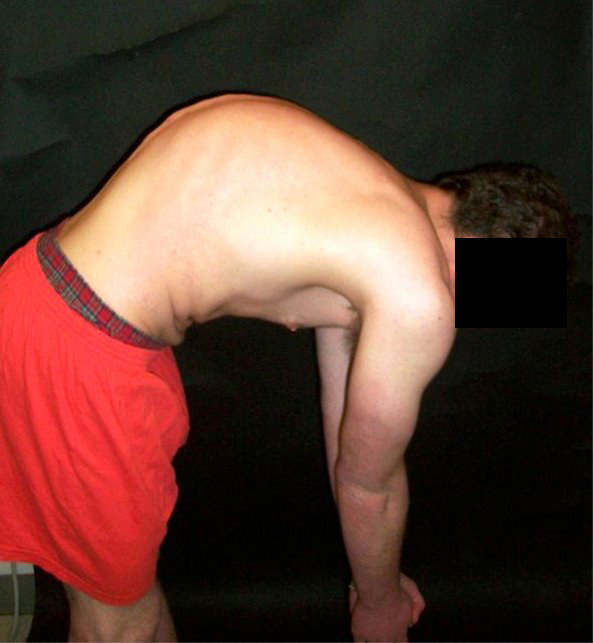
A preoperative image of a 22-year-old man with Scheuermann's disease, a type of structural kyphosis
SpecialtyOrthopedics

Kyphosis (from Greek κυφός (kyphos) 'hump') is an abnormally excessive convex curvature of the spine as it occurs in the thoracic and sacral regions.[1][2] Abnormal inward concave lordotic curving of the cervical and lumbar regions of the spine is called lordosis.

It can result from degenerative disc disease; developmental abnormalities, most commonly Scheuermann's disease; Copenhagen disease, osteoporosis with compression fractures of the vertebra; multiple myeloma; or trauma.

A normal thoracic spine extends from the 1st thoracic to the 12th thoracic vertebra and should have a slight kyphotic angle, ranging from 20° to 45°. When the "roundness" of the upper spine increases past 45° it is called kyphosis or "hyperkyphosis". Scheuermann's kyphosis is the most classic form of hyperkyphosis and is the result of wedged vertebrae that develop during adolescence. The cause is not currently known and the condition appears to be multifactorial and is seen more frequently in males than females.[3]

In the sense of a deformity, it is the pathological curving of the spine, where parts of the spinal column lose some or all of their lordotic profile. This causes a bowing of the back, seen as a slouching posture. Kyphosis is distinguished from scoliosis, a condition in which the spine has a sideways curve.

While most cases of kyphosis are mild and only require routine monitoring, serious cases can be debilitating. High degrees of kyphosis can cause severe pain and discomfort, breathing and digestion difficulties, cardiovascular irregularities, neurological compromise and, in the more severe cases, significantly shortened life spans. These types of high-end curves typically do not respond well to conservative treatment and almost always warrant spinal fusion surgery, which can restore the body's natural degree of curvature.

Signs and symptoms

[edit]
Kyphosis (at far right) in comparison with other vertebral column disorders, including scoliosis and lordosis

Complications

[edit]

The risk of serious complications from spinal fusion surgery for kyphosis is estimated to be 5%, similar to the risks of surgery for scoliosis. Possible complications include inflammation of the soft tissue or deep inflammatory processes, breathing impairments, bleeding, and nerve injuries. According to the latest evidence, the actual rate of complications may be substantially higher. Even among those who do not develop serious complications, 5% of patients require reoperation within five years of the procedure, and in general it is not yet clear what one would expect from spine surgery during the long-term.[4][5] Given that the signs and symptoms of spinal deformity cannot be changed by surgical intervention, surgery remains essentially a cosmetic choice.[4][6] However, the cosmetic effects of surgery are not necessarily stable.[4]

Diagnosis

[edit]

Classification

[edit]

There are several kinds of kyphosis (ICD-10 codes are provided):

  • Postural kyphosis (M40.0), the most common type, normally attributed to slouching, can occur in both the old[7] and the young. In the young, it can be called "slouching" and is reversible by correcting muscular imbalances. In the old, it may be a case of hyperkyphosis and called "dowager's hump". About one third of the most severe hyperkyphosis cases in older people have vertebral fractures.[8] Otherwise, the aging body does tend towards a loss of musculoskeletal integrity,[9] and hyperkyphosis can develop due to aging alone.[8][10]
  • Scheuermann's kyphosis (M42.0) is significantly worse cosmetically and can cause varying degrees of pain, and can also affect different areas of the spine (the most common being the midthoracic area). Scheuermann's kyphosis is considered a form of juvenile osteochondrosis of the spine and is more commonly called Scheuermann's disease. It is found mostly in teenagers and presents a significantly worse deformity than postural kyphosis. A patient with Scheuermann's kyphosis cannot consciously correct posture.[11][12] The apex of the curve, located in the thoracic vertebrae, is quite rigid. The patient may feel pain at this apex, which can be aggravated by physical activity and by long periods of standing or sitting. This can have a significantly detrimental effect on their lives, as their level of activity is curbed by their condition; they may feel isolated or uneasy amongst peers if they are children, depending on the level of deformity. Whereas in postural kyphosis, the vertebrae and discs appear normal, in Scheuermann's kyphosis, they are irregular, often herniated, and wedge-shaped over at least three adjacent levels. Fatigue is a very common symptom, most likely because of the intense muscle work that has to be put into standing or sitting properly. The condition appears to run in families. Most patients who undergo surgery to correct their kyphosis have Scheuermann's disease.[citation needed]
  • Congenital kyphosis (Q76.4) can result in infants whose spinal column has not developed correctly in the womb. Vertebrae may be malformed or fused together and can cause further progressive kyphosis as the child develops.[13] Surgical treatment may be necessary at a very early stage and can help maintain a normal curve in coordination with consistent follow-ups to monitor changes. However, the decision to carry out the procedure can be very difficult due to the potential risks to the child. A congenital kyphosis can also suddenly appear in the teenage years, more commonly in children with cerebral palsy and other neurological disorders.[citation needed]
  • Nutritional kyphosis can result from nutritional deficiencies, especially during childhood, such as vitamin D deficiency (producing rickets), which softens bones and results in the curving of the spine and limbs under the child's body weight.
  • Gibbus deformity is a form of structural kyphosis, often a sequela to tuberculosis.
  • Post-traumatic kyphosis (M84.0) can arise from untreated or ineffectively treated vertebral fractures.[14]

Grading

[edit]
Sagittal balance measurement[15]

Kyphosis can be graded in severity by the Cobb angle. Also, sagittal balance can be measured. The sagittal balance is the horizontal distance between the center of C7 and the superior-posterior border of the endplate of S1 on a lateral radiograph.[15]

Treatments

[edit]

A diagnosis of kyphosis is generally made through observation and measurement. Idiopathic causes, such as vertebral wedging or other abnormalities, can be confirmed through X-ray. Osteoporosis, a potential cause of kyphosis, can be confirmed with a bone density scan. Postural thoracic kyphosis can often be treated with posture reeducation and focused strengthening exercises. Idiopathic thoracic kyphosis due to vertebral wedging, fractures, or vertebral abnormalities is more difficult to manage, since assuming a correct posture may not be possible with structural changes in the vertebrae. Children who have not completed their growth may show long-lasting improvements with bracing. Exercises may be prescribed to alleviate discomfort associated with overstretched back muscles. A variety of gravity-assisted positions or gentle traction can minimize pain associated with nerve root impingement. Surgery may be recommended for severe idiopathic kyphosis.[citation needed]

Brace

[edit]

Body braces showed benefit in a randomised controlled trial.[16]

The Milwaukee brace is one particular body brace that is often used to treat kyphosis in the US. Modern CAD/CAM braces are used in Europe to treat different types of kyphosis. These are much easier to wear and have better in-brace corrections than reported for the Milwaukee brace. Since there are different curve patterns (thoracic, thoracolumbar, and lumbar), different types of brace are in use, with different advantages and disadvantages.[17]

Physical therapy

[edit]

In Germany, a standard treatment for both Scheuermann's disease and lumbar kyphosis is the Schroth method, a system of physical therapy for scoliosis and related spinal deformities.[18] It involves lying supine, placing a pillow under the scapular region and posteriorly stretching the cervical spine. In China, many people use spinal care mattresses to correct kyphosis while sleeping.[citation needed]

Surgery

[edit]

Surgical treatment can be used in severe cases. In patients with progressive kyphotic deformity due to vertebral collapse, a procedure called a kyphoplasty may arrest the deformity and relieve the pain. Kyphoplasty is a minimally invasive procedure,[19] requiring only a small opening in the skin. The main goal is to return the damaged vertebra as close as possible to its original height.[20]

Society and culture

[edit]

People affected by condition

[edit]
[edit]
Illustration of "The Little Hunchback", a story from One Thousand and One Nights

One of the most well-known and enduring depictions of kyphosis is Quasimodo, the eponymous hero of Victor Hugo's 1831 novel The Hunchback of Notre-Dame, which solidified the popular conception of the hunchback as a destitute and pitiable outcast from European society. The legendary Comprachicos of the sort popularized in Hugo's similar work The Man Who Laughs are instead described as being able to turn able-bodied young children into hunchbacks, alongside a variety of other deformities, using poisons and mutilation, before selling their results into bondage as court dwarfs or freak show performers.[21][22]

Early horror films developed the hunchbacked Igor as a stock character assistant to a mad scientist.

In Shakespeare's play Richard III, the English king Richard III is depicted as having a number of deformities including a hunchback, a trait also displayed in many popular depictions. The discovery of the bones of Richard III revealed that he actually had severe scoliosis, which was apparently garbled in anti-Ricardian propaganda into a hunchback.

See also

[edit]

References

[edit]
[edit]
Revisions and contributorsEdit on WikipediaRead on Wikipedia
from Grokipedia
Kyphosis is a spinal disorder defined as an excessive forward curvature of the thoracic spine along the , beyond the normal range of 20 to 40 degrees, which can lead to a rounded or hunched upper back appearance. This condition, sometimes called roundback or hunchback, results from structural changes in the vertebrae, such as wedging, and can vary in severity from mild postural rounding to severe deformities that impair function. Kyphosis manifests in several types, including postural kyphosis, which is the most common and reversible form caused by poor posture or slouching habits; Scheuermann's kyphosis, a structural variant typically affecting adolescents with wedged vertebrae and a prevalence of 0.4% to 8% ; and congenital kyphosis, present at birth due to vertebral malformations. Age-related hyperkyphosis, often seen in older adults, has a prevalence of 20% to 40% among those over 60 years, increasing to 55% in individuals over 70. The causes of kyphosis are multifaceted, encompassing developmental abnormalities like failure of vertebral formation or segmentation in congenital cases, degenerative processes such as leading to vertebral compression fractures, and inflammatory or infectious conditions affecting the spine. In adults, disk degeneration and weakening of spinal bones due to aging or low are primary contributors, while in children, genetic or metabolic disorders like or Ehlers-Danlos syndrome elevate risk. Additional etiologies include trauma, tumors, or iatrogenic factors like post-surgical changes. Symptoms of kyphosis depend on severity but commonly include noticeable rounding of the shoulders, and stiffness, muscle fatigue from compensatory postures, and in advanced cases, neurological deficits, , or digestive difficulties due to spinal compression. Mild forms may be , whereas severe kyphosis can impact through reduced mobility, balance issues, and increased fall risk in older individuals. Diagnosis typically involves physical examination, imaging such as X-rays to measure the of curvature, and sometimes MRI or CT scans to assess underlying causes. Treatment is tailored to age, severity, and : conservative approaches like , bracing in adolescents with curves of 50 to 80 degrees, and with NSAIDs are first-line for milder cases, while surgical intervention, such as , is reserved for curves exceeding 75 degrees or those causing neurological compromise. Early intervention can prevent progression, particularly in growing children.

Definition and Background

Definition

Kyphosis is defined as an excessive forward curvature of the beyond the normal range, measuring greater than 40 degrees on an , resulting in an abnormal rounding of the upper back often referred to as a "humpback" appearance. This condition represents a deviation from the spine's natural sagittal alignment, where the curve anteriorly in a convex manner. The term "kyphosis" originates from word kyphos, meaning "humpback" or "crooked," reflecting its historical association with visible spinal deformity. In contrast, physiological kyphosis describes the normal anterior convexity of the thoracic spine, with a typical ranging from 20 to 40 degrees in healthy individuals, which supports posture and balance without causing functional impairment. Pathological kyphosis, or hyperkyphosis, exceeds this range and may involve structural changes to the vertebrae or surrounding tissues, leading to a more pronounced and potentially progressive deformity. This distinction is crucial, as the normal curve is an essential component of spinal , while excessive kyphosis can disrupt overall . Historically, kyphosis has been described using colloquial terms such as "hunchback" or "roundback," which emphasize the visible postural changes but are now considered outdated and potentially stigmatizing in medical contexts. These terms were commonly used in earlier literature to denote severe cases, particularly those with prominent dorsal humps, but modern terminology prioritizes precision to avoid derogatory connotations.

Normal Spinal Anatomy

The vertebral column, or spine, consists of 33 individual vertebrae divided into five regions: the cervical spine (7 vertebrae, C1-C7), thoracic spine (12 vertebrae, T1-T12), spine (5 vertebrae, L1-L5), sacral spine (5 fused vertebrae forming the ), and coccygeal spine (4 fused vertebrae forming the ). In a healthy , the spine exhibits natural curvatures when viewed from the side, forming an S-shaped profile that supports upright posture; these include (inward curvature) in the cervical and regions, and kyphosis (outward curvature) in the thoracic and sacral regions. The cervical typically measures 20-40 degrees, the thoracic kyphosis 20-40 degrees, and the 40-60 degrees, with these curvatures developing progressively during infancy and childhood to enable efficient weight distribution. The primary structural components of the spine include the , intervertebral discs, ligaments, and supporting muscles. Each comprises a anterior body, a posterior vertebral arch enclosing the , and processes (transverse, spinous, and articular) that facilitate attachments and movement. Intervertebral discs, composed of a tough outer annulus fibrosus and a gel-like nucleus pulposus, separate the vertebral bodies and permit flexibility while absorbing compressive forces. Ligaments such as the anterior and posterior longitudinal ligaments, ligamentum flavum, and interspinous ligaments provide stability by limiting excessive motion between vertebrae, whereas paraspinal muscles—including the erector spinae, multifidus, and transversospinalis—actively maintain posture, support the curvatures, and enable controlled movements. The thoracic kyphosis plays a key biomechanical role in maintaining overall spinal balance and facilitating shock absorption during dynamic activities. This outward curve positions the thoracic spine to counterbalance the inward lordotic curvatures, optimizing the center of gravity for upright stability and reducing energy expenditure in posture maintenance. Additionally, the thoracic region's kyphotic alignment, combined with the rigidity provided by attachments, distributes axial loads across the spine and absorbs vertical impacts from activities like walking or , thereby protecting the and viscera. The magnitude of thoracic kyphosis is commonly measured using the Cobb method on lateral radiographs, which involves drawing lines along the superior endplate of the most superior and the inferior endplate of the most inferior , then measuring the angle between perpendiculars to these lines; normal values fall within 20-40 degrees.

Causes and Types

Etiology

Kyphosis arises from a variety of etiologies, broadly categorized into postural, structural developmental, congenital, and acquired forms, each involving distinct pathophysiological mechanisms affecting spinal alignment. Postural kyphosis, the most common type, results from non-structural factors such as poor posture, habitual slouching, and weakness in the paraspinal extensor muscles, leading to an exaggerated forward curvature that is typically flexible and reversible with corrective measures. This form often develops due to prolonged sitting or improper ergonomics, without underlying vertebral abnormalities. Scheuermann's kyphosis, a structural variant, typically manifests during between ages 10 and 15, characterized by anterior wedging of three or more consecutive , resulting in a rigid hyperkyphosis greater than 45 degrees. The precise remains multifactorial and undetermined, but evidence suggests involvement of genetic factors, possibly with an autosomal dominant pattern, alongside biomechanical stresses during rapid skeletal growth that disrupt endplate integrity and promote irregular . Congenital kyphosis originates from developmental anomalies present at birth, primarily due to failures in vertebral formation or segmentation during , such as hemivertebrae or fused vertebrae, which create an imbalance in spinal growth and lead to progressive angular deformity. These malformations often stem from disruptions in somitogenesis or vascular supply to the developing spine, with hemivertebrae being a frequent culprit causing localized kyphotic angulation. Acquired kyphosis encompasses secondary causes that develop postnatally, including , which predisposes elderly individuals to vertebral compression fractures due to reduced bone mineral density, resulting in anterior wedging and gradual thoracic hyperkyphosis. Infections, such as (), erode vertebral bodies through , causing collapse and deformity, while tumors—benign or malignant—can weaken or destroy spinal structures leading to instability and curvature. Traumatic injuries, like vertebral fractures from high-impact events, directly alter spinal geometry, and neuromuscular disorders such as contribute through muscle imbalances and that promote uneven spinal loading over time. Several risk factors influence the development of kyphosis across these etiologies, with age playing a pivotal role: adolescent peaks relate to growth-related structural changes in Scheuermann's, while elderly onset is linked to degenerative processes like . Females face higher risk for -associated kyphosis due to postmenopausal decline accelerating bone loss. Additionally, exacerbates thoracic kyphosis by increasing mechanical load on the spine and altering postural mechanics, and a contributes by weakening core and back muscles, promoting slouching and postural imbalances.

Classification of Kyphosis

Kyphosis is broadly classified into structural and non-structural types based on the underlying spinal architecture and flexibility. Structural kyphosis involves permanent alterations to the vertebrae or intervertebral discs, resulting in a rigid that does not correct with positional changes. In contrast, non-structural kyphosis, often postural in nature, arises from habits or muscle imbalances and features a flexible curve that improves with posture correction or extension maneuvers. Classification by etiology further delineates kyphosis into several subtypes, each with distinct pathophysiological mechanisms. Postural kyphosis is the most common non-structural form, typically affecting adolescents or individuals with sedentary lifestyles, where poor posture leads to increased thoracic curvature without vertebral deformity. Scheuermann's kyphosis, a structural variant, occurs during adolescence due to irregular endplate growth and wedging of at least three contiguous thoracic vertebrae, producing a rigid hyperkyphosis often measuring 45 to 75 degrees. Congenital kyphosis stems from developmental anomalies present at birth, such as failure of vertebral segmentation or formation defects, leading to progressive angular deformities that worsen during rapid growth phases. Paralytic or neuromuscular kyphosis develops secondary to underlying neurological or muscular disorders, including cerebral palsy, muscular dystrophy, or poliomyelitis, where muscle imbalance and weakness cause spinal collapse and fixed curvature. Kyphosis predominantly affects the thoracic spine, where the normal kyphotic angle ranges from 20 to 45 degrees, but variants can involve the thoracolumbar junction or region. Thoracolumbar kyphosis often arises in congenital or post-traumatic cases, blending thoracic and curvatures, while pure kyphosis is rarer and may associate with neuromuscular conditions or iatrogenic causes. Severity is assessed by the measurement of the sagittal curvature, with thresholds guiding clinical management. Mild kyphosis is generally defined as less than 50 degrees, often and responsive to conservative measures; moderate ranges from 50 to 75 degrees, potentially causing discomfort; and severe exceeds 75 degrees, risking neurological compromise. Unlike , which involves lateral deviation of the spine in the , kyphosis specifically denotes excessive forward flexion in the , though the two can coexist as .

Signs and Symptoms

Clinical Presentation

Kyphosis manifests primarily through visible postural changes and a range of symptoms that vary by severity and age. The most prominent observable sign is an excessive forward rounding of the upper back, often described as a "hunchback" or rounded shoulders, resulting from the exaggerated thoracic curvature. This can be accompanied by , uneven shoulder heights, and, in more advanced cases, a protuberant due to compensatory shifts in spinal alignment. loss is also common, particularly in age-related forms, as the spinal compresses the vertebral column over time. Patients often report localized to the thoracic region, which may range from mild to severe and typically worsens with activity or prolonged standing. In Scheuermann's kyphosis, a common structural type in adolescents, is frequently subacute and exacerbated during growth spurts, improving with rest. Additional symptoms include , stiffness in the back, and reduced flexibility, contributing to overall discomfort. In severe cases, restricted chest expansion may lead to difficulty breathing or . Age-specific presentations highlight differences in onset and intensity. In adolescents, particularly those aged 10-17 with Scheuermann's kyphosis, the condition often presents with progressive postural deformity noticed during rapid growth, alongside pain and cosmetic concerns identified by parents or screening. Among older adults, typically after age 40, age-related hyperkyphosis emerges gradually, with elderly individuals reporting increased and noticeable height reduction, often linked to vertebral changes. Functionally, kyphosis impairs balance and mobility, leading to a wider stance, slower , and challenges with daily tasks such as rising from chairs or reaching overhead. Tight hamstrings and loss of spinal further contribute to these issues, while the visible can affect clothing fit and, in adolescents, lead to low due to poor .

Complications

Untreated or severe kyphosis can lead to a range of secondary issues affecting multiple body systems, primarily due to mechanical distortion of the spine and . These complications arise from the progressive , which alters posture, compresses surrounding structures, and impairs function over time. In the musculoskeletal domain, chronic is common, often localized at the apex of the curve or in the lower back due to compensatory changes, and it may intensify with prolonged standing, sitting, or physical activity. can occur in progressive or severe cases, resulting in neurological deficits such as leg weakness, numbness, tingling, or ; rare instances involve bowel or bladder dysfunction signaling . Additionally, the altered biomechanics may contribute to degenerative changes in the spine, exacerbating and mobility limitations. Respiratory complications stem from thoracic compression, which restricts chest expansion and reduces lung capacity; in severe kyphosis, may decline by approximately 9% or more relative to predicted values, with greater impairments in osteoporosis-related cases. This diminished function increases susceptibility to infections like and can manifest as during exertion. Cardiovascular effects include potential heart strain from chronic and altered thoracic mechanics, particularly in conditions like or ankylosing spondylitis-associated kyphosis, where or failure may develop secondary to . Other complications encompass gastrointestinal problems, such as acid reflux and difficulty swallowing due to compression of the digestive tract in advanced cases. Psychological impacts are notable, especially among adolescents, with poor from the visible rounded back contributing to depression and reduced . In older adults, hyperkyphosis heightens fall risk by impairing balance and mobility. Rare severe outcomes in traumatic kyphosis include from cord injury or, exceptionally, if vascular compromise occurs.

Diagnosis

Physical Examination

The physical examination for kyphosis begins with a thorough observation of the patient's posture in the standing position to assess sagittal balance, where an exaggerated forward curvature of the thoracic spine may disrupt the normal alignment between the , and . Healthcare providers evaluate height for , which can indicate compensatory mechanisms, and note forward head position, often accompanied by a visible thoracic hump in moderate to severe cases. This initial inspection helps differentiate kyphosis from normal posture and identifies associated features like rounded shoulders. Palpation follows to identify areas of tenderness along the spine, particularly over the , and to assess muscle tightness, such as shortened and minor muscles contributing to forward pull, alongside weakness in the erector spinae extensors. The examiner also tests spinal flexibility by gently applying pressure to the spinous processes while attempts extension, revealing rigidity in structural forms versus improved mobility in postural kyphosis. These findings guide the distinction between flexible and fixed deformities. Range of motion tests are essential to evaluate spinal mobility and classify the kyphosis type. The Adams forward bend test involves the patient bending forward at the hips with arms extended, allowing observation of increased thoracic prominence if the curve is structural, whereas postural kyphosis often corrects partially during this maneuver. Lateral bending is assessed to check for associated deviations and overall flexibility, helping confirm if the deformity is primarily sagittal or compounded by . A is performed to rule out involvement, especially in severe or congenital kyphosis, by testing sensory function through light touch and pinprick along dermatomes, motor strength in the lower extremities, and deep tendon reflexes such as patellar and Achilles to detect or weakness indicative of . Abnormal findings may suggest compression requiring further evaluation. Anthropometric measures, including serial height comparisons, provide insight into progression, as increasing kyphosis often leads to measurable height loss over time due to spinal shortening and forward tilt. Providers track these changes during follow-up visits to monitor growth in adolescents or deterioration in adults.

Imaging and Grading

for kyphosis primarily involves radiographic techniques to assess spinal alignment and curvature severity. Plain X-rays, particularly lateral views of the thoracic and spine, are the initial and most common modality, allowing measurement of the kyphotic angle and evaluation of vertebral alignment. These images are obtained in a standing position without support to capture natural posture. (MRI) is indicated when soft tissue abnormalities, such as disc herniations or , or neurological involvement are suspected, providing detailed visualization of the and neural elements without . Computed (CT) scans are utilized in congenital kyphosis cases to delineate complex bony malformations and three-dimensional structural details, often when X-rays are insufficient. Grading of kyphosis relies on standardized quantitative methods to determine severity and guide monitoring. The Cobb method, the gold standard for radiographic assessment, involves identifying the most superior and inferior tilted vertebrae in the kyphotic curve, then measuring the angle formed by lines drawn parallel to their respective endplates (superior endplate of the upper vertebra and inferior endplate of the lower vertebra). If the lines do not intersect, perpendicular lines are drawn from each to form the angle. For thoracic kyphosis, this is typically between the T4 superior endplate and T12 inferior endplate; normal values range from 20° to 45°. Angles exceeding 50° indicate hyperkyphosis requiring intervention consideration. Alternative grading approaches include the sagittal (kyphotic) index, a non-angular measure derived from lateral X-rays, calculated as the ratio of the horizontal distance between the posterior vertebral tangents divided by the vertical height of the curve, multiplied by 100. Values greater than 13 suggest hyperkyphosis. The Debrunner kyphometer provides a clinical, non-radiographic option for serial measurements, consisting of a protractor with arms positioned over the C7 and T12 spinous processes to directly read the kyphotic angle, offering high reliability (84-98%) for thoracic curvature assessment without . These and grading techniques establish a baseline for tracking progression, particularly in adolescents with Scheuermann's kyphosis, where serial X-rays every 6-12 months monitor curve worsening. Additionally, advanced like MRI or CT aids in by excluding underlying pathologies such as tumors or infections that may mimic or contribute to kyphotic deformity.

Treatment

Non-Surgical Management

Non-surgical management of kyphosis focuses on conservative strategies to alleviate symptoms, improve posture, and prevent progression in suitable cases, particularly those with mild deformities. For mild, non-progressive kyphosis in children, involves regular monitoring through clinical visits and periodic X-rays to track curve stability until skeletal maturity is reached, as many such cases do not worsen without intervention. This approach is appropriate when the kyphotic angle is less than 60 degrees and there is no significant or neurological compromise. Bracing is indicated for adolescents with Scheuermann's kyphosis and curves greater than 50 degrees but less than 70-75 degrees who are still growing. Types such as the Milwaukee brace are commonly used, worn 16-23 hours per day until skeletal maturity to prevent progression. Success depends on compliance and early intervention before skeletal maturity. Pain management plays a key role in symptomatic relief, primarily through nonsteroidal anti-inflammatory drugs (NSAIDs) such as ibuprofen or naproxen, which reduce and associated with the condition. Over-the-counter analgesics like acetaminophen may also be used for milder discomfort, with prescription options considered if needed. modifications, including posture training and targeted exercises, are essential to enhance spinal flexibility and strengthen supporting muscles; these involve tight hamstrings, reinforcing abdominal and back musculature, and incorporating ergonomic adjustments to daily activities like proper seating and to reduce spinal load. Exercise programs can improve posture and flexibility, with modest reductions in kyphotic angle observed in some studies of older adults with hyperkyphosis. These interventions are primarily indicated for postural kyphosis, which arises from poor habits like slouching and is fully flexible, as well as mild Scheuermann's kyphosis with angles under 60-70 degrees, where non-surgical methods can achieve notable improvements in posture and flexibility. A multidisciplinary approach, involving orthopedists, physical therapists, and primary care providers, ensures coordinated care, optimizes patient education on posture, and monitors for any need to escalate treatment.

Surgical Options

Surgical intervention for kyphosis is typically reserved for severe or progressive cases where conservative measures have failed, including curves exceeding 70-75 degrees, persistent pain unresponsive to non-operative treatment, neurological deficits such as or , or cardiopulmonary compromise due to . In adolescents with Scheuermann's kyphosis, surgery may be indicated for curves greater than 70 degrees with structural wedging and failure of bracing. Common procedures include posterior with , where metal rods, screws, and hooks are used to realign and stabilize the spine, often extending from the upper thoracic to regions to achieve correction. For more rigid deformities, osteotomies such as pedicle subtraction or vertebral column resection are employed to remove bone wedges and facilitate greater angular correction, particularly in post-traumatic or congenital kyphosis exceeding 60 degrees. For Scheuermann's kyphosis specifically, a combined anterior-posterior approach is often utilized, with anterior release and followed by posterior and fusion to address anterior wedging and achieve multi-level correction. Risks associated with these surgeries include at rates of approximately 2-5%, hardware failure or malposition, pseudarthrosis (non-union) leading to loss of correction, and neurological injury, with overall complication rates ranging from 13-40% depending on the procedure's complexity and patient factors such as age or comorbidities. Postoperative recovery typically involves immobilization with a brace for 3-6 months to promote fusion, alongside monitoring for junctional kyphosis or implant issues. Outcomes generally show 50-70% correction of the kyphotic , with long-term solid fusion rates exceeding 90% in properly selected patients, leading to significant relief and improved function. In Scheuermann's cases, surgical strategies aim for at least 50% deformity reduction, with radiographic and clinical improvements sustained over follow-up periods of 2-5 years.

and

Long-Term Outcomes

The long-term prognosis for kyphosis varies significantly by type and the timeliness of intervention. Postural kyphosis, which results from poor posture and muscle imbalances rather than structural vertebral changes, typically resolves effectively with conservative measures such as and posture training, allowing most individuals to achieve normal spinal alignment and function without progression into adulthood. In contrast, Scheuermann's kyphosis, a structural condition involving wedging of , generally stabilizes after skeletal maturity, but untreated cases carry a higher risk of persistent chronic and mild in daily activities compared to the general population. Several factors influence these outcomes, including early detection during , when the spine is most responsive to correction, adherence to prescribed bracing or exercises, and the age at onset, as interventions are more effective before skeletal maturity. For instance, bracing in Scheuermann's kyphosis diagnosed before age 16 can remodel the deformity and prevent progression, leading to better long-term spinal stability. Treatment often yields substantial improvements in quality of life, with patient-reported outcomes indicating significant reduction—studies reporting approximately 60-70% improvement in visual analog scale scores for following surgical correction in severe structural kyphosis cases—and enhanced physical functioning. However, cosmetic concerns related to residual thoracic prominence may persist, affecting even after successful correction. Psychological effects are also notable, as hyperkyphosis correlates with increased depression risk and diminished overall in adults, with patient surveys highlighting improvements in domains post-treatment but underscoring the need for addressing issues. Ongoing monitoring is essential to evaluate progression or treatment stability, involving regular clinical follow-ups with lateral X-rays every 6-12 months during growth phases or post-surgery to assess curve magnitude and fusion integrity. This approach helps mitigate risks of late complications and supports sustained functional improvements.

Prevalence and Risk Factors

Kyphosis manifests in various forms, with prevalence varying by type, age group, and etiology. Scheuermann's kyphosis, a structural form common in adolescents, affects approximately 0.4% to 8% of individuals in the United States, with males being twice as likely to develop it as females. Age-related hyperkyphosis, defined as a thoracic exceeding 40 degrees, impacts 20% to 40% of adults over 60 years and rises to 55% in those over 70. Overall, hyperkyphosis is observed in 30% to 40% of older adults, with two-thirds of elderly women and half of elderly men exhibiting angles greater than 40 degrees. As of 2025, these prevalence rates remain stable in developed nations, though increasing incidence may elevate age-related cases. Demographically, kyphosis shows distinct patterns across life stages and genders. Scheuermann's kyphosis typically emerges during , with diagnosis often between ages 12 and 17. In contrast, hyperkyphosis peaks post-menopause in women due to accelerated bone loss from , resulting in higher rates compared to men. Vertebral fractures, a key contributor to progressive kyphosis, are more prevalent in postmenopausal women with low density. Several risk factors contribute to kyphosis development. Genetic predisposition plays a significant role in Scheuermann's kyphosis, with evidence of autosomal dominant inheritance and familial clustering, accounting for a component in its . For hyperkyphosis, family history, , low bone mineral density, and vertebral fractures are strong predictors. Nutritional deficiencies, particularly and calcium, increase susceptibility by impairing bone health and elevating risk, which can lead to kyphotic deformities. exacerbates bone loss and , thereby heightening kyphosis risk in susceptible populations. Low further compounds this by reducing and muscle support around the spine. Geographic variations in kyphosis prevalence are influenced by socioeconomic and infectious factors. In developing countries, spinal (), a major cause of kyphosis, remains prevalent, accounting for about 1% to 5% of all cases and up to half of skeletal instances, particularly affecting children and young adults in regions with high TB endemicity, , and . In contrast, developed nations see lower rates of infectious kyphosis but higher incidences of degenerative and postural forms linked to aging populations.

History and Cultural Aspects

Historical Recognition

The earliest known descriptions of kyphosis appear in ancient Indian texts, where spinal deformities resembling hunchback were addressed through traction methods; for instance, a passage in the recounts Lord Krishna applying axial traction to correct the hunchback of a devotee, reflecting early non-Western recognition of the condition as a treatable misalignment. In , (c. 460–377 BCE) provided detailed accounts of "hunchback" (kyphosis) as an excessive forward curvature of the thoracic spine, attributing it to factors like trauma or , and pioneered conservative interventions such as succussion—a form of vertical traction using a or board to realign the spine—along with board extension techniques to counteract the deformity. These approaches marked the beginning of systematic observation and non-surgical management, influencing spinal care for centuries. Ayurvedic traditions described hunchback-like conditions such as Kubjatva (kyphosis), linking them to imbalances in Vata and recommending herbal oils, massages, and postural therapies, though these contributions received limited attention in Western medical . By the , kyphosis gained recognition as a consequence of infectious disease in ; in 1779, British surgeon detailed tuberculous —now known as —as a destructive vertebral leading to angular kyphosis, often with due to cord compression, emphasizing its infectious over mere postural fault. This work shifted focus from cosmetic deformity to pathological progression, prompting early surgical explorations like abscess drainage. In the 19th century, as tuberculosis epidemics highlighted spinal involvement, kyphosis was increasingly viewed through a lens, though treatments remained limited to rest and supportive care. The early 20th century brought milestones in etiological specificity and intervention; in 1920, Danish radiologist Holger Werfel Scheuermann identified a distinct juvenile form of kyphosis characterized by vertebral wedging and irregular endplates, distinguishing it from postural or infectious types and establishing radiographic criteria for diagnosis. Concurrently, in 1911, American surgeon Fred H. Albee advanced surgical treatment by developing inlay for , applying it to stabilize kyphotic deformities from and , which laid the foundation for modern techniques to halt progression. By the 1950s, bracing evolved significantly with the introduction of the —a rigid orthosis with a pelvic girdle, corrective pads, and throat mold—initially designed for but widely adopted for Scheuermann's kyphosis to apply three-point pressure and promote correction during growth, as validated in clinical studies from that era. Over time, perceptions of kyphosis transitioned from a cosmetic stigma—often mocked as "hunchback" implying moral or social inferiority in historical and —to a multifaceted medical condition with biomechanical, infectious, and genetic underpinnings; for example, familial patterns in , evolving into contemporary genomic research confirming polygenic influences. This reframing reduced societal prejudice, prioritizing evidence-based interventions over judgment.

Notable Cases and Media Depictions

One of the most debated historical cases involves King (1452–1485), whose skeletal remains, exhumed in 2012, revealed severe rather than the kyphosis often alleged in Tudor propaganda portraying him as a "hunchbacked" villain. Analysis by the confirmed a lateral spinal curve of about 70 degrees, likely causing uneven shoulder height but not the forward hunch associated with kyphosis. This misconception, amplified by Shakespeare’s Richard III, contributed to centuries of stigma linking spinal deformities to moral or physical inferiority. In literature, Victor Hugo's 1831 novel features , whose pronounced kyphosis—described as a severe thoracic hump—serves as a central symbol of isolation and societal rejection. Hugo drew inspiration from real deformities observed in 19th-century , including possible cases of congenital kyphosis or tuberculous spondylitis (), as noted in historical medical accounts of bell-ringers and outcasts. The character's resilience amid persecution highlights early literary efforts to humanize those with visible spinal conditions, though it also perpetuated stereotypes of grotesqueness. Modern notable cases include former English footballer Karen Carney (born 1987), diagnosed with Scheuermann's kyphosis in childhood, which caused her spine to curve forward and limited her flexibility. Carney has publicly shared her experiences, including managing pain through physiotherapy, to raise awareness during her 2025 appearance on Strictly Come Dancing, emphasizing how the condition affects athletic performance without defining one's capabilities. Media depictions of kyphosis often reinforce stigma, as seen in film adaptations of Hugo's novel, such as the 1923 silent version starring , where Quasimodo's exaggerated hump underscores themes of otherness and tragedy. In children's animated films from and , characters with kyphotic postures—appearing in 79% of analyzed spinal deformity cases—are frequently portrayed as secondary or peripheral figures (77%), with 42% depicted as frail, 33% as frightening, and 60% as clumsy or slow-moving. This pattern perpetuates ableist narratives, linking physical deviation to character flaws. Cultural perceptions have shifted toward , with public figures like Carney using media platforms to challenge and promote early intervention, fostering greater empathy and reducing historical ridicule of kyphosis as a marker of villainy. Such representations now increasingly highlight resilience, as in contemporary discussions of spinal conditions in and , encouraging societal acceptance over stigmatization.

References

Add your contribution
Related Hubs
User Avatar
No comments yet.