Respect all members: no insults, harassment, or hate speech.
Be tolerant of different viewpoints, cultures, and beliefs. If you do not agree with others, just create separate note, article or collection.
Clearly distinguish between personal opinion and fact.
Verify facts before posting, especially when writing about history, science, or statistics.
Promotional content must be published on the “Related Services and Products” page—no more than one paragraph per service. You can also create subpages under the “Related Services and Products” page and publish longer promotional text there.
Do not post materials that infringe on copyright without permission.
Always credit sources when sharing information, quotes, or media.
Be respectful of the work of others when making changes.
Discuss major edits instead of removing others' contributions without reason.
If you notice rule-breaking, notify community about it in talks.
Do not share personal data of others without their consent.
Capital and largest city of North Sulawesi, Indonesia
City in North Sulawesi, Indonesia
Manado (Indonesian pronunciation:[maˈnado], Tombulu: Wenang) is the capital city of the Indonesianprovince of North Sulawesi. It is the second largest city in Sulawesi after Makassar, with the 2020 census giving a population of 451,916,[3] and the official estimates for mid 2023 showing 458,582 inhabitants (229,982 males and 228,600 females),[1] distributed over a land area of 157.26 km2.[1] The Manado metropolitan area had a population of 1,377,815 as of mid 2023.[1] The city is situated on the Bay of Manado, and is surrounded by a mountainous area.[4]
Manado is among Indonesia's top-five tourism priorities[5] and Bunaken National Park is one of the city's most famous tourist attractions. Tunan Waterfall in Talawaan village and Mount Tumpa are some of the many attractions for visitors who like to take Manado city tour especially to natural places.[6] The city is served by Sam Ratulangi International Airport, which connects Manado with various domestic destinations, as well as international destinations in East Asia and Southeast Asia. The city is also known for its Christian-majority population, and holds the country's biggest Christmas celebration annually. It is also recognised as one of the most tolerant and peaceful cities in Indonesia.[7]
The name Manado is derived from the Sangir language word manaro, meaning 'on the far coast' or 'in the distance', and originally referred to the further of two islands which can be seen from the mainland. When the settlement on this island was relocated to the mainland, the name Manado was brought with it, after which the island itself became referred to as Manado Tua (Old Manado).[8] The name for Manado in the Sangir language is Manaro, while in Gorontalo is Moladu.[9]
The first mention of Manado comes from a world map by French cartographer Nicolas Desliens [fr], which shows the island of Manarow (today's Manado Tua). Before Europeans arrived in North Sulawesi, the area was under the rule of the Sultan of Ternate, who exacted tribute and introduced Islam to its inhabitants. The Portuguese made the Sultan their vassal, ruling over the Minahasa people, and establishing a factory in Wenang.
Meanwhile, the Spanish had already set themselves up in the Philippines and Minahasa was used to plant coffee because of its rich soil. Manado was further developed by Spain as a centre of commerce for the Chinese traders who traded the coffee in China. With the help of native allies, the Spanish took over the Portuguese fortress in Amurang in the 1550s, and Spanish settlers also established a fort at Manado, so that eventually, Spain controlled all of the Minahasa. It was in Manado where one of the first Indo-Eurasian (Mestizo) communities in the archipelago developed during the 16th century.[10] The first King of Manado (1630) named Muntu Untu was in fact the son of a Spanish Mestizo.[11]
Map of Manado in 1679
Spain renounced its possessions in Minahasa by means of a treaty with the Portuguese in return for a payment of 350,000 ducats.[12] Minahasan natives made an alliance treaty with the Dutch, and expelled the last of the Portuguese from Manado a few years later.
The Dutch East India Company built a fortress in Manado named Fort Amsterdam in 1658. As with regions in eastern Indonesia, Manado underwent Christianisation by missionaries such as Johann Friedrich Riedel and Johann Gottlieb Schwarz. The Dutch missionaries built the first Christian church in Manado called Oude Kerk (Old church), which still stands, and is now called Gereja Sentrum. HMS Dover captured Manado in June 1810. The Javanese prince Diponegoro was exiled to Manado by the Dutch government in 1830 for leading a war of rebellion against the Dutch. In 1859, the English biologist Alfred Wallace visited Manado and praised the town for its beauty.
Coat of Arms of Manado during Dutch colonial era, granted in 1931.
In 1919, the Apostolic Prefecture of Celebes was established in the city. In 1961, it was promoted to the Diocese of Manado.
In 1958, the headquarters of the rebel movement Permesta was moved to Manado. When Permesta confronted the central government with demands for political, economic and regional reform, Jakarta responded by bombing the city in February 1958, and then invading in June 1958.
In 1962, the People's Representative Council declared Manado as the official capital city of North Sulawesi Province.
Manado has a tropical rainforest climate (Af) according to the Köppen climate classification, as there is no real dry season. The wettest month is January, with an average rainfall of 465 millimetres (18.3 in), while the driest is September with an average rainfall of 121 millimetres (4.8 in).[14] The abundance of rain seems to be influenced by the monsoon. As its location is near the equator, the temperature seems constant throughout the year. The hottest month is August with an average temperature of 26.6 °C (79.9 °F), while the coolest months are January and February with an average temperature of 25.4 °C (77.7 °F).[15] Winter (Dec-Feb) can be considered wetter, rainier and cooler than summer (Jun-Aug). Unlike other cities in Indonesia, the temperature seems to be cooler.[weasel words]
Climate data for Manado, North Sulawesi, Indonesia (1961-1990)
Manado and its bay taken from Tinoor villageManado drone view from Megamall complex
The city is divided into eleven districts (kecamatan), including the new districts of Bunaken Kepulauan (Bunaken Islands) and Paal Dua established in 2012. These are all tabulated below with their areas and populations at the 2010 census[20] and 2020 census,[3] together with the official estimates as at mid 2022.[21] The table also includes the location of the district administrative centres, the number of urban subdistricts (all rated as kelurahan) in each district, and its post codes.
Kode Wilayah
Name of District (kecamatan)
Area in km2
Pop'n census 2010
Pop'n census 2020
Pop'n estimate mid 2022
Admin centre
No. of villages
Post codes
71.71.09
Malalayang
17.12
54,959
61,891
62,202
Malalayang Satu
9
95115 - 95163
71.71.06
Sario
1.75
23,198
21,740
21,724
Sario
7
95113 - 95116
71.71.07
Wanea
7.85
56,962
59,757
59,829
Wanea
9
95117 - 95119
71.71.04
Wenang
3.64
32,796
32,601
32,633
Tikala Kumaraka
12
95111 - 95124
71.71.05
Tikala
7.10
69,734
30,174
30,196
Tikala Baru
5
95124 - 95129
71.71.11
Paal Dua
8.02
(a)
44,015
44,180
Ranomuut
7
95127 - 95129
71.71.08
Mapanget
49.75
53,194
63,275
64,380
Paniki Bawah
10
95249 - 95259
71.71.03
Singkil
4.68
46,721
52,732
53,025
Singkil
9
95231 - 95234
71.71.02
Tuminting
4.31
52,089
53,759
53,984
Bitung Karang Ria
10
95238 - 95239
71.71.01
Bunaken
36.19
20,828
25,669
26,130
Molas
5
95231 - 95249
71.71.10
Bunaken Kepulauan (b)
16.85
(c)
6,303
6,323
Bunaken
4
95231 - 95246
Totals
157.26
410,481
451,916
454,606
87
Notes: (a) the 2010 population of Paal Dua District is included in the figure for Tikala District, from which it was cut out in 2013. (b) including the small offshore islands of Pulau Bunaken, Pulau Siladen, and Pulau Manadotua. These islands form (with the larger Mantehage Island and Nain Island in North Minahasa Regency) the land components of the Bunaken National Park. (c) the 2010 population of Bunaken Kepulauan District is included in the figure for Bunaken District, from which it was cut out in 2013.
Currently, the majority of Manado city residents are from the Minahasa ethnic group. The indigenous people of Manado are from the Tombulu sub-tribe. The Tombulu language is considered one of the Minahasa languages and is spoken widely in several urban villages within Manado, for example: Wenang (Wenang / Mahawenang - kolintang), Tumumpa (down), Mahakeret (yelling), Tikala Ares (Walak Ares Tombulu, where the word 'ares' means punishable), Ranotana (ground water), Winangun (built), Wawonasa (wawoinasa - sharpened above), Pinaesaan (unity place), Pakowa (Tree of Treasure), Teling (fur / bamboo to make equipment), Titiwungen (excavated), Tuminting (from the word Ting-Ting: a bell, the inserted syllable -um- changing the noun to a verb, so Tuminting: ringing bell), Pondol (Edge), Wanea (from the word Wanua: meaning the country), etc. While the Malalayang area has residents mainly from the Bantik people, other indigenous groups in Manado today are from the Sangir, Gorontalo, Mongondow, Babontehu, Talaud, Tionudese, Siau, and Borgo peoples. There are also Arabian peranakan communities, mainly in the Kampung Arab area which is near Pasar '45 and has become a destination for religious tourism. Other ethnicities represented include Javanese, Chinese, Batak, Makassar, and Moluccans. A small Jewish community also exists.
Manado Malay is the main language spoken in Manado. It is a Malay-based creole. Some of the loan words in the Minahasan vernacular are derived from Dutch, Portuguese, and other foreign languages.
As of 2023[update], Protestant Christianity is the major religion in Manado, constituting around 62.89 percent of all residents, Islam comes second forming about 30.93 percent, Catholicism comes in third forming around 5.32 percent, and the rest follow Buddhism, Hinduism, and Confucianism, each coming in at less than 1 percent each, according to North Sulawesi regional office of Statistics Indonesia.[22] In addition, about 20 Indonesian Jews live in Manado.[23] The people of Manado identify as tolerant, harmonious, open and dynamic. Therefore, the city of Manado has a relatively conducive social environment, and is known as one of the safest cities in Indonesia. When Indonesia was vulnerable to political upheaval around 1999, and there were riots in other Indonesian cities, Manado was little affected. This is shown through the slogan of the people of Manado: Torang samua basudara, which means We are all family. And also through the words of Dr. Sam Ratulangi: "Sitou, Timou, Tumou, Tou", which roughly translates to 'Man lives to educate others'.
Indonesia Pentecostal Church in Manado
St. Mary of the Sacred Heart Parish Cathedral, Manado
Sam Ratulangi International Airport of Manado is one of the main ports of entry to Indonesia. In 2005, more than 15,000 international passengers entered Indonesia via Manado airport, connected with other major cities like Jakarta, Surabaya and Makassar, etc. Manado is also connected with several major cities in Asia for international routes.
Other buses serving Manado to other cities in North Sulawesi as well as other cities in the island of Sulawesi
Manado–Bitung Toll Road connects the city with Bitung. Terminal Malalayang, or Malalayang Bus Terminal serves as the main gateway for long-distance buses in Manado.
Manado is home to some of the biggest and most influential churches in the province, with many of them located along the iconic Sam Ratulangi Street.[24]
Ban Hin Kiong Temple is the oldest temple in the city of Manado, which was established in 1819. It is also a popular tourism spot in the city, especially during the Chinese New Year celebration.
Yesus Kase Berkat statue in ManadoCitraland, a wealthy suburb of Manado, is home to Asia's second tallest and the world's fourth tallest statue of Christ (Christ Blessing Statue), and perhaps the world's first statue in the flying posture.[25]
Manado Boulevard Carnaval (MBC) is a fashion carnival annually every 16 July, aligned with Manado City Birthday.[26]
Food typical of Manado include tinutuan, a porridge consisting of various kinds of vegetables. In addition to tinutuan, there is cakalang fufu, a smoked skipjack (Katsuwonus pelamis), roa fish (exocoetidae or torani) Parexocoetus brachypterus, kawok which is based on the meat of the forest rodent white rat Maxomys hellwandii; paniki, bat meat-based dishes; such as (Pteropus pumilus) and rinte wuuk (abbreviated to RW) which is a local name of dog meat, pork (a pig is cooked rotating over embers, usually served at parties), and babi putar (made from pork mixed with Manado spices, rolled and burned in bamboo).
There is also a typical drink from the area of Manado and its surroundings are saguer which is a kind of wine or palm wine derived from enau / aren tree (Arenga pinnata), which is then fermented. Saguer is a cap tikus (spirits with an average of 40% alcohol content). The exact amount of alcohol depends on the technique of distillation, which varies among different Minahasa villages).
Manado styled Nasi Kuning
Woku is a type of bumbu (spice mixture) found in Manado cuisine of North Sulawesi, Indonesia. It has rich aroma and spicy taste. Woku consist of ground spices paste; red ginger, turmeric, candlenut, and red chili pepper, mixed with chopped shallot, scallion, tomato, lemon or citrus leaf, and turmeric leaf, lemon basil leaf, and bruised lemongrass. Rub main ingredients (chicken or fish) with salt and lime juices, and marinate for 30 minutes. All spices are cooked in coconut oil until the aroma came up and mixed together with the main ingredients, water, and a pinch of salt, well until all cooked well.
Other typical food of Manado city which is also quite famous is nasi kuning which taste and looks different from yellow rice in other area because it is spiked with abon of cakalang rica fish and presented in a parcel using sugar palm leaves. There is also grilled fish roasted head. Dabu-dabu is a very popular typical Manado sauce, made from a mixture of red chilies, cayenne pepper, sliced red onion, and freshly diced tomatoes, and finally given a mixture of soy sauce.
The local language spoken in Manado and the surrounding area is a creole of the Malay language called Manado Malay. It exhibits significant influence of Portuguese, Spanish and Dutch, for example:
"But" in Indonesian is "tapi", in Manado it is called "mar" (maar- Dutch word for but).
Chair in Indonesian is "kursi", in Minahasa it is called "kadera" (cadeira - Portuguese for chair).
Horse in Indonesian is "kuda", a word of Sanskrit origin. In the town of Tomohon, a horse is called "kafalio" ("cavalo" - Portuguese, "caballo" - Spanish).
While there is not much known about the origin of ideogramatical Minahasa writing system, currently the orthography used for indigenous Minahasan languages closely matches that used for Indonesian.
^L, Klemen (1999–2000). "The Fall of Menado, January 1942". Forgotten Campaign: The Dutch East Indies Campaign 1941–1942. Archived from the original on 2 December 2012. Retrieved 30 March 2021.
Manado is the capital city of North Sulawesi province in Indonesia, situated on the northern tip of Sulawesi island along the Bay of Manado and surrounded by rugged volcanic mountains.[1][2] Covering an area of 162.53 square kilometers at sea level elevation, it functions as the province's primary administrative, commercial, and transportation hub, with a 2020 census population of 451,916 that has shown steady growth.[1][3]The city stands out for its predominantly Christian demographics—approximately 64% Protestant, 4% Roman Catholic, and 31% Muslim—contrasting with Indonesia's national Muslim majority and fostering a unique multicultural environment with annual celebrations like the country's largest Christmas events.[4] Its economy relies on tourism, particularly as a gateway to the UNESCO-listed Bunaken National Park for world-class scuba diving; fisheries; and agriculture including coconuts and spices, supporting a per capita income among the higher in Sulawesi.[2][5] The Minahasan ethnic group dominates, speaking Manado Malay as a lingua franca alongside Indonesian, with a history tied to colonial influences and local resistance that shaped its resilient urban development.Manado's strategic coastal position facilitates trade and connectivity via Sam Ratulangi International Airport and ferry links, while environmental challenges like coastal erosion and seismic activity from nearby volcanoes underscore its vulnerability in a tectonically active region.[1] Despite these, the city maintains a vibrant food scene featuring spicy seafood dishes and promotes interfaith harmony amid Indonesia's diverse religious landscape.[4]
Geography and Environment
Location and Topography
Manado is located at coordinates 1°29′N 124°50′E on the northeastern coast of Sulawesi island, Indonesia, at the northern extremity of the Minahasa Peninsula.[6][7] The city occupies a position along Manado Bay, which opens into the Celebes Sea to the north, positioning it as a coastal hub in North Sulawesi province.[7] This strategic placement facilitates access to surrounding marine areas, including serving as the main entry point to offshore sites like Bunaken National Park, approximately 1 hour by boat from the city.[8]The topography of Manado encompasses narrow coastal plains fringing the bay, transitioning inland to undulating hills and steeper volcanic slopes characteristic of the Minahasa region's rugged terrain.[9] The area is geologically dominated by Quaternary volcanic deposits overlying older Tertiary formations, reflecting ongoing tectonic activity in Sulawesi's complex plate convergence zone.[10] Nearby active stratovolcanoes, including Mount Lokon and Mount Mahawu situated about 25 kilometers southeast near Tomohon, exert significant influence through periodic eruptions and associated lahars, shaping the local landscape with fertile volcanic soils amid elevated relief.[11][12]Manado's setting underscores its role as a gateway to North Sulawesi's diverse geography, bridging coastal ecosystems rich in marine biodiversity—such as those in the adjacent Celebes Sea—and the inland volcanic highlands that define the province's environmental profile.[13] The city's proximity to these features highlights its integration into a tectonically dynamic region prone to seismic and volcanic processes inherent to Sulawesi's island arc formation.[11]
Climate
Manado exhibits a tropical rainforest climate (Köppen Af), defined by persistent warmth, elevated humidity, and rainfall throughout the year without a true dry season.[14]Daily high temperatures average 29°C to 32°C (85°F to 90°F), while lows range from 23°C to 24°C (73°F to 76°F), yielding little variation across seasons due to the equatorial latitude.[15][14]Relative humidity consistently spans 76% to 83%, peaking at 83% from January to March and dipping to 76% in September, fostering a perpetually muggy environment.[14]Precipitation totals approximately 1,790 mm (70.5 inches) annually, with monthly amounts varying from 150 mm to 218 mm; the wetter period spans October to June, featuring up to 17.8 rainy days in January, while June to October sees fewer wet days, averaging 7.1 in August.[15]This pattern reflects influences from the northwest monsoon (November to April), which delivers heavier convective rains, contrasted by the relatively subdued southeast monsoon in the mid-to-late year.[16]Manado's coastal position moderates extremes through sea breezes and stable ocean temperatures (28°C to 29°C year-round), though inland elevation gradients nearby can introduce localized convective activity enhancing orographic rainfall.[15]
Natural Hazards and Disasters
Manado lies within the tectonically active Pacific Ring of Fire, where the convergence of the Philippine Sea Plate and the Eurasian Plate generates frequent seismic events in North Sulawesi. This positioning exposes the city to earthquakes, with historical records including a magnitude 5.1 event on May 5, 2011, that jolted the area at 4:45 PM local time.[17] The 2018 magnitude 7.5 earthquake in Central Sulawesi, while centered over 500 km south, elevated awareness of regional fault interactions and potential for cascading seismic risks in northern areas, though Manado reported no major direct damage.[18]Volcanic hazards stem from proximity to active stratovolcanoes such as Lokon-Empung, located approximately 15 km southwest of the city center, and Soputan, about 50 km south. Lokon-Empung's Tompaluan crater has produced phreatic and strombolian eruptions, including sustained activity from September 2012 to September 2013 and a significant event in May 2015 that ejected ash plumes.[19] Soputan's July 2011 explosive eruption generated an ash column reaching 6,000 meters, prompting temporary closure of Manado's Sam Ratulangi International Airport due to ash fallout.[20] Empirical eruption histories indicate recurrent activity driven by magma ascent in the subduction zone, with ash dispersion patterns frequently threatening urban infrastructure and aviation.[21]Flooding represents a recurrent hydrometeorological threat, exacerbated by intense tropical rainfall, steep topography channeling runoff into urban lowlands, and inadequate drainage systems in densely populated areas. Events intensify when average rainfall exceeds 21.79 mm/hour, cumulative precipitation surpasses 52.64 mm, or peak intensities top 64 mm, overwhelming the Tondano River watershed.[22] On January 27, 2023, heavy rains triggered overflows affecting 23 villages across eight districts, causing landslides, five fatalities, and displacement of thousands.[23] Similar routine flooding recurred in early 2024, impacting areas like Komo Luar and highlighting persistent vulnerabilities despite early warning systems that utilize river gauges and mobile alerts for riverbank communities.[24][25] Landslides accompany floods in upland zones, with approximately 3,600 hectares classified at medium to very high risk based on 2023 vulnerability mapping.[26] Risk assessments identify 53 sub-districts in high flood hazard classes, underscoring causal links to precipitation variability and urban expansion into floodplains.[27]
History
Pre-Colonial and Early Settlement
The Minahasa region, encompassing the area of present-day Manado, was settled by Austronesian-speaking peoples whose cultural practices included megalithic traditions, as evidenced by archaeological remains such as waruga—stone coffins shaped like traditional houses used for secondary burials. These artifacts, concentrated in Minahasa, reflect ancestral veneration and megalithic influences among early inhabitants, with sites like Taman Waruga Sawangan containing up to 144 such graves dating to the megalithic period.[28][29] Archaeological surveys identify Minahasa as North Sulawesi's primary locus for these remains, underscoring indigenous settlement patterns tied to animistic beliefs and communal rituals prior to external contacts.[30]Early Minahasan communities developed subsistence economies centered on coastal fishing and slash-and-burn agriculture, adapted to the volcanic highlands and shorelines of the peninsula. Oral histories and land tenure systems, such as the pre-colonial kalakeran (collective family-based ownership), indicate organized resource management across clans or awu, fostering stable village clusters without centralized hierarchies.[31] These societies maintained localized trade networks for exchanging forest products, marine resources, and tools, linking inland highland groups with coastal enclaves, though evidence of broader inter-island commerce remains sparse before Austronesian expansions from the Philippines and Malay archipelago integrated maritime elements around the late Holocene.[32]The etymological root of "Manado" traces to Minahasan linguistic terms denoting a "far" or distant coastal locale, reflecting its position as a peripheral settlement amid Minahasa's fragmented polities, which later unified in confederations like those implied by the term "Minahasa" (united or made one) to counter regional threats.[33] Such naming conventions, preserved in oral traditions, highlight geographic isolation rather than mythic origins, aligning with archaeological indications of gradual inland-to-coastal migrations shaping ethnic identities.[30]
Colonial Era
European exploration of the Manado region began in the 16th century, with Portuguese and Spanish traders and missionaries establishing initial footholds in North Sulawesi amid competition for spice trade routes.[34] Spanish forces occupied nearby islands like Tidore, prompting local Minahasan resistance that intensified by the mid-17th century.[35] The Dutch East India Company (VOC) first arrived in 1608 to procure rice from Manado Tua, supporting their operations in the Moluccas, and captured Siau from the Spanish in 1614.[35]By 1657, the VOC had secured a permanent presence in Manado, constructing Fort Amsterdam (also known as Fort Nieuw Amsterdam) to consolidate control and counter Spanish influence.[36] A pivotal treaty in 1679 between VOC Governor Robertus Padtbrugge and Minahasan chiefs formalized alliances, granting the Dutch monopoly over rice exports in exchange for protection against external threats, including Spanish garrisons.[37] This arrangement shifted local economies toward compulsory labor and deliveries, with Minahasans maintaining VOC forts, warehouses, and providing rice to feed spice plantation workers in the Moluccas, underpinning the broader clove and nutmeg trade.[35][38]Christian missionary efforts, initially limited under VOC rule, accelerated in the 19th century after direct Dutch colonial administration replaced the bankrupt company in 1800. Protestant missions, supported by the Netherlands Missionary Society, established schools emphasizing literacy and doctrine, achieving rapid conversions among Minahasans; by 1839, over 4,000 pupils attended 56 schools, fostering a Protestant majority through education tied to administrative privileges.[39] This contrasted with forced labor systems, including rice quotas and emerging cash crop plantations like coffee, which extracted surpluses via head taxes and corvée, straining local agriculture.[38]Colonial rule faced sporadic resistance, including tribal conflicts and uprisings against VOC exactions, though Minahasan elites often allied with the Dutch for mutual defense. Tensions peaked during transitional periods, such as the British capture of Manado in 1810 amid the Napoleonic Wars, which briefly disrupted Dutch monopolies before restoration in 1817.[36] Later 19th-century resistances highlighted strains from intensified exploitation, yet overall cooperation persisted due to shared anti-Islamic and anti-Spanish interests.[40]
Post-Independence Developments
Following the recognition of Indonesian independence in 1949, Manado and the surrounding Minahasa region experienced tensions over central government control, culminating in the Permesta rebellion declared on March 2, 1957, by civil and military leaders in eastern Indonesia, with its center in Manado.[41][42] The movement, led by figures including Colonel Ventje Sumual, sought greater political, economic, and regional autonomy amid grievances over Java-centric policies and resource distribution, extending rapidly to North Sulawesi where local army commanders joined.[43][44] The rebellion involved armed confrontations and U.S. support via air operations until its suppression by central forces around 1961, after which Manado integrated more firmly under Jakarta's authority.[45]In the aftermath, North Sulawesi was established as a province in 1964, with Manado designated its capital city by 1962 through declaration of the People's Representative Council, solidifying its administrative role despite prior rebel declarations of autonomy in 1957.[46] Under the New Order regime from 1966, Manado prospered through implemented economic reforms addressing some Permesta demands, though political changes lagged, fostering stability and urbanization.[44] Population grew from approximately 100,000 in 1980 to 451,916 by the 2020 census, reflecting migration and development as the urban center of North Sulawesi.[3]Indonesia's decentralization reforms, enacted via Law No. 22 of 1999 on Local Government effective January 1, 2001, devolved significant powers to regional administrations, enhancing Manado's local autonomy in sectors like administration and services previously centralized under Suharto.[47] This "big bang" shift reduced separatist pressures by empowering districts and municipalities, including Manado, to manage budgets and policies more independently.[48] Recent infrastructure initiatives, such as the expansion of Sam Ratulangi International Airport—doubling terminal size from 26,000 to 56,000 square meters completed in 2021—have supported connectivity and growth, positioning Manado as a key gateway for North Sulawesi.[49][50]
Government and Administration
Local Governance
Manado operates as an autonomous city (kota) within Indonesia's decentralized governance system, administered by a directly elected mayor (wali kota) and a municipal legislative council (Dewan Perwakilan Rakyat Daerah Kota Manado, or DPRD Kota). The mayor's term lasts five years, with elections conducted by the General Elections Commission (Komisi Pemilihan Umum, or KPU) under national regulations. Andrei Angouw, representing the Indonesian Democratic Party of Struggle (PDI-P), serves as the incumbent mayor, having been re-elected in the 2024 pilkada alongside Vice Mayor Richard Sualang; the pair garnered the highest vote share, as certified by KPU Manado in its December 2024 plenary session.[51][52]Fiscal operations exhibit heavy reliance on central government transfers, which dominate the city's annual budget; for 2025, regional revenues reached Rp 1.764,50 billion, with transfer funds comprising the bulk alongside local own-source revenues (PAD) of Rp 521,50 billion derived chiefly from taxes on hotels, restaurants, and tourism activities. PAD contributions, while growing, remain secondary to allocations like Dana Alokasi Umum (DAU), reflecting structural dependencies common in Indonesian municipalities but bolstered by Manado's tourism sector.[53][54][55]Local governance has faced scrutiny for inefficiencies and corruption risks, including a 2022 Corruption Eradication Commission (KPK) probe into asset mismanagement at the municipal water utility (PDAM), underscoring vulnerabilities in public procurement and administration. Investment climate assessments highlight poor formal governance offset by informal networks driving economic activity, potentially perpetuating opacity. Conversely, achievements in policy execution include coordinated disaster response efforts, such as flood early warning systems alerting riverine communities via mobile notifications, aiding mitigation of recurrent hazards like landslides and inundations.[56][57][25]
Administrative Districts
Manado is divided into 11 kecamatan (districts) for administrative purposes: Bunaken, Bunaken Kepulauan, Malalayang, Mapanget, Paal Dua, Sario, Singkil, Tikala, Tuminting, Wanea, and Wenang.[58] These subdivisions encompass 87 kelurahan (urban villages) and manage local spatial organization, including residential zoning and basic services delivery.[59]The 2020 national census reported a total population of 451,916 residents distributed across the kecamatan, reflecting uneven growth patterns driven by urbanization.[3] Central urban kecamatan such as Sario, Wenang, and Tikala exhibit the highest densities—Sario exceeding 13,000 inhabitants per km² as of recent estimates—due to compact commercial and residential cores, while peripheral districts like Mapanget (spanning 49.75 km²) and Bunaken maintain lower densities owing to expansive suburban or coastal terrains.[60]Bunaken and Bunaken Kepulauan, encompassing offshore islands, focus on eco-tourism zoning with sparser populations, contrasting denser inland areas prone to informal settlements.This district framework supports hazard planning, with coastal kecamatan (e.g., Malalayang, Wanea) designated for flood and erosion controls based on topographic vulnerabilities, enabling targeted infrastructure like drainage systems in high-risk zones.[61] Variations in density inform urban expansion policies, prioritizing sustainable development in less populated northern and eastern peripheries over saturated cores.[62]
Demographics
Population and Trends
The population of Manado Municipality stood at 451,916 according to Indonesia's 2020PopulationCensus conducted by Badan Pusat Statistik (BPS).[3] Covering a land area of 157.3 km², this equated to a density of 2,874 inhabitants per km², substantially exceeding the North Sulawesi provincial average of approximately 137 per km².[3]By 2024, the population had risen to 464,810, driven by a compound annual growth rate of 1.48% from 2019, attributable to natural increase (births exceeding deaths) and net positive migration balances.[63] BPS projections incorporating these factors, including inter-censal surveys like SUPAS, anticipate further modest expansion into 2025, potentially reaching around 473,000 amid sustained rural-to-urban inflows from North Sulawesi's agricultural hinterlands.[64]These trends reflect Manado's function as the provincial capital and economic focal point, channeling internal migrants seeking non-farm employment opportunities, which has accelerated urbanization rates beyond the national average of about 1.2% annually in recent censuses.[65] However, such growth has strained housing and services, with density now approaching 3,000 per km² in core districts and informal expansions noted in peripheral zones vulnerable to coastal flooding.[61]
Ethnic Composition
The ethnic composition of Manado is dominated by the Minahasa people, who form the majority of the city's residents and include the indigenous Tombulu sub-group native to the area.[66] Other prominent local ethnic groups include the Sangirese, Talaud, and Bolaang Mongondow, contributing to a regionally cohesive demographic base drawn from North Sulawesi's indigenous populations.[67]A significant Chinese minority is also present, historically involved in commerce and noted for its size relative to other Indonesian cities outside major trade hubs.[68] Smaller minorities encompass Malay and Bugis traders, alongside migrants from adjacent regions such as Gorontalo, Maluku, and Papua, driven by internal economic migration within eastern Indonesia rather than large-scale influxes from Java.[69]Integration dynamics feature substantial cultural assimilation, with intermarriage rates particularly high between Chinese and Minahasa groups, fostering multiracial households and reducing ethnic silos.[69] Indonesian census data, while tracking overall population growth from 408,354 in 2010 to 451,916 in 2020, does not routinely publish granular ethnic breakdowns at the municipal level, limiting precise proportional tracking to local surveys and estimates.[66]
Languages
Indonesian (Bahasa Indonesia) functions as the official language in Manado, mandated for use in government administration, public signage, formal education, and media, consistent with its national status across Indonesia established by the 1945 Constitution and subsequent language policies. Manado Malay, a creole variety of Malay developed during the Dutch colonial period around 1658, serves as the dominant lingua franca for everyday communication among residents, facilitating interactions across diverse ethnic groups in the city and surrounding North Sulawesi areas.[70] This creole incorporates Austronesian Malay roots with substantial loanwords from Portuguese, Dutch, Spanish, and Ternate sources, reflecting historical maritime trade routes and European colonial contacts dating to the 16th and 17th centuries.[71]Indigenous Minahasan languages, part of the Austronesian family and including varieties such as Tombulu', Tondano, and Tonsea, are spoken by subsets of the local population, particularly in rural districts adjacent to Manado; these form a proto-Minahasan subgroup more closely related among themselves than to Malayic tongues.[72] However, Manado Malay has increasingly displaced these heritage languages in urban settings, with speakers shifting toward the creole for broader utility. Multilingualism is prevalent, as most residents command at least Indonesian and Manado Malay alongside a local vernacular, enabling trade and social cohesion amid the region's ethnic linguistic mosaic but complicating monolingual Indonesian-based schooling, where proficiency gaps in formal registers persist.[73][74]
Religion
Manado exhibits a Protestant Christian majority, with approximately 55.6% of the population adhering to Protestantism, 4.9% to Catholicism, 38.5% to Islam, and smaller percentages to Hinduism (0.2%), Buddhism (0.1%), and Confucianism (0.04%), according to local statistical reports derived from census data.[75] This composition reflects a higher proportion of Muslims compared to the broader North Sulawesi province, where Protestants form about 66% of residents, attributable to urban migration patterns in the capital.[76] The city features one of Indonesia's highest densities of churches, underscoring the centrality of Christianity to local identity, with numerous Protestant and Catholic places of worship per capita far exceeding those in Muslim-majority regions nationwide.[77]Christianity was introduced to the Manado area, part of the Minahasa highlands, primarily through Dutch colonial missions in the mid-19th century, following earlier VOC efforts in the 17th century that established initial footholds amid resistance to Islamic influences from neighboring trade routes.[39] Missionaries such as Johann Friedrich Riedel promoted conversions tied to education and economic incentives like coffee cultivation exemptions, leading to widespread adoption among Minahasan communities by the late 1800s. Post-independence, this Christian base has resisted broader national trends toward Islamization, bolstered by Indonesia's Pancasila framework requiring recognition of monotheism but allowing local majorities to maintain dominance, though demographic shifts from Muslim in-migration have narrowed the gap in urban Manado.[78]Despite relative interfaith tolerance encapsulated in local slogans like "Torang Samua Basudara" (we are all siblings), religious tensions persist within Indonesia's Muslim-majority context, including a 2005 arson attack on a church in Manado by unidentified assailants amid heightened ethnic and sectarian frictions.[79] Building permit disputes for minority worship sites remain a flashpoint nationally, with Christians in Manado occasionally facing bureaucratic hurdles or protests from Islamist groups invoking regulations against "illegal" structures, though local authorities often mediate through community dialogues to preserve harmony.[80] Such incidents highlight causal pressures from centralized policies favoring the majority faith, yet Manado's Christian plurality enables proactive defense mechanisms absent in other provinces.[81]
Economy
Overview and Key Sectors
![Manado Town Square shopping mall.jpg][float-right]
Manado's economy is characterized by a regional gross domestic product (PDRB) of approximately IDR 43.9 trillion in 2022, with per capita income reaching IDR 115.14 million in 2024 at current prices, surpassing the national average of around IDR 75-80 million.[82][83] The city's growth is driven primarily by the services sector, including trade, wholesale, and retail, which contributes significantly to economic output alongside fisheries and small-scale agriculture.[84][85] These sectors reflect Manado's role as a commercial hub in North Sulawesi, though the economy remains reliant on remittances from migrant workers, with historical data indicating billions of rupiah in inflows supporting household incomes.[86]Fisheries and agriculture form foundational pillars, with the agriculture, forestry, and fisheries sector contributing to overall provincial growth and providing livelihoods through small-scale operations rather than large industrial ventures.[87]Trade and services, encompassing wholesale, retail, and financial activities, dominate urban economic activity, often accounting for over 40-50% of local output based on sectoral analyses.[85] However, investment faces structural challenges, including a rent-seeking bureaucracy that prioritizes informal extractions over efficient planning, as evidenced by political economy studies highlighting poor coordination and exclusive elite networks hindering broader private sector expansion.[57][88] This dynamic sustains modest growth but limits diversification beyond traditional sectors.
Tourism and Marine Industries
Manado functions as the primary entry point for visitors to Bunaken National Park, a key attraction for scuba diving enthusiasts drawn to its steep wall formations and high marine biodiversity. Established in 1991 and spanning roughly 89,000 hectares—97% marine—the park features ecosystems with thousands of fish species, diverse corals, and protected marine mammals, earning a place on UNESCO's World Heritage tentative list in 2002.[89][90] Diving operations emphasize sites with exceptional visibility and species richness, supporting eco-tourism that relies on reef health for sustained appeal.Post-2000 development saw expansion of dive resorts and liveaboard facilities around Manado and Bunaken's islands, boosting accessibility via Sam Ratulangi International Airport. Annual visitors to the park reached 32,000 to 39,000 between 2003 and 2006, with 8,000 to 10,000 international arrivals focused on diving, though numbers fluctuate seasonally with dry months from May to November seeing peaks.[91] This activity generates income from permits, guiding, and lodging, with broader regional diving— including nearby muck sites—contributing over 2,000 jobs and millions in annual revenue across Indonesia's similar operations.[92]Sustainability issues persist, including reef degradation from anchor damage, diver contact, and litter accumulation amid rising tourist volumes, prompting calls for stricter carrying capacity limits to avert mass tourism impacts.[93][94] Revenue distribution has drawn criticism for disproportionately benefiting Manado-based operators and elites over peripheral island communities, where inadequate co-management hinders local gains despite park fees intended for conservation and livelihoods.[95]Complementing tourism, Manado's marine industries center on capture fisheries and processing, with the port handling tuna catches via sustainable pole-and-line techniques that minimize bycatch compared to alternatives.[96] Small-scale fishers and SMEs produce value-added items like rica roa—spicy grilled or smoked fish—exported regionally, though the sector faces pressures from declining stocks and competition, contributing to employment but requiring modernization for efficiency.[97]
Economic Challenges and Criticisms
Manado's open unemployment rate reached 8.85% in 2023, exceeding the national figure of approximately 5% and reflecting structural weaknesses in job creation beyond tourism and fisheries.[98][99] This rate is particularly elevated in informal urban slums, where residents face limited access to formal employment and skills mismatches persist despite regional budget allocations aimed at mitigation. Empirical analyses from 2007–2021 attribute much of the stagnation to inflationary pressures and incomplete realization of local government expenditures, which fail to generate sufficient productive jobs.[100][101]The city's economic vulnerability is amplified by overreliance on tourism, rendering it susceptible to global downturns like the COVID-19 pandemic, which slashed visitor arrivals and triggered widespread layoffs in hospitality and ancillary services. In Manado, the abrupt halt in dive tourism and related activities—core to North Sulawesi's economy—mirrored national patterns where the sector's collapse contributed to a spike in informal unemployment, with recovery strategies proving insufficient to restore pre-2020 employment levels.[102][103] This dependency underscores a lack of diversification, as alternative sectors like manufacturing remain underdeveloped due to infrastructural and regulatory barriers.Recurrent coastal flooding, driven by heavy monsoons, tidal surges, and inadequate drainage, routinely disrupts fisheries, which support thousands of households but yield inconsistent incomes. A 2014 climate vulnerability assessment documented how such events contaminate fishing grounds, damage boats and gear, and interrupt supply chains, with economic losses unquantified in local planning yet evident in reduced catches reported post-flood.[104] Critics argue that rapid, unregulated urban expansion—including coastal reclamation—has worsened flood proneness by eroding natural buffers like mangroves, imposing externalities such as repair costs and lost productivity that outweigh short-term development gains.[105]Local fiscal dependency on central subsidies, comprising a substantial portion of Manado's budget via transfers like DAU and DAK, perpetuates inefficiencies in governance and resource allocation. World Bank diagnostics for Sulawesi highlight institutional weaknesses, including opaque decision-making and elite capture, which dilute subsidy impacts and stifle private investment needed for resilience.[65][106] These patterns reflect broader causal failures in decentralizing authority without corresponding capacity-building, leaving the economy prone to exogenous shocks without adaptive mechanisms.
Infrastructure
Transportation Networks
Sam Ratulangi International Airport, located 13 kilometers northeast of Manado, serves as the primary aviation gateway, accommodating both domestic and international flights primarily to destinations in Asia. The airport functions as a hub for airlines such as Lion Air and Wings Air, with its international terminal designed for up to 183,000 passengers annually and the domestic terminal for 1.3 million. In 2018, it handled 2,819,640 passengers and 12,250 aircraft movements, reflecting steady growth prior to the COVID-19 disruptions. Recent expansions include new international routes, such as TransNusa's Manado-Shenzhen service launched in October 2025 to enhance connectivity with China.[107][108][109]Road networks radiate from Manado's urban core, linking the city to the Minahasa highlands via primary arteries like the route toward Tomohon and Tondano Lake, facilitating access to inland agricultural and tourist areas. These roads support regional connectivity but face chronic congestion in central segments, such as Pasar Karombasan, where public perception identifies causes including illegal parking, sidewalk encroachments, and vehicles driving against traffic flow as of August 2025. Urban traffic bottlenecks exacerbate delays, particularly during peak hours and rainy seasons prone to flooding and landslides.[110]Public transit in Manado remains limited and informal, predominantly relying on angkot—small blue minibuses operating on fixed but loosely enforced routes, accommodating 8-12 passengers at fares around Rp 2,900-5,000 per trip as of recent reports. These vehicles form the backbone of intra-city mobility, supplemented by ojek motorcycle taxis, but lack integrated scheduling or modern amenities, leading to inefficiencies and overcrowding. No comprehensive bus rapid transit or rail systems exist, constraining scalability amid population growth.[111][112]Ferry services connect Manado to nearby islands, notably Bunaken, via public boats departing daily (except Sundays) from Dermaga Wisata Kalimas around 2-3 p.m., with a one-way fare of Rp 50,000 and travel time of 45-50 minutes. These outrigger boats carry passengers to Bunaken's main harbor, supporting tourism to the marine park, though private charters are available for flexibility at higher costs starting around Rp 200,000 for small groups. Operations depend on weather, with no major expansions reported in recent infrastructure updates.[113][114][115]
Urban Development and Utilities
Manado's urban landscape includes a developing skyline characterized by mid-rise structures and recent additions such as the Universitas Sam Ratulangi expansion in 2019 and the RSUD Sulawesi Utara hospital, contributing to modern districts like Grand Kawanua International City, which encompasses mixed-use developments including hotels and commercial spaces.[116][117]
The city integrates informal settlements amid formal growth, with slum upgrading initiatives emphasizing flood mitigation to enhance resilience, though challenges persist in socio-spatial transformations along coastal areas like Boulevard II.[118][119]
Electricity supply relies heavily on geothermal energy from the Lahendong power plant near Tomohon, which added 20 MW capacity via its extension and supports baseload generation for the region amid North Sulawesi's 700 MW geothermal potential.[120][121]
Water utilities face significant hurdles from recurrent flooding exacerbated by heavy rainfall, low-lying topography, and inadequate drainage, leading to overflows and service disruptions; post-2014 flood investments include expanded dikes and early warning systems.[122][123][104]
In the 2020s, the National Urban Flood Resilience Project has supported enhanced capacities for risk analytics, planning, and infrastructure to address these gaps, though vulnerabilities to extreme weather remain due to under-maintained systems and population pressures.[124][125]
Culture and Society
Culinary Traditions
Manado's culinary traditions are rooted in Minahasa cuisine, characterized by intense spiciness from liberal use of chilies and fresh local ingredients, reflecting the region's volcanic soils and coastal access to seafood.[126][127] A staple breakfast dish is tinutuan, or bubur Manado, a rice porridge incorporating pumpkin, sweet potatoes, corn, spinach, and lemon basil, often topped with sambal and salted fish for added heat and saltiness.[128] Seafood features prominently in spicy preparations like rica-rica, a chili-heavy spice paste (bumbu) of shallots, garlic, lemongrass, and lime leaves applied to grilled or braised fish such as skipjack tuna (cakalang), leveraging Manado's proximity to fishing grounds.[129][130]Historical influences from Chinese traders and Dutch colonial rule have integrated into local practices, evident in soups with noodle elements and desserts like klappertaart, a coconutcustard tart with raisins and almonds baked in a meringue-like topping.[127][126] Traditional Minahasan rituals historically included consumption of dog meat, prepared as rintek wuuk or in spicy stews, symbolizing communal feasting, though North Sulawesi province banned the dog and cat meat trade in 2023 to address rabies risks and animal welfare concerns.[131][132]Street food vendors, operating from mobile stalls and markets like Bersehati, play a key role in the local economy by providing affordable access to these dishes, supporting small-scale entrepreneurship amid Manado's tourism-driven growth, with meals often priced under IDR 50,000 (about USD 3.20 as of 2025).[133][134]
Festivals and Customs
Manado's festivals prominently feature Christian traditions, reflecting the city's Protestant majority among the Minahasan ethnic group. Christmas, observed on December 25, is the most significant holiday, marked by elaborate church services, family gatherings, and widespread choral performances, including a cappella singing by local groups such as The Quintorum, an Indonesian contemporary a cappella ensemble based in Manado.[135] These celebrations often incorporate traditional Minahasan music like kolintang, wooden xylophone ensembles, alongside modern hymns, emphasizing community devotion and cultural continuity in a predominantly Christian region.[4]Easter, in March or April depending on the lunar calendar, similarly involves processions and communal feasts, though on a smaller scale than Christmas.Secular and cultural festivals highlight Manado's multicultural fabric, blending indigenous Minahasan customs with influences from Chinese and other migrant communities. The annual Manado International Festival, or Fiesta Manado, typically held in September, showcases traditional dances such as Tari Kabasaran—a warrior dance originating from the Minahasa highlands—performed by locals in vibrant attire to symbolize historical valor and unity.[136] The BunakenFestival, occurring around July, celebrates the region's marine heritage with boat parades, diving exhibitions, and cultural shows, drawing tourists to the nearby Bunaken National Park while promoting environmental awareness through local rituals honoring the sea.[137] These events underscore ethnic diversity, with Minahasan Protestants, Chinese Buddhists, and Muslims participating in shared public spectacles that foster intergroup harmony.Chinese-influenced customs add layers to Manado's calendar, particularly in the historic Chinatown district. Chinese New Year (Imlek), celebrated in January or February per the lunar calendar, culminates in Cap Go Meh on the 15th day, featuring lion dances, dragon parades, and temple processions at sites like the Bang Hian Kiong Temple, Indonesia's oldest Hokkien temple outside China.[138] The Toa Peh Kong festival, an annual Chinese sea god homage in February, involves boat offerings and communal prayers, reflecting the community's seafaring roots and integration into Manado's port-city identity.[139] Such observances, while rooted in minority traditions, attract broad participation and tourism, amplifying Manado's reputation for tolerant, syncretic customs amid Indonesia's diverse archipelago.
Social Dynamics
Manado's social fabric is characterized by strong cohesion rooted in its predominantly Christian Minahasan population, which constitutes the ethnic core of the city and fosters communal bonds through church-based networks and shared cultural practices. With over a thousand churches serving as hubs for social interaction, these institutions promote interfaith harmony via forums that encourage inclusive dialogue and mutual respect among residents, contributing to Manado's designation as Indonesia's most tolerant city in 2017.[140][141] This cohesion is reinforced by local governance mechanisms that integrate religious pluralism, drawing on Minahasan values of openness to mitigate potential conflicts in a diverse urban setting.[142]Minahasan family structures emphasize extended kinship networks organized around patrilineal lines, where clans maintain communal ties through traditional village assemblies and shared rituals, preserving social stability amid urbanization. These clans, spanning eight ethnic subgroups within the Minahasa region, prioritize collective decision-making in matters of marriage and inheritance, with intermarriage patterns historically strengthening alliances among subgroups.[143] Such structures provide resilience against external pressures, though rapid migration into Manado has introduced strains by diluting clan-based solidarity in peripheral neighborhoods.[144]In fishing communities surrounding Manado, such as those in nearby Bitung, gender roles traditionally assign men primary responsibility for at-sea harvesting while women dominate post-harvest processing, marketing, and sales, often comprising up to 70% of fish traders in local markets as of 2021.[145] These divisions stem from cultural norms viewing sea work as physically demanding for women, limiting their access to vessels and formal credit, though initiatives like the ILO's "Mams Kema" program since 2023 have promoted women's entrepreneurship in fisheries to challenge such barriers and enhance household resilience.[146][147]Multiculturalism in Manado supports empirical patterns of coexistence, with Muslim and Christian residents engaging in reciprocal social exchanges, such as tailored food services during events to respect dietary practices, yet underlying tensions arise from influxes of Muslim migrants straining resources in Christian-majority enclaves.[148] While overt incidents remain rare compared to national trends, surveys indicate declining tolerance levels amid national religious polarization, prompting revitalization of local wisdom to govern diversity and prevent escalation.[142][140] This dynamic underscores a balance between historical harmony and emerging frictions from demographic shifts, without widespread communal violence reported in recent data.[149]
Notable Individuals
Alexander Andries Maramis (20 June 1897 – 31 July 1977), born in Manado, was an Indonesian statesman and national hero who served as the Republic of Indonesia's first Minister of Finance from 1945 to 1947 and contributed to the formulation of the 1945 Constitution as a member of the Investigating Committee for Preparatory Work for Independence (BPUPK).[150][151]Arnold Mononutu (4 December 1896 – 5 September 1983), also born in Manado, was a civil servant and nationalist leader who advocated for Indonesian unity during the colonial era and post-independence period, earning recognition as a national hero for his efforts in promoting federalism and reconciliation in eastern Indonesia.[152]Robert Wolter Mongisidi (14 February 1925 – 5 September 1949), born in the Malalayang district of Manado, was a teacher-turned-independence fighter who organized resistance against Dutch reoccupation in Sulawesi; captured and executed by Dutch forces in Makassar, he was posthumously declared a national hero in 1970 for his guerrilla activities and leadership in youth movements.[153][154]Liliyana Natsir (born 9 September 1985 in Manado) is a retired badminton player who specialized in mixed doubles, securing a silver medal at the 2016 Rio Olympics with Tontowi Ahmad, along with world championship titles in 2013, 2015, and 2018, and multiple Southeast Asian Games golds, establishing her as one of Indonesia's most decorated athletes in the sport.[155][156]


.svg)


 Indonesia Pentecostal Church in Manado
 St. Mary of the Sacred Heart Parish Cathedral, Manado
 Manado Great Mosque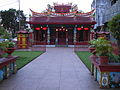
_Manado_-_panoramio.jpg)


 Davao City, Philippines
 Eindhoven, Netherlands
 Koror, Palau
 Qingdao, China
 San Sebastian, Spain


 Manado travel guide from Wikivoyage


