Hubbry Logo
Minahasan cuisineMinahasan cuisineMain
Open search
Minahasan cuisine
Community hub
Minahasan cuisine
logo
8 pages, 0 posts
0 subscribers
Be the first to start a discussion here.
Minahasan cuisine
Minahasan cuisine
from Wikipedia
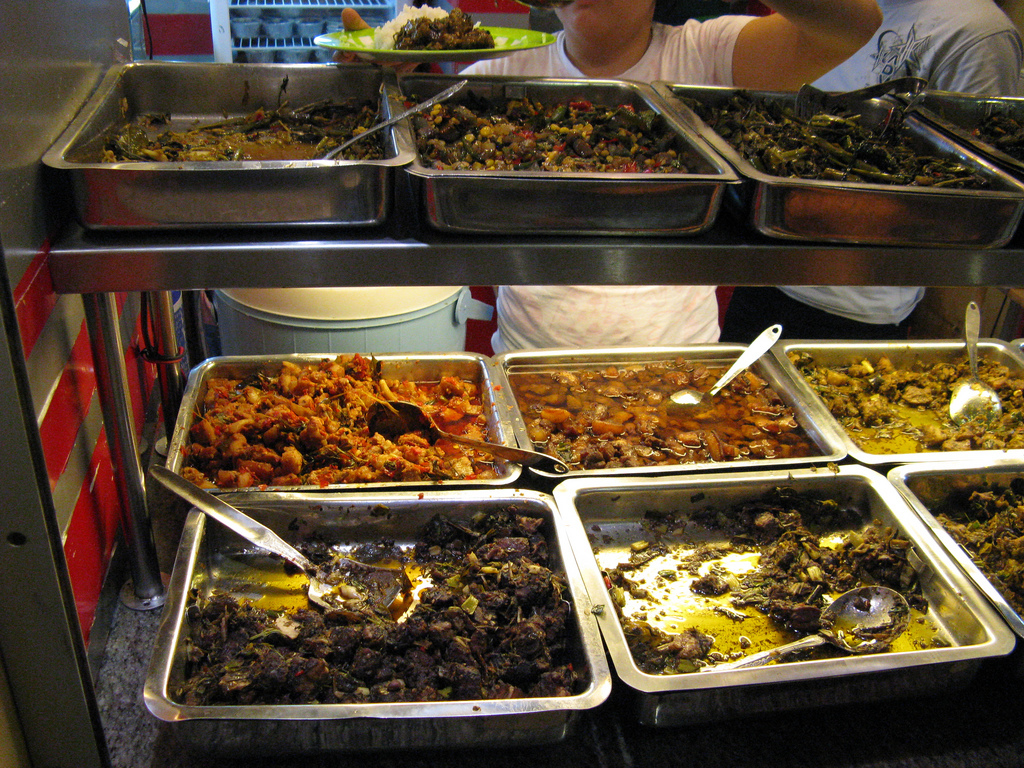
Examples of Manado dishes

Minahasan cuisine or Manado cuisine is the cooking tradition of the Minahasan people of North Sulawesi, Indonesia. It is popularly known as "Manadonese cuisine" after Manado, the capital of the province, although other cities in Northern Sulawesi, such as Bitung, Tomohon and Tondano, are also known as Minahasan culinary hotspots. Manadonese cuisine is known for its rich variations in seafood, generous amount of spices, extra-hot condiments,[1] exotic meats, and European-influenced cakes and pastries. Popular Manadonese dishes include tinutuan (Manado-style vegetable and rice congee), cakalang fufu (smoked skipjack tuna), cakalang noodle, paniki (spiced fruit bat), chicken or various fish and seafood spiced in rica-rica or woku spices, chicken tuturuga, and brenebon.

Although not as popular and widely distributed as Padang food and Sundanese cuisine, there is increasing awareness of Manadonese cuisine in the Indonesian cuisine scene. Numbers of Manadonese restaurants are growing in Indonesian cities such as Jakarta, Bandung, Medan, Surabaya and Makassar.

Traditions and influences

[edit]

Manadonese cuisine is marked by a mixture of native and foreign influences. Native Minahasan cooking tradition relies heavily on seafood as well as exotic bushmeats, and its heavy use of freshly chopped hot spices. It also demonstrates Chinese and Western influences (especially Portuguese/Spanish and Dutch), most prominent in soups, cakes, and pastries.

Chicken and beef are commonly consumed. A significant number of Minahasans are Christians; the halal dietary law has thus not played an important role in the cuisine's development as it has for the Minahasans' Muslim neighbors on the Sulawesi island (the Gorontalos and Northern Maluku people). Pork, wild boar, and even dog meat and bat are hence more ubiquitous in Manadonese cuisine compared to other culinary traditions in the Indonesian archipelago.

Spices

[edit]
Hot and spicy dabu-dabu condiment

Manadonese cuisine is well known for its generous use of spices, sometimes making up more than half of the whole dish's ingredients. It has given the cuisine the reputation of being hot and spicy, often from the freshly chopped chili peppers added in. Common spices used in Manadonese cuisine include lemongrass, kaffir lime leaves, lime juice, chili peppers, spring onions, shallots, garlic, cloves and candlenut. Seafood, pork and chicken are often cooked in Manadonese signature bumbu (spice blends), such as rica-rica and woku. Spicy condiments are also served as dipping sauce for seafood, such as dabu-dabu and sambal roa.

Cakes and pastries

[edit]
Klappertaart or coconut custard

Among Indonesian ethnicities, Minahasans are well known for their affinities with European culture. A number of European-influenced cakes and pastries made their way into the Minahasan kitchen. The most notable probably is klappertaart (from Dutch language, lit. coconut tart). Another example is panada, a Portuguese-influenced panada similar to empanadas and filled with spiced ground skipjack tuna.

Seafood

[edit]
Cakalang fufu, cured and smoked skipjack tuna

The Minahassa Peninsula – the northern arm of Sulawesi, a narrow peninsula that formed the North Sulawesi and Gorontalo provinces – is surrounded by seas on almost all sides. The Sulawesi Sea, Maluku Sea, and Gulf of Tomini have been fished by the Minahasan people for generations, and seafood has thus become a staple diet in Manado. The harbor cities of Manado and Bitung are the center of the fishing industry in the area.

Various seafood such as cakalang (skipjack tuna), tude (mackerel), oci (larger mackerel), tuna, albacore, bobara (trevally), kakap (red snapper), kerapu (garoupa), tenggiri (wahoo), bawal (pomfret), shrimp, mussels and crabs are available in the marketplace, often being grilled on charcoal, and served in dabu-dabu, cooked in woku, in rica-rica, or in kuah asam soup.

Exotic meats

[edit]
Paniki, fruit bat in spicy bumbu rica-rica green chili pepper

Minahasan people are also known for their bushmeats tradition. Before converting to Christianity in early 16th to 17th century, Minahasans were animists, and their practice on consuming almost every kind of animal still continued until this days. Rintek wuuk or RW (lit. Minahasan: "fine hair") is euphemism of dog meat. In Minahasan culture it is considered prestigious to consume rare and unusual meats. The marketplaces of the mountainous town of Tomohon and Tondano are notorious for selling various kinds of exotic bushmeats; from wild boar, field rats, patola snake (python), frog legs, paniki or fruit bats, and dog meat. Sometimes protected endangered animals such as yaki (Sulawesi black macaque), kuse (slow loris), tapir and anoa are illegally sold in marketplace as food.[2]

List of dishes

[edit]

Dishes

[edit]
Local name Image English name Notes
Cakalang fufu Smoked skipjack tuna Cured and smoked skipjack tuna
Dabu-dabu Spicy condiment Spicy condiment made of sliced tomato, chili pepper, shallot and lemon juice
Mie cakalang Skipjack tuna noodle soup Mie cakalang, skipjack tuna noodle soup, a Chinese-influenced dish
Nasi kuning Manado turmeric rice Nasi kuning, turmeric rice, although similar recipe also known throughout Indonesia
Paniki Spiced fruit bat Paniki, Minahasanese dish made from spiced fruit bat
Rica-rica Rica-rica Rica-rica, pork, chicken or fish spiced in a lot of chili pepper
Rintek wuuk (RW) Minahasan dog meat Rintek wuuk (RW), lit. "fine hair", a euphemism for dog meat dish, served in plenty of spices
Tinorangsak Spicy meat dish Tinorangsak, spicy meat dish usually made from pork
Tinutuan / Bubur manado Manadonese porridge Tinutuan, sometimes called bubur manado or Midal (bubur manado with Noodle), Manado style vegetables and rice congee
Woku Woku Woku, or its variant woku belanga; Pork, chicken or fish in woku spices

Vegetables and soup

[edit]
Local name Image English name Note
Sayor bunga Popaya/Sayur bunga pepaya stir-fried papaya flower buds Minahasan style stir-fried papaya flower buds.
Kuah asam Manado sour soup Kuah asam, soup of fish or seafood based soup
Brenebon Kidney bean soup Kidney bean soup, sometimes mixed with pig's trotters, beef or chicken. Brenebon is derived from Dutch Cuisine influence.
Perkedel Milu Corn fritters Minahasan style corn fritters.
Rica rodo Rica rodo Stir-fried and spiced young corn, string beans and eggplant
Sayor Paku/Sayur tumis pakis Stir-fried ferns Stir-fried ferns
Kangkong cah Stir-fried water spinach Minahasan style stir-fried water spinach

Snacks

[edit]
Local name Image English name Note
Es brenebon Brenebon Ice Sweet red kidney bean ice dessert
Klappertaart Klappertaart
Lalampa Similar to lemper
Panada Panada Similar to empanadas
Pisang goroho Goroho banana Fried banana consumed with sambal roa (spicy condiment made from ground red chili pepper and smoked fish)
Perkedel nike Anchovy fritters Freshwater anchovy fritters
[edit]

See also

[edit]

References

[edit]
[edit]
Revisions and contributorsEdit on WikipediaRead on Wikipedia
from Grokipedia
Minahasan cuisine refers to the traditional foods and cooking practices of the Minahasa people, an ethnic group indigenous to the northern region of , particularly around and , where it is renowned for its intense spiciness, use of fresh spices, and incorporation of diverse proteins including , , and exotic meats such as dog (though its trade was banned in major markets like since 2023), , and python. Originating from ancient highland communities over 6,000 years ago, the evolved through the Minahasa people's adaptation to volcanic soils and maritime resources, later influenced by routes involving cloves, , and , as well as colonial encounters with Portuguese and Spanish explorers who introduced chilies in the , Dutch rule in the , and migrants contributing fusion elements. Central to its flavor profile are bird's-eye chilies (locally called rica), ginger, lemongrass, turmeric, lime leaves, coconut milk, shallots, and candlenuts, often blended into aromatic pastes for stews or sambals like dabu-dabu (a fresh chili-tomato relish) and rica-rica (a fiery chili sauce); notable dishes include ikan woku belanga (spiced fish stew), babi woku (pork in coconut-spice curry), tinutuan (vegetable rice porridge with smoked fish), gohu (raw pork or tuna salad), and bobengka (cassava cake dessert). Culturally, Minahasan cuisine embodies communal feasting and rituals tied to indigenous beliefs and Christian traditions—following a mass conversion in —serving as an identity marker during events like the Endo Wangko harvest feast, while its bold ingredients are valued for nutritional benefits, including immune-boosting properties from spices and balanced proteins.

Overview and History

Introduction

Minahasan cuisine encompasses the traditional culinary practices of the Minahasa people, an ethnic group native to the Minahasa Peninsula in , , primarily centered in the vibrant cities of and . This cuisine draws from the region's diverse geography, where fertile volcanic soil fosters a rich array of local produce and coastal proximity ensures plentiful , contributing to its varied and resourceful character. At its core, Minahasan cuisine is defined by bold, spicy flavors achieved through the heavy incorporation of chilies, fresh herbs, and , resulting in aromatic and intense profiles that distinguish it from milder Indonesian regional styles. It is equally renowned for its adventurous use of ingredients, embracing exotic meats and in ways that highlight the Minahasa's historical adaptability and cultural openness. The cuisine's development has been influenced by the area's predominantly Christian population, which comprises the majority in this region and permits non-halal elements such as and , setting it apart from the halal-dominated culinary landscape elsewhere in . Brief colonial interactions with Dutch and settlers, alongside Chinese traders, introduced subtle external elements, though the cuisine remains firmly rooted in indigenous traditions. Globally, Minahasan cuisine has garnered attention for its daring aspects, exemplified by the Extreme Market, a bustling hub that trades in exotic meats and underscores the region's unapologetic culinary boldness.

Historical Development and Influences

The indigenous culinary practices of the Minahasa people, rooted in pre-colonial times, centered on locally available staples such as , , from coastal waters, and including bushmeats, reflecting an ancient heritage. These foods were integral to animist rituals and thanksgiving ceremonies, where communal feasts honored spirits and marked agricultural cycles, emphasizing resourcefulness in the volcanic highland environment before widespread Christian conversion in the . European colonization profoundly shaped Minahasan cuisine starting with Portuguese arrival in the late 1500s, who introduced chilies that established the region's signature spicy profile through and missionary activities. Spanish explorers contributed to the in the early 1600s, facilitating the exchange of seasonings that enhanced local preparations, while Dutch dominance from the mid-1600s onward incorporated European techniques like stewing and baking, evident in adapted dishes using local ingredients alongside imported elements such as pastries and bean-based broths. Chinese immigration in the 19th and 20th centuries further diversified Minahasan cooking, introducing stir-frying methods and soy-based seasonings that blended with indigenous vegetable and protein preparations, often mediated through Peranakan communities. The Japanese occupation during (1942–1945) imposed severe ingredient shortages across , prompting resourceful substitutions in traditional recipes amid economic deprivation and disrupted supply chains. Post-independence, Minahasan cuisine integrated into broader Indonesian culinary identity, with modern adaptations since the 2010s reducing reliance on exotic meats due to campaigns and health concerns, as seen in bans on dog and cat trade at markets like , including the 2023 prohibition on their sale and slaughter, to align with national welfare standards.

Cultural Context and Traditions

Social and Religious Customs

In Minahasan culture, feasting traditions known as "pesta" play a central role in communal meals during significant social events such as weddings, funerals, and Christian holidays like and , where abundant rice, proteins, and shared platters are prepared to symbolize unity and among participants. These gatherings often involve multiple banquets—for instance, three during traditional weddings organized by hosts and kin, or several over days and months following funerals—to honor the occasion and reinforce social bonds through the act of eating the same together, which signifies equality and connection. The Christian emphasis on inclusive commensality further integrates prayers and egalitarian values into these feasts, promoting . Daily eating habits in Minahasa emphasize sustenance and togetherness, with often featuring porridges like tinutuan, a vegetable-rich concoction commonly prepared and sold by street vendors for morning meals to provide nutritious energy. -style dinners typically revolve around fresh, spicy preparations shared at home, prioritizing locally sourced ingredients over processed foods to maintain health and cultural continuity, contrasting with the more elaborate feast menus. Religious customs deeply influence Minahasan cuisine, as the region's Christian majority—comprising approximately 67% of the as of 2024—permits the consumption of and exotic meats in rituals and daily life, viewing as "food for the gods" in ceremonies that mediate between humans and the divine. This practice starkly contrasts with broader Indonesian Muslim norms prohibiting , thereby strengthening Minahasan ethnic and through culinary choices during communal and holidays. Church-led initiatives, such as those by the Gereja Masehi Injili di Minahasa (GMIM), further shape these ties by encouraging feasts that blend traditional eating with Christian teachings on gratitude and sharing. Hospitality norms in Minahasa reflect warmth and , with hosts offering spicy dishes like rica-rica sauces to guests as a gesture of welcome and cultural pride during visits or gatherings. Traditional roles in preparation often see women managing mixtures and vegetable components, while men handle and sourcing, contributing to the collaborative effort in and feast settings. Guests are typically provided with abundant portions, including leftovers to take , underscoring the value placed on provisioning and social reciprocity. In modern contexts, markets like the one in serve as vibrant social hubs where locals and visitors converge for communal snacking and interaction, featuring Minahasan specialties amid a lively atmosphere of trade and conversation. These markets have evolved with since the early 2000s, attracting international interest through their display of exotic ingredients and bold flavors; in response to concerns, a 2023 ban ended the trade in dog and cat meat at Tomohon Market, promoting sustainable practices and broader cultural exchange.

Regional Variations

Minahasan cuisine exhibits notable variations across North Sulawesi's sub-regions, shaped by geography, local resources, and historical trade influences, resulting in distinct emphases on , exotic proteins, and spice profiles. In coastal areas like and , dishes prioritize fresh and preserved , while highland regions such as and Tondano favor land-based proteins and vegetables adapted to cooler, fertile terrains. The area, as North Sulawesi's urban coastal hub, emphasizes preparations reflecting its maritime access and history. Signature items include cakalang fufu, smoked rubbed with salt and , then cured over fires for a firm, savory texture that can be fried or added to spicy stews. This dish highlights milder spice integrations compared to inland areas, often fused with Chinese-influenced stir-fries using local and lemongrass. and Spanish introductions of chilies appear in condiments like dabu-dabu, a fresh salsa of tomatoes, shallots, and bird's eye chilies, paired with barbecued . In the Tomohon highlands, cuisine centers on exotic meats sourced from the region's volcanic soils and markets, with bolder chili applications suited to the cooler climate. Following a 2023 ban on dog and cat meat trade, the Market now features bats and pythons prepared in spice pastes like rica-rica, blending chilies, garlic, ginger, and for intense heat that enhances the gamey flavors. curry, simmered in with pine-scented herbs, exemplifies this robust style, distinct from coastal seafood dominance. The Tondano Lake region integrates freshwater resources into vegetable-heavy dishes, leveraging the lake's endemic produce for lighter, produce-focused meals. Perkedel nike—fried fritters of small Lake Tondano fish mixed with spices and batter—serves as a staple, often accompanied by corn fritters and steamed greens. Grilled freshwater with rica-rica underscores the area's reliance on lake-sourced proteins, differing from highland exotics by incorporating more abundant like in porridges. Bitung, a bustling port city, showcases and smoking techniques influenced by trade routes, with marinades featuring and for added depth. Dishes like shasibi (raw tuna) and smoked ikan tara reflect its coastal economy, blending Minahasa staples with European spice imports from Dutch colonial eras. This results in spicier profiles than Manado's urban fusions, emphasizing for export and local consumption. Emerging trends in the Likupang beach area adapt traditional Minahasan elements for eco-tourism, promoting accessible versions of dishes like cakalang fufu alongside steamed rice and sambals to appeal to international visitors since the early 2020s development push.

Key Ingredients

Spices and Seasonings

Minahasan cuisine relies heavily on the rica-rica paste as its core spice blend, a fiery mixture typically prepared from red chilies, bird's eye chilies (cabai rawit), shallots, , ginger, and , which is traditionally pounded fresh using a to preserve its vibrant flavors and aromas. This paste forms the foundational heat and depth in many dishes, with the chilies providing intense spiciness and the aromatics contributing earthy undertones. Herbal elements play a crucial role in enhancing fragrance, such as daun kemangi (), which imparts a fresh, citrusy note often added toward the end of cooking to meats for aromatic lift. Serai (lemongrass) and lengkuas (galangal) are essential for soups, where their citrusy and pungent profiles infuse subtle complexity and balance the richness of broths. Acidic and sweet notes provide balance in Minahasan seasonings, with offering a tangy sourness to cut through spice, while young coconut (klapper) contributes mild sweetness and moisture. and cloves, remnants of Dutch colonial influence, add warm, aromatic depth to stews and blends. Preparation methods emphasize authenticity through fresh grinding of spices, which releases essential oils more effectively than pre-made pastes, though commercial versions exist for . Heat levels vary by using cabai rawit for extreme spiciness or milder red chilies for subtlety. Sourcing ingredients from North Sulawesi's volcanic soils enhances the potency of chilies, as the mineral-rich earth promotes robust growth and intense flavor profiles. Seasonal availability influences intensity, with peak harvests yielding the freshest and most aromatic batches.

Proteins and Staples

In Minahasan cuisine, serves as the primary daily staple, forming the base for most meals and often accompanying proteins in simple preparations like steamed or boiled forms. Corn and frequently appear in vegetable-heavy mixes, such as the colorful tinutuan porridge, where they add texture and natural sweetness to rice-based dishes. Seafood proteins dominate coastal Minahasan diets, with (known locally as cakalang) being a key ingredient, often sourced from nearby waters and prepared by to preserve it for extended use. Freshwater fish from Tondano Lake, including species like mujair () and , provide inland protein options, harvested sustainably from the lake's volcanic-fed . such as mussels feature prominently in coastal preparations, adding briny flavors to communal meals alongside other bivalves like oysters and scallops. Among land-based proteins, pork holds a central role, frequently roasted as babi to highlight its tender texture in festive or everyday contexts. Chicken is ubiquitous, serving as a versatile and accessible option for stews and grills across households. Exotic meats sourced from highland forests, including fruit bat (paniki), dog (in traditional settings), wild rat, and snake, have historically supplemented diets, but consumption of dog meat has declined following a 2023 provincial ban on its trade in North Sulawesi, while other bushmeats like fruit bat face ongoing conservation pressures due to biodiversity protection laws. As of 2025, the ban remains in effect, with animal welfare groups reporting reduced dog meat availability, though enforcement challenges persist in rural areas. This shift has promoted farmed fish and poultry as more sustainable alternatives, aligning with broader efforts to balance cultural practices and environmental protection. Basic preparations for these proteins emphasize local techniques, such as marinating meats and overnight in spice blends to infuse flavors, followed by over husks, which imparts a distinctive smokiness from the husks' natural aroma.

Main Dishes

Soups and Porridges

Soups and porridges form a cornerstone of Minahasan cuisine, providing hearty, nutrient-dense options that leverage produce and reflect the region's tropical abundance. These dishes are typically prepared with , beans, or simmered in flavorful broths, often incorporating fresh greens and modest proteins to create comforting, balanced meals suitable for or as accompaniments to heavier mains. Their simplicity and versatility make them everyday staples, emphasizing through the use of seasonal ingredients. One of the most iconic s is tinutuan, also known as bubur Manado, a savory rice-based dish originating from in North Sulawesi's Minahasa region. It features rice cooked into a thick with corn, , , and an array of greens such as , , and , creating a vibrant, multicolored texture. Toppings commonly include for depth or a drizzle of for creaminess, enhancing its role as a daily staple that sustains through the day's activities. This 's preparation highlights Minahasa's tradition of mixing staple grains with abundant local to maximize and flavor. Brenebon offers a contrasting hearty profile, centered on red kidney beans slow-cooked in a rich broth with trotters or ribs until tender and gelatinous. Influenced by Dutch colonial culinary traditions—deriving its name from "bruine bonen soep," or brown bean —the dish incorporates warming spices like , cloves, and pepper, along with corn for subtle sweetness, resulting in a deeply aromatic and comforting bowl. The slow simmering process, often lasting several hours, melds the beans' earthiness with the pork's savoriness, making it a favored option for cooler evenings or communal gatherings. Kuah asam provides a lighter, tangy counterpoint as a sour featuring or poached in a clear broth acidified with lime or . lends a golden hue and earthy note, while like tomatoes and herbs such as and lemongrass add freshness and mild spice, yielding a refreshing dish that balances richer Minahasan mains. This 's bright, zesty profile stems from Manado's coastal access to , positioning it as an ideal side for cutting through the intensity of grilled or fried accompaniments. Variations in these dishes often incorporate seasonal greens, such as additional leafy vegetables like gedi leaves in tinutuan for enhanced texture, adapting to local harvests while maintaining core flavors. During feasts or events, soups and porridges are commonly prepared in large pots for communal serving, fostering social bonds through shared nourishment. Overall, these preparations emphasize high-fiber, vegetable-forward compositions that support in the humid , delivering vitamins, minerals, and sustained energy from ingredients like , corn, and beans.

Seafood Preparations

Seafood holds a prominent place in Minahasan cuisine due to North Sulawesi's extensive coastline and abundant , with preparations emphasizing preservation, , and saucing to enhance natural flavors while incorporating bold spices. Common techniques include for longevity, char- over open flames for smokiness, and simmering in coconut-based curries to tenderize tougher . These methods reflect the region's heritage and , allowing dishes to be enjoyed fresh or stored for later use. Cakalang fufu exemplifies traditional preservation in Minahasan cooking, consisting of (Katsuwonus pelamis) that is cleaned, halved into a butterfly shape, salted with soda powder, and smoked over mangrove wood for approximately four hours to develop a distinctive hue and firm texture. This , rooted in local traditions, yields a product that can last up to one month at and meets Indonesian standards for moisture (59%), low salt (0.08%), and levels (42.32 mg/kg). Once prepared, the smoked tuna is shredded and served with steamed , incorporated into salads, or mixed into dishes like cakalang noodles, providing a versatile, protein-rich component. In 2022, cakalang fufu received status to safeguard its unique Manado-style production. Ikan bakar rica-rica showcases techniques suited to the coastal bounty, featuring whole or filleted such as or snapper marinated in a vibrant chili paste of red Fresno chilies, bird's eye chilies, shallots, ginger, lemongrass, , and kaffir lime leaves, then charred over for a smoky exterior. The term "rica-rica," meaning "chili" in the language, underscores the dish's fiery profile, amplified by sautéed tomatoes, , and for balance, with times of 20-25 minutes ensuring deep flavor infusion before a final broil or grill of 5 minutes per side. Often paired with sambal dabu-dabu, this preparation highlights the assertive, spice-loving character of Minahasa people, influenced by 16th-century European chili introductions. Gonggong asam utilizes slow-simmering to transform chewy conch or snail into a tender dish, cooked in sour coconut milk curry enriched with turmeric, chilies, and local aromatics for a tangy, aromatic profile. Regional variations distinguish Manado's emphasis on fresh grilling of fish like ikan bakar, preserving oceanic freshness, from Bitung's preference for curry-based styles that incorporate more coconut and spices for deeper simmering. These dishes are commonly enjoyed with young coconut water to refresh the palate amid the heat. Tuna for these preparations is sourced from North Sulawesi's rich waters, supporting sustainable fishing practices detailed in regional staples. Health-wise, Minahasan seafood offers omega-3-rich, low-fat proteins essential for cardiovascular health, with the smoked varieties like cakalang fufu showing low histamine and bacterial levels for safety, alongside modern low-sodium versions adapting traditional recipes for contemporary diets.

Meat Dishes

Minahasan meat dishes emphasize bold, spicy flavors derived from local chilies and aromatic spices, reflecting the region's Christian heritage where and are staples, often prepared for communal feasts. These entrees typically involve marinating and cooking methods that enhance tenderness and crispiness, such as or stewing, with portions scaled for large gatherings like weddings serving over 500 guests. Meat preparations play a central role in Minahasa feasting culture, where men handle slaughtering and cooking to demonstrate prestige, while holds particular significance in religious and social customs. Ayam rica-rica is a signature dish originating from in , where the meat is simmered in a thick, fiery chili sauce made with red chilies, ginger, shallots, lemongrass, and kaffir lime leaves, allowing for adjustable heat levels based on the quantity of chilies used. The stewing process infuses the chicken with a robust, spicy profile, often served as a solid entree without broth. This preparation highlights Minahasa's affinity for intense spicing, contrasting with milder regional cuisines. Babi panggang features spit-roasted or oven-roasted , a festive dish marinated in a paste of red chilies, shallots, , and for several hours to achieve deep flavor penetration and crispy skin through high-heat cooking. In style, the pork is scored, rubbed with the marinade, and roasted initially at high temperatures before lowering the heat with added stock, resulting in tender meat under a crackling exterior, commonly served at large community feasts. The focus on crispy skin underscores the dish's appeal in celebratory contexts. Paniki, a traditional game dish using fruit bats sourced from North Sulawesi's highlands, is prepared either grilled for a charred savoriness or cooked in spicy rica with chilies and , yielding a that tastes akin to with subtle nutty undertones from the bats' fruit-based diet. This Minahasan specialty reflects the region's use of wild proteins, often enjoyed in savory preparations that emphasize local spices. However, consumption of carries risks due to potential zoonotic diseases, and continues amid calls for as of 2025. Exotic meats like , known euphemistically as RW (rintek wuuk, meaning "fine hair"), are stewed in Minahasa style with , chilies, , shallots, , and candlenuts, sometimes incorporating and kaffir lime leaves for added aroma in dishes such as rica-rica or woku. Forest rats and snakes, available at markets like , are typically grilled or prepared similarly, with rats impaled on sticks and snakes yielding a chicken-like texture despite small bones. These practices are declining due to conservation efforts and bans, including the 2023 prohibition on meat at Extreme Market, which remains in effect as of 2025 to curb and protect ; however, in other wild meats like bats, rats, and snakes persists in some markets, raising ongoing zoonotic disease concerns. Bamboo steaming is a key technique for meat tenderness in Minahasa and nearby Sulawesi regions, where segments of bamboo are filled with marinated pork or chicken, sealed, and steamed to impart subtle earthy flavors while preserving juiciness, often used for smaller exotic preparations. Feast-scale cooking amplifies these methods, with large cuts of meat roasted or steamed in bulk to feed hundreds, ensuring communal sharing as a cultural norm.

Accompaniments and Sides

Vegetable Dishes

Vegetable dishes in Minahasan cuisine emphasize fresh, local produce grown in the fertile volcanic soil of the highlands, which enhances their nutrient density and flavor. These preparations, typically stir-fries or light curries, serve as sides that balance the bold spices and heat of main protein dishes, providing fiber, mildness, and textural contrast. Common vegetables like corn, , and long beans feature in simple sautés, while leafy greens and flowers add bitterness to offset richness. Sayur bunga pepaya, also known as sayur garo, is a traditional stir-fry of flower buds and leaves with , shallots, , and melinjo leaves, creating a bitter-sweet profile with tangy and spicy notes. This dish highlights the region's use of foraged and garden elements for vibrant, piquant flavors that cut through fatty meats. Rica rodo exemplifies simple vegetable sautés, combining young corn, long beans, and stir-fried with chilies and spices for a mildly spicy, crunchy side. Corn appears in such preparations, leveraging the highlands' abundant yields to offer cooling freshness alongside proteins. In meals, these vegetable sides play a key role as accompaniments, promoting dietary balance with their content and subtle flavors that temper the cuisine's intensity.

Sambals and Condiments

Sambals and condiments form the fiery backbone of Minahasan cuisine, offering customizable levels of heat and freshness that complement nearly every meal, from grilled seafood to rice-based dishes. These relishes, often prepared fresh or with minimal cooking, highlight the region's abundant chilies and aromatic herbs, allowing diners to personalize their spice intensity according to tolerance—a hallmark of Minahasan culinary identity, where "rica" (chili) is considered essential to authentic flavors. Dabu-dabu stands out as a quintessential raw , resembling a vibrant salsa with its coarse texture and sharp, acidic profile. It is crafted from chopped tomatoes, bird's eye chilies (red or green), shallots, wild or mint leaves, and lime or juice, sometimes enhanced with a touch of salt and for balance. This delivers a burst of freshness and heat, often spooned directly over grilled fish (ikan bakar) or proteins to cut through richness, and variations may incorporate local like lemon cui for intensified aroma. Family preparations frequently adjust chili quantities to suit personal heat preferences, underscoring its role in everyday Minahasan tables. Rica-rica, derived from the local term for "to grind," is a potent spice paste that serves as both a cooking base and a standalone in Minahasan meals. The core mixture includes chilies, shallots, , ginger, lemongrass, kaffir lime leaves, and salt, pounded or blended for a thick, aromatic consistency. A fried iteration transforms it into a deeper, smokier by sautéing the paste in oil with onions, creating a versatile dip for meats or sides. Like other sambals, it is liberally applied to soups, , or proteins, embodying the Minahasan affinity for bold, chili-driven tastes that test and celebrate spice endurance. These condiments, rooted in chili-heavy bases detailed in the spices and seasonings of Minahasan cooking, are not merely accompaniments but cultural staples that reinforce communal dining traditions among the .

Desserts and Snacks

Cakes and Pastries

Cakes and pastries in Minahasan cuisine represent a fusion of indigenous ingredients and colonial techniques, particularly from Dutch influences introduced during the colonial era. These sweets are typically enjoyed as desserts or snacks after meals, featuring tropical elements like and alongside European methods such as or steaming. Prominent examples include baked tarts and steamed glutinous treats, often prepared for festive occasions. Klappertaart, a signature , exemplifies this hybrid tradition in Minahasan cuisine. Originating from in , it combines Dutch tart-making with local abundance, resulting in a creamy dessert served during special events. The tart is prepared by mixing plain , fresh , , butter, and egg yolks to form a thick base, then incorporating young meat, raisins, powder, and walnuts for texture and flavor. This mixture is baked at 160°C for about 15 minutes, topped with a of beaten egg whites, and baked for an additional 20 minutes to achieve a golden, fluffy crown. Koyabu offers a contrasting steamed alternative, highlighting pre-colonial and early trade influences in Minahasan pastry-making. This glutinous cake, popular in , uses local staples like and to create a chewy, aromatic treat. Ingredients include glutinous rice flour, shredded young , (gula aren), pandan leaves for wrapping and scent, and a pinch of salt; some variations incorporate grated for added moisture and texture. The preparation involves mixing the flour, , and salt, forming small pouches around lumps of , wrapping in pandan leaves, and until firm, yielding a sweet-savory balance ideal for casual snacking or family gatherings. Bobengka is another traditional cake, made primarily from or flour, , and , often baked in a sand bed or steamed to achieve a moist, chewy texture. Sometimes enriched with pili nuts or young coconut for added flavor and crunch, it reflects indigenous use of local tubers and is commonly served during holidays and communal gatherings as a symbol of abundance. Preparation methods for these cakes reflect colonial introductions, such as ovens for baking and steamers adapted from European tools, which enhanced traditional steaming techniques using local apparatus like or clay pots. In Minahasan culture, these pastries are prominently featured during holidays, including and , where they symbolize abundance and communal feasting. Contemporary adaptations cater to , with variations like rum-infused adding a boozy depth to the classic , appealing to visitors while preserving the dish's creamy essence.

Savory Snacks

Savory snacks in Minahasan cuisine emphasize bold, spicy flavors derived from local , herbs, and chili, often reflecting historical influences from , Spanish, and Chinese traders. These portable bites are typically enjoyed between meals, with or , and showcase the region's preference for umami-rich ingredients like smoked or fresh fish. Common preparations involve , , or grilling to achieve crispy or tender textures, making them ideal for on-the-go consumption in markets or during social gatherings. Panada is a quintessential fried resembling an , introduced through Portuguese colonial influences in the Minahasa region. The dough, made from , yeast, and , is rolled thin, filled with a spicy mixture of floss (pampis), shallots, chili peppers, , and lime leaves, then folded into half-moons and deep-fried until golden and crisp. This results in a soft, bread-like interior contrasting with the crunchy exterior, delivering a harmonious blend of savory and heat. is widely available in markets and often served as a staple. Lalampa represents a grilled rice-based unique to Minahasa, prepared by cooking in until sticky, then stuffing it with minced seasoned with herbs, spices, and chili for a smoky, aromatic filling. The rice parcel is wrapped in leaves, brushed with oil, and grilled over to impart a subtle char and earthy flavor. This method preserves moisture while enhancing the savory depth, making lalampa a popular accompaniment to beverages or a standalone nibble during festivities. Its preparation highlights sustainable use of local staples like and leaves. Biapong, a steamed with Chinese origins adapted in Minahasa, features a soft, white dough of and yeast enclosing savory fillings such as diced pork and boiled egg, sometimes enhanced with or onions for added . The buns are steamed over a wood fire, yielding a fluffy texture and faint smoky aroma that distinguishes them from mainland Indonesian variants. Primarily consumed by the Christian community in , biapong serves as a hearty reflecting cultural fusion and is commonly found at local eateries or home kitchens. Perkedel nike consists of small, crunchy fritters crafted from juvenile freshwater gobies (known locally as nike) blended with chopped red onions, flour, and seasonings, then shallow-fried to a . These salty, bite-sized cakes provide a protein-packed crunch, often paired with spicy sambals but enjoyed independently as a market snack. Sourced from Manado's rivers, nike imparts a mild fishiness that embodies the cuisine's resourceful approach to local aquatic bounty. Another notable option is pisang goroho with roa, where thin slices of the local goroho —a starchy variety abundant in —are deep-fried into crisp chips and dipped in a fiery of smoked roa (bulan-bulan), chilies, shallots, and lime. This combination transforms the neutral banana into a savory treat, balancing sweetness with intense spice. It is particularly favored in Likupang and coastal areas for its simplicity and portability.

References

Add your contribution
Related Hubs
User Avatar
No comments yet.