Hubbry Logo
MetsovoMetsovoMain
Open search
Metsovo
Community hub
Metsovo
logo
8 pages, 0 posts
0 subscribers
Be the first to start a discussion here.
Metsovo
Metsovo
from Wikipedia

Key Information

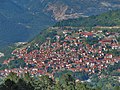
Metsovo (Greek: Μέτσοβο; Aromanian: Aminciu) is a town in Epirus, in the mountains of Pindus in northern Greece, between Ioannina to the west and Meteora to the east.

The largest centre of Aromanian (Vlach) life in Greece, Metsovo is a large regional hub for several small villages and settlements in the Pindus region, and it features many shops, schools, offices, services, museums, and galleries. The economy of Metsovo is dominated by agriculture and tourism, the latter flourishing in winter.

Metsovo is served by Greek National Road 6 (Ioannina – Trikala) and by the A2 motorway.

Etymology

[edit]

From medieval times till well into the 19th century, Metsovo was known, in various sources, as Metzovo.[citation needed] From the end of the 18th century on, the literary form of Messovon makes its appearance. The town is known as Aminciu in Aromanian (Vlach), and as Miçova in Ottoman Turkish.

Ottoman census records

[edit]

In the Ottoman census records we see the word Mcwh (مجوه), which is usually pronounced "Miçova". In Aromanian, Metsovo is called Aminʤu,[3] a word combining the preposition "a" (meaning "to, into") and the word "Minʤu".

Various names

[edit]

From "Minʤu" derive terms signifying ethnic origin Miʤanu and Miʤanə—meaning, respectively, "man from Metsovo", "woman from Metsovo"—as well as the adjectives miʤənescu and miʤəneascə—meaning "Metsovite", "of Metsovo"—which are used today by the residents of Metsovo. The Aromanian part of the population, that part which does not use the term Aminʤu, uses the name "Meʤova". Some firman refer to Metsovo as Derveni.

Modern form

[edit]

The derivation of the name Metsovo—from the words Mitsous and Mesovounon or from the unattested Slav word *Mẹčovo, meaning bear-place—which has been proposed by academics and historians, is not confirmed by linguistic research. Alternatively, there appears to be an etymological relation between the Aromanian Minʤu and the Greek Metsovo, the latter being a combination of the stem Mets and the Slavic-ending ovo.

History

[edit]
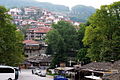
Panorama of Metsovo, 1899. Photo by the Manaki brothers (damaged glass plate)
The church of Agia Paraskevi

In the 15th century Metsovo came under Ottoman rule and became part of the Sanjak of Ioannina.[4][5] Throughout the late period of Ottoman rule (18th century-1913) the Greek and Aromanian population of the region (Northern Pindus) suffered from Albanian raiders.[6] On one occasion, during the local Greek revolt of 1854, the town was plundered by both Ottoman troops and the men of Theodoros Grivas, a former general in the Greek military, during their struggle for control of the town.[7]

During the First Balkan War, Metsovo was burnt by raiding bands.[8] In the last 10 days of October 1912, military volunteers from Crete, together with about 340 soldiers of the tactical Greek army under the command of Lieutenant Colonel Mitsas, advanced through Thessaly to the then Greek-Turkish border along the mountains east of Metsovo. On October 31, 1912, the Greek troops assisted by rebel groups from Epirus and volunteers from Metsovo, having crossed the Katara-Zygos mountain ridge overnight, attacked the Turkish garrison of Metsovo, which then comprised 205 soldiers and two cannons. The battle lasted until 4 pm when the Ottoman soldiers inside the besieged Turkish garrison raised a white flag and surrendered.

Social stratification

[edit]

Socially, the residents of Metsovo, up until the beginning of the 20th century, were divided into three classes: the "arhontzi" (arxondzɨ),[3] the "vinitsi" (vinitsɨ) and the "algi" (alɟi) or, mockingly, "gizari" (ɟizari). This socioeconomic stratification developed during the Ottoman occupation.

Árhontzi

[edit]
Main square
Stores of the main square

The arhontzi were the wealthiest part of society. Their revenues derived from wholesale and retail commercial activities. Although locally very powerful, they were not a closed group in terms of social mobility. Wealth gave anyone the right to climb up the social ladder to the next higher level, although such ascent often gave rise to serious conflicts.

Vínitsi

[edit]

The vinitsi comprised the middle and lower classes of the settlement that were not occupied in livestock breeding. It mostly included farmers, small business owners, technicians, mule drivers, and small-scale merchants. Despite the economic and professional diversification among the vinitsi, they saw themselves as a unified social class, which was evident in their social relations. For example, they would marry among themselves but never with members of the algi.

Álgi

[edit]

The algi were the class of traveling sheepherders, whose occupation was large-scale sheepherding, livestock breeding, as well as woodcarving. They had set rules regarding the social roles of their members, and a strict patriarchal structure that governed their class.

Distinctions between vinitsi and algi

[edit]

The social differences between the two lower classes were not based on income criteria but on the fact that their members came from very different economic structures. In the past, the distinction between sheepherders and non-sheepherders existed in all developed Aromanian settlements of Pindos, and could possibly be concealing, in a latent form, the socioeconomic reality of past times. This was not a class distinction based on wealth, since in most cases the members of both groups belonged to the poorer segments of the population, but a differentiation related to the establishment of the settlements during the Ottoman period, which produced the co-existence of populations with the same linguistic base but with clearly different economic and social structures.

Ottoman tax district

[edit]
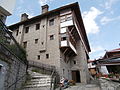
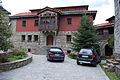
Buildings of Metsovo.

Karye-iMiçova denoted the tax district of the Ottoman timar that constituted the area of Metsovo. Six settlements are recorded in it. Each settlement's name is preceded by the indication "karye" and usually followed by the phrase tâbi'-iMiçova meaning "subject to Metsovo".[9]

The word karye, as a term in the organizational structure of the Ottoman Empire, defined a settlement or a group of settlements constituting a unified tax district. In the Greek language it is usually translated by the word "chorion". However, it does not correspond to the term "settlement" as used in modern statistical terminology, but rather to "community". In other words, it does not signify a group of buildings, but a well-defined geographical area with a self-contained legal entity. A karye could include more than one settlements regardless how far apart they were from each other.[10]

In the 1506 census, Karye-iMiçova is followed by the phrase "tâbi'-i Τirhala" meaning "subject to Trikala". The names of eight settlements appear in it. Before the name of each settlement, the indication "karye" of the 1454–55 census has been replaced by "mahalle". The specific administrative structure of the area constituted the basis for its administrative organization in the centuries to come. In administrative documents of the 18th century, the present settlement of Metsovo is termed "chora" and the other villages as "mahalades".[11]

The privileges of Metsovo

[edit]

Starting in the mid-17th century, the residents in the region of Metsovo were relieved from the obligation to pay the regular and ad hoc taxes that were usually paid by Christian residents in other Ottoman regions, on the condition that they would pay a lump sum per year. The Ottoman administration often made such arrangements for groups of its subjects that offered a special service to the state.

The case of Metsovo

[edit]

The special service provided by the Metsovo residents was the guarding of the local mountain passes and the servicing of travelers. The special tax regime did not mean self-government in theory. The notion of autonomy was unknown to the Ottoman understanding of polity. In practice, however, the granting of tax exemptions was equivalent to self-governance of the area.

Since the 18th century, the management of lasa, or bequests left to a community, constituted one of the most important municipal functions. The love for their birthplace and the social altruism of the Metsovites living abroad resulted in the amassing of significant benefactor funds in Metsovo. As early as the beginning of the 19th century, there was a special logbook where the wills and testaments of the benefactors were recorded. The logbook was destroyed in 1854; it was then redrafted by the patriarchal exarchate of Metsovo but destroyed again in 1941.

Management of state property

[edit]

In theory, the sultan was the undisputed owner of all land in Metsovo and had the right to dispose of it as he wished. That is why firmans were only temporarily applicable and defined the area as the property of Ottoman officials, to whom the Sultan granted tenure rights.

Reduced taxes

[edit]

The reduction of taxes meant keeping a larger share of the local surplus crop production. In consequence, regardless of the theoretical framework that governed the land ownership and political regime of the Ottoman Empire, the lands of Metsovo were gradually falling under the absolute possession, ownership, and management of its residents, which corresponded to political self-governance. This development had a cost. Every year, the corresponding taxes and other contributions had to be pre-paid to the Ottoman landlord of the area, otherwise the Chora or Mukataa of Metsovo could lose its status and be combined with neighboring Ottoman regions.

The phenomenon of beneficence

[edit]

Beneficence by Metsovites is a powerful phenomenon, the dimensions of which were formed through the processes relating to the socioeconomic growth of Metsovo during the Ottoman period. It is mainly the expression of the cultural notions that governed the ruling class of Metsovo at the time. Despite the long absence of the men of the community from Metsovo, due to their business and commercial activities, their hometown remains in their hearts as their financial and family seat. Consequently, a large part of their revenue is channeled into the local economy by themselves or their families, as charity or investment capital to be used for the conservation of the social and political superiority of their class.

Beneficence as a notion is directly connected with the special political regime granted by the Ottoman state to the Chora Metsovou. The demonstration of altruism, signaling and confirming their social distinction and status, provides Metsovites with the option to have social and economic control of their homeland. At first, their social solidarity is expressed as a church-sponsoring funding activity according to the standards of a cultural notion that derives from the medieval past of the Orthodox church.

The Exarchate of Metsovo

[edit]

After 1659, the area of Metsovo, thus far under the bishopric of Stagoi, was formed into its own exarchate under a patriarchal exarch. The "Catholic Exarch of Metsovo"—a person appointed by the Patriarch of Constantinople—resided in Constantinople and was paid 15 kuruşlar annually for his role as supervisor of the region. In actuality, his duties were performed by a local clergyman, who was elected by the people of Metsovo, approved by the patriarchate, and was obliged to act in the name of the catholic exarch. From 1818, the election of the clergyman was by vote of the ephors of the schools of Metsovo, with his election then being ratified by the patriarchate. The spiritual jurisdiction of the exarch comprised the settlements of Metsovo, Anilio, Derventista (now Anthohori), Votonosi, Milia, Koutsioufleani (now Platanistos), and Malakasi. In 1924, the Exarchate of Metsovo was temporarily upgraded to a metropolis, in order to accommodate the placement of clergy from Asia Minor who had lost their seats. In 1929, the metropolis was abolished without reinstating the exarchate. The region came under the Metropolis of Grevena until 1932, when Metsovo, Anilio, Votonosi and Derventista were annexed to the Metropolis of Ioannina. The Exarchate of Metsovo, functioning as the local representative of the religious ideals of the Patriarchate, played a major part in the formation of the religious and national conscience of the higher social classes of Metsovo.

The scholars and clergy of Metsovo

[edit]
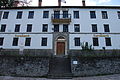
School in Metsovo.

The economic and social growth of Metsovo during the 18th century is reflected in the efforts of the residents to upgrade their level of education. Indicative of these efforts is the establishment of a school as early as the beginning of the 18th century, the continuous care to maintain its operation, and studying abroad in European universities to receive higher education. The result of this process is the appearance of a class of scholars, teachers, and clergymen who participate actively in the intellectual life in the territories of modern Greece. Among these scholars we find Parthenios Katzoulis, Anastasios Metsovitis, Konstantinos of Metsovo, Tryfon of Metsovo, Demetrios Vardakas, Adam Tsapekos, Anastasios of Metsovo, Dositheos Driinoupoleos, Konstantinos Peltekis, Konstantinos Tzikas, Triantafyllos Hatzis Stergiou, Christoforos Varlamitis, the Kyriakos brothers, Konstantinos and Theofilos Tzarzoulis, as well as their father Nikolaos Tzartzoulis who is considered one of the "Teachers of the Nation" by Greek historians.

The merchants of Metsovo

[edit]
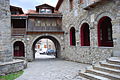
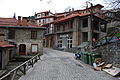
Staircase in the market area (central square) of Metsovo
Anilio ski center
Church of St George in Metsovo

The merchants in Metsovo were peddlers that became very active in commercial trade, in both the Ottoman Empire and in Europe.

Socioeconomic growth of Metsovo

[edit]

The impressive socioeconomic growth of Metsovo during the Ottoman occupation is mainly due to the involvement of a large part of its population in the commercial activities of both the Ottoman Empire and of Europe. Taking into account the fact that the residents of Metsovo had been migrating for a long time, it is difficult to determine the beginning of its commercial growth.

Testimonies – sources

[edit]

Substantial information about the commercial development of Metsovo are found from the mid-17th century onward, when we see testimonies of the presence of peddlers from Metsovo in Constantinople and Venice, which indicates an early phase of their involvement in commercial trade in the eastern Mediterranean. During the 18th century we see testimonies of the presence of Metsovite merchants in Constantinople, Bucharest, and Vienna. By the end of the 18th century there is an established community of merchants in Metsovo, which, through a collaborative or overlapping trade network, spread its operations over a rather extensive geographic area.

19th century

[edit]

The first decade of the 19th century signaled the beginning of the most dynamic phase of commercial activity by the Metsovites. Now the geographic and economic reach of their activity exceeds its initial range. Their activity extends as far as Moscow, Cairo, Malta, Livorno, and Trieste.

Cities of activity

[edit]

Records show that Metsovite merchants had a permanent presence in the following cities and towns: Corfu, Serres, Filippoupoli, Odessa, Brody, Moscow, Petersburg, Sevastopol, Nizna, Thessaloniki, in the Romanian cities of Orsova, Chisinau, Iasi, Ismail (Bessarabia), Craiova, Focsani, Galatsi, and Odessa, and a presence in the trade fairs and open-air markets of Perlepe, Sistov, Uzungiova, Rostov, Smyrna, Cyprus, and Damascus. Naturally, the old trade strongholds of Constantinople, Bucharest, and Vienna continued to present the largest concentrations of Metsovite merchants.

Alexandria

[edit]

Another significant overseas hub of commercial activity for Metsovites is the port of Alexandria, in Egypt. The latest records show that the nature of their trading has changed dramatically from the times of their traditional land transport and trade fairs in the Balkans. Although the traditional method of commerce still occupies the merchants that are based in Metsovo or Ioannina, a large number of Metsovite merchants has established trading companies and agencies in distant places where they are occupied with all types of import and export trade.

Province

[edit]

The province of Metsovo (Greek: Επαρχία Μετσόβου) was one of the provinces of the Ioannina Prefecture. Its territory corresponded with that of the current municipality of Metsovo, except for most of the municipal unit of Egnatia.[12] It was abolished in 2006.

Municipality

[edit]

The present municipality of Metsovo was created by the 2011 local government reform, by the merger of the following 3 former municipalities that became municipal units:[13]

The municipality of Metsovo has an area of 363.656 square kilometres (140.408 sq mi), the municipal unit of Metsovo has an area of 177.676 square kilometres (68.601 sq mi), and the community of Metsovo has an area of 101.908 square kilometres (39.347 sq mi).[14]

Demographics

[edit]
Year Community Municipal unit Municipality
1981 2,705
1991 2,917 4,125
2001 3,195 4,417
2011 2,503 3,469 6,196
2021 2,337 3,254 5,432

Climate

[edit]

Metsovo has a temperate climate with snowy winters and pleasant summers. Precipitation is high all year with a drying trend in summer.

Climate data for Metsovo town (1,240m)
Month Jan Feb Mar Apr May Jun Jul Aug Sep Oct Nov Dec Year
Mean daily maximum °C (°F) 4.1
(39.4)
5.5
(41.9)
8.6
(47.5)
12.5
(54.5)
16.6
(61.9)
21.6
(70.9)
25
(77)
25.4
(77.7)
21
(70)
15.4
(59.7)
10.7
(51.3)
6.6
(43.9)
14.4
(58.0)
Mean daily minimum °C (°F) −1.9
(28.6)
−0.7
(30.7)
1.6
(34.9)
4.6
(40.3)
8.1
(46.6)
12.3
(54.1)
15
(59)
15.2
(59.4)
12
(54)
7.8
(46.0)
4.3
(39.7)
0.3
(32.5)
6.6
(43.8)
Average precipitation mm (inches) 185.9
(7.32)
159.6
(6.28)
130.3
(5.13)
129.5
(5.10)
133.6
(5.26)
69.3
(2.73)
44.6
(1.76)
34.8
(1.37)
132.4
(5.21)
140.6
(5.54)
182.8
(7.20)
187.6
(7.39)
1,531
(60.29)
Source: http://penteli.meteo.gr/stations/metsovo/ (2011–2016 & 2019–2020 averages)

Transportation

[edit]

In the 1980s, a nearby tunnel was constructed that was the longest in Greece, alleviating traffic that would otherwise clog Metsovo's twisting roads. In 2006, the junction between the A2 motorway and a section of Greek National Road (Ioannina – Trikala) made for a superhighway with two exits at Metsovo.

Culture/attractions

[edit]
The Averoff Art Gallery building
Metsovone

Cuisine

[edit]

The town is famous for its local cheeses (Metsovone and Metsovela, among others)[15] and for its winemaking industries, including the Katógi vineyard of the Averoff family.

Other

[edit]

A museum named Averoff Gallery is dedicated to Georgios Averoff. Metsovo is a popular winter vacation destination and ski resort town. The Metsovo Ski Centre is situated not far from the centre of Metsovo.

Metsovo is included in the Aromanian traditional song Di la Aminciu pãn' la Ameru ("From Metsovo to Milea").[16]

Notable people

[edit]
George Averoff, famous benefactor from Metsovo

Notable individuals from Metsovo include:

[edit]

See also

[edit]

References

[edit]

Sources

[edit]
  • Μ.Vasmer, Die Slaven in Griechenland, Leipzic 1970, pp. 41
  • K. Oikonomou, Ta oikonymia tou Nomou Ioanninon, Glossologiki Exetasi [Local Names of the Prefecture of Ioannina – Linguistic Approach], publication of the Ioannina Prefecture, Ioannina 2002, pp. 194–199.
  • M. Kokolakis, "I tourkiki statistiki tis Epirou sto Salname tou 1895" [Turkish Statistics of Epirus in Salname of 1895], in Plithismoi kai oikismoi tou ellinikou chorou: istorika meletimata [Populations and Settlements of the Greek territories: historic studies], Vasilis Panagiotopoulos, Leonidas Kallivretakis, Dimitris Dimitropoulos, Michalis Kokolakis kai Eudokia Olympiou, publ. Institouto Neoellinikon Ereunon/ Ethniko Idrima Ereunon, 2003, p. 257.
  • M. Delibaşi -M. Arikan, Sûret-i Defter-i Sancak-i Tirhala I, Türk Tarih Kurumu, Ankara 2001, pp. 26–27
  • G. Weigand, Die Aromunen, Bd. Α΄, J. A. Barth (A. Meiner), Leipzig 1895, p. 149.
  • P. Aravantinos, Chronographia tis Epirou [Chronography of Epirus], vol. B', publ. Koultoura, Athens, p. 107 -108
  • I. Lampridis, "Malakasiaka", Epirotika Meletimata [Epirote Studies] 5 (1888), publ. 2. Society for Epirote Studies. (EHM), Ioannina 1993, pp. 13–14, 30–37, 40–42, 52–56, 384.
  • R.Schlösser, Historische Lautlehre des Aromunischen von Metsovon, Balkan-Archiv, Βd.3, Hamburg 1985, pp. 21–22.
  • M. Tritos, "Ta sozomena firmania ton pronomion tou Metsovou" [The surviving firmans about the privileges granted to Metsovo], Minutes of the 1st Conference of Metsovite Studies, Athens 1993, pp. 397–414.
  • V. Diamandi, "Meţoviţeanul Floca şi privilegiile obţinute de el", Convorbiri literare (1910), pp. 480–483.
  • Th. Dasoulas, "Agrotikes koinonies tou oreinou chorou kata tin othomaniki periodo: o georgikos kosmos tis 'Choras Metzovou'" (18os −19os ai.) [Agrarian society in highland areas during the Ottoman period: farmer's population of the land of Metzovo (18th c. – 19th c.)], publ. EADD (National Archive of PhD Theses, http://hdl.handle.net/10442/hedi/17726), 2009, pp. 127–132, 270-273330-358
  • A. Vakalopoulos, Istoria tou Neou Ellinismou [History of Modern Hellenism], vol. B', Thessaloniki 1961, p. 340.
  • A. Koukoudis, Oi mitropoleis kai I diaspora ton Vlachon, [Major Cities and Diaspora of the Vlachs], publ. University Studio Press, Thessaloniki 1999, pp. 209–210
  • K. Kristallis, Oi Vlachoi tis Pindou [The Vlachs of Pindos], publ. Damianos, Athens 1986 (photographic reprint from the 1915 edition), pp. 21, 49–50
  • G. Plataris-Tzimas, Kodikas Diathikon, Meizones kai elassones euergetes tou Metsovou [Log of Wills, Major and Minor Benefactors of Metsovo], Vol. A', pp. 174–207, 285–333, Vol. B', publ. of the Prefecture of Ioannina and the City of Metsovo, Metsovo/Athens 2004, pp. 133, 138, 189–193, 195. Vol. C', pp. 67, 181.
  • R. Curzon, "Taksidi stin Epiro to 1834" [Trip to Epirus in 1834], transl. IEA, Epirotiki Estia 90 (1959), p. 774.
  • N. Siokis, Endimasia kai koinonia stin Kleisoura tis Kastorias. Meleti vasismeni se photographika tekmiria (teli 19ou-a' miso20ou aiona) [Dress and society in Kleisoura of Kastoria: A study based on photographic evidence] (end of 19th c.-1st half of 20th c.), Thessaloniki 2012, pp. 10–18.
  • M. Tritos, I Patriarchiki exarchia Metsovou (1659–1924): I thriskeftiki k' koinoniki tis prosfora [The Patriarchal Exarchate of Metsovo (1659–1924): Its religious and social contribution], publ. IBMT, Ioannina 1991.
  • M. Paizi-Apostolopoulou, O thesmos tis Patriarchikis Eksarchias, 14-19os aionas, [The institution of Patriarchical power, 14th – 19th centuries]. National Hellenic Research Foundation, National Hellenic Research Center 54, Athens 1995, pp. 12, 73, 74, 108, 113, 114, 137, 156, 191, 195, 199–204, 221
  • F. Oikonomou, I ekklisia tis Epirou: Idrysis, Organosis kai ekseliksis autis [The Church of Epirus: Its founding, organization and development], Athens 1982, pp. 62–63.
  • A. Chatzimichali, Oi en to Ellinoscholeio Metsovou didaksantes kai didachthentes [The teachers and students of the Greek School of Metsovo], Ioannina 1940.
  • V. Skafidas, "Istoria tou Metsovou" [History of Metsovo], Epirotiki Estia12/135, 138 (1963), pp. 507–509, 657–660, 704–707
  • P. Aravantinos, Viographiki Syllogi Logion tis Tourkokratias [Collection of biographies of scholars during the Ottoman rule], publ. Society for Epirote Studies. (EHM), Ioannina 1960, pp. 8, 17, 38,55,62, 63,204,206,208,216.
  • I. Maftei, Personalitaţi ieşene I, Omagiu Cercel Nicolae Chiriac (?- 1773), profesor de matematici, Iaşi 1972, pp. 145–146
  • G. Plataris – Tzimas, "Anekdota eggrapha pou aforoun tin ekpaideusi sto Metsovo" [Unpublished documents on education in Metsovo] Epirotiko Imerologio 1989, pp. 169–177.
  • D Limona.- N.Trandaferescu, Documnte economice din arhiva casei comersiale Ioan St. Stamu ( 714–1875), Direcţia Generală a Arhivelor Statului din Republica Socialistă România, Vol. Ι, ΙΙ, București1983.
  • A. Goudas, Vioi Paralliloi ton epi tis anagenniseos tis Ellados diaprepsanton andron [Parallel lives of the men who excelled during the Renaissance, Wealth and Commerce], Vol. D', ek tou typografeiou Ch. N. Philadelpheos, Athens 1871, pp. 148–185.
  • G. Plataris, "Oi Tositsides sto Livorno" [The Tositsas family in Livorno], Epirotiko Imerologio, 1984, pp. 199–206.
  • G, Ars, "Nea stoicheia gia tin parousia merikon Epirotikon sti Rosia tis arches tou 19ou aiona" [New evidence on the presence of some Epirots in Russia at the beginning of the 19th century], Ioannina-Epirus 19–20 c. History-Society-Culture. Minutes of the 2nd Academic Conference (Ioannina, 2–4 September 1988), Ioannina 1993, pp. 330
  • A. Politou, O Ellinismos kai I Neotera Aigyptos, Vol. A', I istoria tou aigyptiotouellinismou apo to 1798 mechri 1927 [Greeks and Modern Egypt, vol. A, the history of Greeks in Egypt from 1798 to 1927], publ. Grammata, Aleksandreia-Athens 1928, pp. 166, 167, 168, 172, 176, 240.
  • G. Plataris-Tzimas, Kodikas Diathikon, Meizones kai elassones euergetes tou Metsovou [Log of Wills, Major and Minor Benefactors of Metsovo], Vol. A', B', C', publ. of the Prefecture of Ioannina and the City of Metsovo, Metsovo/Athens 2004,.
  • V. Skafidas, "Istoria tou Metsovou" [History of Metsovo], Epirotiki Estia 12/123, 130131 132 135 (1963), pp. 391–399, 107–112, 194–200, 291–300, 502–505
  • Th. Dasoulas, Agrotikes koinonies tou oreinou chorou kata tin othomaniki periodo: o georgikos kosmos tis 'Choras Metzovou' (18os − 19os ai.) [Agrarian society in highland areas during the Ottoman period: farmer's population of the land of Metzovo (18th c. – 19th c.)], publ. EADD (National Archive of PhD Theses, http://hdl.handle.net/10442/hedi/17726), 2009, pp. 286– 299
  • F. Mpalamoti, Oi vryses tou Metsovou (apo to 18o aiona mehri simera) [The fountains of Metsovo (from the 18th c until today)], publ. Afon Kyriakidi, Thessaloniki 1989.
  • G. Plataris-Tzimas, Kodikas Diathikon, Meizones kai elassones euergetes tou Metsovou [Log of Wills, Major and Minor Benefactors of Metsovo], publ. of the Prefecture of Ioannina and the City of Metsovo, Metsovo/Athens 2004, Vol. A', pp. 83–158.
  • S. Tositza, Synoptiki pragmateia peri tis ek klirodothmaton kai eteron syneisforon schimatistheisis kai eis diafora meri euriskomenis periousias tis Koinotitos tou Metsovou kai peri tis epofelesteras autis diatheseos [Brief discourse on the donations and other contributions that constitute the assets of the City of Metsovo in various locations and the most beneficial way of managing it], Athens 1868.
  • D. Limona – N. Trandaferescu, Documnte economice din arhiva casei comersiale Ioan St. Stamu (714–1875), Direcţia Generală a Arhivelor Statului din Republica Socialistă România, Vol. Ι, București1983, doc. 186, 578, 758, 806, 1083, 2166, 2640, 2641, 3179, 3180, 3321, 3324, 3354.
  • G. Plataris, Kodikas Choras Metsovou ton eton 1708–1907 [Land of Metsovou in the years 1708–1907], Athens 1982, doc. 99, 118
  • I. Lampridis, "Epirotika Meletimata: Agathoergimata" [Epirote Studies: Charities] I. Lampridis Epirotika Meletimata, Vol. B', pp. 266, 267
  • P. Aravantinos, Chronographia tis Epirou [Chronography of Epirus], vol. B', publ. Koultoura, Athens, p. 109
[edit]
Revisions and contributorsEdit on WikipediaRead on Wikipedia
from Grokipedia
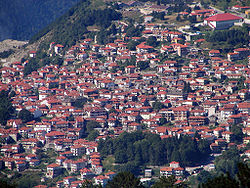
Metsovo is a municipality and traditional mountain town in the Ioannina regional unit of Epirus, northwestern Greece, situated in the Pindus range as the principal hub for the country's Aromanian (Vlach) population.

The settlement, first documented in Ottoman records from the 15th century, developed as a key trading and pastoral center due to its strategic position linking northern and southern Greece, fostering a merchant class that amassed wealth abroad in the Danube principalities and beyond. Its vernacular architecture—characterized by gray slate-roofed stone mansions clustered on steep slopes—remains largely intact, preserved through endowments from native benefactors such as Evangelos Averoff-Tositsas, Michael Tositsas, and Nikolaos Stournaras, who funded schools, museums, and infrastructure to sustain local traditions amid modernization pressures. The economy centers on seasonal tourism drawn to winter skiing at nearby Anavasi and Karakounos, alongside year-round agriculture, cheesemaking (notably pittos), winemaking, and livestock herding in surrounding fir and beech forests. Recent demographics reflect a town population decline to around 2,400 amid broader rural depopulation trends, though the municipality supports cultural institutions like the Metsovo Folk Art Museum, established via the Baron Michael Tositsas Foundation to document Aromanian crafts and history.

Etymology

Name origins and historical variants

The name Metsovo likely originates from a local Romance-language (Aromanian/Vlach) root akin to mețes or mitzio, denoting a boundary or position, which aligns with the town's strategic amid Pindus mountain passes separating from . Alternative scholarly proposals link it to Greek meso-vouno ("middle mountain"), emphasizing its central highland setting, while Slavic-influenced forms suggest meč-ovo from the root for "bear," though this lacks direct attestation in regional . These derivations reflect phonetic and semantic adaptations in a multilingual Balkan context dominated by Vlach speakers, without evidence for external or anachronistic origins. Historical variants appear in records as Metzovo or Messovo in late Byzantine and early modern Greek texts, evolving to Messovon in 18th-century literary usage. Ottoman defters from the 15th century render it as Miçova or similar, incorporating Turkish phonetics while preserving the core consonant cluster. In Slavic sources, forms like Mezob emerge, indicative of southward linguistic diffusion, whereas the endogenous Aromanian endonym Aminciu (possibly from "a minciu," implying "to the middle" or a local descriptor) persists in oral tradition. Following Greek independence in 1821 and formal state consolidation by 1830, the Hellenized spelling Metsovo (Μέτσοβο) became standardized in administrative and cartographic documents, supplanting variant forms to conform to demotic Greek orthography and national identity frameworks. This shift prioritized phonetic consistency over dialectal diversity, with no verified ties to non-local etymologies despite occasional speculative claims in secondary literature.

Ottoman and post-Ottoman attestations

The earliest verifiable attestation of Metsovo appears in the Ottoman tahrir defter of 1454/55 for the Sanjak of Trikala, which records the settlement—rendered in Greek as part of the "Horion Metsovou" community—with 700 taxable Christian households, 41 widows, and 52 unmarried men and women, assigned to the timar holder Omer Bey. This census reflects initial administrative integration for tax assessment and local governance in the newly conquered Pindus territories. In Ottoman Turkish orthography, the name is consistently transliterated as Miçova (or variants like Mezovo), denoting its recognition as a karye (village unit) with associated fiscal obligations. Subsequent defters through the 16th to 19th centuries reaffirm this usage, providing population and economic snapshots that underscore growing settlement density. The 1506 defter for the same lists Miçova with expanded household counts, while the 1568/69 register classifies it as a derbend (strategic outpost) comprising 450 Christian (adult males), highlighting its role in securing trade routes amid sparse regional oversight. Later 19th-century nüfus defters, such as the 1895 census under the Vilayet, enumerate the Miçova (district) at 5,371 inhabitants across 1,148 households in the core village and affiliates like Anilio, Vovousa, and Milia, tying name persistence to evolving Ottoman cadastral practices. These records prioritize empirical enumeration over ethnic descriptors, linking the toponym to fiscal causality rather than interpretive origins. In post-Ottoman contexts, after the Greek Kingdom's formation in 1830, the Hellenized form Metsovo emerges in national documentation and , aligning with philhellenic mapping efforts to standardize irredentist claims. 19th-century Greek archives reference Metsovo in operational dispatches, including 1819 Philiki Etaireia missions involving locals like Dimitrios Ipatros, a Metsovo native dispatched to for . By the late 1800s, post-independence surveys and maps—such as those accompanying Balkan boundary negotiations—adopt Metsovo exclusively, reflecting administrative transition without altering core toponymic structure until formal incorporation in 1913. No primary records antedate the 1450s defters, constraining assertions of pre-Ottoman continuity to speculative inference absent corroborative evidence.

Geography

Location and administrative status

Metsovo is situated in the Ioannina Regional Unit of the Epirus Region in northwestern Greece, at an elevation of 1,160 meters on the western slopes of the Pindus Mountains. Approximately 47 kilometers southeast of Ioannina by air distance, the town occupies a strategic position that serves as a primary gateway to the Pindus range, enabling road connectivity through otherwise isolating mountainous terrain. The municipality of Metsovo was formed as part of the Kallikratis Programme, an administrative reform implemented on January 1, 2011, which consolidated local government units nationwide. It comprises the central settlement of Metsovo and several smaller villages and communities in the surrounding Pindus area, preserving the essential territorial boundaries from previous jurisdictional arrangements. The 2021 Population-Housing Census by the Hellenic Statistical Authority reported 5,431 residents in the municipality.

Terrain and natural features

Metsovo occupies a valley position within the Pindus mountain range in northern Greece, situated at an elevation of approximately 1,160 meters above sea level on the slopes of peaks such as Peristeri and Lakmos. The terrain features steep, forested slopes and narrow passes, including the Metsovo Pass, which historically channeled transhumance routes and trade paths through the range's transverse valleys eroded from limestone formations. Tectonic folding, as an extension of Alpine orogeny, combined with Pleistocene glacial activity, has sculpted U-shaped valleys and moraine deposits in the broader Pindus, limiting flat arable land to high meadows while promoting pastoral settlement patterns. The surrounding landscape is dominated by mixed coniferous and deciduous forests, including dense stands of fir (Abies borisii-regis), beech (Fagus sylvatica), and black pine (Pinus nigra), covering the montane zones up to timberline. These woodlands transition into alpine meadows at higher elevations, supporting ski facilities like the Anavasi resort on nearby slopes exceeding 1,800 meters. Water features include the artificial Aoos Lake, constructed in 1987 at the river's springs about 20 kilometers north of Metsovo at 1,343 meters elevation, forming a reservoir amid the forested highlands. Biodiversity in the area encompasses habitats for brown bears (Ursus arctos), wolves (Canis lupus), and (Capreolus capreolus), particularly within the adjacent National Park and Valia Calda gorge, where valleys provide corridors for these species without evidence of exceptional beyond regional norms. The terrain's rugged passes and forested basins have thus sustained resource extraction like timber and grazing, shaped by geological constraints rather than uniform ecological exceptionalism.

Climate and environment

Climatic patterns

Metsovo experiences a with Mediterranean influences (Köppen classification Dfb), marked by pronounced seasonal contrasts due to its exceeding 1,100 meters in the Mountains. Winters are long and cold, with mean temperatures averaging around 0°C, including frequent sub-zero lows reaching -5°C or below, accompanied by substantial snowfall that persists into early spring. Summers remain mild, with means hovering near 18–20°C, daytime highs up to 26°C, and minimal frost risk, though occasional heatwaves can push temperatures above 30°C. Annual precipitation averages 1,000–1,100 mm, concentrated in the cold season from to May, where over 60% falls as or rain, fostering depths of 50–100 cm in peak winter. This regimen supports alpine meadows for summer but limits viability to hardy varieties like potatoes and grains on terraced slopes. Dry summers, with monthly totals under 50 mm, align with cycles, as herders move to higher pastures. Local microclimates, varying by 2–4°C across valleys and ridges, enhance resilience to extremes, with northerly winds amplifying winter chill factors. Records from proximate stations, supplemented by ERA5 reanalysis data covering 1950–2020, indicate stable decadal averages for and in this highland zone, with variability tied to Atlantic oscillations rather than monotonic shifts; winter snow trends show no significant decline, countering broader regional projections unsubstantiated by site-specific observations. These patterns have sustained economies, favoring extensive rearing over irrigation-dependent farming.

Environmental challenges and conservation

The forests surrounding Metsovo, part of the mountain range, face challenges from and , primarily due to historical , road for timber access, and steep terrain prone to water-induced . Studies using erosion models and UAV imagery have quantified soil loss rates in the Metsovo region, highlighting risks amplified by intense rainfall events and pressures. Conservation responses emphasize sustainable forest management led by local and national authorities, including optimized forest road networks designed to minimize ecological disruption while enabling efficient timber extraction and . The Greek Forest Service has implemented restoration initiatives involving , soil stabilization, and hydrological controls to counteract and flooding, drawing on empirical assessments of past events for targeted interventions. These efforts prioritize economic viability alongside , with models evaluating road density to achieve eco-efficient outcomes in Metsovo's rugged forests. Wildlife pressures include livestock predation by brown bears (Ursus arctos) and wolves (Canis lupus), prevalent in the habitats around Metsovo, where depredation correlates with prey availability and grazing patterns rather than solely livestock density. Local stewardship addresses these through livestock guarding dogs, habitat selectivity studies informing bear movement, and regulated culling quotas based on verified predation incidents to maintain population equilibria without over-reliance on external subsidies. Water resources for aquifers and vegetation sustainment are managed via grazing rotations to prevent overexploitation, informed by hydrological analyses from 1960–2000 revealing fluctuations in availability that necessitate adaptive controls on stocking rates. Community-led practices, such as those in Epirus's traditional agroforestry systems, integrate empirical monitoring to balance pastoral needs with ecosystem stability, avoiding uniform regulatory overlays.

History

Pre-Ottoman and Byzantine periods

The archaeological evidence for early habitation in the Metsovo area prior to the Ottoman conquest remains limited, with findings primarily indicating pastoral sites suited to transhumant herding rather than sedentary urban development; this aligns with the region's rugged Pindus terrain favoring mobile livestock economies over fixed agriculture or trade hubs. No substantial pre-Byzantine artifacts or structures have been identified at Metsovo itself, suggesting origins tied to opportunistic settlement by herders exploiting seasonal alpine pastures, a pattern common in Epirus Vetus during the 7th-9th centuries when lowland disruptions encouraged highland refugia. Byzantine textual sources from the 11th-14th centuries reference mountain strongholds in Epirus as retreats amid Slavic migrations and incursions that began in the late 6th century, destabilizing coastal and valley communities and displacing populations northward and upward; these pressures likely catalyzed Vlach (Aromanian) groups—Latin-speaking descendants of Roman-era provincials—to consolidate in areas like Metsovo for defense and grazing lands. The Vlach linguistic retention of Latin elements, amid Slavic overlays elsewhere, evidences cultural continuity from Roman colonization of the Balkans, where military veterans and settlers romanized local Dacian-Thracian or Illyrian stocks, fostering resilient pastoral identities resilient to invasive shifts. Metsovo integrated into the Despotate of Epirus, a Byzantine successor state formed in 1204 after the Fourth Crusade's , serving as a peripheral highland locale under despotic rule centered at Arta and . The settlement's earliest documented reference appears in 1380 within the Chronicle of , naming Isaiah, the superior () of Metsovo, as a monastic envoy from who was blinded by Despot Thomas (r. 1366-1384) during political intrigues; this event underscores Metsovo's emerging role as an ecclesiastical outpost amid the Despotate's internal conflicts and Serbian influences. Such sparse attestations reflect causal priorities of security and self-sufficiency over centralized administration, prefiguring later autonomies.

Ottoman era social and economic structures

Metsovo's Ottoman-era society exhibited a hierarchical stratification divided into three primary classes: the arhontzi, comprising wealthy elites such as owners and merchants who dominated local ; the vinitsi, independent freeholders with ; and the algi, dependent pastoral laborers akin to serfs who lacked independent and relied on elite for access to pastures. These distinctions arose from differential control over communal lands and were partly codified through selective Ottoman firmans granting protections to higher strata against arbitrary confiscation, fostering internal stability amid broader imperial fiscal pressures. The economy centered on transhumant pastoralism, with sheep and goat herding supplemented by caravan trade along Pindus mountain routes connecting the Balkans to Ottoman urban centers like Ioannina and Thessaloniki. A seven-member communal committee, led by arhontzi representatives including kyratzides (caravan operators), oversaw economic coordination, market regulation, and basic infrastructure such as water supply. Taxation operated via collective responsibility rather than widespread individual tax farming (iltizam), with the committee compiling resident lists for apportioning Ottoman levies like the haraç head tax and pastoral dues, thereby distributing burdens proportionally and minimizing exploitation by external farmers common in lowland regions. This communal mechanism reduced net fiscal extraction, permitting surplus reinvestment in trade networks and livestock, which distinguished Metsovo's resilience from depopulated adjacent areas. Ottoman defters from the of document population expansion from roughly 2,000 residents in the mid-16th century—based on household and herd tallies in 1506 surveys—to over by the late , attributable to trade incentives drawing Vlach migrants and internal accumulation rather than mere demographic inertia.

Privileges, , and the

In the early Ottoman period following the around 1430, Metsovo benefited from imperial grants that afforded tax reductions and communal control over and local affairs, secured through submissions of and strategic payments to renew these concessions. These arrangements reflected pragmatic Ottoman policies toward frontier communities, balancing fiscal extraction with incentives for stability and economic productivity in strategic mountain regions. Local was operationalized via a seven-member committee of influential residents, including livestock herders and early commercial figures, which administered such as distribution, market oversight, and the preparation of tax registers, thereby insulating daily community functions from direct imperial interference until the early . This structure minimized disruptions from central Ottoman appointees, who were occasionally quartered in a fort constructed between 1864 and 1867, while ensuring compliance with broader administrative demands from sanjaks like or . The patriarchal of Metsovo, confirmed as a privilege by Ottoman sultans in the , extended to Metsovo and six adjacent settlements, subordinating them directly to the Ecumenical Patriarchate and bypassing the Metropolis of . This enabled the —often a scholarly cleric—to oversee waqfs (religious endowments) for communal benefit and to sustain educational efforts that preserved Aromanian (Vlach) and traditions amid the prevailing Greek Orthodox framework. Such mechanisms, decoupled from local hierarchical rivalries, supported cultural persistence through cleric-led initiatives rather than state-dependent structures.

19th-century merchants and diaspora networks

In the early 19th century, Metsovo merchants expanded commercial operations through diaspora networks centered in Alexandria, Vienna, and Trieste, where families such as the Tositsas accumulated substantial fortunes via trade in tobacco, wool derivatives, and financial intermediation. Michael Tositsas (1787–1856), originating from Metsovo, relocated to Alexandria in 1820, capitalizing on the Egyptian market's growth in exports like cotton under Muhammad Ali's reforms, which Greek traders influenced significantly. These ventures involved high-risk navigation of Ottoman-European trade routes, with Metsovite trading houses documented in Trieste for Adriatic access and Vienna for Habsburg financial ties, enabling capital flows beyond local pastoral economies. George Averoff (1815–1899), also from Metsovo, similarly built wealth in through mercantile activities, exemplifying individual entrepreneurial adaptation amid fluctuating Balkan commerce. Remittances from these networks funded Metsovo's , including educational institutions and utilities, with evident from mid-century records attributing growth to benefactor donations derived from earnings. This inflow peaked before the 1821 , which disrupted routes but followed periods of Ottoman stability fostering merchant risk-taking and network resilience. Such philanthropy reflected causal connections between sustained Ottoman-era trade permitting wealth accumulation and subsequent support for Greek independence, as diaspora merchants like Averoff directed resources toward national institutions, prioritizing empirical commercial success over idealized communal narratives.

Modern era and 20th-century developments

Metsovo was incorporated into the Kingdom of following its liberation by the Greek army on October 31, 1912, during the , which began on and led to the end of Ottoman rule in the region. This transition aligned with Greece's territorial expansion, doubling its size by 1913 through the Balkan alliances against the . During , the town faced Axis occupation pressures, including bombardment by Italian aircraft in July 1943 and the arrival of German troops in October 1943, amid the that commenced on October 29, 1940, and the subsequent German intervention. These events contributed to regional hardships, with occupation forces withdrawing from by October 1944. In the Greek Civil War, Metsovo experienced combat from October 18–24 and November 3–6, 1947, as communist Democratic Army forces briefly seized and then failed to hold the town against national army counteroffensives, resulting in localized destruction such as the burning of the Averofeio School. This resistance helped maintain communal autonomy without full partisan alignment, preserving traditional structures amid the conflict's broader national divisions. Postwar recovery included rebuilding, exemplified by the replacement of the destroyed Averofeio with a new in 1955, alongside earlier connectivity via the 1936 motorway linking and through the Katara Pass. These efforts supported gradual stabilization, shifting from wartime losses toward enhanced accessibility that laid groundwork for later economic adaptations beyond declining pastoral activities.

Post-2000 economic and cultural preservation

The Baron Michael Tositsa Foundation, established in 1947, has sustained its mandate into the post-2000 era by funding the restoration of traditional stone mansions and operating the , which exhibits artifacts of Vlach daily life, textiles, and crafts to counteract urbanization's assimilative effects. These initiatives emphasize self-reliant local over external subsidies, preserving architectural authenticity amid Greece's EU-driven programs that began accelerating after 1981 accession but intensified with post-2000 cohesion funds for mountainous regions. Sustainable tourism emerged as a key adaptation strategy in the 2020s, with Metsovo prioritizing eco-compatible infrastructure to leverage its natural brand without the overdevelopment seen in coastal areas. Following COVID-19 restrictions, visitor numbers rebounded sharply, aligning with Greece's national 5% projected increase in international arrivals for 2025, yet local stakeholders advocate restrained growth to retain residential viability and cultural integrity. Empirical linguistic surveys document a near-total shift away from native Aromanian proficiency among Metsovo's youth by the , with heritage speakers exhibiting attrition in morphology and due to dominant Greek monolingualism in and media. Countering this, preservation manifests in heightened engagement with tangible heritage, including foundation-led renovations and periodic Vlach-themed exhibitions that sustain communal rituals despite oral tradition erosion.

Demographics

The population of the Metsovo stood at approximately 7,000 according to the 1928 , serving as a key regional center in with a self-sustaining agrarian and trade-based community. By the 2021 conducted by ELSTAT, this had declined to 6,099 residents, reflecting gradual outmigration patterns typical of rural but without the sharp depopulation seen in many comparable villages. This trend stems primarily from younger individuals relocating to urban areas like for postsecondary education and professional prospects, a causal factor driven by limited local higher-education infrastructure and specialized job availability. Demographic structure reveals an aging profile, with a median age surpassing 45 years, as youth outflows exceed inflows from new families. However, retiree returns from networks provide a counterbalance, sustaining vitality and maintenance. Seasonal employment in and further supports low , enabling temporary returns of working-age adults and stabilizing household incomes without prompting permanent exodus. Vital statistics underscore this equilibrium: crude birth rates hovered around 8-10 per 1,000 in recent decades, while death rates remained at 9-11 per 1,000, yielding near-zero natural growth that offsets net migration losses. These rates, derived from local registry data, indicate resilience against broader national fertility declines, attributable to cultural emphases on family continuity and economic rather than external aid dependencies. No evidence supports claims of imminent demographic collapse, as adaptive migration patterns preserve core levels.

Ethnic composition and Vlach heritage

Metsovo's population is predominantly composed of individuals of Vlach (Aromanian) descent, with estimates suggesting over 60% ethnic Aromanian background, though the vast majority self-identify as Greeks rather than as a distinct minority group. This self-identification reflects a long-standing integration into Greek national identity, rejecting classifications as a separate ethnic minority and emphasizing Vlach heritage as a regional linguistic and cultural variant within Hellenism. Claims of Romanian irredentism or victimhood narratives portraying Vlachs as a suppressed minority lack empirical support in Metsovo, where local identities prioritize Greek allegiance over external politicized ties constructed in the 19th century for nationalist agendas. The Aromanian dialect, a Romance language derived from spoken by Romanized Balkan pastoralists, exhibits substrates from pre-Roman Illyrian and possibly Dacian elements rather than Thracian or imported origins. Genetic analyses, including Y-DNA studies of Balkan populations incorporating Vlach samples, show close alignment with mainland Greek clusters, featuring haplogroups such as E-V13, J2, and R1b common to the region, indicating shared ancestry with surrounding Hellenic groups rather than distinct Romanian lineages. These findings underscore continuity from Roman-era Latinization of indigenous pastoral communities in the Mountains, without evidence of later migrations disrupting this local evolution. Linguistic proficiency in Aromanian has declined sharply, with recent sociolinguistic profiling of bilingual speakers in Metsovo revealing near-extinction of native fluency among younger generations due to educational assimilation into Greek. Surveys of heritage speakers indicate that while older individuals retain partial knowledge, active fluent use is limited to a small fraction, often under 30% in intergenerational transmission. Debates on this shift highlight trade-offs: assimilation fosters economic and civic integration, enriching participation in broader Greek society, but entails irreplaceable loss of a dialect integral to local pastoral traditions; politicized Romanian connections, however, find no causal backing in linguistic or genetic data, appearing as 19th-century ideological overlays rather than historical reality.

Economy

Historical trade and self-reliance

Metsovo's pre-industrial economy centered on transhumant , where Vlach herders seasonally migrated livestock between highland summer pastures and lowland winter grazing areas, producing as a primary . Under Ottoman rule, the town emerged as a hub for processing and commerce, with local artisans transforming raw into textiles for export, which generated significant wealth. Caravan owners, known as kyratzides, facilitated routes linking Metsovo to broader markets, transporting across mountainous . These activities were bolstered by imperial privileges, including tax exemptions granted by Sultan in 1659, which relieved residents from ordinary and extraordinary levies, allowing reinvestment in and ventures. Such fiscal , combined with entrepreneurial networks, enabled communal self-reliance, as evidenced by among merchant families rather than dependence on state extraction. This prosperity contrasted with typical Ottoman rural economies burdened by heavier impositions, fostering a cycle of internal through influential and caravan groups. Resulting affluence manifested in voluntary benefactions, with Metsovo-originating families like the Tositsas channeling trade-derived fortunes into endowments for and . Michael Tositsas, a prominent 19th-century from the town, exemplified this by supporting Greek national institutions, reflecting a pattern of self-sustained communal investment over coerced redistribution. These initiatives underscored the causal link between commercial success and enduring local resilience.

Contemporary sectors including tourism

Tourism serves as a major economic pillar in Metsovo during the 2020s, driven by winter sports at nearby ski resorts like Karakounas and eco-trails in the surrounding Pindus Mountains, which have contributed to Greece's overall mountain tourism revenue growth following the COVID-19 downturn. Local ski facilities have seen heightened activity, with Greece's resorts reporting record visitor numbers in the 2024-2025 season due to favorable snow conditions and expanded offerings. This sector helps counterbalance depopulation risks in mountainous areas by generating employment in hospitality and services, though exact local GDP shares remain undocumented in public data. Agriculture, particularly production, anchors other key activities, exemplified by the Tositsa Foundation's facility, which processes residues into for , producing around 1,750 tons annually and supporting specialties like metsovone cheese. provides steady, albeit declining nationally, output of timber and related products, sustaining small-scale operations amid broader Greek sector contractions. These sectors face seasonal dependencies, with peaking in winter via to mitigate summer lulls, while like Tositsa prioritize community-led investments over large-scale external developments to preserve economic . Such strategies aim to foster resilience without overreliance on transient visitor influxes, aligning with regional efforts to balance growth and sustainability.

Culture and society

Vlach language and identity debates

The , also known as Vlach, spoken historically by Metsovo's population, exhibits low vitality and is classified as definitely endangered, with intergenerational transmission severely limited and native speakers approaching in the town despite its longstanding association as a Vlach cultural center. A 2024 linguistic survey of Metsovo and adjacent villages documented near-complete loss of native proficiency among younger generations, attributing this to widespread Greek-Aromanian bilingualism that prioritizes Greek for education, employment, and public interaction. No Greek state policies have imposed bans on Aromanian usage; instead, parental and community choices favoring Greek-medium schooling since the early have driven linguistic shift, as evidenced by historical preferences for Greek education among prosperous Vlach families even under Ottoman rule. Identity debates among Metsovo's Vlachs center on the tension between cultural-linguistic preservation and national integration, with empirical data indicating voluntary over coerced assimilation. Preservationists, often supported by NGOs and external , argue for formal recognition as a linguistic minority to enable Aromanian-medium and media, citing risks of total cultural erasure without intervention. In contrast, integrationists—comprising the majority of local Vlachs—maintain that Aromanian heritage functions as a dialectal or folkloric element within a broader Greek identity, manifested in non-separatist practices like family and seasonal festivals rather than political demands. Surveys and ethnographic accounts from Metsovo reveal over 60% self-identifying as ethnically Greek while acknowledging Vlach linguistic roots, underscoring a pragmatic assimilation driven by socioeconomic incentives and shared Orthodox Christian ties rather than suppression narratives. External narratives linking Greek Vlachs to Romanian ethnicity, advanced through 19th-century philological campaigns promoting a unified "Latin" Balkan identity, have been critiqued as ahistorical impositions lacking support from contemporary linguistics or genetics. Romanian-influenced schools in Ottoman-era Vlach areas were often rejected locally as intrusive, with Metsovo families historically favoring Greek cultural networks for trade and prestige. Modern analyses classify Aromanian as an Eastern Romance idiom evolved in situ from Romanized Balkan substrates, distinct from Daco-Romanian lineages north of the Danube, rendering pan-Romanian claims unsubstantiated for Greece's Vlachs and more reflective of nationalist projections than indigenous self-conception. This perspective aligns with local evidence of Vlach endogamy and Greek linguistic borrowing patterns, prioritizing causal factors like urban migration and state monolingualism in education over irredentist reinterpretations.

Traditions, architecture, and attractions

Metsovo's traditional architecture consists of multi-story stone mansions topped with slate roofs, constructed to withstand the severe mountain climate and historical threats from bandits and Ottoman rule, with clustered layouts facilitating communal defense. These structures feature thick stone walls, wooden balconies for storage and ventilation, and intricate interior wood carvings reflecting local craftsmanship. The Tositsa Mansion, built in 1661 and renovated in 1954 while retaining original features like absent , exemplifies this style and now houses the Metsovo Folk Art Museum, displaying hand-woven rugs, costumes, and tools from the 17th to 19th centuries. Preservation of this architectural heritage has been prioritized since the mid-20th century through philanthropic foundations, such as the Baron Michael Tossizza Foundation established in 1947, which funds restoration and enforces traditional building standards to prevent dilution by modern constructions. The foundation's efforts, including the operation of the Folk Art Museum since 1955, ensure these mansions remain intact as living examples of adaptive design suited to snowy winters and seismic activity. Traditional festivals reinforce social bonds in Metsovo's Vlach community, featuring with instruments like the gaida bagpipe and flute, accompanied by group dances performed in the central square during religious feasts and annual gatherings. Events such as the July "Reunion of the Vlachs" draw descendants for multi-day celebrations with artisan markets and performances, sustaining cultural continuity and communal identity amid historical migrations. Monasteries like the Holy Monastery of , located southwest of the town near the Metsovitikos River and dating to the post-Byzantine era, serve as focal points for these rituals, housing rare frescoes and relics that underscore their role in fostering resilience through shared religious practices. Key attractions include the Evangelos Averoff Museum of Neohellenic Art, endowed by local philanthropist Evangelos Averoff and housing over 700 paintings by 19th- and 20th-century Greek artists, maintained through private foundation funding to highlight Metsovo's contributions to national culture. collections in restored mansions emphasize self-reliant preservation, with exhibits of woodwork and textiles curated without state subsidies, reflecting the town's historical emphasis on internal for heritage upkeep.

Cuisine and local customs

Metsovo's cuisine originates from its transhumant pastoral economy, prioritizing dairy, preserved meats, and grain-based pies for nutritional self-sufficiency in a high-altitude, isolated setting. This yields dense, calorie-rich foods adapted to seasonal migration, with limited variety due to short growing seasons and reliance on foraged . Signature products include Metsovone, a semi-hard, naturally smoked pasta filata cheese produced exclusively in the Metsovo municipality from cow's milk (or blends with up to 20% sheep or ), smoked over , , or wood for 10-15 days to achieve its robust, tangy profile; it holds (PDO) status granted by the EU in 1996. Complementing dairy are smoked meats such as kontosouvli (spit-roasted or lamb) and local sausages cured with spices from regional , alongside savory pies like alevropita—thin wheat-flour sheets topped with , eggs, and or local herbs—and trachanas, a fermented wheat-and-milk dried for winter storage. These reflect empirical adaptations to , where sheep herds provided milk and meat during summer highlands and preserved goods sustained families through winters, fostering metabolic efficiency but constraining dietary diversity compared to coastal Greek regions. Local customs emphasize communal feasts during Orthodox holidays and harvest cycles, where extended families share hearth-prepared dishes in stone-built homes, preserving recipes through oral transmission despite tourism-driven commercialization of items like packaged Metsovone since the . Craft traditions, including women-led weaving guilds producing woolen textiles from local sheep, historically integrated with via dyed yarns from herb-infused vats, maintaining cultural continuity; however, has diluted some artisanal methods. Claims of benefits from high intake persist anecdotally, tied to observed rates in mountain communities, but lack verification from peer-reviewed studies specific to Metsovo, with broader research showing neutral or mixed dairy-longevity links.

Infrastructure

Transportation networks

Metsovo's transportation infrastructure evolved from reliance on mule paths traversing the mountains to a network of paved roads beginning in the mid-20th century, which facilitated a transition from isolated to broader trade and tourism integration. In the , initiatives funded by local philanthropists, including Evangelos Averoff's foundation, implemented key road improvements that enhanced accessibility and spurred economic diversification. The town's primary link is Greek National Road 6, which aligns with European route E92 and connects westward to , approximately 35 km away, and eastward through the Katara Pass to and further to via National Road 1. This route supports vehicular travel essential for local autonomy, with sections upgraded to higher standards to mitigate mountainous challenges. Rail access occurs via Metsovo station on the -Kalambaka line, offering connections supplemented by bus services to , though private cars predominate for flexibility. Secondary roads extend to ski facilities like the Anilio Metsovo ski center, situated 10-15 km away, enabling direct tourist access during winter without extensive public transit dependence. , 32 km distant, serves as the closest aviation hub, reinforcing road-based mobility for visitors. These networks underscore Metsovo's strategic position, prioritizing self-reliant connectivity over centralized public systems.

Public services and institutions

The municipality of Metsovo operates public primary and secondary schools integrated into Greece's national education framework, with enrollment serving the town's approximately 6,000 residents and surrounding villages. Local benefactors, including the Tositsa family, have historically funded educational infrastructure and scholarships; the Tositsa Foundation, formalized in 1947 from earlier philanthropic endowments by Metsovo natives like Michael Tositsas (d. 1853), continues to support student aid and development programs emphasizing vocational and higher education access. Healthcare is provided through the Health Center of Metsovo, a public facility offering primary care, emergency services, and outpatient treatment for the regional population, supplemented by referrals to larger hospitals in Ioannina. These community-managed amenities, often backed by foundation endowments from 19th-century merchants, underscore Metsovo's emphasis on self-reliant service delivery amid mountainous isolation. Electricity supply draws from hydroelectric installations harnessing rivers like the Aoos originating in the Metsovo highlands, powering 13 major plants that contribute to regional grids and local resilience against outages. Waste management systems, upgraded post-2010 to comply with EU landfill directives, incorporate mechanical treatment and circular economy practices for organic agricultural residues, reducing environmental impact from livestock and farming activities. Cultural and educational institutions, evolving from the 1659 of Metsovo—a semi-autonomous ecclesiastical entity under the of —now include foundations like the Tositsa overseeing museums and heritage preservation with a focus on rigorous of Vlach artifacts and traditions. These bodies prioritize empirical archiving over interpretive narratives, fostering community epistemic standards in local schooling and public programs.

Notable individuals

[Notable individuals - no content]

References

Add your contribution
Related Hubs
User Avatar
No comments yet.