Hubbry Logo
Mood swingMood swingMain
Open search
Mood swing
Community hub
Mood swing
logo
8 pages, 0 posts
0 subscribers
Be the first to start a discussion here.
Mood swing
Mood swing
from Wikipedia

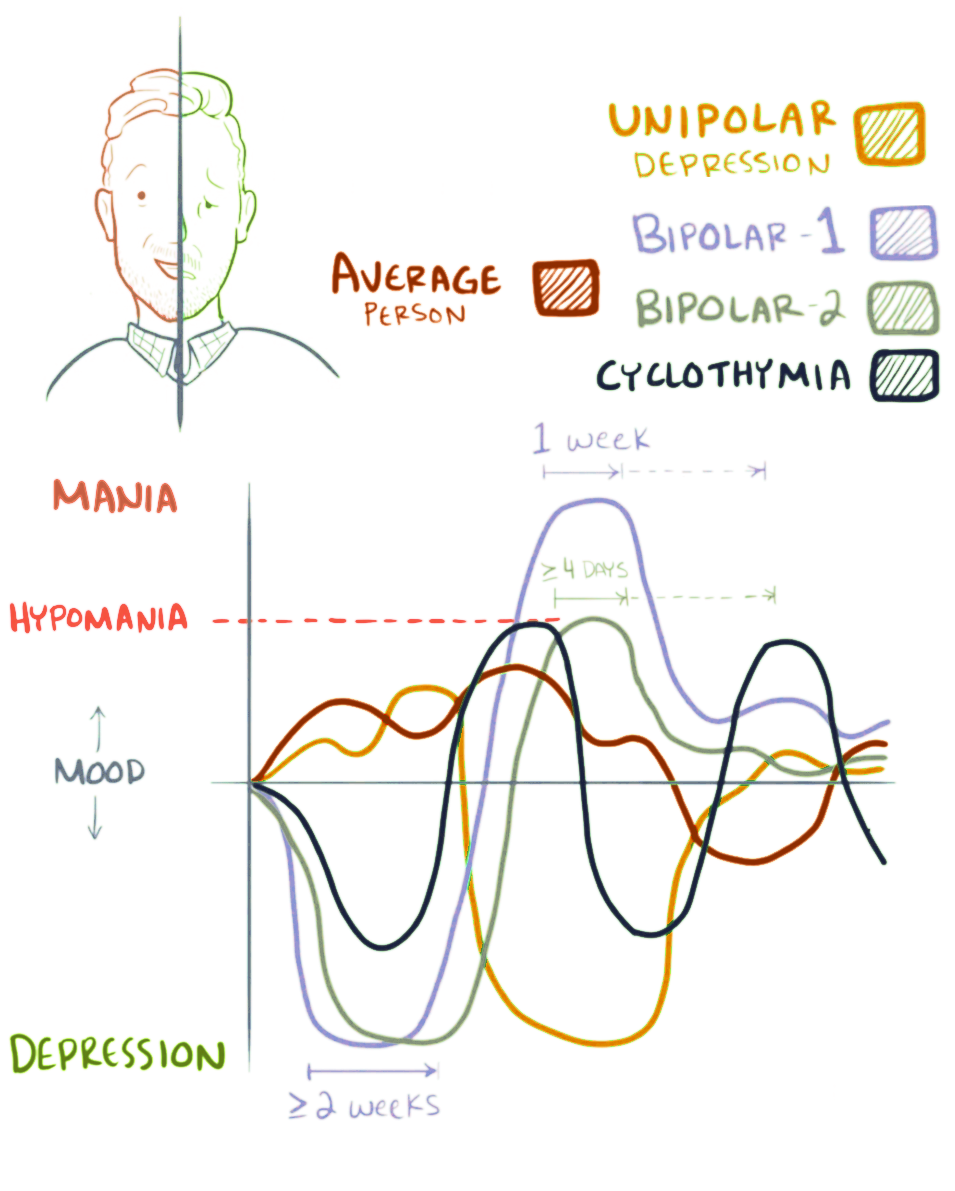
Graphical comparison of mood swings, compared with bipolar disorder and cyclothymia

A mood swing is an extreme or sudden change of mood. Such changes can play a positive or a disruptive part in promoting problem solving and in producing flexible forward planning.[1] When mood swings are severe, they may be categorized as part of a mental illness, such as bipolar disorder, where erratic and disruptive mood swings are a defining feature.[2]

To determine mental health problems, people usually use charting with papers, interviews, or smartphone to track their mood/affect/emotion.[3][4] Furthermore, mood swings do not just fluctuate between mania and depression, but in some conditions, involve anxiety.[5][6]

Terminology

[edit]

Definitions of the terms mood swings, mood instability, affective lability, or emotional lability are commonly similar, which describe fluctuating or oscillating of mood and emotions. But each has unique characteristics that are used to describe specific phenomena or patterns of oscillation.[7][8] Different from emotions or affect,[9] mood is associated with emotional responses without knowing the reason (being unaware).[10][11]

The dynamics of mood, mood patterns for long times are commonly erratic,[12] labile[13] or instable, also known as euthymic.[14] Although the term of mood swing is unspecific, it may be used to describe a pattern where mood goes down from positive to negative valency immediately (without delay in baseline) at specific periods.[15] And also generally have aperiodic patterns.[16][17] This is because mood dynamics are influenced by various factors which can magnify or lessen fluctuations,[18] such as when expectations become reality or not.[19] Other terms for describing patterns are episodic, periodic, cyclothymia, rapid cycling, mixed states, short episodes, soft spectrum,[20] diurnal variation, etc., although the definition of each term may be unclear.[21]

Overview

[edit]

Speed and extent

[edit]

Mood swings can happen any time at any place, varying from the microscopic to the wild oscillations of bipolar disorder,[22] so that a continuum can be traced from normal struggles around self-esteem, through cyclothymia, up to a depressive disease.[23] However, most people's mood swings remain in the mild to moderate range of emotional ups and downs.[24] The duration of bipolar mood swings also varies. They may last a few hours – ultrarapid – or extend over days – ultradian: clinicians maintain that only when four continuous days of hypomania, or seven days of mania, occur, is a diagnosis of bipolar disorder justified.[25] In such cases, mood swings can extend over several days, even weeks; these episodes may consist of rapid alternation between feelings of depression and euphoria.[26]

Characteristics

[edit]
Man running a marathon
People with high energy levels
Man sleep on the desk
Person with low spirited mood
  • Changing mood up and down without knowing the reason or external stimuli,[27] in various degrees, duration and frequent, from high mood (happy, elevated, irritated) to low mood (sad, depressed).[5][28]
  • Sometimes it's mixed,[29] a combination between manic and depression symptoms[30] or similar with bittersweet experiences that last for a day.[31][32]
  • Mood swings in normal people appear like "climate changing" at mild to moderate degree.[9][33] Thus, unless it happens at a moderate degree or more, some people need more high emotional intelligence[34] to recognize their mood change.[35]
  • Mood swings in mental illness simply can be described by generalized complexity[36] based on mood dynamics (patterns that characterize the oscillation) like intensity (mild, moderate, severe), duration (days, weeks, years), average mood and other features, such as:[37][38]
  1. Mood swings in cyclothymia: Mood swings occur episodically and aperiodic within 2 years or more at a moderate degree and frequently.[39] Characterized by coexisting with anxiety, persistence, rapid shift, intense, impulsive,[40] heightened by sensitivity and reactivity to external stimuli.[41]
  2. Mood swings in bipolar II: Episodic,[42] hypomanic (severe degree) episodes occur continuously for 4 days,[30] depression episodes for weeks,[43] and sometimes erratic episodes at moderate degree in between episodes.[44]
  3. Mood swings in bipolar I: Episodic,[42] manic episodes (severe degree) occur continuously for 7 days,[30] depressive episodes for weeks,[45][46] and sometimes erratic episodes at moderate degree in between episodes.[30] Alterations in bipolar I and II can be rapid cyclic, which means changes of mood happen 4 times or more within a year.[47] Symptoms of manic and hypomanic episodes are similar between bipolar I and bipolar II, just different in degree of intensity.[48]
  4. Mood swings in Premenstrual symptoms (PMS): Episodically at mild to severe degree in the menses period, occur gradually or rapidly,[49] start 7 days before and decrease at the onset of menses.[50] Characterized by angry outbursts, depression, anxiety, confusion, irritability or social withdrawal.[51]
  5. Mood swings in borderline personality disorder (BPD): Mood changes erratically with episodic mood swings.[52] Mood swings fluctuate in rapid shifts for hours or days, not persistent, sensitive and heightened negative mood (e.g. irritability) by external stimuli.[53][54] Mood appears in the form of high intensity of irritability,[55][56] anxiety,[57] and moderate degree depression (characterized by hostility, anger towards self, loneliness, isolation, related with relationships, emptiness or boredom).[58][59]
  6. Mood swings in attention deficit hyperactivity disorder (ADHD) : Mood changes erratically and mood swings occur episodically, sometimes several times a day in rapid shifts.[60][61] Characterized by a mild to moderate degree of irritability,[62] related to the environment, impulsiveness (impatience to get rewards).[63] In adult ADHD, high mood appears as excitement and low mood appears as boredom.[60]
  7. Mood swings in schizophrenia: Although schizophrenia has flat emotions,[64] a study in 2021 based on ALS-SF measures, Margrethe Collier et al., found that the score pattern of schizophrenia is similar to bipolar I.[65] The alteration being related to delusions or hallucinations,[66] mood changes that occur internally may be difficult to express externally (blunt affect),[67] and heightened by external stimuli.[68]
  8. Mood swings in major depressive disorder (MDD): Various mood patterns,[69] and mood changes erratically.[37] Mood swings occur episodically and fluctuate in moderate high mood and severe low mood.[70][71] Characterized by having high negative affect (bad mood) most of the time, particularly in melancholic subtype.[72] And also positive diurnal variation mood (bad mood in the morning, good mood in the evening),[73] sensitivity to negative stimulation and mixed symptoms in some people, etc.[74][75]
  9. Mood swings in post-traumatic stress disorder (PTSD): Mood changes erratically[76] with episodic mood swings rising in the period of recovery process.[77][78] Characterized by temporary fluctuations in negative affect (anxiety, irritability, shame, guilt) and self-esteem, reactive to environmental reminders,[79] difficulty to control emotions,[80] hyperarousal symptoms, etc.[81][82]

Causes

[edit]

There can be many different causes for mood swings. Some mood swings can be classified as normal/healthy reactions, such as grief processing, adverse effects of substances/drugs, or a result of sleep deprivation. Mood swings can also be a sign of psychiatric illnesses in the absence of external triggers or stressors.

Changes in a person's energy level, sleep patterns, self-esteem, sexual function, concentration, drug or alcohol use can be signs of an oncoming mood disorder.[83]

Other major causes of mood swings (besides bipolar disorder and major depression) include diseases/disorders which interfere with nervous system function. Attention deficit hyperactivity disorder (ADHD), epilepsy,[84] and autism spectrum are three such examples.[85][86]

The hyperactivity sometimes accompanied by inattentiveness, impulsiveness, and forgetfulness are cardinal symptoms associated with ADHD. As a result, ADHD is known to bring about usually short-lived (though sometimes dramatic) mood swings. The communication difficulties associated with autism, and the associated changes in neurochemistry, are also known to cause autistic fits (autistic mood swings).[87] The seizures associated with epilepsy involve changes in the brain's electrical firing, and thus may also bring about striking and dramatic mood swings.[84] If the mood swing is not associated with a mood disorder, treatments are harder to assign. Most commonly, however, mood swings are the result of dealing with stressful and/or unexpected situations in daily life.

Degenerative diseases of the human central nervous system such as Parkinson's disease, Alzheimer's disease, multiple sclerosis, and Huntington's disease may also produce mood swings.[88] Celiac disease can also affect the nervous system and mood swings can appear.[89]

Not eating on time can contribute, or eating too much sugar, can cause fluctuations in blood sugar, which can cause mood swings.[90][91]

Brain chemistry

[edit]

If a person has an abnormal level of one or several of certain neurotransmitters (NTs) in their brain, it may result in having mood swings or a mood disorder.[92] Serotonin is one such neurotransmitter that is involved with sleep, moods, and emotional states. A slight imbalance of this NT could result in depression. Norepinephrine is a neurotransmitter that is involved with learning, memory, and physical arousal. Like serotonin, an imbalance of norepinephrine may also result in depression.[93]

List of conditions known to cause mood swings

[edit]
  • Bipolar disorder[94][95] or cyclothymia: Bipolar disorder is a mood disorder with characteristics of mood swings from hypomania or mania to depression. While cyclothymia is a lower degree of bipolar disorder.[96] In 2022, ENIGMA Bipolar Disorder Working Group found that people with bipolar disorder have smaller subcortical volumes, lower cortical thickness and altered white matter integrity,[97][98] which one of the functions is for emotion processing.[99]
  • Anabolic steroid abuse:[100] Anabolic steroids are synthetic derivatives of testosterone. Used for treatment of male hypogonadism or delayed puberty,[101] stimulating muscle growth,[102] as well as treating impotence, and AIDS.[103] Studies found that overusing anabolic-androgenic steroids can cause mood swings, impulsive, and aggressive behavior.[104] This behavior is associated with decreased emotion regulation systems such as the frontal cortex, temporal, parietal, and occipital.[105] Studies also found that using anabolic-androgenic steroids can cause neuronal changes and death in the hypothalamic-pituitary-gonadal axis, thus symptoms of sleep and mood disorder occur.[106]
  • Attention deficit hyperactivity disorder (ADHD): ADHD is known as a disorder with difficulty keeping control of attention, hyperactivity, frequently changing focus and losing interest[107] and also hyperfocus when doing something interesting or pleasurable tasks.[108] Mood dysregulation may be caused by distraction when absorbed in pleasurable tasks.[109][110] Another contribution to mood swings is lower brain activity in the prefrontal cortex (PFC),[111] orbitofrontal cortex (OFC),[112] increased size of the hippocampus and decreasing size of the amygdala in some people.[113] Abnormalities in these parts of the brain can cause disturbance in attention, motivation, mood, and behavioral inhibition.[114]
  • Autism or other pervasive developmental disorder: Autism is a neurological and development disorder with symptoms such as lack of social skills, restricted repetitive behaviors, hyper- or hyporeactivity to sensory input, etc.[115] Abnormal sensory processing is one of the reasons for mood swings in autism.[116] Studies in 2015 found that in autism, the brain becomes overactivated in limbic areas, primary sensory cortices, and orbitofrontal cortex (OFC), which functions for emotional and sensory processing. Studies found too, that the brain in autism has decreased connectivity between the amygdala and ventrolateral prefrontal cortex, increased amygdala reactivity, and reduced prefrontal response which contribute to emotion dysregulation.[117][118]
  • Borderline personality disorder: It has been theorized that borderline personality disorder comes from lack of ability to endure, learn[119] and overcome negative events.[120] People with BPD commonly have difficulty in relationships,[121] which is associated with a tendency to anger-outbursts, judgment[122] or expecting how others behave.[123] Emotion dysregulation may be as a result of lack of interpersonal skills such as knowledge about emotions and how to control them, especially with intense emotions.[124] Mostly, people with BPD use maladaptive emotion regulations like self-criticism, thought suppression, avoidance, and alcohol, which may trigger more mood disruption.[125][126][127]
  • Dementia, including Alzheimer's disease, Parkinson's disease and Huntington's disease: Dementia is known as a decreasing brain function disease that affects older people.[128] In Alzheimer's disease, mood dysregulation can be caused by decreasing function of emotional regulation, salience, cholinergic, GABAergic, and dopaminergic function.[128] Parkinson's disease can generate mood swings and mood dysregulation such as depression, low self worth, shame and worry about the future caused by cognitive and physical problems.[129] And in Huntington's disease, common mood swings occur as a result of psychosocial, cognitive deficits, neuropsychiatric and biological factors.[130]
  • Dopamine dysregulation syndrome: Dopamine dysregulation syndrome is an effect of abusing Parkinson's disease drugs to decrease motor and non-motor syndromes, which result in mania, violent behavior, and depression when withdrawal.[131] Mood dysregulation from dopamine dysregulation syndrome occurs as a result of changes in the neurotransmitter systems such as disturbance in the dopaminergic reward system.[132][131]
  • Epilepsy: Epilepsy is an abnormal brain activity disease marked with seizures. Seizures occur because hypersynchronous and hyperexcitability of neurons, in other words, too much neural activity and excitability at the same time.[133] Mood swings commonly appear before, during, after a seizure and during treatment.[134] Studies found that seizures contribute to decreased function of emotions and mood processing as a consequence of abnormal neurogenesis and damaged neuron connections in the hippocampus and amygdala.[133] Experiencing a seizure can cause mood swings caused by depression, anxiety, or worry about life being threatened. Another source of mood change comes from anticonvulsant drugs for epilepsy, like phenobarbital for increasing brain inhibitors or antiglutamatergic for decreasing brain activity which generates depression, cognitive dysfunction, sedation or mood lability.[135]
  • Hypothyroidism or hyperthyroidism: Hypo- and hyperthyroidism is an endocrine disease caused by low or excessive production of thyroid hormone. Abnormal thyroid hormone can affect mood,[136] although the correlation between thyroid hormone and mood disorder is still not known.[137]
  • Intermittent explosive disorder: Intermittent explosive disorder is frequent rage that occurs spontaneous, uncontrolled, unproportioned and not persistent.[138][139] This short duration of alternate mood occurs in the form of aggression verbally or physically towards people or property, sometimes followed by regret, shame and guilt after an act which might generate depression symptoms.[140] Impulsive behavior in IED can be associated with hyperactivity in brain regions for regulating and emotional expression, such as the amygdala, insula, and orbitofrontal area.[141]
  • Menopause:[142] Menopause in women commonly happens at age 52. One factor that causes mood disturbance is fluctuation of milieu hormones[143] including sex steroids, growth hormones, stress hormones, etc.[144][145]
  • Major depression: Major depression is a disorder with symptoms such as feelings of sadness, loss of interest, emptiness[146] and, for some people, mixed with irritability, mental overactivity, and behavioral overactivity.[147] Development of irritability or anger may result from personality traits like narcissistic or coping strategies to avoid looking sad, worthless, or frustrated.[148]
  • Obsessive Compulsive Disorder: Obsessive compulsive disorder is marked with obsessions and compulsions about something that causes life distress and dysfunction.[149] Alteration of mood and feeling discomfort such as shame, guilt or anxiety may occur caused by intrusive thoughts, fear, urge,[150] and fantasy.[151]
  • Pathological demand avoidance
  • Post traumatic stress disorder: Post-traumatic stress disorder is a disorder which is associated with frequently being disturbed by flashback memories and being haunted by feelings of fear and horror in the past. This contributes to the alteration of mood that occurs after a traumatic event happens, such as depression, outbursts of anger, self-destructive behaviors, and feelings of shame.[152][153]
  • Pregnancy: Women commonly experience mood swings during the pregnancy and the postpartum period. Hormone changes, stress and worry may be the reasons for changes of mood.[154]
  • Premenstrual syndrome:[155] Women experience premenstrual syndrome like physical pains, mood swings, irritability or depression[156] in a few days until 2 weeks of their period with different intensity.[157] Furthermore, 4% to 14% of women experience severe PMS or premenstrual dysphoric disorder (PMDD), which can decrease life quality.[158] Despite the reason mood dysregulation in PMS is still unclear, Studies found that mood dysregulation is related with drop in progesterone concentrations, disruption of serotonergic transmission, GABAergic, stress, body-mass index, and traumatic events.[157]
  • Schizoaffective disorder: Mood swings in schizoaffective disorder are caused by mixed symptoms between schizophrenia and mood disorder.[159]
  • Schizophrenia: Schizophrenia is a disorder with symptoms of delusions, hallucinations, mood dysregulation, etc.[160] Mood changes may be generated from hallucinations and delusions[161] which cause anger,[162][163] paranoia,[164] and shame.[165]
  • Seasonal affective disorder: Seasonal affective disorder is depression which occurs during some seasons (commonly in winter), then manic or hypomanic episodes in the other season and that happens every year.[166] These fluctuating moods appear in the form of anger attacks with depression[167] and occur from season to season, also known as seasonal mood swings.[168]
  • XXYY syndrome: XXYY syndrome is a rare type of sex chromosome aneuploidies (SCAs). XXYY syndrome contributes to abnormal neurodevelopment and psychiatric diseases which can cause mood disorders.[169][170]

Treatment

[edit]

It's part of human nature's mood going up and down caused by various factors.[171] Individual strength,[172] coping skill or adaptation ability,[173] social support[174] or another recovery model might determine whether mood swings will create disruption in life or not.[175][176]

Cognitive behavioral therapy recommends using emotional dampeners to break the self-reinforcing tendencies of either manic or depressive mood swings.[177] Exercise, treats, seeking out small (and easily attainable) triumphs, and using vicarious distractions like reading or watching TV, are among the techniques found to be regularly used by people in breaking depressive swings.[178] Learning to bring oneself down from grandiose states of mind, or up from exaggerated shame states, is part of taking a proactive approach to managing one's own moods and varying sense of self-esteem.[179]

Behavioral activation is a component of CBT that can break the cycle (depression leads to inactivity, inactivity leads to depression).[180] This may rely on individual strengths to "cold start" the reward system.[181]

Dialectical behavior therapy (DBT): Another manifestation of mood swing is irritability, which can lead to elation, anger or aggression.[182] DBT has a lot of coping skills that can be used for emotion dysregulation, such as mindfulness with the "wise mind"[183] or emotion regulation with opposite action.[184][185]

Emotion regulation therapy (ERT) has a package of mindful emotion regulation skills (e.g., attention regulation skills, metacognitive regulation skills, etc.) that can be handy to have when mood swings happen.[186]

Interpersonal and social rhythm therapy can be used to regulate life rhythm when mood swings happen frequently and disrupt the rhythm of life.[187] Episodes of mood disorder often liberate people from daily routines by making a mess of sleep schedules, social interaction,[188][189] or work and causing irregular circadian rhythms.[190]

Acceptance and commitment therapy (ACT) has a function to increase psychological flexibility by learning to assess present experience or be mindful, accept everything internally or externally, commit action to move toward personal recovery, etc.[191]

See also

[edit]

References

[edit]

Further reading

[edit]
[edit]
Revisions and contributorsEdit on WikipediaRead on Wikipedia
from Grokipedia
A mood swing is a sudden or intense change in a person's emotional state, often shifting rapidly from feelings of or contentment to , , or , typically driven by fluctuations in chemicals known as neurotransmitters. While occasional mood swings are a normal part of human experience—similar to reactions to , stress, or —they become noteworthy when frequent, severe, or disruptive to daily functioning, relationships, or work. Common triggers include hormonal changes during life stages such as (including during growth spurts around age 18 due to surges in growth hormone, testosterone, and estrogen that affect brain chemistry, leading to temporary irritability and heightened emotions), , postpartum periods, (affecting up to 90% of menstruating women), or during (with up to 50% of women experiencing mood swings around age 51, the average age of onset); ; low blood sugar; and high stress levels. Other factors encompass certain medications, substance use (like alcohol), and physical conditions such as , , or migraines. In psychological and medical contexts, pronounced mood swings often signal underlying mental health conditions, including (affecting approximately 2.8% of U.S. adults in the past year, as of 2023, characterized by extreme highs of and lows of depression), (impacting approximately 21 million U.S. adults in the past year, as of 2022), (with a lifetime prevalence of approximately 1.4–2.7%), or attention-deficit/hyperactivity disorder (ADHD). Less commonly, they may relate to neurological issues like or . Management typically involves addressing root causes through lifestyle adjustments (e.g., regular exercise, 7–9 hours of sleep nightly, and balanced nutrition), , or medications like antidepressants or mood stabilizers, with professional evaluation recommended if swings persist or intensify.

Definition and Terminology

Definition

A mood swing refers to a rapid or intense shift in emotional state, often ranging from or high energy to or , frequently occurring without clear external provocation. These fluctuations involve quick changes in affect, where an individual might transition from feeling content and optimistic to distressed or angry within a short period, such as minutes to hours. The concept of mood swings has roots in 19th-century , evolving from early observations of emotional extremes. In the late 1800s, German psychiatrist developed the framework of "manic-depressive insanity," which described recurrent cycles of elevated and depressed moods as a unified disorder, distinguishing it from other psychoses like . This nosological approach, detailed in Kraepelin's influential textbooks, particularly in the sixth edition published in 1899, laid the groundwork for understanding mood swings as part of broader affective instability, influencing modern classifications of mood disorders. Mood swings differ from stable mood states, which maintain relative consistency in emotional tone over extended periods, or from gradual emotional changes that develop slowly in response to life events. Stable moods allow for predictable emotional baselines, whereas swings involve abrupt, often unpredictable oscillations that disrupt equilibrium. For instance, a stable mood might persist as mild contentment throughout a day, while a gradual change could involve building anxiety over weeks due to ongoing stress. In non-clinical contexts, mild mood swings are common and transient, such as shifting from happiness after receiving at work to brief when encountering on the commute home. These minor variations typically resolve quickly and do not impair functioning. In contrast, severe non-clinical mood swings might involve more pronounced shifts, like sudden intense sadness during hormonal fluctuations in , leading to temporary withdrawal from social interactions but without meeting diagnostic criteria for a disorder.

Terminology

The term "mood swing" refers to an abrupt change in mood without apparent cause, particularly as a symptom of certain mental disorders, with its first recorded use in dating to in a discussion of as an of common mood swings. Closely related synonyms in psychological contexts include "affective lability," which describes rapid shifts in emotional states, and "," denoting difficulties in modulating intense affective responses; these terms often overlap with "mood swings" to characterize frequent, intense oscillations in affect that challenge behavioral control. Historical synonyms, such as "manic-depressive swings," emerged in mid-20th-century to depict the cyclical mood shifts in what was then termed manic-depressive illness, as formalized in the DSM-II in 1968, where the condition was characterized by such swings alongside tendencies to remit and relapse. Etymologically, "mood" derives from mōd, signifying "heart, mind, or courage," evolving by the to denote emotional states or temperaments, while "swing" evokes the idea of oscillation or pendulum-like motion, together implying fluctuating emotional states; the phrase entered psychiatric terminology gradually, remaining uncommon until the late 1970s when "mood" became more integrated into diagnostic frameworks following the DSM-III-R's reclassification of affective disorders as mood disorders. In , "mood swing" is employed precisely to indicate pathological fluctuations linked to conditions like , emphasizing intensity and disruptiveness, whereas in colloquial language, it broadly describes everyday emotional variability, such as irritation from minor stressors, often without implying . This disciplinary variation can lead to overuse in non-professional contexts, where terms like "mood swing" are applied to normal affective changes, potentially diluting their diagnostic weight. A common misconception confuses "mood swing" with "," viewing the former merely as a symptom rather than recognizing that , such as , encompass sustained patterns of extreme swings that profoundly impair functioning, unlike transient, non-pathological variations. This terminological overlap risks trivializing clinical conditions by equating them to routine emotional ups and downs.

Normal and Pathological Contexts

Everyday mood fluctuations

Everyday mood fluctuations represent a normal and ubiquitous aspect of emotional life in healthy adults, serving as a mechanism for adapting to the ebb and flow of daily experiences. These shifts, often described as mild variations in emotional state, occur frequently and are triggered by commonplace factors such as minor stressors, , or positive events like receiving good news. According to clinical resources, virtually everyone experiences as a regular part of life, akin to natural responses like hunger or tiredness, without indicating any underlying disorder. Research on mood variability in non-clinical populations further supports this, showing that such fluctuations are inherent to emotional and help individuals process and respond to their environment effectively. The adaptive function of these everyday mood changes lies in their role as signals for environmental adjustments, enabling emotional processing that promotes resilience and . For instance, a short burst of elation after a rewarding interaction can motivate continued positive , while brief during periods of low energy or unmet needs prompts corrective actions like rest or nourishment. This variability is not random but tied to contextual cues, allowing healthy adults to navigate social and personal demands without overwhelming disruption. Studies emphasize that moderate mood instability in and adulthood can even facilitate learning from rewards and adapting to , underscoring its evolutionary utility. For example, during growth spurts in late adolescence around age 18, hormonal shifts including surges in growth hormone, testosterone, and estrogen can lead to temporary irritability, heightened emotions, and increased sensitivity, which are normal responses to these developmental changes. Common examples of these fluctuations include the euphoric "runner's high" following physical exercise, driven by endorphin release, or the heightened often termed "hangry" states when blood sugar drops before eating. Such situational shifts are transient, typically resolving quickly upon addressing the trigger, and do not interfere with overall functioning. In contrast to more extreme variations that may warrant clinical attention, these normal patterns enhance daily emotional flexibility. These mood patterns exhibit cultural universality, with consistent emotional valence and variability observed across diverse societies, though expressions may vary slightly due to norms around emotional display. Cross-cultural analyses of daily affect ratings reveal strong agreement in how natural situations elicit similar fluctuation profiles, from positive highs to minor negatives, highlighting a shared foundation despite contextual differences.

Indicators of clinical concern

Mood swings transition from normal variability to clinical concern when they disrupt daily life, persist beyond typical emotional responses, or signal underlying . According to the (APA), mood fluctuations warrant attention if they involve rapid shifts in emotional state that impair occupational, social, or personal functioning, often lasting from hours to days and occurring without identifiable external triggers. These episodes may manifest as disproportionate reactions to minor events, contrasting with everyday mood changes that resolve quickly and align with situational stressors. Key warning signs include extreme emotional polarity, such as intense followed by profound despair, potentially escalating to during low phases. Mood swings occurring frequently, especially when accompanied by physical symptoms like significant disturbances, changes, or , indicate a need for evaluation. In vulnerable populations, such as adolescents or older adults, these signs demand prompt intervention due to heightened risks of or cognitive decline. Self-assessment tools can help individuals gauge severity, such as the Mood Swings Questionnaire (MSQ), a brief screening instrument that evaluates the frequency and impact of emotional shifts without requiring clinical expertise. Similarly, the Altman Self-Rating Mania Scale (ASRM) provides a simple measure for detecting manic or hypomanic symptoms associated with mood lability. These tools, while not diagnostic, encourage early recognition by prompting users to track patterns over time. Professional help should be sought immediately if mood swings lead to risky behaviors, such as substance misuse or reckless actions, or if they persist despite lifestyle adjustments. The APA recommends consulting a provider for anyone experiencing unrelenting mood instability, with urgent care advised for youth under 18 or elderly individuals over 65 exhibiting acute changes, to prevent progression to severe disorders. Early intervention can significantly improve outcomes through timely therapeutic support.

Characteristics and Patterns

Symptoms and manifestations

Mood swings are characterized by abrupt and often intense shifts in emotional states, ranging from or to profound or despair. Emotionally, individuals may experience sudden bursts of , tearfulness, or overwhelming anxiety that feel disproportionate to the situation, with these fluctuations occurring without clear triggers. Behaviorally, such swings can manifest as , such as engaging in risky actions during highs, or withdrawal and during lows, disrupting daily interactions and responsibilities. Cognitively, people often report or difficulty concentrating during elevated moods, leading to scattered and poor . Manifestations vary across demographics, with children and adolescents more prone to externalizing behaviors like frequent tantrums or temper outbursts as expressions of mood instability, whereas adults tend toward internalized or persistent crankiness. differences in reporting are notable; women are more likely to describe internalizing symptoms such as or anxiety, while men often report externalizing ones like , potentially influencing how mood swings are perceived and expressed. Accompanying physiological signs frequently include elevated and rapid during emotional peaks, reflecting heightened , and pronounced or low during depressive troughs, which can exacerbate feelings of exhaustion. Self-reported experiences highlight the subjective intensity of these shifts; for instance, one individual described, "You might not notice a slight decrease in if your overall mood is still high, but you’ll likely pick up on the shift if you go from excitement or to deep despair," underscoring the jarring nature of rapid changes. Another account noted, "Sometimes, you know what causes a good or bad mood. Other times, you can’t really pinpoint exactly why you feel like you do," illustrating the often inexplicable quality of these episodes.

Duration, intensity, and variability

Mood swings manifest across various temporal scales, categorized as ultradian, circadian, or infradian cycles based on their duration. Ultradian cycles occur within periods shorter than 24 hours, typically ranging from minutes to several hours; for instance, studies using hourly mood assessments have identified consistent 3- to 4-hour oscillations in baseline mood states among both healthy individuals and those with depression, with greater amplitude in depressed groups. Circadian cycles align with the approximately 24-hour day-night , where mood variations often peak in severity during morning hours in depressive states, reflecting phase-advanced disruptions in physiological markers like . Infradian cycles extend beyond 24 hours, encompassing weekly to monthly periods; notable examples include mood fluctuations tied to the , where daily reports across multiple cycles reveal significant individual-specific variability, with up to 16% of variance attributable to stable personal patterns rather than consistent premenstrual exacerbations. The intensity of mood swings spans a from mild, subtle emotional shifts that minimally disrupt daily functioning to severe, debilitating episodes that impair , relationships, and productivity. In clinical contexts, such as , intensity is quantified using validated tools like the Altman Self-Rating Mania Scale (ASRM), a 5-item self-report measure assessing elevated mood, self-confidence, needs, speech, and activity over the past week, with each item scored from 0 (none) to 4 (extreme), yielding a total range of 0-20; scores of 6 or higher indicate clinically significant manic intensity. Mild intensities are common in non-pathological fluctuations, while severe levels correlate with rapid escalations in symptoms like or , often requiring intervention to prevent functional decline. Variability in mood swings refers to the patterns of fluctuation, which can be cyclical—following predictable periodicities—or erratic, characterized by unpredictable shifts akin to dynamics. Cyclical patterns include weekly mood and functional impairment cycles observed in newly diagnosed bipolar patients through daily monitoring, independent of medication effects. In contrast, erratic variability predominates in , where time-series analyses of daily reveal deterministic chaotic processes with reduced Lyapunov exponents compared to healthy controls, limiting long-term predictability but allowing short-term forecasting. Mood charting studies, such as those using apps for longitudinal tracking, demonstrate higher daily variability in negative mood and among individuals with bipolar or borderline disorders versus controls, with standard deviations up to 2.13 for negative affect in borderline cases. Measuring duration, intensity, and variability is complicated by methodological factors, particularly the subjectivity inherent in self-reports, which depend on individual perception and recall biases, versus the relative objectivity of digital tracking tools like apps or journals that aggregate data over time to reveal patterns. Self-reports, often via scales or emojis, enable users to log contextual notes but vary widely due to personal interpretation, as seen in a 2018 review of 32 mood-tracking apps where all relied on subjective inputs without sensor integration; however, as of 2025, many apps incorporate wearable sensor data such as heart rate and activity for more objective assessments. Objective methods, such as app-based visualizations of longitudinal entries, mitigate some subjectivity by quantifying trends, though they still incorporate user-initiated data entry.

Causes and Risk Factors

Biological and neurological factors

Mood swings are influenced by imbalances in key that regulate emotional stability. Serotonin, an inhibitory , plays a central role in mood regulation by modulating anxiety, sleep, and overall emotional tone; disruptions in its levels or signaling can lead to heightened emotional variability. Dopamine, involved in reward processing and motivation, contributes to mood through its effects on pleasure and drive, with reduced associated with flattened or unstable affect. Norepinephrine, which influences and stress responses, affects mood via its role in the catecholamine system; imbalances here can exacerbate rapid shifts between alertness and withdrawal. These operate through reuptake mechanisms, where transporters like the (SERT) recycle them after synaptic release, and impairments in this process can prolong or intensify mood fluctuations. Neurological factors involve specific brain regions that govern emotional processing and regulation. The , including the and hippocampus, is pivotal for generating and contextualizing emotions; the rapidly detects threats and initiates affective responses, while the hippocampus links emotions to memories, potentially amplifying swings through recall of past events. Dysfunction in these structures can lead to overreactive emotional circuits. The , particularly its ventromedial and dorsolateral portions, exerts top-down control over limbic activity to modulate and inhibit impulsive mood changes, and reduced connectivity or volume in this area impairs emotional stability. Hormonal influences further contribute to mood variability through interactions with stress and metabolic pathways. Elevated , the primary , disrupts mood regulation by altering neural sensitivity in emotion-processing regions, often leading to or during prolonged stress exposure. , such as thyroxine (T4) and (T3), maintain metabolic balance that supports brain function; hypo- or can indirectly provoke mood swings by affecting energy levels and synthesis. Additionally, during late adolescence, such as around age 18, growth spurts associated with the culmination of puberty can cause temporary mood swings due to surges in growth hormone, testosterone, and estrogen. These hormonal fluctuations influence brain chemistry, particularly affecting neurotransmitter systems, leading to irritability, heightened emotional sensitivity, and feelings of overwhelm. Genetic predispositions underlie individual vulnerability to mood swings, with twin studies estimating at 30-50% for affective traits. These studies indicate that genetic factors account for a moderate portion of variance in , interacting with environmental influences to shape susceptibility.

Psychological and environmental influences

Psychological and environmental influences play a significant role in precipitating and exacerbating mood swings, distinct from innate biological factors. Stress and trauma, in particular, disrupt emotional stability by altering cognitive and physiological responses to daily challenges. Acute stressors, such as sudden job loss, can trigger immediate through heightened activation of the body's stress response, leading to rapid shifts between anxiety and . In contrast, chronic stressors like ongoing foster prolonged , increasing the risk of mood disorders by up to 65% in affected individuals, as they cumulatively impair adaptive coping mechanisms. These impacts highlight how external pressures can amplify mood variability, making individuals more susceptible to swings that interfere with functioning. Cognitive patterns further contribute to mood swings by perpetuating negative thought cycles within cognitive-behavioral frameworks. Rumination, characterized by repetitive focus on distressing emotions or problems, mediates the link between negative interpretation biases and depressive symptoms, thereby intensifying mood instability. For instance, individuals with a negative cognitive style—predisposed to viewing situations pessimistically—are more likely to ruminate, which sustains low mood states and heightens the amplitude of emotional fluctuations, as evidenced in mediation analyses showing significant pathways from bias to symptoms via rumination. Beck's cognitive model underscores this process, positing that such biases distort information processing, amplifying swings through maladaptive schemas that prioritize negative self-referential content. Environmental triggers, including disruptions to daily routines, can directly provoke mood swings by influencing emotional . Sleep deprivation moderately elevates negative mood (Hedges' g = 0.45) and substantially diminishes positive mood (g = -0.94), often resulting in heightened emotional reactivity and variability, particularly among younger adults. Substance use, such as alcohol or drugs, induces mood disorders by altering balance, with chronic use linked to substance-induced mood disorders, including depressive episodes in 40-60% of individuals with alcohol use disorder and approximately 55% with . Social isolation compounds these effects, elevating depression and anxiety risks equivalent to 15 cigarettes daily, while impairing emotional regulation through reduced social buffering against stress. Developmental aspects rooted in early life shape long-term vulnerability to mood swings by influencing emotion regulation capacities. (ACEs), such as or household dysfunction, correlate positively with adult depression and disrupt the development of adaptive emotional strategies, leading to heightened lability in response to stressors. Individuals with four or more ACEs exhibit increased susceptibility to mood dysregulation, as these events impair functions critical for modulating affective responses, thereby perpetuating cycles of instability into adulthood. This vulnerability underscores the enduring impact of early environmental insults on .

Associated Conditions

Mental health disorders

Mood swings are a hallmark symptom of bipolar disorder, a psychiatric condition characterized by alternating episodes of mania or hypomania and depression. Bipolar I disorder involves at least one manic episode, which may be accompanied by depressive episodes, while bipolar II disorder features hypomanic episodes and major depressive episodes without full mania. Cyclothymia represents a milder variant, involving numerous periods of hypomanic and depressive symptoms that do not meet the full criteria for bipolar I, II, or major depressive disorder, yet persist for at least two years. Globally, bipolar disorders affect approximately 1-2% of the population, with lifetime prevalence estimates of about 0.6% for bipolar I and 0.4% for bipolar II, contributing significantly to disability. In (BPD), mood swings manifest as intense and rapidly shifting emotions, often triggered by interpersonal stressors, forming a core diagnostic criterion known as affective instability. This instability includes frequent changes in mood, such as intense episodes of , anxiety, or depression lasting from a few hours to days, alongside patterns of unstable relationships and self-image. BPD affects approximately 1.6% of adults in the general population, with contributing to high rates of functional impairment and suicidality. Mood swings also feature prominently in other mental health disorders. In attention-deficit/hyperactivity disorder (ADHD), often leads to rapid mood fluctuations linked to and frustration intolerance, exacerbating inattention and hyperactivity symptoms across the lifespan. (PTSD) involves trauma-triggered mood swings, including such as heightened anxiety, anger, or numbing, which intensify with reminders of the traumatic event and contribute to overall symptom severity. Additionally, with mixed features presents with depressive episodes interspersed with subthreshold manic or hypomanic symptoms, resulting in volatile mood states that complicate the clinical picture. Less commonly, mood swings may occur in , particularly in the context of , which combines psychotic symptoms with mood episodes of mania or depression. These conditions frequently co-occur with s, with comorbidity rates around 50%, such as half of individuals with or major depression also meeting criteria for an , which can amplify mood instability and treatment challenges. Hormonal imbalances can significantly contribute to mood swings, particularly during periods of natural fluctuation in reproductive hormones. In women, and perimenopause often involve declining levels, leading to , anxiety, and rapid mood changes that affect daily functioning. Similarly, (PMS) and its more severe form, (PMDD), are characterized by cyclic mood swings, including heightened , , and in the of the due to progesterone and variations. In men, low testosterone levels, often associated with andropause or , have been linked to depressive symptoms, , and mood instability, as testosterone influences and levels. Endocrine and metabolic disorders, such as and , are also associated with mood swings. In , fluctuations in blood glucose levels—particularly or —can lead to , , and rapid mood changes. , characterized by excess thyroid hormone production, often results in anxiety, , and due to its effects on the . Neurological conditions unrelated to primary psychiatric disorders can also trigger or worsen mood swings through disruptions in brain function. , especially , is associated with interictal dysphoric disorder, where patients experience mood lability, , and depressive episodes between seizures due to altered activity. Traumatic brain injury (TBI) frequently results in , including mood swings, anxiety, and , stemming from damage to frontal and temporal lobes that impair impulse control and emotional processing. Migraines, particularly those with , may precede or accompany mood alterations such as or low mood during the prodromal phase, possibly due to affecting serotonin pathways. Lifestyle factors play a key role in exacerbating mood swings by influencing physiological stability and stress responses. Poor diet, characterized by deficiencies in nutrients like omega-3 fatty acids, , and magnesium, can lead to blood sugar instability and , promoting and emotional volatility. Lack of exercise contributes to reduced endorphin and serotonin production, heightening to mood fluctuations and depressive symptoms, as physical inactivity disrupts the brain's reward and stress-regulation systems. , such as from musculoskeletal disorders, often amplifies negative emotions through sustained activation of the hypothalamic-pituitary-adrenal axis, resulting in , , and rapid mood shifts. Substance-related effects from common consumables can induce acute mood swings via neurochemical imbalances. manifests with irritability, anxiety, and pronounced mood lability as the rebounds from chronic suppression, typically peaking within 24-72 hours of cessation. Excessive intake, often exceeding 400 mg daily, stimulates the release of like , leading to jitteriness, anxiety, and subsequent mood crashes during withdrawal, mimicking hypomanic or dysphoric states.

Diagnosis and Assessment

Clinical evaluation methods

Clinical evaluation of mood swings begins with a comprehensive history-taking process, typically conducted through structured interviews to systematically assess the frequency, duration, triggers, and functional impact of mood fluctuations. The Structured Clinical Interview for (SCID-5) is a widely used semi-structured diagnostic tool that evaluates disorders, including mood disorders characterized by swings, by probing symptoms such as elevated or irritable mood episodes and depressive states, ensuring reliable identification of patterns over time. This approach allows clinicians to gather detailed patient reports on stressors, disturbances, and substance use that may precipitate swings, facilitating an initial diagnostic framework. To capture the longitudinal variability of mood swings, clinicians often incorporate mood tracking methods, such as patient-maintained diaries or digital applications, which provide on emotional states and potential correlates. Tools like the ChronoRecord daily self-report enable patients to log mood intensity, energy levels, and on a visual analog scale multiple times per day, offering objective insights into swing patterns that retrospective recall might overlook. Similarly, apps such as eMoods Tracker, designed for bipolar monitoring, allow users to record mood episodes via entries, which can be reviewed in sessions to quantify variability and adherence to daily routines. These methods enhance accuracy by reducing and supporting personalized assessment of swing triggers. A thorough is essential to exclude underlying medical conditions that could manifest as mood swings, with laboratory tests focusing on endocrine disruptions like dysfunction. Blood tests for (TSH), free thyroxine (T4), and (T3) are routinely recommended, as or can mimic or exacerbate mood instability through symptoms like , , or agitation. For instance, subclinical has been linked to depressive mood components in up to 10-15% of psychiatric outpatients, underscoring the need for these screenings to differentiate somatic from primary psychiatric causes. Additional vital sign checks and neurological exams help rule out other contributors, such as imbalances or neurological disorders. Standardized rating scales provide quantitative measures of mood swing components, particularly the manic and depressive poles, to gauge severity and guide evaluation. The Young Mania Rating Scale (YMRS), an 11-item clinician-administered tool, assesses symptoms like elevated mood, increased activity, and on a 0-60 scale, with scores above 20 indicating significant that may underlie rapid swings. Complementarily, the Hamilton Depression Rating Scale (HAM-D), a 17- or 21-item interview-based instrument, evaluates depressive features such as guilt, , and psychomotor changes, where scores of 14-18 suggest moderate depression contributing to mood lability. These scales are applied in clinical settings to track symptom intensity over sessions, with high (e.g., 0.89 for YMRS) ensuring consistent evaluation across providers.

Differential diagnosis approaches

Differentiating mood swings from similar presentations requires a systematic approach to identify whether symptoms stem from primary mood disorders or other etiologies. Common mimics include substance-induced states, where intoxication or withdrawal from substances such as alcohol, stimulants, or medications like corticosteroids can produce transient manic or depressive symptoms that resemble true mood swings but typically resolve within one month of . In contrast, primary mood swings persist independently of substance use, necessitating a detailed history of temporal association and observation during to distinguish them. Anxiety disorders, such as generalized anxiety or , often present with ruminative thoughts that mimic the racing ideation of , while heightened may overlap with hypomanic agitation; however, anxiety symptoms are more chronic and lack the episodic polarity of bipolar mood swings. Diagnostic criteria from established classifications guide the ruling in or out of primary mood disorders. According to , mood episodes must not be attributable to the physiological effects of substances or another medical condition, such as , which can induce depressive or even manic-like symptoms through altered levels affecting function. are essential to exclude such mimics, as untreated may be misattributed to until euthyroid status is confirmed. Similarly, emphasizes evaluating the pattern and duration of mood episodes under the mood disorders chapter, requiring exclusion of secondary causes like endocrine dysfunction before diagnosing bipolar or depressive disorders, with a focus on symptom clusters rather than isolated swings. A multidisciplinary approach enhances accuracy in complex cases. Neurologists may be consulted to assess for , where ictal or interictal mood alterations—such as sudden fear, , or —can simulate bipolar swings, often requiring EEG monitoring for differentiation. Endocrinologists contribute by evaluating hormonal imbalances, including or adrenal disorders, that precipitate mood instability mimicking primary psychiatric conditions. Challenges in arise from significant symptom overlap, leading to high initial misdiagnosis rates. For instance, up to 69% of cases are initially misdiagnosed, most commonly as unipolar depression or anxiety disorders, with delays averaging 5-10 years due to subtle hypomanic features being overlooked. This overlap contributes to error rates as high as 40-70% in early assessments, underscoring the need for longitudinal observation and collateral history to refine diagnoses.

Management and Treatment

Non-pharmacological interventions

Non-pharmacological interventions for mood swings emphasize behavioral and strategies that promote emotional stability without relying on medications. These approaches target underlying factors such as stress, disruption, and cognitive patterns, often yielding benefits through consistent practice. from systematic reviews indicates that such interventions can improve mood regulation, particularly when integrated into daily routines.

Lifestyle Modifications

Adopting healthy lifestyle habits forms a foundational for managing mood swings. Regular , such as 30 minutes of daily, has been shown to enhance mood and reduce symptoms of emotional instability by promoting endorphin release and . A review of studies highlights that even moderate exercise, like brisk walking, can lower the risk of depressive episodes associated with mood fluctuations by up to 26%. Sleep hygiene practices are equally critical, recommending 7-9 hours of quality per night through routines like consistent bedtimes and avoiding screens before bed. Poor exacerbates mood swings by impairing emotional regulation, whereas improving sleep quality via these methods leads to medium-sized reductions in anxiety and depressive symptoms, with effect sizes around 0.51-0.63 in meta-analyses. Balanced nutrition, particularly diets rich in omega-3 fatty acids from sources like fatty fish, supports health and mood stability. Epidemiological evidence links higher omega-3 intake to a lower incidence of mood disorders, with supplementation showing modest improvements in depressive symptoms relevant to mood swings.

Mindfulness Practices

-based techniques, including and (CBT), help individuals restructure negative thought patterns and reduce the intensity of mood swings. CBT focuses on to challenge distorted thinking that amplifies emotional shifts, demonstrating efficacy comparable to antidepressants in treating mood disorders, with sustained benefits in emotional regulation. Meditation practices, such as , have been associated with decreased emotional reactivity. Systematic reviews report small to moderate effects on reducing anxiety and depressive symptoms, which often manifest as mood swings, with some studies noting improvements in mood stability after 8 weeks of daily practice.

Support Systems

Building robust support networks through psychoeducation and peer groups empowers individuals and families to navigate mood swings effectively. Psychoeducation programs educate participants on recognizing triggers and coping strategies, leading to better family dynamics and reduced symptom severity in mood disorders. Organizations like the Depression and Bipolar Support Alliance (DBSA) offer peer-led support groups where individuals share experiences and learn practical skills, fostering a sense of community that correlates with improved emotional resilience. Similarly, National Alliance on Mental Illness (NAMI) groups provide structured discussions that enhance coping and reduce isolation, with participants reporting lower distress levels post-engagement.

Alternative Approaches

Complementary practices like and offer modest benefits for mood stabilization, supported by randomized controlled trials (RCTs). , involving breathwork and postures, has shown reductions in depressive symptoms and improved emotional regulation in individuals with mood disorders, with one of RCTs indicating benefits as an adjunct therapy for bipolar-related swings. Acupuncture, targeting specific meridians, demonstrates efficacy in alleviating mood disturbances, particularly in conditions like menopausal depression, where RCTs report significant improvements in emotional symptoms and overall compared to sham treatments. These interventions are generally safe and can enhance conventional strategies when mood swings persist.

Pharmacological and therapeutic options

Pharmacological interventions for mood swings primarily target underlying conditions such as or , where mood instability is a core symptom. Mood stabilizers, particularly , are considered first-line treatments for preventing manic and depressive episodes in . has demonstrated efficacy in reducing manic symptoms by more than 50% in approximately two-thirds of patients and in minimizing recurrence rates of mood episodes. Overall response rates for in acute mania and maintenance therapy range from 60% to 80%, though its onset of action may be slower compared to some alternatives. Antidepressants, especially selective serotonin reuptake inhibitors (SSRIs) like or sertraline, are commonly prescribed to address depressive lows associated with mood swings. SSRIs increase serotonin levels in the brain to alleviate depressive symptoms, with significant improvement observed in about 60% of patients with moderate to severe depression. However, they are typically used cautiously in bipolar contexts to avoid triggering manic episodes, often in combination with mood stabilizers. For acute manic highs, atypical antipsychotics such as , , or are effective in rapidly controlling symptoms like agitation and elevated mood. These agents are recommended as first-line options for acute mania, with , , and showing superior efficacy over other antipsychotics in reducing manic symptoms. Therapeutic options extend to psychotherapy tailored for mood regulation. (DBT) focuses on emotional regulation skills, helping individuals identify, accept, and modulate intense emotions to reduce mood volatility. DBT has shown preliminary efficacy in improving emotional dysregulation and social adjustment, particularly as an early intervention for mood and behavioral instability. (IPT) addresses interpersonal triggers of mood swings by enhancing communication and resolving relational conflicts, with evidence supporting its role in reducing depressive symptoms and improving overall functioning. IPT is a time-limited, evidence-based approach effective for mood disorders linked to social stressors. For severe, treatment-resistant cases, advanced interventions include (ECT) and (TMS). ECT induces controlled seizures under to alleviate profound mood disturbances, achieving response rates of 70% to 90% in severe depression and bipolar . It is particularly beneficial when medications fail, with remission rates up to 80% in mood disorders. TMS offers a non-invasive alternative, using magnetic pulses to stimulate regions involved in mood control, and is FDA-approved for with sustained benefits in mood stabilization. Recent advancements as of 2024 include accelerated TMS protocols, which can deliver intensive sessions over five days to reduce treatment time for bipolar depression. Ongoing monitoring is essential for pharmacological treatments to mitigate risks. For , regular blood tests are required to maintain therapeutic levels (typically 0.6-1.2 mEq/L) and prevent , which can manifest as , tremors, confusion, or renal impairment if levels exceed 1.5 mEq/L. Common side effects include , , and gastrointestinal upset, often managed through dose adjustments. Tapering protocols for mood stabilizers like or antipsychotics should occur gradually over at least four weeks to minimize risk and withdrawal symptoms, with slower reductions (e.g., 10-25% every few weeks) preferred for long-term users.

References

Add your contribution
Related Hubs
User Avatar
No comments yet.