


Community hub
Recent from talks
Contribute something
Nothing was collected or created yet.
Multi-junction solar cell
View on Wikipedia
Multi-junction (MJ) solar cells are solar cells with multiple p–n junctions made of different semiconductor materials. Each material's p–n junction will produce electric current in response to different wavelengths of light. The use of multiple semiconducting materials allows the absorbance of a broader range of wavelengths, improving the cell's sunlight to electrical energy conversion efficiency.
Traditional single-junction cells have a maximum theoretical efficiency of 33.16%.[2] Theoretically, an infinite number of junctions would have a limiting efficiency of 86.8% under highly concentrated sunlight.[3]
As of 2024 the best lab examples of traditional crystalline silicon (c-Si) solar cells had efficiencies up to 27.1%,[4] while lab examples of multi-junction cells have demonstrated performance over 46% under concentrated sunlight.[5][6][7] Commercial examples of tandem cells are widely available at 30% under one-sun illumination,[8][9] and improve to around 40% under concentrated sunlight. However, this efficiency is gained at the cost of increased complexity and manufacturing price. To date, their higher price and higher price-to-performance ratio have limited their use to special roles, notably in aerospace where their high power-to-weight ratio is desirable. In terrestrial applications, these solar cells are emerging in concentrator photovoltaics (CPV), but cannot compete with single junction solar panels unless a higher power density is required.[10]
Tandem fabrication techniques have been used to improve the performance of existing designs. In particular, the technique can be applied to lower cost thin-film solar cells using amorphous silicon, as opposed to conventional crystalline silicon, to produce a cell with about 10% efficiency that is lightweight and flexible. This approach has been used by several commercial vendors,[11] but these products are currently limited to certain niche roles, like roofing materials.
Description
[edit]Basics of solar cells
[edit]
Traditional photovoltaic cells are commonly composed of doped silicon with metallic contacts deposited on the top and bottom. The doping is normally applied to a thin layer on the top of the cell, producing a p–n junction with a particular bandgap energy, Eg.
Photons that hit the top of the solar cell are either reflected or transmitted into the cell. Transmitted photons have the potential to give their energy, hν, to an electron if hν ≥ Eg, generating an electron-hole pair.[13] In the depletion region, the drift electric field Edrift accelerates both electrons and holes towards their respective n-doped and p-doped regions (up and down, respectively). The resulting current Ig is called the generated photocurrent. In the quasi-neutral region, the scattering electric field Escatt accelerates holes (electrons) towards the p-doped (n-doped) region, which gives a scattering photocurrent Ipscatt (Inscatt). Consequently, due to the accumulation of charges, a potential V and a photocurrent Iph appear. The expression for this photocurrent is obtained by adding generation and scattering photocurrents: Iph = Ig + Inscatt + Ipscatt.
The J-V characteristics (J is current density, i.e. current per unit area) of a solar cell under illumination are obtained by shifting the J-V characteristics of a diode in the dark downward by Iph. Since solar cells are designed to supply power and not absorb it, the power P = VIph must be negative. Hence, the operating point (Vm, Jm) is located in the region where V > 0 and Iph < 0, and chosen to maximize the absolute value of the power |P|.[14]
Loss mechanisms
[edit]
The theoretical performance of a solar cell was first studied in depth in the 1960s, and is today known as the Shockley–Queisser limit. The limit describes several loss mechanisms that are inherent to any solar cell design.
The first are the losses due to blackbody radiation, a loss mechanism that affects any material object above absolute zero. In the case of solar cells at standard temperature and pressure, this loss accounts for about 7% of the power. The second is an effect known as "recombination", where the electrons created by the photoelectric effect meet the electron holes left behind by previous excitations. In silicon, this accounts for another 10% of the power.
However, the dominant loss mechanism is the inability of a solar cell to extract all of the power in the light, and the associated problem that it cannot extract any power at all from certain photons. This is due to the fact that the photons must have enough energy to overcome the bandgap of the material.
If the photon has less energy than the bandgap, it is not collected at all. This is a major consideration for conventional solar cells, which are not sensitive to most of the infrared spectrum, although that represents almost half of the power coming from the sun. Conversely, photons with more energy than the bandgap, say blue light, initially eject an electron to a state high above the bandgap, but this extra energy is lost through collisions in a process known as "relaxation". This lost energy turns into heat in the cell, which has the side-effect of further increasing blackbody losses.[15]
Combining all of these factors, the maximum efficiency for a single-bandgap material, like conventional silicon cells, is about 34%. That is, 66% of the energy in the sunlight hitting the cell will be lost. Practical concerns further reduce this, notably reflection off the front surface or the metal terminals, with modern high-quality cells at about 22%.
Lower, also called narrower, bandgap materials will convert longer wavelength, lower energy photons. Higher, or wider bandgap materials will convert shorter wavelength, higher energy light. An analysis of the AM1.5 spectrum, shows the best balance is reached at about 1.1 eV (about 1100 nm, in the near infrared), which happens to be very close to the natural bandgap in silicon and a number of other useful semiconductors.
Multi-junction cells
[edit]Cells made from multiple materials layers can have multiple bandgaps and will therefore respond to multiple light wavelengths, capturing and converting some of the energy that would otherwise be lost to relaxation as described above.
For instance, if one had a cell with two bandgaps in it, one tuned to red light and the other to green, then the extra energy in green, cyan and blue light would be lost only to the bandgap of the green-sensitive material, while the energy of the red, yellow and orange would be lost only to the bandgap of the red-sensitive material. Following analysis similar to those performed for single-bandgap devices, it can be demonstrated that the perfect bandgaps for a two-gap device are at 0.77 eV and 1.70 eV.[16]
Conveniently, light of a particular wavelength does not interact strongly with materials that are of bigger bandgap. This means that you can make a multi-junction cell by layering the different materials on top of each other, shortest wavelengths (biggest bandgap) on the "top" and increasing through the body of the cell. As the photons have to pass through the cell to reach the proper layer to be absorbed, transparent conductors need to be used to collect the electrons being generated at each layer.

Producing a tandem cell is not an easy task, largely due to the thinness of the materials and the difficulties extracting the current between the layers. The easy solution is to use two mechanically separate thin film solar cells and then wire them together separately outside the cell. This technique is widely used by amorphous silicon solar cells, Uni-Solar's products use three such layers to reach efficiencies around 9%. Lab examples using more exotic thin-film materials have demonstrated efficiencies over 30%.[17]
The more difficult solution is the "monolithically integrated" cell, where the cell consists of a number of layers that are mechanically and electrically connected. These cells are much more difficult to produce because the electrical characteristics of each layer have to be carefully matched. In particular, the photocurrent generated in each layer needs to be matched, otherwise electrons will be absorbed between layers. This limits their construction to certain materials, best met by the III–V semiconductors.[17]
Material choice
[edit]The choice of materials for each sub-cell is determined by the requirements for lattice-matching, current-matching, and high performance opto-electronic properties.
For optimal growth and resulting crystal quality, the crystal lattice constant a of each material must be closely matched, resulting in lattice-matched devices. This constraint has been relaxed somewhat in recently developed metamorphic solar cells which contain a small degree of lattice mismatch. However, a greater degree of mismatch or other growth imperfections can lead to crystal defects causing a degradation in electronic properties.
Since each sub-cell is connected electrically in series, the same current flows through each junction. The materials are ordered with decreasing bandgaps, Eg, allowing sub-bandgap light (hc/λ < eEg) to transmit to the lower sub-cells. Therefore, suitable bandgaps must be chosen such that the design spectrum will balance the current generation in each of the sub-cells, achieving current matching. Figure C(b) plots spectral irradiance E(λ), which is the source power density at a given wavelength λ. It is plotted together with the maximum conversion efficiency for every junction as a function of the wavelength, which is directly related to the number of photons available for conversion into photocurrent.
Finally, the layers must be electrically optimal for high performance. This necessitates usage of materials with strong absorption coefficients α(λ), high minority carrier lifetimes τminority, and high mobilities μ.[18]
The favorable values in the table below justify the choice of materials typically used for multi-junction solar cells: InGaP for the top sub-cell (Eg = 1.8–1.9 eV), InGaAs for the middle sub-cell (Eg = 1.4 eV), and Germanium for the bottom sub-cell (Eg = 0.67 eV). The use of Ge is mainly due to its lattice constant, robustness, low cost, abundance, and ease of production.
Because the different layers are closely lattice-matched, the fabrication of the device typically employs metal-organic chemical vapor deposition (MOCVD). This technique is preferable to the molecular beam epitaxy (MBE) because it ensures high crystal quality and large scale production.[14]
| Material | Eg (eV) |
a (nm) |
Absorption, at λ = 0.8 μm (1/μm) |
μn (cm2/V·s) |
τp (μs) |
Hardness (Mohs) |
α (μm/K) |
S (m/s) |
|---|---|---|---|---|---|---|---|---|
| c-Si | 1.12 | 0.5431 | 0.102 | 1400 | 1 | 7 | 2.6 | 0.1–60 |
| InGaP | 1.86 | 0.5451 | 2 | 500 | – | 5 | 5.3 | 50 |
| GaAs | 1.4 | 0.5653 | 0.9 | 8500 | 3 | 4–5 | 6 | 50 |
| Ge | 0.65 | 0.5657 | 3 | 3900 | 1000 | 6 | 7 | 1000 |
| InGaAs | 1.2 | 0.5868 | 30 | 1200 | – | – | 5.66 | 100–1000 |
Structural elements
[edit]Metallic contacts
[edit]The metallic contacts are low-resistivity electrodes that make contact with the semiconductor layers. They are often aluminum. This provides an electrical connection to a load or other parts of a solar cell array. They are usually on two sides of the cell. And are important to be on the back face so that shadowing on the lighting surface is reduced.
Anti-reflective coating
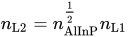
[edit]Anti-reflective (AR) coating is generally composed of several layers in the case of MJ solar cells. The top AR layer has usually a NaOH surface texturation with several pyramids in order to increase the transmission coefficient T, the trapping of the light in the material (because photons cannot easily get out of the MJ structure due to pyramids) and therefore, the path length of photons in the material.[12] On the one hand, the thickness of each AR layer is chosen to get destructive interferences. Therefore, the reflection coefficient R decreases to 1%. In the case of two AR layers L1 (the top layer, usually SiO
2) and L2 (usually TiO
2), there must be to have the same amplitudes for reflected fields and nL1dL1 = 4λmin, nL2dL2 = λmin/4 to have opposite phase for reflected fields.[19] On the other hand, the thickness of each AR layer is also chosen to minimize the reflectance at wavelengths for which the photocurrent is the lowest. Consequently, this maximizes JSC by matching currents of the three subcells.[20] As example, because the current generated by the bottom cell is greater than the currents generated by the other cells, the thickness of AR layers is adjusted so that the infrared (IR) transmission (which corresponds to the bottom cell) is degraded while the ultraviolet transmission (which corresponds to the top cell) is upgraded. Particularly, an AR coating is very important at low wavelengths because, without it, T would be strongly reduced to 70%.
Tunnel junctions
[edit]
The main goal of tunnel junctions is to provide a low electrical resistance and optically low-loss connection between two subcells.[21] Without it, the p-doped region of the top cell would be directly connected with the n-doped region of the middle cell. Hence, a pn junction with opposite direction to the others would appear between the top cell and the middle cell. Consequently, the photovoltage would be lower than if there would be no parasitic diode. In order to decrease this effect, a tunnel junction is used.[22] It is simply a wide band gap, highly doped diode. The high doping reduces the length of the depletion region because
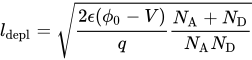
Hence, electrons can easily tunnel through the depletion region. The J-V characteristic of the tunnel junction is very important because it explains why tunnel junctions can be used to have a low electrical resistance connection between two pn junctions. Figure D shows three different regions: the tunneling region, the negative differential resistance region and the thermal diffusion region. The region where electrons can tunnel through the barrier is called the tunneling region. There, the voltage must be low enough so that energy of some electrons who are tunneling is equal to energy states available on the other side of the barrier. Consequently, current density through the tunnel junction is high (with maximum value of , the peak current density) and the slope near the origin is therefore steep. Then, the resistance is extremely low and consequently, the voltage too.[23] This is why tunnel junctions are ideal for connecting two pn junctions without having a voltage drop. When voltage is higher, electrons cannot cross the barrier because energy states are no longer available for electrons. Therefore, the current density decreases and the differential resistance is negative. The last region, called thermal diffusion region, corresponds to the J-V characteristic of the usual diode:

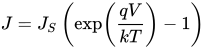
In order to avoid the reduction of the MJ solar cell performances, tunnel junctions must be transparent to wavelengths absorbed by the next photovoltaic cell, the middle cell, i.e. EgTunnel > EgMiddleCell.
Window layer and back-surface field
[edit]
A window layer is used in order to reduce the surface recombination velocity S. Similarly, a back-surface field (BSF) layer reduces the scattering of carriers towards the tunnel junction. The structure of these two layers is the same: it is a heterojunction which catches electrons (holes). Indeed, despite the electric field Ed, these cannot jump above the barrier formed by the heterojunction because they don't have enough energy, as illustrated in figure E. Hence, electrons (holes) cannot recombine with holes (electrons) and cannot diffuse through the barrier. By the way, window and BSF layers must be transparent to wavelengths absorbed by the next pn junction; i.e., EgWindow > EgEmitter and EgBSF > EgEmitter. Furthermore, the lattice constant must be close to the one of InGaP and the layer must be highly doped (n ≥ 1018 cm−3).[24]
J-V characteristic
[edit]In a stack of two cells, where radiative coupling does not occur, and where each of the cells has a JV-characteristic given by the diode equation, the JV-characteristic of the stack is given by[25]

where and are the short circuit currents of the individual cells in the stack, is the difference between these short circuit currents, and is the product of the thermal recombination currents of the two cells. Note that the values inserted for both short circuit currents and thermal recombination currents are those measured or calculated for the cells when they are placed in a multijunction stack (not the values measured for single junction cells of the respective cell types.) The JV-characteristic for two ideal (operating at the radiative limit) cells that are allowed to exchange luminesence, and thus are radiatively coupled, is given by[25]


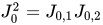

Here, the parameters and are transfer coefficients that describes the exchange of photons between the cells. The transfer coefficients depend on the refractive index of the cells. also depend on the refractive index of the cells. If the cells have the same refractive index , then .



For maximum efficiency, each subcell should be operated at its optimal J-V parameters, which are not necessarily equal for each subcell. If they are different, the total current through the solar cell is the lowest of the three. By approximation,[26] it results in the same relationship for the short-circuit current of the MJ solar cell: JSC = min(JSC1, JSC2, JSC3) where JSCi(λ) is the short-circuit current density at a given wavelength λ for the subcell i.
Because of the impossibility to obtain JSC1, JSC2, JSC3 directly from the total J-V characteristic, the quantum efficiency QE(λ) is utilized. It measures the ratio between the amount of electron-hole pairs created and the incident photons at a given wavelength λ. Let φi(λ) be the photon flux of corresponding incident light in subcell i and QEi(λ) be the quantum efficiency of the subcell i. By definition, this equates to:[27]

The value of is obtained by linking it with the absorption coefficient , i.e. the number of photons absorbed per unit of length by a material. If it is assumed that each photon absorbed by a subcell creates an electron/hole pair (which is a good approximation), this leads to:[24]


- where di is the thickness of the subcell i and is the percentage of incident light which is not absorbed by the subcell i.


Similarly, because
- , the following approximation can be used: .

The values of are then given by the J-V diode equation:


Theoretical limiting efficiency
[edit]We can estimate the limiting efficiency of ideal infinite multi-junction solar cells using the graphical quantum-efficiency (QE) analysis invented by C. H. Henry.[28] To fully take advantage of Henry's method, the unit of the AM1.5 spectral irradiance should be converted to that of photon flux (i.e., number of photons/m2·s). To do that, it is necessary to carry out an intermediate unit conversion from the power of electromagnetic radiation incident per unit area per photon energy to the photon flux per photon energy (i.e., from [W/m2·eV] to [number of photons/m2·s·eV]). For this intermediate unit conversion, the following points have to be considered: A photon has a distinct energy which is defined as follows.
- (1) Eph = hf = h(c/λ)
where Eph is photon energy, h is the Planck constant (h ≈ 6.626×10⁻³⁴ J⋅Hz−1), c is speed of light (c = 299792458 m⋅s−1), f is frequency, and λ is wavelength.
Then the photon flux per photon energy, dnph/dhν, with respect to certain irradiance E [W/m2·eV] can be calculated as follows.
- (2) = E [W/m2⋅eV] × λ [nm]/(1.998 × 10−25 [J⋅s⋅m/s]) = Eλ × 5.03 × 10¹⁵ [(no. of photons)/m2⋅s⋅eV]
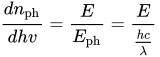
As a result of this intermediate unit conversion, the AM1.5 spectral irradiance is given in unit of the photon flux per photon energy, [no. of photons/m2·s·eV], as shown in Figure 1.
-
 Figure 1. Photon flux per photon energy from standard solar energy spectrum (AM of 1.5).

Based on the above result from the intermediate unit conversion, we can derive the photon flux by numerically integrating the photon flux per photon energy with respect to photon energy. The numerically integrated photon flux is calculated using the trapezoidal rule, as follows.
- (3)
![{\displaystyle n_{\text{ph}}(E_{g})=\int _{E_{\text{g}}}^{\infty }{\frac {dn_{\text{ph}}}{dhv}}\,dhv=\sum _{i=E_{\text{g}}}^{\infty }(hv_{i+1}-hv_{i}){\frac {1}{2}}\left[{\frac {dn_{\text{ph}}}{dhv}}(hv_{i+1})+{\frac {dn_{\text{ph}}}{dhv}}(hv_{i})\right]\,}](https://wikimedia.org/api/rest_v1/media/math/render/svg/b4dd6f223b6c1b31474d54d67da3bc086462f245)
As a result of this numerical integration, the AM1.5 spectral irradiance is given in unit of the photon flux, [number of photons/m2/s], as shown in Figure 2.
-
 Figure 2. Photon flux from standard solar energy spectrum (AM of 1.5).

There are no photon flux data in the small photon energy ranges 0–0.3096 eV because the standard (AM1.5) solar energy spectrum for hν < 0.31 eV are not available. Regardless of this data unavailability, however, the graphical QE analysis can be done using the only available data with a reasonable assumption that semiconductors are opaque for photon energies greater than their bandgap energy, but transparent for photon energies less than their bandgap energy. This assumption accounts for the first intrinsic loss in the efficiency of solar cells, which is caused by the inability of single-junction solar cells to properly match the broad solar energy spectrum. However, the current graphical QE analysis still cannot reflect the second intrinsic loss in the efficiency of solar cells, radiative recombination. To take the radiative recombination into account, we need to evaluate the radiative current density, Jrad, first. According to Shockley and Queisser method,[29]
Jrad can be approximated as follows.
- (4)
- (5)
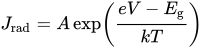
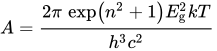
where Eg is in electron volts and n is evaluated to be 3.6, the value for GaAs. The incident absorbed thermal radiation Jth is given by Jrad with V = 0.
- (6)
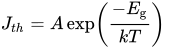
The current density delivered to the load is the difference of the current densities due to absorbed solar and thermal radiation and the current density of radiation emitted from the top surface or absorbed in the substrate. Defining Jph = enph, we have
- (7) J = Jph + Jth − Jrad
The second term, Jth, is negligible compared to Jph for all semiconductors with Eg ≥ 0.3 eV, as can be shown by evaluation of the above Jth equation. Thus, we will neglect this term to simplify the following discussion. Then we can express J as follows.
- (8)

The open-circuit voltage is found by setting J = 0.
- (9)

The maximum power point (Jm, Vm) is found by setting the derivative . The familiar result of this calculation is

- (10)
- (11)


Finally, the maximum work (Wm) done per absorbed photon is given by
- (12)

Combining the last three equations, we have
- (13)
![{\displaystyle W_{\text{m}}=E_{\text{g}}-kT\left[\ln \left({\frac {A}{en_{\text{ph}}}}\right)+\ln \left(1+{\frac {eV_{\text{m}}}{kT}}\right)+1\right]\,}](https://wikimedia.org/api/rest_v1/media/math/render/svg/e5af0e41ec01e99b5a28f7da04b0582385800293)
Using the above equation, Wm (red line) is plotted in Figure 3 for different values of Eg (or nph).
-
 Figure 3. Maximum work by ideal infinite multi-junction solar cells under standard AM1.5 spectral irradiance.

Now, we can fully use Henry's graphical QE analysis, taking into account the two major intrinsic losses in the efficiency of solar cells. The two main intrinsic losses are radiative recombination, and the inability of single junction solar cells to properly match the broad solar energy spectrum. The shaded area under the red line represents the maximum work done by ideal infinite multi-junction solar cells. Hence, the limiting efficiency of ideal infinite multi-junction solar cells is evaluated to be 68.8% by comparing the shaded area defined by the red line with the total photon-flux area determined by the black line. (This is why this method is called "graphical" QE analysis.) Although this limiting efficiency value is consistent with the values published by Parrott and Vos in 1979: 64% and 68.2% respectively,[30][31] there is a small gap between the estimated value in this report and literature values. This minor difference is most likely due to the different ways how to approximate the photon flux over 0–0.3096 eV. Here, we approximated the photon flux as 0–0.3096 eV as the same as the photon flux at 0.31 eV.
Materials
[edit]The majority of multi-junction cells that have been produced to date use three layers (although many tandem a-Si:H/mc-Si modules have been produced and are widely available). However, the triple junction cells require the use of semiconductors that can be tuned to specific frequencies, which has led to most of them being made of gallium arsenide (GaAs) compounds, often germanium for the bottom-, GaAs for the middle-, and GaInP2 for the top-cell.
Gallium arsenide substrate
[edit]Dual junction cells can be made on gallium arsenide wafers. Alloys of indium gallium phosphide in the range In0.5Ga0.5P through In0.53Ga0.47P serve as the high band gap alloy. This alloy range provides for the ability to have band gaps in the range 1.92–1.87 eV. The lower GaAs junction has a band gap of 1.42 eV.[citation needed]
Germanium substrate
[edit]Triple junction cells consisting of indium gallium phosphide (InGaP), gallium arsenide (GaAs) or indium gallium arsenide (InGaAs) and germanium (Ge) can be fabricated on germanium wafers. Early cells used straight gallium arsenide in the middle junction. Later cells have utilized In0.015Ga0.985As, due to the better lattice match to Ge, resulting in a lower defect density.[citation needed]
Due to the huge band gap difference between GaAs (1.42 eV), and Ge (0.66 eV), the current match is very poor, with the Ge junction operated significantly current limited.[citation needed]
Current efficiencies for commercial InGaP/GaAs/Ge cells approach 40% under concentrated sunlight.[32][33] Lab cells (partly using additional junctions between the GaAs and Ge junction) have demonstrated efficiencies above 40%.[34]
Indium phosphide substrate
[edit]Indium phosphide may be used as a substrate to fabricate cells with band gaps between 1.35 eV and 0.74 eV. Indium Phosphide has a band gap of 1.35 eV. Indium gallium arsenide (In0.53Ga0.47As) is lattice matched to Indium Phosphide with a band gap of 0.74 eV. A quaternary alloy of indium gallium arsenide phosphide can be lattice matched for any band gap in between the two.[citation needed]
Indium phosphide-based cells have the potential to work in tandem with gallium arsenide cells. The two cells can be optically connected in series (with the InP cell below the GaAs cell), or in parallel through the use of spectra splitting using a dichroic filter.[citation needed]
Indium gallium nitride substrate
[edit]Indium gallium nitride (InGaN) is a semiconductor material made of a mix of gallium nitride (GaN) and indium nitride (InN). It is a ternary group III–V direct bandgap semiconductor. Its bandgap can be tuned by varying the amount of indium in the alloy from 0.7 eV to 3.4 eV, thus making it an ideal material for solar cells.[35] However, its conversion efficiencies because of technological factors unrelated to bandgap are still not high enough to be competitive in the market.[36][37]
Performance improvements
[edit]Structure
[edit]Many MJ photovoltaic cells use III–V semiconductor materials. GaAsSb-based heterojunction tunnel diodes, instead of conventional InGaP highly doped tunnel diodes described above, have a lower tunneling distance. Indeed, in the heterostructure formed by GaAsSb and InGaAs, the valence band of GaAsSb is higher than the valence band of the adjoining p-doped layer.[22] Consequently, the tunneling distance dtunnel is reduced and so the tunneling current, which exponentially depends on dtunnel, is increased. Hence, the voltage is lower than that of the InGaP tunnel junction. GaAsSb heterojunction tunnel diodes offer other advantages. The same current can be achieved by using a lower doping.[38] Secondly, because the lattice constant is larger for GaAsSb than Ge, one can use a wider range of materials for the bottom cell because more materials are lattice-matched to GaAsSb than to Ge.[22]
Chemical components can be added to some layers. Adding about one percent of Indium in each layer better matches lattice constants of the different layers.[39] Without it, there is about 0.08 percent of mismatching between layers, which inhibits performance. Adding aluminium to the top cell increases its band gap to 1.96 eV,[39] covering a larger part of the solar spectrum and obtain a higher open-circuit voltage VOC.
The theoretical efficiency of MJ solar cells is 86.8% for an infinite number of pn junctions,[14] implying that more junctions increase efficiency. The maximum theoretical efficiency is 37, 50, 56, 72% for 1, 2, 3, 36 additional pn junctions, respectively, with the number of junctions increasing exponentially to achieve equal efficiency increments.[24] The exponential relationship implies that as the cell approaches the limit of efficiency, the increase cost and complexity grow rapidly. Decreasing the thickness of the top cell increases the transmission coefficient T.[24]
An InGaP hetero-layer between the p-Ge layer and the InGaAs layer can be added in order to create automatically the n-Ge layer by scattering during MOCVD growth and increase significantly the quantum efficiency QE(λ) of the bottom cell.[39] InGaP is advantageous because of its high scattering coefficient and low solubility in Ge.
Currently, there are several commercial (non-Perovskite) multi-junction technologies including tandems and triple- and quadruple-junction modules that typically use III–V semiconductors, with promising power conversion efficiency that rival and even outperform the benchmark silicon solar cells.[40][41]
Spectral variations
[edit]Solar spectrum at the Earth surface changes constantly depending on the weather and sun position. This results in the variation of φ(λ), QE(λ), α(λ) and thus the short-circuit currents JSCi. As a result, the current densities Ji are not necessarily matched and the total current becomes lower. These variations can be quantified using the average photon energy (APE) which is the ratio between the spectral irradiance G(λ) (the power density of the light source in a specific wavelength λ) and the total photon flux density. It can be shown that a high (low) value for APE means low (high) wavelengths spectral conditions and higher (lower) efficiencies.[42] Thus APE is a good indicator for quantifying the effects of the solar spectrum variations on performances and has the added advantage of being independent of the device structure and the absorption profile of the device.[42]
Use of light concentrators
[edit]Light concentrators increase efficiencies and reduce the cost/efficiency ratio. The three types of light concentrators in use are refractive lenses like Fresnel lenses, reflective dishes (parabolic or cassegraine), and light guide optics. Thanks to these devices, light arriving on a large surface can be concentrated on a smaller cell. The intensity concentration ratio (or "suns") is the average intensity of the focused light divided by 1 kW/m2 (reasonable value related to solar constant). If its value is X then the MJ current becomes X higher under concentrated illumination.[43][44]
Using concentrations on the order of 500 to 1000, meaning that a 1 cm2 cell can use the light collected from 0.1 m2 (as 1 m2 equal 10000 cm2), produces the highest efficiencies seen to date. Three-layer cells are fundamentally limited to 63%, but existing commercial prototypes have already demonstrated over 40%.[45][46] These cells capture about 2/3 of their theoretical maximum performance, so assuming the same is true for a non-concentrated version of the same design, one might expect a three-layer cell of 30% efficiency. This is not enough of an advantage over traditional silicon designs to make up for their extra production costs. For this reason, almost all multi-junction cell research for terrestrial use is dedicated to concentrator systems, normally using mirrors or Fresnel lenses.
Using a concentrator also has the added benefit that the number of cells needed to cover a given amount of ground area is greatly reduced. A conventional system covering 1 m2 would require 625 16 cm2 cells, but for a concentrator system only a single cell is needed, along with a concentrator. The argument for concentrated Multi-junction cells has been that the high cost of the cells themselves would be more than offset by the reduction in total number of cells. However, the downside of the concentrator approach is that efficiency drops off very quickly under lower lighting conditions. In order to maximize its advantage over traditional cells and thus be cost competitive, the concentrator system has to track the sun as it moves to keep the light focused on the cell and maintain maximum efficiency as long as possible. This requires a solar tracker system, which increases yield, but also cost.
Fabrication
[edit]As of 2014 multi-junction cells were expensive to produce, using techniques similar to semiconductor device fabrication, usually metalorganic vapour phase epitaxy but on "chip" sizes on the order of centimeters.
A new technique was announced that year that allowed such cells to use a substrate of glass or steel, lower-cost vapors in reduced quantities that was claimed to offer costs competitive with conventional silicon cells.[47]
Comparison with other technologies
[edit]There are four main categories of photovoltaic cells: conventional mono- and poly-crystalline silicon (c-Si) cells, thin film solar cells (a-Si, CIGS and CdTe), and multi-junction (MJ) solar cells. The fourth category, emerging photovoltaics, contains technologies that are still in the research or development phase and are not listed in the table below.
| Categories | Technology | η (%) | VOC (V) | ISC (A) | W/m2 | t (μm) | Ref's |
|---|---|---|---|---|---|---|---|
| Crystalline silicon cells | Monocrystalline | 24.7 | 0.5 | 0.8 | 63 | 100 | [clarification needed] |
| Polysilicon | 20.3 | 0.615 | 8.35 | 211 | 200 | ||
| Thin film solar cells | Amorphous silicon | 11.1 | 0.63 | 0.089 | 33 | 1 | |
| CdTe | 16.5 | 0.86 | 0.029 | – | 5 | ||
| CIGS | 19.5 | – | – | – | 1 | ||
| Multi-junction cells | MJ | 40.7 | 2.6 | 1.81 | 476 | 140 |
MJ solar cells and other photovoltaic devices have significant differences (see the table above). Physically, the main property of a MJ solar cell is having more than one pn junction in order to catch a larger photon energy spectrum while the main property of the thin film solar cell is to use thin films instead of thick layers in order to decrease the cost efficiency ratio. As of 2010[update], MJ solar panels are more expensive than others. These differences imply different applications: MJ solar cells are preferred in space and c-Si solar cells for terrestrial applications.

The efficiencies of solar cells and Si solar technology are relatively stable, while the efficiencies of solar modules and multi-junction technology are progressing.[citation needed]
Measurements on MJ solar cells are usually made in the laboratory, using light concentrators (this is often not the case for the other cells) and under standard test conditions (STCs). STCs prescribe, for terrestrial applications, the AM1.5 spectrum as the reference. This air mass (AM) corresponds to a fixed position of the sun in the sky of 48° and a fixed power of 833 W/m2. Therefore, spectral variations of incident light and environmental parameters are not taken into account under STC.[48]
Consequently, the performance of MJ solar cells in outdoor environments is inferior to that achieved in the laboratory. Moreover, MJ solar cells are designed such that currents are matched under STC, but not necessarily under field conditions.[citation needed] One can use QE(λ) to compare performances of different technologies, but QE(λ) contains no information on the matching of currents of subcells. An important alternative comparison point is the output power per unit area generated with the same incident light.[citation needed]
Applications
[edit]As of 2010, the cost of MJ solar cells was too high to allow use outside of specialized applications. The high cost is mainly due to the complex structure and the high price of materials. Nevertheless, with light concentrators under illumination of at least 400 suns, MJ solar panels become practical.[24]
As less expensive multi-junction materials become available other applications involve bandgap engineering for microclimates with varied atmospheric conditions.[49]
MJ cells are currently being utilized in the Mars rover missions.[50]
The environment in space is quite different. Because there is no atmosphere, the solar spectrum is different (AM0). The cells have a poor current match due to a greater photon flux of photons above 1.87 eV vs those between 1.87 eV and 1.42 eV. This results in too little current in the GaAs junction, and hampers the overall efficiency since the InGaP junction operates below MPP current and the GaAs junction operates above MPP current. To improve current match, the InGaP layer is intentionally thinned to allow additional photons to penetrate to the lower GaAs layer.[51]
In terrestrial concentrating applications, the scatter of blue light by the atmosphere reduces the photon flux above 1.87 eV, better balancing the junction currents. Radiation particles that are no longer filtered can damage the cell. There are two kinds of damage: ionisation and atomic displacement.[52] Still, MJ cells offer higher radiation resistance, higher efficiency and a lower temperature coefficient.[24]
See also
[edit]

References
[edit]- ^ "Dawn Solar Arrays". Dutch Space. 2007. Retrieved July 18, 2011.
- ^ Rühle, Sven (2016-02-08). "Tabulated Values of the Shockley–Queisser Limit for Single Junction Solar Cells". Solar Energy. 130: 139–147. Bibcode:2016SoEn..130..139R. doi:10.1016/j.solener.2016.02.015.
- ^ Green, Martin A. (2003). Third Generation Photovoltaics: Advanced Solar Energy Conversion. Springer. p. 65.
- ^ "Best Research-Cell Efficiency Chart". National Renewable Energy Laboratory. Archived from the original on March 14, 2023. Retrieved 2023-03-28.
- ^ Dimroth, Frank (2016). "Four-Junction Wafer Bonded Concentrator Solar Cells". IEEE Journal of Photovoltaics. 6: 343–349. doi:10.1109/jphotov.2015.2501729. S2CID 47576267.
- ^ "Solar Junction Breaks Concentrated Solar World Record with 43.5% Efficiency". Cnet.com.
- ^ Shahan, Zachary (May 31, 2012). "Sharp Hits Concentrator Solar Cell Efficiency Record, 43.5%". CleanTechnica.
- ^ "30.2 Percent Efficiency – New Record for Silicon-based Multi-junction Solar Cell". Fraunhofer ISE. 2016-11-09. Retrieved 2016-11-15.
- ^ "ZTJ Space Solar Cell" Archived 2011-09-28 at the Wayback Machine, emcore
- ^ "Concentrating Photovoltaic Technology" Archived 2011-08-22 at the Wayback Machine, NREL
- ^ "Uni-Solar Energy Production", Uni-Solar
- ^ a b R.Delamare, O.Bulteel, D.Flandre, Conversion lumière/électricité: notions fondamentales et exemples de recherche
- ^ "Basic Photovoltaic Principles and Methods", Technical Information Office, Solar Energy Research Institute (1982)
- ^ a b c N.V.Yastrebova (2007). High-efficiency multi-junction solar cells: current status and future potential (PDF).
- ^ Green, M.A. (2003). Third Generation Photovoltaics. Springer-Verlag. ISBN 978-3-540-26562-7.
- ^ Green, Martin (11 July 2003). Third generation photovoltaics: advanced solar energy conversion. Springer. p. 61. ISBN 978-3-540-40137-7.
- ^ a b c "Tandem cells". www.superstrate.net.
- ^ Miles, R (2006). "Photovoltaic solar cells: Choice of materials and production methods". Vacuum. 80 (10): 1090–1097. Bibcode:2006Vacuu..80.1090M. doi:10.1016/j.vacuum.2006.01.006.
- ^ Strehlke, S; Bastide, S; Guillet, J; Levyclement, C (2000). "Design of porous silicon antireflection coatings for silicon solar cells". Materials Science and Engineering B. 69–70: 81–86. doi:10.1016/S0921-5107(99)00272-X.
- ^ Daniel J.Aiken (2000). "Antireflection coating design for multi-junction, series interconnected solar cells" (PDF). Progress in Photovoltaics: Research and Applications. 8 (6): 563–570. doi:10.1002/1099-159X(200011/12)8:6<563::AID-PIP327>3.0.CO;2-8. Archived from the original (PDF) on 2011-07-21.
- ^ Yamaguchi, M; Takamoto, T; Araki, K (2006). "Super high-efficiency multi-junction and concentrator solar cells". Solar Energy Materials and Solar Cells. 90 (18–19): 3068–3077. doi:10.1016/j.solmat.2006.06.028.
- ^ a b c J.F.Klem, S.Park, J.C.Zolper, Semiconductor tunnel junction with enhancement layer, U.S. patent 5,679,963(1997)
- ^ J.F.Wheeldon; et al. (2009). "AlGaAs Tunnel Junction for high efficiency multi-junction solar cells: simulation and measurement of temperature-dependent operation" (PDF). Archived from the original (PDF) on 2009-11-17.
- ^ a b c d e f Luque & Hegedus 2003, p. 390 ff
- ^ a b Strandberg, Rune (2020). "An Analytic Approach to the Modeling of Multijunction Solar Cells". IEEE Journal of Photovoltaics. 10 (6): 1701–1711. arXiv:2001.08553. doi:10.1109/JPHOTOV.2020.3013974. S2CID 210860788.
- ^ Peharz, G.; Siefer, G.; Bett, A.W. (2009). "A simple method for quantifying spectral impacts on multi-junction solar cells". Solar Energy. 83 (9): 1588–1598. Bibcode:2009SoEn...83.1588P. doi:10.1016/j.solener.2009.05.009.
- ^ Liu, Lei; Chen, Nuofu; Bai, Yiming; Cui, Ming; Zhang, Han; Gao, Fubao; Yin, Zhigang; Zhang, Xingwang (2008). "Quantum efficiency and temperature coefficients of GaInP/GaAs dual-junction solar cell". Science China Technological Sciences. 52 (5): 1176–1180. doi:10.1007/s11431-008-0203-9. S2CID 55197753.
- ^ Henry, C. H. (1980). "Limiting efficiencies of ideal single and multiple energy gap terrestrial solar cells". Journal of Applied Physics. 51 (8): 4494. Bibcode:1980JAP....51.4494H. doi:10.1063/1.328272.
- ^ Shockley, W; Queisser, H.A. (1961). "Detailed Balance Limit of Efficiency of p-n Junction Solar Cells". Journal of Applied Physics. 32 (3): 510. Bibcode:1961JAP....32..510S. doi:10.1063/1.1736034.
- ^ Vos, A. D. (1980). "Detailed balance limit of the efficiency of tandem solar cells". Journal of Physics D: Applied Physics. 13 (5): 839–846. Bibcode:1980JPhD...13..839D. doi:10.1088/0022-3727/13/5/018. S2CID 250782402.
- ^ Parrott, J. (1979). "The limiting efficiency of an edge-illuminated multigap solar cell". Journal of Physics D: Applied Physics. 12 (3): 441–450. Bibcode:1979JPhD...12..441P. doi:10.1088/0022-3727/12/3/014. S2CID 250869484.
- ^ "CPV Solar Cells—Azurspace Power Solar GmbH". Azurspace. Retrieved 2014-08-17.
- ^ "The World's leading provider of compound semiconductor and lighting products". Spectrolab. 2009. Retrieved 2015-08-04.
- ^ Green, M.A.; Emery, K.; Hishikawa, Y.; Warta, W.; Dunlop, E.D. (2012). "Solar cell efficiency tables (version 40)". Progress in Photovoltaics: Research and Applications. 20 (5): 606–14. doi:10.1002/pip.2267. S2CID 93809051.
- ^ Kuykendall, T.; Ulrich, Philipp; Aloni, Shaul; Yang, Peidong (2007). "Complete compositional tunability of InGaN nanowires using a combinatorial approach". Nature Materials. 6 (12): 951–956. Bibcode:2007NatMa...6..951K. doi:10.1038/nmat2037. PMID 17965718.
- ^ McLaughlin, D.V.P.; Pearce, J.M. (2013). "Progress in Indium Gallium Nitride Materials for Solar Photovoltaic Energy Conversion". Metallurgical and Materials Transactions A. 44 (4): 1947–1954. Bibcode:2013MMTA...44.1947M. doi:10.1007/s11661-013-1622-1. S2CID 13952749.
- ^ Yam, F.K.; Hassan, Z. (2008). "InGaN: An overview of the growth kinetics, physical properties and emission mechanisms". Superlattices and Microstructures. 43 (1): 1–23. Bibcode:2008SuMi...43....1Y. doi:10.1016/j.spmi.2007.05.001.
- ^ J.C. Zolper; Plut; Tigges; et al. (1994). "GaAsSb-based heterojunction tunnel diodes for tandem solar cell interconnects". Proceedings of 1994 IEEE 1st World Conference on Photovoltaic Energy Conversion - WCPEC (A Joint Conference of PVSC, PVSEC and PSEC). Vol. 2. p. 1843. doi:10.1109/WCPEC.1994.520724. ISBN 978-0-7803-1460-3. S2CID 136718230.
- ^ a b c Yamaguchi, M; Takamoto, T; Araki, K; Ekinsdaukes, N (2005). "Multi-junction III–V solar cells: current status and future potential". Solar Energy. 79 (1): 78–85. Bibcode:2005SoEn...79...78Y. doi:10.1016/j.solener.2004.09.018.
- ^ Tian, Xueyu; Stranks, Samuel D.; You, Fengqi (July 2020). "Life cycle energy use and environmental implications of high-performance perovskite tandem solar cells". Science Advances. 6 (31) eabb0055. doi:10.1126/sciadv.abb0055. ISSN 2375-2548. PMC 7399695. PMID 32789177.
- ^ Tian, Xueyu; Stranks, Samuel D.; You, Fengqi (2021-06-24). "Life cycle assessment of recycling strategies for perovskite photovoltaic modules". Nature Sustainability. 4 (9): 821–829. doi:10.1038/s41893-021-00737-z. ISSN 2398-9629. S2CID 235630649.
- ^ a b Impact of spectral effects on the electrical parameters of multijunction amorphous silicon cells (PDF). Loughborough University. January 2003. hdl:2134/8216. ISBN 978-4-9901816-0-4.
- ^ Luque & Hegedus 2003, pp. 61 ff
- ^ Luque & Hegedus 2003, pp. 449 ff
- ^ Michael Kanellos, "Solar cell breaks efficiency record", CNET News, 6 December 2006
- ^ "NREL Solar Cell Sets World Efficiency Record at 40.8 Percent" Archived 2008-09-17 at the Wayback Machine, National Renewable Energy Laboratory, 13 August 2008
- ^ Bullis, Kevin (2014-06-09). "High Efficiency Solar Cells for the Price of Conventional Ones | MIT Technology Review". Technologyreview.com. Retrieved 2014-08-17.
- ^ Albuflasa, H; Gottschalg, R; Betts, T (2007). "Modeling the effect of varying spectra on multi junction A-SI solar cells". Desalination. 209 (1–3): 78–85. doi:10.1016/j.desal.2007.04.012.
- ^ C. Zhang, J. Gwamuri, R. Andrews, and J. M. Pearce, (2014). Design of Multi-Junction Photovoltaic Cells Optimized for Varied Atmospheric Conditions, International Journal of Photoenergy,514962, pp. 1-7.open access
- ^ D. Crisp; A. Pathareb; R. C. Ewell (2004). "The performance of gallium arsenide/germanium solar cells at the Martian surface". Progress in Photovoltaics: Research and Applications. 54 (2): 83–101. Bibcode:2004AcAau..54...83C. doi:10.1016/S0094-5765(02)00287-4.
- ^ Pereira Gonçalves, Miguel Eduardo; Mendonça dos Santos, P.; Baptista, António; dos Santos, Marcelino; N. Torres, João Paulo; Marques Lameirinhas, Ricardo A. (2025-12-01). "Development of an analytical tool to design photovoltaic solar cells: Analysis in outer space conditions". Materials Today Electronics. 14 100176. doi:10.1016/j.mtelec.2025.100176. ISSN 2772-9494.
- ^ Luque & Hegedus 2003, pp. 414 ff
Further reading
[edit]- Luque, Antonio; Hegedus, Steven, eds. (2003). Handbook of Photovoltaic Science and Engineering. John Wiley & Sons. ISBN 978-0-471-49196-5.
- Yarris, Lynn (7 Nov 2011). Berkeley Lab Research Sparks Record-Breaking Solar Cell Performance. Lawrence Berkeley National Laboratory. Retrieved 10 Dec 2011.
Theoretical research by scientists with the U.S. Department of Energy (DOE)'s Lawrence Berkeley National Laboratory (Berkeley Lab) has led to record-breaking sunlight-to-electricity conversion efficiencies in solar cells.
{{cite book}}:|work=ignored (help) (reprinted in R&D Magazine)
| Concepts | |||||||||||
|---|---|---|---|---|---|---|---|---|---|---|---|
| Photovoltaic system | |||||||||||
| Applications |
| ||||||||||
| Generation systems |
| ||||||||||
| PV companies |
| ||||||||||


Multi-junction solar cell
View on GrokipediaBasic Principles
Photovoltaic Effect
The photovoltaic effect refers to the generation of an electric current in a material upon exposure to light, a phenomenon first observed in 1839 by French physicist Alexandre-Edmond Becquerel while experimenting with an electrolytic cell consisting of platinum electrodes in an electrolyte solution.[6] Becquerel noted that the cell produced a voltage increase when illuminated, laying the groundwork for light-to-electricity conversion, though early devices were inefficient and limited to liquid-based systems.[6] In solid-state semiconductors, the effect relies on the absorption of photons by the material, where each photon's energy is given by , with as Planck's constant and as the frequency of the light.[7] For absorption to occur and generate charge carriers, the photon energy must exceed the semiconductor's bandgap energy , the minimum energy difference between the valence band and conduction band that allows an electron to transition from a bound state to a free state.[8] When a suitable photon is absorbed, it excites an electron from the valence band to the conduction band, creating an electron-hole pair: the electron in the conduction band and a positively charged hole left in the valence band.[9] This process becomes electrically useful in a p-n junction, formed by doping one side of the semiconductor with acceptors (p-type, hole-rich) and the other with donors (n-type, electron-rich), which establishes a built-in electric field at the junction due to charge diffusion.[10] The field sweeps the photogenerated electrons toward the n-side and holes toward the p-side, preventing recombination and driving a net photocurrent through an external circuit when the cell is connected to a load.[11] The first practical solid-state photovoltaic cell, achieving about 6% efficiency, was developed in 1954 by Daryl Chapin, Calvin Fuller, and Gerald Pearson at Bell Laboratories using a silicon p-n junction. Multi-junction solar cells extend this principle by stacking multiple p-n junctions with different bandgaps to capture a broader range of the solar spectrum.[6]Single-Junction Limitations
Single-junction solar cells, which rely on a single p-n junction with a fixed bandgap energy , face fundamental limitations due to the mismatch between the broad solar spectrum and the narrow energy range that the cell can effectively convert to electricity. Photons with energies below are not absorbed and pass through the material as transmission losses, while those with energies above generate electron-hole pairs, but the excess energy beyond is rapidly dissipated as heat through thermalization, a process governed by carrier relaxation to the band edges. These losses are intrinsic to the photovoltaic effect in a single absorber material and significantly reduce the potential efficiency, as the solar spectrum under standard AM1.5 conditions spans from ultraviolet to infrared wavelengths with varying intensities.[12][13] The Shockley-Queisser limit provides a theoretical upper bound on the efficiency of an ideal single-junction cell by applying the principle of detailed balance, which equates the absorption of photons to the emission of blackbody radiation from the cell under equilibrium. In their seminal 1961 analysis, Shockley and Queisser assumed a step-function absorptivity (perfect absorption above , none below), negligible non-radiative recombination, and the sun modeled as a 6000 K blackbody source, leading to an ultimate efficiency calculation that accounts for the trade-off between short-circuit current density (maximized by lower to capture more photons) and open-circuit voltage (maximized by higher to reduce thermal emission). The derivation involves integrating the photon flux above for , where is the spectral photon flux, and , with as the radiative saturation current derived from the cell's emission. Optimizing at approximately 1.34 eV yields a maximum efficiency of about 33.7% under unconcentrated AM1.5 illumination, incorporating a fill factor close to 0.89 for the ideal case; this limit arises primarily from thermalization (around 30% of incident energy) and transmission (about 20%), plus radiative recombination losses.[13][14] In practice, silicon single-junction cells with eV achieve efficiencies well below their SQ limit of ~29%, with laboratory records reaching 27.81% as of 2025, primarily due to non-radiative recombination at defects and surfaces, series resistance from contacts and doping, and shading from front metallization that blocks incident light. These parasitic effects reduce and , with series resistance alone causing voltage drops that can lower efficiency by 1-2% in high-performance cells, while shading and incomplete light absorption further compound the gap to theoretical ideals. Multi-junction cells mitigate these spectral mismatch losses by employing multiple bandgaps to better utilize the full solar spectrum.[15][16]Multi-Junction Design
Operating Principle
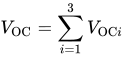
Multi-junction solar cells function by vertically stacking multiple semiconductor p-n junctions, each with a distinct bandgap, to capture a broader portion of the solar spectrum than a single-junction cell. Sunlight enters from the top, where the junction with the widest bandgap absorbs high-energy (short-wavelength) photons, generating electron-hole pairs while transmitting lower-energy photons to the underlying junctions. This spectrum-splitting approach minimizes thermalization losses, where excess photon energy is dissipated as heat in single-junction devices, and reduces the impact of below-bandgap photons that cannot be absorbed.[17][3] The subcells are electrically connected in series through highly doped tunnel junctions, which provide a low-resistance pathway for current flow by enabling quantum tunneling of carriers between adjacent layers. This series configuration results in the total open-circuit voltage being the sum of the individual subcell voltages, expressed as , where is the open-circuit voltage of the -th junction. In contrast, the photocurrent is constrained by the subcell producing the lowest current density, as the series connection requires equal current through all layers to avoid bottlenecks; thus, the total current density is , with denoting the short-circuit current density of each subcell. Current matching is achieved through careful design of layer thicknesses and bandgap selections to balance photon absorption across the stack.[17][3] Typical multi-junction cells incorporate 2 to 6 junctions, balancing efficiency gains against fabrication complexity. A representative example is the triple-junction configuration using GaInP, GaAs, and Ge layers, where the top GaInP junction targets blue and green light, the middle GaAs absorbs red, and the bottom Ge captures infrared, achieving combined spectrum utilization that exceeds single-junction limits.[17][3]Bandgap Selection
Bandgap selection in multi-junction solar cells aims to partition the solar spectrum into segments that each subcell can absorb efficiently, minimizing spectral overlap where higher-energy photons are wasted in lower-bandgap junctions and transmission losses where photons pass unabsorbed through upper junctions. For terrestrial applications, the AM1.5 global spectrum is targeted, while space environments require optimization for the AM0 spectrum, both emphasizing broad coverage from ultraviolet to near-infrared wavelengths (approximately 300–1800 nm) with graded bandgaps decreasing from top to bottom junctions.[17] Numerical models, often based on detailed balance principles adapted for multi-junction configurations, are used to optimize bandgap combinations by maximizing the overall short-circuit current while balancing voltage contributions across subcells. For an ideal three-junction cell under the AM1.5 spectrum, optimal bandgaps are approximately 1.9 eV (top), 1.4 eV (middle), and 0.95 eV (bottom), yielding a theoretical efficiency of around 50% under one-sun illumination. These values ensure each junction captures a distinct portion of the spectrum, with the top cell absorbing high-energy blue-green photons, the middle targeting yellow-red, and the bottom utilizing infrared.[18] A key trade-off in bandgap selection involves lattice matching, which promotes low defect densities and high minority carrier lifetimes for superior performance but restricts combinations to materials with compatible lattice constants, such as the GaAs-based system. To access non-matched bandgaps for better spectral partitioning, metamorphic growth techniques introduce gradual lattice relaxation through buffer layers, enabling higher efficiencies (e.g., up to 46% in inverted metamorphic designs) despite potential increases in dislocation densities that can degrade long-term stability.[17][19] Historically, dual-junction cells evolved from GaAs (1.4 eV)/Ge (0.67 eV) configurations in the 1980s, achieving around 20–25% efficiency for space applications by combining GaAs's high performance with Ge's substrate utility. The addition of a wide-bandgap layer, such as GaInP (∼1.9 eV), formed the dominant triple-junction stack (GaInP/GaAs/Ge) by the 1990s, boosting efficiencies to over 30% under AM0. Further evolution to quadruple-junction designs in the 2010s incorporated an intermediate ∼1.0 eV layer (e.g., dilute nitride GaInNAs), pushing efficiencies toward 40% by finer spectrum splitting.[20] Sensitivity analyses reveal that small bandgap deviations significantly impact efficiency; for instance, a ±0.1 eV shift in the bottom junction bandgap from its optimal value (∼0.9 eV) can reduce overall efficiency by 2–5% in three- to six-junction cells under AM1.5, primarily due to current mismatch and unabsorbed infrared photons. Top-junction bandgaps above 2.5 eV show reduced sensitivity, allowing more flexibility in material selection without substantial losses. Materials like GaInP are commonly used to realize the ∼1.9 eV top bandgap in lattice-matched stacks.[21][20]Structural Components
Tunnel Junctions
In multi-junction solar cells, tunnel junctions serve as critical interconnects between adjacent subcells, functioning as highly doped p-n junctions that facilitate quantum mechanical tunneling of charge carriers. This enables a low-resistance series electrical connection, allowing the subcells to operate in series without incurring a significant voltage drop across the junction, thereby preserving the overall photocurrent matching and efficiency of the stack.[22] The design relies on degenerate doping levels to create overlapping valence and conduction bands, promoting efficient carrier recombination and transport.[23] The physics of these tunnel junctions is rooted in the behavior of an Esaki diode, where band-to-band tunneling dominates due to the heavy doping that narrows the depletion region and aligns the band edges for carrier overlap. Tunneling probability is theoretically described by the Wentzel-Kramers-Brillouin (WKB) approximation, which accounts for the exponential decay of the wavefunction through the potential barrier, but in practice, it is often simplified to models emphasizing high carrier density overlap for direct estimation in device simulations. Kane's model further refines this by incorporating effective masses and bandgap energies to predict peak tunneling currents, typically exceeding those required for multi-junction operation (around 10-20 mA/cm²).[22][24] Materials for tunnel junctions are predominantly III-V compound semiconductors, with GaAs-based structures being traditional choices due to their compatibility with epitaxial growth processes like metal-organic chemical vapor deposition (MOCVD). These junctions feature n⁺⁺ and p⁺⁺ regions doped to concentrations greater than cm, often reaching cm, using dopants such as tellurium or silicon for n-type and carbon or zinc for p-type to achieve low resistivity and high tunneling rates.[22] In modern designs, InGaP or AlGaAs variants replace pure GaAs to improve lattice matching with overlying subcells and enhance optical transparency.[22] A key challenge in tunnel junction design is minimizing optical absorption losses, as the heavily doped regions can absorb photons intended for lower-bandgap subcells beneath them, reducing short-circuit current. To address this, engineers employ high-bandgap materials like AlGaAs or InGaP for transparency to relevant wavelengths (>700 nm), along with graded doping profiles that progressively vary composition and dopant concentration to reduce free-carrier absorption while maintaining electrical performance.[22][25] The evolution of tunnel junctions traces back to the early 1980s, when the first monolithic multi-junction solar cell incorporated an AlGaAs/GaAs tunnel junction to enable tandem operation, marking a shift from discrete cell assemblies. Over subsequent decades, designs progressed from simple GaAs homojunctions, which suffered from higher absorption, to heterostructure InGaP/GaAs systems in the 1990s for space applications, and further to advanced AlGaAs/InGaP configurations with quantum wells by the 2010s, optimizing for terrestrial concentrator cells with efficiencies exceeding 40%.[22][22]Anti-Reflective Coatings
Anti-reflective coatings (ARCs) are essential for multi-junction solar cells to minimize optical losses at the air-semiconductor interface, where Fresnel reflection occurs due to the significant refractive index mismatch between air (n ≈ 1) and typical III-V semiconductors (n ≈ 3.5–4.0). For normal incidence, the reflectivity R is given by the Fresnel equation:This results in approximately 30% reflection loss without mitigation, substantially reducing the light available for absorption in the cell stack.[26][27] Multi-layer ARCs, typically consisting of quarter-wave stacks with alternating layers of high and low refractive index materials, are widely employed to counteract this reflection across the relevant spectrum. Common configurations include double-layer designs such as TiO₂ (high index, n ≈ 2.4) over SiO₂ (low index, n ≈ 1.46), deposited via techniques like electron-beam evaporation or sputtering to achieve optical thicknesses of λ/4 at a central wavelength. These stacks create destructive interference for reflected waves, effectively reducing reflectivity to below 5% in targeted bands. Triple- or quadruple-layer variants, such as TiO₂/SiO₂/Si₃N₄, further optimize performance by addressing multiple wavelengths simultaneously.[28][29] For multi-junction cells operating over a broad wavelength range (300–1800 nm), advanced designs like graded-index (GRIN) or moth-eye structures are implemented to provide ultra-broadband antireflection. GRIN coatings feature a gradual variation in refractive index, often using nanoporous SiO₂ or SiOₓNᵧ layers, achieving average reflectivities as low as 2–3% across 300–1800 nm and enabling efficiency gains of up to 86% in reflection reduction compared to uncoated surfaces. Moth-eye structures, inspired by biological nanostructures, involve subwavelength surface gratings (e.g., etched into the top GaInP layer) that mimic a tapered index profile, suppressing reflection to under 5% over wide angles and spectra in triple-junction devices like GaInP/GaAs/Ge. These designs interact briefly with the top junction's absorption but primarily enhance overall photon entry. The effectiveness of these ARCs is evident in practical implementations, where reflection losses are curtailed from ~30% to less than 5% over the visible and near-infrared regions, contributing 2–4% absolute efficiency improvements in multi-junction cells under AM1.5G illumination. However, trade-offs exist in durability: space applications demand radiation-hard materials like Al₂O₃ or Si₃N₄ to withstand atomic oxygen and high-energy particles, often prioritizing mechanical stability over self-cleaning properties, whereas terrestrial environments favor hydrophobic TiO₂-based coatings for dust resistance and longevity under humidity and UV exposure.[28][31][32]
Contacts and Passivation Layers
In multi-junction solar cells, electrical contacts are essential for efficient carrier collection while minimizing optical and resistive losses. Front contacts typically employ fine metal grid patterns, such as Ti/Pt/Au stacks, to balance current collection with reduced shading of the active area. These grids, often with finger widths around 2-5 μm and spacing optimized for the cell size, limit light blockage to less than 3% of the surface. The shading factor, which quantifies the optical loss, is approximately equal to the fractional grid coverage area , resulting in a short-circuit current reduction of , where is the unobstructed current density. Back contacts, usually a continuous metal layer like Au or Ag, provide low-resistance ohmic interfaces to the substrate or bottom subcell without shading concerns. Ohmic contacts in these devices require low specific contact resistance, typically , to avoid series resistance losses that degrade fill factor. This is achieved through alloying or annealing processes; for instance, AuBe/Ni/Au contacts to n-type InGaP exhibit after annealing at 420°C. Such low-resistance interfaces ensure efficient extraction of photocurrent from each subcell, particularly under high-concentration illumination where current densities exceed 10 A/cm². Passivation layers play a critical role in suppressing surface recombination velocities, which can otherwise limit open-circuit voltage in the subcells. Window layers, such as AlInP with a wide bandgap of ~2.2 eV, are deposited on the front surface of emitters to create a low-recombination heterojunction interface, reducing non-radiative losses at the top subcell. Similarly, back-surface fields (BSF) employ wide-bandgap materials like p+-GaInP or AlInAs, heavily doped to form a potential barrier that reflects minority carriers away from the rear contact, enhancing collection efficiency. These strategies have enabled surface recombination velocities below 100 cm/s in GaAs-based subcells. A key challenge in multi-junction architectures arises from the thin absorber layers (often <1 μm thick), which necessitate effective lateral current flow to reach the grid lines and minimize series resistance. Poor lateral conductivity in these undoped or lightly doped regions can lead to voltage drops exceeding 10 mV across the cell, particularly in large-area devices. Recent advances incorporate transparent conductive oxides (TCOs), such as indium tin oxide (ITO), as front or rear electrodes to reduce the required metal grid area by up to 50%, thereby lowering shading losses while maintaining sheet resistances below 100 Ω/sq. This approach has improved overall cell performance in III-V multi-junctions by enhancing light transmission and carrier transport.Electrical Characteristics
Current-Voltage Behavior
The current-voltage (J-V) characteristics of multi-junction solar cells arise from their series-connected subcells, where the total photocurrent is limited by the subcell generating the lowest current density under illumination, a condition known as current matching. In an ideal current-matched configuration, the overall J-V curve resembles that of a single diode but with the open-circuit voltage summed across junctions, while the short-circuit current density is determined by the minimum of the subcells. If subcell currents are mismatched due to spectral variations or fabrication tolerances, the J-V curve exhibits characteristic steps or kinks, reflecting transitions between current-limiting subcells.[33][34] The short-circuit current density is thus set by the current-matched value, typically verified through external quantum efficiency (EQE) spectra that isolate each subcell's response to monochromatic light under bias conditions to account for optical coupling. The open-circuit voltage is the sum of individual subcell contributions, approximated as , where is the saturation current density of the -th junction, is Boltzmann's constant, is temperature, and is the elementary charge. The fill factor (FF), a measure of curve squareness, is defined as , where and are the current density and voltage at the maximum power point; deviations from ideality reduce FF.[34][35] Illuminated J-V measurements are performed under standard spectra such as AM1.5G for terrestrial applications or AM0 for space, using solar simulators to ensure 1000 W/m² irradiance at 25°C. EQE spectra for individual subcells are obtained via bias light methods to suppress contributions from non-limiting junctions, enabling precise calculation by integrating over the solar spectrum. Non-ideal behaviors, such as rollover in the J-V curve at high voltages, stem from series resistance effects, where voltage drops across tunnel junctions or contacts limit current, particularly under concentration.[33][35]Efficiency Definitions
The power conversion efficiency (η) of a multi-junction solar cell is defined as the ratio of the maximum electrical power output (P_max) to the incident optical power (P_in), expressed as a percentage: η = (P_max / P_in) × 100%. P_max is determined from the current-voltage (J-V) curve under standard test conditions, typically at the maximum power point where the product of current density and voltage is optimized. For terrestrial applications, P_in is standardized at 1000 W/m² under the AM1.5G spectrum, which represents global solar irradiance on a tilted surface at sea level with the sun 48.2° above the horizon, accounting for both direct and diffuse components as per ASTM G173.[36] For space applications, efficiency is measured under the AM0 spectrum, which simulates the unfiltered extraterrestrial solar irradiance of approximately 1366 W/m², as defined by ASTM E490, to reflect conditions outside Earth's atmosphere. In concentrator systems, efficiencies are evaluated under N suns, where the incident power scales to 1000 × N W/m² using the AM1.5D direct-beam spectrum, enabling higher performance due to increased photon flux but requiring enhanced thermal management.[37] Key metrics beyond overall efficiency include external quantum efficiency (EQE) and internal quantum efficiency (IQE), which quantify wavelength-dependent performance. EQE is the ratio of collected charge carriers to incident photons at a given wavelength, incorporating losses from reflection and incomplete absorption, while IQE measures carriers per absorbed photon, excluding optical losses. The spectral response, often plotted as EQE versus wavelength, reveals how each subcell contributes to current generation across the solar spectrum, with current matching optimized to limit the overall cell's short-circuit current to the minimum subcell value.[38] Efficiencies are reported as either initial (measured immediately after fabrication or annealing) or stabilized (after prolonged operation to account for light-induced degradation). Stabilized values are critical for practical assessments, as initial efficiencies may degrade by 1-5% due to factors like interface recombination or material metastability under illumination and heat. For benchmarking, the National Renewable Energy Laboratory (NREL) verifies records; for example, a six-junction inverted metamorphic III-V cell achieved a verified 39.2% efficiency under 1-sun AM1.5G conditions in 2020, representing a milestone for metamorphic designs.[39] In 2022, a triple-junction III-V cell reached 39.5% under the same conditions, setting a new record for one-sun multi-junction efficiencies.[5]Theoretical Efficiency Limits
Detailed Balance Model
The detailed balance model provides a thermodynamic framework for calculating the ultimate efficiency limits of solar cells by equating the absorption and emission of photons under equilibrium conditions.[13] Developed by William Shockley and Hans-Joachim Queisser in 1961, the model assumes that the solar cell operates as a blackbody radiator, absorbing all incident photons with energy above the bandgap while emitting photons only through radiative recombination, neglecting non-radiative losses.[13] Under these assumptions, the short-circuit photocurrent density is determined by the integral of the external quantum efficiency (EQE) weighted by the incident photon flux : where is the elementary charge.[13] For an ideal cell, EQE approaches 1 for photon energies exceeding the bandgap and 0 otherwise, limiting to the flux of absorbable photons from the solar spectrum. The dark saturation current density arises solely from radiative recombination and is calculated from the blackbody emission spectrum above , given by: where is Boltzmann's constant, is the cell temperature, is Planck's constant, and is the speed of light.[13] The open-circuit voltage is bounded by the relation , where the logarithmic term accounts for the ratio of photocurrent to dark current, leading to an ultimate efficiency of approximately 33% for a single-junction cell under AM1.5 illumination.[13] This model extends to multi-junction solar cells by treating each sub-cell as an independent absorber with its own bandgap, subject to the same detailed balance principles, while requiring current matching across sub-cells to maximize overall performance under series connection.[40] Such configurations allow efficiencies exceeding the single-junction limit by partitioning the solar spectrum, with detailed balance applied to optimize bandgap selections as explored in subsequent analyses.[40]Optimal Configurations
The optimal configurations for multi-junction solar cells are derived from the detailed balance model by optimizing bandgap combinations to achieve current matching while maximizing the absorption of the solar spectrum and minimizing thermalization and transmission losses. These configurations assume ideal conditions, including radiative recombination only, perfect tunnel junctions, and no parasitic absorption or reflection. For finite numbers of junctions, efficiency increases with additional layers up to a point of diminishing returns, with 6-junction designs approaching the practical upper bound for most applications under standard illumination. For an infinite number of junctions, the detailed balance model predicts a thermodynamic limit of approximately 68% efficiency under 1-sun AM1.5G illumination, as the stack can in principle partition the spectrum into infinitesimally small bandgap steps to capture nearly all incident energy above the blackbody emission threshold. Under maximum concentration, this limit rises to about 86%, reflecting reduced entropy generation from the directional, high-flux photon input that suppresses non-radiative broadening effects.[41] For finite cases under 1-sun AM1.5G illumination, the theoretical maximum efficiencies are approximately 44% for 2-junction cells, 49% for 3-junction cells, and 56% for 6-junction cells, with further junctions offering marginal gains beyond six due to the finite spectral width. These values are achieved through bandgap grading that balances current in each subcell, typically using wider bandgaps for top cells to absorb high-energy photons and narrower ones for bottom cells to utilize longer wavelengths. Bandgap optimization varies slightly between terrestrial (AM1.5G) and space (AM0) spectra, as AM0 has a bluer, more uniform distribution requiring higher average bandgaps to avoid over-absorption in lower subcells. The following table summarizes optimal bandgap combinations and corresponding detailed balance efficiencies for selected configurations under AM1.5G and AM0 spectra (1 sun, assuming current-matched series connection):| Number of Junctions | Optimal Bandgaps (eV) for AM1.5G | Efficiency (%) AM1.5G | Optimal Bandgaps (eV) for AM0 | Efficiency (%) AM0 |
|---|---|---|---|---|
| 2 | 1.65 / 0.95 | 44 | 1.70 / 1.00 | 42 |
| 3 | 1.85 / 1.15 / 0.70 | 49 | 1.90 / 1.20 / 0.75 | 47 |
| 6 | 2.00 / 1.60 / 1.30 / 1.05 / 0.80 / 0.50 | 56 | 2.05 / 1.65 / 1.35 / 1.10 / 0.85 / 0.55 | 54 |
Materials and Substrates
III-V Compound Semiconductors
III-V compound semiconductors are a class of materials composed of elements from groups III and V of the periodic table, such as gallium, indium, aluminum, arsenic, phosphorus, and antimony, which form the backbone of high-performance multi-junction solar cells due to their optoelectronic properties.[17] These materials exhibit direct bandgaps, enabling strong light absorption in thin layers— for instance, gallium arsenide (GaAs) absorbs 90% of incident light within just 1 μm thickness, compared to over 100 μm required for silicon.[17] Bandgap energies can be precisely tuned through alloying, as in the quaternary system , allowing optimization for different spectral regions in multi-junction stacks.[44] Common alloys in multi-junction solar cells include gallium indium phosphide (GaInP) for the top subcell with a bandgap of approximately 1.8–1.9 eV, gallium arsenide (GaAs) for the middle subcell at 1.42 eV, and germanium (Ge) for the bottom subcell at 0.67 eV, forming the standard triple-junction configuration.[3] These alloys leverage the direct bandgap nature for efficient carrier generation and high absorption coefficients, with GaInP often lattice-matched to GaAs substrates for seamless integration.[17] The advantages of III-V compounds include exceptionally high minority carrier lifetimes and mobilities, which support long diffusion lengths and low recombination losses, contributing to elevated open-circuit voltages.[44] They also demonstrate superior radiation resistance, retaining up to 88% of initial efficiency after 15 years in space environments, making them ideal for satellite applications.[17] Additionally, their thermal stability allows operation under high temperatures with minimal degradation, as evidenced by less than 5% efficiency loss after 200 hours at 400°C.[17] Despite these benefits, III-V semiconductors face challenges such as high production costs, estimated at approximately $77 per watt for scaled manufacturing as of 2025, due to the need for sophisticated epitaxial growth processes and rare elements like indium and gallium.[45] Toxicity concerns arise from arsenic content, which poses biohazards and necessitates specialized handling and recycling protocols.[17] Historically, the development of III-V solar cells began with early GaAs single-junction devices in the 1970s, including their deployment in Soviet Lunokhod rovers in 1970 and 1972, marking a shift toward space-qualified photovoltaics.[46] The first significant multi-junction milestone came in 1988 with a GaAs-based tandem cell achieving 20% efficiency via improved tunnel junctions.[17] By the 1990s, GaInP/GaAs/Ge triple-junction cells surpassed 30% efficiency under concentrated light, establishing III-V technology as the standard for efficiencies exceeding 40% in modern devices.[3]Lattice-Matched and Metamorphic Structures
In multi-junction solar cells based on III-V semiconductors, lattice-matched structures are employed to minimize crystal defects by selecting materials whose lattice constants closely align with that of the substrate. This approach ensures high structural integrity and low dislocation densities, which are critical for maintaining carrier lifetimes and open-circuit voltages. For instance, GaAs subcells are typically grown directly on GaAs substrates, while Ge serves as a substrate for the bottom junction in triple-junction configurations like InGaP/GaAs/Ge, where the lattice mismatch between Ge and GaAs is only about 0.08%, allowing near-perfect matching across the stack.[47] Such configurations achieve efficiencies up to 40.1% under concentrated illumination due to reduced recombination losses.[47] Metamorphic structures, in contrast, accommodate larger lattice mismatches through the use of compositionally graded buffer layers, enabling greater flexibility in bandgap selection without being constrained by the substrate's lattice constant. These buffers, often made from alloys like GaInP or AlGaInAs, gradually vary in composition over a thickness of several micrometers to relax strain and confine dislocations away from active regions, resulting in threading dislocation densities as low as 10^6 cm^{-2}. A prominent example is the metamorphic InGaP/GaInAs/Ge triple-junction cell, where the middle GaInAs subcell is tuned to a 1.0 eV bandgap via approximately 2% lattice mismatch relative to the GaAs-like lattice, accommodated by a graded buffer; this design has demonstrated 40.7% efficiency under AM1.5 spectrum at 240 suns.[48][49] However, metamorphic growth introduces higher defect levels compared to lattice-matched designs, potentially increasing non-radiative recombination and reducing voltage by 30-60 mV per subcell.[47] Common substrates for these structures include GaAs, Ge, and InP, each offering distinct trade-offs. GaAs substrates provide superior crystal quality and low defect propagation, ideal for high-performance lattice-matched devices, but their high cost limits scalability.[3] Ge substrates are more cost-effective and mechanically robust, with the added benefit of serving as an active IR-absorbing bottom junction in multi-junction stacks, enabling four-junction configurations through metamorphic layers despite slightly elevated defect densities.[3][47] InP substrates support lattice-matched growth of higher-bandgap alloys like InGaAsP for quadruple-junction cells targeting efficiencies beyond 45%, but their higher density, brittleness, and expense pose challenges for large-area fabrication and handling.[50] To optimize light absorption while minimizing series resistance, the active layers in these subcells are typically 1-10 μm thick, with top-junction bases around 0.5 μm, middle junctions 2-4 μm, and bottom junctions up to 5-10 μm, depending on the material's absorption coefficient and current-matching requirements.[51] This thickness range ensures sufficient photon capture—e.g., over 90% internal quantum efficiency in GaAs layers—without excessive carrier transit times that could degrade performance under high illumination.[51]Emerging Hybrid Materials
Emerging hybrid materials in multi-junction solar cells integrate perovskites, quantum dots, and organics with traditional semiconductors to enhance efficiency while reducing costs. Wide-bandgap perovskites, typically with bandgaps of 1.6-1.8 eV, serve as top layers in tandems atop silicon or III-V substrates, enabling four or more junctions to capture a broader solar spectrum.[52] These hybrids leverage the tunable optoelectronic properties of perovskites, which can be solution-processed at low temperatures, contrasting with the high-cost epitaxial growth required for pure III-V stacks.[53] In perovskite-silicon tandems, a notable achievement is the 34.85% efficiency demonstrated by LONGi in April 2025, utilizing a wide-bandgap perovskite top cell on a silicon bottom cell under standard illumination; more recent progress includes a certified 33.6% efficiency for a flexible perovskite/crystalline silicon tandem in November 2025.[54][55][56] For perovskite-III-V configurations, simulations and experiments show promise; for instance, all-inorganic CsPbIBr₂/GaAs four-terminal tandems have reached 30.97% efficiency, benefiting from the high absorption of GaAs in the infrared while perovskites handle visible light.[57] Similarly, wide-bandgap perovskite/GaAs two-terminal tandems have improved efficiencies from 21.68% to 24.27%, with four-terminal variants achieving 25.19%, highlighting the potential for flexible, thin-film applications.[58] These hybrids offer advantages such as lower fabrication costs for perovskite layers and improved spectral utilization, potentially exceeding 45% efficiency in multi-junction setups.[52] However, challenges persist, including perovskite instability under operational conditions and lattice mismatch with III-V materials, which can introduce defects and reduce long-term performance.[59] Ongoing research addresses these through interface engineering and encapsulation to enhance durability.[60] Beyond perovskites, quantum dots enable intermediate band formation in multi-junction cells, allowing sub-bandgap photon absorption for higher current generation. In(Ga)As quantum dot intermediate band solar cells have been optimized to approach theoretical efficiencies by minimizing thermal losses and improving carrier extraction.[61] Organic materials, when hybridized in multi-junction architectures, provide flexible, low-cost options for wide-bandgap junctions, with numerical models showing potential for over 20% efficiency in organic-perovskite tandems through precise layer thickness control.[62] Projections indicate that these hybrid materials could play a key role in surpassing 50% efficiency by 2030, particularly in concentrated light applications, by combining the strengths of perovskites for cost-effective top junctions with III-V or silicon bases for robust bottom cells.[41]Fabrication Processes
Epitaxial Growth Techniques
Epitaxial growth techniques are essential for fabricating the multi-layer structures in multi-junction solar cells, enabling precise control over material composition, thickness, and doping to optimize light absorption across different bandgaps. These methods deposit thin films of III-V compound semiconductors, such as GaInP and GaAs, onto substrates like GaAs or Ge, ensuring high crystal quality and minimal defects for efficient charge carrier collection.[63] Metalorganic chemical vapor deposition (MOCVD), also known as metalorganic vapor phase epitaxy (MOVPE), is the most widely adopted technique for producing multi-junction solar cells due to its scalability and ability to achieve precise alloy compositions. In MOCVD, metalorganic precursors are decomposed in a hydrogen carrier gas at atmospheric or reduced pressure, allowing for uniform deposition over large areas. Typical growth temperatures range from 500°C to 700°C, with rates of 1-10 μm/hr, enabling the formation of complex heterostructures with doping levels controlled to 10^17-10^19 cm^{-3} for n-type and p-type layers using sources like silane and carbon. This method excels in industrial production, supporting wafer sizes up to 8 inches (200 mm), though challenges in multi-layer uniformity can affect yield.[63][64][65][66] Molecular beam epitaxy (MBE) operates in an ultra-high vacuum environment, where elemental beams from effusion cells are directed at a heated substrate to form epitaxial layers atom by atom, resulting in exceptionally sharp interfaces critical for high-performance junctions. Growth occurs at temperatures of 400-600°C with rates of 0.5-1.5 μm/hr, providing superior control over doping profiles for n/p layers via in-situ monitoring techniques like reflection high-energy electron diffraction. Primarily used in research settings for developing advanced multi-junction configurations, MBE's slow growth enables exploration of novel alloys but limits scalability compared to MOCVD, with typical wafer sizes around 4 inches and yield issues arising from vacuum constraints.[67][68] Hydride vapor phase epitaxy (HVPE), particularly the dynamic variant (D-HVPE), offers a cost-effective alternative for thick-layer deposition in multi-junction cells, leveraging chloride-based precursors for rapid growth without metalorganics. Operating at temperatures around 600-800°C, HVPE achieves rates exceeding 100 μm/hr—far higher than MOCVD or MBE—facilitating efficient production of buffer and contact layers with doping control for n/p junctions via precursor modulation. Its high material utilization and potential for in-line processing enhance scalability, supporting 4-6 inch wafers, though uniformity across multi-layers remains a yield challenge due to gas-phase reactions. NREL's D-HVPE systems have demonstrated single-junction efficiencies of 26% as of 2025, underscoring its promise for affordable III-V multi-junction devices.[69][70][17][71]Device Assembly and Testing
Following epitaxial growth, multi-junction solar cell wafers undergo a series of post-processing steps to define device structures and form electrical connections. Photolithography is employed to pattern the front contact grids and delineate the mesa regions, followed by reactive ion etching to create mesas that isolate individual cells by removing material down to the substrate or tunnel junctions.[72] This etching step ensures electrical isolation while preserving the stacked subcell architecture.[73] Ohmic contacts are then formed through metal evaporation techniques, typically using e-beam or thermal evaporation to deposit multilayer stacks such as AuGe/Ni/Au for n-type regions and AuBe/Au for p-type regions.[74] These contacts provide low-resistance interfaces to the semiconductor layers, with front grids designed to minimize shading losses while maximizing current collection.[75] Anti-reflective coatings (ARCs) are subsequently deposited, often via e-beam evaporation or sputtering, using multilayer dielectric stacks like TiO₂/SiO₂ or Al₂O₃/TiO₂ to reduce broadband reflection across the absorption spectrum of the subcells.[76] These ARCs enhance light transmission, with optimized designs achieving average reflectances below 5% over wavelengths from 300 to 1800 nm.[77] Completed wafers are diced into individual chips using mechanical sawing or laser scribing to separate devices without damaging the delicate III-V layers.[78] For terrestrial applications, chips are assembled into modules through soldering to metal frames and encapsulation with polymers like ethylene vinyl acetate (EVA) or silicone to protect against moisture, mechanical stress, and UV degradation, ensuring long-term durability.[79] In space applications, cells are often mounted on coverslips with adhesive or direct bonding, followed by minimal encapsulation to maintain thermal conductivity while shielding from atomic oxygen and radiation.[3] Device performance is rigorously tested to verify functionality and identify issues. External quantum efficiency (EQE) is measured for each subcell using a monochromatic light source, with appropriate bias illumination applied to the other subcells to isolate their contributions and prevent spectral crosstalk.[80] This technique reveals subcell current matching and wavelength-specific responsivity, typically targeting EQE values exceeding 80% in peak regions.[35] Illuminated current-voltage (J-V) characteristics are obtained under standard spectra (e.g., AM1.5G for terrestrial or AM0 for space), providing key metrics like open-circuit voltage, short-circuit current, and fill factor through swept bias measurements.[81] Electroluminescence (EL) imaging under forward bias maps defects by capturing radiative recombination emissions, highlighting shunts, cracks, or non-uniformities with spatial resolution down to micrometers.[82] Yield and quality are assessed through metrics emphasizing low defect densities and high uniformity. Process-induced defect densities are maintained below 10⁴ cm⁻² to achieve commercial viability, primarily through controlled etching and deposition to minimize point defects and dislocations.[83] Wafer-scale uniformity is evaluated via EL or photoluminescence mapping, ensuring variation in efficiency across 4-inch wafers remains under 2% for high-volume production.[84] For space qualification, devices undergo radiation testing to simulate orbital environments, including proton and electron irradiation per ASTM standards such as F1193 for displacement damage equivalence.[85] These tests assess degradation in remaining factor (e.g., <10% power loss after 1 MeV electron fluence of 10¹⁵ cm⁻²), confirming reliability for missions like satellites.[86]Performance Enhancements
Light Concentration
Concentrator photovoltaics (CPV) systems enhance the performance of multi-junction solar cells by using optical elements such as lenses or mirrors to focus sunlight onto a small area, typically achieving concentrations of 100 to 1000 suns. This geometric concentration increases the short-circuit current density (J_sc) linearly with the concentration factor, as more photons are directed to the cell, while the open-circuit voltage (V_oc) rises logarithmically, leading to overall higher power output.[87] Multi-junction cells are particularly suited for CPV due to their high efficiency under intense illumination, minimizing losses from series resistance and enabling better utilization of the concentrated spectrum.[88] The primary efficiency gains in CPV arise from reduced relative impact of thermalization losses, where excess energy from high-energy photons is dissipated as heat; under concentration, the increased photon flux allows the cell to operate closer to its radiative limit, boosting conversion efficiency. For instance, a six-junction inverted metamorphic solar cell achieved a record efficiency of 47.1% under 143 suns concentration in 2020, while a four-junction cell reached 47.6% under concentration as of 2022, demonstrating how CPV can surpass one-sun efficiencies by exploiting the detailed balance limits more effectively.[89][90] These gains are most pronounced in multi-junction architectures, where each subcell can be optimized for the concentrated direct normal irradiance (DNI). Key system components in CPV include primary optics like Fresnel lenses or parabolic mirrors to collect and focus sunlight, secondary optics such as compound parabolic concentrators for uniform illumination, and two-axis solar tracking mechanisms to maintain alignment with the sun's position.[91] High-efficiency multi-junction cells are mounted on heat sinks, with the entire module designed for outdoor deployment in high-DNI environments.[92] Challenges in CPV implementation center on heat dissipation, as concentrated sunlight generates significant thermal loads that can degrade cell performance if temperatures exceed 80°C, necessitating advanced cooling systems like microchannel heat sinks or phase-change materials.[93] Precise optical alignment is also critical, with tracking errors as small as 0.1° potentially reducing output by several percent, requiring robust, low-maintenance mechanisms.[94] Despite higher upfront costs for optics and tracking—estimated at 1.5 to 2 times that of flat-plate systems—CPV offers lower levelized cost of energy (LCOE) in regions with high insolation, such as deserts, due to superior energy yield per unit area and reduced balance-of-system expenses over the system's lifetime. Field tests in high-DNI sites like Morocco have shown CPV modules producing up to 2.5 times more power than conventional PV per active area, supporting economic viability in sunny climates.[95]Spectral Management
Multi-junction solar cells are highly sensitive to spectral variations in the incident sunlight, where deviations from the standard air mass 1.5 (AM1.5) spectrum—caused by factors such as cloud cover, aerosols, or water vapor—alter the photon flux across different wavelength bands.[96] This leads to spectrum mismatch, where the photocurrents generated by individual subcells become imbalanced, as each subcell is optimized for a specific portion of the spectrum based on its bandgap.[97] The overall cell current is then limited by the subcell producing the lowest photocurrent, resulting in reduced fill factor and efficiency losses of up to 4% under non-ideal conditions.[98] To address spectrum mismatch and optimize subcell performance under varying atmospheric conditions, several spectral management techniques have been developed. Luminescent solar concentrators (LSCs) incorporate fluorescent materials or quantum dots to absorb high-energy photons and re-emit them at wavelengths better matched to the subcells' absorption edges, thereby reducing mismatch and enhancing current balance in diffuse or altered spectra.[99] For instance, in tandem configurations, LSCs have demonstrated power boosts by reshaping the spectrum for upper and lower junctions, with outdoor testing showing improved annual energy yield compared to unmodified cells.[100] Dichroic filters and beam splitters provide passive spectrum splitting, selectively transmitting or reflecting wavelength bands to direct light to appropriate subcells or parallel cell types, minimizing thermalization losses and maintaining current matching across spectral shifts. Dichroic filters, in particular, enable high-transmission (>95%) for targeted bands while reflecting others, allowing hybrid systems where different junctions process split spectra independently, as demonstrated in designs optimizing triple-junction III-V cells.[101] Beam splitters extend this by enabling lateral arrangements, where spectral separation improves efficiency in concentrator photovoltaics under fluctuating irradiance.[102] Advanced nanostructures, such as metamaterials, offer precise control through engineered selective absorption, reflection, or upconversion at the nanoscale, tailoring the effective spectrum incident on multi-junction stacks without bulk optics.[103] Photonic metamaterials, for example, have been modeled to enhance light trapping in horizontal multi-junction layouts, redirecting wavelengths to underutilized subcells and reducing mismatch penalties. Recent 2025 studies on wide-bandgap III-V cells highlight improved metamaterial designs for better spectral adaptation.[104][68] Spectral modeling is essential for predicting and mitigating these effects, with the Simple Model of the Atmospheric Radiative Transfer of Sunshine (SMARTS) software widely used to simulate irradiance spectra under diverse conditions like varying aerosol optical depth or precipitable water.[105] SMARTS enables detailed analysis of subcell photocurrents for multi-junction cells at global sites, supporting the design of robust spectral management strategies. Implementation of these techniques has yielded relative efficiency improvements of 5-10% in variable spectral conditions by better aligning the light spectrum with subcell bandgaps, as evidenced in field studies of spectrum-splitter systems and LSC-enhanced tandems.[106]Thermal Management
Multi-junction solar cells, due to their layered architecture and high current densities, are particularly sensitive to temperature rises, which can significantly impact performance and longevity. Elevated temperatures reduce the open-circuit voltage (V_oc) and overall efficiency, primarily through increased non-radiative recombination rates and altered bandgap energies in the semiconductor materials. Under concentrated sunlight, these effects are exacerbated, as the higher photon flux generates more heat, potentially leading to thermal runaway if not managed. The temperature coefficient for V_oc in multi-junction cells typically ranges from -0.2% to -0.3% per °C, while the efficiency loss is approximately -0.05% per °C, depending on the specific material stack and operating conditions. These coefficients arise from the thermodynamic dependence of carrier concentrations and mobilities on temperature, with III-V compounds exhibiting more pronounced drops compared to single-junction silicon cells. For instance, in GaInP/GaAs/Ge triple-junction cells, measurements under AM1.5 spectrum show a V_oc reduction of about 2.4 mV/°C per junction, compounding across the stack. Heat generation in these devices stems mainly from Joule heating due to series resistance in the tunnel junctions and contacts, as well as non-radiative recombination losses in the absorbers, which convert excess energy into phonons rather than photons. These mechanisms are intensified under light concentration, where irradiance levels can exceed 500 suns, raising junction temperatures by 50-100°C above ambient without cooling. In such scenarios, the fill factor also degrades due to increased shunt paths, further compounding efficiency losses. To mitigate these issues, various thermal management strategies have been developed, tailored to the application environment. Heat sinks, often made from high-thermal-conductivity materials like copper or aluminum nitride, are commonly integrated to dissipate heat via conduction and convection in terrestrial setups. Phase-change materials (PCMs), such as paraffin-based composites, provide latent heat storage to buffer temperature spikes during peak illumination, maintaining cell temperatures below 80°C for extended periods. Advanced microchannel cooling systems, employing microfluidic channels etched into the substrate, enable precise heat extraction through liquid circulation, achieving thermal resistances as low as 0.1 K/W under high-flux conditions. Recent integrations of radiative cooling in 2024-2025 have shown potential to reduce operating temperatures by 5-10°C passively, enhancing efficiency in concentrator systems.[107] In space applications, where active cooling is impractical due to vacuum and weight constraints, passive strategies dominate, including radiative heat dissipation via deployable panels coated with high-emissivity materials to reject heat to deep space. These radiators, often combined with multi-layer insulation, keep operating temperatures around 50-70°C for cells like those in the International Space Station arrays. For terrestrial concentrator photovoltaics, active cooling via fans or thermoelectric modules is preferred to handle dynamic loads, ensuring reliability under varying ambient conditions. Long-term reliability is critically affected by sustained high temperatures, with degradation rates accelerating above 100°C due to diffusion-enhanced defect formation and material intermixing at junctions. Lifetime models, such as those based on the Arrhenius equation, predict a factor of 2-5 reduction in operational life for every 10°C rise, with activation energies around 0.7-1.0 eV for III-V degradation mechanisms. These models guide design margins, ensuring 25-30 year lifespans in space missions by limiting maximum temperatures through integrated thermal modeling.Recent Developments
Record Efficiencies
Multi-junction solar cells have seen steady efficiency improvements over decades, driven by advances in materials and design. In the 1980s, early dual-junction cells based on GaInP/GaAs achieved efficiencies around 25% under 1-sun conditions, marking a significant leap from single-junction technologies. By the 2010s, triple-junction configurations, typically lattice-matched GaInP/GaAs/Ge structures, reached approximately 38% efficiency under concentrated sunlight, enabling their adoption in space applications. Recent milestones highlight the potential of higher junction counts and metamorphic growth techniques. In 2020, the National Renewable Energy Laboratory (NREL) demonstrated a six-junction inverted metamorphic (IMM) cell with 47.1% efficiency under concentrated illumination (143 suns), setting a benchmark for concentrator photovoltaics.[89] This was surpassed in 2022 by Fraunhofer ISE, which achieved 47.6% efficiency with a four-junction III-V cell under 665-sun concentration, incorporating advanced anti-reflection coatings to minimize optical losses.[4] Under 1-sun conditions, NREL's triple-junction III-V cell reached 39.5% efficiency in 2022, leveraging quantum well intermixing for broader spectral absorption.[108] Emerging hybrid tandems are also pushing boundaries. In April 2025, LONGi reported a perovskite-silicon tandem cell with 34.85% efficiency under 1-sun illumination, certified by an independent lab, demonstrating the viability of integrating perovskites with established silicon bases.[54] These records are verified by authoritative institutions like NREL and Fraunhofer ISE, which employ rigorous methodologies including spectral mismatch correction, quantum efficiency measurements, and calibration against reference cells under ASTM G173 or IEC 60904-3 standards at 25°C. Efficiencies have trended upward through transitions from rigid lattice-matched designs to flexible IMM architectures, which accommodate strain from lattice-mismatched layers to enable more junctions without degrading performance.[1] Projections indicate that 5- to 7-junction cells could approach 50% efficiency by 2030, approaching detailed balance limits while balancing cost and manufacturability.[109]| Junction Type | Efficiency (%) | Conditions | Year | Institution | Citation |
|---|---|---|---|---|---|
| Dual (GaInP/GaAs) | ~25 | 1-sun | 1980s | Various (e.g., NREL chart) | |
| Triple (GaInP/GaAs/Ge) | ~38 | Concentrated | 2010s | Spectrolab/NREL | |
| Six (IMM III-V) | 47.1 | 143 suns | 2020 | NREL | [89] |
| Four (III-V) | 47.6 | 665 suns | 2022 | Fraunhofer ISE | [4] |
| Triple (III-V) | 39.5 | 1-sun | 2022 | NREL | [108] |
| Perovskite/Si Tandem | 34.85 | 1-sun | 2025 | LONGi | [54] |
Integration with Perovskites
Integration of perovskites into multi-junction solar cells has emerged as a promising strategy to enhance efficiency while leveraging the low-cost solution processing of perovskite materials alongside established III-V or silicon subcells.[110] Common architectures include monolithic configurations, where perovskite layers are deposited directly on III-V or silicon bottom cells to form series-connected tandems or triple-junctions, enabling current matching but requiring precise bandgap alignment.[111] In contrast, four-terminal mechanically stacked designs separate the subcells electrically, allowing independent operation and greater flexibility in material selection, though they introduce losses from optical coupling and added complexity.[112] Key achievements in perovskite-integrated multi-junctions include a 2025 demonstration of a monolithic perovskite-perovskite-silicon triple-junction solar cell achieving 23.3% certified steady-state efficiency over a 16 cm² area, highlighting scalability potential for hybrid systems.[110] All-perovskite multi-junction configurations have shown promise for efficiencies exceeding 30%, driven by tunable wide-bandgap top cells that capture higher-energy photons without relying on expensive III-V materials, with a certified 29.1% efficiency achieved for a monolithic all-perovskite tandem in January 2025.[113] Despite these advances, challenges persist in perovskite stability under operational conditions, including degradation from moisture ingress and thermal stress, which can lead to phase segregation and reduced longevity in multi-junction stacks.[114] Interface recombination at perovskite-III-V or perovskite-silicon junctions further limits open-circuit voltage, exacerbated by defect states.[115] Solutions such as 2D perovskite passivation layers have been effective in suppressing non-radiative recombination and improving device durability, with reports of retained performance after extended storage.[116] Furthermore, scalable perovskite-silicon tandem solar cells fabricated via vapor deposition on textured silicon wafers have retained 90% of initial performance after over 1400 hours at 85°C under continuous one-sun illumination and operated over 2000 hours without significant degradation.[117] Bandgap tuning in halide perovskites is crucial for optimizing spectral splitting in multi-junctions, achieved by compositional engineering such as varying iodide-to-bromide ratios in methylammonium lead halide structures like , which enables bandgaps from approximately 1.5 eV (pure iodide) to 2.3 eV (pure bromide).[118] This flexibility allows wide-bandgap perovskites (1.7-1.8 eV) as top cells over narrower-gap silicon (1.1 eV) or III-V (0.7-1.4 eV) subcells, maximizing photon utilization.[119] Commercialization efforts are advancing through pilot production lines, exemplified by Oxford PV's megawatt-scale facility in Germany, which has begun distributing perovskite-silicon tandem modules with over 24% efficiency, targeting cost reductions via scalable solution-based deposition to compete with traditional photovoltaics.[120] These initiatives focus on integrating perovskites into hybrid architectures to lower manufacturing expenses while maintaining high performance.[121]Comparisons and Applications
Versus Other Photovoltaic Technologies
Multi-junction solar cells achieve significantly higher conversion efficiencies than single-junction photovoltaic technologies, primarily due to their ability to capture a broader spectrum of sunlight through stacked junctions. Under concentrated light, multi-junction cells have reached efficiencies exceeding 47.1% as of July 2025, while one-sun efficiencies surpass 39.5%.[122] In contrast, crystalline silicon cells, the dominant technology, top out at 26.7%, copper indium gallium selenide (CIGS) thin-film cells at 23.4%, and single-junction perovskite cells at 25.7% as of July 2025.[122] These efficiency advantages make multi-junction cells particularly valuable in applications requiring maximum power output per unit area, though they come at the expense of complexity in fabrication. Economically, multi-junction cells remain far more expensive to produce than conventional options, limiting their widespread adoption. Manufacturing costs for multi-junction cells typically range from $5 to $10 per watt-peak (Wp), driven by the use of expensive III-V semiconductor materials and epitaxial growth processes, compared to silicon modules now available below $0.30/Wp due to mature large-scale production. As a result, the levelized cost of electricity (LCOE) for multi-junction systems is competitive only in niche concentrated photovoltaics (CPV) setups or space environments, where high efficiency offsets the upfront costs; in standard terrestrial installations, silicon's LCOE is substantially lower at around $0.04/kWh globally. Scalability further underscores this divide: multi-junction production is constrained to specialized wafer-based facilities with low throughput, serving limited markets, whereas silicon benefits from gigawatt-scale manufacturing lines enabling mass production and rapid cost reductions.[63][123][123] In terms of reliability, multi-junction cells excel in high-radiation environments, such as space, where their robust III-V materials maintain performance under proton and electron bombardment better than silicon or thin-film alternatives. However, perovskites show promising potential for enhanced long-term stability in terrestrial conditions through ongoing compositional engineering, potentially surpassing multi-junction cells in operational lifetime under ambient stressors like humidity and heat. Market dynamics reflect these trade-offs: multi-junction cells hold less than 1% of the global photovoltaic market, overshadowed by silicon's 98% dominance as of 2025, though hybrid tandems incorporating perovskites with silicon are emerging to bridge efficiency and cost gaps.[124][125][126][127]Space and Terrestrial Uses
Multi-junction solar cells serve as the primary photovoltaic technology for space missions, powering satellites and space stations with their exceptional efficiency and resistance to radiation damage from cosmic rays and solar flares. These III-V semiconductor-based cells, often GaAs/Ge structures, maintain performance in low-Earth orbit and beyond, where silicon cells degrade rapidly. For example, the International Space Station's iROSA arrays incorporate Spectrolab's multi-junction cells to generate kilowatts of power, supporting life support and scientific experiments amid constant exposure to high-energy particles.[128][124] Their radiation tolerance stems from robust material properties that minimize defect formation under proton and electron bombardment, ensuring long-term reliability.[129] On Earth, multi-junction cells enable concentrator photovoltaic (CPV) systems for utility-scale electricity production in sun-rich regions, such as the Southwest United States, where direct normal irradiance exceeds 2,000 kWh/m² annually. In these setups, small-area multi-junction receivers—typically triple-junction GaInP/GaAs/Ge devices—are paired with precision optics like parabolic mirrors or Fresnel lenses to focus sunlight at ratios up to 1,000 suns, maximizing output from limited cell area. The resulting modules feed into dual-axis trackers and connect via inverters to the electrical grid, forming hybrid systems that complement conventional silicon PV for high-efficiency plants. Representative installations include multi-megawatt CPV facilities developed by Soitec in Arizona and New Mexico, demonstrating scalable deployment for grid integration.[130][17][131] Key deployments underscore their versatility. NASA's Mars Exploration Rovers, Spirit and Opportunity, relied on Spectrolab's GaInP/GaAs/Ge triple-junction cells to harvest attenuated Martian sunlight, powering mobility and instruments for over five years—far exceeding the 90-day baseline—despite dust accumulation and low solar intensity. In commercial terrestrial applications, Amonix's CPV generators utilized III-V multi-junction cells under extreme concentration to deliver efficient power in desert environments, with early systems installed in California and Arizona for utility partners. Similarly, Soitec's Concentrix modules, featuring advanced multi-junction receivers, supported MW-scale pilots in the US Southwest, optimizing land use and water efficiency in arid climates.[132][133][134] Emerging uses signal broadening adoption. Flexible, lightweight multi-junction cells are advancing drone (UAV) propulsion, where high specific power enables prolonged endurance for reconnaissance and logistics missions without frequent recharging. For electric vehicles, thin-film multi-junction integrations on roofs and hoods promise auxiliary charging, with projections from 2020 estimating up to 50 GW of global PV capacity in solar-EVs by 2030, though recent analyses indicate slower growth.[135][136] Space-driven demand continues to propel market expansion, with the multi-junction space solar cell sector projected to surpass $419 million by 2031, fueled by constellations and deep-space probes.[137][138]References
- https://www.[mdpi](/page/MDPI).com/2304-6732/9/12/906