Hubbry Logo
MicroclimateMicroclimateMain
Open search
Microclimate
Community hub
Microclimate
logo
8 pages, 0 posts
0 subscribers
Be the first to start a discussion here.
Microclimate
Microclimate
from Wikipedia
Microclimate on rock located in intertidal zone in Sunrise-on-Sea, South Africa

A microclimate (or micro-climate) is a local set of atmospheric conditions that differ from those in the surrounding areas, often slightly but sometimes substantially. The term may refer to areas as small as a few square meters or smaller (for example a garden bed, underneath a rock, or a cave) or as large as many square kilometers. Because climate is statistical, which implies spatial and temporal variation of the mean values of the describing parameters, microclimates are identified as statistically distinct conditions which occur and/or persist within a region. Microclimates can be found in most places but are most pronounced in topographically dynamic zones such as mountainous areas, islands, and coastal areas.[1]

Microclimates exist, for example, near bodies of water which may cool the local atmosphere, or in heavy urban areas where brick, concrete, and asphalt absorb the sun's energy, heat up, and re-radiate that heat to the ambient air: the resulting urban heat island (UHI) is a kind of microclimate that is additionally driven by relative paucity of vegetation.[2]

Background

[edit]
Tree ferns thrive in a protected dell area in the Lost Gardens of Heligan, in Cornwall, England, latitude 50° 15'N.

The terminology "micro-climate" first appeared in the 1950s in publications such as Climates in Miniature: A Study of Micro-Climate Environment (Thomas Bedford Franklin, 1955).[3]

Examples of microclimates

[edit]

The area in a developed industrial park may vary greatly from a wooded park nearby, as natural flora in parks absorb light and heat in leaves that a building roof or parking lot just radiates back into the air. Advocates of solar energy argue that widespread use of solar collection can mitigate overheating of urban environments by absorbing sunlight and putting it to work instead of heating the foreign surface objects.[4]

A microclimate can offer an opportunity as a small growing region for crops that cannot thrive in the broader area; this concept is often used in permaculture practiced in northern temperate climates. Microclimates can be used to the advantage of gardeners who carefully choose and position their plants. Cities often raise the average temperature by zoning, and a sheltered position can reduce the severity of winter. Roof gardening, however, exposes plants to more extreme temperatures in both summer and winter.

In an urban area, tall buildings create their own microclimate, both by overshadowing large areas and by channeling strong winds to ground level. Wind effects around tall buildings are assessed as part of a microclimate study.

Microclimates can also refer to purpose-made environments, such as those in a room or other enclosure.[5] Microclimates are commonly created and carefully maintained in museum display and storage environments. This can be done using passive methods, such as silica gel, or with active microclimate control devices.

Usually, if the inland areas have a humid continental climate, the coastal areas stay much milder during winter months, in contrast to the hotter summers. This is the case in places such as British Columbia, where Vancouver has an oceanic wet winter with rare frosts, but inland areas that average several degrees warmer in summer have cold and snowy winters.

Sources and influences on microclimate

[edit]

Two main parameters to define a microclimate within a certain area are temperature and humidity. A source of a drop in temperature and/or humidity can be attributed to different sources or influences. Often a microclimate is shaped by a conglomerate of different influences and is a subject of microscale meteorology.

Cold air pool

[edit]

Examples of the cold air pool (CAP) effect are Gstettneralm Sinkhole in Austria (lowest recorded temperature −53 °C (−63 °F))[6] and Peter Sinks in the US. The main criterion on the wind speed in order to create a warm air flow penetration into a CAP is the following:

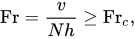
where is the Froude number, — the Brunt–Väisälä frequency, — depth of the valley, and — Froude number at the threshold wind speed.[7]

Craters

[edit]

The presence of permafrost close to the surface in a crater creates a unique microclimate environment.[8]

Caves

[edit]

Caves are important geologic formations that can house unique and delicate geologic/biological environments. The vast majority of caves found are made of calcium carbonates such as limestone. In these dissolution environments, many species of flora and fauna find home. The mixture of water content within the cave atmosphere, air pressure, geochemistry of the cave rock as well as the waste product from these species can combine to make unique microclimates within cave systems.[9]

The speleogenetic effect is an observed and studied process of air circulation within cave environments brought on by convection. In phreatic conditions the cave surfaces are exposed to the enclosed air (as opposed to submerged and interacting with water from the water table in vadose conditions). This air circulates water particles that condense on cave walls and formations such as speleothems. This condensing water has been found to contribute to cave wall erosion and the formation of morphological features. Some examples of this can be found in the limestone walls of Grotta Giusti; a thermal cave near Monsummano, Lucca, Italy. Any process that leads to an increase or decrease in chemical/physical processes will subsequently impact the environment within that system. Air density within caves, which directly relates to the convection processes, is determined by the air temperature, humidity, and pressure. In enclosed cave environments, the introduction of bacteria, algae, plants, animals, or human interference can change any one of these factors therefore altering the microenvironment within the cave.[9] There are over 750 caves worldwide that are available for people to visit. The constant human traffic through these cave environments can have a negative effect on the microclimates as well as on the geological and archeological findings. Factors that play into the deterioration of these environments include nearby deforestation, agriculture operations, water exploitation, mining, and tourist operations.[10]

The speleogenetic effect of normal caves tends to show a slow circulation of air. In unique conditions where acids are present, the effects of erosion and changes to the microenvironment can be drastically enhanced. One example is the effect of the presence of hydrosulfuric acid(H2S). When the oxidized hydrosulfuric acid chemically alters to sulfuric acid(H2SO4), this acid starts to react with the calcium carbonate rock at much higher rates. The water involved in this reaction tends to have a high pH of 3 which renders the water almost unlivable for many bacteria and algae. An example of this can be found in the Grotta Grande del Vento cave in Ancona, Italy.[9]

Plant microclimate

[edit]

As pointed out by meteorologist Rudolf Geiger,[11] not only does climate influence the living plant, but the opposite effect of the interaction of plants on their environment can also take place, which is ultimately known as plant climate. This effect has important consequences for forests in the midst of a continent; indeed, if forests were not creating their own clouds and water cycle with their efficient evapotranspiration activity, there would be no forest far away from coasts,[12] as statistically, without any other influence, rainfall occurrence would decrease from the coast towards inland. Planting trees to fight drought has also been proposed in the context of afforestation.[13]

Dams

[edit]

Artificial reservoirs as well as natural ones create microclimates and often influence the macroscopic climate as well.

Slopes

[edit]

Another contributing factor of microclimate is the slope or aspect of an area. South-facing slopes in the Northern Hemisphere and north-facing slopes in the Southern Hemisphere are exposed to more direct sunlight than opposite slopes and are therefore warmer for longer periods of time, giving the slope a warmer microclimate than the areas around the slope. The lowest area of a glen may sometimes frost sooner or harder than a nearby spot uphill, because cold air sinks, a drying breeze may not reach the lowest bottom, and humidity lingers and precipitates, then freezes.

Soil types

[edit]

The type of soil found in an area can also affect microclimates. For example, soils heavy in clay can act like pavement, moderating the near ground temperature. On the other hand, if soil has many air pockets, then the heat could be trapped underneath the topsoil, resulting in the increased possibility of frost at ground level.[14]

Cities and regions known for microclimates

[edit]

Americas

[edit]
  • Northern California above the Bay Area is also well known for microclimates with significant differences of temperatures.[citation needed] The coastline typically has daytime temperatures of 17 and 19 °C (63 and 66 °F) during summer months along that coastline, but inland towns not far from the ocean such as Lakeport, can be as hot as 34 °C (93 °F) in an average summer day, in spite of being just around 40 miles (64 km) inland. Even as far north as the Klamath River valley around the 41st parallel north between Willow Creek and Eureka averages such temperatures, which is extremely hot for such northerly areas. At this parallel, the temperature at the coast is so cool that Willow Creek beats Eureka's all-time record temperature on average 79 times per year. This is in spite of the areas being less than 50 miles (80 km) from each other.
    • San Francisco is a city with various microclimates. Due to the city's varied topography and influence from the prevailing summer marine layer, weather conditions can vary by as much as 9 °F (5 °C) from block to block and a full 30 °F (17 °C) between the coastal fog belt and the heat island of downtown. The Noe Valley district for example, is typically warmer and sunnier than adjacent areas because the surrounding hills block some of the cool fog from the Pacific.
    • The region as a whole, known as the San Francisco Bay Area can have a wide range of extremes in temperature. In the basins and valleys adjoining the coast, climate is subject to wide variations within short distances as a result of the influence of topography on the circulation of marine air. The San Francisco Bay Area offers many varieties of climate within a few miles. In the Bay Area, for example, the average maximum temperature in July is about 64 °F (18 °C) at Half Moon Bay on the coast, 87 °F (31 °C) at Walnut Creek only 25 mi (40 km) inland, and 95 °F (35 °C) at Tracy, just 50 mi (80 km) inland.[15]
  • The Los Angeles and San Diego areas are also subject to phenomena typical of a microclimate.[16][17] The temperatures can vary as much as 36 °F (20 °C)) between inland areas and the coast, with a temperature gradient of over one degree per mile (1.6 km) from the coast inland. Hills and mountains can also block coastal air masses. The San Fernando Valley is usually much warmer in summer than most of Los Angeles, because the Santa Monica Mountains usually block the cool ocean breezes and fog. Southern California has also a weather phenomenon called "June Gloom" or "May Grey", which sometimes gives overcast or foggy skies in the morning at the coast, but usually gives sunny skies by noon, during late spring and early summer.
  • The Big Island of Hawaii is also an area known for microclimates,[18] as Kailua-Kona and Hilo, Hawaii, experience rainfall of 18 in (460 mm) and 127 in (3,200 mm) per year, respectively, despite being just 60 mi (97 km) from each other.
  • Calgary, Alberta, is also known for its microclimates.[citation needed] Especially notable are the differences between the downtown and river valley/flood plain regions and the areas to the west and north. This is largely due to an elevation difference within the city's boundaries of over 1,000 ft (300 m), but can also be somewhat attributed to the effects of the seasonal Chinooks.[19]
  • Halifax, Nova Scotia, also has numerous microclimates.[citation needed] Coastal temperatures and weather conditions can differ considerably from areas located just 5–15 km (3.1–9.3 mi) inland. This is true in all seasons. Varying elevations are common throughout the city, and it is even possible to experience several microclimates while traveling on a single highway due to these changing elevations.
  • Vancouver and its metro area also has many microclimates.[20] North Vancouver and other regions situated on the mountain slopes get over 2,000 millimetres (79 in) of precipitation a year on average, while other regions to the south get around 1,000 millimetres (39 in), although they are less than 40 kilometres (25 mi) away. Temperatures in the Fraser Valley inland may be up to 10 °C (18 °F) warmer than the coast, while in winter they are several degrees colder.
  • Chesapeake Bay is also known for its subtropical microclimate.[21] It is most notable for its mild climatic effects on the area east and west of the lowlands of Maryland and Delmarva. Having over 64,000 square miles (170,000 km2) of water; (most of which is a mix of fresh and salt water) creates higher levels of humidity and heat in the spring and summer months. An example of this effect is the survival of subtropical palm trees and plants such as water hyacinths[22] in the area.[23][21]
  • Chile Chico and Los Antiguos on the southern shores of General Carrera Lake have favourable conditions for agriculture despite being in inner Patagonia.[24]
  • New York City and its surrounding metro area feature an extensive urban heat island, and influence from the Atlantic Ocean. These factors cause it to be the northernmost major city in the US that Köppen describes as humid subtropical, with the city being in the 7a/7b/8a USDA zones, compared to nearby cities south of it, which feature lower zones.

Europe

[edit]
  • The Ticino region in Switzerland has a microclimate in which palm trees and banana trees can grow.[25]
  • Gran Canaria is called "Miniature Continent" for its rich variety of microclimates.[26]
  • Tenerife is known for its wide variety of microclimates.[27]
  • Istanbul exhibits a multitude of distinct microclimates because of its hilly topography and maritime influences.[28] Within the city, average summer mean temperatures range from 20–24 °C (68–75 °F) depending on proximity to the Black Sea, with more significant differences on certain days. Rainfall also varies widely owing to the rain shadow of the hills in Istanbul, from around 600 millimeters (24 in) on the southern fringe at Florya to 1,200 millimeters (47 in) on the northern fringe at Bahçeköy.[29] Furthermore, while the city itself lies in USDA hardiness zones 9a to 9b, its inland suburbs lie in zone 8b with isolated pockets of zone 8a, restricting the cultivation of cold-hardy subtropical plants to the coasts.[30]
  • Leeds, located in Yorkshire, England, is known to have a number of microclimates because of the number of valleys surrounding the city centre.[citation needed]
  • The central west coast of Portugal, similarly to California, has huge differences in summer temperatures from the surrounding inland regions. In less than 60 km (37 mi), average daily summer temperatures can vary through as much as 10 degrees Celsius/18 degrees Fahrenheit, from 21 °C (70 °F) in Peniche or São Pedro de Moel to around 31 °C (88 °F) in Santarém or Tomar. This phenomenon is caused by local upwelling created by the northern Nortada winds.[31]
  • The coastal areas in the Andalusia region of Spain has a microclimate.[citation needed] Further north along the coast, Cádiz has a summer average of 27 °C (81 °F) with warm nights, whereas nearby Jerez de la Frontera has summer highs of 33 °C (91 °F) with inland areas further north such as Seville being even hotter.
  • Sorana, a commune in Italy's Pescia Valley with a microclimate considered ideal for growing the Sorana bean.[32]
  • The Nizza (Nice) district of Frankfurt-am-Main, Germany is a small area on the north bank of the River Main where wind shelter and sunlight reflected off the river produces a Mediterranean climate and supports one of the largest gardens of southern European plants north of the Alps.[33]

Asia and Oceania

[edit]
  • Amman, Jordan, has extreme examples of microclimate, and almost every neighbourhood exhibits its own weather.[34] It is known among locals that some boroughs such as the northern and western suburbs are among the coldest in the city, and can be experiencing frost or snow whilst other warmer districts such as the city centre can be at much warmer temperatures at the same time.
  • Sydney, Australia, has a microclimate occurring prominently in the warmer months.[citation needed] Inland, in Sydney's western suburbs, the climate is drier and significantly hotter with temperatures generally around 3–7 °C (5–13 °F) above Sydney CBD and Eastern Suburbs (the coast), as sea breezes do not penetrate further inland. In summer, the coast averages at 25.9 °C (78.6 °F), while inland varies between 28 and 30 °C (82 and 86 °F), depending on the suburb.[35][36] In extreme occasions, the Coast would have a temperature of 24 °C (75 °F), while a suburb 20 km (12.43 mi)) inland bakes in 36 °C (97 °F) heat. However, winter lows in the West are around 3–5 °C (5–9 °F) cooler than the coastal suburbs, and may provide mild to moderate frost.[37] Within the city and surrounds, rainfall varies, from around 682.5 mm (26.87 in) in the far-west to 1,213.8 mm (47.79 in) at Observatory Hill (the east or the coast).[38]

See also

[edit]

References

[edit]
[edit]
Revisions and contributorsEdit on WikipediaRead on Wikipedia
from Grokipedia
A microclimate is the distinctive set of climatic conditions occurring in a localized area near the Earth's surface, typically differing from the broader regional or macroclimate due to small-scale environmental variations, such as within a few meters above or below the ground and under canopies. These conditions encompass variables like , , , solar radiation, and , which can create environments that are warmer, cooler, wetter, or drier than the surrounding area. Microclimates are shaped by biophysical factors including , structure, composition, and surface materials, often extending over scales from centimeters to hundreds of meters. In ecological contexts, microclimates profoundly influence organismal , , and interactions, determining suitability and driving fine-scale patterns in distributions and assembly across diverse biomes. For instance, canopies and layers generate shaded, humid microclimates that support specialized and , while urban surfaces like asphalt create heat islands that alter local . These localized climates also mediate processes, such as , , and nutrient cycling, by modulating variables like vapor pressure deficit (VPD) and (PAR). The study of microclimates has gained prominence in and conservation , particularly for addressing climate change impacts, as they provide microrefugia—small-scale buffers against macroclimatic shifts that enable species persistence and maintain hotspots. Recent advancements in sensor technology and modeling have enhanced the integration of microclimatic data into ecosystem research, improving predictions of carbon fluxes, water use efficiency, and responses to environmental stressors. Understanding microclimates is thus essential for landscape management, , and mitigating the effects of global warming on terrestrial systems.

Fundamentals

Definition and Characteristics

A microclimate refers to the distinct climatic conditions within a relatively small, localized area near the Earth's surface, typically ranging from a few centimeters to about 100 meters horizontally and from centimeters to tens of meters vertically, that differ from the surrounding regional due to local environmental factors. This definition emphasizes the fine-scale atmospheric variations resulting from environmental heterogeneity, such as differences in , , or surface properties, which create offsets from broader climatic patterns. Microclimates are part of a of climate scales, where they represent the smallest level—contrasting with mesoclimates (over areas of a few square kilometers, like fields) and macroclimates (regional or larger scales, such as states). Key characteristics of microclimates include variations in , , , , and light intensity, which arise from interactions between local surfaces and the atmosphere. These conditions exhibit , meaning adjacent areas can experience markedly different climates over short distances, and temporal dynamics, with pronounced diurnal cycles (e.g., daytime warming and nighttime cooling) and seasonal shifts influenced by solar angles and vegetation changes. For instance, exposed soil surfaces often maintain warmer temperatures than nearby shaded understory areas due to direct solar exposure, highlighting how microclimatic variations can create distinct habitats within the same broader environment. Such differences underscore the role of microclimates in modulating local ecological processes without delving into specific causal mechanisms.

Scale and Distinction from Macroclimate

Microclimates operate on small spatial scales, typically ranging from a few centimeters to hundreds of meters horizontally and from centimeters to tens of meters vertically, distinguishing them from broader climatic phenomena. Horizontally, microclimates often extend less than 100 meters, encompassing localized areas such as the immediate vicinity of a single plant, a garden plot, or the understory of a forest stand, where surface features like vegetation or topography create distinct atmospheric conditions. Vertically, they are confined to the near-surface boundary layer, from soil interfaces (centimeters above ground) up to tens of meters, such as within a plant canopy or urban street canyon, where heat and moisture gradients form rapidly due to proximity to the Earth's surface. These scales allow microclimates to respond sensitively to immediate environmental heterogeneities, unlike larger systems. Temporally, microclimates exhibit variability over short periods, from hours to days, driven by diurnal cycles, transient events, or seasonal shifts, in contrast to the longer-term averages characteristic of regional . For instance, fluctuations within a microclimate can occur hourly due to solar radiation changes or overnight cooling, while multi-day variations arise from passing fronts or local . This short-term dynamism differs from synoptic patterns, which unfold over days to weeks across broader areas, highlighting microclimates' role in capturing fine-scale, episodic responses rather than persistent trends. Microclimates represent localized subsets of the surrounding macroclimate, modulated by immediate , , or human structures, whereas macroclimates describe averaged conditions over expansive regions, often classified into zones like those in the Köppen based on long-term and data spanning hundreds to thousands of kilometers. Predictive models for microclimates focus on site-specific interactions within the , showing little overlap with macroclimate models that emphasize large-scale and do not account for sub-kilometer variations. The boundaries of microclimatic influence often fade in transition zones known as ecotones, where effects from adjacent ecosystems blend, such as at forest-grassland edges, creating zones of heightened variability that mark the limit of distinct microclimatic domains.

Formation Mechanisms

Physical Processes

Microclimatic variations arise primarily from atmospheric movements that redistribute heat and moisture on small scales. , the horizontal transport of air properties such as and by , creates localized gradients by bringing warmer or cooler air masses into an area, often enhancing contrasts between adjacent environments like valleys and plains. , in contrast, involves vertical air motion driven by forces, where heated air near the surface rises, promoting mixing and altering profiles within tens to hundreds of meters. In sloped terrains, these processes manifest as katabatic and anabatic winds, which are thermally direct circulations integral to microclimate formation. Katabatic winds occur predominantly at night, as denser, cooled air drains downslope under , typically reaching speeds of 1–4 m/s and depths of 3–100 m, fostering cold pools in low-lying areas. Anabatic winds, driven by daytime solar heating of slopes, propel warmer air upslope at speeds of 1–5 m/s over depths of 20–200 m, intensifying as they ascend and contributing to diurnal cycles of ventilation in valleys. These winds are often amplified by topographic features, such as slope angle and aspect, which channel airflow and sustain persistent microclimatic differences. Radiation processes govern much of the energy input and output in microclimates through differential absorption, reflection, and emission. Shortwave solar , primarily and visible wavelengths, penetrates and heats surfaces variably based on —ranging from 80–85% for fresh snow to 24% for moist —leading to rapid warming in exposed areas while shaded spots remain cooler. Longwave terrestrial , emitted as by warmed surfaces, dominates nighttime cooling, with clear skies allowing effective outward of 0.15–1.14 cal/cm²/min, promoting radiative inversions near the ground where air temperatures drop sharply. These interactions result in pronounced diurnal temperature swings, often exceeding 10–20°C in open terrains, as reflected shortwave diminishes net heating and emitted longwave enhances nocturnal chill. Turbulence and mixing within the atmospheric play a crucial role in homogenizing microclimatic properties by transporting , , and through irregular eddies. These eddies, formed by shear instabilities and , enhance vertical exchange rates far beyond , with eddy diffusivity coefficients varying from 0.006 to 90 m²/s in unstable conditions near the surface. In sheltered microenvironments, such as beneath canopies or leeward of obstacles, reduced speeds—dropping to 30–90% of freestream values—dampen , preserving steep gradients in and close to the ground. This mixing moderates extremes, as turbulent eddies redistribute excess upward during the day and prevent excessive cooling at night. Phase changes of , particularly and , influence microclimatic and temperature via exchanges. from moist surfaces absorbs approximately 600 cal/g of , cooling the air and increasing , which can lower temperatures by several degrees in humid boundary layers while elevating local to near saturation. , occurring when air cools below the , releases this , providing a warming effect that mitigates nocturnal cooling, though its impact is often minor except during formation (e.g., rates near zero but occasionally negative in budgets). These processes contribute up to 73% of net as in vegetated areas, sustaining higher in evaporative microclimates compared to drier surroundings.

Energy Balance and Heat Transfer

The surface balance governs the distribution of incoming at the Earth's surface, determining how much is partitioned into warming the air, evaporating , or heating the ground. This balance is expressed by Rn=H+LE+GR_n = H + LE + G, where RnR_n represents net (incoming minus outgoing ), HH is flux (heat transferred to the air), LELE is flux ( used for , with LL as the of and EE as ), and GG is ground (heat stored in or released from the ). This arises from the principle of applied to a thin surface layer, assuming no net change in over short timescales; any incoming net must be balanced by outgoing fluxes to maintain . Derivation begins with the total flux at the surface: incoming shortwave solar minus reflected shortwave, plus incoming minus outgoing , yields RnR_n. This RnR_n then drives the partitioning into HH (via gradients), LELE (via availability), and GG (via conductivity), ensuring dQdt=0\frac{dQ}{dt} = 0 for steady-state conditions, where QQ is surface content. Heat transfer within microclimates occurs through three primary modes: conduction, convection, and , each influencing the energy balance components. Conduction transfers through direct molecular contact in solids like or tissues, governed by Fourier's q=κTzq = -\kappa \frac{\partial T}{\partial z}, where qq is , κ\kappa is thermal conductivity, TT is , and zz is depth; thermal diffusivity α=κρcp\alpha = \frac{\kappa}{\rho c_p} (with ρ\rho as density and cpc_p as ) quantifies how quickly propagates, typically on the order of 10610^{-6} to 10710^{-7} m²/s for soils. dominates at the air-soil or air-plant interface, involving fluid motion that carries away from warmer surfaces, often parameterized by the convective hch_c in H=ρcphc(TsTa)H = \rho c_p h_c (T_s - T_a), where TsT_s and TaT_a are surface and air temperatures; this mode enhances HH in dry conditions but couples with LELE via . affects RnR_n through surface (reflectivity, 0.05–0.30 for most natural surfaces), where lower increases absorbed shortwave, boosting overall energy availability, while longwave emission follows the Stefan-Boltzmann σT4\sigma T^4 modulated by (near 1 for and ). Microscale imbalances in the energy balance arise from localized variations that disrupt uniform partitioning, such as reducing RnR_n by intercepting solar input, which lowers HH and GG while potentially increasing LELE if moisture is present, creating cool pools under canopies. Conversely, exposed dry surfaces with high imbalances can form hotspots by minimizing LELE and maximizing HH, amplifying temperature spikes up to several degrees above surroundings. Moisture availability further alters the balance by favoring LELE over HH (via the β=H/LE\beta = H/LE, often <1 in wet microclimates), cooling surfaces through and reducing sensible heating. Diurnal cycles in microclimates reflect solar forcing, with morning heating dominated by rising RnR_n that increases HH and GG as surfaces warm faster than air, establishing positive fluxes. By afternoon, peak RnR_n shifts partitioning toward LELE if moisture persists, but imbalances like low elevate HH, intensifying warming; evening cooling reverses this, with negative HH and radiative losses dominating as RnR_n drops, leading to rapid surface chilling. These patterns can vary by 5–10 K daily in heterogeneous microclimates, underscoring the balance's sensitivity to temporal solar changes.

Influencing Factors

Topographic and Geological Features

Topographic features such as slopes and their orientation significantly influence microclimates by modulating solar radiation receipt and associated physical processes. In the , south-facing slopes receive greater direct solar exposure throughout the day, leading to higher surface and air temperatures compared to north-facing slopes, which experience more shading and cooler conditions. This differential insolation alters the local energy balance, with south-facing slopes exhibiting elevated rates due to increased warmth and moisture availability, while north-facing slopes retain higher and lower evaporation. These aspect-driven contrasts can result in temperature differences of several degrees over short distances, shaping suitability and ecological patterns. Valleys and basins create pronounced microclimatic variations through katabatic flows and atmospheric stability. Cold air drainage occurs as denser, cooler air sinks from higher elevations into low-lying areas at night, pooling in valleys to form frost pockets where temperatures can drop below surrounding levels, increasing frost risk. Temperature inversions further exacerbate this by trapping the cold air layer beneath warmer air aloft, preventing vertical mixing and sustaining cooler conditions in basin floors for extended periods. Such features can lead to localized climates up to 5–10°C cooler than adjacent uplands during calm, clear nights. Geological substrates modify microclimates via their thermal properties, influencing heat storage and release. Rock types differ in and thermal conductivity; for instance, dense exhibit higher thermal conductivity (typically 1.5–2.5 W/m·K) than porous sandstones (0.5–3 W/m·K, depending on ), allowing basalt to heat and cool more rapidly while retaining warmth longer during diurnal cycles. Sandstones, with higher and specific heat (around 0.92 kJ/kg·K versus basalt's 0.84 kJ/kg·K), often moderate temperature extremes by absorbing more heat per unit mass but conducting it less efficiently. Geological formations like craters and caves act as insulated zones, where enclosed spaces trap air and limit exchange, maintaining stable, often cooler microclimates shielded from external winds and radiation. Even small elevation changes produce microclimatic gradients through adiabatic cooling, with temperatures typically decreasing at lapse rates of approximately 0.6–1°C per 100 m rise. These micro-gradients over tens to hundreds of meters can create distinct thermal zones, such as warmer hilltops and cooler footslopes, independent of broader regional patterns. Terrain-induced modulation of energy balance amplifies these effects in complex landscapes.

Biotic and Soil Influences

Vegetation canopies profoundly alter microclimates by intercepting solar radiation and facilitating evaporative cooling. The shade provided by dense canopies can reduce air and soil temperatures by 5–10°C during peak daytime hours compared to adjacent open areas, mitigating heat stress in underlying ecosystems. from plant leaves further modifies the local environment by releasing , which elevates and enhances cooling through loss, often resulting in moister conditions beneath the canopy. At forest edges, these effects are disrupted, with increased penetration and exposure leading to warmer, drier microclimates that extend several meters into the interior, influencing dynamics. Soil properties interact with these biotic processes to regulate heat and moisture fluxes at the surface. Sandy soils exhibit high thermal conductivity and low , causing them to warm rapidly under and exhibit pronounced diurnal temperature swings of several degrees . Clay-rich soils, conversely, retain effectively due to their fine texture and tortuous pore , promoting evaporative cooling that stabilizes temperatures and reduces peak by up to 5°C through sustained availability. The presence of enhances soil insulation by lowering , buffering against extreme fluctuations and maintaining cooler, more consistent profiles in organic-rich layers. Plant-soil feedbacks amplify these modifications through dynamic interactions between roots and the pedosphere. Root systems alter by increasing infiltration and extraction rates, creating localized wetter zones near active that dampen variability via enhanced evaporation. Microbial communities, activated by root exudates, drive respiration processes that elevate soil CO₂ levels and generate minor , subtly warming microenvironments while influencing with the atmosphere. Animal activities introduce fine-scale perturbations to microclimates via structural modifications. Burrows constructed by subterranean maintain elevated —often 10–20% higher than ambient —by limiting vapor exchange and trapping moisture, fostering stable, humid refugia. Similarly, nests in or layers create pockets of moderated temperatures and increased relative through insulation and limited airflow, protecting inhabitants while altering surrounding edaphic conditions.

Anthropogenic Modifications

Human activities profoundly influence microclimates through the construction of urban environments, where impervious surfaces like and asphalt dominate. These materials have low values, absorbing a significant portion of incoming solar radiation and re-emitting it as , which elevates local air and surface temperatures relative to rural surroundings. Urban heat islands (UHIs) resulting from this process typically raise temperatures by 2–5°C during the day and up to 7°C at night, with variations depending on city size and density. Additionally, generated by buildings, vehicles, and industrial activities contributes to this effect by directly adding to the urban atmosphere, independent of solar absorption. In agricultural settings, intentional modifications such as and windbreaks create targeted microclimatic adjustments to support crop productivity. introduces moisture into the soil and air, cooling fields through enhanced and increasing relative , which can lower daytime temperatures by several degrees in arid regions compared to non-irrigated lands. Windbreaks, often linear plantings of trees or shrubs, reduce wind speeds by up to 50% in leeward areas, stabilizing airflow and creating sheltered zones with milder temperatures and higher that protect crops from and . Major infrastructure developments, including and roads, inadvertently generate distinct microclimatic zones. Reservoirs formed by serve as expansive bodies that moderate surrounding conditions, promoting cooler and more humid microclimates through evaporative cooling and downstream releases that can decrease temperatures by 1–3°C, influencing riparian habitats. Paved roads, constructed with heat-retaining asphalt, function as elongated corridors, increasing surface temperatures along their alignment by 2–4°C above adjacent vegetated areas and extending warming effects into nearby ecosystems. Deforestation represents a pervasive anthropogenic alteration, stripping away natural canopies that regulate local climates. The removal of trees exposes to direct , leading to higher air and surface temperatures—often 1–3°C warmer in deforested patches—and decreased due to reduced and increased rates. In tropical regions, these changes compound over time, with studies documenting average warming trends of 0.28 K per decade alongside drier conditions that intensify diurnal temperature fluctuations and stress remaining vegetation.

Types and Examples

Natural Microclimates

Natural microclimates emerge from inherent environmental features such as , water bodies, and terrain, creating localized climatic variations that differ markedly from surrounding macroclimates. These zones influence , plant distribution, and ecological processes by altering , , , and exposure. Topographic features play a key role in shaping these microclimates through sheltering and drainage effects. In forest understories, the canopy layer buffers incoming solar radiation and , resulting in low levels that foster shade-adapted with larger, thinner leaves. High prevails due to from understory plants and reduced , with relative humidity often exceeding 80% in interiors compared to forest edges. Temperatures remain more stable and cooler than in open areas, with daily fluctuations minimized by the insulating canopy. Vertical stratification is pronounced, with gradients in , , and increasing from the to the canopy, where penetration rises sharply and temperatures warm noticeably. Coastal fog belts form when the cool , driven by ocean currents and temperature inversions, advects inland, creating persistent cool and moist zones that extend several kilometers from the shore. This marine stratus reduces surface temperatures by limiting insolation, while elevating to near-saturation levels and minimizing deficits. The fog's input supports fog-dependent ecosystems, such as redwood forests, by providing occult precipitation that supplements limited rainfall. Desert oases represent isolated wet zones amid arid expanses, where or springs create localized cooling through evaporative processes from bodies and surrounding . In groves, and reduce air temperatures by up to 4°C at night and 2°C during the day relative to nearby surfaces, with the oasis effect intensifying in the early morning due to formation. These microclimates increase significantly, often doubling relative humidity near sources, enabling the persistence of mesic communities like Phoenix dactylifera groves that act as keystone structures for . Wind-sheltered pockets, such as those in low-lying areas or pockets, trap cold air and limit exposure, leading to cooler, moister conditions. These sites exhibit unique patterns due to radiational cooling and poor air drainage, where late-season frosts can persist with low minima even in early summer, contrasting with frost-free exposed areas. The sheltering effect reduces speeds by 50-80%, stabilizing and supporting cryophilic species in otherwise temperate environments.

Urban and Regional Microclimates

Urban microclimates in densely built environments, such as street canyons formed by tall buildings, often exhibit reduced wind speeds due to and channeling effects, which limit ventilation and lead to the accumulation of pollutants like particulate matter and nitrogen oxides. This stagnation can exacerbate air quality issues, with studies showing pollutant concentrations up to several times higher than in open areas under calm conditions. To counteract urban heat buildup, green roofs—vegetated rooftops—provide insulation and , lowering surface temperatures by 10–30°C compared to conventional roofs and reducing ambient air temperatures by 1–2°C in surrounding areas during peak heat. These interventions, influenced by anthropogenic modifications like impervious surfaces and building density, help mitigate the effect prevalent in cities. Regional microclimates extend these patterns over larger scales, incorporating topographic and coastal influences. Along Mediterranean coasts, the sea's high thermal inertia maintains mild winter temperatures compared to inland areas, as ocean waters release stored summer and moderate extremes through . Temperature inversions in mountain valleys trap cold air at lower elevations, creating cooler microclimates particularly during clear nights when dominates. Specific examples illustrate these variations: in the , San Francisco's coastal fog, driven by cold Pacific waters and over the hills, cools the city in summer compared to inland bays, fostering a persistent . Across Asia, Tokyo's amplifies regional warming, with nighttime temperatures 2–3°C higher than rural outskirts due to heat retention and anthropogenic emissions. These urban and regional microclimates significantly interact with broader systems, complicating by introducing localized variability that standard models at coarser resolutions (e.g., 25 km) may overlook. For instance, terrain-induced inversions or coastal can alter patterns and gradients. High-resolution modeling incorporating local data, such as from nearby stations, improves predictions of parameters like (mean ~0.6°C), enabling better integration into regional services.

Applications and Study

Ecological and Agricultural Importance

Microclimates serve as critical refugia for , particularly in the face of accelerating , by providing localized cooler and more stable conditions that allow to persist where broader regional warming would otherwise render habitats unsuitable. For instance, cool microrefugia in freshwater rock pools can exhibit temperature variations of up to 11.6°C over short distances, decoupling local conditions from macroclimate trends and preserving cold-adapted taxa such as amphipods and copepods, thereby maintaining and preventing . In ecosystems, shaded understories create cooler microclimates that buffer sensitive like amphibians from overheating, with studies showing that such habitats reduce and support population stability amid rising temperatures. Protecting even a small proportion of the coolest microclimates—such as the 10% coldest sites—can conserve 100% of focal taxa, far outperforming strategies based solely on current biodiversity hotspots. For example, as of 2025, microclimate data informs conservation strategies under the to identify refugia for . In agriculture, microclimates play a pivotal role in optimizing crop production through informed site selection and risk management. Vineyard placement often favors south- or west-facing slopes to capture more sunlight and warmth, enhancing grape ripening while minimizing frost exposure, as these aspects can raise temperatures by 3–5°F compared to north-facing sites. Similarly, in orchards, strategic use of topography and vegetation creates protective microclimates; elevated south-facing slopes and windbreaks from north-side trees prevent cold air pooling, raising minimum temperatures by several degrees during radiational frosts and safeguarding blossoms from damage. These applications underscore how microclimate awareness enables farmers to select sites that align with crop physiological needs, improving yields and resilience to weather extremes. Microclimates also underpin key ecosystem services by fostering habitats that support pollinators and enhance carbon storage. Floral resources and microclimatic conditions in agroecosystems influence pollinator behavior; for example, higher nectar caffeine concentrations are associated with longer bee visitation times in certain coffee species, supporting pollination without reducing floral availability. As buffers against , microclimates slow the propagation of macro-scale shifts, enhancing as evidenced by 2020s research. Forest canopy-induced microclimates moderate plant responses to warming, reducing predicted range shifts by decoupling local conditions from regional trends and preserving community composition. Recent studies confirm that macroclimate models overestimate shifts by ignoring microclimatic buffering, with microhabitat data revealing greater potential for in-situ persistence. This buffering effect is particularly vital in dynamic landscapes, supporting long-term survival.

Measurement Techniques and Modeling

Field measurements of microclimates rely on a suite of portable and stationary instruments designed to capture fine-scale variations in , , , and other parameters. Thermocouples, which measure differences via the , are widely used for profiling air and at multiple heights within heterogeneous environments, offering high and low cost for deployment in networks. Hygrometers, particularly capacitance-based models, quantify relative by detecting changes in electrical properties of hygroscopic materials, enabling precise monitoring of gradients that influence local rates. Anemometers, such as cup or sonic types, record speed and direction to assess and airflow patterns critical for and transport at scales below 100 meters. Micro-meteorological towers integrate these sensors into vertical arrays, often employing techniques to directly measure surface fluxes of heat, water vapor, and momentum through high-frequency sampling of wind and scalar fluctuations. These towers, typically 10-30 meters tall, facilitate the quantification of energy balance components in ecosystems like forests or crops, where flux data reveal how microclimatic heterogeneity affects net partitioning. For instance, deployments in agricultural fields have used such systems to estimate fluxes with uncertainties below 20 W/m² under neutral stability conditions. Remote sensing techniques complement ground-based observations by providing spatial coverage over microclimate zones that are challenging to instrument manually. Unmanned aerial vehicles (UAVs) equipped with thermal infrared cameras capture surface and near-surface temperature maps at resolutions up to 1-5 cm per pixel, allowing detection of thermal gradients influenced by or . These drone-based surveys have been applied to map microclimatic refugia in biodiversity hotspots, identifying cooler microsites that buffer against macroscale warming. However, faces inherent limitations for micro-scale analysis due to coarser resolutions (typically 30-100 m for thermal bands like Landsat), which average out local heterogeneities and struggle with or diurnal variability. Modeling approaches simulate microclimatic dynamics by integrating physical principles with observational data, enabling predictions beyond direct measurement capabilities. (CFD) models solve Navier-Stokes equations to resolve three-dimensional , , and scalar transport around obstacles like buildings or plant canopies, often using k-ε closures for efficiency in urban or settings. These simulations have quantified ventilation rates in vegetated microenvironments, showing reductions of up to 50% due to drag from foliage. For evapotranspiration estimation, the Penman-Monteith equation provides a semi-empirical framework that balances aerodynamic and radiative influences on , expressed as: λE=Δ(RnG)+ρacp(esea)raΔ+γ(1+rsra)\lambda E = \frac{\Delta (R_n - G) + \rho_a c_p \frac{(e_s - e_a)}{r_a}}{\Delta + \gamma (1 + \frac{r_s}{r_a})} where λE\lambda E is latent heat flux, Δ\Delta is the slope of the saturation vapor pressure curve, RnR_n net radiation, GG soil heat flux, ρacp\rho_a c_p aerodynamic conductance terms, eseae_s - e_a vapor pressure deficit, γ\gamma psychrometric constant, and ra,rsr_a, r_s aerodynamic and surface resistances. This model, adapted for microclimates, has been validated against lysimeter data with errors under 10% in cropped fields. Data integration leverages geographic information systems (GIS) to spatialize microclimate measurements, overlaying sensor networks with terrain, land cover, and flux data to delineate zones of thermal or hydric stress. GIS tools process interpolated surfaces from tower arrays, revealing patterns like elevational temperature lapse rates of 0.6-1.0°C per 100 m in complex topography. Recent post-2020 advances incorporate artificial intelligence (AI) for predictive modeling, where machine learning algorithms, such as random forests or neural networks, assimilate multi-source data to forecast microclimate variables with root-mean-square errors reduced by 15-30% compared to traditional interpolation. For example, convolutional neural networks trained on UAV imagery and GIS layers have predicted urban heat islands at 1-m resolution, aiding in real-time mitigation planning. These AI-driven approaches enhance scalability, particularly in data-sparse regions, by extrapolating from limited observations to broader landscapes.

References

Add your contribution
Related Hubs
User Avatar
No comments yet.