Respect all members: no insults, harassment, or hate speech.
Be tolerant of different viewpoints, cultures, and beliefs. If you do not agree with others, just create separate note, article or collection.
Clearly distinguish between personal opinion and fact.
Verify facts before posting, especially when writing about history, science, or statistics.
Promotional content must be published on the “Related Services and Products” page—no more than one paragraph per service. You can also create subpages under the “Related Services and Products” page and publish longer promotional text there.
Do not post materials that infringe on copyright without permission.
Always credit sources when sharing information, quotes, or media.
Be respectful of the work of others when making changes.
Discuss major edits instead of removing others' contributions without reason.
If you notice rule-breaking, notify community about it in talks.
Do not share personal data of others without their consent.
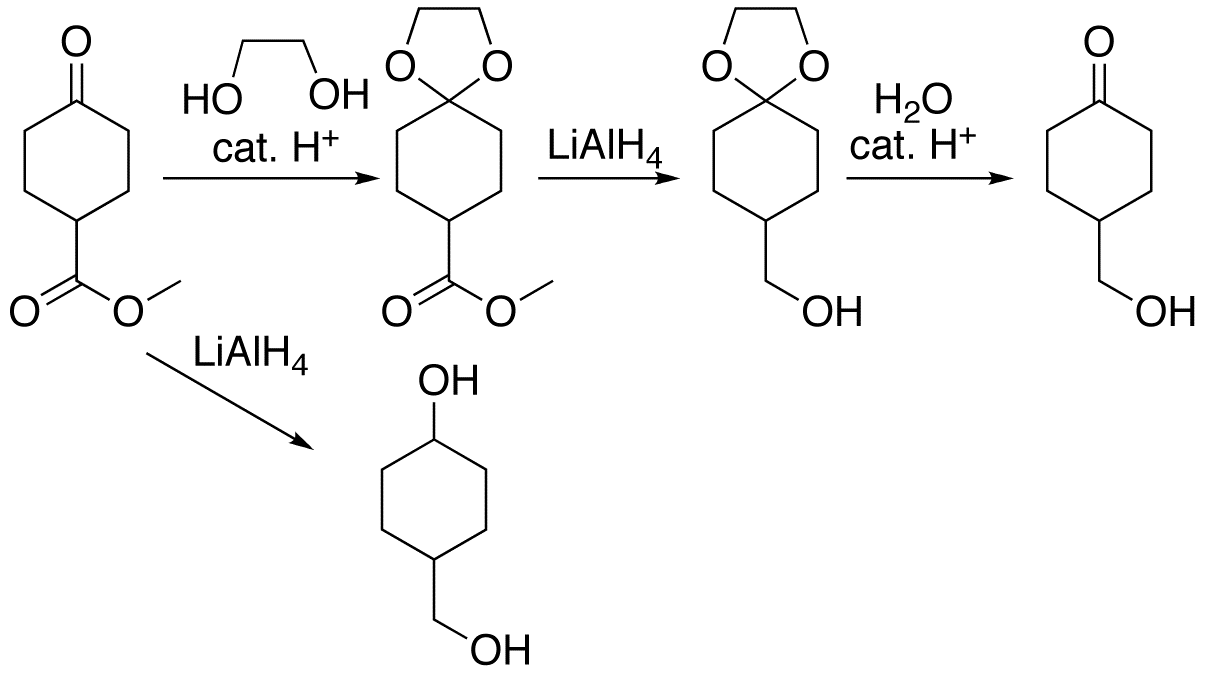
In many preparations of delicate organic compounds, specific parts of the molecules cannot survive the required reagents or chemical environments. These parts (functional groups) must be protected. For example, lithium aluminium hydride is a highly reactive reagent that usefully reduces esters to alcohols. It always reacts with carbonyl groups, and cannot be discouraged by any means. When an ester must be reduced in the presence of a carbonyl, hydride attack on the carbonyl must be prevented. One way to do so converts the carbonyl into an acetal, which does not react with hydrides. The acetal is then called a protecting group for the carbonyl. After the hydride step is complete, aqueous acid removes the acetal, restoring the carbonyl. This step is called deprotection.
As a rule, the introduction of a protecting group is straightforward. The difficulties rather lie in their stability and selective removal. Apparent problems in synthesis strategies with protecting groups are rarely documented in the academic literature.[2]
Orthogonal protection of L-tyrosine (Protecting groups are marked in blue, the amino acid is shown in black). (1) Fmoc-protected amino group, (2) benzyl ester protected carboxyl group and (3) tert-butyl ether protected phenolic hydroxyl group of tyrosine.
Orthogonal protection is a strategy allowing the specific deprotection of one protective group in a multiply-protected structure. For example, the amino acid tyrosine could be protected as a benzyl ester on the carboxyl group, a fluorenylmethylenoxy carbamate on the amine group, and a tert-butyl ether on the phenol group. The benzyl ester can be removed by hydrogenolysis, the fluorenylmethylenoxy group (Fmoc) by bases (such as piperidine), and the phenolic tert-butyl ether cleaved with acids (e.g. with trifluoroacetic acid).
A common example for this application, the Fmoc peptide synthesis, in which peptides are grown in solution and on solid phase, is very important.[3] The protecting groups in solid-phase synthesis regarding the reaction conditions such as reaction time, temperature and reagents can be standardized so that they are carried out by a machine, while yields of well over 99% can be achieved. Otherwise, the separation of the resulting mixture of reaction products is virtually impossible (see also § Industrial applications).[4]
Schematic diagram of a solid-state peptide synthesis with orthogonal protecting groups X and Y
Fmoc solid state peptide synthesis with orthogonal protecting groups
A further important example of orthogonal protecting groups occurs in carbohydrate chemistry. As carbohydrates or hydroxyl groups exhibit very similar reactivities, a transformation that protects or deprotects a single hydroxy group must be possible for a successful synthesis.
Various groups are cleaved in acid or base conditions, but the others are more unusual.
Fluoride ions form very strong bonds to silicon; thus silicon protecting groups are almost invariably removed by fluoride ions. Each type of counterion, i.e. cleavage reagent, can also selectively cleave different silicon protecting groups depending on steric hindrance. The advantage of fluoride-labile protecting groups is that no other protecting group is attacked by the cleavage conditions.
Lipases and other enzymes cleave ethers at biological pH (5-9) and temperatures (30–40 °C). Because enzymes have very high substrate specificity, the method is quite rare, but extremely attractive.
Catalytic hydrogenation removes a wide variety of benzyl groups: ethers, esters, urethanes, carbonates, etc.
Photolabile protecting groups bear a chromophore, which is activated through radiation with an appropriate wavelength and so can be removed.[6] For examples the o-nitrobenzylgroup ought be listed here.
The rare double-layer protecting group is a protected protecting group, which exemplify high stability.
The classical protecting groups for alcohols are esters, deprotected by nucleophiles; triorganosilylethers, deprotected by acids and fluoride ions; and (hemi)acetals, deprotected by weak acids. In rarer cases, a carbon ether might be used.
The most important esters with common protecting-group use are the acetate, benzoate, and pivalate esters, for these exhibit differential removal. Sterically hindered esters are less susceptible to nucleophilic attack:
Chloroacetyl > acetyl > benzoyl > pivaloyl
Trimethylsilyl chloride, activated with imidazole, protects a secondary alcohol
Triorganosilyl sources have quite variable prices, and the most economical is chlorotrimethylsilane (TMS-Cl), a Direct Process byproduct. The trimethylsilyl ethers are also extremely sensitive to acid hydrolysis (for example silica gel suffices as a proton donator) and are consequently rarely used nowadays as protecting groups.
Aliphatic methyl ethers cleave with difficulty and only under drastic conditions, so that these are in general only used with quinonic phenols. However, hemiacetals and acetals are much easier to cleave.
tert-Butyldimethylsilyl (TBDMS or TBS) — Cleaved with acetic acid in tetrahydrofuran/water,[12] Pyridinium tosylate in methanol,[13] trifluoroacetic acid in water,[14] hydrofluoric acid in acetonitrile,[15] pyridinium fluoride in tetrahydrofuran,[16]tetrabutylammonium fluoride in THF.[17] Commonly protects 2'-hydroxy function in oligonucleotide synthesis.
Triisopropylsilyl (TIPS) ethers) — Similar conditions to TBS but longer reaction times.[18]
tert‑Butyldiphenylsilyl (TBDPS) — Similar conditions to TBS but even longer reaction times (100–250× slower than TBS and 5–10× slower than TIPS)
Benzyl ethers:
Benzyl (Bn) — Removed by hydrogenolysis.[19] Bn group is widely used in sugar and nucleoside chemistry.
Trityl (triphenylmethyl, Tr) — Removed by acid[20][21][22] and hydrogenolysis
p,m‑Dimethoxybenzyl ether — Removed via oxidation with DDQ or ceric ammonium chloride[24]
Acetals:
Dimethoxytrityl, [bis-(4-methoxyphenyl)phenylmethyl] (DMT) — Removed by weak acid. DMT group is widely used for protection of 5'-hydroxy group in nucleosides, particularly in oligonucleotide synthesis.
Methoxytrityl [(4-methoxyphenyl)diphenylmethyl] (MMT) – Removed by acid and hydrogenolysis.
Benzyloxymethyl — Comparable stability to MOM, MEM und SEM,[25] but also admits reductive removal: sodium in liquid ammonia,[26][27] catalytic hydrogenation (palladium hydroxide on activated carbon), or Raney nickel in ethanol[28][29]
Ethoxyethyl ethers (EE) – Cleavage more trivial than simple ethers e.g. 1N hydrochloric acid[30]
Allyl — Removed with potassium tert‑butoxide[43]DABCO in methanol, palladium on activated carbon, or diverse platinum complexes – conjoined with acid workup.[44]
Methyl ethers – Cleavage is by TMSI in dichloromethane or acetonitrile or chloroform. An alternative method to cleave methyl ethers is BBr3 in DCM. See Demethylation § In organic chemistry
The 1,2‑diols (glycols) present for protecting-group chemistry a special class of alcohols. One can exploit the adjacency of two hydroxy groups, e.g. in sugars, in that one protects both hydroxy groups codependently as an acetal. Common in this situation are the benzylidene, isopropylidene and cyclohexylidene or cyclopentylidene acetals.
An exceptional case appears with the benzylideneprotecting group,which also admits reductive cleavage. This proceeds either through catalytic hydrogenation or with the hydride donor diisobutyl aluminum hydride (DIBAL). The cleavage with DIBAL deprotects one alcohol group, for the benzyl moiety stays as a benzyl ether on the second, sterically hindered hydroxy group.[45][46]
BOC glycine. The tert-butyloxycarbonyl group is marked blue.
Amines have a special importance in peptide synthesis, but are a quite potent nucleophile and also relatively strong bases. These characteristics imply that new protecting groups for amines are always under development.[47]
Amine groups are primarily protected through acylation, typically as a carbamate. When a carbamate deprotects, it evolves carbon dioxide. The commonest-used carbamates are the tert-butoxycarbonyl, benzoxycarbonyl, fluorenylmethylenoxycarbonyl, and allyloxycarbonyl compounds.
Other, more exotic amine protectors are the phthalimides, which admit reductive cleavage,[48] and the trifluoroacetamides, which hydrolyze easily in base. Indoles, pyrroles und imidazoles — verily any aza-heterocycle — admit protection as N‑sulfonylamides,which are far too stable with aliphatic amines.[49]N‑benzylated amines can be removed through catalytic hydrogenation or Birch reduction, but have a decided drawback relative to the carbamates or amides: they retain a basic nitrogen.
The most common protecting groups for carbonyls are acetals and typically cyclic acetals with diols. The runners-up used are also cyclic acetals with 1,2‑hydroxythiols or dithioglycols – the so-called O,S– or S,S-acetals.
Ethylene glycol1,3‑Propadiol
Overall, transacetalization plays a lesser role in forming protective acetals; they are formed as a rule from glycols through dehydration. Normally a simple glycol like ethylene glycol or 1,3-propadiol is used for acetalization. Modern variants also use glycols, but with the hydroxyl hydrogens replaced with a trimethylsilyl group.[60][61]
Acetals can be removed in acidic aqueous conditions. For those ends, the mineral acids are appropriate acids. Acetone is a common cosolvent, used to promote dissolution. For a non-acidic cleavage technique, a palladium(II) chloride acetonitrile complex in acetone[62] or iron(III) chloride on silica gel can be performed with workup in chloroform.[63]
Cyclic acetals are very much more stable against acid hydrolysis than acyclic acetals. Consequently acyclic acetals are used practically only when a very mild cleavage is required or when two different protected carbonyl groups must be differentiated in their liberation.[64]
Besides the O,O-acetals, the S,O- and S,S-acetals also have an application, albeit scant, as carbonyl protecting groups too. Thiols, which one begins with to form these acetals, have a very unpleasant stench and are poisonous, which severely limit their applications. Thioacetals and the mixed S,O-acetals are, unlike the pure O,O-acetals, very much stabler against acid hydrolysis. This enables the selective cleavage of the latter in the presence of sulfur-protected carbonyl groups.
The formation of S,S-acetals normally follows analogously to the O,O-acetals with acid catalysis from a dithiol and the carbonyl compound. Because of the greater stability of thioacetals, the equilibrium lies on the side of the acetal. In contradistinction to the O,O‑acetal case, it is not needed to remove water from the reaction mixture in order to shift the equilibrium.[65]
S,O-Acetals are hydrolyzed a factor of 10,000 times faster than the corresponding S,S-acetals. Their formation follows analogously from the thioalcohol. Also their cleavage proceeds under similar conditions and predominantly through mercury(II) compounds in wet acetonitrile.[66]
For aldehydes, a temporary protection of the carbonyl group the presence of ketones as hemiaminal ions is shown below. Here it is applied, that aldehydes are very much more activated carbonyls than ketones and that many addition reactions are reversible.[67][68]
The most important protecting groups for carboxylic acids are the esters of various alcohols. Occasionally, esters are protected as ortho-esters or oxazolines.[69]
Many groups can suffice for the alcoholic component, and the specific cleaving conditions are contrariwise generally quite similar: each ester can be hydrolyzed in a basic water-alcohol solution. Instead, most ester protecting groups vary in how mildly they can be formed from the original acid.
Alkenes rarely need protection or are protected. They are as a rule only involved in undesired side reactions with electrophilic attack, isomerization or catalytic hydration. For alkenes two protecting groups are basically known:
Temporary halogenation with bromine to a trans‑1,2‑dibromoalkane: the regeneration of the alkene then follows with preservation of conformation via elemental zinc[86][87][88][89][90] or with titanocene dichloride.[91]
Protection through a Diels-Alder reaction: the transformation of an alkene with a diene leads to a cyclic alkene, which is nevertheless similarly endangered by electrophilic attack as the original alkene. The cleavage of a protecting diene proceeds thermically, for the Diels-Alder reaction is a reversible (equilibrium) reaction.[92][93][94]
For alkynes there are in any case two types of protecting groups. For terminal alkynes it is sometimes important to mask the acidic hydrogen atom. This normally proceeds from deprotonation (via a strong base like methylmagnesium bromide or butyllithium in tetrahydrofuran/dimethylsulfoxide) and subsequently reaction with chlorotrimethylsilane to a terminally TMS-protected alkyne.[95] Cleavage follows hydrolytically – with potassium carbonate in methanol – or with fluoride ions like for example with tetrabutylammonium fluoride.[96]
Alkyne TMS protection
In order to protect the triple bond itself, sometimes a transition metal-alkyne complex with dicobalt octacarbonyl is used. The release of the cobalt then follows from oxidation.[97][98][99][100][101]
The use of protective groups is pervasive but not without criticism.[103] In practical terms their use adds two steps (protection-deprotection sequence) to a synthesis, either or both of which can dramatically lower chemical yield. Crucially, added complexity impedes the use of synthetic total synthesis in drug discovery. In contrast biomimetic synthesis does not employ protective groups. As an alternative, Baran presented a novel protective-group free synthesis of the compound hapalindole U. The previously published synthesis[104][105][106] according to Baran, contained 20 steps with multiple protective group manipulations (two confirmed):
Protected and unprotected syntheses of the marine alkaloid, hapalindole U.
Hideaki Muratake's 1990 synthesis using Tosyl protecting groups (shown in blue).
Phil Baran's protecting-group free synthesis, reported in 2007.
Although the use of protecting groups is not preferred in industrial syntheses, they are still used in industrial contexts, e.g. sucralose (sweetener) or the Rochesynthesis of oseltamivir (Tamiflu, an antiviral drug)
An important example of industrial applications of protecting group theory is the synthesis of ascorbic acid (Vitamin C) à la Reichstein.
The Reichstein synthesis (of ascorbic acid)
In order to prevent oxidation of the secondary alcohols with potassium permanganate, they are protected via acetalation with acetone and then deprotected after the oxidation of the primary alcohols to carboxylic acids.[107]
A very spectacular example application of protecting groups from natural product synthesis is the 1994 total synthesis of palytoxin acid by Yoshito Kishi's research group.[108] Here 42 functional groups (39 hydroxyls, one diol, an amine group, and a carboxylic acid) required protection. These proceeded through 8 different protecting groups (a methyl ester, five acetals, 20 TBDMS esters, nine p‑methoxybenzyl ethers, four benzoates, a methyl hemiacetal, an acetone acetal and an SEM ester).[109]
Palytoxin
The introduction or modification of a protecting group occasionally influences the reactivity of the whole molecule. For example, diagrammed below is an excerpt of the synthesis of an analogue of Mitomycin C by Danishefsky.[110]
Part of the synthesis of an analogue of Mitomycin C with modified reactivity through protecting-group exchange
The exchange of a protecting group from a methyl ether to a MOM-ether inhibits here the opening of an epoxide to an aldehyde.
Protecting group chemistry finds itself an important application in the automated synthesis of peptides and nucleosides. The technique was introduced in the field of peptide synthesis by Robert Bruce Merrifield in 1977.[111] For peptide synthesis via automated machine, the orthogonality of the Fmoc group (basic cleavage), the tert‑butyl group (acidic cleavage) and diverse protecting groups for functional groups on the amino acid side-chains are used.[112] Up to four different protecting groups per nucleobase are used for the automated synthesis of DNA and RNA sequences in the oligonucleotide synthesis. The procedure begins actually with redox chemistry at the protected phosphorus atom. A tricoordinate phosphorus, used on account of the high reactivity, is tagged with a cyanoethyl protecting group on a free oxygen. After the coupling step follows an oxidation to phosphate, whereby the protecting group stays attached. Free OH-groups, which did not react in the coupling step, are acetylated in an intermediate step. These additionally-introduced protecting groups then inhibit, that these OH-groups might couple in the next cycle.[113]
^Tod K Jones, Robert A. Reamer, Richard Desmond, Sander G. Mills: "Chemistry of tricarbonyl hemiketals and application of Evans technology to the total synthesis of the immunosuppressant (−)-FK-506", in: J. Am. Chem. Soc., 1990, 112, pp. 2998–3017; doi:10.1021/ja00164a023.
^Dieter Seebach, Hak-Fun Chow, Richard F.W. Jackson, Marius A. Sutter, Suvit Thaisrivongs, Jürg Zimmermann: "(+)-11,11′-Di-O-methylelaiophylidene – preparation from elaiophylin and total synthesis from (R)-3-hydroxybutyrate and (S)-malate", in: Liebigs Ann. Chem., 1986, pp. 1281–1308; doi:10.1002/jlac.198619860714.
^David A. Evans, Stephen W. Kaldor, Todd K. Jones, Jon Clardy, Thomas J. Stout: "Total synthesis of the macrolide antibiotic cytovaricin", in: J. Am. Chem. Soc., 1990, 112, pp. 7001–7031; doi:10.1021/ja00175a038.
^James A. Marshall, Richard Sedrani: "A convergent, highly stereoselective synthesis of a C-11-C-21 subunit of the macbecins", in: J. Org. Chem., 1991, 56, pp. 5496–5498; doi:10.1021/jo00019a004.
^Morris J. Robins, Vicente Samano, Mark D. Johnson: "Nucleic acid-related compounds. 58. Periodinane oxidation, selective primary deprotection, and remarkably stereoselective reduction of tert-butyldimethylsilyl-protected ribonucleosides. Synthesis of 9-(β-D-xylofuranosyl)adenine or 3'-deuterioadenosine from adenosine", in: J. Org. Chem., 1990, 55, pp. 410–412; doi:10.1021/jo00289a004.
^R. Roger F. Newton, Derek P. Reynolds, Colin F. Webb, Stanley M. Roberts: "A short and efficient total synthesis of (±) prostaglandin D2 methyl ester involving a new method for the cleavage of a dimethyl-t-butylsilyl ether", in: J. Chem. Soc., Perkin Trans. 1, 1981, pp. 2055–2058; doi:10.1039/P19810002055.
^Kyriacos C. Nicolaou, R. A. Daines, T. K. Chakraborty: "Total synthesis of amphoteronolide B", in: J. Am. Chem. Soc., 1987, 109, pp. 2208–2210; doi:10.1021/ja00241a063.
^Leo A. Paquette, Annette M. Doherty, Christopher M. Rayner: "Total synthesis of furanocembranolides. 1. Stereocontrolled preparation of key heterocyclic building blocks and assembly of a complete seco-pseudopterane framework", in: J. Am. Chem. Soc., 1991, 109, pp. 3910–3926; doi:10.1021/ja00036a045.
^M.L. García, J. Pascual, L. Borràs, J.A. Andreu, E. Fos, D. Mauleón, G. Carganico, F. Arcamone: "Synthesis of new ether glycerophospholipids structurally related to modulator", in: Tetrahedron, 1991, 47, pp. 10023–10034; doi:10.1016/S0040-4020(01)96051-X.
^H. Nagaoka, W. Rutsch, G. Schmidt, H. Ito, M.R. Johnson, Y. Kishi: "Total synthesis of rifamycins. 1. Stereocontrolled synthesis of the aliphatic building block", in: J. Am. Chem. Soc., 1980, 102, pp. 7962–7965; doi:10.1021/ja00547a037.
^W. Clark Still, Shizuaki Murata, Gilbert Revial, Kazuo Yoshihara: "Synthesis of the cytotoxic germacranolide eucannabinolide", in: J. Am. Chem. Soc., 1983, 105, pp. 625–627; doi:10.1021/ja00341a055.
^Serge David, Annie Thieffry, Alain Veyrières: "A mild procedure for the regiospecific benzylation and allylation of polyhydroxy-compounds via their stannylene derivatives in non-polar solvents", in: J. Chem. Soc., Perkin Trans. 1, 1981, pp. 1796–1801; doi:10.1039/P19810001796.
^Kaoru Fuji, Shigetoshi Nakano, Eiichi Fujita: "An Improved Method for Methoxymethylation of Alcohols under Mild Acidic Conditions", in: Synthesis, 1975, pp. 276–277.
^Paul A. Wender, Carlos R. D. Correia: "Intramolecular photoinduced diene-diene cyaloadditions: a selective method for the synthesis of complex eight-membered rings and polyquinanes", in: J. Am. Chem. Soc., 1987, 109, pp. 2523–2525; doi:10.1021/ja00242a053.
^Karel F. Bernady, M. Brawner Floyd, John F. Poletto, Martin J. Weiss: "Prostaglandins and congeners. 20. Synthesis of prostaglandins via conjugate addition of lithium trans-1-alkenyltrialkylalanate reagents. A novel reagent for conjugate 1,4-additions", in: J. Org. Chem., 1979, 44, pp. 1438–1447; doi:10.1021/jo01323a017.
^Elias J. Corey, Haruki Niwa, Jochen Knolle: "Total synthesis of (S)-12-hydroxy-5,8,14-cis,-10-trans-eicosatetraenoic acid (Samuelsson's HETE)", in: J. Am. Chem. Soc., 1978, 100, pp. 1942–1943; doi:10.1021/ja00474a058.
^Elias J. Corey, Duy H. Hua, Bai Chuan Pan, Steven P. Seitz: "Total synthesis of aplasmomycin", in: J. Am. Chem. Soc., 1982, 104, pp. 6818–6820; doi:10.1021/ja00388a074.
^Robert C. Gadwood, Renee M. Lett, Jane E. Wissinger: "Total synthesis of (±)-poitediol and (±)4-epipoitediol", in: J. Am. Chem. Soc., 1984, 106, pp. 3869–3870; doi:10.1021/ja00325a032.
^Toshiyuki Kan, Masaru Hashimoto, Mitsutoshi Yanagiya, Haruhisa Shirahama: "Effective deprotection of 2-(trimethylsilylethoxy)methylated alcohols (SEM ethers). Synthesis of thyrsiferyl-23 acetate", in: Tetrahedron Lett., 1988, 29, pp. 5417–5418; doi:10.1016/S0040-4039(00)82883-X.
^Joseph P. Marino, Scott L. Dax: "An efficient desilylation method for the generation of o-quinone methides: application to the synthesis of (+)- and (−)-hexahydrocannabinol", in: J. Org. Chem., 1984, 49, pp. 3671–3672; doi:10.1021/jo00193a051.
^R.E. Ireland, D.W. Norbeck: "Convergent synthesis of polyether ionophore antibiotics: the synthesis of the monensin bis(tetrahydrofuran) via the Claisen rearrangement of an ester enolate with a β-leaving group", in: J. Am. Chem. Soc., 1985, 107, pp. 3279–3285; doi:10.1021/ja00297a038.
^András Lipták, János Imre, János Harangi, Pál Nánási, András Neszmélyi: "Chemo-, stereo- and regioselective hydrogenolysis of carbohydrate benzylidene acetals. Synthesis of benzyl ethers of benzyl α-D-, methyl β-D-mannopyranosides and benzyl α-D-rhamnopyranoside by ring cleavage of benzylidene derivatives with the LiAlH4-AlCl3 reagent", in: Tetrahedron, 1982, 38, pp. 3721–3727; doi:10.1016/0040-4020(82)80083-5.
^James A. Marshall, Joseph D. Trometer, Bruce E. Blough, Thomas D. Crute: "Stereochemistry of SN2' additions to acyclic vinyloxiranes", in J. Org. Chem., 1988, 53, pp. 4274–4282 doi:10.1021/jo00253a020.
^Robert M. Williams, Peter J. Sinclair, Dongguan Zhai, Daimo Chen: "Practical asymmetric syntheses of α-amino acids through carbon-carbon bond constructions on electrophilic glycine templates", in: J. Am. Chem. Soc., 1988, 110, p. 1547–1557; doi:10.1021/ja00213a031.
^Glenn L. Stahl, Roderich Walter, Clarck W. Smith: "General procedure for the synthesis of mono-N-acylated 1,6-diaminohexanes", in: J. Org. Chem., 1978, 43, pp. 2285–2286; doi:10.1021/jo00405a045.
^Naomi Sakai, Yasufumi Ohfune: "Total synthesis of galantin I. Acid-catalyzed cyclization of galantinic acid", in: J. Am. Chem. Soc., 1992, 114, pp. 998–1010; doi:10.1021/ja00029a031.
^Weng C. Chan, Peter D. White: Fmoc Solid Phase Peptide Synthesis, pp. 27–30.
^Gregg B. Fields: Methods for Removing the Fmoc Group. (PDF; 663 kB) In: Michael W. Pennington, Ben M. Dunn (eds.): Peptide Synthesis Protocols volume 35, 1995, ISBN 978-0-89603-273-6, pp. 17–27.
^B. Liebe, H. Kunz: Festphasensynthese eines tumorassoziierten Sialyl-Tn-Antigen-Glycopeptids mit einer Partialsequenz aus dem "Tandem Repeat" des MUC-1-Mucins In: Angew. Chem. volume 109, 1997, pp. 629–631 (in German).
^Moussa, Ziad; D. Romo (2006). "Mild deprotection of primary N-(p-toluenesufonyl) amides with SmI2 following trifluoroacetylation". Synlett. 2006 (19): 3294–3298. doi:10.1055/s-2006-951530.
^Juji Yoshimura, Shigeomi Horito, Hiroriobu Hashimoto: "Facile Synthesis of 2,3,4,6-Tetra-O-benzyl-D-glucopyranosylidene Acetals Using Trimethylsilyl Trifluoromethanesulfonate Catalyst", in: Chem. Lett., 1981, 10, pp. 375–376; doi:10.1246/cl.1981.375.
^Bruce H. Lipshutz, Daniel Pollart, Joseph Monforte, Hiyoshizo Kotsuki: "Pd(II)-catalyzed acetal/ketal hydrolysis/exchange reactions", in: Tetrahedron Lett., 1985, 26, pp. 705–708; doi:10.1016/S0040-4039(00)89114-5.
^Kwan Soo Kim, Yang Heon Song, Bong Ho Lee, Chi Sun Hahn: "Efficient and selective cleavage of acetals and ketals using ferric chloride adsorbed on silica gel", in: J. Org. Chem., 1986, 51, pp. 404–407; doi:10.1021/jo00353a027.
^Samuel J. Danishefsky, Nathan B. Mantlo, Dennis S. Yamashita, Gayle. Schulte: "Concise route to the calichemicin-esperamicin series: the crystal structure of an aglycone prototype", in: J. Am. Chem. Soc., 1988, 110, pp. 6890–6891; doi:10.1021/ja00228a051.
^John N. Haseltine, Maria Paz Cabal, Nathan B. Mantlo, Nobuharu Iwasawa, Dennis S. Yamashita, Robert S. Coleman, Samuel J. Danishefsky, Gayle K. Schulte: "Total synthesis of calicheamicinone: new arrangements for actuation of the reductive cycloaromatization of aglycon congeners", in: J. Am. Chem. Soc., 1991, 113, pp. 3850–3866; doi:10.1021/ja00010a030.
^Peter Mohr, Nada Waespe-Šarčević, Christoph Tamm, Krystyna Gawronska, Jacek K. Gawronski: "A Study of Stereoselective Hydrolysis of Symmetrical Diesters with Pig Liver Esterase", in: Helv. Chim. Acta, 1983, 66, pp. 2501–2511; doi:10.1002/hlca.19830660815.
^Théophile Tschamber, Nada Waespe-Šarčević, Christoph Tamm: "Stereocontrolled Synthesis of an Epimer of the C(19)-to-C(27) Segment of Rifamycin S", in: Helv. Chim. Acta, 1986, 69, pp. 621–625; doi:10.1002/hlca.19860690311.
^Yves Rubin, Carolyn B. Knobler, Francois Diederich: "Precursors to the cyclo[n]carbons: from 3,4-dialkynyl-3-cyclobutene-1,2-diones and 3,4-dialkynyl-3-cyclobutene-1,2-diols to cyclobutenodehydroannulenes and higher oxides of carbon", in: J. Am. Chem. Soc., 1990, 112, pp. 1607–1617; doi:10.1021/ja00160a047.
^Sunggak Kim, Yong Gil Kim, Deog-il Kim: "A novel method for selective dioxolanation of ketones in the presence of aldehydes", in: Tetrahedron Lett., 1992, 33, pp. 2565–2566; doi:10.1016/S0040-4039(00)92243-3.
^G. Bauduin, D. Bondon, Y. Pietrasanta, B. Pucci: "Reactions de transcetalisation – II: Influence des facteurs steriques et electroniques sur les energies de cetalisation", in: Tetrahedron, 1978, 34, pp. 3269–3274; doi:10.1016/0040-4020(78)80243-9.
^M.P. Bosch, M. Pilar Bosch, Francisco Camps, Jose Coll, Angel Guerrero, Toshio Tatsuoka, Jerrold Meinwald: "A stereoselective total synthesis of (±)-muzigadial", in: J. Org. Chem., 1986, 51, pp. 773–784; doi:10.1021/jo00356a002.
^F. Zymalkokowski: Katalytische Hydrierung, Ferdinand Enke Verlag, Stuttgart 1965, pp. 127–133.
^Ulrich Schmidt, Thomas Beuttler, Albrecht Lieberknecht, Helmut Griesser: "Aminosäuren und peptide – XXXXII. Synthese von Chlamydocin + epi-Chlamydocin", in: Tetrahedron Lett., 1983, 24, pp. 3573–3576; doi:10.1016/S0040-4039(00)88171-X (in German).
^Elias J. Corey, Plato A. Magriotis: "Total synthesis and absolute configuration of 7,20-diisocyanoadociane", in: J. Am. Chem. Soc., 1987, 109, pp. 287–289; doi:10.1021/ja00235a052.
^Ahmed M. Tafesh, Jens Weiguny: "A Review of the Selective Catalytic Reduction of Aromatic Nitro Compounds into Aromatic Amines, Isocyanates, Carbamates, and Ureas Using CO", in: Chem. Rev., 1996, 96, pp. 2035–2052; doi:10.1021/cr950083f.
^Evan L. Allred, Boyd R. Beck, Kent J. Voorhees: "Formation of carbon-carbon double bonds by the reaction of vicinal dihalides with sodium in ammonia", in: J. Org. Chem., 1974, 39, pp. 1426–1427; doi:10.1021/jo00926a024.
^Timothy S. Butcher, Feng Zhou, Michael R. Detty: "Debrominations of vic-Dibromides with Diorganotellurides. 1. Stereoselectivity, Relative Rates, and Mechanistic Implications", in: J. Org. Chem., 1998, 63, pp. 169–176; doi:10.1021/jo9713363.
^C. J. Li, David N. Harpp: "Bis(triphenylstanyl)telluride a mild and selective reagent for telluration and debromination", in: Tetrahedron Lett., 1990, 31, pp. 6291–6293; doi:10.1016/S0040-4039(00)97045-X.
^Corrado Malanga, Serena Mannucci, Luciano Lardicci: "Carbon-halogen bond activation by nickel catalyst: Synthesis of alkenes, from 1,2-dihalides", in: Tetrahedron, 1998, 54, pp. 1021–1028; doi:10.1016/S0040-4020(97)10203-4.
^Byung Woo Yoo, Seo Hee Kim, Jun Ho Kim: "A Mild, Efficient, and Selective Debromination of vic-Dibromides to Alkenes with Cp2TiCl2/Ga System", in: Bull. Korean Chem. Soc., 2010, 31, pp. 2757–2758; doi:10.5012/bkcs.2010.31.10.2757.
^Antonius J. H. Klunder, Jie Zhu, Binne Zwanenburg: "The Concept of Transient Chirality in the Stereoselective Synthesis of Functionalized Cycloalkenes Applying the Retro-Diels-Alder Methodology", in: Chem. Rev., 1999, 99, pp. 1163–1190; doi:10.1021/cr9803840.
^Hideyuki Tanaka, Takashi Kamikubo, Naoyuki Yoshida, Hideki Sakagami, Takahiko Taniguchi, Kunio Ogasawara: "Enantio- and Diastereocontrolled Synthesis of (−)-Iridolactone and (+)-Pedicularis-lactone", in: Org. Lett., 2001, 3, pp. 679–681; doi:10.1021/ol0070029.
^Martin Banwell, David Hockless, Bevyn Jarrott, Brian Kelly, Andrew Knill, Robert Longmore, Gregory Simpson: "Chemoenzymatic approaches to the decahydro-as-indacene cores associated with the spinosyn class of insecticide", in: J. Chem. Soc., Perkin Trans. 1, 2000, pp. 3555–3558; doi:10.1039/b006759h.
^Wenzel E. Davidsohn, Malcolm C. Henry: "Organometallic Acetylenes of the Main Groups III–V", in: Chem. Rev., 1967, 67, pp. 73–106; doi:10.1021/cr60245a003.
^Barry J. Teobald: "The Nicholas reaction: the use of dicobalt hexacarbonyl-stabilised propargylic cations in synthesis", in: Tetrahedron, 2002, 58, pp. 4133–4170; doi:10.1016/S0040-4020(02)00315-0.
^Richard E. Connor, Kenneth M. Nicholas: "Isolation, characterization, and stability of α-[(ethynyl)dicobalt hexacarbonyl] carbonium ions", in: J. Organomet. Chem., 1977, 125, C45–C48; doi:10.1016/S0022-328X(00)89454-1.
^Rosa F. Lockwood, Kenneth M. Nicholas: "Transition metal-stabilized carbenium ions as synthetic intermediates. I. α-[(alkynyl)dicobalt hexacarbonyl] carbenium ions as propargylating agents", in: Tetrahedron Lett., 1977, pp. 4163–4166; doi:10.1016/S0040-4039(01)83455-9.
^Synthetic studies of marine alkaloids hapalindoles. Part I Total synthesis of (±)-hapalindoles J and MTetrahedron, Volume 46, Issue 18, 1990, Pages 6331–6342 Hideaki Muratake and Mitsutaka Natsume doi:10.1016/S0040-4020(01)96005-3
^Synthetic studies of marine alkaloids hapalindoles. Part 2. Lithium aluminum hydride reduction of the electron-rich carbon-carbon double bond conjugated with the indole nucleusTetrahedron, Volume 46, Issue 18, 1990, Pages 6343–6350 Hideaki Muratake and Mitsutaka Natsume doi:10.1016/S0040-4020(01)96006-5
^Synthetic studies of marine alkaloids hapalindoles. Part 3 Total synthesis of (±)-hapalindoles H and UTetrahedron, Volume 46, Issue 18, 1990, Pages 6351–6360 Hideaki Muratake, Harumi Kumagami and Mitsutaka Natsume doi:10.1016/S0040-4020(01)96007-7
^K.C. Nicolaou, E.J. Sorensen: Classics in Total Synthesis: Targets, Strategies, Methods, VCH Verlagsgesellschaft mbH, Weinheim 1996, pp. 711–729, ISBN 3-527-29284-5.
^Peter G.M. Wuts, Theodora W. Greene: Green's Protective Groups in Organic Synthesis, 4th Ed., John Wiley & Sons Inc., Hoboken, New Jersey, pp. 10–13; ISBN 0-471-69754-0.
^J.M. McClure, Samuel J. Danishefsky: "A novel Heck arylation reaction: rapid access to congeners of FR 900482", in: J. Am. Chem. Soc., 1993, 115, pp. 6094–6100; doi:10.1021/ja00067a026.
^Merrifield, R. B.; Barany, G.; Cosand, W. L.; Engelhard, M.; Mojsov, S. (1977). "Proceedings of the 5th American Peptide Symposium". Biochemical Education. 7 (4): 93–94. doi:10.1016/0307-4412(79)90078-5.
^Weng C. Chan, Peter D. White: Fmoc Solid Phase Peptide Synthesis. Reprint 2004, Oxford University Press, ISBN 0-19-963724-5.
^Serge L. Beaucage, Radhakrishman P. Iyer: "Advances in the Synthesis of Oligonucleotides by the Phosphoramidite Approach", in: Tetrahedron, 1992, 48, pp. 2223–2311; doi:10.1016/S0040-4020(01)88752-4.
Philip J. Kocieński: Protecting Groups, 1st ed., Georg Thieme Verlag, Stuttgart 1994, ISBN 3-13-135601-4.
Peter G.M. Wuts, Theodora W. Greene: Green's Protective Groups in Organic Synthesis, 4th Ed., John Wiley & Sons Inc., Hoboken, New Jersey, ISBN 0-471-69754-0.
In organic synthesis, a protecting group is a reversibly formed chemical derivative that temporarily modifies a functional group to prevent it from undergoing undesired reactions, thereby enabling selective transformations on other parts of the molecule.[1][2] These groups are essential for achieving chemoselectivity in multi-step syntheses of complex organic compounds, where multiple reactive sites must be controlled to avoid side reactions or incomplete conversions.[3][4]Protecting groups are typically introduced under mild conditions and removed orthogonally—meaning selectively in the presence of other protected functionalities—often using acid, base, or reductive/oxidative methods tailored to the specific group.[5] Common examples include silyl ethers for alcohols, carbamates for amines, and acetals for carbonyls, each chosen based on the reaction conditions and the need for stability or ease of deprotection.[6][3] Their strategic use has been pivotal in the total synthesis of natural products and pharmaceuticals, enhancing efficiency and yield in routes involving polyfunctional substrates.[7]
Fundamentals
Definition and Purpose
A protecting group is a reversibly formed derivative of an existing functional group in a molecule, temporarily masking its reactivity to enable selective chemical transformations in multi-step organic syntheses.[1] These groups are installed on reactive sites such as hydroxyl, amino, or carbonyl functionalities to prevent interference from side reactions during subsequent operations on other parts of the molecule.The primary purpose of protecting groups is to facilitate the controlled assembly of complex molecules by allowing chemists to target specific functional groups without affecting others, which is essential in total synthesis where multiple reactive centers must be managed sequentially. This strategy minimizes unwanted byproducts and improves overall synthetic efficiency, particularly in the construction of natural products or pharmaceuticals with intricate structures.Representative examples include silyl ethers for alcohols, where a hydroxyl group (R-OH) is converted to R-OSiR'_3 to block nucleophilic or acidic reactivity, and acetals for carbonyls, transforming a ketone or aldehyde (R_2C=O) into R_2C(OR')_2 for protection against nucleophiles or oxidants.[8] In peptide synthesis, protecting groups serve as enabling tools for orthogonality, allowing independent deprotection of amino or carboxyl termini to build polypeptide chains step-by-step without disrupting the sequence. Similarly, in carbohydrate synthesis, they enable precise control over multiple hydroxyl groups to direct glycosylation reactions and construct oligosaccharides.[9]
Historical Overview
The concept of protecting groups in organic synthesis traces its origins to the late 19th century, with one of the earliest documented applications being the formation of acetals from sugars and acetone, developed by Emil Fischer in 1895. Fischer's work on carbohydrate chemistry demonstrated the utility of these acetals to mask hydroxyl groups, enabling selective manipulations of sugar structures that were otherwise prone to multiple reactions. This approach laid foundational groundwork for protecting vicinal diols in polyfunctional molecules, marking a pivotal shift toward controlled reactivity in complex syntheses.[10]By the mid-20th century, protecting groups gained widespread adoption, particularly in peptide synthesis following Robert Bruce Merrifield's introduction of solid-phase methods in 1963. Merrifield's strategy relied on reversible protecting groups, such as the tert-butoxycarbonyl (Boc) group for amines—first described in 1957[11]—to facilitate stepwise assembly of peptides on a solid support, revolutionizing the field and enabling the synthesis of longer chains that were previously challenging. This era also saw protecting groups become integral to total synthesis efforts for natural products, where selective masking of functional groups allowed chemists to navigate increasingly intricate molecular architectures without side reactions.A landmark in standardization came with Theodora W. Greene's 1981 textbook Protective Groups in Organic Synthesis, which compiled over 500 protecting groups and their methods, serving as a comprehensive reference that solidified the field's principles and promoted their systematic use across organic chemistry. Post-1990s developments emphasized efficiency, with the formalization of orthogonal protecting strategies—allowing independent deprotection of multiple groups—building on Merrifield's 1977 concepts and becoming routine in multi-step syntheses. Concurrently, catalytic methods for installation and deprotection emerged, reducing reliance on stoichiometric reagents, while the introduction of fluorous protecting groups in 1997 enabled facile separations via fluorous-phase techniques, further advancing sustainable synthesis practices.[12][3]
Principles of Protection
Installation and Deprotection
The installation of protecting groups typically involves chemical reactions that temporarily mask reactive functional groups under controlled conditions, often employing acid or base catalysis to facilitate bond formation. Common methods include nucleophilic substitution or addition reactions, where the functional group acts as a nucleophile attacking an electrophilic protecting group precursor. For instance, silylation of hydroxyl groups proceeds via the reaction of an alcohol with a chlorosilane in the presence of a base, as shown in the equation:ROH+ClSiR3baseROSiR3+HClThis process is generally carried out in aprotic solvents like dichloromethane or DMF at room temperature, with imidazole or triethylamine serving as the base to neutralize the HCl byproduct and enhance reactivity. Other installation strategies encompass acetal formation under acidic conditions or esterification with acid chlorides and bases, ensuring high yields and minimal side reactions.Deprotection, the removal of the protecting group, relies on selective cleavage strategies tailored to the group's stability profile, restoring the original functional group without affecting the rest of the molecule. Key approaches include hydrolytic cleavage under acidic or basic conditions, hydrogenolysis for benzyl-type groups using Pd/C and H₂, and fluoride-mediated desilylation for silyl ethers. A representative example for silyl ether deprotection is treatment with tetrabutylammonium fluoride (TBAF) in THF at room temperature:ROSiR3+Bu4NF→ROH+R3SiF+Bu4N+Acidic hydrolysis often uses dilute HCl or TFA in aqueous media, while neutral conditions like mild heating in methanol can suffice for labile groups. These methods are chosen for their orthogonality, allowing selective removal in multi-step syntheses.[3]The persistence of protecting groups during synthesis is governed by their stability under varying pH, temperature, and solvent environments, which must be evaluated to prevent premature cleavage. Acid-labile groups like acetals are unstable below pH 4 but tolerate neutral to basic conditions, whereas base-sensitive esters hydrolyze above pH 10 yet endure acidic media. Temperature influences kinetics; for example, many silyl ethers remain intact up to 100°C in non-nucleophilic solvents but degrade in protic solvents like water or alcohols at elevated temperatures. Solvent polarity also plays a role, with polar aprotic solvents enhancing stability for ionic intermediates. These factors are systematically charted to predict behavior.Ensuring compatibility involves selecting protecting groups that withstand the specific reaction conditions of the target transformation, such as oxidative, reductive, or nucleophilic environments, without interfering with reagents or catalysts. For instance, silyl ethers are compatible with strong bases like organolithiums and oxidants like PCC, but may require alternatives in acidic steps. This compatibility is critical for efficient multi-step sequences, minimizing the need for repeated installations and removals.[3]
Orthogonality and Selectivity
In organic synthesis, particularly for complex molecules with multiple functional groups, orthogonal protecting groups form a set where each group can be selectively deprotected under unique conditions without affecting the others. This approach ensures chemoselectivity, allowing stepwise unmasking of functional groups in a predetermined order while maintaining the integrity of the remaining protections. The term "orthogonal" draws from vector mathematics, implying independence of deprotection pathways, and is essential for efficient multi-step reactions in fields like peptide and carbohydrate chemistry./13:_Polyfunctional_Compounds_Alkadienes_and_Approaches_to_Organic_Synthesis/13.10:_Protecting_Groups_in_Organic_Synthesis)Deprotection in orthogonal systems is classified by the activating stimulus, including pH-dependent (acidic or basic), redox, photochemical, and enzymatic methods. Acid-labile groups, such as tert-butoxycarbonyl (Boc) for amines, are removed with trifluoroacetic acid, while base-labile counterparts like fluorenylmethoxycarbonyl (Fmoc) are cleaved using piperidine, enabling their combined use in solid-phase peptide synthesis.[13]Redox deprotections often employ oxidizing agents to remove sulfur-based groups, such as dithioacetals protecting carbonyls, or reducing conditions for allyl ethers. Photochemical cleavage targets light-sensitive moieties like o-nitrobenzyl ethers, which release the protected group upon UV irradiation without generating reactive byproducts. Enzymatic deprotection, facilitated by hydrolases like lipases, offers biocompatibility and selectivity under mild aqueous conditions, as exemplified in the removal of ester protecting groups.[14][15]Achieving selectivity requires aligning the chemical stability of each protecting group with the synthesis sequence to prevent unintended reactivity or migration. For example, groups must withstand conditions used for installing or removing others, with stability hierarchies guiding choices—such as prioritizing acid-stable protections early if subsequent steps involve basic deprotections. This matching optimizes overall efficiency and yield by reducing purification needs and side products.[1]The framework for orthogonal schemes in peptide synthesis was formalized by George Barany in 1987, who outlined milder, multidimensional protection strategies that decoupled N-terminal, C-terminal, and side-chain deprotections, paving the way for automated and scalable syntheses.
Protecting groups for alcohols and phenols are essential in organic synthesis to mask the nucleophilic hydroxyl functionality, allowing selective manipulation of other reactive sites. Alcohols (ROH) are commonly protected as ethers or esters, while phenols (ArOH), being less acidic and more prone to electrophilic substitution, often require groups that accommodate their aromatic context. These protections enable complex molecule assembly without interference from the OH group.[16]Among ether-based protections for alcohols, the methyl ether is formed by treatment with methyl iodide and a base like potassium carbonate in acetone, offering stability under basic conditions but requiring harsh acidic conditions like trimethylsilyl iodide for deprotection. The benzyl ether, installed using benzyl bromide and sodium hydride in THF, provides stability toward acids and bases, with removal via hydrogenolysis over palladium on carbon. The methoxymethyl (MOM) ether is particularly useful for its mild installation from chloromethyl methyl ether and a base, yielding ROCH₂OMe, and its acid lability allows selective cleavage under mild conditions. Silyl ethers, such as the tert-butyldimethylsilyl (TBS) group, are introduced with TBS chloride and imidazole in DMF; they exhibit high stability to bases and mild acids but are labile to fluoride ions (e.g., tetrabutylammonium fluoride) or stronger acids. For esters, the acetate is readily formed with acetic anhydride or acetyl chloride, stable to bases but hydrolyzed under acidic or basic conditions, while the pivalate ester, derived from pivaloyl chloride, offers enhanced steric bulk and resistance to nucleophilic attack, requiring stronger bases for removal.[16][3]Phenols, due to their lower reactivity compared to aliphatic alcohols, are often protected with similar groups but selected for compatibility with aromatic reactions; silyl ethers like TBS or tert-butyldiphenylsilyl (TBDPS) are favored for their stability under basic conditions, while allyl ethers enable directed ortho-metalation by serving as directing groups during lithiation with n-butyllithium at low temperatures. These allow ortho-functionalization without deprotection, as seen in syntheses requiring site-specific substitution. Orthogonality is key, such as TBS removal independent of ester protections.[17][3]In undergraduate organic chemistry laboratory experiments (e.g., CHEM 117), vanillyl alcohol (4-(hydroxymethyl)-2-methoxyphenol) undergoes selective protection of its phenolic hydroxyl group as an allyl ether using Williamson ether synthesis with allyl bromide, potassium carbonate (K₂CO₃), and 2-butanone as solvent. Selectivity occurs because K₂CO₃ deprotonates the more acidic phenolic OH (pKa ≈10) but not the aliphatic benzylic OH (pKa ≈15), forming 4-(allyloxy)-3-methoxybenzyl alcohol. The product is confirmed by ¹H NMR in CDCl₃, showing characteristic allyl group signals: -O-CH₂- around 4.5-4.6 ppm (d), -CH= around 5.9-6.0 ppm (m), =CH₂ around 5.2-5.4 ppm (dd); methoxy singlet at ≈3.8 ppm; aromatic protons around 6.8-7.2 ppm; and benzylic -CH₂OH near 4.6 ppm (often overlapping). The phenolic OH signal disappears, confirming protection.In synthetic applications, alcohol protections are crucial for glycoside formation, where acetate groups at C2 provide neighboring group participation to favor β-glycosides via acyloxonium ion intermediates, as in the synthesis of β-glucosides. Benzyl ethers promote cis selectivity in mannosylations when combined with benzylidene acetals. Silyl protections, like di-tert-butylsilylene, constrain conformations to direct α-galactosylation. For epoxide openings, silyl or benzyl protections prevent alcohol interference during nucleophilic attack, ensuring regioselective ring opening under basic conditions, as in the synthesis of epoxy alcohols where unprotected OH might compete.[18][16]
Amines
Protecting groups for amines are essential in organic synthesis to mask the nucleophilicity and basicity of the amino functionality (–NH₂), preventing unwanted side reactions during multi-step transformations, particularly in peptide synthesis and alkaloid construction.[19] These groups are typically installed via electrophilic addition to the nitrogen lone pair, forming stable derivatives that can be selectively removed under mild conditions. Common strategies distinguish between primary (RNH₂), secondary (R₂NH), and aromatic amines (ArNH₂), with carbamates, amides, and sulfonamides serving as the primary classes.Carbamates represent the most widely adopted protecting groups for amines due to their stability under basic and nucleophilic conditions, ease of installation using chloroformates or activated carbonates, and orthogonal deprotection options. The tert-butoxycarbonyl (Boc) group, with the structure (t-BuOCO)NH–R, is introduced by reaction of the amine with di-tert-butyl dicarbonate ((Boc)₂O) in the presence of a base like triethylamine or DMAP, yielding the N-Boc amine in high yields under mild aqueous or organic conditions.[20] Boc is particularly favored for acid-labile protection in solid-phase peptide synthesis (SPPS), where it withstands basic coupling steps but is cleanly removed with trifluoroacetic acid (TFA) in dichloromethane (5–50% TFA, room temperature, 30 min to 2 h), generating CO₂ and isobutene as byproducts without affecting other acid-sensitive groups.[21] Its orthogonality with base-labile groups makes it ideal for sequential deprotections in complex syntheses.[19]The benzyloxycarbonyl (Cbz or Z) group, (PhCH₂OCO)NH–R, is installed similarly using benzyl chloroformate (CbzCl) and a base, offering stability toward acids and bases but susceptibility to hydrogenolysis. Deprotection occurs via catalytic hydrogenation with Pd/C and H₂ (1 atm, methanol or ethanol, 1–24 h) or transfer hydrogenation using ammonium formate, making Cbz suitable for amine protections in syntheses requiring reducing conditions avoidance elsewhere.[19] In peptide chemistry, Cbz complements Boc by providing hydrogenolytic removal orthogonal to acidolysis.The 9-fluorenylmethoxycarbonyl (Fmoc) group, (Fmoc)NH–R where Fmoc is the 9-fluorenylmethyloxycarbonyl moiety, is base-labile and installed with Fmoc-Cl or Fmoc-OSu in the presence of a base like Na₂CO₃ in dioxane-water.[22] It is the standard N-terminal protecting group in Fmoc/tBu SPPS, removed quantitatively with 20% piperidine in DMF (5–20 min), liberating dibenzofulvene detectable by UV for monitoring.[19] Fmoc's selection stems from its orthogonality to acid-labile groups like Boc or tBu ethers, enabling iterative cycles in automated synthesis without harsh acids.[23]Amides, such as the acetyl (Ac) group (CH₃CONH–R), provide simple, inexpensive protection via acylation with acetic anhydride or acetyl chloride in pyridine or aqueous base, suitable for primary and secondary amines.[19] Deprotection requires basic hydrolysis (e.g., 1 M KOH or NaOH in methanol-water, reflux or room temperature, 1–4 h) or acidic conditions for activated cases, though it is less orthogonal and best for syntheses tolerant of these media. Acetyl is often used for temporary masking in alkaloid or nucleoside chemistry where mild basic removal suffices.Sulfonamides, including the p-toluenesulfonyl (Tos) group (p-MeC₆H₄SO₂NH–R) and o-nitrobenzenesulfonyl (Ns) group (o-O₂N–C₆H₄SO₂NH–R), are formed by reaction with the corresponding sulfonyl chlorides in pyridine or with a base like Et₃N in DCM.[19] These electron-withdrawing groups enhance amine acidity for directed reactions and protect against oxidation or alkylation; Tos is stable to bases and acids but removed by harsh conditions like hot HBr/acetic acid or reductive cleavage with Na/naphthalene, while Ns offers milder deprotection via thiophenol or thiolate in DMF (room temperature, 1–2 h) due to the nitro activation. Sulfonamides are preferred for aromatic amines or in total syntheses requiring nucleophilic stability, such as indole constructions.For enhanced orthogonality in multi-protection schemes involving amines, the allyloxycarbonyl (Alloc) group ((CH₂=CHCH₂OCO)NH–R) serves as a special case, installed with allyl chloroformate and removed via Pd-catalyzed allyl transfer using Pd(PPh₃)₄ and a nucleophilic scavenger like phenylsilane or barbituric acid (DCM, room temperature, 30 min–2 h). Alloc pairs orthogonally with Boc (acid), Fmoc (base), and Cbz (hydrogenolysis), enabling selective deprotection in peptide or glycopeptide assembly without interference.[19]
Protecting groups for carbonyl functionalities in aldehydes and ketones are essential to prevent nucleophilic additions, enolizations, or other reactivity during selective transformations in organic synthesis. These groups temporarily mask the electrophilic carbon of the C=O unit, allowing reactions at other sites while maintaining stability under basic or neutral conditions. The most widely used include acetals/ketals, thioacetals (including dithianes), and oximes, each offering distinct advantages in formation, stability, and removal.[19]Acetals and ketals represent the primary protecting groups for aldehydes and ketones, formed via acid-catalyzed addition of alcohols or diols to the carbonyl. For aldehydes, ethylene glycol is commonly employed to generate 1,3-dioxolanes, which are cyclic acetals providing enhanced stability. The general formation reaction proceeds as follows:\ceR2C=O+HOCH2CH2OH−>[H+][removeH2O]R2C1(OCH2CH2O)This equilibrium-driven process requires removal of water to drive acetal formation and typically uses catalysts like p-toluenesulfonic acid or trimethylsilyl triflate. Acetals are stable to bases and nucleophiles but labile to hydrolysis. Deprotection regenerates the carbonyl under mild aqueous acidic conditions, such as dilute HCl or pyridinium acetate in acetone, often at room temperature.[19][24]/17:Aldehydes_and_Ketones-_The_Carbonyl_Group/17.08:_Acetals_as_Protecting_Groups)Thioacetals, derived from thiols or dithiols, offer greater stability toward acidic conditions compared to oxygen analogs and are particularly valuable for umpolung strategies where the protected carbonyl acts as a nucleophilic synthon. These are formed by acid-catalyzed reaction of carbonyls with thiols like ethanethiol or 1,3-propanedithiol, yielding dithiolanes or dithianes. For alpha-keto or 1,3-dicarbonyl compounds, 1,3-dithianes are preferred, enabling deprotonation at the 2-position with strong bases like n-butyllithium to generate a carbanion equivalent for alkylation or addition reactions. This approach, pioneered by Corey and Seebach, reverses the inherent electrophilicity of the carbonyl, facilitating complex carbon-carbon bond formations. Deprotection of thioacetals typically involves oxidative hydrolysis with mercury(II) oxide and boron trifluoride or desulfurization with Raney nickel under hydrogen, both selectively restoring the carbonyl without affecting other groups.[19]Oximes serve as versatile protecting groups for carbonyls, especially when selective reduction to imines or amines is desired, as they block nucleophilic attack while allowing subsequent transformations. Formed by condensation of aldehydes or ketones with hydroxylamine under mildly acidic or basic conditions, oximes exhibit good stability toward bases and oxidants. Deprotection to regenerate the carbonyl can be achieved via oxidative methods (e.g., using chromic acid or N-bromophthalimide) or reductive cleavage (e.g., with titanium(III) chloride or hydrogen over palladium), providing flexibility based on synthetic needs.[19][25]
Carboxylic Acids
Carboxylic acids are frequently protected to mask their reactivity toward nucleophiles, bases, and reducing agents, thereby enabling selective transformations of other functional groups in complex syntheses. Esters represent the most common class of protecting groups for carboxylic acids due to their stability under a wide range of conditions and straightforward installation and removal.[3]Among alkyl esters, the methyl ester is widely used for its simplicity and cost-effectiveness. It is typically formed via Fischer esterification, where the carboxylic acid reacts with methanol in the presence of an acid catalyst such as sulfuric acid or hydrochloric acid, often under reflux conditions to drive the equilibrium toward the ester product. For example, the reaction proceeds as RCOOH + CH₃OH ⇌ RCOOCH₃ + H₂O under acidic conditions. Deprotection occurs through base-catalyzed hydrolysis (saponification), commonly using lithium or sodium hydroxide in aqueous methanol or tetrahydrofuran at low temperatures to afford the free carboxylic acid in high yields.[26][27]The benzyl ester offers enhanced stability toward bases and nucleophiles compared to simple alkyl esters, making it suitable for multi-step sequences involving acidic or reductive conditions. Formation is achieved through coupling of the carboxylic acid with benzyl alcohol using dicyclohexylcarbodiimide (DCC) and 4-dimethylaminopyridine (DMAP) as catalysts, or via reaction with benzyl bromide and a base like cesium carbonate in dimethylformamide. Deprotection is accomplished by catalytic hydrogenolysis with hydrogen gas and palladium on carbon (Pd/C) in solvents such as ethanol or ethyl acetate, selectively cleaving the benzylic C-O bond without affecting other functionalities.[28][29]The tert-butyl ester provides orthogonality to benzyl and methyl esters, as it is stable to hydrogenolysis and mild bases but labile under acidic conditions. It is installed by treating the carboxylic acid with tert-butanol and DCC/DMAP in dichloromethane, or by exposure to isobutene gas with sulfuric acid in diethyl ether at room temperature. Deprotection employs trifluoroacetic acid (TFA) in dichloromethane, often at ambient temperature, generating the tert-butyl cation which is trapped to prevent side reactions.[30][31]Amides, particularly the Weinreb amide (N-methoxy-N-methylamide), serve as specialized protecting groups for carboxylic acids when subsequent conversion to ketones is desired. Introduced in 1977, Weinreb amides are prepared from carboxylic acids via activation with coupling agents such as DCC or 1-ethyl-3-(3-dimethylaminopropyl)carbodiimide (EDC) followed by addition of N,O-dimethylhydroxylamine hydrochloride. Their utility stems from chelation-controlled addition of organometallic reagents, halting at the ketone stage due to formation of a stable tetrahedral intermediate. Deprotection to the carboxylic acid requires harsh conditions like strong acid hydrolysis, but they are often used transiently in synthetic routes.Allyl esters are employed in advanced applications, such as palladium-mediated decarboxylative allylation, where the ester facilitates C-C bond formation. Formation involves reaction of the carboxylic acid with allyl bromide and a base like triethylamine, or via DCC coupling with allyl alcohol. In the Tsuji-Trost variant, allyl β-ketoesters undergo decarboxylation and allyl transfer under palladiumcatalysis (e.g., Pd(OAc)₂ with phosphine ligands), providing α-allylated products efficiently. This process is particularly valuable for constructing carbon frameworks in natural product synthesis. Deprotection of simple allyl esters uses palladium(0) catalysts with nucleophilic additives like sodium p-toluenesulfinate.[29]These protecting groups exhibit orthogonality, allowing selective deprotection in the presence of others; for instance, tert-butyl esters can be removed with TFA without affecting benzyl esters, which is crucial in amino acid derivatives for peptide synthesis.[32]
1,2-Diols and Polyols
Protecting groups for 1,2-diols and polyols typically involve cyclic acetals or ketals that simultaneously mask two or more hydroxyl groups, exploiting their proximity to form stable five- or six-membered rings. The most common for vicinal (1,2-) diols is the isopropylidene acetonide, derived from acetone, which forms a 1,3-dioxolane ring under acid catalysis. This protection is particularly effective for cis-1,2-diols, as in the reaction of a cis-1,2-diol with acetone ((CH₃)₂C=O) to yield the five-membered acetonide, often catalyzed by p-toluenesulfonic acid or other Lewis acids like ZrCl₄, proceeding in high yields under mild conditions.[33][34]For 1,3-diols, benzylidene acetals are widely used, forming six-membered 1,3-dioxane rings via acid-catalyzed condensation with benzaldehyde, which provides additional stability due to the aromatic substituent. These cyclic protections are favored in polyols because they enhance regioselectivity by locking specific hydroxyl pairs, leaving others accessible for further manipulation, and are stable to basic conditions while allowing orthogonal deprotection. Deprotection of both acetonides and benzylidene acetals generally employs mild aqueous acid hydrolysis, such as with dilute HCl or acetic acid, regenerating the free diols quantitatively without disrupting nearby single hydroxyl groups protected differently.[33][35]In carbohydrate chemistry, these groups enable precise control over multiple hydroxyls in sugars like D-glucose, where the 4,6-O-benzylidene acetal or 1,2:5,6-di-O-isopropylidene protections are formed regioselectively to expose equatorial or anomeric positions for glycosylation or other transformations. For instance, treatment of D-glucose with acetone under acid catalysis yields the 1,2:5,6-diacetonide derivative in excellent yield, facilitating subsequent selective acylation at C-3. This approach has been instrumental in synthesizing complex oligosaccharides, as the cyclic structures also influence stereochemistry and crystallinity of intermediates.[33][9]
Alkenes and Alkynes
Protecting groups for alkenes are employed sparingly in organic synthesis due to the inherent stability of carbon-carbon double bonds under many conditions, but they become necessary when reactions prone to addition, such as electrophilic additions or catalytic hydrogenations, risk altering the alkene geometry or leading to isomerization. One established strategy involves conversion to epoxides, which masks the double bond while preserving stereochemistry. Epoxidation is typically achieved using peracids like m-CPBA, followed by deoxygenation to regenerate the alkene. A mild deoxygenation method entails ring-opening the epoxide with 2-mercaptobenzothiazole to form a β-hydroxy thioether, oxidation to the corresponding sulfone using m-CPBA or Oxone, and subsequent thermal or base-promoted fragmentation, yielding the alkene in good efficiency with retention of configuration for mono-, di-, and trisubstituted substrates. This approach has been particularly valuable in total syntheses requiring temporary masking of sensitive alkenes, such as the conjugated triene system in vitamin D analogs, where epoxides prevent unwanted cycloadditions or protonations during multi-step assemblies.[36]Alternative methods for alkene protection include temporary hydrogenation to saturate the double bond, followed by selective re-oxidation or olefination to restore unsaturation, though this is less common owing to challenges in regioselective dehydrogenation. For instance, in diene systems, hydroboration with 9-BBN serves as a reversible mask for one alkene, enabling semihydrogenation of the other via Lindlar's catalyst, with subsequent protodeboronation to recover the protected double bond; yields range from 55% to 95% and tolerate diverse functional groups.[37]Silyl enol ethers can provide allylic control in systems where the alkene is conjugated to a carbonyl, temporarily altering reactivity at the allylic position to avoid isomerization during enolate chemistry, though this is more ancillary to direct double-bond masking.[38]For alkynes, protection is more routinely applied, especially to terminal alkynes, to suppress acidity (pKa ≈ 25) and prevent unwanted deprotonation or oligomerization in base-sensitive sequences. The trimethylsilyl (TMS) group is the most widely adopted, installed by deprotonation of the terminal alkyne with a strong base like n-BuLi or EtMgBr, followed by addition of TMSCl, affording the silylalkyne in high yield under mild conditions:\ce{RC#CH + base + Me3SiCl -> RC#CSiMe3}This protects the alkyne during cross-coupling reactions, such as Sonogashira couplings, where orthogonality allows selective activation of other functional groups.[39] Deprotection occurs under fluoride-mediated conditions, such as tetrabutylammonium fluoride (TBAF) in THF at room temperature, or mildly basic K₂CO₃ in MeOH, quantitatively regenerating the terminal alkyne without over-reduction or isomerization to internal alkynes. Trialkylstannyl groups offer similar utility but are less common due to toxicity concerns. In total synthesis, such as vitamin D derivatives, alkyne masks like TMS facilitate stereocontrolled assembly of the side chain while avoiding interference with the sensitive triene core.[39][36] Overall, alkene and alkyne protections are judiciously selected for their compatibility with orthogonal deprotections, emphasizing mild conditions to preserve molecular integrity.
Phosphates and Other Heteroatoms
In oligonucleotide synthesis, the phosphate groups of nucleotides are commonly protected using the 2-cyanoethyl (CE) group, attached as \ceP−O−CH2CH2CN, to prevent unwanted side reactions during chain assembly via the phosphoramidite method. This protecting group is installed during the preparation of nucleoside phosphoramidite monomers, where the non-nucleophilic β-cyanoethyl alcohol reacts with the phosphorus center under activating conditions, ensuring stability under the acidic and oxidative steps of solid-phase synthesis. Deprotection occurs via base-catalyzed β-elimination, typically with aqueous ammonia or triethylamine, generating acrylonitrile as a byproduct and liberating the free phosphate without damaging the internucleotide linkages.[40] The CE group's base-labile nature makes it orthogonal to acid-labile protections on nucleobases and sugars, enabling efficient one-pot deprotection in DNA and RNA synthesis protocols.[40]Methyl groups serve as an alternative phosphate protection in some nucleotide chemistries, offering greater stability to basic conditions but requiring harsher deprotection, such as with thiophenolate or bromide ions, which limits their use in sensitive biomolecular assemblies.[41] These protections are particularly vital in automated synthesizers for producing therapeutic oligonucleotides, where incomplete deprotection can lead to impure products with residual cyanoethyl adducts.[42]For thiols, the benzyl (Bzl) group forms stable thioethers (\ceR−S−CH2C6H5) that protect cysteine side chains in peptide synthesis, introduced via alkylation with benzyl bromide under basic conditions and removed by strong acids like hydrogen fluoride or sodium in liquid ammonia to avoid racemization.[43] This protection is orthogonal to common Fmoc/Boc strategies and suits Boc chemistry schemes for disulfide-rich peptides.[43] Disulfide-based protections, such as the acetamidomethyl (Acm) group on paired cysteines, allow selective formation of intramolecular bridges via iodine or mercury(II) oxidation, with deprotection achieved by mild reduction using dithiothreitol or tris(2-carboxyethyl)phosphine after initial bond formation.[43] These strategies are essential for synthesizing bioactive peptides like conotoxins, where precise disulfide connectivity dictates folding and activity.In organoselenium chemistry, selenols are protected as alkyl selenides, with benzyl or allyl groups providing stability during multi-step syntheses, deprotected reductively with sodium borohydride or oxidatively with hydrogen peroxide depending on the substrate.[44] For selenocysteine in peptide synthesis, similar disulfide analogs like selenocystine are employed, enabling incorporation into proteins via native chemical ligation, with deprotection mirroring thiol methods but tuned for selenium's higher reactivity.[44] These niche protections facilitate the study of selenoproteins, where selenium's redox properties enhance enzyme catalysis.[45]
Applications and Considerations
Selection Criteria
The selection of an appropriate protecting group in organic synthesis hinges on several key factors to ensure the overall efficiency and success of the synthetic sequence. Primarily, reactivity compatibility is paramount; the protecting group must remain stable under the conditions required for transformations at other functional sites while allowing selective deprotection at the desired stage.[1] Additionally, ease of installation and deprotection influences practicality, favoring groups that form readily under mild conditions and remove quantitatively with minimal side reactions or byproducts.[3]Cost and availability are also critical, particularly for large-scale syntheses, where inexpensive, commercially accessible reagents reduce economic barriers without compromising performance. Finally, orthogonality requirements demand that multiple protecting groups, if employed, can be differentiated and removed independently to avoid unintended reactivity in multifunctional molecules.[46]A foundational strategy for selection involves classifying protecting groups by their stability profiles under common reaction conditions, as systematically outlined in Greene's framework. This approach categorizes groups based on tolerance to acid, base, or neutral environments, enabling chemists to match protections to the anticipated sequence of transformations. For instance, acid-labile groups like tert-butoxycarbonyl (Boc) are ideal for sequences involving basic reagents, while base-labile options such as fluorenylmethyloxycarbonyl (Fmoc) suit acidic steps.[47] By aligning group stability with the reaction roadmap—considering factors like pH fluctuations or nucleophilic attacks—synthesizers minimize protection/deprotection cycles and enhance step economy.[3]To facilitate comparisons, quantitative tools such as pKa values or deprotection half-lives under specific conditions provide empirical guidance. For example, the pKa of the conjugate acid for amine protecting groups indicates acid stability; lower pKa values correlate with greater susceptibility to protonation and cleavage. Similarly, half-lives under deprotection protocols quantify kinetics, aiding in the prediction of reaction times. The following table summarizes stability for representative alcohol protecting groups across key conditions, drawn from established compilations:
Protecting Group
Acid Stability
Base Stability
Oxidative Stability
Reductive Stability
Reference
Methyl Ether
High
High
High
Low
[47]
Benzyl Ether
High
High
High
Low
[47]
tert-Butyldimethylsilyl (TBDMS)
Low
High
High
High
[47]
Acetate Ester
Moderate
Low
Moderate
High
[47]
These metrics underscore the need for tailored selection; for a sequence with oxidative steps, benzyl ethers offer robust protection without interference.In contemporary synthesis, advanced considerations expand traditional criteria to include purification efficiency and spatiotemporal control. Fluorous protecting groups, incorporating perfluoroalkyl tags, enable facile separation via fluorous-solid phase extraction, streamlining workflows in parallel syntheses and reducing solvent use.[48] Photocleavable groups, activated by light without harsh reagents, provide precise deprotection in sensitive biological contexts, with quantum yields often exceeding 0.1 for efficient release.[15] These post-2000 innovations prioritize sustainability and selectivity, complementing classical factors for complex molecule assembly.
Industrial and Synthetic Uses
Protecting groups play a pivotal role in solid-phase peptide synthesis (SPPS), particularly through orthogonal strategies employing Fmoc (9-fluorenylmethoxycarbonyl) and Boc (tert-butoxycarbonyl) for amine protection, enabling selective deprotection and chain assembly in the production of therapeutic peptides like insulin.[49] In insulin synthesis, Fmoc-based SPPS assembles the A- and B-chains on resin, with Boc protecting the Lys side chain in extensions like Lys-(iBu)Gly, while Trt (trityl) and tBu (tert-butyl) safeguard Cys, Thr, and Ser residues; this orthogonality allows mild, stepwise removal without disrupting disulfide bonds or overall structure.[50] Such approaches have scaled to industrial production of insulin analogs, facilitating high-yield coupling and purification for diabetes treatments.[49]In total synthesis of complex natural products, multi-orthogonal protecting groups enable precise control over reactive sites amid intricate stereochemical demands, as demonstrated in vancomycin assembly.[51] The 1999 Nicolaou synthesis of vancomycin utilized tuned protecting groups like allyl and benzyl ethers for alcohols, alongside azide and Alloc (allyloxycarbonyl) for amines, allowing sequential glycosidation and macrocyclization while preserving biaryl ether linkages; final deprotection yielded the aglycon with antibiotic activity. Similarly, efforts toward taxol (paclitaxel) total synthesis, including Kishi's 1993 studies, relied on orthogonal protections such as TBS (tert-butyldimethylsilyl) and acetates for multiple hydroxyls, facilitating D-ring construction and side-chain attachment in this anticancer agent's multi-step route.[52]At industrial scales, cost-effective protecting groups like benzyl are favored in active pharmaceutical ingredient (API) manufacturing for their stability, ease of introduction via Williamson ether synthesis, and hydrogenolytic removal, minimizing waste in large-volume processes.[53] For instance, in the synthesis of SGLT2 inhibitors like canagliflozin, benzyl groups protect multiple hydroxy functionalities during glycosylation and coupling steps, enabling efficient kilogram-scale production by pharmaceutical firms; this approach reduces side reactions and supports regulatory compliance.[54] Companies such as Pfizer have integrated benzyl protections in oxidation steps for APIs, optimizing for scalability and impurity control in multikilogram campaigns.[55]Emerging biocatalytic methods post-2010 leverage enzymes for greener protecting group manipulations, aligning with sustainable chemistry principles by avoiding harsh reagents and solvents.[56] Unspecific peroxygenases (UPOs), heme-containing oxidases, selectively remove alkyl protecting groups like benzyl and allyl from alcohols under mild aqueous conditions using H2O2, as shown in syntheses of pharmaceuticals where traditional methods fail due to substrate sensitivity; this enzymatic deprotection achieves high regioselectivity and reduces environmental impact.[57] These advances, including engineered UPOs for broader substrate scope, support orthogonal protection in biocatalytic cascades for API production.[58]
Limitations and Alternatives
Despite their utility, protecting groups introduce significant drawbacks in organic synthesis, primarily through the loss of step economy due to the additional installation and deprotection steps required for each functional group masked.[59] This elongation of synthetic routes not only increases overall processing time but also generates substantial waste from the reagents and byproducts associated with these extra transformations.[60] Furthermore, in syntheses involving chiral molecules, protecting group manipulations can pose risks of racemization, particularly under basic conditions during installation or acidic conditions during removal, as seen in amino acid derivatives where oxazolone intermediates form.[61] Such epimerization compromises the enantiopurity essential for pharmaceutical applications.[62]Environmental concerns further highlight the limitations of traditional protecting groups, as many deprotection methods rely on hazardous reagents; for instance, silyl ethers often require fluoride sources like hydrogen fluoride or tetrabutylammonium fluoride, which are corrosive and toxic, posing risks to both humanhealth and ecosystems.[16] Since the early 2000s, the principles of green chemistry have driven efforts to mitigate these issues by minimizing or eliminating protecting groups altogether, emphasizing waste prevention and the use of safer alternatives to reduce pollution from synthetic processes.[63] This shift aligns with broader sustainability goals, as protecting group strategies contribute disproportionately to the environmental footprint of fine chemical production.[64]To address these limitations, modern alternatives focus on strategies that enhance selectivity without relying on protecting groups, such as directing groups in C-H activation reactions, which temporarily coordinate to metal catalysts for site-specific functionalization before being removed tracelessly.[65] In the 2010s, John Hartwig's group advanced undirected C-H borylation and silylation methods using iridium catalysts, enabling direct functionalization of unactivated C-H bonds in complex molecules while bypassing the need for protective masking of other functional groups.[66] Complementary approaches employ catalyst control to achieve chemoselectivity, where ligand design or reaction conditions dictate reactivity toward specific sites, streamlining syntheses and reducing waste as demonstrated in selective alcohol functionalizations.[67] Recent advances as of 2023 include N-to-C peptide synthesis strategies with minimal protecting groups, utilizing catalytic thioacid formation and oxidative coupling for efficient chain elongation.[68]Looking toward future trends, innovations in cleavable protecting groups aim to minimize steps and environmental impact, including photoremovable groups that enable precise, light-triggered deprotection under mild conditions, with significant developments in the 2020s expanding their scope to biomolecules and complex scaffolds.[69] As of 2023, new silicon-based protecting groups removable with blue light have been reported, offering visible-light control without UV damage.[70] Similarly, enzyme-cleavable tags offer biocompatible alternatives, leveraging proteases like Lys-C for selective removal in aqueous media, as shown in recent syntheses of challenging D-peptides where traditional methods fail.[71] Electrochemical and photochemical deprotection strategies, reviewed in 2025, further promote sustainability by avoiding harsh reagents.[72] These advancements promise more efficient, sustainable synthetic routes by integrating biological specificity with chemical versatility.