Hubbry Logo
ParaneopteraParaneopteraMain
Open search
Paraneoptera
Community hub
Paraneoptera
logo
8 pages, 0 posts
0 subscribers
Be the first to start a discussion here.
Paraneoptera
Paraneoptera
from Wikipedia

Paraneoptera
Temporal range: Late Carboniferous–Recent
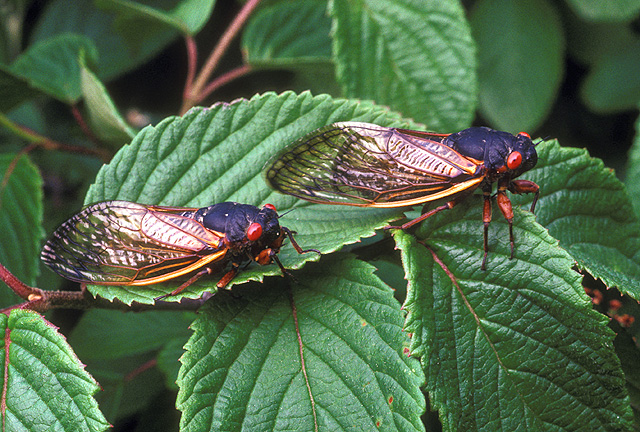
Magicicada septendecim, a cicada (Hemiptera)
Scientific classification Edit this classification
Kingdom: Animalia
Phylum: Arthropoda
Class: Insecta
Clade: Eumetabola
(unranked): Paraneoptera
Orders
Synonyms
  • Acercaria
  • Hemipterodea

Paraneoptera or Acercaria[1] is a superorder of insects which includes lice (bark lice and true lice), thrips, and hemipterans, the true bugs.[2] It also includes the extinct order Permopsocida, known from fossils dating from the Early Permian to the mid-Cretaceous.

All of the insects classified here exhibit various "reductions" or "simplifications" from the primitive body-plan found in typical polyneopterans. Cerci, for example, are entirely absent in all living paraneopterans (Acercaria meaning without cerci). Other "reductions" occur in wing venation, in the number of tarsal segments (no more than three), only four Malpighian tubules, and only one complex of abdominal ganglia.[3]

The mouthparts of the Paraneoptera reflect diverse feeding habits. Some groups are microbial surface feeders, whereas other groups feed on plant or animal fluids.[2]

Phylogeny

[edit]

Paraneoptera consists of Psocodea (lice), along with their sister clade, the monophyletic grouping Condylognatha that contains Hemiptera (true bugs) and Thysanoptera (thrips). However, analysis has shown that Psocodea could instead be the sister taxon to Holometabola, which would render Paraneoptera as paraphyletic.[4]

Here is a simple cladogram showing the traditional relationships with a monophyletic Paraneoptera:[4]

Neoptera

Here is an alternative cladogram showing Paraneoptera as paraphyletic, with Psocodea as sister taxon to Holometabola:[4]

Within Paraneoptera, Psocodea contains the two orders Phthiraptera (lice) and Psocoptera (booklice, barklice or barkflies). However, studies have shown that Phthiraptera is in fact nested deep within Psocoptera, making Psocoptera paraphyletic and an invalid grouping.[5][4]

Assuming Paraneoptera is monophyletic, here is a more detailed cladogram showing the internal relationships, and how Phthiraptera falls within Psocodea:[4]

Other insects

Paraneoptera
Psocodea

Trogiomorpha (barklice)

Psocomorpha (barklice)

Troctomorpha (paraphyletic with respect to Phthiraptera)
Condylognatha

Thysanoptera (thrips)

Hemiptera (true bugs)

Sternorrhyncha (aphids)

Heteroptera (shield bugs, assassin bugs, etc)

Coleorrhyncha (moss bugs)

Auchenorrhyncha

Fulgoromorpha (planthoppers)

Cicadomorpha (cicadas, leafhoppers, spittlebugs, etc)

Taxonomy

[edit]

Hemiptera

[edit]

Hemiptera /hɛˈmɪptərə/ is an order of insects most often known as the true bugs (cf. bug), comprising around 50,000–80,000 species of cicadas, aphids, planthoppers, leafhoppers, shield bugs, bed bugs and others. They range in size from 1 millimetre (0.039 in) to around 15 centimetres (5.9 in), and share a common arrangement of sucking mouthparts.

Thrips

[edit]

Order Thysanoptera includes 5,500 species classified into two suborders distinguished by the ovipositor. Terebrantia have a well-developed conical ovipositor, while the Tubulifera do not. Instead the abdomen is drawn out in the shape of a tube. These insects are called thrips.

Psocoptera

[edit]

Psocoptera, the bark lice, include 4,400 described species arranged in 3 suborders, Trogiomorpha, Troctomorpha, and Psocomorpha. There are 50 families of bark lice with over 200 genera. This is the first insect order to show the beginnings of a transition to sucking mouthparts. Recent studies have found that Psocoptera is paraphyletic, with Phthiraptera nested deep within Psocoptera, within the now-paraphyletic suborder Troctomorpha, making Psocoptera an invalid grouping.[5][4]

Phthiraptera

[edit]

Phthiraptera, the lice, includes 5,000 described species divided into 4 suborders. The Amblycera are sister to the remaining lineages in the group; members parasitize birds and mammals. The Ischnocera is the largest suborder and parasitize mostly birds and some groups of mammals. The Rhynchophthirina, the elephant lice, consists of only 3 species that parasitize elephants and wild pigs in Africa. The Anoplura (sucking lice) parasitize only mammals. Phthiraptera has been found to be contained within the order Psocoptera.[5][4]

Permopsocida

[edit]
Permopsocida fossil Psocorrhyncha burmitica

The extinct order Permopsocida includes 18 genera divided into 3 families, dating from the Early Permian (Asselian) to the early Late Cretaceous (Cenomanian), Permopsocida are more closely related to thrips and bugs than to lice.[6]

References

[edit]
Revisions and contributorsEdit on WikipediaRead on Wikipedia
from Grokipedia
Paraneoptera is a monophyletic superorder of within the infraclass , encompassing the orders (booklice, barklice, and parasitic lice), Thysanoptera (), and (true bugs, aphids, cicadas, and scale insects), with over 120,000 described species representing more than 10% of all known insect diversity. These are characterized by incomplete , in which nymphs closely resemble adults, and by the absence of cerci, reduced venation, and haustellate mouthparts modified into piercing-sucking stylets for feeding on liquids or semi-liquids such as plant sap, , or fungal spores. Phylogenetically, Paraneoptera originated over 365 million years ago in the or early period, with diversification driven by adaptations like the evolution of specialized mouthparts and mitochondrial genome reorganizations. Within the group, forms a distinct , while Thysanoptera is consistently recovered as the sister group to , together comprising the Condylognatha, though the exact position of relative to these and other lineages remains somewhat unstable in molecular analyses. Paraneopterans exhibit diverse ecological roles, from plant pests and disease vectors (e.g., transmitting viruses, lice parasitizing vertebrates) to beneficial predators and pollinators, exerting significant economic and agricultural impacts worldwide.

Description

Morphological Features

Paraneoptera are characterized by hemimetabolous development, in which nymphs closely resemble adults and undergo incomplete without a pupal stage. Paraneopterans exhibit haustellate mouthparts adapted for feeding on liquids or semi-liquids, with piercing-sucking stylets forming a haustellum (beak-like structure) in Thysanoptera and , supported by cibarial muscles and an enlarged postclypeus; in , mouthparts are modified for scraping, chewing, or sucking. Adults typically exhibit a variable number of ocelli (often reduced or absent, 0-3), with compound eyes often reduced in size relative to other insect orders. Antennae are variable, featuring 5-10 segments in many species and filiform structures with 6-9 segments in Thysanoptera. Distinguishing features among the major groups highlight adaptations in wing structure and mouthpart asymmetry. In , the forewings often develop as hemelytra, with the basal portion hardened (corium) and the apical portion membranous, facilitating protection and flight. Thysanoptera possess narrow, fringed wings with long marginal setae that aid in flight and dispersal, alongside asymmetrical mouthparts where only the left is developed for piercing. frequently show reduced wings or apterous forms, particularly in parasitic lineages, with beak-like mouthparts modified for chewing or sucking on , fungi, or host tissues. Sensory structures in certain paraneopterans, such as true bugs and parasitic lice, include trichobothria, hair-like mechanoreceptors distributed on the body and appendages that detect substrate vibrations and air currents, enhancing environmental perception. Compound eyes are commonly reduced, contributing to a reliance on other sensory modalities in dim or cluttered habitats. Members of Paraneoptera are typically small, ranging from 0.5 to 20 mm in body length, with a cuticle often bearing a waxy coating for protection against desiccation, especially prominent in groups like scale insects within Hemiptera.

Diversity and Distribution

Paraneoptera encompasses over 120,000 described species (as of 2024), representing a significant portion of . This superorder includes three primary orders: with approximately 100,000 species, with around 11,000 species, and Thysanoptera with more than 7,000 species. These figures underscore the dominance of within the group, which accounts for the majority of paraneopteran diversity, while and Thysanoptera contribute substantial but smaller shares. Members of Paraneoptera exhibit a , occurring on every continent and in nearly all terrestrial and some aquatic habitats, with the highest concentrated in tropical regions. are particularly widespread, dominating both freshwater ecosystems—such as rivers and where aquatic bugs thrive—and terrestrial environments ranging from forests to urban areas. Thysanoptera, or , are commonly associated with flowers, foliage, and agricultural crops, showing elevated abundance in warm, humid tropics but extending into temperate zones. Psocodea, including barklice and booklice, favor moist microhabitats like leaf litter, tree bark, and decaying wood, with global presence from rainforests to arid woodlands. Endemism is notable in certain paraneopteran lineages, particularly within , where hosts a high proportion of unique adapted to its isolated ecosystems, such as those on endemic or in specialized habitats. Conversely, some have achieved near-global ranges through human-mediated dispersal; for instance, the Cimex lectularius (), originally temperate in distribution, is now cosmopolitan due to international and . Regarding conservation, paraneopterans generally face few formally , but habitat loss from and poses risks to barklice populations in Psocodea, which rely on undisturbed moist litter and bark environments, leading to likely declines in native s.

Evolutionary History

Phylogenetic Relationships

Paraneoptera constitutes a monophyletic clade within the superorder of the class Insecta, positioned as the sister group to , the holometabolous insects encompassing orders such as Coleoptera and . This placement is supported by extensive phylogenomic analyses utilizing thousands of orthologous genes from transcriptomic data, which recover Paraneoptera with high bootstrap support (often >90%) and posterior probabilities of 1.00 across multiple datasets. The clade includes the orders (true bugs), Thysanoptera (thrips), and (booklice and parasitic lice), with Condylognatha defined as the monophyletic grouping of Thysanoptera and . Key morphological synapomorphies defining Paraneoptera include the fusion of the postclypeus to the anteclypeus, resulting in an enlarged, elongate clypeus that accommodates musculature for specialized feeding, and the development of elongated mandibular stylets adapted for piercing substrates such as tissues or animal hosts. These head and mouthpart modifications represent an evolutionary shift from ancestral chewing mechanisms toward haustellate (sucking) types, facilitating diverse feeding strategies across the group. Molecular evidence bolstering Paraneoptera's derives from early studies using 18S rRNA sequences, which weakly but consistently placed the group as sister to , as well as mitogenome analyses of complete mitochondrial genomes from representatives of all paraneopteran orders. More robust support emerged from 2020s phylogenomics, including large-scale transcriptomic datasets confirming the clade's radiation over 365 million years ago in the period, with crown-group diversification within initiating by approximately 292–376 million years ago. A 2024 phylogenomic study further affirms this as sister to with strong support. These estimates align with fossil-calibrated molecular clocks and highlight Paraneoptera's ancient origins amid early terrestrial radiations. Internally, phylogenomic data strongly support the monophyly of each order, with positioned as the basal lineage and Condylognatha (Thysanoptera + ) as its ; within Condylognatha, Thysanoptera branches before in some analyses, though bootstrap values indicate robust sister-group status between Thysanoptera and overall. Debates on the of , particularly the historical separation of (booklice) and Phthiraptera (parasitic lice) as distinct orders, have been resolved by cladistic and molecular studies demonstrating their unification under , with parasitic lice nested within booklice as a derived . This resolution, based on shared morphological traits like trophi structure and reinforced by genomic data, corrects earlier paraphyletic interpretations and affirms Psocodea's integrity within Paraneoptera.

Fossil Record

The fossil record of Paraneoptera begins in the Late Carboniferous, with the earliest known specimens attributed to the extinct order Permopsocida, representing a stem-group to the and exhibiting primitive wing venation patterns such as an angular pterostigma and a Y-vein formed by the distal fusion of the postcuboanal vein with the first anal vein. These fossils, including the species Carbonopsocus mercuryi from the Moscovian stage (~310 million years ago) in , display specialized rostrum-like mouthparts adapted for sucking, bridging the morphological gap between chewing and piercing-sucking feeding mechanisms in hemimetabolous . Permopsocida encompasses over 25 across three families, spanning from the Early Permian to the mid-Cretaceous, with forms characterized by small, glabrous bodies (~2.4 mm long) and strong basal abdominal constrictions, some resembling roach-like morphologies due to their compact, robust builds. Major diversification milestones within Paraneoptera are evident across geological periods. underwent significant radiation in the (~250 million years ago), coinciding with the Middle-Late insect explosion and the emergence of diverse terrestrial ecosystems, as seen in early heteropteran fossils from deposits like the Cow Branch Formation in . experienced a notable radiation in the (~100 million years ago), linked to the angiosperm diversification, with mid- amber inclusions from preserving thrips such as Gymnopollisthrips minor carrying Cycadopites , indicating early roles that transitioned alongside dominance. fossils become more prominent in the , particularly from Eocene ambers in regions like the Baltic and (), yielding well-preserved species such as Tapinella eocenica that highlight increased post- diversity in this suborder. Preservation biases in the Paraneoptera record favor amber deposits, which provide exceptional morphological detail; for instance, Eocene Baltic amber contains numerous inclusions, revealing fine structures like setae and antennal segments otherwise lost in compression fossils. The record shows gaps, particularly in the , due to the soft-bodied nature of early paraneopterans, resulting in underrepresentation before the split between and Condylognatha (~357 million years ago). Recent discoveries in the 2020s, including detailed wing analyses of Permopsocida, are filling gaps by clarifying stem-group transitions and evolutionary links within the .

Classification

Higher-Level Taxonomy

Paraneoptera is classified as a superorder of within the subclass and the infraclass , encompassing a monophyletic assemblage of hemimetabolous characterized by specialized piercing-sucking mouthparts and reduced cerci. The name Paraneoptera was proposed by N. P. Kristensen in 1975 as part of a critical review of hexapod ordinal phylogeny, grouping orders based on shared morphological synapomorphies such as the configuration of the forewing base and labial structures. The superorder currently includes three extant orders—Hemiptera, Thysanoptera, and Psocodea—along with various extinct taxa from Paleozoic to Cenozoic deposits. Phylogenetic analyses support the internal structure of Paraneoptera as Psocodea sister to the series Condylognatha, which unites Thysanoptera () and (true bugs) based on molecular and morphological evidence, including mitochondrial genomes and nuclear transcriptomes. This arrangement reflects a diversification estimated around 300–400 million years ago, with as the most species-rich clade exceeding 100,000 described species. A key taxonomic revision in the post-2000s era integrated the former order Phthiraptera (parasitic lice) into as a suborder, driven by molecular data from 18S rDNA and phylogenomic datasets that resolved Phthiraptera as nested within free-living psocids, confirming . This merger, first robustly supported in analyses from 2004 onward, has been upheld in 2020s consensus phylogenies using expanded mitogenomic and nuclear data, avoiding outdated separations of lice as a distinct order. Consequently, now accounts for approximately 11,000 , including both barklice and lice. Nomenclaturally, Paraneoptera serves as the prevailing name under the (ICZN), though it is alternatively termed Acercaria in some classifications, emphasizing the apomorphic absence of cerci across the group. For extinct taxa within Paraneoptera, such as permopsocids and archipsyllids, generic and specific names adhere to ICZN rules, ensuring stability in fossil despite challenges from fragmentary preservation.

Hemiptera

Hemiptera, one of the largest orders within Paraneoptera, encompasses approximately 100,000 described species, representing a significant portion of diversity. This order is traditionally divided into three primary suborders: (true bugs), (including cicadas, leafhoppers, and planthoppers), and (including , scale insects, and ), with a fourth minor suborder, , comprising woolly bugs found mainly in southern continents. These suborders reflect adaptations to diverse feeding strategies, primarily piercing tissues or animal hosts to extract fluids, contributing to Hemiptera's ecological and economic roles. Diagnostic features of include a specialized rostrum formed by elongated mandibles and maxillae for piercing and sucking liquids such as or , a trait shared with other Paraneoptera through modified mouthparts suited for . In the suborder , forewings are modified into hemelytra, with a leathery basal portion and a membranous distal area, while tarsi typically consist of two or three segments ending in paired claws; antennae are usually four- or five-segmented. and exhibit more uniform wings, often fully membranous, and lack the hemelytra structure, but all suborders share the rostrum as a key synapomorphy. Key families illustrate Hemiptera's internal diversity. In , the family includes cicadas, known for their loud calls produced by organs in males, with over 3,000 worldwide. features the , the largest aphid family with more than 4,000 , many of which are polyphagous feeders capable of rapid through . In , the encompass assassin bugs, predatory numbering around 7,000, which use sticky hairs or camouflage to capture prey. Several Hemiptera groups hold economic significance as pests; for instance, the Daktulosphaira vitifoliae (Phylloxeridae, ) devastated European vineyards in the by feeding on roots, prompting widespread onto resistant rootstocks. Hemiptera represent a basal lineage within Paraneoptera, with their divergence from other paraneopteran orders estimated at around 354 million years ago based on molecular and evidence. The group's record extends to the Permian period, with early representatives like the Archescytinidae from Lower Permian deposits showing primitive hemipteran traits such as short rostra and simple wing venation, indicating an ancient origin predating the diversification of modern suborders. This deep-time persistence underscores Hemiptera's evolutionary success, with over 145 extinct families documented, reflecting waves of diversification and extinction across geological eras.

Thysanoptera

Thysanoptera, commonly known as , is an order of small comprising over 6,400 described worldwide, divided into two suborders: Terebrantia, with a saw-like in females, and Tubulifera, characterized by a tubular tenth abdominal segment. The name Thysanoptera derives from words thysanos (fringe) and pteron (), reflecting the distinctive fringed margins of their narrow wings, which are present in most adults but absent in some brachypterous or apterous forms. As members of the Condylognatha clade, thrips exhibit incomplete metamorphosis and are distinguished from related orders by their minute size, typically 0.5–5 mm in length, and specialized adaptations for plant-associated lifestyles. Key diagnostic traits of Thysanoptera include an asymmetrical mouth cone formed by the labrum, labium, and maxillae, with the right vestigial or entirely absent, allowing only the left to function in rasping tissues. This mouthpart configuration enables a rasping-sucking feeding mechanism, where puncture epidermal cells to extract fluids, , or fungal spores, often leaving silvery scars on surfaces. The is invariably 10-segmented, lacking cerci, and features 6–10-segmented antennae that are short and filiform. The order encompasses nine families, with Thripidae (suborder Terebrantia) as the largest and most economically significant, including over 2,800 species of common , many of which are pests such as the (Frankliniella occidentalis), a global vector of tospoviruses affecting crops like tomatoes and ornamentals. Phlaeothripidae (suborder Tubulifera) represents the other dominant family, with around 3,500 species featuring a tube-like postabdominal structure in females for oviposition, and encompassing a wide range of habits from predatory to gall-inducing forms. Unique aspects of thysanopteran biology include social behaviors in certain , particularly within Phlaeothripidae, where gall-forming like those in the genus Kladothrips exhibit with sterile soldier castes that defend colonies using enlarged forelegs and modified mouthparts. Many species act as vectors for viruses in , transmitting over 20 tospoviruses through persistent propagative transmission during feeding, leading to significant losses in , fruits, and ornamentals. The fossil record of Thysanoptera extends to the , approximately 220 million years ago, with early representatives like Triassothrips indicating an ancient origin tied to gymnosperm .

Psocodea

Psocodea is an order of within the superorder Paraneoptera, encompassing both free-living forms traditionally classified as (such as barklice and booklice) and obligate parasitic forms known as Phthiraptera (true lice). This group comprises approximately 11,000 described species, distributed across diverse habitats from forest litter and bark to the feathers and fur of hosts. The order is characterized by a single origin of parasitism, with Phthiraptera evolving from within the free-living psocopterans, rendering the traditional Psocoptera paraphyletic. The suborders of Psocodea include Psocomorpha (the largest, with over 3,600 species of barklice in 25 families), Troctomorpha (around 500 species of booklice and related forms in 9 families), Trogiomorpha (about 400 species in 5 families), and Phthiraptera (roughly 5,000 species of lice in 16 families). Psocomorpha and the other free-living suborders are primarily detritivores or fungivores inhabiting moist, organic substrates, while Phthiraptera are ectoparasites specialized for life on birds and mammals. Monophyly of Psocodea has been robustly confirmed by phylogenomic analyses using thousands of orthologous genes, resolving earlier uncertainties from smaller datasets and establishing its position as sister to Condylognatha (Thysanoptera + Hemiptera) within Paraneoptera. Diagnostic morphological traits of include a swollen postclypeus, reduced number of tarsomeres (typically 2 or 3), and modified mouthparts adapted for grinding or piercing organic material. Many exhibit reduced or absent compound eyes and ocelli, short filiform antennae, and a tendency toward reduction or complete aptery, particularly in parasitic forms and some free-living booklice. Free-living members resemble delicate, soft-bodied barklice with nymphoid adults in apterous morphs, whereas Phthiraptera are dorsoventrally flattened, apterous ectoparasites with beak-like mouthparts for feeding on , , or feathers. Major groups within highlight its ecological duality. In free-living lineages, the family Psocidae represents common barklice (e.g., genera like Psocus), which scavenge fungi and on tree bark, while Liposcelididae includes cosmopolitan booklice (e.g., ) that infest stored products and homes. Among parasitic lice, the family Pediculidae encompasses human-specific species like the ( humanus), and Philopteridae comprises over 3,000 species of bird lice exhibiting extreme host specificity, with many genera restricted to single bird families or even species. This host fidelity in Phthiraptera, often cospeciating with avian or mammalian hosts, underscores adaptations like on feathers and specialized claws for gripping. The taxonomic unification of Psocoptera and Phthiraptera into addresses historical splits based on lifestyle, with from the 2010s providing definitive evidence through multi-gene and transcriptomic data. Studies such as those analyzing 18S rDNA and mitogenomes initially suggested nesting of lice within psocopterans, but comprehensive phylogenomics in 2018 and 2021 solidified the monophyletic framework, influencing modern classifications like those in Lienhard and Smithers' catalogs. This integration emphasizes shared apomorphies, such as hypopharyngeal sclerites in mouthparts, over ecological divergence.

Extinct Taxa

The extinct order Permopsocida represents the most prominent fossil-only group within Paraneoptera, encompassing over 20 genera across three families (Archipsyllidae, Permopsocidae, and Psocidiidae) and spanning from the Permian to the mid-Cretaceous (approximately 299–100 million years ago). These insects are characterized by a flattened head with divided genae, four-segmented tarsi, and wing venation featuring a pterostigma and two anal veins, including an elongated pronotum in some species and reduced venation patterns that suggest transitional forms between primitive chewing mouthparts and the piercing-sucking structures of modern paraneopterans. Taxonomically, Permopsocida is positioned as a stem group to Condylognatha (Thysanoptera + Hemiptera) within Paraneoptera, outside the crown groups of extant orders, with key genera such as Permopsocus (from Permian deposits) and Psocorrhyncha (from Triassic amber) exemplifying this placement. Their significance lies in providing the earliest evidence of suction-feeding adaptations in hemimetabolous insects, documenting a 185-million-year evolutionary bridge toward the diverse mouthpart morphologies seen in living Paraneoptera. Other extinct lineages include the orders Miomoptera and Hypoperlida, both redefined as stem-group Paraneoptera (specifically stem Acercaria) based on shared wing venation features like a common stem of R + M + CuA and pterostigmal structures. Miomoptera, known from the Late Carboniferous to Middle Permian (about 300–260 million years ago), includes genera such as Mazonopsocus with long, possibly two-segmented cerci and small body sizes, contributing to calibrating the early diversification of the clade. Hypoperlida, restricted to the Permian (approximately 299–252 million years ago), features short, one-segmented cerci and is represented by limited genera like those in Hypoperlidae, highlighting early neopteran transitions within the group. These taxa are not nested within modern orders, underscoring their role as basal paraneopterans. Recent amber discoveries from the of (e.g., Dinmopsylla semota in Archipsyllidae) and Cretaceous Burmese deposits (e.g., Bittacopsocus with bizarre elongated mouthparts) have expanded the known diversity of Permopsocida, adding Triassic species and reinforcing their evolutionary persistence until the mid-Cretaceous .

Biological Significance

Ecological Roles

Paraneoptera occupy diverse trophic levels within ecosystems, serving as herbivores, predators, and detritivores that influence energy flow and nutrient dynamics. In , herbivorous groups such as (Sternorrhyncha) feed on plant sap, acting as primary consumers that can alter and community structure by inducing defensive responses or facilitating nutrient transfer through . Predatory , exemplified by assassin bugs (), regulate populations of other arthropods by ambushing and injecting enzymatic saliva into prey, thereby contributing to biological control in terrestrial and aquatic food webs. , particularly barklice, function as detritivores by consuming fungi, , and decaying in leaf litter and under bark, accelerating and nutrient recycling in forest ecosystems. Certain paraneopterans engage in symbiotic relationships that enhance ecosystem stability. Thysanoptera, or , serve as minor pollinators in specialized floral systems like thripophily, transferring pollen via body adhesion while feeding on floral tissues, which supports reproduction in plants such as those in the family. Within , aphids form mutualistic associations with , where ants protect aphids from predators in exchange for honeydew, a sugar-rich that influences ant and indirectly boosts aphid in herbivore communities. Paraneoptera play keystone roles in and interactions, often as prey that sustains higher trophic levels. Cicadas (: ), during mass emergences, provide a pulsed resource boom for birds and other predators, temporarily rewiring forest s by reducing predation on alternative prey like caterpillars and enhancing avian reproductive success. Barklice in further support by hastening the breakdown of woody debris, promoting fungal growth and soil fertility that benefits decomposer communities. Recent studies highlight the role of microbiomes in facilitating plant transmission; gut in like onion () aid in viral acquisition and vectoring by modulating host immunity and persistence, underscoring paraneopterans' influence on dynamics in plant ecosystems.

Interactions with Humans

Paraneoptera species have significant negative impacts on human agriculture, primarily through and Thysanoptera acting as pests that cause substantial economic losses. and scale insects within , such as Aphis glycines and various Coccoidea, feed on plant sap, leading to reduced crop yields, transmission of plant , and annual global damages estimated in the billions of dollars; for instance, soybean alone inflict losses ranging from $1 billion to $4.7 billion yearly in the United States (estimates from the ) due to direct feeding and sooty mold contamination. Thysanoptera, particularly species like Frankliniella occidentalis, damage a wide array of crops including fruits, , and ornamentals through rasping feeding and as vectors for tospoviruses, resulting in severe yield reductions; spotted wilt , transmitted by these , causes economic losses exceeding $1 billion annually worldwide. In medical and veterinary contexts, certain Paraneoptera pose direct health risks as disease vectors or biting pests. Phthiraptera, including body lice ( humanus corporis), transmit epidemic typhus caused by Rickettsia prowazekii, as well as trench fever ( quintana) and relapsing fever (), with historical outbreaks linked to overcrowding and poor sanitation leading to high mortality rates. Bed bugs (, ) have resurged globally since the early , partly due to widespread insecticide resistance, particularly to pyrethroids like deltamethrin, complicating control efforts and causing increased infestations in urban environments with associated allergic reactions and psychological distress. Some Paraneoptera offer beneficial applications in human industries. Scale insects such as Dactylopius coccus () are cultivated for , a carminic acid-based extracted from their bodies, historically vital for textiles, , and in Mesoamerican and European cultures, and still used today for its vibrant reds and stability. Certain , like predatory forms of species, contribute to biocontrol by preying on eggs and small stages of stored-product pests, though their use remains limited compared to other agents. Culturally, Paraneoptera feature prominently in human and traditions, often symbolizing transformation and renewal. Cicadas (: ), with their periodical emergences every 13 or 17 years, hold symbolic importance in various societies; in ancient Chinese and Greek lore, they represent immortality and resurrection due to their life cycle of prolonged stages followed by dramatic adult appearances, influencing , , and rituals. Management of Paraneoptera pests emphasizes (IPM) strategies to minimize chemical use and economic impacts. IPM for , , and scale insects integrates monitoring, cultural practices like , biological controls such as introducing natural enemies, and targeted , reducing reliance on broad-spectrum treatments and sustaining . As of 2025, ongoing challenges include resistance in key vectors like . For lice and bed bugs, IPM incorporates sanitation, heat treatments, and resistance-monitoring to address vector-borne diseases and infestations effectively.

References

Add your contribution
Related Hubs
User Avatar
No comments yet.