


Community hub
Recent from talks
Contribute something
Nothing was collected or created yet.
Panorpida
View on Wikipedia
| Panorpida | |
|---|---|

| |
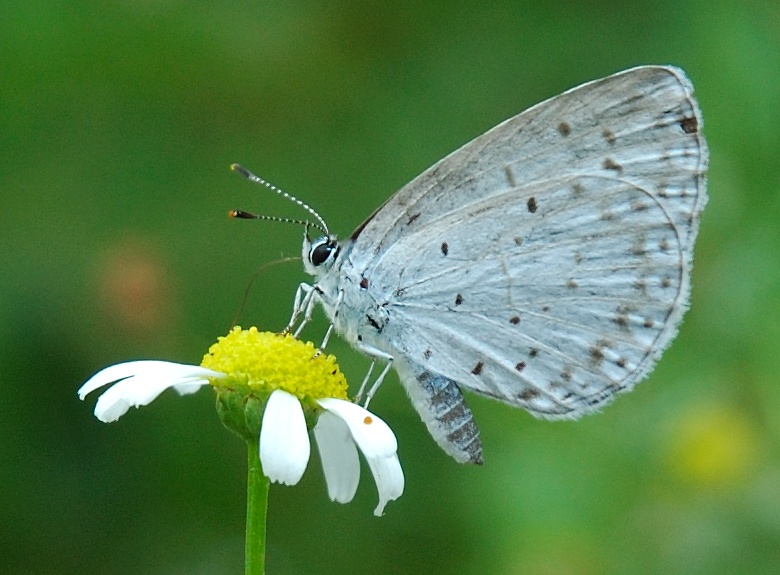
| Celastrina argiolus | |
Scientific classification 
| |
| Kingdom: | Animalia |
| Phylum: | Arthropoda |
| Class: | Insecta |
| Clade: | Aparaglossata |
| Superorder: | Panorpida |
| Clades | |
Panorpida or Mecopterida is a Superorder of Holometabola. The conjectured monophyly of the Panorpida is historically based on morphological evidence, namely the reduction or loss of the ovipositor and several internal characteristics, including a muscle connecting a pleuron and the first axillary sclerite at the base of the wing, various features of the larval maxilla and labium, and basal fusion of CuP and A1 veins in the hind wings.[1][2] The monophyly of the Panorpida is supported by recent molecular data.[3][4]
| Holometabola |
| ||||||||||||||||||||||||||||||||||||||||||||||||
| (Endopterygota) |


.png)
.jpg)
.jpg)


Antliophora
[edit]The Panorpid clade Antliophora contains one of the major phylogenetic puzzles among the Insecta. It is unclear as of 2020 whether the Mecoptera (scorpionflies and allies) form a single clade, or whether the Siphonaptera (fleas) are inside that clade, so that the traditional "Mecoptera" is paraphyletic. However the earlier suggestion that the Siphonaptera are sister to the Boreidae (snow scorpionflies)[5][6][7] is not supported; instead, there is the possibility that they are sister to another Mecopteran family, the Nannochoristidae of the Southern hemisphere. The two possible trees are shown below:[8]
(a) Mecoptera is paraphyletic, containing Siphonaptera:[8]
| Antliophora |
| ||||||||||||||||||||||||

.jpg)


(b) Mecoptera is monophyletic, sister to Siphonaptera[8]
| Antliophora |
| ||||||||||||||||||||||||
References
[edit]- ^ Kristensen, Niels Peder (1975). "The phylogeny of hexapod "orders". A critical review of recent accounts". Journal of Zoological Systematics and Evolutionary Research. 1 (13): 1–44. doi:10.1111/j.1439-0469.1975.tb00226.x.
- ^ Kristensen, Niels Peder (1991). "Phylogeny of extant hexapods". Insects of Australia: 126–140.
- ^ Grimaldi, David; Engel, Michael, S. (2005). Evolution of the Insects. Cambridge University Press. p. 468. ISBN 978-0-521-82149-0.
{{cite book}}: CS1 maint: multiple names: authors list (link) - ^ Kjer, Karl M.; Simon, Chris; Yavorskaya, Margarita & Beutel, Rolf G. (2016). "Progress, pitfalls and parallel universes: a history of insect phylogenetics". Journal of the Royal Society Interface. 13 (121): 121. doi:10.1098/rsif.2016.0363. PMC 5014063. PMID 27558853.
- ^ Whiting, Michael F.; Whiting, Alison S.; Hastriter, Michael W.; Dittmar, Katharina (2008). "A molecular phylogeny of fleas (Insecta: Siphonaptera): origins and host associations". Cladistics. 24 (5): 677–707. CiteSeerX 10.1.1.731.5211. doi:10.1111/j.1096-0031.2008.00211.x. S2CID 33808144.
- ^ Whiting, Michael F. (2002). "Mecoptera is paraphyletic: multiple genes and phylogeny of Mecoptera and Siphonaptera". Zoologica Scripta. 31 (1): 93–104. doi:10.1046/j.0300-3256.2001.00095.x. S2CID 56100681. Archived from the original on 2013-01-05.
- ^ Wiegmann, Brian; Yeates, David K. (2012). The Evolutionary Biology of Flies. Columbia University Press. p. 5. ISBN 978-0-231-50170-5.
Recently, a close affinity between Siphonaptera and Mecoptera has been convincingly demonstrated via morphology (Bilinski et al. 1998) and molecular data (Whiting 2002), rendering Mecoptera paraphyletic, but making the clade including Mecoptera and Siphonaptera monophyletic
- ^ a b c Meusemann, Karen; Trautwein, Michelle; Friedrich, Frank; Beutel, Rolf G.; Wiegmann, Brian M.; et al. (2020). "Are Fleas Highly Modified Mecoptera? Phylogenomic Resolution of Antliophora (Insecta: Holometabola)". bioRxiv 10.1101/2020.11.19.390666.
Further reading
[edit]
- Minet, J.; Huang, D-T.; Wu, H.; Nel, A. (2010). "Early Mecopterida and the systematic position of the Microptysmatidae (Insecta: Endopterygota)". Annales de la Société entomologique de France. (N.S.). 46: 262–270. doi:10.1080/00379271.2010.10697667.
| |||||||||||||||
| |||||||||||||||
| |||||||||||||||


Panorpida
View on GrokipediaTaxonomy and Phylogeny
Definition and Diagnosis
Panorpida, also known as Mecopterida, is a superorder of holometabolous insects within the infraclass Neoptera, encompassing the clades Amphiesmenoptera (comprising the orders Trichoptera and Lepidoptera) and Antliophora (including Mecoptera, Siphonaptera, and Diptera).[9] This grouping represents a monophyletic assemblage characterized by complete metamorphosis and advanced endopterygote development. The name "Panorpida" derives from Panorpa, the type genus of the order Mecoptera, combined with the taxonomic suffix "-ida" denoting a higher-level taxon. The monophyly of Panorpida is supported by several morphological synapomorphies, including the reduction or loss of the ovipositor in females, which contrasts with the more developed ovipositor seen in more basal neopteran lineages.[11] Additional diagnostic traits involve specific modifications in wing venation and muscle arrangements in the thorax. These features emphasize the clade's unity. Molecular evidence further corroborates Panorpida's monophyly through phylogenomic approaches, including sequence data from ribosomal RNA genes (such as 18S and 28S) that reveal shared nucleotide patterns distinguishing the superorder from other holometabolans.[12] A prominent molecular synapomorphy is the accelerated evolutionary rate in the ligand-binding domains of the ecdysone receptor (EcR) and ultraspiracle (USP/RXR) nuclear receptors, representing a unique adaptive event at the base of the lineage.[9] Early morphological support for these synapomorphies dates to comprehensive reviews integrating comparative anatomy across orders, while modern phylogenomics, incorporating multi-gene datasets, has reinforced the clade's integrity against alternative hypotheses.Phylogenetic Position
Panorpida, also known as Mecopterida, represents a major clade within the Endopterygota (Holometabola), encompassing the orders of butterflies and moths (Lepidoptera), caddisflies (Trichoptera), scorpionflies (Mecoptera), fleas (Siphonaptera), and true flies (Diptera).[13] This positioning places Panorpida as part of the derived holometabolous insects, with Hymenoptera (sawflies, bees, wasps, and ants) branching earliest among Endopterygota, followed by Coleopterida (beetles sister to twisted-wing parasites) as sister to a clade including Neuropterida (lacewings, antlions, dobsonflies, and snakeflies) and Panorpida.[14] Within this framework, Panorpida is consistently recovered as monophyletic in molecular phylogenies, supported by analyses of multiple nuclear genes that resolve its relationships with high statistical confidence using maximum likelihood and Bayesian methods.[13] The internal structure of Panorpida is characterized by two principal subclades: Amphiesmenoptera, comprising Lepidoptera and Trichoptera as sister groups, and Antliophora, including Diptera, Mecoptera, and Siphonaptera.[14] This configuration, depicted in cladograms as Panorpida = (Amphiesmenoptera + Antliophora), has been robustly supported by phylogenomic datasets, such as those from 1478 protein-coding genes across diverse insect taxa, which place Amphiesmenoptera and Antliophora as reciprocal sisters with strong nodal support.[14] Transcriptome-based studies further corroborate this placement, integrating Panorpida near the derived end of holometabolous diversification alongside groups like Neuropterida.[15] Debates persist regarding the precise monophyly of Panorpida's internal components, particularly Antliophora, due to evidence suggesting Siphonaptera may derive from within Mecoptera rather than as a sister group. Phylogenomic and morphological analyses indicate that fleas represent highly modified, parasitic mecopterans, potentially rendering Mecoptera paraphyletic if Siphonaptera is nested within it; however, this does not disrupt the overall monophyly of Panorpida or Antliophora, as Diptera remains the sister to the Mecoptera + Siphonaptera lineage in such scenarios. These findings highlight ongoing refinements in understanding Panorpida's boundaries, driven by integrative evidence from genomes, fossils, and morphology.Historical Development
The superorder Panorpida was initially proposed by A. V. Martynov in 1923–1924, grouping Mecoptera and allied fossil insects based on shared similarities in wing venation observed among Permian taxa. This early morphological framework laid the foundation for recognizing Panorpida as a holometabolous lineage distinct from other endopterygote groups. A key milestone came in 1958 when H. E. Hinton linked fleas (Siphonaptera) to scorpionflies (Mecoptera) through comparative analysis of larval mouthparts and proventriculus structure, establishing their close affinity within the broader panorpoid complex that included Trichoptera, Lepidoptera, Diptera, and Mecoptera. In 1981 and 1991, N. P. Kristensen renamed the clade Mecopterida to highlight the basal position of Mecoptera, encompassing Mecoptera, Siphonaptera, Diptera, Trichoptera, and Lepidoptera; this name was later treated as a junior synonym of Panorpida in subsequent classifications. Molecular evidence began to refine these relationships in 1997, when M. F. Whiting and colleagues analyzed 18S and 28S rDNA sequences alongside morphological data, supporting the monophyly of Antliophora (Mecoptera + Siphonaptera + Diptera) as a subclade within Panorpida. Subsequent phylogenomic studies, such as that by B. Misof et al. in 2014 using transcriptomes from 144 insect species, confirmed this structure with high support, resolving Panorpida as comprising Amphiesmenoptera (Trichoptera + Lepidoptera) and Antliophora. Historically, early proposals for Panorpida often excluded Diptera, focusing primarily on Mecoptera and Siphonaptera due to venation and larval traits, but refinements from the late 20th century onward have firmly integrated Diptera into Antliophora based on combined morphological and molecular synapomorphies.Amphiesmenoptera
Trichoptera
Trichoptera, commonly known as caddisflies, comprise one of the most diverse orders of aquatic insects, with over 16,000 described species distributed across more than 600 genera and 50 families worldwide.[16] These holometabolous insects are characterized by their complete metamorphosis, transitioning from aquatic larvae to terrestrial adults, and play a pivotal role in freshwater ecosystems as primary consumers and decomposers.[17] The larvae of Trichoptera are predominantly aquatic, inhabiting a variety of freshwater environments such as streams, rivers, lakes, and wetlands, where they construct portable cases or fixed retreats using silk produced from specialized labial salivary glands combined with environmental materials like sand, twigs, leaves, or algae.[18][19] These silken structures provide protection, aid in locomotion, and facilitate feeding strategies that range from filter-feeding on suspended particles to scraping periphyton or predating other invertebrates, thereby contributing significantly to nutrient cycling by processing organic detritus and facilitating energy transfer between primary producers and higher trophic levels.[20] In contrast, adults are short-lived, moth-like flyers with two pairs of membranous wings covered in dense hairs rather than scales, long antennae for sensory detection, and reduced mouthparts that limit feeding to occasional nectar or are non-functional, focusing their brief adult phase primarily on reproduction and dispersal.[21] Within the broader context of Panorpida, Trichoptera form the core of the clade Amphiesmenoptera alongside Lepidoptera, positioned as the sister group to butterflies and moths based on robust phylogenomic evidence, with a key synapomorphy being the presence of well-developed silk-producing glands in larval stages derived from embryonic labial structures.[5][22] This close relationship underscores their shared evolutionary history within Panorpida, highlighting silk production as an ancient adaptation that diverged into aquatic case-building in caddisflies and terrestrial cocoon or scale formation in moths. Trichoptera exhibit a cosmopolitan distribution, absent only from Antarctica and extreme marine environments, with highest diversity in tropical and temperate freshwater systems where they dominate benthic communities and serve as bioindicators of water quality due to their sensitivity to pollution and habitat alteration.[23] Their ecological significance extends to nutrient cycling, as larval activities enhance decomposition rates and nutrient retention in riparian zones, supporting broader food webs that include fish, amphibians, and birds.[24]Lepidoptera
Lepidoptera, commonly known as butterflies and moths, represent the most species-rich order within Panorpida, encompassing approximately 180,000 described species worldwide.[25] This diversity surpasses that of other orders in the superorder, including Trichoptera, Mecoptera, Siphonaptera, and Diptera, highlighting Lepidoptera's evolutionary success as a dominant group of holometabolous insects.[25] The order is characterized by its four membranous wings, which are adorned with microscopic scales that provide structural support, camouflage, and vibrant coloration for mate attraction and predator avoidance.[25] A hallmark of Lepidoptera is the elongated, coiled proboscis formed by the galeae of the maxillae, which serves as a specialized feeding tube for extracting nectar from flowers, enabling many species to act as effective pollinators.[25] Their life cycle exemplifies holometaboly, featuring distinct egg, larval (caterpillar), pupal, and adult stages, with the pupa representing a transformative phase where radical morphological changes occur, including the development of wings and reproductive structures.[26] Within the clade Amphiesmenoptera, Lepidoptera shares key synapomorphies with its sister group Trichoptera, such as the presence of silk-producing glands derived from modified labial salivary glands in larvae and an eversible vesica in the male phallus, which aids in sperm transfer during mating.[27] These shared traits underscore their close phylogenetic relationship, with silk production briefly linking larval behaviors across the two orders.[28] Lepidoptera exhibit a cosmopolitan distribution, inhabiting every continent except Antarctica, with the highest species diversity concentrated in tropical and subtropical regions, where environmental stability supports prolific speciation.[29] Economically, adult lepidopterans contribute positively through pollination services, particularly nocturnal moths that visit night-blooming flowers and support crop yields in agriculture.[30] Conversely, certain larval stages function as pests, damaging crops, forests, and stored products by feeding on foliage or textiles, necessitating integrated pest management strategies.[25]Antliophora
Antliophora is a major clade within the superorder Panorpida, comprising the orders Mecoptera, Siphonaptera, and Diptera, with strong support for its monophyly from molecular and morphological data, including shared thoracic musculature and wing base structures.[4] Some classifications also include Strepsiptera (twisted-wing parasites, approximately 600 species), though its exact position remains debated, with recent phylogenomic analyses placing it as sister to Diptera or within Antliophora.[4] Strepsiptera are highly specialized endoparasites primarily of other insects, characterized by neotenic females, free-living winged males with raptorial forelegs, and haltere-like reduced hindwings. This clade exhibits extreme ecological diversity, from free-living predators and scavengers to obligate parasites and pollinators.Mecoptera
Mecoptera, commonly known as scorpionflies, represent the basal lineage within the holometabolous insect clade Antliophora, alongside Siphonaptera and Diptera. This order encompasses approximately 600 extant species distributed across nine families, with the Panorpidae family being the most species-rich and widespread, comprising over half of all known species. These insects are characterized by their distinctive morphology, including elongated rostrum-like heads with chewing mouthparts at the apex, long antennae, and four membranous wings of similar size and venation that fold roof-like over the abdomen at rest. A hallmark feature of many mecopterans, particularly in the family Panorpidae, is the upturned male genital segments that resemble a scorpion's tail, though this structure serves in courtship display rather than stinging. Bodies are generally slender and elongated, ranging from 4 to 25 mm in length, with some species exhibiting raptorial forelegs adapted for grasping prey, as seen in hangingfly genera like Bittacus. Adults are primarily carnivorous or scavenging, feeding on dead insects, nectar, or pollen in moist, shaded habitats, while larvae are typically detritivores inhabiting soil or decaying vegetation. Notable subgroups include the Boreidae, or snow scorpionflies, which are small, wingless or brachypterous insects active in cold winter conditions and capable of jumping like fleas. The Nannochoristidae, restricted to southern temperate regions such as southern South America, Australia, and New Zealand, feature more primitive wing venation and aquatic or semi-aquatic larvae. Mecoptera are predominantly found in temperate zones worldwide, with highest diversity in forested, humid environments of the Northern Hemisphere, though some tropical representatives exist. The fossil record of Mecoptera extends back to the Upper Permian, with early forms like nannochoristids indicating a once-greater diversity that peaked in the Mesozoic before declining. Phylogenetic analyses have debated the monophyly of Mecoptera, with some molecular studies suggesting paraphyly due to fleas (Siphonaptera) nesting within the order, potentially as sister to Boreidae, though recent phylogenomic data support a closer flea-mecopteran relationship without clear resolution on exact placement.Siphonaptera
Siphonaptera, commonly known as fleas, comprise a highly specialized order of parasitic insects within the Antliophora clade, characterized by approximately 2,500 valid species distributed across 16 families.[31] These small, wingless ectoparasites are obligate hematophages, feeding exclusively on the blood of their hosts, and exhibit extreme morphological adaptations for a parasitic lifestyle.[32] Their bodies are laterally compressed, typically measuring 1–6 mm in length, which facilitates movement through host fur or feathers.[33] The hind legs are powerfully developed with elongated femora and tibiae, enabling jumps up to 200 times their body length to locate or evade hosts.[34] Mouthparts are modified into piercing stylets for penetrating skin and sucking blood, while eyes are reduced to small, simple structures or absent in some species, reflecting their adaptation to dark, host-associated environments.[32] Fleas undergo holometabolous metamorphosis, consisting of egg, larval, pupal, and adult stages, with the entire cycle typically lasting from two weeks to several months depending on environmental conditions.[35] Eggs are laid in batches on the host and fall into the environment, where larvae hatch and feed as scavengers on organic debris, including adult flea feces containing undigested blood.[36] Pupae develop within silken cocoons camouflaged by environmental particles, emerging as adults ready to seek a blood meal.[35] This free-living larval phase contrasts with the adults' obligate parasitism, allowing fleas to persist in host habitats even without immediate access to a host.[32] Siphonaptera are distributed worldwide, primarily infesting mammals and birds, with over 90% of species associated with mammalian hosts such as rodents, carnivores, and primates.[37] Their cosmopolitan presence is tied to host migration and trade, though diversity is highest in tropical and subtropical regions.[38] Medically, fleas are significant vectors of zoonotic diseases, most notably bubonic plague caused by Yersinia pestis, transmitted via species like Xenopsylla cheopis, the oriental rat flea.[39] They also carry pathogens such as Rickettsia typhi (murine typhus) and Bartonella species, contributing to outbreaks in both human and wildlife populations.[37] Phylogenetically, Siphonaptera are considered nested within Mecoptera, deriving from scorpionfly-like ancestors through secondary loss of wings and evolution of parasitic traits.[31]Diptera
Diptera, commonly known as true flies, represent the most species-rich clade within the Antliophoran lineage of insects, encompassing approximately 160,000 described species distributed across 158 families.[40] This order is characterized by advanced adaptations for flight, distinguishing it from other Antliophorans like Mecoptera and Siphonaptera, while sharing derived traits such as a reduced ovipositor adapted for egg-laying in diverse substrates.[41] As holometabolous insects, Diptera undergo complete metamorphosis, transitioning from legless, often aquatic or semi-aquatic larvae to winged adults that dominate aerial ecosystems worldwide.[42] A defining morphological feature of Diptera is the presence of a single functional pair of membranous wings, with the hindwings modified into club-shaped halteres that function as gyroscopic stabilizers during flight, enabling precise maneuverability and rapid evasion.[43] Mouthparts are typically adapted for piercing or sucking liquids, forming a proboscis suited to nectar, blood, or decaying matter, which supports their varied feeding strategies.[44] The body is often soft and bristly, with large compound eyes providing wide visual fields essential for flight navigation. These innovations have facilitated Diptera's radiation into nearly every terrestrial and freshwater habitat, from Arctic tundras to tropical rainforests.[45] The order is traditionally subdivided into two main suborders: Nematocera and Brachycera, reflecting differences in antennal structure and overall body form. Nematocera, considered paraphyletic, includes slender-bodied flies with multisegmented, thread-like antennae, such as mosquitoes (family Culicidae) and crane flies (family Tipulidae), many of which have aquatic larvae that filter-feed or prey on microorganisms.[42] In contrast, Brachycera comprises more robust flies with shortened, stylate antennae and includes diverse groups like horse flies (family Tabanidae) and house flies (family Muscidae), where adults often exhibit predatory or scavenging behaviors and larvae inhabit soil or decaying organic material.[41] This bifurcation underscores Diptera's evolutionary progression toward compact, agile forms optimized for active dispersal.[40] Diptera are ubiquitous globally, with larvae exploiting a spectrum of niches from freshwater streams and ponds to terrestrial detritus and even vertebrate tissues, while adults are predominantly aerial and mobile.[45] Ecologically, they play pivotal roles in pollination, particularly through nectar-feeding species like hover flies (family Syrphidae) that visit flowers and transfer pollen, contributing significantly to crop and wild plant reproduction.[46] Additionally, many taxa facilitate decomposition by breaking down organic matter, recycling nutrients in soils and accelerating the decay of animal carcasses and plant debris, thus maintaining ecosystem balance.[47] Their abundance and versatility underscore Diptera's status as foundational components of food webs, serving as prey for birds, bats, and other insects.[48]Evolutionary Biology
Origins and Fossil Record
The origins of Panorpida trace back to the Late Carboniferous period, approximately 315–300 million years ago (mya), coinciding with the emergence of the earliest holometabolous insects. The clade is represented by Protomeropidae, the oldest known family within Panorpida, exemplified by Protomeropina species from the Mazon Creek Lagerstätte in Illinois, USA. These fossils document the initial evolution of complete metamorphosis in insects, a key innovation that facilitated the diversification of endopterygote lineages, though holometabolous forms remained rare until the Permian. The fossil record of Panorpida expands significantly in the Permian (299–252 mya), with Panorpida-like forms showing advanced wing structures linked to early Mecoptera. Permochoristidae, an extinct family of primitive scorpionflies, appears in Lower Permian deposits, such as the Wellington Formation in Oklahoma, USA, featuring elongated wings with venation patterns indicative of aerial predation or pollination roles in gymnosperm-dominated ecosystems. These Permian fossils bridge the gap between Carboniferous stem-Panorpida and more derived Mesozoic lineages, highlighting a gradual refinement of holometabolous traits like pupal stages and specialized mouthparts. Triassic records (252–201 mya) mark the diversification of Diptera, with early flies such as Protorhyphus from the Late Carnian Cow Branch Formation of Virginia, USA, displaying reduced hind wings and haltere precursors that supported enhanced flight capabilities.[49][50] Flea-like insects appear in the Middle Jurassic (201–145 mya) of China, such as Pseudopulicidae, showing leg modifications for jumping and piercing mouthparts adapted for ectoparasitism on feathered or haired vertebrates, such as dinosaurs. The exact origin of Siphonaptera remains debated, with Jurassic flea-like forms as potential stem-groups leading to true fleas emerging in the Cretaceous (145–66 mya), where amber deposits preserve more modern-like fleas, including specimens from Burmese amber assigned to stem-Siphonaptera, which exhibit compressed bodies and setae for host attachment, suggesting ectoparasitic habits evolved alongside therian mammals. These amber fossils, often found in association with feathers or fur, provide direct evidence of Panorpida's ecological integration into Mesozoic terrestrial communities.[52] Evidence for the monophyly of Panorpida derives from shared synapomorphies in fossil wing venation, such as the fusion of media and cubitus veins and a reduced anal field, observed consistently from Protomeropidae through Permian Mecoptera to Triassic Diptera. This venation pattern, preserved in compression fossils from Eurasian and North American localities, aligns with molecular phylogenies placing Panorpida as a holometabolous subclade sister to Neuropteroidea, supporting a unified evolutionary origin around the Carboniferous-Permian boundary.[53]Adaptive Radiations
The adaptive radiation of the Amphiesmenoptera clade, encompassing Trichoptera and Lepidoptera, occurred in the aftermath of the Permian-Triassic extinction, leveraging the evolution of silk production from labial glands as a key innovation.[54] This silk enabled Trichoptera larvae to construct portable protective cases, facilitating diversification into diverse aquatic niches such as rivers and lakes during the Middle to Late Triassic.[55] In parallel, Lepidoptera utilized silk for pupal cocoons, supporting terrestrial adaptations and a rapid diversification of lineages, including the Glossata with their scale-covered wings, evident from latest Triassic to earliest Jurassic fossils approximately 201–199 million years ago.[56] Within Antliophora, Diptera experienced expansive radiations beginning in the Jurassic, evolving into prominent aerial pollinators and decomposers that exploited emerging ecological opportunities.[57] Lower brachyceran flies, such as those in Tabanidae and Bombyliidae, diversified from the Middle Jurassic onward, with mid-Cretaceous fossils from Burmese amber documenting their roles in pollinating basal angiosperms and contributing to decomposition processes in terrestrial ecosystems.[57] Siphonaptera, meanwhile, radiated during the Cretaceous in close association with therian mammals, transitioning from earlier saurophthirid ancestors to specialized ectoparasites on placental and marsupial hosts.[58] These radiations were profoundly influenced by co-evolutionary dynamics, particularly the rise of angiosperms, which drove diversification in Lepidoptera and Diptera through specialized pollination mutualisms starting in the mid-Cretaceous around 99 million years ago.[59] For Siphonaptera, host-parasite interactions, including cospeciation and inheritance of parasites across mammalian lineages, shaped their specificity and abundance patterns.[60] Panorpida orders generally endured minimal disruption during the Cretaceous-Paleogene extinction event, with many lineages—such as Diptera and Siphonaptera—withstanding the mass extinction and subsequently expanding in the Cenozoic due to resilient life histories and post-extinction ecological recovery.[61]References
- https://en.[wiktionary](/page/Wiktionary).org/wiki/Panorpida