Hubbry Logo
Pye-dogPye-dogMain
Open search
Pye-dog
Community hub
Pye-dog
logo
8 pages, 0 posts
0 subscribers
Be the first to start a discussion here.
Pye-dog
Pye-dog
from Wikipedia
Indian Pariah Dog
Other namesPye Dog, Indian Native Dog, INDog
Origin India Pakistan Bangladesh Sri Lanka
Traits
Height Male: 50–63 cm (20–25 in); Female: 46–58 cm (18–23 in)
Weight Male: 20–30 kg (44–66 lb); Female: 15–25 kg (33–55 lb)
NotesConsidered a primitive dog breed
Dog (domestic dog)

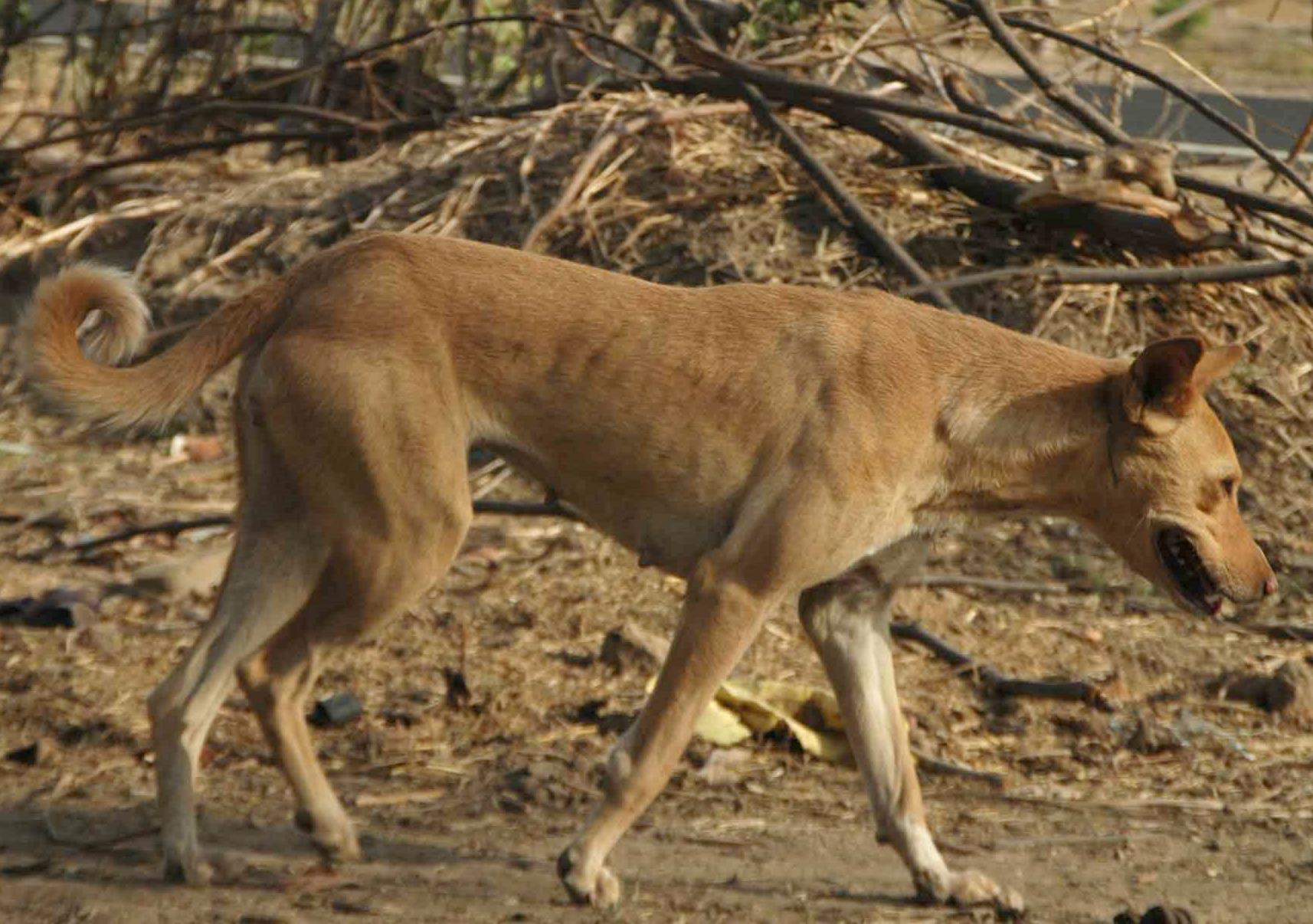
The Indian Pariah Dog, also known as the village dog, Pye Dog, Indian Native Dog, or more modernly INDog, is an ecologically adapted dog with stray/wild habits that occupies the ecological niche of a scavenger in human settlements. These dogs are typical of the Indian subcontinent, but can also be found in the Balkan Peninsula and in less developed countries.[1]

The term "Pariah" originates from the Tamil word meaning "outcast"[2], which the British used to refer to stray dogs typically living on the outskirts of villages in India.[3] The first recorded use of the term "yellow pariah dog" was by Rudyard Kipling in The Jungle Book.

Many kennel clubs now prefer the term primitive dog [it] to describe dogs of the pariah type, reflecting their close resemblance to early domesticated dogs.[4] The Primitive and Aboriginal Dogs Society reclassifies Pariah Dogs as INDogs and categorizes them as a subgroup of primitive and aboriginal dogs [it].[5]

Definition

[edit]

According to Matthew E. Gompper from the University of Missouri, USA, a possible definition of the Indian Pariah Dog or village dog is as follows: "A subset of free-roaming village dogs, typical of the Indian subcontinent, representing an ancient or primitive dog morphotype. Their morphological, geographical, and evolutionary origins for classification have not yet been well-defined and require further study."[6]

India hosts large populations of these village dogs, with significant numbers and a wide variety of indigenous breeds.[6] Archaeological research suggests that Indian Pariah Dogs date back at least 4,500 years.[7]

In India, Pariah Dogs are known by various names such as Nedi Kukur, Deshi Kukur, Deshiya Naayi, Deshi Kutra, Theruvu Naai, Deshi Kutta, Theru Naai, Deshi Kukura, Veedhi Kukka, and Deshi Kutro. In Bangladesh, they are referred to as Nedi Kukur and Deshi Kukur.[8] More recently, they are commonly called INDogs.[9]

The definition of "village" is quite vague, as a village can range from a few hundred homes to tens of thousands. Thus, categorizing village or Pariah Dogs is challenging. Generally, these dogs share the characteristic of not being confined but being closely associated with human dwellings. Another factor to consider is that dogs in larger villages depend entirely on humans for food (both waste and otherwise) and rarely leave the village.[10] In contrast, in smaller villages, these dogs have opportunities to interact with wildlife, potentially increasing such interactions.[10]

Two categories of dogs are excluded from this definition:

  • dingoes, which are independent of human subsidies or interactions, primarily found in Australia and limited by human persecution;
  • working dogs, which are specifically bred and trained to interact with wildlife, used in hunting wild animals or protecting domestic ungulates (sheep, cattle, etc.) from wildlife.

History

[edit]
Historical image of an Indian Pariah Dog (first on the left)

Archaeological remains from ancient China and the excavations at Pompeii have revealed fossilized remains strikingly similar to modern INDogs.[4] In India, pariah-type dogs lived in human settlements as early as 4,500 years ago, and possibly earlier, with no known evidence of interruptions in their reproductive continuity. Thus, modern INDogs are direct descendants of these ancient dogs.

Zoological findings from Mohenjo-daro include an intriguing dog skull closely resembling the skulls of modern Pariah Dogs or INDogs.[9] Furthermore, it seems highly likely that the dogs of Anau and Mohenjo-Daro, as well as the dingo of Australia and the Indian Pariah Dog, share a common ancestry.[11]

Modern era

[edit]

In postcolonial societies, there have been efforts to transform local Pariah Dogs into legitimized breeds worthy of national recognition and status. Examples include the Basenji from the Congo, the Xoloitzcuintle or Mexican Hairless Dog, the Peruvian Hairless Dog, the Thai Ridgeback from Thailand, the dingo from Australia, the Rajapalayam and Mudhol Hound from India, the Tugou from China, the Phu Quoc Ridgeback from Vietnam, and the Africanis from South Africa following the end of apartheid in 1994.[12]

Recent scientific research using microsatellite typing, phylogenetic analysis, and genetic clustering methods to differentiate dog breeds suggests that modern breeds with the closest genetic relationship to wolves and early Pariah Dogs include breeds from Africa, the Middle East, the Arctic, and Asia, such as indigenous Japanese breeds.[12][13]

In industrialized countries, many dogs live as human companions, creating a clear distinction between "owned" dogs and strays, with the term "stray" often viewed as an anomaly. In contrast, in many regions of the world, particularly in Africa and poorer parts of Asia, the situation is more complex and mixed. Generally, four types of dog-human relationships are identified:

  1. Wild dogs, independent and unrestricted: dingo and New Guinea Singing Dog, typical of Southeast Asia and Australasia.
  2. Partially dependent and unrestricted: village or Pariah Dogs (Africanis and similar Asian breeds).
  3. Fully dependent and partially restricted: stray dogs.
  4. Fully dependent and fully restricted: family dogs and working dogs.

Characteristics

[edit]

Stray or Pariah Dogs, Canis lupus familiaris, are an integral part of the human environment in India and many other countries. They lead a scavenger's life, relying on human waste for survival and rarely hunting. These dogs are generally docile and friendly, with their rare interactions with humans typically submissive. They pose no threat to human well-being, and proper waste management and a tolerant or friendly attitude toward these dogs can ensure peaceful coexistence with human populations.[14]

Pariah Dogs may live in packs, pairs, or lead solitary lives. They reproduce once a year between August and January.[4] In cynology, Pariah Dogs form a distinct group and should not be mistakenly identified with "stray dogs," as is often done.[15]

Research indicates that Indian Pariah Dogs are the progenitors of other Indian breeds such as the Rajapalayam, Kombai, Kanni, and Chippiparai.[7] It has been found that Pariah Dogs from India, Southeast Asia, Pacific islands, and Australia share more similarities with each other than with modern domestic dogs. Pariah Dogs exhibit remarkable uniformity across continents, characterized as small to medium-sized, short-haired dogs with a rectangular, proportionate build, typically light brown or light brown and white.

This suggests that Pariah Dogs have undergone natural convergent evolution, resulting in hardy organisms with minimal nutritional and biological needs, optimally adapted to their ecological niche. This niche exists on the margins of human societies and settlements. Their ecological niche competes with other wild canids such as jackals, badgers, and cats, but does not interfere with larger carnivores like leopards and tigers.[16]

In large urban areas, Pariah Dogs are habitual scavengers at landfills, where they find abundant, albeit low-quality, food. This has led to their selection for smaller, less robust builds compared to wolves. Unlike wolves, they do not hunt in packs and do not have a single estrus cycle. Puppies are weaned after 8–10 weeks, and parental care is minimal, with high competition within packs. Interactions between Pariah Dogs and humans are frequent from puppyhood, and they are sometimes adopted for guarding homes.[17]

Due to hybridization with feral and stray dogs, pure Pariah Dog bloodlines are disappearing. As a result, international cynology has begun cataloging and classifying pure Pariah Dog lines.

Health Aspects

[edit]
World map of rabies in 2012

Neonatal mortality among village dog puppies is very high, reaching up to 73% in a study conducted on Bolivian dogs.[18] This mortality is due to zoonotic causes related to micro and macroparasites. In contrast, after one year of age, mortality in these dogs is more commonly caused by traumatic injuries related to human activities, both direct (killings) and indirect (accidents). Compared to fully wild dogs (such as dingoes), the presence and proximity of humans provide village dog populations with greater protection in terms of food and environmental safety, promoting their population growth.[7]

Their high numbers near human settlements and interactions with humans can lead to the transmission of diseases from humans to the wildlife these dogs interact with and vice versa (zoonoses). They serve as a significant reservoir for disease transmission, with rabies being the most feared.[19]

As a naturally evolved breed, Indian Pariah Dogs have very few health issues and thrive with minimal maintenance in suitable climates. Their skin requires little care, and the dogs themselves are relatively clean with naturally low body odor.[20] Genetic diseases such as hip dysplasia are extremely rare due to the absence of inbreeding, with dominant genes that aid their survival being naturally selected over time.[21] Most of their deaths result from accidents on roads or railway tracks, consumption of contaminated food or water, tumors, snake bites, or harm caused by humans.

Indian Pariah Dogs or INDogs have a high life expectancy and are not affected by genetic diseases due to strong evolutionary pressures, unlike modern dog breeds.[4]

Demographic aspects

[edit]

It is estimated that there are approximately 1 billion dogs worldwide, but only about 20% live in a dependent and restricted relationship with humans (Category 4). This suggests that around 800 million dogs globally are Pariah Dogs.[17]

Furthermore, hybrid or stray dogs worldwide appear to show convergent evolution, resembling Indian Pariah Dogs. These dogs live in similar environments or ecological niches as Pariah Dogs and, under the same environmental pressures, have evolved through natural selection to develop similar structures or adaptations, resulting in striking similarities. See the collection of images of stray and hybrid dogs from around the world.

List of aboriginal and primitive dogs

[edit]

The Primitive and Aboriginal Dogs Society (PADS) has officially changed the name from Pariah Dog to INDog. It provides a comprehensive list of primitive dog types, including Indian INDogs:[22]

See also

[edit]

Notes

[edit]

Bibliography

[edit]
Revisions and contributorsEdit on WikipediaRead on Wikipedia
from Grokipedia
The pye-dog, also known as the or INDog (Indian Native Dog), is a primitive of domestic ( familiaris) native to the , characterized by its medium size, erect ears, wedge-shaped head, curled tail, and short, dense coat typically in shades of red, black, or brown. This ancient , not a standardized breed, evolved through rather than , serving historically as a commensal , guardian, and hunting companion in human settlements across , , and . Archaeological evidence, including a dog skull from the Indus Valley Civilization site of Mohenjo-daro dated to around 2500 BCE, supports the presence of pye-dogs in the region for over 4,500 years, making them one of the oldest documented dog types in South Asia. Genetic analyses of village dogs, including those resembling the pye-dog, reveal a domestication origin linked to Central Asian wolf populations approximately 15,000–40,000 years ago, with subsequent adaptation in the Indian subcontinent and minimal admixture from modern breeds in isolated populations. The term "pye-dog" derives from the Hindi word pāhī, meaning "outsider," reflecting their historical status as semi-feral, ownerless dogs common in Asian villages. Physically robust and agile, pye-dogs typically stand 50–65 cm at the shoulder and weigh 15–25 kg, with a lean, muscular build suited to in harsh environments; their alert temperament, high , and make them effective watchdogs and adaptable pets, though they exhibit a in social groups and a polygynandrous in free-ranging populations. Despite their general hardiness, pye-dogs face challenges from diseases, , , and , prompting conservation efforts by organizations like the INDog Project to preserve their genetic purity. Not recognized by major international kennel clubs such as the , they remain a vital part of South Asian , potentially ancestral to breeds like the Australian through ancient migrations.

Etymology and Terminology

Origin of the Name

The term "pye-dog" derives from the word pāhī, meaning "outsider" or "stranger," which was adopted by British colonialists in 19th-century to refer to stray or dogs living on the fringes of settlements. This adaptation reflects the dogs' status as nomadic or unowned animals, often seen as intruders in villages and towns across . Alternative spellings such as "pie-dog" and "pi-dog" emerged alongside the original, with the earliest documented uses in English appearing in literature and records from the . These variants were commonly employed in Anglo-Indian contexts to describe the same type of half-wild canines, emphasizing their regional prevalence in and neighboring areas. The broader term "pariah dog" draws from the Tamil word paraiyar, denoting a social outcast or member of a low-status , which British observers extended to similar stray dogs, particularly in southern . While "pariah dog" became a more widespread English designation for such breeds, "pye-dog" remains a distinct regional variant tied specifically to northern Indian linguistic influences, highlighting subtle differences in colonial . The pye-dog primarily refers to the , also known as the INDog. The pye-dog, a of and semi-feral dogs primarily associated with the , is referred to by several synonymous terms that reflect its indigenous status and regional adaptations. Common synonyms include the "," "Desi Dog," "South Asian Pye-dog," and "INDog," with the latter serving as a standardized name promoted by conservation efforts to emphasize its native heritage. The INDog designation has gained formal recognition from the Primitive and Aboriginal Dog Society (), an dedicated to preserving ancient landraces, highlighting its distinct genetic and ecological profile separate from modern breeds. The broader term "pariah dog" encompasses similar primitive landraces beyond the subcontinent, applied to medium-sized, naturally selected dogs in parts of South and as well as the and , where they often inhabit human-adjacent environments as scavengers or guardians. These terms collectively denote dogs shaped by rather than , distinguishing them from mixed-breed mongrels. Contemporary discourse has evolved to mitigate the negative connotations of older labels like "stray" or "pariah," favoring " dog" to acknowledge their role in local ecosystems and human settlements. This shift promotes inclusive strategies such as sterilization and vaccination without , fostering positive involvement. The terminology's colonial roots, drawing from the Tamil word for "outcast" as adapted by British observers, underscore ongoing efforts to affirm the dogs' cultural and ecological value.

Physical Characteristics

Appearance and Size

The pye-dog, a medium-sized native to , typically exhibits a of 50–65 cm at the shoulder for adults, with males measuring 55–65 cm and females 50–60 cm. Adult weights vary from 15–30 kg, reflecting a lean physique that supports endurance in varied environments; males average 20–30 kg, while females are lighter at 15–25 kg. These dimensions underscore the breed's compact yet robust form, adapted for mobility without excess bulk. According to the INDog Project standard, at the is 20–25 inches (51–64 cm) for males and 18–23 inches (46–58 cm) for females, with a square to slightly rectangular build. Distinctive morphological features include a wedge-shaped head with a pointed muzzle, erect prick ears that remain alert, and a curved carried high or over the back. The overall build is athletic and streamlined, characterized by straight forelegs, a level topline, and well-angulated hindquarters that contribute to an efficient gait. is evident, with males displaying slightly greater size and mass compared to females, though both share the same proportional structure. The pye-dog's short , which lies close to the body, complements its agile frame without adding unnecessary weight.

Coat and Coloration

The pye-dog features a short, smooth double composed of a coarse outer layer and a softer undercoat, which provides effective insulation against heat and cold while requiring minimal upkeep. This structure renders the weather-resistant and low-shedding, enabling the dogs to maintain hygiene through natural behaviors like self-grooming and environmental exposure. Colorations among pye-dogs vary but commonly include shades of fawn or brown (sandy to reddish), often pied with black and white markings on the chest, paws, or face; solid black is rare, while and solid white are less typical. These pigmentation traits reflect their diverse genetic heritage from ancient South Asian populations, with fawn and brown tones most frequently observed in feral groups. Due to the absence of breed-specific grooming requirements, pye-dogs exhibit robust health in wild settings, where the short length deters parasites and facilitates easy dirt removal during foraging or rain. This adaptation supports their survival by minimizing energy expenditure on maintenance, allowing focus on essential activities like scavenging and vigilance.

History and Origins

Ancient Evidence

Archaeological excavations at in the Indus Valley Civilization, dating to circa 2500 BCE, have uncovered remains and artifacts that closely resemble the physical traits of modern pye-dogs. A notable find includes a identified as similar to contemporary Indian village dogs, characterized by a compact build, short muzzle, and other features aligning with pariah-type canids. Additionally, terracotta figurines and a baked from nearby Chanhu-daro bearing a 's paw print depict medium-sized dogs with curled tails and prick ears, suggesting early semi-domesticated or populations integrated into human settlements. These artifacts, analyzed by early 20th-century excavators, indicate that pye-dog-like canines were present as commensal animals during this urban phase. Rock art and burial sites across ancient provide further evidence of pye-dog-like dogs coexisting with humans around 4,500 years ago. In the of , Chalcolithic-era paintings (circa 2500–1500 BCE) illustrate hunting scenes featuring dogs with slender bodies, erect ears, and short coats pursuing prey alongside humans, mirroring the morphology and behavior of modern South Asian pariah dogs. Similarly, at sites like Kharwai and Ramchaja in , petroglyphs from the same period show dogs in domestic contexts, such as accompanying figures in settlements. Burial evidence from the site of Burzahom in , dated to approximately 3000–2000 BCE, includes pits where dog skeletons were interred adjacent to human remains, often with the dog's head oriented toward the human's feet, signifying close companionship and ritual significance. These findings highlight the enduring presence of such dogs in prehistoric Indian societies. Genetic analyses of ancient and modern South Asian canid remains affirm continuity between prehistoric dogs and contemporary pye-dogs. Studies of and genomic data from village dog populations in reveal minimal admixture from European breeds, preserving haplotypes traceable to Central Asian domestication events over 15,000 years ago. This genetic structure supports the view that Indian pariah dogs represent an ancient lineage with deep roots in prehistoric South Asian canids, evolving as free-breeding commensals without significant modern influences. Such evidence underscores the pye-dog's role as a basal domestic persisting from antiquity.

Evolutionary Ancestry

The pye-dog, also known as the , represents a of domestic dogs characterized by high resulting from minimal artificial selection by humans and adaptation through natural processes over millennia. Unlike selectively bred dogs, which often exhibit reduced due to closed breeding populations, pye-dogs maintain a broad spectrum of (mtDNA) and nuclear haplotypes, reflecting large effective sizes and ongoing in village and feral settings. This diversity is evident in studies of village dogs across , where pye-dogs show unique frequencies not commonly found in modern breeds, underscoring their status as an ecologically adapted rather than a standardized variety. Genetic analyses indicate that pye-dogs likely descend from ancient Eurasian gray domesticated in around 15,000 years ago, with phylogenetic clustering placing them within a broader gradient of early dog lineages originating near modern-day and . of genomic data reveals that Indian village dogs, including pye-dogs, form a distinct group with strong regional ancestry components shared with Central Asian and South Asian wolf-derived populations, showing limited from later European or East Asian admixtures. This positions pye-dogs as part of the foundational event, with their mtDNA profiles aligning closely to ancient wolf haplotypes rather than recent breed-specific markers. Mitochondrial DNA studies further highlight shared ancestry between pye-dogs and the Australian , both tracing back to early domesticated dogs from southern , with dingo sequences forming a star-like phylogeny around haplotypes prevalent in ancient Asian canid populations. While exhibit a narrower genetic base due to a bottleneck during their introduction to approximately 5,000 years ago, pye-dogs retain greater variability, suggesting they represent a more diverse reservoir of this ancestral stock. Comparisons to other pariah dog populations in and the reveal similar basal phylogenetic positions, with these groups clustering together in genomic analyses as minimally admixed lineages exhibiting high diversity and regional adaptations, indicative of parallel evolutionary trajectories from the same Central Asian hub.

Distribution and Habitat

Geographic Range

The pye-dog, also known as the or INDog, is primarily distributed across the , encompassing India, Pakistan, , and , where it occupies plains and lower-altitude hill ranges. This has maintained a continuous presence in these regions for over 4,500 years, with archaeological evidence from sites like confirming its ancient roots. Similar pariah-type dogs, exhibiting feral or semi-feral traits adapted to local environments, are found in , including the and , as well as the Balkan Peninsula and parts of . Pye-dogs thrive in human-adjacent habitats, predominantly in rural villages and urban settings across their core range, where they scavenge and serve as community guardians. In remote rural areas, such as tribal villages in or the , purer populations persist with minimal admixture, while urban centers like show hybridization with non-native breeds. Historically, the pye-dog's spread followed ancient trade routes from the eastward through and , and westward via colonial periods, facilitating their dispersal to the and beyond. This pattern underscores their role as resilient companions in and commerce.

Population and Density

Pye-dogs, also known as Indian pariah dogs or free-roaming domestic dogs in , form a significant portion of the global free-roaming dog , estimated at over 500 million worldwide as of 2023 according to the (WOAH). India hosts the largest regional concentration, with an estimated 62 million stray dogs, primarily pye-dogs, as of 2025. Population densities of pye-dogs are notably higher in urban centers compared to rural areas, driven by abundant food sources from and scavenging opportunities. In , densities reach around 550 dogs per square kilometer in the national capital region, supporting an overall stray population of approximately 825,000 as of 2024. Similarly, Mumbai's urban stray dog count stands at approximately 91,000 as of the 2024 survey, with reduced densities in areas following sterilization efforts. Human interventions, particularly Animal Birth Control (ABC) sterilization programs mandated under Indian law, have led to fluctuations in pye-dog populations by curbing reproduction rates. A survey indicated a 10% decline in street dog numbers between 2019 and 2023 due to widespread sterilization efforts. These programs stabilize or reduce densities in targeted urban zones, though incomplete coverage can result in temporary repopulation from unsterilized influxes.

Behavior and Ecology

Social and Territorial Behavior

Pye-dogs, also known as free-ranging or prevalent in , typically form loose, facultatively social packs consisting of 3 to 10 individuals, though group sizes can vary from 2 to 15 depending on resource availability and seasons. These packs exhibit fluid hierarchies led by dominant individuals, often a or temporary leaders, where social roles shift dynamically without the rigid structure seen in packs; all adults may participate in breeding, promoting group cohesion through promiscuous systems. Such arrangements facilitate cooperative behaviors like shared vigilance, but packs remain opportunistic, with members frequently joining or leaving based on opportunities near settlements. Territorial behavior in Pye-dogs centers on defending scavenging areas, particularly sites rich in such as garbage dumps or urban fringes, where they mark boundaries primarily through , with males showing higher incidence near edges to signal ownership. These territories are maintained collectively, with packs engaging in hierarchical defense against intruders, including other dogs, to secure access to reliable food sources; however, boundaries are not rigidly enforced, allowing occasional overlap or movement between adjacent groups. This adaptive territoriality supports population stability by deterring new entrants while minimizing energy expenditure on constant conflict. Interactions between Pye-dogs and humans are generally characterized by wariness and tolerance, as these dogs have evolved in close proximity to people without forming dependent bonds; they avoid direct confrontation unless provoked, such as when protecting pups or resources. Research indicates that over 80% of human-street dog encounters in are peaceful, with aggression occurring in only about 2% of cases, often initiated by human actions rather than canine hostility. This cautious coexistence reflects their commensal lifestyle, where dogs benefit from human-generated refuse while remaining aloof to reduce risks.

Diet and Foraging Habits

Pye-dogs, also known as Indian pariah dogs, are primarily opportunistic that rely on human-derived sources for sustenance. Their diet consists mainly of garbage, food scraps from households, crop residues, and livestock carcasses, which together comprise approximately 83% of their intake in studied populations in . The remaining portion includes occasional wild prey such as small mammals like , birds, and , allowing them to supplement scavenging with limited when opportunities arise. This omnivorous feeding strategy enables pye-dogs to exhibit high adaptability to fluctuating food availability, including seasonal variations in and natural resources across urban and rural habitats. They efficiently process a wide range of low-quality, carbohydrate-rich items typical of scavenging, which supports their survival with relatively modest nutritional demands compared to more specialized carnivores. Free-ranging dogs in demonstrate problem-solving behaviors during foraging, such as prioritizing meat-scented items in garbage using a simple olfactory rule, which optimizes energy gain from variable sources. Foraging habits are typically crepuscular or nocturnal, timed to avoid peak human activity and daytime heat, reducing risks while exploiting accessible sites like dumps and streets. Pye-dogs use their acute to detect food over distances and navigate complex urban environments, including crossing roads amid traffic to reach resources. In some cases, they briefly form small groups to access or defend high-value scavenging sites, enhancing efficiency without full pack hunting.

Reproduction and Health

Breeding and Lifecycle

Pye-dogs, also known as Indian pariah dogs, are monestrous, breeding once annually during the post-monsoon season from August to January in , aligning with improved food availability and milder weather conditions. This seasonal pattern ensures that , which occurs through a polygynandrous system where both males and females partner with multiple individuals, coincides with optimal pup-rearing periods. involves vocalizations, scent marking, and physical displays such as tail erection and chasing, often within loose social groups that facilitate mate guarding by dominant males. Gestation lasts 60–63 days, after which females typically deliver litters of 4–6 pups, though averages of 5–6 have been documented in urban populations. Births occur in concealed dens or sheltered urban spots, where mothers provide intensive maternal care, including nursing, grooming, and protection from threats. In stable environments with access to resources, pup survival rates can be relatively high during the early weeks; however, overall early life mortality reaches up to 81%, driven largely by human-related factors such as accidents and , with only 19–25% of pups surviving to reproductive age around 6–12 months. Pups develop rapidly, opening their eyes at 10–14 days and beginning to wean around 4–6 weeks, transitioning to solid foods while remaining dependent on the mother for and learning behaviors. is achieved at 6–12 months, marking the onset of independent breeding capability, though full physical maturity follows shortly thereafter. In free-roaming conditions, pye-dogs exhibit an average lifespan of 3–5 years due to high juvenile turnover and ongoing hazards, though adopted individuals can live 10–15 years.

Health Vulnerabilities and Adaptations

Pye-dogs, also known as Indian pariah dogs or , exhibit a low incidence of hereditary diseases owing to their high , which arises from and interbreeding without artificial constraints typical of purebred populations. This diverse genetic pool reduces the prevalence of congenital conditions such as or certain cancers that plague inbred breeds. However, these dogs face significant health vulnerabilities from environmental exposures, including a high risk of infectious diseases like , parasitic infestations (e.g., ticks, fleas, and intestinal worms), and due to inconsistent food sources in urban and rural settings. In , particularly and surrounding regions, pye-dogs serve as primary reservoirs for , a zoonotic transmitted through bites, contributing to a substantial portion of cases in the region. efforts, including mass campaigns and animal programs, have notably reduced rabies incidence among these populations; for instance, coordinated initiatives in have vaccinated hundreds of thousands of dogs annually, leading to localized declines in transmission rates. As of 2025, ongoing drives in cities like and have vaccinated over 113,000 stray dogs since 2024, with pledges for 500,000 additional doses targeting free-roaming dogs nationwide. Despite these challenges, pye-dogs demonstrate remarkable adaptations for survival, including robust immune systems honed by that enhance resistance to common pathogens and environmental stressors. Their tolerance to harsh conditions—such as extreme heat, limited , and variable diets—allows them to thrive with minimal human intervention, often resulting in average life expectancies of 3–5 years in free-roaming states, comparable to other street dog populations. This resilience underscores their evolutionary fitness as facultative scavengers in human-altered landscapes.

Cultural and Conservation Status

Role in Human Societies

In rural , pye-dogs, also known as Indian pariah dogs, have long served as informal guardians of villages and companions to communities, alerting residents to intruders and providing a sense of security through their vigilant barking and territorial behavior. Despite their utility, these dogs often face stigma as unclean strays, a perception rooted in colonial-era associations with the term "pariah," which demeaned them as marginal scavengers akin to outcastes. This bias persists, leading to mistreatment, even as cultural reverence in Hindu traditions portrays them as sacred vehicles of , a fierce form of , symbolizing protection and loyalty in . In modern contexts, pye-dogs are increasingly adopted as low-maintenance pets valued for their , resilience, and unwavering , adapting well to urban homes without demanding excessive care. Their portrayal in Indian cinema and further elevates their status, with examples like the loyal street dog in films such as Petta (featuring a real pye-dog alongside ) highlighting themes of companionship and redemption. This shift counters historical neglect, promoting adoption over pedigree breeds and recognizing their genetic purity as one of the world's oldest landraces. However, interactions with pye-dogs are not without conflicts, as they are implicated in a significant portion of dog bites—with estimates of 17-20 million annually in India (though official reports are ~3-4 million due to underreporting)—and serve as primary vectors for rabies transmission, with deaths estimated at 5,000-10,000 yearly based on recent studies, down from prior estimates of ~20,000 (as of 2025). These issues stem partly from resource competition in urban areas, exacerbating public health concerns. Balancing this, pye-dogs offer ecological benefits by scavenging organic waste and controlling rodent populations, thereby aiding informal waste management in resource-limited settings.

Conservation Efforts and Challenges

In , the primary conservation strategy for managing Pye-dog populations, also known as Indian native dogs or INDogs, involves the Animal Birth Control (ABC) programs, which emphasize humane sterilization and to curb and transmission. These initiatives, mandated under the Animal Birth Control (Dog) Rules, 2023, require local authorities to implement sterilization for stray dogs, followed by anti-rabies and relocation to their original habitats, aiming to stabilize populations without . The Animal Welfare Board of supports these efforts through grants for infrastructure and operations, with programs like those run by NGOs such as targeting high-density urban areas to achieve near-complete coverage of breeding females. For instance, in cities like , ABC drives since the 1990s have sterilized ~65% of female street dogs by 2002, leading to a 28% and 48% reduction in bite incidents from 2003-2011, with local cases dropping to zero. Parallel efforts focus on formal recognition and to preserve the breed's genetic integrity and cultural value. The INDog Project, initiated in 2002, collaborates with genetic researchers to document INDog traits and advocate for their conservation as a , emphasizing their adaptability and low-maintenance needs. The Kennel Club of has supported these initiatives by publishing the first article on INDogs in its July 2015 Kennel Gazette and expressing interest in standardizing and registering the breed, which promotes ethical breeding and over indiscriminate . Adoption campaigns, led by groups like the INDog Club, highlight success stories of over 400 INDog and mixed-breed adoptions since 2007, providing temperament guides to encourage responsible ownership in urban households. Despite these measures, Pye-dogs face significant challenges from , estimated at 50-62 million individuals nationwide as of 2025 (various sources), exacerbated by inadequate and inconsistent program implementation across states. Debates over persist, with 2025 directives—including an initial August impoundment order in NCR (later clarified on August 22 to emphasize ABC and release after sterilization) and November 7 orders for removal from highways and public places—raising concerns amid rising human-dog incidents like attacks in urban areas. As of November 2025, the government aims for zero deaths by 2030, following a 75% reduction from prior levels. Urban expansion further threatens habitats by fragmenting green spaces and increasing human-wildlife-dog interactions, where Pye-dogs compete with for resources and transmit diseases, complicating conservation.

References

Add your contribution
Related Hubs
User Avatar
No comments yet.