Hubbry Logo
PartheniumPartheniumMain
Open search
Parthenium
Community hub
Parthenium
logo
8 pages, 0 posts
0 subscribers
Be the first to start a discussion here.
Parthenium
Parthenium
from Wikipedia

Parthenium
Parthenium hysterophorus
Scientific classification Edit this classification
Kingdom: Plantae
Clade: Tracheophytes
Clade: Angiosperms
Clade: Eudicots
Clade: Asterids
Order: Asterales
Family: Asteraceae
Subfamily: Asteroideae
Tribe: Heliantheae
Subtribe: Ambrosiinae
Genus: Parthenium
L.
Type species
Parthenium hysterophorus[1][2]
Synonyms[3]
  • Argyrochaeta Cav.
  • Bolophyta Nutt.
  • Echetrosis Phil.
  • Hysterophorus Vaill.
  • Partheniastrum Fabr.
  • Villanova Ortega

Parthenium is a genus of North American annuals, biennials, perennials, subshrubs, and shrubs in the tribe Heliantheae within the family Asteraceae and subfamily Asteroideae.[4][2][3][5]

The name Parthenium is an evolution of the Ancient Greek name παρθένιον (parthenion), which referred to Tanacetum parthenium.[6][7][8] The name is possibly derived from the Greek word παρθένος (parthenos) which means "virgin".[5]

Members of the genus are commonly known as feverfew.[9] Notable species include guayule (P. argentatum) which has been used as a rubber substitute, especially during the Second World War;[10] and also P. hysterophorus, a serious invasive species in the Old World.[11]

Species

[edit]

These include:[3]

Importance

[edit]

In North America, the Jicarilla Apache people used Parthenium incanum for medicine (Opler 1946: 8). The sap of guayule (P. argentatum) is a source of natural rubber.[12] Parthenium hysterophorus is a common invasive species in India, Australia, and parts of Africa. Its pollen can cause allergies and the sap is toxic.

[edit]

References

[edit]

Further information

[edit]
Revisions and contributorsEdit on WikipediaRead on Wikipedia
from Grokipedia
Parthenium is a of approximately 16 species of flowering plants in the family , tribe , subtribe Ambrosiinae, consisting of annuals, biennials, perennials, subshrubs, and shrubs that range in height from 1 to 120 (rarely 400) cm. Native primarily to the in warm-temperate, tropical, and some temperate regions, the genus has been introduced to parts of the , where certain species have become invasive. The name Parthenium derives from word parthenos, meaning "virgin," though the exact allusion remains unclear. Morphologically, Parthenium species feature erect, often branched stems; alternate, cauline or basal leaves that are petiolate or sessile, with blades varying from elliptic to pinnately divided and typically glandular or hairy; and radiate or disciform flower heads arranged in corymbiform or paniculiform arrays. The involucres are 3–8 (up to 12+) in , with 5 (rarely 8) pistillate ray florets and 12–60+ staminate disc florets; the cypselae (fruits) are black and lack a pappus or have slight enations. These plants are often aromatic and bitter, contributing to their ecological roles in native habitats such as prairies, deserts, and disturbed areas. Among the most notable species is (parthenium weed or Santa Maria feverfew), an erect, branched annual herb native to the (particularly around the and the ) but widely invasive in , , , and beyond, where it causes severe human health issues like and respiratory allergies, reduces , and impacts crop yields. Another economically significant species is (guayule), a drought-tolerant perennial subshrub endemic to the of and the , valued as a source of extracted from its stems and resin; as of 2025, commercialization efforts are expanding with projected market growth. Other species, such as P. integrifolium (wild quinine), are native perennials used in and habitat restoration in North American prairies.

Taxonomy

Etymology and history

The genus name Parthenium derives from the Greek parthenos, meaning "virgin," or from parthenion, an ancient name applied to the plant now known as feverfew (Tanacetum parthenium), possibly alluding to the unfertilized or "virgin" state of its seed production in some species. Carl Linnaeus first formally described the genus Parthenium in his seminal work Species Plantarum in 1753, establishing the binomial nomenclature system and including five species based on specimens collected primarily from the and . The type species is Parthenium hysterophorus L., originally noted as occurring in Jamaican gravelly habitats, reflecting early European botanical explorations of the during the 18th century. A key taxonomic revision came with Reed C. Rollins's comprehensive on the in , which recognized 17 species across North and and provided detailed morphological and distributional analyses, building on earlier genetic studies of species like guayule (P. argentatum). More recently, molecular phylogenetic analyses using nuclear and chloroplast DNA sequences have confirmed the of Parthenium within the subtribe Ambrosiinae of the alliance in the family, highlighting its distinct evolutionary position among wind-pollinated relatives. Documented historical spread of Parthenium species began with 18th-century collections from their native ranges, such as and , which facilitated initial scientific recognition and later inadvertent introductions to regions like via colonial trade routes.

Classification and phylogeny

Parthenium is classified within the family , subfamily Asteroideae, tribe , and subtribe Ambrosiinae. This placement reflects its membership in the diverse Heliantheae alliance, characterized by wind-pollinated genera with reduced floral structures adapted to anemophily. Phylogenetic analyses based on nuclear ribosomal ITS and ETS sequences position Parthenium as an early-diverging lineage within Ambrosiinae, often basal alongside Parthenice, with closer relationships to the derived comprising and . The genus encompasses approximately 19 accepted , all native to the , primarily in subtropical and tropical regions of the , though some have been introduced elsewhere. Key synapomorphies distinguishing Parthenium from related genera in Ambrosiinae include flower heads that are radiate or disciform, typically with 0–5 pistillate ray florets and 10–100+ staminate disc florets, all tubular, and the consistent absence of a pappus on the cypselae. These traits underscore its evolutionary specialization for wind dispersal and pollination, setting it apart from genera like , which may exhibit rudimentary pappi or more varied head types in some lineages.

Description

Morphology

Parthenium species exhibit a diverse range of growth habits, including annuals, biennials, perennials, subshrubs, and shrubs, with heights varying from 1 to 120 (occasionally up to 400) cm. The stems are typically erect and branched, often featuring pubescence that ranges from glabrous to sparsely or densely strigose, scabrous, or tomentose, contributing to their structural resilience in various environments. The leaves of Parthenium are primarily cauline, sometimes forming basal rosettes, and arranged alternately along the stems; they are petiolate or sessile, with blades that are elliptic, lanceolate, linear, lyrate, oblanceolate, obovate, ovate, rounded-deltate, or spatulate in shape, measuring 1–15 in length. Leaf margins are entire or toothed, and the blades may be simple or (1–)2–3-pinnately lobed or pinnatifid; the surfaces are hairy (glabrous to sparsely or densely strigose, scabrous, or tomentose) and gland-dotted, at least abaxially. Inflorescences in Parthenium consist of terminal, open corymbiform or paniculiform arrays of radiate or discoid heads, with involucres 3–8(–12+) mm in diameter. The involucres are hemispheric, with 10(–16) phyllaries in two series (outer 5(–8) herbaceous to scarious, inner 5–8 scarious to membranous); ray florets number 5(–8) and are pistillate and fertile, featuring ochroleucous corollas with oblong to reniform or orbiculate laminae. Disc florets number 12–60+ per head and are functionally staminate, with ochroleucous, funnelform, 5-lobed corollas. The fruits of Parthenium are achene-like cypselae, typically 1–2.5 mm long, obovate to wedge-shaped or pyriform, and often obcompressed with 2 on each face or smooth; they are black and shed with a phyllary, 2 disc florets, and paleae. The pappus is absent, though cypsela shoulders may bear 1–3 pappus-like, triangular to ovate or subulate enations, aiding in potential dispersal mechanisms.

Reproduction and life cycle

Parthenium species predominantly reproduce sexually through seed production, with occurring via in many cases, though some exhibit that promotes . In , ray florets are fertile and self-compatible, enabling vector-mediated , while disc florets are typically female-sterile; visitors such as bees and facilitate occasional cross-pollination, contributing to . , a sporophytic mechanism common in , has been documented in species like , where it prevents self-fertilization and encourages flow between individuals. Although wind dispersal of (anemophily) is possible due to the lightweight structure typical of the family, plays a more significant role in the genus. The life cycle of Parthenium varies by species and environmental conditions, with most being annuals or short-lived . Annual species like P. hysterophorus complete their cycle rapidly, germinating from seeds within a week of favorable moisture, reaching maturity and producing seeds in as little as 4-6 weeks under optimal or stressed conditions, though the full lifespan extends 2-8 months. Perennial species, such as certain southwestern U.S. natives, overwinter as basal rosettes, resuming growth in subsequent seasons to extend longevity up to 14-16 months. is triggered by light exposure or mechanical , allowing opportunistic establishment in disturbed habitats. Seed production is prolific, enabling rapid expansion; a single P. hysterophorus can yield 15,000-25,000 viable , with dense stands producing up to 300,000 per square meter annually. exhibit physiological influenced by maternal environment, with warm, wet conditions inducing higher rates (around 2,000 dormant per ) to stagger over time. Viability remains high, with fresh at ≥85% ; buried retain >70% viability for 2-4 years ( of approximately 6-7 years), while surface-exposed lose viability within 6 months to environmental degradation. Asexual reproduction is rare in the and limited to vegetative sprouting from stem bases or crowns in some species under stress, such as after herbivory or , allowing limited regrowth without seed involvement; however, no or widespread vegetative propagation has been observed.

Distribution and habitat

Native range

The Parthenium is native exclusively to the , encompassing regions of southern , , and northern . Its distribution is concentrated in subtropical and tropical areas surrounding the , including the southwestern United States (such as and ), the central and northern parts of , and portions of like and . Mexico represents the primary center of diversity for the genus, particularly in its northern and central highlands and desert regions, where environmental conditions favor speciation and endemism. The genus comprises approximately 18 species (ranging from 16 to 19 per taxonomic sources), with the majority endemic to Mexico, reflecting high regional biodiversity in arid and semi-arid ecosystems. Within their native range, Parthenium species typically occupy arid scrublands, open grasslands, and disturbed habitats such as roadsides and overgrazed areas, occurring at elevations from to about 2500 meters. These thrive in well-drained, often rocky or sandy soils with seasonal rainfall patterns. Historical botanical records, including early 18th-century collections from explorations in the that informed Linnaeus's description of P. hysterophorus, underscore the pre-Columbian establishment of the in these regions.

Introduced ranges

Parthenium hysterophorus, originating from its native range in the tropical Americas, has been introduced to numerous regions outside its origin through human-mediated pathways. The first major introduction occurred in during the early 1950s, likely as a contaminant in imported shipments from , with the weed first documented in in 1956. In , it was detected in in 1955, probably arriving via contaminated machinery and aircraft parts during . Introductions to began in the early 1970s in eastern regions like and through contaminated food aid , with further spread accelerating in the 1980s via vehicles and road construction equipment in southern . Today, P. hysterophorus is widespread in tropical and subtropical areas of , including and , where it infests agricultural lands and roadsides across multiple states. In Africa, it has established in countries such as , , , and , often dominating disturbed habitats. Its presence extends to , particularly —where it covers over 170,000 square kilometers in (as of the 1990s)—and Pacific islands like and . Additionally, intra-continental introductions have occurred in parts of beyond its core native zones. The primary vectors for these introductions are anthropogenic, including agricultural trade via contaminated and , on machinery and vehicles, and occasionally ship water. Secondary dispersal within introduced ranges occurs through wind-blown , attachment to animals, and water flow in rivers and floods. As of 2024, the weed's range continues to expand, with recent confirmations in , such as , and historical presence in ; in Mediterranean , it is established in , with predicted suitability in areas like and facilitated by warming climates.

Ecology

Habitat preferences

Many species of the genus Parthenium, such as P. hysterophorus, predominantly inhabit tropical and subtropical regions, thriving in climates with temperatures ranging from 15°C to 35°C for optimal growth, though they can germinate across a broader spectrum of 9°C to 36°C and tolerate extremes up to 45°C. These plants exhibit strong resistance, facilitated by deep systems that access subsurface water, allowing survival in areas with annual rainfall as low as 200 mm and tolerance up to 2000 mm. In semi-arid environments, such as those preferred by P. argentatum, they enter a semi-dormant state during prolonged dry periods, reducing metabolic activity to conserve resources. Parthenium species favor well-drained soils, including sandy loams, clay loams, and rocky substrates, with a tolerance spanning 5.5 to 8.5 and possible even at extremes from 2.5 to 10. They perform best in nutrient-poor, disturbed sites such as roadsides, fallow lands, and overgrazed areas, where competition is minimal, though some like P. hysterophorus can exploit - and phosphorus-rich alkaline clays. This adaptability to low-fertility conditions underscores their opportunistic colonization of degraded habitats across both native and introduced ranges. Full is essential for Parthenium growth, with species requiring open, unshaded exposures to maximize and reproductive output. Their allelopathic properties release chemicals that suppress neighboring vegetation, further favoring establishment in sparsely vegetated, disturbed open areas over dense, competitive ecosystems. Altitudinally, Parthenium species occupy elevations from to 3000 meters, with many invasives like P. hysterophorus showing optima in lowland tropical settings up to 2500 meters, while desert-adapted taxa such as P. argentatum extend into higher between 600 and 3500 meters in arid zones. Other species, like P. integrifolium, occur in temperate prairies up to similar elevations, interacting with native grasses and pollinators.

Biological interactions

Parthenium hysterophorus exhibits strong effects through the release of sesquiterpenes, particularly parthenin, which inhibit seed germination and seedling growth of both crop and . These compounds interfere with metabolic processes in target , leading to reduced root elongation and biomass accumulation. In invaded ecosystems, such allelopathy contributes to significant declines in plant diversity, with studies reporting reductions in native grass by over 90% in heavily infested areas. The plant is primarily pollinated by a combination of wind and insects, including bees (such as Apis mellifera), flies, ants, and butterflies, which visit its flowers for pollen since it produces no nectar. This mixed strategy supports high seed production, enhancing its invasive potential. Regarding herbivory, P. hysterophorus faces limited pressure from native herbivores due to its from lactones, which deter feeding and cause digestive issues in . However, introduced biocontrol agents like the leaf-feeding Zygogramma bicolorata have been effective in targeting the plant, with larvae defoliating leaves and reducing biomass by up to 50% in field trials. P. hysterophorus is susceptible to several fungal pathogens, notably the rust fungus Puccinia xanthii var. parthenii-hysterophorae, which forms pustules on leaves and stems, limiting photosynthesis and growth during warm seasons. It also shows vulnerability to root-knot nematodes (Meloidogyne spp.), which can cause galling and reduced vigor, though infection rates vary by soil conditions. The plant hosts few viruses naturally but can serve as an alternative host for crop viruses like tomato spotted wilt virus, potentially facilitating pathogen spread. P. hysterophorus forms mutualistic associations with arbuscular mycorrhizal fungi (AMF), such as species from Glomus and Rhizophagus genera, which enhance and uptake by extending the system's absorptive capacity. These symbioses improve plant tolerance to nutrient-poor soils, contributing to its competitiveness in various environments.

Human significance

Invasiveness and impacts

Parthenium hysterophorus, commonly known as parthenium weed, exhibits key invasiveness traits that facilitate its dominance in invaded ecosystems. It produces up to 25,000 seeds per mature plant, enabling prolific reproduction and long-distance dispersal via wind, water, and human activities. The species demonstrates rapid growth, completing its life cycle in as little as four weeks under optimal conditions, and shows broad environmental tolerance, thriving in diverse soils, climates, and disturbance regimes from arid to tropical regions. These attributes have led to its classification among the world's 100 worst invasive alien species by the IUCN. In agricultural systems, P. hysterophorus causes substantial yield reductions through direct for resources and allelopathic effects that inhibit crop growth. Infestations can decrease and yields by up to 40%, with similar impacts observed in other crops like and due to suppressed and nutrient uptake. Additionally, the plant's toxicity deters its use as fodder; consumption leads to , characterized by severe skin lesions in , sheep, and other grazing animals, resulting in avoidance and reduced availability. Human health is adversely affected by exposure to P. hysterophorus, primarily through its parthenin, which can trigger in exposed individuals. Airborne and plant parts also induce respiratory allergies, including symptoms resembling hay fever and , exacerbating burdens in heavily infested areas. Environmentally, P. hysterophorus invasion significantly diminishes native , with reductions of up to 90% in herbaceous in rangelands and grasslands, displacing local through and . Furthermore, the weed alters microbial communities, shifting bacterial and fungal compositions to favor its own growth while suppressing beneficial microbes associated with native plants, thereby perpetuating invasion and disrupting ecosystem functions.

Uses and management

Parthenium argentatum, commonly known as guayule, serves as a significant industrial source of , with mature plants typically yielding 5-10% by dry weight, extracted through processes involving shredding and solvent washing of the shrub's . This rubber is valued for its properties, lacking the proteins in that cause allergic reactions, and has been researched since the 1940s for applications in tires and medical gloves, particularly during when U.S. efforts aimed to reduce dependence on imported rubber. Commercial extraction began in around 1905 and expanded in the U.S. by 1942, producing over 12,000 tons before synthetic alternatives dominated post-war. Certain Parthenium species, notably P. hysterophorus, have traditional medicinal uses resembling those of feverfew () for effects, such as treating migraines, fevers, and skin ailments through leaf extracts or poultices in regions like and . However, these applications are approached with caution due to the plant's , including sesquiterpene lactones like parthenin that cause , , and systemic effects in and humans. Extracts of P. hysterophorus have also been tested for antimalarial activity, with parthenin derivatives showing moderate inhibition against , though clinical use remains limited by concerns. Management of invasive Parthenium species, particularly P. hysterophorus, relies on integrated approaches combining mechanical, chemical, and biological methods to curb spread in agricultural and natural areas. Mechanical weeding, such as hand-pulling or mowing before seed set, prevents reproduction in small infestations, while herbicides like glyphosate applied at 1-2 L/ha effectively control established stands when timed for active growth stages. Biological control, including releases of the Mexican beetle Zygogramma bicolorata since 1984, has significantly reduced populations in Australia by up to 90% in targeted areas through defoliation and reduced seed production. As of 2025, advances in Parthenium include ongoing USDA programs applying CRISPR-Cas9 genetic to enhance rubber genes in guayule. Additionally, AI-driven mobile apps and tools, such as classifiers achieving 99% accuracy in detecting P. hysterophorus growth stages, enable early invasive detection and targeted interventions via satellite or drone data. In invaded regions like and , updated policies emphasize and community awareness programs to mitigate spread.

Species

Diversity

The genus Parthenium includes 19 accepted species, reflecting its center of diversity in the arid and semi-arid regions of . These species are primarily herbaceous perennials, annuals, or shrubs adapted to subtropical and tropical environments, though a few extend into and . Morphological variation among Parthenium species is notable, spanning growth forms from small annual herbs, such as P. hysterophorus reaching 30–100 cm in height with finely dissected leaves, to woody shrubs like P. tomentosum that can attain up to 2 m tall with tomentose foliage and denser branching. This diversity supports adaptations to varied microhabitats, including rocky slopes and disturbed soils. Genetic studies indicate high intraspecific diversity in native Parthenium populations. In contrast, invasive populations outside the native range exhibit low due to founder effects and population bottlenecks during dispersal. While no species face imminent extinction, continued monitoring of endemic taxa is recommended to address anthropogenic threats in their native habitats.

Notable species

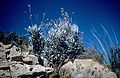
Parthenium hysterophorus, commonly known as parthenium weed, whitetop weed, or Santa Maria feverfew, is an annual native to the tropical regions of the , including parts of , , and northern . It has become a globally invasive pest, particularly notorious for its rapid spread via prolific seed production and wind dispersal, forming dense stands that outcompete native vegetation. The plant features distinctive white flower heads composed of five ray florets surrounding a disc of yellow florets, blooming year-round in warm climates. In , where it infests over 35 million hectares, it causes substantial economic damage through reductions of up to 40% in major cereals and a 90% decline in production, with annual management costs estimated at USD 3.66 billion. Parthenium argentatum, or guayule, is a perennial shrub endemic to the , spanning and the Big Bend region of southwestern . Valued for its content stored in the bark and leaves, it serves as a alternative to Hevea rubber, with extraction processes yielding high-quality latex for medical and industrial uses. The plant's silvery-gray leaves, covered in dense trichomes, provide adaptation to arid conditions, enabling survival in low-water environments with minimal . Commercial plantations have expanded in during the 2020s, driven by tire manufacturers like seeking domestic rubber sources amid global vulnerabilities. Parthenium integrifolium, known as wild quinine or American feverfew, is a native to the prairies and open woodlands of the southeastern and , from to Georgia and north to . It forms clumps up to 1 meter tall, with large basal leaves that are coarsely toothed and aromatic, transitioning to smaller stem leaves. The produces discoid flower heads—lacking ray florets—in dense, flat-topped clusters of white blooms from to fall, attracting pollinators in native habitats. Its tolerance to dry, rocky soils and potential for use in ornamental native plant gardens highlight its ecological and horticultural significance. Other notable species include Parthenium incanum, or mariola, a silvery-leaved shrub adapted to arid deserts of the and , where its tomentose foliage aids in . Additionally, Parthenium confertum (lyreleaf parthenium) is a rare endemic to arid regions of , extending marginally into the southwestern U.S., characterized by its lobed leaves and occurrence in sandy, scrub habitats.

References

Add your contribution
Related Hubs
User Avatar
No comments yet.