Hubbry Logo
PhosphenePhospheneMain
Open search
Phosphene
Community hub
Phosphene
logo
8 pages, 0 posts
0 subscribers
Be the first to start a discussion here.
Phosphene
Phosphene
from Wikipedia
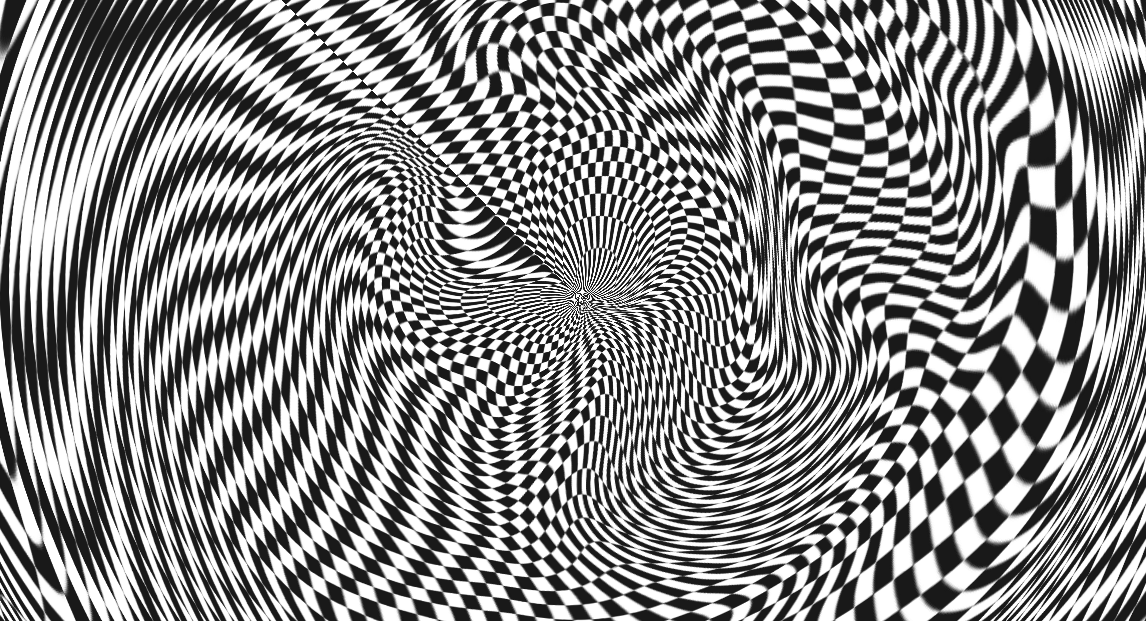
artistic representation of phosphenes
An artist's representation of how some people may see phosphenes by retinal stimulation

A phosphene is the phenomenon of seeing light without light entering the eye. The word phosphene comes from the Greek words phos (light) and phainein (to show). Phosphenes that are induced by movement or sound may be associated with optic neuritis.[1][2]

Phosphenes can be induced by mechanical, electrical, or magnetic stimulation of the retina or visual cortex, or by random firing of cells in the visual system. Phosphenes have also been reported by meditators[3] (called nimitta), people who endure long periods without visual stimulation (the prisoner's cinema), or those who ingest psychedelic drugs.[4]

Causes

[edit]

Mechanical stimulation

[edit]

The most common phosphenes are pressure phosphenes, caused by rubbing or applying pressure on or near the closed eyes. They have been known since antiquity, evidenced by its description in early Greeks texts.[5] The pressure mechanically stimulates the cells of the retina. Experiences include a darkening of the visual field that moves against the rubbing, a diffuse colored patch that also moves against the rubbing, well defined shapes such as bright circles that exist near or opposite to where pressure is being applied,[6] a scintillating and ever-changing and deforming light grid with occasional dark spots (like a crumpling fly-spotted flyscreen), and a sparse field of intense blue points of light. Pressure phosphenes can persist briefly after the rubbing stops and the eyes are opened, allowing the phosphenes to be seen on the visual scene. Hermann von Helmholtz and others have published drawings of their pressure phosphenes. One example of a pressure phosphene is demonstrated by gently pressing the side of one's eye and observing a colored ring of light on the opposite side, as detailed by Isaac Newton.[7][8][9]

Another common phosphene is "seeing stars" from a sneeze, laughter, a heavy and deep cough, blowing of the nose, a blow on the head or low blood pressure (such as on standing up too quickly or prior to fainting). It is possible these involve some mechanical stimulation of the retina, but they may also involve mechanical and metabolic (such as from low oxygenation or lack of glucose) stimulation of neurons of the visual cortex or of other parts of the visual system.[citation needed]

Less commonly, phosphenes can also be caused by some diseases of the retina and nerves, such as multiple sclerosis. The British National Formulary lists phosphenes as an occasional side effect of at least one anti-anginal medication.[10]

The name "phosphene" was coined by the French physician Henri Savigny [fr], better known as the ship's surgeon of the wrecked French frigate Méduse.[11] It was first employed by Serre d'Uzes to test retinal function prior to cataract surgery.[12]

Electrical stimulation

[edit]

Phosphenes have been created by electrical stimulation of the brain, reported by neurologist Otfrid Foerster as early as 1929. Brindley and Lewin (1968) inserted a matrix of stimulating electrodes directly into the visual cortex of a 52-year-old blind female, using small pulses of electricity to create phosphenes. These phosphenes were points, spots, and bars of colorless or colored light.[13] Brindley and Rushton (1974) used the phosphenes to create a visual prosthesis, in this case by using the phosphenes to depict Braille spots. Research has shown phosphines can be elicited by electrical stimulation in individuals suffering terminal blindness.[14]

In recent years, researchers have successfully developed experimental brain–computer interfaces or neuroprostheses that stimulate phosphenes to restore vision to people blinded through accidents. Notable successes include the human experiments by William H. Dobelle[15] and Mark Humayun and animal research by Dick Normann.

A noninvasive technique that uses electrodes on the scalp, transcranial magnetic stimulation, has also been shown to produce phosphenes.[16]

Experiments with humans have shown that when the visual cortex is stimulated above the calcarine fissure, phosphenes are produced in the lower part of the visual field, and vice versa.[17]

Others

[edit]

Phosphenes have been produced by intense, changing magnetic fields, such as with transcranial magnetic stimulation (TMS). These fields can be positioned on different parts of the head to stimulate cells in different parts of the visual system. They also can be induced by alternating currents that entrain neural oscillation as with transcranial alternating current stimulation.[18] In this case they appear in the peripheral visual field.[18] This claim has been disputed. The alternative hypothesis is that current spread from the occipital electrode evokes phosphenes in the retina.[19][20][21] Phosphenes created by magnetic fields are known as magnetophosphenes.

Astronauts exposed to radiation in space have reported seeing phosphenes.[22] Patients undergoing radiotherapy have reported seeing blue flashes of light during treatment; the underlying phenomenon has been shown to resemble Cherenkov radiation.[23]

Phosphenes can be caused by some medications, such as Ivabradine.[24]

Mechanism

[edit]

Most vision researchers believe that phosphenes result from the normal activity of the visual system after stimulation of one of its parts from some stimulus other than light. For example, Grüsser et al. showed that pressure on the eye results in activation of retinal ganglion cells in a similar way to activation by light.[25] An ancient, discredited theory is that light is generated in the eye.[5] A version of this theory has been revived, except, according to its author, that "phosphene lights are [supposed to be] due to the intrinsic perception of induced or spontaneous increased biophoton emission of cells in various parts of the visual system (from retina to cortex)"[26]

Anthropological research

[edit]

In 1988, David Lewis-Williams and T. A. Dowson published an article about phosphenes and other entoptic phenomena. They argued that non-figurative art of the Upper Paleolithic depicts visions of phosphenes and neurological "form constants", probably enhanced by hallucinogenic drugs.[27]

Research

[edit]
  • Research has looked into visual prosthesis for the blind, which involves use of arrays of electrodes implanted in the skull over the occipital lobe to produce phosphenes. There have been long term implants of this type. Risks, such as infections and seizures, have been an impediment to their development.[28]
  • A possible use of phosphenes as part of a brain-to-brain communication system has been reported. The system called BrainNet, produces phosphenes using transcranial magnetic stimulation (TMS). The goal of the research is to connect thoughts brain to brain using a system where signals are detected using electroencephalography (EEG) and delivered using transcranial magnetic stimulation (TMS). An experiment was conducted with five different groups, each containing three people. The subjects were split into two groups. Two subjects functioned as the senders, and were connected to EEG electrodes, and a third person functioned as the receiver, who wore the TMS helmet. Each person was stationed in front of a television screen with a Tetris-style game. The senders had to determine if there was a need to rotate the falling blocks, but without the ability to rotate them – only the receiver was able to perform this operation. At the edges of each screen, were two icons with two flashing lights in two different frequencies, (one at 15 Hz and the other at 17 Hz). The sender focused on one icon, or the other to signal that the block should be rotated to the right or the left. The EEG produced a unique signal, which was transmitted to the TMS helmet of the receiver, who perceived phosphenes which differed for the 15 Hz and 17 Hz signal, and rotated the block in the relevant direction. The experiment achieved 81% success.[29]

See also

[edit]
  • Closed-eye hallucination – Class of hallucination
  • Dark retreat – Tibetan Buddhism advanced practice
  • Isolation tank – Pitch-black, light-proof, soundproof environment heated to the same temperature as the skin
  • Prisoner's cinema – Visual phenomenon involving seeing animated lights in the darkness
  • Scintillating scotoma – Visual aura associated with migraine
  • Photopsia – Presence of perceived flashes of light in one's field of vision
  • Visual snow – Visual impairment
  • HPPD – Medical condition

References

[edit]
[edit]
Revisions and contributorsEdit on WikipediaRead on Wikipedia
from Grokipedia
A phosphene is the perception of light or luminous patterns in the visual field without any corresponding external light stimulus entering the eye. These sensations arise from the activation of the visual system through non-optical means, such as mechanical pressure on the eyeball, which deforms retinal structures and excites ganglion cells. Phosphenes can also be induced by electrical stimulation of the retina, optic nerve, or visual cortex, or by magnetic fields via transcranial magnetic stimulation (TMS) applied to the occipital lobe. Pathological phosphenes occur in conditions like migraines, where cortical spreading depression triggers visual auras, or in retinal detachment due to aberrant neural firing. Typically described as brief flashes, spots, or colored lights, phosphenes vary in shape, size, and complexity based on the parameters, such as current intensity or , with higher levels often leading to saturation in perceived size. In experimental settings, they manifest as localized visual percepts that mimic aspects of natural vision, providing insights into the neural mechanisms of visual and recurrent in the cortex. For instance, TMS-induced phosphenes reveal that conscious involves widespread activity beyond primary visual areas, starting around 160–200 milliseconds post-. Phosphenes hold significant value in for mapping function and studying perceptual thresholds, as their elicitation thresholds correlate with cortical excitability and levels like glutamate. In clinical applications, they underpin visual prostheses, where implanted electrodes stimulate the to generate arrays of phosphenes, enabling blind individuals to perceive basic shapes and motion as a form of restored vision. Ongoing research explores optimizing phosphene patterns to improve resolution and realism in these devices, addressing limitations like low acuity compared to natural sight.

Definition and Characteristics

Definition

A phosphene is the perceptual experience of light or patterns within the in the absence of external light stimuli entering the eye. These sensations arise from direct activation of the visual system's neural pathways, producing simple geometric forms such as dots, lines, grids, or spots without involving higher cognitive processing. Subjectively, phosphenes manifest with varying perceptual qualities, including shapes like small round spots that may cluster or elongate, colors typically in white, blue, or multicolored hues, and fluctuations in brightness and intensity. Individuals often describe them as "stars," "flashes," or bursts of , particularly when induced by pressure on the eyes. Unlike hallucinations, which involve complex, meaningful images generated by higher brain centers and often tied to psychological or pathological states, phosphenes are non-cognitive sensory distortions directly linked to mechanical or electrical stimulation of or cortical neurons. The term "phosphene" originates from the Greek words phōs (light) and phainein (to show or appear), introduced in French as phosphène in 1831.

Types and Phenomenology

Phosphenes manifest in diverse forms, categorized primarily by their induction and perceptual qualities, ranging from simple spots and flashes to complex geometric configurations. phosphenes, elicited by mechanical compression of the eyeball such as through rubbing the closed eyes, typically appear as vibrant, multicolored rings, spots, or whirling geometric domains that expand or rotate across the . These sensations often evoke a of dynamic movement, with colors shifting between reds, blues, and greens, providing a vivid, immediate visual experience distinct from external stimuli. Spontaneous phosphenes occur as brief bursts of in complete , commonly described as "seeing " following sudden head impacts, sneezes, or even without apparent trigger. These appear as scattered white or colored sparkles, flashes, or fleeting points of that mimic distant , lasting only fractions of a second to a few seconds and often perceived as self-generated illumination within the . In low-light conditions, they may integrate into a subtle, grainy , enhancing the of internal visual activity. Patterned phosphenes represent more structured experiences, frequently emerging as organized geometric forms such as lattices, spirals, tunnels, or cobweb-like networks during certain stimulations. These configurations, often termed form constants, exhibit and repetitive motifs that can fill portions of the , creating an of depth or motion, such as spiraling inward or expanding lattices. A subtype includes those associated with auras, characterized by scintillating scotomas—shimmering, patterns known as fortification spectra that begin centrally and migrate peripherally, bordered by a trailing blind spot. These lines, typically silver or golden, flicker with a uniform intensity across individuals, evoking a crenellated or teething appearance that evolves over 10 to 30 minutes. The phenomenology of phosphenes exhibits considerable subjective variability, influenced by individual factors and context. Durations range from milliseconds for brief flashes to several minutes for sustained patterns, with effects causing initial perceptions to fade or diminish upon repeated or prolonged exposure. Reports differ markedly between sighted and blind individuals; while sighted observers often describe localized spots or shapes tied to or cortical maps, congenitally blind people can perceive spatially organized phosphenes, such as distributed lights with positional , despite lacking visual . This spatial quality in the blind highlights phosphenes' capacity for structured visual-like experiences independent of prior sight.

Physiological Mechanisms

Neural Pathways

Phosphenes arise from the activation of neural elements in the without external stimulation, often beginning at the level of the . Mechanical pressure on the eyeball, for instance, deforms tissue and triggers mechanosensitive ion channels, leading to of photoreceptors or bipolar cells that subsequently activate retinal cells. These ganglion cells generate action potentials that propagate along their axons in the , mimicking the signals produced by actual photonic input despite the absence of . The afferent visual pathway relays these internally generated signals from the through the to the (LGN) of the , which serves as a key relay station. From the LGN, projections extend via the optic radiations to the primary (V1) in the , where patterned phosphenes are primarily perceived and organized retinotopically. Direct electrical of the LGN can evoke consistent phosphene-like responses in V1 neurons, confirming its role in transmitting these signals upstream to cortical areas responsible for . Unlike typical afferent pathways driven by sensory input, phosphene generation involves direct neural activation that bypasses photoreceptor by , effectively simulating upstream afferent signals through efferent-like interventions at various points along the pathway. In individuals who are blind due to or damage, the preserved remains capable of eliciting phosphenes through direct cortical stimulation, offering potential for in visual prostheses. Seminal experiments in the 1960s by Brindley and Lewin demonstrated this by implanting electrode arrays on the occipital cortex of a blind volunteer, mapping specific phosphene patterns to precise stimulation sites in V1 and revealing the somatotopic organization of the . These findings established the feasibility of cortical phosphene induction for restoring rudimentary vision in the congenitally or acquired blind.

Biochemical Processes

The induction of phosphenes relies on the of voltage-gated ion channels in neurons of the visual pathway, where mechanical, electrical, or other non-photic stimuli trigger sodium (Na⁺) and calcium (Ca²⁺) influx, depolarizing the in a manner analogous to light-induced photoreceptor . This influx generates excitatory postsynaptic potentials that propagate without external input, producing perceived flashes or patterns. Neurotransmitter dynamics further amplify these signals, with —the primary excitatory in the —playing a central role in synaptic transmission along retinofugal pathways. During phosphene induction, non-sensory stimuli enhance glutamate release from presynaptic terminals, activating postsynaptic N-methyl-D-aspartate (NMDA) and α-amino-3-hydroxy-5-methyl-4-isoxazolepropionic acid () receptors, which facilitate Ca²⁺ entry and sustain depolarization without genuine visual stimuli. This glutamate-mediated excitation correlates with lower phosphene perception thresholds in individuals with higher glutamate levels, underscoring its role in aberrant visual signaling. Inhibitory neurotransmitters like gamma-aminobutyric acid (GABA) modulate these thresholds by balancing excitation in the . Pharmacological agents such as lysergic acid diethylamide () can induce phosphene-like visual hallucinations by agonizing serotonin 5-HT₂A receptors, which alter excitatory signaling and cortical excitability in visual processing areas.

Causes and Induction

Mechanical Stimulation

Mechanical phosphenes can be induced by applying physical pressure directly to the eye, such as through rubbing or pressing on the closed . This action compresses the and deforms the , mechanically stimulating retinal cells and triggering visual sensations without external light. The resulting phosphenes often appear as immediate bursts of spots, rings, or colorful patterns, which may persist briefly after the pressure is released due to lingering neural activity. Head trauma represents another common source of mechanical phosphenes, where rapid acceleration-deceleration forces during impacts like concussions transmit mechanical to the or structures. This can cause the vitreous humor to shift suddenly, exerting traction on the , or directly compress the within the , leading to the phenomenon of "seeing stars" as transient flashes or sparkles. Such phosphenes arise from the mechanical deformation rather than light exposure and often accompany mild traumatic injuries. Historical observations of mechanical phosphenes date back to the , notably in Newton's experiments described in his 1704 work . Newton pressed a bodkin (a blunt needle) against the back of his eye to apply targeted pressure, observing circles of colors resembling those in a peacock's feather, which he used to explore the subjective nature of color perception independent of external light. These self-experiments demonstrated that mechanical deformation could elicit structured visual patterns, influencing early understandings of retinal responsiveness. The physiological threshold for inducing mechanical phosphenes varies by individual and conditions like ambient , but generally requires sufficient to deform the and activate retinal cells, often achievable with moderate fingertip pressure on the closed eye. Excessive or repeated pressure, however, poses significant safety risks. Repeated forceful pressing on closed eyes can cause transient spikes in intraocular pressure, potentially reducing blood flow to the retina and inducing temporary ischemia, which may result in brief blacking out or darkening of vision. Long-term risks from habitual forceful pressing or rubbing include optic nerve damage similar to glaucomatous mechanisms, corneal thinning or keratoconus leading to distorted vision, and retinal tears or detachment from vitreoretinal traction. Such practices can also cause corneal abrasion or subconjunctival hemorrhage. Ophthalmologists and authoritative sources strongly recommend avoiding repeated or forceful pressure on the eyes to prevent potential permanent vision issues, particularly in those with pre-existing eye conditions.

Electrical Stimulation

Electrical stimulation of the or related neural pathways can induce phosphenes through the application of controlled electric currents, primarily via non-invasive or invasive techniques. (TMS) represents a prominent non-invasive method, where rapidly changing magnetic fields generated by a coil placed over the occipital cortex induce electrical currents in underlying neural tissue, leading to the of phosphenes. These phosphenes are typically small, brief flashes of light and exhibit a mapped corresponding to the stimulated cortical regions, with their perceived being oculocentric—dependent on eye position at the time of stimulation. In contrast, direct stimulation involves invasive approaches, such as during neurosurgical procedures or with implanted devices, where s deliver precise electrical pulses to elicit phosphenes with high . Threshold currents for phosphene perception in such setups typically range from 0.5 to 3 mA, varying by type and location, with penetrating microelectrodes requiring lower intensities on the order of microamps compared to surface arrays. This method allows for the generation of distinct phosphene patterns, enabling researchers to map representations and study cortical excitability. A foundational historical milestone in this domain was the 1968 experiments by Giles Brindley and William Lewin, who implanted an array of 80 electrodes in the medial occipital cortex of a volunteer blind from , successfully eliciting phosphenes that demonstrated the feasibility of electrical stimulation for visual prostheses. Participants reported perceptions of spots or bars of light corresponding to stimulated sites, with the setup using radiofrequency transmission to activate electrodes inductively, proving the concept of cortical visual restoration. Stimulation parameters significantly influence phosphene characteristics; for instance, frequencies between 1 and 50 Hz and pulse durations of 10 to 500 ms can modulate perceived , , and , with higher frequencies often enhancing temporal summation and more intricate patterns emerging from longer durations. These controlled inductions form the basis for developing bionic eyes, where arrays of electrodes aim to translate visual information into phosphene-based representations for the blind, though full clinical details are explored elsewhere.

Pharmacological and Other Inductions

Phosphenes can be induced through pharmacological means, particularly via serotonergic psychedelics such as and N,N-dimethyltryptamine (DMT), which act as agonists at 5-HT2A receptors in the , leading to entoptic visual phenomena including patterned phosphenes. These compounds disrupt normal , resulting in spontaneous perceptions of lights or geometric forms without external stimuli, often described as enhanced entoptic activity during acute intoxication. In migraine with aura, phosphenes manifest as part of the visual , triggered by (CSD), a wave of neuronal that propagates across the occipital cortex and is modulated by the release of vasoactive peptides like (CGRP). This process alters neuronal excitability and blood flow, producing scintillating scotomas or simple flashes of light that expand gradually in the . Toxicological exposures also elicit phosphene-like visual sparks. Digitalis toxicity, often from digoxin overdose, causes —perceived flashes of light—due to disruptions in and function, exacerbated by imbalances or . Similarly, methanol leads to severe visual disturbances, including phosphenes and central scotomas, stemming from the metabolism of into formic acid, which induces and . Beyond pharmacological agents, spontaneous phosphenes occur in hypnagogic states during onset, particularly in low-light environments, where the transition from to stage 1 non-REM generates unformed visual imagery such as fleeting lights or sparks due to spontaneous or cortical activity. Pressure changes associated with high G-forces in can induce transient phosphenes by altering or vitreoretinal traction, as reported in pilots undergoing rapid acceleration. Environmental factors, notably cosmic rays in space, trigger "light flashes" perceived as phosphenes by astronauts, a phenomenon first documented during Apollo missions in the 1960s and attributed to high-energy particles interacting directly with the or . These events, observed in dark-adapted conditions aboard , correlate with galactic flux and have been replicated in ground-based studies.

Historical and Cultural Context

Historical Discovery

The earliest recorded observations of phosphene-like phenomena date back to ancient times, with providing one of the first Western descriptions in his treatise On Dreams (circa 350 BCE). He noted that pressing a finger against the eyeball could produce illusory visual sensations, such as seeing double images of a single object, attributing this to the persistence of sensory movements in the sense organs during sleep or altered states. This mechanical stimulation of the eye was interpreted as evidence of how residual sensory impressions could mimic waking perceptions. Similarly, pre-20th-century non-Western accounts, such as those in ancient Indian yoga texts like the Rig Veda (circa 1500–1200 BCE), describe "inner lights" or luminous visions experienced during meditative practices, often induced by focused gaze or breath control, which align with modern understandings of phosphenes as internally generated visual phenomena. During the , expanded on these ideas through empirical observations recorded in his notebooks around 1500 CE. He described pressure-induced lights and afterimages, noting how sustained gazing at an object or applying pressure to the closed eye produced persistent colored spots or patterns, which he linked to the mechanics of vision and the eye's internal structures. These notations reflected da Vinci's broader interest in and , where he dissected eyes to explore how such entoptic effects arose from retinal and neural responses rather than external light. His work bridged artistic intuition with proto-scientific inquiry, influencing later studies on subjective visual experiences. In the , advancements in systematic observation came from Jan Evangelista Purkinje, who in 1823 published detailed studies on entoptic phenomena in his Beobachtungen über subjektive Erscheinungen (Observations on Subjective Phenomena). Purkinje cataloged pressure phosphenes as geometric patterns—such as rings, spirals, and grids—evoked by mechanical deformation of the eyeball, distinguishing them from afterimages and linking them to excitation independent of . His quantitative descriptions, including drawings of induced patterns, marked a shift toward experimental , emphasizing the eye's role in generating internal visuals. The 20th century saw the formalization of phosphene research, with Stephen Polyak introducing systematic terminology and anatomical correlations in his early work on retinal projections, later expanded in The Retina (1941), where he connected phosphenes to neural pathways in the . Building on this, Heinrich Klüver's studies in the on form constants in hallucinations further linked phosphene patterns to perceptual universals. By the 1950s, (EEG) studies began correlating phosphene induction with brain activity, as in W. Grey Walter's 1950 research on alpha rhythms and visual hallucinations, revealing how rhythmic electrical patterns in the could elicit or mimic phosphene-like sensations during or stimulation. These findings integrated phosphenes into neurophysiological frameworks, paving the way for modern investigations.

Anthropological and Cultural Interpretations

In shamanic traditions of indigenous Siberian and Amazonian peoples, phosphenes induced through mechanical pressure on the eyes or forehead have been employed to elicit visionary experiences, often interpreted as activation of a "third eye" for accessing spiritual realms. Siberian shamans, such as those among the Evenki and Yakut, historically used self-induced pressure phosphenes during trance rituals to perceive inner lights symbolizing connections to ancestral spirits or the cosmos, viewing these geometric patterns as portals to otherworldly guidance. Similarly, in Amazonian cultures like the Desana and Shipibo-Conibo, shamans apply pressure techniques alongside ethnobotanical aids to generate entoptic visions, interpreting swirling lights and lattices as communications from plant spirits or jaguar guardians, essential for healing and prophecy. These practices highlight phosphenes' role in bridging the physical and metaphysical, extending beyond Western-documented cases to underscore their universality in non-literate societies worldwide. Religious mysticism across traditions has similarly framed phosphenes as divine manifestations during contemplative states. In , particularly meditation, practitioners report encounters with the "clear light" (ösel), a luminous void arising from phosphene-like inner radiances that signify realization of the mind's empty, aware nature. These experiences, described in texts like the Treasury of the Dharmadhatu, progress from simple spots and rays to complex forms, symbolizing enlightenment's spontaneous arising. In , phosphenes appear in accounts of ecstatic visions accompanying , where saints like and perceived flashing lights or radiant wounds during union with Christ's passion, interpreting them as graces of amid . Such interpretations position phosphenes not as mere neural artifacts but as sacred signs of transcendence. Artistic expressions have drawn on phosphenes to evoke inner perceptual worlds, blending personal affliction with cultural symbolism. Vincent van Gogh's (1889) features swirling, luminous vortices around stars, which scholars attribute to migraine-induced phosphenes, transforming his episodic visual disturbances into a cosmic, turbulent vision of emotional turmoil and beauty. In the 1960s, amid ethnobotanical explorations of indigenous visionary states, modern entoptic art emerged, with artists like Carlos Castaneda-influenced creators and Op Art pioneers such as incorporating phosphene geometries—grids, spirals, and moiré patterns— to mimic shamanic trances and psychedelic insights, fostering a dialogue between ancient rituals and contemporary abstraction. Anthropological studies from the 1970s onward have illuminated phosphenes' cross-cultural persistence in ancient art, suggesting innate perceptual universals. Ronald K. Siegel's research demonstrated that geometric phosphene forms—dots, zigzags, lattices, and tunnels—appear universally in induced hallucinations, mirroring motifs in 30,000-year-old Upper Paleolithic cave art from sites like Lascaux and Altamira, where they likely represented shamanic visions rather than external depictions. These patterns, replicated across global indigenous rock art from Australian Aboriginal to African San traditions, indicate phosphenes as a foundational element of human symbolic expression, often overlooked in Western-centric analyses that undervalue non-European ethnographic contexts.

Research and Applications

Early Scientific Investigations

Early investigations into phosphenes during the 1930s and 1950s increasingly incorporated (EEG) to explore correlations between brain rhythms and visual perceptions, particularly in conditions of such as closed eyes. Researchers observed that the alpha rhythm (8-13 Hz), prominent over the occipital cortex during eyes-closed rest, coincided with reports of spontaneous phosphenes, suggesting a link between rhythmic neural activity and endogenous visual sensations without external light input. This association was first noted in foundational EEG work by E.D. Adrian and B.H.C. Matthews, who described the rhythm's modulation by visual attention and its enhancement in low-stimulation states, where subjects frequently described flickering lights or patterns akin to phosphenes. These studies established phosphenes as a model for probing intrinsic excitability, though quantitative correlations remained preliminary due to limited EEG resolution at the time. Pioneering electrical stimulation experiments in the mid-20th century further advanced phosphene research as a tool for mapping visual function. In , neurosurgeon Otfrid Foerster reported eliciting discrete phosphenes via direct electrical stimulation of the exposed during on sighted patients, demonstrating localized light perceptions corresponding to specific cortical sites. Building on this, G.S. Brindley's work in the marked a significant milestone with the first chronic implantation of an 80-electrode array on the of a blind volunteer, enabling wireless stimulation that produced stable, mappable phosphenes in the contralateral . Stimulation through individual electrodes generated small, punctate spots of light, while multi-electrode patterns formed simple geometric forms, confirming retinotopic organization and allowing precise mapping of cortical representation—key for understanding topography. Animal models complemented human studies, providing insights into phosphene analogs through controlled retinal stimulation. In the 1950s and early 1960s, experiments on cats demonstrated that electrical pulses applied directly to the retina evoked cortical responses mirroring natural visual activation, with localized stimulation producing focal neural firing patterns analogous to phosphene induction in humans. For instance, Glickstein and Heath's 1962 work showed that intraocular electrodes in cats elicited sharply defined cortical potentials, highlighting the retina's role in generating spatially specific percepts without light. These findings positioned phosphenes as "artificial scotomas," enabling researchers to simulate visual field defects and study perceptual filling-in or adaptation mechanisms in controlled settings. Despite these advances, early phosphene investigations faced notable limitations, primarily due to ethical constraints before the establishment of institutional review boards (IRB) in the , which allowed invasive procedures with minimal oversight. Most studies focused on sighted subjects undergoing for or tumors, limiting applicability to blind populations and raising concerns about and long-term risks. Animal models, while ethically less restricted, relied on indirect inference of phosphene-like percepts from neural recordings rather than behavioral reports, underscoring the need for cautious interpretation.

Contemporary Research

Contemporary research on phosphenes since the has leveraged advanced techniques to precisely map their neural substrates in the . (fMRI) and (MEG) studies have identified phosphene loci primarily in early visual areas V1 through V4, demonstrating a clear retinotopic where phosphene perceptions correspond to specific representations. These findings confirm that mechanical or electrical induction of phosphenes activates cortical regions in a spatially organized manner, mirroring natural visual processing. In the 2020s, (AI) has emerged as a tool for modeling phosphene patterns to enable neural decoding, particularly in the context of visual prostheses. For instance, 2023 studies introduced paradigms using MRI-derived phosphene maps to predict and optimize visual perceptions from cortical , incorporating AI-driven algorithms for . Complementary 2024 research developed biologically plausible phosphene simulators based on , allowing real-time modeling of phosphene stability and variability under different conditions. These AI approaches address challenges in decoding unstable phosphene responses, facilitating more reliable interpretation of neural signals. Research involving blind subjects has focused on using phosphenes for with prostheses, enhancing perceptual . Recent studies on multi-electrode systems have shown that targeted phosphene can improve mapping accuracy and for basic shapes in blind individuals after . These studies highlight phosphenes' role in bridging simulated and real visual input, supporting prosthetic device calibration. In space research, investigations aboard the (ISS) have linked cosmic ray-induced phosphenes to . The experiment, ongoing since the early 2000s, records reports of flashes—interpreted as phosphenes—from heavy interactions, correlating these events with particle measurements to estimate levels. This work provides a non-invasive method for monitoring galactic effects on the during long-duration missions. Emerging simulations explore quantum dot-based induction of phosphenes for potential therapeutic applications. Recent studies have modeled type-II /zinc oxide quantum dots in photoelectrode structures to achieve precise neural photostimulation, simulating phosphene-like responses through targeted activation of visual pathways. These computational approaches aim to refine induction parameters, offering insights into optogenetic enhancements beyond traditional electrical methods.

Clinical and Technological Applications

Phosphenes play a pivotal role in visual prostheses designed to restore partial vision in individuals with profound blindness, particularly those affected by . The Argus II retinal prosthesis system, developed by Second Sight Medical Products, utilizes an epiretinal electrode array to electrically stimulate surviving retinal neurons, eliciting patterns of phosphenes that enable users to perceive light spots and basic shapes. Approved by the U.S. (FDA) in 2013 as a humanitarian device for adults aged 25 and older with bare or no light perception due to , the Argus II allows patients to perform tasks such as navigating obstacles, identifying doorways, and distinguishing large objects through phosphene-based visual cues. Clinical trials demonstrated that implanted patients could achieve functional improvements in mobility and , with phosphene resolution limited by the 60-electrode array but sufficient for low-acuity vision restoration. In September 2024, Neuralink received FDA breakthrough device designation for its Blindsight implant, a cortical visual prosthesis aimed at restoring vision in blind individuals by directly stimulating the visual cortex to generate phosphene patterns. As of 2025, early updates indicate progress toward human trials, with the device designed to produce rudimentary visual perceptions via high-channel electrode arrays, potentially offering a bypass for optic nerve damage. This development represents a significant advancement in brain-computer interface applications for phosphene-based vision restoration. In clinical diagnostics, phosphene thresholds—measured via (TMS) of the —serve as reliable biomarkers for assessing cortical excitability in patients. Lower phosphene thresholds, indicating heightened sensitivity, are consistently observed in individuals with with compared to controls, reflecting interictal hyperexcitability that may predispose to attacks. Studies using repetitive TMS have shown that migraineurs exhibit reduced thresholds during headache-free periods, with variability increasing prior to attacks, enabling non-invasive monitoring of disease progression and treatment efficacy. This approach has been validated in pediatric and adult cohorts, where phosphene threshold measurements correlate with symptoms and overall vulnerability, supporting its use in personalized management. Technological applications extend to (VR) environments, where simulated phosphenes enhance immersive training for users of visual prostheses. By modeling phosphene patterns in VR setups, such as those replicating the discrete, low-resolution visuals of implants, trainees can practice navigation and in controlled scenarios, improving to prosthetic vision. These simulations incorporate biologically plausible phosphene rendering—accounting for spacing and neural recruitment—to mimic real-device outputs, with studies showing enhanced mobility performance and reduced training time for prosthesis recipients. For instance, gaze-contingent VR systems dynamically adjust phosphene displays based on head and eye movements, facilitating skill acquisition in complex environments like urban . Therapeutically, TMS-induced phosphenes offer a window into modulation for treating (MDD). Repetitive TMS (rTMS) targeting the has demonstrated antidepressant effects by normalizing hyperexcitability, with phosphene thresholds serving as a proxy for treatment response; reductions in threshold variability post- correlate with symptom remission in MDD patients. Clinical trials indicate that rTMS, often combined with prefrontal protocols, modulates neural circuits involved in mood regulation, providing a non-invasive alternative for patients resistant to . This approach leverages phosphene elicitation to titrate intensity, ensuring targeted cortical changes without systemic side effects. Looking to future directions, advancements in nanoscale electrodes promise high-resolution phosphene arrays for superior prosthetic vision. By , flexible high-density microelectrode arrays with nanoscale features—such as liquid-metal-based 3D structures or polymer coatings under 15 μm²—enable thousands of stimulation sites, potentially yielding phosphene densities of several hundred electrodes per mm² for improved and naturalistic percepts. These innovations address current limitations in and charge delivery, with preclinical models showing stable phosphene mapping over billions of pulses. However, ethical concerns arise in non-medical enhancement applications, including risks to from unintended cognitive alterations, inequities in access, and challenges in for irreversible implants. Frameworks emphasize equitable distribution and long-term monitoring to mitigate identity and societal impacts.

References

Add your contribution
Related Hubs
User Avatar
No comments yet.