Hubbry Logo
Real-time polymerase chain reactionReal-time polymerase chain reactionMain
Open search
Real-time polymerase chain reaction
Community hub
Real-time polymerase chain reaction
logo
8 pages, 0 posts
0 subscribers
Be the first to start a discussion here.
Real-time polymerase chain reaction
from Wikipedia
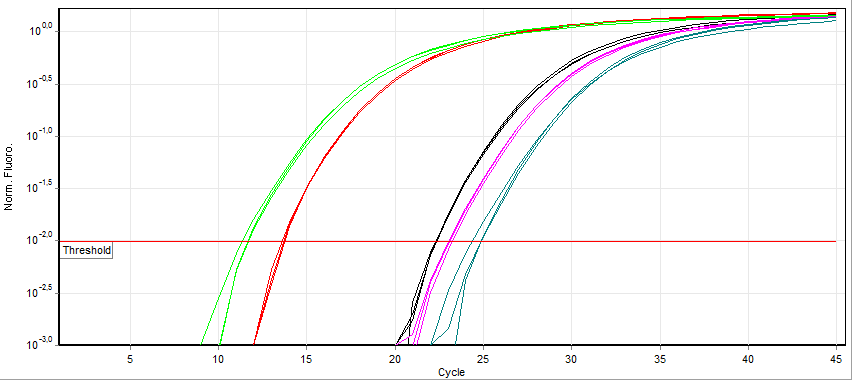
SYBR Green fluorescence chart produced in real-time PCR
Melting curve produced at the end of real-time PCR

A real-time polymerase chain reaction (real-time PCR, or qPCR when used quantitatively) is a laboratory technique of molecular biology based on the polymerase chain reaction (PCR). It monitors the amplification of a targeted DNA molecule during the PCR (i.e., in real time), not at its end, as in conventional PCR. Real-time PCR can be used quantitatively and semi-quantitatively (i.e., above/below a certain amount of DNA molecules).

Two common methods for the detection of PCR products in real-time PCR are (1) non-specific fluorescent dyes that intercalate with any double-stranded DNA and (2) sequence-specific DNA probes consisting of oligonucleotides that are labelled with a fluorescent reporter, which permits detection only after hybridization of the probe with its complementary sequence.

The Minimum Information for Publication of Quantitative Real-Time PCR Experiments (MIQE) guidelines, written by professors Stephen Bustin, Mikael Kubista, Michael Pfaffl and colleagues propose that the abbreviation qPCR be used for quantitative real-time PCR and that RT-qPCR be used for reverse transcription–qPCR.[1] The acronym "RT-PCR" commonly denotes reverse transcription polymerase chain reaction and not real-time PCR, but not all authors adhere to this convention.[2]

Background

[edit]
Real time PCR uses fluorophores in order to detect levels of gene expression.

Cells in all organisms regulate gene expression by turnover of gene transcripts (single stranded RNA): The amount of an expressed gene in a cell can be measured by the number of copies of an RNA transcript of that gene present in a sample. In order to robustly detect and quantify gene expression from small amounts of RNA, amplification of the gene transcript is necessary. The polymerase chain reaction (PCR) is a common method for amplifying DNA; for RNA-based PCR the RNA sample is first reverse-transcribed to complementary DNA (cDNA) with reverse transcriptase.

In order to amplify small amounts of DNA, the same methodology is used as in conventional PCR using a DNA template, at least one pair of specific primers, deoxyribonucleotide triphosphates, a suitable buffer solution and a thermo-stable DNA polymerase. A substance marked with a fluorophore is added to this mixture in a thermal cycler that contains sensors for measuring the fluorescence of the fluorophore after it has been excited at the required wavelength allowing the generation rate to be measured for one or more specific products. This allows the rate of generation of the amplified product to be measured at each PCR cycle. The data thus generated can be analysed by computer software to calculate relative gene expression (or mRNA copy number) in several samples. Quantitative PCR can also be applied to the detection and quantification of DNA in samples to determine the presence and abundance of a particular DNA sequence in these samples.[3] This measurement is made after each amplification cycle, and this is the reason why this method is called real time PCR (that is, immediate or simultaneous PCR).

Quantitative PCR and DNA microarray are modern methodologies for studying gene expression. Older methods were used to measure mRNA abundance: differential display, RNase protection assay and northern blot. Northern blotting is often used to estimate the expression level of a gene by visualizing the abundance of its mRNA transcript in a sample. In this method, purified RNA is separated by agarose gel electrophoresis, transferred to a solid matrix (such as a nylon membrane), and probed with a specific DNA or RNA probe that is complementary to the gene of interest. Although this technique is still used to assess gene expression, it requires relatively large amounts of RNA and provides only qualitative or semi quantitative information of mRNA levels.[4] Estimation errors arising from variations in the quantification method can be the result of DNA integrity, enzyme efficiency and many other factors. For this reason a number of standardization systems (often called normalization methods) have been developed. Some have been developed for quantifying total gene expression, but the most common are aimed at quantifying the specific gene being studied in relation to another gene called a normalizing gene, which is selected for its almost constant level of expression. These genes are often selected from housekeeping genes as their functions related to basic cellular survival normally imply constitutive gene expression.[5][6] This enables researchers to report a ratio for the expression of the genes of interest divided by the expression of the selected normalizer, thereby allowing comparison of the former without actually knowing its absolute level of expression.

The most commonly used normalizing genes are those that code for the following molecules: tubulin, glyceraldehyde-3-phosphate dehydrogenase, albumin, cyclophilin, and ribosomal RNAs.[4]

Basic principles

[edit]

Real-time PCR is carried out in a thermal cycler with the capacity to illuminate each sample with a beam of light of at least one specified wavelength and detect the fluorescence emitted by the excited fluorophore. The thermal cycler is also able to rapidly heat and chill samples, thereby taking advantage of the physicochemical properties of the nucleic acids and DNA polymerase.

The PCR process generally consists of a series of temperature changes that are repeated 25–50 times. These cycles normally consist of three stages: the first, at around 95 °C, allows the separation of the nucleic acid's double chain; the second, at a temperature of around 50–60 °C, allows the binding of the primers with the DNA template;[7] the third, at between 68 and 72 °C, facilitates the polymerization carried out by the DNA polymerase. Due to the small size of the fragments the last step is usually omitted in this type of PCR as the enzyme is able to replicate the DNA amplicon during the change between the alignment stage and the denaturing stage. In addition, in four-step PCR the fluorescence is measured during short temperature phases lasting only a few seconds in each cycle, with a temperature of, for example, 80 °C, in order to reduce the signal caused by the presence of primer dimers when a non-specific dye is used.[8] The temperatures and the timings used for each cycle depend on a wide variety of parameters, such as: the enzyme used to synthesize the DNA, the concentration of divalent ions and deoxyribonucleotide triphosphates (dNTPs) in the reaction and the bonding temperature of the primers.[9]

Chemical classification

[edit]

Real-time PCR technique can be classified by the chemistry used to detect the PCR product, specific or non-specific fluorochromes.

Non-specific detection: real-time PCR with double-stranded DNA-binding dyes as reporters

[edit]

A DNA-binding dye binds to all double-stranded (ds) DNA in PCR, increasing the fluorescence quantum yield of the dye. An increase in DNA product during PCR therefore leads to an increase in fluorescence intensity measured at each cycle. However, dsDNA dyes such as SYBR Green will bind to all dsDNA PCR products, including nonspecific PCR products (such as primer dimer). This can potentially interfere with, or prevent, accurate monitoring of the intended target sequence.

In real-time PCR with dsDNA dyes the reaction is prepared as usual, with the addition of fluorescent dsDNA dye. Then the reaction is run in a real-time PCR instrument, and after each cycle, the intensity of fluorescence is measured with a detector; the dye only fluoresces when bound to the dsDNA (i.e., the PCR product). This method has the advantage of only needing a pair of primers to carry out the amplification, which keeps costs down; multiple target sequences can be monitored in a tube by using different types of dyes.

Specific detection: fluorescent reporter probe method

[edit]
(1) In intact probes, reporter fluorescence is quenched. (2) Probes and the complementary DNA strand are hybridized and reporter fluorescence is still quenched. (3) During PCR, the probe is degraded by the Taq polymerase and the fluorescent reporter released.

Fluorescent reporter probes detect only the DNA containing the sequence complementary to the probe; therefore, use of the reporter probe significantly increases specificity, and enables performing the technique even in the presence of other dsDNA. Using different-coloured labels, fluorescent probes can be used in multiplex assays for monitoring several target sequences in the same tube. The specificity of fluorescent reporter probes also prevents interference of measurements caused by primer dimers, which are undesirable potential by-products in PCR. However, fluorescent reporter probes do not prevent the inhibitory effect of the primer dimers, which may depress accumulation of the desired products in the reaction.

The method relies on a DNA-based probe with a fluorescent reporter at one end and a quencher of fluorescence at the opposite end of the probe. The close proximity of the reporter to the quencher prevents detection of its fluorescence; breakdown of the probe by the 5' to 3' exonuclease activity of the Taq polymerase breaks the reporter-quencher proximity and thus allows unquenched emission of fluorescence, which can be detected after excitation with a laser. An increase in the product targeted by the reporter probe at each PCR cycle therefore causes a proportional increase in fluorescence due to the breakdown of the probe and release of the reporter.

  1. The PCR is prepared as usual (see PCR), and the reporter probe is added.
  2. As the reaction commences, during the annealing stage of the PCR both probe and primers anneal to the DNA target.
  3. Polymerisation of a new DNA strand is initiated from the primers, and once the polymerase reaches the probe, its 5'-3'-exonuclease degrades the probe, physically separating the fluorescent reporter from the quencher, resulting in an increase in fluorescence.
  4. Fluorescence is detected and measured in a real-time PCR machine, and its geometric increase corresponding to exponential increase of the product is used to determine the quantification cycle (Cq) in each reaction.

Fusion temperature analysis

[edit]
Distinct fusion curves for a number of PCR products (showing distinct colours). Amplification reactions can be seen for a specific product (pink, blue) and others with a negative result (green, orange). The fusion peak indicated with an arrow shows the peak caused by primer dimers, which is different from the expected amplification product.[10]

Real-time PCR permits the identification of specific, amplified DNA fragments using analysis of their melting temperature (also called Tm value, from melting temperature). The method used is usually PCR with double-stranded DNA-binding dyes as reporters and the dye used is usually SYBR Green. The DNA melting temperature is specific to the amplified fragment. The results of this technique are obtained by comparing the dissociation curves of the analysed DNA samples.[11]

Unlike conventional PCR, this method avoids the previous use of electrophoresis techniques to demonstrate the results of all the samples. This is because, despite being a kinetic technique, quantitative PCR is usually evaluated at a distinct end point. The technique therefore usually provides more rapid results and/or uses fewer reactants than electrophoresis. If subsequent electrophoresis is required it is only necessary to test those samples that real time PCR has shown to be doubtful and/or to ratify the results for samples that have tested positive for a specific determinant.

Modeling

[edit]

Unlike end point PCR (conventional PCR), real time PCR allows monitoring of the desired product at any point in the amplification process by measuring fluorescence (in real time frame, measurement is made of its level over a given threshold). A commonly employed method of DNA quantification by real-time PCR relies on plotting fluorescence against the number of cycles on a logarithmic scale. A threshold for detection of DNA-based fluorescence is set 3–5 times of the standard deviation of the signal noise above background. The number of cycles at which the fluorescence exceeds the threshold is called the threshold cycle (Ct) or, according to the MIQE guidelines, quantification cycle (Cq).[1] Using this method, the greater the amount of starting mRNA, the lower the Cq.

During the exponential amplification phase, the quantity of the target DNA template (amplicon) doubles every cycle. For example, a DNA sample whose Cq precedes that of another sample by 3 cycles contained 23 = 8 times more template. However, the efficiency of amplification is often variable among primers and templates. Therefore, the efficiency of a primer-template combination is assessed in a titration experiment with serial dilutions of DNA template to create a standard curve of the change in (Cq) with each dilution. The slope of the linear regression is then used to determine the efficiency of amplification, which is 100% if a dilution of 1:2 results in a (Cq) difference of 1. The cycle threshold method makes several assumptions of reaction mechanism and has a reliance on data from low signal-to-noise regions of the amplification profile that can introduce substantial variance during the data analysis.[12]

To quantify gene expression, the (Cq) for an RNA or DNA from the gene of interest is subtracted from the (Cq) of RNA/DNA from a housekeeping gene in the same sample to normalize for variation in the amount and quality of RNA between different samples. This normalization procedure is commonly called the ΔCt-method[13] and permits comparison of expression of a gene of interest among different samples. However, for such comparison, expression of the normalizing reference gene needs to be very similar across all the samples. Choosing a reference gene fulfilling this criterion is therefore of high importance, and often challenging, because only very few genes show equal levels of expression across a range of different conditions or tissues.[14][15] Although cycle threshold analysis is integrated with many commercial software systems, there are more accurate and reliable methods of analysing amplification profile data that should be considered in cases where reproducibility is a concern.[12]

Mechanism-based qPCR quantification methods have also been suggested, and have the advantage that they do not require a standard curve for quantification. Methods such as MAK2[16] have been shown to have equal or better quantitative performance to standard curve methods. These mechanism-based methods use knowledge about the polymerase amplification process to generate estimates of the original sample concentration. An extension of this approach includes an accurate model of the entire PCR reaction profile, which allows for the use of high signal-to-noise data and the ability to validate data quality prior to analysis.[12]

According to research of Ruijter et al.[17] MAK2 assumes constant amplification efficiency during the PCR reaction. However, theoretical analysis of polymerase chain reaction, from which MAK2 was derived, has revealed that amplification efficiency is not constant throughout PCR. While MAK2 quantification provides reliable estimates of target DNA concentration in a sample under normal qPCR conditions, MAK2 does not reliably quantify target concentration for qPCR assays with competimeters.

Applications

[edit]

There are numerous applications for quantitative polymerase chain reaction in the laboratory. It is commonly used for both diagnostic and basic research. Uses of the technique in industry include the quantification of microbial load in foods or on vegetable matter, the detection of GMOs (genetically modified organisms) and the quantification and genotyping of human viral pathogens.

Quantification of gene expression

[edit]

Quantifying gene expression by traditional DNA detection methods is unreliable. Detection of mRNA on a northern blot or PCR products on a gel or Southern blot does not allow precise quantification.[18] For example, over the 20–40 cycles of a typical PCR, the amount of DNA product reaches a plateau that is not directly correlated with the amount of target DNA in the initial PCR.[19]

Real-time PCR can be used to quantify nucleic acids by two common methods: relative quantification and absolute quantification.[20] Absolute quantification gives the exact number of target DNA molecules by comparison with DNA standards using a calibration curve. It is therefore essential that the PCR of the sample and the standard have the same amplification efficiency.[21] Relative quantification is based on internal reference genes to determine fold-differences in expression of the target gene. The quantification is expressed as the change in expression levels of mRNA interpreted as complementary DNA (cDNA, generated by reverse transcription of mRNA). Relative quantification is easier to carry out as it does not require a calibration curve as the amount of the studied gene is compared to the amount of a control reference gene.

As the units used to express the results of relative quantification are unimportant the results can be compared across a number of different RTqPCR. The reason for using one or more housekeeping genes is to correct non-specific variation, such as the differences in the quantity and quality of RNA used, which can affect the efficiency of reverse transcription and therefore that of the whole PCR process. However, the most crucial aspect of the process is that the reference gene must be stable.[22]

The selection of these reference genes was traditionally carried out in molecular biology using qualitative or semi-quantitative studies such as the visual examination of RNA gels, northern blot densitometry or semi-quantitative PCR (PCR mimics). Now, in the genome era, it is possible to carry out a more detailed estimate for many organisms using transcriptomic technologies.[23] However, research has shown that amplification of the majority of reference genes used in quantifying the expression of mRNA varies according to experimental conditions.[24][25][26] It is therefore necessary to carry out an initial statistically sound methodological study in order to select the most suitable reference gene.

A number of statistical algorithms have been developed that can detect which gene or genes are most suitable for use under given conditions. Those like geNORM or BestKeeper can compare pairs or geometric means for a matrix of different reference genes and tissues.[4][6] The entire qPCR analysis workflow with proper error propagations is implemented in GenEx.

Diagnostic uses

[edit]

Diagnostic qualitative PCR is applied to rapidly detect nucleic acids that are diagnostic of, for example, infectious diseases,[27][28] cancer and genetic abnormalities. The introduction of qualitative PCR assays to the clinical microbiology laboratory has significantly improved the diagnosis of infectious diseases,[29] and is deployed as a tool to detect newly emerging diseases, such as new strains of flu and coronavirus,[30] in diagnostic tests.[31][32]

Microbiological uses

[edit]

Quantitative PCR is also used by microbiologists working in the fields of food safety, food spoilage and fermentation and for the microbial risk assessment of water quality (drinking and recreational waters) and in public health protection.[33]

qPCR may also be used to amplify taxonomic or functional markers of genes in DNA taken from environmental samples.[34] Markers are represented by genetic fragments of DNA or complementary DNA.[34] By amplifying a certain genetic element, one can quantify the amount of the element in the sample prior to amplification.[34] Using taxonomic markers (ribosomal genes) and qPCR can help determine the amount of microorganisms in a sample, and can identify different families, genera, or species based on the specificity of the marker.[34] Using functional markers (protein-coding genes) can show gene expression within a community, which may reveal information about the environment.[34]

Detection of phytopathogens

[edit]

The agricultural industry is constantly striving to produce plant propagules or seedlings that are free of pathogens in order to prevent economic losses and safeguard health. Systems have been developed that allow detection of small amounts of the DNA of Phytophthora ramorum, an oomycete that kills oaks and other species, mixed in with the DNA of the host plant. Discrimination between the DNA of the pathogen and the plant is based on the amplification of ITS sequences, spacers located in ribosomal RNA gene's coding area, which are characteristic for each taxon.[35] Field-based versions of this technique have also been developed for identifying the same pathogen.[36]

Detection of genetically modified organisms

[edit]

qPCR using reverse transcription (RT-qPCR) can be used to detect GMOs given its sensitivity and dynamic range in detecting DNA. Alternatives such as DNA or protein analysis are usually less sensitive. Specific primers are used that amplify not the transgene but the promoter, terminator or even intermediate sequences used during the process of engineering the vector. As the process of creating a transgenic plant normally leads to the insertion of more than one copy of the transgene its quantity is also commonly assessed. This is often carried out by relative quantification using a control gene from the treated species that is only present as a single copy.[37][38]

Clinical quantification and genotyping

[edit]

Viruses can be present in humans due to direct infection or co-infections which makes diagnosis difficult using classical techniques and can result in an incorrect prognosis and treatment. The use of qPCR allows both the quantification and genotyping (characterization of the strain, carried out using melting curves) of a virus such as the hepatitis B virus.[39] The degree of infection, quantified as the copies of the viral genome per unit of the patient's tissue, is relevant in many cases; for example, the probability that the type 1 herpes simplex virus reactivates is related to the number of infected neurons in the ganglia.[40] This quantification is carried out either with reverse transcription or without it, as occurs if the virus becomes integrated in the human genome at any point in its cycle, such as happens in the case of HPV (human papillomavirus), where some of its variants are associated with the appearance of cervical cancer.[41] Real-time PCR has also brought the quantization of human cytomegalovirus (CMV) which is seen in patients who are immunosuppressed following solid organ or bone marrow transplantation.[42]

References

[edit]

Bibliography

[edit]
Revisions and contributorsEdit on WikipediaRead on Wikipedia
from Grokipedia
Real-time polymerase chain reaction (qPCR), also known as quantitative PCR, is a molecular biology technique that amplifies specific DNA sequences while simultaneously monitoring the progress of the reaction in real time through fluorescence detection. This method allows for the precise quantification of the initial amount of target DNA in a sample by measuring the cycle threshold (Ct), the point at which fluorescence exceeds a baseline threshold during the exponential amplification phase. Unlike conventional endpoint PCR, which requires post-amplification analysis such as gel electrophoresis, qPCR eliminates these steps by integrating detection directly into the amplification process, enabling both qualitative and quantitative results in a single reaction. The foundation of qPCR lies in the (PCR), invented by in 1985 as a method to exponentially amplify specific DNA segments using repeated cycles of denaturation, annealing, and extension. Mullis's innovation, which earned him the in 1993, relied on thermostable DNA polymerase from () to automate the process without manual enzyme replenishment after each cycle. Real-time monitoring was introduced in 1992 by Russell Higuchi and colleagues at Roche Molecular Systems, who demonstrated simultaneous amplification and detection using , a DNA-intercalating dye that fluoresces upon binding to double-stranded DNA products. This breakthrough was expanded in 1993 with kinetic PCR analysis, employing a to track changes across multiple reactions, establishing the quantitative framework for modern qPCR. At its core, qPCR involves a that alternates temperatures to facilitate DNA denaturation at approximately 95°C, primer annealing at 50–60°C, and extension at 72°C using , which synthesizes new DNA strands. Detection occurs via fluorescent reporters: either non-specific intercalating dyes like SYBR Green, which bind all double-stranded DNA and increase proportionally to amplicon accumulation, or sequence-specific probes such as , where a is released from a quencher upon polymerase-mediated cleavage during extension. The resulting amplification curves, plotted as versus cycle number, follow an exponential phase followed by a plateau, with the Ct value inversely correlating to the starting template quantity for absolute or relative quantification. qPCR has become indispensable in diagnostics, , and forensics due to its high sensitivity—capable of detecting as few as 1–10 target copies—and specificity, which minimizes false positives through probe-based validation. Key applications include measurement (e.g., for or ), via reverse transcription qPCR (RT-qPCR) for mRNA analysis, microbial identification, , and studies in . Its closed-tube format reduces carryover contamination, while real-time data acquisition shortens turnaround times to under two hours, making it a cornerstone for rapid outbreak response and . Despite requiring specialized instrumentation and optimized primers, qPCR's reliability has revolutionized analysis across biomedical fields.

Introduction

Definition and Overview

Real-time polymerase chain reaction (real-time PCR), also known as quantitative PCR (qPCR), is a laboratory technique that amplifies specific DNA sequences while simultaneously monitoring the progress of the reaction in real time through fluorescence signals that are proportional to the amount of amplified product (amplicon). This method enables the sensitive and specific detection and quantification of nucleic acids, making it essential for applications such as gene expression analysis, pathogen detection, and genotyping. Introduced as a refinement of the standard polymerase chain reaction (PCR), real-time PCR was first demonstrated by Higuchi et al. in 1992, who coupled ethidium bromide fluorescence with video imaging to observe amplification kinetics without opening the reaction vessel. Unlike traditional PCR, which relies on end-point analysis after amplification has reached a plateau phase where quantification is unreliable due to limiting reagents and enzyme inefficiencies, real-time PCR measures DNA accumulation during the exponential phase of the reaction. This allows for accurate determination of the initial template concentration, as the fluorescence signal correlates linearly with amplicon quantity before plateau effects introduce bias. By avoiding post-amplification processing steps like gel electrophoresis, real-time PCR reduces contamination risks and provides faster, more reproducible results. The basic workflow of real-time PCR involves thermal cycling to drive DNA amplification, coupled with fluorescence detection at the end of each cycle. The process includes three main steps: denaturation at approximately 95°C to separate DNA strands, annealing at 50–65°C for primers to bind to target sequences, and extension at 72°C where a thermostable DNA polymerase synthesizes new strands using deoxynucleotide triphosphates. Fluorescent reporters, such as dyes or probes, are incorporated or activated proportionally to the amplicon amount, generating a signal that is measured by an optical detection system integrated into the thermal cycler. Quantification in real-time PCR is primarily based on the threshold cycle (Ct), defined as the fractional cycle number at which the fluorescence signal exceeds a predetermined threshold above background noise, indicating the onset of exponential amplification. The Ct value inversely correlates with the initial amount of target DNA: lower Ct values signify higher starting concentrations, as amplification reaches detectability earlier. This metric enables relative or absolute quantification when calibrated against standards, with typical efficiency assuming a twofold increase in product per cycle during the exponential phase.

Historical Development

The development of real-time polymerase chain reaction (PCR), also known as quantitative PCR (qPCR), emerged from efforts to overcome the limitations of traditional end-point PCR, which relied on post-amplification analysis and suffered from issues like plateau effects and imprecise quantification. These foundational ideas set the stage for direct observation during amplification cycles. A pivotal advancement occurred in 1992 when Russell Higuchi and colleagues at Cetus introduced the first real-time monitoring system, using fluorescence to track double-stranded DNA accumulation via a setup, enabling kinetic analysis of PCR reactions without post-run processing. This was followed in 1993 by Lee et al. at Cetus (later acquired by ), who developed the 5' nuclease assay with fluorogenic probes—now known as technology—allowing sequence-specific detection and quantification during amplification through reporter dye release. These innovations transformed PCR into a tool for precise, real-time measurement of levels. Commercialization accelerated adoption in the mid-1990s, with launching the ABI PRISM 7700 Sequence Detection System in 1996, the first integrated instrument combining thermal cycling with fluorescence detection for high-throughput qPCR. During the 2000s, standardization efforts addressed variability in qPCR reporting; notably, Stephen Bustin led the development of the MIQE (Minimum Information for Publication of Quantitative Real-Time PCR Experiments) guidelines in 2009, establishing protocols for experimental design, validation, and data reporting to enhance reproducibility and reliability. The from 2020 onward dramatically scaled real-time PCR applications, with qPCR becoming the gold standard for detection due to its in diagnosing viral . This surge drove innovations in portable devices, such as the 2022 Columbia Engineering-Rover Diagnostics platform delivering RT-PCR results in 23 minutes, facilitating in resource-limited settings. By 2025, global deployment of such compact systems had expanded access, with the overall real-time PCR market projected to grow at a (CAGR) of 7.2% from 2025 to 2033 (as of 2024 estimates).

Principles of Operation

DNA Amplification Mechanism

The DNA amplification mechanism in real-time polymerase chain reaction (PCR) relies on the core components of the reaction mixture, which include the DNA template serving as the starting genetic material, forward and reverse primers that define the target sequence boundaries, a thermostable DNA polymerase such as Taq polymerase for catalyzing DNA synthesis, deoxynucleotide triphosphates (dNTPs) as building blocks for new strands, and an appropriate buffer to maintain optimal pH and ionic conditions. These elements enable the in vitro replication of specific DNA segments through repeated cycles of enzymatic activity. The process unfolds through three primary thermal cycling phases: denaturation, annealing, and extension. During denaturation, the reaction mixture is heated to 94–98°C for 15–30 seconds, causing the double-stranded DNA template to separate into single strands by disrupting bonds. In the annealing phase, the temperature is lowered to 50–65°C for 20–40 seconds, allowing the primers to hybridize specifically to their complementary sequences on the single-stranded DNA templates. The extension phase follows at 72°C, where the extends the primers by incorporating dNTPs, synthesizing new DNA strands at a rate of approximately 30 seconds per kilobase pair. Under ideal conditions, each thermal cycle results in exponential amplification, theoretically doubling the number of target DNA per cycle and yielding up to 10^9 copies from a single starting after 30–40 cycles, assuming 100% efficiency with no limiting factors such as reagent depletion. This exponential growth is the foundation of PCR's sensitivity, enabling detection of low-abundance targets. In real-time PCR, the amplification mechanism is adapted to a closed-tube format, which minimizes risks by eliminating the need to open the reaction vessel between cycles, while measurement is integrated during or immediately after the extension phase to monitor product accumulation continuously.

Real-Time Fluorescence Detection

In real-time polymerase chain reaction (qPCR), fluorescence detection operates on the principle that the fluorescent signal intensifies in proportion to the accumulation of amplified DNA products during each thermal cycle. As double-stranded DNA amplicons form through the enzymatic replication process, they bind or activate fluorescent reporters, generating emissions that are captured immediately after the extension step. These emissions are detected by sensitive photodetectors, such as photomultiplier tubes (PMTs) or charge-coupled devices (CCDs), integrated into the qPCR instrument's optical system, enabling continuous monitoring without interrupting the reaction. This real-time readout allows for the quantification of starting template amounts based on the kinetics of signal increase, as first demonstrated in early kinetic PCR assays using ethidium bromide fluorescence. The dynamics of the fluorescence signal follow a characteristic sigmoidal pattern across PCR cycles. Initially, during the baseline phase (typically cycles 1–10), fluorescence remains low and stable, representing from unbound dyes, probes, or instrument autofluorescence, with no detectable amplification. In the subsequent exponential phase (cycles 10–25, depending on template abundance), the signal rises steeply as amplicons double with each cycle, producing a linear increase in fluorescence on a that correlates directly with template quantity. This phase transitions into a plateau (cycles >25), where the signal levels off due to exhaustion, product inhibition, or denaturation, limiting further amplification despite the continued cycling. Accurate threshold setting above the baseline during the exponential phase is crucial for determining the cycle threshold (Ct) value, which inversely reflects initial target concentration. To mitigate variations in optical path length, reaction volume, or instrument-specific artifacts that could skew fluorescence readings across wells, normalization is achieved using passive reference dyes such as ROX (carboxy-X-rhodamine). ROX is a non-amplification-dependent that emits a stable, constant signal throughout the reaction, serving as an for correcting well-to-well differences in signal intensity. By dividing the reporter by the ROX signal, normalized data enhance precision and , particularly in multi-well formats. This approach is widely recommended by instrument manufacturers and is essential for high-throughput applications. qPCR fluorescence detection offers exceptional sensitivity, with typical limits of detection ranging from 1 to 10 target molecules per reaction volume, allowing the identification of rare sequences in complex samples. This capability stems from the low and high signal-to-noise ratios of modern optical systems. The method also provides a broad of approximately 10210^2 to 10910^9-fold, enabling accurate quantification from low-copy templates (e.g., single-digit molecules) to high-abundance targets (e.g., 10910^9 copies), though optimal performance requires optimization to maintain across this span. Such parameters make real-time detection indispensable for applications demanding precise absolute or relative quantification.

Detection Methods

Intercalating Dye-Based Detection

Intercalating dyes represent a non-specific method for detecting DNA amplification in real-time polymerase chain reaction (qPCR), where these fluorescent molecules bind to double-stranded DNA (dsDNA) produced during each cycle, allowing real-time monitoring of product accumulation through increased . , the most commonly used intercalating dye, binds to the minor groove of dsDNA and exhibits negligible fluorescence in solution or when bound to single-stranded DNA (ssDNA); upon excitation at approximately 497 nm, its fluorescence increases dramatically—up to 1000-fold—specifically upon intercalation into dsDNA, correlating directly with the amount of amplified product. This non-sequence-specific binding enables detection of any dsDNA, making the method broadly applicable without the need for custom probes. Other common intercalating dyes include EvaGreen, which similarly binds dsDNA with high affinity and shows enhanced fluorescence upon binding, as well as YO-PRO-1 and SYTO dyes, each offering variations in spectral properties and stability for qPCR applications. These dyes preferentially interact with dsDNA over ssDNA due to their intercalative nature, with binding affinity increasing substantially in the presence of double helices, though exact fold enhancements can vary by dye chemistry. The primary advantages of intercalating dye-based detection lie in its cost-effectiveness and simplicity, as it requires no probe design or synthesis, facilitates high sensitivity for low-copy targets, and eliminates post-amplification processing steps, thereby reducing risks in routine workflows. However, a key limitation is its lack of specificity, as the dyes bind indiscriminately to all dsDNA, including non-target amplicons, primer dimers, or off-target products, which can lead to overestimation of target quantity and necessitate confirmatory techniques like to verify product identity. Despite this, the method remains ideal for initial screening of unknown targets, monitoring, or applications where cost outweighs the need for absolute specificity, such as detection or assays.

Sequence-Specific Probe-Based Detection

Sequence-specific probe-based detection in real-time polymerase chain reaction (PCR) utilizes probes designed to hybridize to a defined target within the amplicon, allowing for precise monitoring during amplification cycles. These probes incorporate fluorogenic moieties that emit detectable signals upon target binding or enzymatic modification, offering greater sequence discrimination than non-specific intercalating dyes. This approach minimizes from primer-dimers or off-target products, enhancing reliability for targeted quantification. Hydrolysis probes, commonly known as TaqMan probes, represent a primary type of sequence-specific detection system. These probes are linear oligonucleotides labeled with a fluorescent reporter dye at the 5' terminus, such as 6-carboxyfluorescein (FAM), and a non-fluorescent quencher at the 3' end, such as 6-carboxytetramethylrhodamine (TAMRA). In the intact probe, the quencher suppresses reporter fluorescence through proximity-based energy transfer. During the PCR extension phase, the probe anneals to the target sequence between the forward and reverse primers; the 5' to 3' exonuclease activity of the thermostable DNA polymerase (e.g., Taq polymerase) then hydrolyzes the bound probe, releasing the reporter dye from the quencher and generating a proportional increase in fluorescence with each cycle of product accumulation. This mechanism enables real-time detection without post-amplification processing and was originally developed by exploiting the exonuclease properties of Thermus aquaticus DNA polymerase. Förster resonance energy transfer (FRET)-based probes, such as Molecular Beacons, provide an alternative non-hydrolytic detection strategy. These probes adopt a stem-loop () conformation in solution, positioning a 5' reporter (e.g., FAM) and a 3' quencher (e.g., DABCYL) in close proximity to quench via . Upon hybridization to the complementary target sequence during the annealing step, the probe unfolds, spatially separating the fluorophore from the quencher and restoring fluorescence emission. This reversible binding allows for dynamic monitoring of amplicon formation without probe degradation, though signal intensity depends on hybridization kinetics and . Molecular Beacons were introduced as homogeneous probes for detection in 1996. Several variants extend the utility of sequence-specific probes. Scorpion probes integrate a primer sequence with an adjacent probe element in a single hairpin-structured , featuring a 5' and 3' quencher. After incorporates the probe into the amplicon, a stem-loop structure forms intramolecularly, bringing the and quencher apart to produce in a unimolecular manner, which accelerates signal generation and supports . This design was reported in 1999 for efficient PCR product detection. Hybridization probes, in contrast, employ two non-overlapping, adjacent : one labeled with a donor (e.g., fluorescein) at the 3' end and the other with an acceptor (e.g., LightCycler Red) at the 5' end. When both probes bind to the target amplicon, occurs between the dyes, yielding acceptor emission only upon specific dual hybridization, without requiring activity. This FRET-mediated approach builds on early demonstrations of nonradiative energy transfer for detection. The specificity of sequence-specific probes is particularly advantageous for applications requiring discrimination of subtle sequence variations, such as single nucleotide polymorphisms (SNPs). By designing probes to span the polymorphic site, even a single base mismatch destabilizes hybridization, preventing fluorescence signal in mismatched cases and enabling allele-specific detection with high accuracy. This targeted binding reduces non-specific amplification artifacts, providing cleaner signals than intercalating dye methods, which bind any double-stranded DNA indiscriminately.

Instrumentation and Procedure

Key Components of Real-Time PCR Systems

Real-time PCR systems rely on specialized instrumentation to enable precise thermal cycling and simultaneous detection during amplification. The core hardware component is the , which uses Peltier-based heating and cooling elements to achieve rapid and accurate temperature transitions essential for the denaturation, annealing, and extension phases of PCR. These cyclers maintain temperature uniformity and precision within ±0.1°C across the reaction block, ensuring reproducible results even in multi-well formats. Integrated optical modules in modern thermal cyclers facilitate real-time monitoring by positioning the detection system directly above or below the sample block, allowing measurements without interrupting the cycling process. The detection system in real-time PCR instruments comprises excitation sources, emission filters, and sensitive detectors to quantify fluorescence signals proportional to amplified DNA. Excitation is typically provided by light-emitting diodes (LEDs) or lasers, which emit narrow-bandwidth light tailored to specific fluorophores, such as FAM or SYBR Green, enabling excitation at wavelengths around 450–600 nm. Emission filters selectively pass fluorescence signals while blocking excitation light, supporting multiplex assays with up to five or six color channels in advanced systems for simultaneous detection of multiple targets. Detectors, including charge-coupled devices (CCDs) or photomultiplier tubes (PMTs), capture these signals with high sensitivity, often achieving dynamic ranges exceeding six orders of magnitude to detect low-abundance templates. Consumables form the disposable foundation of real-time PCR workflows, optimized for optical clarity and thermal efficiency to minimize signal interference and evaporation. Standard formats include 96-well or 384-well optical plates made from , designed for 10–50 µL reaction volumes and compatible with automated liquid handlers. These plates are sealed with optically transparent adhesive films or caps to prevent cross-contamination and ensure uniform light transmission during detection. Master mix kits, pre-formulated with thermostable , dNTPs, buffers, and sometimes fluorescent dyes or probes, simplify setup and standardize reaction conditions across experiments. As of 2025, advancements in real-time PCR systems emphasize portability and integration for point-of-care applications, particularly through microfluidic chips that miniaturize reactions into channels for reduced reagent use and faster cycling times. These devices often incorporate on-chip modules, such as and purification steps, powered by compact Peltier elements and battery-operated , enabling deployment in field settings like clinics or remote diagnostics without infrastructure. Examples include compact systems using PCB-based disposable chips with open-platform cameras for detection, supporting assays with limits of detection comparable to benchtop systems.

Preparation

The preparation phase of a real-time PCR experiment begins with template extraction, where genomic or is isolated from samples using methods such as silica-based columns or magnetic beads to yield high-purity templates suitable for amplification. Typical input amounts range from 1 to 100 ng of or per reaction to ensure sensitive detection without inhibition. Next, primers and probes are designed with specific parameters: primers should have a melting temperature (Tm) of 58-60°C, a of 40-60%, and generate amplicons of 75-150 base pairs to optimize efficiency and specificity in real-time detection. For probe-based assays, hydrolysis probes like are positioned to span the amplicon junction, with a Tm 8-10°C higher than the primers. Master mix assembly follows, typically using a commercial 2X PCR master mix containing Taq DNA polymerase, dNTPs, MgCl₂, and buffer to minimize pipetting errors and ensure consistency across reactions. For a standard 20-25 µL reaction volume, add 10-12.5 µL of 2X master mix, 0.2-1 µM forward and reverse primers, 0.1-0.25 µM (if applicable), and nuclease-free water to volume, excluding the template which is added later. Calculations should account for the total number of reactions plus 10% extra volume to compensate for pipetting variability.

Setup

Reactions are pipetted into optical-grade multiwell plates (e.g., 96-well or 384-well formats) compatible with the real-time instrument to allow fluorescence transmission, with each well receiving 1-5 µL of template solution added last to avoid contamination. Essential controls include no-template controls (NTCs) to detect contamination, positive controls with known template quantities for validation, and negative controls like reverse-transcription-minus (RT-minus) for RNA assays to identify genomic DNA carryover. Plates are sealed with optical adhesive film, briefly centrifuged at 200-500 × g to eliminate air bubbles, and loaded into the instrument. Instrument programming involves setting the thermal cycling profile: an initial denaturation at 95°C for 2-10 minutes to activate the hot-start , followed by 40-45 cycles of denaturation at 95°C for 15 seconds and annealing/extension at 55-60°C for 30-60 seconds, with during the annealing step for measurement. Ramp rates are typically programmed at 1-2°C per second to balance speed and specificity, and a final hold at 4-10°C for post-run stability.

Execution

The experiment is initiated by placing the plate in the real-time PCR instrument, which performs automated thermal cycling while monitoring fluorescence at each cycle to track amplification in real time. Detection occurs via intercalating dyes or sequence-specific probes, with the instrument's optics exciting and detecting emitted light proportional to amplified product. The run duration is approximately 1-2 hours, depending on cycle number and ramp rates, after which the plate is removed and stored at 4°C if needed.

Quality Checks

All reactions should be performed in at least technical triplicates to assess and reduce variability. Efficiency validation follows MIQE guidelines, requiring amplification efficiencies of 90-110% determined from standard curves, along with checks for Ct variability less than 0.5 cycles across replicates. Additional quality metrics include baseline subtraction in software and confirmation of no amplification in NTCs to ensure assay reliability.

Data Analysis

Amplification Curve Interpretation

The amplification curve in real-time PCR represents the accumulation of fluorescent signal over successive cycles, typically plotted with cycle number on the x-axis and fluorescence intensity (often on a for the y-axis) to visualize the sigmoidal progression of product formation. This curve is fundamental for quantifying initial template concentration, as it reflects the kinetics of DNA amplification monitored in real time. The curve consists of three distinct phases. The baseline phase occurs in the early cycles, usually cycles 1–10 or 0–15, where fluorescence remains low and relatively constant, dominated by background noise from the detection system rather than amplified product. During this period, template concentration is minimal, and any signal adjustment, such as baseline correction, subtracts this background to normalize subsequent data. The exponential phase follows, appearing linear on a , where amplification efficiency is maximal (ideally approaching 100%) as reagents remain in excess, leading to a doubling of product each cycle. Finally, the plateau phase emerges in later cycles (typically after 30–40), where the signal flattens due to reagent depletion, enzyme inactivation, or product saturation, halting further . To extract quantitative data, a threshold line is established above the baseline, often automatically by software or manually adjusted, typically at 10 times the standard deviation of baseline to ensure it intersects the exponential phase reliably. The cycle threshold (Ct), also termed quantification cycle (Cq), is defined as the fractional cycle number where the amplification first crosses this threshold, providing a direct measure inversely proportional to the starting template amount—lower Ct values indicate higher initial concentrations. Baseline correction is crucial prior to threshold setting, as it adjusts for instrument or optical artifacts by subtracting the average from early cycles (e.g., 3–15), ensuring accurate Ct determination. For relative quantification, Ct values are normalized using a reference gene or assumed to have stable expression across samples. The difference is calculated as ΔCt = Ct_target - Ct_reference, which accounts for variations in sample input, reverse transcription efficiency, or reaction conditions, enabling comparison of target gene levels between experimental and control groups. This ΔCt forms the basis for methods like the 2^{-ΔΔCt} approach, where further differencing against a calibrator sample yields fold-change estimates. Amplification curves can reveal artifacts that compromise data quality. Inhibitors, such as humic acids or immunoglobulins from sample carryover, reduce polymerase activity or quench fluorescence, resulting in delayed Ct values, flattened exponential slopes, or incomplete amplification without reaching plateau. Conversely, contamination from extraneous DNA or primer dimers causes premature signal rise, yielding erroneously low Ct values and early exponential onset, often mimicking high-template positives. These issues underscore the need for rigorous controls, such as no-template reactions, to validate curve integrity.

Melting Curve Analysis

Melting curve analysis is a post-amplification technique in real-time PCR that evaluates the specificity and purity of amplified products by monitoring their thermal dissociation. Following the completion of PCR cycles, the reaction mixture is subjected to a gradual increase from approximately 60°C to 95°C at a rate of 0.1 to 0.5°C per second, during which is continuously measured to track the release of intercalating dyes from double-stranded DNA as it denatures into single strands. The resulting melting curve plots fluorescence intensity against temperature, revealing the melting temperature (Tm)—the point of maximum DNA dissociation—as the peak in the negative derivative plot (-dF/dT versus temperature). A single, sharp peak in this derivative plot indicates a homogeneous amplicon with high specificity, while multiple peaks suggest the presence of non-specific products or primer artifacts. The Tm value is primarily determined by the amplicon's length, GC content, and sequence, allowing differentiation of products with Tm differences as small as 2°C. This analysis is particularly valuable for validating reactions using intercalating dyes like SYBR Green, where it distinguishes primer dimers—short, non-specific artifacts with low Tm values around 70°C—from target amplicons exhibiting higher Tm values, typically around 85°C. By identifying such contaminants without requiring , enhances the reliability of quantitative results and reduces false positives in downstream applications. High-resolution melting (HRM) represents an advanced iteration of this technique, employing precision instrumentation to detect minute Tm shifts of 0.1°C or less, enabling applications such as (SNP) genotyping directly from PCR products. In HRM, saturating DNA-binding dyes like LCGreen are used during amplification, followed by high-density sampling during the melt phase, which generates normalized and difference curves for variant calling without post-PCR processing. This method has been demonstrated to accurately genotype both heterozygous and homozygous SNPs in amplicons up to 544 , offering a rapid, closed-tube alternative to probe-based assays.

Quantitative Modeling and Efficiency

Quantitative modeling in real-time PCR relies on mathematical frameworks to determine amplification efficiency and quantify target nucleic acid copy numbers, ensuring assay reliability and reproducibility. Efficiency (E), expressed as the fold increase in target copies per cycle, is calculated from the slope of a standard curve generated by plotting threshold cycle (Ct) values against the logarithm of known template concentrations from serial dilutions. The formula is E=101/slopeE = 10^{-1/\text{slope}}, where an ideal slope of -3.32 corresponds to 100% efficiency (E = 2), and slopes between -3.1 and -3.6 indicate 90-110% efficiency, validating optimal primer and reaction conditions. Absolute quantification estimates the initial copy number of the target using the efficiency-derived standard curve. Serial dilutions of a reference standard with known copy numbers (e.g., purified plasmid DNA) produce the curve, allowing interpolation of unknown samples via the equation Copy number=K×ECt\text{Copy number} = K \times E^{-\text{Ct}}, where K is the calibration factor determined from the standard's known quantity and Ct. This approach provides precise absolute values, such as copies per microliter, essential for applications requiring exact pathogen loads or viral titers. Relative quantification compares target gene expression across samples without standards, using the Livak-Schmittgen method to compute fold changes normalized to housekeeping genes. The formula Fold change=2ΔΔCt\text{Fold change} = 2^{-\Delta\Delta\text{Ct}} assumes near-100% efficiency, where ΔCt=CttargetCtreference\Delta\text{Ct} = \text{Ct}_{\text{target}} - \text{Ct}_{\text{reference}} and ΔΔCt=ΔCtsampleΔCtcontrol\Delta\Delta\text{Ct} = \Delta\text{Ct}_{\text{sample}} - \Delta\text{Ct}_{\text{control}}, yielding normalized ratios like upregulated or downregulated expression levels. This method simplifies analysis for gene expression studies by accounting for input variations through endogenous controls. To validate these models, statistical incorporates technical and biological replicates to compute intervals, typically at 95%, reflecting variability in Ct values. Error sources, such as pipetting variance (contributing up to 1-2% in replicates), are minimized through multiple runs, with broader intervals indicating potential inhibition or inconsistency; software tools often derive these from standard deviations of triplicate Ct measurements.

Applications

Gene Expression Analysis

Real-time reverse transcription quantitative (RT-qPCR) is a cornerstone technique for quantifying (mRNA) levels to assess in eukaryotic cells, enabling precise measurement of transcript abundance across diverse biological contexts. The process begins with the conversion of to (cDNA) using enzymes, typically employing random hexamers as primers to initiate synthesis from the entire RNA population, ensuring comprehensive coverage without bias toward specific sequences. This step is critical as it transforms unstable RNA into stable cDNA suitable for subsequent PCR amplification and real-time detection. RT-qPCR protocols are implemented in either one-step or two-step formats, each with distinct advantages for studies. In the one-step approach, reverse transcription and qPCR amplification occur in a single tube using a combined and , minimizing handling to reduce contamination risk and enabling high-throughput analysis of multiple targets from limited samples. Conversely, the two-step method separates cDNA synthesis from qPCR, allowing greater flexibility for optimizing reverse transcription conditions, archiving cDNA for repeated use, and different gene targets in downstream assays, though it involves more pipetting steps that can introduce variability. Relative quantification of , often using methods like the 2^(-ΔΔCt) approach, compares target mRNA levels to a calibrator sample after normalization, providing fold-change estimates that reveal regulatory dynamics. Accurate interpretation of RT-qPCR data requires normalization to endogenous reference genes to account for variations in RNA input, reverse transcription efficiency, and sample quality. Common reference genes include glyceraldehyde-3-phosphate dehydrogenase (GAPDH) and beta-actin (ACTB), selected for their presumed stable expression across conditions, though validation is essential as their stability can vary by tissue or perturbation. Algorithms such as geNorm, which calculates pairwise variation to identify the optimal set of multiple reference genes via geometric averaging, and NormFinder, which estimates expression stability by modeling inter- and intra-group variances, facilitate rigorous selection of the most reliable normalizers for a given experimental design. In applications, RT-qPCR excels in profiling differential in , where it quantifies upregulated oncogenes or downregulated tumor suppressors in tumor versus normal tissues, aiding discovery and therapeutic response monitoring. For , time-course studies leverage RT-qPCR to track dynamic mRNA changes during embryogenesis or differentiation, revealing temporal regulation of key pathways such as those governing cell fate decisions in model organisms like . However, challenges persist, including RNA instability due to ubiquitous RNases, which necessitates immediate extraction and storage protocols, and variable reverse transcription efficiency, typically ranging from 70% to 90% depending on RNA quality and enzyme performance, potentially biasing quantification toward abundant transcripts. Adherence to guidelines like MIQE ensures by mandating reporting of efficiency metrics and validation steps.

Pathogen Detection and Diagnostics

Real-time polymerase chain reaction (PCR) plays a pivotal role in detection by enabling the rapid identification and quantification of microbial nucleic acids in clinical samples, facilitating timely of infectious diseases. This technique targets specific genetic sequences from and viruses, offering high that surpass traditional culture methods, particularly for fastidious or non-culturable organisms. In clinical settings, it supports both qualitative detection for initial and quantitative analysis for monitoring disease progression and treatment efficacy. For bacterial pathogens, real-time PCR is widely used to detect in respiratory samples, where it identifies the IS6110 insertion sequence or other conserved regions, achieving sensitivities of 85-95% in smear-positive cases. In viral diagnostics, it quantifies human immunodeficiency virus () type 1 in plasma to measure , with assays like the Abbott RealTime HIV-1 detecting as few as 40 copies per milliliter and providing linear quantification up to 10 million copies per milliliter for antiretroviral therapy monitoring. Multiplex real-time PCR formats allow simultaneous detection of multiple pathogens in co-infection scenarios, such as respiratory panels targeting bacteria like alongside viruses like , reducing diagnostic turnaround time to under 2 hours while maintaining specificity above 95%. A prominent application emerged during the , where reverse transcription real-time PCR (RT-PCR) assays targeted the envelope () and nucleocapsid (N) genes of in upper respiratory specimens, enabling detection limits as low as 3.9 copies per reaction for the gene. These assays, including WHO-recommended protocols and emergency use authorized like the CDC 2019-nCoV panel approved in early 2020, quantify viral loads from 10^3 to 10^8 copies per milliliter, supporting both diagnosis and variant tracking. The diagnostic workflow typically begins with sample collection, such as nasopharyngeal swabs for respiratory pathogens or blood for systemic infections like , followed by extraction and amplification in a thermocycler. Limits of detection (LOD) for most assays range from 10 to 100 copies per reaction, depending on the target and extraction efficiency, allowing reliable identification even in low-viral-load scenarios. Post-amplification, data is analyzed to confirm positivity via cycle threshold values. Beyond individual diagnostics, real-time PCR has expanded into epidemiological , particularly through monitoring for early outbreak detection since 2020. This approach concentrates viral from samples and applies RT-PCR to track community-level of pathogens like , providing unbiased insights into transmission trends weeks before clinical cases surge. Such sentinel systems have been implemented globally, correlating signals with hospitalization rates and informing responses.

Genotyping and GMO Identification

Real-time polymerase chain reaction (qPCR) is widely employed for (SNP) genotyping, enabling the discrimination of through allele-specific probes such as assays, which utilize fluorogenic probes that hybridize to target sequences and are cleaved during PCR amplification to produce distinct fluorescent signals for each . These assays achieve high accuracy in single-base discrimination, with validation studies demonstrating 100% concordance in challenging loci like variants. For simpler variants, high-resolution melting (HRM) analysis following qPCR amplification allows by detecting differences in melting temperatures of DNA duplexes, offering a cost-effective alternative that requires only unlabeled primers and a DNA intercalating dye. In (GMO) identification, qPCR targets common transgenic elements such as the (CaMV) 35S promoter or the nopaline synthase (NOS) terminator to detect and quantify engineered sequences in and feed samples. These methods meet regulatory requirements, including the European Union's 0.9% threshold for labeling authorized GMOs per ingredient, with sensitivities often reaching 0.1% or lower for unauthorized events to ensure compliance and safety monitoring. qPCR also supports forensic and environmental applications, such as species identification through of mitochondrial genes like subunit I (COI), where real-time detection confirms the presence of target species in trace samples from or surveys. (CNV) assays using qPCR, often with probes, quantify genomic duplications or deletions relative to a reference , providing insights into structural variants associated with traits in or susceptibility. in qPCR accommodates up to four targets simultaneously for analysis, as demonstrated in assays for pharmacogenetic loci like , enhancing throughput without compromising specificity. Integration with digital PCR variants offers absolute quantification of genotypes, particularly useful for low-abundance variants in heterogeneous samples.

Advantages and Limitations

Benefits Compared to End-Point PCR

Real-time PCR provides superior quantitative precision compared to end-point PCR by monitoring amplification during the exponential phase of the reaction, allowing accurate measurement of the initial template concentration through signals proportional to product accumulation, whereas end-point PCR relies on semi-quantitative analysis via after the reaction reaches a plateau where differences in starting material are obscured. This enables real-time PCR to achieve precise quantification using cycle threshold (Ct) values that correlate linearly with log input amounts, offering a often spanning five to seven orders of magnitude. In terms of speed and throughput, real-time PCR typically completes a run in 1-2 hours, including automated detection, eliminating the need for post-amplification steps like gel preparation and that extend end-point PCR workflows to 3-4 hours or more, while further reduces hands-on time from hours to minutes per sample. This efficiency supports high-throughput processing of hundreds of samples in a single run on modern instruments, enhancing laboratory productivity for routine diagnostics and research. Real-time PCR demonstrates enhanced sensitivity and specificity, capable of detecting fewer than 10 target copies per reaction due to its ability to signal amplification early in the process, surpassing the detection limits of end-point methods that often require visible bands on gels representing at least 10^9 molecules. The closed-tube format of real-time PCR minimizes carryover contamination by preventing aerosolization of amplicons during handling, as amplification and detection occur without opening reaction vessels, thereby improving specificity and reducing false positives compared to open-tube end-point protocols. The versatility of real-time PCR extends to both absolute and relative quantification methods, where absolute quantification uses standard curves for direct copy number determination and relative quantification compares targets to reference genes for normalized expression analysis, capabilities not feasible with end-point PCR's qualitative outputs. It also supports for simultaneous detection of multiple targets using spectrally distinct probes, increasing informational yield per reaction without compromising accuracy. Although initial instrument costs are higher, real-time PCR offers long-term savings through reduced reagent use, automation, and elimination of labor-intensive post-PCR analyses.

Common Challenges and Error Sources

Real-time PCR assays are susceptible to inhibition by contaminants commonly present in biological samples, such as heme from blood and humic acids from soil or environmental extracts, which can bind to DNA polymerase or interfere with amplification, resulting in increased cycle threshold (Ct) values by 2-5 cycles and reduced sensitivity. These inhibitors often co-purify with nucleic acids during extraction, leading to incomplete amplification or false negatives; for instance, heme at concentrations as low as 1% v/v blood can significantly impair Taq polymerase activity. Mitigation strategies include using specialized extraction kits with silica-based or magnetic bead purification to remove inhibitors, which can recover up to 90% of target DNA while minimizing loss, or adding bovine serum albumin (BSA) at 0.2-1 mg/mL to the reaction mix, as BSA binds inhibitors and enhances polymerase tolerance without altering specificity. Suboptimal primer design remains a primary cause of amplification inefficiency in real-time PCR, where issues like secondary structures, primer-dimers, or non-specific binding can reduce below 80%, leading to inaccurate quantification and skewed standard curves with slopes deviating from the ideal -3.1 to -3.6. For example, primers forming stable hairpins or dimers compete with target annealing, particularly at lower temperatures, resulting in delayed Ct values and variable melt curves. Validation through standard curves is essential to assess , where plotting Ct against log(input) reveals deviations; efficiencies under 90% often necessitate redesign using tools that predict secondary structures and optimize temperatures (Tm) around 60°C. Inter-run variability in real-time PCR, often exceeding 5% coefficient of variation (CV) for Ct values, arises from pipetting inconsistencies, thermal gradients across the reaction plate, or fluctuations in reagent quality, compromising reproducibility across experiments. Pipetting errors, such as air bubbles or uneven volumes, can introduce up to 10% variation in low-concentration samples, while edge effects from thermal unevenness in cyclers amplify this in multi-well formats. Implementing robotic liquid handling systems reduces manual pipetting variability to below 2% CV, and including no-template controls (NTC) alongside positive standards on each plate helps normalize for run-specific drifts, as recommended in established guidelines for qPCR reporting. A key limitation of real-time PCR is its inability to differentiate between nucleic acids from live and dead cells, as it amplifies DNA or RNA regardless of viability, potentially overestimating pathogen loads in diagnostics without additional steps like viability dyes (e.g., propidium monoazide or ethidium monoazide), which penetrate compromised membranes to block amplification from dead cells. Probe-based detection methods, while offering higher specificity than intercalating dyes, incur higher costs due to the need for fluorescently labeled oligonucleotides (up to 10-fold more expensive per reaction) and require precise optimization to avoid multiplexing interference. In reverse transcription qPCR (RT-qPCR), RNA degradation from RNases or improper storage further exacerbates errors, reducing template integrity and efficiency by up to 50% if samples are not handled with stabilizers like RNasin.

References

Add your contribution
Related Hubs
User Avatar
No comments yet.