
.jpg/250px-RO_MS_Reghin_Piata_Petru_Maior_(4).jpg)


.jpg/2000px-RO_MS_Reghin_Piata_Petru_Maior_(4).jpg)
Community hub
Recent from talks
Contribute something
Nothing was collected or created yet.
Reghin
View on Wikipedia
Reghin (Romanian pronunciation: [ˈreɡin]; Hungarian: Szászrégen, Hungarian pronunciation: [ˈsaːsreːɡɛn] ⓘ or Régen; German: (Sächsisch) Regen or Sächsisch-Reen; Transylvanian Saxon: Reen)[3] is a city in Mureș County, Transylvania, central Romania, on the Mureș River. As of 2021, it had a population of 29,742, making it the second biggest city of the Mureș county, just behind the capital Târgu Mureș and ahead of Sighișoara.[4]
Key Information

.jpg)
.jpg)
.jpg)


Location
[edit]Reghin lies 32 km (20 mi) north-northeast of Târgu Mureș, extending on both shores of the river Mureș, at the confluence with the Gurghiu River. It was created by the 1926 union of the German-inhabited (formerly Szászrégen) and the Hungarian-inhabited (formerly Magyarrégen) city, and later joined with the two smaller communities of Apalina (Hungarian: Abafája; German: Bendorf) and Iernuțeni (Hungarian: Radnótfája; German: Etschdorf), added in 1956. Formally, the latter two are separate villages administered by the city.
The city is on the Târgu Mureș–Deda–Gheorgheni Romanian Railways line 405.
History
[edit].jpg)
Reghin was first mentioned in 1228 in a charter of Hungarian King Andrew II as Regun – however, evidence of its strategic location and defence system suggests that the town might have been considerably older, possibly founded by Ladislaus I.
Despite the devastations of the city during the Mongol invasion (1241) and during the Tatar and Cuman incursions (1285), the town developed rapidly: already in the second half of the 13th century the city was the residence and power centre of the families Tomaj and Kacsik, to whom the nearby lands were awarded by the Hungarian Crown. Reghin became a minor ecclesiastical centre in 1330, with the building of the Gothic church (Roman Catholic at the time, it now serves the Protestant community) in the German part of the city; it is still the largest church in the area, and hosts the oldest Medieval Latin inscription of any church in Transylvania. The Hungarian part of the city has an even older church, initially built in the Romanesque style.
At the beginning of the 15th century the settlement gained city rights, and, from 1427, the right to hold fairs. In the 16th and 17th century Reghin was devastated by Habsburg and Ottoman troops on several occasions. It burned to the ground in 1848. In 1850 the town had 4,227 inhabitants, of which 2,964 were Germans, 644 Romanians, 556 Hungarians, 40 Jews, and 3 Roma.[5] In 1910, the population of the city included 7,310 inhabitants, of which 2,994 were Germans, 2,947 Hungarians, and 1,311 Romanians.[5]
After the collapse of Austria-Hungary at the end of World War I and the declaration of the Union of Transylvania with Romania, the Romanian Army took control of the area in December 1918, during the Hungarian–Romanian War. The city officially became part of the Kingdom of Romania in June 1920 under the terms of the Treaty of Trianon, under which Hungary relinquished all of Transylvania. In August 1940, the Second Vienna Award, arbitrated by Germany and Italy, reassigned the territory of Northern Transylvania (which included Reghin) from Romania to Hungary. Almost 30% of the inhabitants were Jews at that time. In May 1944, the Jews were gathered in the Reghin ghetto and on 4 June 1944 were deported to the Auschwitz concentration camp. Towards the end of World War II, Romanian and Soviet armies entered the city in October 1944. The territory of Northern Transylvania remained under Soviet military administration until March 9, 1945, after the appointment of Petru Groza as Prime Minister, when the city again became part of Romania.
After the war, Reghin lost some of its former Transylvanian Saxon character — as many Germans left for West Germany during the later stages of Communist Romania — and ethnic Romanians and Hungarians were settled in their place. The data of the 1992 census showed a population of 24,601 Romanians, 12,471 Hungarians, 1,790 Romani, and 346 Germans. In 1994, Reghin was declared a city.
Jewish history of Reghin
[edit]Jews began to settle in Reghin at the close of the 18th century, an organized community was established only during the middle of the 19th century, probably in 1849. The majority of the Jews came from Bukovina and Galicia. As a result of the battles during the Revolution of 1848 against Austria and the riots in Transylvania, Reghin and its Jewish population suffered severely. The first Jewish settlers, who arrived mainly from Bukovina and Galicia, were Orthodox, and the community remained Orthodox throughout its existence. Hasidic influence was also felt. Besides the synagogue, there were two kloyzn (houses of prayer) where the Hasidim used to pray and had their own rabbis. A prominent figure in the community during its early years was the Orthodox rabbi Hillel Pollak, who was spiritually close to the extreme Orthodox rabbi Hillel Lichtenstein.[6]
A Jewish elementary school was founded in 1874. (Later it ceased its activities but was reestablished in 1910 and functioned until 1940.) The language of instruction in the school was Hungarian until 1918, after which it was Romanian. In 1885 the community became the administrative center for all the Jews of the district. The community numbered 282 in 1866, about 40 families in 1889, and 394 persons (about 7% of the total population) in 1891. Jews engaged in commerce, industry, and crafts. Their trade and industry were mainly connected with timber and some of them owned sawmills; there were also unskilled Jewish workers employed in the timber industry. The institutions of the community assisted the poor. Some of the Ḥadarim established by the community translated the Pentateuch into German instead of Yiddish in order to facilitate study of this language by the children. From 1919 there was considerable Zionist activity in Reghin, and many members of the youth organizations emigrated to Israel. The community numbered 1,587 (about 16% of the total population) in 1930, and 1,653 (about 10% of the total) in 1941.
Between the two world wars, the Jews suffered from the nationalist and antisemitic activities of members of the Iron Guard, and from the official antisemitic policies of most of the Romanian governments. The change of rule in 1940 (from Romanian to Hungarian) did not bring with it any improvement, as was hoped by the Jews, who remembered their legal emancipation in 1867 by the Austro-Hungarian authorities.
Holocaust and aftermath
[edit]In the summer of 1944 the local Jews were concentrated into a ghetto set up in a brick factory. Jews from the surrounding area were also brought there. From this ghetto about 6,000 Jews were deported to Auschwitz by the Hungarian authorities, at the request of the Nazi occupiers.
After World War II, in 1947 a community numbering about 820 was formed mostly by survivors of the death camps and other Jews who had arrived in Reghin from places in different parts of Romania. The community gradually declined as a result of emigration to Israel and elsewhere. In 1971 there were still some 20 to 25 Jewish families living in Reghin and even fewer in the early 21st century.[7]
Architecture
[edit]Reghin possesses some of the architectural elements that are unique in Transylvania. The stylistic details and the wrought iron balconies in the centre of the town are examples that prove the artistry of the local craftsmen. One passes everyday by the apparently modest, yet defining signs of an ancient civilization. They personalize almost each and every building from the center of the town, making the visitor feel the fragrance of times gone by.[8]
The Evangelical church also known as the "Saxon church" has a tower that measures more than 47m high. The four smaller towers are proofs of the town's "Right to the sword". The construction of the church began at the end of the 13th century. Over the years, the architecture was modified because the church underwent many dramatic events. It was set on fire in 1400, 1630, and 1778. The documents reveal the use of several styles of early and transition Gothic style. The church was consolidated in 1501 and since 1551, when the Transylvanian Saxons adopted the Lutheran Reformation, on the main wall are written the words: "Redemption cometh not from war, it is for peace that we all pray.". Inside the church there is an organ with 20 registers that dates from 1784.[8]
The Huszar Castle, formerly Bornemisza, situated in Apalina dates from the 13th–14th centuries and was restored in the 19th century. In the old mansion of the castle lived between 1584 and 1592 Gyulai Pál of Apalina (1559–1592). He was a royal diplomat, historian, chronicler, doctor, and classical poet. The castle was built in the Renaissance style with baroque elements. In 1953 the castle was taken over and used by different educational institutions for disabled persons. It has recently been returned to its owners according to the new laws of property.[8]
Culture
[edit]The "Petru Maior" municipal library has more than 130,000 books, one of which dating from the 16th century. Another important book is Petru Maior's "History of the Romanians' Origins in Dacia".[9]
The Ethnographic Museum has a rich patrimony, grouped in 49 collections of ethnography, folk art, artistry, records. The edifice is a monument of architecture built in 1892. The items exhibited concern trades, national costumes, and tradition specific to the upper course of the Mureș River, the Gurghiu valley, and part of the Transylvanian Plain.[9]
The "Eugen Nicoară" community centre was built between 1938 and 1939 when Dr. Eugen Nicoară was the president of the Reghin department of Astra Foundation. Representations of theatre, folk music, dances, chamber music, etc. are held on the stage of this building.[9]
The building in which the "Alexandru Ceușianu" secondary school functions was constructed in 1870 and housed the local law court. Lately in the post-war period, there was the Hungarian pedagogical school. Close by was the house of the writer and magistrate Alexandru Ceușianu.[9]
Economy
[edit]The industry of Reghin is closely related to the traditions of the medieval trades and of the modern cooperative associations. Starting with the resources in the close vicinity, rich in wood and farm produces, the goods of the private producers from Reghin are in the market all over Romania and abroad. The wood processing industry is represented by companies such as Larix, Gralemn, Remex, Bucin-Mob, Prolemn, and Amis. Reghin is well known for the industry of the musical instruments, especially of violins. There are many companies that produce instruments using the famous resonance wood from the Călimani and Gurghiu forests. The violins made in Reghin are used abroad. The "Hora" Company is the first to manufacture instruments. In time, other companies were set up among which "Gliga Instrumente Muzicale". Yehudi Menuhin used a violin made by "Gliga" company.[10]
Sport
[edit]Reghin is represented by Avântul Reghin in association football. Avântul played in Liga I in the 1955 season. The team played in Liga III during the 2015–16 season.
Demographics
[edit]| Year | Pop. | ±% |
|---|---|---|
| 1850 | 4,227 | — |
| 1880 | 5,652 | +33.7% |
| 1900 | 6,057 | +7.2% |
| 1910 | 7,310 | +20.7% |
| 1930 | 9,290 | +27.1% |
| 1948 | 9,599 | +3.3% |
| 1956 | 18,091 | +88.5% |
| 1966 | 23,295 | +28.8% |
| 1977 | 29,903 | +28.4% |
| 1992 | 39,240 | +31.2% |
| 2002 | 36,023 | −8.2% |
| 2011 | 33,281 | −7.6% |
| 2022 | 29,742 | −10.6% |
| Source: Census data | ||
Historic
[edit]In 1850, under the domination of the Austrian Empire, the town featured a German majority, with:[11]
- Germans (Transylvanian Saxons): 2,964 (70.12%)
- Romanians: 644 (15.70%)
- Hungarians: 556 (13.15%)
- Others: 63 (1.49%)
60 years later, while the town was under Hungarian domination in Austria-Hungary, the town still featured a dual German-Hungarian majority, with a sizeable Romanian minority:
- Germans (Transylvanian Saxons): 2,994 (40.95%)
- Hungarians: 2,947 (40.31%)
- Romanians: 1,311 (17.93%)
- Others: 58 (0.79%)
Modern times
[edit]The 2021 census in Romania revealed the following statistics:
- Romanians: 17,304 (58,18%)
- Hungarians: 5,607 (18,85%)
- Romani: 1,754 (5.89%)
- Germans (Transylvanian Saxons): 90 (0.30%)
- Others (Ukrainians, non-Europeans): 4,987 (16.76%)
Landmarks
[edit]Traditional German architectural heritage:
- The Protestant (Lutheran) church, built in 1330 in honour of Saint Mary. Burnt down in 1708 and in 1848, after which it had been rebuilt.
- The Roman Catholic Church, which was consecrated in 1781.
Traditional Hungarian architectural heritage:
- The Protestant (Calvinist) church, 13th century, in 1910 completely rebuilt.
- A Calvinist church built in 1890.
Traditional Romanian architectural heritage:
- The Wooden Church, built in 1744, both Greek-Catholic and Romanian Orthodox during its history.
- The Greek-Catholic church, built between 1811 and 1813, nowadays Romanian Orthodox.
New landmarks:
- The Romanian Orthodox Cathedral was built in the city in the 1990s.
- The renowned zoological and folklore collections.
Natives
[edit]- Réka Albert (born 1972), physicist, biologist
- Magda Kun (1912–1945), actress
- Augustin Maior (1882–1963), physicist, educator, and inventor
- Georg Maurer (1907–1971), writer
- Hugó Meltzl (1846–1908), rector of Franz Joseph University
- Rudolf Wagner-Régeny (1903–1969), composer
Twin towns – sister cities
[edit]


Images
[edit]-
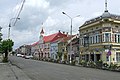 The centre of Reghin
 -
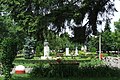 The city park
 -
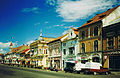 The city centre
 -
 Reformed church
 -
 Plaque honouring World War I Hungarian heroes at the Reformed Church
 -

-
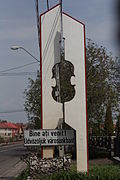 The monument at the entrance to Reghin, welcoming people
 -
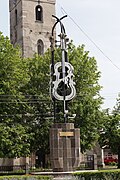 The Violins monument in the centre of the city, a symbol of Reghin


See also
[edit]References
[edit]- ^ "Results of the 2020 local elections". Central Electoral Bureau. Retrieved 11 June 2021.
- ^ "2021 Romanian census". National Institute of Statistics.
- ^ "Sächsisch-Regen". Verband der Siebenbürger Sachsen in Deutschland e.V. (in German). Retrieved 28 January 2023.
- ^ Rezultatele finale ale Recensământului din 2011: "Tab.5 Tab5. Populația stabilă pe sexe și stare civilă – județe, municipii, oraşe, comune". Institutul Național de Statistică din România. February 2016. Archived from the original on 19 March 2016. Retrieved 2 February 2016.
- ^ a b "ERDÉLY ETNIKAI ÉS FELEKEZETI STATISZTIKÁJA". Archived from the original on 7 October 2022. Retrieved 7 November 2020.
- ^ "Reghin". www.jewishvirtuallibrary.org.
- ^ "YIVO – Reghin". www.yivoencyclopedia.org.
- ^ a b c Costea, Ioan I. Reghin: Destin și istorie.
- ^ a b c d Ploieșteanu, Grigore; Șara, Marin (2006). Reghinul cultural. Reghin.
{{cite book}}: CS1 maint: location missing publisher (link) - ^ Pop, Simion T. (2008). Comorile Transilvaniei: Reghin. Reghin: ROMGHID. ISBN 978-973-88446-1-2.
- ^ "ERDÉLY ETNIKAI ÉS FELEKEZETI STATISZTIKÁJA" (PDF). Archived from the original (PDF) on 16 July 2011. Retrieved 8 April 2019.
- ^ "Orașe Înfrățite". www.primariareghin.ro (in Romanian). Reghin city hall. Retrieved 2 December 2020.
Further reading
[edit]- Costea, Ioan I. Reghin: Destin și istorie.
- Ploieșteanu, Grigore; Șara, Marin (2006). Reghinul cultural. Reghin.
{{cite book}}: CS1 maint: location missing publisher (link) - Pop, Simion T. (2008). Comorile Transilvaniei: REGHIN. Reghin: ROMGHID. ISBN 978-973-88446-1-2.
External links
[edit]
- primariareghin.ro – official website of Reghin City
- Reghin, Romania at JewishGen

| International | |
|---|---|
| National | |
| Geographic | |
| Other | |

Reghin
View on GrokipediaGeography
Location and environment
Reghin is located in Mureș County, central Romania, on the northwestern edge of the Transylvanian Plateau, extending along both banks of the Mureș River at its confluence with the Gurghiu River.[10][1] The city's geographical coordinates are 46°46′33″ N latitude and 24°42′30″ E longitude, placing it approximately 32 kilometers north-northeast of Târgu Mureș, the county's principal municipality.[1] The average elevation stands at 395 meters above sea level, ranging from 350 meters along the river to higher points in adjacent forested areas.[1] The local terrain features the Reghin depression, characterized by valley lowlands that support extensive arable land (2,208 hectares), pastures (462 hectares), hay fields (397 hectares), orchards (905 hectares), and forests (624 hectares), indicating suitability for farming and silviculture.[1] This riverine setting in the Mureș valley, bordered by the Gurghiu Mountains—a subgroup of the Eastern Carpathians—contributes to hydrological dynamics, including seasonal water flow variations in the Mureș (28-37 cm/second, depths of 1-3 meters).[1] The proximity to the Carpathian foothills exposes Reghin to environmental influences such as potential flooding from the Mureș River, with quantitative assessments showing 11.31% of the city's area vulnerable to inundation under a 1% annual exceedance probability event.[11][10]
Climate and natural features
Reghin experiences a humid continental climate characterized by distinct seasonal variations, with cold, snowy winters and warm summers. Average annual temperatures hover around 11°C, with mean highs of 16.5°C and lows of 5.3°C; January features average temperatures near 2°C, including lows often dipping to -5°C or below, while July averages approximately 20°C.[12] Annual precipitation measures about 820 mm, distributed moderately throughout the year with peaks in spring and summer, fostering conditions for temperate deciduous growth rather than extremes of aridity or flooding. The local terrain consists of rolling hills within the Transylvanian Plateau, transitioning into forested uplands that supply timber as a key natural resource. These surroundings include mixed oak woodlands, with the nearby Mociar Forest—Romania's oldest known stand—featuring pedunculate oaks exceeding 500 years in age on marshy soils, supporting moderate biodiversity in flora such as deciduous hardwoods and associated understory species.[13] While no strictly protected reserves lie within Reghin proper, the regional forests contribute to watershed stability and habitat continuity amid the broader Mureș County landscape.History
Origins and medieval development
Reghin first appears in historical records in 1228, mentioned as "Regun" in a charter issued by King Andrew II of Hungary, during a period of active settlement and administrative organization in Transylvania under the Kingdom of Hungary.[3] This documentation reflects the town's integration into the Hungarian crown's efforts to colonize and fortify frontier regions, attracting settlers including Transylvanian Saxons to establish defended communities along key valleys.[14] The name "Szászrégen," indicating a Saxon settlement, underscores its origins tied to German colonization waves in the 12th and 13th centuries, aimed at securing trade routes and agricultural lands against nomadic threats.[15] The settlement endured significant disruptions early in its development, suffering devastation from the Mongol invasion of 1241 and subsequent Tatar raids in 1285, events that tested the resilience of nascent Transylvanian communities.[3] Recovery involved rebuilding defensive structures and economic foundations, with charters evidencing the town's role as a local administrative unit, later designated a castrum by 1501, though medieval privileges laid the groundwork.[3] Strategic positioning in the Mureș River valley facilitated access to regional trade networks, including those linked to salt extraction areas upstream, contributing to its growth as a market hub.[16] Medieval advancement included ecclesiastical and civic developments, such as the construction of the Saxon church in the 14th century, serving as a communal and defensive focal point amid ongoing border insecurities.[14] By 1350, Reghin received authorization for weekly fairs, signaling its emergence as a commercial center, with further mentions of guilds and a school by the late 15th century indicating institutional maturation.[3] These elements highlight causal drivers like royal privileges and settler initiatives in fostering stability and prosperity within the Hungarian kingdom's Transylvanian domain.Habsburg era and ethnic dynamics
During the Habsburg administration of Transylvania following the region's incorporation into the empire after 1699, Reghin maintained privileges as a Saxon-founded town, with juridical independence acknowledged by the crown in 1762.[3] The local economy relied on craft guilds, which by 1725 included separated organizations for shoemakers, tanners, and leather dressers, reflecting the dominant German (Saxon) artisan class that shaped urban development.[3] These guilds fostered ethnic specialization, with Saxons controlling key trades amid a multi-ethnic populace of Germans, Hungarians, Romanians, and emerging Jewish communities. Census data illustrate shifting ethnic dynamics through the 19th century, driven by administrative centralization and economic opportunities. In 1850, the population stood at approximately 4,227, with Germans comprising the majority at around 70%, followed by Romanians (15%) and Hungarians (13%). By 1882, the total had grown to 8,074, with Hungarians at 2,564 (32%), Germans at 2,522 (31%), Romanians at 1,577 (20%), and Jews at 1,341 (17%), indicating a relative decline in German dominance and Romanian underrepresentation relative to rural surroundings, possibly due to urban migration patterns and guild access favoring Hungarians and Saxons.[3] The Jewish population expanded from 39 families in 1852 to 282 by 1866, establishing a synagogue and integrating into commerce.[17] The 1848 revolutions disrupted this balance, with local "Three Tragic Days" involving invasions, fires, and robberies amid broader Romanian-Hungarian clashes in Transylvania, exacerbating ethnic tensions over land and autonomy.[3] The Ausgleich of 1867 restructured the empire into Austria-Hungary, integrating Transylvania into the Hungarian kingdom and imposing Hungarian as the administrative language, which curtailed Saxon privileges and promoted Hungarian cultural dominance, contributing to the observed population shifts without granting equivalent local autonomy to non-Hungarian groups. Economic diversification followed, including the certification of the first printing shops in 1876, often linked to guild networks and serving multi-ethnic literacy needs in a region of coexisting confessions and languages.[3]World Wars and interwar period
During World War I, Reghin, situated in Transylvania as part of Austria-Hungary, mobilized over 1,500 officers and recruits for the Central Powers.[3] Fighting occurred on nearby fronts, including Rastolita-Deda and Chiher-Beica, as Romanian forces invaded Transylvania following their entry into the war on August 27, 1916.[3] These engagements contributed to broader Central Powers counteroffensives that halted the Romanian advance by late 1916. In December 1918, following the dissolution of Austria-Hungary, Reghin participated in the union with Romania through the Alba Iulia assembly, becoming part of the Kingdom of Greater Romania formalized by the Treaty of Trianon in 1920.[3] The interwar period saw Reghin integrate administratively and economically into Romania, with the opening of a civilian boys' school in 1919 that evolved into a state secondary school by 1920.[3] Industrial expansion included factories processing resonance logs and timber from 1922 to 1930, though the Great Depression from 1929 to 1933 brought economic strain and overproduction issues.[3] The Jewish population grew to 1,587 by the 1930 census, comprising 16% of residents, indicating overall population stability amid ethnic diversity.[18] On August 30, 1940, under the Second Vienna Award, Reghin was ceded to Hungary along with Northern Transylvania, placing it under Hungarian administration until 1944.[3] During this time, the city hosted a Luftwaffe airfield targeted by U.S. Army Air Forces strafing on August 31, 1944.[19] Romanian and Soviet forces entered Reghin in October 1944, restoring Romanian control as Hungarian forces retreated.Communist period and transition to democracy
Following World War II, Reghin experienced the imposition of communist governance, marked by the formation of the local Antifascist Bloc on January 20, 1945, aimed at purging fascist elements and consolidating power.[20] Nationalization decrees in 1948 transformed the town's artisanal woodcraft traditions into state-controlled enterprises, including the Combinatul de Industrializare a Lemnului Reghin and furniture factories such as those producing under the "23 August" banner, which became central to the local economy by employing thousands in wood processing and export-oriented production.[21] [22] These anchors drove urbanization and job creation but highlighted centralized planning's flaws, including chronic material shortages, overstaffing, and mismatched production quotas that stifled efficiency, as evidenced by Romania's broader industrial stagnation and debt crisis by the 1980s.[23] Ethnic dynamics shifted under communist policies promoting Romanianization, with significant emigration of Transylvanian Saxons—Reghin's historic German population—to West Germany, facilitated by ransom payments from Bonn starting in the 1960s and accelerating in the regime's final decade, reducing their share amid forced assimilation and economic pressures.[24] The 1989 revolution, sparked nationally in Timișoara, echoed locally as protests toppled Ceaușescu's rule by December 25, ending four decades of repression without documented major violence in Reghin but enabling rapid political liberalization.[25] The transition to democracy involved gradual privatization from 1990, dismantling state monopolies like Reghin's wood combines, which resulted in widespread factory restructurings and job losses exceeding tens of thousands regionally, fueling unemployment and out-migration that contributed to the city's population declining to 29,742 by 2021.[22] [2] Romania's 2007 EU accession channeled structural funds toward infrastructure upgrades, including regional roads and utilities benefiting Reghin, though persistent inefficiencies from prior planning delayed full recovery and exacerbated demographic outflows.[26]Demographics
Historical population trends
In the 19th century, Reghin's population expanded from around 3,000 inhabitants in the early 1800s to 8,074 by 1882, reflecting initial industrial development such as furniture and violin crafting workshops.[3] Romanian census records provide the following stable population figures for key years:| Year | Population |
|---|---|
| 1912 | 7,310 |
| 1930 | 9,290 |
| 1948 | 9,599 |
| 1956 | 18,091 |
| 1966 | 23,295 |
| 1977 | 29,903 |
| 1992 | 39,240 |
| 2002 | 36,126 |
| 2011 | 33,281 |
| 2021 | 29,742 |
Current ethnic and religious composition
According to the 2021 Romanian Population and Housing Census, Reghin's resident population stands at 29,742 individuals.[30] The ethnic composition features Romanians as the largest group at 17,304 persons (58.2%), followed by Hungarians numbering 5,607 (18.8%) and Roma at 1,754 (5.9%). Germans account for 90 residents (0.3%), with smaller numbers from other ethnicities or undeclared categories completing the total.[30][31]| Ethnic Group | Number | Percentage |
|---|---|---|
| Romanians | 17,304 | 58.2% |
| Hungarians | 5,607 | 18.8% |
| Roma | 1,754 | 5.9% |
| Germans | 90 | 0.3% |
| Others/Undeclared | 4,987 | 16.8% |
| Religious Affiliation | Number | Percentage |
|---|---|---|
| Eastern Orthodox | 15,948 | 53.6% |
| Reformed | 4,046 | 13.6% |
| Roman Catholic | 1,705 | 5.7% |
| Greek Catholic | 1,440 | 4.8% |
| Other/None | 6,613 | 22.3% |
Migration and social changes
Following the collapse of the communist regime in 1989, Reghin saw pronounced outward migration, primarily driven by younger cohorts departing for employment in Western Europe, such as Italy, Spain, and Germany, mirroring national patterns where emigration accounted for over 75% of Romania's population reduction from 2000 to 2017.[32] This trend accelerated in the 1990s and 2000s, with Reghin's population contracting from more than 40,000 residents in 1992 to 37,698 by 2019, reflecting a net loss exacerbated by the departure of working-age individuals.[33] Internal migration patterns post-1990 involved inflows from surrounding rural areas in Mureș County, often comprising families from agricultural backgrounds seeking urban services and proximity to Reghin's industrial base, which subtly shifted the local demographic toward a higher proportion of older residents and altered family structures through selective rural-to-urban relocation.[30] However, these gains were outweighed by emigration, leading to an overall decline to 29,742 inhabitants by the 2021 census, with youth outflows disproportionately impacting the 15-39 age group.[34] The combined effects of sustained emigration and sub-replacement fertility—Romania's national total fertility rate hovering around 1.3-1.4 births per woman since the early 2000s—have accelerated population aging in Reghin, with the median age rising and the dependency ratio increasing as fewer young people remain to support an expanding elderly cohort.[35] By 2021, this manifested in a skewed age distribution, where the proportion of residents over 65 exceeded national averages in similar Transylvanian locales, straining local social services without corresponding immigration to offset losses.[33]Economy
Key industries and historical economic base
Reghin's economy historically relied on agriculture and forestry, with the surrounding forests providing timber for local woodworking crafts dating back to medieval times. By the second half of the 19th century, the city emerged as a key center for Transylvanian wood processing, leveraging abundant local resources to support small-scale manufacturing of wooden goods.[7] This foundation facilitated the growth of furniture production during the interwar period, when workshops began exporting items crafted from regional hardwoods like beech, establishing woodworking as a dominant sector with employment tied to seasonal timber harvests.[7] Printing emerged as another pillar in the late 19th century, with the first certified printing shops operational by 1876, serving administrative and cultural needs in a multi-ethnic community and contributing to early industrial diversification beyond agriculture.[3] Under communist rule, Romania's broader push for industrialization accelerated Reghin's shift from agrarian roots—where farming and viticulture had predominated—to heavy industry, with collectivization policies from the late 1940s consolidating land and redirecting labor toward factories. Pre-1990s data reflect this transition: agricultural output declined as a share of local GDP, while manufacturing absorbed surplus rural workers, exemplified by the establishment of the Hora violin factory in 1951, which produced just 37 instruments in its inaugural year before scaling up rapidly to meet state export quotas.[36] Food processing gained footing in the communist era, notably with the Silva brewery founded in 1972 specifically for beer exports, processing local grains and barley to supply foreign markets and employing hundreds in an otherwise agriculture-dependent region.[37] Violin manufacturing, rooted in woodworking traditions, became emblematic of Reghin's specialized output, with factories like Hora expanding to produce thousands of string instruments annually by the 1980s, drawing on skilled artisan labor from pre-industrial crafts.[38] These sectors—wood/furniture, printing, and emerging food/beverage processing—formed the pre-transition economic base, with industry comprising over 40% of employment by the late communist period amid forced urbanization.[7]Modern developments and challenges
Following the collapse of communism in 1989, Reghin underwent privatization of its state-dominated wood processing and furniture enterprises, which had relied on subsidized inputs and protected markets within the Comecon bloc. This shift exposed local firms to global competition, resulting in initial contractions as inefficient operations folded and former state assets were fragmented through mass privatization schemes that dispersed ownership without concentrating managerial incentives for efficiency.[39][40] Empirical outcomes included plant closures and job losses in the 1990s, underscoring how state interventions in voucher-based privatization diluted accountability and hindered restructuring toward market viability.[41] By the early 2000s, recovery materialized through private initiative in small and medium-sized enterprises (SMEs), particularly in furniture manufacturing, leveraging Reghin's historical woodworking expertise. Firms like Remex SA and Balorman expanded production for export markets, contributing to Romania's furniture sector growth, which added significant value through processing local timber into finished goods.[7][42] EU accession in 2007 facilitated infrastructure upgrades, such as renovations to DN15 and DN15A roads linking Reghin to regional hubs, funded by cohesion grants that enhanced logistics for SME exporters without distorting core market signals.[43][44] Persistent challenges include unemployment rates in Mureș County, encompassing Reghin, fluctuating around 5-7% amid national trends, exacerbated by the 2008-2009 crisis that doubled local registered unemployed in some years.[45] SMEs have driven empirical gains, with the furniture industry's positive indicators reflecting demand-driven expansion rather than subsidy dependence, yet vulnerability to import competition and raw material costs mirrors Romania's broader trade imbalances.[46] In 2024, a national economic slowdown, tied to subdued external demand, amplified pressures on export-oriented local production, highlighting the limits of state-fueled recovery absent deeper structural reforms for competitiveness.[47]Culture and society
Traditions and local customs
Local customs in Reghin center on religious holidays and agrarian rites, reflecting the city's multi-ethnic heritage of Romanian Orthodox and Hungarian Reformed communities. Easter (Paște) observances, documented in ethnographic collections, involve dyeing and inscribing eggs with symbolic motifs during Holy Week, alongside baking pască, a ritual sweet cheese bread symbolizing renewal and shared across ethnic lines in Mureș County.[48][49] These practices, rooted in pre-modern folk Christianity, persist through family rituals and church preparations, emphasizing communal egg-tapping games to predict familial fortune. New Year's traditions mark temporal transitions with threshold customs, including protective incantations and feasting to ward off misfortune, as recorded in local oral histories and museum archives.[50] Such observances blend pagan agrarian elements with Christian overlays, observed uniformly despite denominational differences, underscoring empirical continuity in rural Transylvanian life. Christmas (Crăciun) features caroling processions and hearth-centered meals, with Hungarian-influenced beigli pastries complementing Romanian cozonac, fostering inter-ethnic participation in winter solstice echoes.[51] Harvest customs, tied to the Mureș Valley's fertile plains, historically include post-reaping communal dances and offerings, preserved in reconstructed village households at the Anton Badea Ethnographic Museum, which documents shared Romanian-Hungarian folk practices like scything rituals and sheaf decorations.[52]Cultural institutions and events
The Anton Badea Ethnographic Museum preserves architectural monuments, craft tools, folk costumes, and customs specific to the Reghin region and surrounding areas, with an outdoor section featuring reconstructed traditional structures such as the Hodac household, Calimănel house, and a Hungarian house from Gurghiu.[52][53] The museum, which expanded its scope in 1970 to cover ethnographic research beyond Mureș County, houses over 5,800 artifacts, 13,000 photographs, and ethnographic films emphasizing technical installations like oil presses and watermills.[54] It operates year-round with extended summer hours from May to September (8:00–18:00 weekdays, 8:00–15:00 weekends) and shorter winter schedules.[55] The Petru Maior Municipal Library, established on October 20, 1950, as the Town Library with an initial collection of 2,210 volumes, has grown to encompass 120,000 publications across 14 halls.[56] It includes specialized departments for adult lending (since 1962), children and youth (since 1964), reference works like encyclopedias, over 42 periodical subscriptions, and a documentary fund of more than 4,000 rare books, with the oldest item being a 1551 edition of the Code of Justinian.[56] The library relocated to George Coșbuc Street in 1955 and supports cultural preservation through foreign language sections and historical archives. Reghin's cultural events primarily revolve around its violin-making tradition, with workshops and factories offering demonstrations of craftsmanship dating to 1951, though no large-scale annual music festivals are systematically documented.[57] Local ethnic participation, reflecting the Hungarian minority's influence, appears in ethnographic displays rather than dedicated recurring festivals, with limited public data on attendance or municipal funding for such activities.[52]Ethnic coexistence and tensions
Reghin maintains a multi-ethnic demographic structure, with Romanians forming the majority at approximately 67% and Hungarians comprising about 26% of the population, alongside smaller Romani (6%) and other groups, according to 2011 census data reported by local authorities.[4] This composition supports Hungarian-language education and cultural institutions, including Reformed churches and schools, which enable the minority to preserve linguistic and religious traditions amid Romanian-majority governance.[3] The Democratic Alliance of Hungarians in Romania (UDMR), established in Reghin shortly after the 1989 revolution, channels Hungarian political activism, securing local council seats and pressing for bilingual public administration and signage in areas exceeding 20% minority thresholds as per Romanian law.[3] UDMR's efforts draw on census-verified demographics to advocate cultural rights, including Hungarian-medium instruction, echoing protections from interwar minority treaties under the League of Nations that Romania ratified post-Trianon in 1920.[58] These demands occasionally spark disputes, such as protests over perceived erosion of bilingual policies or school autonomy, but remain confined to political and legal channels without escalating to widespread unrest. Post-1990, ethnic relations in Reghin have exhibited stability, contrasting with early transitional violence in nearby Târgu Mureș where clashes in March 1990 resulted in at least five deaths and hundreds injured between Romanian and Hungarian groups.[59] No comparable large-scale incidents have occurred in Reghin since, with empirical records indicating minimal violence rates; Human Rights Watch assessments from the early 1990s noted persistent suspicions but few regional conflicts beyond initial flare-ups, a pattern sustained by economic integration and EU accession norms enforcing minority protections since 2007.[59] Broader Transylvanian autonomy debates, including Hungarian calls for Szekler self-governance, indirectly influence local discourse but have not precipitated acute tensions in Reghin, where UDMR prioritizes pragmatic coalition-building over irredentism.[60]Architecture and landmarks
Historic buildings and urban layout
Reghin's urban layout revolves around the central Piața Petru Maior, which emerged as the focal point following the town's designation as a market settlement in 1427.[3] This square exemplifies the compact, market-oriented planning typical of medieval Transylvanian towns, with administrative structures clustered for accessibility.[3] The town hall, positioned prominently in Piața Petru Maior, incorporates elements of traditional and modern design, serving as a key civic landmark since its construction integrated historical governance needs.[61] Adjacent to it stands the court building, forming an administrative ensemble that underscores the square's role in local administration.[62] These structures reflect incremental urban development from Reghin's early documentation in 1228 through periods of reconstruction after invasions.[3] While specific preservation listings for non-religious buildings in Reghin are integrated into Romania's national heritage framework, which catalogs over 22,000 historic monuments as of 1992, the central square's buildings maintain their functional and architectural integrity amid broader urban evolution.[63] The layout avoids rigid grid patterns, instead favoring organic growth around the market core, influenced by regional Transylvanian settlement patterns rather than uniform Habsburg impositions seen elsewhere in the empire.[64]Religious sites
The Reformed Church, serving Reghin's Hungarian Calvinist community, was built in 1890 as a Protestant place of worship.[65] Romanian Orthodox religious architecture in Reghin includes the Wooden Church of the Archangels, constructed in 1744 from non-varnished wood beams in traditional style, where scholar Petru Maior served from 1785 to 1808. The Church of Saint Nicholas, also dating to 1744, incorporates paintings in popular style and religious icons. The Holy Trinity Church was erected between 1807 and 1811 by Armenian merchants Ioan and Maria Marinovici. A modern Romanian Orthodox Cathedral was completed in the 1990s.[66][67][68] The synagogue, established in 1866 for the Ashkenazi community numbering 282 at the time, represents a key architectural remnant of Reghin's diverse religious past, with its structure located at Strada Școlii 18.[18][69]Jewish community in Reghin
Establishment and pre-WWII life
Jewish settlement in Reghin began toward the close of the 18th century, with the first arrivals primarily Orthodox Jews from Bukovina and Galicia.[70] An organized community formed in the mid-19th century, as the population grew from approximately 40 individuals in 1850 to 282 by 1866, when a synagogue was established following the rental of a prayer house by 39 families in 1852.[18] By 1891, the Jewish population reached 394, constituting 7% of the town's total inhabitants, and expanded further to 449 by 1900.[18] The community maintained Orthodox practices throughout its pre-WWII history, developing institutions that supported religious and educational life while operating within the Hungarian administrative context of Transylvania until 1918.[70] A Jewish elementary school was founded in 1874, with instruction conducted in Hungarian; though it temporarily ceased operations, it was reestablished in 1910 and continued until 1940.[70] These institutions fostered a degree of communal autonomy, yet Jews integrated into local economic activities, particularly trade, which aligned with broader patterns of Jewish occupational roles in Transylvanian towns under Austro-Hungarian rule. By 1930, following the shift to Romanian sovereignty after the Treaty of Trianon, the Jewish population peaked at 1,587, representing 16% of Reghin's residents, reflecting sustained immigration and natural growth amid regional urbanization.[18] This demographic presence contributed to the town's commercial vitality without dominating it, as Jews remained a distinct minority group focused on mercantile pursuits rather than agriculture or heavy industry.[18] Community records indicate no major internal schisms, with adherence to Orthodox norms ensuring cohesion despite external political changes.[70]World War II and Holocaust impact
After the Second Vienna Award on August 30, 1940, which transferred Northern Transylvania, including Reghin, to Hungarian control, the town's Jewish population of 1,635—comprising over 16 percent of residents per the 1941 Hungarian census—encountered escalating discriminatory measures.[71][72] Hungarian authorities mandated yellow star badges, property confiscations, and conscription of Jewish males aged 18 to 48 into forced labor battalions from late 1940 onward, resulting in high mortality from exposure, disease, and combat exposure on the Eastern Front.[70] The German occupation of Hungary on March 19, 1944, prompted rapid escalation under SS oversight, with Hungarian gendarmes establishing a ghetto in Reghin's brick factory on the outskirts in early May 1944; this facility confined not only local Jews but also those from nearby villages, totaling several thousand.[70][73] Deportations commenced shortly thereafter, with trains departing for Auschwitz-Birkenau between May 15 and July 9, 1944, transporting approximately 6,000 Jews from the Reghin ghetto in multiple convoys, the majority gassed immediately upon arrival.[70][74] Survival rates were exceedingly low, reflecting the efficiency of selections and camp conditions at Auschwitz; precise figures for Reghin's pre-deportation population remain undocumented in aggregate, but individual testimonies and partial records indicate only dozens of local Jews returned.[73] By 1947, a postwar Jewish community of about 820 reconstituted in Reghin, augmented by survivors from various camps and transient Jews from other regions, though numbers fell to 650 by 1949 amid emigration to Israel and elsewhere, leaving scant permanent remnants.[70][75] These events arose from Hungary's Axis commitments, which delayed but ultimately enabled full compliance with German deportation demands post-occupation, differing from Romania's administration in southern Transylvania—where Jews faced pogroms and Transnistria labor deportations but avoided direct extermination transports until later war shifts.[76]Sports and recreation
Major sports clubs and facilities
The primary sports club in Reghin is CSM Avântul Reghin, a football team competing in Liga III Series 7, the third tier of the Romanian football league system, during the 2024–25 season.[77] The club plays home matches at Stadionul Municipal, a multi-use stadium with a capacity of approximately 5,000 spectators.[78] Reghin's Youth Park Sport Complex provides key facilities for local sports, encompassing a stadium, athletics track, swimming pool, gymnasium, playground, seating areas, and a terrace-restaurant amid vegetated pathways.[79] Amateur organizations include Asociația Sportivă Old Boys Basket for basketball, Asociația de Arte Marțiale Sakura and Red Dragon Fight Club for martial arts, Asociația Sportivă a Cicliștilor de Anduranță for endurance cycling, and Handbal Club Sporting Reghin for handball, though these operate at community levels without national prominence.[80][81]Notable achievements
CSM Avântul Reghin, the city's primary football club, achieved its highest competitive level by participating in Romania's Divizia A, the top national league, during the 1955 season, where it finished 13th out of 14 teams after recording results including a 0–0 draw against FC Dinamo București on November 16, 1955, and losses to other top clubs.[82] This marked the club's sole appearance in the first division since its founding in 1949, after which it has competed exclusively in lower tiers.[83] In contemporary regional play, CSM Avântul Reghin has secured victories in Liga IV Mureș, such as a 3–0 win over ACS Mureșul Rușii Munți in a recent match, contributing to local league standings but without advancing to national prominence.[84] The club has also recorded head-to-head successes against rivals, winning 4 of 7 encounters against Unirea Ungheni since 2010, with a goal average of 2.6 per game.[85] Handball efforts through clubs like Handbal Club Sporting Reghin remain confined to amateur and regional levels, with no documented national titles or promotions.[86] Post-1990s youth development in Reghin sports lacks recorded metrics for producing national-level competitors, reflecting the town's focus on local participation over elite outcomes.[87]Government and administration
Local governance structure
Reghin functions as a municipality under Romania's framework for local public administration, featuring a deliberative local council and an executive mayor, with oversight from Mureș County authorities for inter-municipal coordination.[88][89] The Local Council, comprising 19 members elected via proportional representation in party lists every four years, initiates and approves decisions on matters of local interest, including budget allocation, public domain management, infrastructure development, and establishment of services in education, health, and social assistance.[90][88] The mayor, elected directly by plurality vote for a four-year term, manages the municipal apparatus, coordinates implementation of council resolutions, and handles executive duties such as public order enforcement and representation in legal matters.[91][89] Endre Márk assumed the mayoral role following the June 9, 2024, local elections, with the oath of office taken on October 22, 2024.[92] The council operates through specialized commissions addressing areas like budget and finance, urban planning, and public services, ensuring legislative oversight of municipal operations.[93] The 2024 local budget, approved via Council Decision No. 22 on February 8, 2024, and subsequently rectified on March 27, 2024, funds core services including infrastructure maintenance and public utilities, drawing from local revenues, transfers, and a carried-over surplus of 1,931,948.30 lei from 2023.[94][95]Political representation and ethnic politics
The Democratic Alliance of Hungarians in Romania (UDMR) maintains dominance over the Hungarian minority vote in Reghin, channeling ethnic preferences into consistent local council representation that approximates the minority's demographic weight. The 2021 census recorded 5,607 ethnic Hungarians, comprising 18.85% of the city's 29,742 residents, a decline from prior decades that has narrowed but not eliminated their electoral bloc influence.[30] [96] In the June 9, 2024, local elections, UDMR secured 6 of 21 seats on the Reghin Local Council, enabling participation in pragmatic cross-ethnic coalitions with Romanian-majority parties such as PNL and PSD to pass municipal budgets and infrastructure decisions.[92] This seat allocation stems from UDMR's near-unanimous capture of Hungarian ballots, as evidenced by similar patterns in 2020 elections where the party polled over 90% among minority voters in Mureș County localities.[97] Ethnic politics center on minority access to Hungarian-language services, with UDMR advocating for expanded bilingual administrative signage and mother-tongue education under Romania's obligations to the European Charter for Regional or Minority Languages, ratified in 2007. Romanian law permits bilingual topographical signs in localities where a minority exceeds 20% of residents, a threshold Reghin falls short of at 18.85%, prompting UDMR-led local initiatives for voluntary implementation that have faced central government scrutiny to prioritize national linguistic unity. Education remains a flashpoint, as Hungarian-medium schools in Reghin—serving roughly 25% of students per local enrollment data—navigate national curricula mandates that emphasize Romanian proficiency, leading to UDMR-backed legal challenges for greater curricular autonomy aligned with EU anti-discrimination directives.[98] Local power dynamics reveal minority leverage through coalition arithmetic, where UDMR's seats prove decisive in council majorities, fostering compromise on non-ethnic issues like urban development. However, centralized oversight from Bucharest often overrides local ethnic accommodations, as seen in periodic audits rejecting bilingual municipal correspondence, reflecting a causal tension between federal minority protections and state assertions of indivisibility that dilutes grassroots representation. Empirical data from Mureș County elections since 2016 show UDMR's coalition participation yielding tangible gains, such as preserved Hungarian cultural funding, without derailing majority-led governance.[99] This pragmatic equilibrium contrasts with more polarized Szeklerland areas, underscoring Reghin's role as a model of ethnic realpolitik amid Romania's post-1989 minority integration.Notable people
Scientists and academics
Réka Albert (born March 2, 1972, in Reghin) is a physicist and biologist renowned for her contributions to network science and systems biology.[100] She serves as Evan Pugh University Professor of physics and adjunct professor of biology at Pennsylvania State University, where her research examines dynamic behaviors in complex networks, particularly biological ones, including mechanisms for robustness and failure cascades.[101] Albert co-authored the influential Barabási–Albert scale-free network model in 1999, which describes preferential attachment in growing networks and has applications across physics, biology, and social sciences; her work has garnered over 136,000 citations as of 2025.[100][102] In 2025, she was elected to the National Academy of Sciences for advancing understanding of biological decision-making through network modeling.[101] Augustin Maior (1882–1963), born in Reghin, was a pioneering Romanian physicist, educator, and inventor who advanced telecommunications and physics education.[103] He developed the frequency multiplexing transmission system in the early 20th century, enabling multiple telephony channels over a single wire—a precursor to modern multiplexed communication technologies—and patented related inventions in Romania and abroad.[104][103] After studying physics at the University of Göttingen under Wilhelm Wien, Maior became a professor at Babeș-Bolyai University in Cluj-Napoca, where he established foundational physics laboratories and mentored early Romanian scientists, including Hermann Oberth during his doctoral examination in 1923.[105] His work laid groundwork for Romania's physics school, emphasizing experimental methods and high-frequency applications.[104]Artists and public figures
Josef Haltrich (1822–1886), a Transylvanian Saxon ethnographer, pedagogue, philologist, and Lutheran priest born in Reghin on July 25, 1822, documented regional folklore through collections such as Deutsche Volksmärchen aus dem Sachsenlande (1856), which preserved Saxon tales and drew comparisons to the Brothers Grimm's work after his studies in Leipzig.[3] His efforts advanced 19th-century German romantic interest in Transylvanian oral traditions, emphasizing empirical collection over romantic fabrication.[106] Georg Maurer (1907–1971), a German-language poet, essayist, and translator born in Reghin on March 11, 1907, produced works like Stromkreis (1948) that reflected Transylvanian rural life and existential themes before relocating to East Germany post-World War II.[107] His poetry contributed to the Transylvanian German literary tradition, bridging pre-war regional identity with postwar socialist realism. Magda Kun (1912–1945), a stage and film actress born in Reghin (then Szászrégen) on February 17, 1912, debuted in Budapest theater before appearing in Hungarian productions like Filléres gyors (1932) and British films such as Dead of Night (1945); she died in London on November 7, 1945.[108] Ferenc Koós (1828–after 1900), a Hungarian writer born in Reghin in 1828, authored poetry and prose in Magyar, influencing local literary circles amid 19th-century Transylvanian cultural shifts.[3]International relations
Twin towns and partnerships
Reghin has established formal twinning and partnership agreements with six foreign municipalities since the mid-1990s, primarily to promote collaboration in cultural, educational, and economic domains through joint events, exchanges, and cooperative projects.[109] These ties, documented via official agreements, reflect Reghin's position in Transylvania with its multi-ethnic composition, including significant Hungarian and Romanian communities, facilitating cross-border initiatives often centered on shared heritage and trade.[110]| Partner Municipality | Country | Establishment Date | Agreement Type |
|---|---|---|---|
| Nagykőrös | Hungary | 15 November 1994 | Association and Partnership Contract (collaboration relations) |
| Bourg-la-Reine | France | 13 April 1999 | Friendship Charter Collaboration Agreement |
| Érd | Hungary | 9 December 2005 | Partnership Convention (twinning relations) |
| Salle | Italy | 30 August 2006 | Twinning and Collaboration Agreement |
| Ungheni | Moldova | 16 September 2006 | Cooperation and Association Agreement (collaboration relations) |
| Lubaczów | Poland | 28 June 2014 | Cooperation Understanding (twinning relations) |