Hubbry Logo
Remote controlled weapon stationRemote controlled weapon stationMain
Open search
Remote controlled weapon station
Community hub
Remote controlled weapon station
logo
8 pages, 0 posts
0 subscribers
Be the first to start a discussion here.
Remote controlled weapon station
from Wikipedia
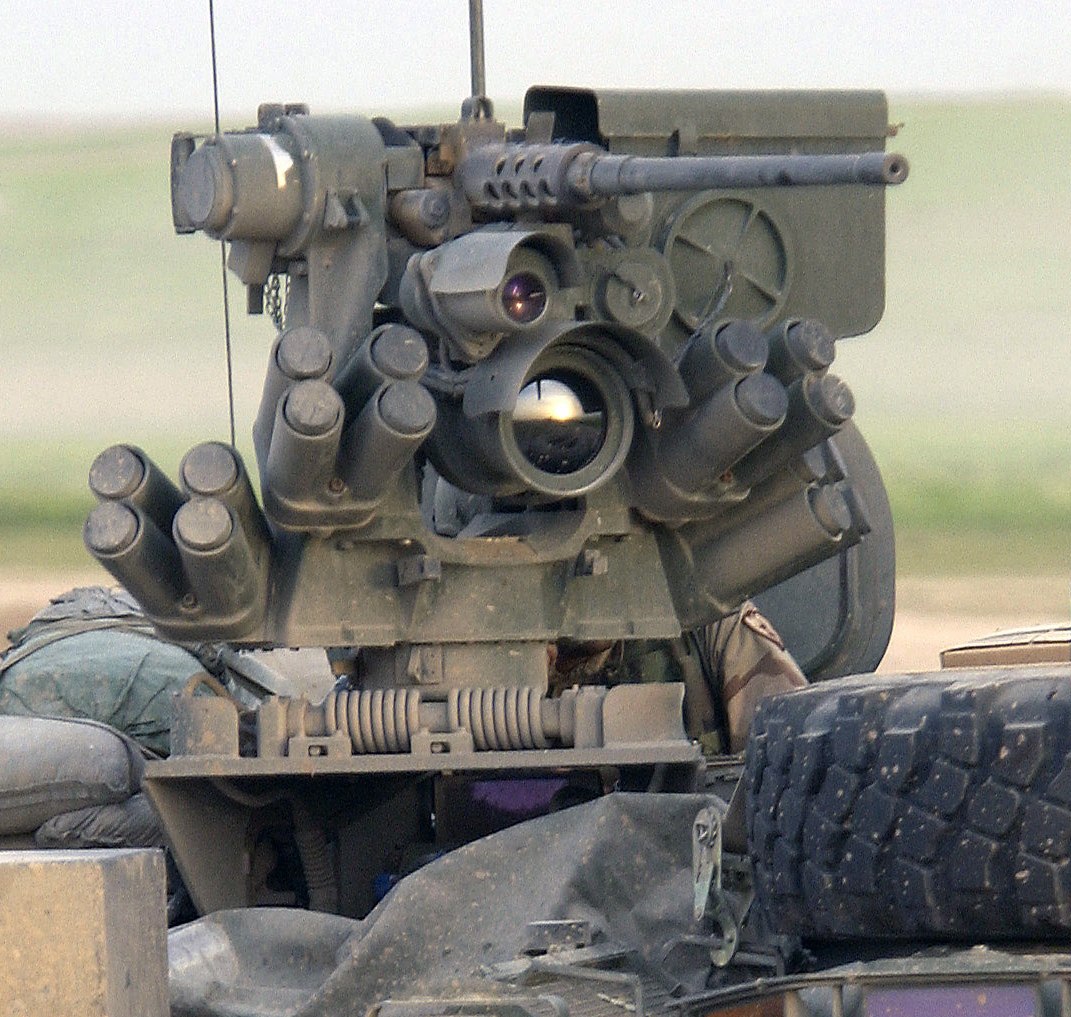
A Kongsberg/Thales Protector M151 with an M2 heavy machine gun on a M1126 Stryker
The operator screen of a RWS installed on U.S. Army Stryker
A heavy FLW 200 made by Krauss-Maffei Wegmann for the German Army
A light remote weapon system made by OTO Melara Iberica
A Sea Rogue fitted with a 12.7 mm machine gun mounted on a Valour class frigate of the South African Navy

A remote controlled weapon station (RCWS), remotely operated weapon system (ROWS), or remote weapon system (RWS), is a remotely operated light or medium-caliber weapon system, often equipped with a fire-control system, that can be installed on a ground combat vehicle or sea- and air-based combat platform.[1]

Such equipment is used on modern military vehicles, as it allows a gunner to remain in the relative protection of the vehicle. It may be retrofitted onto existing vehicles, for example, the CROWS system is being fitted to American Humvees.

Examples

[edit]

See also

[edit]

References

[edit]
[edit]
Revisions and contributorsEdit on WikipediaRead on Wikipedia
from Grokipedia
A remote controlled station (RCWS), also known as a remote station (RWS) or remotely operated , is a stabilized, platform-mounted system that allows an operator to remotely control, aim, and fire light to medium-caliber weapons from a protected location, such as inside an armored vehicle or a separate control station, thereby minimizing exposure to enemy fire. These systems typically integrate sensors including daytime and thermal cameras, rangefinders, and fire control software to enable , tracking, and engagement during day or night operations, often while the platform is moving. The development of RCWS traces its roots to early 20th-century stabilization technologies, with significant advancements in gyroscopes during for anti-aircraft gunsights, evolving into modern fiber-optic and MEMS-based systems by the late 20th century to provide precise aiming despite vehicle motion or vibrations. Military adoption accelerated in the early , particularly with the U.S. Army's Common Remotely Operated Weapon Station () program initiated around 2004, which introduced fiber-optic gyroscopes for stabilization and has been integrated into over 20 vehicle platforms, including the HMMWV and M1A2 Abrams tank. Today, leading systems like Kongsberg's PROTECTOR series, delivered to 29 nations with over 20,000 units produced, exemplify modular designs supporting weapons from 5.56mm machine guns to 40mm grenade launchers and even anti-tank missiles. Key components of RCWS include a gyro-stabilized turret or mount, electro-optical/ sensor suites for , or screen-based operator interfaces, and ballistic computers for automated targeting, all of which enhance accuracy and serve as force multipliers by allowing gunners to remain under armor. These systems support diverse armaments such as the M2 .50-caliber machine gun, M240B medium machine gun, MK19 grenade launcher, and Javelin missiles, with capabilities for features like no-fire zones, sector scanning, and automatic tracking. Applications span land vehicles for convoy protection, naval vessels for , and fixed installations for base defense, providing benefits like improved crew survivability, extended engagement ranges, and reduced logistical demands compared to manned turrets.

Overview

Definition

A remote controlled weapon station (RCWS), also known as a remotely operated weapon system (ROWS), is a stabilized, remotely operated turret or mount that integrates firearms, automatic launchers, systems, or other effectors, allowing control from a protected position such as inside a or a remote command post. This system enables precise targeting and engagement without requiring the operator to be physically present at the weapon's location, typically mounted on armored s, naval platforms, or stationary installations. Key characteristics of an RCWS include remote operation through wired or communication links, gyroscopic stabilization to maintain accuracy during movement on dynamic platforms, and a that supports integration of various weapon calibers, such as 5.56mm , 7.62mm and 12.7mm guns, up to 30mm cannons or 40mm launchers. These features enhance operational flexibility, allowing adaptation to different mission requirements while minimizing the vehicle's silhouette and weight. Unlike traditional manned turrets, where the operator is exposed to enemy fire and environmental hazards in a line-of-sight position, an RCWS positions the operator in a shielded environment, significantly reducing vulnerability to , shrapnel, or improvised devices. This distinction prioritizes by eliminating the need for the gunner to man exposed hatches or cupolas. RCWS systems often incorporate sensor integration, such as electro-optical cameras, for remote , though detailed sensor configurations vary by model. RCWS technology emerged in the late , driven by advancements in stabilization and for enhanced in combat environments.

Basic Principles

Remote controlled weapon stations (RCWS) rely on stabilization mechanisms to maintain accurate aiming despite the motion of the . Gyroscopes, such as or fiber-optic types, measure angular rates in pitch, roll, and yaw, providing data to counteract disturbances from vehicle movement. Servomotors, often permanent magnet synchronous motors (PMSMs) or DC motors, then adjust the turret's pan and tilt axes in real time to keep the weapon aligned on target. These systems typically employ a dual-axis with integrated accelerometers for enhanced stability, achieving response times sufficient for on-the-move firing. Control loop principles in RCWS form closed-loop feedback systems that enable precise operator input and automated corrections. Inputs from joysticks or yokes translate to commands via proportional-integral-derivative (PID) controllers, which process gyroscope and accelerometer data to minimize errors in aiming. Advanced variants incorporate head-tracking for intuitive control or AI-assisted aiming to predict and adjust for target dynamics, ensuring real-time responsiveness. These loops operate at high speeds, with motor velocities ranging from 0.1 mrad/s to 3 rad/s, to track moving threats effectively. Power and interface basics center on electrical actuators that drive turret motion and weapon functions. Systems draw from 18-32 V DC sources compatible with military vehicles, powering servomotors for continuous 360° rotation and ranges typically from -20° to +60°. Interfaces include serial communications like for command transmission and PWM signals for , facilitating seamless integration of modular weapon types such as machine guns or . Firing sequences are initiated through these electrical pathways, with brakes disengaged only during active operation to prevent unintended movement. Ballistic considerations in RCWS involve integrated fire control computers that perform lead calculations to account for target range, motion, and projectile drop. These computers use algorithms to compute super-elevation angles and adjust the sight , ensuring hits at effective ranges up to 2,000 m for common calibers. For dual-weapon setups, separate ballistic models handle variations in and environmental factors, with camera elevation drives compensating for effects on . This computational integration allows stabilized firing without manual adjustments, enhancing accuracy during dynamic engagements.

History

Early Developments

The roots of remote controlled weapon stations (RCWS) trace back to post-World War II adaptations of stabilization and remote aiming technologies originally developed for gun turrets. During the war, systems like the B-29 Superfortress's central fire control allowed gunners to remotely aim and fire turrets from inside the using electronic sights and servo mechanisms, minimizing exposure to enemy fire. Post-war innovations in gyroscopic stabilization, building on WWII naval anti-aircraft gun-laying systems that compensated for ship roll and pitch, began influencing ground vehicle designs by enabling accurate aiming while moving over rough terrain. In the and , Soviet and Western militaries experimented with stabilized mounts on main battle tanks, marking early steps toward remote operation of secondary weapons. The Soviet , introduced in 1973, featured a two-plane stabilization system for its 125 mm gun, allowing gunners to track and fire on the move with improved accuracy compared to earlier unstabilized designs. This technology addressed the challenges of firing from mobile platforms in dynamic battlefields, laying foundational principles for later RCWS by integrating gyroscopes to maintain sight alignment. Western efforts paralleled this, with advancements in gyroscopes (demonstrated in 1963) and fiber-optic gyroscopes (operational by 1976) enhancing precision for potential remote applications on armored vehicles. The 1990s saw pivotal milestones in US Army research and development for dedicated RCWS, driven by lessons from asymmetric urban conflicts. Experiences in during 1993 underscored the risks to vehicle crews from exposed positions amid close-quarters fighting and sniper fire. Early programs explored integrating sensors and controls to reduce crew vulnerability, building on prior stabilization tech. Concurrently, the 1991 provided initial field tests of ad-hoc remote sighting systems, where tanks employed thermal imaging sights to detect and engage targets from within the hull, minimizing hatch exposure during night operations in desert conditions. These efforts addressed core challenges like crew safety in low-intensity conflicts, paving the way for integrated RCWS without requiring physical manning of external weapons.

Modern Advancements

Following the September 11, 2001 attacks, the demand for enhanced in drove rapid advancements in remote controlled weapon stations (RCWS), particularly during U.S. operations in and from 2003 to 2011. The U.S. military accelerated deployment to counter improvised explosive devices and small-arms threats, fielding approximately 1,000 systems by 2010 across these theaters. By 2012, production had scaled to over 10,000 CROWS units, enabling widespread integration on vehicles like Humvees and MRAPs to allow gunners to operate from protected positions. Digital enhancements in the and transformed RCWS into networked nodes within broader command architectures. Incorporation of networked fire control systems enabled real-time data sharing for coordinated engagements, while algorithms improved target acquisition by automating detection and tracking through integrated sensors. Compatibility with battle management systems, such as the (JADC2) framework emerging in the , allows RCWS to receive cues from multi-domain sensors, facilitating faster decision-making in joint operations. RCWS proliferated internationally beyond U.S. forces, with allies adopting modular systems like the Protector for enhanced interoperability on platforms such as vehicle. Non-Western militaries, including those in and the , integrated similar technologies, with integration of unmanned systems enabling designated targeting for precision strikes. By 2025, recent innovations focused on modularity to accommodate directed-energy weapons, such as systems mounted alongside RCWS for non-kinetic effects on mobile platforms like the . These upgrades also expanded counter-unmanned aerial vehicle (UAV) roles, with systems like the RCWS incorporating automated detection and engagement protocols. Export controls under the (ITAR) have evolved, prompting non-ITAR alternatives to broaden global access while maintaining security standards. In 2024, companies like Thales introduced modular RWS concepts adaptable to naval platforms for asymmetric threat protection.

Design and Components

Weapon Integration

Remote controlled weapon stations (RCWS) integrate a variety of primary weapons to provide versatile firepower, typically including machine guns such as the 7.62mm FN MAG or M240 and the 12.7mm (.50 cal) M2 heavy machine gun, as well as 40mm automatic grenade launchers like the Mk19 or H&K GMG. Anti-tank capabilities are achieved through integration of guided missiles, such as the Javelin, which has been successfully mounted and fired from systems like the Kongsberg PROTECTOR RWS on unmanned ground vehicles, enabling remote launch without crew exposure. Weapon mounting emphasizes modularity and compatibility, with many RCWS designs featuring quick-swap assemblies that allow interchangeability between calibers without hull penetration, supporting total system weights up to 500 kg in models like the ARX30 or . These mounts often utilize standardized interfaces, including Picatinny rails (MIL-STD-1913) for secure attachment of machine guns and grenade launchers, facilitating rapid reconfiguration for different mission requirements. While NATO STANAG 4694 provides an enhanced rail standard for accessory integration on supported weapons, the primary focus remains on robust, vehicle-compatible cradles for overall payload stability. Ammunition handling in RCWS platforms incorporates automated feed systems to ensure sustained fire, with capacities ranging from 200 to 660 rounds depending on caliber—for instance, 300 rounds for 12.7mm in the Fieldranger Multi or 660 rounds for 7.62mm. These systems use belt-fed mechanisms linked to the weapon receiver, enabling continuous operation while minimizing manual intervention. Recoil mitigation is addressed through soft mounts and hydraulic or mechanical dampers, such as the soft recoil assembly in the Fieldranger Light, which reduces shock and to maintain platform stability during firing. For non-lethal applications, RCWS can integrate less-lethal launchers, such as multi-barrel grenade arrays for deploying or rubber munitions, and dispensers for obscuration, as outlined in designs like the remote controlled station , which supports pyrotechnic charges and via rotatable turret assemblies. Additional effectors, including acoustic devices and high-intensity spotlights, enhance options without transitioning to lethal force.

Sensors and Targeting

Remote controlled weapon stations (RCWS) rely on advanced suites to enable detection, identification, and precise of in diverse environmental conditions. Core s typically include electro-optical (EO) day cameras for visible light imaging, thermal forward-looking infrared (FLIR) cameras for night and adverse weather operations, s for distance measurement, and laser designators for marking . For instance, the Protector RS4 incorporates a modular suite featuring day/night cameras and a (LRF), providing stabilized observation capabilities. Similarly, the Natter RCWS integrates the FlexEye system, which combines day/night with (IR) technology and an LRF for all-weather performance. Thermal FLIR s commonly operate at resolutions such as 640x480 pixels, allowing detection of man-sized beyond 10 km under optimal conditions. Targeting systems in RCWS feature electro-optical/infrared (EO/IR) gimbals that provide to counteract vehicle motion, ensuring clear visuals during movement. These gimbals support automatic target tracking through algorithms such as edge-detection, which identifies object boundaries in video feeds for persistent lock-on. The Rafael Samson RCWS, for example, employs a high-performance day/night sight with gyro-stabilization and integrated LRF for accurate aiming, supporting both manual and automated modes. Rheinmetall's Natter further enhances this with automatic target tracking via its coaxial FlexEye sensor, enabling rapid response to threats. Such systems facilitate seamless transitions between EO for daylight identification and IR for low-light scenarios, improving overall targeting accuracy. Multi-sensor fusion capabilities integrate data from EO/IR, LRF, and navigation systems to deliver 360° situational awareness, fusing inputs for comprehensive threat assessment. This often includes GPS and (INS) components for precise geolocation of detected targets, allowing operators to correlate sensor data with real-world coordinates. In the Protector family, the stabilized sensor suite combines EO/IR and LRF data with platform navigation for enhanced awareness. Rafael's integrates GPS-based azimuth finders with its sights for geolocated targeting. These fusion processes reduce operator workload by providing overlaid, real-time views of the . Performance metrics for RCWS sensors emphasize versatility, with typical fields of view (FOV) ranging from narrow 2° for zoomed precision to wide 40° for broad . By the , AI enhancements have become integral, employing models for and classification, such as distinguishing humans from vehicles based on thermal signatures and motion patterns. CONTROP's SIGHT systems, compatible with RCWS, demonstrate this through AI-driven tracking of human-sized targets with enhanced image processing. The U.S. Navy's NSWC Dahlgren developments for Army RCWS further incorporate intelligent algorithms for automated detection and classification, achieving faster . As of 2025, advancements include AI integrations for counter-unmanned aerial (C-UAS) capabilities, such as in Saab's Trackfire , enabling rapid drone detection and engagement.

Control Mechanisms

Remote controlled weapon stations (RCWS) employ a variety of input devices to facilitate intuitive human-machine interaction for operators, typically allowing aiming and firing from protected positions inside vehicles. Common interfaces include controllers, which provide precise control over , , and trigger functions, as seen in the U.S. Army's Common Remotely Operated Station (CROWS) system where a enables engagement from within armored platforms like the up-armored HMMWV. displays and helmet-mounted displays are also utilized in advanced systems, such as Rafael's family, to support intuitive aiming through features like slew-to-cue functionality, where the automatically orients toward designated targets based on operator cues. Communication links between the operator station and the prioritize low-latency transmission to ensure responsive control, often achieving delays under 250 milliseconds for effective targeting. These links commonly use encrypted (RF) signals for wireless operation or fiber-optic cables for wired setups, as in Moog's Reconfigurable Integrated Weapons Platform (RIWP), which supports fiber-optic connectivity to minimize interference and enable high-bandwidth data transfer. is incorporated through dual-channel architectures, combining RF with fiber-optic paths to resist electronic jamming, thereby maintaining operational integrity in contested environments. The software architecture of RCWS typically integrates closed-loop control systems, where operator inputs are adjusted based on real-time feedback from the platform's stabilization and positioning data, contrasting with simpler open-loop configurations that rely solely on direct commands without correction. Safety interlocks are a critical component, requiring multiple independent actions—such as enable, arm, and fire commands—to authorize discharge, preventing accidental firing with a failure probability below 10^{-6}; upon power or communication loss, the system defaults to a safe state via hard-wired circuits that interrupt trigger power. Ergonomic design emphasizes usability for small crews of one to two operators in confined spaces, featuring compact control units with color flat-panel displays for enhanced situational awareness and reduced physical strain during prolonged use. These interfaces necessitate specialized programs, often using desktop simulators to familiarize operators with system controls and response times, ensuring proficiency in high-stress scenarios while minimizing exposure to threats. As of 2025, lightweight designs like the Pitbull enhance modularity and reduce system weight for better integration. Platform power supplies enable these mechanisms by providing stable electrical input for continuous operation.

Operation and Integration

Remote Control Processes

The remote control processes for a remote controlled weapon station (RCWS) begin with the acquisition phase, where the operator scans the environment using feeds from day and night cameras to observe the and gather target information. Target designation occurs by placing a cursor on the display to align the with potential threats, often aided by automatic target tracking for precision. Range estimation follows, typically via a stadia scale on the video feed, which allows the operator to approximate distances for like personnel or by measuring their size against reference marks. This phase supports on-the-move or stationary operations, enabling long-range detection without exposing the crew. In the engagement sequence, the system transitions to firing mode once a target is confirmed, incorporating aim stabilization—achieved through dual-axis gyroscopic sensors that maintain orientation despite platform motion—to ensure accurate pointing. Range data informs ballistic adjustments for lead and elevation, while software enforces (ROE) through multi-step authorizations, such as sequential mode switches and programmable no-fire zones that prevent firing in restricted areas. Burst fire is then authorized only when all conditions are met, including "fire ready" status on the display, allowing , burst, or sustained modes depending on the configuration. This structured workflow minimizes errors and complies with operational constraints during high-speed engagements. Post-engagement, the operator verifies target effects by switching to observation mode and reviewing sensor imagery for neutralization confirmation, ensuring no collateral issues from misidentification. status is reported via integrated counters or manual checks of feed systems, tracking rounds expended to maintain . Abort protocols activate if misidentification occurs, reverting to safe modes like observation or auxiliary to halt aiming and firing, with overrides available for sensor faults to prevent unintended actions. Training for these processes often employs simulations integrated with actual RCWS software, allowing operators to practice acquisition, engagement, and post-engagement steps in realistic scenarios without physical hardware risks. These simulations facilitate process familiarization through immersive environments, after-action reviews, and scenario customization, significantly reducing live-fire costs by minimizing , fuel, and maintenance expenditures associated with real-world exercises.

Vehicle and Platform Integration

Remote controlled weapon stations (RCWS) are integrated into host vehicles and platforms through standardized mechanical and electrical interfaces designed to ensure compatibility, stability, and minimal disruption to the platform's performance. For light tactical vehicles like the HMMWV (), installation typically involves roof-mount kits that utilize mechanisms to dampen shocks and vibrations during mobility, maintaining the system's operational accuracy. These kits adhere to military interface control documents that specify structurally sound mounting surfaces with resonance frequencies above typical vehicle vibrations, allowing 360-degree traverse without interference. On heavier platforms such as main battle tanks like the M1A2 Abrams, RCWS are incorporated via hull integrations that leverage the vehicle's armored structure for secure attachment, often requiring platform-specific adapters to align with existing weapon mounts. Power integration for RCWS draws from the host vehicle's electrical system, commonly utilizing 24-28 V DC supplies to support stabilization, sensors, and weapon functions, with typical power consumption ranging from 1 to 5 kW depending on the weapon load and operational mode. For instance, systems like the Enforcer II RCWS operate at 28 V and up to 980 W nominal, while larger configurations such as the Burevestnik can peak at 2.4 kW during overload. To enhance reliability, many RCWS incorporate backup batteries to provide continued operation in the event of primary power loss, drawing from the vehicle's electrical supply. Data interfaces enable seamless incorporation into the vehicle's network, using standard military multiplex data buses for real-time communication between the RCWS, vehicle sensors, and command systems, facilitating shared situational awareness and coordinated operations. This standard bus architecture, widely adopted in U.S. military ground vehicles, supports vehicle configuration files that define no-fire zones and integrate with platform avionics for enhanced interoperability. As of 2025, newer integrations increasingly utilize Ethernet or CAN bus standards alongside legacy systems to support connectivity with unmanned platforms and AI-enhanced command systems. Retrofitting existing platforms with RCWS presents challenges related to added weight, typically 50-300 kg including the mount and weapon, which can alter vehicle balance and center of gravity, potentially affecting handling and stability. For example, the M153 CROWS adds approximately 272 kg above the roofline, necessitating structural reinforcements and sometimes counterweights to restore equilibrium, as seen in designs where ballast or integrated compensators offset the elevated mass. These modifications are addressed through engineering assessments and modular kits that minimize payload impacts while complying with platform weight limits.

Applications

Ground-Based Systems

Remote controlled weapon stations (RCWS) are widely integrated into ground-based platforms, particularly armored vehicles, to enhance and operational effectiveness in terrestrial environments. These systems are commonly mounted on Mine-Resistant Ambush Protected (MRAP) vehicles such as the , MaxxPro, and , where they allow operators to engage threats from within the armored hull, minimizing exposure to fire and improvised explosive devices (IEDs) during patrols and . Similarly, infantry fighting vehicles (IFVs) like the incorporate RCWS configurations equipped with .50-caliber M2 machine guns or 40-mm MK-19 grenade launchers, supporting squad-level maneuvers while providing stabilized firing platforms for mobile operations. Integration extends to unmanned ground vehicles (UGVs), exemplified by systems like the Israeli UGV, which employs remote weapon capabilities for autonomous or semi-autonomous escort and perimeter , reducing the need for human presence in high-risk zones. As of 2025, RCWS continue to be employed in conflicts such as the , with systems like the mounted on various armored vehicles for . In tactical applications, RCWS enable and defensive engagements in , where confined spaces and multi-directional threats are prevalent. The 360-degree traverse and (FLIR) sensors on platforms like the Common Remotely Operated Weapon Station (CROWS) allow for rapid and sustained fire to pin down adversaries, improving and response times in built-up areas. This full circumferential coverage has been shown to mitigate vulnerabilities by enabling preemptive detection and engagement of hidden threats, such as IEDs or snipers, from protected positions within the . Studies of MRAP-integrated RCWS highlight their role in protection, where remote operation reduces crew exposure during transit through hostile terrain, contributing to overall mission survivability. For fixed-site applications, RCWS are deployed on fortifications such as border checkpoints and outposts, where they provide persistent and deterrence in static defensive roles. Mounted on vehicles like the at high-risk sectors, these systems use thermal and day cameras with laser rangefinders for long-range monitoring, allowing operators to maintain without leaving armored enclosures. RCWS designs are ruggedized to withstand harsh environmental conditions, including dust, sand, salt, rain, and extreme temperatures, ensuring reliability in or arid border regions where traditional manned turrets might degrade. In counter-insurgency operations, RCWS have demonstrated effectiveness through standoff engagements that limit direct exposure to . Over 7,000 systems were delivered for use in operations in and , enabling vehicle s to neutralize threats at extended ranges while remaining inside protected compartments, which helped reduce exposure to , thereby improving compared to earlier manned turret configurations. This capability supported convoy security and urban patrols, preserving safety and allowing sustained operations in insurgent-heavy areas. Remote controlled weapon stations (RCWS) have been adapted for naval and maritime applications to enhance shipboard defense while minimizing exposure in dynamic sea environments. These systems enable precise targeting and firing from protected positions, integrating seamlessly with vessel combat management systems (CMS) for coordinated operations. In maritime contexts, RCWS provide critical capabilities for perimeter against asymmetric threats, such as small boats and low-flying , operating effectively in all weather conditions through advanced electro-optical/infrared (EO/IR) sensors. RCWS are mounted on a variety of naval platforms, including patrol boats, offshore patrol vessels (OPVs), frigates, cutters, destroyers, amphibious assault ships, and aircraft carriers, with deployments by at least 16 navies worldwide. For instance, Rafael's Typhoon family serves as a primary armament on rigid-hulled inflatable boats (RHIBs) and patrol craft for close-quarters engagements, while functioning as secondary guns on larger frigates for force protection missions. Similarly, the U.S. Navy's MK 46 30mm Gun Weapon System is installed on San Antonio-class amphibious transport docks (two mounts per ship), Zumwalt-class destroyers (two mounts), and Littoral Combat Ships (LCS, two mounts), supporting surface warfare modules against fast surface threats. Maritime adaptations of RCWS emphasize durability in harsh saltwater environments and stability amid vessel motion. Systems like the incorporate advanced gyro-stabilization to compensate for wave-induced roll and pitch, maintaining weapon pointing accuracy of 0.25 to 0.5 milliradians even in rough seas, which translates to sub-meter precision at 1,000 meters range. Materials and enclosures are engineered for resistance and environmental sealing suitable for prolonged exposure to saltwater spray and , ensuring reliable operation without manned exposure on deck. The MK 46 similarly features sensors and low-light TV cameras for all-weather performance, with closed-loop tracking to counteract ship movements during engagements. In naval operations, RCWS fulfill key roles in harbor defense, anti-piracy patrols, and vessel interdiction or boarding scenarios. They integrate with shipboard radar and CMS for automated and cueing, allowing operators to engage fast-maneuvering threats like pirate skiffs from the without exposing personnel. For example, the Typhoon Mk 30 supports anti-terrorism/ by providing rapid response against swarm attacks on anchored vessels or during transits through high-risk areas. These systems also aid in coastal defense by mounting on fixed or semi-mobile platforms to monitor and neutralize approaching vessels. Operationally, RCWS enhance crew safety by enabling from internal consoles, reducing the need for gunners on exposed decks during high-sea states or hostile approaches. The Typhoon's ballistic computer adjusts for environmental factors, ship motion, and target dynamics, achieving superior hit probabilities against agile threats. The MK 46 delivers an of up to 4,400 yards with a 200 rounds-per-minute fire rate, maintaining accuracy through integration and fault-tolerant software for sustained maritime engagements. These capabilities collectively improve while preserving operational tempo in contested waters.

Aerial and Unmanned Platforms

Remote controlled weapon stations (RCWS) integrated into helicopters, such as the UH-60 Black Hawk, typically employ door-mounted or pod-based systems to enable aerial overwatch and defensive fire without compromising the platform's primary utility roles. These systems, like the Dillon Aero Mission Configurable Aircraft System (MCAS-UH), utilize lightweight mounts constructed from , weighing approximately 10.3 kg for the base structure, allowing for the attachment of crew-served weapons such as the M134D-H minigun or in retractable door configurations. Overall system weights for basic armed setups, including the mount and a single weapon without ammunition, remain under 100 kg to adhere to helicopter constraints and maintain operational balance during missions like troop transport or reconnaissance. Such integrations facilitate rapid reconfiguration, often in under six hours, transforming utility s into lightly armed platforms for . On unmanned aerial vehicles (UAVs), RCWS manifest as turreted payloads optimized for endurance and precision, exemplified by the MQ-9 Reaper's integration of the Multi-Spectral Targeting System (MTS-B). This gimbaled electro-optical/infrared (EO/IR) turret, developed by , combines high-resolution daylight TV, infrared sensors, and laser designation capabilities to support precision strikes with munitions like the missile from altitudes exceeding 25,000 feet. The MTS-B enables real-time and tracking over extended loiter times of up to 27 hours, enhancing the UAV's role in intelligence, surveillance, and reconnaissance (ISR) missions that culminate in kinetic engagements. These systems prioritize stabilized gimbals to counter aerial motion, ensuring accurate delivery against time-sensitive targets. Autonomy in aerial RCWS operates at semi-autonomous levels, where advanced algorithms assist in target detection and tracking but require oversight for final engagement decisions, aligning with protocols that ensure compliance with the Law of Armed Conflict (LOAC). In the MQ-9 Reaper, for instance, operators maintain "in-the-loop" control throughout the kill chain—encompassing find, fix, track, target, engage, and assess phases—to verify target legitimacy and minimize collateral risks, as mandated by U.S. Department of Defense directives on systems. This -centric approach upholds LOAC principles of distinction and proportionality, with oversight provided by remote ground control stations to mitigate errors in dynamic environments. Key challenges in aerial RCWS deployment include mitigating aerodynamic drag and rotor-induced , which can degrade accuracy and on and UAVs. Solutions often involve composite materials, such as carbon fiber-reinforced polymers, in pod and mount designs to reduce structural weight and dampen through anisotropic properties that distribute loads effectively. For applications, these materials help minimize drag by streamlining external profiles while absorbing rotor harmonics, as demonstrated in studies optimizing and integrations for reduction up to 30% without . Similar composites in UAV turrets enhance stability during high-altitude operations, ensuring reliable performance in turbulent conditions.

Notable Systems

United States Examples

The Common Remotely Operated Weapon Station (CROWS), designated M153, represents a cornerstone of U.S. remote controlled weapon station technology, developed through a partnership between the U.S. Army and . First fielded in 2003 to support Operations Iraqi Freedom and Enduring Freedom, CROWS enables vehicle crews to detect, acquire, and engage targets remotely while remaining protected inside armored platforms, significantly enhancing operational safety and accuracy during on-the-move engagements. The system features a stabilized mount with integrated sensors, including day/night cameras and laser rangefinders, supporting primary weapons such as the M2 .50 caliber machine gun and M240 7.62 mm medium machine gun, along with options for the or . As of 2025, approximately 15,000 CROWS units have been produced and deployed across over a dozen vehicle types, including the tank, infantry carrier, and High Mobility Multipurpose Wheeled Vehicle (HMMWV), equipping , armor, , and other units. Recent contracts, such as a 2023 order for 409 units, continue to expand the fleet. A lightweight variant within the CROWS family, based on the Protector RS4 design, provides a low-profile configuration suitable for special operations forces, integrating .50 caliber weapons with stabilized optics and wireless control interfaces for enhanced mobility and reduced signature. In the 2020s, CROWS has undergone technology refresh upgrades, incorporating high-definition video feeds, advanced target identification software, and networked data sharing for improved situational awareness, with recent integrations adding counter-unmanned aerial system capabilities. Each system costs approximately $200,000, reflecting its sophisticated electronics and fire control integration.

European and Israeli Examples

Israel's developed the family of remote controlled weapon stations (RCWS), featuring two-axis gyro-stabilization for enhanced accuracy during on-the-move operations. The system integrates Spike LR2 anti-tank guided missiles, enabling precise long-range engagements beyond line-of-sight, and has been deployed on Israeli Defense Forces (IDF) platforms, including main battle tanks, to improve crew survivability in high-threat environments. It supports multiple weapon configurations, such as 30mm autocannons and coaxial machine guns, with under-armor reloading to minimize exposure. Norway's produces the Protector series, a NATO-standard RCWS widely integrated on combat vehicles like the CV90 (IFV), where it mounts 30mm cannons for support. The system emphasizes modularity and joystick-based , allowing operators to engage targets while protected inside the vehicle. As of 2025, over 23,000 Protector units have been delivered to 28 nations, reflecting its role in multinational operations and exports to allies in , , and beyond. Sweden's Saab offers the Trackfire RCWS, a lightweight, stabilized system suited for patrol and light armored vehicles, enabling remote operation through intuitive interfaces like tablets for rapid . It supports medium and heavy machine guns, with counter-unmanned aerial system (C-UAS) capabilities, and has been demonstrated in Nordic military exercises, such as those involving Swedish and forces for integrated air defense. Israeli RCWS designs, including the , have proliferated to over 25 countries, bolstered by the IDF's operational experience in scenarios like Gaza operations, where remote systems enhance precision and reduce risk to personnel.

Advantages and Limitations

Operational Benefits

Remote controlled weapon stations (RCWS) provide significant by enabling operators to engage targets from inside armored vehicles, thereby reducing exposure to fire by up to 90%. This "buttoned-up" operation minimizes the risk to personnel who would otherwise need to expose themselves through open hatches or cupolas during engagements. Enhanced is another key advantage, with RCWS offering 360-degree capabilities through stabilized day/night cameras and sensors, which improve reaction times by up to 50% compared to traditional manned turrets. These systems integrate advanced , such as imagers and rangefinders, allowing for precise and sector surveillance without compromising operator safety. From a perspective, RCWS designs feature fewer exposed moving parts than conventional turrets, leading to lower requirements and higher reliability. Modular components facilitate field repairs using mobile equipment, reducing and logistical burdens in operational environments. RCWS also offer cost-effectiveness, with savings in reduced training injuries—due to safer and live-fire practices—and conservation through improved accuracy and remote precision firing. These efficiencies contribute to lower overall lifecycle costs for forces.

Technical and Ethical Challenges

Remote controlled weapon stations (RCWS) face significant technical vulnerabilities that can compromise their operational effectiveness in contested environments. One primary challenge is susceptibility to (RF) jamming, which disrupts communication links between the control station and the , potentially rendering the system ineffective for precision targeting. For instance, in the conflict, Russian electronic warfare tactics have jammed GPS-guided munitions, reducing their accuracy and forcing reliance on less precise alternatives, a risk that extends to RCWS reliant on RF for remote operation. Cyber threats pose another critical issue, particularly through unpatched software vulnerabilities in control systems, which can be exploited to hijack operations or cause malfunctions. Ethical dilemmas arise from the remote nature of RCWS, which can lower psychological barriers to lethal force. The "PlayStation effect," where operators experience combat through screens akin to video games, may depersonalize targets and reduce hesitation in firing, potentially leading to indiscriminate engagements and violations of (IHL) principles like distinction and proportionality. This detachment raises accountability concerns, as IHL frameworks struggle to assign responsibility for errors in remote operations; for example, drone strikes have resulted in casualties without clear attribution to operators or commanders, highlighting gaps in prosecuting war crimes under existing conventions. To mitigate these challenges, developers incorporate redundant control systems, such as wired links or autonomous fallback modes, to maintain functionality during RF denial. standards like AES-256 secure communication channels in systems like the M72 Thunderstrike RCWS, preventing interception and spoofing of control signals. U.S. Department of Defense (DoD) Directive 3000.09 mandates requirements for semi-autonomous weapons, ensuring operators can intervene in targeting decisions to uphold IHL compliance. Looking ahead, the integration of AI into RCWS amplifies risks of full , where systems could select targets without human oversight, exacerbating ethical issues around accountability and unintended escalations. In November 2024, a on lethal autonomous weapons systems (LAWS) passed with 161 states in favor, emphasizing the need for binding regulations to prevent "killer robots" from infringing ; consultations continued in 2025 to expand governance frameworks.

References

Add your contribution
Related Hubs
User Avatar
No comments yet.