
Hubbry Logo
Broaching (metalworking)Broaching (metalworking)Main
Open search
Broaching (metalworking)
Community hub
Broaching (metalworking)
logo
7 pages, 0 posts
0 subscribers
Be the first to start a discussion here.
Broaching (metalworking)
from Wikipedia
A push style 516 inch (8 mm) keyway broach; note how the teeth are larger on the left end.
A broached keyway in the end of an adjustable wrench

Broaching is a machining process that uses a toothed tool, called a broach, to remove material. There are two main types of broaching: linear and rotary. In linear broaching, which is the more common process, the broach is run linearly against a surface of the workpiece to produce the cut. Linear broaches are used in a broaching machine, which is also sometimes shortened to broach. In rotary broaching, the broach is rotated and pressed into the workpiece to cut an axisymmetric shape. A rotary broach is used in a lathe or screw machine. In both processes the cut is performed in one pass of the broach, which makes it very efficient.

Broaching is used when precision machining is required, especially for odd shapes. Commonly machined surfaces include circular and non-circular holes, splines, keyways, and flat surfaces. Typical workpieces include small to medium-sized castings, forgings, screw machine parts, and stampings. Even though broaches can be expensive, broaching is usually favored over other processes when used for high-quantity production runs.[1]

Broaches are shaped similar to a saw, except the height of the teeth increases over the length of the tool. Moreover, the broach contains three distinct sections: one for roughing, another for semi-finishing, and the final one for finishing. Broaching is an unusual machining process because it has the feed built into the tool. The profile of the machined surface is always the inverse of the profile of the broach. The rise per tooth (RPT), also known as the step or feed per tooth, determines the amount of material removed and the size of the chip. The broach can be moved relative to the workpiece or vice versa. Because all of the features are built into the broach, no complex motion or skilled labor is required to use it.[2] A broach is effectively a collection of single-point cutting tools arrayed in sequence, cutting one after the other; its cut is analogous to multiple passes of a shaper.

History

[edit]

The concept of broaching can be traced back to the early 1850s, with the first applications used for cutting keyways in pulleys and gears. After World War I, broaching was used to rifle gun barrels. In the 1920s and 30s the tolerances were tightened and the cost reduced thanks to advances in form grinding and broaching machines.[3]

Process

[edit]

The process depends on the type of broaching being performed. Surface broaching is very simple as either the workpiece is moved against a stationary surface broach, or the workpiece is held stationary while the broach is moved against it.

Internal broaching is more involved. The process begins by clamping the workpiece into a special holding fixture, called a workholder, which mounts in the broaching machine. The broaching machine elevator, which is the part of the machine that moves the broach above the workholder, then lowers the broach through the workpiece. Once through, the broaching machine's puller, essentially a hook, grabs the pilot of the broach. The elevator then releases the top of the follower and the puller pulls the broach through the workpiece completely. The workpiece is then removed from the machine and the broach is raised back up to reengage with the elevator.[4] The broach usually only moves linearly, but sometimes it is also rotated to create a spiral spline or gun-barrel rifling.[5]

Cutting fluids are used for three reasons:

  1. to cool the workpiece and broach
  2. to lubricate cutting surfaces
  3. to flush the chips from the teeth.

Fortified petroleum cutting fluids are the most common. However, heavy-duty water-soluble cutting fluids are being used because of their superior cooling, cleanliness, and non-flammability.[6]

Usage

[edit]
An example of a broached workpiece. Here the broaching profile is a spline.

Broaching was originally developed for machining internal keyways. However, it was soon discovered that broaching is very useful for machining other surfaces and shapes for high volume workpieces. Because each broach is specialized to cut just one shape, either the broach must be specially designed for the geometry of the workpiece or the workpiece must be designed around a standard broach geometry. A customized broach is usually only viable with high volume workpieces, because the broach can cost US$15,000 to US$30,000 to produce.[7]

Broaching speeds vary from 20 to 120 surface feet per minute (SFPM). This results in a complete cycle time of 5 to 30 seconds. Most of the time is consumed by the return stroke, broach handling, and workpiece loading and unloading.[8]

The only limitations on broaching are that there are no obstructions over the length of the surface to be machined, the geometry to be cut does not have curves in multiple planes,[9] and that the workpiece is strong enough to withstand the forces involved. Specifically for internal broaching a hole must first exist in the workpiece so the broach can enter.[10] Also, there are limits on the size of internal cuts. Common internal holes can range from 0.125 to 6 in (3.2 to 152.4 mm) in diameter but it is possible to achieve a range of 0.05 to 13 in (1.3 to 330.2 mm). Surface broaches' range is usually 0.075 to 10 in (1.9 to 254.0 mm), although the feasible range is 0.02 to 20 in (0.51 to 508.00 mm).[11]

Tolerances are usually ±0.002 in (±0.05 mm), but in precise applications a tolerance of ±0.0005 in (±0.01 mm) can be held. Surface finishes are usually between 16 and 63 microinches (μin), but can range from 8 to 125 μin.[11] There may be small burrs on the exit side of the cut.[8]

Broaching works best on softer materials, such as brass, bronze, copper alloys, aluminium, graphite, hard rubbers, wood, composites, and plastic. However, it still has a good machinability rating on mild steels and free machining steels. When broaching, the machinability rating is closely related to the hardness of the material. For steels the ideal hardness range is between 16 and 24 Rockwell C (HRC); a hardness greater than HRC 35 will dull the broach quickly. Broaching is more difficult on harder materials, stainless steel and titanium,[12] but is still possible.[9][13]

Types

[edit]

Broaches can be categorized by many means:[5]

  • Use:[9] internal, or surface
  • Purpose: single, or combination
  • Motion: push, pull, or stationary
  • Construction: solid, built-up, hollow or shell
  • Function: roughing, sizing, or burnishing

If the broach is large enough the costs can be reduced by using a built-up or modular construction. This involves producing the broach in pieces and assembling it. If any portion wears out only that section has to be replaced, instead of the entire broach.[14]

Most broaches are made from high speed steel (HSS) or an alloy steel; titanium nitride (TiN) coatings are common on HSS to prolong life. Except when broaching cast iron, tungsten carbide is rarely used as a tooth material because the cutting edge will crack on the first pass.[14]

Surface broaches

[edit]

The slab broach is the simplest surface broach. It is a general purpose tool for cutting flat surfaces.[9]

Slot broaches (G & H) are for cutting slots of various dimensions at high production rates. Slot broaching is much quicker than milling when more than one slot needs to be machined, because multiple broaches can be run through the part at the same time on the same broaching machine.[9]

Contour broaches are designed to cut concave, convex, cam, contoured, and irregular shaped surfaces.[9]

Pot broaches are cut the inverse of an internal broach; they cut the outside diameter of a cylindrical workpiece. They are named after the pot looking fixture in which the broaches are mounted; the fixture is often referred to as a "pot". The pot is designed to hold multiple broaching tools concentrically over its entire length. The broach is held stationary while the workpiece is pushed or pulled through it.[15] This has replaced hobbing for some involute gears and cutting external splines and slots.[9]

Straddle broaches use two slab broaches to cut parallel surfaces on opposite sides of a workpiece in one pass. This type of broaching holds closer tolerances than if the two cuts were done independently.[9] It is named after the fact that the broaches "straddle" the workpiece on multiple sides.[15]

Internal broaches

[edit]
A modular broach

Solid broaches are the most common type; they are made from one solid piece of material. For broaches that wear out quickly shell broaches are used; these broaches are similar to a solid broach, except there is a hole through the center where it mounts on an arbor. Shell broaches cost more initially, but save the cost overall if the broach must be replaced often because the pilots are on the mandrel and do not have to be reproduced with each replacement.[14]

Modular broaches are commonly used for large internal broaching applications. They are similar to shell broaches in that they are a multi-piece construction. This design is used because it is cheaper to build and resharpen and is more flexible than a solid design.[14]

A common type of internal broach is the keyway broach (C & D). It uses a special fixture called a horn to support the broach and properly locate the part with relation to the broach.[9]

A concentricity broach is a special type of spline cutting broach which cuts both the minor diameter and the spline form to ensure precise concentricity.[9]

The cut-and-recut broach is used to cut thin-walled workpieces. Thin-walled workpieces have a tendency to expand during cutting and then shrink afterward. This broach overcomes that problem by first broaching with the standard roughing teeth, followed by a "breathing" section, which serves as a pilot as the workpiece shrinks. The teeth after the "breathing" section then include roughing, semi-finishing, and finishing teeth.[16]

Design

[edit]

For defining the geometry of a broach an internal type is shown below. Note that the geometries of other broaches are similar.

where:

  • P = pitch
  • RPT = rise per tooth
  • nr = number of roughing teeth
  • ns = number of semi-finishing teeth
  • nf = number of finishing teeth
  • tr = RPT for the roughing teeth
  • ts = RPT for the semi-finishing teeth
  • tf = RPT for the finishing teeth
  • Ls = Shank length
  • LRP = Rear pilot length
  • D1 = Diameter of the tooth tip
  • D2 = Diameter of the tooth root
  • D = Depth of a tooth (0.4P)
  • L = Land (behind the cutting edge) (0.25P)
  • R = Radius of the gullet (0.25P)
  • α = Hook angle or rake angle
  • γ = Back-off angle or clearance angle
  • Lw = Length of the workpiece (not shown)
A progressive surface broach

The most important characteristic of a broach is the rise per tooth (RPT), which is how much material is removed by each tooth. The RPT varies for each section of the broach, which are the roughing section (tr), semi-finishing section (ts), and finishing section (tf). The roughing teeth remove most of the material so the number of roughing teeth required dictates how long the broach is.[17] The semi-finishing teeth provide surface finish and the finishing teeth provide the final finishing. The finishing section's RPT (tf) is usually zero so that as the first finishing teeth wear the later ones continue the sizing function. For free-machining steels the RPT ranges from 0.006 to 0.001 in (0.152 to 0.025 mm). For surface broaching the RPT is usually between 0.003 to 0.006 in (0.076 to 0.152 mm) and for diameter broaching is usually between 0.0012 to 0.0025 in (0.030 to 0.064 mm). The exact value depends on many factors. If the cut is too big it will impart too much stress into the teeth and the workpiece; if the cut is too small the teeth rub instead of cutting. One way to increase the RPT while keeping the stresses down is with chip breakers. They are notches in the teeth designed to break the chip and decrease the overall amount of material being removed by any given tooth (see the drawing above).[5] For broaching to be effective, the workpiece should have 0.020 to 0.025 in (0.51 to 0.64 mm) more material than the final dimension of the cut.[8]

The hook (α) angle is a parameter of the material being cut. For steel, it is between 15 and 20° and for cast iron it is between 6 and 8°. The back-off (γ) provides clearance for the teeth so that they don't rub on the workpiece; it is usually between 1 and 3°.[5]

When radially broaching workpieces that require a deep cut per tooth, such as forgings or castings, a rotor-cut or jump-cut design can be used; these broaches are also known as free egress or nibbling broaches.[9] In this design the RPT is designated to two or three rows of teeth. For the broach to work the first tooth of that cluster has a wide notch, or undercut, and then the next tooth has a smaller notch (in a three tooth design) and the final tooth has no notch. This allows for a deep cut while keeping stresses, forces, and power requirements low.[5]

There are two different options for achieving the same goal when broaching a flat surface. The first is similar to the rotor-cut design, which is known as a double-cut design. Here four teeth in a row have the same RPT, but each progressive tooth takes only a portion of the cut due to notches in the teeth (see the image gallery below). The other option is known as a progressive broach, which completely machines the center of the workpiece and then the rest of the broach machines outward from there. All of these designs require a broach that is longer than if a standard design were used.[5]

For some circular broaches, burnishing teeth are provided instead of finishing teeth. They are not really teeth, as they are just rounded discs that are 0.001 to 0.003 in (0.025 to 0.076 mm) oversized. This results in burnishing the hole to the proper size. This is primarily used on non-ferrous and cast iron workpieces.[8]

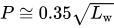
The pitch defines the tooth construction, strength, and number of teeth in contact with the workpiece. The pitch is usually calculated from workpiece length, so that the broach can be designed to have at least two teeth in contact with the workpiece at any time; the pitch remains constant for all teeth of the broach. One way to calculate the pitch is:[17]
Broaching machines

[edit]
The hydraulic cylinder of a horizontal broaching machine

Broaching machines are relatively simple as they only have to move the broach in a linear motion at a predetermined speed and provide a means for handling the broach automatically. Most machines are hydraulic, but a few specialty machines are mechanically driven. The machines are distinguished by whether their motion is horizontal or vertical. The choice of machine is primarily dictated by the stroke required. Vertical broaching machines rarely have a stroke longer than 60 in (1.5 m).[18]

Vertical broaching machines can be designed for push broaching, pull-down broaching, pull-up broaching, or surface broaching. Push broaching machines are similar to an arbor press with a guided ram; typical capacities are 5 to 50 tons. The two ram pull-down machine is the most common type of broaching machine. This style machine has the rams under the table. Pull-up machines have the ram above the table; they usually have more than one ram.[19] Most surface broaching is done on a vertical machine.[9]

Horizontal broaching machines are designed for pull broaching, surface broaching, continuous broaching, and rotary broaching. Pull style machines are basically vertical machines laid on the side with a longer stroke. Surface style machines hold the broach stationary while the workpieces are clamped into fixtures that are mounted on a conveyor system. Continuous style machines are similar to the surface style machines except adapted for internal broaching.[19]

Horizontal machines used to be much more common than vertical machines; however, today they represent just 10% of all broaching machines purchased. Vertical machines are more popular because they take up less space.[9]

Broaching is often impossible without the specific broaching or keyway machines unless you have a system that can be used in conjunction with a modern machining centre or driven tooling lathe; these extra bits of equipment open up the possibility of producing keyways, splines and Torx through one-hit machining.[20]

Rotary broaching

[edit]
Schematic of a rotary broach starting a cut.
θ Off-axis (wobble) angle
θr Rake
θf Front relief
dp Pilot diameter
w Width across corners (AC)

A somewhat different design of cutting tool that can achieve the irregular hole or outer profile of a broach is called a rotary broach or wobble broach. One of the biggest advantages to this type of broaching is that it does not require a broaching machine, but instead is used on lathes, milling machines,[21] screw machines or Swiss lathes.[22]

Rotary broaching requires two tooling components: a tool holder and a broach. The leading (cutting) edge of the broach has a contour matching the desired final shape. The broach is mounted in a special tool holder that allows it to freely rotate. The tool holder is special because it holds the tool so that its axis of rotation is inclined slightly to the axis of rotation of the work. A typical value for this misalignment is 1°. This angle is what produces a rotating edge for the broach to cut the workpiece. Either the workpiece or the tool holder is rotated. If the tool holder is rotated, the misalignment causes the broach to appear as though it is "wobbling", which is the origin of the term wobble broach.[22]

For internal broaching the sides of the broach are drafted inward so it becomes thinner; for external broaching the sides are drafted outward, to make the pocket bigger. This draft keeps the broach from jamming; the draft must be larger than the angle of misalignment. If the work piece rotates, the broach is pressed against it, is driven by it, and rotates synchronously with it. If the tool holder rotates, the broach is pressed against the workpiece, but is driven by the tool holder.[22]

Ideally the tool advances at the same rate that it cuts. The ideal rate of cut is defined as:[23]

Rate of cut [inches per rotation (IPR)] = (diameter of tool [inches]) × sin(Angle of misalignment [degrees])

If it advances much faster, then the tool becomes choked; conversely, if it advances much slower, then an interrupted or zig-zag cut occurs. In practice the rate of cut is slightly less than the ideal rate so that the load is released on the non-cutting edge of the tool.

There is some spiraling of the tool as it cuts, so the form at the bottom of the workpiece may be rotated with respect to the form at the top of the hole or profile. Spiraling may be undesirable because it binds the body of the tool and prevents it from cutting sharply. One solution to this is to reverse the rotation in mid cut, causing the tool to spiral in the opposite direction. If reversing the machine is not practical, then interrupting the cut is another possible solution.

In general, a rotary broach will not cut as accurately as a push or pull broach. However, the ability to use this type of cutting tool on common machine tools is highly advantageous. In addition, push or pull broaches cannot be used in a blind hole, while a rotary broach can, as long as there is sufficient space for chips at the bottom of the hole.

See also

[edit]

References

[edit]
[edit]
Revisions and contributorsEdit on WikipediaRead on Wikipedia
from Grokipedia
Broaching is a process in that employs a specialized multipoint cutting tool known as a broach, which features a series of teeth with progressively increasing sizes, to remove material from a workpiece in a single linear pass, thereby creating precise internal or external features such as holes, slots, keyways, splines, and complex profiles. The broach is either pushed or pulled through or across the workpiece, with each tooth removing a specific amount of material determined by the rise per tooth, enabling high accuracy and superior surface finishes typically ranging from 0.8 to 1.6 microns. This method is particularly suited for producing parts requiring tight tolerances, often achieving dimensional accuracies of ±0.0075 mm, and is most effective on materials with a of 26-32 Rockwell C. The broaching process originated in the 1860s in the United States, initially for manufacturing grooves and , and has since evolved into a key technique for due to its efficiency in handling repetitive, intricate cuts. In operation, the broach typically consists of three sections—roughing teeth for initial material removal, semi-finishing teeth for intermediate shaping, and finishing teeth for final precision—allowing both roughing and finishing in one stroke without the need for multiple setups. Broaching machines are classified as horizontal or vertical, with horizontal types using pull action for internal features and vertical for push or pull operations on external surfaces; the choice depends on workpiece size and feature complexity. There are two primary types of broaching: linear broaching, where the broach moves in a straight line relative to the stationary or fixtured workpiece, commonly used in dedicated machines for high-volume production; and rotary broaching, which involves rotating the broach at a slight angle (typically 1°) against the workpiece to form axisymmetric shapes like hexagons or splines, often performed on lathes or mills. Broaches themselves vary in design, including solid, shell, and insert-type constructions, with shell broaches allowing for easier replacement to extend tool life, which can reach up to 8,000-60,000 cycles depending on . While highly precise, the process has limitations, such as its unsuitability for heavy stock removal or very large workpieces, and the high initial cost of custom broaches (often around $2,000). Broaching finds extensive applications in industries requiring precision components, including automotive (for gears and transmissions), aerospace (for turbine slots), appliances, hand tools, and military equipment, where it excels in producing complex, high-volume parts with minimal secondary operations. Its advantages include rapid production rates, reduced machining time compared to milling or shaping, and consistent quality, though it requires careful control of cutting speeds and feeds—typically low speeds for high-speed steel tools (around 3-10 m/min) or higher for carbides—to prevent tool breakage or poor finishes. Ongoing advancements focus on modular tools and electrochemical variants to further enhance efficiency and adaptability for modern manufacturing demands.

Fundamentals

Definition and Principles

Broaching is a subtractive process that employs a specialized multi-toothed cutting tool, known as a broach, to remove material from a workpiece in a single continuous pass, thereby forming precise internal or external features such as keyways, splines, or flat surfaces. This method is particularly valued for its ability to achieve high accuracy and in one operation, distinguishing it from multi-pass techniques like milling. The core principles of broaching revolve around progressive removal, where the broach's teeth increase incrementally in size and depth of cut from the entry end to the exit end, allowing each tooth to remove only a small increment of —typically 0.001 to 0.010 inches per tooth for roughing operations, varying by . The teeth feature optimized rake angles to facilitate shearing action and clearance angles to reduce ; for metals such as , rake angles generally range from 8° to 18° depending on , with 10° to 15° common for medium- steels in roughing teeth, while clearance angles are typically 0.5° to 3°. Chip breakers, often in the form of rounded grooves (1/32 to 3/32 inches wide) on the roughing teeth, interrupt continuous chips to promote curling and evacuation, preventing tool clogging and excessive heat buildup. The single-stroke nature of broaching demands significant axial force to propel the broach through the workpiece, often requiring machines capable of up to 100 tons or more for large-scale operations, with actual usable capacity typically limited to 70% of the machine's maximum to account for inefficiencies. Key terminology includes the broach body, which encompasses the shank for machine attachment, the pilot section at the leading end for precise alignment and guidance, and the teeth arranged in sections: roughing teeth for bulk removal, semi-finishing teeth for intermediate refinement, and finishing teeth for final sizing and surface quality, each with diminishing chip loads to ensure dimensional accuracy.

Comparison to Other Processes

Broaching distinguishes itself from other processes through its single-pass operation, which enables the removal of material across multiple stages—roughing, semi-finishing, and finishing—in one continuous stroke, contrasting with the multi-pass requirements of milling, , or shaping. This efficiency stems from the progressive tooth design of the broach, allowing for high-precision geometries that are challenging to achieve with multi-step methods like or turning. For instance, while milling often requires several tool changes and setups to form slots or splines, broaching can complete such features simultaneously on multiple axes, reducing cycle times significantly in high-volume production. In terms of precision and , broaching typically achieves tolerances of ±0.013 mm (0.0005 in.) and surface finishes with Ra values of 0.8–3.2 μm, outperforming or shaping, which may require secondary operations like grinding to reach comparable levels. , while versatile for external and helical gears, generates coarser initial surfaces (Ra often exceeding 6.3 μm) and demands multiple passes for finishing, whereas broaching's multi-tooth progression ensures smoother results in a single operation, particularly for internal features like keyways or splines. However, broaching incurs higher upfront tool costs due to custom broach fabrication, making it less economical than universal cutters in milling or turning for low-volume runs. Broaching is ideally selected for of repetitive, precise components, such as automotive transmission gears or spline shafts, where setup efficiency and repeatability justify the investment, unlike the more flexible but slower CNC milling suited for prototypes or varied geometries. In contrast to grinding, which offers superior finishes (Ra <0.4 μm) but at slower rates and higher energy use, broaching balances speed and accuracy for medium-hardness materials (up to HRC 38). Its geometry-specific nature limits versatility compared to turning's universal tooling, restricting it to straight-line cuts without the adaptability of multi-axis processes.
ProcessKey Advantages Over BroachingKey Advantages of Broaching Over ProcessTypical Applications
MillingGreater flexibility for complex 3D shapesSingle-pass precision; better Prototypes vs. high-volume slots/splines
HobbingSuited for external gears; lower tool costSuperior for internal gears; smoother finishExternal helicals vs. internal splines
ShapingHandles irregular profiles; simpler setupFaster cycle times; higher accuracy in one passSmall batches vs. gears

Historical Development

Origins in the 19th Century

Broaching as a process originated in the early , with initial development occurring for cutting keyways in pulleys and gears essential to steam-powered machinery. These rudimentary tools leveraged a series of progressively offset cutting teeth to remove material in a single pass, providing greater efficiency than hand filing or chiseling for creating precise internal and external features. Early adopters, including machinists in industrial workshops, applied broaching to low-volume production of components like shafts and wheels, where accuracy was critical for mechanical power transmission. The first broaches were hand-pushed devices, manually forced through pre-drilled holes or along surfaces using hammers or presses, restricting their use to small-scale operations on softer metals such as or low-carbon . Constructed from high-carbon hardened to achieve cutting edges, these tools were prone to and rapid wear under load, often chipping or dulling after limited use and necessitating frequent replacement or reshaping. Such limitations confined broaching to intermittent tasks in assembly, where inconsistent results from manual force application could lead to dimensional variations. A pivotal advancement came in 1873 with Anson P. Stephens' patent for the first mechanical broaching machine (US Patent 141,091), which employed a powered ram to drive the tool linearly, enabling more uniform cuts and higher productivity than hand methods. This innovation addressed some manual constraints by stabilizing the cutting action, though early machines remained basic and were primarily suited for straight keyways in gears and pulleys.

20th and 21st Century Advancements

Following , broaching saw significant expansion in armories for s, where it became a preferred method for high-volume production of military rifles due to its efficiency in creating helical grooves in a single pass. By the late 1870s, broaching had begun to develop for applications, but widespread use for emerged post-, supplanting slower hand-filing techniques that yielded irregular grooves. This period marked the introduction of hydraulic-powered broaching machines in the early , which enhanced precision and allowed for the machining of more complex profiles compared to manual methods. These advancements reduced production times substantially; for instance, innovations by companies like American Broach during wartime demands cut from approximately 6 hours to 1 hour per barrel. In the 1930s and 1950s, form grinding techniques were introduced to refine broach tooth profiles, improving accuracy and enabling tighter tolerances, typically held to ±0.001 inches (0.025 mm), which made broaching competitive with other processes. (HSS) broaches, building on early 1900s developments, further supported higher cutting speeds and durability during this era. Post-World War II, the experienced a boom in spline broaching applications, driven by the need for precise shaft components in transmissions and drivetrains, with companies like American Broach supplying tools to major manufacturers amid surging vehicle production. During the late , the adoption of inserts in broaches extended tool life and reduced costs by allowing replacement of worn sections without discarding entire tools, particularly beneficial for high-volume operations. Modular broach designs emerged around the , facilitating easier assembly and customization for diverse applications. In the 1980s, computer numerical control (CNC) integration into broaching machines automated setups and improved repeatability, aligning with broader advancements in . In the , hybrid broaching machines incorporating AI-based monitoring have enabled real-time assessment and life prediction, optimizing in demanding environments like high-speed broaching with tools. Applications have expanded in , where broaching produces precise disc slots for and components, ensuring aerodynamic in jet engines. Hybrid approaches combining broaching with additive manufacturing post-processing address complex geometries in parts, while efforts include the use of biodegradable cutting fluids, such as vegetable oil-based formulations, to minimize environmental impact during operations.

Broaching Process

Linear Broaching Mechanics

Linear broaching involves the precise alignment of the workpiece using a pilot section at the leading end of the broach, which guides the tool into position and ensures accurate engagement with the . The broach is then advanced through the workpiece either by pulling or pushing, though pulling is preferred due to its superior rigidity, which minimizes deflection and under load. As the broach moves linearly, its teeth engage progressively along the length of the cut, with multiple teeth typically in contact simultaneously—often 3 to 4 for a given pitch—to distribute the cutting action efficiently in a single pass. This progressive engagement allows roughing teeth to remove the bulk of the excess , while subsequent semi-finishing and finishing teeth refine the surface to achieve precise dimensions and quality. The force dynamics in linear broaching are governed by the tensile pull (or compressive push) required to drive the tool through the material. The total cutting force FF can be estimated using the formula F=kAtn,F = k \cdot A \cdot t \cdot n, where kk is the specific cutting pressure (typically 3000–4000 N/mm² for steel), AA is the cross-sectional area of the material being removed per tooth, tt is the depth of cut per tooth, and nn is the number of teeth engaged simultaneously. Broaching speeds generally range from 3 to 60 m/min for steel workpieces, with optimal rates of 5–30 m/min balancing productivity and tool life. These forces increase progressively as more teeth engage, necessitating robust machine design to handle peak loads without distortion. Effective chip management is critical to prevent tool jamming and maintain cutting efficiency. or inserted chip breakers on the broach teeth curl and fragment chips, directing them away from the cutting zone; chip space is designed to be at least six times the chip volume to accommodate ejection without interference. coolant, typically a water-soluble oil at 3–10% concentration, is applied generously to lubricate the tool, reduce , and dissipate —lowering temperatures by up to 50°C and extending tool life accordingly. Without adequate cooling, cutting zone temperatures can exceed 600°C, leading to thermal damage and accelerated wear. Setup for linear broaching emphasizes secure fixturing to maintain alignment and stability. The workpiece is clamped using collets, rams, or jaws at the pull end of the broach, ensuring minimal vibration during the stroke. A brief dwell period of 0.5–2 seconds may be incorporated post-alignment to verify positioning before initiating the pull, particularly in high-precision applications. This configuration supports the single-pass nature of the process, completing operations in under a minute for most parts.

Rotary Broaching Mechanics

Rotary broaching operates through a wobbling mechanism where the broach tool is held at a 1° offset relative to the workpiece centerline, causing it to rotate synchronously at a 1:1 ratio with the rotating component (broach on mills or workpiece on lathes), while the other remains rotationally stationary. This offset induces an oscillatory "wobble" motion, akin to a cam action, that shears material progressively along the tool's , enabling the formation of non-circular internal or external features such as hexagons, squares, or splines in a single pass. The process is particularly adapted for use on standard lathes or milling machines without requiring dedicated broaching equipment, making it versatile for small to medium . On mills, the broach rotates in the spindle against a stationary workpiece; on lathes, the tool holder is stationary while the rotating workpiece drives the broach. The process begins with preparing a slightly larger than the desired feature—typically 1-3% oversized for hexagons—to accommodate the tool entry, followed by chamfering the hole entrance at 60° or 90° to guide the broach and ensure concentricity. The tool holder is then centered within 0.0008 inches of eccentricity to the workpiece axis, and the broach is pressed axially under controlled feed rates of 0.001-0.007 inches per , depending on and size. Cutting occurs primarily on the tool's scalloped , with straight or helical teeth designed for internal (ID) or external (OD) profiles; the wobble reduces forces by up to 80% compared to conventional methods, minimizing stress. For blind holes, the process completes in 10-30 seconds, with mist or oil-based applied sparingly to prevent hydraulic lockup and chip evacuation issues. This setup offers significant advantages, including compatibility with existing CNC lathes and mills for features up to 25 in diameter, rapid cycle times, and lower setup complexity by eliminating the need for specialized linear stroke machines—contrasting with linear broaching's heavy-duty pull or push actions. However, limitations include unsuitability for deep slots exceeding 10 times the feature diameter due to chip accumulation and deflection risks, as well as potential vibrations in softer materials that require control through arbors, driven holders, or loosened spindle bearings.

Broach Types and Design

Surface Broaches

Surface broaches are specialized tools used in the broaching process to machine external or flat surfaces of workpieces, enabling the creation of precise external profiles such as flats and splines. These broaches differ from internal types by operating on the outer surfaces, often in a single pass to achieve high accuracy and efficiency. Common types of surface broaches include slab broaches, which are designed for flat surfaces like squaring ends or providing reference flats on shafts, and pot broaches, which handle curved external forms such as gears or splines in one continuous operation. Configurations can be continuous, where a single broach removes all material in one pass, or progressive chain setups, involving multiple broaches in sequence for gradual material removal across chained tools. In construction, surface broaches feature teeth arranged in rows, typically up to 100 teeth with a pitch of 3-10 mm to ensure proper chip clearance and cutting progression. They are commonly made from (HSS) or for enhanced resistance, achieving a of 62-65 HRC to withstand demanding operations. Operationally, push-type surface broaching is employed for shorter tools under 300 mm in length, where the broach is forced through the workpiece using hydraulic or mechanical pressure. Typical surface speeds range from 10-40 m/min, with a depth of cut per tooth of 0.01-0.2 mm, allowing for controlled material removal while minimizing tool deflection. Examples of surface broaching applications include flat sides on wrenches for improved grip and creating external splines on axles for transmission in automotive components. These uses highlight the process's role in producing high-precision external features with excellent surface finishes.

Internal Broaches

Internal broaches are specialized tools designed to finish or enlarge internal features such as holes, keyways, and splines in metal workpieces. Common types include keyway broaches, which cut narrow slots for keys in shafts, and spline broaches, available in straight or helical configurations for forming gear teeth or drive splines. Modular designs enhance versatility by incorporating replaceable sections that allow customization for different part sizes or shapes without fabricating an entirely new tool. These broaches typically adopt ring or bar shapes to fit within the workpiece bore, with featuring progressively increasing heights along the for gradual material removal. Expanding pilots at the front ensure self-alignment by centering the broach in the starting , while rear pilots maintain stability during the cut. progression involves a rise per of approximately 0.05 mm for finishing passes, enabling precise tolerances in confined internal spaces. Internal broaching operations are exclusively pull-type to manage the significant overhang inherent in the process, where the broach length can reach a length-to-diameter ratio of up to 20:1, preventing or misalignment. Chip slots integrated into the broach body facilitate evacuation of in the limited space of internal features, reducing the risk of tool binding. Unlike surface broaches that handle external geometries, internal variants address unique alignment challenges within bores. Practical examples of internal broaches include their use in producing splines for automotive transmissions, where helical spline broaches form interlocking teeth for torque transfer, and in firearm manufacturing for rifling barrels with precise helical grooves to impart spin to projectiles.

Design Considerations

In broach design, tooth geometry plays a pivotal role in achieving efficient chip formation, minimizing cutting forces, and ensuring tool durability. The rake angle, which influences shear plane development and chip flow, is optimized based on workpiece material; the rake angle is typically positive, ranging from 5-20° depending on the workpiece material; higher angles (10-20°) for softer metals like aluminum to reduce friction and promote easier chip evacuation, and lower (5-10°) for harder steels to enhance edge strength and resist deformation under high loads. Clearance angles, typically ranging from 2-5°, are incorporated on the tooth flanks to prevent rubbing against the workpiece and reduce heat buildup, with roughing teeth often at the higher end of this range for initial material removal and finishing teeth closer to 2° for precision sizing. Pitch, the axial distance between adjacent teeth, is selected to maintain 2-3 teeth in simultaneous contact with the workpiece, thereby distributing load and avoiding vibration. Material selection for broaches balances hardness, toughness, and cost to withstand abrasive wear and thermal stresses during operation. (HSS) M2 is widely used for general-purpose broaches due to its cost-effectiveness, good edge retention, and , making it suitable for a broad range of production volumes. For high-wear applications involving tough alloys or high-volume runs, (PM) T15 HSS is preferred, offering superior red hardness and abrasion resistance that extends tool life compared to conventional HSS grades. Surface coatings, such as (TiN), further enhance performance by reducing friction and . Key design factors address load management and maintainability to prevent premature failure. Even distribution of cutting forces across teeth is essential to limit localized stress below 1500 MPa, avoiding chipping or breakage, particularly in progressive tooth profiles where roughing sections bear higher initial loads. Modular construction, involving sectional assembly of broach segments, facilitates regrinding and replacement of worn components, allowing up to 10 reconditioning cycles while preserving alignment and reducing overall tooling costs. Validation through finite element analysis (FEA) is to modern broach design, enabling prediction of deflection under operational loads. FEA models simulate stress concentrations and workpiece-tool interactions, optimizing geometry to keep deflections below 0.01 mm for high-precision applications like spline or keyway broaching. This analytical approach ensures compliance with tolerance requirements before prototyping, minimizing iterative physical testing.

Machines and Equipment

Types of Broaching Machines

Broaching machines are primarily classified by their orientation and operational mechanism, with horizontal and vertical types forming the foundational categories. Horizontal broaching machines typically employ push or pull mechanisms and are suited for handling heavy workpieces, accommodating loads up to 35 tons. These machines feature ram strokes ranging from 1 to 3 meters, enabling the processing of larger components such as and shafts, and are often actuated hydraulically at pressures between 200 and 350 bar to provide the necessary force for robust cutting operations. Vertical broaching machines, in contrast, are generally pull-only designs that prioritize space efficiency, making them ideal for internal broaching tasks like keyways and splines in compact production environments. With table heights typically between 1 and 2 meters, these machines support high-volume production lines by allowing multiple broaches to operate simultaneously, often in configurations with strokes up to 1.5 meters and pulling forces of 10 to 30 tons. Their vertical orientation reduces floor space requirements compared to horizontal models while maintaining hydraulic or electro-mechanical actuation for consistent performance. Specialized broaching machines extend these capabilities for specific applications, including continuous types used for surface broaching in . These machines utilize a or belt system to move workpieces continuously past the broach, achieving cutting speeds up to 60 meters per minute for efficient external profiling on parts like flat surfaces or helical gears. Duplex machines, featuring two rams operating in tandem, enable simultaneous broaching operations on opposite sides of a workpiece, boosting throughput in without increasing cycle times. Modern advancements in broaching machines incorporate servo drives to enhance precision, achieving positional accuracy of ±0.01 through programmable speed and force control, which minimizes vibration and improves in demanding applications. Additionally, integration with robotic systems for automated loading and unloading streamlines workflows, reducing manual intervention and enabling seamless incorporation into flexible manufacturing cells for just-in-time production.

Tooling and Fixtures

Broach holders serve as critical interfaces for transmitting axial forces from the broaching machine to the tool, typically featuring shanks that mate with the machine's pull head or ram and systems for secure clamping. These holders ensure precise alignment and force distribution, with shanks often machined to tolerances equivalent to IT6 (approximately ±10-20 μm depending on ) to minimize play and maintain accuracy during high-load operations. For example, -based holders, such as those using ER20 systems, accommodate shank diameters from 8 mm to 12 mm, allowing compatibility across various broach sizes while preventing slippage under thrusts up to several tons. Quick-change broach holder designs, including adjustment-free variants, enable rapid tool swaps by eliminating the need for extensive centering adjustments, thereby reducing setup times to under 5 minutes in production environments. These systems often incorporate built-in stops and low-profile configurations for Swiss-type or CNC machines, supporting capacities from 0.028 inch to 0.750 inch and enhancing throughput in high-volume manufacturing. Workpiece fixtures, including vises, arbors, and hydraulic clamps, are designed to immobilize the part with high rigidity, restricting deflection to less than 0.02 mm under typical cutting forces to avoid distortion and ensure tolerance compliance. Bushings provide pilot guidance for internal broaching, supporting the broach entry and maintaining concentricity within 0.0005 inch. These fixtures often feature modular bases for adaptability across part geometries, prioritizing vibration damping through robust materials like hardened steel. Accessories complement the tooling setup, with chip conveyors automating debris removal to prevent tool damage and maintain cycle efficiency, while systems deliver water- or oil-based fluids at flow rates of 50-200 L/min to reduce and buildup. Tool presetters calibrate heights and profiles offline, verifying dimensions to within 0.001 inch before installation. protocols emphasize periodic alignment checks using dial indicators to achieve total indicated (TIR) below 0.001 inch, alongside of holder bearings; modular fixtures support swift batch transitions by allowing reconfiguration in minutes without full disassembly.

Applications and Materials

Common Applications

Broaching is widely employed in the for producing high-volume components such as splines in transmission shafts and constant velocity (CV) joints, where the process enables efficient of precise internal features to ensure reliable power transfer. These applications often involve annual production volumes exceeding 1 million parts globally, driven by the demand for durable elements in passenger vehicles and heavy machinery. Spline broaching, in particular, uses specialized pull broaches to create interlocking teeth that withstand high loads in and manual transmissions. In the aerospace sector, broaching is essential for fabricating precision slots and keyways in blades and components, where tight tolerances of ±0.013 mm are critical to maintain structural integrity under extreme conditions. Internal broaches are commonly applied to nickel alloy disks for and assemblies, ensuring accurate fitment that minimizes and enhances performance. struts also benefit from surface broaching to form mounting slots, supporting the high-strength requirements of undercarriages. The firearms industry utilizes broaching for internal rifling and keyways in gun barrels, employing helical broaches to impart a precise twist rate, such as 1:10, which stabilizes projectiles during flight. This method carves spiral grooves efficiently in medium to large barrels, providing consistent patterns that improve accuracy and barrel life. Keyway broaching is also standard for securing locking mechanisms and sights, ensuring reliable operation in both and firearms. Beyond these primary sectors, broaching serves niche applications in electrical connectors and medical implants, where custom profiles are machined for secure mating and . Rotary broaching is particularly suited for creating small hexagonal holes in fittings and fasteners, allowing for compact, high-precision features in hydraulic and pneumatic systems.

Suitable Materials and Tolerances

Broaching is particularly effective for a range of and non-ferrous metals, where material compatibility influences cutting efficiency and tool life. Preferred materials include low-carbon steels such as 1018 and , as well as gray and ductile cast irons, which offer ease of due to their relatively low hardness and good chip formation. These materials typically support cutting speeds of 20-50 m/min with (HSS) or broaches, enabling productive operations without excessive tool wear. Non-ferrous metals like aluminum alloys (e.g., 6061-T6) and free-cutting (e.g., C360) are also well-suited, benefiting from cutting speeds of 10-30 m/min, which leverage their softness and thermal conductivity for smooth cuts and superior surface quality. Challenging materials, such as stainless steels (e.g., 304 and 316) and (e.g., ), demand specialized approaches to mitigate issues like work-hardening and high cutting forces. These require coated broaches, such as those with TiAlN or Alcrona finishes, and reduced speeds of 5-15 m/min to maintain tool integrity and prevent rapid dulling. For instance, stainless steels exhibit gumminess that clings to tools, while titanium's low thermal conductivity generates heat buildup, necessitating ample and sharp tooling. Achievable tolerances in broaching highlight its precision, with standard dimensional accuracy at ±0.013 and form tolerances at ±0.006 , supported by the progressive tooth design that ensures consistent material removal. Surface finishes typically range from 0.8 to 3.2 μm Ra, often refined further by finishing teeth to meet International Tolerance (IT) grades IT7 to IT8. These levels make broaching ideal for components requiring close fits, such as keyways in automotive and parts. Key factors influencing broaching success include workpiece direction alignment with the broach path to minimize tearing and ensure uniform cutting, as well as pre-heat treatment to an annealed state, which softens the material (ideally below HRC 38) and reduces hardness variations. Annealing promotes finer structure and relieves internal stresses, enhancing across preferred materials.

Advantages, Limitations, and Safety

Benefits and Economic Factors

Broaching provides significant production benefits through its high throughput capabilities, often achieving rates of 120 to 240 parts per hour in applications such as pot broaching for transmission components. This efficiency stems from the process's ability to remove substantial in a single pass, producing precise, parallel surfaces with excellent finish quality that frequently eliminates the need for secondary finishing operations like grinding. Additionally, broaches exhibit robust tool life, capable of processing up to 8,000 parts before requiring replacement or resharpening, which varies based on hardness and cutting conditions. Economically, broaching involves high upfront costs for custom tools, often several thousand dollars depending on complexity, but these are amortized effectively over large production volumes exceeding parts. Cycle times are notably short, averaging 5 to 30 seconds per part, significantly longer than equivalent operations using milling or shaping, which can take several minutes to hours. It becomes economical for production volumes of several thousand parts or more, with ROI depending on tool life and volume. From a perspective, broaching offers 20-30% lower operational costs than processes like milling due to its single-pass nature and lower overall machine runtime. The use of recyclable coolants further enhances by minimizing and enabling fluid reuse in closed-loop systems.

Limitations and Safety Practices

Broaching, while efficient for precision machining, exhibits several operational limitations that restrict its applicability in certain scenarios. The process is particularly inflexible for low-volume production or when frequent design changes are required, as custom broaches involve high initial costs and are economically viable only for high-volume runs. Redesigning or manufacturing a new broach typically demands 4-6 weeks of due to the specialized fabrication process, making it unsuitable for or short runs. Additionally, broaching is not ideal for very hard materials exceeding 45 HRC without prior pre-machining or specialized tooling, as such workpieces accelerate and reduce efficiency. Setup challenges further compound these constraints. Custom broaches often face extended lead times, sometimes spanning several weeks to months depending on complexity, which can delay production schedules. In rotary broaching operations, unbalance can induce vibrations that lead to dimensional errors of approximately 0.1 mm, compromising accuracy and necessitating precise balancing to maintain tolerances. Safety practices are paramount in broaching to mitigate risks from high forces, sharp tools, and flying debris. , including interlocks and barriers, must comply with OSHA standard 1910.212 to prevent access to hazardous during operation. Operators are required to wear (PPE) such as and safety goggles to protect against cuts, impacts, and chip projection. stop buttons should be readily accessible on all broaching machines to halt operations instantly in case of malfunctions, while chip ejection shields are essential to contain flying metal fragments generated during cutting. Hazard mitigation protocols enhance overall safety. Tool breakage can be monitored using integrated sensors that detect anomalies in , , or power draw, allowing for immediate shutdown to prevent catastrophic failures. spill containment systems, such as drip trays and absorbent materials, are necessary to avoid slippery surfaces and environmental hazards from cutting fluids. Operators must receive specialized on handling the substantial involved—up to 50 tons or more in larger setups in pull broaching—to safely load and unload workpieces without risking from hydraulic or mechanical pressures.

References

Add your contribution
Related Hubs
User Avatar
No comments yet.