


Community hub
Recent from talks
Contribute something
Nothing was collected or created yet.
Shinhwa
View on Wikipedia
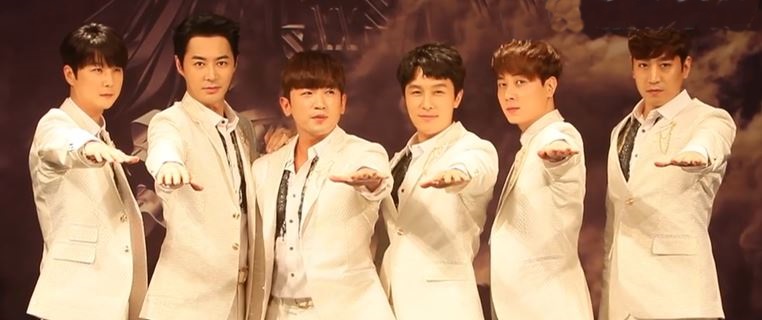
Shinhwa (Korean: 신화) is a South Korean six-member boy band based in Seoul, composed of Eric Mun, Lee Min-woo, Kim Dong-wan, Shin Hye-sung, Jun Jin, and Andy Lee. Launched by SM Entertainment on March 24, 1998, the group signed with Good Entertainment in 2004 before creating their Shinhwa Company to manage their career as a band. The band struggled initially with their first album before finding commercial success with their sophomore album T.O.P. (April 1999). When their contract with SM Entertainment expired in July 2003, all six members signed with Good Entertainment and assumed creative control with the release of Brand New (August 2004). That same year, members began to pursue individual careers.
Key Information


After a four-year hiatus due to majority of the members completing their mandatory military service, the sextet established the Shinhwa Company to facilitate their group career. The release of their tenth album The Return (2012) made them the first Korean boy band to continue performing after the members' mandatory military services. Shinhwa is also the first K-pop idol group to lead a successful career after leaving its original agency, despite being embroiled in legal battles with SM Entertainment over the name "Shinhwa" for several years. Over the course of their twenty-year career, Shinhwa have released thirteen Korean studio albums, one Japanese album, and various compilation albums.
The group is the longest-running boy band in the history of K-pop[1][2][3][4] and is often referred to as part of the "First Generation of K-pop", alongside H.O.T., S.E.S., g.o.d, Fin.K.L, among others.[5][6] Their work and longevity have served as influences to future generations of K-pop idol groups, leading many to describe the band itself as "legendary".[7][8]
History
[edit]1998–2001: Formation, commercial struggles, and mainstream breakthrough
[edit]With the already established acts of H.O.T. and S.E.S., SM Entertainment sought to release another group to capitalize on the two formers' successes. Composed of members Mun Eric, Lee Min-woo, Kim Dong-wan, Jun Jin, Shin Hye-Sung, and Lee Andy, the group was named Shinhwa, the Korean word for myth or legend,[9][6] and made their debut with Resolver on May 9, 1998. The album was supported by three singles: the titled track, "Eusha! Eusha!" (Hangul: "으쌰! 으쌰!"), and "Sharing Forever" (Hangul: "천일유혼"). Resolver's chart performance was lackluster, however, and Shinhwa was accused of lacking originality and duplicating label mate H.O.T.'s sound.[10] The group also became embroiled in controversies when the 1998 Sokcho submarine incident occurred, and "Eusha! Eusha!, which was about a fun trip at the beach, was used as a reminder of the event.[10] Although Shinhwa won Best New Artist at the Mnet Asian Music Awards,[11] Resolver underperformed commercially, and the sextet almost disbanded.[12]
Shinhwa's found mainstream success with their next few albums. Their sophomore album, T.O.P. (April 1999), was met with positive reviews for its title song and the group's edgier concept.[10] A second single, "Yo", was promoted but did not fare as well. The album debuted at No. 4 and peaked at No. 3, selling 377,500 copies and charting for 24 weeks on the Korean monthly chart.[13] The group received the Best Music Video from a New Male Pop Group award from the Mnet Asian Music Awards.[10]
Only One (May 2000) became their first to debut at the top of the chart.[14] Buoyed by three singles, "Only One", "All Your Dreams", and "First Love", it sold over 423,000 copies,[15] and Shinhwa won three awards that year: the SBS Gayo Popularity Award, the KMTV song Bonsang Award, and the Popular Singers Award.[16] That January, Shinhwa held their first concert, First Mythology. Shinhwa's fourth album, Hey, Come On!, was released on June 8, 2001, debuting at No. 3[17] and was promoted with two singles: "Hey, Come On!" and "Wild Eyes", the latter of which spawned various dance covers due to its choreography incorporating the use of chairs.[16] The album was a commercial success, selling over 430,700 copies[18] and ranked No. 11 on the 2001 year-end chart.[19] Shinhwa was also associated with several controversies at the time, including scrutiny over the absence of member Andy and the alleged copying of Shinhwa's popular single, "Hey, Come On!" by Taiwanese boy band, Energy.[16]
2002–2003: Making history, change in management, and solo activities
[edit]Their first compilation album, My Choice (January 2002), featured some of the members' favorite songs and some of their most popular tracks. In contrast to Hey, Come On!'s strong sales, My Choice was met with moderate success, selling more than 171,300 copies while debuting and peaking at No. 4 before it dropped from the Korean monthly Chart.[18] On the Year-End Chart, My Choice ranked No. 31, selling a total of 183,000 copies.[20] A few months after the release of My Choice, Shinhwa released their fifth studio album, Perfect Man, on March 29, 2002. The album marked the return of member Andy. Perfect Man debuted atop the Korean monthly chart, becoming Shinhwa's second chart-topping album. Along with the title track, the group promoted the album with the second single "I Pray 4 U". Final sales were over 355,000 copies[21] and the album was ranked No. 14 on the year end Top 100 Albums in 2002 Chart, with over 362,00 copies sold.[20]
Shinhwa made history in the Korean music industry by becoming the longest-running Korean boy band with the release of its sixth album, Wedding (December 2002).[22] The album debuted and peaked at No. 3 and sold over 273,700 copies.[23] Wedding also marked the expiration of their contract with SM Entertainment, who offered all the members except Dongwan a second contract.[16] The group collectively chose to sign with Good Entertainment, resulting in a court battle to retain the use of their name, which they won.[16] Because the contract with Good Entertainment would not begin until 2004, members pursued solo activities in 2003: Min-woo went solo under the name "M," releasing his first album entitled Un-touch-able, while Hye-sung collaborated with Kangta and Lee Ji-hoon for a project group S. Jun Jin branched out into acting with the drama Forbidden Love alongside actress Kim Tae-hee. Andy and Jun Jin participated in a Korean sitcom Nonstop 4 as well as Banjun Drama. Eric began acting in dramas soon after acting in several CFs. Shinhwa is the first to have its members promote as solo artists while still continuing group activities. The members too strived in the solo activities.
The members regrouped and released the compilation album Winter Story 2003–2004 on December 30, 2003, which sold over 100,000 copies.[24] They held their second concert The Everlasting Mythology from April 18 to 20, 2003, and also embarked on the Winter Story Tour, traveling to six cities: Seoul, Pusan, Daejeon, Incheon, Daegu, and Kwangju. They later traveled to Japan for the Shinhwa First Live in Tokyo, holding a Japanese fan meeting called Have Fun With Shinhwa On M.Net Tour.
2004–2006: Creative control, commercial success, and first Asia Tour
[edit]Shinhwa's first album with Good Entertainment, Brand New (August 2004), debuted at No. 3 on the monthly Korean chart, peaking at No.1 in November and selling over 320,000 copies.[25][26] The album saw increased creative control by the members, with Eric and Min-woo contributing to its production and Jun Jin with the choreography, leading to more dance songs being included in the final release instead of their usual pop music.[16] The album was promoted with four singles: "Angel", "Oh!", "Crazy", and title track,[16] and ranked No. 4 on the 2004 year-end chart.[27] It won several accolades for the group, including Best Artist of The Year for the first time at the Seoul Gayo Daesang Awards. Several weeks later, on December 29, Shinhwa was awarded their second daesang at the 2004 SBS Gayo Daejun Awards, winning two of the possible four daesang in that year with Rain and Lee Soo Young receiving the other two. In 2004, of all musical artists and groups, Shinhwa received the most awards, totaling thirteen or more, from various places: the m.net KMTV Music Video Festival, Seoul Gayo Daesang, Golden Disc Awards and MBC, KBS, SBS Gayo Awards. The awards other than Best Artist of the Year included Best Male Artist, Best Dance Artist, and Overseas Choice Award.
After the success of Brand New, Shinhwa embarked on a tour, holding a Korea-China-Japan summer camp called Shinhwa Summer Story 2004. The camp was dedicated entirely for their non-Korean fans.[28] Although, Shinhwa was mostly on hiatus throughout 2005, they released two popular singles, "How Do I Say" and "Hey Dude!" and held the Tropical Summer Story Festival concert.[29] For a majority of 2005, Shinhwa hosted a reality show called Let's Coke Play Battle Shinhwa!, a competition to find the next Shinhwa, with the winning group debuting as the short-lived boy band Battle under Good Entertainment.[30] To end the year, Shinhwa released Winter Story 2004-2005, which sold over 102,300 copies.[31]
After renewing their contract with Good Entertainment for another 3 years, the group's State of the Art was released on May 11, 2006. The album debuted atop the chart and sold over 215,600 copies domestically.[32] Brand New and State Of The Art became their first consecutive No. 1 albums, with the latter becoming the third best selling album in 2006, behind SG Wannabe's The 3rd Masterpiece and TVXQ's "O"-Jung.Ban.Hap..[33] Following a performance at Tokyo's Budokan Hall to celebrate the founding of Mnet Japan,[34] their Japanese language album Inspiration #1 and the lead single, "This is the Sun in Our Hearts" released on June 14, 2006. The album released in Japan on August 16 peaked at No. 4 on Oricon Chart, selling in excess of 100,000 copies each. Shinhwa later embarked on their first Asia tour, Shinhwa 2006 Tour: State of the Art, kicking off with two concerts at the Olympic Gymnastics Arena, Seoul and visiting Japan, China, Singapore, Hong Kong, Thailand and other countries.[35] They also performed at Budokan Hall in Tokyo, and Osaka-jo Hall on September 24 and 26, as part of the 2006 Japan Tour Inspiration#1.
2007–2012: Solo activities, 10th anniversary, and mandatory military service
[edit]In 2007, members expanded their solo activities even further while Shinhwa was on hiatus, with each members starting their own company – M Rising (Min-woo), New Dream Entertainment (Andy),[36] JF Story Entertainment (Jun Jin),[37] H2 Entertainment (Dong-wan), and Top Class Entertainment (Eric) – to manage their solo careers. Dong-wan also released his first album entitled Kim Dongwan is on July 5, 2007.[36] Min-woo released his third album on July 10, 2007[38] and though he had intended to release his third album in the U.S.,[39] he released it in Korea instead. Hye-sung released his second album on August 8, 2007.[40]
Although their ninth album was set to be released in October 2007,[36] it was ultimately delayed and they released Winter Story 2007 on December 6, 2007,[41] which debuted at No. 3[42] and sold 24,500 copies.[43] Shortly after the release of Winter Story 2007, Shinhwa staged their Asia Concert with a two-day performance on the December 8 and 9 in Saitama, Japan, followed by a concert in Shanghai. Celebrating their anniversary, Shinhwa staged a 10th anniversary concert and released their ninth studio album Volume 9.[44] Because the concert was the last concert before the members left for the army, all 22,000 seats available for the concert were sold out.[45]
After their 10th anniversary and the release of their 9th album, the members continued to work on their individual activities until their mandatory military service, with Eric enlisting in October 2008 and Dong-wan in November at Gongju, Chungcheongnam-do[46] Both served non-active duty, e.g. they were public service workers, after undergoing four weeks of basic training. Jun Jin enlisted on October 22, 2009, at the Nonsan military camp in Chungcheongnam-do Province for four weeks of basic training and continued as a public service worker.[47] On January 11, 2010, Andy enlisted for mandatory military service and was the only member to serve 21 months of active duty.[48] Min-woo was the last of the members to enlist in February 2010. He also served non-active duty after undergoing four weeks of basic training. Hye-sung was exempt from military service due to serious and recurring injuries in his knee sustained during a concert in 2001.

On October 30, 2010, Eric was discharged from military service.[49] Dong-wan was discharged on December 17 after serving 24 months as an administrative worker at the Seodaemun-gu District Office.[50] Andy was discharged from active duty on October 31, 2011, from the Ministry of National Defense in Yongsan-gu, Seoul.[51] Jun Jin was discharged on November 14, 2011,[52] after working at the Gangnam Management Corporation, managing the culture center's fitness club and parking lot.[53] This was followed by Min-woo on March 2, 2012, after serving as a public service officer in Seoul Station.[54]
2012–2017: Shinhwa Company and touring
[edit]After their contract with Good Entertainment expired, Shinhwa created their own company to manage their activities as a group, with Eric and Min-woo as co-CEOs and the remaining members as shareholders. Members' individual activities continue to be manage by their respective agencies.[55][56] A press conference to launch Shinhwa's comeback was held on March 5, 2012, at CGV cinema in Cheongdam-dong, which was streamed live by Mnet Media.[57][58][59][60] The group released their tenth studio album The Return on March 23, 2012. To promote the album, Shinhwa embarked on the 2012 Shinhwa Grand Tour in Seoul: The Return, which kicked off at Olympic Gymnastics Arena on March 24 and 25, 2012,[61][62] and continued with shows in Japan, China, Taiwan and Singapore.[63][64] They also hosted their first exclusive variety program, Shinhwa Broadcast, which aired on cable channel JTBC.[65] The producers held a public shoot and press conference to showcase the program.[66]
The following year, Shinhwa resumed their music activities as a group with the release of their 11th studio album and 15th anniversary concert in March,[67][68] in addition to the 2013 Shinhwa 15th Anniversary Concert: The Legend Continues at the Olympic Gymnastics Arena in March.[69][70][71] On the same day information on ticketing and a teaser video were released.[72][73] The 25,000 tickets were sold out within five minutes of going on sale, by over 300,000 people who tried to buy the tickets.[74][75] Their eleventh album The Classic was released on May 16, 2013,[76] followed by an Asian concert tour, 2013 Shinhwa Grand Tour: The Classic in support of the album.
.jpg)
Their 16th anniversary concert, Here, was held on March 22–23, 2014 at the Olympic Park Gymnastics Stadium, which sold out its 27,000 seats and crashed the website server.[77] Due to a gambling scandal, however, Andy was absent from the shows,[78] making a surprise appearance during the last show to apologize to the audience.[79]
In 2015, Shinhwa announced it would be appearing on Seoul Broadcasting System (SBS)'s 800th Inkigayo episode, including the return of Andy from his extended hiatus.[80] This was followed by the release of their album in over two years, We (February 2015).[81] The LDN Noise-produced[82] lead-single "Sniper" rose to the top of five real-time music charts, Bugs, genie, Olleh Music, Mnet, and Cyworld,[83] and the music video for the single reached over a million YouTube views within two weeks of the song's release.[84] Shinhwa also won the Show Champion for the song "Sniper" on March 11, 2015.[85] Their thirteenth album, Unchanging, was released on January 1,[86] and peaked at No. 3 on the World Albums Chart.[9] They held their 17th anniversary concert 'WE' on March 21 and 22 in Korea, and went on to hold concerts in various parts of China. They held their 17th anniversary FINALE concert 'WE SHINHWA' on August 22 and 23 in Korea. On May 29, Shinhwa won the trademark rights to their group name after 12 years. The members expressed their joy upon earning their name back after years of legal battle.[87]
2018–present: 20th anniversary and Shinhwa WDJ
[edit]
In commemoration of their 20th anniversary, Shinhwa released a re-recorded darker version of their song "All Your Dreams" from the album Only One, in addition to filming a new music video.[9] They also kicked off a fan meeting party from March 24–25 to signal the start of their 20th anniversary project, All Your 2018[88][89] and performed for KBS Music Bank's twentieth anniversary alongside other artists.[90]
On August 28, they released their album, Heart, with the title track "Kiss Me Like That" and promoted on music shows for three consecutive weeks. Their 20th anniversary concert, Heart Tour in Seoul, which will take place October 6–7, sold out within 5 minutes and crashed the website's servers upon ticket release. On April 20 and 21, 2019, they held their 21st anniversary concert, Chapter 4. On August 17, 2022, Liveworks Company announced Shinhwa's first sub-unit, Shinhwa WDJ, which consisted of Minwoo, Dongwan and Junjin, to debut this winter.[91] The release schedule for the album Come to Life was released on December 6.[92]
Legacy
[edit]Shinhwa is the longest-running Korean boy band in existence,[1][2][3][4] and is often listed as one of the legendary "first generation" K-pop idol groups including H.O.T., S.E.S., Sechs Kies, Fin.K.L, and g.o.d.[5][6] Although the word shinhwa means myth or legend, the group themselves have been described as a "legendary" K-pop idol group for their longevity,[7][8] and their constant change in image and rebranding have been credited for their continued success.[93] Shinhwa was the first K-pop group to try a lot of new things: from being an idol-actor, to radio DJ, to branching out as solo artists while still being active as a group.[citation needed]
When they debuted, the trend at the time was for male idol group members to remain "mysterious" and "dark", a concept the group utilized when promoting their early materials. They rebranded themselves when the "flower boy" concept, which describes "young males with pretty faces and 'unpretentious cuteness'", became popular; they have continued to adjust their images as they age, incorporating suits and polished haircuts into their looks later on.[93] Shinhwa's intense dance moves have also become one of their staples, with their song "Wild Eyes" spawning various dance covers due to its choreography incorporating the use of chairs[16] and the choreography for "Venus" being described as "high intensity".[94] Shinhwa were also credited for pioneering vogue dancing in Korea.[93] With the rise of competition from the "second generation" of idol groups in South Korea, Shinhwa began to make a foray into Asia in 2005, embarking on tours and fan meetings.[93] They were voted as the Best Korean Singer Overseas twice in poll held by Arirang International Broadcasting. The poll allowed only foreigners to vote, with Shinhwa's songs "Once in a Lifetime" in 2006 and "Pretty" in 2007 topping the polls.[95][96]
Shinhwa's popularity have also led to the creation of the official fan club, Shinhwa Changjo.[97] The color orange has been associated with Shinhwa Changjo ever since its establishment in 1998, and is used in both Shinhwa's official and unofficial merchandise, including light-sticks, balloons, raincoats, and various kinds of apparels and accessories. These orange-colored cheering tools are used in each member's individual promotion activities as well.[98][99][100] Similar to the band, Shinhwa Changjo is the longest running Korean fan club,[93] and upon the release of their 12th album in February 2015, Shinhwa opened the recruitment for the 10th wave of its official fanclub.[101] Shinhwa does not have an official light-stick like other groups, instead they have a new light-stick for every concert Shinhwa holds.
Their work have inspired newer generations of artists, including 2PM,[102] Big Bang,[103] Dreamcatcher,[104] EXID,[105] MAP6,[106] and Seventeen,[107] many who strive to one day last as long as the sextet.[108] Kangta, a member of H.O.T., have also praised the group for choosing to switch labels when SM Entertainment offered contracts to all but one member instead of splitting up, a rare action among idol groups.[109][110]
Discography
[edit]- Resolver (1998)
- T.O.P. (1999)
- Only One (2000)
- Hey, Come On! (2001)
- Perfect Man (2002)
- Wedding (2002)
- Winter Story (2003)
- Brand New (2004)
- Winter Story 2004–2005 (2004)
- State of the Art (2006)
- Inspiration #1 (In Japan) (2006)
- Volume 9 (2008)
- The Return (2012)
- The Classic (2013)
- We (2015)
- Unchanging (2017)
Awards
[edit]Controversy
[edit]"Hey, Come On!"
[edit]In July 2002, Taiwanese boy band Energy covered Shinhwa's song, "Hey, Come On!" causing tensions between the fans of Shinhwa and Energy. As it was later noted, Jeff Vincent and Peter Rafelson who wrote "Hey, Come On!" had sold the song to Energy, therefore, it was legal. Even so, fans of Shinhwa were angry over that fact. The Taiwanese group 5566 also covered Shinhwa's "Dark", a song included in Shinhwa's 4th album.[16]
Leaving SM Entertainment
[edit]In 2003 SM Entertainment's 5-year contract with Shinhwa ended. Lee Soo Man, the head of SM Entertainment, offered contract renewals to all but Dongwan. Choosing to sign with a new agency instead, the choice sparked controversies when Lee denied their permission to use the name Shinhwa with the different company. At the height of the battle in September 2014, the band had to rename the agency Shinhwa Company as ShinCom Entertainment[111] to avoid legal issues. In May 2015, after 12 years of legal battles, Shinhwa finally won the lawsuit over Joon Media and re-renamed their agency as Shinhwa Company. Open World Entertainment CEO, Seok-Woo Jang, holder of the rights to the name of Shinhwa, granted permission to use the name as long as they perform together as a group. Open World held the rights to Shinhwa's overseas concerts with Shinhwa Company, and overseas licensing of the group's albums. The heads of Top Class Entertainment and Liveworks Company are directors of Shinhwa Company, with the former in charge of promotion and management in general, and the latter providing support regarding albums, concerts and promotions.[112]
References
[edit]- ^ a b He, Amy (July 23, 2013). "What the Backstreet Boys Could Learn From K-Pop". The Atlantic. Archived from the original on December 13, 2014. Retrieved September 6, 2013.
- ^ a b Hong, Grace Danbi (July 26, 2013). "The Atlantic Tells Backstreet Boys to Learn from Shinhwa". enewsWorld. CJ E&M. Archived from the original on November 9, 2013. Retrieved September 6, 2013.
- ^ a b Lee, Sun-min (July 27, 2013). "Shinhwa keeps leading way". Joongang Daily. Archived from the original on December 17, 2014. Retrieved September 6, 2013.
- ^ a b Huh, Yoon-jin (July 29, 2013). "Shinhwa's longevity introduced in US magazine". Korea Times. Archived from the original on November 29, 2014. Retrieved September 6, 2013.
- ^ a b "Shinhwa to hold fan event in celebration of 20th anniv". Yonhap News Agency. Archived from the original on August 25, 2020. Retrieved July 13, 2018.
- ^ a b c Han, Eun-Hwa; Park, Hyun-Taek (March 2, 2015). "Shinhwa at it again with 12th album". Korea JoongAng Daily. Archived from the original on April 15, 2015. Retrieved July 13, 2018.
- ^ a b "Just Like its Name, Shinhwa Has Become Legendary". Mwave. Archived from the original on October 4, 2016. Retrieved July 16, 2018.
- ^ a b Stamper, Aubree (February 9, 2018). "2018 Winter Olympics in South Korea: A guide to all things K-pop". The Michigan Journal. Archived from the original on December 16, 2020. Retrieved July 16, 2018.
- ^ a b c Herman, Tamar (March 27, 2018). "K-Pop Boy Band Shinhwa Celebrates 20th Anniversary With Remake of 'All Your Dreams' Music Video: Watch". Billboard. Archived from the original on March 28, 2019. Retrieved July 13, 2018.
- ^ a b c d Singh, Lavanya (April 5, 2018). "The Shinhwa story: 20 years young & still going strong | Shinwha bio". KultScene. Archived from the original on July 13, 2018. Retrieved July 13, 2018.
- ^ Griggs, Lisa (January 31, 2014). "[FIRST GEN FRIDAY] Shinhwa 신화 — UnitedKpop". United Kpop. Retrieved July 13, 2018.
- ^ "Eric Steps Out of Character for 'Recruit'" Archived October 5, 2013, at the Wayback Machine Chosun Ilbo. April 7, 2005. Retrieved November 8, 2011
- ^ "Album Sales For The Month Of August". Recording Industry Association Korea (in Korean). Archived from the original on April 13, 2005. Retrieved October 12, 2007.
- ^ "Album Sales For The Month Of May 2000". Recording Industry Association Korea (in Korean). Archived from the original on July 18, 2007. Retrieved October 12, 2007.
- ^ "Album Sales For The Month Of October 2000". Recording Industry Association Korea (in Korean). Archived from the original on July 18, 2007. Retrieved October 12, 2007.
- ^ a b c d e f g h i "Shinhwa: The Last Group Standing". Seoul Beats. March 26, 2012. Archived from the original on July 13, 2018. Retrieved July 13, 2018.
- ^ "Album Sales For The Month Of June 2001". Recording Industry Association Korea (in Korean). Archived from the original on May 5, 2008. Retrieved October 12, 2007.
- ^ a b "Album Sales For The Month Of January 2002". Recording Industry Association Korea (in Korean). Archived from the original on May 14, 2008. Retrieved October 12, 2007.
- ^ "2001 Yearly Chart". Recording Industry Association Korea (in Korean). Archived from the original on September 29, 2007. Retrieved October 12, 2007.
- ^ a b "2001 Yearly Chart". Recording Industry Association Korea (in Korean). Archived from the original on September 29, 2007. Retrieved October 12, 2007.
- ^ "Album Sales For The Month Of August 2002". Recording Industry Association Korea (in Korean). Archived from the original on September 27, 2007. Retrieved October 12, 2007.
- ^ "Together Forever". The Star Online eCentrak – Malaysia Entertainment. Archived from the original on December 30, 2008. Retrieved May 22, 2007.
- ^ "Album Sales For The Month Of March 2003". Recording Industry Association Korea (in Korean). Archived from the original on September 27, 2007. Retrieved October 12, 2007.
- ^ "Shinhwa's "Winter Story" Encore". Archived from the original on February 5, 2012. Retrieved May 22, 2007.
- ^ "Album Sales For The Month Of August 2004". Recording Industry Association Korea (in Korean). Archived from the original on June 7, 2008. Retrieved October 12, 2007.
- ^ "Album Sales For The Month Of November 2004". Recording Industry Association Korea (in Korean). Archived from the original on July 11, 2007. Retrieved October 12, 2007.
- ^ "2004 Yearly Chart". Recording Industry Association Korea (in Korean). Archived from the original on September 29, 2007. Retrieved October 12, 2007.
- ^ "싸니까 믿으니까 – 인터파크 티켓". Interpark Tickets. Archived from the original on April 24, 2021. Retrieved June 27, 2019.
- ^ "神话SHINHWA出道18周年 26日27日举行演唱会|娱乐|半岛网". Peninsula Network Integrated. March 24, 2016. Retrieved June 27, 2019.
- ^ Hong, Grace Danbi (May 25, 2012). "[Video] G.Na, Seungri, Hyosung, and Gain's Past on 'Battle Shinhwa'". Yahoo! News. Archived from the original on February 23, 2022. Retrieved June 27, 2019.
- ^ "Album Sales For The Month Of March 2005". Recording Industry Association Korea (in Korean). Archived from the original on December 19, 2005. Retrieved October 12, 2007.
- ^ "2006.9월 – 가요음반 판매량". Recording Industry Association Korea. Archived from the original on September 27, 2007. Retrieved May 22, 2007.
- ^ "2006 Yearly Chart". Recording Industry Association Korea (in Korean). Archived from the original on September 29, 2007. Retrieved November 21, 2007.
- ^ "Park Yong-ha, Shinhwa Too Popular to Land at Haneda". The Chosun Ilbo. April 13, 2006. Archived from the original on March 5, 2015. Retrieved November 11, 2012.
- ^ "Shinhwa kicks off Asian tour". Korea Tourism Organization. May 16, 2006. Archived from the original on December 14, 2013. Retrieved November 11, 2012.
- ^ a b c "Shinhwa Members Go Solo For Now". Asian DB. Archived from the original on September 27, 2007. Retrieved May 22, 2007.
- ^ "20070819". JF Story Entertainment (in Korean). Archived from the original on August 24, 2007. Retrieved August 19, 2007.
- ^ Garcia, Cathy Rose A (June 21, 2006). "Shinhwa Members Go Solo This Summer". The Korea Times. Archived from the original on June 28, 2007. Retrieved June 21, 2007.
- ^ "Singer M to Advance to US". KBS Global. Korea Broadcasting System. Archived from the original on April 3, 2008. Retrieved July 5, 2007.
- ^ "Shin HS Returns with 2nd Overseas Concert". KBS Global. Korea Broadcasting System. Archived from the original on October 9, 2007. Retrieved July 14, 2007.
- ^ "Shinhwa Finally Returns As One". Archived from the original on July 18, 2012. Retrieved December 7, 2007.
- ^ "Album Sales For The Month Of December 2007". Recording Industry Association Korea (in Korean). Archived from the original on April 30, 2008. Retrieved January 25, 2008.
- ^ "Album Sales For The Month Of January 2008". Recording Industry Association Korea (in Korean). Archived from the original on April 30, 2008. Retrieved February 29, 2008.
- ^ "Shinhwa Members Celebrate 10th Anniversary of their Debut". KBS Global. Korea Broadcasting System. March 20, 2008. Archived from the original on March 23, 2008. Retrieved March 22, 2008.
- ^ "Shinhwa's 10th Anniversary Concerts Sold Out". AsianPopcorn. Retrieved March 22, 2008.
- ^ "Boot camp beckons for boy band balladeer". Joongang Daily. November 19, 2008. Archived from the original on April 5, 2012. Retrieved November 8, 2011.
- ^ Park, So-yeon (October 22, 2009). "Fans from Asia see off Jun Jin to army". 10 Asia. Archived from the original on June 2, 2014. Retrieved November 11, 2011.
- ^ "Singer Andy to Start Military Service". The Chosun Ilbo. January 5, 2010. Archived from the original on March 4, 2015. Retrieved November 5, 2011.
- ^ Choi, Jun-yong (November 1, 2010). "Shinhwa Eric discharged from military". 10 Asia. Archived from the original on December 14, 2014. Retrieved April 5, 2012.
- ^ "Shinhwa singer discharged". Joongang Daily. December 9, 2010. Archived from the original on April 5, 2012. Retrieved November 8, 2011.
- ^ "Andy of the group Shinhwa speak to fans after completing his mandatory military service in Yongsan, Seoul on Monday". The Chosun Ilbo. November 1, 2011. Archived from the original on March 4, 2015. Retrieved November 5, 2011.
- ^ Kim, Jessica (November 11, 2011). "Jun Jin to be discharged from military next week". 10 Asia. Archived from the original on June 5, 2014. Retrieved November 11, 2011.
- ^ Oh, Mi-jung (November 14, 2011). "Jun Jin Released from Public Service". Mnet News. CJ E&M. Archived from the original on March 22, 2015. Retrieved April 1, 2012.
- ^ Choi, Eun-hwa (February 28, 2012). "Lee Min Woo's Release on March 2 to Mark the Comeback of Shinhwa". Mnet. CJ E&M. Archived from the original on March 22, 2015. Retrieved March 10, 2012.
- ^ "Shinhwa Form Their Own Agency". The Chosun Ilbo. August 3, 2011. Archived from the original on March 4, 2015. Retrieved November 5, 2011.
- ^ "Shinhwa hopes to remain Korea's longest-running boy band". The Korea Herald. March 5, 2012. Archived from the original on December 15, 2014. Retrieved June 13, 2013.
- ^ Sunwoo, Carla (February 25, 2012). "Shinhwa's comeback press conference to be streamed live". Joongang Daily. Archived from the original on December 16, 2014. Retrieved May 4, 2012.
- ^ "Shinhwa press conference to be broadcast live online". Korea Times. February 24, 2012. Archived from the original on November 9, 2013. Retrieved December 13, 2012.
- ^ "Shinhwa press conference to be broadcast live online". Yonhap News Agency. February 24, 2012. Archived from the original on November 9, 2013. Retrieved June 5, 2013.
- ^ "Shinhwa press conference to be broadcast live online". The Korea Herald. February 24, 2012. Archived from the original on December 15, 2014. Retrieved June 13, 2013.
- ^ Hong, Lucia (February 1, 2012). "Shinhwa releases teaser video for upcoming concert". 10 Asia. Archived from the original on February 2, 2015. Retrieved December 13, 2012.
- ^ Suk, Monica (March 26, 2012). "CONCERT REVIEW: Shinhwa: Reborn with The Return". 10 Asia. Archived from the original on February 2, 2015. Retrieved December 13, 2012.
- ^ Hong, Lucia (January 19, 2012). "Shinhwa to hold Asia tour in May". 10 Asia. Archived from the original on November 9, 2013. Retrieved December 13, 2012.
- ^ Sunwoo, Carla (July 10, 2012). "Shinhwa wraps up Asian tour". Joongang Daily. Archived from the original on November 18, 2014. Retrieved July 23, 2012.
- ^ Park, Hyun-min (March 4, 2012). "Shinhwa to have Shinhwa Broadcast". Mnet News. CJ E&M. Archived from the original on February 21, 2015. Retrieved November 12, 2012.
- ^ Kim, Ji-yeon (March 16, 2012). "Shinhwa on Shinhwa Broadcast". Mnet News. CJ E&M. Archived from the original on March 22, 2015. Retrieved November 12, 2012.
- ^ Ho, Stewart (January 21, 2013). "Shinhwa to Return in March For 15th Anniversary Concert". enewsWorld. CJ E&M. Archived from the original on March 22, 2015. Retrieved January 31, 2013.
- ^ Kil, Hye Sung (January 22, 2013). "Legendary idol group, Shinhwa, to hold concert in March". Star News. Archived from the original on April 2, 2015. Retrieved February 4, 2013.
- ^ Lee, Hye Ji (January 30, 2013). "Shinhwa to Open 15th Debut Anniversary Concert". 10 Asia. Archived from the original on July 29, 2023. Retrieved January 31, 2013.
- ^ Sunwoo, Carla (January 31, 2013). "Shinhwa fulfills performance pledge". Joongang Daily. Archived from the original on December 14, 2013. Retrieved January 31, 2013.
- ^ Kim, Bo-ra (January 30, 2013). "Shinhwa holds a concert in March". The Korea Herald. Archived from the original on December 12, 2013. Retrieved January 31, 2013.
- ^ Ho, Stewart (January 30, 2013). "Shinhwa Confirms 15th Anniversary Concerts in March and New Album in April". enewsWorld. CJ E&M. Archived from the original on March 22, 2015. Retrieved January 31, 2013.
- ^ Hong, Grace Danbi (January 30, 2013). "Shinhwa Shinhwa Releases Information on 15th Anniversary Concert". enewsWorld. CJ E&M. Archived from the original on March 22, 2015. Retrieved January 31, 2013.
- ^ Lee, Claire (February 15, 2013). "Shinhwa's concert tickets sold out in 5 minutes". The Korea Herald. Archived from the original on December 12, 2013. Retrieved May 12, 2013.
- ^ Sunwoo, Carla (February 16, 2013). "Shinhwa tickets gone in five minutes". Joongang Daily. Archived from the original on March 22, 2015. Retrieved May 12, 2013.
- ^ Kil, Hye Sung (May 5, 2013). "Shinhwa release their 11th studio album on May 16". Star News. Archived from the original on January 16, 2014. Retrieved May 8, 2013.
- ^ Kim, Ji-yeon (February 13, 2014). "Shinhwa Sells Out 27,000 Seats for 16th Anniversary Concert". Archived from the original on March 24, 2014. Retrieved February 13, 2014.
- ^ Jackson, Julie (January 27, 2014). "Shinhwa to hold 16th anniversary show minus Andy". The Korea Herald. Archived from the original on January 6, 2015.
- ^ "Andy surprised Shinhwa fans". Joongang Daily. March 24, 2014. Archived from the original on December 15, 2014. Retrieved March 22, 2015.
- ^ Ha, Soo-jung (January 21, 2015). "Shinhwa to Appear on 800th Episode Special of Inkigayo". Mwave. CJ E&M. Archived from the original on January 22, 2015. Retrieved March 22, 2015.
- ^ Hong, Grace Dan-bi (February 10, 2015). "Shinhwa to Return with 12th Album 'WE' on 2/26". Mwave. CJ E&M. Archived from the original on February 10, 2015. Retrieved March 22, 2015.
- ^ "Shinhwa's comeback track 'Sniper' tops 5 music charts! - allkpop.com". Archived from the original on May 3, 2015. Retrieved April 18, 2015.
- ^ elliefilet (February 26, 2015). "Shinhwa's comeback track 'Sniper' tops 5 music charts!". Allkpop. Archived from the original on May 3, 2015. Retrieved April 18, 2015.
- ^ Jamlas, Michael (March 12, 2015). "Shinhwa's 'Sniper' Shoots Past 1 Million Views On YouTube". Kpopstarz. Archived from the original on April 14, 2015. Retrieved April 18, 2015.
- ^ "Shinhwa win with 'Sniper' on 'Show Champion'! - allkpop.com".
- ^ Choi, Ji-ye (December 18, 2016). 신화 "정규 13집 풀 앨범, 2017년 1월1일 발매" 공식 발표. Naver (in Korean). Archived from the original on July 13, 2018. Retrieved July 13, 2018.
- ^ "Shinhwa Wins Trademark Rights to Their Group Name After 12 Years". Soompi. May 29, 2015. Archived from the original on July 1, 2020. Retrieved July 1, 2020.
- ^ Kim, Mi-ji (March 25, 2018). '20주년' 신화 "유영진과 곡 작업 기대…러브콜 보내고 있다". X-sports News (in Korean). Archived from the original on April 24, 2021. Retrieved July 13, 2018.
- ^ Lee, Jae-hoon (January 15, 2018). 신화, 데뷔 20주년기념 팬파티…3월 올림픽공원. Naver (in Korean). Archived from the original on January 16, 2018. Retrieved July 13, 2018.
- ^ "SHINHWA to make special appearance on Music Bank 20th anniversary! [Music Bank]". KBSWORLD. Archived from the original on July 13, 2018. Retrieved July 13, 2018.
- ^ Kim, Saet-byul (August 17, 2022). "신화, 유닛 결성…이민우·김동완·전진 WDJ 겨울 출격" [Shinhwa, unit formation… Lee Min-woo, Kim Dong-wan, and Jeonjin WDJ Winter Sortie] (in Korean). The Fact. Archived from the original on August 17, 2022. Retrieved August 17, 2022 – via Naver.
- ^ Jang, Jin-ri (November 7, 2022). "이민우-김동완-전진' 신화 WDJ, 12월 6일 첫 앨범 발표" ['Lee Min-Woo-Kim Dong-Wan-Jun Jin' Shinhwa WDJ releases the first album on December 6th]. Sport TV News (in Korean). Archived from the original on November 7, 2022. Retrieved November 7, 2022 – via Naver.
- ^ a b c d e Ostapenko, Nikolai V. (May 27, 2015). "The Cult of Shinhwa, an Original K-Pop Band: South Korea's Prime Cultural Export". Proceedings of 4th Global Business and Finance Research Conference. ISBN 978-1-922069-76-4. Archived from the original on July 16, 2018. Retrieved July 16, 2018.
- ^ "신화, 19일 오후 타이틀곡 '비너스' MV 티저 공개". Nate News (in Korean). March 19, 2012. Archived from the original on July 13, 2012. Retrieved March 19, 2012.
- ^ Shinhwa Chosen Best Korean Singer Overseas Archived April 2, 2007, at the Wayback Machine KBS GLOBAL Retrieved on May 22, 2007
- ^ "Overseas Viewer Award". Archived from the original on November 17, 2007. Retrieved November 17, 2007.
- ^ "Daum 카페". cafe.daum.net. Archived from the original on December 5, 2015. Retrieved December 28, 2015.
- ^ "전진 – Mobile Uploads | Facebook". www.facebook.com. Archived from the original on April 24, 2021. Retrieved December 28, 2015.
- ^ "김동완 • Kim Dong Wan's Photos – 김동완 • Kim Dong Wan | Facebook". www.facebook.com. Retrieved December 28, 2015.
- ^ "Liveworks Company's Photos – Liveworks Company | Facebook". www.facebook.com. Archived from the original on February 26, 2022. Retrieved December 28, 2015.
- ^ "Shinhwa to Recruit Fans for 10th Fanclub After Seven Years". mwave.interest.me. Archived from the original on January 7, 2015. Retrieved December 28, 2015.
- ^ "2PM picks Shinhwa as their role model". Daily K Pop News. Archived from the original on July 17, 2018. Retrieved July 16, 2018.
- ^ 빅뱅, “우리의 롤모델은 신화” [Big Bang, “Our role model is Shinhwa”]. Segye Ilbo (in Korean). Naver. January 1, 2008. Archived from the original on July 16, 2018. Retrieved July 16, 2018.
- ^ 드림캐쳐 "걸그룹 최초 메탈 록 사운드 도전". Edaily (in Korean). Naver. February 16, 2017. Archived from the original on June 11, 2021. Retrieved July 16, 2018.
- ^ "EXID "롤모델 신화..10년후에도 함께 노래하기로 구두계약"" [EXID "Role model is Shinhwa ... singing together after 10 years"]. Osen (in Korean). Naver. February 14, 2016. Retrieved July 16, 2018.
- ^ Hwang, Hye Jin (November 19, 2015). "M.A.P.6 Meets Role Models Shinhwa". Mwave. Archived from the original on July 17, 2018. Retrieved July 16, 2018.
- ^ Elizabeth, Hailie (May 28, 2015). "New K-Pop Boy Band Seventeen Debut After 4 Years Of Preparation". Kpop Starz. Retrieved July 16, 2018.
- ^ "[Interview] Shinhwa Shares on Being Role Models, Longevity and Pride in Dance Title Songs". Mwave. February 27, 2015. Archived from the original on July 16, 2018. Retrieved July 16, 2018.
- ^ Kwon, Suhvin (December 12, 2016). "'냉장고' 강타 "솔로 하면 H.O.T 인기 1/5은 내 몫인 줄 알았다"". Nate news (in Korean). Retrieved July 16, 2018.
- ^ Park, Sohyun (December 12, 2016). "'냉장고' 강타 "H.O.T. 시절 女연예인 인기 1위는 토니안"". 네이트뉴스 (in Korean). Archived from the original on April 24, 2021. Retrieved July 16, 2018.
- ^ Kim, Ji-yeon. "Shinhwa Company Changes Name to 'ShinCom Entertainment' to Prevent Trademark Problems". Mwave. CJ E&M. Archived from the original on September 16, 2014. Retrieved March 22, 2015.
- ^ "Shinhwa announces launching of Shinhwa Company". Asiae. August 2, 2011. Archived from the original on April 25, 2023. Retrieved March 19, 2012.
External links
[edit]
- Shinhwa at IMDb
- Shinhwa Company official homepage (in Korean)

| Korean albums | |
|---|---|
| Japanese albums | |
| Compilation album | |
| Winter Story album series | |
| Tours | |
| Television | |
| Related articles |
|


| People |
| ||||
|---|---|---|---|---|---|
| Subsidiaries | |||||
| Labels | |||||
| Real estate | |||||
| Platforms and services | |||||
| Related articles | |||||
| |||||
| Authority control databases: Artists |
|---|
Shinhwa
View on GrokipediaMembers
Eric Mun
Eric Mun, born Mun Jung-hyuk on February 16, 1979, in Seoul, South Korea, is the leader and main rapper of the boy band Shinhwa.[6] His family relocated to the United States during his childhood, where he spent his formative years in Fullerton, California, attending Sunny Hills High School before returning to Korea in 1996.[7] He adopted the stage name Eric Mun, drawing from his English name acquired during his time abroad, which suited his role as the group's rapper with English-language skills.[8] Prior to Shinhwa's debut, Mun trained for approximately two years at SM Entertainment, initially drawn to the agency by his interests in music and acting, though his early aspirations leaned toward performance arts influenced by his high school experiences in a rock band.[9] Mun's solo career primarily flourished in acting, beginning with a supporting role in the 2003 MBC drama Breathless.[10] He gained prominence with lead roles in subsequent projects, including the 2004 MBC drama Phoenix, where he portrayed a complex character in a tale of revenge and redemption, and the 2005 KBS2 series Super Rookie, which showcased his versatility in a comedic action setting. In 2006, he starred in the action drama Wolf (canceled after four episodes due to an on-set injury) and the comedic series Invincible Parachute Agent.[10] Further highlights include his 2007 role in Que Sera Sera as a wealthy heir entangled in romance, and 2008's The Great King, Sejong, blending historical elements with personal drama.[10] His acting continued post-2010 with notable performances in Spy Myung-wol (2011), Discovery of Romance (2014), and Another Oh Hae-young (2016), earning praise for his natural charisma and emotional depth. Following his military enlistment in 2008 and discharge in February 2011, Mun focused on media and entrepreneurial pursuits.[7] He took on MC roles in variety programs, including co-hosting the group's self-produced show Shinhwa Broadcast from 2012 to 2014, which highlighted his leadership and humor in unscripted formats. In business, Mun co-founded Shinhwa Company in 2011 with bandmate Lee Min-woo, serving as CEO to manage the group's independent activities after leaving Good Entertainment, a move that allowed greater creative control and sustained their career longevity.[11] He later established E&J Entertainment in 2014 for his personal endeavors and joined TOP Media in 2019 for solo promotions.[11] In the 2020s, Mun endorsed brands like Lotte Duty Free and appeared in campaigns for Samsung, leveraging his image as a mature, reliable figure. In April 2025, Mun and his wife welcomed their second son.[12][13] His contributions to Shinhwa extend beyond performance, as he has been instrumental in key decisions, such as navigating the group's independence and organizing milestone events like their 20th anniversary activities in 2018.Lee Min-woo
Lee Min-woo (이민우), born on July 28, 1979, is a South Korean singer, dancer, and producer best known as a member of the boy band Shinhwa, where he serves as the main dancer, lead vocalist, and primary producer.[8][14][15] His contributions to Shinhwa emphasize dynamic choreography and creative production, helping shape the group's identity as dance-oriented performers.[8][15] Before debuting with Shinhwa in 1998 under SM Entertainment, Lee developed his skills through street dancing in Jeonju, where he gained local recognition as part of a dance team. He was scouted by SM during a dance competition at Everland, leading to his entry as a trainee and eventual formation of the group.[16][17] This background in competitive and street dance laid the foundation for his role as Shinhwa's lead choreographer and performer.[16] Lee launched his solo career in 2003 under the stage name M with the debut album Un-Touch-Able, marking him as the first Shinhwa member to pursue individual music endeavors. He followed with his second studio album IInd Winds in 2005 and third album Explore M in 2007, blending pop, R&B, and dance elements in tracks like "Fighter" and "Showdown" (featuring Shinhwa's Eric). After releasing the anniversary album M+TEN in 2014, Lee entered an extended hiatus from solo releases, focusing on group activities until returning in April 2024 with the digital single "Again" (featuring BTOB's Lim Hyunsik), ending a 10-year gap in his solo discography.[18][14][4] As a producer, Lee has composed and arranged numerous tracks for Shinhwa, including "Free" from their 2002 album Perfect Man, as well as contributions to later group releases that highlight his expertise in upbeat, dance-driven music. His production extends to his solo work, where he often handles writing, composition, and arrangement to maintain a cohesive artistic vision rooted in performance energy.[19] (Note: Using for production credits as it lists them accurately from KOMCA; primary source implied) Beyond music, Lee has ventured into musical theater, making his stage debut as the revolutionary student Marius in a 2024 production of Les Misérables at Seoul's National Theater of Korea. In 2022, he formed the Shinhwa subunit WDJ alongside members Kim Dong-wan and Jun Jin, focusing on collaborative performances that leverage their vocal and dance strengths.[20][21]Kim Dong-wan
Kim Dong-wan (김동완), born on November 21, 1979, in Seoul, South Korea, serves as the lead vocalist and visual of the long-running boy group Shinhwa.[22][8] As a key contributor to the group's vocal line, he is renowned for his emotive delivery and ability to blend seamlessly into multi-part harmonies, particularly in Shinhwa's ballad tracks where his mid-range timbre adds depth and emotional resonance.) His visual appeal, characterized by sharp features and charismatic stage presence, has also made him a fan favorite, enhancing the group's overall aesthetic during performances and promotions. Before debuting with Shinhwa in 1998 under SM Entertainment, Kim was scouted as a trainee after initially auditioning as a rock band vocalist, though he hesitated before accepting the offer to pursue idol activities.[23] His pre-debut training honed his vocal skills, positioning him as a stable lead voice within the ensemble. Following mandatory military service from November 2008 to December 2010, where he served as a public service personnel, Kim resumed activities with renewed focus on both group and individual endeavors.[22] In his solo career, Kim debuted with the full-length album Kim Dong Wan Is on July 5, 2007, emphasizing his ballad style through tracks like the title song "Handkerchief," which showcased his heartfelt phrasing and acoustic arrangements.[24] He followed with the repackaged DW Diary later that year and the mini-album The Secret ~Between Us in 2008, maintaining a focus on introspective ballads that highlight his vocal control and emotional range. Subsequent releases, including the 2015 mini-albums D and W, the 2017 EP Trace of Emotion with its lead single "Afterimage," and the 2020 mini-album …LER, continued this trajectory, often featuring collaborations that underscore his versatility in melodic, sentiment-driven music.[25][26] Kim has demonstrated versatility beyond music through extensive variety show appearances and acting roles, notably as a frequent guest on MBC's Radio Star since its early episodes in 2007, where he has appeared over a dozen times to share candid stories from his career.[27] In acting, he portrayed Jo Young-gyu, a loyal retainer, in the 2012 historical drama The Great Seer, earning praise for his nuanced performance amid the ensemble cast.[28] His entertainment presence extends to fan engagement, as seen in his thoughtful interactions, such as urging fans to prioritize health ahead of events. In November 2025, as part of Shinhwa's 27th anniversary celebrations, Kim held solo small-theater concerts titled The Fourth Night Out on the 7th, 9th, 15th, and 21st at Music Station 1939 in Gapyeong, followed by the two-day fan camp "Jinjja Oebak" on November 21–22, fostering direct connections through performances and activities.[5][29]Shin Hye-sung
Shin Hye-sung, born Jung Pil-kyo on November 27, 1979, serves as the main vocalist of the South Korean boy band Shinhwa.[30] His vocal prowess, characterized by powerful high notes and emotive delivery, has been central to Shinhwa's signature ballads, such as "T.O.P. (Twinkling of Paradise)" and "Perfect Man," where he often handles the soaring ad-libs and heartfelt choruses.[31] Prior to his debut, Shin auditioned successfully for SM Entertainment in the United States through Brothers Entertainment in early 1997, marking his entry into the K-pop industry after initial training focused on vocal development.[23] Shinhwa's rising popularity in the mid-2000s allowed Shin to launch his solo career while still active with the group, beginning with his debut album Love of May in May 2005, which blended R&B influences with romantic ballads and featured covers of classic tracks.[32] This R&B-tinged path continued through subsequent releases like The Sea of Memory (2006) and later works such as the EP Serenity (2017), emphasizing smooth melodies and emotional depth, often incorporating covers and original compositions.[33] Shin has also contributed numerous original soundtracks (OSTs) to Korean dramas, including "The First Person" for Full House (2004), showcasing his versatile ballad style that resonates with themes of love and longing.[31] Throughout the 2010s and 2020s, Shin has maintained a steady solo performance schedule with concert series like The Year's Journey (2012–2013, 2018–2019), where he performed intimate sets of his discography in venues across Seoul and Asia, highlighting his live vocal stability and audience engagement.[34] His solo trajectory paused briefly during mandatory military service from August 2009 to July 2010, after which he resumed activities with renewed focus on R&B-infused ballads. Since 2023, Shin has been on hiatus due to legal issues including DUI and gambling charges. In October 2025, he announced a potential Shinhwa comeback in 2026 and plans for a new solo album.[35][36] Shin's technique, praised for its wide range and nuanced emotional expression, continues to define his contributions to Shinhwa's hits and his individual artistry.[33]Jun Jin
Park Choong-jae (박충재), known professionally as Jun Jin, was born on August 19, 1980, in Seoul, South Korea.[8] He serves as the lead rapper, lead dancer, and sub-vocalist in the boy group Shinhwa.[8] Prior to his debut, Jun Jin gained recognition as a talented dancer in Songpa-gu, Seoul, where he participated in local dance crews and collaborated with emerging actors in performance activities before joining SM Entertainment as a trainee focused on dance.) His dance background contributed significantly to Shinhwa's dynamic stage presence from their early years. Within Shinhwa, Jun Jin is renowned for his energetic rap verses that add rhythmic intensity to the group's tracks, such as his contributions to "T.O.P. (Twinkling of Paradise)" from their second album T.O.P. in 1999, where his delivery complemented the song's upbeat hip-hop elements. His rapping style, characterized by sharp flow and charisma, helped establish Shinhwa's reputation for synchronized choreography and vocal-rap balance during their formative period under SM Entertainment. Jun Jin's fitness-oriented image, honed through rigorous dance training and personal workouts, has become a hallmark of his persona, often highlighted in group performances that emphasize athleticism and precision.[37] Jun Jin launched his solo career in 2006 with the single "Love Doesn't Come" (사랑이 오지 않아요), an upbeat R&B track that showcased his vocal growth beyond rapping and peaked at number six on Korean charts.[37] He followed this with his first full-length album, New Decade, in 2008, featuring dance-pop songs like the title track "Wa," which emphasized his strengths in energetic, rhythmic performances rather than ballads.[38] His solo discography continues to prioritize upbeat, club-friendly tracks, such as the 2015 single "Wow" featuring fellow Shinhwa member Eric Mun, blending electronic beats with his signature rap.[39] Beyond music, Jun Jin co-hosted KBS's Music Bank in 2003 alongside S.E.S. member Shoo, where his engaging presence and dance expertise helped popularize the show during its early 2000s run.[40] He enlisted for mandatory military service on October 22, 2009, serving as a public service worker after completing basic training at the Nonsan Army Training Center, and was discharged on November 14, 2011.[41] In the 2020s, Jun Jin has leveraged his fitness image through modeling and endorsements for health and wellness brands, positioning himself as a reliable figure in the advertising sector amid Shinhwa's ongoing activities, including the 2011 founding of Shinhwa Company and his participation in the 2022 subunit WDJ. In October 2025, Jin announced that he and his wife Ryu Yi-seo are planning their first child after five years of marriage.[42]Andy
Andy (born Lee Sun-ho on January 21, 1981) is the maknae and youngest member of Shinhwa, holding positions as lead dancer, sub-rapper, and producer within the group.[8][43] As the final member to join Shinhwa, he contributes to the group's dynamic with his dance skills and rap verses, often taking on production roles in their music. Before debuting, Andy was living in the United States and formed a dance crew with Korean friends in Los Angeles, where he was talent-scouted by SM Entertainment during an audition.[44] He underwent training at SM alongside the other members, preparing for Shinhwa's debut in 1998.[45] Andy's solo discography began with his debut album Andy The First New Dream in January 2008, followed by his second studio album Single Man in October 2009, which featured several self-produced tracks showcasing his production talents.[46] He released the mini-album A'NDY to Z in December 2018 under TOP Media, marking a significant comeback with tracks he co-composed.[47] Following his 2015 suspended sentence for legal issues stemming from a 2014 indictment for mediating prostitution, Andy focused on rebuilding his career through music production and selective releases.[48] In addition to music, Andy ventured into acting during the 2000s, appearing in the sitcom Nonstop 4 in 2003 and the drama Lovers in Prague in 2005, where he played supporting roles that highlighted his versatility.[49] He has composed and produced songs not only for his solo work but also for Shinhwa albums and other artists, demonstrating his behind-the-scenes contributions to K-pop.[47] In the 2020s, Andy has engaged in YouTube content creation, sharing personal vlogs and behind-the-scenes glimpses of his life, alongside group activities like Shinhwa's 25th anniversary celebrations in 2023.[50] Andy's personal milestones include completing his mandatory military service from January 2010 to October 2011, during which he served in the public service agent role after basic training.[51] He married news announcer Lee Eun-joo in a private ceremony on June 12, 2022, after announcing their relationship earlier that year.[52]History
1998–2001: Formation and early career
Shinhwa was formed by SM Entertainment in late 1997 through a series of auditions conducted across Korea, Japan, and the United States, selecting six members who had trained under the label's rigorous system. The group, consisting of leader Eric Mun, Lee Min-woo, Kim Dong-wan, Shin Hye-sung, Jun Jin, and Andy Lee, prepared for debut amid the rising popularity of first-generation K-pop acts. This formation came shortly after SM's success with H.O.T. in 1996 and S.E.S. in 1997, positioning Shinhwa as the label's next boy band project.[53] The group officially debuted on March 24, 1998, with the lead single "Resolver" performed on the music program KM Music Tank, followed by their self-titled debut album Resolver (also known as Haegyeolsa) released the same month. The album featured a mix of dance-pop tracks and ballads, but it faced commercial challenges, selling approximately 85,625 copies in 1998 according to Music Industry Association of Korea data. This modest performance was overshadowed by the massive success of labelmates H.O.T., whose albums sold millions, highlighting the intense intra-label competition and the high expectations for new acts in the burgeoning K-pop market. Despite the low sales, the debut established Shinhwa's image as energetic performers with synchronized choreography.[54][55] Shinhwa's early career was marked by persistent struggles, including limited promotional support from SM Entertainment and financial pressures that strained the group's resources. Their second album T.O.P. (Twinkling of Paradise), released on April 20, 1999, became their first major hit, with the title track gaining popularity and the album selling over 300,000 copies by year's end, providing a breakthrough after initial setbacks. In 2000, the third album Only One further solidified their rising status, with the title track achieving chart success and marking a shift toward more mature concepts. During this period, the group launched their first official fan club, "Shinhwa Changjo" (meaning "Shinhwa Creation"), in 1998, which helped build a dedicated fanbase amid reports of near-disbandment discussions due to ongoing financial difficulties and mismanagement concerns at the label. These challenges tested the members' resolve, but their persistence laid the foundation for future success.[55][56][57]2002–2006: Mainstream success and first tour
Following their early career struggles with moderate success, Shinhwa achieved mainstream breakthrough in 2002 with the release of their best-of compilation My Choice in January, which featured the re-promoted track "Wild Eyes" from their 2001 album Hey, Come On!, gaining significant popularity that year through extensive broadcasting and fan engagement. The group's fifth studio album, Perfect Man, released in March 2002 under SM Entertainment, marked their commercial peak at the time, debuting at number one on the monthly Korean chart and selling over 300,000 copies in its first few months alone, driven by the title track "Perfect Man" and the upbeat single "Only (I)," both of which showcased their evolving pop-R&B sound with strong vocal harmonies and dance routines. This success solidified Shinhwa as one of K-pop's leading boy bands, with Perfect Man ranking among the top-selling albums of 2002.[55][58] Later that year, Shinhwa released their sixth studio album, Wedding, in December, a seasonal winter release featuring romantic ballads like the title track "Your Wedding," which appealed to fans during the holiday period and sold over 270,000 copies, further boosting their domestic profile before their contract with SM Entertainment expired. In 2003, the group collectively declined individual renewal offers from SM and signed with Good Entertainment, a decision that allowed them greater creative control over their music production, choreography, and promotions, enabling a more mature artistic direction in subsequent releases. This shift was pivotal, as it preserved the group's unity and set the stage for their independent trajectory. Under the new label, they released their seventh studio album, Brand New, on August 27, 2004, which sold approximately 328,000 copies and earned multiple Daesang (Grand Prize) awards, reinforcing their mainstream success.[59][60][55] Under Good Entertainment, Shinhwa expanded internationally, beginning with Japanese market entry through promotional activities and their first Japan tour in 2005, which included performances of Korean hits adapted for local audiences and laid groundwork for their official Japanese debut album Inspiration #1 the following year. Their eighth studio album, State of the Art, released in May 2006, became a major milestone as their first release to exceed 200,000 copies in annual sales under the new label, topping the monthly charts with energetic tracks like "Once in a Lifetime" and demonstrating their refined blend of hip-hop and electronic elements. The album's success, with over 215,000 units sold domestically, underscored Shinhwa's enduring appeal and commercial viability.[61][60] Capitalizing on this momentum, Shinhwa launched their first Asia Tour, titled State of the Art, in summer 2006, starting with sold-out shows in Seoul before extending to international venues in Shanghai, China; Bangkok, Thailand; and additional stops in Japan and Singapore, drawing thousands of fans and marking their initial foray into large-scale regional touring. The tour highlighted their high-energy stage presence, elaborate sets, and fan interactions, performing hits from State of the Art alongside earlier singles, and it reinforced their status as K-pop pioneers in live performances across Asia. During this period, individual members like Eric Mun began exploring solo ventures, including acting roles, adding to the group's multifaceted presence.[62][63]2007–2012: Anniversaries, military service, and independence
In 2008, Shinhwa celebrated their 10th anniversary with the release of their ninth studio album, Volume 9, on April 3, which featured tracks reflecting on their career and included collaborations with producers like Kenzie.[64] The group also held a commemorative concert, "Shinhwa 10th Anniversary Live in Seoul," on March 29 and 30 at the Olympic Gymnastics Arena, marking their first Korean performance in two years and drawing emotional responses from fans and members alike as they addressed upcoming military obligations.[65][66] Following the anniversary, Shinhwa's group activities paused as members began staggered mandatory military service between 2008 and 2012, with Shin Hye-sung exempted due to a chronic knee injury sustained in 2001.[67] Eric enlisted on October 9, 2008, as a public service officer and was discharged on October 30, 2010; Kim Dong-wan enlisted on November 17, 2008, also in public service, and was discharged on December 7, 2010.[68][69] Jun Jin enlisted on October 22, 2009, for public service and was discharged on November 14, 2011; Andy enlisted for active duty on January 11, 2010, and was discharged on October 31, 2011; Lee Min-woo enlisted in early 2010 for public service and was discharged on March 2, 2012.[70][71] During this hiatus, members pursued individual careers, releasing solo albums and appearing in dramas and musicals to maintain visibility. Eric starred in dramas such as Que Sera, Sera (2007), The Strongest Chil-woo (2008), and Heading to the Ground (2009) before his enlistment.[72] Lee Min-woo issued his third solo album Unstoppable in 2007 and performed in musicals like The Prince (2008); Kim Dong-wan released a solo mini-album Person in 2007 and acted in The Person I Love (2007); Shin Hye-sung dropped his second solo album The Saga of a Lazy Gentleman in 2007 and focused on ballad singles; Jun Jin hosted variety shows and released a solo track in 2009; Andy debuted his solo single "Single Man" in 2008.[73] Seeking greater autonomy after their contract with Good Entertainment, the members founded Shinhwa Company on June 29, 2011, with Eric and Lee Min-woo as key executives, allowing them to self-manage group and solo endeavors.[74] This move paved the way for their full-group comeback with the tenth studio album The Return on March 23, 2012, promoted as the first intact South Korean boy band to reunite post-military service, debuting at number one on the Gaon Album Chart.[3]2012–2017: Shinhwa Company era and global touring
Following their departure from Good Entertainment, Shinhwa managed activities through their company founded in 2011 to independently handle group activities, marking a new era of creative control and self-production. This transition allowed the group to prioritize collaborative projects while navigating the demands of individual careers, including acting, solo music, and variety show appearances. The company's operations enabled Shinhwa to release their tenth studio album, The Return, in March 2012, which served as the foundation for their first major tour in four years.[75] In May 2013, Shinhwa commemorated their 15th anniversary with their eleventh studio album, The Classic, released on May 16 through Shinhwa Company and CJ E&M Music. The album featured the lead single "This Love," a dance track incorporating vogueing choreography that earned eight first-place wins on music shows and topped charts like Soribada for four weeks. To promote it, the group launched the 2013 Shinhwa Grand Tour: The Classic across Asia, including stops in Hong Kong, China, Taiwan, and Japan, concluding with encore performances in Seoul at the Olympic Gymnastics Arena in July and August 2013. This period highlighted Shinhwa's enduring appeal, as pre-order sales for the limited edition crashed servers due to high demand.[76][77][78] The group's momentum continued into 2015 with the release of their twelfth studio album, We, on February 26, coinciding with their 17th anniversary preparations. The lead single "Unfold" (also stylized as the album's promotional hook) blended electronic dance elements, while the title track "Sniper" secured ten music show victories, underscoring Shinhwa's adaptability in the evolving K-pop landscape. Supporting the album, the 2015 Shinhwa 17th Anniversary Concert: We kicked off in Seoul on March 21–22 at the Olympic Gymnastics Arena, drawing massive crowds and sparking a ticketing war that sold out instantly; the tour extended to Asia, including China and Taiwan, with a finale encore on August 22–23 at Olympic Park, selling 20,000 tickets rapidly. Amid these activities, members balanced solo endeavors, such as Shin Hye-sung's individual promotions under Liveworks Company, where he renewed his contract in July 2016 for three years, while the group renewed internal agreements to sustain unity.[79][80][81][82] By 2016, Shinhwa was recognized as the longest-running South Korean boy band without lineup changes, a milestone affirmed during their 18th anniversary concert, HERO, held March 26–27 at the Olympic Gymnastics Arena, which celebrated their resilience with sold-out shows and fan interactions. The following year, their 19th anniversary was marked by the 2017 Shinhwa Summer Live: Move on June 17–18 in Seoul, an outdoor event emphasizing high-energy performances, alongside the Unchanging tour stops in Taiwan and Busan. These efforts, however, were tempered by challenges like member injuries—Kim Dong-wan sustained a knee issue in February 2017, limiting his choreography—and ongoing contract negotiations to align group commitments with solo pursuits, ensuring the sextet's longevity into their third decade.[83][84]2018–2025: Anniversaries, subunit, and recent activities
In 2018, Shinhwa commemorated their 20th anniversary with the "All Your 2018" project, culminating in the release of their special album Heart on August 28, featuring the lead single "Kiss Me Like That," which showcased their signature blend of pop and R&B elements.[85] The project highlighted fan engagement through various events, building excitement for their milestone celebrations. Following the album's launch, the group held the "2018 Shinhwa 20th Anniversary Concert Heart Tour" over two days, October 6 and 7, at Seoul's Olympic Gymnastics Arena, drawing thousands of fans for performances of both classic hits and new tracks from Heart.[86] The following years saw Shinhwa continue anniversary traditions amid shifting circumstances, including the 21st anniversary concert "Chapter 4" on April 20 and 21, 2019, again at the Olympic Gymnastics Arena, where they reflected on their career trajectory through themed segments and fan interactions. From 2020 to 2022, group activities were limited due to the COVID-19 pandemic, with celebrations restricted to online stage clips from past concerts, such as a special release of their debut song "The Solver" for the 22nd anniversary in March 2020, and similar virtual content for the 23rd and 24th anniversaries to maintain fan connections without live events.[87] In 2022, Shinhwa expanded their lineup with the debut of subunit Shinhwa WDJ—comprising members Lee Min-woo, Kim Dong-wan, and Jun Jin—releasing their first mini album Come to Life on December 6, led by the upbeat track "Flash," which emphasized dynamic choreography and youthful energy.[88] This marked a fresh chapter for the group, allowing select members to explore collaborative projects while the full ensemble focused on sporadic appearances. Marking their 25th anniversary in 2023, Shinhwa hosted fan meetings, including the "2023 Shinhwa MJ Fan Party" on July 29 in Macau, China, featuring intimate performances and Q&A sessions tailored for international supporters.[89] Subsequent years included showcase performances, such as their rendition of "Perfect Man" at the HallyuWaves 2025 event, reaffirming their enduring appeal in global K-pop circuits. In 2025, the group initiated recruitment for their official fan club Shinhwa Changjo's latest wave, tied to a "Global Concert" initiative aimed at expanding worldwide engagement.[90] As of 2025, Shinhwa has not released a full-group album since Heart in 2018, shifting emphasis to individual pursuits that underscore their 27-year longevity as K-pop's longest-running idol group. Notable examples include Lee Min-woo's solo digital single "Again," released on April 11, 2024, in collaboration with BTOB's Lim Hyunsik, and Kim Dong-wan's intimate small theater concerts "The 4th Sleepover," scheduled for November 7, 9, 15, and 21, 2025, in Gapyeong, Gyeonggi-do.[4][91]Artistry
Musical style and evolution
Shinhwa's early musical style was rooted in dance-pop and R&B influences characteristic of late-1990s K-pop, blending upbeat rhythms with hip-hop elements. Their debut single "Resolver" from the 1998 album of the same name featured a dark, intense hip-hop vibe with themes of overcoming societal challenges, setting a tone of resilience amid the group's post-apocalyptic-themed presentation.[92] This evolved into more accessible pop structures by their fifth album Perfect Man in 2002, where the title track showcased catchy hooks and R&B-infused melodies reminiscent of millennial boy band sounds, emphasizing harmonious vocals and rhythmic rap sections.[93] Over the 2000s and 2010s, Shinhwa's sound underwent significant evolution, incorporating rock, electronic, and mature pop elements to reflect their growing maturity and market demands. The 2004 album Brand New introduced harder-edged rock guitars and electronic synths, diverging from their initial pop foundation to experiment with edgier production that appealed to a broadening audience.[94] By the 2010s, tracks like "This Love" from the 2013 album The Classic embraced EDM and contemporary pop with trendy beats and electronic drops, marking a shift toward polished, dance-oriented maturity while commemorating their 15-year milestone.[95] Their 2022 subunit WDJ, consisting of members Lee Min-woo, Kim Dong-wan, and Jun Jin, revived a retro pop vibe in the mini-album Come to Life, with the lead single "Flash" drawing on melodic, lighthearted structures reminiscent of early J-pop influences for a nostalgic yet fresh appeal.[96] Member involvement in songwriting and production has been a cornerstone of Shinhwa's evolution, with Andy and Lee Min-woo making notable contributions to tracks across their discography. Andy, known for his rap and compositional skills, co-wrote and produced several group songs, including R&B-leaning tracks that highlighted personal perseverance.[1] Lee Min-woo, a prolific producer, handled lyrics, arrangement, and composition for numerous Shinhwa releases, such as ballads and dance numbers, often collaborating with international producers to infuse global electronic and pop sensibilities. These internal contributions allowed Shinhwa to maintain creative control post-independence, adapting themes of love and endurance—evident in uplifting anthems like "Once in a Lifetime"—to resonate across eras.[97] For the Japanese market, Shinhwa adapted their style toward J-pop conventions, releasing localized versions and original tracks with brighter, synth-driven arrangements. Their 2006 Japanese debut album Inspiration #1 under Nippon Columbia featured reimagined hits like "We Have the Sun in Our Hearts," blending K-pop's rhythmic energy with J-pop's melodic accessibility to target international fans.[98] This adaptation continued in later singles, incorporating polished production suited to Japan's idol scene while preserving core themes of romantic longing and group harmony.Stage performances and choreography
Shinhwa's choreography has been a hallmark of their performances, primarily crafted by members Lee Min-woo and Jun Jin, who have contributed to the group's synchronized and dynamic dance routines since their early days. Lee Min-woo, recognized as the group's main dancer and choreographer, created the iconic choreography for "Wild Eyes" from their 2002 album Perfect Man in just 20 minutes to accommodate member Shin Hye-sung's condition at the time; the routine features energetic movements incorporating chairs, blending high-intensity footwork with playful group synchronization that became a fan favorite.[99] Jun Jin, also a skilled dancer, has collaborated on several routines and selected the "Wild Eyes" choreography as Min-woo's best work during a 2018 group discussion, highlighting its enduring appeal and technical precision.[99] The group's stage performances are characterized by high-energy executions that emphasize live vocals, intricate formations, and direct fan engagement, often turning concerts into interactive spectacles. In tours such as their 2006 Japan tour Inspiration #1, Shinhwa delivered electrifying sets with elaborate staging that included pyrotechnics to amplify the visual impact of their dances and songs, fostering a sense of closeness through call-and-response segments and on-stage banter with audiences.[100] Their subunit WDJ, formed by Min-woo, Kim Dong-wan, and Jun Jin in 2022, presented more focused performances in their Come to Life concerts at Jamsil Indoor Gymnasium on December 30–31, showcasing streamlined choreography for tracks like "Flash" that highlighted the trio's chemistry in a scaled-down yet engaging format.[101] Over time, Shinhwa's live presentations evolved from the rigid, precision-driven style imposed during their SM Entertainment era (1998–2003) to greater creative autonomy after founding Shinhwa Company in 2011, allowing them to tailor routines for international audiences with more fluid and narrative-driven elements. Early performances adhered to highly synchronized, powerful moves typical of second-generation K-pop, but by their 2017 comeback era, member Jun Jin noted a shift toward "more mature and emotional" choreography that prioritized expressiveness over strict uniformity, adapting to global tours like The Return (2012) by incorporating multilingual fan interactions and culturally resonant staging.[102] Signature features of Shinhwa's concerts include acapella segments that demonstrate their vocal harmony without instrumentation, such as renditions of their songs during the 2012 Grand Tour: The Return, and dedicated member solo spots that allow individuals like Andy or Eric Mun to perform personalized dances or covers, adding variety and showcasing personal artistry within the group dynamic. These elements, combined with post-independence innovations, have sustained Shinhwa's reputation for immersive, fan-centric live experiences across decades.Legacy and impact
Influence on K-pop and longevity
Shinhwa holds a pioneering role in K-pop longevity, becoming the first boy band to reunite intact after all members completed their mandatory military service hiatus. In 2012, following a four-year break during which members served consecutively, the group returned with their tenth studio album The Return and launched the Shinhwa Grand Tour: The Return, marking a seamless continuation of their career without any lineup changes or disbandment. This achievement contrasted sharply with the typical trajectory of early K-pop groups, many of which dissolved due to service obligations or internal conflicts, establishing Shinhwa as a model for sustained group cohesion.[103][104] Their enduring presence earned official recognition from Guinness World Records in 2017 as the longest-running South Korean boy band, active for 19 years without member departures or dissolution at that point—a record that underscores their exceptional stability in an industry where groups often last only 5–7 years. By November 2025, Shinhwa marked 27 years since their 1998 debut, remaining fully operational without disbandment, a feat that highlights their "evergreen" status amid shorter idol lifespans driven by intense competition and contract pressures. This longevity has been attributed to strong interpersonal bonds and strategic career planning, allowing them to outlast contemporaries like H.O.T. and g.o.d.[105][106][107] Shinhwa's innovations extended to industry practices, notably pioneering self-management by founding Shinhwa Company in 2011, the first K-pop group to establish their own entertainment label post-military service. This move inspired subsequent acts seeking greater autonomy, such as Super Junior's creation of the SM-affiliated Label SJ in 2015 to oversee their productions, and elements of independence seen in EXO members' solo ventures. Additionally, their 2006 Asia Tour: State of the Art—which sold out arenas across Seoul, Japan, and other regions—preceded the global Hallyu explosion around 2012, demonstrating early international touring viability for K-pop acts and influencing later groups' expansion strategies.[106][108][109] The group also shaped a balanced model of collective and individual pursuits, being among the first to integrate solo albums, acting roles, and variety show appearances while maintaining group activities, a flexibility that later became standard in K-pop. Their fan club, Shinhwa Changjo (established in 1998), evolved the organized fandom system by introducing traditions like rice wreath donations for comebacks and birthdays, serving as a blueprint for structured, community-driven support seen in modern sasaeng prevention and global fan engagement practices. These contributions have cemented Shinhwa's influence, enabling long-term careers that prioritize adaptability over transient popularity.[110][111]Cultural recognition and fanbase
Shinhwa has been honored in K-pop history through appearances and tributes on major broadcasting programs, including KBS's Immortal Songs 2, where member Shin Hye-sung performed in a 2012 episode dedicated to veteran singer Kim Bum Ryong, highlighting the group's enduring legacy in the industry.[112] Other artists have paid homage to Shinhwa, such as ATEEZ covering the group's track "T.O.P." at the 2022 KBS Song Festival, underscoring their influence on subsequent generations of idols.[113] Additionally, Shinhwa has been featured in documentaries and media retrospectives on K-pop's evolution, often cited as pioneers of the genre's longevity and independence.[1] The group's 27th anniversary in March 2025 garnered media attention, with outlets celebrating their status as the longest-running K-pop act through articles and fan tributes emphasizing their perseverance amid career challenges.[114] Shinhwa's cultural icon status extends to endorsements and variety show cameos, where members have appeared on programs like JTBC's Shinhwa Broadcast—a self-produced variety series from 2012 to 2019 that showcased their comedic synergy and drew consistent viewership—and guest spots on shows such as Hello Counselor in 2015, blending humor with personal insights to engage audiences.[115] They have also served as brand ambassadors for products like Chicken Mania, renewing contracts in 2014 to promote the fast-food chain, reflecting their reliable public image.[116] Shinhwa's fanbase, known as Shinhwa Changjo (meaning "Shinhwa Creation"), was established shortly after their 1998 debut and remains one of K-pop's most dedicated communities, with the 13th generation recruitment occurring in 2019.[117] The fandom has demonstrated loyalty through periods of military service hiatuses and label transitions, maintaining support via organized events and charitable initiatives, including pioneering the tradition of rice wreath donations in 2007 to honor member Shin Hye-sung's solo concert, which inspired similar fan practices across K-pop.[118] Global chapters have flourished, evidenced by massive turnouts at Asia tours, such as the 15,000 fans at their 2013 Shanghai concert during the The Classic tour.[119] Fan engagement includes annual camps and special projects, like member Shin Hye-sung's summer camps since at least 2012, accommodating up to 400 Korean and Japanese fans for athletic competitions, concerts, and meals, fostering direct interaction.[120] The 2018 "All Your Dreams" fan party, tied to their 20th anniversary remake single, drew thousands for intimate performances and celebrations, symbolizing the fandom's role in the group's milestones.[121] In 2025, member Lee Min-woo announced his marriage, becoming the fourth Shinhwa member to do so, while Kim Dong-wan hosted a fan camp in November, continuing traditions of personal milestones and direct fan interactions.[122][2] Shinhwa's international appeal is amplified by diverse fans from Asia and beyond, sustained through social media, where global supporters share content and participate in cultural exchanges, as noted in studies on Hallyu fandom dynamics.[123] They are portrayed as symbols of perseverance in Hallyu literature, such as the 2020 book Hello Hallyu, which credits Shinhwa as an entry point for early fans of Korean pop culture.[124]Discography
Studio albums
Shinhwa's studio albums span from their debut in 1998 to their most recent release in 2018, marking the group's evolution from SM Entertainment trainees to independent artists under Shinhwa Company. Their discography reflects shifts in musical style, from hip-hop influenced tracks in the late 1990s to more mature R&B and pop in later years, with several albums achieving significant commercial success on domestic charts like MIAK (predecessor to Gaon) and international recognition in Japan via Oricon. The group has secured top positions on Gaon Album Chart during the 2010s, including for The Classic (2013, #2), We (2015, #2), and Unchanging (2017, #2), while several releases entered Japan's Oricon Albums Chart, such as Perfect Man peaking at number 4.[125][126] No new studio albums have been released since 2018. The following table summarizes Shinhwa's 12 main studio albums, focusing on release details, sales figures from official chart aggregations, and key chart performances:| Album Title | Release Date | Sales (South Korea) | Chart Performance |
|---|---|---|---|
| Resolver | May 9, 1998 | 85,625 copies | Peaked at #10 on MIAK monthly chart.[55] |
| T.O.P. | April 15, 1999 | 377,500 copies | Peaked at #3 on MIAK monthly chart; breakthrough with increased visibility.[127][55] |
| Only One | May 27, 2000 | 423,873 copies | Debuted at #1 on MIAK monthly chart, solidifying their rising popularity.[127][55] |
| Hey, Come On! | June 28, 2001 | 435,090 copies | Peaked at #3 on MIAK monthly chart.[55] |
| Perfect Man | March 29, 2002 | 362,639 copies | #1 on MIAK monthly chart; peaked at #4 on Oricon Albums Chart in Japan, selling over 100,000 copies there.[127][55] |
| Brand New | August 27, 2004 | 341,684 copies | #1 on MIAK monthly chart.[55] |
| State of the Art | May 11, 2006 | 215,641 copies | #3 on MIAK yearly chart (2006); marked a commercial peak post-independence from SM.[61][55][128] |
| Volume 9 | April 3, 2008 | 121,852 copies | #1 on MIAK monthly chart.[55] |
| The Return | March 23, 2012 | 89,986 copies | Peaked at #3 on Gaon Album Chart.[55] |
| The Classic | May 16, 2013 | 78,727 copies | Peaked at #2 on Gaon Album Chart; #29 on Gaon Yearly Album Chart (2013).[129][125][130] |
| We | February 23, 2015 | 58,150 copies | Peaked at #2 on Gaon Album Chart.[55] |
| Unchanging | January 2, 2017 | 66,083 copies | Peaked at #2 on Gaon Album Chart.[55] |
| Heart (15th Anniversary Album) | August 28, 2018 | 56,398 copies | #5 on Gaon Album Chart; #76 on Gaon Yearly Album Chart (2018), serving as a commemorative release.[131][126][132] |
Other releases
Shinhwa's debut single, "Resolver" (해결사), was released on March 24, 1998, serving as the lead track from their first album and introducing the group to the K-pop landscape with its energetic hip-hop influences.[53] The group issued their first compilation album, My Choice, in 2002, collecting key tracks from their initial years under SM Entertainment, including remixes and fan favorites like "All Your Dreams."[133] In the Japanese market, Shinhwa expanded with the single "Bokura no Kokoro ni wa Taiyo ga Aru" (We Have the Sun in Our Hearts) on June 14, 2006, which peaked on Oricon charts and contributed to their growing international presence; their Japanese debut album Inspiration #1, released August 16, 2006, topped advance sales rankings at major retailers.[128][134] In 2022, subunit Shinhwa WDJ—comprising members Eric Mun, Lee Min-woo, and Jun Jin—debuted with the EP Come to Life on December 6, blending dynamic pop and R&B tracks like the title "Flash," marking the first group-related release in years without full participation from all members.Awards and nominations
Major awards
Shinhwa's early career was marked by recognition as promising newcomers, with the group winning Best New Artist at the 1998 Mnet Asian Music Awards. They built on this momentum by securing the Best Male Group award at the Mnet Asian Music Awards (MAMA) in 2001 for "Wild Eyes," followed by wins in the same category in 2002 for "Perfect Man" and in 2003 for "Your Wedding." In 2004, they won Best Dance Performance at MAMA for "Brand New."[135] During their peak years in the early 2000s, Shinhwa dominated major ceremonies, earning multiple Bonsang awards at the Golden Disc Awards from 2002 to 2006, including Disk Bonsang for Perfect Man and My Choice in 2002, and further main prizes in subsequent years. A highlight came in 2004 when they received the Daesang (Grand Prize) at the 15th Seoul Music Awards, affirming their status as one of K-pop's leading acts at the time.[136] In later years, Shinhwa continued to receive accolades reflecting their international appeal and enduring presence. They were awarded The Best Asian Artists at the 21st Japan Gold Disc Award in 2007, recognizing their success in the Japanese market.[137] Shinhwa was nominated for Best Male Group at the 2012 MAMA. As of 2025, Shinhwa has amassed 38 awards across various ceremonies, including 4 at the MAMA and 3 at the Golden Disc Awards, solidifying their legacy as K-pop pioneers.| Year | Award | Ceremony | Notes |
|---|---|---|---|
| 1998 | Best New Artist | Mnet Asian Music Awards | Debut recognition for Resolver |
| 2001 | Best Male Group | MAMA | For "Wild Eyes"[138] |
| 2002 | Best Male Group | MAMA | For "Perfect Man"[139] |
| 2002–2006 | Multiple Bonsang | Golden Disc Awards | Including Disk Bonsang for key albums |
| 2003 | Best Male Group | MAMA | For "Your Wedding" |
| 2004 | Daesang | Seoul Music Awards | Grand Prize for overall excellence[136] |
| 2004 | Best Dance Performance | MAMA | For "Brand New"[135] |
| 2007 | The Best Asian Artists | Japan Gold Disc Award | International sales achievement[137] |
| 2012 | Best Male Group (nominated) | MAMA | Milestone for veteran group |