Hubbry Logo
search
logo
2084821

Steam explosion

logo
Community Hub0 Subscribers
Read side by side
from Wikipedia
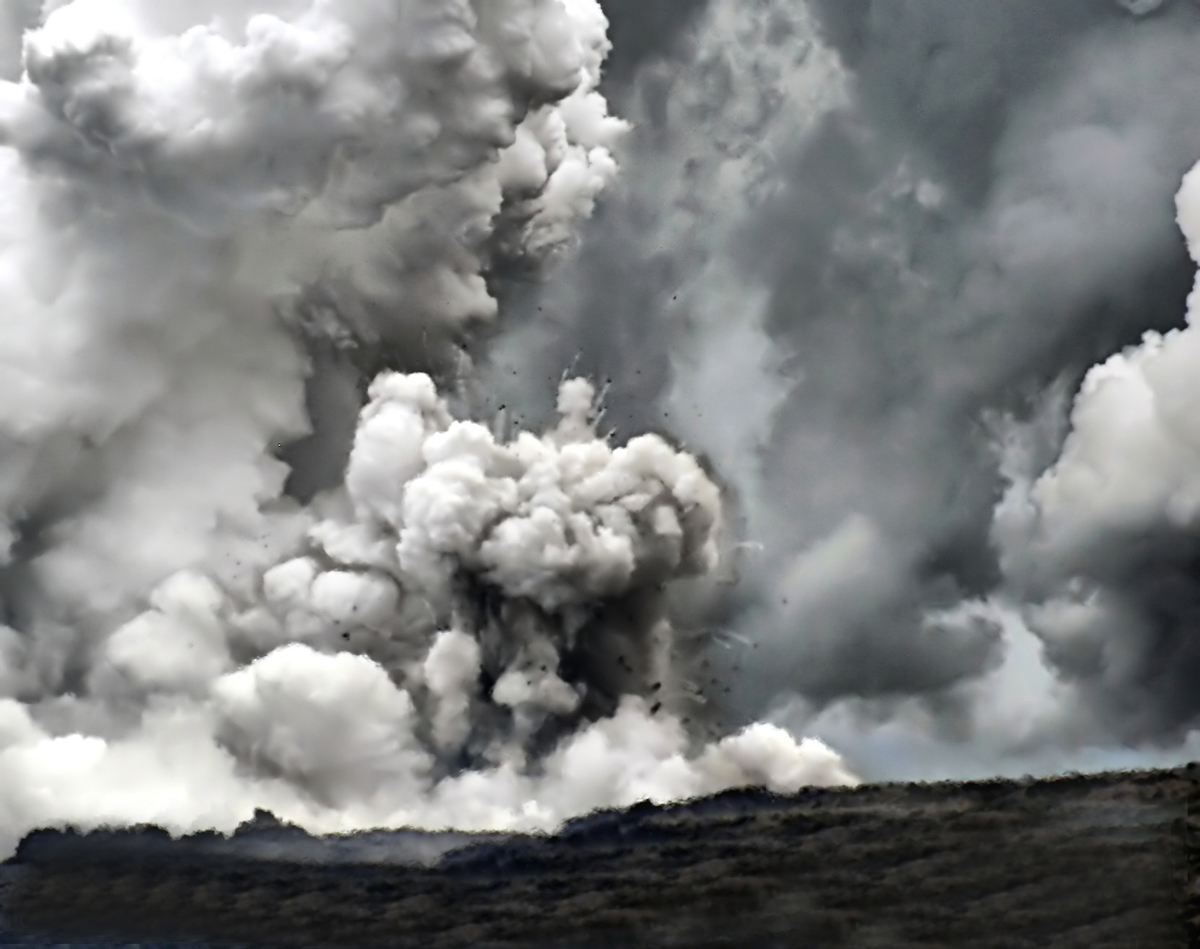
Littoral explosion at Waikupanaha ocean entry at the big island of Hawaii was caused by the lava entering the ocean

A steam explosion is an explosion caused by violent boiling or flashing of water or ice into steam, occurring when water or ice is either superheated, rapidly heated by fine hot debris produced within it, or heated by the interaction of molten metals (as in a fuel–coolant interaction, or FCI, of molten nuclear-reactor fuel rods with water in a nuclear reactor core following a core-meltdown). Steam explosions are instances of explosive boiling. Pressure vessels, such as pressurized water (nuclear) reactors, that operate above atmospheric pressure can also provide the conditions for a steam explosion. The water changes from a solid or liquid to a gas with extreme speed, increasing dramatically in volume. A steam explosion sprays steam and boiling-hot water and the hot medium that heated it in all directions (if not otherwise confined, e.g. by the walls of a container), creating a danger of scalding and burning.

Steam explosions are not normally chemical explosions, although a number of substances react chemically with steam (for example, zirconium and superheated graphite (inpure carbon, C) react with steam and air respectively to give off hydrogen (H2), which may explode violently in air (O2) to form water or H2O) so that chemical explosions and fires may follow. Some steam explosions appear to be special kinds of boiling liquid expanding vapor explosion (BLEVE), and rely on the release of stored superheat. But many large-scale events, including foundry accidents, show evidence of an energy-release front propagating through the material (see description of FCI below), where the forces create fragments and mix the hot phase into the cold volatile one; and the rapid heat transfer at the front sustains the propagation.

Examples

[edit]
A jet of steam rising higher than the Chrysler Building during the 2007 New York City steam explosion

High steam generation rates can occur under other circumstances, such as boiler-drum failure, or at a quench front (for example when water re-enters a hot dry boiler). Though potentially damaging, they are usually less energetic than events in which the hot ("fuel") phase is molten and so can be finely fragmented within the volatile ("coolant") phase. Some examples follow:

Natural

[edit]

Steam explosions are naturally produced by certain volcanoes, especially stratovolcanoes, and are a major cause of human fatalities in volcanic eruptions. They are often encountered where hot lava meets sea water or ice. Such an occurrence is also called a littoral explosion. A dangerous steam explosion can also be created when liquid water or ice encounters hot, molten metal. As the water explodes into steam, it splashes the burning hot liquid metal along with it, causing an extreme risk of severe burns to anyone located nearby and creating a fire hazard.

Boiler explosions

[edit]
Boiler explosions are a type of steam explosion.

When a pressurized container such as the waterside of a steam boiler ruptures, it is always followed by some degree of steam explosion. A common operating temperature and pressure for a marine boiler is around 950 psi (6,600 kPa) and 850 °F (454 °C) at the outlet of the superheater.

A steam boiler has an interface of steam and water in the steam drum, which is where the water is finally evaporating due to the heat input, usually oil-fired burners. When a water tube fails due to any of a variety of reasons, it causes the water in the boiler to expand out of the opening into the furnace area that is only a few psi above atmospheric pressure. This will likely extinguish all fires and expands over the large surface area on the sides of the boiler.

To decrease the likelihood of a devastating explosion, boilers have gone from the "fire-tube" designs, where the heat was added by passing hot gases through tubes in a body of water, to "water-tube" boilers that have the water inside of the tubes and the furnace area is around the tubes. Old "fire-tube" boilers often failed due to poor build quality or lack of maintenance (such as corrosion of the fire tubes, or fatigue of the boiler shell due to constant expansion and contraction).

A failure of fire tubes forces large volumes of high pressure, high temperature steam back down the fire tubes in a fraction of a second and often blows the burners off the front of the boiler, whereas a failure of the pressure vessel surrounding the water would lead to a full and entire evacuation of the boiler's contents in a large steam explosion. On a marine boiler, this would certainly destroy the ship's propulsion plant and possibly the corresponding end of the ship.

Tanks containing crude oil and certain commercial oil cuts, such as some diesel oils and kerosene, may be subject to boilover, an extremely hazardous situation in which a water layer under an open-top tank pool fire starts boiling, which results in a significant increase in fire intensity accompanied by violent expulsion of burning fluid to the surrounding areas. In many cases, the underlying water layer is superheated, in which case part of it goes through explosive boiling. When this happens, the abruptness of the expansion further enhances the expulsion of blazing fuel.[1][2][3]

Nuclear reactor meltdown

[edit]

Events of this general type are also possible if the fuel and fuel elements of a water-cooled nuclear reactor gradually melt. The mixture of molten core structures and fuel is often referred to as corium.

If such corium comes into contact with water, vapour explosions may occur from the violent interaction between molten fuel (corium) and water as coolant. Such explosions are seen to be fuel–coolant interactions (FCI).[citation needed] [4] [5]

The severity of a steam explosion based on fuel-coolant interaction (FCI) depends strongly on the so-called premixing process, which describes the mixing of the melt with the surrounding water-steam mixture. In general, water-rich premixtures are considered more favorable than steam-rich environments in terms of steam explosion initiation and strength. The theoretical maximum for the strength of a steam explosion from a given mass of molten corium, which can never be achieved in practice, is due to its optimal distribution in the form of molten corium droplets of a certain size. These droplets are surrounded by a suitable volume of water, which in principle results from the max. possible mass of vaporized water at instantaneous heat exchange between the molten droplet fragmenting in a shock wave and the surrounding water.

On the basis of this very conservative assumption, calculations for alpha containment failure were carried out by Theofanous.[6] However, these optimal conditions used for conservative estimates do not occur in the real world. For one thing, the entire molten reactor core will never be in premixture, but only in the form of a part of it, e.g., as a jet of molten corium impinging a water pool in the lower plenum of the reactor, fragmenting there by ablation and allowing by this the formation of a premixture in the vicinity of the melt jet falling through the water pool. Alternatively, the melt may arrive as a thick jet at the bottom of the lower plenum, where it forms a pool of melt overlaid by a pool of water. In this case, a premixing zone can form at the interface between the melt pool and the water pool.

In both cases, it is clear that by far not the entire molten reactor inventory is involved in premixing, but rather only a small percentage. Further limitations arise from the saturated nature of the water in the reactor, i.e., water with appreciable supercooling is not present there. In the case of penetration of a fragmenting melt jet there, this leads to increasing evaporation and an increasing steam content in the premixture, which, from a content > 70% in the water/steam mixture, prevents the explosion altogether or at least limits its strength. Another counter-effect is the solidification of the molten particles, which depends, among other things, on the diameter of the molten particles. That is, small particles solidify faster than larger ones.

Furthermore, the models for instability growth at interfaces between flowing media (e.g. Kelvin-Helmholtz, Rayleigh-Taylor, Conte-Miles, ...) show a correlation between particle size after fragmentation and the ratio of the density of the fragmenting medium (water-vapor mixture) to the density of the fragmented medium, which can also be demonstrated experimentally. In the case of corium (density of ~ 8000 kg/m3), much smaller droplets (~ 3 - 4 mm) result than when alumina (Al2O3) is used as a corium simulant with a density of just under half that of corium with droplet sizes in the range of 1 - 2 cm.

Jet fragmentation experiments conducted at JRC ISPRA under typical reactor conditions with masses of molten corium up to 200 kg and melt jet diameters of 5 - 10 cm in diameter in pools of saturated water up to 2 m deep resulted in success with respect to steam explosions only when Al2O3 was used as the corium simulant. Despite various efforts on the part of the experimenters, it was never possible to trigger a steam explosion in the corium experiments in FARO.[citation needed]

If a steam explosion occurs in a confined tank of water due to rapid heating of the water, the pressure wave and rapidly expanding steam can cause severe water hammer. This was the mechanism that, in Idaho, USA, in 1961, caused the SL-1 nuclear reactor vessel to jump over 9 feet (2.7 m) in the air when it was destroyed by a criticality accident. In the case of SL-1, the fuel and fuel elements vaporized from instantaneous overheating.

In January 1961, operator error caused the SL-1 reactor to instantly destroy itself in a steam explosion. The 1986 Chernobyl nuclear disaster in the Soviet Union was feared to cause major steam explosion (and resulting Europe-wide nuclear fallout) upon melting the lava-like nuclear fuel through the reactor's basement towards contact with residue fire-fighting water and groundwater. The threat was averted by frantic tunneling underneath the reactor in order to pump out water and reinforce underlying soil with concrete.

In a nuclear meltdown, the most severe outcome of a steam explosion is early containment building failure. Two possibilities are the ejection at high pressure of molten fuel into the containment, causing rapid heating; or an in-vessel steam explosion causing ejection of a missile (such as the upper head) into, and through, the containment. Less dramatic but still significant is that the molten mass of fuel and reactor core melts through the floor of the reactor building and reaches ground water; a steam explosion might occur, but the debris would probably be contained, and would in fact, being dispersed, probably be more easily cooled. See WASH-1400 for details.[citation needed]

Further examples

[edit]

Molten aluminium produces a strong exothermic reaction with water, which is observed in some building fires.[7][8]

In a more domestic setting, steam explosions can be a result of trying to extinguish burning oil with water, in a process called slopover. When oil in a pan is on fire, the natural impulse may be to extinguish it with water; however, doing so will cause the hot oil to superheat the water. The resulting steam will disperse upwards and outwards rapidly and violently in a spray also containing the ignited oil. The correct method to extinguish such fires is to use either a damp cloth or a tight lid on the pan; both methods deprive the fire of oxygen, and the cloth also cools it down. Alternatively, a non-volatile purpose designed fire retardant agent or simply a fire blanket can be used.[citation needed]

Practical uses

[edit]

Biomass refinement

[edit]

Steam explosive biorefinement is an industrial application to valorize biomass. It involves pressurizing biomass with steam at up to 3 MPa (30 atmospheres) and instantaneously releasing the pressure to produce the desired transformation in the biomass. An industrial application of the concept has been shown for a paper fiber project.[citation needed]

Steam turbines

[edit]

A water vapor explosion creates a high volume of gas without producing environmentally harmful leftovers. The controlled explosion of water has been used for generating steam in power stations and in modern types of steam turbines. Newer steam engines use heated oil to force drops of water to explode and create high pressure in a controlled chamber. The pressure is then used to run a turbine or a converted combustion engine. Hot oil and water explosions are becoming particularly popular in concentrated solar generators, because the water can be separated from the oil in a closed loop without any external energy. Water explosion is considered to be environmentally friendly if the heat is generated by a renewable resource.[citation needed]

Flash boiling in cooking

[edit]

A cooking technique called flash boiling uses a small amount of water to quicken the process of boiling. For example, this technique can be used to melt a slice of cheese onto a hamburger patty. The cheese slice is placed on top of the meat on a hot surface such as a frying pan, and a small quantity of cold water is thrown onto the surface near the patty. A vessel (such as a pot or frying-pan cover) is then used to quickly seal the steam-flash reaction, dispersing much of the steamed water on the cheese and patty. This results in a large release of heat, transferred via vaporized water condensing back into a liquid (a principle also used in refrigerator and freezer production).[citation needed]

Other uses

[edit]

Internal combustion engines may use flash-boiling to aerosolize the fuel.[9]

See also

[edit]

Bibliography

[edit]

References

[edit]
Revisions and contributorsEdit on WikipediaRead on Wikipedia
from Grokipedia
A steam explosion is a violent physical process in which a body of water or other coolant rapidly vaporizes into steam upon contact with a hot material, such as molten metal or superheated fluid, generating an abrupt pressure surge that can fragment the interacting materials and propagate as a detonation-like event.[1] The mechanism hinges on the instability and collapse of the initial vapor film separating the phases, leading to intimate mixing, fine-scale fragmentation, and accelerated heat transfer rates far exceeding conductive limits.[2] This phenomenon manifests in diverse settings, including nuclear reactor severe accidents where molten core material interacts with coolant, metallurgical processes involving molten alloys and water ingress, and steam boiler failures due to overpressurization or dry-firing.[3] Significant incidents underscore its destructive potential, such as the 1995 firebox explosion of a steam locomotive on the Gettysburg Railroad, which ejected flames and superheated fragments, severely injuring crew members, and various industrial boiler ruptures that have demolished facilities and caused fatalities.[4][5] In nuclear contexts, steam explosions have been implicated in accident progression, though empirical data from experiments indicate that full-scale escalation remains challenging due to hydrodynamic instabilities and quenching effects, informing safety analyses that prioritize containment integrity over worst-case energetics.[2][6] Mitigation strategies emphasize design barriers to prevent initial contacts, rapid quenching, and pressure relief systems, grounded in empirical scaling studies rather than overly conservative assumptions.[3]

Fundamentals of Steam Explosions

Definition and Basic Characteristics

A steam explosion is a physical explosion arising from the rapid, violent vaporization of a superheated liquid, most commonly water, into steam upon triggering, which induces a sudden volumetric expansion—typically by a factor of over 1,000—and generates intense pressure waves and shock fronts capable of causing structural damage or fragmentation. This process differs from chemical explosions, as it relies solely on thermodynamic phase change rather than exothermic reactions, with energy release stemming from the latent heat of vaporization converted into kinetic and pressure work.[1] The event requires a precondition of metastable superheating, where the liquid exceeds its saturation temperature without nucleate boiling, often due to lack of nucleation sites or suppression by pressure.[7] Key characteristics include a multi-stage progression: initial premixing of a hot "fuel" (e.g., molten material or superheated fluid) with the coolant liquid, triggering via hydrodynamic instability or mechanical jolt that collapses vapor films and enables fine-scale fragmentation for enhanced heat transfer, rapid propagation of the vaporization front through the mixture, and final expansion that converts thermal energy to mechanical expulsion of materials.[8] Efficiencies of this thermal-to-mechanical conversion are low, typically below 1-5% in experimental observations, limiting total destructiveness relative to the available heat content but still yielding pressures exceeding 100 MPa locally and velocities of ejected fragments up to hundreds of m/s.[9] Steam explosions are probabilistic, dependent on mixture conditions like void fraction and droplet size (often 1 cm or smaller for effective triggering), and can occur in diverse settings from industrial boilers to molten metal handling, though they pose heightened risks in nuclear reactor accidents involving corium-water interactions.[10]

Thermodynamic and Physical Mechanisms

A steam explosion arises from the rapid, unstable phase transition of a superheated liquid to vapor, driven by the release of stored thermal energy in a metastable state. Superheating occurs when a liquid, such as water, is heated above its boiling point without nucleation due to clean surfaces or absence of impurities, storing excess energy as sensible heat beyond the saturation enthalpy.[11] This metastable condition persists until a trigger disrupts the energy barrier for bubble formation, typically via mechanical disturbance, pressure drop, or particulate introduction.[1] Upon initiation, the thermodynamic process involves near-instantaneous conversion of superheat into latent heat of vaporization, generating high-velocity steam bubbles that expand against the surrounding liquid. For water at atmospheric pressure and 100°C, the specific volume of saturated vapor is approximately 1.67 m³/kg compared to 0.001 m³/kg for liquid, yielding a volume expansion ratio of about 1600:1.[12] This expansion, occurring on millisecond timescales, produces a pressure surge as the vapor displaces the incompressible liquid, with peak pressures potentially reaching tens of MPa in confined geometries depending on the degree of superheat and confinement.[13] The efficiency of thermal-to-mechanical energy conversion is limited, often below 1% in models, due to non-ideal mixing and heat losses, but sufficient to drive destructive shock waves.[9] Physically, the explosion's dynamics are governed by inertial forces and interfacial phenomena, where the accelerating vapor front induces cavitation and fragmentation of the liquid phase. In fuel-coolant interactions, such as molten metal contacting water, the initial vapor film collapse triggers hydrodynamic instabilities, notably Rayleigh-Taylor instability at the melt-coolant interface accelerated by buoyancy differences.[14] This instability promotes rapid breakup of the denser hot phase into fine particles, exponentially increasing the heat transfer surface area and fueling propagating vapor explosions.[15] Propagation relies on pressure pulses fragmenting adjacent premixed material, with the overall energetics modeled via two-phase flow equations balancing momentum, mass, and energy conservation.[13] Empirical scaling laws from experiments indicate that explosion yield correlates with the cube root of the interacting mass and superheat level, underscoring the role of geometric and material properties in confining inertial effects.[9]

Preconditions and Initiation Triggers

Superheated Liquids and Metastable Conditions

A superheated liquid exists in a state where its temperature exceeds the normal boiling point at the given pressure without undergoing phase transition to vapor, rendering it metastable and susceptible to rapid destabilization.[16] This condition arises when nucleation sites—such as impurities, container walls, or mechanical disturbances—are insufficient to initiate boiling, allowing the liquid to store excess thermal energy.[11] The superheat limit temperature (SLT), typically around 0.9 times the critical temperature of the liquid, marks the kinetic boundary beyond which homogeneous nucleation spontaneously occurs, forming vapor bubbles that expand explosively.[16] In the context of steam explosions, superheated liquids serve as a critical precondition, particularly during fuel-coolant interactions (FCI) where a hot melt, such as molten corium in nuclear reactors, contacts a cooler liquid like water.[2] Heat transfer rapidly elevates the coolant temperature above its saturation point, creating a metastable superheated layer separated by a vapor film during the premixing phase, which can persist for 0.1 to 1 second.[2] Disruption of this film—via hydrodynamic instabilities like Rayleigh-Taylor effects or external triggers such as pressure pulses—induces direct contact, triggering heterogeneous or homogeneous nucleation and ultrafast vapor generation.[2] The released energy, equivalent to the latent heat of vaporization multiplied by the superheat degree, drives the explosive expansion, with conversion efficiencies determining the explosion yield.[11] Metastable conditions amplify risks in industrial scenarios, including boiler failures where superheated water flashes to steam upon rupture, or in metallurgical processes involving molten metal-water contact.[11] Predictive frameworks, such as those based on modified Redlich-Kwong equations of state, estimate SLT with deviations under 1% for numerous chemicals, aiding risk assessment by quantifying the thermodynamic instability.[11] Empirical models for premixing, incorporating droplet breakup correlations like $ D(T^+) = D(0) \exp(-C \mathrm{We}^{0.246} (T^+)^{1/2}) $, highlight how void fractions and melt fragmentation sustain metastability until initiation.[2] These principles underscore that steam explosions hinge on the precise balance of superheat accumulation and perturbation thresholds, rather than solely hydrodynamic mixing.[16]

Fuel-Coolant Interactions and External Triggers

Fuel-coolant interactions (FCI) occur when a hot or molten fuel material, such as corium in nuclear reactor accidents or molten metal in industrial processes, contacts a coolant like water, potentially leading to steam explosions if rapid heat transfer and hydrodynamic instabilities align.[17] The process begins with premixing, where the denser melt disperses into the lighter coolant via jet breakup or pour modes, forming droplets or fragments stabilized by a vapor film from initial boiling.[18] This film prevents direct contact, but instabilities like Rayleigh-Taylor can fragment the melt, exponentially increasing interfacial area and heat flux, with rates exceeding 10^7 W/m² in microseconds-scale interactions.[19] Non-energetic FCIs dissipate heat gradually without explosion, whereas energetic ones require subsequent triggering for vapor film collapse, enabling microsecond-scale coolant superheating and explosive vaporization.[17] Empirical data from corium-water tests indicate conversion efficiencies of 1-5% of melt thermal energy to mechanical work in triggered cases, far below theoretical maxima due to incomplete propagation.[20] External triggers are critical for initiating the dynamic phase of steam explosions in FCIs, as spontaneous collapses are rare without favorable conditions like entrapment of coolant by melt.[2] These triggers disrupt the vapor film, allowing direct fuel-coolant contact and rapid pressure buildup; common methods in experiments include mechanical shocks from pistons or rods, propagating pressure pulses up to 10 MPa, or electrical discharges via exploding wires immersed in the mixture.[21] In nuclear simulant tests, such as those using alumina or corium melts, external triggers consistently produced explosions absent in untriggered pours, with peak pressures reaching 20-50 MPa and energy yields scaling with melt superheat (e.g., >200°C above Leidenfrost point).[20] For instance, TROI experiments with 70 wt% UO₂ corium at 2400°C yielded triggered explosions upon impact triggering, converting ~2% of melt enthalpy to blast energy, while untriggered interactions remained subcritical.[20] Industrial analogs, like accidental molten metal-water contacts in foundries, similarly depend on external perturbations such as falling debris or vessel shocks to escalate beyond local boiling.[22] Propagation following triggering amplifies the explosion if fresh melt-coolant interfaces sustain the instability, but containment effects limit this; OECD-NEA reviews note that higher system pressures (>1 MPa) suppress explosions by stabilizing films, reducing trigger efficacy.[18] Credible modeling from U.S. Nuclear Regulatory Commission analyses emphasizes that while lab-scale triggers reliably induce explosions, prototypic reactor geometries (e.g., debris beds) often mitigate risks via quenching or voiding, with probabilistic assessments estimating FCI contributions to vessel failure at <1% in severe accident sequences.[23] These insights derive from peer-reviewed experiments avoiding overreliance on biased simulations, prioritizing direct measurements of pressure traces and high-speed imaging to validate causal chains from trigger to expansion.[7]

Historical and Notable Examples

Early Industrial Boiler Incidents

During the early industrial era of the 19th century, steam boiler explosions were a frequent hazard in Britain and the United States, driven by rapid adoption of high-pressure steam engines in factories, mills, and early commercial steamboats without standardized safety practices. In Britain, recorded explosions rose sharply with industrialization: from 2 incidents causing 3 fatalities between 1800 and 1809, to 104 explosions and 209 deaths in the 1840s, escalating to 483 explosions and 710 fatalities in the 1860s.[24] In the U.S., explosions occurred roughly every four days during the 1850s, with 159 documented in 1880 alone amid expanding factory use.[25] Primary causes included poor boiler construction, such as weak lap-riveted joints prone to corrosion and leakage; operational errors like insufficient water levels leading to overheating of fireboxes; and misuse, including blocking safety valves with debris or overloading pressure beyond design limits (often 30-50 psi in early systems).[26] [24] These failures typically resulted in rapid superheating of boiler components, structural rupture, and explosive release of steam and fragments, amplifying damage in densely packed industrial sites.[25] The following table summarizes reported steam boiler explosions in Britain, highlighting the correlation with growing steam engine horsepower in fixed industrial applications:
DecadeExplosionsFatalitiesInjuries
1800-1809235
1840-1849104209338
1850-1859248486588
1860-1869483710926
Notable early incidents underscored these risks. On December 15, 1845, at Rothwell & Kitts' Newtown Mill in Bolton, England, a wagon-type boiler exploded due to a leaking lap-riveted joint, destroying a six-story structure, killing 10 workers instantly (with one more death shortly after), severely scalding 8 others, and scattering debris that damaged nearby buildings and a railway line.[26] In the U.S., steamboat boilers—integral to early industrial transport—frequently failed; the Helen McGregor exploded in 1830, killing over 50 passengers and crew from excessive pressure and sediment buildup, while the Moselle disaster on April 25, 1838, claimed around 250 lives due to multiple boiler ruptures from low water and negligence. Another stationary example occurred on February 4, 1850, in New York's Hague Street, where a vertical boiler at a printing press manufacturer burst, causing significant structural damage and injuries amid urban industrial density.[27] These events, often investigated post-facto by local authorities or parliamentary committees, revealed systemic issues like operator ignorance and absent regulations, as early laws (e.g., Britain's 1844 Factory Act) ignored boilers despite mounting evidence of preventable failures from basic thermodynamic mismanagement.[24] Fatalities stemmed directly from blast forces, scalding steam, and projectiles, with industrial proximity exacerbating casualties; for instance, the 1851 Halifax mill explosion in Britain killed 10 and injured 20 in a textile facility.[24] While immediate responses were limited to ad-hoc inquiries, cumulative pressure from such incidents contributed to later reforms, though early industrial reliance on trial-and-error persisted due to economic incentives for higher pressures without corresponding safety engineering.[25]

Nuclear Reactor-Associated Events

The SL-1 (Stationary Low-Power Reactor Number One) accident occurred on January 3, 1961, at the National Reactor Testing Station (now Idaho National Laboratory) in Idaho, United States, marking the first fatal nuclear reactor incident involving a steam explosion.[28] During a routine maintenance procedure to reconnect the control rod drive mechanism, a technician withdrew the central control rod by approximately 20 inches (51 cm) beyond its designed limit, initiating a prompt-critical power excursion.[29] This caused the reactor's thermal power to surge to an estimated 20 gigawatts in about 4 milliseconds, rapidly vaporizing the coolant water and generating a destructive steam explosion that severed the main steam line and lifted the 9-ton reactor vessel approximately 9 feet (2.7 meters) into the air.[30] The blast killed all three operators instantly: one was impaled on the control rod, another pinned by the vessel lid, and the third suffered fatal injuries from the pressure wave and flying debris; no significant off-site radiation release occurred due to the reactor's small fuel inventory of about 32 kilograms of uranium-235.[31] Investigations attributed the event to inadequate safety margins in the reactor design, which lacked sufficient control rods and relied on a single primary rod for shutdown, compounded by procedural errors and possible human factors such as fatigue or interpersonal tensions among the crew.[29][32] The Chernobyl disaster on April 26, 1986, at Unit 4 of the Chernobyl Nuclear Power Plant in Pripyat, Ukrainian SSR (now Ukraine), involved the most severe steam explosion in nuclear reactor history, rated Level 7 on the International Nuclear Event Scale.[33] During a low-power safety test simulating an emergency cooling scenario, operators disabled key safety systems and violated protocols, leading to a sudden reactivity insertion from xenon poisoning burnout and steam void formation in the RBMK-1000 graphite-moderated reactor core.[34] At 1:23:40 a.m., the power surged uncontrollably to over 100 times nominal levels, causing fuel cladding failures and massive steam generation; this triggered a primary steam explosion that ruptured the reactor vessel and destroyed the core structure, followed seconds later by a secondary explosion likely from hydrogen-oxygen recombination or steam pressure, which demolished the reactor building roof and ignited graphite fires.[35] The initial steam explosion ejected approximately 1,000 metric tons of concrete and metal debris, releasing an estimated 5-10% of the core's 190 metric tons of uranium fuel directly into the atmosphere, along with volatile fission products like iodine-131 and cesium-137, resulting in immediate deaths of two plant workers from the blast and acute radiation syndrome claiming 28 more lives among emergency responders within weeks.[36] Long-term consequences included widespread radioactive contamination across Europe, with over 100,000 evacuations and attributions of thousands of excess cancer cases, though precise figures remain debated due to epidemiological challenges; the event exposed inherent RBMK design flaws, such as positive void coefficients and inadequate containment, which amplified the steam-driven destructiveness.[33] Other nuclear incidents have featured steam explosions on a lesser scale, such as experimental transients in reactors like BORAX-I (1954) and SPERT-I (1962), where rapid power excursions led to core damage and steam-driven ejections during deliberate safety tests, informing subsequent design improvements but without fatalities or public releases.[37] These events underscore steam explosions' rarity in commercial power reactors post-1960s due to enhanced safety features like multiple independent shutdown systems and negative reactivity coefficients, though they highlight vulnerabilities in early or experimental designs where superheated coolant interactions with fuel can propagate catastrophic failures.[28]

Natural and Geological Occurrences

Steam explosions in natural and geological contexts arise from the rapid vaporization of water due to intense heat from magmatic or geothermal sources, generating high-pressure steam that fragments surrounding rock and propels ejecta. These events, distinct from magmatic eruptions, involve no significant release of fresh magma and are driven by the thermodynamic instability of superheated liquids transitioning to vapor. Phreatic and hydrothermal variants predominate, with phreatic eruptions occurring when subsurface magma flashes groundwater to steam, while hydrothermal explosions stem from pressurized geothermal systems.[38][39] Phreatic eruptions exemplify steam-driven geological violence, where heat from intruding magma or hot volcanic rocks superheats confined groundwater, causing instantaneous boiling and explosive decompression that ejects pulverized country rock. At Kīlauea Volcano in Hawaii, a series of phreatic explosions in 1924 enlarged Halemaʻumaʻu crater from 1,400 feet to 3,000 feet in diameter over 18 days of intermittent steam blasts. These eruptions produce ash clouds and ballistic fragments but lack juvenile magmatic components, relying solely on the energy from steam expansion.[40][38] Hydrothermal explosions occur in active geothermal fields, such as Yellowstone National Park, where percolating water accumulates heat and minerals, building pressure until seals rupture and superheated fluids flash to steam, hurling debris skyward. On July 23, 2024, an explosion at Biscuit Basin's Black Diamond Pool ejected rocks and muddy water hundreds of feet high, closing the area due to instability; such events recur every decade to several decades in Yellowstone, with ancient craters like Mary Bay—formed around 13,000 years ago—reaching diameters over 1 mile. These blasts result from clogs in subsurface plumbing that trap escalating steam pressure, independent of magmatic input.[39][41][42] Littoral explosions manifest where molten lava contacts seawater, triggering localized steam bursts from fine-scale fuel-coolant interactions at the interface. During Kīlauea's 1993-1994 episode at Waikupanaha, four explosion types—tephra jets, lithic blasts, bubble bursts, and rootless ejections—propelled fragments up to 30 meters, forming temporary littoral cones of hyaloclastic debris. These differ from phreatic events by involving direct thermal exchange without deep groundwater, often producing steam plumes and minor tephra but limited by the confined interaction zone.[43]

Post-2000 Industrial and Accidental Cases

On July 18, 2007, a 24-inch diameter steam pipe installed in 1924 ruptured in Midtown Manhattan near Grand Central Terminal, releasing superheated steam at approximately 100 pounds per square inch and temperatures exceeding 200°C, propelling debris over 200 feet into the air and creating a geyser-like plume visible for blocks.[44] The incident occurred during evening rush hour, leading to the evacuation of thousands and temporary disruption of subway services, with 45 people injured primarily from falls or thermal exposure, and one fatality attributed to a pedestrian falling into the resulting crater.[45] Investigations by the New York Public Service Commission determined the primary cause as the failure of a defective check valve allowing condensate accumulation and subsequent water hammer upon steam reintroduction, exacerbated by corrosion in the aging cast-iron infrastructure.[45] In November 2007, a boiler explosion at the Salem Harbor Station power plant in Salem, Massachusetts, killed three workers and injured others when a tube failure in the unit's furnace released high-pressure steam and hot gases.[46] The incident involved a 1950s-era boiler where inadequate maintenance and inspection allowed corrosion and cracking in the water wall tubes to propagate undetected, leading to a sudden rupture during operation at 1,000 psi.[46] Post-accident analysis highlighted deficiencies in operator training and pressure vessel integrity checks, contributing to the uncontrolled release of steam that demolished sections of the boiler house.[46] On April 3, 2017, a semi-closed steam receiver vessel at the Loy-Lange Box Company in St. Louis, Missouri, catastrophically failed during startup, ejecting the 3,000-pound bottom head over 300 feet and killing one employee on-site and three bystanders off-site from blast fragments and structural collapse.[47] The vessel, operating at 125 psig steam pressure, experienced rapid pressurization after cold water was introduced into the hot, partially filled drum as per routine procedure, inducing thermal stress and brittle fracture due to inadequate design for such thermal transients.[47] The U.S. Chemical Safety and Hazard Investigation Board report emphasized that the startup method violated basic pressure relief principles and lacked safeguards against water hammer, underscoring systemic issues in small industrial steam systems.[47] Electric arc furnace operations in steel production have seen multiple steam explosions post-2000 from water ingress into molten metal, such as incidents documented in industry analyses where undetected leaks caused violent fuel-coolant interactions, resulting in fatalities and mill damage; for instance, a 2010 event at a U.S. facility injured several workers due to steam generation from scrap contamination.[48] These cases illustrate ongoing risks from metastable superheated conditions in high-temperature industrial processes, often mitigated insufficiently despite known triggers like roof leaks or wet charge materials.[48]

Scientific Modeling and Experimental Insights

Theoretical Frameworks and Simulations

The theoretical understanding of steam explosions centers on fuel-coolant interactions (FCI), where superheated melt contacts a cooler fluid, leading to rapid vaporization if certain preconditions are met. Key frameworks distinguish premixing, triggering, and propagation phases: during premixing, the melt fragments into fine droplets primarily through hydrodynamic instabilities such as Rayleigh-Taylor and Kelvin-Helmholtz mechanisms, enhancing surface area for heat transfer.[49] Triggering involves an external perturbation, like a pressure shock or void collapse, that destabilizes the vapor film around melt fragments, initiating explosive vapor generation.[50] Propagation then escalates via pressure wave-induced further fragmentation and void expansion, converting thermal energy into mechanical work with efficiencies typically below 10% in most scenarios, though higher in optimized conditions.[15] These models draw analogies to detonation waves in combustion, emphasizing interfacial instabilities and kinetic limits on evaporation-condensation rates derived from kinetic theory.[51] Early theoretical models, such as those proposed in the 1980s, focused on one-dimensional approximations of droplet interactions but evolved to incorporate multidimensional effects by the 1990s, addressing limitations in predicting large-scale coherence of the explosion.[52] Probabilistic frameworks integrate these phases to assess risks, quantifying uncertainties in melt characteristics, coolant void fraction, and trigger thresholds, as seen in analyses of in-vessel retention where steam explosion likelihood is tied to coherent debris masses exceeding critical fragmentation sizes.[53] In non-nuclear contexts, such as molten metal-water interactions, similar causal chains apply, with emphasis on metastable superheat and rapid phase change kinetics, though without the radiological constraints. Numerical simulations employ multiphase computational fluid dynamics (CFD) codes to model these dynamics, often in Eulerian-Eulerian frameworks resolving melt, liquid coolant, and vapor phases. The MC3D code, for instance, couples premixing with explosion propagation using interphase transfer models for heat, mass, and momentum, validated against integral experiments like those from the KROTOS facility involving corium drops in water pools.[54] [49] Such simulations predict pressure peaks and cavity loading by incorporating turbulence models and interfacial area concentrations, revealing sensitivities to initial melt temperature (e.g., 2000–2500°C for corium) and subcooling levels below 20 K as suppressors of explosivity.[55] Advanced approaches integrate smoothed particle hydrodynamics (SPH) with finite element methods (FEM) for capturing shock propagation and structural response, as in ex-vessel scenarios where simulations forecast cavity overpressures up to 10 MPa from 100 kg melt releases.[56] Three-dimensional models of single-droplet interactions highlight microscale void dynamics, with explosion energies scaling as the cube of droplet radius under ideal triggering. Probabilistic Monte Carlo variants, embedded in codes like ESPROSE.m, evaluate ensemble outcomes for reactor geometries, confirming low unconditional probabilities (e.g., <10^{-3} per event) due to premixing inefficiencies.[57] These tools underscore that while simulations reproduce experimental pressure traces within 20–30% accuracy, discrepancies persist in fine-fragment production, necessitating ongoing refinement via high-speed imaging and inverse modeling.[58]

Laboratory and Scaled Experiments

Laboratory experiments on steam explosions focus on small-scale interactions between molten simulants and coolants to elucidate mechanisms like rapid heat transfer, fragmentation, and pressure generation. Over 300 tests conducted between the late 1970s and early 1980s utilized 10-37 g samples of light water reactor (LWR) core material simulants, such as mixtures of aluminum oxide and stainless steel, arc-melted and released into subcooled water to study triggering thresholds and explosion efficiency.[59] These experiments demonstrated that spontaneous explosions require sufficient melt superheat (typically above 300°C for tin simulants) and interfacial instability, with conversion efficiencies—defined as the fraction of thermal energy converted to mechanical work—ranging from 0.1% to 5% in successful triggers.[60] More recent laboratory setups, such as the MISTEE facility at the Royal Institute of Technology (KTH) in Sweden, have investigated multi-droplet interactions using molten tin (up to 1 g per droplet) released into water or seawater pools. In tests performed around 2024, peak explosion pressures increased nonlinearly with total melt mass, reaching up to 10 MPa for 5-10 droplets, while explosion initiation depths were shallower in seawater due to higher density and altered void dynamics.[61] Similarly, the VULCAN apparatus, designed for jet fragmentation studies, involved dropping small molten jets (e.g., 0.5-2 g) of low-melting alloys into 20-50 cm deep water pools, observing repeated expansion-contraction cycles with average intervals of 5-10 ms and explosion counts scaling with jet mass.[62] These findings highlight the role of coherent void collapse in amplifying pressures, though multi-droplet scenarios introduce variability from droplet coalescence and uneven mixing.[63] Scaled experiments bridge laboratory insights to reactor-scale applications, employing kilogram quantities of corium simulants (e.g., mixtures of UO2, ZrO2, and steel) in facilities simulating ex-vessel fuel-coolant interactions (FCI). The DISCO-h series at the Kurchatov Institute in 2015 tested prototypic melts totaling 60-80 kg poured from a reactor pressure vessel (RPV) surrogate into a 1-2 m deep water pool, resulting in melt dispersal over 60% of the initial mass but no spontaneous steam explosion, attributed to insufficient fine fragmentation during premixing.[64] Intermediate-scale tests, such as those in the 1980s-1990s using 1-10 kg melts, confirmed rapid mixing in the lower plenum but low propagation efficiency, with pressures rarely exceeding 1-5 MPa due to steam blanketing and coarse debris beds.[65] International compilations like the STEX-II database, maintained by the OECD Nuclear Energy Agency and updated through 2010, aggregate over 1,000 records from global FCI experiments, enabling probabilistic assessments of explosion yields.[66] Analyses from these datasets indicate that while local explosions occur reliably under high superheat (ΔT > 200°C), global coherent detonations—potentially threatening containment—are precluded in most scaled geometries by limited interfacial area and hydrodynamic stabilization, with overall risk probabilities below 0.01 in LWR severe accident models.[67] Such experiments underscore that steam explosion severity depends causally on premix void fraction (optimal 20-40%) and trigger timing, informing conservative safety margins without overreliance on rare high-efficiency events.[2]

Risks, Consequences, and Impact Assessment

Blast Dynamics and Structural Damage

Steam explosions produce blast dynamics characterized by rapid conversion of thermal energy into mechanical work through violent phase change, generating high-pressure shock waves and expansion pulses.[1] The process unfolds in distinct phases: premixing of hot material with coolant, triggering via film collapse or instability, propagation of the interaction through hydrodynamic instabilities like Rayleigh-Taylor mechanisms, and final expansion of vapor bubbles.[68] Peak pressures from these events are typically lower than those of high chemical explosives, with energy conversion efficiencies bounded conservatively at up to 15% of the available thermal energy in large-scale fuel-coolant interactions.[65] [69] Pressure wave propagation in steam explosions involves shock-like compressions that can condense surrounding steam or vapor, amplifying volume changes and leading to sustained pressure fluctuations.[70] In confined geometries, such as reactor cavities or boiler rooms, these waves reflect and amplify, creating dynamic loads with incident pressures measured via embedded tracers in simulations, often on the order of those from equivalent TNT detonations for scaling purposes.[71] [72] The expansion phase disperses fragmented material as missiles, with the blast radius determined by the exploded mass and confinement, potentially extending damage over tens of meters in industrial settings.[73] Structural damage from steam explosion blasts primarily arises from direct pressure loading, vessel fragmentation, and secondary impacts from debris or slugs of material.[74] In boiler incidents, the unleashed shock wave propels dirt, piping, and ceiling fragments, causing widespread rupture of enclosures and potential collapse of adjacent structures.[75] [76] For nuclear fuel-coolant interactions, while internal components like reactor vessels experience severe blast-induced deformation, containment structures often sustain negligible damage due to design margins exceeding typical explosion pressures.[77] In the 2007 New York City steam pipe rupture, equivalent to a steam explosion, the blast excavated a 40-meter crater, collapsed a building facade, and scattered debris, illustrating how subsurface confinement can intensify localized structural failure.[78] Probabilistic assessments indicate that while explosions can challenge reactor cavity integrity through pressure pulses and debris strikes, failure modes are mitigated by material ductility and geometric dispersion.[79]

Human Casualties, Environmental Effects, and Probabilistic Risks

Steam explosions have caused fatalities and injuries primarily through blast forces, thermal exposure, and debris projection in industrial, maritime, and nuclear settings. In the 2003 SS Norway cruise ship incident, a steam boiler explosion killed eight crew members and injured 19 others due to superheated steam release and structural failure.[80] The 2007 New York City steam pipe rupture resulted in one death from cardiac arrest during evacuation and injuries to 45 individuals from heat, debris, and inhalation.[44] Similarly, a 2020 steam pipe explosion at a Connecticut VA hospital killed two maintenance workers and injured three via direct blast impact.[81] In nuclear contexts, the 1961 SL-1 reactor steam explosion impaled and killed three operators instantly from rapid pressure buildup. At Chernobyl in 1986, the initial steam explosion contributed to two immediate operator deaths amid broader reactor destruction.[33] Environmental effects of steam explosions are typically localized and short-term, involving thermal disruption, water vapor dispersal, and potential contaminant release rather than widespread ecological damage. The 2007 NYC event dispersed asbestos from aging insulation, contaminating streets and necessitating extensive cleanup to mitigate inhalation and deposition risks.[82] In non-urban industrial cases, explosions may eject hot condensate and fragments, scalding vegetation or soil but without persistent chemical legacies absent specific pollutants like fuels or metals. Nuclear-associated steam explosions risk aerosolizing fission products if fuel is fragmented, though primary environmental concern stems from subsequent fires or melts rather than the explosion mechanism itself.[33] Overall, absent radiological or toxic inventories, recovery occurs rapidly post-event due to steam's transient nature. Probabilistic risk assessments quantify steam explosion likelihood as low in engineered systems, informed by failure mode analysis and historical data. In nuclear plant Level 2 PRAs, ex-vessel steam explosions from molten core-concrete interactions carry conditional probabilities of 0.001 to 0.1 given core damage, with variability from triggering criteria like melt pour dynamics; some analyses deem them negligible for containment integrity.[83] For industrial steam pipelines, quantitative risk models estimate individual fatality risks below 10^{-5} per year near high-pressure lines, factoring rupture frequencies around 10^{-4} to 10^{-5} per km-year and blast radii.[84] Boiler systems exhibit explosion rates under 10^{-7} per operating hour in regulated environments, mitigated by pressure relief and inspections, though aging infrastructure elevates conditional hazards.[84] These assessments emphasize deterministic safeguards over probabilistic extremes, as empirical incident rates remain sparse post-safety evolutions.

Prevention Strategies and Safety Engineering

Design and Material Safeguards

Design principles for preventing steam explosions emphasize isolating incompatible fluids, managing phase change rates, and incorporating redundant pressure relief mechanisms to dissipate energy before critical thresholds are reached. In nuclear reactors, core catcher systems in advanced light water reactors, such as those in VVER-1000 designs, utilize dry reactor pits and specialized spreading geometries to relocate molten corium without inducing fuel-coolant interactions (FCI), thereby avoiding energetic steam explosions during ex-vessel melt retention.[85] These catchers employ thermally resistant ceramic-concrete composites to distribute heat loads and facilitate controlled cooling via flooding only after stabilization, reducing fragmentation and vaporization risks.[86] Containment structures, featuring reinforced concrete walls at least 1 meter thick and lined with steel, are engineered to withstand hypothetical steam explosion pressures up to design limits derived from probabilistic assessments, confining potential releases.[87] Material selections prioritize thermal shock resistance and minimal reactivity to suppress explosive fragmentation. Zirconium alloy fuel cladding in pressurized water reactors encases uranium dioxide pellets, maintaining integrity under high temperatures to prevent premature dispersal that could trigger FCI, with stability up to approximately 2,200°C before significant degradation.[87] In core catchers, refractory materials like high-alumina ceramics or sacrificial metallic layers absorb and redistribute corium heat, inhibiting rapid coolant ingress and steam generation.[88] For industrial boilers governed by ASME Boiler and Pressure Vessel Code (BPVC) Section I, vessels are fabricated from carbon or alloy steels with specified minimum tensile strengths (e.g., SA-516 Grade 70 at 70 ksi), designed for operating pressures with safety factors of 4 or higher against bursting, complemented by rupture disks.[89] In molten metal processing, such as aluminum casting, safeguards include injecting non-condensable gases like nitrogen at controlled rates (e.g., 0.1-1 L/min per kg of melt) into water-melt interfaces to disrupt bubble collapse and inhibit steam pocket formation, as demonstrated in Oak Ridge National Laboratory experiments preventing explosions in direct-chill pits.[90] [91] Refractory linings, typically alumina-silicate or magnesia-based with densities exceeding 2.5 g/cm³, provide barriers against water penetration in furnaces, while preheating scrap to remove moisture reduces ignition sources.[92] Water-cooled molds incorporate insulated coatings or geometric baffles to limit convective heat transfer rates below explosive thresholds (e.g., <10^6 W/m²).[3] These measures, validated through scaled testing, ensure that material properties like low wettability and high viscosity in melts (e.g., aluminum at ~1 mPa·s) minimize fine fragmentation essential for efficient energy transfer in steam explosions.[93]

Operational and Regulatory Measures

Operational measures to mitigate steam explosions emphasize personnel training, real-time monitoring, and procedural safeguards during boiler and reactor operations. Operators must undergo certified training in combustion control, startup sequences, and emergency shutdowns to avoid fuel-rich conditions or rapid pressure buildup that could trigger explosive vaporization.[94] Safety interlocks automatically halt fuel supply if parameters like water levels or furnace pressure deviate, preventing overfiring or dry-firing scenarios common in steam-generating systems.[95] Routine blowdown procedures remove accumulated solids from boiler bottoms under controlled low-load conditions to maintain water quality and avert localized superheating.[96] In industrial settings involving molten materials, operational protocols include segregating water sources from high-temperature zones via robust containment and cooling systems, with immediate isolation valves activated upon leak detection to curb steam generation.[3] For nuclear facilities, procedures mandate maintaining coolant inventories and employing core catchers or deflector geometries to fragment molten corium, reducing the coherence needed for energetic fuel-coolant interactions.[97] Regulatory frameworks enforce these measures through mandatory compliance with codes like ASME Boiler and Pressure Vessel Code Section I, which requires power boilers to feature multiple safety valves calibrated to relieve pressure at no more than 105% of maximum allowable working pressure, alongside hydrostatic testing at 1.5 times design pressure.[98] NFPA 85 standard governs single- and multiple-burner boilers exceeding 12.5 million Btu/hr, stipulating explosion prevention via purge cycles, ignition safeguards, and flame monitoring to eliminate unburned fuel accumulation.[99] OSHA regulations under 29 CFR 1910.119 for process safety management apply to facilities handling hazardous chemicals in steam systems, mandating process hazard analyses, operating procedures, and mechanical integrity inspections to address explosion risks.[100] In nuclear contexts, IAEA Safety Standards Series No. SSR-2/1 require design provisions such as dry reactor cavities to preclude high-energy steam explosions during ex-vessel accidents, with probabilistic risk assessments quantifying low occurrence probabilities based on empirical scaling data.[101][97] Jurisdictional inspections by bodies like the National Board of Boiler and Pressure Vessel Inspectors verify adherence, with certificates renewed biennially for high-pressure units to ensure ongoing integrity against explosion precursors like corrosion or fatigue.[94] Non-compliance has historically correlated with incidents, underscoring the causal link between lapsed oversight and failure modes.[98]

Controlled Applications and Beneficial Uses

Biomass Pretreatment and Resource Processing

Steam explosion pretreatment involves subjecting lignocellulosic biomass to saturated steam at temperatures of 160–260°C and pressures of 7–50 bar for several minutes, followed by rapid decompression that induces mechanical shear forces to disrupt the rigid structure of lignin, hemicellulose, and cellulose.[102] This process, often divided into a steam impregnation phase and an explosive decompression phase, hydrolyzes hemicellulose into sugars while increasing the porosity and surface area of the biomass, thereby enhancing enzymatic accessibility for downstream conversion into biofuels or biochemicals.[103] Unlike chemical pretreatments, basic steam explosion requires no added catalysts, minimizing waste generation and operational costs, though acid-catalyzed variants (e.g., with SO₂) can further improve hemicellulose solubilization at milder conditions.[104] In bioenergy applications, steam explosion facilitates the production of second-generation bioethanol by pretreating agricultural residues, forestry wastes, and energy crops such as wheat straw or softwood, where it can achieve hemicellulose removal rates of up to 90% and boost subsequent glucose yields from enzymatic hydrolysis by 2–4 times compared to untreated biomass.[105] For instance, two-stage steam explosion at 200–220°C has been shown to reduce particle size and lignin content in softwood, enabling ethanol titers of over 70 g/L in fermentation processes.[105] Industrial implementations, such as ANDRITZ's SteamEx system, integrate this pretreatment into biorefineries to process up to 500 tons of dry biomass per day, converting it into fermentable sugars for ethanol or biogas while recovering byproducts like furfural from hemicellulose degradation.[106] The severity of the process, quantified by the combined severity factor (CSF = log(R₀·t^φ), where R₀ = exp((T-100)/14.75), t is residence time in minutes, and φ ≈ 0.8), must be optimized to balance sugar release against inhibitor formation like hydroxymethylfurfural, which can inhibit microbial fermentation if CSF exceeds 2.5.[104] Beyond biofuels, steam explosion aids resource processing by enabling efficient extraction of value-added compounds from biomass wastes. In food and feed applications, it disrupts cell walls in crop byproducts like rice husks or soybean meal, increasing yields of xylooligosaccharides (up to 20–30 g/kg) via hemicellulose depolymerization or enhancing protein solubility for animal feed, with extraction efficiencies rising 27–95% post-treatment.[107] [108] For nutraceuticals, mild steam explosion (e.g., 1.5 MPa, 10–20 minutes) hydrolyzes glycosidic bonds in plant materials to yield antioxidants like quercetin from rutin-rich sources or improves dietary fiber solubility in grains, converting insoluble forms to water-soluble ones at rates exceeding 50%.[109] Additionally, post-explosion densification of pretreated fibers produces high-density pellets from low-grade residues, expanding feedstock options for biomass combustion or pellet fuels with energy densities comparable to wood chips but improved grindability.[110] These applications underscore steam explosion's role in circular bioeconomies, though energy inputs (typically 1–2 MJ/kg biomass) and equipment durability under cyclic pressures remain challenges for scalability.[111]

Other Engineered Implementations

Steam explosion technology has been engineered for applications in food processing, particularly for valorizing by-products through structural modification and enhanced extraction of bioactive compounds. In animal-derived waste, it facilitates gelatin extraction from bovine hides with yields up to three times higher than conventional methods, employing conditions of 110–130°C for 60–600 seconds, by rupturing collagen matrices via explosive decompression.[109] Similarly, it improves collagen peptide recovery from cattle bones to 60.5% and accelerates chitin extraction from shrimp shells compared to acid hydrolysis, minimizing chemical use while preserving bioactivity.[109] For plant-based by-products, steam explosion disrupts cell walls to boost polyphenol yields from pomegranate peels and flavonoids from fig leaves by 55.9%, under pressures of 0.2–2.5 MPa for 30–480 seconds, enhancing antioxidant properties without toxic residues.[109] It also converts insoluble dietary fiber into soluble forms, as in apple pomace yielding 29.85% soluble dietary fiber, improving water-holding capacity and digestibility for functional food ingredients.[109] In brown rice powder processing, treatment at optimized severities increases protein solubility and reduces anti-nutritional factors like phytic acid, elevating overall nutritional value.[112] Beyond extraction, steam explosion modifies dietary fiber functionality in sources like wheat bran and pineapple peels, enhancing rheological properties for dough applications and antioxidant capacity via hemicellulose degradation and surface area increase.[109] These implementations leverage the process's eco-friendly profile—using saturated steam at 160–260°C and 0.69–4.83 MPa followed by rapid depressurization—to achieve mechanical disruption akin to autohydrolysis, promoting applications in functional foods and nutraceuticals.[109]

References

User Avatar
No comments yet.