


Community hub
Recent from talks
Contribute something
Nothing was collected or created yet.
| Ficus carica – Common fig | |
|---|---|

| |
| Foliage and fruit drawn in 1771[1] | |
Scientific classification 
| |
| Kingdom: | Plantae |
| Clade: | Tracheophytes |
| Clade: | Angiosperms |
| Clade: | Eudicots |
| Clade: | Rosids |
| Order: | Rosales |
| Family: | Moraceae |
| Genus: | Ficus |
| Subgenus: | F. subg. Ficus |
| Species: | F. carica
|
| Binomial name | |
| Ficus carica | |
| Synonyms[2] | |
|
Synonymy
| |

_01.jpg)
The fig is the edible fruit of Ficus carica (the common fig), a species of tree or shrub in the flowering plant family Moraceae, native to the Mediterranean region, together with western and southern Asia. It has been cultivated since ancient times and is now widely grown throughout the world.[3][4] Ficus carica is the type species of the genus Ficus, which comprises over 800 tropical and subtropical plant species.
A fig plant is a deciduous tree or large shrub, growing up to 7–10 m (23–33 ft) tall, with smooth white bark. Its large leaves have three to five deep lobes. Its fruit (of a type referred to as syconium) is teardrop-shaped, 3–5 cm (1–2 in) long, initially green but may ripen toward purple or brown, and has sweet soft reddish flesh containing numerous crunchy seeds. The milky sap of the green parts of the plant is an irritant to human skin. In the Northern hemisphere, fresh figs are in season from early August to early October. They tolerate moderate seasonal drought and can be grown even in hot-summer continental climates.
Figs can be eaten fresh or dried, or processed into jam, rolls, biscuits and other types of desserts. Since ripe fresh figs are easily damaged in transport and do not keep well, most commercial production is in dried and processed forms. Raw figs contain roughly 80% water and 20% carbohydrates, with negligible protein, fat and micronutrient content. They are a moderate source of dietary fiber.
In 2018, world production of raw figs was 1.14 million tonnes, led by Turkey and North African countries (Egypt, Morocco, and Algeria) as the largest producers, collectively accounting for 64% of the total.[5]
Etymology
[edit]The word fig, first recorded in English in the 13th century, derives from (Old) French figue, itself from Occitan (Provençal) figa, from Romance *fica, from Classical Latin ficus (fig or fig-tree).[6] Italian has fico, directly derived from Latin ficus. The name of the caprifig, Ficus caprificus Risso, is derived both from Latin caper, genitive capri (he-goat) and English fig.[7]
Biology
[edit]Description
[edit]Ficus carica is a gynodioecious, deciduous tree or large shrub that grows up to 7–10 m (23–33 ft) tall, with smooth white bark. Its fragrant leaves are 12–25 cm (4+1⁄2–10 in) long and 10–18 cm (4–7 in) wide, and are deeply lobed (three or five lobes).

The fig fruit develops as a hollow, fleshy structure called the syconium that is lined internally with numerous unisexual flowers. The tiny flowers bloom inside this cup-like structure. Although commonly called a fruit, the syconium is botanically an infructescence, a type of multiple fruit. The small fig flowers and later small single-seeded (true) fruits line its interior surface. A small opening or ostiole, visible on the middle of the fruit, is a narrow passage that allows the specialized fig wasp, Blastophaga psenes, to enter the inflorescence and pollinate the flowers, after which each fertilized ovule (one per flower, in its ovary) develops into a seed. At maturity, these 'seeds' (actually single-seeded fruits) line the inside of each fig.
The edible mature syconium develops into a fleshy false fruit bearing the numerous one-seeded fruits, which are technically drupelets.[8] The whole fig fruit is 3–5 cm (1–2 in) long, with a green skin that sometimes ripens toward purple or brown. Ficus carica has milky sap, produced by laticifer cells. The sap of the green parts is an irritant to human skin.[9]
Habitat
[edit]
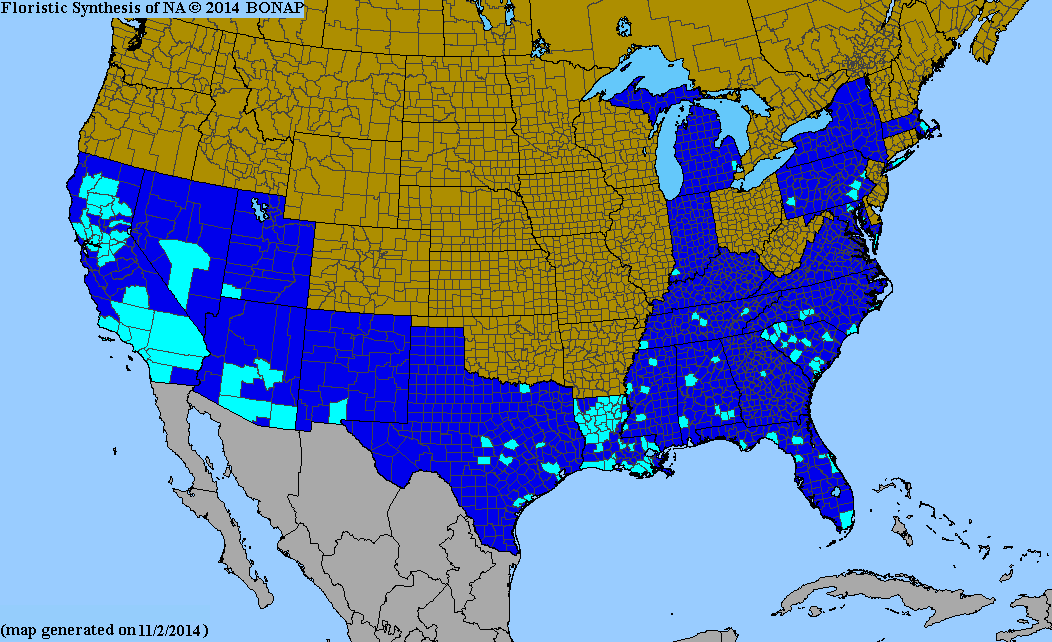
The common fig tree has been cultivated since ancient times and grows wild in dry and sunny locations with deep and fresh soil, and in rocky locations that are at sea level to 1,700 metres in elevation. It prefers relatively porous and freely draining soil, and can grow in nutritionally poor soil. Unlike other fig species, Ficus carica does not always require pollination by a wasp or from another tree,[10][11] but can be pollinated by the fig wasp, Blastophaga psenes, to produce seeds. Fig wasps are not present to pollinate in colder regions such as the British Isles.[12]
The species has become naturalized in scattered locations in Asia and North America.[13][14]


The plant tolerates seasonal drought, and the Middle Eastern and Mediterranean climates are especially suitable to it. Situated in a favorable habitat, mature specimens can grow to considerable size as large, dense, shade trees. Its aggressive root system precludes its cultivation in many urban locations, yet in nature this characteristic helps the plant to root in the most inhospitable locations. Having a great need of water, it is mostly a phreatophyte that extracts the needed water from sources in or on the ground. Consequently, it frequently grows in locations with standing or running water, e. g. in valleys of rivers and in ravines that collect water. The deeply rooted plant searches for groundwater in aquifers, ravines, or cracks in rocks. With access to this water, the tree cools the hot environments in which it grows, thus producing fresh and pleasant habitat for many animals that shelter in its shade during periods of intense heat.[citation needed]
The mountain or rock fig (Persian: انجیر کوهی, romanized: anjīr kuhi) is a wild variety, tolerant of cold dry climates, of the semi-arid rocky montane regions of Iran, especially in the Kūhestān mountains of Khorasan.[9]
Ecology
[edit]Ficus carica is dispersed by birds and mammals that scatter their seeds in droppings. Fig fruit is an important food source for much of the fauna in some areas, and the tree owes its expansion to those that feed on its fruit. The common fig tree also sprouts from the root and stolon tissues.[citation needed]
Cultivation
[edit]From ancient times
[edit]
The edible fig is one of the first plants that were cultivated by humans. Nine subfossil figs of a parthenocarpic (and therefore sterile) type dating to about 9400–9200 BC were found in the early Neolithic village Gilgal I (in the Jordan Valley, 13 km north of Jericho). The find precedes the domestication of wheat, barley, and legumes, and may thus be the first known instance of agriculture. It is proposed that this sterile but desirable type was planted and cultivated intentionally, one thousand years before the next crops were domesticated (wheat and rye).[15][16][17]
In ancient Israel, figs were a staple crop and widely cultivated for both fresh consumption and preservation. Archaeological evidence from sites such as Tel Beit Shemesh reveals that pressed figs were stored in jars. Fig trees thrived in the region's dry, rocky soil and yielded two annual harvests: an early crop eaten fresh, and a later summer crop (qayiṣ) that was dried or pressed into fig-cakes for preservation and travel.[18][19] Fig trees are frequently mentioned in the Hebrew Bible and are depicted in the Lachish reliefs alongside grapevines and date palms, confirming their place in the cultivated landscape of Judah.[18]
Figs were widespread in ancient Greece, and their cultivation was described by both Aristotle and Theophrastus. Aristotle noted that as in animal sexes, figs have individuals of two kinds, one (the cultivated fig) that bears fruit, and one (the wild caprifig) that assists the other to bear fruit. Further, Aristotle recorded that the fruits of the wild fig contain psenes (fig wasps); these begin life as larvae, and the adult psen splits its "skin" (pupa) and flies out of the fig to find and enter a cultivated fig, saving it from dropping. Theophrastus observed that just as date palms have male and female flowers, and that farmers (from the East) help by scattering "dust" from the male onto the female, and as a male fish releases his milt over the female's eggs, so Greek farmers tie wild figs to cultivated trees. They do not say directly that figs reproduce sexually, however.[20]
Figs were also a common food source for the Romans. Cato the Elder, in his c. 160 BC De Agri Cultura, lists several strains of figs grown at the time he wrote his handbook: the Mariscan, African, Herculanean, Saguntine, and the black Tellanian.[21] The fruits were used, among other things, to fatten geese for the production of a precursor of foie gras. Rome's first emperor, Augustus, was reputed to have been poisoned with figs from his garden smeared with poison by his wife Livia.[22][23] For this reason, or perhaps because of her horticultural expertise, a variety of fig known as the Liviana was cultivated in Roman gardens.[24]
It was cultivated from Afghanistan to Portugal, also grown in Pithoragarh in the Kumaon hills of India. From the 15th century onwards, it was grown in areas including Northern Europe and the New World.[3] In the 16th century, Cardinal Reginald Pole introduced fig trees to Lambeth Palace in London.[citation needed]
In 1769, Spanish missionaries led by Junipero Serra brought the first figs to California. The Mission variety, which they cultivated, is still popular.[25] The fact that it is parthenocarpic (self-pollinating) made it an ideal cultivar for introduction.[citation needed]
The Kadota cultivar is even older, being mentioned by the Roman naturalist Pliny the Elder in the 1st century AD.[26] Pliny recorded thirty varieties of figs.[27]
The name Kadota did not exist in the era of Pliny the Elder nor is it mentioned in Pliny's works. Also only 29 figs were recorded in his work; Pliny the Elder, The Natural History, English translation by John Bostock and H.T. Riley, Book XV, CHAP. 19. (18.)—TWENTY-NINE VARIETIES OF THE FIG.
The Kadota name was created in the early 20th century in California, US, to name a "sport" or genetic deviation from a Dotatto fig tree as documented in The Kadota Fig: A Treatise On Its Origin, Planting And Care by W. Sam Clark.
Modern
[edit]The common fig is grown for its edible fruit throughout the temperate world. It is also grown as an ornamental tree, and in the UK the cultivars 'Brown Turkey'[28] and 'Ice Crystal' (mainly grown for its unusual foliage)[29] have gained the Royal Horticultural Society's Award of Garden Merit.[30]
Figs are also grown in Germany, mainly in private gardens inside built up areas. There is no commercial fig growing.[31] The Palatine region in the German South West has an estimated 80,000 fig trees. The variety Brown Turkey is the most widespread in the region.[32] There are about a dozen quite widespread varieties hardy enough to survive winter outdoors mostly without special protection. There are even two local varieties, "Martinsfeige" and "Lussheim", which may be the hardiest varieties in the region.[33]
As the population of California grew, especially after the gold rush, a number of other cultivars were brought there by persons and nurserymen from the east coast of the US and from France and England. By the end of the 19th century, it became apparent that California had the potential for being an ideal fig producing state because of its Mediterranean-like climate and latitude of 38 degrees, lining up San Francisco with İzmir, Turkey. G. P. Rixford first brought true Smyrna figs to California in 1880. The most popular cultivar of Smyrna-type fig in California is the Turkish Lob Injir, sold under the name Calimyrna (combining "California" and "Smyrna"), which has been grown in Turkey for centuries and was brought to California in the latter part of the 19th century.[26]
Figs can be found in continental climates with hot summers as far north as Hungary and Moravia. Thousands of cultivars, most named, have been developed as human migration brought the fig to many places outside its natural range. Fig plants can be propagated by seed or by vegetative methods. Vegetative propagation is quicker and more reliable, as it does not yield the inedible caprifigs. Seeds germinate readily in moist conditions and grow rapidly once established. For vegetative propagation, shoots with buds can be planted in well-watered soil in the spring or summer, or a branch can be scratched to expose the bast (inner bark) and pinned to the ground to allow roots to develop.[34]
Two crops of figs can be produced each year.[35] The first or breba crop develops in the spring on last year's shoot growth. The main fig crop develops on the current year's shoot growth and ripens in the late summer or fall. The main crop is generally superior in quantity and quality, but some cultivars such as 'Black Mission', 'Croisic', and 'Ventura' produce good breba crops.[citation needed]
There are three types of edible figs:[36]
- Persistent (or common) figs have all female flowers that do not need pollination for fruiting; the fruit can develop through parthenocarpic means. This is a popular horticulture fig for home gardeners. Dottato (Kadota), Black Mission, Brown Turkey, Brunswick, and Celeste are some representative cultivars.
- Caducous (or Smyrna) figs require cross pollination by the fig wasp with pollen from caprifigs for the fruit to mature. If not pollinated the immature fruits drop. Some cultivars are Marabout, Inchàrio, and Zidi.
- Intermediate (or San Pedro) figs set an unpollinated breba crop but need pollination for the later main crop. Examples are Lampeira, King, and San Pedro.
There are dozens of fig cultivars, including main and breba cropping varieties, and an edible caprifig (the Croisic). Varieties are often local, found in a single region of one country.[35][37]
-
 Variegated fig
 -
 Fresh figs, cut open
 -
 Dry figs, Khari Baoli market, Old Delhi


Overwintering
[edit]People of the Italian diaspora who live in cold-winter climates have the practice of burying imported fig trees to overwinter them and protect the fruiting hard wood from cold.[38] Italian immigrants to America in the 19th century introduced this common practice in cities such as New York, Philadelphia, Boston, and Toronto, where winters are normally too cold to leave the tree exposed.[39] This practice consists in digging a trench that is appropriate to the size of the specimen, some of which are more than 10 feet (3.0 m) tall, severing part of the root system, and bending the specimen into the trench. Specimens are often wrapped in waterproof material to discourage development of mould and fungus, then covered with a heavy layer of soil and leaves. Sometimes plywood or corrugated metal is placed on top to secure the tree.[40] In borderline climates like New York City burying trees is no longer needed because low winter temperatures have increased. Often specimens are simply wrapped in plastic and other insulating material, or not protected if planted in a sheltered site against a wall that absorbs sunlight.[39]
Breeding
[edit]While there are more naturally occurring varieties of figs than of any other tree crop, a formal fig breeding program was not developed until the beginning of the 20th century.[41] Ira Condit, "High Priest of the Fig", and William Storey tested some thousands of fig seedlings in the early 20th century based at University of California, Riverside.[37] The work they had been doing was later continued at the University of California, Davis. That fig breeding program was closed in the 1980s.[41]
Insect and fungal disease pressure affecting both dried and fresh figs led James Doyle and Louise Ferguson to revive the breeding program in 1989 using the germplasm that Condit and Storey had established. Two varieties from Doyle and Ferguson's program are now in production in California: the public variety "Sierra", and the patented variety "Sequoia".[42]
Production
[edit]| Fig production – 2020 | |
|---|---|
| Country | (tonnes) |
| 320,000 | |
| 201,212 | |
| 144,246 | |
| 116,143 | |
| 107,791 | |
| 59,900 | |
| 46,502 | |
| 27,084 | |
| 21,889 | |
| 19,840 | |
| 19,601 | |
World |
1,264,943 |
| Source: United Nations FAOSTAT[5] | |


In 2020, world production of raw figs was 1.26 million tonnes, led by Turkey (with 25% of the world total), Egypt, Morocco, and Algeria as the largest producers, collectively accounting for 62% of the total.[5]
Food
[edit]Figs can be eaten fresh or dried, and used in jam-making. Most commercial production is in dried or otherwise processed forms, since the ripe fruit does not transport well, and once picked does not keep well. The widely produced fig roll ("Fig Newton" is a trademark of Nabisco) is a biscuit (or cookie) with a filling made from figs.
In the Northern Hemisphere, fresh figs are in season from August through to early October. Fresh figs used in cooking should be plump and soft, and without bruising or splits. If they smell sour, the figs have become over-ripe. Slightly under-ripe figs can be kept at room temperature for 1–2 days to ripen before serving. Figs are most flavorful at room temperature.[43]
Freshly harvested figs underwent two distinct drying methods for preservation. The first method was natural sun-drying, where the figs were exposed to the warmth and light of the sun. The second method involved oven-drying, where the figs were placed in a controlled temperature environment within an oven.[44] Each process has its unique impact on the texture and flavor profile of the dried figs.[44]
Nutrition
[edit]_fruits.jpg) | |||||||||||||||||||||||||||||||||||||||||||||||||
| Nutritional value per 100 g (3.5 oz) | |||||||||||||||||||||||||||||||||||||||||||||||||
|---|---|---|---|---|---|---|---|---|---|---|---|---|---|---|---|---|---|---|---|---|---|---|---|---|---|---|---|---|---|---|---|---|---|---|---|---|---|---|---|---|---|---|---|---|---|---|---|---|---|
| Energy | 310 kJ (74 kcal) | ||||||||||||||||||||||||||||||||||||||||||||||||
19.2 g | |||||||||||||||||||||||||||||||||||||||||||||||||
| Sugars | 16.3 g | ||||||||||||||||||||||||||||||||||||||||||||||||
| Dietary fiber | 3 g | ||||||||||||||||||||||||||||||||||||||||||||||||
0.3 g | |||||||||||||||||||||||||||||||||||||||||||||||||
0.8 g | |||||||||||||||||||||||||||||||||||||||||||||||||
| |||||||||||||||||||||||||||||||||||||||||||||||||
| Other constituents | Quantity | ||||||||||||||||||||||||||||||||||||||||||||||||
| Water | 79 g | ||||||||||||||||||||||||||||||||||||||||||||||||
| †Percentages estimated using US recommendations for adults,[45] except for potassium, which is estimated based on expert recommendation from the National Academies.[46] | |||||||||||||||||||||||||||||||||||||||||||||||||
 | |||||||||||||||||||||||||||||||||||||||||||||||||
| Nutritional value per 100 g (3.5 oz) | |||||||||||||||||||||||||||||||||||||||||||||||||
|---|---|---|---|---|---|---|---|---|---|---|---|---|---|---|---|---|---|---|---|---|---|---|---|---|---|---|---|---|---|---|---|---|---|---|---|---|---|---|---|---|---|---|---|---|---|---|---|---|---|
| Energy | 1,041 kJ (249 kcal) | ||||||||||||||||||||||||||||||||||||||||||||||||
63.9 g | |||||||||||||||||||||||||||||||||||||||||||||||||
| Sugars | 47.9 g | ||||||||||||||||||||||||||||||||||||||||||||||||
| Dietary fiber | 9.8 g | ||||||||||||||||||||||||||||||||||||||||||||||||
0.93 g | |||||||||||||||||||||||||||||||||||||||||||||||||
3.3 g | |||||||||||||||||||||||||||||||||||||||||||||||||
| |||||||||||||||||||||||||||||||||||||||||||||||||
| Other constituents | Quantity | ||||||||||||||||||||||||||||||||||||||||||||||||
| Water | 30 g | ||||||||||||||||||||||||||||||||||||||||||||||||
| †Percentages estimated using US recommendations for adults,[45] except for potassium, which is estimated based on expert recommendation from the National Academies.[46] | |||||||||||||||||||||||||||||||||||||||||||||||||
Raw figs are 79% water, 19% carbohydrates, 1% protein, and contain negligible fat (table). They are a moderate source (14% of the Daily Value, DV) of dietary fiber and 310 kilojoules (74 kcal) of food energy per 100-gram serving, and do not supply essential micronutrients in significant contents (table).
When dehydrated to 30% water, figs have a carbohydrate content of 64%, protein content of 3%, and fat content of 1%.[47] In a 100-gram serving, providing 1,041 kJ (249 kcal) of food energy, dried figs are a rich source (more than 20% DV) of dietary fiber and the essential mineral manganese (26% DV), while calcium, iron, magnesium, potassium, and vitamin K are in moderate amounts.[47]
In fig fruits, the levels of glucose and fructose are nearly identical, with glucose being slightly more prevalent overall, while the presence of sucrose is minimal.[48][49][50] Still, in some varieties of figs, the fructose content can occasionally slightly surpass that of glucose.[48]
Research and folk medicine
[edit]Phytochemicals
[edit]Figs contain diverse phytochemicals under basic research for their potential biological properties, including polyphenols, such as gallic acid, chlorogenic acid, syringic acid, (+)-catechin, (−)-epicatechin and rutin.[51][52] Fig color may vary between cultivars due to various concentrations of anthocyanins, with cyanidin-3-O-rutinoside having particularly high content.[53]
Folk medicine
[edit]In some old Mediterranean folk practices, the milky sap of the fig plant was used to soften calluses, remove warts, and deter parasites.[54]
Since the late 1800s, syrup of figs combined with senna has been available as a laxative.
Toxicity
[edit]Like other plant species in the family Moraceae, contact with the milky sap of Ficus carica followed by exposure to ultraviolet light can cause phytophotodermatitis,[55][56] a potentially serious skin inflammation. Although the plant is not poisonous per se, F. carica is listed in the FDA Database of Poisonous Plants.[57]
Organic chemical compounds called furanocoumarins are known to cause phytophotodermatitis in humans.[58] The common fig contains significant quantities of two furanocoumarins, psoralen and bergapten.[59] The essential oil of fig leaves contains more than 10% psoralen, the highest concentration of any organic compound isolated from fig leaves.[60] Psoralen appears to be the primary furanocoumarin compound responsible for fig leaf-induced phytophotodermatitis.[citation needed]
Psoralen and bergapten are found chiefly in the milky sap of the leaves and shoots of F. carica but not the fruits.[59] Neither psoralen nor bergapten were detected in the essential oil of fig fruits.[60] Thus there is no conclusive evidence that fig fruits cause phytophotodermatitis.[citation needed]
Cultural significance
[edit]Babylonian mythology
[edit]Babylonian Ishtar for example took the form of the divine fig tree Xikum, the "primeval mother at the central place of the earth", protectress of the saviour Tammuz. Moreover, figs and the fig tree were closely linked with female sexuality. According to Barbara Walker's encyclopedia on Goddess symbols, "This may account for the common use of the fig tree as a symbol of man's enlightenment, which was formerly supposed to come through his connection with the female principle."[61]
Buddhism
[edit]Gautama Buddha attained enlightenment (bodhi) after meditating underneath a Ficus religiosa, known as the bodhi tree, for seven weeks (49 days) around 500 BCE. The site of enlightenment is in present-day Bodh Gaya and its bodhi tree has been replaced several times.[62]
Islam
[edit]Sura 95 of the Qur'an is named al-Tīn (Arabic for "The Fig"), as it opens with the oath "By the fig and the olive."[63]
Judaism and Christianity
[edit]In the Biblical Book of Genesis, Adam and Eve clad themselves with fig leaves (Genesis 3:7) after eating the forbidden fruit from the tree of the knowledge of good and evil. Likewise, fig leaves, or depictions of fig leaves, have long been used to cover the genitals of nude figures in painting and sculpture, for example in Masaccio's The Expulsion from the Garden of Eden. Moreover, according to the opinion of Rabbi Nehemya in the Talmud, the Tree of Knowledge in the Garden of Eden was a fig tree.[64] Rabbi Nehemya says, "With the object they were corrupted, they were rehabilitated." There is also a Christian tradition that the Tree of Knowledge was the same fig tree Christ withers in the Gospels.[65]
The Book of Deuteronomy specifies the fig as one of the Seven Species (Deuteronomy 8:7–8), describing the fertility of the land of Canaan. This is a set of seven plants indigenous to the Middle East that together can provide food all year round. The list is organized by date of harvest, with the fig being fourth due to its main crop ripening during summer.[citation needed]
The biblical quote "each man under his own vine and fig tree" (Micah 4:4) has been used to denote peace and prosperity. It was commonly quoted to refer to the life that would be led by settlers in the American West,[66] and was used by Theodor Herzl in his depiction of the future Jewish Homeland: "We are a commonwealth. In form it is new, but in purpose very ancient. Our aim is mentioned in the First Book of Kings: 'Judah and Israel shall dwell securely, each man under his own vine and fig tree, from Dan to Beersheba".[67] United States President George Washington, writing in 1790 to the Touro Synagogue of Newport, Rhode Island, extended the metaphor to denote the equality of all Americans regardless of faith.[68]
Fossil record
[edit]Ten fossil endocarps of †Ficus potentilloides from the early Miocene, have been found in the Kristina Mine at Hrádek nad Nisou in North Bohemia, the Czech Republic. These fossils are similar to endocarps of F. carica.[69]
See also
[edit]
- Cursing of the fig tree
- Ficus racemosa ("Cluster fig"), a species native to Australia, Malesia, South-East Asia, and the Indian subcontinent
- Ficus sycomorus ("Sycamore fig"), a species native to Africa and Lebanon
- Fig cake
- Fig sign
- Grocer's itch
- List of foods with religious symbolism
References
[edit]- ^ 1771 illustration from Trew, C.J., Plantae selectae quarum imagines ad exemplaria naturalia Londini, in hortis curiosorum nutrit, vol. 8: t. 73 (1771), drawing by G.D. Ehret
- ^ "Search results — The Plant List". www.theplantlist.org. Archived from the original on 2021-06-28. Retrieved 2014-12-29.
- ^ a b The Fig: its History, Culture, and Curing, Gustavus A. Eisen, Washington, Govt. print. off., 1901
- ^ RHS A-Z encyclopedia of garden plants. United Kingdom: Dorling Kindersley. 2008. p. 1136. ISBN 978-1-4053-3296-5.
- ^ a b c "Raw fig production in 2018; Crops/World Regions/Production Quantity from picklists". UN Food and Agriculture Organization Corporate Statistical Database, FAOSTAT. 2019. Archived from the original on 30 October 2018. Retrieved 7 June 2020.
- ^ T.F. Hoad, The Concise Oxford Dictionary of English Etymology, Oxford University Press, 1986, page 171a.
- ^ Condit, Ira J. (1947) The Fig; Chronica Botanica Co., Waltham, Massachusetts, USA.
- ^ Wayne's Word: Sex Determination & Life Cycle in Ficus carica Archived 2009-09-02 at the Wayback Machine
- ^ a b "Fig, Ficus carica". Purdue University: Horticulture & Landscape Architecture. Archived from the original on January 25, 2021. Retrieved December 6, 2014.
- ^ Shannon Wolfe, "Carnivorous Figs: The Relationship Between Wasps and Figs Archived 2016-12-20 at the Wayback Machine", University of California Master Gardener Program of Contra Costa County, 27 August 2014.
- ^ Louise Ferguson and Carlos H. Crisosto, "The Fig: Overview of an Ancient Fruit Archived 2016-10-05 at the Wayback Machine", in HortScience, August 2007, Vol. 42, No. 5, pages 1083–7.
- ^ Blackburne-Maze P (2003). Fruit: an Illustrated History. Buffalo, New York: Firefly Books. pp. 209–11. ISBN 978-1-55297-780-4. Archived from the original on February 27, 2024. Retrieved March 22, 2017.
- ^ "Ficus carica in Flora of China @ efloras.org". www.efloras.org. Archived from the original on 2015-09-24. Retrieved 2015-08-19.
- ^ "Biota of North America Program 2014 county distribution map". Archived from the original on 2015-10-22. Retrieved 2015-08-19.
- ^ Kislev ME, Hartmann A, Bar-Yosef O (2006a). "Early Domesticated Fig in the Jordan Valley". Science. 312 (5778). Washington, DC: American Association for the Advancement of Science: 1372–1374. Bibcode:2006Sci...312.1372K. doi:10.1126/science.1125910. PMID 16741119. S2CID 42150441.
- ^ Kislev ME, Hartmann A, Bar-Yosef O (2006b). "Response to Comment on "Early Domesticated Fig in the Jordan Valley"". Science. 314 (5806). Washington, DC: American Association for the Advancement of Science: 1683b. Bibcode:2006Sci...314.1683K. doi:10.1126/science.1133748. PMID 17170278.
- ^ Lev-Yadun S, Ne'Eman G, Abbo S, Flaishman MA (2006). "Comment on "Early Domesticated Fig in the Jordan Valley"". Science. 314 (5806). Washington, DC: American Association for the Advancement of Science: 1683a. Bibcode:2006Sci...314.1683L. doi:10.1126/science.1132636. PMID 17170278.
- ^ a b Shafer-Elliott C (2022), Fu J, Shafer-Elliott C, Meyers C (eds.), "Fruits, Nuts, Vegetables, and Legumes", T&T Clark Handbook of Food in the Hebrew Bible and Ancient Israel, T&T Clark Handbooks (1 ed.), London: T&T Clark, p. 142, ISBN 978-0-567-67982-6, retrieved 2025-07-27
- ^ Goor A (1965). "The History of the Fig in the Holy Land from Ancient Times to the Present Day". Economic Botany. 19 (2): 125 (The Biblical Period). Bibcode:1965EcBot..19..124G. doi:10.1007/BF02862824. JSTOR 4252586. S2CID 34606339.
- ^ Leroi, Armand Marie (2014). The Lagoon: How Aristotle Invented Science. Bloomsbury. pp. 244–247. ISBN 978-1-4088-3622-4.
- ^ Marcus Porcius Cato (1933). Cato, the Censor, on Farming. Translated by Brehaut E. Columbia University Press. p. 19.
VIII. As for figs, plant the marisca fig on clayey, open ground. Plant the African variety and the Herculanean, the Saguntine, the winter fig, and the black, long-stemmed Tellane fig on richer or well-manured soil.
- ^ Mary Beard (2013). Confronting the Classics. Liveright Publishing Corporation, a division of W.W. Norton & Company. p. 128. ISBN 978-0-87140-716-0.
- ^ Cassius Dio. Roman History 56.30.
- ^ Mary Beard (2013). Confronting the Classics. Liveright Publishing Corporation, a division of W.W. Norton & Company. p. 131. ISBN 978-0-87140-716-0.
- ^ Roeding, George C. (1903) The Smyrna Fig: At Home and Abroad; published by the author, Fresno, CA, USA
- ^ a b Storey, W.B, Enderud, J.E., Saleeb, W.F., & Mauer, E.M. (1977) The Fig, Ficus carica Linnaeus: Its Biology, History, Culture, and Utilization, Vol. 13 #2,3,4; Jurupa Mountains Cultural Center, Riverside, CA, USA
- ^ Lyle KL (2010) [2004]. The Complete Guide to Edible Wild Plants, Mushrooms, Fruits, and Nuts: How to Find, Identify, and Cook Them (2nd ed.). Guilford, CN: FalconGuides. p. 96. ISBN 978-1-59921-887-8. OCLC 560560606.
- ^ "RHS Plant Selector – Ficus carica 'Brown Turkey'". Archived from the original on 19 May 2020. Retrieved 15 April 2020.
- ^ "RHS Plantfinder – Ficus carica 'Ice Crystal'". Archived from the original on 2020-05-19. Retrieved 2020-04-17.
- ^ "AGM Plants – Ornamental" (PDF). Royal Horticultural Society. July 2017. p. 39. Archived (PDF) from the original on 5 January 2018. Retrieved 27 February 2018.
- ^ Die Feigenernte in Kraichgau und Pfalz läuft auf Hochtouren Archived 2018-11-01 at the Wayback Machine (English: The fig harvest in Kraichgau and the Palatinate is in full swing) at Rhein-Neckar-Zeitung.
- ^ Christoph Seiler: Feigen aus dem eigenen Garten (English: Figs from your own garden), Stuttgart 2016, page 64.
- ^ Christoph Seiler: Feigen aus dem eigenen Garten. Stuttgart 2016, pages 75 and 78.
- ^ "Figs". Royal Horticultural Society. Archived from the original on 20 December 2016. Retrieved 11 December 2016.
- ^ a b "Fig". CRFG Publications. California Rare Fruit Growers. 1996. Archived from the original on 2020-10-31. Retrieved 2016-02-01.
- ^ "North American Fruit Explorers: Figs". Archived from the original on Apr 10, 2009.
- ^ a b Janick, Jules & Moore, James (editors) (1975) Advances in Fruit Breeding; pgs 568–588: Figs, by Storey, W.B.; Purdue University Press, West Lafayette, IN, USA
- ^ Rowlands A (February 6, 2019). "Growing Fig Trees in Cooler Climates". Connecticut Gardener. Archived from the original on 2017-12-13. Retrieved December 19, 2022.
- ^ a b Santos F (February 15, 2010). "Winter Coats No Longer the Fashion for Fig Trees". The New York Times. Archived from the original on February 25, 2018. Retrieved April 9, 2018.
- ^ Klein H (December 25, 2014). "Why Bury Fig Trees? A Curious Tradition Preserves a Taste of Italy". National Public Radio. Archived from the original on April 10, 2018. Retrieved April 9, 2018.
- ^ a b Van Deynze, Allen (editor) (2008) 100 years of breeding: UC Davis Plant Breeding Program. Published by the Dean's Office, Department of Plant Sciences, & Seed Biotechnology Center, Davis, CA, USA
- ^ "New fig cultivar comparison report released by UC Kearney REC". westernfarmpress.com. Archived from the original on 2009-09-06. Retrieved 2016-02-01.
- ^ "Fig". BBC Good Food. Archived from the original on 2016-02-02. Retrieved 2016-02-02.
- ^ a b Slatnar A, Klancar U, Stampar F, Veberic R (2011). "Effect of Drying of Figs (Ficus carica L.) on the Contents of Sugars, Organic Acids, and Phenolic Compounds". Journal of Agricultural and Food Chemistry. 59 (21): 11696–11702. Bibcode:2011JAFC...5911696S. doi:10.1021/jf202707y. PMID 21958361. Archived from the original on 2024-02-27. Retrieved 2024-02-22.
- ^ a b United States Food and Drug Administration (2024). "Daily Value on the Nutrition and Supplement Facts Labels". FDA. Archived from the original on 2024-03-27. Retrieved 2024-03-28.
- ^ a b "TABLE 4-7 Comparison of Potassium Adequate Intakes Established in This Report to Potassium Adequate Intakes Established in the 2005 DRI Report". p. 120. In: Stallings VA, Harrison M, Oria M, eds. (2019). "Potassium: Dietary Reference Intakes for Adequacy". Dietary Reference Intakes for Sodium and Potassium. pp. 101–124. doi:10.17226/25353. ISBN 978-0-309-48834-1. PMID 30844154. NCBI NBK545428.
- ^ a b "Nutrition facts for dried figs, uncooked per 100 g". Conde Nast for the USDA National Nutrient Database, version SR-21. 2018. Archived from the original on 6 June 2020. Retrieved 7 June 2020.
- ^ a b Hssaini L, Charafi J, Razouk R, Hernández F, Fauconnier ML, Ennahli S, Hanine H (2020). "Assessment of Morphological Traits and Fruit Metabolites in Eleven Fig Varieties ( Ficus Carica L.)". International Journal of Fruit Science. 20: 8–28. doi:10.1080/15538362.2019.1701615. Archived from the original on 2024-02-27. Retrieved 2024-02-22.
- ^ Vemmos SN, Petri E, Stournaras V (2013). "Seasonal changes in photosynthetic activity and carbohydrate content in leaves and fruit of three fig cultivars (Ficus carica L.)". Scientia Horticulturae. 160: 198–207. Bibcode:2013ScHor.160..198V. doi:10.1016/j.scienta.2013.05.036.
- ^ R. Veberic, J. Jakopic, F. Stampa (2008). "Internal Fruit Quality of Figs (Ficus carica L.) in the Northern Mediterranean Region" (PDF). Italian Journal of Food Science. 20 (2): 255–261. ISSN 1120-1770. Archived (PDF) from the original on 2020-07-11. Retrieved 2024-02-22.
- ^ Vinson (1999)
- ^ Veberic R, Colaric M, Stampar F (2008). "Phenolic acids and flavonoids of fig fruit (Ficus carica L.) in the northern Mediterranean region". Food Chemistry. 106 (1): 153–157. doi:10.1016/j.foodchem.2007.05.061.
- ^ Solomon A, Golubowicz S, Yablowicz Z, Grossman S, Bergman M, Gottlieb HE, Altman A, Kerem Z, Flaishman MA (2006). "Antioxidant activities and anthocyanin content of fresh fruits of common fig (Ficus carica L.)". J Agric Food Chem. 54 (20): 7717–7723. Bibcode:2006JAFC...54.7717S. doi:10.1021/jf060497h. PMID 17002444.
- ^ Landranco G (2001). Mediċina popolari ta' l-imgħoddi fil-gżejjer Maltin [Popular medicine of the past in the Maltese islands] (in Maltese). Valletta, Malta: Klabb Kotba Maltin. ISBN 99909-75-97-3.
- ^ Polat M, Öztaş P, Dikilitaş MC, Allı N (December 2008). "Phytophotodermatitis due to Ficus carica". Dermatol Online J. 14 (12): 9. doi:10.5070/D3046507Z8. PMID 19265622. Archived from the original on 2021-04-10. Retrieved 2018-12-11.
- ^ Son JH, Jin H, You HS, Shim WH, Kim JM, Kim GW, Kim HS, Ko HC, Kim MB, Kim BS (February 2017). "Five Cases of Phytophotodermatitis Caused by Fig Leaves and Relevant Literature Review". Annals of Dermatology. 29 (1): 86–90. doi:10.5021/ad.2017.29.1.86. PMC 5318534. PMID 28223753.
- ^ "FDA Poisonous Plant Database". U.S. Food & Drug Administration. Archived from the original on 6 October 2022. Retrieved 11 December 2018.
- ^ McGovern TW, Barkley TM (2000). "Botanical Dermatology". The Electronic Textbook of Dermatology. 37 (5). Internet Dermatology Society. Section Phytophotodermatitis. doi:10.1046/j.1365-4362.1998.00385.x. PMID 9620476. S2CID 221810453. Archived from the original on June 1, 2017. Retrieved November 29, 2018.
- ^ a b Zaynoun ST, Aftimos BG, Abi Ali L, Tenekjian KK, Khalidi U, Kurban AK (July 1984). "Ficus carica; isolation and quantification of the photoactive components". Contact Dermatitis. 11 (1): 21–25. doi:10.1111/j.1600-0536.1984.tb00164.x. PMID 6744838. S2CID 26987319. Cited in McGovern and Barkley 2000, section Phytophotodermatitis Archived 2012-02-14 at the Wayback Machine.
- ^ a b Li J, Tian Yz, Sun By, Yang D, Chen Jp, Men Qm (2011). "Analysis on Volatile Constituents in Leaves and Fruits of Ficus carica by GC-MS". Chinese Herbal Medicines. 4 (1): 63–69. doi:10.3969/j.issn.1674-6384.2012.01.010. S2CID 38145943. Archived from the original on 2023-02-28. Retrieved 2023-02-28.
- ^ Walker B (1988). The Woman's Dictionary of Symbols and Sacred Objects. Harper One. p. 484.
- ^ "Rocky Mountain Tree-Ring Research, OLDLIST". Archived from the original on 12 April 2013. Retrieved 3 July 2011.
- ^ "Surah At-Tin". quran.com. Archived from the original on 2021-07-31. Retrieved 2021-07-31.
- ^ Talmud/Berakhot/chapter/40.a
- ^ "Holy and Great Monday Synaxarion". Orthodox Christianity Then And Now. Archived from the original on 2023-06-25. Retrieved 2023-06-24.
- ^ Eric Brandon Roberts (2012). The Parables of Jesus Christ:: A Brief Analysis. Booktango. ISBN 978-1-4689-0880-0.
- ^ Theodor Herzl (1987). Old New Land. Translated by Lotta Levensohn. M. Wiener. ISBN 978-1-55876-160-5. Archived from the original on 2024-02-27. Retrieved 2020-10-06.
- ^ "George Washington and his Letter to the Jews of Newport". Touro Synagogue. Archived from the original on 2014-01-08. Retrieved 2014-01-08.
- ^ A review of the early Miocene Mastixioid flora of the Kristina Mine at Hrádek nad Nisou in North Bohemia, The Czech Republic, January 2012 by F. Holý, Z. Kvaček and Vasilis Teodoridis – ACTA MUSEI NATIONALIS PRAGAE Series B – Historia Naturalis • vol. 68 • 2012 • no. 3–4 • pp. 53–118
External links
[edit]
- "Fig". Encyclopædia Britannica (11th ed.). 1911.
- Fig Plants Benefits (Malay Version)
| International | |
|---|---|
| National | |
| Other | |


Names, Taxonomy, and Evolution
Etymology
The English word "fig" derives from Middle English fige, borrowed from Old French figue and ultimately from Latin ficus, meaning "fig" or "fig tree."[9] Some sources suggest a possible Semitic origin for Latin ficus, such as Phoenician pag or Hebrew paggāh, referring to an unripe fig, reflecting the plant's early cultural significance in the Mediterranean region.[10] Historical naming variations include Ancient Greek sykon for the fruit, which may stem from a pre-Greek substrate or shared Mediterranean linguistic influences, and Arabic tīn, a Semitic term for fig that has persisted in modern usage.[11] These terms influenced Romance languages, where descendants of ficus appear as French figue, Italian fico, Spanish higo, and Portuguese figo, adapting the Latin root to local phonologies while retaining the core meaning.[9] The term "caprifig," denoting the wild form of the common fig (Ficus carica subsp. rupestris), comes from Latin caprificus, a compound of caper ("goat") and ficus ("fig"), so named because goats reportedly favored its fruits or due to its rugged, wild growth akin to goat habitats.[12][13] This distinguishes it etymologically from the cultivated common fig, emphasizing the wild variant's role in natural propagation.[14]Taxonomy
The common fig, Ficus carica L., is classified within the kingdom Plantae, phylum Tracheophyta, class Magnoliopsida, order Rosales, family Moraceae, genus Ficus L., and species Ficus carica L. (1753).[15] The name Ficus carica was formally described by Carl Linnaeus in Species Plantarum in 1753, establishing it as the type species of the genus Ficus.[15] Phylogenetically, F. carica belongs to subgenus Ficus and section Ficus within the genus Ficus, which encompasses over 800 species of tropical and subtropical plants.[16] The family Moraceae is monophyletic and includes approximately 37 genera and 1,100 species, with Ficus forming a distinct clade sister to the Castilleae group; within Ficus, the F. carica group represents a basal lineage in subgenus Ficus.[17][18] While F. carica shares the genus with species like F. religiosa (peepal tree, section Urostigma) and F. sycomorus (sycamore fig, section Sycomorus), these occupy separate subgeneric sections, highlighting the diverse evolutionary radiation within Ficus.[18] The primary cultivated form is recognized as F. carica subsp. carica, encompassing parthenocarpic varieties that develop edible syconia without pollination.[19] The wild caprifig, a functionally male form used in caprification, is classified as F. carica subsp. rupestris (Boiss.) Browicz, native to regions from southeastern Turkey to the western Himalaya.[20] Notable varietal subdivisions include the Smyrna type (wasp-dependent for fruit set, e.g., requiring Blastophaga psenes pollination) and its hybrid derivative Calimyrna (a Smyrna cultivar selected in California for larger fruit), contrasting with parthenocarpic strains like the Common type that produce breba and main crops independently.[21][22] Historical synonyms for F. carica include Ficus communis Lam. and Ficus sativa Poit. & Turpin, reflecting early botanical naming variations before Linnaean standardization.[15][23] Other synonyms encompass Caprificus taxa such as Caprificus insectifera Gasp., emphasizing past generic separations of caprifig forms.[15]Fossil Record
The fossil record of the genus Ficus provides evidence of its ancient origins and diversification, with the earliest known remains consisting of endocarp fossils from the early Eocene (approximately 56 million years ago) in the London Clay Formation of southern England. These specimens, including Ficus lucidus, exhibit diagnostic features of modern figs and suggest a tropical Paleogene ancestry for the genus amid warm Eocene climates. Similar endocarp and fruit remains have been reported from middle Eocene sites like the Messel Pit in Germany (around 47 million years ago), reinforcing the presence of Ficus in diverse Paleogene ecosystems across Europe. During the Miocene (approximately 23–5 million years ago), Ficus underwent significant diversification in Europe and Asia, with fossils indicating adaptation to subtropical and temperate environments. In the Mediterranean region and adjacent areas, such as early Miocene deposits in North Bohemia (Czech Republic), endocarps of †Ficus potentilloides preserve syconium-like structures comparable to those of the modern common fig (F. carica), highlighting morphological continuity in fruit development. Asian records from this period, including Miocene leaves and fruits from southwestern China, further document the genus's spread and radiation across continental interiors.[24] The evolutionary timeline of Ficus is closely tied to its obligate mutualism with pollinating wasps (Agaonidae), with molecular and fossil evidence pointing to co-divergence originating around 60–75 million years ago in the late Cretaceous to early Paleogene. This symbiosis likely facilitated the genus's global dispersal from Paleotropical origins. Fossils from the Indian subcontinent, such as Paleogene leaves from Rajasthan (early Eocene to Oligocene) and Miocene specimens from the Siwalik Group, link to lineages including the sacred fig (F. religiosa) in subgenus Urostigma, underscoring early diversification in South Asia.[25][26] No substantial morphological changes in Ficus fossils appear after the Miocene until the influence of human cultivation at least 11,400 years ago in the Jordan Valley.[2]Biology
Description
The common fig (Ficus carica) is a deciduous small tree or shrub that typically attains a height of 3 to 10 meters, with a rounded canopy and either a single trunk or multiple stems arising from the base.[1][27] Its bark is smooth and gray, while the plant produces a milky latex sap from wounds or cuts, which can be irritating to the skin.[28] The leaves are alternate, simple, and palmately arranged, measuring 12 to 25 cm long and wide, with a rough upper surface and hairy underside; they are deeply lobed into 3 to 5 divisions and feature irregularly toothed margins.[4][29][27] The fruit of the fig is a syconium, an unique inverted inflorescence where hundreds of tiny flowers develop inside a fleshy, hollow receptacle rather than on an exposed surface.[30][31] This structure forms a pear-shaped infructescence, 2.5 to 5 cm in diameter, with a short stem and an apical ostiole—a small opening that permits pollinator access in certain varieties.[1][31][27] Unripe syconia are green, maturing to shades of purple-black in many cultivars, and the interior consists of edible, seed-like drupelets embedded in a sweet pulp.[32][31] Ficus carica exhibits a dioecious growth cycle, with distinct male (caprifig) trees bearing hermaphroditic syconia that produce pollen and female trees yielding the edible parthenocarpic fruits, though numerous modern cultivars are hermaphroditic or fully parthenocarpic, allowing fruit development without fertilization.[21][33] The tree's leaves are deciduous, dropping in winter to enter dormancy, while new growth emerges in spring, often bearing breba (early) fruits on the previous year's wood followed by a main crop on current-season branches.[1][30] Ripe figs possess a distinctive sweet, honey-like flavor derived from high sugar content, complemented by subtle fruity and berry notes.[34] The thin skin is fully edible in fresh fruits, providing additional texture and nutrients, but is commonly peeled during processing for dried figs to enhance uniformity and reduce potential bitterness.[35]Habitat
The common fig (Ficus carica) is native to the Mediterranean Basin and Southwest Asia, ranging from southwestern Europe and North Africa across to western Asia, including areas from Portugal and Turkey to the Middle East and Central Asia.[27][1] This species thrives in environments with mild winters and hot, dry summers, typically within USDA hardiness zones 7 to 11, where average winter lows rarely drop below 10°F (-12°C).[36][37] Figs prefer well-drained, calcareous soils with a pH range of 6.0 to 7.5, tolerating a variety of soil types as long as drainage is adequate to prevent root rot.[38][32] Once established, the plant exhibits strong drought tolerance, requiring an annual rainfall of approximately 700 to 1,250 mm, though it can survive with as little as 300 mm in arid conditions supplemented by deep watering.[39][40] It is frost-sensitive, with young growth and wood damaged below -9°C (15°F), limiting its viability in regions with prolonged freezing temperatures.[41] The fig has been widely introduced and cultivated beyond its native range, particularly in Mediterranean-like climates such as California in the United States, Australia, South America (including Chile and Brazil), and subtropical regions of Asia like India and China.[27] In some areas, such as Pacific islands including Hawaii, it has become naturalized, forming self-sustaining populations in disturbed habitats like riparian zones and roadsides.[42] Fig trees demonstrate several adaptations suited to semi-arid environments, including a wide-spreading, fibrous root system that efficiently accesses soil moisture and nutrients, and leathery, thick leaves that reduce transpiration and water loss.[38][43] These xerophytic traits, combined with the ability to shed leaves during prolonged drought, enable the species to endure water stress while maintaining viability in nutrient-poor, dry soils.[44][45]Ecology
The ecology of Ficus carica is characterized by intricate biotic interactions, particularly its obligate mutualism with the fig wasp Blastophaga psenes for pollination. Female wasps enter the syconium (the enclosed inflorescence) through a small ostiole, pollinating the female flowers while laying eggs in some of them; the wasp offspring develop inside, with males emerging first to fertilize females before the latter escape carrying pollen to new syconia. This process ensures reproduction in dioecious populations, where male caprifig trees produce pollen-laden syconia and female trees bear edible ones, though the mutualism can break down if wasp populations decline.[46][47][30] Reproduction in F. carica relies on this wasp-mediated pollination for seed production in natural settings, with caprification—the transfer of pollen from caprifigs to edible fig trees—facilitating fertilization of the long-styled female flowers within syconia. In dioecious populations, female trees produce syconia containing long-styled female flowers that develop into edible figs with viable seeds if pollinated, while male caprifig trees yield syconia with short-styled female flowers (galls) for wasp breeding and male flowers for pollen production. Seeds from ripe figs are primarily dispersed by birds and mammals, which consume the fruit and excrete intact seeds away from the parent tree, promoting gene flow and colonization; numerous bird and mammal species worldwide interact with figs (Ficus spp.) in this way, with over 1,200 species recorded across the genus, contributing to broad ecological connectivity among fig species. For F. carica, common dispersers include various frugivorous birds and mammals in its native range. Parthenocarpic cultivars, such as the Common type, bypass wasp pollination and produce seedless fruits naturally, reducing dependency on this mutualism in managed but ecologically similar contexts.[48][49][50][27] As a keystone species, F. carica plays a pivotal role in ecosystems by providing year-round fruit resources that sustain biodiversity, particularly in Mediterranean woodlands where it supports frugivorous birds, bats, and mammals during seasonal food scarcities. This fig-wasp-frugivore network enhances habitat heterogeneity and seed dispersal for other plants, contributing to overall woodland stability and species richness in native ranges. However, in non-native areas like California's riparian forests, F. carica exhibits invasive potential, spreading rapidly via bird-dispersed seeds and outcompeting local flora, which can reduce native biodiversity. In natural settings, the species faces threats from pathogens such as fig mosaic virus, which causes leaf mottling and stunted growth, and root-knot nematodes (Meloidogyne spp.), which damage roots and impair water uptake, potentially limiting population vigor under stress.[50][51][52][53][54][7]Cultivation
History
The earliest evidence of fig domestication dates to the early Neolithic period at the site of Gilgal I in the Lower Jordan Valley, where archaeologists discovered nine carbonized fig fruits and over 300 fig drupelets stored in a house structure. Radiocarbon dating places these remains at approximately 11,400 to 11,200 years ago, or around 9400 BCE, indicating intentional cultivation of parthenocarpic (seedless) fig varieties propagated from cuttings. This discovery predates the domestication of major cereal crops like wheat and barley by at least 1,000 years, suggesting figs may have been the first domesticated plant in the region during the Neolithic Revolution.[55] Figs quickly became integral to ancient civilizations across the Near East and Mediterranean. In ancient Egypt, cultivation is evidenced by tomb depictions from the Old Kingdom (circa 2686–2181 BCE), including scenes of fig harvesting and processing around 2500 BCE, highlighting their role in daily diets and offerings. Similarly, in Mesopotamia and the broader Fertile Crescent, figs were cultivated as early as approximately 9400 BCE in the Jordan Valley, with Sumerian cuneiform tablets from around 2500 BCE recording their culinary uses alongside other fruits. The practice spread through trade networks, with Phoenician merchants disseminating fig cultivation across the Mediterranean basin by the late Bronze Age (circa 1200 BCE), where figs served as a dietary staple in regional economies and were often stored for trade or preservation.[56][57][58] In classical Greece and Rome, fig cultivation advanced significantly, with the caprification technique—using male caprifigs pollinated by fig wasps to enhance fruit set in female trees—documented as early as the 8th century BCE. This method, originating from Semitic regions and adopted in Greece, was detailed by philosophers like Aristotle (circa 384–322 BCE) and Theophrastus (circa 371–287 BCE), who described its role in producing superior yields. Roman naturalist Pliny the Elder, in the 1st century CE, cataloged 29 fig varieties, underscoring their cultural and economic importance, including symbolic associations with fertility and athletic prizes in ancient Olympics.[59][60] Pre-modern expansion extended figs beyond the Mediterranean, with introduction to China around the 2nd century CE via Silk Road trade routes, where they integrated into traditional diets and medicine. In the Americas, Spanish explorers brought figs in the 16th century, establishing cultivation in regions like Mexico and California by the mid-1500s, marking the fruit's global dissemination.[61][22]Modern Cultivation
Fig trees thrive in sites with full sun exposure, receiving at least 6 to 8 hours of direct sunlight daily to promote vigorous growth and optimal fruit production.[27] Well-drained soils are essential, with spacing of 4 to 6 meters between trees to allow for their spreading canopy and root system, typically arranged in rows 4 to 6 meters apart.[27] Propagation is commonly achieved through hardwood cuttings taken during dormancy, about 15 cm long and under 2.5 cm in diameter, rooted in a moist medium like perlite at temperatures of 10 to 15°C; grafting techniques such as chip budding or whip grafting are used less frequently but can improve adaptability to specific soils.[27] Pruning focuses on maintaining an open shape to enhance air circulation and light penetration, typically performed after harvest in late summer to remove dead wood and encourage new fruiting branches without excessive winter cuts that could reduce yields.[62] Irrigation practices emphasize efficiency, particularly in arid regions where drip systems deliver water directly to the root zone, with young trees requiring around 38 liters three times per week during establishment and mature trees 75 to 190 liters weekly during dry periods to prevent stress.[27] Fertilization involves balanced NPK formulations, such as 10-10-10, applied lightly at 0.2 kg for young trees increasing to 0.9 to 1.8 kg for mature ones, split into 3 to 5 applications from February to August; potassium is particularly emphasized to enhance fruit size and quality, as higher leaf potassium levels correlate with increased yields and larger figs.[27] Organic approaches incorporate compost mulching to enrich soil organic matter, suppress weeds, and retain moisture, often combined with high-nitrogen organic fertilizers like cottonseed meal for sustainable nutrient supply.[31][54] Harvesting is done by hand to avoid damage, targeting one or two crops per year: the breba crop in spring from previous year's growth and the main crop in summer to early fall when fruits reach full ripeness, indicated by color change and slight softening.[27] Post-harvest handling differs by market; fresh figs are cooled immediately to 0 to 0.5°C at 90-95% humidity for short-term storage of up to a week, while those for drying are allowed to partially ripen on the tree before mechanical or solar drying to about 17% moisture content for extended shelf life.[27][63] Modern cultivation faces challenges from pests, managed through integrated pest management (IPM) strategies that combine monitoring, biological controls, and targeted treatments for common issues like scale insects, which feed on sap and excrete honeydew, and root-knot nematodes that damage roots in sandy soils.[64] To adapt to climate change, growers increasingly use drought-resistant rootstocks, such as those screened for rain-fed conditions, which improve water status and nutrient uptake under stress, enhancing overall resilience without compromising yield.[65][66] For regions with occasional cold snaps, basic protection methods like mulching can be applied, with more advanced strategies detailed in overwintering practices.[27]Overwintering
Most fig cultivars exhibit limited cold hardiness, typically surviving temperatures down to -12°C (10°F) with adequate protection, though significant damage often occurs below -7°C (19°F).[67] The root zone is particularly vulnerable, as roots are less tolerant of freezing than the above-ground portions, necessitating targeted insulation to prevent desiccation and heaving.[32] Effective protection methods focus on insulating the roots and shielding the trunk and branches from desiccation and extreme cold. Applying 15-20 cm (6-8 inches) of organic mulch, such as straw or chopped leaves, around the root zone helps maintain soil temperatures and retain moisture.[68] Wrapping the trunk with burlap, tar paper, or foam insulation prevents wind damage and bark splitting, while training trees in an espalier form against south-facing walls creates a beneficial microclimate by capturing daytime heat and reducing exposure to northern winds.[32][62] For potted fig trees, relocation to unheated greenhouses or garages provides a controlled environment where temperatures stay above freezing, allowing the trees to enter dormancy without severe stress.[62] Dormant pruning before winter, reducing branches to promote a compact shape, minimizes wind resistance and eases covering if needed.[67] In the event of frost damage leading to dieback, recovery involves pruning back to healthy, live wood in early spring to encourage regrowth from the roots or surviving buds, followed by light fertilization to support vigor.[32] With proper management, affected trees often rebound productively in the following season.[62]Breeding
Fig breeding primarily involves developing varieties adapted to specific environmental conditions and production needs, focusing on reproductive types classified as Common, Smyrna, and San Pedro. Common figs (Ficus carica var. domestica) are parthenocarpic, producing a single main crop without pollination, making them self-fruitful and suitable for most commercial cultivation.[27] Smyrna figs require pollination by fig wasps (Blastophaga psenes) from caprifigs for their main crop, yielding two crops but complicating production outside native ranges.[27] San Pedro figs represent a hybrid form, with a parthenocarpic breba (early) crop and a wasp-dependent main crop, offering intermediate adaptability.[27] Key commercial varieties include 'Black Mission' (Common type, dark-skinned, widely grown in California for fresh and dried markets), 'Kadota' (often Smyrna-derived but parthenocarpic, light-skinned for canning), and 'Brown Turkey' (Common type, productive in cooler climates with brown-purple fruit).[69] Breeding efforts in the United States, particularly through the University of California program in collaboration with USDA researchers, began in the early 20th century and intensified from the 1920s onward, culminating in the release of over 30 cultivars by the 1970s.[70] Led by figures like I.J. Condit (active 1917–1951) and W.B. Storey (until the 1970s), the program emphasized self-fruitful strains by selecting parthenocarpic mutants from Smyrna types to eliminate wasp dependency, alongside disease resistance to rust and root-knot nematodes.[71] Notable releases include 'Conadria' (1950s, self-fruitful Smyrna type with rust resistance), 'Tena' (1970s, high-yielding for fresh market), and 'Deanna' (drought-tolerant).[21] Modern breeding incorporates marker-assisted selection (MAS) to enhance drought tolerance, using molecular markers linked to traits like stomatal density and canopy temperature depression for early identification of resilient genotypes.[72] Breeding techniques rely on controlled cross-pollination via caprification, where pollen from caprifigs is manually transferred to female flowers to produce seeds for selection, enabling hybridization between types.[70] Interspecific hybrids, such as F. carica × F. erecta, have been developed for traits like Ceratocystis canker resistance, though embryo abortion often limits success without advanced interventions.[73] Genetic studies have revealed recurrent polyploidy events in F. carica, with triploid cytotypes arising spontaneously through sexual polyploidization, contributing to variability in fruit size and vigor observed in some lines.[74] These findings support breeding for polyploid strains with enhanced stress tolerance.[75] Post-2020 developments in California and the Mediterranean prioritize climate-resilient varieties amid rising drought and heat. In California, the introduction of 'Emerald' (2025 release) offers a light green-skinned variety with a creamy, crème brûlée-like flavor, similar to the phased-out Calimyrna.[76] Mediterranean research efforts, such as the FIGGEN project (concluded 2024), integrate genomic data from wild relatives to identify traits for drought tolerance and heat resilience, screening varieties like Bayoudhi figs for minimal water needs.[77]Production
Global Output
Global fig production reached approximately 1.26 million metric tonnes in 2020, according to data from the Food and Agriculture Organization of the United Nations (FAO). By 2022, this figure had slightly declined to 1.24 million metric tonnes, reflecting a 6.32% decrease from 2021 levels of about 1.33 million metric tonnes, amid varying regional outputs.[78] Estimates for 2023 suggest a modest recovery to around 1.3 million metric tonnes, despite challenges such as droughts in Mediterranean production areas.[79] The fresh fig market is experiencing annual growth of about 5% driven by rising consumer interest in healthy snacks.[80] Average yields for figs range from 10 to 15 tonnes per hectare, influenced by factors like irrigation, soil quality, and climate conditions.[81] Climate variability has notably impacted production, with studies indicating yield reductions of 10-25% in Mediterranean regions since 2010 due to increased droughts, heat stress, and pest pressures exacerbated by global warming.[82] For 2023, global output estimates of 1.3 million tonnes account for these pressures, particularly in key areas like Turkey and North Africa.[79] The dried figs market was valued at approximately USD 1.38 billion in 2024.[83] Emerging trends include growing demand for organic figs, which has seen double-digit sales increases in recent years, alongside sustained interest in fresh varieties for their nutritional profile.[84] These shifts are projected to support market expansion, though climate impacts may constrain long-term supply growth.Leading Countries
Turkey leads global fig production, outputting 350,000 tonnes in 2022, accounting for approximately 28% of the world total.[85] Egypt follows closely as the second-largest producer with 187,900 tonnes, representing about 15% of global output.[85] Other key contributors include Algeria (112,300 tonnes, 9%), Morocco (109,600 tonnes, 9%), and Iran (67,800 tonnes, 5%).[85][86] The United States and Spain produce smaller but notable volumes at 27,924 tonnes and around 43,500 tonnes, respectively.[87][86]| Rank | Country | Production (2022, tonnes) | Share of Global (%) |
|---|---|---|---|
| 1 | Turkey | 350,000 | 28 |
| 2 | Egypt | 187,900 | 15 |
| 3 | Algeria | 112,300 | 9 |
| 4 | Morocco | 109,600 | 9 |
| 5 | Iran | 67,800 | 5 |
Food Uses
Culinary Uses
Figs are consumed in various forms worldwide, with fresh figs typically eaten whole during their peak harvest season from August to October in many regions, offering a soft, juicy texture and mild sweetness. Dried figs, available year-round, provide a chewy texture and concentrated flavor, making them a versatile ingredient in both sweet and savory preparations. Preserved forms include jams, pastes such as the French figue confite, and fig vinegars, which extend shelf life and enhance culinary applications.[93] In Mediterranean cuisine, figs are often paired with cheeses like goat or blue cheese and prosciutto for appetizers, balancing their sweetness with salty and savory elements. Middle Eastern recipes frequently feature stuffed figs, filled with nuts, spices, or cheese and baked or grilled to create a rich, aromatic dish. Desserts highlight figs in items like Fig Newtons, where dried figs form a fruity filling in soft cookies, or as a component in baklava layers for added moisture and taste. In Asian cooking, fresh or dried figs appear in savory stir-fries, combined with meats, vegetables, and soy-based sauces to introduce subtle sweetness. Processing methods vary by region; in Turkey, sun-drying is traditional, where figs are laid out on trays under the sun for several days to achieve even dehydration. In the United States, mechanical drying in dehydrators or ovens at controlled temperatures around 140°F (60°C) is common for commercial production.[94] For storage, fresh figs should be refrigerated and consumed within three days to maintain quality, while dried figs can be stored at room temperature in airtight containers for months.[95] Cultural dishes exemplify figs' global appeal, such as the Turkish incir uyutmasi, a creamy fig pudding made by simmering dried figs with milk, sugar, and nuts for a comforting dessert. In Italy, crostata di fichi features a tart crust filled with fresh or jam figs, often baked with almonds or honey for a rustic pastry.Nutritional Value
Figs are a nutrient-dense fruit, providing a range of macronutrients, vitamins, and minerals, with profiles varying significantly between fresh and dried forms due to water content differences. Per 100 grams, fresh figs consist primarily of water and carbohydrates, offering low caloric density suitable for hydration and energy needs.[96] The nutritional composition of fresh figs per 100 g includes approximately 79 g of water, 19 g of carbohydrates (comprising 16 g of sugars and 2.9 g of dietary fiber), 0.75 g of protein, and 0.3 g of total fat, yielding 74 kcal of energy. Key vitamins present are vitamin A at 7 µg RAE, vitamin C at 2 mg, and vitamin K at 4.7 µg. Notable minerals encompass potassium at 232 mg, calcium at 35 mg, and magnesium at 17 mg.[96][97]| Nutrient | Amount per 100 g (Fresh Figs) | Unit |
|---|---|---|
| Water | 79 | g |
| Carbohydrates | 19 | g |
| Sugars | 16 | g |
| Dietary Fiber | 2.9 | g |
| Protein | 0.75 | g |
| Total Fat | 0.3 | g |
| Energy | 74 | kcal |
| Vitamin A | 7 | µg RAE |
| Vitamin C | 2 | mg |
| Vitamin K | 4.7 | µg |
| Potassium | 232 | mg |
| Calcium | 35 | mg |
| Magnesium | 17 | mg |
| Nutrient | Amount per 100 g (Dried Figs) | Unit |
|---|---|---|
| Water | 14 | g |
| Carbohydrates | 64 | g |
| Sugars | 48 | g |
| Dietary Fiber | 9.8 | g |
| Protein | 3.3 | g |
| Total Fat | 0.9 | g |
| Energy | 249 | kcal |
| Iron | 2 | mg |
| Copper | 0.3 | mg |