Hubbry Logo
SyllabogramSyllabogramMain
Open search
Syllabogram
Community hub
Syllabogram
logo
8 pages, 0 posts
0 subscribers
Be the first to start a discussion here.
Syllabogram
Syllabogram
from Wikipedia
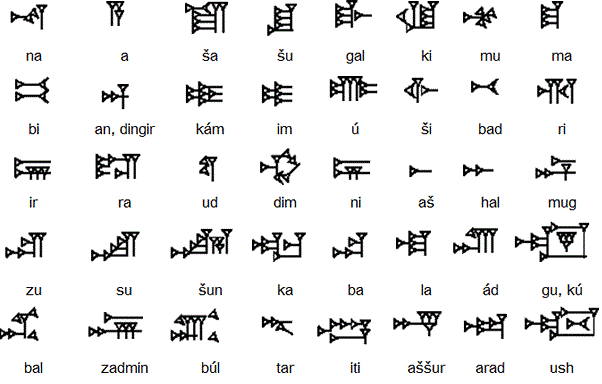
Akkadian language syllabograms

Syllabograms are graphemes used to write the syllables or morae of words. Syllabograms in syllabaries are analogous to letters in alphabets, which represent individual phonemes, or logograms in logographies, which represent morphemes.

Syllabograms in the Maya script most frequently take the form of V (vowel) or CV (consonant-vowel) syllables of which approximately 83 are known. CVC signs are present as well. Two modern well-known examples of syllabaries consisting mostly of CV syllabograms are the Japanese kana, used to represent the same sounds in different occasions. Syllabograms tend not to be used for languages with more complicated syllables: for example English phonotactics allows syllables as complex as CCCVCCCC (as in /ˈstrɛŋkθs/ strengths), generating many thousands of possible syllables and making the use of syllabograms cumbersome.[1]

See also

[edit]

References

[edit]
Revisions and contributorsEdit on WikipediaRead on Wikipedia
from Grokipedia
A syllabogram is a , or written symbol, that represents an entire in a phonetic . Syllabograms form the core components of syllabaries, where each character denotes a specific —typically a vowel alone or a consonant-vowel (CV) combination—rather than individual phonemes as in alphabetic scripts or whole words as in logographic systems. This structure suits languages with relatively simple patterns, such as open syllables ending in vowels, and contrasts with alphabets by grouping sounds into larger units for more efficient representation of spoken forms. Prominent examples of syllabaries include the Japanese kana scripts—hiragana for native words and grammatical elements, and for foreign terms and emphasis—the Linear B script used for around 1450–1200 BCE, and the invented by in the early 19th century, which rapidly achieved widespread among speakers surpassing that of contemporary in the region. In more complex logosyllabic systems like Mayan hieroglyphs, syllabograms function as phonetic signs spelling CV or CVC (consonant-vowel-consonant) sequences, often derived acrophonically from iconic referents to complement logograms in spelling words and names. Unlike related syllables (e.g., /pa/ and /pi/), syllabograms in these systems do not visually resemble one another, prioritizing distinct forms for clarity in reading and writing.

Definition and Fundamentals

Definition

A syllabogram is a single written symbol in a that represents an entire , typically structured as a consonant- (CV) combination, a alone (V), or a consonant (C) in specific contexts. This graphical unit functions phonetically to capture the basic timing or moraic structure of spoken , distinguishing it from alphabetic letters that denote isolated sounds. Unlike phonograms, which broadly represent any speech sounds such as individual phonemes, or logograms, which signify whole words or morphemes semantically, syllabograms specifically encode -level phonetic combinations without inherent lexical meaning. In pure syllabaries, syllabograms are independent symbols for each distinct , with no systematic visual relation between phonetically similar forms. By contrast, abugidas (also known as alphasyllabaries) employ syllabograms as base forms for CV units, often modified by diacritics to indicate variations, thereby encoding morae or phonetic timing more efficiently through shared cores.

Key Characteristics

Syllabograms exhibit graphical properties that prioritize efficiency and recognizability in syllabic scripts. Relative to alphabetic letters, syllabograms are generally more elaborate in form and size, reflecting their representation of larger phonetic units. Functionally, syllabograms primarily encode open syllables, such as consonant-vowel (CV) structures, aligning with common phonological patterns in languages using syllabic scripts. For closed syllables (CVC), representation typically employs combinations of basic syllabograms, diacritics, or additional modifiers to indicate final consonants, ensuring comprehensive coverage without proliferating unique symbols. In polysyllabic words, inherent ambiguities arise from homophonous syllabograms, which are resolved through contextual cues, grammatical structure, and syntactic predictability rather than inherent script features. Syllabograms vary in their phonetic transparency, with most being non-featural—lacking systematic visual cues to individual or components—and treating syllables as holistic units for simplicity in learning and use. Featural variants, however, incorporate graphic elements that explicitly depict articulatory or phonetic features, such as stroke modifications signaling voicing or vowel quality, though these are less common and often hybrid in . This variability allows syllabograms to adapt to diverse linguistic needs while preserving the script's overall economy.

Historical Development

Origins in Ancient Scripts

The origins of syllabograms can be traced to proto-syllabic developments in the logo-syllabic writing systems of the and during the third millennium BCE. In Sumerian cuneiform, which emerged around 3200 BCE in , early pictographic signs evolved into a mixed system where certain symbols began to represent not only whole words but also phonetic syllables, facilitating the recording of administrative and economic transactions. By the early third millennium BCE, this script included signs used syllabically alongside logograms, marking a transitional phase toward more phonetic representation. Similarly, , attested from around 3100 BCE, incorporated uniliteral, biliteral, and triliteral signs that could denote consonantal sounds or syllable-like units, often in the context of royal names and religious texts, where phonetic complements aided in disambiguating logograms. These elements represented an initial shift from purely ideographic notation to partial syllabic encoding, driven by the need for precision in multilingual interactions. Syllabograms arose primarily from the adaptation of these established logographic systems to write non-native s, particularly in regions of extensive and bureaucratic administration. In the , Sumerian —a script originally developed for an isolate —was repurposed by Semitic-speaking Akkadians around 2500 BCE and further adapted for non-Semitic tongues like the Indo-European Hittite and the non-Indo-European Hurrian by the second millennium BCE, with scribes reassigning signs to match the phonological structures of these languages. This process was essential for managing palace economies, international , and commerce across diverse linguistic communities in and , where a single script needed to accommodate varying inventories. Although not fully syllabic, these adaptations laid the groundwork for dedicated syllabaries by emphasizing phonetic values over semantic ones, enabling efficient notation of foreign words and names in records and treaties. The earliest attested true syllabary, , appeared in the Aegean around 1450 BCE, used by to write an early form of their Indo-European . Adapted from the undeciphered Minoan script, which itself may have had syllabic features, consisted of approximately 87 syllabograms representing open syllables (consonant-vowel combinations) tailored to Greek , supplemented by ideograms for commodities. This innovation occurred in the context of Mycenaean palace administrations at sites like , , and , where it served to document inventories, , and trade goods, reflecting the ' need to adapt a non-Indo-European script for their syllable-heavy amid expanding maritime commerce. 's development around 1450–1200 BCE thus represents the culmination of proto-syllabic trends, providing the first complete syllabic system for a tongue.

Evolution Across Cultures

In , the , developed in the around the 3rd century BCE, introduced a systematic syllabic organization that emphasized consonant-vowel combinations, laying the foundation for numerous descendant scripts. This organizational principle spread through Buddhist transmissions to , where it indirectly shaped the ordering of Japanese kana; the system, which arranges syllables by vowel following consonants, mirrors the Brahmi-derived Siddham script's structure, even as the kana characters themselves evolved separately. By the 9th century CE, Japanese scholars and court women adapted Chinese —logographic characters imported via Korea—into phonetic syllabaries to better suit the Japanese language's syllable-based . emerged from , simplified forms of , initially used by women for native and , while developed from abbreviated components for annotations and foreign terms; together, these innovations created a flexible that complemented , enabling widespread literacy in . This adaptation represented a key cultural transmission, transforming imported logographs into native syllabograms tailored to Japanese morphology. In the , independent inventions of syllabaries occurred in and the , demonstrating the enduring appeal of syllabic writing for non-alphabetic languages. The of was created around 1832 by Momolu Duwalu Bukele, a local trader inspired by visions, featuring about 200 characters for Vai syllables and serving religious, commercial, and literary purposes within the community. Similarly, in , , a Cherokee silversmith, developed his syllabary in 1821 after over a decade of experimentation, reducing Cherokee speech to 85 symbols that captured its tonal syllables; this innovation, adopted rapidly by the , facilitated the printing of newspapers and books, preserving cultural knowledge amid . Both systems highlight parallel evolutions outside Eurasian script traditions, driven by indigenous needs for documentation. European interest in syllabograms revived in the through phonetic reforms aimed at and teaching, often for the deaf or universal communication. Alexander Melville Bell's , published in 1867, proposed an iconic system of symbols representing articulatory positions for vowels and consonants, which could be combined into syllabograms to transcribe any language phonetically; designed for speech and deaf , it influenced early but saw limited adoption due to its complexity. These proposals reflected a broader quest to revive syllabic efficiency in alphabetic-dominant , adapting ancient principles for modern pedagogical goals.

Types and Classification

Simple Syllabograms

Simple syllabograms constitute the foundational elements of syllabaries, primarily representing consonant-vowel (CV) or vowel-only (V) structures that align with the open syllable patterns prevalent in many languages. CV syllabograms pair a single consonant onset with a vowel nucleus, such as symbols denoting sounds like /ka/ or /mi/, while V syllabograms denote isolated vowels, like /a/ or /u/. These types predominate in the majority of syllabaries, as they efficiently capture the most frequent syllable forms without requiring additional modifications for codas or clusters. The design of simple syllabograms emphasizes clarity and systematicity to minimize interpretive ambiguity during reading and writing. By assigning a unique glyph to each CV or V combination, these symbols enable straightforward decoding of common phonetic sequences, avoiding the redundancy of alphabetic systems or the polysemy of logographic ones. Organization often follows grid-like arrangements that group symbols by shared consonants across vowel rows, facilitating memorization and lookup; a prominent example is the Japanese gojūon (fifty sounds) ordering, which structures approximately 50 basic kana in a 5-by-10 table with vowels (a, i, u, e, o) as rows and consonants as columns. Illustrative patterns in such systems highlight their simplicity: for instance, the sequence "ka," "ki," "ku," "ke," "ko" in Japanese kana demonstrates how a fixed /k/ systematically combines with varying vowels, creating a cohesive row that underscores the modular nature of CV construction without historical or derivational complexity. This approach ensures that simple syllabograms serve as building blocks, promoting phonetic transparency in scripts where nuclei are vowel-dominant.

Complex and Modified Syllabograms

In syllabic writing systems, complex syllabograms extend beyond basic open syllables (CV or V) to represent closed syllables (CVC or CCV) through specialized conventions, such as the addition of extra symbols or ligatures that indicate final consonants without introducing additional vowels. In the , used for from the 11th to 4th centuries BCE, closed syllables are accommodated by employing a series of "e"-ending syllables as dummy vowels to mark word-final consonants like /n/, /r/, and /s/, which were the only permitted coda consonants in the language; for instance, the genitive "of children" is spelled pa-i-to-ne to represent /paidōn/ using ne for final /n/, and the nominative "children" as pa-i-te-se for /paides/ using se for /s/. This method improves upon earlier systems like by systematically using these e-syllables to resolve ambiguities in consonant representation, allowing for more precise phonetic encoding without altering the core syllabic structure. Modifications to basic syllabograms often involve diacritics or variant forms to capture phonetic nuances like voicing or consonant lengthening, enhancing the system's expressiveness for specific languages. In Japanese hiragana and katakana, the dakuten (゛), a pair of dots placed in the upper right of a kana character, modifies voiceless obstruent syllables to voiced ones, such as transforming ka (か) to ga (が) to represent /ga/ instead of /ka/; this diacritic systematically applies to consonants like /k/, /s/, /t/, and /h/, enabling the distinction of minimal pairs in modern Japanese phonology. Similarly, the sokuon or small tsu (っ in hiragana, ッ in katakana), a diminutive version of the tsu syllable, functions as a gemination marker to indicate doubled consonants (sokuon), as in kippu (切符) for "ticket," where it doubles the following /p/ sound, creating a brief pause and emphasis without adding a full syllable. These modifications, integral to the kana syllabaries since their development in the 9th century CE, allow for efficient representation of Japanese's moraic structure while maintaining the script's primarily open-syllable base. Hybrid forms of syllabograms appear in systems, where consonant-based signs are altered by dependent marks to form complete syllables, blending consonantal and vocalic elements into unified graphemes. In , used for languages like and , each letter inherently includes the /a/, but this can be replaced or suppressed by ( signs) attached to the base ; for example, the k (क) with inherent /a/ becomes ki (कि) by adding the ि for /i/, or ka (का) with the ा for long /a/, forming a syllabic unit that visually integrates the modification. This structure, derived from the around the 3rd century BCE, treats these modified as syllabograms, prioritizing - combinations while using (्) to mute the inherent in clusters, thus adapting to the phonological needs of .

Examples in Writing Systems

Ancient Syllabaries

One of the most prominent ancient syllabaries is , an adaptation of the earlier script used to write from approximately 1450 to 1200 BCE in palatial centers such as , , and Thebes. This syllabary consists of 87 signs, primarily representing open syllables in a consonant-vowel (CV) or vowel-only (V) structure, organized into a grid of 13 series based on consonants (such as d-, k-, p-) and five vowels (a, e, i, o, u). Examples include the sign for a (AB 01), pa (AB 08), and to (AB 76), which scribes employed to phonetically spell words while integrating ideograms for commodities like or . Linear B was primarily utilized for administrative records on clay tablets, documenting inventories, personnel allocations, and economic transactions in these Mycenaean palaces. The script's decipherment in 1952 by British architect and linguist revealed its content, transforming understanding of Aegean literacy through analysis of recurring patterns in place names and inflections. Beyond administration, appears in contexts related to religious and sanctuary activities, such as records of offerings to deities or temple personnel, indicating its role in documentation. Another key ancient syllabary is the Cypriot script, employed from the 11th to the 3rd century BCE across for writing both Greek dialects, including Arcadian, and the indigenous Eteocypriote language. It features 55 signs in a streamlined syllabic system, with values similar to , such as those for a, e, and ka, facilitating inscriptions on stone, , and metal objects. This script supported diverse purposes, from dedicatory and funerary texts to public announcements, reflecting its integration into Cypriot social and religious life before the alphabet's dominance. In the , represents a semi-syllabic adaptation of Mesopotamian traditions, invented around the 6th century BCE under Darius I for royal inscriptions in the . Comprising 36 phonetic signs for syllables and short vowels, plus eight logograms, it simplified earlier by focusing on Indo-Iranian , as seen in signs for a, da, and pu. Primarily used for monumental texts like the , it conveyed imperial and divine mandates, underscoring syllabaries' utility in non-administrative, ideological expressions.

Modern Syllabaries

Modern syllabaries represent a continuation of syllabic writing principles adapted for contemporary languages, often through efforts to support and cultural preservation in diverse linguistic communities. In , the syllabaries—hiragana and —form a core component of the , with hiragana used primarily for native Japanese words, grammatical particles, and inflectional endings, while katakana serves for foreign loanwords, , scientific terms, and emphasis. Each syllabary consists of 46 basic characters arranged in a order, representing open syllables (consonant-vowel combinations) and vowels, with additional diacritics for modified sounds. The modern was codified in through government reforms that aligned kana usage with contemporary pronunciation, eliminating obsolete historical spellings and promoting phonetic consistency to enhance rates post-World War II. Other indigenous syllabaries in Asia include the Modern Yi script, developed for the Nuosu (Liangshan Yi) language spoken by over 2 million people in . Standardized in by the Chinese based on the northern dialect and classical Yi ideographs, it functions as a with over 1,100 characters encoding , tones, and initials, enabling the transcription of the language's complex phonology. Similarly, the , invented in 1904 by British missionary Samuel Pollard in collaboration with Miao speakers in Province, , is an abugida-style for Hmong-Mien (Miao) languages, featuring over 80 signs that combine larger forms with smaller and tone markers to represent syllable onsets and rhymes. This script supports literacy among approximately 200,000–500,000 speakers across dialects in and , with reforms in the 1950s adding explicit tone marks for clarity. In , the , invented in 1821 by , is a prominent example of an indigenous . It consists of 85 characters representing CV and other syllable types in the , spoken by around 20,000 people primarily in and . The script enabled rapid literacy among speakers in the and continues to be used in education, signage, and media, with digital support in since 1999. have seen revived and adapted use for , particularly , which is spoken by around 40,000 people in and . Originating in the 1840s from James Evans's , the system was adapted for by Anglican missionaries in the 1870s, employing over 60 rotated and modified geometric forms to denote syllables based on consonantal series and vowel orientation. These syllabics facilitate cultural expression in living communities, with adaptations for print media—such as standardized fonts and —enabling widespread publication of newspapers, books, and educational materials since the early , thereby sustaining oral traditions in written form.

Linguistic and Phonetic Role

Phonological Mapping

Syllabograms align with the phonological structure of syllables, which are typically divided into onset, nucleus, and coda (ONC). The nucleus forms the core of the syllable, consisting of a or syllabic consonant that carries the primary sonority, while the onset comprises optional initial and the coda includes optional final . In syllabic scripts, a single syllabogram often encodes the entire ONC unit, though the complexity varies by ; for example, many systems prioritize simple onsets (one consonant) paired with a nucleus, with codas represented either integrally or through modifications. This mapping ensures that syllabograms capture the prosodic of syllables as cohesive phonological units. A key feature in several syllabaries is the emphasis on open syllables, where the coda is absent in basic forms, resulting in a consonant-vowel (CV) structure. This reflects the of languages like Japanese, where the syllabary's core inventory consists of open syllables such as /ka/ or /ki/, with the serving as the obligatory nucleus and no final in standard morae. Codas, when present, are restricted to nasals (e.g., /n/) or geminates in loanwords or compounds, but the fundamental alignment favors CV to match the language's preferences, where light syllables (one mora) lack codas. Syllabaries address a language's sound inventory by combining syllabograms to approximate phonemic sequences, effectively covering consonants and vowels through these larger units rather than individual segments. For tonal languages, syllabograms may incorporate diacritics to mark pitch variations, as seen in the Yi script, where an inverted breve diacritic modifies base syllabograms to denote the secondary high tone (e.g., distinguishing mid-level from rising tones in Nuosu syllables). This method expands the script's capacity without proliferating separate symbols for each tonal variant. Despite these alignments, syllabaries exhibit limitations in phonetic fidelity, particularly regarding homophones, where distinct words share identical syllable pronunciations due to the script's focus on syllabic rather than sub-syllabic contrasts. For instance, in Japanese, the limited mora inventory (approximately 100 basic units) generates numerous homophones, such as "ame" ( or candy), with multiple "ka"-like forms arising from phonetic simplifications or borrowings; disambiguation relies on syntactic, semantic, or prosodic context rather than orthographic distinction in kana alone. Acoustic analyses confirm that such homophony is prevalent, and is resolved primarily through surrounding cues.

Comparison to Other Writing Units

Syllabograms, as units in syllabaries, contrast with alphabetic letters, which represent individual phonemes rather than entire syllables. Alphabets, such as the used for English with its 26 letters, enable efficient recombination to form thousands of possible syllables, making them highly adaptable for languages with complex and clusters. In contrast, syllabaries require a separate for each common syllable, often necessitating hundreds of signs—far more than an alphabet—to adequately represent languages like English, where simple CV (consonant-vowel) combinations alone could demand over 100 symbols, and including clusters would escalate this further. This larger inventory can slow writing speed in consonant-heavy languages by bundling sounds into fixed units, though syllabograms inherently simplify vowel inclusion, avoiding the need to spell them out separately as in some alphabetic systems. Compared to logograms, which encode morphemes or whole words (as in ), syllabograms prioritize phonetic representation, allowing users to spell out novel or borrowed words systematically without prior memorization of specific symbols for each term. This phonetic flexibility supports linguistic and , unlike logographic systems where meaning is tied directly to the symbol, limiting ease in coining new vocabulary. However, syllabaries trade this for efficiency in length: a single logogram can convey an entire word, whereas syllabograms demand multiple per word, increasing the visual density of text for polysyllabic languages. Abugidas, or alphasyllabaries, differ from pure syllabaries in their consonant-centric design, where base symbols for consonants include an inherent (e.g., "" implying /ka/), modifiable by diacritics to alter the sound. In syllabaries, by contrast, each full receives a unique, standalone syllabogram without such inherent assumptions or modifications, providing explicit representation that aligns closely with phonological boundaries but requires a more expansive set of distinct symbols. This distinction makes pure syllabaries less economical for languages favoring consonant- sequencing, where abugidas can compress similar syllables through shared bases and marks.

Applications and Challenges

Usage in Language Learning

Syllabograms play a significant role in , particularly in facilitating initial acquisition for languages that employ syllabic writing systems. In Japanese education, children typically master the hiragana within approximately 10 weeks of formal instruction starting in the , enabling them to read and write basic texts early in their schooling. This rapid acquisition contrasts with the prolonged process of learning , where students are expected to recognize around 1,006 characters over six years of , highlighting the syllabary's advantage in reducing initial barriers to reading. Studies indicate that syllabaries impose a lower during early learning compared to alphabetic systems or logographic scripts, as they map directly to accessible units rather than requiring segmentation into smaller phonemes or memorization of thousands of arbitrary forms. Teaching methods for syllabograms often rely on structured visual aids, such as the gojūon chart in Japanese, which organizes the 46 basic hiragana characters into a grid of five vowel rows and consonant columns to aid memorization through pattern recognition and rhythmic recitation. This chart-based approach promotes phonetic awareness by grouping sounds systematically, allowing learners to internalize syllable structures efficiently. In the context of endangered language revitalization, syllabograms are central to immersion programs, as seen in Cherokee language initiatives where the syllabary—developed by Sequoyah in 1821—serves as the foundation for full-language instruction from preschool through elementary levels. Programs like the Cherokee Nation Immersion School integrate the syllabary into daily curricula, fostering fluency among young speakers and contributing to community-wide efforts to reverse language decline. Beyond practical literacy training, syllabograms support phonological by providing controlled representations of units, enabling experiments that test theories of structure and processing. For instance, studies using Japanese kana reveal distinct spatiotemporal brain dynamics for syllabogram reading, which inform models of how integrate phonological and orthographic information. In linguistic experimentation, create artificial syllabaries for constructed languages to isolate variables in rules, assessing how boundaries influence and across diverse phonological inventories. These applications underscore syllabograms' utility in advancing theoretical understanding of -based while aiding practical .

Encoding and Digital Challenges

The encoding of syllabograms in digital systems presents unique challenges due to the diverse structures of syllabic writing systems, which often require specialized handling for accurate representation and processing. The Standard provides dedicated blocks for several syllabary scripts, facilitating their inclusion in modern computing. For instance, the block (U+1400–U+167F) encompasses 640 code points in its primary range, with an additional 80 in the Extended block (U+18B0–U+18FF), totaling over 700 characters to support languages such as , , and Carrier. Similarly, the Hiragana block (U+3040–U+309F) allocates 96 code points, of which 93 are assigned, covering the core Japanese syllabary used for grammatical particles and native words. These blocks enable basic text storage, but — the process of sorting strings—poses significant hurdles, as syllabograms may represent phonetic units that do not align with linear alphabetic order. In , for example, the positional variants of finals (e.g., top-line versus baseline forms) affect phonetic interpretation and require custom tailoring in the Unicode Collation Algorithm to ensure culturally appropriate sorting, such as distinguishing /ł/ from /m/ in languages. For Hiragana, collation must account for distinctions between hiragana and forms, as well as voiced variants, often necessitating locale-specific rules to match Japanese sorting conventions like JIS X 4061. Input methods for syllabograms further complicate digital adoption, relying on conversion systems and robust font support to handle script-specific complexities. In Japanese, romaji-to-kana input methods, such as those in the Japanese IME, allow users to type Latin letters (e.g., "ka" for か) which are automatically converted to via predictive algorithms, supporting both direct entry and half-width romaji toggling for compatibility. However, scripts like Yi (U+A000–U+A48F), which encode 1,165 precomposed syllabic characters with tone variants, encounter font rendering issues due to inconsistent support for positioning and combinations; many fonts fail to properly display the five basic (dot, horizontal, vertical, arch, circle) in context, leading to visual distortions or fallback to generic shapes, particularly on platforms without features for Yi shaping. These rendering gaps arise because Yi's syllabograms lack widespread font development, resulting in incomplete ligature-like assemblies where adjacent characters influence appearance. Preservation efforts for ancient and low-resource syllabaries highlight ongoing digitization initiatives to overcome accessibility barriers, though technical limitations persist in under-resourced environments. Projects like (Linear B Electronic Resources) have digitized over 6,000 Mycenaean tablets from the 14th–13th centuries BCE, providing searchable transcriptions, photographs, and metadata on scribes and findspots to enable scholarly analysis of this early Greek syllabary. Similarly, the DAMOS database aggregates published texts with linguistic annotations, facilitating cross-referencing of the approximately 90 syllabograms and ideograms. For low-resource languages using syllabaries, such as many Indigenous North American scripts, accessibility barriers include scarce keyboard layouts, limited font availability, and inadequate Unicode tailoring, which hinder text entry and display on standard devices; for example, only a fraction of dialects have full editors, exacerbating digital exclusion for communities with oral traditions. These challenges underscore the need for expanded open-source tools and community-driven encoding updates to support cultural preservation.

References

Add your contribution
Related Hubs
User Avatar
No comments yet.