Hubbry Logo
Titanium diborideTitanium diborideMain
Open search
Titanium diboride
Community hub
Titanium diboride
logo
8 pages, 0 posts
0 subscribers
Be the first to start a discussion here.
Titanium diboride
Titanium diboride
from Wikipedia
Titanium diboride
Identifiers
3D model (JSmol)
ChemSpider
ECHA InfoCard 100.031.771 Edit this at Wikidata
EC Number
  • 234-961-4
  • InChI=1S/B2.Ti/c1-2;
    Key: TXVDUUNOLJOZCR-UHFFFAOYSA-N
  • [B].[Ti].[B]
Properties
TiB2
Molar mass 69.489 g/mol
Appearance non lustrous metallic grey
Density 4.52 g/cm3
Melting point 3,230 °C (5,850 °F; 3,500 K)
Structure
Hexagonal, hP1
P6/mmm
a = 302.36 pm, c = 322.04 pm
Except where otherwise noted, data are given for materials in their standard state (at 25 °C [77 °F], 100 kPa).
checkY verify (what is checkY☒N ?)

Titanium diboride (TiB2) is an extremely hard ceramic which has excellent heat conductivity, oxidation stability and wear resistance. TiB2 is also a reasonable electrical conductor,[1] so it can be used as a cathode material in aluminium smelting and can be shaped by electrical discharge machining.

Physical properties

[edit]

TiB2 shares some properties with boron carbide and titanium carbide, but many of its properties are superior to those of B4C & TiC:[2]

Exceptional hardness at extreme temperature

[edit]
  • 2nd hardest material at 3000°C (diamond)
  • 3rd hardest material at 2800°C (cBN)
  • 4th hardest material at 2100°C (B4C)
  • 5th hardest material at 1000°C (B6O)

Advantages over other borides

[edit]

Other advantages

[edit]

Drawbacks

[edit]

Chemical properties

[edit]

With respect to chemical stability, TiB2 is more stable in contact with pure iron than tungsten carbide or silicon nitride.[2]

TiB2 is resistant to oxidation in air at temperatures up to 1100 °C,[2] and to hydrochloric and hydrofluoric acids, but reacts with alkalis, nitric acid and sulfuric acid.

Production

[edit]

TiB2 does not occur naturally in the earth. Titanium diboride powder can be prepared by a variety of high-temperature methods, such as the direct reactions of titanium or its oxides/hydrides, with elemental boron over 1000 °C, carbothermal reduction by thermite reaction of titanium oxide and boron oxide, or hydrogen reduction of boron halides in the presence of the metal or its halides. Among various synthesis routes, electrochemical synthesis and solid state reactions have been developed to prepare finer titanium diboride in large quantity. An example of solid state reaction is the borothermic reduction, which can be illustrated by the following reactions:

(1) 2 TiO2 + B4C + 3C → 2 TiB2 + 4 CO

(2) TiO2 + 3NaBH4 → TiB2 + 2Na(g,l) + NaBO2 + 6H2(g)[3]

The first synthesis route (1), however, cannot produce nanosized powders. Nanocrystalline (5–100 nm) TiB2 was synthesized using the reaction (2) or the following techniques:

  • Solution phase reaction of NaBH4 and TiCl4, followed by annealing the amorphous precursor obtained at 900–1100 °C.[4]
  • Mechanical alloying of a mixture of elemental Ti and B powders.[5]
  • Self-propagating high-temperature synthesis process involving addition of varying amounts of NaCl.[6]
  • Milling assisted self-propagating high-temperature synthesis (MA-SHS).[7]
  • Solvothermal reaction in benzene of metallic sodium with amorphous boron powder and TiCl4 at 400 °C:[8]
TiCl4 + 2 B + 4 Na → TiB2 + 4 NaCl

Many TiB2 applications are inhibited by economic factors, particularly the costs of densifying a high melting point material - the melting point is about 2970 °C, and, thanks to a layer of titanium dioxide that forms on the surface of the particles of a powder, it is very resistant to sintering. Admixture of about 10% silicon nitride facilitates the sintering,[9] though sintering without silicon nitride has been demonstrated as well.[1]

Thin films of TiB2 can be produced by several techniques. The electroplating of TiB2 layers possess two main advantages compared with physical vapor deposition or chemical vapor deposition: the growing rate of the layer is 200 times higher (up to 5 μm/s) and the inconveniences of covering complex shaped products are dramatically reduced.

Potential applications

[edit]

Current use of TiB2 appears to be limited to specialized applications in such areas as impact resistant armor, cutting tools, crucibles, neutron absorbers and wear resistant coatings.[10]

TiB2 is extensively used for evaporation boats for vapour coating of aluminium.[11] It is an attractive material for the aluminium industry as an inoculant to refine the grain size when casting aluminium alloys, because of its wettability by and low solubility in molten aluminium and good electrical conductivity.

Thin films of TiB2 can be used to provide wear and corrosion resistance to a cheap and/or tough substrate.[12]

References

[edit]

Compare

[edit]

See also

[edit]
Revisions and contributorsEdit on WikipediaRead on Wikipedia
from Grokipedia
Titanium diboride (TiB₂) is a compound characterized by its high hardness, exceptional thermal stability, and excellent electrical and thermal conductivity, making it a valuable material in advanced applications. First synthesized in the , TiB₂ gained prominence for industrial uses after , with key synthesis advancements in the mid-20th century. It features a hexagonal with lattice parameters a = 3.029 Å and c = 3.229 Å at 20 °C, a theoretical density of 4.500 g/cm³, and a melting point of 3225 ± 20 °C. TiB₂ exhibits strong covalent bonding, resulting in mechanical properties such as an of 565 GPa, Vickers hardness of approximately 25 GPa (under a 5 N load), and of 6.2 ± 0.5 MPa·m¹/² for grain sizes of 5–10 µm. Its thermal conductivity is 96 W/(m·K) at 20 °C, with a of 617 J/(kg·K), and it demonstrates low self-diffusion rates that contribute to its durability at elevated temperatures. Synthesis of TiB₂ typically involves carbothermic reduction of (TiO₂) with (B₄C) and carbon, following the reaction 2TiO₂ + B₄C + 3C → 2TiB₂ + 4CO, often conducted at high temperatures to produce fine powders. Alternative routes include self-propagating high-temperature synthesis (SHS), high-energy ball milling (HEBM), (CVD), and sol-gel methods, which can yield nanocrystalline particles with sizes ranging from 15–100 nm. Densification is achieved through techniques such as at 1800 °C (reaching up to 97.56% theoretical density), spark plasma sintering (SPS) at 1500 °C (96.7% density), or pressureless at 2000–2300 °C, often with additives like or to enhance sinterability and mechanical performance. These processes allow for the production of dense TiB₂ ceramics with values up to 26 GPa and flexural strengths of 700–1000 MPa. TiB₂ finds prominent use in high-temperature structural components, such as cutting tools, wear-resistant coatings, and crucibles, due to its oxidation resistance up to 1200–1400 °C and low coefficient of thermal expansion (7.4 × 10⁻⁶ K⁻¹ at 20 °C). It is also employed in lightweight impact-resistant armor, electrodes for aluminum electrolysis (as inert cathodes), and nozzles or seals in corrosive environments, leveraging its compressive strength of 1.8 GPa (at 20 °C) and electrical resistivity of 15 μΩ·cm. Ongoing research focuses on composites with additives like MoSi₂ to further improve oxidation resistance and fracture toughness for aerospace and defense applications.

Overview

Chemical identity

Titanium diboride is an with the TiB₂. It belongs to the class of ceramics, known for their characteristics. The of titanium diboride is 69.489 g/mol. It typically appears as a gray or solid. The of the material is 4.50 g/cm³.

Historical development

Titanium diboride (TiB₂) was first synthesized in the early through high-temperature reactions, building on advances in boride chemistry pioneered by Henri Moissan's methods around 1900, which enabled the preparation of metal s via direct combination of elements at elevated temperatures. In 1937, P. P. Alexander achieved a milestone by preparing highly pure TiB₂ through and powders in a atmosphere, minimizing impurities common in earlier attempts. Post-World War II research accelerated interest in TiB₂ as a material due to its potential in high-temperature applications, including emerging needs for oxidation-resistant ceramics. In 1949, investigated the titanium-boron binary system and obtained the first specimens of pure TiB₂ via vacuum sintering of elemental and powders, overcoming challenges in achieving stoichiometric purity. In 1951, Leo Brewer and colleagues systematically studied borides, including TiB₂, evaluating their thermodynamic properties and suitability for extreme environments, which spurred further development for structural uses in the 1950s sector. Early patents reflected growing industrial interest; for instance, processes for producing TiB₂ articles via hot-pressing were documented by the mid-20th century, enabling denser forms for tooling and refractories. Knowledge evolved through the late 20th century with refinements in carbothermic reduction and self-propagating high-temperature synthesis, but significant advances in the late 20th and early 21st centuries focused on nanocrystalline TiB₂. Researchers developed solution-phase and autoclave-based methods, such as the reaction of TiCl₄ with NaBH₄ at 500–700°C, yielding particles under 100 nm for enhanced sinterability and applications in advanced composites. These innovations marked a shift toward nanoscale control, improving processability while retaining TiB₂'s inherent and thermal stability.

Structure and bonding

Crystal structure

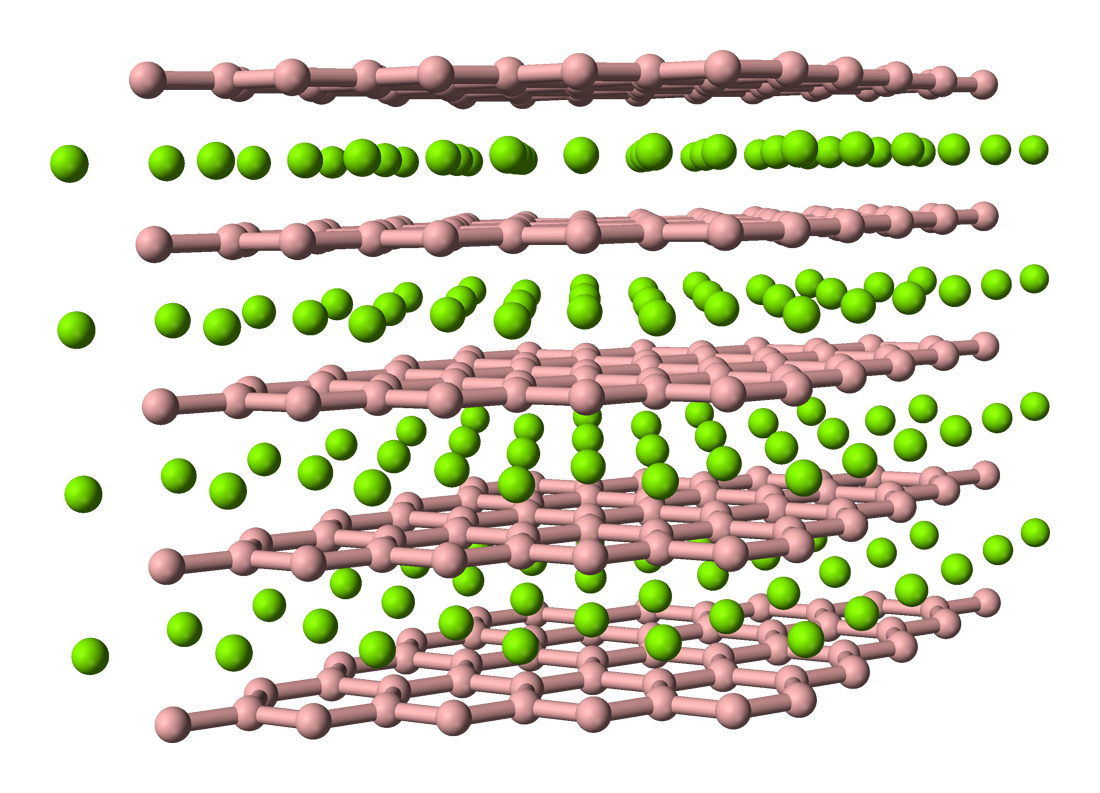
Titanium diboride (TiB₂) adopts a belonging to the P6/mmm (No. 191), consistent with the hP3 prototype and the AlB₂-type arrangement common among diborides. This structure is characterized by a , with the unit cell containing one atom at the 1a Wyckoff position (0, 0, 0) and two atoms at the 2d positions (1/3, 2/3, 1/2) and (2/3, 1/3, 1/2). At (approximately 20°C), the lattice parameters are a = 0.303 nm and c = 0.323 nm, yielding a c/a ratio of about 1.066, which exhibits slight and increases modestly with up to 1.070 at 1500°C. The atomic arrangement forms a distinctive layered configuration, consisting of alternating planes of hexagonal boron networks and titanium atoms. atoms within each layer are arranged in a close-packed lattice akin to , creating rigid, planar sheets, while atoms occupy positions between these boron layers, each coordinated to twelve boron atoms (six from adjacent layers). This interlayer spacing and coordination contribute to the material's overall stability. The bonding in TiB₂ reflects its layered architecture, with strong covalent interactions dominating within the boron layers (B-B bonds) and between titanium and boron atoms (Ti-B bonds), while prevails within the titanium layers, facilitating delocalization and influencing properties such as electrical conductivity. A representative of the illustrates these alternating hexagonal boron layers, with titanium atoms centered in the hexagonal voids formed by the boron nets, emphasizing the planar and stacked nature of the lattice.

Electronic properties

Titanium diboride (TiB₂) displays metallic electronic behavior, characterized by a finite (DOS) at the , which arises from the hybridization of 3d and 2p orbitals. This hybridization leads to a pseudogap near the , rather than a full , resulting in semi-metallic properties with overlapping that cross the . The band structure, computed via (DFT), shows dispersive energy bands dominated by boron s and p states in the valence region and strong covalent contributions from Ti 3d and B 2p states near the , contributing to and metallic conductivity. The electrical conductivity of TiB₂ is high, on the order of 10⁷ S/m at , making it a metallic conductor comparable to many transition metals. This conductivity stems primarily from the delocalized d-electrons of , facilitated by within the structure, while the resistivity at ranges from approximately 7 to 18 μΩ·cm depending on and crystallinity, with monocrystalline samples exhibiting the lowest values around 6.6 μΩ·cm. The p-orbitals play a crucial role in enhancing this conductivity through covalent bonding in the close-packed layers, where 2s–2p interactions promote charge delocalization and contribute to the overall mixed ionic-covalent- nature. The of TiB₂, an important parameter for applications in electrodes and gates, is measured to be in the range of 4.8–5.2 eV, with specific values around 5.08 eV reported for thin films on dielectrics. This value reflects the material's suitability for n-type metal-oxide-semiconductor devices, influenced by surface termination and electronic structure stability under various conditions.

Physical properties

Mechanical properties

Titanium diboride (TiB₂) is renowned for its exceptional , with hardness values typically ranging from 25 to 35 GPa at , influenced by factors such as material and . This property arises from the strong covalent Ti–B bonding within its hexagonal , enabling resistance to plastic deformation under load. At elevated temperatures, TiB₂ demonstrates remarkable hardness retention, decreasing exponentially but maintaining values around 9–10 GPa up to 900–1000°C, far outperforming many ceramics in thermal stability under mechanical stress. The material's stiffness is highlighted by a of approximately 565 GPa, reflecting its high resistance to elastic deformation and suitability for load-bearing applications. This modulus decreases only slightly with temperature, at a rate of about -0.032 GPa/K up to 1000°C, underscoring TiB₂'s structural integrity under combined thermal and mechanical loads. for TiB₂ falls in the range of 5–7 MPa·m^{1/2}, typical for brittle ceramics, where crack propagation is limited by deflection and transgranular mechanisms. This value, measured via indentation methods on dense polycrystals, indicates moderate resistance to brittle failure despite the material's overall hardness. Wear resistance in TiB₂ stems from its high interatomic bond strength and low coefficient, generally 0.6–0.9 under sliding conditions, which minimizes material removal through abrasion and . These attributes result in low coefficients, on the order of 10^{-3} mm³/N·m, making it ideal for tribological environments. Compared to other borides like ZrB₂, TiB₂ exhibits superior hardness, particularly at high temperatures, due to its denser atomic packing and stronger bonding.

Thermal and electrical properties

Titanium diboride (TiB₂) exhibits exceptional thermal stability, with a of 3225 ± 20 °C, which is the highest among borides and enables its use in ultra-high-temperature environments. This high melting temperature reflects the strong covalent bonding within its structure, contributing to its refractoriness. The thermal conductivity of polycrystalline TiB₂ is approximately 96 W/m·K at (20 °C), decreasing to about 78 W/m·K at 1500 °C due to effects that intensify with rising temperature; this value can vary between 60 and 120 W/m·K depending on purity and , with impurities and microstructural defects reducing conductivity. The coefficient of is 7.4 × 10⁻⁶ K⁻¹ at 20 °C, increasing to 9.8 × 10⁻⁶ K⁻¹ at 2000 °C, indicating moderate dimensional stability under thermal cycling. Additionally, the is around 0.62 J/g·K at , rising to approximately 1.4 J/g·K at higher temperatures, which supports efficient heat management in applications. Electrically, TiB₂ behaves as a metallic conductor with low resistivity, typically in the range of 7–40 × 10⁻⁸ Ω·m (or 7–40 μΩ·cm), varying with , , and conditions; for dense polycrystalline , values around 13 × 10⁻⁸ Ω·m are common at ambient conditions, increasing modestly with due to electron-phonon interactions. This combination of and electrical properties allows TiB₂ to retain high at elevated temperatures, making it suitable for demanding structural roles.

Chemical properties

Reactivity and stability

Titanium diboride (TiB₂) displays notable chemical inertness toward (HCl) and (HF), even in concentrated forms, due to its strong covalent bonding that resists dissolution or degradation by these non-oxidizing acids. However, it undergoes reaction with hot concentrated (HNO₃) and (H₂SO₄), where oxidizing conditions promote breakdown of the boride structure. In metallic environments, TiB₂ maintains excellent stability when in contact with molten iron, aluminum, and other non-ferrous metals like and , exhibiting good wettability without significant interfacial reactions. This compatibility arises from minimal and lack of chemical interaction at elevated temperatures relevant to metal processing. In contrast, TiB₂ shows reduced stability toward molten alkalis at high temperatures, where it is susceptible to attack and decomposition. Its thermodynamic stability is underscored by a (ΔH_f) of -279 kJ/mol, indicating a highly exothermic formation that contributes to overall robustness. Compared to alternatives like (WC) or (Si₃N₄), TiB₂ offers superior chemical compatibility in iron processing applications, with lower reactivity toward molten iron that enhances its utility in and tooling contexts.

Oxidation resistance

Titanium diboride (TiB₂) exhibits passive oxidation in air starting from approximately 400–800°C but demonstrates good oxidation resistance up to 1000–1100°C due to the formation of a protective oxide scale comprising (TiO₂) and (B₂O₃). The primary oxidation reaction can be represented by the simplified : TiB2+52O2TiO2+B2O3\text{TiB}_2 + \frac{5}{2} \text{O}_2 \rightarrow \text{TiO}_2 + \text{B}_2\text{O}_3 This multilayer scale, with an inner crystalline TiO₂ layer and an outer glassy B₂O₃ layer, impedes further oxygen ingress by reducing diffusion rates, particularly in the temperature range of 900–1100°C where B₂O₃ remains viscous and adherent. Below 900°C, oxidation proceeds slowly via diffusion-controlled mechanisms, resulting in minimal weight gain and structural integrity preservation. At elevated temperatures above 1100°C, the oxidation kinetics shift, often exhibiting parabolic growth of the scale due to the rate-limiting through the developing layer, though the exact varies with microstructure and exposure conditions. However, exceeding 1000–1200°C leads to increased degradation as B₂O₃ volatilizes, with rapid effects above 1400°C creating a porous TiO₂ structure that accelerates oxygen penetration and material recession; this is driven by the increasing of B₂O₃, compromising the protective barrier. To extend oxidation resistance, additives such as (SiC) or zirconium diboride (ZrB₂) are incorporated into TiB₂ matrices, promoting the in situ formation of stable, low-viscosity oxide phases like SiO₂ that seal pores and enhance scale integrity at temperatures up to 1400°C or higher. For instance, SiC additions facilitate a layer that reduces oxidation rates by orders of magnitude compared to monolithic TiB₂, while ZrB₂ contributes to denser mixed-oxide barriers. These modifications are particularly effective in composite systems, balancing improved environmental durability with maintained mechanical performance.

Synthesis and production

Laboratory synthesis

Titanium diboride (TiB₂) can be synthesized in settings through several small-scale methods that allow for precise control over reaction conditions, often yielding high-purity powders suitable for applications. These techniques typically produce materials with particle sizes in the nanoscale to submicron range, enabling studies on nanostructured properties. One common laboratory approach is the direct combination of elemental and powders. The reaction Ti + 2B → TiB₂ is carried out at temperatures exceeding 1000°C under or inert atmosphere to prevent oxidation, often using arc melting or high-temperature furnaces. This method yields high-purity TiB₂ (typically >95%) but results in coarser particles (around 1-10 μm) unless optimized for finer sizes. Borothermic reduction of represents another established laboratory technique, involving the reduction of TiO₂ by under vacuum, proceeding through intermediates such as TiBO₃ and Ti₂O₃ to form TiB₂ and B₂O₃ as the at 1550 °C. acts both as the and boron source, with post-reaction purification, such as acid leaching, removing unreacted oxides to achieve high purity (~98 wt% TiB₂). This method produces submicron powders with particle sizes of ~0.9 μm, though oxygen contamination can be an issue without careful control. For the preparation of TiB₂ nanocrystals, solution-phase methods like solvothermal reactions are employed. In a typical process, (TiCl₄) reacts with (NaBH₄) in a solvent such as or under solvothermal conditions at 500-700°C: TiCl₄ + 2NaBH₄ → TiB₂ + 2NaCl + 2HCl + 3H₂. This yields nanocrystalline TiB₂ with particle sizes of 5-20 nm and purities around 80-90%, though byproducts require separation via and washing. The approach is valued for its ability to produce uniform nanoparticles for research. Mechanical alloying offers a solid-state route without high temperatures initially, involving ball milling of Ti and B powders (molar ratio 1:2) in a high-energy planetary mill for 20-60 hours, followed by annealing at 800-1000°C to promote . The milling induces amorphization and , leading to TiB₂ formation upon heating, with final purities of 85-95% and particle sizes of 15-100 nm after purification. This technique is particularly useful for incorporating TiB₂ into composites during synthesis. Across these laboratory methods, yields generally range from 80-95%, with particle sizes controlled between 5-100 nm depending on processing parameters; however, impurities like oxides or unreacted elements often necessitate additional purification steps to meet standards.

Industrial production

The primary industrial production method for titanium diboride (TiB₂) is carbothermal reduction, which involves reacting (TiO₂), (B₂O₃), and carbon (C) at high temperatures to yield TiB₂ powder. The process typically occurs in an or at around 1700–1800°C, following the reaction TiO₂ + B₂O₃ + 5C → TiB₂ + 5CO, producing submicron to micron-sized particles with hexagonal morphology. This method is favored for its simplicity, use of inexpensive raw materials, and scalability, though it faces challenges such as oxygen from residual TiO₂, formation of impurities, and during prolonged high-temperature exposure. Self-propagating high-temperature synthesis (SHS) offers an alternative for commercial production, leveraging the between elemental (Ti) and (B), or oxide precursors like TiO₂, B₂O₃, and magnesium (Mg) as a reductant, to propagate a wave that forms TiB₂ in seconds. Industrial upscaling has been demonstrated using dynamic thermomechanical systems, achieving samples up to 10 cm in diameter at ignition temperatures around 800°C under , though initial densities are limited to 70–75% of theoretical, necessitating secondary processing. Challenges include heat loss in larger scales, defect formation from rapid cooling, and impurity control, making SHS suitable for producing ultrafine powders but less common than carbothermal methods due to equipment requirements. Electrochemical methods, particularly , enable powder production by cathodic reduction of and boron species in or melts, such as NaCl-KCl or cryolite-based s containing Ti and B oxides. The process operates at 800–1000°C with controlled current densities (e.g., 100–500 mA/cm²) to deposit dispersed TiB₂ particles, avoiding high-energy furnaces and potentially reducing impurities. However, optimization of composition, , and duration is critical to favor TiB₂ over other phases like TiB or borides, with scalability limited by of electrodes and energy efficiency in industrial setups. Post-synthesis, densification of TiB₂ powders for industrial use requires sintering aids to address challenges like TiO₂ surface contamination and low sinterability, which hinder achieving densities above 95%. Additions of 1–5 wt% (Ni) or (Si₃N₄) promote liquid-phase at reduced temperatures (e.g., 1500–1800°C via or spark plasma sintering), forming phases that enhance and remove oxides, resulting in near-full density (>98%) with minimal . These aids improve mechanical integrity but can introduce secondary phases that affect high-temperature stability if not carefully controlled. Global production of TiB₂ has seen steady growth, driven by demand in ceramics and composites; nanopowder variants have expanded post-2020 due to advances in SHS and carbothermal processes, supporting applications requiring finer particle sizes. The market, valued at approximately US$60 million as of 2025, is projected to grow at a CAGR of around 6% through 2035.

Applications

Established uses

Titanium diboride (TiB₂) is widely utilized in several established industrial applications due to its unique combination of high , electrical conductivity, and resistance to molten metals. One primary use is in the production of aluminum via the Hall-Héroult process, where TiB₂ serves as a for coatings in electrolytic cells. Its excellent wettability by molten aluminum and low in the electrolyte enable reduced and extended cell life compared to traditional carbon cathodes. In machining and tooling, TiB₂ is employed in cutting tools and wear-resistant coatings, particularly for processing non-ferrous metals such as aluminum alloys. These coatings, often applied via physical vapor deposition (PVD), provide superior hardness and low friction, enhancing tool life and surface finish during high-speed milling and turning operations. TiB₂ is also used to fabricate crucibles and evaporation boats for handling molten metals in high-temperature environments up to 2000°C. These components resist corrosion from reactive melts like aluminum and titanium, making them essential in metal refining and vacuum metallizing processes where thermal stability and non-wetting properties are critical. For protective applications, TiB₂-based composites form ballistic armor plates, leveraging the material's exceptional and low to defeat high-velocity projectiles. Hot-pressed TiB₂ tiles exhibit superior performance against armor-piercing rounds, often integrated into gradient structures with for improved multi-hit capability. Additionally, TiB₂ particles act as effective grain refiners in aluminum casting, where they are introduced via master alloys to nucleate equiaxed grains and refine microstructure. This improves mechanical properties like strength and by reducing , with optimal refinement achieved at particle sizes below 2 μm and sufficient titanium-to-boron ratios.

Emerging applications

Titanium diboride (TiB₂) has gained traction as an additive in materials for high-temperature ceramics, particularly in applications requiring enhanced resistance and structural integrity. It improves printability and performance in complex, heat-exposed components such as blades and nozzles. In the realm of , TiB₂-based ceramics are being explored as selective solar absorbers for (CSP) systems, offering high solar while minimizing emission. Research from 2017 demonstrated TiB₂'s potential through spark plasma sintered samples exhibiting low hemispherical reflectance in the solar (0.3–2.5 μm), positioning it as a alternative to traditional metallic absorbers. Subsequent advancements, including a 2023 dielectric-metal-dielectric incorporating TiB₂ (AlN/TiB₂/AlN/Mo/AlN), achieved 93.4% and 6.9% emittance at 300 K, with stability up to 900 °C for 200 hours in , enabling efficient energy conversion efficiencies of 57.2% under concentrated conditions. These blackbody-like coatings in the visible range support higher operating temperatures in CSP towers and parabolic troughs. TiB₂ sputtering targets are increasingly utilized for physical vapor deposition (PVD) processes to create thin films with superior hardness and conductivity, applicable in electronics for protective layers on semiconductors and in tooling for wear-resistant coatings on cutting edges. Commercial targets, typically 99.5% pure, enable uniform deposition via magnetron sputtering, yielding films that enhance durability in microelectronic devices and precision instruments. As a component of ultra-high temperature ceramics (UHTCs), TiB₂ contributes to systems in hypersonic and re-entry shields, where it withstands temperatures exceeding 2000 during atmospheric re-entry. Its integration into sharp leading edges of vehicle noses and wings reduces through boundary-layer control, with numerical models confirming effective shielding against oxidative and erosive environments in hypersonic flows. Nanopowder forms of TiB₂ are emerging as conductive components in electrodes, improving electron transport and rate capability without compromising capacity. Metal diborides like TiB₂ enhance overall conductivity and stabilize interfaces, as evidenced in designs achieving higher deliverable currents. As of 2025, the TiB₂ nanopowder market is estimated at approximately USD 11 million, with battery applications contributing to a of around 8% through 2030.

References

Add your contribution
Related Hubs
User Avatar
No comments yet.