


Community hub
Recent from talks
Contribute something
Nothing was collected or created yet.
Troglofauna
View on Wikipedia
Troglofauna are small cave-dwelling animals that have adapted to their dark surroundings. Troglofauna and stygofauna are the two types of subterranean fauna (based on life-history). Both are associated with subterranean environments – troglofauna are associated with caves and spaces above the water table and stygofauna with water. Troglofaunal species include spiders, insects, myriapods and others. Some troglofauna live permanently underground and cannot survive outside the cave environment. Troglofauna adaptations and characteristics include a heightened sense of hearing, touch and smell.[1] Loss of under-used senses is apparent in the lack of pigmentation as well as eyesight in most troglofauna. Troglofauna insects may exhibit longer appendages and a lack of wings.
Ecological categories
[edit]Troglofauna are divided into three main categories based on their ecology:[2]
- Troglobionts (or troglobites): species, or populations of species, strictly bound to subterranean habitats.
- Troglophiles: species living mainly aboveground but also in subterranean habitats. These are further divided into eutroglophiles (aboveground species also able to maintain a permanent subterranean population) and subtroglophiles (species inclined to perpetually or temporarily inhabit a subterranean habitat, but strongly associated with aboveground habitats for some functions).
- Trogloxenes: species only occurring sporadically in an underground habitat and unable to establish a subterranean population.
Environment
[edit]Troglofauna usually live in moderate cave regions.[3] The overall climates of these caves do not significantly change throughout the year. Humidity in such caves is generally high ranging from 95 to 100 percent; evaporation rates are low.
The cave ecosystem in which troglofauna reside can be divided into four zones: entrance, twilight, transition and deep cave.[4] The entrance zone is where the surface and underground environments meet. Light becomes scarcer in the twilight zone. The transition zone is almost completely dark; however some outside environmental effects can still be felt. Finally, the deep cave zone is completely dark, relatively stable, and exhibits no evaporation. Troglobites are usually found in the deep cave zone.
Diet and lifecycle
[edit]Troglofauna have adapted to the limited food supply and are extremely energy efficient. Food is found from "twigs, leaves, bacteria and epigean animals (including zooplankton)."[5] Food is also found from trogloxene carcasses, egg deposits, and faeces such as bat guano.[5] Troglofaunal beetles are predators and may feed on other troglofaunal animals rather than bacteria, twigs and guano.
Francis G. Howarth hypothesized on adaptations troglofauna have made to exist in the cave environment, postulating that troglofauna "have lost many of the water conservation mechanisms of surface relatives, and more nearly resemble permanently aquatic arthropods in water balance mechanisms, including cuticular permeability."[4] Troglofauna thrive in a humid environment and when a "chamber is too dry ... animals display either agitated or comatose behavior",[4] indicating they are highly susceptible to changes in temperature and humidity. To survive in an environment where food is scarce and oxygen levels are low, troglofauna often have very low metabolism. As a result, troglofauna may live longer than other terrestrial species.
Reproduction
[edit]Reproduction varies by species and may be infrequent,[3] but very little is known.
Evolution and dispersal
[edit]Troglofauna have evolved in isolation.[6] Stratigraphic barriers, such as rock walls and layers, and fluvial barriers, such as rivers and streams, prevent or hinder the dispersal of these animals.[3] Consequently, troglofauna habitat and food availability can be very disjunct and precluding a great range in diversity across the landscape.
Species
[edit]
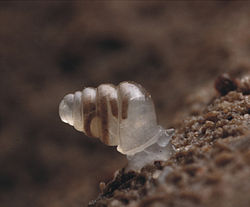
Troglofaunal species include representatives of many animal groups, including gastropods, centipedes, millipedes, spiders, pseudoscorpions, harvestmen, isopods, collembolans, diplurans, beetles and salamanders.[7] Troglofaunal gastropods are endemic to the U.S. and in Europe; they are mostly concentrated in the northeastern Mediterranean regions. Troglofaunal scorpions are mostly found in Mexican caves.[7] Troglobitic spiders are found more widespread in the U.S., Europe, and Japan.[7] However, they are also found in Mexico, the Congos (the DRC and the RotC), Cuba, Australia, and the Philippines.
Troglofauna are found worldwide.[8] Troglofaunal salamanders are found in Europe and the U.S.
Many caves remain undiscovered due to lack of visible entrances and more habitat exists in fissures, vugs and other spaces above the watertable. Consequently, many species of troglofauna may not have been discovered.
Discovery
[edit]More troglofaunal species are being identified. A report from 2007 described how scientists had recently discovered 255 new caves and 30 undescribed invertebrate species in Sequoia and Kings Canyon National Parks of Sierra Nevada mountains, California – "an extraordinary number for such a small area".[6]
Threats to troglofauna
[edit]Floodwaters can be detrimental to troglofaunal species, by dramatically changing the availability of habitat, food and connectivity to other habitats and oxygen. Many troglofaunal species are likely to be sensitive to changes in their environment and floods, which can accompany a drop in temperature that may adversely affect some animals.[9] Extreme winter temperatures may affect troglofaunal species near the surface. Birds and bats in caves prey on troglofauna. Troglofauna are likely to compete with each other for survival.
Humans also pose a threat to troglofauna. Mismanagement of contaminants (e.g. pesticides and sewage) may poison troglofaunal communities,[6] whilst removal of habitat, either directly or indirectly (e.g. rising watertable) is also a major threat.
See also
[edit]References
[edit]- ^ Phil Chapman (1982). "The Origins of Troglobites" (PDF). Proceedings of the University of Bristol Spelæological Society. 16 (2): 133–141.
- ^ Sket, Boris (2008-06-01). "Can we agree on an ecological classification of subterranean animals?". Journal of Natural History. 42 (21–22): 1549–1563. doi:10.1080/00222930801995762. ISSN 0022-2933. S2CID 84499383.
- ^ a b c Thomas L. Poulson & William B. White (1969). "The cave environment". Science. 165 (3897): 971–981. doi:10.1126/science.165.3897.971. PMID 17791021.
- ^ a b c Francis G. Howarth (1980). "The zoogeography of specialized cave animals: a bioclimatic model". Evolution. 34 (2): 394–406. doi:10.2307/2407402. JSTOR 2407402. PMID 28563430.
- ^ a b Thomas C. Barr, Jr. (1967). "Observations on the ecology of caves". The American Naturalist. 101 (922): 475–491. doi:10.1086/282512. JSTOR 2459274. S2CID 83673149.
- ^ a b c Kevin Krajick (September 2007). "Discoveries in the dark". National Geographic. Archived from the original on May 1, 2008.
- ^ a b c Thomas C. Barr, Jr. & John R. Holsinger (1985). "Speciation in cave faunas". Annual Review of Ecology and Systematics. 16: 313–337. doi:10.1146/annurev.es.16.110185.001525. JSTOR 2097051.
- ^ Robert W. Mitchell (1969). "A comparison of temperate and tropical cave communities". The Southwestern Naturalist. 14 (1): 73–88. doi:10.2307/3669249. JSTOR 3669249.
- ^ John Lamoreux (2004). "Stygobites are more wide-ranging than troglobites" (PDF). Journal of Cave and Karst Studies. 66 (1): 18–19.
External links
[edit]- "Flora and Fauna of Caves: Troglobites" at Showcaves.com
- "Florida Caves and Caverns"
- "Karst Management Handbook Training - Glossary"
- Ernest Ingersoll (1920). . Encyclopedia Americana.
- Bernardo Araujo (18 March 2024). "Rising temperatures threaten the tiny animals responsible for groundwater quality". Mongabay.
Troglofauna
View on GrokipediaDefinition and Classification
Definition
Troglofauna refers to small, air-breathing animals that have adapted to live permanently or semi-permanently in dark subterranean environments, such as caves, fissures, and soil voids.[6] The term derives from the Greek "troglos," meaning cave, combined with "fauna," the Latin term for animals.[7] These organisms are distinct from stygofauna, which are aquatic species inhabiting groundwater systems, and from epigean fauna, which dwell on the surface. Troglofauna primarily consist of invertebrates, including arthropods and other small taxa, that exhibit obligate or facultative dependence on subterranean habitats.[8] Due to the physical isolation of these environments, troglofauna often display high levels of endemism, with many species restricted to specific locales and showing limited dispersal capabilities. This isolation contributes to their evolutionary uniqueness, setting them apart as specialized components of subterranean biodiversity.[1]Ecological Categories
Troglofauna are ecologically categorized according to their degree of dependence on subterranean environments, spanning a spectrum from occasional visitors that rely primarily on surface resources to obligate dwellers fully restricted to cave systems. This classification builds on the historical Schiner-Racovitza system and was refined and standardized by Boris Sket in 2008 to provide a more precise framework for understanding habitat specificity and ecological roles within subterranean ecosystems.[4] The primary categories are trogloxenes, eutroglophiles, subtroglophiles, and troglobionts, distinguished by their life cycle completion, resource utilization, and adaptation levels. Trogloxenes represent accidental or occasional visitors to subterranean spaces, like bats or crickets using caves for shelter without establishing populations.[4] Eutroglophiles are primarily surface (epigean) species capable of sustaining permanent populations underground without full dependence.[4] Subtroglophiles inhabit caves temporarily or seasonally but rely on surface conditions for key life functions, such as reproduction or feeding.[4] In contrast, troglobionts are obligate cave inhabitants, permanently restricted to hypogean (underground) environments and often showing pronounced troglomorphic adaptations that preclude survival aboveground, such as blind beetles that have evolved to exploit exclusively cave-based resources.[4] Categorization relies on key criteria: the level of dependency on subterranean habitats for reproduction and survival, the degree of adaptability to surface conditions (e.g., tolerance to light, temperature fluctuations, and nutrient availability), and the permanence of occupancy within caves, ranging from transient visits to lifelong confinement.[4] These criteria highlight the ecological gradient, where trogloxenes and eutroglophiles maintain connections to surface ecosystems, subtroglophiles exhibit partial reliance on epigean conditions, and troglobionts form isolated, endemic populations. This classification emphasizes ecological binding over morphology alone. Among studied troglofauna, troglobionts predominate in biospeleological research due to their specialized nature and high endemism, comprising the majority of documented obligate subterranean species in many karst regions. Evolutionary processes have led to transitions between categories, such as surface-dwelling ancestors (analogous to trogloxenes or eutroglophiles) colonizing caves and gradually evolving into troglobionts through isolation and selection for subterranean traits.[9] These categories carry significant conservation implications: trogloxenes, eutroglophiles, and subtroglophiles act as biodiversity indicators, reflecting cave health through their presence in entrance zones and connectivity to surface ecosystems, whereas troglobionts emphasize the fragility of subterranean biodiversity, as their strict habitat dependence renders them highly vulnerable to perturbations like pollution or habitat fragmentation.[4]Habitats and Environments
Subterranean Habitats
Troglofauna, as terrestrial inhabitants of subterranean environments, occupy diverse underground structures that range from extensive cave systems to narrow fissures and soil interfaces. Primary habitats include karst caves, which form through the dissolution of soluble rocks like limestone by acidic groundwater, creating interconnected passages and chambers that extend from shallow entrances to profound depths. These caves provide aphotic refugia essential for troglomorphic species, with notable examples including the expansive networks in Slovenia's Postojna Planina system. Lava tubes, another critical habitat, originate from solidified lava flows in volcanic terrains and are typically shallow, less than 10 meters deep, featuring smooth walls and occasional root intrusions from overlying vegetation that introduce organic matter. Talus crevices, often termed the milieu souterrain superficiel (MSS), comprise superficial voids and cracks within scree slopes or rock accumulations, bridging surface soils and deeper hypogean realms while supporting miniaturized fauna adapted to confined spaces. Additionally, air-filled voids within phreatic zones—saturated subterranean areas below the water table—and interfaces between deep soils and groundwater layers host troglofauna, where percolating moisture and detritus sustain sparse communities in otherwise resource-poor settings. Globally, troglofauna exhibit hotspots in karst-dominated regions, such as the Dinaric Alps in southeastern Europe, where extensive limestone plateaus foster high endemism through isolated cave networks; systems like Vjetrenica Cave in Bosnia and Herzegovina exemplify this with over 80 obligate subterranean species. In Australia, the Pilbara region's non-karstic landscapes, characterized by fractured banded iron formations and vadose zones in ancient Archaean rocks, harbor diverse troglofauna in mesocaverns and fissures, as documented in the Robe Valley with nearly 50 species across wells and voids. The Yucatán Peninsula in Mexico represents a tropical karst hotspot, with collapsed cenotes and flooded caves like Sistema Huautla supporting at least 27 troglobionts amid vast aquifer systems. Beyond karst, non-karst habitats prevail in volcanic settings, such as lava tubes in Hawaii's Kazumura Cave or the Canary Islands' Cueva del Viento, and tectonic fissures in arid terrains, where seismic activity generates narrow cracks conducive to isolated populations. Microhabitat variations within these structures delineate ecological gradients that influence troglofauna distribution. Entrance zones, exposed to diffuse twilight, serve as ecotones with residual surface influences like humidity gradients and occasional light penetration up to several meters inward. Transitioning inward, aphotic zones dominate with total darkness, fostering communities reliant on allochthonous inputs and chemosensory navigation. Deeper stable zones, often with minimal airflow and high relative humidity exceeding 90%, offer the most consistent conditions, where air currents are negligible and temperatures remain buffered against surface fluctuations, supporting the most specialized troglophiles and troglobionts. Habitat connectivity plays a pivotal role in troglofauna persistence, as subterranean networks of microcracks, fissures, and vadose conduits enable limited passive dispersal and gene flow between otherwise isolated sites, such as in Amazonian iron ore cave clusters, where phylogenetic similarity can persist over distances of up to a kilometer or more. These interconnections, often imperceptible at the surface, underscore the fragmented yet linked nature of subterranean realms, facilitating occasional colonization events despite barriers like rock barriers or flooding.Environmental Conditions
Subterranean environments inhabited by troglofauna are characterized by perpetual darkness, or aphotic conditions, which eliminate photosynthetically active radiation and impose selective pressures on visual systems.[10] Humidity levels remain consistently high, often approaching 100% relative humidity, minimizing evaporation and supporting desiccation-sensitive organisms.[11] Temperatures are notably stable compared to surface environments, typically ranging from 10–20°C in temperate caves, though this varies with regional groundwater influences and depth.[12] Oxygen availability can be reduced in deeper zones due to limited air circulation and microbial respiration, creating hypoxic pockets that challenge aerobic metabolism.[10] These habitats are generally nutrient-poor, with minimal organic carbon and limited primary productivity.[11] Energy limitations in troglofaunal habitats stem from the scarcity of autochthonous production, leading to heavy reliance on allochthonous inputs such as surface-derived organic matter transported via flooding events, wind-blown debris, or animal guano deposits from bats and other visitors.[13] In certain isolated systems, like sulfidic caves, chemolithoautotrophic microbes harness chemical energy from reduced compounds such as hydrogen sulfide to form the base of the food web, sustaining higher trophic levels including troglofauna.[14] Hydrogeological processes profoundly influence troglofaunal environments, with periodic flooding events delivering essential nutrients from surface runoff but posing risks of drowning and habitat disruption in air-filled voids.[13] These settings exhibit low predation pressure due to sparse biodiversity, yet high isolation from surface populations fosters endemism and genetic divergence.[11] Regional variations in subterranean conditions reflect overlying climates; tropical caves maintain even higher humidity levels near saturation, supporting diverse moisture-dependent assemblages, while arid zone calcretes and mesas experience acute water scarcity, confining troglofauna to humid microvoids near the water table.[6]Adaptations to Subterranean Life
Morphological Adaptations
Troglofauna, particularly obligate subterranean species known as troglobionts, exhibit a suite of morphological adaptations collectively termed troglomorphy, which facilitate survival in the perpetual darkness and resource-scarce conditions of cave and fissure environments.[15] These adaptations often include regressive traits such as the reduction or loss of eyes and pigmentation, alongside progressive changes like the elongation of sensory and locomotor structures.[16] Such modifications enhance tactile navigation and energy conservation while minimizing unnecessary structures in lightless habitats.[17] A hallmark of troglomorphic evolution is anophthalmia, the complete absence of functional eyes, or the presence of vestigial ocular structures in many troglobionts. For instance, cave-dwelling spiders in families like Leptonetidae often retain only rudimentary eye remnants that no longer contribute to vision, reflecting the selective pressure against maintaining costly visual systems in darkness.[18] Similarly, troglobiotic harvestmen (Opiliones) such as species in the genus Texella display reduced or absent eyes, with evolutionary convergence toward this trait across multiple lineages.[19] Depigmentation is another widespread adaptation, resulting in translucent, white, or pale body coloration due to the elimination of melanophores in the absence of ultraviolet exposure. This loss of pigmentation reduces metabolic costs associated with melanin production and may aid in camouflage within dimly lit or uniform subterranean substrates.[17] Troglobiotic isopods (Isopoda: Oniscidea), such as those in the genus Alpioniscus, exemplify this trait, appearing nearly colorless and with softened exoskeletons that further minimize energy expenditure on structural reinforcement.[20] Progressive morphological changes often involve elongated appendages to compensate for lost visual cues, enabling enhanced mechanoreception and mobility through confined spaces. In cave harvestmen, legs can extend several times the body length, providing greater reach for sensing vibrations and obstacles via specialized setae.[19] Troglobiotic isopods similarly feature prolonged antennae and pereopods, which assist in foraging and exploration within narrow fissures, while their bodies may adopt a more streamlined form to navigate tight passages.[20] Body size variations also occur, with some taxa showing miniaturization for efficiency in microhabitats or localized gigantism in appendages to amplify sensory capabilities.[15]Physiological and Sensory Adaptations
Troglofauna have evolved physiological mechanisms to cope with the perpetual darkness, limited food availability, and stable but extreme conditions of subterranean environments, prioritizing energy conservation and efficient resource use. A key adaptation is the reduction in metabolic rate, which allows these organisms to survive in oligotrophic habitats where organic matter is scarce. For instance, hypogean crustaceans exhibit oxygen consumption rates 1.7 to 3.5 times lower than their surface-dwelling counterparts, enabling prolonged survival under hypoxic conditions.[2] This slowed metabolism correlates with extended longevity, far exceeding typical surface relatives due to delayed maturation and minimal reproductive investment.[21] To manage nutrient scarcity, troglofauna employ strategies for water and energy storage, including high tolerance to starvation facilitated by lipid reserves in specialized tissues. These lipids serve as a long-term energy source during extended periods without food, as observed in various subterranean arthropods that can endure months of fasting without significant physiological decline.[2] Cutaneous respiration further supports survival by allowing gas exchange through the skin in the humid, oxygen-poor air of caves, reducing reliance on active ventilation and minimizing water loss in low-humidity microhabitats.[2] Sensory adaptations compensate for visual deprivation by amplifying non-optical modalities, enhancing detection of environmental cues essential for navigation and resource location. Chemoreception is particularly amplified, with enlarged olfactory structures on elongated antennae enabling precise chemical trail following during foraging; for example, subterranean isopods rely heavily on antennal chemosensilla to identify organic detritus.[2] Mechanoreception is bolstered by trichobothria—fine sensory setae on appendages that detect subtle air currents and vibrations—allowing arachnids like cave spiders to sense prey movements or structural changes from afar.[2] Vibration sensitivity extends to substrate-borne signals, aiding in predator avoidance and mate location across dark voids. Behavioral adjustments reinforce these physiological traits, promoting energy efficiency and safe movement. Thigmotaxis, or wall-following behavior, guides navigation by maintaining tactile contact with surfaces in many troglobitic arthropods. Reduced activity levels, characterized by slow, intermittent locomotion rather than bursts, further conserves metabolic resources, with many species exhibiting arrhythmic patterns suited to unchanging subterranean conditions.[2] Recent genomic studies have identified conserved molecular mechanisms, such as reduced opsin repertoires and homeostasis regulators, underlying these physiological and sensory adaptations across diverse taxa.[22] These shifts collectively enable troglofauna to thrive in isolation, underscoring the interplay between internal physiology and external behavior in subterranean persistence.Ecology and Behavior
Diet and Trophic Roles
Troglofauna, the obligate terrestrial inhabitants of subterranean environments, predominantly rely on detritivory as their primary feeding strategy, consuming allochthonous organic inputs such as bat guano, flood-deposited plant debris, and fungi growing on these substrates. Bat guano serves as a nutrient-rich resource, supporting detritivores like mites, woodlice, and cockroaches that break down the material through coprophagy and microbial decomposition. Flood events introduce organic matter from surface streams, which troglofauna opportunistically exploit during periodic inundations, enhancing nutrient availability in otherwise oligotrophic habitats. Fungi colonizing guano and detritus further augment the diet, providing a secondary energy source processed by specialized detritivores such as subterranean Leiodidae beetles. Scavenging on dead invertebrates and trogloxene carcasses supplements these diets, while predation on smaller troglofauna remains rare due to limited prey abundance.[23][24][25] Within subterranean food webs, troglofauna occupy mostly primary and secondary consumer trophic levels, functioning as detritivores and omnivores that process organic inputs into biomass for higher levels. Microorganisms, including bacteria, archaea, and fungi, form the basal trophic layer by decomposing detritus, enabling energy transfer to macroinvertebrates. Top predators are scarce, with food webs often truncated due to low overall biomass and extensive omnivory among consumers; for instance, cave crickets (Rhaphidophoridae) exhibit flexible diets as both herbivores on fungi and predators on smaller arthropods. These generalist strategies promote resilience in resource-poor systems but limit trophic complexity compared to surface ecosystems. Intraguild predation among predators further blurs trophic boundaries, as species like palpigrades and spiders consume both prey and conspecifics.[26][27][24] Food web dynamics in troglofaunal habitats are heavily dependent on allochthonous inputs from surface-derived detritus and guano, with autochthonous production minimal due to the absence of phototrophs. In some isolated systems, chemosynthetic microbes provide an alternative basal resource, sustaining localized food chains through sulfur or methane oxidation. Adaptations facilitating these diets include specialized mouthparts, such as variably shaped mandibles in beetles for scraping detritus, and behavioral opportunism during flood events to access ephemeral resources. Overall energy flow is constrained by low primary productivity, resulting in sparse populations and slow turnover rates that characterize these simplified, bottom-up controlled networks.[26][27][24]Social and Predatory Interactions
Troglofauna display predation patterns well-suited to the nutrient-poor and visually obscured subterranean realm, where energy conservation is paramount. Cannibalism is a prevalent strategy among cave arthropods, often driven by intraguild predation dynamics that allow predators to exploit conspecifics when alternative prey is scarce, thereby sustaining populations in oligotrophic environments.[28] Ambush tactics dominate, as active hunting is energetically costly; for instance, pseudoscorpions detect and capture small prey like mites through vibrations transmitted via the substrate, using specialized chemotactic and mechanoreceptive setae on their pedipalps to locate victims without visual cues.[29] These behaviors underscore the reliance on tactile and seismic sensory modalities for efficient foraging in perpetual darkness. Competition among troglofauna is intense yet structured in low-food subterranean settings, where overlapping niches could lead to exclusion but are instead managed through resource partitioning. Species often diverge trophically or morphologically to exploit distinct food sources, such as detritus of varying decay stages or microhabitat-specific organic inputs, minimizing direct interspecific rivalry and promoting coexistence.[30] Territoriality remains uncommon, as the vast, interconnected pore spaces and fissures provide ample room for dispersal, reducing the need for aggressive defense of limited areas compared to surface ecosystems.[31] Social structures in troglofauna are rudimentary, with most species leading solitary lives adapted to sparse encounters in isolated habitats. Temporary aggregations occur sporadically, primarily for mating rendezvous or to cluster in humidity-refugia microclimates that buffer against desiccation in marginally drier vadose zones, but these lack cooperative elements like division of labor. Complex eusociality is absent, as the evolutionary pressures of food scarcity and low mobility favor individualism over group living.[32] Interspecific interactions extend beyond predation to include mutualistic and antagonistic relationships that influence troglofaunal fitness. Symbiotic associations with gut microbes enable efficient digestion of recalcitrant organic matter, such as lignocellulose from allochthonous inputs, supplementing the hosts' limited enzymatic capabilities in energy-poor caves.[33] Parasitism by fungi and nematodes further shapes dynamics, with nematophagous fungi forming trapping structures to ensnare and consume troglofauna, while parasitic nematodes infest hosts, potentially regulating population sizes in these enclosed systems.[34] Low population densities, often resulting from habitat fragmentation and energetic constraints, profoundly limit interaction frequencies among troglofauna, fostering stable but interaction-sparse communities. This sparsity reduces encounter rates for predation, competition, and even symbiotic exchanges, allowing rare individuals to persist without frequent biotic pressures, though it heightens vulnerability to stochastic disturbances.[35]Reproduction and Life History
Reproductive Mechanisms
Troglofauna exhibit reproductive mechanisms finely tuned to the challenges of subterranean habitats, where sparse populations, limited mobility, and stable but resource-poor conditions favor energy-efficient strategies over high reproductive output. Indirect sperm transfer via spermatophores is prevalent among arthropod troglobites, allowing males to deposit sperm packets on the substrate for females to retrieve, a method that minimizes direct contact risks in low-density environments. For instance, in cave pseudoscorpions of the genus Maxchernes, mating involves a structured sequence including a predeposition "dance," spermatophore deposition, and transfer, with the entire process averaging about 67 minutes and enabling multiple matings within a reproductive period.[36] This indirect transfer is also observed in ensiferan insects like cave crickets (Troglophilus spp.), where spermatophores constitute a significant portion of male body mass (up to 22%), reflecting substantial paternal investment despite the absence of direct insemination.[37] Courtship in troglofauna relies on non-visual cues due to perpetual darkness, with vibrational signals and pheromones serving as primary mate attractants and locators. In Troglophilus neglectus, males produce obligatory abdominal vibrations during courtship (dominant frequency below 120 Hz), which stimulate female receptivity and are transmitted through substrates like bark or moss, though ineffective on rock; post-copulation whole-body vibrations may further reinforce pair bonding.[37] Chemical cues complement these, as seen in the protrusion of male abdominal scent glands in T. neglectus during courtship and aggression, aiding mate detection over distances in confined cave spaces. Sexual dimorphism is often reduced in troglobites owing to diminished intrasexual competition in isolated populations; for example, sympatric cave crickets Troglophilus neglectus and T. cavicola show varying degrees of troglomorphism that influence but do not exaggerate secondary sexual traits, with no size dimorphism in T. neglectus and male-biased size dimorphism in T. cavicola, lacking pronounced ornamental differences.[38] Parthenogenesis occurs in some isolated populations, particularly among troglobitic collembolans like Arrhopalites caecus in Wind Cave, South Dakota, where all-female populations suggest asexual reproduction to bypass mate scarcity.[39] Fecundity is characteristically low to conserve energy in nutrient-limited settings, with clutch sizes typically ranging from 1 to 10 eggs, as evidenced by troglobitic spiders in the genus Troglohyphantes producing fewer but larger eggs (mean diameter 0.36 mm) compared to surface relatives.[40] Delayed fertilization facilitates opportunistic breeding, enabled by female sperm storage; in pseudoscorpions and crickets, stored spermatophores allow egg laying to align with favorable microconditions, extending reproductive flexibility over extended lifespans. Female-biased sex ratios (e.g., 2.5:1 to 10:1 in Troglohyphantes and Cicurina spp.) further underscore these adaptations, potentially arising from higher male post-molt mortality or selective pressures favoring female longevity.[40] High endemism in troglofauna heightens inbreeding risks, as small, fragmented populations experience reduced gene flow; genetic studies of troglomorphic cockroaches reveal isolation-driven bottlenecks, though some dispersal maintains minimal connectivity to mitigate depression.[41][42] In vertebrate troglofauna, such as the olm (Proteus anguinus), reproduction is similarly adapted for energy efficiency, with females reaching sexual maturity at an average of 15.6 years and breeding infrequently every 12.5 years, producing clutches of 5–35 eggs.[43]Life Cycle Stages
Troglofauna exhibit life cycles characterized by distinct developmental phases—egg, juvenile, and adult—shaped by the stable yet nutrient-scarce subterranean environment, where energy conservation is paramount. Eggs are typically laid in protected, humid niches to maintain moisture and shield against desiccation, as observed in cave-dwelling spiders that deposit egg sacs in damp, sheltered crevices within cave walls. This protection ensures embryonic survival in conditions of perpetual darkness and limited humidity fluctuations.[44] The juvenile stage involves dispersal-limited growth, with individuals remaining confined to their natal habitat due to poor mobility and isolated cave systems, resulting in slow maturation over months to years amid sparse food resources. Arthropod troglobites, such as isopods and beetles, undergo multiple ecdysis events during this phase, with molting cycles adapted to low-nutrition conditions that minimize metabolic demands and extend inter-molt intervals for energy efficiency. Juveniles generally experience high survival rates in the consistent microclimate of caves, though they remain vulnerable to sudden disturbances like flooding, which can scour habitats and cause displacement or drowning.[45][46] Adulthood marks the reproductive phase, featuring an extended lifespan that allows for infrequent breeding cycles, a key adaptation to oligotrophic settings. Troglobionts often live 5–20 years, far exceeding surface counterparts, as evidenced by extended adult longevity in cave arthropods like pseudoscorpions and millipedes, which prioritize survival over rapid turnover. This prolonged phase supports low reproductive output, with overall life cycles spanning years rather than seasons, contrasting sharply with the accelerated development of epigean relatives.[47][48] In the olm (Proteus anguinus), the life cycle includes a prolonged larval phase lasting several years due to neoteny, with full metamorphosis rare and adults living over 100 years in some cases, emphasizing longevity in vertebrate troglofauna.[43] Variations in life cycle structure occur across taxa; some troglobites, including certain arthropods, display direct development without free-living larval stages, while others retain abbreviated larval phases suited to subterranean constraints, such as protected brooding in humid refugia. These differences reflect evolutionary responses to habitat stability and nutritional scarcity, emphasizing conceptual shifts toward longevity over fecundity.[49]Evolution and Biogeography
Evolutionary Processes
Troglofauna exhibit troglomorphism, a suite of morphological adaptations that have evolved convergently across diverse taxa in response to subterranean conditions, including the loss of eyes and pigmentation (regressive evolution) alongside enhancements in non-visual sensory structures such as elongated appendages and chemoreceptors (progressive evolution).[50] These traits arise independently in multiple lineages, as seen in cave crustaceans like Asellus aquaticus and vertebrates like Astyanax mexicanus cavefish, where eye degeneration involves polygenic mechanisms including apoptosis and altered signaling pathways, while sensory enhancements stem from expansions in neuromast and taste bud numbers.[50] Regressive features often reflect energy conservation in nutrient-poor environments, whereas progressive ones facilitate navigation and foraging in perpetual darkness.[51] The origins of troglofauna trace back to ancestral epigean (surface-dwelling) species that colonized caves, driven by Pleistocene climate shifts that created refugia in stable subterranean habitats and tectonic events such as uplift in regions like the Tibet-Himalaya-Hengduan area, which expanded karst landscapes.[52] In subtropical East Asia, for instance, 88% of colonization events occurred after the Oligocene-Miocene boundary (~23 million years ago), with forest-dwelling ancestors from evergreen broadleaf ecosystems serving as primary sources, accelerating during Neogene and Pleistocene climatic instabilities.[52] These invasions transformed surface populations into obligate cave dwellers, isolated by barriers like cave entrances and underground aquifers. Genetic mechanisms underlying troglomorphism include relaxed purifying selection in the stable, dark cave environment, allowing neutral mutations to accumulate and fix via genetic drift, particularly for non-essential traits like pigmentation and vision.[51] Small, isolated populations exacerbate inbreeding depression, reducing genetic diversity and amplifying drift effects, which contribute to trait degeneration without adaptive cost.[51] However, some reductive traits evolve rapidly under positive selection for energy reallocation, as evidenced by eye reduction in cave crabs. Evolutionary timescales vary: rapid adaptations, such as pigmentation loss in Astyanax mexicanus, can occur within 20,000 years or 161,000–191,000 generations, while ancient lineages in stable karst systems, like relictual harvestmen in Brazilian caves, persist for millions of years as evolutionary museums.[51] Phylogenetic analyses reveal multiple independent cave invasions in arthropods, with at least three separate colonizations in the Asellus aquaticus complex within the Postojna Planina Cave System, underscoring repeated convergent evolution across phyla.[50]Patterns of Dispersal and Endemism
Troglofauna, particularly troglobionts, exhibit severely limited dispersal capabilities due to their specialized adaptations to stable subterranean environments and the inherent fragmentation of underground habitats. Active dispersal is rare, as most species lack the mobility to traverse long distances through the dark, narrow confines of caves, fissures, or soil voids; instead, they rely on passive mechanisms such as occasional flooding events that transport individuals between connected systems or inadvertent human-mediated movement during mining, construction, or tourism activities. Phoresy, where smaller troglofauna hitch rides on larger animals like bats or crickets, occurs but is uncommon in obligate subterranean taxa due to the scarcity of suitable hosts in isolated habitats.[53][54][55] These constraints contribute to exceptionally high rates of endemism among troglobionts, with 80-100% of species restricted to specific subterranean regions or even individual caves, far exceeding surface fauna patterns. Single-cave endemics are prevalent, as seen in the eastern United States where up to 45% of troglobionts are confined to one cave, and over 250 such species have been documented. In Australian hotspots like the Pilbara region, surveys have revealed over 100 unique troglofauna species in localized areas such as the Robe Valley, where 65 troglofauna were collected across a mere 17 km span, underscoring the extreme short-range endemism driven by habitat isolation.[56][57][11] Biogeographic patterns of troglofauna are shaped by vicariance, where geological processes like karst fragmentation and tectonic uplift isolate populations, preventing gene exchange and promoting speciation in stable, ancient landscapes. Hotspots emerge in such areas, including the arid Pilbara in Australia with its fractured iron ore mesas and the karst systems of Slovenia, exemplified by the Postojna-Planina Cave System, which harbors exceptional subterranean diversity due to long-term habitat stability. These patterns reflect historical fragmentation rather than recent colonization, with troglofauna distributions mirroring the patchwork of subterranean voids formed over millennia.[58][59][60] Limited connectivity persists through subterranean features like aquifers and fissures, which serve as occasional corridors for gene flow, particularly in stygofauna-troglofauna interfaces, though such exchanges are infrequent and often punctuated by rare surface events like floods. Genetic studies in the Pilbara indicate moderate gene flow across distances up to hundreds of kilometers via these underground networks, contrasting with the predominant isolation. However, this sporadic connectivity is insufficient to mitigate the overall fragmentation.[41][61] The resulting isolation heightens troglofauna vulnerability, rendering populations susceptible to localized extinction from habitat disturbances, as small, endemic groups lack the resilience to recolonize or adapt to changes like groundwater extraction or surface alterations. This endemism-driven fragility underscores the need for targeted conservation, as even minor disruptions can eliminate unique lineages confined to single sites.[62]Biodiversity and Species
Major Taxonomic Diversity
Troglobites, the obligate terrestrial cave-dwelling component of troglofauna, display significant taxonomic diversity, with thousands of species described worldwide as of 2020, though experts estimate the true total could exceed 100,000 due to limited exploration and sampling biases in subterranean environments.[63] Invertebrates overwhelmingly dominate this assemblage, comprising the vast majority of known troglobites, while vertebrates are exceedingly rare and typically confined to aquatic or semi-aquatic niches within cave systems.[24] This imbalance reflects the challenges of subterranean life, favoring small, resilient invertebrates adapted to darkness, humidity, and nutrient scarcity, with soft-bodied groups like annelids and flatworms underrepresented due to preservation difficulties in fossil and collection records.[24] The phylum Arthropoda stands out as the most speciose group in troglofauna, encompassing the majority of described species across various classes and orders.[24] Within Arthropoda, insects (class Insecta) are prominent, particularly beetles of the subfamily Trechinae (family Carabidae), with approximately 2,500 troglobitic species known globally, many exhibiting troglomorphism such as elongate bodies and loss of eyes.[24] Arachnids (class Arachnida) contribute substantially, including spiders (order Araneae), pseudoscorpions (order Pseudoscorpiones), and harvestmen (order Opiliones), which are frequently encountered in cave interiors. Crustaceans (subphylum Crustacea), especially terrestrial isopods (order Isopoda), and myriapods (subphylum Myriapoda), such as millipedes (class Diplopoda), further enrich arthropod diversity, with collembolans (class Collembola) numbering around 500 troglobitic species and often dominating local communities.[24][64] Beyond Arthropoda, the phylum Mollusca is represented primarily by gastropod snails, which form a smaller but notable component of troglofauna in humid cave settings, with species adapted to low-food environments through reduced metabolic rates.[24] Other invertebrate phyla, including Onychophora (velvet worms) and minor contributions from Platyhelminthes, occur sporadically but lack the abundance of arthropods. Vertebrates are minimal in strictly terrestrial troglofauna, with no true troglobiont mammals recorded; the few examples, such as certain amphibians (class Amphibia), blur the terrestrial-aquatic boundary and are more accurately classified as stygobionts, exemplified by the olm (Proteus anguinus).[24] Overall, taxonomic biases toward hard-bodied arthropods persist, underscoring the need for advanced sampling techniques to uncover hidden diversity in underrepresented groups.[24]Notable Species Examples
Troglofauna exhibit remarkable adaptations to subterranean life, with notable species illustrating troglomorphism such as eye loss, depigmentation, and elongated appendages across diverse regions. In European caves, the beetle Leptodirus hochenwartii (Leiodidae), endemic to the Dinaric Karst, exemplifies these traits; it is blind, wingless, depigmented, and possesses elongated antennae and legs for navigating dark, humid environments while feeding on organic detritus like bat guano.[65] This species, discovered in Postojna Cave in 1831, represents an early milestone in biospeleology and highlights the evolutionary convergence of cave-dwelling beetles in karst systems.[65] In the Pilbara region of Western Australia, troglobitic pseudoscorpions such as Anatemnus subvastus (Atemnidae) demonstrate extreme endemism and morphological specialization. This eyeless species, with pallid coloration and slightly elongated pedipalps and legs, inhabits narrow fissures in iron ore mesas over a restricted area of less than 20 km² in the Hamersley Range.[66] Its discovery underscores the Pilbara's status as a subterranean biodiversity hotspot, where numerous troglobitic pseudoscorpion species have been recorded, many confined to single mesas or karst formations, emphasizing vulnerability to habitat disruption.[66][67] Hawaiian lava tubes host unique insular troglofauna, including the blind wolf spider Adelocosa anops (Lycosidae), the first eyeless lycosid discovered worldwide. Restricted to Kauai's caves, this depigmented predator with attenuated legs relies on tactile setae for hunting prey like cave crickets in perpetual darkness.[68] Its adaptations reflect recent evolutionary shifts in oceanic island ecosystems, where troglobites have arisen independently from surface ancestors, contributing to global understanding of subterranean adaptive radiation.[68] Unique reproductive strategies appear in some troglobitic springtails (Collembola), such as certain Pseudosinella species in European and North American caves, which reproduce parthenogenetically to maintain populations in isolated habitats with low encounter rates between sexes.[69] This asexual mode facilitates colonization of disconnected cave systems without genetic bottlenecks. In Slovenian caves like Postojna, the blind millipede Typhloiulus illyricus (Julidae) shows troglomorphic features including eye loss, elongated appendages, and reduced pigmentation, adapted for slow foraging on fungi and detritus in stable, nutrient-poor conditions.[70] Such species often exhibit extended lifespans due to low metabolic rates, enhancing survival in energy-limited environments.[70] Conservation concerns highlight species like the Tooth Cave pseudoscorpion (Tartarocreagris texana, Neobisiidae), a federally endangered troglobite endemic to a single karst preserve near Austin, Texas. Blind and translucent, it inhabits moist cave sediments, with populations threatened by habitat loss; its restricted range exemplifies single-site endemism versus wider-ranging troglophiles like some Pseudosinella springtails. In contrast, genera such as Tyrannochthonius in Australian calcrete aquifers show broader distributions across multiple sites, aiding resilience but still facing mining pressures.[67]Discovery and Research
Historical Exploration
The exploration of troglofauna began with sporadic observations of terrestrial subterranean invertebrates in European caves during the 18th and early 19th centuries, though systematic study emerged later. Initial records often intertwined with broader subterranean fauna, including aquatic forms, but focused increasingly on air-breathing terrestrial species. By the 18th century, scientific documentation advanced, with naturalists noting blind and depigmented traits in cave-dwelling arthropods as adaptations to darkness. These early accounts laid the groundwork for recognizing troglomorphic features in terrestrial environments. In the early 19th century, French naturalist Jean-Baptiste Lamarck discussed eye degeneration in dark subterranean habitats in Philosophie Zoologique (1809), using examples like the blind mole rat and cave-dwelling animals to illustrate his theory of acquired characteristics through disuse, influencing conceptualizations of troglomorphism in terrestrial species.[71] Danish entomologist Johan Isak Schiödte expanded on these ideas in 1849, proposing the first systematic classification of subterranean fauna into categories based on their dependency on cave habitats—ranging from occasional visitors to fully adapted forms—particularly emphasizing obligate troglobionts among blind terrestrial insects.[72] Concurrently, key expeditions in the 1840s–1900s surveyed caves in the Alps and Pyrenees, where naturalists documented diverse terrestrial invertebrates, such as blind beetles and isopods, highlighting the ecological isolation of these systems. The formalization of biospeleology occurred in 1907 when Romanian biologist Emil Racovitza published Essai sur les problèmes biospéologiques, establishing the Schiner-Racovitza classification system that refined Schiödte's framework into troglobites (obligate cave dwellers), troglophiles (facultative), and trogloxenes (visitors), while recognizing troglomorphic traits like eyelessness and elongation as hallmarks of subterranean adaptation in terrestrial taxa.[73] This work shifted focus toward comprehensive taxonomic efforts and interdisciplinary study of troglofauna, including early surveys of blind millipedes and pseudoscorpions. Milestones in the mid-20th century included the first formal descriptions of Australian troglofauna in the 1940s–1960s, such as blind millipedes and pseudoscorpions from Cape Range karsts, revealing high endemism in arid groundwater calcretes.[74] Global inventories gained momentum in the 1970s, exemplified by Ginet and Decu's 1977 synthesis Initiation à la biologie et à l’écologie souterraines, which compiled faunal lists from Europe and beyond to underscore worldwide diversity of terrestrial subterranean life.[73] Throughout this historical period, challenges such as restricted cave access and rudimentary collecting techniques led to significant underestimation of troglofauna richness, with many species remaining undescribed until improved exploration methods emerged.[75]Contemporary Methods and Advances
Contemporary methods for studying troglofauna have evolved significantly since the 2000s, incorporating non-invasive and high-throughput techniques to address the challenges of accessing subterranean habitats. Traditional sampling methods, such as pitfall traps, baiting, and vacuum extraction, remain foundational but are increasingly supplemented by molecular and computational approaches. Pitfall traps, often constructed from PVC and baited with sterilized leaf litter, are deployed in drillholes for 6-8 weeks to capture air-breathing troglofauna in the vadose zone, with samples processed via Tullgren funnels for extraction and preservation in ethanol.[76] Baiting enhances trap efficacy by attracting species using organic matter like leaf litter, while vacuum extraction employs reinforced nets scraped along borehole walls to collect specimens directly, yielding immediate results compared to passive trapping.[76] These methods, when combined, improve detection rates in low-density environments, though they require careful site selection to minimize disturbance. Molecular tools have revolutionized troglofauna identification and biodiversity assessment, particularly through environmental DNA (eDNA) techniques. DNA barcoding, using markers like COI for arthropods, enables rapid species-level identification of cryptic subterranean taxa, facilitating the construction of reference libraries for global comparisons.[77] eDNA metabarcoding, applied to cave sediments or water filtrates (e.g., 0.22-0.45 μm filters), detects multiple taxa simultaneously via next-generation sequencing like Illumina MiSeq, revealing community assemblages and rare species without direct capture.[78] This non-invasive approach has proven effective in karst systems, such as those on Christmas Island, where it uncovered eukaryotic diversity and subterranean connectivity, outperforming traditional methods in scope and sensitivity.[61] Phylogenomics, leveraging genome-wide data, further elucidates evolutionary relationships among troglofauna, tracing adaptations like eye loss in isolated populations through multi-locus analyses.[18] Predictive modeling integrates these data with geospatial tools to map troglofauna distributions and forecast impacts. Geographic Information Systems (GIS) enable hotspot mapping by overlaying environmental variables like geology and hydrology on survey data, identifying high-value areas in regions like the Pilbara. Machine learning algorithms, such as Random Forest, predict habitat suitability with high accuracy (e.g., 82.7% in Pilbara calibration areas), prioritizing variables like topography (40.5% importance) and climate to generate probability maps for under-surveyed sites.[1] These models address gaps in discovering species in remote areas, such as the Pilbara's calcrete aquifers, by guiding targeted AI-assisted surveys that enhance detection of undiscovered endemics.[1] Climate impact simulations, using species distribution models, assess vulnerability to drying trends, projecting habitat shifts for troglofauna under scenarios like reduced groundwater recharge.[79] Advances in the 2020s include drone-based speleology and remote sensing for initial site reconnaissance. Collision-tolerant drones equipped with LiDAR map inaccessible cave networks autonomously, aiding non-invasive exploration of troglofauna habitats without physical entry.[80] Remote sensing via satellite data complements ground surveys by delineating karst features and vegetation proxies for subterranean voids, improving efficiency in large-scale assessments.[81] Recent eDNA applications, as of 2022, have further expanded biodiversity assessments in subterranean ecosystems.[78] These innovations, integrated with eDNA and modeling, represent a shift toward holistic, technology-driven research that balances discovery with minimal ecological disruption.[78]Threats and Conservation
Identified Threats
Troglofauna populations face significant threats from habitat destruction, primarily driven by mining activities that excavate subterranean voids and alter groundwater levels. In the Pilbara region of Western Australia, iron ore mining has directly impacted subterranean habitats, leading to the loss of critical refugia for air-breathing troglofauna species through pit excavation and associated dewatering.[82] Quarrying and urbanization further exacerbate this by modifying cave entrances and fissures, reducing access to surface-derived nutrients and disrupting migration pathways for troglophiles.[83] Pollution poses another major risk, with chemical runoff from agricultural activities contaminating groundwater fissures and aquifers that serve as habitats for troglofauna. Pesticides, fertilizers, and heavy metals introduced via surface runoff can infiltrate karst systems, leading to toxic accumulation in isolated subterranean environments where dilution is limited.[78] Additionally, artificial light pollution near cave entrances disrupts the behavioral patterns of troglophiles, which rely on natural darkness cycles; exposure to artificial illumination can alter foraging, reproduction, and predator avoidance in these transitional zones.[84] Climate change intensifies these pressures by altering hydrological regimes in cave systems, including modified flooding patterns that reduce organic nutrient inputs from surface floods essential for troglofauna food webs. In arid zones, increasing temperatures and reduced precipitation are causing the drying of humid caves, desiccating habitats and stressing moisture-dependent species that lack mobility to relocate.[85] These shifts in microclimate amplify vulnerability, particularly for highly endemic troglofauna with limited dispersal capabilities.[79] Invasive species introduced through human activities, such as tourism or mining operations, compete with native troglofauna for scarce resources in nutrient-poor subterranean environments. Surface-derived intruders like non-native arthropods can establish populations in cave entrances, preying on or outcompeting obligate cave dwellers and altering community structures.[86] Over-collection, though now rare due to improved regulations, represented a historical threat to troglofauna, particularly for scientific and curiosity-driven sampling that depleted small, isolated populations without consideration for reproductive capacity. Early explorations often involved excessive extraction from accessible fissures, contributing to local extirpations before conservation awareness grew.Protection and Management Strategies
Legal protections for troglofauna primarily focus on habitat conservation and species listings under international and national frameworks. The International Union for Conservation of Nature (IUCN) Red List includes numerous troglobionts classified as endangered or critically endangered, such as certain cave beetles and amphipods, highlighting their vulnerability due to restricted ranges and habitat specificity; however, subterranean invertebrates remain underrepresented, with only a fraction of known species assessed.[87] In Australia, the Environment Protection and Biodiversity Conservation Act 1999 (EPBC Act) mandates consideration of subterranean communities during environmental approvals, particularly in mining regions like the Pilbara, where troglofauna surveys are required to evaluate impacts on unlisted but ecologically significant populations. Similarly, the European Union's Habitats Directive (Council Directive 92/43/EEC) safeguards karst and cave habitats under Annex I, protecting troglobiont invertebrate communities by designating Special Areas of Conservation that encompass subterranean ecosystems.[88] Management strategies emphasize mitigating human activities through spatial planning and regulatory assessments. Buffer zones around cave entrances and subterranean habitats are recommended to prevent surface disturbances from reaching underground voids, with examples including a 500-meter buffer established for Camerons Cave in Western Australia to shield its troglobitic millipede community.[89] Environmental impact assessments (EIAs) for mining projects in Australia, guided by state Environmental Protection Authorities, require pre-development troglofauna surveys using trapping and scraping methods to identify and avoid high-biodiversity hotspots, ensuring that habitat removal is minimized or offset. Restoration efforts aim to recreate or support subterranean habitats, though challenges persist due to the fragility of these environments. Environmental DNA (eDNA) monitoring emerges as a non-invasive tool for early threat detection, enabling the assessment of troglofauna presence in groundwater and air samples from bores and caves when combined with traditional methods.[78] Flood management protocols in karst systems seek to simulate natural recharge events, maintaining nutrient flows essential for troglofauna survival without causing destructive inundation. International initiatives promote coordinated protection of subterranean biodiversity. UNESCO's Man and the Biosphere Programme designates karst reserves, such as the South China Karst World Heritage Site, which conserve diverse troglofauna through integrated land-use planning that balances ecological integrity with human needs.[90] In 2025, the IUCN World Conservation Congress session on cave biodiversity (held October 9–15) and global research collaborations on subterranean eDNA underscored commitments to developing comprehensive databases for tracking troglobiont distributions and informing policy (as of October 2025).[91] Despite these measures, challenges hinder effective implementation, particularly in remote karst regions where enforcement is limited by inaccessibility and sparse monitoring infrastructure. Integrating conservation with development, such as mining expansions, remains contentious, as predictive mapping of troglofauna habitats often lags behind project timelines, risking unmitigated habitat fragmentation.[92]References
- https://en.wiktionary.org/wiki/troglofauna