Hubbry Logo
VinasseVinasseMain
Open search
Vinasse
Community hub
Vinasse
logo
8 pages, 0 posts
0 subscribers
Be the first to start a discussion here.
Vinasse
Vinasse
from Wikipedia

Vinasse is a byproduct of the sugar or ethanol industry.[1] Sugarcane or sugar beet is processed to produce crystalline sugar, pulp and molasses. The latter are further processed by fermentation to ethanol, ascorbic acid or other products. Juice sugarcane can also be processed directly by ethanol fermentation. After the removal of the desired product (alcohol, ascorbic acid, etc.) the remaining material is called vinasse. Vinasse is sold after a partial dehydration and usually has a viscosity comparable to molasses. Commercially offered vinasse comes either from sugar cane and is called cane-vinasse or from sugar beet and is called beet-vinasse. Vinasse produced from sugar cane is also called dunder.[2]

In the process of distillation of the alcohol and as a result of the heating in the distillation process, in the pulp of the beet reactions of condensation and predominantly molecular ruptures take place. This causes a high fulvic acid concentration in this byproduct. One use of vinasse is in thermophilic digesters. In Brazil, thermophilic digestion is a source of biogas using pure and hot vinasse as the source of production of methane. In the past, vinasse was a problem in production of ethanol, but vinasse is also a good fertilizer (at least for some time) and a source of methane that can be used to generate heat or electricity. Moreover, other uses of vinasse involving also the formulation of nutritive solutions for hydroponics,[3] formulation of culture media for plant tissue culture [4] and culture media for algal growth.[5][6]

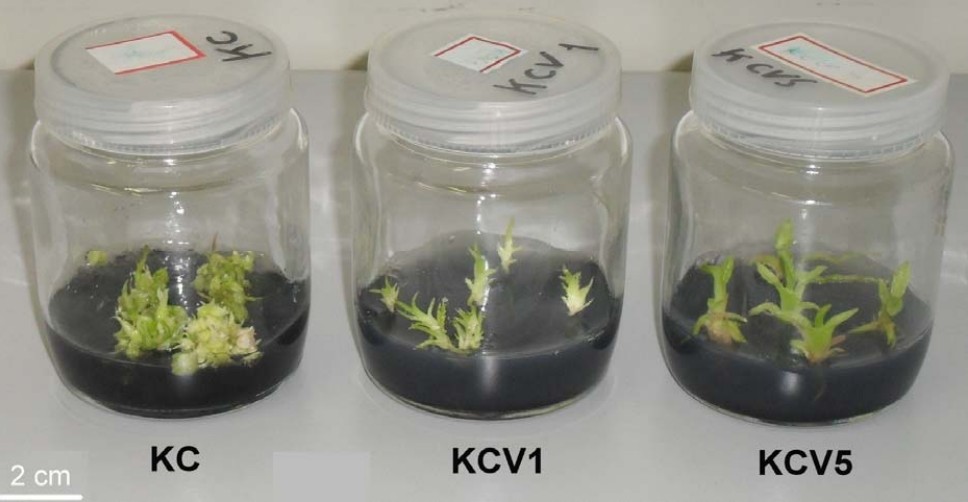
(KCV1 and KCV5) Vinasse used to formulate culture media for the in vitro elongation and rooting of Oncidium leucochilum (orchid), (KC) medium Knudson C used as control. In order to formulate the vinasse media was used a dilution of 2.5% vinasse. These culture media are free of plant growth regulators (Silva et al., 2014).

See also

[edit]

References

[edit]

Further reading

[edit]
Revisions and contributorsEdit on WikipediaRead on Wikipedia
from Grokipedia
Vinasse is a dark , acidic liquid byproduct generated during the stage of production from the of , , or other sources such as sugar beets. It is primarily composed of (over 90%), along with high levels of , dissolved salts, , and other minerals, and is characterized by a strong and low pH typically ranging from 3.5 to 5.0. In ethanol-producing regions like , which accounts for a significant portion of global sugarcane-based output, vinasse is generated in large volumes—approximately 10 to 15 liters per liter of distilled—posing both opportunities and challenges for management. Its nutrient-rich composition, particularly in and organic carbon, makes it a valuable resource for agricultural applications, such as fertigation in fields to improve and crop productivity without the need for synthetic fertilizers. However, due to its high (BOD) and (COD), often exceeding 50,000 mg/L, indiscriminate disposal can lead to severe environmental impacts, including soil salinization, nutrient leaching into groundwater, and of water bodies. To mitigate these risks, vinasse is increasingly treated through methods like for production, which recovers energy while reducing pollutant loads, or concentrated and processed into organo-mineral fertilizers for safer soil application. Research continues to focus on sustainable utilization strategies, emphasizing its potential in circular models to balance industry growth with ecological preservation.

Production

Sources and Feedstocks

Vinasse is defined as the liquid residue remaining after the of fermented substrates in the production of or other alcohols, primarily consisting of , organic compounds, and minerals derived from the original feedstock. The primary sources of vinasse are agricultural feedstocks used in bioethanol industries, with or being the most common, particularly in tropical regions like where it accounts for the majority of global production. Other key feedstocks include sugar beet , prevalent in temperate regions such as , as well as corn and various other sources in grain-based processes. Globally, vinasse production is closely tied to output, generating approximately 10-15 liters of vinasse per liter of produced, though this ratio can vary slightly by process efficiency. In major producing countries like , which led with a record 36.83 billion liters of in 2024, this translates to over 400 million cubic meters of vinasse annually as of 2024, underscoring the scale of byproduct generation in the sector. Variations in vinasse arise from the feedstock, affecting both volume and initial composition; for instance, sugarcane-based vinasse typically yields 10-15 liters per liter of and features high (typically 40-60 g/L) and (80-100 g/L), while sugar beet vinasse produces similar volumes with elevated nitrogen content (1,800-4,750 mg/L) but potentially lower organic load in some metrics.

Manufacturing Process

The manufacturing process of vinasse begins with the preparation of feedstock, which is harvested and transported to the distillery. The stalks are first crushed and milled, typically with added water, to extract the sucrose-rich , yielding approximately 10-15% solids content in the while producing as a solid byproduct. This extraction step is crucial, as it provides the fermentable sugars essential for production, with being the predominant feedstock in major producing regions like . Following extraction, the , often supplemented with to achieve a 10-20% concentration, undergoes clarification to remove impurities through heating to about 105°C and treatment with lime and , adjusting the to prevent sugar degradation. The clarified must is then fermented using yeast, primarily , in a process that converts s to and . Key parameters include a range of 30-35°C to optimize yeast activity, a of 4-5 to maintain microbial balance, and a duration of 24-72 hours, though modern fed-batch systems like the Melle-Boinot process can shorten this to 6-10 hours with yeast recycling for efficiency. The fermented broth, known as "wine" with 7-10% ethanol, is then subjected to distillation to separate the alcohol. In industrial settings, this typically involves multi-column continuous distillation systems, which are more efficient for large-scale operations compared to batch methods used in smaller or traditional facilities; batch distillation processes fixed volumes periodically, while continuous flow handles ongoing production with steady-state conditions. Vinasse emerges as the residual liquid from the bottom of the distillation columns, containing 5-10% total solids, primarily organic matter and minerals, at a volume roughly 10-15 times that of the ethanol produced. Historically, vinasse generation traces back to traditional production, where and similarly yielded this , but its scale expanded dramatically with the rise of modern bioethanol plants following the oil crises. In , the Proálcool program launched in 1975 spurred massive investment in infrastructure, transforming vinasse from a localized in rum distilleries to a high-volume in integrated biorefineries producing billions of liters of annually.

Composition and Properties

Chemical Composition

Vinasse exhibits a complex dominated by organic and inorganic constituents derived from the and processes of or other feedstocks. The organic fraction primarily consists of high levels of organic acids, such as acetic and lactic acids, which arise from microbial byproducts. Residual sugars, including reducing sugars, persist at low concentrations, typically 0.5-1 g/L or less than 0.2% of the total , alongside as a major component produced during . , including phenolic acids like derivatives and , contribute to the dark coloration and are present in notable quantities, often comprising part of the 75% organic content. The total organic carbon (TOC) in vinasse generally falls within 20-40 g/L, reflecting the high organic load that underscores its potential as a nutrient-rich but also its environmental challenges. In contrast, the inorganic components are characterized by elevated content, with being the predominant element at concentrations of 5-10 g/L, originating from the and concentrated during . levels vary between 0.5-2 g/L, primarily in forms like and organic from residues, while is found at 0.1-0.5 g/L, essential for microbial growth but contributing to risks if unmanaged. Trace metals such as calcium and magnesium are also present, typically at 0.5-5 g/L combined, supporting the value of vinasse in agricultural contexts. The composition of vinasse is highly variable depending on feedstock type, processing conditions, and dilution practices, leading to differences across sources like or beet vinasse. The typically ranges from 3.5 to 5.0, imparting an acidic character due to the prevalence of organic acids. (BOD) measures 30-100 g/L, indicating substantial biodegradable organic matter, while (COD) is higher at 50-150 g/L, encompassing both biodegradable and recalcitrant fractions. These parameters highlight the effluent's oxygen-depleting potential in aquatic systems. Vinasse shows moderate stability and degradability, with a BOD/COD ratio of 0.2-0.5, indicating moderate biodegradability suitable for biological treatment processes. Standard analytical methods are employed to characterize vinasse composition, with (HPLC) commonly used for quantifying organic components like acids, sugars, and phenolics through reversed-phase separation and detection techniques such as pulsed amperometric detection. For inorganic elements, (ICP-MS) provides precise measurement of metals and nutrients like , , and at trace to major levels, enabling accurate assessment of elemental profiles.

Physical and Chemical Properties

Vinasse appears as a dark brown, , characterized by its high organic content that contributes to its syrup-like consistency. Its typically ranges from 1.01 to 1.05 g/cm³, which facilitates its transport and application in various . Additionally, vinasse demonstrates high temperature stability, maintaining its physical integrity up to 100°C, as evidenced by its around 100°C due to dissolved solids. Chemically, vinasse is acidic, with a ranging from 3.5 to 5.0, reflecting the presence of organic acids from residues. It exhibits high , measured by electrical conductivity values of 10-20 mS/cm, which contribute to an elevated osmotic potential that can hinder uptake when applied undiluted. These properties stem from the organic and inorganic components in vinasse, influencing its reactivity in both storage and use. However, it is prone to foaming during storage, often due to residual gases or agitation, which requires careful handling to prevent overflow or . In industrial settings, key properties like and electrical conductivity are assessed using standardized ISO methods, such as ISO 3104 for kinematic of products and ISO 7888 for electrical conductivity of aqueous solutions, ensuring consistent .

Uses

Agricultural Applications

Vinasse serves as a key source in agricultural practices, particularly through fertigation, where it is diluted at ratios typically ranging from 1:10 to 1:20 with water and applied via systems to fields. This method recycles essential elements like and from production back into the soil, reducing waste and supporting sustainable farming. The application enhances by supplying macronutrients such as (often 2-4 g/L), , and , which promote plant growth and microbial activity. In potassium-deficient soils, vinasse fertigation can increase yields by 10-20%, as demonstrated in field trials where supplementation addressed deficiencies and improved accumulation. Additionally, it reduces the need for synthetic fertilizers by up to 100% in some cases, lowering costs and environmental footprint from mining-based inputs. Recommended application rates range from 100 to 300 m³/ha per crop cycle, distributed evenly to avoid localized saturation, with ongoing monitoring of essential to prevent acidification from vinasse's inherent acidity (typically 3.5-4.5). Overapplication risks imbalances, but proper management maintains and supports consistent productivity. In , the world's largest producer, vinasse fertigation has been a standard practice since the , following regulatory shifts to prioritize agricultural reuse over open disposal. This approach now accounts for over 80% of vinasse management, covering vast areas of sugarcane plantations and exemplifying integrated agro-industrial systems.

Industrial and Energy Applications

Vinasse, characterized by its high organic load, serves as a valuable substrate for production through processes in industrial settings. This method converts the organic matter in vinasse into , primarily composed of , which can be captured and utilized for energy generation. Studies indicate that of vinasse typically yields 0.2-0.4 m³ of per kg of (COD) removed, depending on operational parameters such as organic loading rate and retention time. Co-digestion of vinasse with other organic wastes, such as press mud or liquor, enhances efficiency by balancing nutrient profiles and mitigating inhibitory compounds, resulting in yields up to 64% higher than mono-digestion scenarios. Beyond , vinasse finds applications in various after appropriate treatment to reduce and pathogens. Treated vinasse, particularly following , can be incorporated as a nutrient-rich supplement in formulations, providing essential minerals and organic compounds while minimizing environmental discharge. In distilleries, vinasse is reused for propagation, serving as a carbon source to culture strains like for subsequent cycles, thereby supporting efficient production loops. For beet-derived vinasse, extraction processes target valuable compounds such as betaine, a used in pharmaceuticals and food additives; reactive extraction techniques achieve recovery efficiencies of up to 71% in a single step from vinasse solutions. At industrial scale, integrated systems in plants have become increasingly common, particularly in major producers like , where vinasse can increase the plant's production by approximately 15% through of and . These systems leverage vinasse's high COD content—often exceeding 50 g/L—to generate sufficient for on-site power, reducing reliance on external fossil fuels and enhancing overall plant . The economic viability of such is evident from and reduced waste treatment expenses, making biodigestion a competitive alternative to traditional disposal methods. As of 2025, emerging technologies include biomethane upgrading from vinasse , supporting further integration into 's networks.

Environmental Impacts

Effects on Soil and Ecosystems

Vinasse application to , particularly when undiluted or in high volumes, leads to salinization and sodification primarily due to elevated levels of and sodium ions. These salts accumulate in the soil profile, increasing electrical conductivity and exchangeable sodium percentage, which disrupts and reduces permeability. Improper management exacerbates negative impacts on soil microbial communities, with long-term vinasse reducing overall microbial diversity and altering bacterial composition. Studies indicate that prolonged exposure decreases the relative abundance of dominant bacterial groups, potentially by influencing and availability, though exact reductions vary by and application rate. At undiluted concentrations, vinasse exhibits to biota, including earthworms and , inhibiting and growth in while causing physiological stress in . This stems from high organic load and salt content, leading to avoidance behavior in earthworms and reduced development in . Additionally, vinasse shifts bacterial structures, with certain classes showing depletion, such as shifts away from baseline abundances in Proteobacteria and other phyla. Long-term field trials in have documented soil acidification from vinasse fertigation. These changes persist due to ongoing organic matter inputs and cation buildup, affecting over extended periods, with low ecological risks overall. Runoff from vinasse-amended soils contributes to broader disruption, impacting nearby wetlands through nutrient enrichment that promotes and documented algal blooms in Brazilian water bodies during the . Such events, linked to improper disposal, deplete oxygen levels and alter aquatic-terrestrial interfaces, reducing habitat suitability for .

Effects on Water Resources

Vinasse discharge into surface waters introduces a high organic load, characterized by elevated (COD) and (BOD) levels typically ranging from 80,000–120,000 mg/L and 45,000–60,000 mg/L, respectively, which promote rapid microbial decomposition and severe oxygen depletion in receiving water bodies. This oxygen depletion, often leaving insufficient dissolved oxygen for aerobic organisms, can lead to hypoxic conditions and the suffocation of aquatic life, while the nutrient-rich composition—high in and —triggers , resulting in algal blooms that further exacerbate oxygen loss and disrupt aquatic ecosystems. For instance, in Indian rivers contaminated by distillery effluents similar to vinasse, BOD levels have been recorded at 1,600–21,000 mg/L within an 8 km radius downstream, fostering eutrophic conditions through nutrient enrichment ( at 1,660–4,200 mg/L and at 225–3,038 mg/L). The application or runoff of vinasse also poses risks to through the leaching of key ions such as and , potentially contaminating aquifers used for and . Excessive leaching from vinasse fertigation can elevate concentrations, contributing to in bodies and raising concerns by potentially surpassing the World Health Organization's guideline of 50 mg/L for in . Similarly, high levels in vinasse (up to 17,475 mg/L) facilitate cation leaching into , altering its chemical balance and potability. Studies indicate that improper amplifies these risks, with infiltration compromising quality through elevated aluminum, , and nutrient loads. Aquatic organisms suffer direct toxicity from vinasse's low (typically 4–5) and , which inhibit physiological functions and cause widespread mortality events. The acidity and phenolics, combined with oxygen depletion, have led to kills in contaminated waters, with tests showing lethal concentrations as low as 0.67–0.80% vinasse for cladocerans and species. These impacts extend to broader , including crustaceans and reptiles, due to the corrosive and hypoxic environment created by untreated discharges. Globally, vinasse spills have been documented in major ethanol-producing regions, with Brazil reporting 37 pollution events across 58 freshwater ecosystems from 1935 to 2023 as of that year, predominantly in São Paulo state where sugarcane processing is concentrated. These incidents, often involving rivers and streams in the Upper Paraná basin, have caused extensive fish kills—such as approximately 300 tons of aquatic organisms in one São Francisco River event from 45 million liters of vinasse—and propagated downstream, affecting water quality over significant distances in ethanol hubs between 2015 and 2023.

Treatment and Management

Biological Treatment Methods

Biological treatment methods for vinasse leverage microbial and plant-based processes to degrade organic pollutants, addressing the wastewater's high (BOD) derived from its organic-rich composition. These approaches are particularly suited for vinasse, a of production with elevated levels of (COD) and phenolics, enabling both remediation and such as . Anaerobic digestion stands as a primary biological technique, employing upflow anaerobic sludge blanket (UASB) reactors to facilitate methanogenic breakdown of organics under oxygen-limited conditions. In UASB systems treating vinasse, COD removal efficiencies typically range from 70% to 90%, depending on organic loading rates and reactor configuration. For instance, operations at volumetric organic loading rates up to 6 g COD L⁻¹ d⁻¹ have achieved 75% ± 7% COD removal. This process also generates biogas, primarily methane, with yields around 0.3 m³ per kg of volatile solids (VS) added, supporting energy recovery in ethanol facilities. Aerobic processes complement anaerobic treatment by targeting recalcitrant compounds like phenolics, using systems or fungal bioreactors. aeration promotes bacterial oxidation of remaining organics, while fungal strains such as species excel in degrading phenolic content through enzymatic action, including production. Studies have demonstrated up to 80% reduction in via fungal treatment, enhancing overall biodegradability and reducing for downstream applications. These methods are often integrated post-anaerobically to achieve comprehensive pollutant removal without excessive energy input. Constructed wetlands provide a low-maintenance, nature-based alternative, integrating and microbial communities in subsurface flow systems to adsorb and biodegrade organics. These systems remove 50-70% of , measured as , over retention times of 20-30 days, with efficiency influenced by hydraulic retention time and vegetation such as species. The synergistic plant-microbe interactions facilitate rhizofiltration and aerobic/anaerobic zones, making wetlands suitable for polishing treated vinasse before discharge or reuse. Higher retention times correlate with improved removal, often exceeding 60% in hybrid setups for distillery effluents. Optimization of biological treatments frequently involves co-substrate addition to balance nutrient deficiencies and boost microbial activity. For , blending vinasse with —such as cow or —enhances rates by providing essential and buffering volatile fatty acids, leading to 20-60% higher yields compared to mono-digestion. This co-digestion strategy mitigates inhibition from vinasse's high organic load, improving stability and output in UASB or similar reactors.

Physical and Chemical Treatment Methods

Physical methods for vinasse treatment primarily focus on solid-liquid separation and volume reduction to facilitate handling and . and are commonly employed to remove , with achieving significant volume reduction of up to 50% by concentrating the solids into a manageable while producing a clearer permeate. These techniques exploit the high of vinasse to separate particulates, reducing the overall volume and easing transport costs. , often via or multi-effect systems, further concentrates vinasse by removing , typically achieving dry solid contents of 30-70%, which minimizes storage and disposal requirements in large-scale operations. Chemical methods target the dissolved organic load in vinasse, which contributes to its high (). Coagulation-flocculation using lime and destabilizes colloidal particles, promoting aggregation and , with reported COD reductions of up to 80% under optimized conditions. This process is particularly effective for removing color and , generating a settleable that can be dewatered. , such as the Fenton process involving ferrous iron and , generate hydroxyl radicals to degrade recalcitrant organic compounds, achieving COD removals of 70-80% and breaking down phenolic and structures resistant to conventional treatments. Hybrid approaches integrate physical and chemical elements, such as membrane bioreactors that combine or with oxidation steps, to enhance overall efficiency. These systems can achieve pollutant removals exceeding 90%, including 95-98% reduction, by retaining solids and facilitating targeted chemical reactions on the retentate. In large-scale plants, the of these methods benefits from integration with existing distillery , with operational costs estimated at $0.20-0.50 per m³ as of 2024, primarily driven by energy for evaporation and chemical dosing.

Research and Developments

Current Research Focuses

Recent studies on vinasse valorization have focused on it into (SCFAs) through anaerobic processes, demonstrating yields of 0.5–0.6 g COD-SCFAs/g VS in trials conducted in 2025. These experiments highlighted the microbiome's robustness against variations in hydraulic retention time and temperature, with functional redundancy maintained by key bacterial groups such as Clostridiales and , enabling consistent despite perturbations up to 49.70% dissimilarity. Research into vinasse's effects on soil microbiomes has examined bacterial community shifts in tropical following applications, particularly noting increases in Sphingobacteriia and Proteobacteria abundances due to elevated carbon and levels. A 2025 study using 16S rRNA sequencing revealed that diluted vinasse applications (recommended concentrations) induced significant structural changes persisting up to 60 days, yet some treatments exhibited non-significant differences from controls, indicating potential microbial resilience and recovery in less intensive scenarios. Economic evaluations of integrated vinasse management strategies in Brazilian sugarcane distilleries have shown that advanced systems, including and anaerobic membrane bioreactors, through and nutrient recovery. These 2024 assessments, based on case studies like the COAGRO plant, project net present values of $4.9–15.4 million over 15 years, with levelized costs of at $0.66–3.33/m³, underscoring the financial viability of such approaches in high-volume production settings. Global research trends since 2023 emphasize zero-liquid discharge (ZLD) systems for vinasse treatment, with Indian projects achieving compliance in over 60 molasses-based distilleries along the Ganga basin, reducing freshwater consumption and effluent discharge through advanced and technologies. In parallel, EU-funded initiatives under have supported innovations for industrial effluents, promoting circular water use and aligning with stringent pollution directives, though specific vinasse applications remain integrated into broader efforts.

Emerging Technologies and Future Directions

Recent research has highlighted microbial electrolysis cells (MECs) as a promising novel process for converting vinasse into while treating the . In a single-chambered MEC operated at 0.8 V and 37°C with fermented vinasse as the substrate, a maximum rate of 12.7 L m⁻² d⁻¹ was achieved, accompanied by a molar fraction of 89.7% in the gas phase and current densities up to 4.5 A m⁻² at higher voltages. This approach not only generates but also supports downstream processes like homoacetogenesis, demonstrating vinasse's potential as an in bioelectrochemical systems. Sustainable of vinasse into high-value represents another key innovation, particularly through the production of (PHAs) using engineered microbial systems. Studies from the (DTU) have shown that pre-treated vinasse can yield PHA contents of up to 70% of cellular dry weight in mixed microbial cultures, with maximum PHA concentrations reaching 19.7 g/L in poly(3-hydroxybutyrate-co-3-hydroxyvalerate) form. strategies, such as overexpressing PHA biosynthesis genes in bacteria like Ralstonia eutropha, are enhancing yields from vinasse substrates, enabling the extraction of biodegradable plastics from this agro-industrial waste. Policy frameworks are increasingly promoting models in the bioethanol industry to achieve near-complete vinasse reuse by 2030, transforming it from a disposal challenge into a resource for energy and . In regions like , where bioethanol dominates, initiatives align with by integrating vinasse recovery into biorefineries, projecting a global market value of $1.1 billion by 2030 through , , and applications. These models emphasize closed-loop systems, reducing footprints by up to 34% via optimized management practices. A 2025 study explored co-fermentation of vinasse with bagasse and for production, optimizing conditions to enhance yields from sugar-alcohol industry wastes. Despite these advances, challenges persist in scaling for targeted pollutant removal and developing climate-resilient fertigation strategies. Heterogeneous with synthesized nanoparticles has demonstrated 89.7% removal of from tequila vinasse, outperforming commercial variants at 82.7%, though large-scale implementation requires addressing cost and stability issues. Concurrently, vinasse applications in fertigation are being refined to bolster microbiome resilience against environmental stresses, as evidenced by enhanced bacterial community stability in , supporting 's role as a climate-resilient through improved dynamics and reduced heavy metal impacts.

References

Add your contribution
Related Hubs
User Avatar
No comments yet.