Hubbry Logo
Blue stragglerBlue stragglerMain
Open search
Blue straggler
Community hub
Blue straggler
logo
8 pages, 0 posts
0 subscribers
Be the first to start a discussion here.
Blue straggler
Blue straggler
from Wikipedia
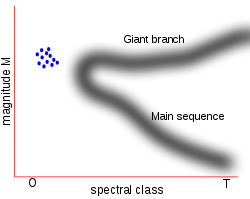
Sketch of Hertzsprung–Russell diagram of a globular cluster, showing blue stragglers

A blue straggler is a type of star that is more luminous and bluer than expected. Typically identified in a stellar cluster, they have a higher effective temperature than the main sequence turnoff point for the cluster, where ordinary stars begin to evolve towards the red giant branch. Blue stragglers were first discovered by Allan Sandage in 1953 while performing photometry of the stars in the globular cluster M3.[1][2]

Description

[edit]

Standard theories of stellar evolution hold that the position of a star on the Hertzsprung–Russell diagram should be determined almost entirely by the initial mass of the star and its age. In a cluster, stars all formed at approximately the same time, and thus in an H–R diagram for a cluster, all stars should lie along a clearly defined curve set by the age of the cluster, with the positions of individual stars on that curve determined solely by their initial mass. With masses two to three times that of the rest of the main-sequence cluster stars, blue stragglers seem to be exceptions to this rule.[3] The resolution of this problem is likely related to interactions between two or more stars in the dense confines of the clusters in which blue stragglers are found. Blue stragglers are also found among field stars, although their detection is more difficult to disentangle from genuine massive main sequence stars. Field blue stragglers can however be identified in the Galactic halo, since all surviving main sequence stars are low mass.[4]

Formation

[edit]
A Hubble Space Telescope image of NGC 6397, with a number of bright blue stragglers present[5]

Several explanations have been put forth to explain the existence of blue stragglers. The simplest is that blue stragglers formed later than the rest of the stars in the cluster, but evidence for this is limited.[6] Another simple proposal is that blue stragglers are either field stars which are not actually members of the clusters to which they seem to belong, or are field stars which were captured by the cluster. This too seems unlikely, as blue stragglers often reside at the very center of the clusters to which they belong. The most likely explanation is that blue stragglers are the result of stars that come too close to another star or similar mass object and collide.[7] The newly formed star has thus a higher mass, and occupies a position on the HR diagram which would be populated by genuinely young stars.

Cluster interactions

[edit]
Video showing the movement of blue straggler stars in globular clusters over time

The two most viable explanations put forth for the existence of blue stragglers both involve interactions between cluster members. One explanation is that they are current or former binary stars that are in the process of merging or have already done so. The merger of two stars would create a single more massive star, potentially with a mass larger than that of stars at the main-sequence turn-off point. While a star born with a mass larger than that of stars at the turn-off point would evolve quickly off the main sequence, the components forming a more massive star (via merger) would thereby delay such a change. There is evidence in favor of this view, notably that blue stragglers appear to be much more common in dense regions of clusters, especially in the cores of globular clusters. Since there are more stars per unit volume, collisions and close encounters are far more likely in clusters than among field stars and calculations of the expected number of collisions are consistent with the observed number of blue stragglers.[7]

NGC 6752, a globular cluster that contains a high number of blue straggler stars[8]

One way to test this hypothesis is to study the Stellar pulsation of variable blue stragglers. The asteroseismological properties of merged stars may be measurably different from those of typical pulsating variables of similar mass and luminosity. However, the measurement of pulsations is very difficult, given the scarcity of variable blue stragglers, the small photometric amplitudes of their pulsations and the crowded fields in which these stars are often found. Some blue stragglers have been observed to rotate quickly, with one example in 47 Tucanae observed to rotate 75 times faster than the Sun, which is consistent with formation by collision.[9]

The other explanation relies on mass transfer between two stars born in a binary star system. The more massive of the two stars in the system will evolve first and as it expands, will overflow its Roche lobe. Mass will quickly transfer from the initially more massive companion onto the less massive; like the collision hypothesis, this would explain why there are main-sequence stars more massive than other stars in the cluster which have already evolved off the main sequence.[10] Observations of blue stragglers have found that some have significantly less carbon and oxygen in their photospheres than is typical, which is evidence of their outer material having been dredged up from the interior of a companion.[11][12]

Overall, there is evidence in favor of both collisions and mass transfer between binary stars.[13] In M3, 47 Tucanae, and NGC 6752, both mechanisms seem to be operating, with collisional blue stragglers occupying the cluster cores and mass transfer blue stragglers at the outskirts.[14] The discovery of low-mass white dwarf companions around two blue stragglers in the Kepler field suggests these two blue stragglers gained mass via stable mass transfer.[15]

Field formation

[edit]
47 Tucanae contains at least 21 blue stragglers near its core.[6]

Blue stragglers are also found among field stars, as a result of close binary interaction. Since the fraction of close binaries increases with decreasing metallicity, blue stragglers are increasingly likely to be found across metal poor stellar populations. The identification of blue stragglers among field stars however is more difficult than in stellar clusters, because of the mix of stellar ages and metallicities among field stars. Field blue stragglers however can be identified among old stellar populations, like the Galactic halo, or dwarf galaxies.[4]

Red and yellow stragglers

[edit]

"Yellow stragglers" or "red stragglers" are stars with colors between that of the turnoff and the red-giant branch but brighter than the subgiant branch. Such stars have been identified in open and globular star clusters. These stars may be former blue straggler stars that are now evolving toward the giant branch.[16]

See also

[edit]

References

[edit]
Revisions and contributorsEdit on WikipediaRead on Wikipedia
from Grokipedia
Blue straggler stars are main-sequence stars in galactic star clusters that appear anomalously young, hot, and luminous compared to their coeval companions, positioning them above the main-sequence turnoff in Hertzsprung-Russell or color-magnitude diagrams. These stars, first identified by in 1953 in globular clusters like M3, defy expectations for aged stellar populations by maintaining blue colors and high surface temperatures, often exceeding 10,000 K, while exhibiting masses 1.5 to 2.5 times the main-sequence turnoff. The formation of blue stragglers is attributed to two primary mechanisms: in primordial binary systems, where a companion star donates to rejuvenate the primary, or direct stellar collisions and mergers, which are more prevalent in the dense cores of globular clusters. Observations from telescopes like Hubble have revealed concentrations of these stars in cluster centers, supporting collision scenarios, while studies of open clusters show a strong correlation between blue straggler numbers and binary fractions, favoring mass-transfer origins in less dense environments. Blue stragglers serve as key probes for understanding binary evolution, dynamical interactions, and the overall structure of star clusters, with recent data confirming their presence in old open clusters older than 9 Gyr and Hubble observations confirming their presence in the . They often exhibit rapid rotation and chemical peculiarities from merged material, and their distribution—typically following a bimodal sequence in color-magnitude diagrams—provides insights into cluster ages and escape fractions. Ongoing research continues to refine models, highlighting their role in tracing mass segregation and cluster evolution across diverse environments.

Definition and Characteristics

Definition

Blue straggler stars (BSSs) are observed in stellar clusters and associations that appear brighter, hotter, and bluer than the expected turn-off point of the cluster's , making them seem younger than the coeval population despite the cluster's age. These stars occupy a position in the color-magnitude diagram (CMD) or Hertzsprung-Russell diagram (HRD) that extends the main sequence beyond the point where other cluster stars have evolved off it, defying standard single-star evolution models. They were first identified by in 1953 through photometric observations of the (M3), where a sequence of unexpectedly blue stars was noted in the cluster's CMD. The anomalous nature of BSSs arises because, in old stellar systems like globular clusters (typically aged 10–12 billion years), the main-sequence turn-off should mark the exhaustion of hydrogen core fusion in stars of the cluster's , with higher-mass stars having already evolved into giants. BSSs, however, persist on or near the with effective temperatures often exceeding 6000 K and luminosities up to several times that of the turn-off stars, implying masses 1.2–2 times greater than the cluster's turn-off mass (e.g., ~1.0–1.3 M⊙ in typical globular clusters). This mass excess positions them as outliers, requiring mechanisms beyond isolated to explain their rejuvenated appearance. While predominantly studied in dense environments such as globular and open clusters, BSSs have also been detected in the galactic field and dwarf galaxies, broadening their relevance to and evolution. Their defining trait—straggling behind the evolutionary timeline of their peers—highlights their role as probes of mass-transfer and collision processes in stellar populations.

Observational Properties

Blue straggler stars (BSSs) are identified in color-magnitude diagrams (CMDs) of star clusters as objects that lie above the cluster's turnoff point, appearing brighter and bluer than the oldest stars of similar age. This anomalous position indicates they have higher es, typically 1.2–2 times the turnoff mass, making them hotter and more luminous than expected for the cluster's age. In the Hertzsprung-Russell diagram, they occupy a region extending the toward higher luminosities and effective temperatures, often spanning spectral types from late A to . Spectroscopically, BSSs exhibit characteristics of massive main-sequence stars, including strong Balmer lines and metallicities matching their host clusters, though some show surface abundance anomalies such as carbon and oxygen depletion suggestive of mass accretion. monitoring reveals a high binary fraction, with ~70–80% of BSSs in old open clusters such as NGC 188 being binaries with periods typically 1000–3000 days and companions often white dwarfs of ~0.2–0.6 M_⊙. In globular clusters, binarity is lower (typically 10–30%), but many display variable indicating orbital motion. Kinematically, BSSs often show elevated rotation rates, with ~28% exhibiting velocities above 40 km/s in globular clusters like NGC 3201, potentially inherited from merger or mass-transfer events. Spatially, they are centrally concentrated in both open and globular clusters, with frequencies ranging from 10^{-5} to 10^{-4} in s (yielding a few to hundreds per cluster) and 10^{-3} to 10^{-2} in open clusters (tens per cluster). In dynamically evolved systems, their radial distribution can appear bimodal, with one population in the core and another in the halo. Recent DR3 data (as of November 2025) have identified 272 new BSS candidates in 99 open clusters, confirming their prevalence and binary characteristics in less dense environments. Additionally, observations in September 2025 detected white dwarf companions orbiting BSS in the 47 Tucanae, further supporting mass-transfer formation mechanisms.

Formation Mechanisms

Binary Mass Transfer

One of the primary formation mechanisms for blue stragglers (BSs) is in systems, first proposed by McCrea in 1964. In this scenario, a close binary consisting of a more massive primary and a less massive secondary evolves such that the primary reaches the end of its main-sequence lifetime first and begins to expand. As it overflows its , it transfers mass to the secondary through Roche-lobe overflow (RLOF). This accretion increases the secondary's mass, replenishing its hydrogen fuel supply and extending its main-sequence lifetime, causing it to appear brighter and bluer than the cluster's main-sequence turnoff point in color-magnitude diagrams (CMDs). The resulting BS is thus the rejuvenated former secondary, often left in a binary orbit with the now-compact remnant of the primary, such as a . Mass transfer can occur in different phases of the primary's evolution, classified as Case A (during core hydrogen burning), Case B (after core hydrogen exhaustion but before helium ignition), or Case C (after helium core ignition). Case B transfer is particularly efficient for producing stable BSs, as it allows significant mass gain by the secondary without leading to common-envelope evolution in many systems. Simulations of primordial binaries in old open clusters like M67 predict that around 4% of close binaries undergo such transfer, yielding BSs with lifetimes up to 1.2 Gyr longer than the cluster's turnoff age, appearing as a distinct sequence above the main sequence in CMDs. In conservative mass-transfer models, where all transferred mass is accreted, the BS mass can increase by 20-50% of the initial primary mass, enhancing its luminosity by factors of 2-5 compared to single-star evolution. Observational evidence strongly supports this mechanism, particularly in Galactic open clusters where BS binary fractions reach 76% for periods under 10^4 days. In NGC 188, long-period BS binaries (∼1000 days) have companions with masses around 0.5 M_⊙, consistent with carbon-oxygen white dwarfs formed via Case C transfer, while shorter-period systems (∼120 days) show helium white dwarf companions from Case B. These companions' masses rule out collisional origins, which predict higher remnant masses (∼1.1 M_⊙). Across 12 old open clusters, the number of BSs correlates strongly with the binary fraction (Spearman's r_s = 0.84), underscoring mass transfer's dominance in less dense environments compared to collisions in globular clusters. BSs formed this way often exhibit rapid rotation from accreted angular momentum and uniform chemical abundances, distinguishing them from merger products.

Stellar Collisions

One proposed formation mechanism for blue stragglers involves direct collisions between in dense stellar environments, such as the cores of globular clusters, where high stellar densities facilitate dynamical encounters leading to mergers. These collisions typically occur between two main-sequence of comparable , resulting in a single, more massive remnant that replenishes its core fuel and evolves more slowly than expected for its age, positioning it above the main-sequence turnoff in color-magnitude diagrams. The process is mediated by gravitational interactions, with collision rates scaling as the cube of the stellar density, making it particularly relevant in post-core-collapse clusters. Hydrodynamic simulations using (SPH) have modeled these events in detail, demonstrating that head-on or grazing collisions between low-mass main-sequence (e.g., 0.6–1.4 M⊙) produce compact remnants with minimal loss, typically less than 8% of the total . The merger products are often rapidly rotating near the critical velocity due to the conservation of , which can drive enhanced mixing via shear instabilities and , potentially extending the main-sequence lifetime compared to non-rotating of similar . For instance, simulations of off-axis collisions show that the outer layers of the progenitors are ejected, while the cores coalesce to form a chemically homogeneous , though some enhancement from the disrupted star may persist in the core. Thermal relaxation in these remnants occurs over approximately 10^7 years, during which energy transport adjusts to the post-merger structure. Observationally, evidence for collisional blue stragglers comes from their and in globular clusters. In clusters like M30, blue stragglers form a distinct "blue" sequence on the color-magnitude diagram, interpreted as collision products with ages of 1–2 Gyr and masses of 0.8–1.6 M⊙, concentrated in the dense core where collision rates are highest. These differ from a "red" sequence attributed to binary mass transfer, with the blue sequence stars showing greater dispersion and slower (v sin i ≈ 20 km/s after 1–2 Gyr due to magnetic braking and stellar winds). In high-density environments (log ρ₀ > 4.8 L⊙ pc⁻³), collisional blue stragglers dominate, comprising up to 96% of the population, while fast rotators (v sin i ≥ 40 km/s) are rare, consistent with efficient spin-down mechanisms acting on merger remnants. Such distributions align with theoretical predictions, where collisions between single stars or binaries in the cluster core explain the observed specific frequencies, such as ~1.55 in M30's cusp. Theoretical models indicate that while collisions can account for a significant fraction of blue stragglers in dense systems, the mechanism's efficiency depends on cluster dynamics, with every star potentially experiencing a in some cases. However, the remnants may not perfectly mimic single stars of equivalent mass, appearing slightly brighter but less blue due to rotational effects and incomplete mixing, which helps distinguish them from mass-transfer products in spectroscopic surveys. Ongoing simulations continue to refine these outcomes, emphasizing the role of progenitor and impact parameters in determining the final blue straggler characteristics.

Occurrence and Distribution

In Globular Clusters

Blue stragglers were first identified in globular clusters in 1953 during photometric observations of (M3), where they appeared as an unexpected extension of the main-sequence beyond the turnoff point. Since then, blue stragglers have been detected in nearly all Galactic globular clusters surveyed, with typical populations ranging from a few dozen to over 100 stars per cluster, depending on the cluster's size and dynamical state. The specific frequency of blue stragglers, defined as the ratio of their number to the number of horizontal-branch stars (f_BSS = N_BSS / N_HB), varies significantly across clusters, typically between 0.1 and 0.5 in the overall population but reaching up to 1.55 in dense central regions of post-core-collapse clusters like M30. This frequency shows no strong correlation with the expected rate but does correlate positively with the cluster's core mass and binary fraction, particularly in less dense environments. The radial distribution of blue stragglers within globular clusters is a key indicator of dynamical evolution, often showing strong central concentration compared to reference populations like red giant branch stars. In dynamically relaxed clusters such as M3, M80, and M92, blue stragglers exhibit a bimodal radial profile with a pronounced central peak and an outer upturn, suggesting formation through interactions in the dense core followed by dynamical ejection or migration. This pattern is observed in about 15 Galactic globular clusters, including 47 Tucanae and NGC 6752, where over 80% of blue stragglers are found within the inner 100 arcseconds. In contrast, dynamically younger or less relaxed clusters like ω Centauri display a flatter distribution, implying reduced segregation due to lower interaction rates. Some globular clusters host multiple distinct populations of blue stragglers, providing direct evidence for diverse formation channels. In M30, a post-core-collapse cluster, observations revealed two parallel sequences in the color-magnitude diagram: a "blue" sequence of 24 stars likely formed via direct stellar collisions, and a "red" sequence of 21 stars attributed to in primordial binaries. The red-sequence stars are more centrally segregated, with none detected beyond 30 arcseconds from the center, while the overall blue straggler population is highly concentrated, comprising over 80% within the central 100 arcseconds. Such bimodal distributions, observed in at least five other clusters, correlate with enhanced dynamical activity during core-collapse phases approximately 1-2 billion years ago, highlighting blue stragglers as tracers of cluster internal evolution. Recent spectroscopic studies further reveal variations in blue straggler properties tied to cluster density. In a sample of eight Galactic globular clusters spanning different structural parameters, about 46% of 320 blue stragglers exhibit rotational velocities exceeding 20 km/s, with fast rotators (v sin i ≥ 40 km/s) comprising 38% in low-density clusters (log ρ_0 < 4 L_⊙ pc^{-3}) but only 4% in high-density ones. This preference for rapid rotation in looser clusters supports a binary mass-transfer origin for these stars, as collisions in denser environments lead to efficient rotational braking on timescales of 1-2 Gyr. Overall, the occurrence and distribution of blue stragglers underscore their role as sensitive probes of globular cluster dynamics, with higher frequencies at both density extremes indicating complementary formation pathways.

In Open Clusters

Blue stragglers (BSS) are observed in open clusters, which are younger and less dynamically evolved than globular clusters, providing insights into early stellar interactions. Unlike the dense environments of globular clusters where collisions are more frequent, open clusters favor binary evolution as the primary formation channel for BSS due to their lower stellar densities. Surveys using Gaia data have identified BSS in a significant fraction of open clusters, with 897 BSS detected in 111 out of 408 clusters analyzed with Gaia DR2, corresponding to an occurrence rate of about 27%. Recent Gaia data confirm their presence in old open clusters exceeding 9 Gyr. The frequency of BSS in open clusters shows a clear dependence on cluster age, with older systems hosting proportionally more BSS. The ratio of BSS to main-sequence stars (N_BSS/N_MSS) increases notably for clusters older than log(age) ≈ 8.7 years, reflecting the accumulation of these stars over time through ongoing binary interactions. Recent analyses with Gaia DR3 have expanded this catalog, identifying 153 confirmed BSS and 98 probable BSS across 99 open clusters, alongside 21 yellow stragglers, confirming the age trend and revealing a positive correlation between BSS frequency (N_BS/N_TOMS) and cluster density. Additional surveys have uncovered 138 new BSS (81 confirmed, 57 probable) in 50 previously understudied open clusters, further supporting that BSS are ubiquitous but vary in number from a few to around 20 per cluster. In terms of properties, BSS in open clusters are typically 1–3 magnitudes brighter than the main-sequence turnoff, with masses exceeding the cluster average by 0.05–0.60 M_⊙, and about 70% are binaries. Ultraviolet observations, such as those from AstroSat/UVIT in the cluster NGC 7142, reveal 10 BSS candidates with temperatures of 6500–8000 K, luminosities of 8.72–26.91 L_⊙, and radii of 2.04–4.09 R_⊙, many accompanied by white dwarf companions (masses 0.18–1.0 M_⊙) indicative of mass transfer. Formation via binary mass transfer dominates, with cases including Case-A/B transfers leading to low-mass white dwarfs and Case-C or mergers producing higher-mass companions; direct collisions are less likely given the sparser environments. Notably, open clusters exhibit a higher fraction of fast-rotating BSS (v sin i > 50 km/s in 66.5% of cases) compared to globular clusters (24.1%), suggesting recent mass-accretion events that spin up these stars before dynamical braking occurs. Examples include NGC 188, an old with approximately 20 BSS, and IC 4651, both demonstrating the prevalence of binary-driven formation in evolved systems. These observations underscore how BSS in open clusters serve as probes of binary populations and cluster evolution over gigayear timescales.

In Other Environments

Blue stragglers have been detected in the , with the first confirmations reported in 2011 using data to distinguish them from younger disk stars. These bulge blue stragglers, numbering around 40 in surveyed fields, exhibit kinematics consistent with the old bulge population and are thought to form via binary or mergers in a dense environment analogous to cores. Recent reviews incorporating data affirm their presence in the bulge as part of broader stellar populations. Blue stragglers are also found among galactic field stars, though their identification is challenging due to contamination from genuine young, massive main-sequence stars. Field candidates are selected based on unusual positions in color-magnitude diagrams and kinematic ages indicating membership in older populations. Their distribution suggests formation through binary interactions in the field, providing insights into isolated .

Detection Methods

Color-Magnitude Diagrams

Blue straggler stars (BSSs) are prominently identified in color-magnitude diagrams (CMDs) of star clusters, where they occupy a distinct region above the main-sequence turnoff (MSTO), appearing brighter and bluer than the coeval cluster population. The CMD, which plots stellar magnitude against color (typically using filters like Johnson B-V or G_{BP}-G_{RP}), reveals the evolutionary stages of stars within a cluster's isochrone; BSSs deviate from this by extending the upward, mimicking younger, more massive stars that have not yet evolved off the . This anomalous position indicates masses typically 1.2–1.5 M_\sun, exceeding the MSTO mass of ~0.8 M_\sun in old clusters. The first BSSs were discovered by in during photometry of the M3, where a handful of stars were noted as unexpectedly hot and luminous beyond the MSTO, challenging standard models. In CMDs, BSSs form a roughly linear sequence that parallels the but is offset toward bluer colors and higher luminosities, with the degree of "straggling" quantified by their vertical or horizontal detachment from the MSTO (often >0.75 magnitudes in magnitude or >0.03 in color). Identification typically involves selecting stars within defined polygonal regions above the MSTO, excluding contaminants like foreground field stars or binaries along the sequence, using proper motions and parallaxes from surveys like EDR3. In globular clusters, BSSs are ubiquitous and often concentrated in dense cores, as seen in where CMDs highlight their population due to hotter effective temperatures (~10,000–20,000 K). For instance, in M30, the BSS sequence appears as a straight extension in optical CMDs, linked to collisional formation during the cluster's core collapse phase ~1–2 Gyr ago. In open clusters, such as NGC 6819 (~2.4 Gyr old), BSSs split into bright and faint subgroups in CMDs, with the former arising from higher-mass binary progenitors (~1.28 M_\sun) and the latter from lower-mass ones (~1.02 M_\sun), closely matching binary evolution tracks. These distributions provide constraints on formation channels, with denser environments favoring collisions and sparser ones . Advanced CMD analyses, including multi-band photometry, reveal evolutionary paths where BSSs evolve redward over time, potentially transitioning to or stragglers before joining the giant . Quantitative studies show BSS frequencies of 1–30 per 1,000 members in globular clusters, scaling with central density, underscoring CMDs' role in probing cluster dynamics and binary fractions.

Spectroscopic Confirmation

Spectroscopic observations are essential for confirming the cluster membership of blue straggler candidates identified through photometry, as they allow measurement of radial velocities to verify alignment with the cluster's systemic velocity and exclude field contaminants. High-resolution spectra further enable determination of atmospheric parameters such as , , projected rotational velocity, and chemical abundances, providing insights into formation mechanisms. Multi-epoch detects orbital motion in binary systems, revealing the prevalence of close companions indicative of . These analyses distinguish blue stragglers from other hot stars like objects or young field intruders. Early spectroscopic efforts focused on open clusters, where lower stellar densities facilitated ground-based observations. In NGC 7789, radial velocities measured for blue straggler candidates and reference giants yielded a cluster mean of -40 ± 8 km/s, confirming membership for several objects and establishing their anomalous positions relative to the main-sequence turnoff. Subsequent studies in M67 used medium-resolution spectra to derive temperatures ranging from 5600 K to 12,600 K and surface gravities consistent with post-main-sequence evolution, while radial velocity variations indicated that over half of the sample are short-period binaries with periods under 1000 days, supporting mass-transfer origins. In dense globular clusters, crowding initially hindered detailed until instruments like the Faint Object Spectrograph provided the necessary resolution. HST observations in the late 1990s of a bright blue straggler in measured a projected of 155 ± 55 km/s—roughly 75 times the solar value—and derived a of 1.7 solar masses from fitting, consistent with a recent merger product rather than a single-star evolution. Later HST STIS and FOS spectra of multiple blue stragglers in clusters including confirmed similar rapid and depleted carbon/oxygen abundances in some cases, suggesting mixing from binary interactions or collisions. Contemporary ground-based campaigns with large telescopes have expanded these findings to larger samples. For instance, high-resolution spectra of 320 blue stragglers across eight globular clusters revealed projected rotation velocities averaging 40-60 km/s, with faster rotators (up to 100 km/s) preferentially in less dense environments, implying reduced spin-down from interactions in looser systems. In NGC 3201, analysis of 39 blue stragglers yielded a mean of 498.0 ± 5.3 km/s, matching the cluster's, and a of [Fe/H] = -1.42 ± 0.27, while detecting binary signatures in about 30% of the sample through velocity variations. These studies underscore the binary nature of most blue stragglers, with orbital periods spanning days to years, and highlight spectroscopic binaries as key probes of dynamical evolution.

Red Stragglers

Red stragglers are a class of stars observed in star clusters that occupy an anomalous position in the color-magnitude diagram (CMD), appearing redder than the (RGB) while being brighter than the branch. This placement deviates from standard single-star evolution models, where post-main-sequence stars should follow the subgiant branch before ascending the RGB. Unlike blue stragglers, which appear younger and hotter than the cluster turnoff, red stragglers represent an overabundance of cooler, more luminous stars than expected, often grouped with sub-subgiants (SSGs) due to shared characteristics, though SSGs are typically fainter than the subgiant branch. These stars exhibit properties indicative of binary systems or recent interactions. Many red stragglers are photometric variables with periods ranging from days to weeks and X-ray emitters with luminosities around 10^{30}–10^{31} erg s^{-1}, suggesting active accretion or coronal activity in close binaries. For instance, in globular clusters like ω Centauri and 47 Tucanae, several candidates show radial-velocity variations consistent with orbital motion. Spectroscopic studies reveal enhanced lithium abundances or rapid rotation in some cases, further pointing to mass transfer or merger events. Red stragglers occur primarily in dense environments such as globular clusters, where dynamical interactions are frequent, though examples exist in open clusters like NGC 6791. Surveys using data have identified dozens in globular clusters, with frequencies around 0.1–1% of evolved stars, higher in more massive systems. Their distribution often aligns with the cluster core, mirroring blue stragglers, due to mass segregation effects. Formation mechanisms for red stragglers parallel those of stragglers but involve more evolved progenitors. Binary mass transfer, where a donor overflows its and transfers material to a main-sequence companion, can puff up the recipient and shift it redward in the CMD. Dynamical collisions or envelope stripping in dense clusters may also produce these stars by merging or disrupting binaries, leading to rapid off standard paths. Magnetic braking or spots from enhanced activity in short-period binaries provide an alternative, single-star-like explanation, though binary origins dominate in high-density settings. These processes highlight red stragglers as probes of binary and cluster dynamics, analogous to stragglers on the opposite CMD extreme.

Yellow Stragglers

Yellow stragglers are stars located in the color-magnitude diagram (CMD) of star clusters with colors intermediate between the main-sequence turnoff point and the , but positioned brighter than the branch. This placement distinguishes them from typical cluster members, suggesting anomalous evolutionary paths. They are less frequently observed than blue stragglers, with detections reported in both open and globular clusters, though their populations remain smaller. Spectroscopic studies reveal that many yellow stragglers are binary systems consisting of a giant primary star and a main-sequence secondary, often of A-type class. For instance, in the young NGC 2447, three such binaries (NGC 2447-26, -38, and -42) exhibit strong continuum veiling from the secondary, confirming their composite spectra and elevated luminosities. Similar characteristics appear in other clusters like NGC 2360, NGC 3680, and NGC 5822, where yellow stragglers show broad Hα wings indicative of activity or from companions. Formation mechanisms for yellow stragglers parallel those of blue stragglers, primarily involving in primordial binaries or direct stellar collisions. In binary evolution scenarios, a post-main-sequence primary accretes from its companion, rejuvenating the system and shifting it to a brighter, intermediate color position. Alternatively, they may represent an evolved phase of blue stragglers as these merge or expand toward the giant branch, with observations in old open clusters like Collinder 261 supporting this progression through photometry and measurements. Multiwavelength analyses, such as in Berkeley 39, further identify yellow stragglers via spectral energy distributions, highlighting their role in binary interactions and cluster dynamics. These stars provide insights into intermediate stellar evolution stages, bridging main-sequence and giant phases in dense environments. Their binary nature often leads to enhanced magnetic activity, as detected in systems like HD 62329 and HD 65032, potentially from merger-induced dynamos. Detection typically relies on CMD positioning and follow-up to rule out blends or field contaminants, emphasizing their importance in tracing mass-transfer efficiency in clusters.

Astrophysical Implications

Cluster Dynamics

Blue stragglers (BSSs) play a significant role in the dynamical evolution of star clusters, particularly globular clusters, due to their higher masses compared to the main-sequence turnoff stars, typically ranging from 1.5 to 2.5 solar masses. This causes them to sink toward the cluster center through , leading to a centrally concentrated radial distribution that reflects the degree of mass segregation and the cluster's relaxation timescale. Observations in clusters like reveal a bimodal BSS distribution, with a concentrated central population formed via collisions and a more extended halo population from binary evolution, indicating varying dynamical influences across regions. The formation of BSSs is intrinsically linked to cluster dynamics, with two primary channels: or coalescence in primordial binaries, and direct stellar collisions facilitated by frequent encounters in dense environments. In cores, where relaxation times are short (on the order of 10^8 years), interactions harden binaries and promote collisions, enhancing BSS production rates that scale with core density and velocity dispersion as Γcollnc2Rc3/σc\Gamma_{coll} \propto n_c^2 R_c^3 / \sigma_c. However, empirical studies show no strong correlation between BSS numbers and collision rates, suggesting binary channels dominate overall, while collisions contribute significantly in post-core-collapse clusters. As tracers of dynamical history, BSS radial profiles allow of clusters into families based on segregation levels, with the A+A+ (measuring central concentration relative to horizontal-branch stars) distinguishing relaxed, dynamically evolved systems from younger ones. In , the BSS mass function varies radially—from steeply declining in the core (slope x8x \approx -8) to Salpeter-like in the outskirts (x+1.35x \approx +1.35)—revealing halted collision activity beyond the core about 1 Gyr ago, thus mapping the cluster's relaxation phases. BSS formation impacts cluster dynamics by injecting into the core, counteracting . Collisional mergers release , while binary progenitors contribute to core heating through scatterings, helping maintain cluster stability over billions of years. In denser environments, this process correlates with higher binary fractions, which anti-scale with core mass as fbinMcore0.4f_{bin} \propto M_{core}^{-0.4}, influencing overall budgets and .

Stellar Evolution Insights

Blue straggler stars (BSSs) offer profound insights into deviations from canonical single-star evolution, as their positions above the main-sequence turnoff in cluster color-magnitude diagrams indicate enhanced mass or not predicted by standard models. These stars, appearing hotter and more luminous than expected for their host cluster's age, highlight the necessity of incorporating binary interactions and dynamical processes into frameworks. Their study refines models of mass accretion, transfer, and chemical mixing, revealing how interactions can extend main-sequence lifetimes beyond isolated evolutionary tracks. The mass-transfer mechanism in binaries, first proposed by McCrea in 1964, posits that a star accretes material from an evolving companion via Roche-lobe overflow, thereby increasing its core hydrogen-burning phase and shifting it blueward. This pathway, dominant in lower-density environments like open clusters, produces BSSs with masses typically 1.2–1.5 M⊙ and often white dwarf companions, providing direct evidence of recent transfer events. Observations correlate BSS frequency with binary fractions (Spearman coefficient r_s ≈ 0.83), underscoring mass transfer's role in testing binary evolution codes for stability and efficiency. Such systems calibrate post-transfer tracks, illuminating gaps in models for intermediate-mass binaries. Recent studies also suggest that interactions in triple systems may account for 20–25% of BSS formation, further enriching models of multi-body dynamics in evolution. Stellar mergers, either through binary coalescence or dynamical collisions in dense globular clusters, form more massive BSSs via rapid infall and mixing, as modeled by Hills & Day (1976). These events yield hotter, bluer stars with rapid rotation (up to >200 km/s) and altered surface abundances, challenging models of merger hydrodynamics and braking timescales (1–2 Gyr). Double sequences in BSS color-magnitude diagrams segregate merger products (bluer, collision-like) from mass-transfer ones (redder), indicating environment-dependent pathways and informing the balance between isolation and interactions in . BSSs further probe rotational and mixing effects during evolution, with fast rotators from showing lithium depletion and enhancement due to enhanced circulation. This validates advanced simulations incorporating and , essential for predicting outcomes in binary-dominated populations. By serving as evolutionary snapshots, BSSs enhance understanding of how interactions shape cluster age indicators and field distributions.

References

Add your contribution
Related Hubs
User Avatar
No comments yet.