Hubbry Logo
Yverdon-les-BainsYverdon-les-BainsMain
Open search
Yverdon-les-Bains
Community hub
Yverdon-les-Bains
logo
8 pages, 0 posts
0 subscribers
Be the first to start a discussion here.
Yverdon-les-Bains
Yverdon-les-Bains
from Wikipedia

Yverdon-les-Bains (French pronunciation: [ivɛʁdɔ̃ le bɛ̃] ) (called Eburodunum and Ebredunum during the Roman era; Arpitan: Invèrdon) is a municipality in the district of Jura-Nord vaudois of the canton of Vaud in Switzerland. It is the seat of the district. The population of Yverdon-les-Bains, as of December 2020, was 29,955.[1]

Key Information

Yverdon is located in the heart of a natural setting formed by the Jura mountains, the plains of the Orbe, the hills of the Broye and Lake Neuchâtel. It is the second most important town in the Canton of Vaud. It is known for its thermal springs and is an important regional centre for commerce and tourism.

It was awarded the Wakker Prize in 2009 for the way the city handled and developed the public areas and connected the old city with Lake Neuchâtel.[2]

History

[edit]

The heights nearby Yverdon seem to have been settled at least since the Neolithic Age about 5000 BCE, as present archeological evidence shows. The town was at that time only a small market place, at the crossroads of terrestrial and fluvial communication ways. People began to settle, at first in temporary huts at the water-front, for fishers and merchants, then in permanent dwellings.

The stone rows in Yverdon-les-Bains (3000 B.C.E.)

The Celtic Helvetii are said to have been the first permanent settlers of Eburodunum (Celtic and Roman name of Yverdon), from about the 2nd century BCE.

About a century later, the Romans realized the commercial and strategic importance of this place: it controlled major routes such as Geneva-Avenches, connecting the Rhône and Rhine basins, as well as those of Rhone and Danube.

The imposing Castrum, or stronghold, called Castrum Ebredunense was the second largest in Switzerland and demonstrated the importance the Romans attached to Yverdon. The port served as naval base for the barges supplying the defensive positions along the Rhine, which marked the North-Eastern border of the Empire. Thus the Roman "Vicus" of Eburodunum developed into a prosperous urban centre. The sulphur springs were already used for a thermal spa, as attested by excavations.[3] It is even possible that the Helvetii appreciated the beneficial effects of these waters.[4]

The Castrum

[edit]
Castrum of Yverdon

About a century after the first invasions of the Alemanni, when the "Vicus" had been completely destroyed, the Romans built a large military stronghold (about 325 CE). It covered about 5 acres (20,000 m2) and was protected by gigantic ramparts and 15 masonry towers (Castrum). The Barbarians invaded Italy in the 5th century, and threatened to assault Rome. In a last desperate effort to save the city, all troops stationed North of the Alps were ordered back to Italy. The garrison and the Roman administration had to abandon the Yverdon camp. The inhabitants of Eburodunum, up to then assigned to live beyond the ramparts, immediately took possession of the Castrum, using it for their own safety. Like this, Eburodunum-Yverdon survived the hard times, until the 15th century.[5] The Castrum was noted in the Notitia Dignitatum (dated c. 420 CE).

Savoy era

[edit]

With the lake receding, the ancient town confined to the Castrum had lost its strategic position: no more direct access to the port, or to the new trade routes alongshore.

When Peter II of Savoy gradually extended his rule over the Pays de Vaud (Land of Vaud), he managed to impose road tolls as well as port and fishing taxes. He founded the new town ("Ville Neuve") of Yverdon, defended by walls and a castle. Construction works were launched around 1259 and attracted many settlers.[6]

Yverdon Castle

[edit]
Yverdon Castle

The imposing main walls and their four towers were erected within a few years. The design of the castle followed the geometric characteristics used for castles set in plains, and had been planned by the young mason and architect Jacques de Saint-Georges. Jacques also planned Caernarvon Castle and built the castle Saint-Georges d'Espéranches, near Lyon.

Yverdon's castle used to be the residence of the castellans of the Savoy dynasty, until 1536, followed by the bailiffs of Bern state. In 1798, the Département du Léman became the castle's owner. The Département had been set up by the short-lived "Helvetian Republic" (1798–1803), imposed by Napoleon I.

A few years later, Yverdon acquired the castle, to entrust it to Johann Heinrich Pestalozzi and his institute. After 1838, the castle housed a public school. New classrooms were created, especially on the second floor: dividing walls were erected, additional windows changed the severe look of the castle's façade. After 1950, these classrooms were gradually abandoned; the last classes left in 1974. The original medieval structure was then restored. The castle is today a multi-purpose cultural centre, housing a regional museum, a theatre, various conference rooms and the oldest public library of French-speaking Switzerland, founded already in 1763. The library is now part of the castle museum, existing since 1830.[7]

Bernese era (1536–1798)

[edit]

The Savoy rulers granted bountiful franchise and liberties to the burghers of Yverdon. The township prospered during the two hundred years preceding the Burgundy wars.

The Bernese conquest followed. During the nearly three hundred years of Bernese occupation, economic life continued to thrive.

The 18th century proved to be one of Yverdon's most favorable periods, marked by cultural and economic highlights. Then a town of about 2.000 inhabitants, Yverdon became known as a spa, and as a centre of thought (58 tomes of Yverdon Encyclopedia, published between 1770 and 1780), being in close contact with the great minds and movements of the time.[8]

Town hall

[edit]

Burnand, its architect, erected the town hall between 1768 and 1773, on the site of the former covered market. Inside the building, furniture and decorations are displayed, faience stoves, panels, wainscots and paintings. The vaults of the ancient granary are used year-round for art exhibitions.[9]

The temple

[edit]
The temple of Yverdon-les-Bains

The Geneva architect Billon erected this Protestant church in 1757, on the site of Notre-Dame chapel of the 14th century. Its spire had been rebuilt in 1608, on the base of the original one, for which huge, sculpted blocks from the ruins of the Roman "Castrum" had been used.

14 stalls, figuring apostles and prophets, originate from the ancient chapel and are ascribed to Claude de Peney, who had worked at Fribourg and Hauterive. Peney died in 1499, and Bon Bottolier, cabinetmaker in Lausanne, was charged with crafting the stalls (1501–1502). Potier, of French origin, built the organ in 1766.[10]

Thermal springs

[edit]

The springs were known for their mineral baths and used at least since the Roman era,[11] but most probably before, at the time of the Helvetii. It is supposed that the springs were a sacred place, with some sort of wooden structure. Middle Age documents prove the existence of a spa centre, as early as 1429, and mention several useful buildings.

By 1728, the authorities decided to have a new spa constructed. Its reputation grew rapidly. The 18th century saw major developments and brilliant success, for the town and the spa. Then followed a period of decline: the spa lost its popularity, and by 1800 had declined to a simple political meeting point. Completely neglected, the buildings dilapidated.

Aerial view from 400 m by Walter Mittelholzer (1919)

Encouraged by the Spanish scientist A. Gimbernat, the local Council decided to reconstruct the spa centre and to renovate its hotel in 1897. The consequences of the First World War (1914–1918) were detrimental, the number of guests having significantly declined. Its reputation remained intact, however, until the 1930s.

Another period of decay followed, and by 1960 the centre and its equipment were again so dilapidated that they had to be closed. The idea of balneology had also completely changed. The Municipality repurchased the spa, including the neighbouring Château d'Entremonts. Restoration failed twice, but in 1974 the project could finally be realized. The spa reopened in 1977. Prospects for further thermal springs were successful in 1982, and a new outdoor pool was added a year later. Today, the spa welcomes more than 1200 visitors per day.[12]

During an independent test by the RTS in February 2008, it was found that the water in the shower area of the thermal center had high levels of legionella pneumophila.[13] During another test in 2011, the same programme found no significant levels of dangerous bacteria in the waters.[14] However, in October 2014, there was a leak of 4000l of hydrochloric acid from one of the tanks in the thermal center. No one was hurt, and the bathers remaining in the pools were asked to evacuate.[15]

Champ-Pittet manor house

[edit]
Champ-Pittet manor house (2012).

The 18th century manor house, near the road to Yvonand, has served as summer residence of Frédéric Haldimand, burgher of Yverdon and first Governor of Quebec (1777–1786), when this territory came under the British crown.

This country-seat now belongs to Pro Natura, the Swiss League for the Protection of Nature, and is one of its two nature centres;[16] organizing special exhibitions, audio-visual shows as well as guided tours of the nature reserve, the Grande Caricaie.[17]

Geography

[edit]
Fog on Lake Neuchâtel outside Yverdon.

Yverdon-les-Bains has an area, as of 2009, of 11.3 square kilometers (4.4 sq mi). Of this area, 3.57 km2 (1.38 sq mi) or 31.6% is used for agricultural purposes, while 0.71 km2 (0.27 sq mi) or 6.3% is forested. Of the rest of the land, 6.52 km2 (2.52 sq mi) or 57.8% is settled (buildings or roads), 0.31 km2 (0.12 sq mi) or 2.7% is either rivers or lakes and 0.2 km2 (0.077 sq mi) or 1.8% is unproductive land.[18]

Of the built up area, industrial buildings made up 6.6% of the total area while housing and buildings made up 26.2% and transportation infrastructure made up 15.2%. Power and water infrastructure as well as other special developed areas made up 2.5% of the area while parks, green belts and sports fields made up 7.4%. Out of the forested land, 4.7% of the total land area is heavily forested and 1.6% is covered with orchards or small clusters of trees. Of the agricultural land, 27.1% is used for growing crops and 3.5% is pastures. All the water in the municipality is flowing water.[18]

The municipality was the capital of the Yverdon District until it was dissolved on 31 August 2006, and Yverdon-les-Bains became part of the new district of Jura-Nord Vaudois.[19]

The municipality of Gressy merged on 1 July 2011 into the municipality of Yverdon-les-Bains.[20]

Coat of arms

[edit]

The blazon of the municipal coat of arms is Vert, two Bars wavy Argent, in chief Argent, a letter Y Or.[21]

Demographics

[edit]
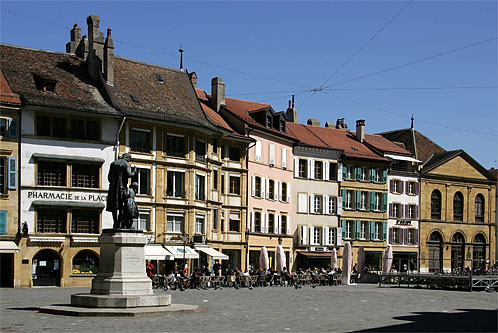
Old city of Yverdon
Modern high rise

Yverdon-les-Bains has a population (as of December 2020) of 29,955.[1] As of 2008, 34.2% of the population are resident foreign nationals.[22] Over the last 10 years (1999–2009) the population has changed at a rate of 15.2%. It has changed at a rate of 14% due to migration and at a rate of 1.9% due to births and deaths.[23]

Most of the population (as of 2000) speaks French (20,134 or 82.6%) as their first language, Serbo-Croatian is the second most common (945 or 3.9%) and Portuguese is the third (859 or 3.5%). There are 551 people who speak German, 717 people who speak Italian and 9 people who speak Romansh.[24]

The age distribution, as of 2009, in Yverdon-les-Bains is; 2,821 children or 10.6% of the population are between 0 and 9 years old and 3,041 teenagers or 11.4% are between 10 and 19. Of the adult population, 3,965 people or 14.9% of the population are between 20 and 29 years old. 3,858 people or 14.5% are between 30 and 39, 3,791 people or 14.3% are between 40 and 49, and 3,138 people or 11.8% are between 50 and 59. The senior population distribution is 2,576 people or 9.7% of the population are between 60 and 69 years old, 1,939 people or 7.3% are between 70 and 79, there are 1,235 people or 4.6% who are between 80 and 89, and there are 228 people or 0.9% who are 90 and older.[25]

As of 2000, there were 9,841 people who were single and never married in the municipality. There were 11,252 married individuals, 1,687 widows or widowers and 1,596 individuals who are divorced.[24]

As of 2000, there were 10,835 private households in the municipality, and an average of 2.2 persons per household.[23] There were 4,201 households that consist of only one person and 634 households with five or more people. Out of a total of 11,082 households that answered this question, 37.9% were households made up of just one person and there were 42 adults who lived with their parents. Of the rest of the households, there are 2,848 married couples without children, 2,855 married couples with children. There were 707 single parents with a child or children. There were 182 households that were made up of unrelated people and 247 households that were made up of some sort of institution or another collective housing.[24]

In 2000 there were 1,226 single family homes (or 43.0% of the total) out of a total of 2,850 inhabited buildings. There were 829 multi-family buildings (29.1%), along with 568 multi-purpose buildings that were mostly used for housing (19.9%) and 227 other use buildings (commercial or industrial) that also had some housing (8.0%).[26]

In 2000, a total of 10,649 apartments (88.2% of the total) were permanently occupied, while 1,094 apartments (9.1%) were seasonally occupied and 331 apartments (2.7%) were empty.[26] As of 2009, the construction rate of new housing units was 1 new units per 1000 residents.[23]

As of 2003 the average price to rent an average apartment in Yverdon-les-Bains was 954.90 Swiss francs (CHF) per month (US$760, £430, €610 approx. exchange rate from 2003). The average rate for a one-room apartment was 570.22 CHF (US$460, £260, €360), a two-room apartment was about 721.96 CHF (US$580, £320, €460), a three-room apartment was about 897.75 CHF (US$720, £400, €570) and a six or more room apartment cost an average of 1638.23 CHF (US$1310, £740, €1050). The average apartment price in Yverdon-les-Bains was 85.6% of the national average of 1116 CHF.[27] The vacancy rate for the municipality, in 2010, was 0.49%.[23]

The historical population is given in the following chart:[28]

Politics

[edit]

In the 2007 federal election the most popular party was the SP which received 29.42% of the vote. The next three most popular parties were the SVP (22.26%), the Green Party (14.34%) and the FDP (9.98%). In the federal election, a total of 5,744 votes were cast, and the voter turnout was 42.2%.[29]

Economy

[edit]

As of  2010, Yverdon-les-Bains had an unemployment rate of 8.2%. As of 2008, there were 179 people employed in the primary economic sector and about 11 businesses involved in this sector. 2,219 people were employed in the secondary sector and there were 224 businesses in this sector. 10,323 people were employed in the tertiary sector, with 1,119 businesses in this sector.[23] There were 11,191 residents of the municipality who were employed in some capacity, of which females made up 45.2% of the workforce.

In 2008 the total number of full-time equivalent jobs was 10,621. The number of jobs in the primary sector was 173, of which 161 were in agriculture and 12 were in forestry or lumber production. The number of jobs in the secondary sector was 2,104 of which 1,268 or (60.3%) were in manufacturing and 654 (31.1%) were in construction. The number of jobs in the tertiary sector was 8,344. In the tertiary sector; 1,722 or 20.6% were in wholesale or retail sales or the repair of motor vehicles, 711 or 8.5% were in the movement and storage of goods, 523 or 6.3% were in a hotel or restaurant, 222 or 2.7% were in the information industry, 253 or 3.0% were the insurance or financial industry, 549 or 6.6% were technical professionals or scientists, 1,040 or 12.5% were in education and 1,751 or 21.0% were in health care.[30]

In 2000, there were 6,437 workers who commuted into the municipality and 4,894 workers who commuted away. The municipality is a net importer of workers, with about 1.3 workers entering the municipality for every one leaving. About 7.0% of the workforce coming into Yverdon-les-Bains are coming from outside Switzerland, while 0.0% of the locals commute out of Switzerland for work.[31] Of the working population, 16.7% used public transportation to get to work, and 53.9% used a private car.[23]

Transportation

[edit]
Wide two-story building with hip roof
The Yverdon-les-Bains station building in 2009

The municipality has three railway stations, Yverdon-les-Bains, Yverdon-Champ Pittet, and Yverdon William Barbey. The first of these is a major interchange on the standard gauge Fribourg–Yverdon and Jura Foot lines and the narrow-gauge Yverdon–Ste-Croix line. It serves 16,800 passengers on a typical weekday and has regular service to Lausanne, St. Gallen, Geneva Airport, Zürich Hauptbahnhof, Neuchâtel, Palézieux, Fribourg/Freiburg, and Ste-Croix. Yverdon-Champ Pittet is located on the eastern edge of the municipality on the Fribourg–Yverdon line, while Yverdon William Barbey is located west of the city centre on the Yverdon–Ste-Croix line.[32][33]

Religion

[edit]
Yverdon city church

From the 2000 census, 8,628 or 35.4% belonged to the Swiss Reformed Church, while 7,489 or 30.7% were Roman Catholic. Of the rest of the population, there were 835 members of an Orthodox church (or about 3.43% of the population), there were 28 individuals (or about 0.11% of the population) who belonged to the Christian Catholic Church, and there were 1,389 individuals (or about 5.70% of the population) who belonged to another Christian church.

There were 25 individuals (or about 0.10% of the population) who were Jewish, and 1,631 (or about 6.69% of the population) who were Muslim. There were 74 individuals who were Buddhist, 183 individuals who were Hindu and 38 individuals who belonged to another church. 3,061 (or about 12.56% of the population) belonged to no church, are agnostic or atheist, and 1,668 individuals (or about 6.84% of the population) did not answer the question.[24]

Weather

[edit]

Yverdon-les-Bains has an average of 118.4 days of rain or snow per year and on average receives 893 mm (35.2 in) of precipitation. The wettest month is June during which time Yverdon-les-Bains receives an average of 92 mm (3.6 in) of rain or snow. During this month there is precipitation for an average of 11.2 days. The month with the most days of precipitation is May, with an average of 11.4, but with only 80 mm (3.1 in) of rain or snow. The driest month of the year is April with an average of 59 mm (2.3 in) of precipitation over 9.4 days.[34]

Education

[edit]

Yverdon-les-Bains is a university town, hosting the School of Business and Engineering Vaud, a public university with over 2000 students and largest branch of the University of Applied Sciences Western Switzerland, distributed over three adjacent sites at Yverdon: Route de Cheseaux, Centre St-Roch, and Centre Y-Parc.[citation needed]

In Yverdon-les-Bains about 7,695 or (31.6%) of the population have completed non-mandatory upper secondary education, and 2,339 or (9.6%) have completed additional higher education (either university or a Fachhochschule). Of the 2,339 who completed tertiary schooling, 50.6% were Swiss men, 28.3% were Swiss women, 13.6% were non-Swiss men and 7.5% were non-Swiss women.[24]

In the 2009/2010 school year there were a total of 3,093 students in the Yverdon-les-Bains school district. In the Vaud cantonal school system, two years of non-obligatory pre-school are provided by the political districts.[35] During the school year, the political district provided pre-school care for a total of 578 children of which 359 children (62.1%) received subsidized pre-school care. The canton's primary school program requires students to attend for four years. There were 1,589 students in the municipal primary school program. The obligatory lower secondary school program lasts for six years and there were 1,410 students in those schools. There were also 94 students who were home schooled or attended another non-traditional school.[36]

As of 2000, there were 2,043 students in Yverdon-les-Bains who came from another municipality, while 507 residents attended schools outside the municipality.[31]

Yverdon-les-Bains is home to the Maison d'Ailleurs museum, the Musée d'Yverdon et région and the Musée suisse de la Mode.[37] In 2009 the Maison d'Ailleurs was visited by 12,000 visitors (the average in previous years was 9,838). In 2009 the Musée d'Yverdon et région was visited by 8,051 visitors (the average in previous years was 7,871). In 2009 the Musée suisse de la Mode was visited by 8,051 visitors (the average in previous years was 7,871).[37]

Yverdon-les-Bains is home to 2 libraries. These libraries include; the Bibliothèque publique Yverdon and the Haute école d'ingénierie et de gestion du Canton de Vaud. There was a combined total (as of 2008) of 99,302 books or other media in the libraries, and in the same year a total of 124,282 items were loaned out.[38]

Sport

[edit]

Yverdon-Sport FC is the municipality's football club.

Heritage sites of national significance

[edit]

There are nine sites that are listed as Swiss heritage site of national significance in Yverdon. The public buildings are; the Public Library of Yverdon-Les-Bains, Yverdon Castle and museum, the City Hall, the L'ancien hôtel de l'Aigle, the Thorens House (formerly Steiner House) and the Villa d'Entremont. It includes one religious building, the Temple. The last two sites are Clendy, a littoral settlement and prehistoric megalithic site and Eburodunum, a Celtic oppidum, a Roman vicus and a medieval and modern village.[39]

Notable buildings and locations

[edit]
Benno Besson Theatre

World heritage site

[edit]

The prehistoric settlement at Baie de Clendy is part of the Prehistoric Pile dwellings around the Alps a UNESCO World Heritage Site.[40]

Notable people

[edit]
Frederick Froebel
Christa Muth, 2011

International relations

[edit]

References

[edit]
[edit]
Revisions and contributorsEdit on WikipediaRead on Wikipedia
from Grokipedia

Yverdon-les-Bains is a and spa resort in the canton of , , situated on the southern shore of between the and the Broye valley. As the second-largest city in the canton after , it serves as the capital of the Jura-Nord vaudois district and had a population of 30,332 residents as of December 2024. The town is renowned for its thermal baths, drawing on sulphurous springs emerging at 29°C that have been exploited for therapeutic purposes since Roman times, when the settlement was known as Eburodunum.
Its historical core includes a 13th-century castle built by Peter II, Count of Savoy, as a lowland fortress, now housing the Museum of Yverdon and Region, which documents 8,000 years of local history from Neolithic settlements to medieval development. Yverdon-les-Bains functions as a regional hub for commerce, education, and tourism, bolstered by its lakeside beaches, prehistoric sites like the Clendy megaliths, and proximity to natural reserves, while maintaining a multicultural population with residents from 127 nations.

History

Prehistoric and Roman Foundations

Archaeological evidence indicates human settlement in the Yverdon-les-Bains area during the Middle period, approximately 4500–4000 BC, with villages occupied intermittently until around 2000 BC. The most prominent prehistoric remains are the Clendy menhirs, a complex of 45 anthropomorphic standing stones, ranging in height from 35 cm to 4.5 m, discovered in 1878 near the lakeshore. These megaliths, restored in 1986 with concrete replicas on site (originals preserved in the Musée d’Yverdon et région), represent the largest such alignment in and suggest or territorial functions tied to early agrarian communities exploiting the lacustrine environment. The Roman era marked the establishment of Eburodunum as a in the 1st century AD, evolving into a fortified castrum by circa 325 AD under Constantine's defensive reforms against Alemannic incursions. This diamond-shaped fortress, covering 2 hectares with 15 towers and two gates, ranked as the third largest in Roman and served as a protecting the port. Excavations reveal remnants of ramparts and a southwest corner tower in the modern cemetery, alongside civilian structures including a public bathhouse built over thermal springs, which supplied mineral-rich waters for and therapeutic practices integral to Roman urban life. Artifacts such as Gallo-Roman boats and structural foundations underscore the site's dual military and civilian roles until .

Medieval Development under Savoy and Bernese Rule

The Counts of Savoy extended control over the Yverdon region in the mid-13th century, establishing the town as a fortified settlement to secure strategic routes near Lake Neuchâtel and the Jura foothills. In 1259, Peter II, Count of Savoy, commissioned the construction of Yverdon Castle to architects Jean and Jacques de Saint-Georges, with building commencing around 1260 and completing by 1270. This square-plan fortress, featuring thick walls and corner towers, functioned primarily as a military stronghold to defend against incursions and assert feudal authority over surrounding agricultural lands. The castle's design reflected Savoyard priorities for defensive efficiency in a contested border area, integrating residential quarters for castellans within a robust perimeter. Under dominion until the , Yverdon's economy relied on feudal , supplemented by the thermal springs whose mineral waters had drawn users since Roman times, potentially sustaining minor local trade in healing services amid primarily agrarian production. The springs, emerging at temperatures exceeding 35°C and rich in sulfates and minerals, maintained continuity as a resource for and , though documentation of medieval economic scale remains limited to archaeological inferences of persistent usage. Bernese expansion culminated in the conquest of Yverdon on 25 January 1536, as part of the broader seizure of -held territories, driven by strategic and confessional motives. Bernese troops under commanders like Hans Franz Nägeli overran the defenses, installing in the castle to administer the new . This shift introduced reforms including centralized taxation and judicial oversight from , replacing Savoyard feudal customs with republican governance structures. Concurrently, imposed the , converting local churches and suppressing Catholic practices, which reshaped social and religious life while bolstering Bernese legitimacy through religious uniformity. The thermal springs persisted as a localized asset, but agricultural output and tolls from lake trade increasingly supported Bernese fiscal demands.

Early Modern Period and Industrial Beginnings

During the Bernese era from 1536 to 1798, Yverdon-les-Bains remained under the administrative oversight of bailiffs appointed from Bern, a system characterized by centralized control that often prioritized extraction of resources over local investment, contributing to population decline and economic stagnation in Vaud through exploitative taxation and neglect of regional needs. Despite these constraints, local initiatives persisted, including the construction of the Protestant Temple in 1757 on the site of a medieval chapel, featuring a neo-classical facade designed to serve the Reformed community established after the Reformation. The Hôtel de Ville, erected between 1767 and 1773 by architect Abraham Burnand on the former granary site, symbolized efforts to formalize municipal functions amid Bernese oversight, though such developments were limited by the lack of full autonomy. The Vaudois declaration of independence on January 24, 1798, ending Bernese dominion and integrating Yverdon into the short-lived Lemanic Republic before the , marked a pivotal shift toward local , alleviating the inefficiencies of remote Bernese administration and enabling more responsive economic policies. This autonomy facilitated the rehabilitation and expansion of thermal installations in the late , evolving into structured commercialization by the early , with the spa complex inaugurated in 1823 attracting visitors for its mineral-rich waters documented since antiquity but now promoted for therapeutic use. Early industrial stirrings in Yverdon-les-Bains during the were predominantly agrarian, leveraging the fertile plains around for crop cultivation and livestock, which formed the economic backbone supplemented by nascent commerce tied to spa tourism rather than heavy . Precursors to precision industries, influenced by neighboring ’s watchmaking traditions, emerged in cottage-based and assembly, though Yverdon's growth remained more oriented toward service and agricultural processing than large-scale factories until later decades.

20th Century to Present: Urbanization and Modern Challenges

In the aftermath of , Yverdon-les-Bains participated in Switzerland's economic boom, marked by industrial expansion and improved connectivity that spurred urbanization. The town's railway infrastructure, centered on the Yverdon-les-Bains station, saw upgrades including electrification and integration into the (SBB) network, facilitating efficient links to and . This development supported , with the reaching 30,292 residents by 2024, up from lower figures in the early amid steady demographic increases driven by regional economic opportunities. The thermal spa sector modernized to capitalize on Yverdon's mineral springs, with a tapped in providing a higher flow rate for expanded facilities. The Centre Thermal Yverdon-les-Bains now features indoor and outdoor pools, jacuzzis, saunas, and therapeutic jets, attracting and reinforcing the town's identity as a health resort. These investments aligned with post-war trends in leisure infrastructure, contributing to urban vitality without over-reliance on . Rapid growth has strained resources, with housing vacancy rates as low as 0.85% signaling acute shortages amid ongoing influx. Commuting patterns, particularly to via rail, have intensified due to Yverdon's position in the economic corridor, where clean transport adoption is high but demands grow. The canton's 30.5% foreign-born underscores migration's role in this expansion, pressuring to balance density with livability, including efforts toward climate-resilient policies often lagging in Swiss municipalities. Proximity to France amplifies cross-border influences on labor mobility, though federal policies mitigate some EU-adjacent strains through controlled development.

Geography and Environment

Location and Physical Features


Yverdon-les-Bains occupies a position on the southern shore of Lake Neuchâtel in the northern portion of Vaud canton, Switzerland, serving as the administrative center of the Jura-Nord vaudois district. The town center sits at an elevation of 435 meters above sea level, with surrounding terrain rising gradually toward the Jura Mountains to the north and the Broye River valley to the east. This lakeside setting, combined with proximity to the Jura foothills approximately 10-15 kilometers away, has historically facilitated settlement by providing access to water resources and relatively flat land suitable for early human activity.
The municipality encompasses an area of roughly 21 square kilometers, characterized by a mix of lacustrine plains and gentle slopes. Predominant derive from glacial and lake sediments, featuring clay-rich layers that support agricultural productivity in the surrounding fields, though these same deposits contribute to geotechnical challenges such as shrinkage during dry periods. The presence of thermal springs represents a notable geothermal feature, with mineral-rich waters emerging from depths exceeding 1,500 meters at temperatures around 36°C, linked to formations in the underlying Jura geology. Ecologically, the area's adjacency to exposes it to periodic flood risks, as evidenced by overflows requiring mobile barriers, such as those deployed in late 2023 when water levels reached critical heights due to heavy and inflow from upstream rivers. These events underscore the causal interplay between the lake's —fed by the Aar River system—and local , where minimal natural barriers amplify inundation potential on the low-lying shores.

Climate and Weather Patterns

Yverdon-les-Bains exhibits a (Köppen Cfb), marked by moderate temperatures and relatively consistent influenced by its position on the northern shore of . The lake moderates extremes, preventing severe cold snaps and heatwaves while elevating local humidity. Annual mean temperature stands at approximately 10 °C, with diurnal and seasonal variations shaped by westerly winds carrying Atlantic moisture across the . Winters remain mild, with January averaging 3 °C (highs near 6 °C, lows around -1 °C), rarely dropping below -6 °C; summers are warm but not oppressive, July averaging 19 °C (highs up to 24 °C, lows 14 °C), seldom exceeding 31 °C. Precipitation averages 965 mm yearly, spread across about 120 rainy days, peaking in May at over 100 mm and minimal in February at around 70 mm, fostering reliable growing seasons but occasional waterlogging in lowlands. Notable variability arises from lake-driven events, including persistence in topographic basins during cooler months and episodic floods from heavy regional rainfall. In July 2021, sustained precipitation elevated to 430.69 m above , inundating Yverdon-les-Bains' waterfront and exposing vulnerabilities in drainage systems tied to the town's thermal springs. Such incidents, recurring in Switzerland's lacustrine zones during wet summers, can temporarily disrupt access to spa facilities, highlighting how hydrological feedbacks challenge the consistency of mild-climate-dependent tourism despite overall stability.

Demographics

Population Dynamics and Growth

The population of Yverdon-les-Bains expanded from 12,437 residents in 1950 to 20,330 in 1980, reflecting and industrial development in the region. By 2020, the figure reached 29,955, with estimates placing it at 30,292 in 2024, driven primarily by net within rather than natural increase alone. This equates to an average annual growth rate of approximately 0.28% in recent years (2020–2024), slower than the 15.2% decadal increase observed between 1999 and 2009. The municipality's population density stands at 2,241 inhabitants per km² as of 2024, based on its 13.52 km² area, indicating compact patterns that have intensified with expansion. Growth has been fueled by the city's strategic location, approximately 30 km from and within commuting distance to Geneva's federal employment hubs, drawing younger workers from rural Swiss cantons and offsetting an aging demographic profile common across . Local policies facilitating residential development and regional have contributed, though sustained influx has strained and capacities without proportional infrastructure upgrades. Projections aligned with cantonal trends suggest continued modest growth into the 2030s, potentially reaching 32,000–33,000 residents, contingent on sustained migration inflows and limited natural replacement rates below the national average. This trajectory underscores Yverdon-les-Bains' role as a secondary urban node in , balancing attractiveness for internal migrants with pressures on local resources.

Immigration, Ethnicity, and Social Integration

As of December 31, 2023, foreign nationals comprised 11,887 residents in Yverdon-les-Bains, representing approximately 38% of the total population of around 30,900. This proportion exceeds the cantonal average in , where foreigners account for about 31-35% in urban agglomerations. The primary countries of origin include (3,686 individuals), (1,168), , and Balkan nations such as , reflecting labor migration from EU member states and former Yugoslav regions. These groups, particularly the Portuguese community, form concentrated networks that can foster parallel social structures, potentially hindering broader assimilation into Swiss norms. The linguistic landscape remains dominated by French, aligning with Vaud's , but the influx of speakers—stemming from the largest immigrant cohort—introduces barriers to communication and civic participation. Municipal data indicate no formal recognition of non-French languages in public services, which may exacerbate isolation in immigrant-heavy neighborhoods. Such enclaves, evidenced by associations like the Ivorian community group established in 2012, suggest patterns of where cultural practices from origin countries persist over generations, correlating with slower adoption of host-society values. Integration faces empirical hurdles in labor market access, with unemployment rates among foreigners at 5.2% compared to 4.8% for Swiss nationals in recent municipal assessments. This gap persists despite EU mobility privileges for many residents, pointing to skill mismatches, deficiencies, and recognition issues as causal factors. Welfare utilization patterns show disproportionate reliance on social aids by non-EU immigrants, as national trends indicate foreigners navigating complex Swiss s face higher dependency risks due to initial economic vulnerabilities. Municipal programs, including integration officers and Mini-PICs focused on vocational training, seek to accelerate and reduce these disparities, though tensions arise from balancing rapid labor insertion with cultural demands. High foreign concentrations thus strain local cohesion, as unaddressed frictions from divergent norms amplify service pressures without proportional contributions in tax bases during early settlement phases.

Government and Politics

Administrative Structure

Yverdon-les-Bains is governed by a municipal structure aligned with the Canton of Vaud's framework, featuring a legislative Conseil communal and an executive Municipalité, both subject to cantonal laws while retaining substantial local autonomy in line with Switzerland's federal principles. The Conseil communal, as the legislative body, consists of 100 councilors elected proportionally every five years by eligible voters, including Swiss citizens and certain long-term foreign residents; the most recent election occurred on 7 March 2021, with the next scheduled for spring 2026. This assembly approves budgets, sets local tax rates, authorizes loans and major expenditures, and oversees executive actions through motions and inquiries, embodying direct democratic elements such as mandatory referendums on significant decisions exceeding cantonal thresholds. The Municipalité serves as the collegial executive, comprising elected members responsible for day-to-day administration, policy implementation, and departmental oversight, with the acting as head and legal representative; members are by popular vote for five-year terms under a majoritarian system. Current Pierre Dessemontet announced in June 2025 that he will not seek re-election in 2026, following the addition of Julien Wicki to the body via a March 2025 supplementary election. This setup facilitates efficient local decision-making, as the of executives and legislative oversight by a large enable responsiveness to priorities, contrasting with more hierarchical centralized models by decentralizing fiscal and administrative control. Local revenues, derived mainly from property taxes, communal shares of and taxes, and user fees, fund key areas including and the thermal spa facilities integral to the city's economy. The 2025 , adopted by the Conseil communal after Municipalité proposal, anticipates an operating deficit of 10.18 million CHF amid investments in services. Federal and cantonal overlaps exist in domains like utilities and defense, where national or regional standards apply, but core municipal functions remain locally managed to promote tailored and fiscal discipline through voter accountability.

Political Landscape and Elections

Yverdon-les-Bains operates under Switzerland's communal system, where the Conseil communal, comprising 100 elected members, serves as the legislative body, while the five-member Municipalité handles . Following the 2021 communal elections, a left-leaning majority emerged, dominated by the Parti Socialiste (PS) and Les Verts, often termed a "rose-verte" coalition, reflecting priorities on social spending and environmental policies. This configuration has faced criticism for fiscal expansion, with opposition from center-right groups like the Union Démocratique du Centre (UDC/SVP) and Parti Libéral-Radical (PLR) emphasizing restrained taxation and efficient public expenditure. In the March 2025 by-election for a Municipalité seat, PS candidate Julien Wicki secured victory in the second round with 3,916 votes (51.97%), defeating independent Ruben Ramchurn (formerly UDC-aligned) who received 3,274 votes (43.45%), amid a turnout consistent with communal averages of 40-50%. The first round on saw no absolute majority among four candidates, underscoring competitive dynamics. Voter participation in such elections remains modest, typically ranging 40-50%, lower than federal levels, indicating selective engagement on local matters. Key electoral issues include taxation levels, with council debates revealing pushback against hikes amid rising communal costs, and immigration management, where stricter controls align with national SVP platforms but encounter resistance from left-leaning factions favoring integration. For the elections, a PLR-UDC-Vert'libéraux has fielded candidates to challenge the incumbent majority, highlighting and reduced spending as countermeasures to perceived progressive overreach. Historically, post-1798 incorporation into the and subsequent Canton Vaud autonomy shifted local governance from Bernese oversight to partisan competition, evolving into today's multiparty balance with periodic rightward corrections.

Economy

Primary Industries and Employment

The economy of Yverdon-les-Bains emphasizes manufacturing sectors such as , drawing on the Canton of Vaud's longstanding watchmaking heritage, which has fostered and expertise generating approximately 3 billion EUR annually in the canton. Firms like SCHOTT, headquartered in Yverdon-les-Bains, produce specialized for , applications, and horological components, underscoring the resilience of small and medium-sized enterprises (SMEs) in high-precision fields amid Switzerland's competitive environment. Food processing also contributes, leveraging Vaud's agri-food strengths for local production and distribution. Logistics supports these activities, facilitated by Yverdon's strategic position near major transport routes and proximity to tech hubs like , where many residents commute for employment in innovation-driven fields. Approximately 34% of the active population works in the secondary sector, including these manufacturing areas, while SMEs dominate, providing stability against over-dependence on services, which employ 65% but face regulatory pressures and cyclical vulnerabilities. Unemployment in the region hovered around 3-4% in the pre-2020 period, reflecting Vaud's broader economic strength with a 2023 rate of 3.6%, bolstered by manufacturing's export orientation rather than tourism-heavy models prevalent in other Swiss locales. This sectoral balance contributes to Vaud's GDP per capita of about 82,000 USD, with Yverdon's innovation parks enhancing SME adaptability to global demands.

Tourism and Spa Sector

The thermal springs of Yverdon-les-Bains, rich in minerals and utilized since Roman times for their purported health benefits, form the core of the town's spa tourism. Archaeological evidence and historical records indicate Roman settlement and bathing practices at the site, with waters channeled via pipes to facilities near the lake. Today, the Centre Thermal Yverdon-les-Bains maintains indoor and outdoor pools at approximately 34°C, sourced from natural springs flowing at 60 liters per second and heated as needed, alongside facilities like jacuzzis, saunas, and treatment areas integrated with the Grand Hôtel des Bains. Spa tourism generates notable economic revenue through wellness services, accommodations, and ancillary spending, contributing around 7.5% to the regional GDP, with roughly 30% of visitors from abroad. This sector supports employment in hospitality and maintenance while promoting the town's identity as western Switzerland's primary resort. However, visitation exhibits strong , peaking in summer due to combined lake-based on such as boating and beaches, which strains capacity and amplifies revenue volatility compared to steadier winter usage. Operational challenges include high energy costs for and facility upkeep, given the springs' natural of about 29°C requires supplementation for therapeutic pools. While efforts align with local SDG initiatives, empirical data on extraction impacts remain limited, underscoring the need for balanced to mitigate potential environmental strain from growth without corresponding efficiency gains. Overall, the sector's benefits in revenue and visitor draw outweigh documented drawbacks, though diversification beyond peak periods could enhance stability.

Infrastructure

Transportation Networks

Yverdon-les-Bains railway station functions as a primary rail hub on the (SBB) network, situated along the corridor, enabling frequent intercity and regional services. SBB operates trains to every 15 minutes, with journeys averaging 36 minutes and fares ranging from CHF 18 to 21. Regional connections via Travys extend to nearby towns like Ste-Croix, supporting commuter flows. The station's integration into the national grid, with distances of 39.1 km from , underscores rail's efficiency in linking Yverdon to urban centers, facilitating population and economic growth without expansive suburban development. Local bus services, managed by Transports Vallée de Joux–Yverdon–Ste-Croix (TRAVYS), cover urban and regional routes, including lines like EV12 from Ste-Croix to Yverdon (covering 15 km with 10 stops) and EV7 between and Chavornay. In 2025, TRAVYS ordered 100 fully electric buses for Yverdon's agglomeration lines, with deliveries slated for early 2026 to enhance sustainable urban mobility. Recent SBB timetable adjustments, effective December 2024, introduced improved long-distance links toward from Yverdon, marking the largest changes in western since the Bahn 2000 reform. Road access via the A1 motorway, Switzerland's main east-west artery, positions Yverdon advantageously, with the Yverdon-Sud exit at the A1/A5/A9 junction providing direct links to , , , and Zurich. This proximity, combined with practical for rural-urban connections in the Jura-Nord vaudois region, bolsters logistics and personal travel efficiency over sprawl-dependent models. Passenger ferries on connect Yverdon to in approximately 3 hours and 20 minutes, including transfers, offering scenic alternatives for leisure or regional transit. Cycling infrastructure exceeds national averages, integrating into routes like the Nord Vaudois–Jura (Stage 1: –Yverdon) and Mittelland Route, which traverse varied terrain and provide access to lakeside paths. Airport connectivity relies on rail: (87 km away) via direct SBB trains in 1 hour 14 minutes (CHF 22–40), and (about 160 km) in 2 hours 11 minutes. SBB's Yverdon facility supports upgrades, including a CHF 400 million modernization of 44 tilting intercity trains to extend service life by 20 years, reinforcing rail's role in scalable growth.

Education and Public Services

The Swiss education system in Yverdon-les-Bains follows the Canton of Vaud's structure, with compulsory schooling from age 4 to 15 encompassing primary and lower secondary levels, emphasizing foundational , , and practical competencies. Secondary education includes cantonal gymnasiums preparing students for academic tracks, while vocational pathways predominate, with over two-thirds of youth entering apprenticeships that integrate with classroom instruction, culminating in a federal Certificate of Proficiency (CFC) after 3-4 years. These apprenticeships, available locally in fields like and healthcare, cultivate by directly linking skill acquisition to , reducing dependency on theoretical degrees amid Switzerland's low rates below 8%. Higher education access is facilitated by the Western Switzerland University of Applied Sciences (HES-SO), whose School of Engineering and Vaud (HEIG-VD) operates a in Yverdon-les-Bains, offering bachelor's and master's programs in , , and with a focus on practical application and industry partnerships. For broader university options, residents commute to Lausanne's (UNIL) and École Polytechnique Fédérale de Lausanne (EPFL), reachable in approximately 30 minutes by regional train, enabling pursuit of advanced degrees in sciences and without relocation. Vocational centers, including those affiliated with HEIG-VD, align training with regional industries like precision manufacturing, reinforcing economic self-sufficiency through targeted skill development. Public healthcare services center on the Hôpital d'Yverdon-les-Bains, the primary facility of the Etablissements Hospitaliers du Nord Vaudois (eHnv), providing inpatient and outpatient care across specialties including , , and services, with over 200 beds serving the northern region. Complementing conventional , the town's spas at the Centre Thermal Yverdon-les-Bains utilize mineral-rich waters, sourced from springs exploited for over 1,500 years, which empirical studies link to musculoskeletal relief, stress reduction, and enhanced recovery via hydrotherapy's anti-inflammatory effects. The municipal Bibliothèque publique et scolaire d'Yverdon-les-Bains supports with public access to collections exceeding thousands of volumes, digital resources, and educational programs, fostering community knowledge dissemination.

Culture and Heritage

Religious Composition and Practices

Following the Reformation's adoption in the Canton of Vaud in 1536, Yverdon-les-Bains established the Reformed Protestant Church as the dominant faith, supplanting prior Catholic practices and influencing local governance and social norms through Calvinist principles of discipline and communal oversight. This Protestant hegemony persisted through the Bernese rule until and shaped cultural attitudes favoring austerity and education, evident in the construction of the Temple d'Yverdon in 1757 as the central Reformed worship site on the foundations of a medieval chapel. Contemporary religious composition reflects and demographic shifts from . In the Canton of Vaud, which encompasses Yverdon-les-Bains, Reformed Protestants comprise approximately 21% of the population as of 2019, down from higher historical shares due to disaffiliation trends. Roman Catholics form the largest group at 28%, bolstered by migrants from , , and since the mid-20th century. Muslims represent about 5%, introduced via labor migration from the and in recent decades, while roughly 36% declare no religious affiliation canton-wide, rising to near 33% specifically in Yverdon-les-Bains based on local surveys. Other faiths, including Orthodox Christians and smaller denominations, account for the remainder. Religious practices emphasize weekly Reformed services focused on scriptural preaching and the Catholic , with both churches maintaining roles in lifecycle events like baptisms and weddings despite declining participation rates. Community festivals tied to Christian holidays, such as markets and observances, persist but are increasingly secularized, serving more as civic gatherings than devotional rites. The Reformed Church continues to foster social bonds through charitable initiatives and council-led , though the influx of non-Christian immigrants has prompted limited interfaith efforts without comprehensive integration metrics demonstrating sustained cohesion.

Architectural and Historical Sites

The Château d'Yverdon, constructed between 1260 and 1270 by order of , represents an early example of square defensive architecture, featuring thick perimeter walls and four corner towers optimized for lowland . Financed in 1259 as a stronghold and administrative seat, the has endured multiple modifications, including partial dismantling in 1490 and subsequent rebuilding. Intensive restoration campaigns since the have prioritized recovering its 15th- and 16th-century configuration, ensuring structural stability for its current role as the Musée d'Yverdon et région, which documents regional history from times onward. Designated a Swiss heritage site of national significance, the castle maintains utility for public exhibitions and events while preserving its defensive core. The Château de Champ-Pittet, erected from 1788 to 1791 under Governor Frédéric Haldimand, comprises an 18th-century neoclassical residence classified as a historic monument, integrated into a 40-hectare domain along Lake Neuchâtel. Architectural plans are credited to Haldimand, with execution by Gabriel Delagrange, emphasizing symmetrical facades and functional interiors suited for governance and estate management. Converted by Pro Natura into an environmental education center, the manor supports seminars and conservation initiatives, with ongoing preservation efforts focused on its load-bearing elements amid surrounding wetlands. The Hôtel de Ville, built between 1767 and 1773 on the footprint of a prior , forms a neoclassical anchor on the with pilastered facades and a pedimented entrance facilitating civic administration. This structure sustains municipal operations and hosts the Centre d'Art Contemporain Yverdon-les-Bains, balancing historical form with . Baie de Clendy preserves archaeological vestiges of pile dwellings, integral to the UNESCO-listed Prehistoric Pile Dwellings around the , showcasing stilt-based constructions engineered for stability over marshy lakeshores dating to circa 4000 BCE. These lacustrine sites, excavated and documented through the local museum, highlight early techniques responsive to environmental constraints, with protected remnants underscoring national heritage priorities.

Society and Contemporary Issues

Yverdon-les-Bains maintains a relatively low overall crime rate compared to larger Swiss urban centers, with police-recorded offenses under the Swiss Criminal Code totaling approximately 42.4 per 1,000 inhabitants in recent data from the Canton of . This figure aligns with Switzerland's national trend of subdued , where and rates remain among Europe's lowest despite widespread ownership tied to the militia system. However, canton-wide statistics indicate a 16.7% rise in recorded infractions in for 2024, driven primarily by a 35.1% increase in misdemeanors such as and , trends that have impacted Yverdon's urban peripheries. Petty theft and have shown upward trajectories in Yverdon, contributing to its ranking among Vaud's higher-frequency communes at 20.8 offenses per 1,000 residents, though long-term data from 2013 to 2023 reflects a near-50% decline in penal code violations overall. Resident perceptions diverge from aggregate statistics, with forums reporting heightened unease in the city center, including incidents of armed robbery and that prompt calls for bolstered patrols. Local police responses have emphasized visibility and , yet critiques from political groups highlight potential leniency in enforcement as a factor exacerbating visible disorder on urban edges. The Swiss militia system, requiring mandatory and personal firearm storage for able-bodied males, fosters a culture of disciplined self-reliance that correlates with Yverdon's low incidence of gun-related , even amid national upticks in property offenses. This framework, integrated into local civic life, contrasts with rising rates across (up 11.2% in 2024), underscoring causal links between armed citizenry training and deterrence of opportunistic predation rather than permissive policies. Isolated severe events, such as the March 2023 familial , remain aberrations against this backdrop of structural restraint.

Drug Use and Policy Responses

In Yverdon-les-Bains, the open drug scene, particularly involving crack cocaine, has intensified since 2023, with street dealing and visible consumption surging in public areas such as the railway station environs and the Japanese Garden. Local reports indicate that a support center for marginalized individuals, La Kipole, saw daily attendance by approximately 100 drug users by mid-2024, up from 60 prior to the recent escalation, contributing to heightened tensions and the facility's permanent closure in September 2024 due to uncontrolled trafficking. This mirrors a broader tripling of crack consumption in French-speaking Switzerland since 2020, driven by an influx of cheap, potent cocaine derivatives, which has overwhelmed existing interventions and led to more overt public use despite decades of harm reduction efforts. Swiss drug policy, anchored in the federal "four pillars" approach of prevention, therapy, , and repression, has historically emphasized harm minimization through measures like supervised consumption sites and needle exchanges, particularly in canton where drug checking programs were piloted in 2022. However, the rise in crack scenes—suited to smoking rather than injection—has exposed limitations, as traditional facilities prove less effective against non-injectable hard drugs, prompting local authorities in Yverdon and peer cities like and to pivot toward stricter enforcement, including increased patrols and facility shutdowns to reclaim public spaces. Cantonal debates, such as those from 's Green Liberal Party in 2024, advocate recalibrating toward balanced repression to address visibility and disorder, contrasting with federal tendencies toward expansions that critics argue exacerbate open scenes by reducing deterrence. These developments have degraded public areas, with residents reporting infernal conditions near hotspots and youth encountering dealers routinely, fostering insecurity without corresponding rises in treatment uptake sufficient to curb the expansion. Empirical data from underscores harm reduction's shortfall in preventing disorder: despite widespread access to low-threshold services, street dealing visibility has grown, correlating with a 23% national crime uptick linked to drug surges in 2023-2024, unlike in regions with historically firmer where open scenes remain contained.

Recreation and Sports

Local Sports Clubs and Facilities

serves as the primary football club in Yverdon-les-Bains, participating in the with home games at the Stade Municipal, a venue accommodating 4,200 spectators including 4,000 seats. The club's facilities support both professional matches and community youth programs, fostering local participation in team sports. Swimming infrastructure includes an outdoor pool complex featuring a 50-meter basin, diving boards up to 5 meters, a toboggan slide, and paddling areas, complemented by an adjacent and parking. An indoor facility provides a 25-meter pool alongside a non-swimmer basin, enabling year-round aquatic training and recreational use with options for lane reservations. These pools, distinct from the town's thermal spas focused on wellness, promote sports through structured sessions. Additional venues encompass the Centre Sportif Les Isles for multi-sport activities and the Padel Parc with two covered outdoor courts at Avenue des Sports. An indoor skating rink offers skate rentals, cloakrooms, and accessibility features like platforms for reduced mobility users, supporting engagement. Regional tournaments include the annual Triathlon d'Yverdon in September, featuring diverse distances for swimming in local pools or lake segments, cycling, and running along lakeside paths bordering . The Landolt Cup basketball event hosts youth and U12 international competitions during weekends, emphasizing skill development. Such events encourage broad community involvement in endurance and team disciplines.

Outdoor Activities and Events

Yverdon-les-Bains offers extensive opportunities in the surrounding , with trails such as the Chemin des Trois-Lacs providing scenic routes along the lake and through varied terrain suitable for moderate hikers. The region's 19 documented trails, including ascents like Le Chasseron, utilize the natural for routes emphasizing elevation gains and panoramic views, supporting local tourism through guided and self-paced excursions that highlight the area's geological features. Water-based recreation on centers on , canoeing, and , leveraging the lake's 800-square-kilometer surface for accessible shore launches and boat trips amid reed belts and sandy beaches. These activities draw visitors to exploit the lake's calm waters and prevailing winds, with facilities enabling rentals and tours that integrate with the town's economic reliance on seasonal aquatic . The town's sulphur springs, emerging at 29°C, underpin outdoor wellness pursuits via year-round thermal pools maintained at 31–35°C, where bathers engage in open-air sessions promoting circulation and relaxation based on the water's mineral composition. Events tied to these resources include spa-focused gatherings that extend to lakeside settings, enhancing visitor stays and contributing to Yverdon's status as western Switzerland's primary spa destination. Summer programming features at the municipal outdoor pool, equipped with a 50-meter lane, diving boards up to 5 meters, and a slide, alongside lake fairs and festivals that capitalize on peak weather for public participation. Winter shifts to cross-country compatible paths in the Jura, where snow cover enables low-impact skiing on established routes, balancing seasonal resource use with sustained outdoor engagement. These pursuits collectively bolster the local economy, as nature-dependent recreation accounts for a significant portion of the region's appeal, with the and lake assets driving extended visitor expenditures in an area serving 70,000 residents.

Notable Individuals

Historical Figures

(1746–1827), a Swiss pedagogue and educational reformer, resided in Yverdon-les-Bains from 1805 to 1825, establishing his institute within the town's castle to educate impoverished and orphaned children. His approach emphasized holistic development—integrating intellectual ("head"), emotional ("heart"), and practical ("hand") training—drawing from Romantic ideals and empirical observation of child needs, though the venture struggled with financial instability and interpersonal conflicts among staff, culminating in its dissolution. 's Yverdon period produced key works like How Gertrude Teaches Her Children (1801, revised there), influencing subsequent educators such as Friedrich Froebel, yet critiques note its limited scalability and overreliance on charismatic leadership rather than systematic metrics for outcomes. Sir Frederick Haldimand (1718–1791), born in Yverdon-les-Bains to a local notary family, pursued a military career as a Swiss mercenary, enlisting in Dutch and then British service by 1748. He participated in the and , earning promotion to colonel for actions in , including the capture of in 1758. As Governor of from 1778 to 1786 amid the , Haldimand fortified defenses, negotiated with Indigenous allies like the , and resettled over 10,000 Loyalist refugees, stabilizing British control despite resource constraints and internal colonial tensions. His pragmatic administration prioritized infrastructure, such as road networks totaling 1,300 miles, over ideological impositions, though it drew criticism for perceived leniency toward French-Canadian customs. Haldimand retired to Yverdon in 1786, bequeathing estates that funded local institutions. Élie Bertrand (1713–1797), , , and naturalist who settled in Yverdon-les-Bains after 1768, advanced Enlightenment-era studies through collections of fossils and minerals that formed the basis of the town's regional museum established in 1764 under his initiative. His works, including Traité de l'extinction des incendies (1752), promoted empirical methods in and , influencing Swiss scientific societies, though his theological commitments sometimes constrained fully materialist interpretations of geological evidence. Bertrand's local efforts fostered intellectual exchange in , predating formal independence movements by documenting regional antiquities and advocating rational governance.

Modern Residents and Contributors

Joël Winteregg and Raffael Maio, co-founders of NetGuardians, established the company in 2007 as the first spin-off from Yverdon-les-Bains' Y-PARC technology park and a product of local HEIG-VD research, developing AI-driven real-time transaction monitoring for fraud prevention and anti-money laundering, with solutions deployed in over 30 countries and adopted by 60% of Swiss state-owned banks as of 2024. The firm, headquartered in Yverdon-les-Bains, was acquired by a Swedish private equity group in September 2024, underscoring its role in advancing FinTech security amid rising cyber threats to financial institutions. In clean energy innovation, Olivier Bucheli co-founded and led SolydEra SA from its inception in Yverdon-les-Bains in 2000 through 2017, scaling the company into a major European producer of solid oxide cells and stacks for reversible fuel cells and electrolyzers that generate or , supporting Switzerland's goals with collaborations like the 2024 PRHYSM project for renewable . Local artist Françoise Bolli, a sculptor residing in Yverdon-les-Bains, creates site-specific installations and sculptures that explore 's optical and transformative qualities, earning recognition through Swiss crafts networks for bridging traditional techniques with contemporary expression. Athletes tied to Yverdon-les-Bains include players from , such as Canadian forward Lucas Pos, who joined the Challenge League club in 2024, contributing to its competitive presence in Swiss football while representing international talent development in the region. The club's 2023 acquisition by American investor Jamie Welch has bolstered its infrastructure and youth programs, fostering athletic contributors amid the town's wellness-oriented economy.

International Relations

Twin Towns and Partnerships

Yverdon-les-Bains has established twin town agreements with , , formalized in 1965 to promote cultural and health-related exchanges given both locations' focus on , and with , , since June 15, 1969, emphasizing inter-cantonal economic and civic ties between the second-largest cities in and Zurich cantons, respectively. In addition to formal twinnings, the city maintains friendship charters with , , supporting cross-border cultural events and youth programs near the Jura border; , Serbia, fostering educational and humanitarian exchanges; and Kagamino, Japan, centered on agricultural and environmental cooperation. These partnerships, often initiated post-1990s amid broader efforts, have enabled school visits, trade delegations, and joint festivals, yet local analyses highlight variable engagement levels, with delegations incurring municipal costs estimated in the tens of thousands of Swiss francs annually across Swiss twinnings, prompting debates on tangible returns versus symbolic diplomacy. A 2019 commemoration in , including a named alleyway, demonstrated sustained activity in select relations, while others risk dormancy without dedicated committees.

References

Add your contribution
Related Hubs
User Avatar
No comments yet.