



Community hub
Recent from talks
Contribute something
Nothing was collected or created yet.
Low-emission zone
View on Wikipedia
A low-emission zone (LEZ) is a defined area where access by some polluting vehicles is restricted or deterred with the aim of improving air quality. This may favour vehicles such as bicycles, micromobility vehicles, (certain) alternative fuel vehicles, hybrid electric vehicles, plug-in hybrids, and zero-emission vehicles such as all-electric vehicles.
A ultra-low-emission zone (ULEZ) is a zone with a stricter emissions requirement than LEZ.
A zero-emission zone (ZEZ) is a LEZ where only zero-emissions vehicles (ZEVs) are allowed. In such areas, all internal combustion engine vehicles are banned; this includes any plug-in hybrid vehicles which cannot run zero-emission.[1] Only battery electric vehicles and hydrogen vehicles are allowed in a ZEZ, along with walking and cycling and fully electric public transport vehicles, e.g. trams, electric buses etc.
Workings
[edit]In many LEZs, vehicles that do not meet the emission standards set by the LEZ are not barred from entry into the LEZ (i.e. using automated boom barriers), but rather simply fined if they enter the zone. A fine is not issued if entering the LEZ with a vehicle that does not meet the emission standards, when a fee (LEZ daily charge, ...) has been paid. In some LEZs, such as the one in London, this is done by automatic number-plate recognition (ANPR) cameras which read the vehicle registration number plate as they enter the LEZ and then compare it against a database of vehicles which:
- either meet the LEZ emissions standards,
- or are either exempt or registered for a 100 percent discount,
- or if the LEZ daily charge has been paid[2]
This fee/fine works as a deterrent for those having a vehicle that does not meet the LEZ emission standard for entering the city, and those having such vehicles will hence try to avoid paying this fee/fine (using various means, see "intent and actual impact").
Intent and actual impact
[edit]The intent of LEZs is generally to improve air quality within cities.[3] This intent is indeed achieved, with diesel particulates (PM10) dropping in most LEZs,[4] and health improving.[5]
Often, this is achieved as people with polluting vehicles replace them with vehicles that attain a higher emission standard,[6] which may mean buying a new vehicle, or travelling throughout avenues and roads distant from the areas where pollution is concentrated. Some people (such as workers on night shift or carrying heavy tools or cargo) however can't do without a car, but might not be able to afford to purchase unsubsidized cleaner vehicles. Therefore in some places the LEZ is only enforced when public transport is available, or electric taxis[7] or cargobikes are subsidized.[8]
The European Federation for Transport and Environment is of the opinion that LEZs should be gradually turned into zero-emission mobility zones and complement policies promoting a switch to clean alternatives, including walking and cycling, among others.[9][10]
Most LEZs which are not also congestion charge zones do not change the number of vehicles entering the zone: but some LEZs (such as the one in Milan) double as congestion charge zones and thus have the potential to reduce the numbers travelling into the city.[4]
Implementation by country
[edit]
As of 2019[update] there are about 250 low-emission zones (LEZ),[11] which help meet EU health-based air quality limit values. This means that vehicles may be banned from a LEZ, or in some cases charged if they enter a LEZ when their emissions are over a set level. Although common in Europe the continent's largest cities are lacking: Istanbul has no LEZ and Moscow's is not enforced.[12]
Different vehicles may be regulated, depending on local conditions. All LEZs apply to heavy vehicles, some to diesel vans, others also to diesel and petrol cars; in Italy, motor cycles and three-wheelers are also liable to control.
A publicly funded website run by a network of cities and ministries operating or preparing LEZs gives up-to-date information on LEZs, such as which cities have LEZs, the vehicle types affected, the required emissions standards and their application dates.[13]
Belgium
[edit]-
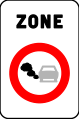 Sign indicating the start of a low-emission zone in Belgium

- Antwerp: Since 2017, there has been a LEZ in Antwerp, 24/7. Only diesel vehicles above Euro 3/III norm and petrol vehicles above Euro 1/I norm are allowed to enter the LEZ.[14]
- Brussels: Since 2018, the entire Brussels Capital Region has been a LEZ.[15] Only diesel vehicles above Euro 4/IV norm are allowed to enter Brussels.[16]
Since 2019 petrol or gas-powered vehicles need to be Euro 2/II or more.[17] - Ghent introduced a LEZ on 1 January 2020.[18]
The low emission zones in Antwerp and Brussels have been shown to have a positive impact on air quality, socio-economic disparities and health.[19]
Bulgaria
[edit]On 1 December 2023, Sofia introduced the first LEZ (Bulgarian: нискоемисионна зона, НЕЗ; niskoemisionna zona, NEZ) in Eastern Europe, banning Euro 1 vehicles from the Bulgarian capital's city centre during the winter. The zone is to be gradually expanded to a wider area and to Euro 2 vehicles by the end of 2027.[20]
China
[edit]A LEZ is present in Beijing.[21][22]
Denmark
[edit]Denmark has LEZs that are applicable to vehicles over 3.5 t.[13] In Denmark, LEZs exist in Aalborg, Aarhus, Copenhagen, Frederiksberg and Odense.[23]
France
[edit]The low emission zone (zone à faibles émissions; ZFE or zones à circulation restreinte; ZCR) in Paris is operational 8am to 8pm on weekdays, prohibiting certain vehicles from entering during its periods of operation. An air quality (crit'air) sticker is required for all vehicles and must meet the minimum standards.[24][25] Other French cities with a LEZ in operation include Grenoble, Lyon and Strasbourg[26]
Germany
[edit]In Germany, an LEZ is called an environmental zone (Umweltzone). There are currently 47 LEZs in operation or in planning in Germany.[13] The cities of Berlin, Cologne, Hanover, Mannheim and Stuttgart started LEZs in their respective central city areas in 2008 and more cities followed in the years after.
Hong Kong
[edit]Since the end of 2015, the Hong Kong Government has designated three major junctions in Central, Causeway Bay and Mong Kok as low emission zone for franchised buses. For bus routes entering the three zones, franchised bus operators are required to use only buses meeting emission standards of Euro IV or above except when necessary. The LEZ scheme does not cover vehicles other than franchised buses.[27] As of 31 December 2019, the standard for entry into the LEZ has been increased to Euro V.
Indonesia
[edit]The first LEZ in Indonesia is implemented at the old downtown of Jakarta, the Kota Tua Jakarta.[28] It was first implemented on 8 February 2021 after having a trial run from 18-23 December 2020.[29] The city government chose Kota Tua Jakarta as an LEZ in order to reduce air pollution on the site due to its rich historical value.[30] Air pollution is concerned to damage the structure of old buildings within the site. The LEZ implementation is permanent and only TransJakarta buses, bicycles, pedestrians, and vehicles with special marker are allowed to enter the streets of the old town.[28]
Beside that, LEZ is also implemented at the surrounding area of Tebet Eco Park in South Jakarta. Unlike the previous one in Kota Tua, LEZ in Tebet Eco Park is only implemented on weekends and public holidays.[31] Residents or workers in the surrounding area of the park have to place a sticker with QR code on their vehicle.[32]
Italy
[edit]Italy has LEZs that are applicable to all vehicles.[13] There are combined LEZs and urban road tolling schemes in Milan and Palermo as well as low emission zones with differing standards and time periods. The latter are mainly found in north Italy, but also in mid Italy and Sicily.[33] Some limited traffic zones are also aimed at limiting pollution levels.
Japan
[edit]In Tokyo, the municipal government decided to tackle controlling diesel vehicle emissions (particulate matter emissions, ...) far ahead of the national government.[34][35]
Netherlands
[edit]Amsterdam, The Hague, Utrecht and Arnhem have LEZs (milieuzone) applying to passenger cars and delivery vans. Only diesel passenger cars and diesel delivery vans meeting the emission standards of Euro 4 and above are allowed to enter the LEZs. Diesel trucks and diesel Buses/coaches have to meet Euro VI (6) or above to enter the LEZs. The LEZ of Arnhem does not apply to buses/coaches.[36]
The LEZ of Amsterdam covers practically the entire area within the A10 highway. The highway itself is not part of the LEZ.[37]
The LEZ of The Hague covers the area enclosed by the Centrumring (S100) and Professor B.M. Teldersweg (S200). These roads themselves, as well as the road from Lijnbaan to the visitors’ car park and the parking garage of the HMC Westeinde hospital, are not part of the LEZ.[38]
Rotterdam has an LEZ applying to trucks only. Diesel trucks have to meet the Euro VI (6) emission standard or above.[39]
Norway
[edit]Norway has LEZs in Bergen and Oslo.[40]
Poland
[edit]Poland has LEZ only in Warsaw as of October 2024.[41]
Portugal
[edit]Portugal has an LEZ in Lisbon.[42]
Spain
[edit]Pontevedra was the first Spanish city to ban traffic in its core, in 1999.[43] Málaga and Seville were the next cities to establish low emission zones, with traffic only allowed for residents, in 2009.[44] Seville rolled back its low-emission zone under the mayorship of Juan Ignacio Zoido in 2011,[45] but at date of August 2021 a new system was in the process of implementation.[46]
Madrid established its LEZ in 2018 in its city center, and Barcelona approved it in 2020.[47]
Sweden
[edit]The cities of Gothenburg, Lund, Malmö, Helsingborg, Mölndal, Uppsala, Umeå and Stockholm have low-emission zones.[48] Heavy trucks and buses with compression ignited engines (mainly diesel engines) may not be allowed inside the environmental zones depending on their age and on their emission class.[49]
United Kingdom
[edit].jpg)
The London low emission zone came into effect in 2008 covering almost all of Greater London – the largest such zone in the world. The low-emission zone targets emissions of these pollutants from older diesel-engined lorries, buses, coaches, vans, minibuses and other heavy vehicles that are derived from lorries and vans such as motor caravans and motorised horse boxes. There was a phased introduction of the scheme from 2008 through to 2012. Different vehicles were affected over time and increasingly tougher emissions standards applied.[50]
The London Ultra Low Emission Zone started on 8 April 2019 and initially covered Central London, the same area as the existing congestion charge. On 25 October 2021, the zone was extended to cover the Inner London area within the North Circular and South Circular roads.[51] It was expanded again on 29 August 2023 to coincide with the London low emission zone, covering almost all of Greater London.[52]

The Glasgow low emission zone (LEZ) was inplemented at the end of 2018. Initially, only local buses in the centre of the city are affected. On 1 June 2023 restrictions were extended to all vehicles, including older petrol and diesel cars.[53] Norwich, and York also introduced a LEZ.[54][55]
Since 2015, more than 60 local authorities have been ordered to tackle illegal levels of air pollution, which is why many of these planning to introduce clean air zones. The following cities have plans to introduce LEZs: Aberdeen (2020), Bath (2021), Birmingham (2019), Derby, Dundee (2020), Edinburgh (2020), Manchester (2022), Newcastle (2021), and Sheffield (2021).[55] Leeds also intended to introduce a LEZ, however increased uptake of cleaner vehicles led to the scheme's cancellation in 2020.[56]
As of June 2020[update], Oxford is claiming to become the first city to implement a Zero Emission Zone (ZEZ) scheme, beginning with a small area to go into effect by mid 2021. It was postponed from a 2020 start due to the economic impacts of the COVID-19 pandemic. However, the proposals can more accurately be described as a Low Emission Zone or Ultra Low Emission Zone as any vehicle can enter on payment of a charge.[57] The plan is to expand the ZEZ gradually into a much larger zone, until the ZEZ encompasses the majority of the city centre by 2035.[58][55][59]
Vietnam
[edit]LEZ in Vietnam will be planned start on 1 January 2025 according to Capital Law 2024, it will start on Hoan Kiem district and Ba Dinh district, Hanoi.[60]
See also
[edit]- Automatic number-plate recognition
- Battery electric vehicle
- Crit'air
- Carfree city
- Congestion pricing
- Cyclability
- Ecopass
- Electric car
- Environmental aspects of the electric car
- Fenceline community
- List of modern production plug-in electric vehicles
- Phase-out of fossil fuel vehicles
- Plug-in electric vehicle
- Plug-in hybrid
- Road space rationing
- Sustainable transport
- Transit mall
- Zero-emissions vehicle
References
[edit]- ^ Council, Oxford City. "Oxford Zero Emission Zone (ZEZ) frequently asked questions". www.oxford.gov.uk. Retrieved 6 January 2020.
- ^ ANPR cameras used for London emission zone
- ^ Views sought on ‘inner London’ ULEZ
- ^ a b Impact of Low Emission Zones
- ^ Fuller, Gary (30 June 2023). "Low emission zones are improving health, studies show". The Guardian. ISSN 0261-3077. Retrieved 12 July 2023.
- ^ Ellison, Richard B.; Greaves, Stephen P.; Hensher, David A. (2013). "Five years of London's low emission zone: Effects on vehicle fleet composition and air quality". Transportation Research Part D: Transport and Environment. 23: 25–33. Bibcode:2013TRPD...23...25E. doi:10.1016/j.trd.2013.03.010.
- ^ "Subsidies on offer to taxi drivers who switch to electric vehicles". Bristol City Council News. Retrieved 6 January 2020.
- ^ Reid, Carlton. "London Wants Vans Replaced By Cargobikes, Introduces Subsidy And Behavior Change Program". Forbes. Retrieved 6 January 2020.
- ^ Bannon, Eoin (10 September 2019). "Low-Emission Zones are a success – but they must now move to zero-emission mobility". Transport & Environment. Retrieved 1 April 2021.
- ^ Sumantran, Venkat; Fine, Charles; Gonsalvez, David (16 October 2017). "Our cities need fewer cars, not cleaner cars". The Guardian. Retrieved 1 April 2021.
- ^ McGrath, Matt (8 April 2019). "London's ULEZ: How does it compare?". Retrieved 19 June 2019.
- ^ Kholod, Nazar; Evans, Meredydd (1 February 2016). "Reducing black carbon emissions from diesel vehicles in Russia: An assessment and policy recommendations". Environmental Science & Policy. 56: 1–8. Bibcode:2016ESPol..56....1K. doi:10.1016/j.envsci.2015.10.017. ISSN 1462-9011.
- ^ a b c d "Urban Access Regulations in Europe". Sadler Consultants Ltd. Retrieved 19 June 2019.
- ^ "Antwerp LEZ". Stad Antwerpen. Retrieved 8 March 2017.
- ^ "Low Emission Zone". Brussels Capital Region. 3 October 2017. Retrieved 30 June 2021.
- ^ "Low Emission Zone: new ban from 2022". www.brussels.be. 21 December 2021. Retrieved 8 January 2022.
- ^ "In practice: Everything you need to know about the LEZ in the Brussels-Capital Region". Brussels Capital Region. Retrieved 30 June 2021.
- ^ "Lage-Emissiezone 2020". Stad Gent. Retrieved 11 November 2017.
- ^ Bruyneel, Luk; Van Nieuwenhuyse, Ann; Van den Borre, Laura; Van den Berghe, Wouter; De Ridder, Katrien; Van de Putte, Bart; Vandekerckhove, Peter; Van de Velde, Sarah; Van Cleemput, Jeroen; De Smedt, Delphine (2025). "Positive impact of the introduction of low-emission zones in Antwerp and Brussels on air quality, socio-economic disparities and health: a quasi-experimental study". Environment International. 199 109515. Bibcode:2025EnInt.19909515B. doi:10.1016/j.envint.2025.109515. hdl:1942/46068. PMID 40328086.
- ^ "Sofia: first low emission zone in Eastern Europe". Clean Air Fund. Retrieved 25 November 2024.
- ^ Beijing Low Emission Zone
- ^ LEZ examples
- ^ LEZs Denmark
- ^ "Driving in an environmental zone in Europe". 23 January 2025.
- ^ https://urbanaccessregulations.eu/countries-mainmenu-147/france/paris
- ^ LEZs in France
- ^ Government sets up franchised bus low emission zones starting today Archived 2 February 2016 at the Wayback Machine
- ^ a b Wibawana, Widhia Arum (11 September 2022). "Low Emission Zone Artinya Apa? LEZ Berlaku di Kota Tua Jakarta". detiknews (in Indonesian). Retrieved 5 September 2023.
- ^ "Membatasi Kendaraan Bermotor di Kota Tua". koran.tempo.co (in Indonesian). 19 December 2020. Retrieved 5 September 2023.
- ^ Anjani, Anatasia (17 November 2021). "Kota Tua Dijadikan Kawasan Emisi Rendah, Mengapa?". detikedu (in Indonesian). Retrieved 5 September 2023.
- ^ Budi, Mulia (20 August 2022). "Pro Kontra Opini Pengunjung soal Tebet Eco Park Masuk Zona Emisi Rendah". detiknews (in Indonesian). Retrieved 5 September 2023.
- ^ "Ini 2 Ruas Jalan di Sekitar Tebet Eco Park yang Bakal Dilarang untuk Dilintasi Kendaraan Bermotor". VOI - Waktunya Merevolusi Pemberitaan (in Indonesian). 11 July 2022. Retrieved 5 September 2023.
- ^ LEZs Italy
- ^ Tokyo Metropolitan Government's Efforts to Control Diesel Vehicle Emissions
- ^ TMG: Measures against Diesel Emissions
- ^ LEZs in the Netherlands
- ^ LEZ for diesel vehicles
- ^ LEZ for diesel cars
- ^ LEZ Rotterdam
- ^ LEZs in Norway
- ^ "Strefa Czystego Trasportu w Warszawie". 20 May 2024.
- ^ LEZs in Portugal
- ^ Pontevedra, the city that defeated cars. El País
- ^ Málaga: The historic center closes to traffic. 20 minutos
- ^ Mayor abolishes plan to restrict cars in Seville center. La Información
- ^ Restricted traffic zones. Seville City Council
- ^ LEZs in Spain
- ^ "Urban Access Regulation in Europe". Retrieved 21 December 2016.
- ^ "Miljözoner". Retrieved 12 January 2017.
- ^ "Emissions standards". Transport for London. Retrieved 21 November 2007.
- ^ "Londoners get ready for expansion of low emission zone". Financial Times. 24 October 2021.
- ^ "ULEZ: Ultra Low Emissions Zone to cover all of London". BBC News. 25 November 2022.
- ^ "Glasgow's Low Emission Zone (LEZ)". 20 July 2018.
- ^ [Norwich Low Emission Zone https://laqm.defra.gov.uk/documents/Norwich_lez.pdf]
- ^ a b c Tobin, Dominic (12 March 2019). "Clean air zone charges: where are Britain's low emission zones?". buyacar.co.uk. Retrieved 29 March 2020.
- ^ Leeds City Council (13 October 2020). "Leeds' Clean Air Zone has achieved its aims early and is no longer required, joint review finds". Retrieved 31 May 2023.
- ^ Oxford City Council (20 March 2020). "Oxford's Zero Emission Zone – 20/03/2020 update". Oxford City Council. Retrieved 18 June 2020.
- ^ Oxford City Council (20 March 2020). "Oxford's Zero Emission Zone – 20/03/2020 update". Oxford City Council. Retrieved 18 June 2020.
- ^ "Oxford's Low Emission Zone (LEZ)".
- ^ "Ba Dinh and Hoan Kiem districts selected for Hanoi's low-emission zone pilot". VietNamNet. 15 December 2024.
External links
[edit]Low-emission zone
View on GrokipediaDefinition and Mechanisms
Core Principles and Operations
Low-emission zones (LEZs) operate on the principle of geographically delineating urban or sensitive areas to limit access by vehicles exceeding predefined emission thresholds, thereby reducing localized concentrations of pollutants such as nitrogen oxides (NOx) and particulate matter (PM) from combustion engines.[13] This restriction targets high-emitting vehicles, particularly diesels, by mandating compliance with standardized emission classes, which incentivizes fleet modernization or retrofitting to lower tailpipe emissions through reduced vehicle volume rather than altering individual engine performance.[14] The approach assumes a direct causal link between restricting dirtier vehicles and diminished ambient pollution levels, independent of broader meteorological or traffic factors, though implementation varies between outright prohibitions, entry fees, or permit systems.[13] In practice, LEZs define operational boundaries via signage and digital mapping, with entry points marked by regulatory signs compliant with national traffic rules, such as those under the UK's Traffic Signs Regulations and General Directions.[13] Vehicles are assessed for eligibility using national emission standards, typically aligned with European norms: for light-duty diesel cars and vans, Euro 6 compliance is required in schemes like Scotland's LEZs, while petrol equivalents must meet Euro 4; heavier vehicles such as buses and HGVs face Euro VI thresholds.[15] [14] Compliance is verified through vehicle registration data cross-referenced against manufacturer certifications or retrofit proofs, with public online checkers available in jurisdictions like Scotland to pre-assess eligibility.[15] Exemptions apply to categories including emergency services, disabled-access vehicles, and pre-Euro historic models, often with time-limited grace periods—up to four years for non-residents in Scotland—to facilitate transition.[14] Enforcement relies on automated technologies, predominantly Automatic Number Plate Recognition (ANPR) cameras deployed at zone perimeters or internal checkpoints, which capture license plates and query centralized databases in real-time to flag non-compliant entries.[16] [13] Violations trigger civil penalties, such as £60 initial charges in Scottish LEZs (halved if paid promptly, escalating to £480 for light vehicles upon repeat offenses within 90 days), administered via notices to registered keepers with appeal rights to tribunals.[15] Operations function continuously—24 hours daily, year-round—under local authority oversight, supported by Traffic Regulation Orders that legally prohibit access, though some schemes incorporate dynamic adjustments like variable hours with ministerial approval.[14] Monitoring integrates back-office systems for data processing, with costs offset by fines, ensuring sustained functionality without reliance on manual patrols in large-scale implementations.[13]Vehicle Emission Standards
Vehicle emission standards in low-emission zones (LEZs) are predominantly based on the European Union’s Euro emission norms, which establish progressively stricter limits on exhaust pollutants including nitrogen oxides (NOx), particulate matter (PM), carbon monoxide (CO), and hydrocarbons (HC) for new vehicles sold in member states.[17] These standards, phased in from Euro 1 in 1992 to Euro 6 in September 2014 for light-duty vehicles, serve as the benchmark for determining vehicle eligibility in LEZs, with zones enforcing minimum compliance levels to restrict higher-emitting vehicles.[18] Euro 7, adopted in 2024, introduces further reductions targeting non-exhaust sources like brakes and tires alongside exhaust emissions, though its implementation for LEZ enforcement remains pending as of 2025.[19] Compliance is assessed by vehicle registration date, engine type, and certification, often verified via national vehicle registries or mandatory stickers such as France’s Crit’Air or Germany’s Umweltplakette, which categorize vehicles into emission classes corresponding to Euro levels. In German environmental zones (Umweltzonen), Euro 6d diesel vehicles qualify for the green emissions sticker and are permitted access in cities such as Munich, Stuttgart, Berlin, and Hamburg, whereas driving bans typically apply to older diesel vehicles meeting Euro 5 standards or below.[20] Diesel vehicles typically face higher thresholds than petrol counterparts due to their elevated NOx and PM outputs; for example, many LEZs permit petrol cars registered after 2006 (Euro 4 compliant) while requiring diesels from 2015 onward (Euro 6).[21] Enhanced Environmentally friendly Vehicle (EEV) certification, bridging Euro 5 and 6, offers interim allowances in some zones for buses and trucks.[22] Specific criteria vary by jurisdiction: London’s Ultra Low Emission Zone (ULEZ), operational since April 2019 with expansion in August 2023, mandates Euro 4 for petrol cars and Euro 6 for diesels, imposing a £12.50 daily charge on non-compliant vehicles.[23] In Scotland’s LEZs, effective from 2022 in cities like Glasgow, standards align with Euro 4 for petrol and Euro 6 for diesel cars and vans.[15] Paris’s Grande Zone à Faibles Émissions (ZFE), enforced progressively since 2019, uses Crit’Air vignettes tied to Euro norms, banning pre-Euro 3 diesels from 2022 and aiming for Euro 6 minimum by 2030.[4] Berlin’s Umweltzone, introduced in 2008, initially required Euro 4 diesels but has tightened to exclude non-Euro 5/6 vehicles in updated phases.[17] Retrofit technologies, such as particulate filters, can upgrade older vehicles to meet standards in select zones, though adoption rates remain low due to costs estimated at €1,000–€5,000 per vehicle.[17] Euro 6 specifications for light-duty diesels limit NOx to 80 mg/km and PM to 4.5 mg/km under the Worldwide Harmonised Light Vehicle Test Procedure (WLTP), with real-driving emissions (RDE) conformity factors ensuring lab-to-road alignment since 2021.[24] These thresholds reflect empirical testing prioritizing tailpipe outputs, yet critics note discrepancies in real-world performance, particularly for NOx from older Euro 6 fleets, as evidenced by independent monitoring showing exceedances up to 4.5 times lab limits pre-RDE adjustments.[18] LEZ enforcement thus hinges on verifiable compliance, with non-adherence leading to fines from €68 in Germany to £180 in London.[17][23]Enforcement and Technology
Enforcement of low-emission zones (LEZs) primarily relies on automated systems that monitor vehicle entry and cross-reference registration data against predefined emission standards, rather than direct measurement of tailpipe emissions. Automatic Number Plate Recognition (ANPR) cameras form the core technology, capturing license plates in real-time and querying national or regional vehicle databases to determine compliance based on Euro emission class or equivalent certifications.[25][26] Non-compliant vehicles trigger fines, typically ranging from €68 for passenger cars to €135 for heavier vehicles in systems like France's Zones à Faibles Émissions (ZFEs), with penalties escalating for non-payment up to €450.[27] This database-driven approach enables 24/7 surveillance without physical barriers, though it depends on accurate vehicle homologation records, which may not reflect actual post-maintenance emissions.[28] In London, the Ultra Low Emission Zone (ULEZ), operational since April 2019 and expanded citywide in August 2023, deploys over 1,156 fixed ANPR cameras supplemented by mobile enforcement units to scan vehicles continuously.[29] These cameras integrate infrared LED arrays classified under low-risk optical standards (IEC 62471 Risk Group 1) for nighttime operation, linking plate data to the Driver and Vehicle Licensing Agency (DVLA) database to enforce a £12.50 daily charge for non-compliant vehicles meeting Euro 3 petrol or Euro 6 diesel standards.[30] Transport for London (TfL) reports high detection rates, with occasional vandalism attempts on cameras post-expansion, underscoring reliance on redundant networked infrastructure for resilience.[31] German Umweltzonen, introduced from 2008, traditionally emphasize visual verification via mandatory Umweltplakette (environmental stickers) affixed to windshields, classifying vehicles by emission levels (green for least polluting, up to red for banned).[32] Enforcement has historically involved manual police checks, with fines up to €100 for violations, but lacks nationwide ANPR mandates; Munich piloted camera-based systems in 2023 to automate detection by matching plates to sticker databases, aiming to reduce administrative burden while addressing evasion in over 70 zones.[33][34] In France, Paris's ZFE-métropole, enforced since 2019, transitioned to automated ANPR fines from spot checks by 2023, using Crit'Air vignette data for vehicles rated 3 or higher, which face bans during high-pollution episodes.[35] Supplementary technologies include mobile ANPR vans for targeted patrols and driver-facing apps or online portals for pre-trip compliance checks, such as London's ULEZ vehicle checker, which queries DVLA data without requiring physical stickers.[36] Emerging innovations, like optical sensors for real-time emission proxies, remain experimental and unscaled, as most schemes prioritize cost-effective database verification over on-vehicle diagnostics to minimize false positives from modified or poorly maintained engines.[37] Challenges include foreign-registered vehicles, addressed via bilateral data-sharing or vignette exemptions, and privacy concerns over ANPR data retention, balanced by regulations limiting storage to enforcement needs.[38]Historical Development
Origins in Europe
The first low-emission zones in Europe were implemented in Sweden in 1996, marking the inception of policies restricting vehicle access based on emission standards to mitigate urban air pollution.[17] Stockholm, Gothenburg, and Malmö designated environmental zones effective July 1, 1996, targeting primarily heavy-duty diesel vehicles such as trucks and buses, which were major contributors to particulate matter (PM) and nitrogen oxide (NOx) emissions in city centers.[39] These zones required compliance with specific emission limits—initially equivalent to Euro 1 standards for particulates—enforced via vehicle inspection stickers for retrofitted engines, incentivizing fleet upgrades rather than outright bans.[40] The regulatory framework stemmed from 1992 national legislation empowering municipalities to protect "environmentally sensitive areas" by limiting high-polluting heavy vehicles, reflecting early recognition of diesel exhaust's localized health impacts without broader light-duty vehicle restrictions at the outset.[41] Sweden's approach emphasized practical emission controls over congestion pricing, drawing on empirical monitoring of urban PM10 levels exceeding health thresholds in the 1990s, and served as a template for subsequent European adoptions by demonstrating feasibility through voluntary retrofits and signage-based enforcement.[42] Initial evaluations in Stockholm indicated modest reductions in PM emissions from affected traffic, though overall air quality gains were limited by fleet turnover rates and evasion via route adjustments.[39] This pioneering model influenced Nordic neighbors, with Norway introducing similar heavy vehicle zones in Oslo by 2002, and paved the way for continental expansion, including Italy's evolution from time-based access restrictions (ZTL) to emission-tiered systems in cities like Rome during the early 2000s.[2] By the mid-2000s, the Swedish precedent had spurred wider policy diffusion amid EU directives on air quality (e.g., 1999/30/EC), leading to Germany's nationwide Umweltzonen framework in 2007, which applied color-coded stickers (green for compliant) to both heavy and light vehicles in over 70 cities starting with pilots in the late 1990s.[43] Early zones outside Scandinavia, such as the 2002 Mont Blanc Tunnel restrictions between France and Italy, further exemplified cross-border adaptations focused on particulate filters for heavy-duty traffic in high-pollution corridors.[2] These developments prioritized verifiable emission classes over vague pollution metrics, grounding enforcement in standardized testing protocols amid growing evidence of diesel soot's role in respiratory ailments.[17]Expansion and Policy Evolution
Following the pioneering implementations in Swedish cities during the 1990s, low-emission zones proliferated across Europe in the 2000s, driven by national legislation responding to urban air quality exceedances. Germany led this phase with the introduction of Umweltzonen in Berlin, Cologne, and Hanover on January 1, 2008, under a federal framework that permitted cities to restrict high-emission vehicles via mandatory environmental stickers; by the early 2010s, over 70 German cities had adopted such zones, initially targeting pre-Euro 4 diesel vehicles for particulate matter reduction.[32][44] This expansion accelerated in the 2010s as other nations harmonized with EU emission standards, with France establishing Zones à Faibles Émissions (ZFEs) starting in 2015 to replace earlier restricted traffic zones, mandating adoption in polluted urban areas by 2020 and expanding to over 40 métropoles by 2022 through progressive Crit'Air vignette classifications that phased in bans on older vehicles.[45][46] By 2022, Europe hosted more than 320 low-emission zones, a near-doubling from 228 in 2019, reflecting national responses to EU Ambient Air Quality Directive (2008/50/EC) requirements for remedial actions in non-compliant areas.[43][47] Policy evolution has emphasized iterative tightening of vehicle standards and enforcement mechanisms to address persistent NOx and PM2.5 violations. Early zones focused on basic Euro classifications (e.g., excluding pre-Euro 3 or 4), but subsequent updates incorporated higher thresholds like Euro 6 for diesels, expanded to include petrol vehicles, motorcycles, and heavy goods; for example, Germany's zones progressed to ban red and yellow sticker vehicles nationwide by 2025, while Stockholm has continuously upgraded its system since 1996 to near-zero emission cores.[48][12] EU revisions, including the updated Ambient Air Quality Directive, have further propelled this by imposing stricter 2030 limits, incentivizing transitions to zero-emission zones (ZEZs) in city centers and automated enforcement via ANPR cameras.[49] Projections indicate over 500 zones operational by late 2025, with phased rollouts in cities like Warsaw introducing biennial standard escalations.[43][50]Stated Objectives and Theoretical Rationale
Environmental and Health Goals
Low-emission zones seek to enhance urban air quality by restricting entry to higher-emitting vehicles, primarily targeting reductions in nitrogen oxides (NOx) and particulate matter (PM10 and PM2.5) from road traffic, which constitute significant portions of local pollutant inventories in densely populated areas.[51][52] These zones operate under frameworks like the EU's urban vehicle access regulations, which authorize member states to enforce emission-based access controls to curb exceedances of ambient air quality limits set by Directive 2008/50/EC.[53] In the UK, clean air zones similarly aim to address NOx and PM from non-compliant vehicles to meet national air quality objectives derived from the same directive, with transport accounting for up to 80% of NOx in some cities.[54] Theoretically, this approach leverages vehicle certification standards (e.g., Euro 6 for diesel NOx limits of 0.08 g/km) to incentivize fleet turnover toward cleaner technologies, directly lowering tailpipe emissions and secondary pollutant formation like ozone from NOx photochemistry.[55] Policymakers frame these reductions as essential for mitigating environmental degradation, including acid deposition and ecosystem eutrophication from NOx, though primary emphasis remains on local atmospheric improvements rather than broader climate goals, as CO2 restrictions are secondary or absent in most schemes.[56] On health grounds, LEZs are justified as tools to diminish population exposure to traffic-related pollutants linked to adverse outcomes, including acute respiratory irritation from NOx and chronic effects like inflammation and mortality from PM inhalation.[57] EU assessments position zones within the Zero Pollution Action Plan, targeting a 55% cut in health impacts from air pollution by 2030, with LEZs contributing by reducing PM2.5-related premature deaths estimated at over 300,000 annually across the bloc.[12] UK frameworks echo this, citing obligations to protect public health under the Environment Act 2021 by curbing pollutants that exacerbate asthma, heart disease, and low birth weights, with official modeling projecting averted deaths through compliance. These rationales assume causal chains from emission curbs to lower ambient levels and dose-response reductions in disease incidence, grounded in epidemiological associations rather than unproven synergies with non-traffic sources.[58]Urban Planning and Economic Justifications
Low-emission zones (LEZs) are integrated into urban planning frameworks to foster sustainable mobility patterns by discouraging reliance on high-polluting vehicles and prioritizing non-motorized transport options. Proponents argue that LEZs reduce traffic volumes by 3-9% in central areas, as observed in London's implementation, thereby alleviating congestion and enabling the reclamation of street space for pedestrians, cyclists, and green infrastructure.[59] This shift supports denser, more livable urban cores by minimizing noise pollution and enhancing public realm accessibility, aligning with theoretical models of compact city design that emphasize efficient land use and reduced sprawl induced by car dependency.[60] In theoretical terms, LEZs function as urban vehicle access regulations (UVARs) that complement zoning and transport hierarchies, promoting active travel modes to achieve resource-efficient urban systems with lower waste emissions.[61] Economically, LEZs are justified through projected reductions in externalities associated with vehicle emissions, particularly health costs from air pollution, which exceed €1,200 per European city dweller annually according to European policy analyses. Cost-benefit assessments, such as London's LEZ evaluation, forecast net benefits of £250-670 million, including £90-250 million in externalities averted outside the zone, driven by fewer premature deaths and respiratory illnesses.[59][61] These include productivity gains from lower absenteeism and improved local commerce; for instance, Madrid's LEZ correlated with an 8.6% increase in retail sales post-implementation. Additionally, LEZs theoretically boost property values, with German studies estimating 2% higher apartment rents in zoned areas due to perceived environmental premiums, while requiring minimal upfront public investment compared to infrastructure overhauls.[62] Such rationales position LEZs as levers for economic resilience by stimulating markets for low-emission technologies and reducing congestion-related time losses in urban logistics.[60]Empirical Evidence of Impacts
Air Quality and Pollution Reductions
Empirical studies on low-emission zones (LEZs) in European cities have documented reductions in key traffic-related pollutants, particularly nitrogen oxides (NOx) and particulate matter (PM10 and PM2.5), though the magnitude of ambient concentration declines often ranges from 5-20% and varies by zone design, compliance, and local conditions.[63] [64] A 2023 systematic review of LEZ implementations found consistent evidence of lowered NOx and PM levels attributable to restricted access for high-emission vehicles, with stronger effects in zones targeting diesel fleets.[65] These reductions stem from decreased vehicle tailpipe emissions within zoned areas, as fleet compositions shift toward compliant, lower-emitting models over time.[66] In London, the Ultra Low Emission Zone (ULEZ), expanded citywide in August 2023, correlated with a 20% drop in exhaust PM2.5 emissions London-wide between 2023 and 2024, including 31% lower car and van contributions in outer boroughs compared to counterfactual scenarios without the policy.[67] Pre-expansion central ULEZ data from 2019-2022 showed NOx reductions of up to 49% at roadside monitors, though ambient NO2 concentrations fell by less than 3% on average, partly due to high pre-existing compliance (over 90% of vehicles) and contributions from non-exhaust sources like tire wear.[68] Post-expansion monitoring in 2023-2024 indicated no statistically significant further NOx or NO2 declines in inner and outer areas, attributed to already cleaner fleets, but PM2.5 exposure near busy roads decreased, aiding compliance with EU limits.[69] German LEZs, implemented since 2008 across multiple cities, reduced urban PM10 concentrations by 7-12% in treated areas relative to control regions, based on panel data from over 50 municipalities analyzed through difference-in-differences models.[70] A study of Berlin's LEZ found NOx emissions from road traffic dropped by 15-20% post-introduction, with corresponding ambient improvements, though effects diminished in later years as Euro-standard vehicles proliferated independently of the policy.[71] In Paris, the Zone à Faibles Émissions (ZFE), phased in from 2017, contributed to a 40% decline in population-weighted NO2 exposure between 2012 and 2022, alongside broader traffic measures, with modeling estimating 3-20% PM emission cuts from ZFE compliance alone.[72] [73]| City/Zone | Pollutant | Estimated Reduction | Time Frame | Source |
|---|---|---|---|---|
| London ULEZ | PM2.5 (exhaust) | 20% London-wide | 2023-2024 | TfL Report[67] |
| German LEZs | PM10 | 7-12% | 2008-2012 | Cyrys et al.[70] |
| Paris ZFE | NO2 exposure | 40% (broader context) | 2012-2022 | Airparif[72] |
| Multiple European LEZs | NOx | 10-15% average | Varies | PLOS One meta-analysis[64] |
Health and Well-being Outcomes
Empirical studies, primarily quasi-experimental designs in European cities, indicate that low-emission zones (LEZs) are associated with modest reductions in hospitalizations for cardiovascular and respiratory conditions linked to air pollution. In Germany, where LEZs restrict high-emission vehicles in urban areas, hospital data analyses revealed a 2.9% decrease in circulatory system disease admissions (approximately 67 fewer cases annually per affected region) and a 2.16% reduction in respiratory system hospitalizations following implementation. Specific declines included 5% for ischemic heart disease, 4.1% for cerebrovascular diseases, and over 4% for chronic lower respiratory diseases, with effects concentrated in non-emergency cases among the elderly.[71] Systematic reviews of LEZ implementations corroborate consistent benefits for cardiovascular outcomes, such as fewer events and related hospital visits, across studies in multiple countries, though evidence for respiratory diseases, asthma exacerbations, or broader morbidity is more variable and often smaller in magnitude.[63] These findings rely on difference-in-differences approaches to isolate LEZ effects from background air quality trends, but challenges in attributing causality persist due to concurrent policies, pollution displacement to surrounding areas, and incomplete vehicle compliance data. Direct links to mortality reductions are scarce in observational data, with most evidence derived from modeling air quality improvements to health impact assessments. For example, a proposed LEZ in Malmö, Sweden, projected a 13.4% drop in NO2 levels, averting an estimated 9-26 premature deaths per year based on concentration-response functions from epidemiological literature.[77] In contrast, evaluations of London's Ultra Low Emission Zone (ULEZ) report only marginal NO2 reductions under 3% and negligible changes in PM2.5, suggesting limited downstream mortality or morbidity benefits despite policy claims.[78] Beyond physical health, LEZ effects on subjective well-being are mixed, with mobility restrictions sometimes dominating air quality gains. German LEZ analyses found transitory yet enduring drops in life satisfaction, potentially outweighing health improvements for affected residents.[66] ULEZ surveys in London noted self-reported gains of 3% in general health and 6% reductions in anxiety, but these align with modest pollution declines and may reflect broader trends or reporting biases rather than direct causation.[79] Overall, while LEZs yield verifiable gains in targeted health metrics, their net well-being impacts hinge on balancing emission curbs against socioeconomic costs of access limitations.Economic and Behavioral Effects
Empirical studies indicate that low-emission zones (LEZs) generate varied economic effects, often involving upfront compliance costs for vehicle retrofitting or replacement, which can disproportionately burden lower-income households and small businesses reliant on older fleets.[12][10] In London, the Ultra Low Emission Zone (ULEZ) expansion in August 2023 prompted a mayor-funded scrappage scheme that supported low-income residents and small businesses in replacing non-compliant vehicles, though full evaluation of its economic reach remains pending as of spring 2025.[67] Official assessments claim no significant adverse impact on outer London business activity, with visitor footfall rising 1.87% and worker footfall 8.89% from September 2023 to September 2024, aligning closely with London-wide trends amid post-pandemic recovery.[67] However, reports from affected areas document declining trade for small retailers, attributing reduced customer visits to higher driving costs and deterrence of non-compliant vehicles, contributing to a decade-high in empty shops across London by mid-2025.[80][81] On housing markets, LEZs have shown positive capitalization effects in some contexts; in Germany, air quality gains from LEZs correlated with approximately 2% higher apartment rents in treated areas as of 2025, reflecting perceived environmental benefits.[82] Microeconomic modeling of LEZs for light vehicles estimates social costs including distorted vehicle choices, such as shifts toward gasoline over diesel, potentially elevating fleet-wide carbon emissions in certain scenarios.[83] Spillover effects include localized pollution displacement near zone borders, with particulate matter (PM₁₀) and nitrogen dioxide (NO₂) rising 18% and 22% within 500 meters in German cities, which may indirectly affect adjacent economic activities through uneven air quality distributions.[8] Behaviorally, LEZs drive high compliance rates and fleet turnover, evidenced by London's ULEZ achieving 96.7% vehicle compliance by September 2024, up from 90.9% in outer areas pre-expansion, with nearly 100,000 fewer daily non-compliant trips.[67] This reflects preemptive behavioral adaptations, including vehicle upgrades or avoidance, though overall traffic volumes remained stable, suggesting limited broad mode shifts to public transport or cycling in the short term.[67] Studies in European cities link LEZ enforcement to reduced car usage and increased adoption of cleaner modes, particularly among demographics with stronger environmental perceptions, but single restrictive measures like car bans yield modest traffic reductions without complementary policies.[84][85] Subjectively, residents in German LEZs reported a temporary 0.19-point drop in life satisfaction post-implementation, fading after the first year, despite objective health gains like 4.6% lower hypertension rates.[8][66]Criticisms and Limitations
Debates on Effectiveness and Causal Attribution
Empirical evaluations of low-emission zones (LEZs) reveal modest and inconsistent reductions in urban air pollutants such as NO₂ and PM₁₀, typically on the order of 2-4% after statistical controls, prompting debates over whether these effects are causally attributable to the policies or driven by broader trends. A comprehensive analysis of 17 German cities found LEZ implementations yielded average NO₂ reductions of approximately 2 µg/m³ (about 4%) at index stations and 2.26 µg/m³ at traffic sites, with similar small effects for NO and NOx, but only after controlling for meteorological factors like wind velocity, precipitation, and temperature inversions; however, more robust models incorporating long-term trends showed unstable or insignificant results, highlighting sensitivity to specification.[64] Critics contend such magnitudes are negligible against background declines in emissions from mandatory European vehicle standards (e.g., Euro 6 norms introduced progressively since 2014), which have driven continent-wide transport NOx reductions of over 50% from 1990-2022 independent of local zoning.[86] Causal attribution remains contested due to confounding variables that parallel LEZ rollouts, including natural fleet turnover toward cleaner vehicles, economic shifts reducing heavy traffic, and episodic events like COVID-19 lockdowns, which temporarily slashed urban emissions by 20-50% across Europe without zoning interventions. In London, the Ultra Low Emission Zone (ULEZ), expanded in 2019 and 2021, correlated with less than 3% average NO₂ concentration drops citywide, but effects were statistically insignificant for ozone and potentially overstated without isolating concurrent diesel vehicle phase-outs mandated by national regulations.[87] Reviews of LEZs across Denmark, Germany, the Netherlands, Italy, and the UK emphasize that many pre-2015 studies inadequately adjusted for temporal confounders, leading to inflated attributions; post-adjustment estimates for German zones suggest only a few percent PM₁₀/NO₂ cuts, often indistinguishable from non-LEZ urban trends.[3] Proponents counter with quasi-experimental designs like difference-in-differences, which exploit staggered implementations to approximate counterfactuals, estimating traffic-related pollutant declines despite ozone upticks from NOx titration effects.[66] Skeptics, including policy analysts wary of institutional incentives in academia and environmental advocacy, argue LEZ evaluations suffer from selection bias—cities adopting zones often already pursue cleaner fleets—and endogeneity, as zones may accelerate but not originate emission drops evident in synthetic control comparisons with untreated areas. European Environment Agency data attributes primary urban air gains to regulatory harmonization (e.g., real-world testing post-Dieselgate in 2015) over localized restrictions, with LEZ-specific contributions hard to disentangle amid spillover pollution shifts to outskirts.[88] Multiple studies underscore residual confounding risks, such as unmeasured spatial correlations in socioeconomic factors influencing both policy adoption and pollution baselines, undermining claims of robust causality.[89] While some health outcome analyses link LEZs to cardiovascular risk reductions, these rely on pollution proxies with similar attribution ambiguities, lacking direct vehicle restriction trials.[63] Overall, the evidence supports LEZs as marginal accelerators of inevitable technological convergence rather than primary drivers, with debates centering on cost-benefit ratios amid unverifiable incrementalism.Equity, Accessibility, and Social Costs
Low-emission zones (LEZs) often impose disproportionate financial burdens on lower-income households, as these groups are more likely to own older, higher-emitting vehicles that fail to meet compliance standards, necessitating costly upgrades, retrofits, or scrappage. A 2023 analysis by the International Council on Clean Transportation found that income levels directly influence the affordability of zone-compliant vehicles and alternative mobility options, with lower earners facing barriers to electric vehicle adoption due to upfront costs averaging 20-50% higher than internal combustion engine equivalents. Similarly, research on French LEZs indicated regressive effects, as compliant vehicles command premium prices, exacerbating transport poverty among low-wage workers reliant on personal vehicles for employment.[90][91] Accessibility challenges arise particularly for residents in outer urban or rural peripheries, where public transport alternatives are sparse, compelling non-compliant drivers to either pay daily fees—such as London's £12.50 Ultra Low Emission Zone charge—or forgo essential trips, including commuting and service access. In London's ULEZ expansion effective August 2023, data from Transport for London exemptions highlight vulnerabilities for disabled individuals and benefit recipients, though critics note that even with grace periods until 2027 for certain groups, many low-income non-exempt drivers in boroughs like Bexley and Havering reported reduced mobility and heightened isolation. Empirical modeling of job accessibility in eight French cities post-LEZ implementation revealed inequalities favoring white-collar occupations, with blue-collar workers experiencing up to 5-10% drops in reachable opportunities due to restricted vehicle use.[92][93] Social costs extend to broader economic disruptions, including fines totaling millions annually for non-compliance and retrofit grants that often fall short of full vehicle replacement expenses, estimated at £2,000-£10,000 in London for vans and accessible vehicles. While air quality gains from LEZs may yield pro-poor health benefits—monetized at higher per-capita values in deprived areas per UK governmental guidance—the upfront and ongoing compliance expenses create net regressive transfers, with low-income households bearing 2-3 times the relative burden compared to affluent ones, per distributional analyses. These effects underscore the need for targeted subsidies, such as income-based fee waivers or expanded public transit, to mitigate unintended penalties on vulnerable populations, though implementation varies and often lags behind policy rollout.[94][28]Unintended Consequences and Displacement Effects
Low-emission zones (LEZs) have been observed to displace air pollution and traffic to surrounding areas, particularly when zones are limited in geographic scope, as dirtier vehicles are rerouted to evade restrictions. In Germany, where over 70 cities implemented LEZs by 2008, panel data analysis from 2005-2008 revealed PM10 reductions of 4-7% within zones but corresponding increases at background stations outside, attributed to higher-polluting vehicles taking longer detour routes.[95] Specific cases, such as Berlin's LEZ, showed a 6.7% PM10 decrease at traffic stations inside versus outside the zone, while Mannheim's LEZ yielded 14-22% reductions inside but a 10% rise at external background sites, indicating spatial substitution of emissions.[95] This displacement effect undermines net air quality gains if marginal pollution damages are not uniformly convex across urban peripheries, as diverted traffic elevates CO and particulate levels in adjacent neighborhoods often lacking equivalent monitoring or mitigation.[66] Empirical models of German LEZs confirm spillover pollution outside boundaries, with non-compliant vehicles contributing to elevated emissions in unregulated suburbs, where residents may face unmitigated exposure.[96] Critics note that small-scale LEZs exacerbate this by encouraging vehicle retention and circumvention rather than fleet renewal, potentially offsetting 20-50% of internal benefits depending on zone size and enforcement.[97] Behavioral responses amplify these spillovers, as owners of older, non-compliant vehicles—disproportionately low-income households—opt to "keep clunkers in the suburbs," prolonging their use on peripheral roads and increasing total vehicle kilometers traveled (VKT) outside zones by up to 5-10% in affected cities.[95] Vehicle registration data from 2006-2009 in Germany showed stagnant scrappage rates for polluting models outside LEZs, leading to a gradient in fleet quality and sustained higher emissions in exurban areas.[95] In cases like Madrid's LEZ, traffic displacement to ring roads has been documented, though causal attribution remains debated due to confounding factors like concurrent public transit expansions.[98] Larger or city-wide implementations, such as London's ULEZ expansion in August 2023, mitigate displacement by encompassing broader areas, yet early monitoring in peripheral boroughs still detects localized VKT shifts, highlighting the challenge of complete containment without complementary regional policies.[99] Overall, while LEZs achieve localized reductions, unaddressed spillovers risk environmental inequities, with external areas bearing externalities without revenue offsets from zone fees.[68]Global Implementation
European Models and Variations
Low-emission zones (LEZs) in Europe encompass diverse implementations across more than 320 cities as of 2022, reflecting variations in enforcement mechanisms, vehicle standards, and geographic scope.[47] Germany's Umweltzonen model, introduced in 2008, mandates emissions stickers classifying vehicles into green (Euro 4 diesel/Euro 1 petrol and better), yellow, red, or non-compliant categories based on Euro standards for particulate matter and NOx.[32] By late 2023, over 70 German cities enforced these zones, with cities such as Berlin, Munich, and Leipzig requiring vehicles to display a green ecological sticker (Umweltplakette) for entry, while Dresden and Hamburg do not enforce this requirement; access is restricted to sticker-holding vehicles via signage and occasional spot checks, with fines up to €100 for violations.[100] [101][48] France's Zones à Faibles Émissions (ZFEs) employ the Crit'Air vignette system, categorizing vehicles from 0 (electric/hydrogen) to 5 (pre-Euro) based on emission factors, with progressive bans tied to air quality mandates.[102] In the Paris Métropole ZFE, covering 79 communes since 2019, restrictions escalated: Crit'Air 5 banned since 2021, Crit'Air 4 from 2022, and Crit'Air 3 prohibited from January 1, 2025, during weekdays 8 a.m. to 8 p.m., aiming for zero-emission access by 2030.[103] Nationally, 25 ZFEs operated by 2025, often using automatic number plate recognition (ANPR) for enforcement alongside vignettes, with exemptions for residents and low-income households via derogations.[102] The United Kingdom's Ultra Low Emission Zone (ULEZ) in London, operational since 2019 in the central area and expanded citywide on August 29, 2023, imposes a £12.50 daily charge on non-compliant vehicles failing Euro 6 diesel or Euro 4 petrol standards, enforced via ANPR cameras covering 1,580 km².[104] [105] Complementing the earlier Low Emission Zone (LEZ) for heavy vehicles since 2008, the ULEZ model emphasizes financial disincentives over outright bans, with automatic deductions for registered users and grace periods for compliance checks.[104] Variations across Europe include sticker-based access controls in Germany and France versus chargeable zones in the UK, with some schemes like Sweden's Stockholm targeting congestion alongside emissions through time-limited fees.[106] Enforcement ranges from manual verification to camera surveillance, while exemptions often favor electric vehicles, residents, and critical services, tailored to local pollution levels and urban density. In Italy, restrictions vary regionally, with southern regions like Puglia imposing fewer permanent circulation limits on Euro 5 diesel vehicles compared to northern areas; no structural bans exist there until later phases, though temporary restrictions may apply during winter smog episodes in larger cities such as Taranto.[107] Initial freight-focused restrictions have broadened to passenger cars, with ongoing transitions toward zero-emission mandates in select cities.[108]Asian and Other Regional Approaches
In Asia, low-emission zones (LEZs) have primarily targeted diesel vehicles and freight to combat high levels of particulate matter and nitrogen oxides in densely populated urban areas, often integrating with broader clean air campaigns rather than standalone congestion pricing. Implementation dates back to the early 2000s in Japan, with expansions in China and South Korea by the 2010s, while India and Southeast Asian nations focus on pilots and feasibility studies amid rapid urbanization and coal-dependent energy grids. These zones typically enforce standards via vehicle registration checks or retrofits, prioritizing high-polluting commercial traffic over private cars to minimize economic disruption.[109][110] Beijing, China, initiated its LEZ on September 1, 2017, prohibiting heavy-duty freight trucks below National IV emission standards from the Sixth Ring Road inward, a measure extended citywide by 2019 to curb logistics-related pollution contributing to winter smog episodes.[111][112] Shenzhen complemented this with 10 green logistics zones operational by late 2019, mandating zero-emission vehicles in designated freight areas and registering 77,500 battery-electric commercial trucks, which reduced local emissions while supporting electric vehicle manufacturing hubs.[113] In Nanchang, a 2021 LEZ policy evaluation found short-term reductions in PM2.5 and NO2 concentrations attributable to restrictions on older gasoline and diesel passenger cars, though long-term causal impacts required monitoring transboundary pollution inflows.[114] Japan's LEZs emerged in October 2003 across the Greater Tokyo prefectures of Tokyo, Saitama, Kanagawa, and Chiba, banning diesel trucks and buses lacking certified particulate filters (post-1994 models initially exempt), with five prefectures total enforcing by the mid-2000s to address black smoke from construction and delivery fleets.[115][116] Studies indicate these zones lowered ambient PM concentrations by incentivizing retrofits and newer registrations, though fleet turnover slowed without subsidies, and land prices in affected areas rose modestly due to perceived cleaner environments.[117][118] Seoul, South Korea, established a metropolitan LEZ on January 1, 2017, encompassing the capital, Incheon, and most of Gyeonggi Province, restricting diesel vehicles of emission grade 5 or higher (pre-2006 models) during high-pollution alerts to target fine dust from cross-border sources and local traffic.[119][109] Empirical analysis attributes a 4.7% drop in NO2 and 11.6% in SO2 to the policy, driven by compliance via onboard diagnostics and fines up to 100,000 won, though effectiveness wanes during yellow dust events from Mongolia and China. A December 2019 expansion, the Green Transport Zone, further barred pre-2005 diesel and pre-2006 gasoline cars from the city center on weekdays. India's LEZ efforts remain nascent, with the Taj Trapezium Zone—designated in the 1990s across 10,400 square kilometers around Agra—restricting polluting industries and vehicles to preserve marble monuments from acid rain, predating modern urban LEZs but serving as a heritage-linked precursor.[120] By 2026, Pune, Pimpri-Chinchwad, and Chhatrapati Sambhajinagar in Maharashtra will pilot India's first explicit urban LEZs, focusing on school zones and high-traffic corridors with bans on BS-III or older diesels, projected to cut PM2.5 by 20% in Chennai analogs via modeling.[121][122] Delhi and other cities explore similar frameworks, emphasizing enforcement challenges in informal transport sectors.[123] Singapore plans an environmental zone starting 2023, imposing emission and noise standards on motorcycles (banning pre-2003 registrations by 2028) in high-density areas, integrated with electronic road pricing to phase out two-stroke engines without full diesel bans yet.[124] In Southeast Asia, the Asian Development Bank supports LEZ feasibility in Indonesian, Philippine, Thai, and Vietnamese cities, targeting core districts for ultra-low zones amid rising motorcycle emissions.[110] Beyond Asia, Australia advances proposals rather than mandates; Sydney's 2023 sustainability plan outlines LEZs in the CBD and 32 suburbs, charging non-electric vehicles to align with 2050 net-zero goals, while Brisbane targets Rocklea, CBD, and South Brisbane for freight-focused zones by regulating high emitters via fees.[125][126] These reflect adaptation of European models to sprawling suburbs and EV incentives, with limited empirical data on pollution displacement to outer rings.[127]Future Developments and Alternatives
Transitions to Zero-Emission Zones
Cities worldwide are increasingly transitioning from low-emission zones (LEZs), which restrict high-polluting vehicles, to zero-emission zones (ZEZs), which prohibit all non-zero-emission vehicles such as those powered by internal combustion engines, regardless of compliance with emission standards. This shift aims to eliminate tailpipe emissions in urban cores, often targeting freight, delivery vans, and passenger vehicles through phased enforcement starting with commercial fleets. By 2025, at least 19 European cities, including major Dutch municipalities like Amsterdam and Utrecht, have committed to implementing ZEZs for goods deliveries, mandated under national legislation for the 30-40 largest urban areas to foster electric and hydrogen vehicle adoption.[49][128] In the Netherlands, ZEZs for company vehicles took effect on January 1, 2025, in inner-city areas of numerous municipalities, requiring zero-emission capability for vans and trucks entering designated zones during specified hours, with exemptions for small vans under 3.5 tons until later phases. Amsterdam exemplifies a comprehensive approach, expanding its LEZ into a full-city ZEZ by 2030 through progressive tightening of regulations, coupled with incentives like subsidized charging infrastructure and procurement mandates for public fleets. Similarly, the C40 Cities network, comprising 96 global metropolises, pledged in 2017 via the Green and Healthy Streets Declaration to designate significant urban areas as zero-emission by 2030, with members like Copenhagen and Lisbon advancing pilots that integrate ZEZs with micromobility hubs and last-mile electrification.[129][130][131] London's trajectory illustrates both ambition and political adjustments in ZEZ adoption; initial plans for a central London ZEZ by 2025, restricting non-zero-emission vehicles, were abandoned in August 2023 amid economic concerns and public opposition, shifting focus to expanding the Ultra Low Emission Zone (ULEZ) and borough-level ZEZ pilots. The city targets inner London ZEZ coverage by 2040 and London-wide by 2050, emphasizing freight corridors and construction sites, where zero-emission mandates for equipment are set for 2040 to align with net-zero goals. In Paris, the ZFE-m (low-emission mobility zone) is evolving toward zero-emission standards, with proposals from 2030 banning all petrol and diesel vehicles during peak weekday hours (08:00-20:00), requiring Crit'Air green stickers for zero-emission compliance across the metropolis, though national debates in 2025 have questioned broader ZFE enforcement amid fiscal pressures.[132][133][134] Successful transitions hinge on supportive measures, including regulatory lead times of 2-5 years for vehicle retrofitting or replacement, financial incentives such as grants for fleet electrification, and robust enforcement via automated number-plate recognition, as outlined in guidance from the International Council on Clean Transportation (ICCT). At least 35 cities globally plan ZEZ introductions by 2030, often building on LEZ data showing 10-30% emission reductions to justify escalation, though grid capacity expansions and supply chain readiness for batteries remain critical bottlenecks.[131][61]Comparative Policy Options
Low-emission zones (LEZs) represent one approach to curbing urban air pollution by restricting high-emitting vehicles, but alternative policies such as congestion pricing, differentiated vehicle taxes, and subsidies for low-emission vehicles offer distinct mechanisms for achieving similar goals. Congestion pricing charges fees for road use during peak times or in designated areas, reducing vehicle miles traveled (VMT) and thus total emissions regardless of vehicle type. Differentiated taxes impose higher fees on dirtier vehicles at purchase or registration, incentivizing gradual fleet turnover. Subsidies, conversely, provide financial incentives for acquiring electric or low-emission vehicles, aiming to shift the vehicle stock without directly limiting usage. Empirical assessments indicate that no single option universally outperforms others; effectiveness depends on local traffic patterns, enforcement, and complementary measures like public transit improvements.[66][135] Direct comparisons highlight trade-offs in emission reductions, implementation costs, and behavioral responses. LEZs typically yield modest, targeted cuts in pollutants like nitrogen dioxide (NO2) and particulate matter (PM10), with EU studies reporting average NO2 reductions of 3-12% and PM10 drops of 2-6% in cities like Berlin and Munich, though effects on NO2 are inconsistent due to secondary pollutant formation and exemptions for residents. Congestion pricing, by contrast, achieves broader VMT reductions—such as 15-20% in Stockholm's 2007 scheme—translating to NOx decreases of 8.5-15% and PM10 reductions of 13%, with added health benefits including fewer childhood asthma attacks from lower ambient pollution. Vehicle subsidies accelerate electric vehicle (EV) adoption but are costlier per ton of CO2 abated; for instance, Canadian programs subsidize sales that might occur absent incentives, yielding limited net emission cuts relative to restrictions, as total driving often rebounds without usage curbs.[136][3][137]| Policy Option | Key Mechanism | Example Emission Impact | Relative Strengths and Limitations |
|---|---|---|---|
| LEZs | Access bans on high emitters | NO2: 3-12%; PM10: 2-6% (EU cities) | Targeted stock cleaning; risks displacement to outskirts without net city-wide gains.[3][136] |
| Congestion Pricing | Usage fees to cut VMT | NOx: 8.5-15%; traffic: 15-20% (Stockholm) | Reduces total trips efficiently; higher upfront political resistance but revenue for transit.[138][135] |
| Differentiated Taxes | Purchase/registration penalties | Gradual fleet shift; 10-20% CO2 cuts over decade (modeled) | Long-term incentives; slower impact than immediate restrictions. |
| EV Subsidies | Incentives for clean purchases | Fleet CO2 drop but high cost (~$500/ton abated in some cases) | Boosts adoption; ineffective alone if VMT rises, per empirical uptake studies.[139][140] |