

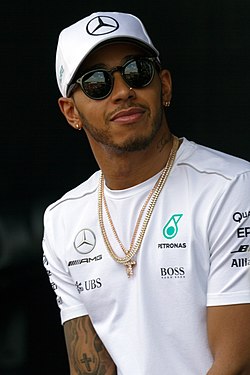

2017 Formula One World Championship
View on Wikipedia


The 2017 FIA Formula One World Championship was the 71st season of Formula One motor racing. It featured the 68th Formula One World Championship, a motor racing championship for Formula One cars which is recognised by the sport's governing body, the Fédération Internationale de l'Automobile (FIA), as the highest class of competition for open-wheel racing cars. Teams and drivers competed in twenty Grands Prix—starting in Australia on 26 March and ending in Abu Dhabi on 26 November—for the World Drivers' and World Constructors' championships.
The reigning Drivers' Champion Nico Rosberg was originally due to drive for Mercedes in 2017. He announced his retirement from the sport in December 2016, 5 days after winning his first drivers' World Championship at the 2016 Abu Dhabi Grand Prix, so the 2017 season was the first since 1994 in which the reigning champion did not compete.[1] Mercedes started the season as the defending Constructors' Champion, having secured their third consecutive title at the 2016 Japanese Grand Prix.[2]
2017 was the first genuine inter-team title battle for five years, since Fernando Alonso battled Sebastian Vettel for the title in 2012. Lewis Hamilton and Mercedes had to contend with a resurgent Ferrari team with their lead driver, 4 time world champion, Sebastian Vettel heading the championship for the first 12 rounds and challenging deep into the twenty race season.[3][4][5] At the conclusion of the championship, Hamilton won his fourth World Drivers' Championship title. Hamilton finished 46 points ahead of Sebastian Vettel in second with 317 points and Valtteri Bottas in third with 305 points.[6][7] In the World Constructors' Championship, Mercedes won their fourth consecutive title at the 2017 United States Grand Prix and finished with 668 points. Ferrari finished second with 522 points and Red Bull Racing were third with 368 points.[8]
Teams and drivers
[edit]The following teams and drivers took part in the 2017 Formula One World Championship. All teams competed with tyres supplied by Pirelli.


Free practice drivers
[edit]Six drivers drove as free practice drivers over the course of the season.
| Constructor | Practice drivers | ||
|---|---|---|---|
| No. | Driver name | Rounds | |
| Force India-Mercedes | 34 35 |
 Alfonso Celis Jr. Alfonso Celis Jr. George Russell George Russell
|
9, 11, 18 19–20 |
| Haas-Ferrari | 50 |  Antonio Giovinazzi Antonio Giovinazzi
|
10–11, 14–15, 18–20 |
| Renault | 46 |  Sergey Sirotkin Sergey Sirotkin
|
4–5, 9, 15 |
| Sauber-Ferrari | 37 |  Charles Leclerc Charles Leclerc
|
15, 17–19 |
| Toro Rosso-Renault | 38 |  Sean Gelael Sean Gelael
|
14–15, 17–18 |
| Source:[31] | |||
Team changes
[edit]- Just Racing, the parent company of MRT, went into administration in January 2017.[38] The company collapsed later that same month,[39][40] ultimately closing down entirely in March after administrators were unable to find a buyer for MRT.[41]
- Sauber used one-year-old Ferrari power units in 2017, mirroring the arrangement between Ferrari and Scuderia Toro Rosso in 2016.[21]
- Toro Rosso returned to using Renault power units (badged with their own name) in 2017, having used 2015-specification Ferrari power units in 2016.[17] The team had previously used Renault power units in 2014 and 2015 before the relationship between Renault and sister team Red Bull Racing broke down, prompting Toro Rosso to seek out an alternative supplier.[42][43]
Driver changes
[edit]

- Kevin Magnussen turned down an offer to stay with Renault and instead signed a deal with Haas to drive alongside Romain Grosjean.[13][44] As a result of the agreement with Magnussen and the team's decision to take up an option on Grosjean, Esteban Gutiérrez's contract with the team was not renewed.[45] Gutiérrez later moved to the Formula E championship.[46]
- Esteban Ocon moved from MRT to Force India, filling the seat left vacant by Nico Hülkenberg's departure to Renault.[47][48]
- Reigning champion and Mercedes driver Nico Rosberg announced his shock retirement from the sport at the end of the 2016 season, ending his Formula One career after 11 seasons when he clinched the title in Abu Dhabi.[1] Valtteri Bottas was released by Williams after a $10 million buyout was agreed with Mercedes to sign Bottas as Rosberg's replacement.[49][50] 2008 runner-up Felipe Massa, who had intended to retire from Formula One at the end of the 2016 season,[51][52] extended his contract with Williams by a year to replace his former teammate. Massa was partnered by 2016 European Formula 3 Championship winner Lance Stroll,[49] who was originally hired by the team to replace Massa.[53]
- 2015 GP2 Series champion Stoffel Vandoorne joined McLaren as a full-time driver.[54] Vandoorne previously competed in one race for the team, substituting for the injured Fernando Alonso at the 2016 Bahrain Grand Prix.[55] Vandoorne replaced Jenson Button, who took a sabbatical from racing in 2017 while staying on with the team as a reserve driver.[56]
- Pascal Wehrlein moved from the now-defunct MRT to replace Felipe Nasr at Sauber.[57]
- Rio Haryanto was under contract to compete in 2017, but his contract was terminated after the 2016 German Grand Prix due to sponsorship issues.
Mid-season changes
[edit]- Sauber driver Pascal Wehrlein withdrew from the Australian Grand Prix as a precaution after an injury at the Race of Champions interrupted his training regimen, prompting concerns that he would not be able to cope with the greater physical demands placed on the drivers by the 2017 generation of cars. As such, 2016 GP2 Series runner-up Antonio Giovinazzi took over racing duties for Sauber.[22][58] Wehrlein returned to competition at the Bahrain Grand Prix, with Giovinazzi resuming testing and reserve driving duties.[59]
- Fernando Alonso did not contest the Monaco Grand Prix. Instead, he participated in the Indianapolis 500.[32] Jenson Button, who was serving as team ambassador and reserve driver, replaced Alonso for the race.[35]
- Paul di Resta replaced Felipe Massa for the Hungarian Grand Prix after Massa was taken ill after Free Practice.[28]
- Jolyon Palmer was dropped by Renault after the Japanese Grand Prix. Carlos Sainz Jr., who was set to join Renault from 2018, left Toro Rosso early to replace him.[36]
- In the final rounds of the championship, Toro Rosso rotated several drivers between their cars. Prior to the Malaysian Grand Prix, Daniil Kvyat was replaced by 2016 GP2 Series champion Pierre Gasly. After Sainz Jr. left the team for Renault, Kvyat returned as his replacement for the United States Grand Prix. Gasly was forced to miss this race as it clashed with the final round of his Super Formula Championship campaign. FIA World Endurance Championship driver and former Red Bull Junior Team member Brendon Hartley stood in for him.[37][60][61][62] After the race, Kvyat was released from the team and from the Red Bull programme entirely, with Gasly returning to the team at the next race and Hartley being promoted to a regular race seat.[63][64]
Calendar
[edit]
The following twenty Grands Prix took place in 2017:


Calendar changes
[edit]- The Baku event was renamed, becoming the first Azerbaijan Grand Prix. The previous race at the Baku City Circuit ran under the European Grand Prix title in 2016. The date of the race was changed to avoid conflicting with the 24 Hours of Le Mans, which had been a source of controversy at the 2016 European Grand Prix.[66][67]
- The German Grand Prix was removed from the calendar in March after the owners of the Nürburgring pulled out of the event-sharing arrangement with the Hockenheimring to alternate between the two circuits. The owners of the Hockenheimring circuit were unwilling [68] to organise a Grand Prix every year due to financial problems and were unable to agree to commercial terms with Formula One Management.[69]
Changes
[edit]General changes
[edit]- In September 2016, Liberty Media purchased a minority stake in the sport from CVC Capital Partners,[70] and completed the purchase ahead of the 2017 season,[71] with the long-term goal of adopting a model similar to that used by the U.S. National Football League and Major League Baseball, with teams entitled to purchase a stake in the sport.[72] The commercial operation of the sport underwent a restructuring in January 2017, with Bernie Ecclestone leaving his position as chief executive of Formula One Group after forty years in the role.[73] Former team principal Ross Brawn—who won World Championships with Ferrari and his own eponymous team—was appointed as managing director in Ecclestone's stead.[74]
- With the acquisition of the sport by Liberty Media, teams were given more control over creating and uploading content to social media.[75] Under Bernie Ecclestone's previous management, all footage filmed in the paddock was automatically controlled by Formula One Management with tight restrictions on the release of content.[citation needed]
- As a response to widespread changes in the technical regulations expected to increase cornering speeds by up to 40 km/h (24.9 mph), the FIA requested that every circuit on the calendar undergo revisions to update safety features.[76]
Technical regulations
[edit]

- The technical regulations governing bodywork design were revised for 2017, with the objective of improving lap times by four to five seconds over the 2016 generation of cars.[77] These changes include:[78]
- Overall width of the car increased from 1,800 to 2,000 mm (71 to 79 in).[79]
- Bodywork width increased from 1,400 to 1,600 mm (55 to 63 in).[79]
- Front wing width increased back from 1,650 to 1,800 mm (65 to 71 in).
- Rear wing lowered by 150 mm (6 in), from 950 to 800 mm (37 to 31 in), and moved backwards by 200 mm (8 in).
- Rear diffuser height increased from 125 to 175 mm (5 to 7 in) and width increased from 1,000 to 1,050 mm (39 to 41 in), and leading edge moved from the rear wheel centre line to 175 mm (7 in) in front of it.[79]
- The leading edge of the barge boards was brought forward to allow teams more freedom in controlling airflow.
- Tyre width increased by 25% to allow cars to generate more mechanical grip. Front tyre width increased from 245 to 305 mm (9.6 to 12.0 in) and rear tyre width increased from 325 to 405 mm (12.8 to 15.9 in). The tyre diameters (front and rear) were also slightly increased from 660 to 670 mm (26.0 to 26.4 in).[79]
- The minimum weight of the car including the driver was raised by 26 kg (57 lb), from 702 to 728 kg (1,548 to 1,605 lb).
- Maximum fuel consumed increased from 100 to 105 kg (220 to 231 lb) to account for the heavier, wider, and faster cornering cars.[80]
- 2017 saw teams adopt the "T-wing", a thin T-shaped wing mounted to the bodywork above and forward of the rear wing to generate additional downforce. Its creation prompted concerns about the use of moveable aerodynamic devices—forbidden under the rules—after several T-wings were observed to be vibrating during pre-season testing. However, the stewards chose to review the use of T-wings on a case-by-case basis rather than issue a technical directive.[81] The usage of T-wings, along with Shark fins would later be banned in the following season.
- The token system used to regulate power unit development—where the power unit was divided into individual areas, and each area assigned a points value with development of these areas deducting points from a manufacturer's overall points quota—will be abandoned.[82]
- Restrictions are to be placed on the dimensions, weight and the materials used to build each individual component of the power unit.[83]
- Teams are restricted to four power units per season regardless of the number of Grands Prix in the season.[84] Previous seasons had included a provision for a fifth power unit if the number of Grands Prix in a season exceeded twenty; from 2017, this provision is to be abandoned.
- The cost of a power unit supply is reduced by €1 million in 2017 ahead of a further reduction in 2018.[83]
- Cameras are no longer permitted to be mounted on stalks located on the nose of the car.[85]
- Pirelli continued to be Formula One's sole tyre partner and supplier in 2017, beating out a bid by Michelin to provide tyres for the championship.[86] Continuing from previous seasons, the company offered a range of seven different tyre compounds, five for dry and two for wet conditions. While both wet compounds are available for every Grand Prix, only a choice of three dry compounds are made available to teams for a single race weekend.[87][88] As in the previous season, teams are allowed to choose ten out of thirteen sets of tyres for a race weekend freely from the three compounds made available by Pirelli. However, due to limited testing time for the new compounds during the winter break, Pirelli chose to provide teams with a mandatory number of sets for the first five races.[89]
Sporting regulations
[edit]- Under rules introduced in 2015, grid penalties for exceeding a driver's quota of power unit components carried over from one race to the next if the penalty could not be fully served when issued. When this carry-over system was abandoned, teams could build up a reserve of spare components by introducing several at once while only serving a single grid penalty. From 2017, teams will only be able to use one new component over their quota per race, with any additional components incurring further penalties. This change prevents teams from "stockpiling" spare power unit components.[90]
- Power unit suppliers will have an "obligation to supply", mandating that they supply power units to any team, should a team end up without an agreement.[82] The rule was introduced following the breakdown in the relationship between Renault and their customer teams Red Bull Racing and Scuderia Toro Rosso at the end of the 2015 season that left both teams in limbo until deals could be arranged.[91]
- In the event that a race is declared wet and must start behind the safety car, the grid will follow normal starting procedures once conditions are declared satisfactory for racing. Drivers will line up on the grid for a standing start once the safety car pulls into pit lane, although any laps completed behind the safety car will still count towards the total race distance.[92]
- The FIA abandoned the rule governing driving standards under braking, in lieu of an all-encompassing rule against manoeuvres that could endanger other drivers.[93] The rule was introduced in 2016 amid criticism of Max Verstappen for his habit of changing direction before braking late to defend his position, which led to concerns that such aggressive defensive driving could trigger an accident.[94]
- Starting from the Spanish Grand Prix, teams were required to display a driver's name and racing number on the external bodywork of the car in such a way that they are clearly visible to spectators. Teams have the option to use the official timing screen abbreviation; for example HAM (Hamilton) and VET (Vettel).[95]
Season report
[edit]![[icon]](https://en.wikipedia.org/wiki/File:Wiki_letter_w_cropped.svg) | This section needs expansion. You can help by adding missing information. (July 2019) |
For most of its run, the season was defined by a duel between Hamilton and Vettel as title contenders. Hamilton was looking to regain the World Championship after losing it to team mate Nico Rosberg the year before and win his fourth title overall, while Vettel was looking to capture his first since 2013 by breaking the Mercedes dominance established since 2014, and his fifth overall.
The start of the season was tight between the title contenders, with various analysts describing the Ferrari SF70H as initially the more consistent car in race trim.[96][97][98] Sebastian Vettel led the championship for the first 12 rounds (more than half the season) but never by more than 25 points. Vettel's loss of self‑control when he chose to barge Hamilton in Baku was the most incendiary incident between the pair, in a season in which there was a friendly mutual respect.[99] However, Ferrari's challenge faltered towards the end of the season, with setbacks in Singapore and Malaysia (on tracks at which they were favoured to win), costing them vital points in both championships.[100] Lewis Hamilton took the title at the Mexican Grand Prix with 2 races still to go.[101]
Results and standings
[edit]Grands Prix
[edit]Scoring system
[edit]Points were awarded to the top ten classified finishers in every race, using the following structure:[103]
| Position | 1st | 2nd | 3rd | 4th | 5th | 6th | 7th | 8th | 9th | 10th |
|---|---|---|---|---|---|---|---|---|---|---|
| Points | 25 | 18 | 15 | 12 | 10 | 8 | 6 | 4 | 2 | 1 |
In order for full points to be awarded, the race winner must completed at least 75% of the scheduled race distance. Half points were awarded if the race winner completes less than 75% of the race distance provided that at least two laps are completed.[N 8] In the event of a tie at the conclusion of the championship, a count-back system was used as a tie-breaker, with a driver's best result used to decide the standings.[N 9]
World Drivers' Championship standings
[edit]
|
| |||||||||||||||||||||||||||||||||||||||||||||||||||||||||||||||||||||||||||||||||||||||||||||||||||||||||||||||||||||||||||||||||||||||||||||||||||||||||||||||||||||||||||||||||||||||||||||||||||||||||||||||||||||||||||||||||||||||||||||||||||||||||||||||||||||||||||||||||||||||||||||||||||||||||||||||||||||||||||||||||||||||||||||||||||||||||||||||||||||||||||||||||||||||||||||||||||||||||||||||||||||||||||||||||||||||||||||||||||||||||||||||||||||||||||||||||||||||||||||||||||||||||||||||||||||||||||||||||||||||||||||||||||||||||||||||||||||||||||||||||||||||||||||||||||||||||||||||||||||||||||||||||||||||||||||||||||||||||||||||||||||||||||||||||||||||||||||||||||||||||
Notes:
- † – Drivers did not finish the Grand Prix, but were classified as they completed more than 90% of the race distance.
World Constructors' Championship standings
[edit]
|
| ||||||||||||||||||||||||||||||||||||||||||||||||||||||||||||||||||||||||||||||||||||||||||||||||||||||||||||||||||||||||||||||||||||||||||||||||||||||||||||||||||||||||||||||||||||||||||||||||||||||||||||||||||||||||||||||||||||||||||||||||||||||||||||||||||||||||||||||||||||||||||||||||||||||||||||||||||||||||||||||||||||||||||||||||||||||||||||||||||||||||||||||||||||||||||||||||||||||||||||||||||||||||||||||||||||||||||||||||||||||||||||||||||||||||||||||||||||||||||||||||||||||||||||||||||||||||||||||||||||||||||||||||||||||||
Notes:
- † – Drivers did not finish the Grand Prix, but were classified as they completed more than 90% of the race distance.
- The standings are sorted by best result, rows are not related to the drivers. In case of tie on points, the best positions achieved determined the outcome.
See also
[edit]Notes
[edit]- ^ Red Bull Racing used Renault R.E.17 power units. For sponsorship purposes, these engines were rebadged as "TAG Heuer".[18]
- ^ Pascal Wehrlein was entered for the Australian Grand Prix but withdrew after taking part in free practice.[22]
- ^ Scuderia Toro Rosso used Renault R.E.17 power units. For sponsorship purposes, these engines were rebadged as "Toro Rosso".[24]
- ^ Brendon Hartley was entered in the United States Grand Prix as a replacement driver for Pierre Gasly and so carried the number 39 as it had been assigned to the team as a reserve number. With his entry in the next round in Mexico, Hartley became a regular driver and was entitled to choose his own number.
- ^ When Daniil Kvyat raced for Toro Rosso for the United States Grand Prix, he drove the car that Carlos Sainz Jr. had previously competed in rather than the car he had driven in the first fourteen rounds of the championship.[25]
- ^ When Pierre Gasly raced for Toro Rosso for the Mexican Grand Prix and the subsequent races, he drove the car that Carlos Sainz Jr. and Daniil Kvyat had previously competed in rather than the car he had driven in the fifteenth and sixteenth round of the championship.[26]
- ^ Felipe Massa was entered for the Hungarian Grand Prix but withdrew after taking part in free practice.[28]
- ^ In the event that two laps cannot be completed, no points are awarded and the race is abandoned.[103]
- ^ In the event that two or more drivers or constructors achieve the same best result an equal number of times, their next-best result will be used. If two or more drivers or constructors achieve equal results an equal number of times, the FIA nominated the winner according to such criteria as it sees fit.[103]
References
[edit]- ^ a b "Nico Rosberg retires: World champion quits Formula 1 five days after title win". British Broadcasting Corporation. 2 December 2016. Archived from the original on 2 December 2016. Retrieved 2 December 2016.
- ^ "Rosberg wins in Japan as Mercedes seal constructors' crown". Formula1.com. 9 October 2016. Archived from the original on 10 October 2016. Retrieved 9 October 2016.
- ^ Brierty, William (2017). "2017 F1 Season Review – Top 10 drivers of the season". Read Motorsport. Archived from the original on 5 January 2018. Retrieved 22 November 2021.
- ^ Le Clue, Natalie (13 December 2017). "The F1 year that was 2017". News24. Archived from the original on 29 November 2021. Retrieved 29 November 2021.
- ^ Parkes, Ian (1 December 2017). "An Exciting F1 Season That Still Ended With Mercedes on Top". The New York Times. Archived from the original on 6 February 2023. Retrieved 27 November 2021.
- ^ "Lewis Hamilton wins fourth world title at Mexican Grand Prix". BBC Sport. 29 October 2017. Archived from the original on 31 October 2017. Retrieved 31 October 2017.
- ^ "Results". Formula1.com. Formula One World Championship Limited. Archived from the original on 23 October 2017. Retrieved 23 October 2017.
- ^ "Results". Formula1.com. Formula One World Championship Limited. Archived from the original on 9 November 2017. Retrieved 23 October 2017.
- ^ Baretto, Lawrence (24 February 2017). "Ferrari unveils its SF70H 2017 Formula 1 car". Autosport. Motorsport Network. Archived from the original on 3 May 2017. Retrieved 24 February 2017.
- ^ a b "Ferrari launch the SF70H". Formula1.com. Formula One World Championship Limited. 24 February 2017. Archived from the original on 24 February 2017. Retrieved 24 February 2017.
- ^ "Sahara Force India on Twitter". Twitter. 13 February 2017. Archived from the original on 12 March 2017. Retrieved 13 February 2017.
- ^ a b c d "Mercedes-AMG Petronas Motorsport launches W08 EQ Power+". Mercedes-AMG Petronas Motorsport. 23 February 2017. Archived from the original on 4 April 2019. Retrieved 23 February 2017.
- ^ a b "Haas F1 Team Secures 2017 Driver Lineup by Signing Kevin Magnussen to Join Romain Grosjean". Haas F1 Team. Archived from the original on 27 March 2019. Retrieved 11 November 2016.
- ^ "McLaren announce new car name". Formula1.com. 3 February 2017. Archived from the original on 26 July 2018. Retrieved 3 February 2017.
- ^ "McLaren Formula 1 – McLaren-Honda MCL32 Technical Specification". mclaren.com. Archived from the original on 2 September 2017. Retrieved 27 April 2017.
- ^ "Time to Power into the Future". Red Bull Racing Formula One Team. Red Bull Racing. 25 November 2016. Archived from the original on 4 August 2017. Retrieved 25 November 2016.
- ^ a b c Baretto, Lawrence (29 May 2016). "Red Bull and Toro Rosso F1 teams sign Renault engine deal". autosport.com. Haymarket Publications. Archived from the original on 30 May 2016. Retrieved 29 May 2016.
- ^ "Red Bull to run TAG Heuer-badged Renault engines in 2016". Formula1.com. Formula One World Championship Limited. 4 December 2015. Archived from the original on 1 March 2017. Retrieved 1 March 2017.
- ^ a b "R.S.17". Renault Sport. Archived from the original on 20 June 2018. Retrieved 21 February 2017.
- ^ "Sauber F1 signs former Ferrari and Renault engineer". This Is F1. www.thisisf1.com. 4 September 2016. Archived from the original on 4 August 2017. Retrieved 1 November 2016.
- ^ a b Barretto, Lawrence (8 October 2016). "Sauber will use year-old Ferrari engines for 2017 F1 season". Autosport. Haymarket Publications. Archived from the original on 8 October 2016. Retrieved 8 October 2016.
- ^ a b Noble, Jonathan (25 March 2017). "Australian GP: Sauber F1's Pascal Wehrlein replaced by Giovinazzi". Autosport. Motorsport Network. Archived from the original on 25 March 2017.
- ^ "Kvyat to stay at Toro Rosso for 2017". GPUpdate.net. JHED Media BV. 22 October 2016. Archived from the original on 22 October 2016. Retrieved 22 October 2016.
- ^ "Red Bull and Toro Rosso F1 teams sign Renault engine deal". motorsport.com. 29 May 2016. Archived from the original on 30 May 2016. Retrieved 29 April 2025.
- ^ "Hartley, Hulkenberg, Vandoorne all set for grid penalties". Formula1.com. Formula One World Championship Limited. 20 October 2017. Archived from the original on 20 October 2017. Retrieved 20 October 2017.
- ^ "Übersicht: Eingesetzte Power Unit-Elemente in der Saison 2017". Motorsport-Magazin.com. Redaktion Motorsport-Magazin.com. 29 October 2017. Archived from the original on 27 June 2017. Retrieved 30 October 2017.
- ^ Medland, Chris (1 November 2016). "Williams to name 2017 car FW40 as part of anniversary". F1i.com. Archived from the original on 26 September 2018. Retrieved 1 November 2016.
- ^ a b c Noble, Jonathan (29 July 2017). "Paul di Resta replaces ill Felipe Massa at Williams for Hungary F1". Autosport.com. Motorsport Network. Archived from the original on 26 November 2020. Retrieved 29 July 2017.
- ^ "2017 F1 Entry List". Fédération Internationale de l'Automobile. Archived from the original on 2 March 2017. Retrieved 2 March 2017.
- ^ "F1 - 2017 Updated Entry List". Fédération Internationale de l'Automobile. 29 September 2017. Archived from the original on 23 January 2018.
- ^ a b Official entry lists:
- "2017 Australian Grand Prix – Entry List" (PDF). Fédération Internationale de l'Automobile. 23 March 2017. Archived from the original on 23 March 2017.
- "2017 China Grand Prix – Entry List". Fédération Internationale de l'Automobile. 6 April 2017. Archived from the original on 6 April 2017.
- "2017 Bahrain Grand Prix – Entry List". Fédération Internationale de l'Automobile. 13 April 2017. Archived from the original on 13 April 2017.
- "2017 Russian Grand Prix – Entry List". Fédération Internationale de l'Automobile. 27 April 2017. Archived from the original on 27 April 2017.
- "2017 Spanish Grand Prix – Entry List". Fédération Internationale de l'Automobile. 11 May 2017. Archived from the original on 17 June 2017.
- "2017 Monaco Grand Prix – Entry List". Fédération Internationale de l'Automobile. 24 May 2017. Archived from the original on 27 April 2017.
- "2017 Canadian Grand Prix – Entry List" (PDF). Fédération Internationale de l'Automobile. 8 June 2017. Archived (PDF) from the original on 29 April 2025. Retrieved 29 April 2025.
- "2017 Azerbaijan Grand Prix – Entry List". Fédération Internationale de l'Automobile. 22 June 2017. Archived from the original on 3 July 2017. Retrieved 29 April 2025.
- "2017 Austrian Grand Prix – Entry List". Fédération Internationale de l'Automobile. 6 July 2017. Archived from the original on 6 July 2017.
- "2017 British Grand Prix – Entry list". Fédération Internationale de l'Automobile. 13 July 2017. Archived from the original on 13 July 2017.
- "2017 Hungarian Grand Prix – Entry List". Fédération Internationale de l'Automobile. 27 July 2017. Archived from the original on 27 July 2017.
- "2017 Belgian Grand Prix – Entry List". Fédération Internationale de l'Automobile. 24 August 2017. Archived from the original on 19 September 2020.
- "2017 Italian Grand Prix – Entry List". Fédération Internationale de l'Automobile. 31 August 2017. Archived from the original on 8 September 2017.
- "2017 Singapore Grand Prix – Entry List". Fédération Internationale de l'Automobile. 14 September 2017. Archived from the original on 15 September 2017.
- "2017 Malaysian Grand Prix – Entry List". Fédération Internationale de l'Automobile. 28 September 2017. Archived from the original on 28 September 2017.
- "2017 United States Grand Prix – Entry List". Fédération Internationale de l'Automobile. 19 October 2017. Archived from the original on 29 April 2025.
- "2017 United States Grand Prix – Entry List". Fédération Internationale de l'Automobile. 19 October 2017. Archived from the original on 20 October 2017.
- "2017 Mexican Grand Prix – Entry List". Fédération Internationale de l'Automobile. 26 October 2017. Archived from the original on 27 October 2017.
- "2017 Brazilian Grand Prix–Entry List". Fédération Internationale de l'Automobile. 9 November 2017. Archived from the original on 24 November 2017.
- "2017 Abu Dhabi Grand Prix-Entry List". Fédération Internationale de l'Automobile. 23 November 2017. Archived from the original on 24 November 2017.
- ^ a b "Fernando Alonso to race at Indy 500 with McLaren, Honda and Andretti Autosport". mclaren.com. McLaren Honda. 12 April 2017. Archived from the original on 20 May 2017.
- ^ Collantine, Keith (17 June 2016). "Pirelli confirms new three-year F1 deal to 2019". RaceFans. Archived from the original on 23 August 2016. Retrieved 26 July 2016.
- ^ "2017 Australian Grand Prix – Stewards' decision document 14". Fédération Internationale de l'Automobile. 25 March 2017. Archived from the original on 25 March 2017.
- ^ a b "Jenson Button to race at Monaco for McLaren-Honda". mclaren.com. McLaren Honda. 14 April 2017. Archived from the original on 20 April 2017.
- ^ a b "Renault Sport Formula One Team confirms driver change". Renault F1. Renault Sport. Archived from the original on 8 October 2017. Retrieved 7 October 2017.
- ^ a b "Brendon Hartley to race with us in Austin". scuderiatororosso.com. Scuderia Toro Rosso. 13 October 2017. Archived from the original on 13 October 2017. Retrieved 13 October 2017.
- ^ "Formula One: British-based team Manor goes into administration". abc.net.au. Australian Broadcasting Corporation. 7 January 2017. Archived from the original on 7 January 2017. Retrieved 7 January 2017.
- ^ "Manor F1 team collapse after administrators fail to find buyer". Sky Sports. Archived from the original on 29 January 2017. Retrieved 27 January 2017.
- ^ Benson, Andrew (27 January 2017). "Manor F1: Team fold after administrator fails to find buyer". BBC Sport. Archived from the original on 27 January 2017. Retrieved 28 January 2017.
- ^ Noble, Jonathan; Rencken, Dieter (1 March 2017). "Final Manor Formula 1 team rescue hopes end as 2017 entry withdrawn". autosport.com. Archived from the original on 1 March 2017. Retrieved 1 March 2017.
- ^ "Red Bull will quit F1 if they don't get a competitive engine in 2016". Sky Sports. 18 September 2015. Archived from the original on 20 September 2015. Retrieved 18 February 2015.
- ^ "Toro Rosso hush on engine talks". Fox Sports Asia. Fox Sports. 19 September 2015. Archived from the original on 29 September 2015. Retrieved 21 September 2015.
- ^ Anderson, Ben; Parkes, Ian; Straw, Edd. "Kevin Magnussen: Renault F1 2017 offer not good enough". Autosport. Haymarket Publications. Archived from the original on 12 November 2016. Retrieved 11 November 2016.
- ^ "Esteban Gutierrez confirms departure from Haas F1 Team at end of season". 11 November 2016. Archived from the original on 12 November 2016. Retrieved 11 November 2016.
- ^ Smith, Sam. "Ex-Haas Formula 1 driver Gutierrez seals Formula E switch". autosport.com. Archived from the original on 10 January 2017. Retrieved 10 January 2017.
- ^ "Esteban Ocon joins Sahara Force India for 2017 and beyond". Sahara Force India F1 Team. Archived from the original on 13 November 2016. Retrieved 10 November 2016.
- ^ "Nico Hülkenberg joins Renault Sport Formula One Team". Renault Sport F1. Archived from the original on 14 October 2016. Retrieved 14 October 2016.
- ^ a b "Felipe Massa to replace Valtteri Bottas for 2017 season". Williams Grand Prix Engineering. 16 January 2017. Archived from the original on 18 January 2017. Retrieved 16 January 2017.
- ^ "Valtteri Bottas to partner Lewis Hamilton at Mercedes in 2017 season". BBC Sport. 16 January 2017. Archived from the original on 16 January 2017. Retrieved 16 January 2017.
- ^ Benson, Andrew (1 September 2016). "Felipe Massa: Williams driver to retire from F1". bbc.com. Archived from the original on 2 September 2016. Retrieved 1 September 2016.
- ^ Barretto, Lawrence (1 September 2016). "Felipe Massa to retire from Formula 1 at end of 2016 season". autosport.com. Archived from the original on 2 September 2016. Retrieved 1 September 2016.
- ^ "Williams confirms driver line-up for the 2017 season". Williams Grand Prix Engineering. 3 November 2016. Archived from the original on 3 November 2016. Retrieved 3 November 2016.
- ^ Beer, Ben Anderson and Matt. "Jenson Button to step down from McLaren F1 race seat in 2017". Archived from the original on 6 September 2016. Retrieved 3 September 2016.
- ^ "Vandoorne: I maximised my opportunity". www.formula1.com. Archived from the original on 13 September 2016. Retrieved 10 September 2016.
- ^ "Button to take Formula 1 sabbatical in 2017". speedcafe.com. 4 September 2016. Archived from the original on 3 August 2017. Retrieved 4 September 2016.
- ^ Barretto, Lawrence (16 January 2017). "Sauber F1 team signs Pascal Wehrlein for 2017 season". autosport.com. Archived from the original on 16 January 2017. Retrieved 16 January 2017.
- ^ "Preview – 2017 Formula One Heineken Chinese Grand Prix & Gulf Air Bahrain Grand Prix". Sauber F1 Team. 3 April 2017. Archived from the original on 4 April 2017. Retrieved 3 April 2017.
- ^ Howard, Tom (12 April 2017). "Wehrlein returns for Bahrain Grand Prix". speedcafe.com. Archived from the original on 13 April 2017. Retrieved 13 April 2017.
- ^ "Hartley, Hulkenberg, Vandoorne all set for grid penalties". Formula1.com. Formula One World Championship Limited. 20 October 2017. Archived from the original on 21 October 2017. Retrieved 22 October 2017.
- ^ "Motor racing – Sainz to replace Palmer, Kvyat returns for Austin". sbs.com.au. SBS. 7 October 2017. Archived from the original on 12 October 2017. Retrieved 12 October 2017.
- ^ "Gasly to miss Austin F1 race for Super Formula". Motorsport.com. Archived from the original on 12 October 2017. Retrieved 13 October 2017.
- ^ "Pierre Gasly to drive with Scuderia Toro Rosso". scuderiatororosso.com. Scuderia Toro Rosso. Archived from the original on 26 September 2017. Retrieved 26 September 2017.
- ^ "Daniil Kvyat no longer part of Red Bull or Toro Rosso in Formula 1". Autosport. Motorsport Network. 27 October 2017. Archived from the original on 28 October 2017. Retrieved 27 October 2017.
- ^ "FIA Announces World Motorsports Council decisions". Fédération Internationale de l'Automobile. 30 November 2016. Archived from the original on 30 November 2016. Retrieved 30 November 2016.
- ^ "No German Grand Prix on F1 2017 calendar but Azerbaijan race is official". The Guardian. Reuters. 30 November 2016. Archived from the original on 1 December 2016. Retrieved 30 November 2016.
- ^ Collantine, Keith (2 February 2016). "No wonder FOM arranged Baku to clash with Le Mans". F1 Fanatic. Keith Collantine. Archived from the original on 15 May 2016. Retrieved 16 May 2016.
- ^ David Hayhoe, Formula 1: The Knowledge records and trivia since 1950 – 2nd Edition, 2021, page 36.
- ^ "German Grand Prix dropped from 2017 Formula One calendar". December 2016. Archived from the original on 29 January 2023. Retrieved 12 August 2022.
- ^ "Formula One sells for $5.7 billion to John Malone's Liberty Media". abc.net.au. Australian Broadcasting Corporation. 8 September 2016. Archived from the original on 9 September 2016. Retrieved 8 September 2016.
- ^ "Liberty completes F1 acquisition". Formula1.com. 23 January 2017. Archived from the original on 28 December 2017. Retrieved 24 January 2017.
- ^ Parkes, Ian (8 September 2016). "Liberty Media's F1 takeover: Teams will get the chance to invest". autosport.com. Haymarket Publications. Archived from the original on 9 September 2016. Retrieved 8 September 2016.
- ^ "Bernie Ecclestone no longer F1 chief executive – statement". Sky News. Archived from the original on 14 February 2019. Retrieved 23 January 2017.
- ^ "Brawn and Bratches join F1 in sporting and commercial roles". Formula 1. 23 January 2017. Archived from the original on 2 February 2017. Retrieved 26 March 2017.
- ^ "Formula One relaxes social media rules under post-Bernie Ecclestone regime as testing begins". abc.net.au. Australian Broadcasting Corporation. 28 February 2017. Archived from the original on 28 February 2017. Retrieved 28 February 2017.
- ^ "FIA requests upgrades to F1 circuits for 2017". speedcafe.com. 18 January 2017. Archived from the original on 10 September 2017. Retrieved 18 January 2017.
- ^ "F1 rules: elimination qualifying confirmed for Australia, 2017 cars "five seconds faster"". James Allen on F1. James Allen. Archived from the original on 5 March 2016. Retrieved 6 March 2016.
- ^ Tyson, Will (11 May 2016). "Side-by-side: How the 2017 rules will change F1 design". F1 Fanatic. Keith Collantine. Archived from the original on 10 May 2016. Retrieved 11 May 2016.
- ^ a b c d "2017 season changes". Formula1.com. Formula One World Championship Limited. Archived from the original on 12 March 2017. Retrieved 11 March 2017.
- ^ Noble, Jonathan (30 April 2016). "Formula 1 raises fuel limit for 2017". www.motorsport.com. Archived from the original on 28 August 2019. Retrieved 28 August 2019.
- ^ van Leeuwen, Andrew; Mitchell, Scott (24 March 2017). "Haas F1 team ordered to remove its T-wing in Australian GP practice". Autosport. Motorsport Network. Archived from the original on 25 March 2017. Retrieved 31 March 2017.
- ^ a b "FIA confirms new 2017 engine regulations". speedcafe.com. 30 April 2016. Archived from the original on 7 August 2017. Retrieved 30 April 2016.
- ^ a b Allen, James (29 April 2016). "Aanalysis: Important deal agreed on F1 engines to 2020". James Allen on F1. James Allen. Archived from the original on 30 April 2016. Retrieved 30 April 2016.
- ^ Parkes, Ian; Barretto, Lawrence (12 May 2016). "How Formula 1's new engine rules will work". autosport.com. Haymarket Publications. Archived from the original on 16 May 2016. Retrieved 15 May 2016.
- ^ "FIA announces World Motor Sport Council decisions". 30 September 2015. Archived from the original on 2 October 2015. Retrieved 2 October 2015.
- ^ Galloway, James (12 October 2015). "Pirelli to stay as F1's sole tyre partner and supplier until 2019 season". Sky Sports. Archived from the original on 1 March 2017. Retrieved 1 March 2017.
- ^ "F1 Tires Range". Pirelli. Archived from the original on 2 March 2017. Retrieved 1 March 2017.
- ^ "Tyres and wheels". Formula1.com. Formula One World Championship Limited. Archived from the original on 1 March 2017. Retrieved 1 March 2017.
- ^ "Formel 1 – Neues Design, neue Regeln, schnellere Autos" (in German). Sportschau. 1 March 2017. Archived from the original on 1 March 2017. Retrieved 1 March 2017.
- ^ Straw, Edd. "FIA closes Formula 1 engine penalty loophole". Archived from the original on 30 September 2016. Retrieved 28 September 2016.
- ^ "Analysis: important deal agreed on F1 engines to 2020". jamesallenonf1.com. 29 April 2016. Archived from the original on 15 August 2016. Retrieved 15 September 2016.
- ^ "Formula 1 agrees to lift controversial radio ban – Speedcafe". speedcafe.com. 28 July 2016. Archived from the original on 10 September 2017. Retrieved 30 July 2016.
- ^ Cooper, Adam (23 March 2017). "FIA drops 'Max Verstappen rule' covering Formula 1 braking zones". Autosport.com. Motorsport Network. Archived from the original on 24 March 2017.
- ^ "FIA clarifies rules on defensive manoeuvres". Formula1.com. Formula 1 World Championship Ltd. 22 October 2016. Archived from the original on 29 July 2017.
- ^ Cooper, Adam (27 April 2017). "FIA reveals how F1 name and number displays rules will be enforced". Autosport.com. Motorsport Network. Archived from the original on 20 June 2017.
- ^ "2017 F1 World Championship | Motorsport Database". Motorsport Database - Motor Sport Magazine. 2017. Archived from the original on 27 February 2021. Retrieved 29 November 2021.
- ^ Edmondson, Laurence (8 December 2017). "2017 F1 awards: Surprise of the year". ESPN.com. Archived from the original on 7 March 2023. Retrieved 26 January 2022.
- ^ Schmidt, Michael (8 September 2017). "F1-Technik-Analyse Top-Teams: Die Schwächen von Ferrari und Mercedes". auto motor und sport (in German). Archived from the original on 12 November 2020. Retrieved 29 November 2021.
- ^ Galloway, James (8 December 2018). "Lewis Hamilton: Sebastian Vettel respect higher since Baku 2017". Sky Sports. Archived from the original on 26 April 2018. Retrieved 29 November 2021.
- ^ Galloway, James (19 October 2017). "Ferrari's failing F1 title challenge: Where has it all gone wrong?". Sky Sports. Archived from the original on 19 October 2017. Retrieved 29 November 2021.
- ^ "2017 season review - Hamilton proves 'four-midable'". www.formula1.com. Archived from the original on 15 July 2019. Retrieved 28 August 2019.
- ^ "Formula One Results 2017". Motorsport Stats. Archived from the original on 7 March 2023. Retrieved 13 December 2021.
- ^ a b c "2017 Formula One Sporting Regulations". FIA.com. FIA. 9 March 2017. Archived from the original on 9 April 2017. Retrieved 9 April 2017.
- ^ a b "2017 Abu Dhabi Grand Prix – Championship points". Fédération Internationale de l'Automobile. 26 November 2017. Archived from the original on 3 September 2019.
External links
[edit]

2017 Formula One World Championship
View on GrokipediaRegulatory Changes
Technical Regulations
The 2017 Formula One season introduced significant technical regulation updates aimed at enhancing car performance, increasing downforce, and improving the spectacle of racing by producing faster lap times. These changes, approved by the FIA's Strategy Group and World Motor Sport Council, focused primarily on chassis and aerodynamic modifications while maintaining the core power unit architecture established in 2014. The revisions were designed to generate approximately 30% more downforce overall, enabling lap times up to 3-5 seconds quicker than in 2016, through wider cars, broader tires, and refined airflow management.[7][8][9] Chassis dimensions were expanded to accommodate greater aerodynamic potential. The maximum overall car width increased from 1,800 mm to 2,000 mm, with the bodywork between the front and rear wheel centerlines widening from 1,400 mm to 1,600 mm. The front wing width grew from 1,650 mm to 1,800 mm, featuring a swept-back profile with a 12.5-degree angle on the outboard sections offset 200 mm rearward for better airflow direction. The rear wing endplate width expanded from 750 mm to 950 mm, while its height was reduced from 950 mm to 800 mm to optimize wake management. Additionally, the minimum wheelbase was extended from a range of 3,000-3,500 mm to 3,600 mm, promoting stability and allowing for larger floor areas. The minimum car weight rose from 702 kg to 728 kg to account for the added mass from these enlargements.[8][7][10] Tire specifications, supplied exclusively by Pirelli, underwent substantial widening to boost mechanical grip and support the aerodynamic gains. Front tire tread width increased from 245 mm to 305 mm, and rear from 325 mm to 405 mm, representing a 25% overall expansion. Tire diameters also grew slightly to 670 mm for dry conditions (from 660 mm), with corresponding adjustments for intermediate and wet compounds. These changes, combined with the wider track, were projected to improve cornering speeds by up to 25 km/h without significantly sacrificing straight-line performance.[11][12][13] Aerodynamic enhancements emphasized cleaner airflow and higher load generation. The front wing adopted a delta-shaped design with revised profiles to direct air more efficiently under the car. Sidepod inlets were repositioned with a 15-degree lean-back, enlarging their surface area for better cooling and boundary layer control. Floor modifications included a forward extension starting 175 mm ahead of the rear wheel centerline (previously at the centerline), with the diffuser height increased by 50 mm, width to 1,050 mm (from 1,000 mm), and depth to 175 mm (from 125 mm). These updates, alongside the bargeboard area's expanded design freedom, contributed to the targeted 20-30% downforce increase, prioritizing overtaking potential through reduced dirty air sensitivity.[8][7][14] Power unit regulations remained largely consistent with the 1.6-liter V6 turbo-hybrid formula introduced in 2014, preserving the 15,000 rpm limit and component allocations (e.g., four internal combustion engines per driver per season). Minor adjustments included raising the fuel allowance from 100 kg to 105 kg per race while maintaining the 100 kg/h fuel flow limit, alongside new constraints on part weights, dimensions, materials, and boost pressure to promote reliability and convergence between manufacturers. The MGU-H mapping and energy recovery systems saw no fundamental alterations, but the removal of the development "token" system allowed unrestricted enhancements within these parameters, aiming to reduce costs for customer teams by €1 million compared to 2016.[15][7] New aerodynamic components were permitted to address wake turbulence from the revised rear wing. Standardized "shark fin" structures on engine covers were reintroduced, last seen in 2011, to channel dirty air away from the rear wing and improve efficiency, particularly in yaw conditions during cornering. Cockpit protection saw initial testing of the halo device—a titanium structure surrounding the driver's head—but it was not mandated for 2017 following a Strategy Group vote; implementation was deferred to 2018 after further evaluation in practice sessions.[16][17]Sporting Regulations
The 2017 Formula One Sporting Regulations, issued by the Fédération Internationale de l'Automobile (FIA), governed the operational and procedural aspects of the season to promote equitable competition, driver safety, and streamlined event execution. The qualifying procedure retained the elimination format introduced in 2016, comprising three sequential phases: Q1 lasting 18 minutes for all 20 cars, Q2 for 15 minutes with the bottom five from Q1 eliminated, and Q3 for 12 minutes determining the top 10 grid positions, with lap times from earlier phases deleted post-session to emphasize peak performance.[18] Parc fermé rules, commencing at the start of Q1 and extending until after the race, were clarified to restrict car modifications to essential safety or reliability adjustments, ensuring setup consistency and preventing unfair advantages from post-qualifying tweaks.[18] Each Grand Prix weekend standardized three free practice sessions—P1 and P2 on Friday morning and afternoon, and P3 on Saturday morning—to allow teams sufficient track time for development and adaptation, a format unchanged from prior seasons but reinforced for reliability. A core mandate required each entrant to provide at least two days of mid-season testing to a nominated young driver holding an International FIA Super Licence with no more than two prior Formula One starts, to support talent progression and knowledge transfer.[18] Safety protocols emphasized the Virtual Safety Car (VSC), deployed at the race director's discretion for hazardous incidents to neutralize the field without overtaking, mandating drivers maintain a minimum delta time relative to a reference lap.[18] Track limits enforcement was refined, with penalties—such as time additions or drive-throughs—applied solely when it was "absolutely clear" a driver gained a lasting advantage by exceeding boundaries, aiming to balance competitive racing with rule adherence.[19] Cost-control initiatives, though a full budget cap was debated within the FIA World Motor Sport Council and Strategy Group without adoption for 2017, incorporated practical restraints like a compulsory 14-day factory closure between mid-July and mid-August (or 13 days if events were closely spaced), halting non-essential operations to curb excessive spending.[18] Mid-season testing was limited to a single two-day event at the Hungaroring immediately following the Hungarian Grand Prix, restricted to official tyre testing and development runs, with prohibitions on inter-team data sharing and restrictions on simulator hours to preserve fairness and limit resource disparities.[18]Teams and Drivers
Team Entries
The 2017 Formula One World Championship featured 10 constructor teams, down from 11 in the previous season due to the collapse of Manor Racing in January 2017, which entered administration and failed to secure new investment, resulting in a 20-car grid for the year.[20][21] The participating teams included works outfits from the four engine manufacturers—Mercedes, Ferrari, Renault, and Honda—along with customer teams, reflecting a mix of established European bases and emerging operations.| Team | Base Location | Key Personnel (Team Principal) | Chassis | Engine Supplier |
|---|---|---|---|---|
| Mercedes AMG Petronas Motorsport | Brackley, UK | Toto Wolff | Mercedes | Mercedes |
| Scuderia Ferrari | Maranello, Italy | Maurizio Arrivabene | Ferrari | Ferrari |
| Red Bull Racing | Milton Keynes, UK | Christian Horner | Red Bull | Renault (badged as TAG Heuer) |
| Scuderia Toro Rosso | Faenza, Italy | Franz Tost | Toro Rosso | Renault |
| Renault Sport Formula One Team | Enstone, UK | Cyril Abiteboul / Jérôme Stoll | Renault | Renault |
| Haas F1 Team | Kannapolis, USA (with facilities in Banbury, UK, and Maranello, Italy) | Guenther Steiner | Haas | Ferrari |
| Sahara Force India F1 Team | Silverstone, UK | Vijay Mallya | Force India | Mercedes |
| Williams Martini Racing | Grove, UK | Claire Williams (deputy; Frank Williams as team principal) | Williams | Mercedes |
| McLaren Honda Formula 1 Team | Woking, UK | Eric Boullier | McLaren | Honda |
| Sauber F1 Team | Hinwil, Switzerland | Monisha Kaltenborn | Sauber | Ferrari |
Driver Line-ups
The 2017 Formula One World Championship featured 10 teams with 20 full-time drivers at the season's start, following the FIA's provisional entry list published in December 2016. Several roster changes occurred over the off-season, including high-profile replacements and promotions within driver academies, while some teams retained their pairings from 2016. Notable rookies included Lance Stroll, who earned his superlicense through strong performances in Formula 2, meeting the FIA's 40-point requirement for debutants.[3][25][23] Mercedes AMG Petronas retained Lewis Hamilton on his existing multi-year contract, which extended through 2018, while Valtteri Bottas joined to replace Nico Rosberg, who retired as 2016 world champion just days after securing the title.[23] Scuderia Ferrari kept both Sebastian Vettel and Kimi Räikkönen, with Räikkönen retained for the 2017 season and later extended through 2018.[23][25] Red Bull Racing retained Daniel Ricciardo and paired him with Max Verstappen, who had been promoted from Toro Rosso midway through 2016 in a swap that also saw Verstappen secure a long-term contract extension reportedly until 2019.[23][26][25] Scuderia Toro Rosso retained Carlos Sainz Jr. and brought back Daniil Kvyat, who had been demoted from Red Bull during the 2016 season following a controversial incident at the Russian Grand Prix.[23][25] Renault Sport F1 Team signed Nico Hülkenberg from Force India on a multi-year deal, joining Jolyon Palmer, who was retained after his rookie full season in 2016.[23][25][3] Haas F1 Team retained Romain Grosjean and added Kevin Magnussen, who moved from Renault after declining a contract extension there.[23][25] Sahara Force India F1 Team kept Sergio Pérez and promoted Esteban Ocon from Manor Racing, where he had made limited appearances in 2016 as part of the Mercedes junior program.[23][25] Williams Martini Racing saw Felipe Massa return from retirement to replace the departing Bottas, forming a partnership with rookie Lance Stroll, the Canadian prodigy backed by the team's junior academy.[23][25] McLaren Honda retained Fernando Alonso for a full-time return to the F1 grid after his sabbatical considerations, alongside Stoffel Vandoorne, who transitioned from reserve status following his 2016 debut.[23][25] Sauber F1 Team retained Marcus Ericsson and signed Pascal Wehrlein, who came from Manor and served as a Mercedes reserve driver in 2016.[23][25][27]Personnel Changes
The 2017 season featured mid-season driver changes primarily at Toro Rosso and Renault, contributing to 25 drivers competing overall. The championship began with a substitution when Antonio Giovinazzi stepped in for Pascal Wehrlein at Sauber for the Australian Grand Prix due to Wehrlein's back injury sustained at the Race of Champions in January. Wehrlein, who missed the season opener and the subsequent Chinese Grand Prix to aid his recovery and manage jetlag, returned for the Bahrain Grand Prix and completed the remaining 18 races.[28][29] After the Singapore Grand Prix, Renault replaced Jolyon Palmer with Carlos Sainz Jr., who moved from Toro Rosso and raced for Renault in the final four Grands Prix (Malaysia, Japan, United States, and Brazil). Sainz's departure from Toro Rosso led to Pierre Gasly's debut for the team in Malaysia and Japan. Following the Japanese Grand Prix, Toro Rosso demoted Daniil Kvyat again, with Brendon Hartley replacing him for the United States, Mexico, and Brazil Grands Prix, marking Hartley's one-off appearance.[4] Reserve and junior drivers gained track time through free practice sessions, fulfilling FIA requirements for young talent development. Ferrari reserve Antonio Giovinazzi participated in seven FP1 sessions for Haas across the season, including Australia, Canada, Great Britain, Hungary, Singapore, Mexico, and Brazil, providing the Italian with valuable experience following his race debut.[30] Ferrari junior Charles Leclerc drove four FP1 sessions for Sauber in the latter part of the year at the Italian, Malaysian, Mexican, and Abu Dhabi Grands Prix. Mercedes junior George Russell conducted in-season testing for the team, including a two-day stint in the W08 at the Hungaroring in August, but did not feature in any race weekend practice sessions.[31] The collapse of Manor Racing into administration in January prevented the team from competing, resulting in no reserve driver program or participation throughout the season.[32] Among established teams, McLaren's retired 2009 world champion Jenson Button made a one-off return for the full Monaco Grand Prix, substituting for Fernando Alonso who was absent for the Indianapolis 500.[33] Team principal roles remained largely stable, with notable continuity at Haas under Guenther Steiner, who guided the American outfit through its second season.[34] Renault experienced an early leadership shift when managing director Frédéric Vasseur departed in January, with Cyril Abiteboul assuming the role and overseeing the team's re-entry as a full works squad.[35] At Toro Rosso, Daniil Kvyat continued in his demoted role from the prior year without promotion, accumulating penalty points for on-track incidents—such as collisions in Austria and Britain—but avoiding any race bans or further benching until his late-season replacement.[36][37]Race Calendar
Schedule Details
The 2017 Formula One World Championship featured a 20-round calendar spanning from late March to late November, providing a global tour of circuits across five continents. This schedule maintained the traditional structure of full Grands Prix, with no alterations to sprint formats or support race configurations from the previous season.[38] The season included a mid-season break following the Hungarian Grand Prix, with the next event resuming in late August.[38] The races were as follows:| Round | Grand Prix | Circuit (Location) | Date | Laps |
|---|---|---|---|---|
| 1 | Australian | Albert Park (Melbourne) | 26 Mar | 57 |
| 2 | Chinese | Shanghai International (Shanghai) | 09 Apr | 56 |
| 3 | Bahrain | Bahrain International (Sakhir) | 16 Apr | 57 |
| 4 | Russian | Sochi Autodrom (Sochi) | 30 Apr | 52 |
| 5 | Spanish | Circuit de Barcelona-Catalunya (Barcelona) | 14 May | 66 |
| 6 | Monaco | Circuit de Monaco (Monte Carlo) | 28 May | 78 |
| 7 | Canadian | Circuit Gilles Villeneuve (Montreal) | 11 Jun | 70 |
| 8 | Azerbaijan | Baku City Circuit (Baku) | 25 Jun | 51 |
| 9 | Austrian | Red Bull Ring (Spielberg) | 09 Jul | 71 |
| 10 | British | Silverstone (Silverstone) | 16 Jul | 51 |
| 11 | Hungarian | Hungaroring (Mogyoród) | 30 Jul | 70 |
| 12 | Belgian | Circuit de Spa-Francorchamps (Stavelot) | 27 Aug | 44 |
| 13 | Italian | Monza (Monza) | 03 Sep | 53 |
| 14 | Singapore | Marina Bay Street (Singapore) | 17 Sep | 58 |
| 15 | Malaysian | Sepang International (Sepang) | 01 Oct | 56 |
| 16 | Japanese | Suzuka International (Suzuka) | 08 Oct | 53 |
| 17 | United States | Circuit of the Americas (Austin) | 22 Oct | 56 |
| 18 | Mexican | Autódromo Hermanos Rodríguez (Mexico City) | 29 Oct | 71 |
| 19 | Brazilian | Autódromo José Carlos Pace (São Paulo) | 12 Nov | 71 |
| 20 | Abu Dhabi | Yas Marina (Abu Dhabi) | 26 Nov | 55 |
Circuit Updates
The 2017 Formula One season featured no new circuits on the calendar, with the schedule maintaining 20 races across established venues, all certified to FIA Grade 1 standards for safety and homologation. The absence of the German Grand Prix, previously hosted at Hockenheimring, was due to financial disagreements between the promoter and Formula One Management, marking the first omission of a German round since 2015, following the 2015 cancellation also due to financial issues. This decision was confirmed by the FIA in late 2016, allowing the calendar to proceed without expansion or rotation beyond the existing rotation of venues like Malaysia.[39] In response to the 2017 technical regulations, which introduced wider cars, larger tires, and increased aerodynamic downforce expected to reduce lap times by up to five seconds and elevate cornering speeds, the FIA mandated safety modifications across all circuits. These included expanded run-off areas at high-speed sections to accommodate the faster machinery, as well as upgraded barriers and debris fencing to mitigate risks from higher impact forces. For instance, at Silverstone's Copse corner—a flat-out right-hander approached at over 300 km/h—circuit officials installed larger barriers ahead of the British Grand Prix to address concerns that the 2017 cars could take the turn without braking, potentially increasing accident severity.[40][41] The Sepang International Circuit hosted its final Formula One Grand Prix in 2017, prompted by escalating hosting costs and poor ticket sales, after which the event was discontinued. To prepare for the season's quicker cars and ensure optimal conditions, the entire 5.543 km layout underwent a complete resurfacing, led by circuit designer Jarno Zaffelli of Dromo, resulting in a smoother track surface that improved grip and reduced bumpiness noted in prior years. This upgrade was part of broader efforts to enhance tire management and driver confidence on a circuit known for its demanding tropical climate and long straights.[42][43] The Baku City Circuit, debuting on the calendar in 2016 as the European Grand Prix, was retained for 2017 and rebranded as the Azerbaijan Grand Prix, with the event scheduled for late June to avoid a clash with the Le Mans 24 Hours. Minor adjustments were made post its inaugural incidents, including the addition of a second DRS detection point on the long Castle straight to facilitate more overtaking opportunities, while maintaining the challenging 6.003 km street-hybrid layout with its mix of tight hairpins and high-speed sections. Safety enhancements focused on localized runoff improvements in vulnerable areas, aligning with FIA directives for street circuits.[39][44] At the Circuit of the Americas in Austin, no significant layout alterations were implemented for 2017, preserving the 5.513 km Hermann Tilke-designed track with its signature 20-turn configuration and elevation changes. However, barrier reinforcements were added in key zones following high-profile crashes in previous seasons, such as the 2015 incidents involving Romain Grosjean and others, to bolster impact absorption amid the anticipated speed increases from the new regulations. During the British Grand Prix weekend at Silverstone, the FIA conducted on-track testing of an alternative cockpit protection concept known as the "shield"—a transparent frontal canopy—using Sebastian Vettel's Ferrari, evaluating visibility and aerodynamics as part of broader safety research that ultimately led to the halo's adoption in 2018.Season Summary
Pre-Season Testing
The pre-season testing for the 2017 Formula One World Championship was conducted in two sessions at the Circuit de Barcelona-Catalunya in Spain. The first session ran from 27 February to 2 March over four days, while the second took place from 7 to 9 March over three days, providing teams with their initial opportunities to evaluate the new wider cars and tires under the revised aerodynamic regulations.[45][46] Mercedes exhibited strong reliability and covered the most distance overall, with Lewis Hamilton and Valtteri Bottas combining for 1,096 laps—equivalent to approximately 5,100 km—across both sessions, emphasizing long-run simulations and tire management strategies adapted to the broader Pirelli compounds introduced for 2017.[47][48] Bottas and Hamilton frequently topped the daily lap counts, including 170 laps shared on the third day of the first test alone, allowing the team to gather extensive data on setup optimizations despite the cars' increased complexity.[49] Ferrari showed competitive pace, with Sebastian Vettel posting several of the session's quickest times early on, including a 1:21.878 on day one, while Kimi Räikkönen ultimately set the overall fastest lap of 1:18.32 on ultrasoft tires during the final day of the first test.[48] However, Räikkönen faced reliability setbacks, such as an electrical failure that halted his SF70H on track with 90 minutes remaining in one session, limiting Ferrari's uninterrupted running compared to Mercedes.[50] Red Bull encountered setup challenges with the RB13, as Daniel Ricciardo managed consistent but limited laps—reaching 50 on the opening day amid early technical hitches—while highlighting understeer as a key area for refinement during medium- and long-stint evaluations.[51] Max Verstappen also dealt with handling issues, including a spin during the second test that interrupted his program, though the team still accumulated over 2,200 km in total mileage focused on aerodynamic correlations.[52][53] McLaren-Honda suffered significant reliability woes with the MCL32, particularly from power unit failures; Fernando Alonso completed just 23 laps on the first day before an early stoppage, contributing to the team's lowest overall mileage of around 1,550 km across the tests.[51][53] These issues restricted McLaren to short installation runs and forced multiple engine changes, underscoring ongoing Honda integration challenges with the new chassis demands.[54] League-wide, the eight days yielded over 35,000 km of collective running, with initial telemetry revealing substantial downforce improvements from the wider cars and front wings, enabling lap times approximately 3-4 seconds quicker than 2016 benchmarks on comparable tire compounds.[55][56] This data provided critical insights into tire degradation and aero efficiency, though teams prioritized reliability over outright speed in these preparatory phases.[48]Race-by-Race Overview
The 2017 Formula One season kicked off at the Australian Grand Prix in Melbourne, where Lewis Hamilton secured pole position for Mercedes in the new wide-bodied era, but Sebastian Vettel capitalized on a superior start from second to lead early and claim victory for Ferrari after 58 laps, finishing 3.3 seconds ahead of Hamilton in second. Valtteri Bottas rounded out the podium in third for Mercedes, with Kimi Räikkönen fourth and local hero Daniel Ricciardo fifth for Red Bull, in a race marked by clean racing despite minor reliability niggles for the updated cars adapting to the wider tires and aerodynamics.[57][58] In Bahrain, Vettel doubled up for Ferrari with a commanding win from pole, managing tire degradation effectively on the high-speed desert circuit to hold off Hamilton, who recovered to second after a strategic pit stop battle involving an undercut attempt that fell short by just over eight seconds. Bottas finished third despite a late charge, while the race saw the season's first notable DRS controversy when Räikkönen was briefly held up, with Räikkönen in fourth for a Ferrari 1-4 ahead of Mercedes' 2-3.[59] The Chinese Grand Prix in Shanghai delivered Valtteri Bottas' maiden career victory, as the Finn started from pole and controlled the race with precise overtaking and pit strategy, leading a Mercedes 1-2 ahead of Hamilton while Räikkönen recovered from a poor start to third for Ferrari. Vettel's race ended early due to a collision with Lance Stroll on lap one, highlighting the increased contact risks with the larger cars, though dry conditions allowed for strategic flexibility among the leaders.[60] At the Russian Grand Prix in Sochi, Bottas secured his second win of the season from pole, leading a Mercedes 1-2 with Hamilton in second after both executed flawless one-stop strategies on the tight circuit, while Vettel was relegated to fourth following a five-second penalty for impeding Bottas during qualifying. Räikkönen took the final podium spot in third for Ferrari, in a race unaffected by weather but emphasizing the importance of clean qualifying laps on the low-overtaking layout.[61] Hamilton edged out Vettel by 0.6 seconds in a tense Spanish Grand Prix at Barcelona, starting from pole and defending aggressively after both switched to fresh soft tires late, while Bottas claimed third despite a slower pit stop for Mercedes. The race saw the season's first tire failure when Williams' Lance Stroll suffered a dramatic blowout on the main straight, prompting a safety car that bunched the field but did not alter the podium under clear skies.[62] Vettel rebounded with victory in the Monaco Grand Prix, starting from pole and navigating the tight street circuit flawlessly to win by 3.5 seconds over Bottas, while Hamilton settled for fourth after struggling on ultrasoft tires following a qualifying crash for Räikkönen that left the Ferrari in P10. The low-speed, error-prone nature of Monaco amplified strategic tire choices, with no major incidents during the dry race beyond minor contact in the midfield.[63] Hamilton claimed his 65th career win at the Canadian Grand Prix in Montreal, dominating from pole with a lights-to-flag performance on the Circuit Gilles Villeneuve, finishing over eight seconds clear of Vettel in second after the German spun under a safety car triggered by Carlos Sainz's engine failure. Bottas took third for Mercedes in a straightforward race under dry conditions, where overtaking opportunities shaped midfield battles but the leaders focused on tire management.[64] Chaos defined the Azerbaijan Grand Prix in Baku, where Daniel Ricciardo emerged victorious for Red Bull after multiple red flags from collisions, including a lap-one crash involving Vettel and Hamilton that left both in the gravel, allowing Ricciardo to lead from Lance Stroll before the Williams driver retired. Valtteri Bottas finished second and Lance Stroll third for Williams, with Hamilton recovering to fifth through aggressive driving, in a race punctuated by safety cars and high-speed incidents on the street-hybrid circuit.[65] Hamilton staged a comeback from fourth on the grid to win the Austrian Grand Prix at the Red Bull Ring, overtaking early leaders Vettel and Bottas through superior pace on fresh tires, while Verstappen's potential for a Red Bull 1-2 was thwarted by a late engine issue that dropped him to fourth. Bottas took third for Mercedes in dry conditions, with Räikkönen fifth for Ferrari, where the short lap and elevation changes favored Mercedes' straight-line speed in key battles.[66] In his home British Grand Prix at Silverstone, Hamilton delivered a masterful drive from pole to victory, pulling away from teammate Bottas in second by over 16 seconds, while Vettel's championship hopes suffered when he crashed into Verstappen at high speed during an overtake attempt, eliminating both from points contention. Räikkönen secured third for Ferrari amid a rain-threatened but ultimately dry race that showcased overtaking aplenty on the high-speed layout.[67] Hamilton converted pole into a dominant win at the Hungarian Grand Prix in Budapest, managing a one-stop strategy to finish 1.2 seconds ahead of Vettel, whose Ferrari team erred with a premature second pit stop that dropped him behind Bottas before a late charge secured second. The tight, twisty Hungaroring limited overtakes under hot conditions, emphasizing qualifying performance for the top three finishers.[68] Vettel returned to form with a win at the Belgian Grand Prix in Spa-Francorchamps, starting from pole and holding off Hamilton by 5.7 seconds in a rain-affected race that saw high-speed crashes, including Pascal Wehrlein's heavy shunt at Eau Rouge leaving him concussed and prompting a red flag. Verstappen took third for Red Bull after early aquaplaning incidents shuffled the order on the demanding Ardennes circuit.[69] Hamilton triumphed at the Italian Grand Prix in Monza, leading from pole to a 3.8-second victory over teammate Bottas despite a late safety car from Nico Hulkenberg's puncture, while Räikkönen delighted the home crowd with third for Ferrari after starting fifth. The high-speed temple of speed favored Mercedes' power unit in dry conditions, with strategic clean air proving key to the podium battle.[70] The Singapore Grand Prix saw Hamilton win from pole in a night race full of drama, as Vettel's qualifying crash into the barriers handed Mercedes the front row, and a later safety car bunch-up led to a collision between Hamilton and Vettel that was deemed racing incident. Verstappen finished second for Red Bull, with Ricciardo third, on the demanding Marina Bay street circuit under floodlights.[71] Max Verstappen claimed victory for Red Bull at the Malaysian Grand Prix in Sepang, with Hamilton second and Vettel third for Ferrari after a strategic battle where Red Bull's two-stop approach paid off on the abrasive track, while McLaren's Fernando Alonso and Stoffel Vandoorne were disqualified post-race for excessive floor wear. Verstappen took the win in a dry encounter that highlighted tire management challenges.[72] Hamilton dominated the Japanese Grand Prix at Suzuka from pole to win by 1.2 seconds over Vettel, with Bottas third in a Mercedes 1-3 that kept the title fight alive, though mathematically Hamilton could have clinched it but for Vettel's pace. The flowing figure-eight layout under clear skies rewarded precise driving and setup, with no major disruptions.[73] Verstappen secured a thrilling win at the United States Grand Prix in Austin amid variable rain, starting from second and overtaking Hamilton early before a safety car reshuffle, while Vettel was penalized 5 seconds for track limits, dropping to fifth and allowing Räikkönen third for Ferrari. The damp conditions at the Circuit of the Americas amplified tire strategy, extending Hamilton's championship lead.[74] Verstappen doubled his wins with a commanding performance from pole at the Autodromo Hermanos Rodriguez, finishing over 20 seconds ahead of Hamilton in second, who sealed his fourth drivers' title, with Bottas third for Mercedes; Vettel dropped to fifth after a late spin in dry, high-altitude conditions that tested engine cooling.[75] Hamilton triumphed at the Brazilian Grand Prix in Interlagos, ahead of Verstappen in second and Vettel podiumed third, in a wet-dry race where tire choices were pivotal, and Felipe Massa bid an emotional farewell to his home crowd with a solid 7th for Williams despite the challenging conditions. The undulating Senna S favored aggressive driving among the leaders.[76] The season concluded at the Abu Dhabi Grand Prix on Yas Marina, where Bottas won from pole for his third victory, leading teammate Hamilton in second by 2.7 seconds in a night race that saw fireworks post-chequered flag, while Räikkönen took third for Ferrari. Vettel's fourth ensured a Mercedes 1-2 to cap the constructors' title, under dry conditions on the flowing island circuit.[77]Key Events and Controversies
The 2017 season began with Ferrari asserting early dominance, as Sebastian Vettel secured victories in the opening two Grands Prix in Australia and Bahrain. This strong start propelled Vettel to the top of the drivers' standings, giving Ferrari a psychological edge over Mercedes in the opening rounds.[78][79] Mercedes responded with a mid-season surge following significant aerodynamic upgrades introduced at the Spanish Grand Prix, including revisions to the front wing, sidepods, and floor that improved downforce and straight-line speed. These enhancements allowed Lewis Hamilton to win five consecutive races from Spain to Singapore, closing the gap on Vettel and shifting momentum back to the defending champions.[80][81] The Singapore Grand Prix epitomized the season's chaos, with a first-lap collision at Turn 1 involving Vettel, teammate Kimi Räikkönen, and Max Verstappen triggering a safety car and handing the lead to Hamilton, who went on to win. Vettel, starting from pole, was eliminated early in the incident, which stewards deemed a racing collision with no predominant blame, but it marked a pivotal turning point as Hamilton extended his championship lead to 28 points. Earlier in the season, a separate safety car controversy unfolded at the Azerbaijan Grand Prix, where Vettel collided with Hamilton's Mercedes while attempting an aggressive move, earning a 10-second stop-go penalty and three superlicense points for the Ferrari driver.[82][83][84] Vettel's championship challenge peaked before the Canadian Grand Prix, but Hamilton's win there gave him a 14-point lead over Vettel, and subsequent setbacks eroded it dramatically. In Japan, a spark plug failure caused an early retirement, allowing Hamilton to build an unassailable advantage. These incidents, combined with Ferrari's reliability concerns, ultimately dashed Vettel's hopes of a fifth title.[85][86][87] Rookie Lance Stroll endured a challenging debut year at Williams, highlighted by a high-speed crash into the barriers during pre-season testing at the Circuit de Barcelona-Catalunya, though he avoided major incidents like tire failures in the Spanish Grand Prix race itself, where he finished 9th. Teammate tensions at Force India boiled over with multiple on-track clashes between Esteban Ocon and Sergio Pérez, including collisions at the Azerbaijan Grand Prix after a safety car restart, a first-corner contact in Hungary that damaged Ocon's car, and a late-race incident in Mexico that prompted team orders banning the pair from racing each other for the remainder of the season. These incidents strained team dynamics and cost valuable points in the midfield battle.[88][89] McLaren's partnership with Honda continued to suffer from severe reliability issues, with the team recording 13 retirements across the season—seven for Fernando Alonso and six for Stoffel Vandoorne—primarily due to power unit failures and electrical problems. Alonso's frustration peaked during the Hungarian Grand Prix, where he radioed "every time the same story" after another retirement, underscoring the engine's persistent shortcomings that limited McLaren to just 30 constructors' points.[90] Off-track, environmental concerns arose at the Mexican Grand Prix, where local residents lodged noise complaints against the louder hybrid engines, echoing broader criticisms of Formula One's acoustic impact in urban settings. Pirelli's introduction of wider tires—305mm fronts and 405mm rears—aimed to boost grip and reduce degradation compared to previous years, but the increased loads occasionally led to concerns over sidewall durability and occasional delaminations, prompting ongoing monitoring by the tire supplier.[91][92][93] The season culminated in Mexico, where Hamilton clinched his fourth drivers' title with a second-place finish despite a first-lap clash with Vettel, ending the year on 363 points. Mercedes secured their fifth consecutive constructors' championship with 668 points, capping a resilient campaign amid intense rivalry.[94][95]Results and Standings
Grand Prix Classifications
The 2017 Formula One World Championship consisted of 20 Grands Prix, with classifications determined by the finishing order of cars that completed at least 90% of the race distance or were running at the finish. Points were awarded to the top 10 finishers, with additional points for pole position and the fastest lap. The season showcased competitive racing, highlighted by five different race winners—Lewis Hamilton with nine victories, Sebastian Vettel with five, Valtteri Bottas with three, Max Verstappen with two, and Daniel Ricciardo with one—marking a balanced yet Mercedes-dominated campaign.[38] Pole positions were led by Hamilton with 11, followed by Vettel with four, Bottas with three, and Kimi Räikkönen with one. Fastest laps were shared more evenly, with Hamilton setting six, Bottas five, Vettel four, Räikkönen three, Verstappen and Sergio Pérez one each. Retirements totaled 102 across the season, with McLaren enduring the most at 11 due to reliability issues with their Honda power unit, while Mercedes had the fewest at three, underscoring their mechanical superiority. Weather conditions influenced several events, including a wet start at the Singapore Grand Prix that led to strategic chaos and the rain-affected United States Grand Prix, where variable conditions contributed to eight retirements.[38][90] The following table summarizes key classification details for each Grand Prix, including pole position, winner, fastest lap, weather notes, and number of retirements (DNFs). Detailed per-race classifications follow in tabular form for select events as representative examples; full grids for all races followed similar structures with positions 1-20 (or fewer if retirements occurred), including driver, constructor, laps completed, time/gap to leader, and points.| Grand Prix | Date | Pole (Driver, Team) | Winner (Driver, Team) | Fastest Lap (Driver, Team, Time) | Weather Notes | Retirements |
|---|---|---|---|---|---|---|
| Australia | 26 Mar | Lewis Hamilton, Mercedes | Sebastian Vettel, Ferrari | Kimi Räikkönen, Ferrari, 1:25.424 | Dry | 7 |
| China | 09 Apr | Lewis Hamilton, Mercedes | Lewis Hamilton, Mercedes | Lewis Hamilton, Mercedes, 1:35.708 | Dry | 3 |
| Bahrain | 16 Apr | Valtteri Bottas, Mercedes | Sebastian Vettel, Ferrari | Sebastian Vettel, Ferrari, 1:31.534 | Dry | 5 |
| Russia | 30 Apr | Sebastian Vettel, Ferrari | Valtteri Bottas, Mercedes | Kimi Räikkönen, Ferrari, 1:27.706 | Dry | 4 |
| Spain | 14 May | Lewis Hamilton, Mercedes | Lewis Hamilton, Mercedes | Max Verstappen, Red Bull Racing TAG Heuer, 1:20.881 | Dry | 5 |
| Monaco | 28 May | Kimi Räikkönen, Ferrari | Sebastian Vettel, Ferrari | Sergio Pérez, Force India Mercedes, 1:12.437 | Dry | 4 |
| Canada | 11 Jun | Lewis Hamilton, Mercedes | Lewis Hamilton, Mercedes | Lewis Hamilton, Mercedes, 1:11.459 | Dry | 6 |
| Azerbaijan | 25 Jun | Lewis Hamilton, Mercedes | Daniel Ricciardo, Red Bull Racing TAG Heuer | Lewis Hamilton, Mercedes, 1:46.502 | Dry | 8 |
| Austria | 09 Jul | Lewis Hamilton, Mercedes | Valtteri Bottas, Mercedes | Valtteri Bottas, Mercedes, 1:06.957 | Dry | 2 |
| Great Britain | 16 Jul | Lewis Hamilton, Mercedes | Lewis Hamilton, Mercedes | Kimi Räikkönen, Ferrari, 1:27.097 | Dry | 6 |
| Hungary | 30 Jul | Sebastian Vettel, Ferrari | Sebastian Vettel, Ferrari | Sebastian Vettel, Ferrari, 1:19.182 | Dry | 3 |
| Belgium | 27 Aug | Lewis Hamilton, Mercedes | Lewis Hamilton, Mercedes | Valtteri Bottas, Mercedes, 1:47.501 | Dry | 4 |
| Italy | 03 Sep | Lewis Hamilton, Mercedes | Lewis Hamilton, Mercedes | Valtteri Bottas, Mercedes, 1:21.749 | Dry | 3 |
| Singapore | 17 Sep | Sebastian Vettel, Ferrari | Lewis Hamilton, Mercedes | Lewis Hamilton, Mercedes, 1:36.187 | Wet start, drying | 5 |
| Malaysia | 01 Oct | Lewis Hamilton, Mercedes | Max Verstappen, Red Bull Racing TAG Heuer | Lewis Hamilton, Mercedes, 1:30.861 | Dry | 5 |
| Japan | 08 Oct | Lewis Hamilton, Mercedes | Lewis Hamilton, Mercedes | Sebastian Vettel, Ferrari, 1:28.332 | Dry | 2 |
| United States | 22 Oct | Lewis Hamilton, Mercedes | Lewis Hamilton, Mercedes | Sebastian Vettel, Ferrari, 1:37.443 | Wet, variable | 8 |
| Mexico | 29 Oct | Sebastian Vettel, Ferrari | Max Verstappen, Red Bull Racing TAG Heuer | Valtteri Bottas, Mercedes, 1:18.029 | Dry | 3 |
| Brazil | 12 Nov | Valtteri Bottas, Mercedes | Sebastian Vettel, Ferrari | Valtteri Bottas, Mercedes, 1:10.540 | Dry | 6 |
| Abu Dhabi | 26 Nov | Valtteri Bottas, Mercedes | Valtteri Bottas, Mercedes | Lewis Hamilton, Mercedes, 1:40.650 | Dry | 3 |
Example: 2017 Australian Grand Prix Classification
The opening race at Albert Park saw a strong Ferrari performance, with Vettel leading from pole-sitter Hamilton after an early overtake. Seven retirements occurred, primarily due to mechanical failures and collisions.[57]| Pos | Driver | Team | Laps | Time/Gap | Pts |
|---|---|---|---|---|---|
| 1 | Sebastian Vettel | Ferrari | 57 | 1:24:11.672 | 25 |
| 2 | Lewis Hamilton | Mercedes | 57 | +9.975 | 18 |
| 3 | Valtteri Bottas | Mercedes | 57 | +11.250 | 15 |
| 4 | Kimi Räikkönen | Ferrari | 57 | +22.393 | 12 |
| 5 | Max Verstappen | Red Bull Racing TAG Heuer | 57 | +28.827 | 10 |
| 6 | Felipe Massa | Williams Mercedes | 57 | +1:23.386 | 8 |
| 7 | Sergio Pérez | Force India Mercedes | 56 | +1 lap | 6 |
| 8 | Carlos Sainz Jr. | Toro Rosso | 56 | +1 lap | 4 |
| 9 | Daniil Kvyat | Toro Rosso | 56 | +1 lap | 2 |
| 10 | Esteban Ocon | Force India Mercedes | 56 | +1 lap | 1 |
| 11 | Nico Hülkenberg | Renault | 56 | +1 lap | 0 |
| 12 | Antonio Giovinazzi | Sauber Ferrari | 55 | +2 laps | 0 |
| 13 | Stoffel Vandoorne | McLaren Honda | 55 | +2 laps | 0 |
| NC | Fernando Alonso | McLaren Honda | 50 | DNF (engine) | 0 |
| NC | Kevin Magnussen | Haas Ferrari | 46 | DNF (collision) | 0 |
| NC | Lance Stroll | Williams Mercedes | 40 | DNF (collision) | 0 |
| NC | Daniel Ricciardo | Red Bull Racing TAG Heuer | 25 | DNF (gearbox) | 0 |
| NC | Marcus Ericsson | Sauber Ferrari | 21 | DNF (collision) | 0 |
| NC | Jolyon Palmer | Renault | 15 | DNF (collision) | 0 |
| NC | Romain Grosjean | Haas Ferrari | 13 | DNF (collision) | 0 |
Example: 2017 United States Grand Prix Classification
The Circuit of the Americas race was impacted by rain, leading to a red-flagged start and multiple strategy shifts, with Hamilton securing victory amid chaotic conditions and eight retirements, including high-profile crashes.| Pos | Driver | Team | Laps | Time/Gap | Pts |
|---|---|---|---|---|---|
| 1 | Lewis Hamilton | Mercedes | 56 | 1:33:50.991 | 25 |
| 2 | Sebastian Vettel | Ferrari | 56 | +2.438 | 18 |
| 3 | Kimi Räikkönen | Ferrari | 56 | +3.775 | 15 |
| 4 | Valtteri Bottas | Mercedes | 56 | +5.089 | 12 |
| 5 | Max Verstappen | Red Bull Racing TAG Heuer | 56 | +6.511 | 10 |
| 6 | Carlos Sainz Jr. | Renault | 56 | +24.703 | 8 |
| 7 | Sergio Pérez | Force India Mercedes | 56 | +27.174 | 6 |
| 8 | Nico Hülkenberg | Renault | 56 | +30.927 | 4 |
| 9 | Felipe Massa | Williams Mercedes | 56 | +32.192 | 2 |
| 10 | Lance Stroll | Williams Mercedes | 56 | +34.241 | 1 |
| 11 | Kevin Magnussen | Haas Ferrari | 55 | +1 lap | 0 |
| 12 | Fernando Alonso | McLaren Honda | 55 | +1 lap | 0 |
| 13 | Stoffel Vandoorne | McLaren Honda | 55 | +1 lap | 0 |
| 14 | Romain Grosjean | Haas Ferrari | 55 | +1 lap | 0 |
| 15 | Esteban Ocon | Force India Mercedes | 55 | +1 lap | 0 |
| NC | Pierre Gasly | Toro Rosso | 46 | DNF (collision) | 0 |
| NC | Daniil Kvyat | Toro Rosso | 25 | DNF (collision) | 0 |
| NC | Daniel Ricciardo | Red Bull Racing TAG Heuer | 18 | DNF (electrical) | 0 |
| NC | Pascal Wehrlein | Sauber Ferrari | 0 | DNF (collision) | 0 |
Scoring System
The scoring system for the 2017 Formula One World Championship awarded points to the top ten classified finishers in each Grand Prix, following the distribution established since the 2010 season and unchanged through the hybrid era beginning in 2014. Points were allocated as follows: 25 for first place, 18 for second, 15 for third, 12 for fourth, 10 for fifth, 8 for sixth, 6 for seventh, 4 for eighth, 2 for ninth, and 1 for tenth.[18] Only drivers who completed at least 90% of the winner's race distance were classified as finishers eligible for these points.[18] In the Constructors' Championship, points for each team were the sum of those earned by its two drivers in every race, with no alterations from the 2014 hybrid regulations.[18] This aggregation rewarded consistent performance across both cars, contributing to team strategies focused on maximizing dual finishes within the top ten. Tiebreakers for equal points totals in either championship prioritized the competitor with the most race wins; if tied, the count proceeded to second places, third places, and so forth through finishing positions. Should a deadlock persist, the best individual race results determined the order, with the FIA holding final authority if necessary. These rules proved pertinent in midfield competitions, such as the season-long tussle between Force India and Williams for fourth and fifth in the constructors' standings, though no end-of-season tie materialized.[18] Special provisions addressed incomplete races: no points were awarded if fewer than two laps were completed under green flag conditions, half points if more than two laps but less than 75% of the scheduled distance were run, and full points if 75% or more was achieved. This half-points rule was not invoked in any 2017 event. Additionally, Drag Reduction System (DRS) zones were specified for each circuit to facilitate overtaking, but they carried no implications for points allocation.[18] With 20 races on the calendar, the theoretical maximum for the Drivers' Championship was 500 points, while constructors could accumulate up to 1,000; in practice, retirements, disqualifications, and penalties reduced attainable totals.[18]Championship Tables
The 2017 Drivers' Championship was won by Lewis Hamilton of Mercedes, who accumulated 363 points across 20 races, securing his fourth world title with two rounds remaining. Hamilton achieved 9 wins, 13 podium finishes, and completed all races without retirement, demonstrating exceptional reliability and consistency. Sebastian Vettel of Ferrari finished second with 317 points, recording 5 wins and 13 podiums but suffering 3 retirements due to collisions and mechanical issues. Valtteri Bottas, Hamilton's teammate, placed third with 305 points, including 3 wins and 13 podiums, marred by 3 retirements. The full standings are as follows:| Pos | Driver | Nationality | Team | Points | Wins | Podiums | Retirements |
|---|---|---|---|---|---|---|---|
| 1 | Lewis Hamilton | GBR | Mercedes | 363 | 9 | 13 | 0 |
| 2 | Sebastian Vettel | GER | Ferrari | 317 | 5 | 13 | 3 |
| 3 | Valtteri Bottas | FIN | Mercedes | 305 | 3 | 13 | 3 |
| 4 | Kimi Räikkönen | FIN | Ferrari | 205 | 0 | 7 | 2 |
| 5 | Daniel Ricciardo | AUS | Red Bull Racing TAG Heuer | 200 | 1 | 9 | 3 |
| 6 | Max Verstappen | NED | Red Bull Racing TAG Heuer | 168 | 2 | 4 | 7 |
| 7 | Sergio Pérez | MEX | Force India Mercedes | 100 | 0 | 4 | 1 |
| 8 | Esteban Ocon | FRA | Force India Mercedes | 87 | 0 | 0 | 3 |
| 9 | Carlos Sainz Jr. | ESP | Renault | 54 | 0 | 0 | 4 |
| 10 | Nico Hülkenberg | GER | Renault | 43 | 0 | 0 | 2 |
| 11 | Felipe Massa | BRA | Williams Mercedes | 43 | 0 | 0 | 4 |
| 12 | Lance Stroll | CAN | Williams Mercedes | 40 | 0 | 1 | 5 |
| 13 | Romain Grosjean | FRA | Haas Ferrari | 28 | 0 | 0 | 6 |
| 14 | Kevin Magnussen | DEN | Haas Ferrari | 19 | 0 | 0 | 4 |
| 15 | Fernando Alonso | ESP | McLaren Honda | 17 | 0 | 0 | 6 |
| 16 | Stoffel Vandoorne | BEL | McLaren Honda | 13 | 0 | 0 | 5 |
| 17 | Jolyon Palmer | GBR | Renault | 8 | 0 | 0 | 6 |
| 18 | Pascal Wehrlein | GER | Sauber Ferrari | 5 | 0 | 0 | 5 |
| 19 | Daniil Kvyat | RUS | Toro Rosso | 5 | 0 | 0 | 8 |
| 20 | Marcus Ericsson | SWE | Sauber Ferrari | 0 | 0 | 0 | 8 |
| 21 | Pierre Gasly | FRA | Toro Rosso | 0 | 0 | 0 | 4 |
| 22 | Antonio Giovinazzi | ITA | Sauber Ferrari | 0 | 0 | 0 | 0 |
| 23 | Brendon Hartley | NZL | Toro Rosso | 0 | 0 | 0 | 0 |
| Pos | Team | Points | Drivers' Contributions |
|---|---|---|---|
| 1 | Mercedes | 668 | Hamilton (363), Bottas (305) |
| 2 | Ferrari | 522 | Vettel (317), Räikkönen (205) |
| 3 | Red Bull Racing TAG Heuer | 368 | Ricciardo (200), Verstappen (168) |
| 4 | Force India Mercedes | 187 | Pérez (100), Ocon (87) |
| 5 | Williams Mercedes | 83 | Massa (43), Stroll (40) |
| 6 | Renault | 57 | Hülkenberg (43), Palmer (8), Sainz (6)* |
| 7 | Toro Rosso | 53 | Sainz (48), Kvyat (4), Gasly (0)* |
| 8 | Haas Ferrari | 47 | Magnussen (19), Grosjean (28) |
| 9 | McLaren Honda | 30 | Alonso (17), Vandoorne (13) |
| 10 | Sauber Ferrari | 5 | Wehrlein (5), Ericsson (0) |