Hubbry Logo
Akal TakhtAkal TakhtMain
Open search
Akal Takht
Community hub
Akal Takht
logo
8 pages, 0 posts
0 subscribers
Be the first to start a discussion here.
Akal Takht
Akal Takht
from Wikipedia

Key Information

The Akal Takht (Punjabi: ਅਕਾਲ ਤਖ਼ਤ ਸਾਹਿਬ; lit.'Throne of the Timeless'), also spelt as Akal Takhat and historically known as Akal Bunga,[2] is the most prominent of the five takhts (seats of authority) of the Sikhs. Located within the Darbar Sahib (Golden Temple) complex in Amritsar, Punjab, India, it was established by Guru Hargobind in 1606 as a place to uphold justice and address temporal matters.[3]

The Akal Takht represents the highest seat of earthly authority for the Khalsa, the collective body of initiated Sikhs and serves as the official seat of the jathedar, the supreme spokesperson and head of the Sikhs worldwide. The position of the jathedar is currently disputed between two factions. The Shiromani Gurdwara Parbandhak Committee (SGPC) appointed Giani Kuldip Singh Gargaj as the acting jathedar in 2025.[4] However, the Sarbat Khalsa, organised by several Sikh organisations in 2015, had earlier declared Jagtar Singh Hawara as the jathedar.[5]

Due to Hawara's political imprisonment, the Sarbat Khalsa appointed Dhian Singh Mand as the acting jathedar in his stead. The Shiromani Gurdwara Parbandhak Committee, however, has refused to recognise the authority of the 2015 Sarbat Khalsa and does not accept its appointments.[6]

History

[edit]
Mural of Guru Hargobind seated atop the original Akal Bunga (later known as the Akal Takht), from Gurdwara Baba Atal, circa 19th century

Originally known as the Akal Bunga,[7] the building directly opposite the Harmandir Sahib was founded by the sixth Sikh Guru, Guru Hargobind, as a symbol of political sovereignty, and where the spiritual and temporal concerns of the Sikh people could be addressed.[2] Along with Baba Buddha and Bhai Gurdas, the sixth Sikh Guru built a 9-foot-high concrete slab. When Guru Hargobind revealed the platform on 15 June 1606, he put on two swords: one indicated his spiritual authority (piri) and the other, his temporal authority (miri).[8][9] According to Kanwarjit Singh Kang, the platform raised by Guru Hargobind was built in 1609, a later dating.[10]

The first-ever structure erected on the premises was an open brick platform consecrated by Guru Hargobind.[11] Later, a hall would be erected at the site.[11] In the 18th century, Ahmed Shah Abdali and Massa Rangar led a series of attacks on the Akal Takht and Harmandir Sahib.[2] Takht which is on the first floor was rebuilt in brick in 1774, under Sultan-ul-Qaum Jassa Singh Ahluwalia (1718–1783) – the leader of the Sikh Confederacy in Punjab.[10] The renovations during the 18th century gave the building a "better shape".[11] An Udasi mahant by the name of Pritam Das (founder of Akhara Sangalwara, also located nearby) was responsible for originally installing the dual Nishan Sahibs at the Akal Takht.[10]

Maharaja Ranjit Singh's revamping of the building in the first half of the 19th century raised the number of stories of the structure to five.[11][10] Hari Singh Nalwa, a general of Maharaja Ranjit Singh, decorated the Akal Takht with gold and is responsible for adding the golden dome at the top of the edifice.[12][10] The murals that had existed in the original building had been painted around the mid-19th century.[11] There were murals decorating the walls of the first and second stories.[10] The structure was then rebuilt twice: once immediately after Operation Blue Star in 1984 and then again in 1986.[11]

Design

[edit]

The Akal Takht was built on a site where there existed only a high mound of earth across a wide-open space. It was a place where Guru Hargobind played as a child. The original Takht was a simple platform, 3.5 metres (11 ft) high, on which Guru Hargobind would sit in court to receive petitions and administer justice. He was surrounded by insignia of royalty such as the parasol and the fly whisk. Later, there was an open-air semi-circular structure built on marble pillars and a gilded interior section. There were also painted wall panels depicting Europeans.[13]

According to Teja Singh and Ganda Singh, the structure was built so close-by to the Harmandir Sahib because whilst the Akal Takht represents politics, the Harmandir Sahib symbolizes spirituality.[10] People at Harmandir Sahib could glance at the Akal Takht and remember temporality whilst those in the Akal Takht can look upon the Harmandir Sahib and remember the importance of spirituality.[10] Thus, it is a representation of the co-dependence of religion and politics and that one cannot exist without being balanced by the other, just like limbs of a body.[10]

The modern building is a five-story structure with marble inlay and a gold-leafed dome. Three of the stories were added by Ranjit Singh in the 1800s. Contemporary restoration work found a layer of paint-decorated lime plaster that might have been part of the original structure but later than the time of Harminder.

A unique aspect of the Akal Takht is that it flies two Nishan Sahibs rather than one.[10] The two flags are said to represent the two-sword concept of miri-piri.[10]

Operation Blue Star

[edit]

Akal Takht after Operation Blue Star (1984)

In July 1983, the Sikh political party Akali Dal's President Harcharan Singh Longowal and the jathedar of the Akal Takht invited the fourteenth jathedar of Damdami taksal Jarnail Singh Bhindranwale, who was on the run for radicalized militancy in Punjab, popular in much of rural Punjab,[14] to hide in the Golden Temple Complex, later moving to the Akal Takht to protect himself from getting arrested.[15] Between 3 June and 8 June 1984, the Indian army conducted a counter-insurgency operation, ordered by Prime Minister Indira Gandhi, to arrest Bhindranwale. The Akal Takht was heavily damaged during this operation by the Indian Army. Bhindranwale was killed in action during an exchange of fire between the armed Militants and the Indian Army.

Re-building

[edit]

Initial government-sponsored rebuilding

[edit]

After Operation Blue Star, the Akal Takht was rebuilt by the jathedar of Budha Dal, Baba Santa Singh. Santa Singh had been approached by Buta Singh (the then union home minister, dispatched by Indira Gandhi) for the purpose of rebuilding the structure.[16] Buta Singh had approached many Sikh groups to gain their support in the kar seva work but all of them refused to work with the government on the reconstruction work unless government forces vacate from the shrine's premises.[16] However, Santa Singh, alongside Narain Singh, decided to convene a Sarbat Khalsa on 11 August 1984, where it was decided that Santa Singh and his faction of Sikhs would assist with the government-sponsored kar seva work.[16] Many institutions such as the Damdami Taksal, felt that the Nihang Singhs should not have taken money from the government to rebuild the Takht, and thus protested against the effort.[16] Some Sikhs termed the government-sponsored kar seva work by Santa Singh as "sarkari seva" derogatorily since personnel and materials sourced from government departments was used for the rebuilding.[16] The government-sponsored rebuilding was swift, with it being completed in one and a half months.[16] A contract had been given to a private company, Skipper Builders, operated by Tejwant Singh, for the reconstruction effort.[16]

Santa Singh defended his actions by saying the Akal Takht's Jathedar, clergy, and the SGPC had not opposed Jarnail Singh Bhindranwale holing himself and his supporters up in the Takht, which led to the government military operation and the original shrine's destruction in the ensuing conflict.[16] He claimed that he had done a great service for the Sikhs by rebuilding the structure.[16]

Destruction of the government-sponsored rebuilt Akal Takht by anti-government Sikhs

[edit]

A few years later, Bhindranwale's successor from Damdami Taksal, Baba Thakur Singh, had the government-sponsored rebuilt Akal Takht demolished, and rebuilt after resolutions were passed by Sarbat Khalsa 1986.[17][16] The rebuilt Akal Takht under the patronage of Santa Singh was demolished in January 1986.[17][18][16] Santa Singh was excommunicated from the Sikh religion in the aftermath by the Akal Takht's clergy as punishment for violating "Sikh maryada".[16] However, Santa Singh rejoined the religion officially in March 2001.[16]

Loss of cultural heritage

[edit]

Originally, wall paintings had existed on the first and second stories of the building.[10] Kanwarjit Singh Kang dates the execution of the wall paintings to the mid-19th century.[10] Of the frescoes dating to the middle of the 19th century that once embellished the walls of the edifice, only 10 fresco panels survived by 1971.[11] These frescoes had survived painted on the walls of the second-story of the structure.[11] Their colours had been bleached and portions of the plaster at various places was peeling-off.[11]

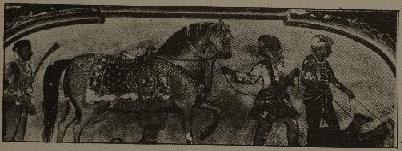
Of the ten surviving murals documented in 1971 on the second-story, three of them depicted themes related to Guru Hargobind.[11] The first was the Guru meeting with Sri Chand, son of Guru Nanak.[11] In this mural was also depicted the five children of the sixth guru, them namely being: Gurditta, Ani Rai, Suraj Mal, Atal Rai, and Tyag Mal (later Guru Tegh Bahadur).[11] The second mural panel depicted a scene of Guru Hargobind listening to music being performed by instrumentalists.[11] The third panel depicted Bidhi Chand presenting the retrieved stolen horses, Dilbagh and Gulbagh, to Guru Hargobind.[11][10] Bhagat Kabir was depicted in the fourth mural taking care of daily chores alongside his family, Bhagat Sain in the fifth is depicted alongside Raja Rana, and saint Dharuva in the sixth.[11][10] The seventh panel portrayed Krishna eating rice that was offered by his childhood friend, Sudama.[11] The eighth panel depicted Rama seated alongside Sita on a couch whilst being attended upon by both Lakshmana and Hanuman.[11] The ninth panel illustrated a scene of a hunting expedition involving a horse and three hunting hounds in an advancing pose.[11] Finally, the last and tenth panel represented a scene of the Vaisakhi events of 1699 at Anandpur, where Guru Gobind Singh prepares Amrit for the newly introduced Amrit Sanchar ceremony whilst Mata Jito appends sugar crystals to the formulae he is stirring, whilst the inaugural Panj Piare watch-on.[11][10]

Fresco of the Sikh gurus together and also Mardana and Bala from the original Akal Takht complex. Destroyed in January 1986 when the structure was completely demolished to make way for the present-day building

After Operation Blue Star, the surviving Akal Takht structure still contained historical artwork dating to the mid-to-late 18th century, such as ivory mosaic work, in-laid stone work (jaratkari), and wall paintings (murals).[17][18] The murals had depicted Indic mythological scenes, deities, and bhagats and had been painted by expert Sikh artisans (naqqashis).[17][18] Of the frescoes, there were depictions of Krishna accepting wet rice from Sudama, Rama, Bhagat Dhanna, Bhagat Dhruv, and of Bhagat Kabir at work as a weaver in a hut alongside Mai Loi (Kabir's wife).[19] There also were lion figurines made of marble.[19] They survived until January 1986, when the Takht was completely demolished to make way for the present-day structure.[17][18]

During the destruction of the historical structure, the original raised platform that Guru Hargobind had erected located at the base of the built-around structure (where the Guru used to address the gathered Sikh congregation from) was also at-risk of being demolished but protest by Giani Mohinder Singh (former SGPC secretary), then an elderly and respected Sikh, whom took the matter up with Gurdev Singh Kaunke, then Jathedar of the Akal Takht, to save it from destruction by ignorant Kar Seva volunteers who had no idea of its importance.[17]

The present-day Akal Takht lacks many of the historical and cultural intangible heritage that was once found in the original structure.[18] Conservators have raised alarms that the present structure was not designed with the traditional Sikh art style in-mind.[18] They further claimed that any present art works within the shrine would not last very long, since they used artificially-sourced pigments and non-traditional methods, as opposed to the naturally-sourced pigments used by the traditional Sikh art school.[18] Amrik Singh, the SGPC supervisor of the kar seva renovations at the Akal Takht, claims the new methods are better than the traditional methods and that the older methods are "impracticable".[18] He further claims that the present-day structure is designed differently from the original one.[18] A kar seva group leader, Jagtar Singh (Dera Baba), was responsible for the renovations of the structure under the instruction of the SGPC.[18] Enamel paint was apparently used in the present structure, Amrik Singh claims only water-based paints were used and they did not fade for over five years.[18] The fresco work of the present structure was mostly carried out by the artist Harbhajan Singh, who also had helped retouch frescoes located in the Golden Temple shrine.[18] However, Sukhdev Singh, the state convener of INTACH (Indian National Trust for Art and Cultural Heritage) requested that all the kar seva renovators use "old materials and styles, in consonance with what is in the sanctum sanctorum of the Golden Temple".[18] He further criticized the use of synthetic and bright colours, which he decried as being alien to the traditional Sikh school of art.[18]

[edit]

Notes

[edit]

References

[edit]

Sources

[edit]
  • Harjinder Singh Dilgeer The Akal Takht, Sikh University Press, 1980.
  • Harjinder Singh Dilgeer Sikh Twareekh Vich Akal Takht Sahib Da Role, Sikh University Press 2005.
  • Harjinder Singh Dilgeer Akal Takht Sahib, concept and role, Sikh University Press 2005.
  • Harjinder Singh Dilgeer Sikh Twareekh, Sikh University Press 2008.
  • Mohinder Singh Josh Akal Takht Tay is da Jathedar 2005.
  • Darshi A. R. The Gallant Defender
  • Singh P. The Golden Temple. South Asia Books 1989. ISBN 978-962-7375-01-2.
  • Singh K. (ed.) New insights into Sikh art. Marg Publications. 2003. ISBN 978-81-85026-60-2.
  • Nomination of Sri Harimandir Sahib for inclusion on the UNESCO World Heritage List Vol.1 Nomination Dossier, India 2003.
  • Macauliffe, M. A. The Sikh religion: Its gurus, sacred writings and authors Low Price Publications, 1903. ISBN 978-81-7536-132-4.
[edit]
Revisions and contributorsEdit on WikipediaRead on Wikipedia
from Grokipedia
The Akal Takht (Punjabi: ਅਕਾਲ ਤਖ਼ਤ, lit. 'Throne of the Timeless'), is the supreme temporal authority in , located opposite the Harmandir Sahib in the complex at , . It functions as the central institution for issuing edicts (hukamnamas) that guide the Sikh on political, social, and religious matters, embodying the principle of combining spiritual () and worldly () power. Founded by , the sixth Sikh Guru, on June 15, 1606—in response to the martyrdom of Dev under Mughal Emperor —the Akal Takht was erected to assert Sikh sovereignty and readiness for . symbolized this dual authority by wearing two swords, one for temporal and one for spiritual leadership, and the platform initially served as a site for open discussions on justice and community welfare. As the foremost among the five takhts of , the Akal Takht has historically upheld discipline within the , resolved disputes, and directed resistance against oppression, such as during invasions by Afghan ruler Ahmad Shah Abdali in the 18th century. The of Akal Takht holds executive authority, enforcing resolutions through communal consensus while maintaining the institution's role as a of divine rather than personal rule.

Origins and Founding

Etymology and Symbolic Meaning

The term "Akal Takht" originates from Punjabi, with "Akal" (ਅਕਾਲ) denoting the "Timeless One" or "Immortal," a Sikh for as Akal Purakh, the eternal entity transcending time, decay, and mortality. "Takht" (ਤਖ਼ਤ), derived from the Persian word for "," evokes imperial or sovereign seating of authority. Together, the name literally means "Throne of the Timeless One," historically also referred to as Akal Bunga (ਅਕਾਲ ਬੁੰਗਾ), or "House of the Timeless," before the throne designation became predominant. Symbolically, the nomenclature underscores the fusion of divine eternity with human governance in Sikh theology, positioning the Akal Takht as the ultimate arbiter of the Sikh Panth's temporal (miri) affairs while subordinate to spiritual (piri) truths, thereby rejecting secular absolutism in favor of theocratic oversight by the formless, timeless divine. This reflects the Sikh worldview of sovereignty vested not in mortal rulers but in the immortal will, serving as a counter to Mughal-era imperial thrones by asserting a higher, unassailable authority.

Establishment by Guru Hargobind in 1606

The Akal Takht was established by , the sixth Sikh Guru, in 1606, shortly after his ascension to guruship following the martyrdom of his father, Dev, who was executed by Mughal on May 30, 1606. This event marked a shift in Sikh leadership toward asserting both spiritual and temporal authority, prompted by the persecution faced by the community. Originally constructed as a simple raised wooden platform known as the Akal Bunga, facing the Harmandir Sahib (), it symbolized the integration of (temporal power) and (spiritual authority). laid its foundation on June 15, 1606—a date now commemorated as July 2—and used it as a seat from which to deliberate on matters of justice, warfare, and community governance. From the Akal Takht, donned two swords representing and , and encouraged to bear arms, train in , and maintain horses, thereby militarizing the faith to defend against oppression. He issued edicts (hukamnamas) and resolved disputes, establishing it as the primary forum for Sikh political and religious decisions. Some historical accounts, including those from the , date the revelation of the structure to 1609, possibly referring to its formal completion or elaboration, though the traditional founding aligns with 1606. The platform's orientation toward the Harmandir Sahib underscored the balance between divine worship and worldly authority, with holding court there daily, often surrounded by armed followers, to affirm Sikh autonomy amid Mughal dominance. This establishment laid the groundwork for the Akal Takht's enduring role as the supreme temporal seat of the Sikh .

Historical Evolution

Embodiment of Miri-Piri Doctrine

The Akal Takht embodies the Miri-Piri doctrine, a foundational Sikh principle of balancing temporal (miri) and spiritual (piri) authority, instituted by upon his ascension as the sixth Guru on 11 June 1606. This doctrine emerged in response to the execution of his father, , by Mughal Emperor in 1606, prompting a shift toward to safeguard the faith while maintaining spiritual integrity. Guru Hargobind symbolized miri-piri by wearing two swords—one for worldly power and governance, the other for spiritual sovereignty—rejecting the prevailing separation of religious and political spheres. The Akal Takht's construction, initiated on 15 June 1606 opposite the Harmandir Sahib, physically manifests this duality: the latter serves as the spiritual center for devotion via the , while the former functions as the " of the Timeless One" for temporal deliberations. Here, Sikh leaders address political, military, and social issues, issuing binding edicts (hukamnamas) that integrate ethical guidance with practical authority, ensuring Sikh against external threats. This institutionalization empowered the Sikh community to embody the saint-soldier (sant-sipahi) ideal, where spiritual wisdom informs defensive warfare and governance, as evidenced by Guru Hargobind's 52 major battles and establishment of a of 700 horsemen and 60 gunners by 1620. The of Akal Takht, as its custodian, perpetuates miri-piri by pronouncing resolutions that hold precedence over other Sikh institutions, reinforcing collective decision-making aligned with principles.

Role During Sikh Gurus, Misls, and Empire

Following its establishment by Guru Hargobind in 1606, the Akal Takht served as the central seat for temporal authority under the Sikh Gurus, embodying the miri-piri doctrine that integrated spiritual and political leadership. Guru Hargobind utilized it to address political matters, dispense justice, and oversee the Sikh community's military and administrative affairs, distinguishing it from the spiritual focus of the Harmandir Sahib. This dual role reinforced Sikh sovereignty amid Mughal oppression, with the Guru holding court nightly to resolve disputes and issue directives. Successor Gurus, including , , , and , continued this tradition, using the Akal Takht for strategic decisions during periods of persecution. For instance, convened assemblies there to mobilize against Mughal forces, solidifying its position as the highest earthly authority for the . The platform's elevation—three feet higher than surrounding structures—symbolized the Gurus' supreme jurisdiction over both religious and secular domains. During the Misl period (approximately 1716–1799), the Akal Takht emerged as the unifying institution for the decentralized Sikh confederacies, hosting gatherings where misl leaders assembled biannually on Baisakhi and to elect commanders, resolve inter-misl conflicts, and declare war or peace against Afghan and Mughal adversaries. These convocations at underscored the Akal Takht's role in maintaining Panthic cohesion amid guerrilla warfare and territorial expansion, with resolutions binding all misls despite their autonomy. The Nihang Sikhs, particularly the Buddha Dal, often acted as custodians, safeguarding the site during invasions. Under the (1799–1849), led by , the Akal Takht retained its supralegal authority over the monarch, as evidenced by the 1802 incident where summoned to account for his marriage to the Muslim dancer , ordering him to receive 50 lashes publicly—an edict the nominally accepted by offering substitutes or payments to avert direct punishment. expanded the structure, adding four upper stories plated with and silver, while funding its maintenance and respecting hukamnamas issued from it, though tensions arose over his secular policies like employing non-Sikhs in high posts. This period highlighted the Akal Takht's function as a check on imperial power, ensuring alignment with Sikh tenets amid state-building and conquests that unified under rule.

Colonial Period and Early Independence

Following the British annexation of the region in 1849 after the Anglo-Sikh Wars, the Akal Takht remained a central symbol of Sikh sovereignty and resistance, though its institutional authority was progressively undermined by colonial administration's control over management through appointed mahants and udasis. British policies favored these hereditary custodians, who often aligned with colonial interests, leading to the erosion of traditional Sikh oversight at key sites including the Akal Takht. The late 19th-century revitalized Sikh identity and practices, with the Akal Takht serving as a venue for debates on orthodoxy, such as the 1873 controversy over idol worship in the Harimandir Sahib, where resolutions from the Takht affirmed monotheistic principles. This period laid groundwork for assertive Sikh political mobilization against colonial influences. In the , the Akal Takht played a pivotal role in the Reform Movement, or , aimed at liberating Sikh shrines from control. On November 15, 1920, the Akal Takht issued a summoning a panthic conference in , resulting in the formation of the (SGPC) to represent Sikh interests. Non-violent jathas dispatched from the Akal Takht led protests at occupied gurdwaras, culminating in key events including the Nankana Sahib massacre on February 20, 1921, where British-backed forces killed at least 130 Akalis; the Guru ka Bagh clashes in 1922; and the Jaito Morcha from 1923 to 1924, involving over 4,000 arrests for demanding the restoration of a deposed ruler. These efforts pressured the British to enact the Sikh Gurdwaras Act on July 29, 1925, transferring management of major gurdwaras, including the Akal Takht, to elected Sikh bodies like the SGPC, though critics argue this subordinated the Takht's independent temporal authority to a statutory framework. After India's independence in 1947 and the partition of , which displaced over 2 million and caused massive loss of life, the Akal Takht continued issuing edicts on community matters amid the trauma of and refugee crises. In the early post-independence era, it supported Sikh demands for cultural and linguistic autonomy, including resolutions during the Punjabi Suba agitation starting in the , where Akal Takht-backed campaigns advocated for a Punjabi-speaking state, contributing to Punjab's reorganization in along linguistic lines. This period marked a shift toward negotiating Sikh political aspirations within the Indian constitutional framework, while preserving the Takht's role in panthic decision-making.

Physical and Architectural Features

Design and Construction Details

The original Akal Takht was constructed between 1606 and 1609 by , , and using their own hands on a site previously known as Akal Bunga, without mortar or lime. It consisted of a simple raised platform approximately 3.5 meters high, designed as a throne-like seat for the to hold court, symbolizing temporal authority under the miri-piri doctrine. Over time, the structure evolved significantly; Maharaja expanded it in the early by adding three additional storeys to the original two-level design, resulting in a five-storey building adorned with inlaid , intricate frescoes, and a gold-leafed dome blending Mughal and Sikh architectural elements. Pre-1984 interiors featured Mughal-style floral motifs in and historical frescoes depicting , bhagats, and events, reflecting a rich decorative tradition. The Akal Takht suffered severe damage during in June 1984, leading to its partial destruction by artillery fire. An initial government-sponsored reconstruction under Baba Santa Singh in 1984-1986 was rejected by the Sikh community for deviating from traditional designs, prompting a resolution in 1986 to demolish it and rebuild through voluntary kar sewa adhering to historical aesthetics. The current structure maintains the five-storey form with marble inlays and gold dome, though some critics note modern alterations that alter the original modest simplicity.

Location Within the Harmandir Sahib Complex

The Akal Takht occupies the western edge of the Harmandir Sahib complex in , , positioned directly opposite the Harmandir Sahib across the Amrit Sarovar, the central sacred pool measuring approximately 150 meters by 120 meters. This placement aligns the Akal Takht's eastern facade toward the Harmandir Sahib, situated about 130 meters southeast, emphasizing its role as the temporal counterpart to the spiritual center. The structure stands at the terminus of the complex's primary axis, slightly offset to the left when viewed from the eastern entrance, integrated into the parikarma pathway that circumambulates the sarovar. Flanked by ancillary buildings such as the Akal Takht Bunga to the north and the Teja Singh Samundri Hall to the south, it forms part of the enclosed rectangular precinct bounded by the sarovar on the east and peripheral structures on the other sides. Access to the Akal Takht occurs via a from the southwestern ghats of the sarovar, with devotees approaching from the complex's entrance to the west, traversing the marble-paved plaza before ascending the steps to the elevated platform. The site's coordinates are approximately 31.6206°N 74.8754°E, embedding it within the 19-acre urban expanse of the complex.

Authority and Operational Role

Leadership Structure and Jathedar Responsibilities

The Akal Takht is led by the of Sri Akal Takht Sahib, recognized as the supreme temporal over the Sikh Panth, embodying the dual miri-piri (political-spiritual) sovereignty established by . This singular leadership position oversees religious doctrine, community discipline, and political resolutions, with the Jathedar acting as the primary spokesperson for the collective Sikh community. While the Akal Takht maintains primacy among the five Sikh Takhts—Damdama Sahib, Kesgarh Sahib, , and Patna Sahib—its Jathedar consults with the respective Jathedars of these Takhts and assemblies of Panj Singh Sahiban (five senior Sikhs) for major decisions, though ultimate authority resides at Akal Takht. Appointment to the Jathedar position is formally handled by the Shiromani Gurdwara Parbandhak Committee (SGPC), the elected administrative body for Sikh gurdwaras under the Sikh Gurdwaras Act of 1925, often following consultations within Sikh religious circles. For instance, on June 16, 2023, the SGPC appointed Giani Raghbir Singh as after Giani Harpreet Singh resigned from the acting role. However, the process lacks codified rules for tenure, removal, or qualifications, prompting the SGPC in March 2025 to solicit global Sikh input on formalizing appointment criteria, jurisdiction, responsibilities, and retirement provisions by April 20, 2025. Critics argue this SGPC dependency undermines the Jathedar's theoretical independence from institutional politics, advocating for selection via (panthic assembly) to align with Gurmata traditions. The Jathedar's core responsibilities include issuing hukamnamas—formal edicts binding on all —addressing violations of the Sikh Rehat Maryada (), doctrinal interpretations, and panthic welfare. These edicts enforce religious discipline, such as declaring individuals tankhaiya (guilty of offenses) and prescribing penalties ranging from public apologies to social boycott. The Jathedar also arbitrates intra-community disputes, summons parties for hearings, and mediates to preserve unity, deriving interpretive authority from the and historical precedents. In crises, the role extends to articulating panthic positions and guiding political responses, as seen in the Jathedar's central involvement in Sikh concerns during 2023 farmer protests. Overall, the Jathedar upholds the Akal Takht's function as the ultimate arbiter of Sikh , free from external interference, though practical execution has faced challenges from SGPC oversight and factional influences.

Issuance of Hukamnamas and Resolutions

The Akal Takht serves as the supreme temporal authority in , issuing Hukamnamas—formal edicts or decrees considered binding commands from the Guru to the Sikh community—on matters of religious doctrine, social conduct, political disputes, and commendations for service to the Panth. These edicts originate from the of Akal Takht, who acts on behalf of the collective Sikh authority, often following deliberations that may involve scholarly consultation or broader consensus to ensure alignment with Sikh principles. Hukamnamas have historically addressed excommunications, prohibitions on un-Sikh practices, boycotts of dissenting groups, and calls for communal action, such as fundraising for gurdwara reconstruction. The issuance process emphasizes the Akal Takht's role as an embodiment of the Guru's will, with edicts proclaimed from the throne and disseminated via written proclamations bearing the official seal, intended for recitation in gurdwaras worldwide. The first recorded dates to June 30, 1606, issued by shortly after the Akal Takht's establishment, directing to contribute arms and horses for self-defense and communal readiness. In colonial times, a 1877 Hukamnama from the Akal Takht head priest mandated standardized Amrit Sanchar (initiation) ceremonies, reinforcing uniformity in Sikh rites amid British influence. Post-independence examples include the June 10, 1978, edict following the clash with Nirankaris, which imposed a total social and economic on the group for perceived and violence against . Resolutions, often arising from Sarbat Khalsa assemblies—the representative gathering of the Sikh convened at the Akal Takht or Harmandir Sahib complex—complement s by addressing collective crises or reforms, with outcomes ratified as edicts for enforcement. These gatherings, historically invoked during existential threats like post-Banda Singh Bahadur disarray or modern political impasses, pass Gurmatta resolutions on governance, leadership accountability, and Panthic unity. For instance, the 1759 resolution via Hukamnama urged Sikhs to fund shrine reconstructions amid Afghan invasions. In 1986, a at the Akal Takht passed resolutions declaring the need to rebuild the damaged structure through kar sewa and critiquing state interference, though implementation faced disputes over legitimacy. Such resolutions underscore the Akal Takht's dual religious-temporal function but have sparked debates on procedural authenticity when convened outside official auspices.

Interactions with SGPC and Sikh Political Entities

The Akal Takht holds supreme temporal and religious authority over Sikh affairs, issuing hukamnamas that bind the community, including the (SGPC), which administers gurdwaras under the Sikh Gurdwaras Act of 1925 but lacks doctrinal primacy over the Takht. While the SGPC manages facilities, finances, and appoints Jathedars—including the Akal Takht's—as salaried employees, this arrangement has fostered disputes, as appointments often reflect political alignments within entities like the (SAD), which historically dominates SGPC elections. Tensions peaked in March 2025 when the SGPC executive, influenced by SAD factions, terminated Akal Takht Jathedar Giani Raghbir Singh alongside of and Takht Damdama Sahib, citing service norms; critics, including the , condemned it as politically motivated erosion of independence, marking the sixth such removal amid claims the 1925 Act does not subordinate Takhts to SGPC control. In response to prior hukamnamas, such as the December 2, 2024, edict declaring SAD leader "tankhaiya" (guilty of religious misconduct) for failing to publicly atone for 1984-related decisions, SGPC members petitioned the Akal Takht in January 2025, urging enforcement and warning of consequences for non-compliance, highlighting Akal Takht's role in enforcing on political bodies. The Akal Takht frequently arbitrates disputes involving Sikh political entities, as in April 2025 when SGPC resolved to bar SAD (Badal) factions defying hukamnamas from using party symbols at events, reinforcing the Takht's oversight to align politics with Sikh maryada (code of conduct). Further friction arose in August 2025, with SGPC's General House passing a resolution urging the Akal Takht to avoid unilateral interference in other Takhts' affairs without consultation, amid rows like the May 2025 barring of Patna Sahib figures for non-compliance, underscoring ongoing debates over jurisdictional boundaries despite affirmations of Akal Takht supremacy by bodies like the Global Sikh Council. These interactions reveal a pattern where SGPC's administrative leverage clashes with Akal Takht's edict-enforcing mandate, often politicized by SAD's influence, yet the Takht's decisions remain doctrinally binding on the Panth.

Major Events and Controversies

Pre-1984 Militancy and Fortification

In the 1970s, Sikh political grievances intensified over issues such as the diversion of Punjab's river waters to other states, delays in transferring Chandigarh to Punjab as its capital, and perceived economic discrimination, culminating in the Shiromani Akali Dal's adoption of the Anandpur Sahib Resolution on October 16, 1973, which demanded greater autonomy for Punjab including control over its waters and a restructuring of center-state relations. These demands, framed as essential for preserving Sikh identity and rights within India's federal structure, were rejected by the central government, leading to agitations that positioned the Akal Takht as a focal point for issuing resolutions and mobilizing support. The rise of militancy accelerated following the April 13, 1978, clash in Amritsar between orthodox Sikhs led by Jarnail Singh Bhindranwale and the Nirankari sect, resulting in 13 Sikh deaths and convictions of Nirankari leaders, which Bhindranwale portrayed as state complicity in religious apostasy. Bhindranwale, initially promoted by Congress leaders to counter the Akali Dal's electoral strength, gained prominence through fiery sermons emphasizing Sikh martial traditions and resistance to perceived Hindu-majority dominance, drawing thousands to the Damdami Taksal he headed. By 1981, amid escalating violence including the September 9 assassination of newspaper editor Lala Jagat Narain—who had criticized Akali demands—Bhindranwale was briefly arrested but released due to lack of evidence, further enhancing his image as a defender against government overreach among rural Sikh youth. The , launched on August 4, 1982, from the Akal Takht by Bhindranwale alongside Akali leaders, sought implementation of the through mass civil disobedience, resulting in over 20,000 arrests by mid-1983 and transforming the complex into a center for protests and arming. As targeted killings of and moderate mounted—attributed to Bhindranwale's followers— he relocated his operations to the Akal Takht by early 1983, using its authority as the temporal seat to issue calls for Sikh solidarity while stockpiling weapons smuggled into the complex. Fortification of the Akal Takht intensified from late 1983, with militants under Bhindranwale erecting barriers, drilling loopholes through its marble walls for machine-gun positions, and constructing bunkers in adjacent buildings, openly preparing for confrontation amid fears of an assault. Bhindranwale justified these measures as defensive necessities against state aggression, boasting of conducting operations from the despite criticisms of desecrating Sikhism's highest temporal . By 1984, observers noted extensive sandbagging around the Akal Takht and langar halls, signaling a shift from political agitation to armed entrenchment that housed hundreds of militants and an estimated arsenal including rifles, grenades, and anti-tank weapons. This militarization, while rooted in grievances over unaddressed demands, escalated communal tensions and violence across , with over 200 deaths reported in 1983 alone from sectarian clashes.

Operation Blue Star and Immediate Aftermath

In the months leading up to 1984, , leader of the , and his armed followers fortified the Akal Takht within the Harmandir Sahib complex, bricking up windows, stockpiling weapons, and using it as a base for operations amid demands for greater Sikh political autonomy and responses to perceived grievances against the . This fortification escalated tensions, as Bhindranwale's group was accused by Indian authorities of sheltering militants involved in assassinations and violence, though supporters viewed it as defensive preparation against state aggression. Operation Blue Star, authorized by Prime Minister , began on June 1, 1984, with the mobilizing around the complex to dislodge the militants without initially alerting the public, coinciding with the martyrdom anniversary of Dev on June 3, which drew thousands of pilgrims. Curfews were imposed in , and electricity was cut; non-combatants were urged to evacuate, but many remained. The assault intensified after midnight on June 5, involving advances, , and Vijayanta tanks firing over 70 shells at the Akal Takht by June 6, reducing much of the structure—including its gold-plated dome and interiors—to rubble amid fierce resistance from fortified positions. Official Indian government figures from the on the Punjab Agitation reported 493 militants and civilians killed, 249 injured, and 83 soldiers dead during the operation, though independent and Sikh accounts estimate civilian and pilgrim deaths in the thousands, attributing higher tolls to the timing and scale of the assault. Bhindranwale's body, bearing multiple bullet wounds, was discovered on June 6 or 7 in the Akal Takht's basement, confirming his death during the fighting, alongside key associates like . The immediate aftermath saw the Akal Takht declared desecrated by Sikh leaders due to the shelling and occupation by troops, who were accused of trampling sacred texts from the damaged Sikh Reference Library and urinating in the premises, acts viewed as deliberate humiliations of Sikh temporal authority. This sparked mutinies among Sikh soldiers in units across locations like Ramgarh and , with hundreds deserting or rebelling in protest. The perceived violation deepened Sikh alienation from the state, directly catalyzing the on October 31, 1984, by her Sikh bodyguards Beant Singh and , who cited the Akal Takht's destruction as motivation.

Rebuilding Disputes and Sikh Rejections

Following the Indian Army's from June 1 to 8, 1984, the Akal Takht sustained extensive structural damage, including the collapse of its upper portions due to tank fire and artillery bombardment, which destroyed much of the 18th- and 19th-century frescoes and ivory inlays within. The Indian government promptly initiated reconstruction efforts in the ensuing months, completing a repaired version by October 1984 under the supervision of leader Santa Singh and using state resources, ostensibly to restore normalcy and obscure evidence of the military action's scale. This version incorporated modern materials like marble flooring and cement, deviating from the original sandstone and traditional kar sewa (voluntary community labor) methods, which argued compromised the site's historical authenticity and spiritual purity. The Sikh community, represented by bodies like the and broader Panthic organizations, categorically rejected the government-led rebuild as a symbol of imposed control, lacking consensus from the Sikh sangat (congregation) and serving to the rather than honor Sikh over their temporal authority. They boycotted religious services at the site, conducting parallel ceremonies nearby to protest what they deemed a profane intervention by the same forces responsible for the initial destruction. Santa Singh, who facilitated the state's work, faced from the Sikh for this collaboration, underscoring the depth of communal disapproval. Tensions culminated on January 26, 1986, when over 100,000 convened a at the Harmandir Sahib complex, passing resolutions to demolish the contested structure and reclaim the site's reconstruction through authentic Sikh processes. Demolition by hand—avoiding machinery to signify respect—began immediately under guidance from figures like Giani Thakur Singh of the , erasing the government version and any remaining non-traditional elements. Kar sewa for the faithful rebuild started in March 1986, mobilizing global Sikh donations and labor to replicate the pre-1984 design using traditional Punjabi sandstone, with completion by November 1987; this process also resulted in the irretrievable loss of surviving pre-1984 murals during debris clearance. The episode reinforced the Akal Takht's role as a of Sikh , with the community's rejection rooted in causal concerns over state overreach eroding religious sovereignty.

Post-2000 Authority Challenges

In the early 2000s, the Akal Takht faced challenges to its authority stemming from perceived political interference in the appointment and removal of its , often executed by the (SGPC), which is dominated by the (SAD). On March 28, 2000, Giani Puran Singh was sacked as by the SGPC executive after he excommunicated then-SGPC president Bibi over allegations of misconduct in her son's death, highlighting tensions between the Akal Takht's religious edicts and SGPC's administrative control. Giani Joginder Singh Vedanti was appointed acting shortly thereafter, but his tenure underscored ongoing vulnerabilities. A significant controversy erupted in 2007-2008 over the Akal Takht's handling of a pardon for Dera Sacha Sauda chief Gurmeet Ram Rahim Singh, initially granted by Vedanti in 2007 for an apology over imitating Sikh initiation rites, which drew widespread Sikh backlash for appearing lenient toward a figure accused of blasphemy. Vedanti was forced to resign in August 2008 amid accusations of not aligning with SAD's political stance on the issue, with critics arguing the ouster exemplified how partisan pressures could override religious autonomy. Vedanti himself contested the removal as unlawful, claiming no controversial decisions were made under duress during his over-eight-year service, further eroding confidence in the institution's independence from SGPC influence. Post-2010 developments intensified scrutiny, including parallel claims to ; in November 2015, a gathering declared imprisoned convict as , rejecting the official appointee and signaling factional fractures within the Sikh community over legitimate leadership. Recent years have seen escalated inter-institutional conflicts, such as the 2024-2025 clash between Akal Takht and Takht Patna Sahib over jurisdiction in penalizing clergy involved in SAD internal disputes, including edicts against for alleged religious misconduct. In December 2024, Giani Harpreet Singh faced an SGPC probe and suspension after accusing SAD leaders of character assassination to deflect from Akal Takht indictments, prompting community outrage and demands for insulating selections from political bodies. By 2025, the abrupt SGPC removal of multiple Takht s, including from Damdama Sahib, fueled panthic protests, with observers noting it threatened Akal Takht's supremacy amid blurred lines between faith, power, and politics. These episodes reflect systemic concerns over the Jathedar's tenure being "at the pleasure" of SGPC-appointed panels, despite a 2000 Akal Takht directive for scholarly input on qualifications and , which has not curbed recurrent interventions. Sikh scholars argue such patterns undermine the Akal Takht's role as an impartial arbiter, as evidenced by factional resolutions affirming its primacy while decrying external meddling in panthic decisions.

Contemporary Developments

Key Decisions and Edicts (2020-2025)

In response to the 2020–2021 Indian farmers' protests against the central government's farm laws, Akal Takht Jathedar Giani Harpreet Singh voiced solidarity with the demonstrators, declaring on December 9, 2020, that the stood ready to join the agitation at Delhi's borders if required to press for . Following the laws' withdrawal on November 19, 2021, Singh commended Prime Minister for the decision while cautioning that certain elements had attempted to frame the movement as a Sikh-Hindu or Sikh-government conflict. On August 30, 2024, under acting Giani Harpreet Singh, the Akal Takht declared (SAD) president tankhaiya—guilty of religious misconduct—for errors committed during his tenure as Punjab Deputy , including alleged failures in upholding Sikh principles, and barred Sikhs from maintaining relations with him pending through specified religious penalties. A issued on December 2, 2024, prohibited Sikh political leaders from establishing rival factions challenging the SAD's authority, aiming to preserve organizational unity amid internal party disputes. On December 6, 2024, the Akal Takht, governed by the (SGPC), imposed tankha on for misgovernance during his SAD leadership. On August 6, 2025, Giani Kuldeep Singh Gharjaj pronounced Punjab Transport Minister tankhaiya for breaches of the Sikh Rehat Maryada, including violations related to conduct and religious observance, mandating him to perform sewa at gurdwaras and maintain cleanliness as penance. These rulings, often intertwined with Sikh political dynamics, drew criticism for perceived overreach into partisan matters, with factions like the SAD accusing the of selective enforcement.

Ongoing Debates on Autonomy and Primacy

In 2025, a significant dispute arose between the Akal Takht and Takht Sri Harmandir Sahib when the latter's panj pyaras issued edicts against leader , prompting condemnation from Akal Takht clergy as unauthorized and contrary to Sikh maryada. The conflict escalated, with Akal Takht rejecting Patna Sahib's directives and asserting its exclusive over panthic-level resolutions, while Patna Sahib defended its independent . By 2025, the seats reconciled through , issuing a joint statement upholding the Akal Takht's primacy in Sikh temporal affairs and affirming that panthic issues must be resolved there without interference in other takhts' local matters. This episode reignited debates on the Akal Takht's supreme status among the five takhts, with Sikh bodies like the Global Sikh Council emphasizing its unassailable to maintain panthic unity. The (SGPC) passed a resolution in August 2025 reiterating that while all takhts hold importance, the Akal Takht remains paramount for binding decisions on Sikh doctrine and politics, urging non-interference in subordinate takhts' affairs. Critics, however, argue that such affirmations mask underlying fractures, as evidenced by prior standoffs like the 2025 Patna Sahib defiance of Akal Takht orders, which exposed tensions over jurisdictional overlaps and the dilution of centralized authority. These debates trace to historical precedents but have intensified post-2020 amid influences and internal Sikh factionalism, with some scholars questioning whether the Akal Takht's primacy is structurally enforced or reliant on voluntary deference from other seats. Parallel discussions focus on the Akal Takht's , particularly its administrative dependence on the SGPC, which controls appointments, funding, and operations, rendering the institution vulnerable to political pressures. In March 2025, the SGPC's abrupt removal of Giani Raghbir and appointment of an acting sparked outrage, with Sikh leaders decrying it as an overreach that politicizes religious authority and erodes moral independence. By October 2025, despite initial resistance, opposing Sikh groups accepted the appointee, highlighting the SGPC's control despite calls to insulate the Akal Takht from such bureaucratic oversight. Reform advocates, including diaspora organizations, contend that this SGPC linkage fosters interference, as seen in allegations of favoritism toward Akali Dal affiliates, and propose structural changes like independent funding and global Sikh input to restore true . Such critiques underscore a perceived erosion of the Akal Takht's standing, with some analyses attributing weakened primacy to repeated political encroachments since the , though defenders maintain its edicts retain binding force through panthic consensus rather than coercive mechanisms. These intertwined debates on and primacy continue to challenge the Akal Takht's role as an impartial arbiter in a fragmented Sikh .

References

Add your contribution
Related Hubs
User Avatar
No comments yet.