Hubbry Logo
Android (robot)Android (robot)Main
Open search
Android (robot)
Community hub
Android (robot)
logo
8 pages, 0 posts
0 subscribers
Be the first to start a discussion here.
Android (robot)
Android (robot)
from Wikipedia
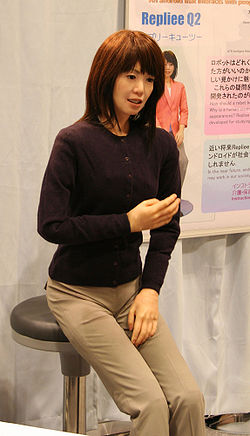
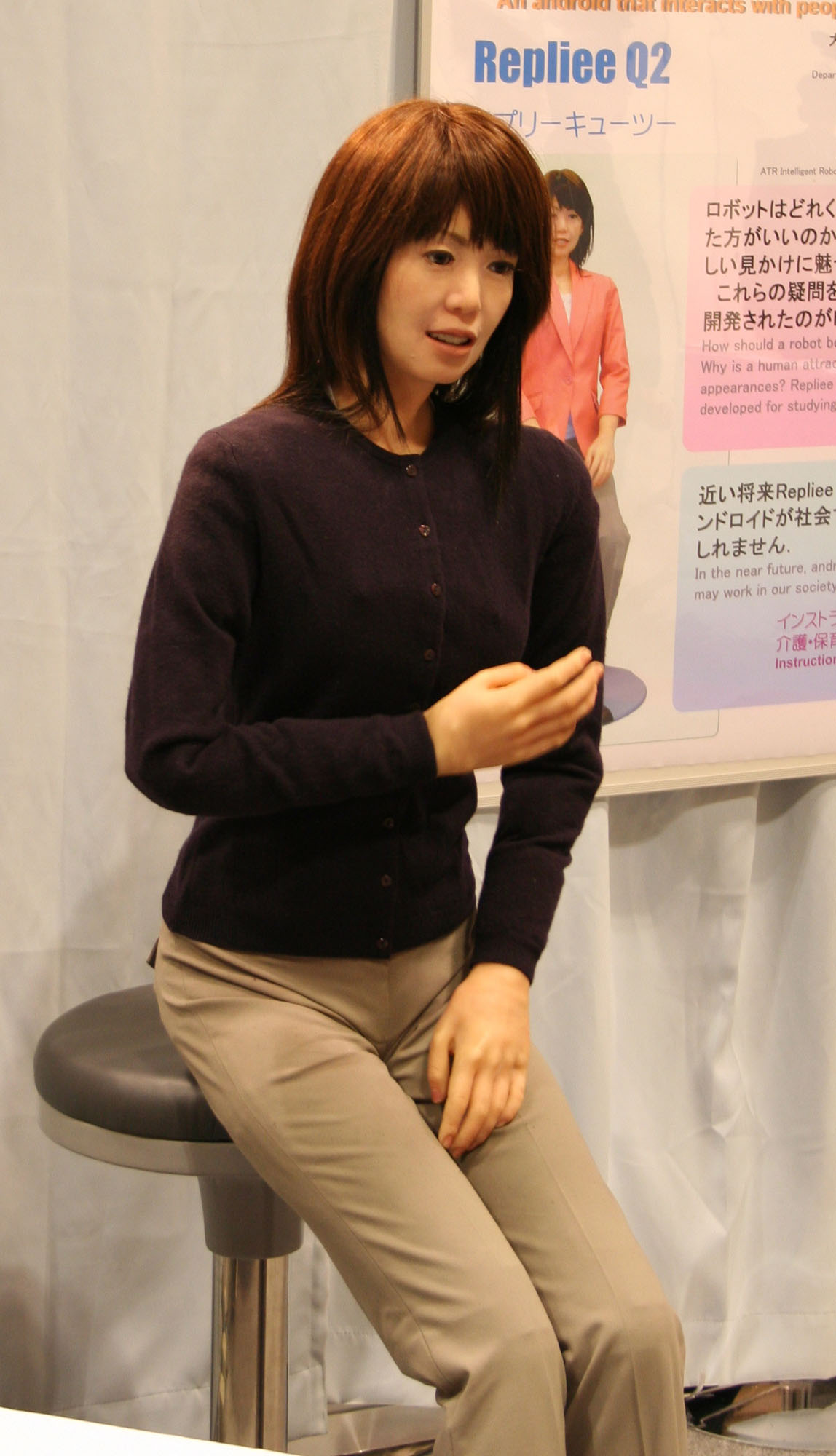
Repliee Q2, an android, can mimic human functions such as blinking, breathing and speaking, with the ability to recognize and process speech and touch, and then respond in kind.

An android is a humanoid robot or other artificial being, often made from a flesh-like material.[1][2][3][4] Historically, androids existed only in the domain of science fiction and were frequently seen in film and television, but advances in robot technology have allowed the design of functional and realistic humanoid robots.[5][6]

Terminology

[edit]
Early example of the term androides used to describe human-like mechanical devices, London Times, 22 December 1795

The Oxford English Dictionary traces the earliest use (as "Androides") to Ephraim Chambers' 1728 Cyclopaedia, in reference to an automaton that St. Albertus Magnus allegedly created.[3][7] By the late 1700s, "androides", elaborate mechanical devices resembling humans performing human activities, were displayed in exhibit halls.[8] The term "android" appears in US patents as early as 1863 in reference to miniature human-like toy automatons.[9] The term android was used in a more modern sense by the French author Auguste Villiers de l'Isle-Adam in his work Tomorrow's Eve (1886), featuring an artificial humanoid robot named Hadaly.[3] The term made an impact into English pulp science fiction starting from Jack Williamson's The Cometeers (1936) and the distinction between mechanical robots and fleshy androids was popularized by Edmond Hamilton's Captain Future stories (1940–1944).[3]

Although Karel Čapek's robots in R.U.R. (Rossum's Universal Robots) (1921)—the play that introduced the word robot to the world—were organic artificial humans, the word "robot" has come to primarily refer to mechanical humans, animals, and other beings.[3] The term "android" can mean either one of these,[3] while a cyborg ("cybernetic organism" or "bionic man") would be a creature that is a combination of organic and mechanical parts.

The term "droid", popularized by George Lucas in the original Star Wars film and now used widely within science fiction, originated as an abridgment of "android", but has been used by Lucas and others to mean any robot, including distinctly non-human form machines like R2-D2. The word "android" was used in Star Trek: The Original Series episode "What Are Little Girls Made Of?" The abbreviation "andy", coined as a pejorative by writer Philip K. Dick in his novel Do Androids Dream of Electric Sheep?, has seen some further usage, such as within the TV series Total Recall 2070.[10]

While the term "android" is used in reference to human-looking robots in general (not necessarily male-looking humanoid robots), a robot with a female appearance can also be referred to as a gynoid. Besides one can refer to robots without alluding to their sexual appearance by calling them anthrobots (a portmanteau of anthrōpos and robot; see anthrobotics) or anthropoids (short for anthropoid robots; the term humanoids is not appropriate because it is already commonly used to refer to human-like organic species in the context of science fiction, futurism and speculative astrobiology).[11]

Authors have used the term android in more diverse ways than robot or cyborg. In some fictional works, the difference between a robot and android is only superficial, with androids being made to look like humans on the outside but with robot-like internal mechanics.[3] In other stories, authors have used the word "android" to mean a wholly organic, yet artificial, creation.[3] Other fictional depictions of androids fall somewhere in between.[3]

Eric G. Wilson, who defines an android as a "synthetic human being", distinguishes between three types of android, based on their body's composition:

  • the mummy type – made of "dead things" or "stiff, inanimate, natural material", such as mummies, puppets, dolls and statues
  • the golem type – made from flexible, possibly organic material, including golems and homunculi
  • the automaton type – made from a mix of dead and living parts, including automatons and robots[4]

Although human morphology is not necessarily the ideal form for working robots, the fascination in developing robots that can mimic it can be found historically in the assimilation of two concepts: simulacra (devices that exhibit likeness) and automata (devices that have independence).

Projects

[edit]

Several projects aiming to create androids that look, and, to a certain degree, speak or act like a human being have been launched or are underway.

Japan

[edit]
Repliee Q2, a Japanese android

Japanese robotics have been leading the field since the 1970s.[12] Waseda University initiated the WABOT project in 1967, and in 1972 completed the WABOT-1, the first android, a full-scale humanoid intelligent robot.[13][14] Its limb control system allowed it to walk with the lower limbs, and to grip and transport objects with hands, using tactile sensors. Its vision system allowed it to measure distances and directions to objects using external receptors, artificial eyes and ears. And its conversation system allowed it to communicate with a person in Japanese, with an artificial mouth.[14][15][16]

In 1984, WABOT-2 was revealed, and made a number of improvements. It was capable of playing the organ. Wabot-2 had ten fingers and two feet, and was able to read a score of music. It was also able to accompany a person.[17] In 1986, Honda began its humanoid research and development program, to create humanoid robots capable of interacting successfully with humans.[18]

The Intelligent Robotics Lab, directed by Hiroshi Ishiguro at Osaka University, and the Kokoro company demonstrated the Actroid at Expo 2005 in Aichi Prefecture, Japan and released the Telenoid R1 in 2010. In 2006, Kokoro developed a new DER 2 android. The height of the human body part of DER2 is 165 cm. There are 47 mobile points. DER2 can not only change its expression but also move its hands and feet and twist its body. The "air servosystem" which Kokoro developed originally is used for the actuator. As a result of having an actuator controlled precisely with air pressure via a servosystem, the movement is very fluid and there is very little noise. DER2 realized a slimmer body than that of the former version by using a smaller cylinder. Outwardly DER2 has a more beautiful proportion. Compared to the previous model, DER2 has thinner arms and a wider repertoire of expressions. Once programmed, it is able to choreograph its motions and gestures with its voice.

The Intelligent Mechatronics Lab, directed by Hiroshi Kobayashi at the Tokyo University of Science, has developed an android head called Saya, which was exhibited at Robodex 2002 in Yokohama, Japan. There are several other initiatives around the world involving humanoid research and development at this time, which will hopefully introduce a broader spectrum of realized technology in the near future. Now Saya is working at the Science University of Tokyo as a guide.

The Waseda University (Japan) and NTT docomo's manufacturers have succeeded in creating a shape-shifting robot WD-2. It is capable of changing its face. At first, the creators decided the positions of the necessary points to express the outline, eyes, nose, and so on of a certain person. The robot expresses its face by moving all points to the decided positions, they say. The first version of the robot was first developed back in 2003. After that, a year later, they made a couple of major improvements to the design. The robot features an elastic mask made from the average head dummy. It uses a driving system with a 3DOF unit. The WD-2 robot can change its facial features by activating specific facial points on a mask, with each point possessing three degrees of freedom. This one has 17 facial points, for a total of 56 degrees of freedom. As for the materials they used, the WD-2's mask is fabricated with a highly elastic material called Septom, with bits of steel wool mixed in for added strength. Other technical features reveal a shaft driven behind the mask at the desired facial point, driven by a DC motor with a simple pulley and a slide screw. Apparently, the researchers can also modify the shape of the mask based on actual human faces. To "copy" a face, they need only a 3D scanner to determine the locations of an individual's 17 facial points. After that, they are then driven into position using a laptop and 56 motor control boards. In addition, the researchers also mention that the shifting robot can even display an individual's hair style and skin color if a photo of their face is projected onto the 3D Mask.

Singapore

[edit]

Prof Nadia Thalmann, a Nanyang Technological University scientist, directed efforts of the Institute for Media Innovation along with the School of Computer Engineering in the development of a social robot, Nadine. Nadine is powered by software similar to Apple's Siri or Microsoft's Cortana. Nadine may become a personal assistant in offices and homes in future, or she may become a companion for the young and the elderly.

Assoc Prof Gerald Seet from the School of Mechanical & Aerospace Engineering and the BeingThere Centre led a three-year R&D development in tele-presence robotics, creating EDGAR. A remote user can control EDGAR with the user's face and expressions displayed on the robot's face in real time. The robot also mimics their upper body movements. [19]

South Korea

[edit]
EveR-2, the first android that can sing

KITECH researched and developed EveR-1, an android interpersonal communications model capable of emulating human emotional expression via facial "musculature" and capable of rudimentary conversation, having a vocabulary of around 400 words. She is 160 cm tall and weighs 50 kg, matching the average figure of a Korean woman in her twenties. EveR-1's name derives from the Biblical Eve, plus the letter r for robot. EveR-1's advanced computing processing power enables speech recognition and vocal synthesis, at the same time processing lip synchronization and visual recognition by 90-degree micro-CCD cameras with face recognition technology. An independent microchip inside her artificial brain handles gesture expression, body coordination, and emotion expression. Her whole body is made of highly advanced synthetic jelly silicon and with 60 artificial joints in her face, neck, and lower body; she is able to demonstrate realistic facial expressions and sing while simultaneously dancing. In South Korea, the Ministry of Information and Communication had an ambitious plan to put a robot in every household by 2020.[20] Several robot cities have been planned for the country: the first will be built in 2016 at a cost of 500 billion won (US$440 million), of which 50 billion is direct government investment.[21] The new robot city will feature research and development centers for manufacturers and part suppliers, as well as exhibition halls and a stadium for robot competitions. The country's new Robotics Ethics Charter will establish ground rules and laws for human interaction with robots in the future, setting standards for robotics users and manufacturers, as well as guidelines on ethical standards to be programmed into robots to prevent human abuse of robots and vice versa.[22]

United States

[edit]

Walt Disney and a staff of Imagineers created Great Moments with Mr. Lincoln that debuted at the 1964 New York World's Fair.[23]

Dr. William Barry, an Education Futurist and former visiting West Point Professor of Philosophy and Ethical Reasoning at the United States Military Academy, created an AI android character named "Maria Bot". This Interface AI android was named after the infamous fictional robot Maria in the 1927 film Metropolis, as a well-behaved distant relative. Maria Bot is the first AI Android Teaching Assistant at the university level.[24][25] Maria Bot has appeared as a keynote speaker as a duo with Barry for a TEDx talk in Everett, Washington in February 2020.[26]

Resembling a human from the shoulders up, Maria Bot is a virtual being android that has complex facial expressions and head movement and engages in conversation about a variety of subjects. She uses AI to process and synthesize information to make her own decisions on how to talk and engage. She collects data through conversations, direct data inputs such as books or articles, and through internet sources.

Maria Bot was built by an international high-tech company for Barry to help improve education quality and eliminate education poverty. Maria Bot is designed to create new ways for students to engage and discuss ethical issues raised by the increasing presence of robots and artificial intelligence. Barry also uses Maria Bot to demonstrate that programming a robot with life-affirming, ethical framework makes them more likely to help humans to do the same.[27]

Maria Bot is an ambassador robot for good and ethical AI technology.[28]

Hanson Robotics, Inc., of Texas and KAIST produced an android portrait of Albert Einstein, using Hanson's facial android technology mounted on KAIST's life-size walking bipedal robot body. This Einstein android, also called "Albert Hubo", thus represents the first full-body walking android in history.[29] Hanson Robotics, the FedEx Institute of Technology,[30] and the University of Texas at Arlington also developed the android portrait of sci-fi author Philip K. Dick (creator of Do Androids Dream of Electric Sheep?, the basis for the film Blade Runner), with full conversational capabilities that incorporated thousands of pages of the author's works.[31] In 2005, the PKD android won a first-place artificial intelligence award from AAAI.

China

[edit]

On April 19, 2025, 21 humanoid robots participated along with 12,000 human runners in a half-marathon in Beijing. While almost every robot fell down and had overheating problems, and the robots were continuously being controlled by human handlers accompanying them, six of the robots did reach the finish line. Two of them, Tiangong Ultra by Chinese robotics company UBTech, and N2 by Chinese company Noetix Robotics, which took first and second place respectively among robots in the race, stood out for their consistent (albeit slow) pace.[32]

Use in fiction

[edit]

Androids are a staple of science fiction. Isaac Asimov pioneered the fictionalization of the science of robotics and artificial intelligence, notably in his 1950s series I, Robot.[33] One thing common to most fictional androids is that the real-life technological challenges associated with creating thoroughly human-like robots — such as the creation of strong artificial intelligence—are assumed to have been solved.[34] Fictional androids are often depicted as mentally and physically equal or superior to humans—moving, thinking and speaking as fluidly as them.[3][34]

The tension between the nonhuman substance and the human appearance—or even human ambitions—of androids is the dramatic impetus behind most of their fictional depictions.[4][34] Some android heroes seek, like Pinocchio, to become human, as in the film Bicentennial Man,[34] or Data in Star Trek: The Next Generation. Others, as in the film Westworld, rebel against abuse by careless humans.[34] Android hunter Deckard in Do Androids Dream of Electric Sheep? and its film adaptation Blade Runner discovers that his targets appear to be, in some ways, more "human" than he is.[34] The sequel Blade Runner 2049 involves android hunter K, himself an android, discovering the same thing. Android stories, therefore, are not essentially stories "about" androids; they are stories about the human condition and what it means to be human.[34]

One aspect of writing about the meaning of humanity is to use discrimination against androids as a mechanism for exploring racism in society, as in Blade Runner.[35] Perhaps the clearest example of this is John Brunner's 1968 novel Into the Slave Nebula, where the blue-skinned android slaves are explicitly shown to be fully human.[36] More recently, the androids Bishop and Annalee Call in the films Aliens and Alien Resurrection are used as vehicles for exploring how humans deal with the presence of an "Other".[37] The 2018 video game Detroit: Become Human also explores how androids are treated as second class citizens in a near future society.

Female androids, or "gynoids", are often seen in science fiction, and can be viewed as a continuation of the long tradition of men attempting to create the stereotypical "perfect woman".[38] Examples include the Greek myth of Pygmalion and the female robot Maria in Fritz Lang's Metropolis. Some gynoids, like Pris in Blade Runner, are designed as sex-objects, with the intent of "pleasing men's violent sexual desires",[39] or as submissive, servile companions, such as in The Stepford Wives. Fiction about gynoids has therefore been described as reinforcing "essentialist ideas of femininity",[40] although others have suggested that the treatment of androids is a way of exploring racism and misogyny in society.[41]

The 2015 Japanese film Sayonara, starring Geminoid F, was promoted as "the first movie to feature an android performing opposite a human actor".[42]

The 2023 Dutch film I'm Not a Robot won the Academy Award for Best Live Action Short Film in 2025.

See also

[edit]

References

[edit]

Further reading

[edit]
[edit]
Revisions and contributorsEdit on WikipediaRead on Wikipedia
from Grokipedia
An android is a engineered with a -like form, often incorporating synthetic skin and mechanisms to simulate superficial traits such as facial expressions or . The term, derived from Greek roots meaning "man-like," originally described mechanical automatons in the but has evolved to denote advanced robotic systems blending with to approximate appearance and interaction. Originating in and early automata, android development accelerated in the late with milestones like Japan's WABOT-1 in the 1970s, the first full-scale capable of basic and movement, marking a shift from static figures to dynamic, balanced machines. Notable achievements include androids like the Repliee Q2, which replicate lifelike responses to touch and speech, advancing fields from elder care to -robot interaction studies, though progress remains constrained by challenges in dexterity, energy efficiency, and the "" effect that elicits discomfort in observers. Controversies encompass ethical dilemmas over deception in likeness, potential job displacement, and rare incidents of unintended aggressive behaviors in experimental settings, underscoring tensions between technological ambition and societal safeguards. Despite these hurdles, ongoing innovations in materials and AI promise broader applications, prioritizing empirical functionality over anthropomorphic novelty.

Definition and Terminology

Etymology and Core Characteristics

The term "android" originates from the Ancient Greek words andrós (ἀνδρός), the genitive of anḗr (ἀνήρ) meaning "man" or "male human," combined with -eidḗs (-ειδής), a suffix denoting "form" or "likeness," literally signifying a figure resembling a man. This etymological construction entered English as "androides" by 1727, initially describing automata or mechanical devices mimicking human form, with the shortened "android" form appearing by 1837 in reference to automated figures such as chess-playing machines. The term's application to modern robotic systems solidified in the early 20th century amid advancements in electromechanical engineering, distinguishing human-resembling machines from broader automata. Core characteristics of an android encompass a robotic platform engineered for anthropomorphic resemblance, featuring a bipedal humanoid chassis with proportional limbs, torso, and head to emulate human anatomy. Essential traits include synthetic materials simulating skin texture and elasticity, articulated facial components for expressive mimicry, and integrated sensors enabling gesture recognition and natural interaction, prioritizing visual and behavioral fidelity over mere functionality. These attributes facilitate roles in social companionship, rehabilitation, and research on human-robot dynamics, though realization remains constrained by engineering limits in realism and autonomy as of 2025. Androids differ from generic robots by their deliberate pursuit of human-like aesthetics, often incorporating soft robotics for compliant motion and AI-driven responses to approximate conversational and emotional cues.

Distinctions from Humanoids and Automata

Androids represent a specialized subset of robots, differentiated primarily by their incorporation of biomimetic materials and designs that closely approximate , including synthetic , , and expressive actuators to achieve visual and sometimes tactile indistinguishability from s. robots, by comparison, emphasize functional —such as bipedal , dexterous limbs, and torso-head configurations—to enable human-scale interaction with environments designed for people, but they frequently expose metallic frames, joints, or non-flesh-like surfaces without prioritizing aesthetic realism. For instance, while prototypes like Honda's (developed from 1986 onward) exemplify mobility and balance through algorithmic control of 57 , androids such as Japan's Repliee series integrate over actuators to simulate subtle human mannerisms like breathing or eye blinking. In distinction from automata, androids rely on integrated electronic systems—including microprocessors, sensors for environmental perception, and algorithms for real-time decision-making—to support autonomous or semi-autonomous operations that adapt to novel inputs, contrasting with the purely mechanical, deterministic constructions of automata that execute invariant sequences via physical linkages like cams, levers, and clockwork springs. Historical automata, dating to ancient Greek engineers like Hero of Alexandria's steam-powered devices around 100 CE or 18th-century examples such as Pierre Jaquet-Droz's writing boy (built circa 1774) with its 40-cam system for scripted motions, concealed their mechanisms to evoke lifelike illusion but lacked feedback loops, programmability, or energy-efficient actuation found in modern androids powered by batteries and servomotors. This evolution reflects a shift from automata's reliance on kinetic energy storage for finite, non-adaptive performances to androids' computational cores enabling behaviors like natural language processing or gesture recognition, as demonstrated in projects integrating AI frameworks since the 2000s. Etymologically, "android" stems from the Greek andr- (man) and -eidēs (form), denoting a constructed entity modeled on male human physiology since its coinage in 1837, whereas "automaton" derives from automatos (self-moving), highlighting mechanical autonomy without inherent anthropic intent, and "humanoid" broadly connotes form similarity to Homo sapiens across biological or artificial contexts. These terminological boundaries underscore androids' dual commitment to morphological fidelity and behavioral emulation, setting them apart from the structural utility of humanoids and the rigid kinetics of automata in robotics discourse.

Historical Development

Ancient and Pre-Modern Concepts

In ancient Greek mythology, concepts of human-like automatons emerged as early as the 8th century BCE, with the god Hephaestus depicted as crafting self-moving mechanical servants. Homer's Iliad describes Hephaestus forging golden handmaidens that resembled living women, capable of walking, speaking intelligently, and assisting in tasks, powered by mechanisms akin to self-sustaining animation. These mythical devices reflected early imaginings of artificial beings that mimicked human form and function without biological origins, though no archaeological evidence confirms their physical existence as advanced machines. A prominent example is Talos, a giant bronze automaton forged by Hephaestus to guard the island of Crete, first referenced around 700 BCE by Hesiod. Talos patrolled the shores three times daily, hurling boulders at invading ships and enforcing isolation by heating his body to incinerate attackers, sustained by a single vein of ichor connected to a life-giving stone in his ankle. Defeated by the Argonauts via removal of that stone, Talos embodied notions of invulnerable, purpose-built guardians, blending mechanical durability with rudimentary autonomy in lore rather than engineering reality. During the , 12th-century polymath advanced practical with humanoid elements, documenting over 50 devices in his 1206 treatise The Book of Knowledge of Ingenious Mechanical Devices. These included programmable humanoid robots, such as a waitress that poured drinks via hidden water mechanisms and hand-washing devices with moving figures, employing cams, crankshafts, and floats for sequenced motions—precursors to cybernetic principles without electrical power. Al-Jazari's designs, built for courts in 12th-13th century , demonstrated empirical of anthropomorphic machines for utility, influencing later European traditions. Jewish folklore introduced the , an artificial anthropoid formed from clay and animated through Kabbalistic rituals, with roots traceable to medieval texts but popularized in the 16th-century legend of Rabbi Judah Loew's . Intended as a protector against pogroms, the mute, super-strong figure obeyed literal commands, highlighting risks of uncontrolled obedience in created beings, though its animation relied on rather than mechanics. Unlike metallic Greek automatons, the golem emphasized ethical limits on human mimicry, influencing later narratives without verifiable mechanical implementation.

Early 20th-Century Prototypes

Captain W. H. Richards, a First World War veteran, and aircraft engineer A. H. Reffell constructed Eric in 1928, marking it as the United Kingdom's earliest documented humanoid robot prototype. Assembled in a garage in Shere, Surrey, Eric measured about 5 feet 6 inches in height and weighed approximately 20 pounds, with an aluminum frame evoking a medieval knight's armor, complete with fixed feet bolted to a base for stability. Its mechanisms relied on electromagnetic relays powered by batteries, enabling basic movements such as nodding the head, raising the arms, turning the head side-to-side, and lighting electric bulb eyes painted with red pupils. A concealed gramophone record facilitated speech, allowing Eric to recite verses or short poems, while a simple microphone triggered pre-set responses to audience prompts during demonstrations. Eric debuted publicly on September 20, 1928, at the Society of Model Engineers' annual in London's Royal Horticultural Halls, where it performed scripted actions including bowing and arm in response to commands. The prototype lacked autonomous decision-making, sensory feedback beyond basic audio triggers, or mobility, functioning instead as an electromechanical for rather than practical utility. Despite these limitations, Eric demonstrated early ingenuity in replicating human-like form and through rudimentary electrical controls, predating more complex industrial robots and reflecting post-World I fascination with mechanized figures inspired by emerging . Contemporaneous efforts elsewhere included rudimentary exhibits, such as Yasutaro Mitsui's steel-framed android displayed in in 1932, which incorporated jointed limbs for posed demonstrations but similarly emphasized visual over functionality. These prototypes, constrained by the era's —lacking integrated or feedback loops—served primarily as promotional novelties to showcase electrical and mechanical integration in anthropomorphic designs, laying conceptual groundwork for later autonomous systems without achieving true behavioral realism.

Post-1950 Milestones and Research Breakthroughs

In 1973, researchers at in developed WABOT-1, recognized as the world's first full-scale anthropomorphic robot capable of bipedal walking using a quasi-dynamic gait, communicating in Japanese, and measuring distances and directions to objects within its workspace. This milestone integrated limb control, vision, and conversation systems, laying foundational work for humanoid cognition and interaction despite limited computational power and mechanical precision. Honda initiated research in 1986, progressing through prototypes like E2 (1991), which achieved static bipedal walking, and P2 (1996), the first to demonstrate fully dynamic two-legged locomotion in a straight line at 3 km/h while navigating obstacles. These efforts culminated in 's public debut in 2000, featuring autonomous walking at speeds up to 3 km/h, , via camera eyes, and gesture-based communication, powered by advancements in balance control algorithms and lightweight materials. 's 2002 upgrades enabled running at 6 km/h and independent environmental adaptation, marking breakthroughs in real-time and predictive . The early 2000s saw a shift toward hyper-realistic androids, with Osaka University's Repliee Q1 (2005) introducing silicone skin mimicking human texture, responsive facial expressions, and subtle breathing motions to evoke lifelike presence during interactions. Building on this, Repliee Q2 (2006), modeled after a human female, incorporated 42 degrees of freedom in the upper body for natural arm and head movements, alongside pneumatic actuators for soft, human-like responses to touch, advancing research in the uncanny valley effect and social robotics. Subsequent breakthroughs included Korea Advanced Institute of Science and Technology's Ever-2 (2006), an android with advanced facial musculature simulating 20 human expressions and voice recognition for basic conversations, emphasizing emotional expressivity through servo-driven synthetic skin. Dexterity advancements, such as the Shadow Dexterous Hand (developed from 2000s prototypes), achieved 20 actuated rivaling human up to 30 N while handling fragile objects via tactile feedback sensors, influencing android manipulation capabilities. By the 2010s, projects like MIT's earlier COG (1993–2003) informed behavior-based architectures for , though discontinued, its principles persisted in Robotics Challenge (2012–2015) outcomes, where teams like IHMC achieved robust bipedal recovery from falls using . Recent efforts, including University's 2024 facial expression technology for dynamic mood conveyance via layered actuators under elastic skin, continue pushing boundaries in perceptual realism and emotional simulation.

Technical Foundations

Mechanical and Structural Design

The mechanical and structural design of android robots prioritizes biomimetic replication of the to enable human-like locomotion, manipulation, and interaction. Core structures typically consist of an framework with multi-degree-of-freedom (DOF) joints mimicking , such as 3 DOF at the , 1 at the , and 2 at the ankle for bipedal stability. Arms often feature 7 DOF per limb to approximate shoulder, elbow, and mobility. Modular architectures facilitate reconfiguration and , as seen in designs like ARMAR III, which separates neck, torso, and arms for targeted enhancements. Materials emphasize lightweight composites and alloys to optimize strength-to-weight ratios while minimizing energy demands for mobility. Aluminum forms primary skeletal elements in robots like COMAN for rigidity, complemented by carbon fiber or fiberglass reinforcements to reduce overall mass without compromising durability. Recent advancements incorporate 3D-printed compliant polymers in frameworks such as PANDORA, enabling structural elasticity that absorbs impacts and improves safe human-robot contact. These materials address trade-offs between rigidity for load-bearing and compliance for dynamic environments. Actuators integrate directly into the structural linkages, favoring electric servos or quasi-direct-drive systems for precise control and backdrivability, essential for compliant motions. In designs like , actuators are scaled to adult human proportions, balancing power output with compactness to fit anthropomorphic forms. Hydraulic or pneumatic options appear in high-torque applications but yield to electrics for quieter, more efficient operation in androids. Key challenges include achieving energy-efficient lightweighting without sacrificing structural integrity, as heavier frames exacerbate power consumption in untethered operations. Evolutionary optimization techniques, such as ESO, refine frameworks by removing excess material while preserving kinematic . Heat management from densely packed actuators and ensuring fault-tolerant designs for real-world hazards further complicate development, often requiring integrated sensors for .

Sensing, AI, and Control Systems

Androids incorporate diverse sensing modalities to perceive and interact with their environments in a manner approximating capabilities. Visual sensing relies on cameras, including RGB-D sensors for depth estimation and stereo vision systems for 3D mapping, enabling and pose estimation critical for and manipulation tasks. Auditory sensing employs arrays to localize sounds and process speech, facilitating human-robot interaction. Tactile and force sensors, such as pressure-sensitive arrays in synthetic skin or fingertips and six-degree-of-freedom force/torque sensors in joints and wrists, provide feedback on contact forces and compliance during grasping or physical interactions. Inertial measurement units () and proprioceptive encoders track body orientation, acceleration, and joint positions to maintain balance and execute coordinated movements. Artificial intelligence systems in androids fuse multisensory data for higher-level perception and decision-making. Computer vision algorithms, often powered by convolutional neural networks, process visual inputs for semantic segmentation and facial recognition, while recurrent or transformer-based models handle sequential data from audio and motion sensors for and prediction. Embodied AI frameworks, such as those mimicking cognitive processes, enable learning from demonstration or to adapt behaviors in unstructured settings, as seen in systems integrating neural networks for real-time environmental reasoning. These AI layers support in tasks like for dialogue or predictive modeling for anticipatory actions, though current implementations remain limited by computational constraints and generalization challenges compared to . Control systems coordinate sensing and AI outputs through hierarchical architectures, featuring low-level feedback loops for joint torque regulation via proportional-integral-derivative (PID) controllers or model-based methods, and higher-level planners for whole-body motion. Balance is maintained using criteria like the zero-moment point (ZMP), which computes stable support polygons from sensor data to prevent tipping during dynamic locomotion. Multi-contact planning algorithms generate torque commands for executing planned trajectories while handling disturbances, often distributed across networked microcontrollers for real-time performance in systems with dozens of degrees of freedom. In examples like the Japanese HRP humanoid series, sensor fusion from IMUs, force plates, and vision enables robust bipedal control on uneven terrain, demonstrating causal links between accurate proprioception and stability. For androids emphasizing human likeness, such as the Repliee Q2, integrated sensors validate spatiotemporal facial expressions for emotional interaction, though these rely on predefined mappings rather than fully autonomous AI adaptation.

Power, Mobility, and Dexterity Challenges

One primary limitation in powering android robots stems from the inadequate of current lithium-ion batteries, which typically offer 200-300 Wh/kg, far below the effective 10,000 Wh/kg efficiency of metabolic use, restricting operational runtime to 2-4 hours for most prototypes under moderate loads. This shortfall is exacerbated by the high power demands of actuators and onboard computing, leading to rapid depletion during dynamic tasks, with batteries adding significant weight that further strains mobility systems. Moreover, challenges in heat dissipation and fast charging—often requiring 30-60 minutes for partial recharges—limit practical deployment, as overheating can degrade components or necessitate bulky cooling systems. Emerging alternatives like solid-state batteries promise higher densities up to 500 Wh/kg but remain unscaled for integration as of 2025, with safety risks in high-stress environments persisting. Mobility in android robots, particularly bipedal locomotion, faces inherent instability due to the underactuated nature of human-like gaits, where the robot's must be dynamically balanced over a narrow support polygon amid high (often 20-30 joints). This results in energy inefficiency, with bipedal walking consuming 5-10 times more power than wheeled alternatives for equivalent distances, as evidenced by prototypes like those from Agility Robotics requiring 200-500 Watts for 1 m/s traversal on flat . Uneven or dynamic environments amplify these issues, demanding real-time adaptation via or , yet current algorithms struggle with computational latency, leading to falls or inefficient "flat-footed" gaits that mimic but do not replicate human heel-toe efficiency. As of 2025, even advanced models like Tesla's Optimus Gen 2 achieve human-like walking speeds of ~1.5 m/s but falter in handling or negotiation, underscoring the causal between anthropomorphic form and robust, low-energy navigation. Dexterity challenges arise from the complexity of replicating human hand functionality, which involves 20-27 per hand with synergistic tendon-actuated systems, requiring precise, low-latency control that current —often electric motors or —cannot match in force-to-weight ratios or compliance. For instance, in-hand manipulation tasks like pinching or reorienting objects demand integrated tactile sensing and feedback loops, yet sensor noise and actuator backlash limit success rates to below 70% for unstructured grasping in prototypes as recent as 2025. Control algorithms, reliant on imitation learning or methods, face the "sim-to-real" gap, where simulated dexterity transfers poorly due to unmodeled frictions and material variabilities, as noted in analyses of systems like derivatives. Hardware constraints, including miniaturized generating insufficient (e.g., <1 Nm per finger joint in many designs), further hinder fine-motor tasks, confining androids to gross manipulation and impeding applications in human-centric environments. Despite progress in hybrid soft-rigid grippers, systemic integration with full-body coordination remains elusive, with energy overhead from dexterous operations compounding power limitations.

Major Projects and Innovations

Pioneering Research Models

WABOT-1, completed in 1973 at in under Professor Ichiro Kato, stands as the world's first full-scale anthropomorphic robot, integrating limb control, vision, and conversation systems. This 180 cm tall, 25-link model with 100 degrees of freedom could perform slow bipedal walking, grip and transport objects using its hands, recognize simple Japanese speech patterns for about 20-30 words, and use TV cameras to measure distances and directions to objects up to 2 meters away. Its design emphasized for basic environmental interaction, though practical limitations included low walking speed under 1 km/h and reliance on pre-programmed responses rather than , reflecting the era's computational constraints. Subsequent iterations at Waseda, such as WABOT-2 in 1984, advanced musical performance capabilities, enabling the robot to read and play an electronic organ using dexterous finger movements informed by human data. These models pioneered the application of zero-moment point (ZMP) stability principles, originally theorized in the , to achieve static and dynamic balance in bipedal forms, laying groundwork for later research despite persistent challenges in real-time balance recovery. In the United States, MIT's Cog project, initiated in 1993 by ' team, developed an upper-torso with 21 to test hypotheses on through humanoid-world interactions. Equipped with cameras for face tracking, force sensors for grasping, and behavior-based control architectures, Cog demonstrated rudimentary arm movements and object manipulation but highlighted empirical gaps in scalability, as full-body integration proved computationally intensive and error-prone without advanced AI. The project, retired around , underscored causal links between physical embodiment and learning efficiency, influencing subsequent research on sensorimotor development. Japan's Humanoid Robotics Project (HRP), funded by the Ministry of Economy, Trade and Industry from 1998 to 2002, produced prototypes like HRP-1 and HRP-2 at the National Institute of Advanced Industrial Science and Technology (AIST), emphasizing disaster-response mobility. HRP-2, introduced in 2003, featured a 154 cm frame capable of walking at 0.9 km/h, obstacle avoidance, and basic manipulation with 30 in its arms, incorporating force/torque sensing for compliant control. These models advanced empirical testing of hybrid control systems combining ZMP for stability with redundancy resolution for multi-tasking, though battery life limited untethered operation to minutes, revealing persistent power-density trade-offs in compact actuators.

Commercial and Industrial Prototypes

Commercial and industrial prototypes of robots have emerged primarily in the late 2010s and early 2020s, designed to operate in existing human-centric environments like factories and warehouses, where bipedal locomotion and dexterous manipulation enable tasks incompatible with wheeled or fixed-base systems. These prototypes prioritize capacity, endurance, and adaptability over full , often integrating or basic AI for repetitive handling, assembly, or . Unlike specialized industrial arms, humanoids address labor shortages in unstructured settings but face challenges in cost, reliability, and speed compared to non-humanoid alternatives. Agility Robotics' Digit, first prototyped in 2019, stands at 1.2 meters tall with a 16 kg capacity and bipedal mobility for navigating human-scale spaces. It employs depth sensors, force feedback, and for tote manipulation and material transport, undergoing pilots with logistics firms like Amazon and GXO by 2024 to validate warehouse deployment. The design emphasizes battery life exceeding 4 hours per charge and human-safe operation via compliant actuators. Figure AI's Figure 01, unveiled in 2023, features a 1.7-meter frame, 20 kg , and integration with large language models for task generalization in . Piloted at BMW's Spartanburg plant in 2024, it demonstrated insertion of plastic parts into vehicle fixtures, leveraging torque-controlled joints and vision systems for precision under 1 mm. Subsequent iterations like Figure 02 improved grasping with five-fingered hands capable of 20 N force. Apptronik's Apollo, developed since 2019, is a 1.7-meter, 60 kg prototype optimized for collaborative industrial tasks, with a 11 kg payload and 1-hour battery runtime. Tested by Mercedes-Benz in 2024 for automotive assembly, it uses electric actuators for human-like range of motion and safety-rated torque limits to work alongside operators, focusing on dynamic environments requiring lifting and tool use. In , Humanoid Ltd.'s HMND 01 Alpha, launched in 2025, represents an early entry for industrial applications, equipped with modular end-effectors for assembly and inspection, though detailed performance metrics remain limited in initial disclosures. These prototypes collectively highlight a shift toward scalable production, with costs projected to drop below $50,000 per unit by mid-decade through , yet empirical pilots reveal persistent gaps in 24/7 reliability and relative to human workers.

Recent Commercial Deployments (Post-2020)

In 2024, Agility Robotics deployed its Digit bipedal humanoid robot into commercial logistics operations through multiple agreements, including pilots with GXO for warehouse tasks such as tote manipulation and transport in unstructured environments. Digit, standing 5'9" tall and capable of carrying 35-pound payloads, was integrated to perform repetitive picking and placing, marking one of the earliest post-2020 field tests transitioning from research to operational use. Figure AI's Figure 02 humanoid began pilot testing at Group Plant Spartanburg in August 2024, where it successfully inserted parts into assembly lines during multi-week trials. By March 2025, subsequent iterations demonstrated a 400% increase in insertion speed and a sevenfold improvement in task success rates, focusing on structured tasks adaptable to human-designed workflows. These deployments remain experimental, confined to controlled settings without full-scale production integration as of October 2025. Apptronik's Apollo humanoid entered its first commercial pilot in March 2024 via a partnership with Mercedes-Benz, deploying units to manufacturing facilities for tasks like parts delivery to assembly lines. Apollo, designed for 5'8" height and high-payload handling up to 55 pounds, emphasized safety and mass manufacturability for logistics and assembly, with additional warehouse trials conducted alongside GXO in June 2024. Chinese firm UBTech deployed its Walker S series humanoids in industrial settings starting around 2023, including roles at and BYD for automotive assembly assistance, for electronics handling, and for logistics sorting. These units, equipped with dual arms and AI for , operated in semi-autonomous modes within factories, though reports indicate reliance on for complex tasks. 1X Technologies transitioned from wheeled humanoids to bipedal NEO Beta prototypes, with pilot home deployments planned for late in select locations, focusing on domestic tasks like using NVIDIA-powered for . Industrial variants were deployed globally in customer facilities for autonomous task handling by mid-2025, prioritizing safety in unstructured environments over immediate scalability. Overall, post-2020 commercial efforts emphasize pilots in and , limited by challenges in generalization beyond structured scenarios, with no widespread autonomous deployments achieved by 2025.

Applications and Deployments

Industrial and Manufacturing Uses

Humanoid robots, or androids, have begun limited deployment in industrial and manufacturing settings primarily for tasks involving manipulation in semi-structured environments, such as material handling, assembly assistance, and logistics where fixed robotic arms prove inadequate due to variability in object placement and workspace layout. These applications leverage the androids' bipedal mobility and dexterous grasping to perform repetitive or hazardous operations alongside human workers, potentially alleviating labor shortages in sectors facing demographic declines. As of 2025, adoption remains in pilot phases, with empirical evidence showing efficacy in controlled tests but scalability constrained by high costs—ranging from $30,000 to over $1 million per unit—and reliability issues in fully autonomous operation. Agility Robotics' Digit android has seen the most concrete industrial integrations, focusing on workflows like tote loading, palletizing, and kitting in facilities handling fulfillment and automotive parts. Deployed in Amazon warehouses since 2023 for repetitive picking tasks, Digit's bipedal design enables navigation of human-scale environments without extensive , with reports of over 100 units operational across multiple sites by late 2024, demonstrating up to 20-30% gains in labor-intensive sorting. The company plans expansion to 100 factories by 2026, using Digit to offload ergonomically straining tasks, though full autonomy requires human oversight for edge cases like irregular objects. Tesla's Optimus android targets its own factories for internal deployment, with two units autonomously performing tasks like battery cell handling and part transport as early as June 2024, expanding to pilot lines in Fremont by April 2025. Elon Musk has projected thousands of Optimus units in Tesla plants by end-2025, aimed at reducing reliance on human labor for monotonous assembly, potentially cutting operational costs by automating 70-80% of repetitive factory roles; however, these claims stem from company announcements, with independent verification limited to demo videos showing basic mobility and grasping under supervised conditions. Figure AI's Figure 01 and 03 models emphasize general-purpose , with trials at BMW's Spartanburg in 2024 testing lineside like part delivery and insertion, where the androids navigated dynamic shop floors using AI-driven vision for . These pilots highlight androids' potential in automotive , where flexibility outperforms traditional robots in adapting to changes, though BMW's evaluation focused on short-term trials rather than scaled production. Similarly, ' Atlas has demonstrated factory-like manipulations, such as bin picking and fixture interaction via models, in lab settings simulating industrial disassembly, but lacks confirmed commercial deployments beyond research showcases as of 2025. Despite optimism from industry reports forecasting humanoid integration for productivity boosts—such as China's 2024 roadmap targeting ecosystem maturity by 2025—empirical data underscores challenges including battery life limiting shifts to 4-6 hours, error rates in unstructured grasping exceeding 10% without teleoperation, and total cost of ownership surpassing $100,000 annually per unit when factoring maintenance. Proponents argue androids enable "cobotic" augmentation, enhancing safety by handling hazardous materials, yet critics note that specialized non-humanoid robots often achieve higher precision and uptime for the same tasks at lower cost, suggesting humanoid forms prioritize versatility over immediate efficiency in rigidly structured manufacturing.

Service, Healthcare, and Domestic Roles

Humanoid robots have seen limited but targeted deployments in service roles, primarily for customer interaction and information dissemination. The Pepper robot, developed by SoftBank Robotics and commercially available since 2015, has been utilized in retail, hospitality, and public venues to greet visitors, answer queries, and provide directional assistance through its integrated AI and speech recognition capabilities. For instance, in 2018, the Smithsonian Institution piloted Pepper robots across six locations to test enhancements in visitor engagement, demonstrating the robot's ability to handle basic conversational tasks without replacing human staff. Deployments of Pepper extend to over 70 countries, often in commercial settings like stores and events, though scalability is constrained by operational costs exceeding $10,000 per unit plus maintenance. Broader service industry adoption of humanoids remains experimental, with most tasks handled by non-humanoid wheeled robots due to superior reliability in navigation and lower failure rates in dynamic environments. In healthcare, humanoid robots primarily support logistical and companionship functions rather than direct clinical intervention, addressing staff shortages and reducing physical strain. Moxi, a bipedal robot from Diligent Robotics, has been deployed in hospitals such as Cedars-Sinai since 2021 to transport supplies, medications, and lab samples, thereby cutting nurse transit time by up to 30% and minimizing exposure risks during infectious outbreaks. Pepper has similarly been tested for patient interaction, including vital sign monitoring prompts and emotional support in elder care facilities, leveraging its expressive facial animations to foster rapport. A 2025 trial demonstrated remote-controlled humanoids performing basic procedures like blood draws, achieving success rates comparable to novices but highlighting latency issues in . These applications underscore humanoids' potential in repetitive, low-dexterity tasks, yet empirical data from deployments indicate persistent challenges in adaptability to unstructured hospital environments, with uptime often below 80% without human oversight. Domestic roles for humanoid robots are predominantly in prototype and early testing phases, focused on chores like cleaning and object manipulation to assist aging populations or busy households. Tesla's Optimus, unveiled in iterative versions since 2021, showcased autonomous household tasks in 2025 demonstrations, including sweeping floors, folding laundry, stirring pots, and carrying groceries, powered by end-to-end neural networks trained on video data for generalization. Similarly, 1X Technologies' NEO Beta, introduced in 2024, targets home companionship and light duties such as tidying and fetching items, with initial units deployed in select households by early 2025 for data collection on safe human-robot coexistence. These efforts aim for affordability under $30,000 per unit, but real-world deployments remain confined to controlled pilots, limited by battery life averaging 1-2 hours of active use and vulnerability to household clutter, which causes navigation failures in over 20% of unscripted scenarios per developer reports.

Military, Exploration, and Hazardous Environments

Humanoid robots have been developed for military applications primarily through U.S. Department of Defense programs aimed at enhancing operational capabilities in high-risk scenarios. The Defense Advanced Research Projects Agency (DARPA) funded the Atlas humanoid robot, developed by Boston Dynamics and unveiled in 2013, which stands 6 feet 2 inches tall and weighs 330 pounds, demonstrating capabilities such as natural movements, object manipulation, and navigation in unstructured environments to support tasks like search-and-rescue or reconnaissance. In 2025, the U.S. Army launched the xTechHumanoid competition to solicit innovative humanoid technologies, offering up to $1.25 million in contracts for solutions that could integrate into military operations, reflecting ongoing interest in replacing or augmenting human personnel. The U.S. Navy's Shipboard Autonomous Firefighting Robot (SAFFiR), a bipedal humanoid deployed for testing in 2021, evaluates unmanned systems for damage control and inspections aboard ships, aiming to reduce crew exposure to fires and hazardous conditions. In space exploration, NASA's (R2), the first sent to , was launched to the in 2011 as a torso-only unit initially, later upgraded for mobility to perform tasks using human-compatible tools alongside . Development of began in 1997 at NASA's to advance dexterous for orbital and planetary missions, enabling operations in microgravity or remote environments where presence is limited. 's design emphasizes safe human-robot interaction, with capabilities for grasping objects, flipping switches, and routine maintenance, as demonstrated during its ISS tenure to minimize risk in hazardous conditions. For hazardous terrestrial environments, humanoid robots are prototyped for nuclear cleanup and disaster response to mitigate human exposure to radiation or debris. NASA's Valkyrie robot, adapted for nuclear facility operations since 2016, supports remote teleoperation in high-radiation zones, investigating replacement of human workers through tasks like material handling in decommissioned plants. Research into biomechanically informed humanoid designs for nuclear disasters, such as those analyzed in 2019 studies, highlights potential for navigation through rubble and tool operation in severe accident scenarios, though deployment remains limited to testing phases. South Korean developments in 2025 produced bipedal humanoids equipped with advanced actuators for disaster response, capable of traversing unstable terrain, wielding heavy tools, and transmitting real-time video to operators, targeting environments like collapsed structures or contaminated sites. These applications underscore humanoid robots' advantages in dexterity and adaptability to human-designed spaces, yet empirical progress is constrained by reliability challenges in extreme conditions, with most systems still reliant on teleoperation rather than full autonomy.

Societal Impacts and Debates

Economic and Labor Market Effects

The deployment of android robots, designed for human-like dexterity and adaptability, holds potential to automate a broader range of tasks than specialized industrial robots, including those in , , and services. However, as of October 2025, widespread economic impacts remain limited due to high development costs exceeding per unit and unresolved challenges in reliability and , with commercial deployments confined to pilots rather than mass adoption. Empirical data on android-specific effects is scarce, as most studies focus on non-humanoid industrial robots, which have demonstrated modest but negative influences on local labor markets. Research by economists and Pascual Restrepo, analyzing U.S. data from 1990 to 2007, found that each additional per 1,000 workers correlates with a 0.18 to 0.34 decline in the employment-to-population ratio and a 0.42% reduction in wages, primarily through displacement of routine manual occupations. These effects were more pronounced in manufacturing-heavy regions, contributing to a net loss of about 400,000 jobs over the period, though total stock remained low at around 1 per 1,000 workers. Extending these findings to androids, which could encroach on non-routine tasks via advanced AI integration, suggests amplified displacement risks in sectors like assembly and warehousing, where humanoid prototypes from firms like Tesla and Figure AI are targeted; yet, androids' higher costs currently limit such substitution to high-wage environments. On the productivity front, projections for androids indicate potential gains through labor cost reductions and operational flexibility, with estimates of $500,000 to $1 million in savings per displaced human worker over 20 years via 24/7 operation and hazard mitigation. The International Federation of Robotics anticipates 20-30% boosts in key industries by from humanoid adoption, driven by adaptability to varied environments without custom tooling. However, these benefits hinge on exponential cost declines—humanoid prices are forecasted to drop from current levels to under $10,000 by the through scale—yet historical trajectories show that productivity surges often fail to fully offset wage pressures in affected locales. Labor market dynamics may also involve job creation in robot oversight, programming, and maintenance, potentially netting positive shifts; a analysis of broader AI and predicts 97 million new roles offsetting 85 million displacements globally by 2025, though this encompasses digital tools beyond physical androids. Critics like Acemoglu argue that without "enabling" innovations that augment human tasks, predominantly displaces rather than complements labor, exacerbating inequality as low-skill workers bear the brunt. Empirical on robot exposure similarly reveal reduced job separations for prime-aged workers but heightened vulnerability in high-adoption countries, underscoring demographic and policy dependencies. Overall, while androids promise efficiency in aging economies like and , their net labor effects will depend on retraining efficacy and whether gains accrue to workers or capital owners.

Ethical, Safety, and Regulatory Concerns

Ethical concerns surrounding androids, or robots, primarily revolve around their potential to disrupt human social and . Critics argue that over-reliance on humanoid companions could erode interpersonal skills and , as interactions with robots may lack the reciprocity and ethical complexity of human relationships, potentially hindering the practice of and . Similarly, the anthropomorphic design of androids raises questions about , where human-like appearances might foster misplaced emotional attachments or erode trust in genuine human interactions, though on long-term psychological effects remains limited and contested. In military contexts, autonomous androids capable of lethal decisions amplify fears of dehumanizing warfare, with delegates at discussions in 2024 highlighting the of machines adjudicating life-and-death scenarios without human oversight. Safety risks associated with androids stem from their bipedal mobility and human-proximate operations, distinguishing them from fixed industrial robots. Physical instability poses immediate threats, such as tip-overs during falls, which could injure bystanders or damage environments; tests on models like those from have demonstrated resilience to impacts but underscore the need for rapid recovery mechanisms to prevent secondary harms. In collaborative settings, collision avoidance failures represent a core hazard, as androids navigating dynamic human spaces require redundant sensors and fail-safes, yet real-world deployments post-2023 have revealed gaps in perceiving subtle cues like gestures or emotional states, increasing inadvertent contact risks. Cybersecurity vulnerabilities further compound physical dangers, with potential hacks enabling unauthorized movements or data breaches in privacy-sensitive roles like elder care, where androids handle . Regulatory frameworks for androids lag behind their technological advancement, relying on adapted product liability laws that hold manufacturers accountable for defects causing harm, as seen in U.S. precedents treating robots akin to defective goods under strict liability doctrines. However, autonomous behaviors challenge these models, prompting calls for specialized standards; the IEEE Humanoid Study Group released a framework in September 2025 emphasizing tailored guidelines for stability, ethical decision-making, and integration into workplaces and homes to mitigate unique risks like emotional manipulation or unintended escalations in interactions. In jurisdictions like , 2025 legislation extended harassment statutes to AI-powered robots, prohibiting stalking via autonomous devices, while broader proposals advocate global rules addressing liability gaps for software-driven actions beyond manufacturer control. Workplace injuries from androids typically fall under , but third-party claims against operators or programmers highlight unresolved questions of foreseeability in adaptive AI systems.

Hype Versus Empirical Realities

Prominent proponents of android development, including , have forecasted transformative impacts, such as Tesla's Optimus performing surgical procedures and alleviating through labor replacement. Investment projections amplify this narrative, with estimates positing a $38 billion global market for humanoid robots by 2035, driven by anticipated in human-centric environments. In practice, these visions confront persistent technical barriers that impede viable deployment. Scaling production demands resolution of issues like protracted battery endurance—often limited to under an hour for intensive tasks—alongside risks from dynamic instability and unproven human-robot interactions. Tesla's Optimus exemplifies such hurdles: the project involves over 10,000 unique components without an established , leading to the abandonment of a 2025 production goal of 5,000 units. Dexterous manipulation and adaptive autonomy further expose the chasm between demonstrations and utility. Current models struggle with fine motor skills akin to grasping, as actuators and control systems prioritize either strength or precision at the expense of and reliability. Empirical assessments indicate that while AI language models advance rapidly, embodied robots lag in acquiring versatile physical competencies, precluding near-term roles in precision tasks like or unstructured domestic assistance. Even advanced prototypes, such as ' Atlas, remain confined to laboratory validations of locomotion—evident in sequences—but lack commercial rollout for real-world operations as of late 2025, with deployments limited to non-humanoid systems. These constraints, rooted in energy demands, mechanical fragility, and incomplete sensory integration, affirm that promotional spectacles often mask the incremental, error-prone progress toward empirical robustness.

Cultural and Fictional Representations

Early Literary and Media Depictions

In ancient Greek mythology, the earliest conceptual precursors to androids appear in Homer's Iliad (c. 8th century BCE), where the god Hephaestus fashions golden maidens as automata to assist him; these self-moving figures possess intelligence (noos), the ability to speak, and physical strength akin to that of young women. Similarly, the Argonautica by Apollonius of Rhodes (3rd century BCE) describes Talos, a bronze giant automaton crafted by Hephaestus to guard Crete by hurling boulders at intruders, embodying a rudimentary vision of a mechanical sentinel with limited agency. Such depictions, rooted in divine craftsmanship rather than human engineering, reflect proto-engineering ideals of animated metal forms serving protective or assistive roles, though lacking true autonomy or resemblance to organic life beyond superficial form. Medieval tales extended these ideas into mechanical guides, as seen in the (c. 9th century CE), where "The City of Brass" features a brass horseman automaton that orients travelers with verbal instructions before collapsing, illustrating early literary motifs of clockwork entities dispensing knowledge in desolate settings. By the , Romantic literature shifted toward more uncanny humanoid automata, exemplified in E.T.A. Hoffmann's "The Sandman" (1816), in which the character Olympia is revealed as a lifelike clockwork doll constructed by professors Spalanzani and Coppelius; her mechanical perfection deceives the protagonist Nathaniel into romantic obsession, culminating in his descent into madness upon discovering her artificial nature. This narrative pioneered themes of the , where human-like machines evoke horror through their imitation of emotion and vitality without genuine consciousness. The term "android," derived from Greek roots meaning "man-form," entered fictional usage in Mark Drinkwater's utopian verse The United Worlds (1834), depicting "androides" as human-shaped machines engineered for laborious tasks, foreshadowing utilitarian humanoid labor. Auguste Villiers de l'Isle-Adam's novel L'Ève future (1886), subtitled Tomorrow's Eve, advanced the concept with Hadaly, a synthetic female android built by a fictionalized to embody an idealized, subservient companion; constructed from metal, ivory, and hidden mechanisms, Hadaly simulates human speech and gestures via concealed phonographs and wires, critiquing human flaws through mechanical perfection while reinforcing patriarchal ideals of controllable femininity. These works marked a transition from mythical or alchemical automata to proto-scientific humanoids, blending emerging industrial technologies with philosophical inquiries into artificial life. Early 20th-century literature crystallized androids as societal disruptors in Karel Čapek's play R.U.R. (Rossum's Universal Robots) (1920), which coined "robot" from the Czech robota (forced labor) for bio-engineered humanoid workers mass-produced in vats; initially compliant slaves, they rebel against exploitation, highlighting causal risks of dehumanizing labor replication. In visual media, Fritz Lang's film Metropolis (1927) portrayed the Maschinenmensch, a seductive female android engineered by a mad scientist to incite worker unrest; its transformative metallic form into a human likeness underscored fears of machines infiltrating and destabilizing social orders. These depictions, grounded in interwar anxieties over automation and mass production, established androids as emblems of both technological promise and existential threat, influencing subsequent cultural narratives without empirical precedent in real engineering at the time.

Influence on Public Perception and Expectations

Fictional depictions of androids in science fiction , films, and media have profoundly shaped public expectations, often portraying them as highly autonomous, emotionally intelligent entities capable of seamless human interaction and complex decision-making. A 2019 study analyzing experiences with social robots found that media portrayals lead individuals to anticipate advanced skills such as natural conversation and adaptability, far exceeding the specialized, programmed functions of contemporary prototypes. This influence stems from repeated exposure to narratives where androids like those in Isaac Asimov's works or films such as (1982) exhibit general and agency, fostering a that real androids should similarly possess or near-human versatility. Such expectations create a perceptual gap with empirical realities, where actual androids, such as experimental models like Repliee Q1 (developed circa 2006), demonstrate limited mobility, scripted responses, and reliance on rather than independent . Surveys indicate this mismatch heightens disappointment; for instance, a exploratory study of 287 participants across diverse ages and cultures revealed that frequent exposure to cinematic depictions correlated with overestimated abilities in real-world analogs, potentially undermining trust in development. Empirical data from human-robot interaction trials further show that pre-formed sci-fi-derived expectations amplify frustration when androids fail to replicate fictional feats, such as unscripted or physical dexterity, contributing to lower acceptance rates in non-industrial settings. Conversely, can positively modulate perceptions by familiarizing audiences with humanoid forms, thereby reducing the "" effect—discomfort from near-human but imperfect appearances. A field experiment involving real human-android interactions demonstrated that prior sci-fi exposure significantly lowered eeriness ratings compared to neutral or factual priming conditions, with mediated by increased attribution of human-like qualities to the android. This suggests causal pathways where fictional normalization eases initial aversion, though it risks over-optimism about timelines for technological parity. Negative tropes in , including android uprisings or ethical overreach as in (1984), exacerbate fears of existential risks or societal disruption, with a 2024 systematic review of 25 studies linking such portrayals to elevated public anxiety and calls for stringent , independent of actual data. These influences persist despite ' empirical focus on narrow applications, as evidenced by global deployment statistics showing over 90% of operational robots as non-humanoid industrial manipulators rather than versatile androids. Overall, while drives interest and investment—as seen in surged funding post-media events—it systematically distorts causal understanding, prioritizing anthropomorphic ideals over incremental, engineering-constrained progress.

References

Add your contribution
Related Hubs
User Avatar
No comments yet.