


Community hub
Recent from talks
Contribute something
Nothing was collected or created yet.
Antler
View on Wikipedia


Antlers are extensions of an animal's skull found in members of the Cervidae (deer) family. Antlers are a single structure composed of bone, cartilage, fibrous tissue, skin, nerves, and blood vessels. They are generally found only on males, with the exception of reindeer/caribou.[1] Antlers are shed and regrown each year and function primarily as objects of sexual attraction and as weapons.[2]
Etymology
[edit]Antler comes from the Old French antoillier (see present French : "Andouiller", from ant-, meaning before, oeil, meaning eye and -ier, a suffix indicating an action or state of being)[3][4] possibly from some form of an unattested Latin word *anteocularis, "before the eye"[5] (and applied to the word for "branch" or "horn"[4]).
Structure and development
[edit]

Antlers are unique to cervids. The ancestors of deer had tusks (long upper canine teeth). In most species, antlers appear to replace tusks. However, one modern species (the water deer) has tusks and no antlers and the muntjacs have small antlers and tusks. The musk deer, which are not true cervids, also bear tusks in place of antlers.[6]
In contrast to antlers, horns—found on pronghorns and bovids, such as sheep, goats, bison and cattle—are two-part structures that usually do not shed. A horn's interior of bone is covered by an exterior sheath made of keratin[7] (the same material as human fingernails and toenails).
Antlers are usually found only on males. Only reindeer (known as caribou in North America) have antlers on the females, and these are normally smaller than those of the males. Nevertheless, fertile does from other species of deer have the capacity to produce antlers on occasion, usually due to increased testosterone levels.[8] The "horns" of a pronghorn (which is not a cervid but a antilocaprid) meet some of the criteria of antlers, but are not considered true antlers because they contain keratin.[9]

Each antler grows from an attachment point on the skull called a pedicle. While an antler is growing, it is covered with highly vascular skin called velvet, which supplies oxygen and nutrients to the growing bone.[6] Antlers are considered one of the most exaggerated cases of male secondary sexual traits in the animal kingdom,[10] and grow faster than any other mammal bone.[11] Growth occurs at the tip, and is initially cartilage, which is later replaced by bone tissue. Once the antler has achieved its full size, the velvet is lost and the antler's bone dies. This dead bone structure is the mature antler. In most cases, the bone at the base is destroyed by osteoclasts and the antlers fall off at some point.[6] As a result of their fast growth rate, antlers are considered a handicap since there is an immense nutritional demand on deer to re-grow antlers annually, and thus can be honest signals of metabolic efficiency and food gathering capability.[12]

In most Arctic and temperate-zone species, antler growth and shedding is annual, and is controlled by the length of daylight.[13] Although the antlers are regrown each year, their size varies with the age of the animal in many species, increasing annually over several years before reaching maximum size. In tropical species, antlers may be shed at any time of year, and in some species such as the sambar, antlers are shed at different times in the year depending on multiple factors. Some equatorial deer such as Bornean muntjacs may never shed their antlers.[14]
A 2019 study published in Science identified eight genes active in antler formation that are normally associated with bone cancer, particularly osteosarcoma. Additional tumor-suppressing and tumor-growth-inhibiting genes were determined to be responsible for regulating antler growth. This was taken to indicate that antler formation is more similar to a highly controlled form of cancer growth than to normal bone development.[15]
Antlers function as both weapons in male-male competition and as displays of sexual ornaments for females.[11][16] Because mature antlers are no longer living during combat, antler fractures are incapable of being repaired following competition. A study in 2019 hypothesized that the periodic casting and regrowth of antlers might have evolved as a way to ensure the availability of complete antler sets to display each year.[17] Antler regeneration in male deer ensures that every mating season begins on a clean slate, as an increase in branching size and complexity happens each regeneration cycle in an individual.[13]
Mechanical properties
[edit]Bones typically serve a structural purpose, with load bearing abilities that are greater than any other part of an animal's body. Bones typically differ in shape and properties to better fit their overall function.[18] Antlers are not structural and typically have different properties when compared to structural bones like femurs.
While antlers are classified as bone, they differ in some ways from human bones and bovine bones. Bone is characterized as being made up of primarily collagen and a mineral phase.[19] In antlers, the mineral content is considerably lower than other examples of bone tissue, while having a high volume of collagen.[20] This leads antlers to having lower yield strength and stiffness, but higher fracture toughness when compared to human cortical bone. Mineral content differs among species and also depends on the food availability.[18] In recent studies, increase in mineral content has been linked to the increase in stiffness with a decrease in fracture toughness.[21]
Further, bones are highly anisotropic due to their hierarchical structure. Thus, mechanical properties are highly dependent on testing conditions and directions.[21] Due to their cylindrical shape, antlers can be tested using bending along three different orientations. Bend testing in these orientations have resulted in different mechanical properties. In samples from antler bone taken in the transverse direction, an elastic modulus of 8.92–10.02 GPa was reported. For the longitudinal and radial orientations, the elastic modulus was 7.19–8.23 and 4.01–4.27 GPa respectively.[21] The transverse direction was overall found to be the stronger orientation with higher mechanical properties. The ultimate tensile strength of 262.96–274.38 MPa in the transverse direction was statistically significant when compared to the longitudinal and radial directions' values of 46.91–48.55 and 41.75–43.67 MPa.[21]
Tensile testing of antler bones has also been conducted to compare to bovine femur results. The antler samples were tested in dry and wet conditions as done in other studies. The wetness of a sample resulted in a difference in mean maximum strain: 1.46% and 2.2%, dry and wet respectively. Further, the ultimate tensile strength of wet, dry and bovine difference showed differences as well: 188 MPa, 108 MPa, and 99.2 MPa for dry, wet and bovine samples respectively. Similarly, the elastic modulus for dry samples was 17.1 GPa, 7.5 GPa for wet samples, and 17.7 GPa for bovine femur.[22] This difference in elastic modulus is due to the difference in function of a bovine femur versus an antler. Bovine femurs must withstand greater stresses, holding up the body of the animal, whereas an antler is used for sexual selection and competition.
Function
[edit]Sexual selection
[edit]The principal means of evolution of antlers is sexual selection, which operates via two mechanisms: male-to-male competition (behaviorally, physiologically) and female mate choice.[10] Male-male competition can take place in two forms. First, they can compete behaviorally where males use their antlers as weapons to compete for access to mates; second, they can compete physiologically where males present their antlers to display their strength and fertility competitiveness to compete for access to mates.[10] Males with the largest antlers are more likely to obtain mates and achieve the highest fertilization success due to their competitiveness, dominance and high phenotypic quality.[10] Whether this is a result of male-male fighting or display, or of female choosiness differs depending on the species as the shape, size, and function of antlers vary between species.[23]
Heritability and reproductive advantage
[edit]There is evidence to support that antler size influences mate selection in the red deer, and has a heritable component. Despite this, a 30-year study showed no shift in the median size of antlers in a population of red deer.[24] The lack of response could be explained by environmental covariance, meaning that lifetime breeding success is determined by an unmeasured trait which is phenotypically correlated with antler size but for which there is no genetic correlation of antler growth.[24] Alternatively, the lack of response could be explained by the relationship between heterozygosity and antler size, which states that males heterozygous at multiple loci, including MHC loci, have larger antlers.[25] The evolutionary response of traits that depend on heterozygosity is slower than traits that are dependent on additive genetic components and thus the evolutionary change is slower than expected.[25] A third possibility is that the costs of having larger antlers (resource use, and mobility detriments, for instance) exert enough selective pressure to offset the benefit of attracting mates; thereby stabilizing antler size in the population.
Protection against predation
[edit]If antlers functioned only in male–male competition for mates, the best evolutionary strategy would be to shed them immediately after the rutting season, both to free the male from a heavy encumbrance and to give him more time to regrow a larger new pair. Yet antlers are commonly retained through the winter and into the spring,[26] suggesting that they have another use. Wolves in Yellowstone National Park are 3.6 times more likely to attack individual male elk without antlers, or groups of elk in which at least one male is without antlers.[26] Half of all male elk killed by wolves lack antlers, at times in which only one quarter of all males have shed antlers. These findings suggest that antlers have a secondary function in deterring predation.
Female antlers in reindeer
[edit]
Reindeer (Rangifer tarandus) are the only cervid species that inhabit the Arctic and subarctic regions of the globe, yet their most striking distinction is the presence of pedicles after birth and antlers in both males and females.[27][28] One possible reason that females of this species evolved antlers is to clear away snow so they can eat the vegetation underneath.[6] Another possible reason is for female competition during winter foraging.[23] Espmark (1964) observed that the presence of antlers on females is related to the hierarchy rank and is a result of the harsh winter conditions and the female dominated parental investment.[29] Males shed their antlers prior to winter, while female antlers are retained throughout winter.[30] Also, female antler size plateaus at the onset of puberty, around age three, while males' antler size increases during their lifetime.[31] This likely reflects the differing life history strategies of the two sexes, where females are resource limited in their reproduction and cannot afford costly antlers, while male reproductive success depends on the size of their antlers because they are under directional sexual selection.[31] In other species of deer, the presence of antlers in females indicates some degree of intersex condition, the frequency of which has been seen to vary from 1.5%[32] to 0.02%.[33]
Antenna for hearing
[edit]
In moose, antlers may act as large hearing aids. Equipped with large, highly adjustable external ears, moose have highly sensitive hearing. Moose with antlers have more sensitive hearing than moose without, and a study of trophy antlers with an artificial ear confirmed that the large flattened (palmate) antler behaves like a parabolic reflector.[35]
Diversification
[edit]The diversification of antlers, body size and tusks has been strongly influenced by changes in habitat and behavior (fighting and mating).[23]
Capreolinae
[edit]-

-
 A mule deer with relatively large antlers
 -

-

-
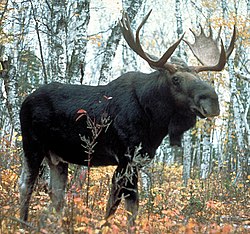


Cervinae
[edit]-

-
 Young red deer, with velvet
 -
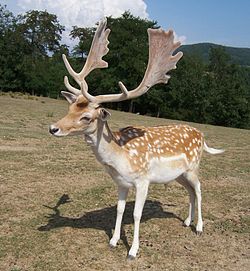 Fallow deer
 -
 American elk, or wapiti
 -
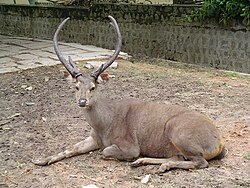 Sambar deer with thick, forked beams for antlers.
 -


Homology and evolution of tines
[edit]
Antlers originated once in the cervid lineage.[36] The earliest fossil remains of antlers that have been found are dated to the early Miocene, about 17 million years ago. These early antlers were small and had just two forks.[36] As antlers evolved, they lengthened and gained many branches, or tines, becoming more complex.[36] The homology of tines has been discussed since the 1900s and has provided great insight into the evolutionary history of the Cervidae family.[37][38][39]
Recently, a new method to describe the branching structure of antlers was developed.[40] It is by using antler grooves, which are formed on the surface of antlers by growth, projecting the branching structure on the burr circumference, and making diagrams. Comparing the positional order among species on the diagram, the tine on the same position is homologous. The study revealed that three-pointed structures of Capreolinae and Cervini are homoplasious, and their subclades gained synapomorphous tines.
Exploitation by other species
[edit]Ecological role
[edit]Discarded antlers represent a source of calcium, phosphorus and other minerals and are often gnawed upon by small animals, including squirrels, porcupines, rabbits and mice. This is more common among animals inhabiting regions where the soil is deficient in these minerals. Antlers shed in oak forest inhabited by squirrels are rapidly chewed to pieces by them.[41][42]
Trophy hunting
[edit]Antlered heads are prized as trophies with larger sets being more highly prized. The first organization to keep records of sizes was Rowland Ward Ltd., a London taxidermy firm, in the early 20th century. For a time only total length or spread was recorded. In the middle of the century, the Boone and Crockett Club and the Safari Club International developed complex scoring systems based on various dimensions and the number of tines or points, and they keep extensive records of high-scoring antlers.[43] Deer bred for hunting on farms are selected based on the size of the antlers.[44]
Hunters have developed terms for antler parts: beam, palm, brow, bez or bay, trez or tray, royal, and surroyal. These are the main shaft, flattened center, first tine, second tine, third tine, fourth tine, and fifth or higher tines, respectively.[45] The second branch is also called an advancer.
In Yorkshire in the United Kingdom roe deer hunting is especially popular due to the large antlers produced there. This is due to the high levels of chalk in Yorkshire. The chalk is high in calcium which is ingested by the deer and helps growth in the antlers.[46]
Shed antler hunting
[edit]Gathering shed antlers or "sheds" attracts dedicated practitioners who refer to it colloquially as shed hunting, or bone picking. In the United States, the middle of December to the middle of February is considered shed hunting season, when deer, elk, and moose begin to shed. The North American Shed Hunting Club, founded in 1991, is an organization for those who take part in this activity.[41]
In the United States in 2017 sheds fetch around US$10 per pound, with larger specimens in good condition attracting higher prices. The most desirable antlers have been found soon after being shed. The value is reduced if they have been damaged by weathering or being gnawed by small animals. A matched pair from the same animal is a very desirable find but often antlers are shed separately and may be separated by several miles. Some enthusiasts for shed hunting use trained dogs to assist them.[47] Most hunters will follow "game trails" (trails where deer frequently run) to find these sheds or they will build a shed trap to collect the loose antlers in the late winter/early spring.
In most US states, the possession of or trade in parts of game animals is subject to some degree of regulation, but the trade in antlers is widely permitted.[48] In the national parks of Canada, the removal of shed antlers is an offense punishable by a maximum fine of C$25,000, as the Canadian government considers antlers to belong to the people of Canada and part of the ecosystems in which they are discarded.[49]
-
 A shed moose antler in Denali National Park and Preserve, Alaska (2010)
 -
 Antlers found shortly after being shed by a whitetail deer in eastern Oklahoma


Carving for decorative and tool uses
[edit]
Antler has been used through history as a material to make tools, weapons, ornaments, and toys.[50] It was an especially important material in the European Late Paleolithic, used by the Magdalenian culture to make carvings and engraved designs on objects such as the so-called Bâton de commandements and the Bison Licking Insect Bite. In the Viking Age and medieval period, it formed an important raw material in the craft of comb-making. In later periods, antler—used as a cheap substitute for ivory—was a material especially associated with equipment for hunting, such as saddles and horse harness, guns and daggers, powder flasks, as well as buttons and the like. The decorative display of wall-mounted pairs of antlers has been popular since medieval times at least.[citation needed]
The Netsilik, an Inuit group, made bows and arrows using antler, reinforced with strands of animal tendons braided to form a cable-backed bow.[51] Several Indigenous American tribes also used antler to make bows, gluing tendons to the bow instead of tying them as cables. An antler bow, made in the early 19th century, is on display at Brooklyn Museum. Its manufacture is attributed to the Yankton Sioux.[52]
Through history large deer antler from a suitable species (e.g. red deer) were often cut down to its shaft and its lowest tine and used as a one-pointed pickax.[53][54]
Ceremonial roles
[edit]Antler headdresses were worn by shamans and other spiritual figures in various cultures, and for dances; 21 antler "frontlets" apparently for wearing on the head, and over 10,000 years old, have been excavated at the English Mesolithic site of Starr Carr. Antlers are still worn in traditional dances such as Yaqui deer dances and carried in the Abbots Bromley Horn Dance.[citation needed]
Dietary usage
[edit]In the velvet antler stage, antlers of elk and deer have been used in Asia as a dietary supplement or alternative medicinal substance for more than 2,000 years.[55] Recently, deer antler extract has become popular among Western athletes and body builders because the extract, with its trace amounts of IGF-1, is believed to help build and repair muscle tissue; however, one double-blind study did not find evidence of intended effects.[56][57]
Elk, deer, and moose antlers have also become popular forms of dog chews that owners purchase for their pet canines.
Shed hunting with dogs
[edit]Dogs are sometimes used to find shed antlers. The North American Shed Hunting Dog Association (NASHDA)[58] has resources for people who want to train their dogs to find shed antlers and hold shed dog hunting events.
References
[edit]- ^ "Arctic Wildlife – Arctic Studies Center". naturalhistory.si.edu. Archived from the original on May 1, 2018. Retrieved May 1, 2018.
- ^ "What are antlers and what is their purpose?". Ace Antlers. January 14, 2019. Retrieved June 21, 2023.
- ^ Brown, Leslie (1993). The New Shorter Oxford English Dictionary, Volume 1. Clarendon Press. ISBN 0-19-861271-0.
- ^ a b Harper, Douglas (2010). "Online Etymology Dictionary". Dictionary.com. Archived from the original on November 8, 2010. Retrieved November 8, 2010.
- ^ "antler". CollinsDictionary.com. Collins English Dictionary – Complete & Unabridged 11th Edition. Retrieved October 27, 2012. Archived from the original on October 28, 2012.
- ^ a b c d Hall, Brian K. (2005). "Antlers". Bones and Cartilage: Developmental and Evolutionary Skeletal Biology. Academic Press. pp. 103–114. ISBN 0-12-319060-6. Retrieved November 8, 2010.
- ^ Love, Heather. "What Is The Difference Between Horns And Antlers?". A Moment of Science – Indiana Public Media. Retrieved December 5, 2020.
- ^ Antlered Doe Archived February 29, 2012, at the Wayback Machine
- ^ "Mammals: Pronghorn". San Diego Zoo. Retrieved June 27, 2013.
- ^ a b c d Malo, A. F.; Roldan, E. R. S.; Garde, J.; Soler, A. J.; Gomendio, M. (2005). "Antlers honestly advertise sperm production and quality". Proceedings of the Royal Society B: Biological Sciences. 272 (1559): 149–57. doi:10.1098/rspb.2004.2933. PMC 1634960. PMID 15695205.
- ^ a b Whitaker, John O.; Hamilton, William J. Jr. (1998). Mammals of the Eastern United States. Cornell University Press. p. 517. ISBN 0-8014-3475-0. Retrieved November 8, 2010.
- ^ Ditchkoff, Stephen S.; Lochmiller, Robert L.; Masters, Ronald E.; Hoofer, Steven R.; Bussche, Ronald A. Van Den (2007). "Major-Histocompatibility-Complex-Associated Variation in Secondary Sexual Traits of White-Tailed Deer (Odocoileus Virginianus): Evidence for Good-Genes Advertisement". Evolution. 55 (3): 616–25. doi:10.1111/j.0014-3820.2001.tb00794.x. PMID 11327168. S2CID 10418779.
- ^ a b Rössner, Gertrud E.; Costeur, Loïc; Scheyer, Torsten M. (December 16, 2020). "Antiquity and fundamental processes of the antler cycle in Cervidae (Mammalia)". The Science of Nature. 108 (1): 3. doi:10.1007/s00114-020-01713-x. ISSN 1432-1904. PMC 7744388. PMID 33326046.
- ^ Payne, Junaidi; Francis, Charles M. (1985). A Field Guide to the Mammals of Borneo. Sabah Society. p. 298. ISBN 978-967-99947-1-1. Retrieved October 6, 2025.
- ^ Pennisi, Elizabeth (June 20, 2019). "Cancer genes help deer antlers grow". Science. American Association for the Advancement of Science. Retrieved November 4, 2023.
- ^ Morina, Daniel L.; Demarais, Steve; Strickland, Bronson K.; Larson, Jamie E. (April 1, 2018). "While males fight, females choose: male phenotypic quality informs female mate choice in mammals". Animal Behaviour. 138: 69–74. doi:10.1016/j.anbehav.2018.02.004. ISSN 0003-3472. S2CID 3942922.
- ^ Landete-Castillejos, T.; Kierdorf, H.; Gomez, S.; Luna, S.; García, A. J.; Cappelli, J.; Pérez-Serrano, M.; Pérez-Barbería, J.; Gallego, L.; Kierdorf, U. (2019). "Antlers - Evolution, development, structure, composition, and biomechanics of an outstanding type of bone". Bone. 128 115046. doi:10.1016/j.bone.2019.115046. hdl:10578/30778. ISSN 1873-2763. PMID 31446115. S2CID 201751091.
- ^ a b Landete-Castillejos, T.; Currey, J. D.; Estevez, J. A.; Gaspar-López, E.; Garcia, A.; Gallego, L. (November 2007). "Influence of physiological effort of growth and chemical composition on antler bone mechanical properties". Bone. 41 (5): 794–803. doi:10.1016/j.bone.2007.07.013. PMID 17822969 – via Elsevier Science Direct.
- ^ Chen, Poyu; Stokes, A. G.; McKittrick, Joanna M. (February 2009). "Comparison of the structure and mechanical properties of bovine femur bone and antler of the North American elk (Cervus elaphus canadensis)". Acta Biomaterialia. 5 (2): 693–706. doi:10.1016/j.actbio.2008.09.011. PMID 18951859 – via Elsevier Science Direct.
- ^ Picavet, P. P.; Balligand, M. (September 12, 2016). "Organic and mechanical properties of Cervidae antlers: a review". Veterinary Research Communications. 40 (3–4): 141–147. doi:10.1007/s11259-016-9663-8. PMID 27618827 – via Springer Link.
- ^ a b c d Fang, Zhongqi; Chen, Bin; Lin, Shiyun; Ye, Wei; Xiao, Hang; Chen, Xi (December 2018). "Investigation of inner mechanism of anisotropic mechanical property of antler bone". Journal of the Mechanical Behavior of Biomedical Materials. 88: 1–10. doi:10.1016/j.jmbbm.2018.07.043. PMID 30114597 – via Elsevier Science Direct.
- ^ Rajaram, A.; Ramanathan, N. (December 1982). "Tensile properties of antler bone". Calcified Tissue International. 34 (3): 301–305. doi:10.1007/BF02411255. PMID 6809293 – via Springer Link.
- ^ a b c Gilbert, Clément; Ropiquet, Anne; Hassanin, Alexandre (2006). "Mitochondrial and nuclear phylogenies of Cervidae (Mammalia, Ruminantia): Systematics, morphology, and biogeography". Molecular Phylogenetics and Evolution. 40 (1): 101–17. Bibcode:2006MolPE..40..101G. doi:10.1016/j.ympev.2006.02.017. PMID 16584894.
- ^ a b Kruuk, Loeske E. B.; Slate, Jon; Pemberton, Josephine M.; Brotherstone, Sue; Guinness, Fiona; Clutton-Brock, Tim (2002). "Antler Size in Red Deer: Heritability and Selection but No Evolution". Evolution. 56 (8): 1683–95. doi:10.1111/j.0014-3820.2002.tb01480.x. PMID 12353761. S2CID 33699313. Archived (PDF) from the original on September 16, 2016.
- ^ a b Perez-Gonzalez, J.; Carranza, J.; Torres-Porras, J.; Fernandez-Garcia, J. L. (2010). "Low Heterozygosity at Microsatellite Markers in Iberian Red Deer with Small Antlers". Journal of Heredity. 101 (5): 553–61. doi:10.1093/jhered/esq049. PMID 20478822.
- ^ a b Metz, Matthew C.; Emlen, Douglas J.; Stahler, Daniel R.; MacNulty, Daniel R.; Smith, Douglas W. (September 3, 2018). "Predation shapes the evolutionary traits of cervid weapons". Nature Ecology & Evolution. 2 (10): 1619–1625. Bibcode:2018NatEE...2.1619M. doi:10.1038/s41559-018-0657-5. PMID 30177803. S2CID 52147419.
- ^ Nasoori, Alireza (2020). "Formation, structure, and function of extra-skeletal bones in mammals". Biological Reviews. 95 (4): 986–1019. doi:10.1111/brv.12597. ISSN 1464-7931. PMID 32338826. S2CID 216556342.
- ^ Lin, Zeshan; Chen, Lei; Chen, Xianqing; Zhong, Yingbin; Yang, Yue; Xia, Wenhao; Liu, Chang; Zhu, Wenbo; Wang, Han; Yan, Biyao; Yang, Yifeng; Liu, Xing; Sternang Kvie, Kjersti; Røed, Knut Håkon; Wang, Kun (June 21, 2019). "Biological adaptations in the Arctic cervid, the reindeer ( Rangifer tarandus )". Science. 364 (6446) eaav6312. Bibcode:2019Sci...364.6312L. doi:10.1126/science.aav6312. ISSN 0036-8075. PMID 31221829. S2CID 195191761.
- ^ Espmark, Yngve (October 1, 1964). "Studies in dominance-subordination relationship in a group of semi-domestic reindeer (Rangifer tarandus L.)". Animal Behaviour. 12 (4): 420–426. doi:10.1016/0003-3472(64)90061-2. ISSN 0003-3472.
- ^ Schaefer and Mahoney (December 2001). "Antlers on Female Caribou: Biogeography of the Bones of Contention". Ecology. 82 (12): 3556–3560. doi:10.2307/2680172. JSTOR 2680172.
- ^ a b Melnycky; et al. (December 2013). "Scaling of antler size in reindeer (Rangifer tarandus): sexual dimorphism and variability in resource allocation". Journal of Mammalogy. 94 (6): 1371–1379. doi:10.1644/12-mamm-a-282.1. S2CID 86047535.
- ^ Wishart, William (1985). "Frequency of Antlered White-Tailed Does in Camp Wainwright, Alberta". Journal of Wildlife Management. 49 (2): 386–388. doi:10.2307/3801538. JSTOR 3801538.
- ^ Donaldson, John; Doutt, J. Kenneth (1965). "Antlers in Female White-Tailed Deer: A 4-Year Study". Journal of Wildlife Management. 29 (4): 699–705. doi:10.2307/3798545. JSTOR 3798545.
- ^ "Moose as a domestic animal". The Kostroma moose farm. Archived from the original on December 10, 2016.
- ^ Bubenik, George A.; Bubenik, Peter G. (2008). "Palmated antlers of moose may serve as a parabolic reflector of sounds". European Journal of Wildlife Research. 54 (3): 533–5. doi:10.1007/s10344-007-0165-4. S2CID 44737101.
- James Randerson (March 20, 2008). "Moose's sharp hearing is attributed to antlers". The Guardian.
- ^ a b c Heckeberg, Nicola S. (February 18, 2020). "The systematics of the Cervidae: a total evidence approach". PeerJ. 8 e8114. doi:10.7717/peerj.8114. ISSN 2167-8359. PMC 7034380. PMID 32110477.
- ^ Garrod, A. Notes on the visceral anatomy and osteology of the ruminants, with a suggestion regarding a method of expressing the relations of species by means of formulae. Proceedings of the Zoological Society of London, 2–18 (1877).
- ^ Brooke, V. On the classification of the Cervidæ, with a synopsis of the existing Species. Journal of Zoology 46, 883–928 (1878).
- ^ Pocock, R. The Homologies between the Branches of the Antlers of the Cervidae based on the Theory of Dichotomous Growth. Journal of Zoology 103, 377–406 (1933).
- ^ Samejima, Y., Matsuoka, H. A new viewpoint on antlers reveals the evolutionary history of deer (Cervidae, Mammalia). Sci Rep 10, 8910 (2020). https://doi.org/10.1038/s41598-020-64555-7
- ^ a b George A. Feldhamer; William J. McShea (January 26, 2012). Deer: The Animal Answer Guide. JHU Press. pp. 32–. ISBN 978-1-4214-0387-8.
- ^ Dennis Walrod (2010). Antlers: A Guide to Collecting, Scoring, Mounting, and Carving. Stackpole Books. p. 46. ISBN 978-0-8117-0596-7.
- ^ Bauer, Erwin A.; Bauer, Peggy (2000). Antlers: Nature's Majestic Crown. Voyageur Press. pp. 20–1. ISBN 978-1-61060-343-0.
- ^ Laskow, Sarah (August 27, 2014). "Antler Farm". Medium (service). Archived from the original on September 3, 2014. Retrieved August 28, 2014.
- ^ "Wildlifeonline – Questions & Answers – Deer". Archived from the original on January 15, 2012. Retrieved March 1, 2012.
- ^ Fieldsports Britain (August 28, 2009). "Fieldsports Britain: Grouse on the Glorious Twelfth, roebucks and". fieldsportschannel.tv. Archived from the original on December 11, 2021. Retrieved October 30, 2012.
- ^ Dennis Walrod (2010). Antlers: A Guide to Collecting, Scoring, Mounting, and Carving. Stackpole Books. pp. 44–52. ISBN 978-0-8117-0596-7.
- ^ Dennis Walrod (2010). Antlers: A Guide to Collecting, Scoring, Mounting, and Carving. Stackpole Books. pp. 46–47. ISBN 978-0-8117-0596-7.
- ^ Susan Quinlan (November 18, 2011). "Parks Canada reminds visitors you can look, but don't touch". Prairie Post West. p. 3. Archived from the original on February 6, 2015. Retrieved December 5, 2011.
- ^ Bauer, Erwin A.; Bauer, Peggy (2000). Antlers: Nature's Majestic Crown. Voyageur Press. p. 7. ISBN 978-1-61060-343-0.
- ^ Balikci, Asen (1989). The Netsilik Inuit. Waveland Press. pp. 38–39.
- ^ "Bow, Bow Case, Arrows and Quiver". Brooklyn Museum.
- ^ "Deer-antler pick, used in flint mining from Grimes Graves". Archived from the original on March 8, 2012. Retrieved July 6, 2012.[full citation needed]
- ^ "970747.JPG". DK Images. Archived from the original on July 25, 2011. Retrieved December 28, 2022.
- ^ "Velvet Antler – Research Summary". www.vitaminsinamerica.com. Archived from the original on October 18, 2017. Retrieved May 1, 2018.
- ^ DiSalvo (September 18, 2015). How to Squeeze Snake Oil from Deer Antlers and Make Millions. [1] forbes.com
- ^ Sleivert, G; Burke, V; Palmer, C; Walmsley, A; Gerrard, D; Haines, S; Littlejohn, R (2003). "The effects of deer antler velvet extract or powder supplementation on aerobic power, erythropoiesis, and muscular strength and endurance characteristics". International Journal of Sport Nutrition and Exercise Metabolism. 13 (3): 251–65. doi:10.1123/ijsnem.13.3.251. PMID 14669926.
- ^ North American Shed Hunting Dog Association
 This article incorporates text from a publication now in the public domain: Chambers, Ephraim, ed. (1728). "antler". Cyclopædia, or an Universal Dictionary of Arts and Sciences. Vol. 1 (1st ed.). James and John Knapton, et al. p. 113.
External links
[edit]


Antler
View on GrokipediaTerminology
Etymology
The word antler derives from the Old French antoillier, denoting the foremost branch or tine of a deer's horn, which itself stems from Vulgar Latin anteoculāre, a compound of ante- ("before") and oculāre ("pertaining to the eye"), alluding to the antler's position forward of the deer's eyes on the skull.[8][9] This etymon reflects early observations of cervid anatomy in medieval contexts, where the term emphasized the prominent, eye-adjacent projection.[8] By the late 14th century, antler entered English via Anglo-Norman French as auntelere or hauntelere in Middle English texts, marking its initial adoption around 1398 as recorded in translations and hunting treatises.[8] The term's evolution in English was shaped by interactions with Germanic languages, incorporating influences from roots denoting branching or extension, though the primary lineage remained Romance.[8] In other European languages, analogous terms highlight structural resemblances. The German Geweih originates from Middle High German gewîge, meaning "that which swings" or "movable," derived from the verb gêwjan ("to swing, move to and fro"), evoking the antlers' annual growth and shedding cycles akin to swaying branches.[10] In French hunting parlance, antlers are termed les bois ("the woods"), a usage of the noun bois ("wood") from Frankish busk ("thicket" or "bush"), underscoring the branched, tree-like form of the growths. These linguistic variations underscore a shared conceptual link to natural forking structures across medieval Romance and Germanic traditions.[10] Historically, antler and its precursors appeared in medieval European literature and hunting manuals, symbolizing nobility and prowess. In Edward of Norwich's The Master of Game (c. 1406–1413), an English adaptation of Gaston Phoebus' Livre de la chasse (1387–1389), the term describes deer's "auntleres" in detailed accounts of tracking and measurement, emphasizing their role in assessing trophy quality during royal hunts. Such texts, circulated among aristocracy, integrated the word into vernacular discourse on venery, where antlers signified seasonal renewal and hierarchical status in feudal society.Antlers vs. Horns
Antlers and horns, though both serving as cranial appendages in ruminants, exhibit profound biological and structural differences that distinguish them as separate evolutionary innovations. Antlers are deciduous bony outgrowths unique to the Cervidae family, encompassing deer, elk, moose, and related species, where they are typically present only in males except in reindeer and caribou. These structures fully regenerate annually through a rapid growth phase covered in a vascularized skin layer known as velvet, which nourishes the developing bone before being shed to expose the mature, hardened antler; the entire process culminates in shedding after the breeding season.[11][12] In marked contrast, horns are permanent keratinous sheaths encasing a bony core, found exclusively in the Bovidae family, including cattle, sheep, goats, and antelopes, and often present in both sexes. Horns grow continuously from the base throughout the animal's life without regeneration or shedding, resulting in lifelong elongation.[11][13] Structurally, antlers are composed entirely of solid bone, frequently branched in complex patterns that vary by species, such as the multi-tined racks of white-tailed deer or the palmate forms of moose, providing a lightweight yet robust framework adapted for seasonal use. Horns, however, feature a central bony prominence fused to the skull, overlaid by a fibrous keratin sheath that is typically unbranched, straight, or spiraled—exemplified by the curved horns of bighorn sheep or the spiral forms of markhor— and may be hollow at the core in some species due to sinus involvement. These compositional differences underscore antlers' temporary, high-mineral-density nature versus horns' enduring, proteinaceous exterior.[14][12] The growth mechanisms further highlight these distinctions: antlers originate from specialized pedicles—permanent bony bases on the frontal bones of the skull—where they undergo accelerated endochondral ossification during spring and summer, mineralizing at rates up to 2 cm per day in some cervids, driven by hormonal cues like testosterone. This rapid, seasonal burst enables full regeneration within months. Horns, by comparison, emerge from extensions of the frontal sinuses, with growth occurring via slower, continuous deposition of keratin layers from epidermal cells at the base, modulated by steady hormonal influences without abrupt cycles.[15][13][12] Evolutionarily, antlers and horns represent parallel yet independently derived traits within the order Artiodactyla, the even-toed ungulates, both evolving primarily for intraspecific combat, mate attraction, and defense against predators. Antlers arose as a specialized, deciduous adaptation in the cervid lineage during the early Miocene, approximately 20-25 million years ago, emphasizing seasonal display and renewal. Horns, evolving convergently in bovids around the same period, fulfill analogous roles but as permanent fixtures, reflecting divergent strategies in cranial ornamentation across these sister families. Genetic analyses indicate a shared molecular toolkit, including HOX and FGF genes, underlying their development from dermal papillae, suggesting a common ancestral origin for ruminant headgear despite structural divergence.[16][13][12]Anatomical Terms
Antler anatomy employs specific terminology to describe its structural components, particularly in biological studies and hunting contexts. The primary elements include the beam, which is the central, elongated shaft extending from the base of the antler, serving as the main structural axis from which branches emerge.[17] Tines are the projecting branches or points that extend from the beam, resembling prongs or spikes; the term "tine" derives from Old English tind, meaning a sharp point or tooth-like projection.[18] At the base, the antler attaches to the skull via the pedicle, a permanent bony outgrowth on the frontal bone that supports annual antler regeneration.[19] Surrounding the pedicle is the burr, a swollen, irregular bony rim that forms the immediate base of the antler, often featuring knob-like protrusions.[17] Just above the burr lies the coronet, a circumferential ridge or growth ring that marks the transition from the pedicle to the antler proper and indicates annual growth layers in some species.[20] During the growth phase, the antler is covered by velvet, a soft, vascular skin layer rich in blood vessels and nerves that nourishes the developing bone beneath.[19] Specific tines are named based on their position along the beam, starting from the head. The brow tine, or first branch nearest the skull, is followed by the bez tine (second branch), trez tine (third branch), and upper branches such as the surroyal (fifth) and royal (sixth) tines, though nomenclature can vary slightly by region or species.[17] In scoring systems like Boone and Crockett, tines are systematically numbered as G1 (brow tine), G2 (bez tine), G3 (trez tine), and so on, with G referring to "normal points" arising from the main beam to assess antler symmetry and quality for records.[21] Antler morphology varies across cervid species, influencing terminology. For instance, in fallow deer (Dama dama), the upper antler ends in a flattened, palmate structure known as the palm, from which multiple short points, or "spellers," may extend.[22]Biology
Structure
Antlers consist primarily of bone tissue, characterized by a dense compact outer cortex surrounding a spongy trabecular interior, which optimizes the structure's strength-to-weight ratio for supporting substantial loads while minimizing mass.[23][19] This composition mirrors that of long bones in mammals but lacks a medullary cavity, allowing for efficient nutrient distribution during formation.[23] Antlers emerge from permanent bony projections known as pedicles, which are outgrowths of the frontal bones on the skull, providing a stable attachment point for annual regeneration.[5] During their initial growth phase, the developing antlers are enveloped in a specialized skin layer called velvet, richly supplied with blood vessels and nerves to deliver oxygen and nutrients essential for rapid development.[24][19] Macroscopically, antlers display complex branching patterns that may be symmetrical or asymmetrical depending on the species and individual, often featuring multiple tines radiating from a main beam.[25] In large species like the moose (Alces alces), mature antlers can span up to 1.5 meters in length across both sides and weigh 10–20 kg per pair, reflecting their role in display and combat.[4] Histologically, the cortical layer is reinforced by primary osteons—cylindrical units of concentric lamellae surrounding central vascular canals—that enhance rigidity and resistance to fracture.[26] During growth, these vascular canals facilitate nutrient transport under the velvet; following velvet shedding, the canals undergo ossification, transforming the tissue into fully mineralized dead bone.[23][25] This structural organization contributes to the antlers' exceptional mechanical properties, such as high toughness under impact.[26]Development and Growth
Antler development in cervids follows an annual cycle synchronized with seasonal changes, primarily driven by photoperiod variations that influence hormonal secretion. In temperate regions, antler shedding typically occurs in late winter or early spring as testosterone levels decline post-rut, allowing regeneration to begin shortly thereafter during late spring when day lengths increase. This low-testosterone environment facilitates the rapid outgrowth phase, which peaks in summer and can achieve growth rates of up to 2 cm per day in mature males of species like red deer (Cervus elaphus).[27][28][29] The process begins in juveniles with pedicle formation, where bony protuberances emerge on the frontal bone around the time of puberty, stimulated by rising testosterone levels that reach a threshold associated with body weight and sexual maturity. In adults, annual regeneration originates from the pedicle's periosteal layer, which harbors neural crest-derived stem cells forming a blastema-like tissue capable of de novo organogenesis. This regenerative blastema undergoes a modified endochondral ossification, where cartilage models at the growing tips are progressively replaced by bone, enabling both elongation and branching while the structure remains soft and vascularized.[30][31][32] Hormonal regulation is multifaceted, with insulin-like growth factor 1 (IGF-1) playing a key role in promoting the intense cellular proliferation and differentiation during the growth phase. Testosterone, while low overall to permit elongation, rises toward late summer to initiate mineralization, converting the cartilaginous framework into rigid bone through ossification. Estrogen contributes to terminating growth by influencing cellular processes at the molecular level, while photoperiod acts as the primary zeitgeber, modulating melatonin and gonadotropin-releasing hormone to time the cycle. Throughout growth, the antler is enveloped in velvet—a highly vascularized, innervated skin layer that supplies nutrients, oxygen, and growth factors to support the rapid tissue expansion until full ossification occurs.[33][5][28]Shedding Process
Antler shedding, the annual loss of fully formed antlers, occurs primarily in winter after the breeding season (rut), driven by a sharp decline in circulating testosterone levels triggered by lengthening photoperiods. This hormonal shift, which follows the mineralization and velvet shedding of the mature antler, signals the body to initiate detachment, typically between late December and early spring in temperate regions. In white-tailed deer (Odocoileus virginianus), for instance, shedding often begins in January and completes by March, aligning with reduced reproductive demands and energy conservation needs.[5][34][28] The biological mechanism of shedding centers on osteoclastic resorption at the burr—the widened base where the antler meets the pedicle. As testosterone drops, osteoclast cells are activated to dissolve the mineralized bone along a predefined abscission zone, creating a thin, weakened layer that fractures cleanly under minimal force, such as rubbing against vegetation or incidental contact. This process results in the antler detaching rapidly, often within hours to a single day per antler, leaving a precise, bloodless separation without significant tissue damage. Studies on fallow deer (Dama dama) and Virginia deer have detailed this resorption histologically, confirming the role of osteoclasts in eroding the distal pedicle bone while preserving the underlying regenerative tissue.[35][19][5] Following detachment, the exposed pedicle stump forms a superficial wound covered by a scab, which sloughs off within about 30 days as rapid epithelial healing occurs, supported by the high regenerative capacity of antler stem cells in the pedicle periosteum. This healing phase leaves minimal scarring, allowing the formation of new pedicle tissue; shortly thereafter, velvet-covered nubs—termed "buttons"—emerge, marking the onset of the next antler growth cycle in spring. The regenerative process relies on localized blastema-like activity, distinct from typical mammalian wound repair, and ensures efficient reuse of the pedicle structure.[19][36][37] Variations in shedding exist across species and individuals, influenced by environmental and physiological factors. In white-tailed deer, the process can span days and accelerate under nutritional stress, where depleted bucks shed earlier to prioritize survival over maintaining antlers, or due to injuries disrupting hormonal balance. For example, severe malnutrition or pedicle trauma may hasten resorption, while healthier individuals in optimal conditions exhibit more synchronized, later shedding. These differences highlight the adaptability of the process to ecological pressures, though the core osteoclastic mechanism remains consistent.[28][38][39]Mechanical Properties
Antlers possess a bulk density ranging from 1.72 to 1.75 g/cm³, which is comparable to cortical bone and results from extensive mineralization in the compact outer layer.[40][41] This density contributes to their overall rigidity as a biomaterial, with variations depending on species such as elk or red deer. Key mechanical strength metrics include compressive strengths of 150–235 MPa and tensile strengths of 100–140 MPa, while the Young's modulus typically falls between 7.5 and 15.7 GPa.[40][42][43] These values are evaluated through standardized tests, employing equations such as stress for load distribution and strain for deformation analysis, particularly in models simulating combat forces.[44] Antlers demonstrate superior impact resistance compared to typical long bones, with the trabecular core enabling high energy absorption—often several times greater than wet bovine bone—during three-point bending tests.[43][44] Overall, antlers exhibit greater toughness and fracture resistance than bovine femur bone, though they transition to a more brittle state after shedding the velvet, whereas the velvet-covered phase provides enhanced flexibility.[45] These properties stem briefly from the layered structure of dense cortical bone encasing a porous trabecular interior.[40]Functions
Sexual Selection
In deer species, antlers function prominently in sexual selection by serving as visual signals of male quality during mate choice. Larger and more symmetrical antlers are preferred by females, as they indicate superior genetic quality, overall health, and nutritional status, allowing females to select mates that can provide indirect genetic benefits to offspring.[46] For instance, in red deer (Cervus elaphus), observational studies have shown that females actively approach and associate more frequently with males bearing larger antlers, correlating with higher mating opportunities.[47] Antlers also play a key role in intrasexual competition among males, where they are employed in ritualized sparring to establish dominance hierarchies. Males typically engage in parallel pushing contests, locking antlers to test strength and endurance without inflicting lethal injuries, which minimizes energy expenditure and risk during the breeding season.[48] This form of combat allows rivals to assess each other's fitness reliably, with winners gaining priority access to females and territories.[49] The evolution of such elaborate structures aligns with Zahavi's handicap principle, which posits that costly traits like antlers serve as honest signals of male fitness because only high-quality individuals can afford their production. Antler growth demands substantial resources, with males in some species investing up to 30 kg of bone tissue over approximately three months, diverting nutrients from other physiological needs and imposing a significant metabolic burden.[50][5] Empirical evidence from long-term studies on red deer populations demonstrates a positive correlation between antler size and lifetime mating success, even after accounting for body size, underscoring their role in enhancing reproductive outcomes.[47] This heritability of antler traits further links larger antlers to sustained reproductive advantages across generations.[51]Heritability and Reproductive Advantage
Antler traits in deer exhibit moderate to high heritability, with estimates for antler size typically ranging from 0.4 to 0.6 in various populations, indicating a substantial genetic component influencing phenotypic variation.[52] This heritability reflects a polygenic architecture, where antler morphology is controlled by numerous loci of small effect across the genome, as demonstrated in genomic analyses of wild red deer populations.[53] Quantitative trait loci (QTLs) associated with antler development, such as those influencing pedicle initiation, have been identified on specific chromosomes in interspecies hybrids between Père David's and red deer, underscoring the genetic complexity of these traits.[54] The reproductive advantage conferred by superior antler traits is evident in enhanced mating success, where males with larger antlers gain greater access to females during the rut and sire more offspring than those with smaller antlers due to their role in competitive displays and rival deterrence.[47] This payoff arises from the correlation between antler size and lifetime breeding success, independent of body size, as observed in long-term studies of red deer, where selection gradients show positive directional selection on antler mass.[55] However, antler development involves trade-offs, as the high energetic costs of rapid growth divert resources from body maintenance and somatic growth, particularly reducing survival rates in nutritionally poor conditions where energy allocation prioritizes survival over secondary sexual traits.[56] This balance between sexual and natural selection maintains genetic variation in antler traits. Experimental evidence from twin and pedigree studies in farmed red deer populations indicates that genetics accounts for approximately 50% of the variance in antler characteristics, with the remainder attributable to environmental factors like nutrition.[52]Protection Against Predation
Antlers serve as a defensive mechanism for cervids against predators, particularly through direct confrontation when escape is not possible. In species like caribou (Rangifer tarandus), individuals use their antlers to thrust or block attacks from carnivores such as wolves (Canis lupus), often when cornered or "brought to bay" during pursuits.[57] This defensive capability is enhanced in herd settings, where caribou form protective groups, positioning antlers outward to deter pack assaults and protect vulnerable members.[58] The branching structure and sharp tines allow for goring or impaling threats, providing a last-resort weapon that can inflict serious injury on predators.[57] The size and complexity of antlers also function to intimidate potential predators, discouraging approaches before physical contact occurs. In elk (Cervus canadensis), larger antlers correlate with reduced predation risk from wolves, as evidenced by higher wolf selectivity for individuals that shed antlers early, indicating that intact antlers act as a visual and structural deterrent. Predator avoidance behaviors in elk, such as increased vigilance and grouping in the presence of wolves, are amplified by the presence of prominent antlers, which signal a higher cost of attack due to the potential for defensive retaliation. This intimidation effect is supported by observations that wolves preferentially target antlerless or early-shedding males, avoiding those with full racks during high-risk periods. Despite these benefits, antlers impose significant costs on cervid mobility and energy allocation, potentially hindering evasion from predators. Antlers can constitute 1-5% of a deer's body weight, adding substantial mass that reduces agility and sprint speed, making rapid escapes more challenging in open terrain.[59] This burden is particularly evident during the growth phase, when velvet-covered antlers are vascular and heavy, diverting resources from muscle maintenance and increasing vulnerability to pursuit predators.[60] The mechanical strength of antlers, derived from their compact bone structure, enables effective blocking or thrusting in defense but simultaneously compromises maneuverability in flight.[61] Shedding timing in many cervids aligns with periods of reduced predation pressure, minimizing exposure during vulnerability. Male elk retain antlers through winter, when wolf predation risk peaks due to deep snow and limited forage, shedding them in spring as predator activity declines and calving seasons begin. This seasonal pattern reduces the duration without antlers during high-risk months, as early casters face significantly higher predation rates from wolves. In white-tailed deer (Odocoileus virginianus), shedding typically occurs from late December to early March, coinciding with winter's end when predator pursuits are hampered by environmental conditions.[62] Fossil evidence from early cervids indicates that proto-antlers, appearing in the Miocene around 20-15 million years ago, likely served defensive roles against predators prior to their elaboration for intraspecific dominance. Simple, unbranched or minimally tined structures in basal species like Dicroceros suggest an initial adaptation for warding off attacks, as these forms predate the complex displays seen in modern cervids.[63] Analysis of Miocene antler fossils reveals growth patterns consistent with renewable weapons suited for repeated defensive use, supporting the hypothesis that anti-predator functions preceded sexual selection pressures in antler evolution.[64]Female Antlers in Reindeer
Reindeer (Rangifer tarandus), also known as caribou, represent the only species within the Cervidae family where both sexes grow antlers annually.[65] Unlike males, which shed their antlers in late winter or early spring after the rut, female reindeer retain theirs through the winter and into spring, often until shortly after calving, to facilitate foraging during the harsh Arctic season when food is scarce.[66] The primary functions of female antlers center on survival in extreme environments, including digging through deep snow to access lichen, a staple winter food source. Females use their antlers to scrape away snow layers, creating craters that can reach depths of up to 90 cm to uncover reindeer lichen (Cladonia rangiferina) and other vegetation beneath.[67] Additionally, these antlers serve a defensive role, enabling females to protect their newborn calves from predators such as wolves and bears during the vulnerable calving period in spring.[68] In terms of morphology, female antlers are notably smaller and less branched than those of males, up to around 50 cm in length with simpler structures adapted for utility rather than combat.[69] Males' antlers, by contrast, can exceed 130 cm and feature more elaborate tines for intrasexual competition. Females shed their antlers soon after giving birth, typically in late spring or early summer, aligning with reduced nutritional demands post-parturition.[66] The growth of antlers in female reindeer is hormonally regulated differently from males, primarily driven by prolactin and estrogen rather than testosterone. Prolactin levels rise in spring, initiating antler regeneration, while estrogen helps maintain the hardened antler state through winter.[70] This endocrine profile supports the adaptive value of antlers in Arctic habitats and ensures access to buried forage during prolonged snow cover.[71]Acoustic Enhancement
Antlers in cervids exhibit an acoustic enhancement function, acting as natural resonators that amplify low-frequency sounds critical for survival, such as predator movements or conspecific calls. The branched and palmated structures of antlers, particularly in species like moose (Alces alces), serve as concave surfaces that reflect and concentrate incoming sound waves toward the animal's ears, functioning similarly to a parabolic reflector or acoustic antenna. This mechanism improves directional hearing sensitivity, allowing males to detect distant threats or potential mates more effectively during the rutting season.[72] In studies on moose, the palmated portions of antlers have been shown to increase sound pressure by approximately 19% compared to scenarios without antlers, with the strongest enhancement occurring when the antlers are oriented toward the sound source; for instance, backward positioning relative to the sound reduced pressure to 79%, underscoring the directional benefit. This amplification is most pronounced for low-frequency sounds (below 1 kHz), such as grunts or footsteps, which travel farther in forested environments and are vital for communication. The structural branching of antlers contributes to this resonance by forming multiple reflective elements that funnel vibrations efficiently. The primary mechanism involves acoustic reflection rather than direct bone conduction, though the attachment of antlers to the skull may facilitate minor vibrational transfer to the inner ear, potentially enhancing sensitivity during the rapid growth phase when blood flow and nerve connections are heightened. Acoustic measurements confirm that antlered individuals exhibit improved sound localization, with evidence from controlled tests indicating a broader effective hearing range for subtle environmental cues. Behavioral observations suggest this enhancement aids in predator avoidance, as males with larger antlers demonstrate quicker responses to distant low-frequency stimuli.[72] Evolutionarily, this acoustic role may represent a secondary adaptation of antlers, originally evolved for display and combat, repurposed to boost sensory capabilities in males during vulnerable periods like the breeding season when mobility is reduced. Such multifunctionality highlights antlers' versatility beyond structural roles, providing a selective advantage in noisy habitats.[72]Evolutionary Aspects
Diversification Patterns
Antlers first appeared in the Cervidae family during the early Miocene, approximately 20 million years ago, coinciding with the initial radiation of cervids from Eurasian origins.[64] This evolutionary innovation marked a key adaptation, with antler forms diversifying alongside the family's expansion into diverse habitats across continents during the Miocene and subsequent epochs.[73] Diversification patterns in antler morphology range from simple, spike-like structures in basal cervid lineages to highly complex, multi-tined configurations in more derived species.[73] Early antlers typically exhibited a bifurcating or dichotomous branching pattern, while later forms developed additional tines through repeated splitting of growth centers.[63] Habitat influences this variation, with species in open environments often displaying larger, more elaborate antlers compared to those in dense forests, reflecting adaptations to visibility and combat dynamics in less obstructed settings.[74] Antler size exhibits positive allometry with body mass across cervids, scaling linearly for males up to approximately 110 kg before plateauing, as seen in extremes like the moose (Alces alces), where antlers can span over 2 meters.[75] Sexual dimorphism in antler development intensifies in polygynous species, where males compete intensely for mates, leading to proportionally larger and more robust structures relative to body size.[76] The fossil record illustrates these patterns, with early Miocene forms such as Dicrocerus elegans featuring dichotomously branched protoantlers that were simple and forked at the apex, representing a transitional stage from non-deciduous cranial appendages.[77] These primitive structures, shed annually, laid the foundation for the greater morphological diversity observed in later cervid radiations.[64]Antlers in Capreolinae
Antlers in the Capreolinae subfamily, which includes genera such as Odocoileus, Rangifer, Alces, and Capreolus, are typically characterized by a dichotomous branching pattern originating from forward-pointing main beams.[78][63] This structure contrasts with the more tree-like branching seen in other deer subfamilies and reflects adaptations suited to diverse habitats ranging from dense forests to open tundra. The dichotomous form allows for efficient growth and shedding, with antlers generally lighter in weight compared to those of larger-bodied relatives, facilitating agility during movement through varied terrains.[78] Species-specific variations highlight the diversity within Capreolinae. In white-tailed deer (Odocoileus virginianus), mature males typically develop antlers with 4 to 8 tines branching dichotomously from a curving main beam, enabling both display and combat functions.[28] Caribou or reindeer (Rangifer tarandus) exhibit distinctive palmate flats on their antlers, often with multiple shovel-like extensions, which are present and annually shed in both sexes—a unique trait among deer that supports resource competition in harsh arctic environments.[4] Moose (Alces alces) possess broad, palmate antlers spanning up to 2 meters, with tines radiating from expansive palms primarily for visual display during mating rituals.[79] In contrast, roe deer (Capreolus capreolus) display simpler three-tined antlers, with a forward-directed middle tine and a backward-curving beam, suited to their woodland lifestyles. Evolutionarily, antler morphology in Capreolinae has progressed from primitive spike-like or two-tined forms in early Miocene ancestors, such as those resembling Lucentia, to more complex, multi-tined structures in modern genera like Odocoileus.[80] This diversification likely arose in response to varying selective pressures for mate attraction and predator defense across Eurasian and North American lineages, with the retention of dichotomous branching as a conserved trait.[81] The annual regeneration cycle, including a post-shedding pause before regrowth, further distinguishes Capreolinae antlers and underscores their dynamic evolutionary role.[82]Antlers in Cervinae
The antlers of deer in the Cervinae subfamily, which includes species such as red deer (Cervus elaphus), sika deer (Cervus nippon), fallow deer (Dama dama), and wapiti (Cervus canadensis), are characterized by lyre-shaped or cup-like forms with backward-curving main beams that diverge moderately from the skull.[83][84] These structures typically feature multiple tines emerging from the beams, with the terminal portion often forming a complex crown in mature males. In contrast to the more dichotomous branching seen in Capreolinae, Cervinae antlers exhibit perissodactyl-like patterns with derived, palmate or multi-tined expansions.[85] Red deer antlers exemplify this morphology, with beams curving backward and supporting 6 to 12 tines in mature stags, where the upper tines often coalesce into a cup-like crown for display and combat.[86][87] Sika deer antlers show similar backward curvature but tend toward more intricate crowns in some populations, with beams bearing four primary tines that can develop additional sub-tines, enhancing their role in species recognition.[88] Fallow deer display distinctly palmate antlers, where the upper beams flatten into broad, shovel-like palms with multiple short tines, a trait unique among British deer species and reaching lengths up to 0.7 meters in older bucks.[89] Wapiti antlers feature long, relatively straight beams with strong divergence, supporting elongated tines that extend forward, adapted for their larger body size and open habitats.[90] These antlers are generally heavier and more robust than those in other cervid subfamilies, suited for intense combat in open-country environments where males clash beams head-on during the rut.[91] Pronounced burrs at the base, formed by swollen pedicels, provide structural reinforcement against impacts and aid in shedding the velvet covering.[73] Notably, the water deer (Hydropotes inermis), classified within Capreolinae, lacks antlers entirely and instead possesses elongated upper canine tusks in males for defense and mating, representing a derived adaptation in this subfamily. Evolutionary trends in Cervinae antlers reflect their Eurasian origins during the late Miocene, where radiations led to more derived branching patterns, including increased tine complexity and palmation, as adaptations to diverse habitats across the Old World.[78] This diversification, stemming from ancestral spiked forms, emphasized elaborate crowns and lyre shapes that enhanced sexual selection in woodland and grassland ecosystems.[81][92]Homology and Evolution of Tines
The evolution of antler tines in cervids traces back to the early Miocene, approximately 20 million years ago, when initial antler structures emerged as simple, unbranched outgrowths on the frontal bones of early cervids. Fossil records from the early Miocene (around 23-20 million years ago) show the first true antlers as short spikes or single forks, with bifurcation events leading to multi-tined forms by the middle Miocene. Transitional taxa, such as Euprox species from Eurasian deposits dated to 15-13 million years ago, represent key intermediates, featuring deciduous antlers with rudimentary branching and a developing burr at the pedicle base, marking the shift from permanent, horn-like cranial appendages in stem cervids to the annually renewed structures characteristic of crown-group Cervidae.[93][94][64] Developmental genetics of tine formation relies on conserved signaling pathways that parallel those in vertebrate limb budding, with fibroblast growth factor (FGF) and bone morphogenetic protein (BMP) pathways playing central roles in establishing branching points. FGF signaling, particularly FGF-2, drives proliferative outgrowth from the antlerogenic periosteum during the rapid growth phase, while BMPs (such as BMP2 and BMP4) induce chondrogenic differentiation and specify tine positions through localized expression gradients. These mechanisms ensure precise bifurcation, where opposing signaling creates zones of proliferation and apoptosis to sculpt tine morphology. Hox gene expression changes, notably in the HoxA and HoxD clusters, have contributed to evolutionary refinements in pedicle and tine positioning, enabling increased complexity without altering core appendage identity.[95][96][16] Tine homology across cervid species is supported by consistent developmental origins from the frontal apophysis and shared positional relationships, with basal tines (e.g., brow and bez) tracing to conserved primordia despite morphological variation. This homology underscores a single evolutionary origin for branching within Cervidae, as evidenced by comparative analyses of antler grooves and ossification patterns in fossils and extant forms. Convergent evolution of similar tine arrays, such as multi-pointed or palmate configurations, occurs in distantly related lineages like Capreolinae (e.g., moose) and Cervinae (e.g., fallow deer), likely driven by parallel selection pressures favoring elaborate displays for mate attraction.[97][98]Exploitation and Interactions
Ecological Role
Shed antlers play a significant role in nutrient cycling within forest ecosystems by returning essential minerals such as calcium and phosphorus to the soil as they decompose or are fragmented by scavengers.[99] These minerals, comprising up to 20% calcium in antler composition, enrich the nutrient-poor forest floor, supporting plant growth and overall soil fertility.[100] Rodents, including porcupines, squirrels, and mice, actively gnaw on shed antlers to access these nutrients, which helps wear down their continuously growing incisors while dispersing mineral fragments across the landscape.[101] This process integrates antlers into the broader nutrient dynamics of temperate forests, where they contribute to the recycling of resources otherwise locked in animal tissues.[102] Beyond nutrient provision, shed antlers and discarded velvet serve as a direct food source for various wildlife, enhancing biodiversity in woodland habitats. Small mammals like chipmunks, squirrels, and porcupines consume the mineral-rich bone material, while insects and birds may feed on associated organic matter from the velvet remnants left on vegetation after rubbing.[103] This availability supports a diverse array of species, from invertebrates to carnivores such as coyotes and bears that occasionally chew on fragments, thereby sustaining food webs in antler-producing ecosystems like those inhabited by deer and elk.[100] The presence of these resources fosters ecological connectivity, as they attract foraging animals that in turn aid in seed dispersal and pest control within forest understories.[102] Antler-related behaviors influence habitat structure, with male deer combats and rubbing activities clearing small branches and underbrush, which can promote plant regeneration by reducing competition and exposing soil for seedling establishment. Heavy antlers, weighing 3 to 9 pounds in mature males, impose an energy cost on movement, potentially altering migration patterns by increasing fatigue during long-distance travels in species like caribou.[4] In trophic interactions, the physical demands of antler growth and rutting weaken males, making them more vulnerable to predators such as wolves and cougars, which target these individuals to maintain population balance within cervid herds. This selective predation helps regulate deer densities, preventing overbrowsing and preserving ecosystem stability.[104][105]Trophy Hunting
Trophy hunting for antlers involves the selective harvest of male cervids with exceptionally large antlers, primarily for display and recognition as sporting achievements. The practice traces its origins to the Paleolithic era, where archaeological evidence from sites like Cueva Des-Cubierta in Spain indicates that Neanderthals collected and displayed herbivore skulls and antlers as hunting trophies, suggesting symbolic or status-related value.[106] In modern times, organized trophy hunting emerged in the 19th century in North America and Europe, with the Boone and Crockett Club—founded in 1887 by Theodore Roosevelt—establishing the first systematic records program in 1906 to measure and catalog big game trophies, including antlers, as a means to promote conservation.[107] By 1950, the club standardized its antler scoring system, focusing on measurements like beam length, tine spread, and circumferences to quantify trophy quality.[107] Similarly, the Safari Club International, established in 1971, developed its own scoring criteria, with minimum scores such as 300 inches for typical Rocky Mountain elk antlers to qualify as record entries.[108] Hunting methods emphasize precision and selectivity to target mature males, typically those over five years old, whose antlers serve as indicators of age and genetic quality. Rifle and archery seasons are often scheduled in late summer or early fall, before the annual shedding cycle in winter, to ensure antlers remain intact for trophies.[109] Hunters use spot-and-stalk techniques or elevated stands, guided by antler size and configuration to identify "trophy bucks," with many jurisdictions imposing antler point restrictions (e.g., minimum four points on one side) to protect younger animals.[110] Trophy hunting can alter population genetics by preferentially removing prime breeding males with large antlers, potentially leading to evolutionary declines in antler size across generations due to heritability of the trait (h² ≈ 0.33 in cervids).[111] Models of red deer populations show that sustained selective harvest reduces average antler scores by up to 10-20% over decades unless offset by culling smaller yearlings.[112] In bighorn sheep, analogous trophy hunting has decreased body and horn sizes by 5-10% in hunted populations.[113] Regulations aim to balance harvest with herd sustainability, including license quotas and bag limits in North America; for example, Wyoming's mule deer seasons restrict buck harvests to maintain sustainable populations based on herd-specific objectives.[114] In Europe, countries like Austria set annual red deer quotas based on population surveys, with harvest numbers around 58,000 in the 2022/23 season.[115][116] For endangered species, the Convention on International Trade in Endangered Species (CITES) regulates trophy exports, requiring permits and quotas for species like saiga antelope to curb illegal trade.[117]Shed Antler Hunting
Shed antler hunting, also known as shed hunting, is the practice of foraging for naturally cast antlers from cervids such as deer and elk without harming the animals. This activity primarily occurs in late winter and early spring on winter ranges where animals concentrate after the rut, as antlers are typically shed between January and April for deer and slightly later for elk.[118][119] Foragers often yield a small percentage of available antlers, with studies indicating that only about 38% of known sheds are recovered even under targeted search conditions, reflecting the challenges of natural camouflage and decomposition.[120] These collected antlers hold commercial value, commonly selling for $8 to $15 per pound when used in crafts like jewelry, knife handles, and decorative items, though prices vary by quality, color, and size—fresh brown antlers command higher rates than weathered white ones.[121] Effective techniques for shed antler hunting emphasize following animal sign to locate high-probability areas. Hunters track rub marks left on trees and shrubs from the previous fall, as well as trails leading to winter bedding sites where animals rested and shed antlers during low mobility periods. In the Rocky Mountains, the practice is particularly seasonal for elk sheds, with searches focusing on south-facing slopes and transition zones from wintering grounds to summer ranges, often starting after snowmelt in April or May to access remote terrain.[122][62][123] The U.S. shed antler industry supports a multi-million dollar annual trade in cervid antlers through exports, re-exports, and imports, driven by demand for crafts and other products.[124] This market is sustainable, as antlers fully regenerate annually on healthy animals without ecological depletion. From a conservation perspective, properly timed shed hunting in warmer spring conditions causes minimal disturbance to recovering wildlife, promoting low-impact recreation; however, over-collection is regulated in protected areas to prevent resource strain, including a complete ban on antler gathering within Yellowstone National Park at all times.[125][62]Cultural and Utilitarian Uses
Antlers have been utilized by humans since the Paleolithic era for crafting essential tools, valued for their durability and natural shape. In prehistoric contexts, antler fragments were shaped into awls and perforators to pierce hides for sewing clothing and shelters, as evidenced by artifacts from early human sites across Europe and Africa.[126] Hooks fashioned from antler served as fishing implements and aids in processing game, enabling efficient exploitation of aquatic and terrestrial resources during the Upper Paleolithic.[127] By the medieval period in Europe, particularly among Anglo-Saxon and Viking communities, antler continued to be a preferred material for utilitarian items such as knife handles, sword mounts, and combs, which were meticulously crafted from deer antler plates and teeth for everyday grooming and tool enhancement.[128] These composite combs, common in northern Europe including the Netherlands and Scandinavia, featured fine teeth sawn from antler and were often encased for protection, reflecting advanced woodworking techniques adapted to osseous materials.[129] In decorative arts, antlers inspired intricate carvings and symbolic representations across cultures. In Japan during the Edo period (1603–1868), antler was among the materials used for netsuke—small toggles that secured pouches to kimono sashes—often sculpted into whimsical figures of animals or mythical beings, evolving from functional fasteners into collectible art forms.[130] European traditions incorporated antlers into elaborate chandeliers as early as the 15th century, with nobles in castles and manors using shed or hunted antlers to create rustic lighting fixtures that evoked hunting heritage; replicas of extinct Irish elk antlers later enhanced these designs for ornamental grandeur.[131] In heraldry, antlers symbolized peace, strength, and regeneration, frequently depicted in coats of arms such as the three black stags' heads of Württemberg, representing noble lineage and connection to forested domains.[132] Architecturally, antlers found application in Alpine regions, where they adorned structures as roof finials to accentuate chalets and signify harmony with the mountainous environment, a practice rooted in 19th-century rustic aesthetics.[133] Antler inlays also enriched furniture, with thin plates embedded into wooden pieces for decorative panels in medieval and later European cabinets, adding texture and a nod to natural motifs as seen in archaeological workshops. Indigenous peoples integrated antlers into ceremonial and practical crafts, extending their cultural significance. Among Native American tribes, particularly in the Plains and Northwest, shed antlers were incorporated into headdresses and regalia to embody spiritual connections to deer spirits and hunting prowess, as in dances and rites honoring animal guardians.[135] In Māori culture, shed antler served as material for tools associated with tā moko tattooing, where its hardness complemented traditional chisels in the sacred creation of facial and body markings denoting genealogy and status.[136] These uses often extended to ceremonial contexts, amplifying the antler's role in rituals of identity and community.Dietary and Medicinal Uses
In Asian traditional practices, ground deer antler has been utilized as a calcium supplement to support bone health and prevent deficiencies, owing to its high mineral content including calcium derived from the antler's bony structure.[137] Pilose antlers, in particular, serve as a natural source of bioavailable calcium, integrated into nutraceutical formulations for treating bone degeneration and strengthening skeletal integrity in regions like China and Korea.[137] Additionally, deer antler velvet is consumed fresh or prepared as teas in Siberian indigenous traditions to harness its vitamin profile, including B vitamins and trace elements, for general nutritional enhancement and immune support.[138] In traditional Chinese medicine, deer antler velvet, known as lu rong, has been employed for over 2,000 years as a tonic to boost vitality, nourish blood, and alleviate arthritis symptoms by reducing joint swelling and pain.[139] It is prescribed to invigorate qi (vital energy), strengthen tendons and bones, and address conditions like osteoarthritis through its purported hemopoietic and anti-inflammatory properties.[139] Similarly, historical European records from late 15th-century Russia document antler preparations as "horns of gold" tonics for promoting overall health and recovery from illness.[140] Modern research has explored deer antler velvet's potential in wound healing, attributing effects to insulin-like growth factor-1 (IGF-1), a peptide abundant in velvet that stimulates tissue regeneration and accelerates repair in animal models.[141] For instance, topical application of elk velvet antler extract reduced wound size and enhanced healing in diabetic rats, while extracts promoted IGF-1 expression in full-thickness wounds.[142] In the 2020s, preclinical trials have demonstrated anti-inflammatory effects, such as suppression of pro-inflammatory cytokines in rheumatoid arthritis models, suggesting applications for joint disorders.[143] However, human clinical evidence remains limited and debated, with systematic reviews concluding that claims for efficacy in conditions like arthritis or athletic performance lack robust support from randomized controlled trials.[144] Deer antler velvet supplements, often in capsule or extract form, typically retail for $50–$100 per monthly dose, reflecting their premium sourcing from farmed deer.[145] Culturally, antler scraps are repurposed into nutrient-rich dog treats in practices observed in East Asian markets, including Korea, where ground antler powder provides calcium and minerals for pet dental health and nutrition.[146]Assisted Hunting Methods
Assisted hunting methods for antlers and related game recovery primarily involve trained dogs to locate shed antlers or track wounded deer, enhancing efficiency while minimizing disturbance to wildlife habitats. These approaches build on basic shed hunting practices by incorporating animal or technological aids to cover more ground and detect items that might otherwise be overlooked.[147] Dog training for these purposes has gained prominence in the United States since the early 2000s, with organizations like United Blood Trackers promoting the use of leashed dogs to recover wounded big game, including deer, to reduce waste and improve ethical hunting outcomes. Breeds such as Labrador Retrievers are favored for their strong retrieving instincts and scenting abilities, suitable for both scenting shed antlers in open fields and following blood trails from wounded animals; other effective breeds include dachshunds and bloodhounds, known for their persistence in dense cover. Training programs, offered by kennels like Dokken's Oak Ridge and Antler Labradors, typically begin with introducing puppies to antler shapes and scents through repetition and positive reinforcement, progressing to field exercises that condition dogs to alert handlers upon discovery.[148][147][149] Techniques emphasize off-leash searches in permitted areas for shed antler recovery, allowing dogs to systematically quarter fields and bedding areas while handlers follow at a distance, thereby reducing the human footprint and enabling coverage of up to four times more terrain than unaided efforts. For tracking wounded deer, dogs are kept on long leads to follow scent trails, often starting from the shot location and persisting for hours if needed. Well-trained dogs can increase antler find rates by 10-30% compared to human-only searches, particularly in thick vegetation where visual detection is challenging.[147][150] Regulations vary by state to balance recovery benefits with wildlife protection; for shed antler hunting, dogs are permitted in Colorado on public lands outside the January 1 to April 30 closure period, provided they remain under control and do not harass animals, while unleashed dogs are restricted in certain areas like Illinois state parks to prevent disturbance. For tracking wounded deer, the practice is legal in 43 states as of 2025, but banned in others such as Colorado, Wyoming, and Minnesota to avoid potential stress on game populations.[151][152][153] Emerging alternatives by 2025 include non-invasive technologies like drones equipped with high-resolution cameras for aerial scouting of potential antler drop zones or wounded game trails, allowing hunters to survey large areas without ground disturbance, though their use remains subject to federal aviation and state wildlife rules prohibiting active hunting aid. For example, as of June 2025, West Virginia permits the use of drones and leashed dogs for tracking mortally wounded game.[154][155]References
- https://en.wikisource.org/wiki/An_Etymological_Dictionary_of_the_German_Language/Geweih
- https://www.[researchgate](/page/ResearchGate).net/figure/Unknown-objects-possibly-handles-a-from-antler-workshop-and-b-from-intramural-of_fig4_324454755