


Community hub
Recent from talks
Contribute something
Nothing was collected or created yet.
Ball python
View on Wikipedia
| Ball python | |
|---|---|

| |
CITES Appendix II
| |
Scientific classification 
| |
| Kingdom: | Animalia |
| Phylum: | Chordata |
| Class: | Reptilia |
| Order: | Squamata |
| Suborder: | Serpentes |
| Family: | Pythonidae |
| Genus: | Python |
| Species: | P. regius
|
| Binomial name | |
| Python regius (Shaw, 1802)
| |

| |
| Distribution map of ball python | |
| Synonyms | |

The ball python (Python regius), also called the royal python, is a python species native to West and Central Africa, where it lives in grasslands, shrublands and open forests. This nonvenomous constrictor is the smallest of the African pythons, growing to a maximum length of 182 cm (72 in).[2] The name "ball python" refers to its tendency to curl into a ball when stressed or frightened.[3]
Taxonomy
[edit]Python Regius was the scientific name proposed by the biologist George Shaw in 1802 for a pale variegated python from an indistinct place in Africa.[4] The generic name Python was proposed by François Marie Daudin in 1803 for non-venomous flecked snakes.[5] Between 1830 and 1849, several generic names were proposed for the same zoological specimen described by Shaw, including Enygrus by Johann Georg Wagler, Cenchris and Hertulia by John Edward Gray. Gray also described four specimens that were collected in Gambia and were preserved in spirits and fluid.[6]
Etymology
[edit]The specific name regius is a Latin adjective meaning "royal" or "of the king".[7] The English common name "royal python" (used chiefly in Europe) and the specific epithet are usually taken together to mean "royal python". Historical accounts and modern secondary sources have suggested that the epithet and common name may reflect a long-standing cultural association between the species and African rulers — a widely repeated claim is that ancient rulers (sometimes linked to stories about Cleopatra) wore the snakes as living bracelets — but the historical evidence for that precise claim is limited and the attribution is of uncertain veracity; therefore sources treat it as a traditional explanation rather than a proven historical fact.[8][9]
Description
[edit]
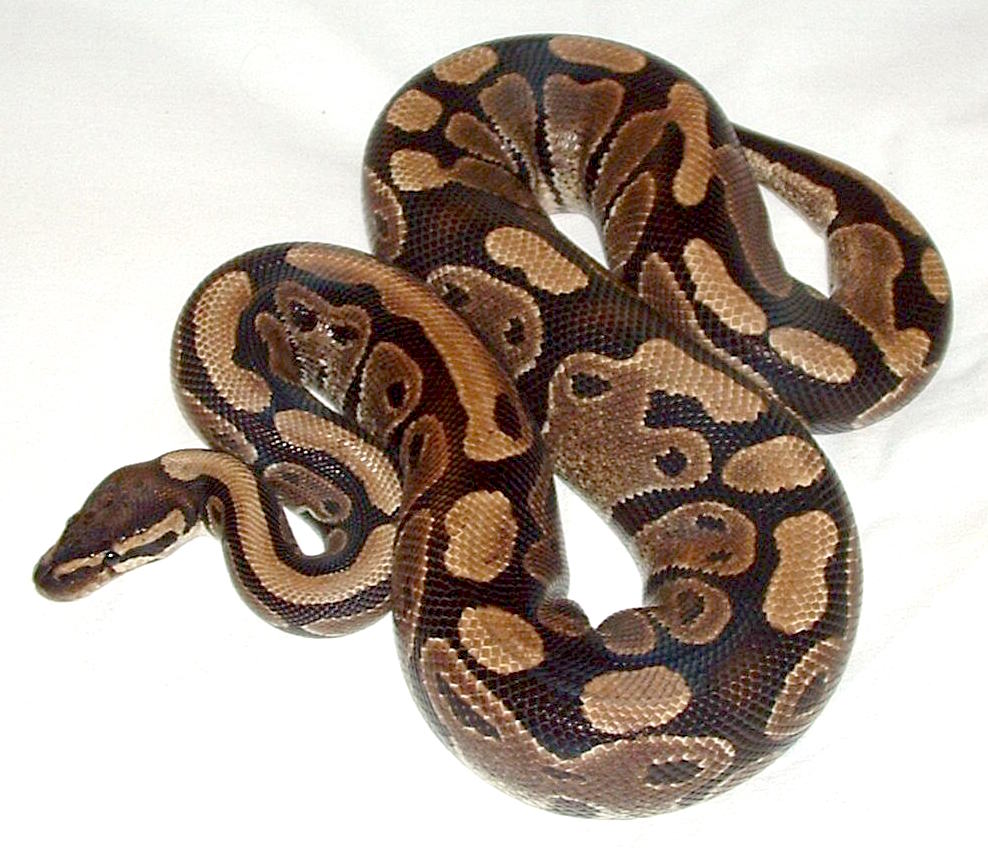
The ball python is black, or albino and dark brown with light brown blotches on the back and sides. Its white or cream belly is scattered with black markings. It is a stocky snake with a relatively small head and smooth scales.[3] It reaches a maximum adult length of 182 cm (72 in). Males typically measure eight to ten subcaudal scales, and females typically measure two to four subcaudal scales.[10] Females reach an average snout-to-vent length of 116.2 cm (45.7 in), a 44.3 mm (1.74 in) long jaw, an 8.7 cm (3.4 in) long tail and a maximum weight of 1.635 kg (3.60 lb). Males are smaller with an average snout-to-vent length of 111.3 cm (43.8 in), a 43.6 mm (1.72 in) long jaw, a 8.6 cm (3.4 in) long tail and a maximum weight of 1.561 kg (3.44 lb).[11] Both sexes have pelvic spurs on both sides of the vent. During copulation, males use these spurs for gripping females.[12] Males tend to have larger spurs, and sex is best determined by manual eversion of the male hemipenes or inserting a probe into the cloaca to check the presence of an inverted hemipenis.[13]
Distribution and habitat
[edit]The ball python is native to west Sub Saharan Africa from Senegal through Cameroon to Sudan and Uganda.[1] It prefers grasslands, savannas, and sparsely wooded areas.[3]
Behavior and ecology
[edit]Ball pythons are typically nocturnal or crepuscular, meaning that they are active during dusk, dawn, and/or nighttime.[14] This species is known for its defense strategy that involves coiling into a tight ball when threatened, with its head and neck tucked away in the middle. This defense behavior is typically employed in lieu of biting, which makes this species easy for humans to handle and has contributed to their popularity as a pet.[3]
In the wild, ball pythons favor mammal burrows and other underground hiding places, where they also aestivate. Males tend to display more semi-arboreal behaviors, whilst females tend towards terrestrial behaviors.[14]
Diet
[edit]The diet of the ball python in the wild consists mostly of small mammals and birds. Young ball pythons of less than 70 cm (28 in) prey foremost on small birds. Ball pythons longer than 100 cm (39 in) prey foremost on small mammals. Males prey more frequently on birds, and females more frequently on mammals.[14]
Reproduction
[edit]
Females are oviparous and lay three to 11 rather large, leathery eggs.[10] The eggs hatch after 55 to 60 days. Young male pythons reach sexual maturity at 11–18 months, and females at 20–36 months. Age is only one factor in determining sexual maturity and the ability to breed; weight is the second factor. Males breed at 600 g (21 oz) or more, but in captivity are often not bred until they are 800 g (28 oz), although in captivity, some males have been known to begin breeding at 300–400 g (11–14 oz). Females breed in the wild at weights as low as 800 g (28 oz) though 1,200 g (42 oz) or more in weight is most common; in captivity, breeders generally wait until they are no less than 1,500 g (53 oz). Parental care of the eggs ends once they hatch, and the female leaves the offspring to fend for themselves.[13]
Parthenogenetic reproduction was demonstrated in a pet ball python through genetic comparison of a mother and her early-stage embryos.[15]
Health and disease
[edit]Several infectious agents and husbandry-related conditions are known to affect ball pythons, especially in captive collections. Respiratory disease associated with novel reptile nidoviruses (sometimes called serpentoviruses) has been reported repeatedly in captive ball pythons and other python species; experimental infection studies and outbreak investigations provide strong evidence that these nidoviruses can cause proliferative interstitial pneumonia and fatal respiratory disease in ball pythons. Surveillance and diagnostic studies and reviews summarize nidoviruses as an important emerging pathogen in pythons. Clinical signs commonly reported include increased respiratory effort, open-mouth breathing, nasal/ocular discharge, anorexia and weight loss, and mortality can be high in affected collections.[16][17][18]
Other viral agents (for example, ferlaviruses) and bacterial and parasitic infections also contribute to disease in captive animals; poor transport, overcrowding and inadequate biosecurity in trade and ranching operations have been implicated in increased disease risk and mortality. Good husbandry, quarantine, diagnostic testing, and veterinary oversight are emphasised in the literature to reduce disease transmission in collections and during trade.[19][20]
Threats
[edit]The ball python is listed as Near Threatened on the IUCN Red List; it experiences a high level of exploitation and the population is believed to be in decline in most of West Africa.[1] The ball python is primarily threatened by poaching for the international exotic pet trade. It is also hunted for its skin, meat and use in traditional medicine. Other threats include habitat loss as a result of intensified agriculture and pesticide use.[1] Rural hunters in Togo collect gravid females and egg clutches, which they sell to snake ranches. In 2019 alone, 58 interviewed hunters had collected 3,000 live ball pythons and 5,000 eggs.[21]
In captivity
[edit]
,_Bronx_Zoo.jpg)
Ball pythons are the most popular pet snake and the second most popular pet reptile after the bearded dragon.[22] According to the IUCN Red List, while captive bred animals are widely available in the pet trade, capture of wild specimens for sale continues to cause significant damage to wild populations.[1] This species can do quite well in captivity, regularly living for 15–30 years with good care. The oldest recorded ball python in captivity is 62 years, 59 of those at the Saint Louis Zoo.[23]
Breeding
[edit]
Captive ball pythons are often bred for specific patterns that do not occur in the wild, called "morphs."[24][25] Breeders are continuously creating new designer morphs, and over 7,500 different morphs currently exist.[25][26][27] Most morphs are considered solely cosmetic with no harm or benefit to the individual animal. However, the "spider" morph gene has been linked to neurological disease, typically involving symptoms such as head tremors and lack of coordination that are collectively referred to as "wobble syndrome."[28] Due to the ethical concerns associated with intentionally breeding a color pattern linked to genetic disease, the International Herpetological Society banned the sale of spider morphs at their events beginning in 2018.[29]
In culture
[edit]The ball python is particularly revered by the Igbo people in southeastern Nigeria, who consider it symbolic of the earth, being an animal that travels so close to the ground. Even Christian Igbos treat ball pythons with great care whenever they come across one in a village or on someone's property; they either let them roam or pick them up gently and return them to a forest or field away from houses. If one is accidentally killed, many communities on Igbo land still build a coffin for the snake's remains and give it a short funeral.[30][31][32] In northwestern Ghana, there is a taboo towards pythons as people consider them a savior and cannot hurt or eat them. According to folklore, a python once helped them flee from their enemies by transforming into a log to allow them to cross a river.[33]
References
[edit]- ^ a b c d e D'Cruze, N.; Wilms, T.; Penner, J.; Luiselli, L.; Jallow, M.; Segniagbeto, G.; Niagate, B.; Schmitz, A. (2022) [amended version of 2021 assessment]. "Python regius". IUCN Red List of Threatened Species. 2022 e.T177562A220378972. doi:10.2305/IUCN.UK.2022-2.RLTS.T177562A220378972.en. Retrieved 11 November 2023.
- ^ a b McDiarmid, R. W.; Campbell, J. A.; Touré, T. (1999). Snake Species of the World: A Taxonomic and Geographic Reference. Vol. 1. Washington, DC: Herpetologists' League. ISBN 1-893777-00-6.
- ^ a b c d Mehrtens, J. M. (1987). "Ball Python, Royal Python (Python regius)". Living Snakes of the World in Color. New York: Sterling Publishers. p. 62. ISBN 0-8069-6460-X.
- ^ Shaw, G. (1802). "Royal python". General zoology, or Systematic natural history. Volume III, Part II. London: G. Kearsley. pp. 347–348.
- ^ Daudin, F. M. (1803). "Python". Histoire naturelle, générale et particulière, des reptiles. Vol. Tome 8. Paris: De l'Imprimerie de F. Dufart. p. 384.
- ^ Gray, J. E. (1849). "The Royal Rock Snake". Catalogue of the specimens of snakes in the collection of the British museum. London: The Trustees. pp. 90–91.
- ^ "rēgius (Latin adjective)". AncientLanguages / Allo. 26 September 2023. Retrieved 19 October 2025.
- ^ "Royal python". Belfast Zoo. Retrieved 19 October 2025.
- ^ "Python regius". The Reptile Database. Retrieved 19 October 2025.
- ^ a b Barker, D. G.; Barker, T. M. (2006). Ball Pythons: The History, Natural History, Care and Breeding. Pythons of the World. Vol. 2. Boerne, TX: VPI Library. ISBN 0-9785411-0-3.
- ^ Aubret, F.; Bonnet, X.; Harris, M.; Maumelat, S. (2005). "Sex Differences in Body Size and Ectoparasite Load in the Ball Python, Python regius". Journal of Herpetology. 39 (2): 315–320. doi:10.1670/111-02N. JSTOR 4092910. S2CID 86230972.
- ^ Rizzo, J. M. (2014). "Captive care and husbandry of ball pythons (Python regius)". Journal of Herpetological Medicine and Surgery. 24 (1): 48–52. doi:10.5818/1529-9651-24.1.48. S2CID 162806864.
- ^ a b McCurley, K. (2005). The Complete Ball Python: A Comprehensive Guide to Care, Breeding and Genetic Mutations. ECO & Serpent's Tale Natural History Books. ISBN 978-097-131-9.
- ^ a b c Luiselli, L. & Angelici, F. M. (1998). "Sexual size dimorphism and natural history traits are correlated with intersexual dietary divergence in royal pythons (Python regius) from the rainforests of southeastern Nigeria". Italian Journal of Zoology. 65 (2): 183–185. doi:10.1080/11250009809386744.
- ^ Di Ianni, F.; Albarella, S.; Vetere, A.; Torcello, M.; Ablondi, M.; Pugliano, M.; Di Mauro, S.; Parma, P.; Ciotola, F. (2023). "Demonstration of parthenogenetic reproduction in a pet Ball Python (Python regius) through analysis of early-stage embryos". Genes (Basel). 14 (9): 1744. doi:10.3390/genes14091744. PMC 10531270. PMID 37761884.
- ^ Hoon-Hanks, L. L.; Layton, M. L.; Ossiboff, R. J. (2018). "Respiratory disease in ball pythons (Python regius) experimentally infected with ball python nidovirus". Virology. 517: 77–87. doi:10.1016/j.virol.2017.12.008. PMID 29329683.
- ^ Uccellini, L.; Ossiboff, R. J.; de Matos, R. E. (2014). "Identification of a novel nidovirus in an outbreak of fatal respiratory disease in ball pythons (Python regius)". Virol. J. 11 144. doi:10.1186/1743-422X-11-144. PMC 4254391. PMID 25106433.
- ^ Parrish, K.; et al. (2021). "Nidoviruses in Reptiles: A Review". Frontiers in Veterinary Science. 8 733404. doi:10.3389/fvets.2021.733404. PMC 8490724.
- ^ Blahak, S. (2020). "Investigations into the presence of nidoviruses in pythons". Virology Journal. 17 6. doi:10.1186/s12985-020-1279-5. PMC 6969405.
- ^ Rizzo, J.M. (2014). "Captive care and husbandry of ball pythons (Python regius)". Journal of Herpetological Medicine and Surgery. 24 (1): 48–52. doi:10.5818/1529-9651-24.1.48.
- ^ D'Cruze, N.; Harrington, L.A.; Assou, D.; Ronfot, De.; Macdonald, D.W.; Segniagbeto, G.H.; Auliya, M. (2020). "Searching for snakes: ball python hunting in southern Togo, West Africa". Nature Conservation. 38: 13–36. doi:10.3897/natureconservation.38.47864.
- ^ Valdez, J. W. (2021). "Using Google Trends to Determine Current, Past, and Future Trends in the Reptile Pet Trade". Animals. 11 (3): 676. doi:10.3390/ani11030676. PMC 8001315. PMID 33802560.
- ^ "A new squeeze? Snake mystery after lone, elderly python lays a clutch of eggs". The Guardian. 2020. Retrieved 11 September 2020.
- ^ Bulinski, S. C. (2016). "A Crash Course in Ball Python/Reptile Genetics". Reptiles magazine.
- ^ a b Giggs, R. (2024). "Skin in the Game". The New Yorker. Retrieved 19 February 2024.
- ^ "Morph List – World of Ball Pythons". World of Ball Pythons. Retrieved 31 August 2021.
- ^ Yurdakul E. (2020). "Ball Python Morphs". Reptilian world. Archived from the original on 2 March 2020. Retrieved 2 March 2020.
- ^ Rose, M. P. & Williams, D. L. (2014). "Neurologic dysfunction in a ball python (Python regius) color morph, and implications for welfare". Journal of Exotic Pet Medicine. 23 (3): 234–239. doi:10.1053/j.jepm.2014.06.002.
{{cite journal}}: CS1 maint: multiple names: authors list (link) - ^ "Breeders Meetings – New Policy – June 2017". International Herpetological Society. 2017. Archived from the original on 8 May 2020.
- ^ Hambly, Wilfrid D. (1931). "Serpent worship in Africa". Fieldiana Anthropology. Publication. Field Museum of Natural History. 21 (1): 1–85. doi:10.5962/bhl.title.7137. hdl:10111/UIUCOCA:serpentworshipin211hamb. JSTOR 29782194. OCLC 678589753.[obsolete source]
- ^ Udengwu, Ngozi; Erojikwe, Ikechukwu; Nnanna, Ndubuisi (2019). "Cultural transformation and the trials of the sacred python in text and context". Creative Artist: A Journal of Theatre and Media Studies. 13 (2): 22–49.
- ^ Drewal, Henry John (1988). "Interpretation, Invention, and Re-Presentation in the Worship of Mami Wata". Journal of Folklore Research. 25 (1/2): 101–139. JSTOR 3814277.
- ^ Diawuo, F.; Issifu, A. K. (2015). "Exploring the African traditional belief systems in natural resource conservation and management in Ghana" (PDF). Journal of Pan African Studies. 8 (9): 115–132. S2CID 146125167. Gale A441766901.
External links
[edit]

- "Python regius". Integrated Taxonomic Information System. Retrieved 12 September 2007.
- Python regius at the Reptarium.cz Reptile Database. Accessed 12 September 2007.
- Krishnasamy, Vikram; Stevenson, Lauren; Koski, Lia; Kellis, Marilee; Schroeder, Betsy; Sundararajan, Madhura; Ladd-Wilson, Stephen; Sampsel, Ashley; Mannell, Mike; Classon, Andrew; Wagner, Darlene; Hise, Kelley; Carleton, Heather; Trees, Eija; Schlater, Linda; Lantz, Kristina; Nichols, Megin (19 May 2018). "Notes from the Field: Investigation of an Outbreak of Salmonella Paratyphi B Variant L(+) tartrate + (Java) Associated with Ball Python Exposure — United States, 2017". MMWR. Morbidity and Mortality Weekly Report. 67 (19): 562–563. doi:10.15585/mmwr.mm6719a7. PMC 6048943. PMID 29771878.
- Ball Python Genetics Project of Eastern Michigan University, US
| National | |
|---|---|
| Other | |

Ball python
View on GrokipediaTaxonomy and Systematics
Classification and Etymology
The ball python (Python regius) is classified within the kingdom Animalia, phylum Chordata, class Reptilia, order Squamata, suborder Serpentes, family Pythonidae, genus Python, and species regius.[4][5] This placement reflects its status as a non-venomous constrictor snake, distinguished from advanced snakes (Caenophidia) by primitive traits such as vestigial pelvic spurs and two functioning lungs.[4] The species is listed as Least Concern on the IUCN Red List, indicating a stable wild population despite pet trade pressures, with assessments last updated in 2010 confirming no immediate extinction risk.[6] The binomial name Python regius was first proposed by British zoologist George Shaw in 1802, originally under the junior synonym Boa regius before reassignment to Python based on morphological distinctions from boas, including the absence of hind limbs and prefrontal scale patterns.[2] The genus Python derives from Greek mythology, referencing the serpent slain by Apollo at Delphi, while the specific epithet regius is Latin for "royal" or "kingly," likely alluding to West African cultural traditions where the snakes were worn live as jewelry by tribal leaders or, per unsubstantiated legends, by figures like Cleopatra as bracelets—claims lacking primary archaeological evidence but persistent in herpetological lore.[2][7] The common name "ball python" (also "royal python" in some regions) originates from its defensive posture of coiling into a tight spheric ball with the head tucked inside, a behavior observed consistently in threatened individuals and distinguishing it from other pythons.[2] No recognized subspecies exist, though geographic morphs show minor scalation variations without genetic divergence warranting taxonomic split.[5]Genetic Variation and Subspecies Debate
The ball python (Python regius) is recognized as a monotypic species, with no subspecies currently accepted in taxonomic classifications.[8] This determination stems from morphological uniformity across its range and limited evidence for discrete evolutionary lineages sufficient to justify subspecific divisions. Historical proposals for subspecies, such as based on regional color pattern variations (e.g., lighter dorsal saddles in populations from Ghana versus Togo), have not been substantiated by molecular data and are rejected in modern revisions.[8] Genetic variation in wild populations appears moderate but structured at a regional scale, reflecting the species' sedentary habits and patchy distribution in West and Central African savannas. A 2020 study provided the first molecular assessment of P. regius using mitochondrial DNA (mtDNA) sequences from the cytochrome b gene and eight microsatellite loci across wild samples from southern Togo and farmed individuals. It revealed low to moderate heterozygosity (observed heterozygosity H_O ranging from 0.45 to 0.62 across loci) and polymorphism information content (PIC) values indicating adequate variability for population-level analyses, but with no significant genetic bottlenecks in wild samples.[9] Pairwise F_ST values between sampling sites showed weak differentiation (typically <0.05), suggesting ongoing gene flow or recent common ancestry rather than isolated lineages.[9] Farmed populations exhibited slightly reduced diversity compared to wild ones, attributable to founder effects from limited wild imports, yet overlapped genetically with local wild groups, implying minimal artificial introgression impacts at the time of study.[9] Phylogenetic analyses from the same study clustered mtDNA haplotypes into shallow clades aligned with geographic proximity, but lacked deep divergences indicative of subspecies. This supports a model of panmictic or weakly structured populations, potentially influenced by historical range expansions during Pleistocene climatic shifts, though broader phylogeographic sampling across the full range (from Senegal to Uganda) remains limited. No subsequent studies have proposed taxonomic splits, reinforcing the monotypic status amid calls for expanded genomic surveys to resolve fine-scale variation. In contrast, captive-bred "morphs" (e.g., albinos or piebalds) represent artificial genetic variants fixed through selective breeding, often involving recessive mutations in genes like TYRP1 or EDNRB2, unrelated to natural subspecific diversity.[10][11]Physical Description
Morphology and Size Variation
The ball python (Python regius) exhibits a robust, cylindrical body morphology adapted for a terrestrial lifestyle, featuring a relatively small, triangular head that is only slightly wider than the neck, smooth dorsal scales arranged in 50-60 rows at midbody, and broad ventral scutes that facilitate movement across substrates.[1] Heat-sensing labial pits located between the upper lip scales enable infrared detection of prey, a characteristic shared with other python species.[12] The eyes possess vertical slit pupils suited for low-light conditions, and the tail is short, terminating in paired anal spurs vestigial from hind limbs.[1] Adult size shows pronounced sexual dimorphism, with females typically reaching lengths of 1.0-1.5 m and weights of 1.2-2.5 kg, while males average 0.9-1.2 m and 0.8-1.5 kg; maximum recorded lengths approach 1.8 m, though such extremes are uncommon in the wild.[1] [13] Hatchlings measure 25-43 cm at birth, with growth rates influenced by nutrition and environment.[1] In captivity, individuals often attain larger sizes than wild counterparts due to consistent feeding and veterinary care, with females potentially exceeding 1.6 m under optimal conditions, whereas wild specimens are constrained by prey availability and exhibit lower average body mass indices.[13] Genetic factors, including selective breeding for color morphs, can introduce minor variations in body proportions, such as altered head shapes in certain mutants, but do not substantially affect overall size metrics.[14]Coloration and Patterns in Wild Specimens
Wild specimens of the ball python (Python regius) display a mottled coloration featuring a light to medium brown ground color overlaid with irregular dark brown to black blotches and spots arranged in dorsal and lateral chains.[15] This pattern consists of asymmetrical, variable-shaped blotches extending along the body and tail, with alternating larger dorsal saddles and smaller lateral markings that do not consistently connect.[14] The dark pigmentation arises from melanin deposited by melanophores, while lighter areas incorporate red-to-yellow non-melanin pigments from xanthophores and iridophores, producing golden-brown hues on the sides.[15] The head typically bears a dark triangular or arrowhead marking, and the ventral surface is pale white to cream, occasionally marked with scattered dark spots or flecks.[16] Pattern elements vary in size and definition among individuals, contributing to effective crypsis in savanna and grassland environments, though intensity may differ slightly across the species' range from Senegal to Uganda.[14] Unlike captive morphs selectively bred for uniform stripes or reduced pigmentation, wild patterns remain highly irregular and adaptive.[11] No distinct subspecies are recognized based on coloration, as variations fall within normal polymorphism.[15]Distribution and Habitat
Geographic Range
The ball python (Python regius) is native to sub-Saharan Africa, with its geographic range extending across West and Central regions from the Atlantic coast of Senegal eastward to Sudan and Uganda, and southward into northern parts of the Democratic Republic of the Congo and the Republic of the Congo.[6][9] This distribution encompasses open woodlands, savannas, and forested areas south of the Sahara Desert.[1] Populations are documented in at least 20 countries, including Senegal, Mali, Guinea-Bissau, Guinea, Sierra Leone, Liberia, Côte d'Ivoire, Ghana, Benin, Nigeria, Cameroon, Central African Republic, Chad, Togo, Niger, Burkina Faso, Gambia, and Ethiopia.[6][17] The species' range reflects adaptation to varied but generally warm, humid environments, though exact boundaries remain somewhat imprecise due to limited field surveys in remote areas.[8] No native populations exist outside Africa, though escaped or released captives have occasionally established feral groups in places like the United States (e.g., Florida).[18]Preferred Environments and Microhabitats
Ball pythons (Python regius) primarily inhabit savanna grasslands, open woodlands, and forest margins in tropical and subtropical regions of sub-Saharan West and Central Africa, extending from Senegal eastward to north-western Uganda and southward to northern Angola. These environments are characterized by semi-arid to semi-humid conditions, with seasonal rainfall supporting grassy expanses interspersed with scattered trees and shrubs. The species shows adaptability to human-modified landscapes, including agricultural clearings, but avoids dense rainforests and true deserts.[1] Within these habitats, ball pythons exhibit terrestrial preferences, though juveniles and smaller individuals occasionally utilize low branches or shrubs for hunting or escape. They are crepuscular to nocturnal, emerging primarily at dawn, dusk, or night to forage, which aligns with the warmer, drier diurnal conditions that prompt daytime sheltering. Population densities vary but are generally low, estimated at less than one individual per square kilometer in surveyed savanna areas, reflecting their secretive nature and reliance on cover.[19][2] Microhabitats selected by ball pythons emphasize concealment and thermoregulation, with individuals spending the majority of daylight hours in rodent burrows, termite mounds, hollow logs, or under dense leaf litter and vegetation piles. These refugia provide protection from predators and excessive heat, allowing aestivation during the dry season when surface activity declines. Burrows are often those excavated by small mammals, offering loose soil for easy entry and stable microclimates with higher humidity relative to exposed ground. Shelter fidelity is high, with snakes reusing the same sites across seasons unless disturbed.[19][20][17]Wild Behavior and Ecology
Activity Patterns and Defensive Strategies
Ball pythons (Python regius) exhibit primarily nocturnal and crepuscular activity patterns in the wild, with peak foraging and movement occurring at dawn, dusk, and during the night, especially in the wet season when prey availability increases.[1] They are largely terrestrial and sedentary, spending daylight hours concealed in burrows, under leaf litter, fallen logs, rocks, or abandoned mammal dens to avoid diurnal predators, excessive heat, and desiccation in their savanna and forest-edge habitats.[1] [17] As ambush predators, they adopt a sit-and-wait strategy, remaining motionless for prolonged periods—sometimes weeks—while relying on chemical cues from the Jacobson's organ and visual detection to launch rapid constriction attacks on small mammals like rodents.[1] Defensive behaviors prioritize evasion over confrontation, with camouflage via their mottled brown-and-gold patterning providing primary protection against detection in leaf litter or soil.[1] When escape is impossible, individuals curl into a compact ball, tucking the head and neck beneath the coiled body to shield vital areas, a reflex that minimizes exposure to strikes or grabs and gives the species its vernacular name.[1] [17] Secondary responses include bluffing displays such as hissing, body inflation to appear larger, rapid head movements, or short strikes, though outright biting is infrequent and typically reserved for imminent threats; juveniles face higher predation from birds, mammals, and humans, while adults have few natural enemies due to their size and defensive posture.[1] During pre-shedding (ecdysis) phases every 4–6 weeks, ball pythons grow more reclusive and irritable, enhancing hiding and readiness to coil defensively.[17]Diet and Predation
Ball pythons (Python regius) are carnivorous ambush predators that primarily feed on small terrestrial vertebrates, with mammals forming the bulk of their diet in the wild.[1] They detect prey using chemical and visual cues, striking rapidly before constricting larger items to immobilize them, though smaller prey may be swallowed alive.[1] Documented rodent prey includes African giant rats (Cricetomys gambianus), black rats (Rattus rattus), rufous-nosed rats (Oenomys spp.), shaggy rats (Dasymys spp.), and grass mice (Lemniscomys spp.).[1] Birds such as doves and weaver birds, along with fruit bats, are also consumed occasionally, reflecting opportunistic foraging adapted to low prey density in their habitat.[1] Feeding is infrequent, often limited to several meals per year for adults, with physiological adjustments enabling prolonged fasting periods between hunts.[1] As prey, adult ball pythons face few documented predators due to their nocturnal habits and defensive adaptations, though black cobras (Naja nigricollis) have been reported preying on them in Ghana.[1] Juveniles and hatchlings are more susceptible to carnivorous mammals, birds of prey such as hawks and eagles, and human collection for the pet trade.[1] To deter attacks, they employ camouflage in leaf litter, rapid escape into burrows or vegetation, and the characteristic "balling" behavior—curling into a tight coil with the head tucked inward to minimize exposed vulnerable areas and reduce olfactory detection.[1] This strategy, combined with infrequent activity, contributes to their survival in predator-rich savannas despite limited agility compared to more active snakes.[1]Reproduction and Life History
Ball pythons (Python regius) are oviparous, with reproduction characterized by seasonal patterns in the wild tied to environmental cues such as rainfall. Mating typically occurs during the minor rainy season from mid-September to mid-November, followed by a gestation period of 44 to 54 days.[1] Oviposition takes place in the latter half of the dry season, from mid-February to early April, when females deposit clutches containing 1 to 11 eggs, with an average of 6.[1] [21] Gravid females cease feeding during this period and seek suitable microhabitats, such as burrows or leaf litter, for egg deposition.[22] Following oviposition, females exhibit maternal care by coiling around the clutch to regulate temperature and humidity, brooding the eggs throughout an incubation period of approximately 60 days.[1] [22] This behavior maintains optimal conditions, with eggs hatching from mid-April to mid-June, coinciding with the onset of the major rainy season that supports juvenile foraging.[1] Hatchlings emerge at lengths of 25 to 43 cm and masses of 65 to 103 g, independent upon emergence but vulnerable to predation.[1] Sexual maturity is reached earlier in males, at 16 to 18 months, compared to females at 27 to 31 months, though attainment depends on size and condition rather than age alone.[1] In the wild, adults may breed biennially due to the energetic costs of reproduction.[23] Juveniles grow rapidly initially, attaining adult lengths of 0.9 to 1.5 m (females larger than males) within several years, though precise growth trajectories vary with prey availability and habitat quality.[1] Lifespan in the wild averages about 10 years, limited by predation, disease, and habitat pressures, while in captivity, individuals routinely exceed 20 years, with records up to 50 years under optimal husbandry.[1] This disparity underscores the role of anthropogenic threats in constraining natural longevity.[1]Conservation and Threats
IUCN Status and Population Estimates
The ball python (Python regius) is classified as Least Concern on the IUCN Red List of Threatened Species, with the most recent assessment conducted on March 3, 2021.[24] This designation is based on the species' extensive range across sub-Saharan Africa—from Senegal to Ethiopia and southward to northern Angola and Uganda—and its common occurrence in suitable habitats, where no major widespread threats have been identified to justify a higher risk category.[24] The population trend is assessed as stable, reflecting resilience despite localized pressures.[24] Global population estimates for wild ball pythons remain unavailable, as comprehensive surveys are hindered by the species' nocturnal habits, preference for dense cover, and vast distribution spanning diverse ecosystems.[25] Localized density studies provide limited insights; for example, research in West African regions such as Togo, Ghana, and Nigeria has reported encounter rates equivalent to 0.8–2.8 individuals per hectare in drier savanna areas and up to 6.6 individuals per hectare in more mesic habitats, though these figures derive from targeted field surveys rather than extrapolated totals.[26] Such data underscore the challenges in scaling local observations to continental levels, particularly given variability in habitat quality and unreported harvesting. The IUCN notes that while overcollection for the international pet trade—exceeding 3 million exports since 1975 under CITES Appendix II—poses risks in export hotspots like Togo and Ghana, it has not demonstrably depressed overall abundance.[24][27] Increased captive breeding globally has reduced pressure on wild stocks in recent decades, supporting the stable trend assessment.[24]Anthropogenic Pressures
The primary anthropogenic pressures on wild ball python populations stem from overcollection for the international pet trade and habitat degradation driven by agricultural expansion. Since 1975, over 3 million ball pythons have been exported under CITES regulations, primarily from West African range countries such as Togo, Benin, and Ghana, with Togo alone accounting for 1.66 million live specimens since 1978.[28] These exports, often labeled as ranched but including substantial wild-sourced individuals, target vulnerable life stages like gravid females and neonates, which hunters extract from nests, potentially disrupting local reproduction and leading to localized population declines despite the species' broad distribution.[30] Habitat loss exacerbates these pressures through conversion of savanna and woodland habitats to farmland, intensified mechanized agriculture, and widespread agrochemical use, which reduce shelter availability and diminish prey populations such as small mammals and birds. In regions like Togo and Benin, agricultural encroachment fragments preferred microhabitats, including termite mounds and rodent burrows used for refuge, while pesticides indirectly affect ball pythons by contaminating food chains and altering rodent abundances.[1][30] Although cultural taboos in some communities limit excessive hunting, these are insufficient against commercial incentives, contributing to the species' reclassification from Least Concern to Near Threatened on the IUCN Red List in 2021.[3] Subsidiary threats include hunting for bushmeat and skins, with pythons poached for local consumption and leather products, though these are less quantified than pet trade impacts. Climate change interactions, such as altered flooding regimes in humid savannas, compound agricultural pressures but remain secondary to direct human exploitation.[31] Overall, while global population estimates are uncertain due to patchy data, these pressures have prompted CITES reviews highlighting risks of unsustainable harvest in export hotspots.[3]Captivity and Trade
Historical Introduction to Captivity
The ball python (Python regius) was first imported to Europe in the late 19th century, initially valued for its skin rather than as a captive animal.[32] These early imports were sporadic and primarily served commercial purposes, with limited documentation of live maintenance in zoos or private collections until the mid-20th century.[2] Interest in keeping ball pythons alive in captivity grew in the late 1960s, coinciding with the establishment of python farms in West Africa that began exporting live specimens to meet emerging pet trade demands.[9][32] By the 1970s and 1980s, imports to the United States increased substantially, with the species gaining traction as an affordable exotic pet due to its docile demeanor when handled properly, though wild-caught individuals often proved challenging owing to stress-related feeding refusals and poor acclimation.[33] In 1991 alone, over 65,000 ball pythons were imported into the U.S., reflecting a surge in availability that outpaced husbandry knowledge at the time.[34] Captive breeding remained rare until the early 1990s, when successful reproduction of wild-type and mutant forms addressed supply issues from wild collection. The pivotal event was the 1992 production of the first captive-bred albino morph by breeder Bob Clark, which demonstrated reliable genetic inheritance and catalyzed hobbyist investment in lineages, shifting the trade toward farm-raised and domestically produced animals.[35][33][36] This transition reduced reliance on imports from over 100,000 annually in the late 1980s to under 20,000 by the early 2000s, as captive propagation proliferated.[2]Husbandry Practices and Recent Advances
Ball pythons in captivity require enclosures that allow for thermoregulation and security, typically measuring at least as long as the snake's adult length, with larger setups preferred for welfare; for example, adults reaching 1.5 meters should have minimum dimensions of 1.2 meters long by 0.6 meters wide by 0.45 meters high.[2][37] Enclosures should include multiple hides on both warm and cool sides, climbing branches, and a substrate such as cypress mulch or wood shavings that retains moisture without promoting mold.[38][39] Temperature gradients are essential, with a basking spot of 31-33°C (88-92°F), warm ambient of 27-29°C (80-85°F), and cool side of 24-27°C (75-80°F), maintained using under-tank heaters or radiant panels to avoid hot spots from direct contact.[40][37] Humidity levels should average 50-60%, rising to 70-80% in hides or during shedding, monitored via hygrometers and achieved through misting or moist substrate, reflecting wild habitat conditions in West Africa where daytime humidity ranges 60-80%.[41][39] A shallow water dish for drinking and soaking is provided, with daily monitoring to prevent dehydration or respiratory issues.[42] Feeding consists of appropriately sized rodents, such as mice for juveniles and rats for adults, offered frozen-thawed to minimize risk; hatchlings receive meals every 5-7 days, while adults are fed every 7-14 days based on body condition to avoid obesity.[43][44] Prey size should approximate the widest part of the snake's body, with handling paused 48-72 hours post-feeding to reduce regurgitation risk.[45] Routine maintenance includes spot-cleaning waste daily and full substrate replacement every 4-6 weeks to control pathogens like salmonella, inherent to reptiles.[46] Recent advances emphasize welfare-oriented husbandry, including enriched environments with naturalistic elements like leaf litter or puzzle feeders to mitigate stress and stereotypic behaviors observed in barren setups.[47][48] Studies since 2020 highlight the benefits of bioactive substrates for microbial balance and humidity stability, alongside automated sensors for precise environmental control, improving outcomes in high-volume breeding facilities.[38][49] These practices, informed by field data on wild microhabitats, have reduced common issues like refusal to eat, with some facilities reporting 20-30% higher activity levels in enriched enclosures.[41][47]Common Health Challenges
Ball pythons in captivity frequently encounter health issues stemming from suboptimal husbandry, such as incorrect temperature gradients, humidity levels, or sanitation practices, which predispose them to bacterial and parasitic infections.[50][51] Respiratory infections represent one of the most prevalent conditions, often bacterial in origin and exacerbated by ambient temperatures below the optimal 88–92°F (31–33°C) warm side range or excessive humidity without adequate ventilation.[52][51] Symptoms include open-mouth breathing, wheezing or bubbling sounds, lethargy, and appetite loss; untreated cases can progress to pneumonia and mortality.[52] Veterinary intervention typically involves antibiotics like enrofloxacin alongside husbandry corrections, with early detection improving outcomes.[51] Infectious stomatitis, commonly termed mouth rot, arises from bacterial overgrowth following oral trauma, poor enclosure hygiene, or immunosuppression, manifesting as gingival hemorrhage, mucosal swelling, excessive salivation, and foul odor from the mouth.[50][53] Affected snakes often exhibit anorexia and weight loss, with severe cases leading to systemic sepsis if bacteria disseminate.[53] Treatment requires debridement, topical antiseptics, systemic antibiotics, and resolution of underlying stressors like substrate contamination.[50] Viral diseases pose significant threats, including inclusion body disease (IBD) caused by reptarenaviruses, which primarily afflicts boid snakes but can infect ball pythons through direct contact with infected boas or contaminated fomites.[54] Clinical signs in pythons include neurological deficits such as head tremors, regurgitation, and progressive emaciation, culminating in fatality without cure.[55] Additionally, ball python nidovirus has been linked to severe, potentially fatal pneumonias since the late 1990s, characterized by respiratory distress and confirmed via histopathology.[56] Quarantine and euthanasia of positives are standard protocols due to high contagiousness and lack of therapeutics.[54] Parasitic infestations, both external (e.g., snake mites) and internal (e.g., nematodes, coccidia), are widespread in captive collections due to inadequate quarantine or fecal contamination, leading to irritation, anemia, or gastrointestinal obstruction.[50][57] External mites cause hyperactivity and skin flaking, treatable with ivermectin baths, while internal burdens necessitate fecal flotation diagnostics and targeted anthelmintics.[58] Other husbandry-linked problems include dysecdysis from humidity below 50–60%, resulting in retained eyecaps or skin tubes that invite secondary infections, and regurgitation from post-feeding handling or thermal mismatches, which risks dehydration and aspiration.[59][60] Preventive measures emphasize regular veterinary checkups, precise environmental monitoring, and sourcing from reputable breeders to mitigate these risks.[61]Breeding in Captivity
Reproductive Techniques
In captive breeding programs, ball pythons (Python regius) are induced to reproduce by simulating their natural West African seasonal cycle, typically involving a cooling period from October to March where ambient temperatures are lowered to 24–27°C (75–80°F) at night, with reduced feeding and photoperiod to mimic the dry season.[2][62] Females attain sexual maturity at approximately 1,500 g body weight (around 2–2.5 years of age), while males mature at about 800 g; breeders select pairs exceeding these thresholds to ensure reproductive viability.[63] Reproductive readiness in females is monitored via ultrasound for follicular development or noninvasive fecal progestagen analysis, with pairing initiated when the female refuses food and exhibits behavioral cues like restlessness or vent swelling.[63][21] Copulation occurs when the male mounts the female, using hemipenal spurs to stimulate cloacal apposition, often resulting in prolonged "locks" lasting several hours; multiple matings across the season (November–February) enhance fertilization success.[63] Oviposition follows 4–6 weeks post-mating. Prior to laying, the female undergoes a pre-lay shed, after which eggs are typically laid within 7–30 days, with most cases occurring between 10–20 days. If the female is coiled but relaxed (often in a lay box or hide), this behavior suggests laying is approaching but not necessarily immediate, with eggs laid in the next few days to 1–2 weeks, though timing varies individually. Tight coiling or straining usually indicates laying is imminent (hours to 1–2 days). Females lay clutches of 4–8 eggs (range 1–11) in a secluded nest site, after which they coil protectively around the clutch for brooding, maintaining temperatures of 31–33°C (88–92°F) through muscular contractions.[63][64] In captivity, eggs are frequently removed shortly after laying to artificial incubators to minimize risks of fungal infection, crushing, or desiccation, yielding hatching rates of 70–90% under controlled conditions compared to variable wild outcomes.[62][2] Artificial incubation employs stable temperatures of 31–33°C (88–92°F) with relative humidity near 100%, using vermiculite or perlite substrate in sealed containers to prevent dehydration; duration averages 55–60 days, though lower temperatures (e.g., 31°C) may extend this to 62 days for potentially stronger hatchlings.[65][66] Embryos are positioned upright to optimize oxygenation, as studies on python eggs indicate top-positioned embryos exhibit higher metabolic rates and faster development.[67] Hatching involves the neonate slitting the egg with an egg tooth, absorbing yolk reserves over 1–3 days before emergence; post-hatch, offspring are maintained at 32–35°C (90–95°F) with high humidity to support initial sheds and feeding. Surveys of captive breeders report consistent reproductive output across diverse husbandry setups, with over 900 clutches yielding thousands of viable eggs when basic thermal cycling and maturity criteria are met.[62][68]Morph Development and Genetic Selection
Morph development in ball pythons refers to the selective breeding practices that have produced over 6,000 distinct color and pattern variations, known as morphs, since the late 20th century. These morphs arise from spontaneous mutations in captive populations, initially identified visually and propagated through targeted pairings to enhance or combine traits. The process began with the production of the first captive-bred morph, the albino, by breeder Bob Clark in 1992, marking the onset of intensive genetic selection for aesthetic diversity.[36] Genetic selection involves pairing individuals heterozygous or homozygous for specific mutations to predictably express desired phenotypes in offspring, guided by Mendelian inheritance principles. Most ball python morphs exhibit monogenic inheritance, where a single gene locus determines the trait, categorized as recessive (requiring homozygosity, e.g., albino, piebald), dominant (expressed in heterozygotes), or co-dominant/incomplete dominant (showing intermediate effects, e.g., pastel, where heterozygotes display partial expression and homozygotes a "super" form).[69][70] Breeders maintain records of proven genetic lines, using tools like genetic calculators to forecast clutch outcomes and avoid deleterious combinations.[71] Scientific investigations have elucidated the molecular basis of several morphs, facilitating more precise selection. For instance, the albino morph is associated with variants in the TYR gene, including missense mutations like D394G and P384L, alongside haplotypes suggesting loss-of-function alleles.[14] The piebald morph results from a recessive nonsense mutation in the tfec gene, disrupting iridophore development and causing unpigmented skin patches, as confirmed through whole-genome sequencing and CRISPR validation in model species.[72] Lavender albino involves a homozygous 1,514-bp deletion in OCA2, while ultramel links to TYRP1 variants such as R305H or deletions in coding regions.[14] These findings, derived from community-sourced shed skins and genomic analysis, underscore ball pythons' utility as a model for vertebrate pigmentation genetics.[14] Selection practices prioritize visual appeal and viability, with breeders testing for "het" status by breeding to known carriers and observing progeny ratios, typically aiming for 66% heterozygous offspring from such pairings for recessive traits.[69] Complex morphs emerge from combining multiple genes, amplifying traits like reduced pattern or enhanced coloration, though polygenic influences remain less studied. Emerging genetic testing promises to refine selection by directly genotyping mutations, reducing reliance on multi-generational proofs.[73]Economic Aspects and Market Trends
The captive breeding of ball pythons generates economic value primarily through the sale of genetically diverse morphs, which appeal to hobbyists and collectors in the exotic pet trade. Prices vary widely based on morph rarity, with normal-phase juveniles often retailing for $20 to $40 and common single-gene variants like pastel or pinstripe fetching $50 to $100.[74] More advanced multi-gene combinations or novel morphs, such as certain high-end projects, can command $250 to $1,500 for adults, with exceptional specimens exceeding $10,000 due to perceived exclusivity and breeding lineage.[75][76] Market trends since 2023 reflect significant saturation, driven by prolific breeding of popular morphs, resulting in a price bust and reduced profitability for many operations. Oversupply has led to common morphs selling below production costs in some cases, prompting breeders to pivot toward rare combos or exit the industry altogether.[77] Videos and industry discussions highlight survival strategies for 2024-2025, including selective pairings for high-value offspring amid declining demand for entry-level animals.[78] For novice breeders, it is generally advised to focus on desirable morphs with strong demand, such as BEL (Banana), Mojave, or Butter, rather than normal wild-type specimens, whose offspring are overabundant and typically sell for $10-30 or less, often unprofitably.[79] However, due to severe market saturation, many experienced breeders strongly discourage beginners from breeding at all, emphasizing the need for extensive keeping experience, understanding of genetics, research into ethics, and assessment of demand before responsibly breeding only high-quality animals.[80] Despite this, the sector sustains momentum from enthusiast communities, with platforms like MorphMarket listing thousands of specimens annually, though full-time viability remains limited by competition and holding costs for unsold clutches.[81] Internationally, captive-bred ball pythons contribute to trade flows, complementing historical wild exports from West Africa exceeding 3.6 million individuals from 1997 to 2018, primarily from Togo, Benin, and Ghana.[33] Shifts toward ranching and U.S.-based captive production have influenced economics, with regulatory changes like the EU's 2022 halt on certain ranched imports redirecting supply chains and potentially stabilizing captive markets by curbing wild-sourced competition.[82] Overall, while morph innovation drives niche revenue, systemic oversaturation underscores the risks of scalability in this hobbyist-dominated industry.[83]Controversies and Criticisms
Welfare Concerns in Morph Breeding
Selective breeding for ball python morphs, which alters coloration and patterns through targeted genetic selection, has been associated with heritable health defects that compromise animal welfare.[38] Intense line breeding to establish recessive traits increases homozygosity for deleterious alleles, resulting in inbreeding depression manifested as neurological and skeletal abnormalities.[84] These issues arise because aesthetic priorities often override health screening, with defects appearing consistently in specific morph lines despite awareness among breeders.[85] A prominent example is the "wobble syndrome" observed in Spider morph ball pythons and related combinations, characterized by involuntary head twisting, impaired locomotion, and equilibrium loss during movement or striking.[86] This neurological dysfunction affects nearly all individuals carrying the Spider gene, with severity increasing in homozygous forms or when combined with other morphs like Champagne or Enchi, leading to difficulties in prey constriction and heightened stress responses.[87] Affected snakes exhibit reduced ability to perform natural behaviors, such as accurate predation, which correlates with chronic welfare deficits including frustration and potential starvation risks in suboptimal husbandry.[85] Skeletal deformities, including spinal kinking and malformed vertebrae, are documented outcomes of inbreeding in morph lines, reducing mobility and predisposing individuals to secondary infections or organ compression.[88] These structural issues stem from accumulated recessive mutations selected inadvertently alongside desired visuals, with prevalence rising in high-generation morph projects lacking outcrossing.[84] Fertility and hatchling viability also decline, as evidenced by lower clutch success rates and higher neonatal mortality in defect-prone lineages.[87] Overall, these defects indicate that morph breeding can produce animals with lifelong impairments, challenging claims of benign cosmetic selection by demonstrating causal links between genetic fixation and functional deficits.[38] Welfare assessments emphasize that while some morphs appear unaffected, the prevalence of issues in popular lines underscores the need for prioritizing health over novelty to mitigate suffering.[86]Trade Sustainability and Regulatory Debates
The ball python (Python regius) is listed under CITES Appendix II, requiring export permits to prevent overexploitation that could threaten wild populations, with the species entering the appendices in 1977. Annual international trade volumes are substantial, with Togo alone exporting 1,657,814 live specimens from 2000 to 2018, primarily to the United States and Europe, making it Africa's most heavily traded CITES-listed reptile.[28] Benin, Ghana, and Togo account for the majority of exports, often reported as "ranched" specimens—derived from wild-collected eggs or gravid females incubated in facilities—rather than fully captive-bred, comprising about 95% of live exports from these countries over the past decade.[25] Discrepancies in CITES trade data, including underreporting and misclassification of sources, have fueled concerns over the accuracy of sustainability claims.[89] Sustainability debates hinge on evidence of local population declines in export hotspots, where hunters in southern Togo report reduced encounter rates and smaller clutch sizes, linking these to intensive collection pressures since the early 2000s. No comprehensive wild population surveys exist for Benin, Ghana, or Togo, complicating assessments, though qualitative data from collectors estimate annual harvests of 576 to 5,083 individuals by small groups in Benin alone.[3][90] The IUCN classifies the species as Least Concern globally due to its wide distribution across sub-Saharan Africa, but local threats from habitat loss and trade in key exporting regions suggest ranching may not fully mitigate depletion risks without adaptive quotas.[1] Proponents of ranching argue it incentivizes community-based collection over poaching, yet critics, including CITES reviewers, contend it sustains demand for wild genetic stock, potentially undermining long-term viability absent verified breeding transitions.[91] Regulatory responses include the European Union's 2022 suspension of ranched ball python imports from West Africa, driven by insufficient non-detriment findings and welfare issues in transport, effectively halting a major market pathway. CITES Animals Committee documents from 2024 recommend a zero export quota for ranched specimens from Benin and call for enhanced monitoring in Togo and Ghana, reflecting adaptive management needs amid trade volumes exceeding 100,000 specimens annually in recent years.[82][3] In the U.S., imports persist under CITES but face scrutiny, with domestic captive breeding—producing millions annually—advocated as a sustainable alternative, though foundational wild imports historically bolstered genetic diversity. Debates persist on balancing trade benefits for rural economies against empirical risks of overharvest, with calls for genetic studies to distinguish wild-sourced from bred lineages.[9][27]Cultural and Scientific Significance
Role in Popular Culture
Ball pythons have carved a niche in popular culture primarily through their widespread appeal as beginner-friendly exotic pets, fostering a dedicated subculture among reptile enthusiasts that extends to online videos, social media, and hobbyist expos. Their defensive "balling" behavior and the explosion of selectively bred color morphs—numbering over 6,000 distinct varieties by 2024—have inspired content creation, with YouTube channels and Instagram accounts showcasing rare specimens like the albino or piebald morphs, often garnering millions of views for handling tutorials and morph reveals.[92] This digital presence has normalized ball pythons as symbols of accessible exotics, contrasting with more fearsome cinematic depictions of snakes, and contributed to their status as the most imported pet snake species in the U.S., with over 20,000 live specimens entering annually in recent years.[93] In film and television, ball pythons occasionally serve as props due to their calm demeanor and compact size, frequently standing in for more aggressive or venomous species in low-budget horror or thriller scenes to evoke unease without risking handler safety. For example, they appear in snake pit sequences or as "man-eaters" in productions where visual similarity trumps species accuracy, a practice noted in analyses of reptile use in media.[94] Educational programming has also featured them, such as in PBS segments explaining their biology and care, reinforcing their image as manageable captives rather than wild threats.[95] Documentaries focused on their natural history, like the 1997 film Ball Pythons in the Wild filmed in Ghana, have influenced perceptions by highlighting behaviors unseen in captivity, such as group hunting, and boosting captive breeding interest amid declining wild populations.[96] Overall, while absent from major blockbuster narratives, ball pythons embody a modern fascination with genetic customization in pets, paralleling trends in designer animals and sparking debates on ethics in selective breeding within enthusiast communities.[92]Contributions to Research and Education
Ball pythons (Python regius) have emerged as a key model organism in genetic research, particularly for investigating vertebrate pigmentation, color morph inheritance, and chromatophore biology, owing to the extensive captive breeding programs that have produced over 6,000 documented morphs since the 1990s. The Ball Python Genetics Project, a collaborative effort involving academic researchers and hobbyist breeders, has utilized crowdsourced phenotypic data to map genetic variants underlying mutations such as piebald and clown morphs, demonstrating recessive inheritance patterns linked to genes like MITF for white spotting and MC1R for melanophore regulation.[14][72][97] These studies highlight the species' value in accelerating discoveries on reptile-specific traits, with applications to broader evolutionary developmental biology, as captive populations provide ethical access to rare variants absent in wild specimens.[98] Physiological research has further leveraged ball pythons' natural fasting behaviors and metabolic adaptations, positioning them as complements to Burmese python (Python bivittatus) models for studying extreme phenotypic plasticity, such as post-feeding organ regeneration and lipid metabolism. The first high-quality whole genome assembly of P. regius, published in 2025, achieved a contig N50 of 12.5 Mb across 1.55 Gb, enabling future genomic comparisons and functional annotations despite the species' underrepresentation in traditional model organisms like mice.[99][100] This assembly addresses gaps in squamate genomics, facilitating investigations into traits like brumation tolerance and immune responses, with data deposited in public repositories for ongoing analysis.[101] In education, ball pythons contribute to herpetological outreach through their calm demeanor, making them suitable for classroom demonstrations of reptile anatomy, thermoregulation, and ethical husbandry practices. Veterinary studies confirm low stress responses in handled individuals, supporting their use in programs that teach biodiversity and conservation without elevating corticosterone levels or altering heterophil/lymphocyte ratios.[102] Organizations and educators employ them in interactive sessions to dispel myths about snakes, fostering interest in ecology among students, as evidenced by school curricula integrating live specimens for lessons on vertebrate diversity and captive care requirements.[103][104]References
- https://news.[mongabay](/page/Mongabay).com/2020/05/prized-as-pets-are-ball-pythons-being-traded-out-of-wild-existence/