Hubbry Logo
Window blindWindow blindMain
Open search
Window blind
Community hub
Window blind
logo
8 pages, 0 posts
0 subscribers
Be the first to start a discussion here.
Window blind
Window blind
from Wikipedia

Various window blind styles

A window blind is a type of window covering.[1] There are many different kinds of window blinds which use a variety of control systems. A typical window blind is made up of several long horizontal or vertical slats of various types of hard material, including wood, plastic or metal which are held together by cords that run through the blind slats. Vertical blinds run along a track system which can tilt open and closed and move side-to-side. Window blinds can be manoeuvred with either a manual or remote control by rotating them from an open position, with slats spaced out, to a closed position where slats overlap and block out most of the light. There are also several types of window coverings, called shades, that use a single piece of soft material instead of slats.

The term window blinds can also be used to describe window coverings more broadly. In this context window blinds include almost every type of window covering, whether it is a hard or soft material; i.e. shutters, roller shades, cellular shades (also called honeycomb shades), wood blinds, Roman shades, standard vertical, and horizontal blinds (also called Venetians). In the United Kingdom, awnings are sometimes called blinds or shades.

Overview

[edit]
Window blind stoppers (menchalakh) to prevent open window blinds from closing. From the Sarona Museum in Israel

Window blinds are generally sold as either ready-made or made to measure. As the names suggest, blinds that are ready-made are manufactured to set sizes based on typical window dimensions, whereas blinds that are made to a measurement are cut to a specific width and drop to match the window. The advantage of ready-made blinds is their availability and cost, whereas blinds that are made to measure will be more expensive but better fit the dimensions of a window.

Aside from coming in different dimensions, window blinds can also come in a variety of different styles, materials, colours and patterns. Below is a list of several popular styles of blinds:

  • Panel
  • Pleated
  • Roller
  • Roman
  • Venetian
  • Vertical
  • Wooden

Window blinds can be drawn manually using a cord, or automated through motorization. Controls for motorized blinds can be from a wall switch or keypad, remote control, or computer, eliminating the need for cords and allowing control of otherwise inaccessible windows. A number of modern homes are integrating blind control with central C-Bus solutions. This control provides ease of use and is effective for controlling blind operation to reduce heat loss during winter or minimize heat from the sun during summer.[citation needed]

Types

[edit]

Panel

[edit]

Panel blinds, sometimes referred to as Japanese blinds as they are based on Japanese shōji, are thin blinds in a panel shape that run along a track. Almost any fabric or paper can be employed, although 90% of all shoji blinds use white polyester to imitate 'washi' Japanese paper.[clarification needed]

Japanese shoji blinds in Nottingham, UK

Cellular shades

[edit]
Cellular shades, also called honeycomb shades, hanging in a window

Cellular shades or cellular blinds, sometimes referred to as honeycomb shades, are a type of window blind made of a long and continuous fabric with a cellular structure when opened and fold onto themselves when closed. The honeycomb shades were introduced in 1985.[2] The fabric is often made from soft paper or cloth-like material and is available in a variety of different structures including single cell, double cell or triple cell. Cellular blinds work by trapping air inside the cell structure once opened and create a barrier between the window surface and the room. Due to the unavailability of standardized tests, no ranking system currently exists to compare the efficacy of these blinds.

Windows and doors make up for almost one-third of a home's total thermal loss, according to the Department of Energy (United Kingdom).[3] This applies to heat loss in winter as well as entry of undesired heat in summer. When air inside the room comes in contact with windows, it is cooled or warmed. By convection, this air then circulates around the room. Cell shapes in the blinds hold trapped air and create a barrier between the window surface and the room, thus lessening the transfer of heat. Shades, however, provide only slight control of air infiltration.[4]

In common with all blinds, cellular shades can reduce solar gain in summer and provide room darkening or blackout for sleeping. Like most other window treatments, they are raised and lowered with a string. Cordless cellular shades are available to reduce the risk of strangulation for small children.[5] One may also have the option of lowering the top of the shade down, and/or the bottom of the shade up; commonly referred to as a Top-Down-Bottom-Up mechanism.

Roman

[edit]

Roman shades are a type of window blind used to help block out the sun. Although often called blinds, these are actually referred to as "shades" in the window covering industry. They are often referred to as Romans or Roman blinds in the UK. When opened, the Romans stack up evenly; when covering the full window height, they are smooth without overlapping.

Roman blinds can be purchased with a blackout lining on the back to fully block out sunlight. However, there will always be small light gaps on the edges of the blinds if mounted on the inside of the window frame or peeking out from behind the blind if mounted on the frame around the window.

Unlike other blinds, such as certain fabrics used for roller shades, vinyl vertical blinds, or vinyl horizontal blinds, Roman shades are not an ideal option for areas with a lot of moisture, such as bathrooms or windows above a kitchen sink.

Independence Hall

Roller

[edit]

Roller blinds are a type of window blind that is typically made from a polyester fabric wrapped around a plastic or metal roller. The roller may either be exposed or enclosed inside of a frame and can be placed at the top of the window recess or outside of the recess. To control the roller blind there is typically a chain or string on either side of the blind. When the side chain is pulled one direction the roller will raise, and if pulled in the opposite direction it will lower instead.

Some manufacturers also produce a version of roller blinds with two layers of fabric, sometimes referred to as double roller blinds, for even greater control of light filtration through a window. Typically, one layer will be made of a sheer fabric that can be used to reduce glare, with a second layer that typically includes a blackout lining for even greater filtration when necessary.

Venetian

[edit]
Venetian Blind Co. brass tag
Venetian blinds diagram
Venetian blinds on window
Venetian Blind Co.

A Venetian blind is a type of window blind made from overlapping horizontal slats that are typically lowered and drawn together by pulling a cord.[6] The slats are typically manufactured using a rigid material such as aluminium, plastic, or wood and move in unison through a series of wires that run through the blinds.

1841 for modern style blinds able to be held at angles and adjustable by cords

In the late 19th and early 20th centuries, Venetian blinds were widely adopted in office buildings to regulate light and air. A large modern complex in the US that adopted Venetian blinds was Rockefeller Center's RCA Building (better known as the Radio City building) in New York City, completed in the 1930s. One of the largest orders for Venetian blinds ever placed was to the Burlington Venetian Blind Co., of Burlington, Vermont, which supplied blinds for the windows of the Empire State Building in New York City.[7][8] In 1994, a design for Venetian blinds integrated with window glass panels was patented.[9] This new type of blind overcomes the problems related to damaging and fouling. Usually, magnets are used for motor transmission in order to preserve the sealing inside the insulating glass.[citation needed]

Vertical

[edit]
Vertical blinds, vanes are rotated to semi-closed position

Vertical blinds were introduced in 1948 (Flexible Blind Company, Hunter Douglas[10]), and gained acceptance as an alternative to draperies due to the streamlined look, versatility, energy efficiency, large variety of finishes.[11] The construction includes a horizontal (occasionally, in custom designs, tilted) track with moving carriers and vertical strips, called vanes, hanging off the carriers[12] (attached by clips). The vanes can rotate, changing the amount of light entering the room, and, when in open position, traverse the track (and thus be stacked compactly on one side of the window). When closed, the vanes tightly overlap, creating a good barrier against the sunlight penetration in summer and energy loss in winter.[11]

Unlike horizontal blinds, vertical blinds are less likely to collect dust because they stand vertically. Since they draw to the side rather than lifting and lowering, they are easier and faster to operate. They operate best on patio doors and sliding windows that slide from side to side. In the 1970s there were few choices of fabric- usually beige or white, which had to have stiffener embedded to prevent fraying, rather like on roller blinds fabric but using a thicker textile.

Vertical blinds became available in flat plastic (PVC), fabric, embossed PVC, also S-curved slats. A more modern modification is to offer them with wood trim at the top and bottom—sometimes midway as well—and these are usually described as "Japanese Vertical blinds" because they are often coordinated with Japanese style Shoji blinds using the same timber. Vertical blinds were most popular in the UK during the 1990s, since then sales have slowed as they lost popularity with a younger generation.

Stationary vertical blinds are hung in the doorways of some homes and businesses which generally leave the door open. Movement of the blind may signal a change in airflow, or someone entering the doorway. More commonly, however, these vertical blinds are made of thick plastic. In the cold rooms of food businesses, this slows the heat leakage into the cold room. In warmer climates, vertical blinds discourage flies and some other insects from entering the building. In certain areas of the UK window blinds are used to disguise the fact that offices have PCs in them and are used as a burglary deterrent.

Others

[edit]
Pleated blind

Other varieties of window blinds include mini blinds (typically aluminum, Venetian-Style blinds with very narrow slats, usually 25 mm or 1 inch wide), micro blinds (usually 13 mm or 12 inch wide), louvers, jalousies, brise soleil and pleated blinds.

Materials

[edit]

Blinds can be made in a variety of materials; some expensive and some less so. Less expensive blinds are usually made in polyester, aluminum, or PVC. These are inexpensive materials that are all easily accessible and yet durable at the same time.

A window blind is a means of screening a window, achieving similar results to those obtained by fitting curtains. Blinds are typically the same width and height as the window itself or slightly wider and taller—depending on whether they are fixed inside (Recess) or outside (Facefix) the window's reveal (i.e. the wall recess within which the window itself is fixed).

Window blinds have varying thermal effects: they can block unwanted heat of the summer sun and they can keep in heat in cold weather. But in both of these applications, they also reduce light to varying degrees, depending on the design. Many kinds of blinds attempt varying balances of privacy and shade. Blinds can be made of a number of different materials and manufactured in a number of different ways. This usually determines the name by which the blind is commonly known.

Fabric

[edit]

Blinds (otherwise referred to as "shades") made of fabric can either be rolled up (on a tube; Roller shades), folded up (Roman shades) or pushed up in an accordion style (Pleated and Cellular shades). Many fabrics are used including cotton, polyester, wool, viscose and silk to create these shades. A silk cloth can be present or embroidery stitch, which will give tissue varied terrain.

Wood

[edit]
Wood blinds on an outside window
Net blind on a wooden window, Bengaluru, India

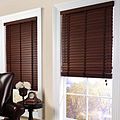
Wooden blinds (Venetian blinds)

[edit]

Wooden blinds are generally known as Venetian blinds. A number of horizontal wooden slats are joined by corded pulleys which can either gather all the slats at the top of the window to reveal the view or simply angle the slats while allowing some light to travel through the blind yet retaining some level of privacy. Wooden blinds come in a number of finishes (determined by the type of wood used, which ranges from painted to most types of solid oak varieties) and sizes (determined by the width of each slat which is usually available in one of three widths—25 mm [1 in], 35 mm [1+12 in], or 50 mm [2 in]). Wooden Venetian blinds are also available as vertical blinds. These are usually made up of wider slats and operate in virtually the same way as their horizontal counterparts (i.e. instead of drawing upwards to reveal the window, they draw to one side gathering in a vertical bunch).

Pinoleum blinds

[edit]

Pinoleum blinds are made up of small wooden twigs laid horizontally which are joined by vertical threading. The resulting weave is, as a result, only flexible vertically and can be drawn upwards once manufactured as a roller blind or in a similar fashion to a Venetian blind. Conservatory blinds are often made with Pinoleum.

In Malaysia, an outdoor blind is sometimes called a "chik". The word was carried over from India by the British during the colonial times.

Faux wood

[edit]

Faux wood blinds are an alternative to real wood blinds. Faux wood is also known by the trade name Plaswood (a portmanteau of plastic & wood). Made of a composite of man-made materials and natural wood particles, faux wood can be a less expensive choice than natural wood. These blinds have become more popular as the products have matured, becoming cheaper and more versatile at the same time offering more of a natural wood look. Current faux wood blinds are warp resistant, have UV ratings as high as 500 and come in colors that would be hard to find in natural wood blinds. Because of their resistance to warping, faux wood window blinds are suitable for areas with extreme temperature swings or high moisture, such as bathrooms and kitchens.

Other materials

[edit]
Composite lumber window blind
Rollable outside window blind

Venetian blinds, both horizontal and vertical, are available in a number of man-made materials (either resembling wood or metal or simply plastic). These are better suited to areas where moisture or direct contact with water is likely to cause a problem, such as bathrooms and kitchens. These blinds are often available with micro slats (as small as 16 mm or 58 in or less). The result of smaller slats is that more have to be used to obscure the window completely. Conservatory blinds (i.e. ceiling fixed via a number of horizontal pulleys) are often made of man-made materials.

Safety

[edit]

Corded window blinds present a strangulation hazard to children, causing 184 deaths in the United States between 1996 and 2012.[13] Recalls of window covering products have not significantly reduced the number of deaths since 1980. Retrofit kits have been used since 1995 to "reduce" the strangulation hazard; however, children have strangled on retrofit kits since 1995.[14] The US CPSC recommends using cordless or cord-free window coverings where children live or visit.[15] For window coverings that use continuous-loop cord systems, like vertical blinds, a wall cord cleat can be used to anchor the cord tightly to the wall and prevent children from having access to the dangling cord loop. Window blinds slats are held together with cords that allow for tilting slats, raising or lowering, and these are potentially dangerous if loose. As an added precaution, cord stops should be installed correctly and adjusted to restrict the movement of inner lift cords.[16]

Vehicle blinds

[edit]
Shades on a United Airlines Boeing 747-400

Some vehicles include or are retrofitted with sun blinds for rear and rear side windows. See also car glass. These blinds are used to protect the vehicle and the passengers from direct sunlight.

Car shades are another common way to protect the vehicle. The shades for the rear and front windows are designed to be unfolded and sit against the window. They can be made of plastic or cardboard. The shades that go on the side windows of a vehicle are usually attached using either suction cups or static cling.

Solid fabric and slat car blinds have given way to cheaper and more flexible, folding, wire-framed "dark-stocking" synthetic blinds. These are used where the car owner has not dark-tinted the glass of the car windows enough, or during the day, by drivers or passengers seeking more privacy.

Most commercial airliners feature window blinds in the passenger cabin. These blinds are generally made of plastic and are usually closed during cruises. In a first for the aviation industry, the Boeing 787 Dreamliner lacks window blinds – instead, the airliner features an advanced window dimming system that serves the same purpose.

[edit]

See also

[edit]

References

[edit]

Sources

[edit]
[edit]
Revisions and contributorsEdit on WikipediaRead on Wikipedia
from Grokipedia
A window blind is a type of adjustable composed of multiple slats or vanes that can be tilted, raised, or lowered to regulate light entry, ensure , and manage indoor temperature by blocking solar gain. The origins of window blinds trace back to ancient civilizations, with evidence of early forms in , where reeds or were woven into mats to shield against the sun's glare, and in , where stalks were tied together for similar purposes. In Persia and later between 1100 and 1500 AD, merchants developed slatted designs resembling modern Venetian blinds, which were formally patented in 1769 by English inventor Edward Bevan. Over time, innovations in the 19th and 20th centuries introduced mechanized controls and diverse materials, evolving from rudimentary natural elements to mass-produced products. Common types of window blinds include horizontal slat designs such as Venetian (or mini) blinds, which feature overlapping slats typically 1/2 to 2 inches wide; vertical blinds, suited for large windows or sliding doors with slats hanging from a track; and soft-fold options like Roman or cellular () shades that stack or pleat when raised. Materials vary by type and application, including natural or faux wood for aesthetic warmth and durability; aluminum or vinyl for affordability, moisture resistance, and ease of cleaning; and fabric or synthetic weaves for light-filtering effects. In contemporary use, window blinds serve essential functions beyond , comprising over 60% of window coverings in U.S. homes as of 2013 and contributing to energy efficiency by reducing heat gain in warmer climates or retaining warmth in cooler ones, though many remain static in position for daily use. Modern designs often incorporate cordless mechanisms for child safety and smart controls for automated operation, reflecting ongoing advancements in functionality and regulation.

Introduction

Definition and Purpose

Window blinds are movable coverings for windows, typically consisting of adjustable slats, louvers, or fabric panels that allow users to regulate incoming and provide privacy. These devices serve as operable interior window treatments, often in horizontal or vertical configurations, enabling precise control over daylight penetration to reduce and enhance visual comfort in living spaces. The primary purposes of window blinds include blocking sunlight to minimize heat gain and glare, particularly during summer months, which contributes to energy efficiency by lowering cooling demands. They also ensure privacy by obstructing external views when closed or tilted, making them suitable for bedrooms, bathrooms, and offices. Additionally, blinds offer insulation against drafts and temperature fluctuations, though their effectiveness is somewhat limited by gaps between slats, and they enhance room aesthetics through various colors, materials, and designs that complement interior decor. Basic components of window blinds typically comprise slats or panels for light modulation, a headrail that encases the tilting and lifting mechanisms, a bottom rail for weight and stability, cords, chains, or wands for operation, and mounting hardware such as brackets for secure installation inside or outside the frame. Unlike fixed curtains, which hang as fabric panels, or shades, which are raised and lowered as a continuous sheet, blinds provide variable light control through the independent adjustment of their slats, offering greater flexibility in managing both illumination and airflow.

Historical Development

The earliest forms of window blinds trace back to ancient civilizations around 3000 BCE, where they served primarily for control and protection from insects and heat. In , reed mats woven from Nile River plants were hung over openings to block the intense desert sun, while similar constructions using stalks appeared in for shading and privacy. Wooden shutters and rudimentary slatted designs also emerged in and other regions for similar practical purposes. During the medieval and periods in , fabric-based coverings evolved from simple curtains to more structured blinds, influenced by trade routes that brought Persian slatted designs featuring adjustable wooden or reed slats for ventilation and modulation. These Persian innovations, dating from around 1100 to 1500 CE, emphasized slatted constructions that allowed air flow while blocking direct sunlight, gradually spreading to European households through Italian merchants during the . The slatted designs influenced European developments, culminating in the 1769 patent for the modern Venetian blind by English inventor Edward Bevan, adapting earlier Persian and Venetian models. In the , key mechanical advancements solidified the modern blind's form. Roller blinds originated in early 1700s Scotland as "Scotch Holland" coverings made from imported Dutch , with a simple cord mechanism for raising and lowering, patented variations appearing by the to improve ease of use. Venetian blinds saw further refinement, including a 1841 patent by John Hampson for adjustable slat angles, enhancing their functionality. The brought after , with launching aluminum Venetian blinds in 1946, making them affordable and widespread by the 1950s and 1960s through lightweight, durable metal slats that replaced wood. Notable patents marked further evolution, including the 1950 invention of vertical blinds by brothers Edward and Frederick Bopp in , who patented a system of hanging slats for large windows, commercialized under their Sun Vertical company. Cellular shades, designed for energy efficiency amid the 1970s oil crisis, were developed by engineer Wendell Colson and first marketed in 1985 as honeycomb-structured fabrics that trap air for insulation. These innovations reflected growing emphasis on functionality, durability, and in blind design.

Types

Horizontal Blinds

Horizontal blinds, commonly referred to as Venetian blinds, feature a series of parallel slats arranged horizontally and suspended from a headrail at the top of the . These slats can be tilted open or closed using a tilt rod, often operated by a , or via cord-based mechanisms to precisely adjust the amount of light entering the room. The slats are typically constructed from metal, , or and connected by a system that maintains even spacing and allows synchronized tilting. Common slat widths range from 16 mm to 50 mm (approximately 0.63 to 2 inches), enabling adaptability to various sizes and aesthetic preferences. Mini blinds represent a variation with narrower slats, usually 12 mm to 25 mm (0.5 to 1 inch) wide, designed specifically for smaller windows or areas requiring a more compact appearance. Micro blinds further refine this design with slats as thin as 12 mm, ideal for tight spaces where minimal protrusion is essential. Ladder systems in horizontal blinds vary between , which use woven cloth strips for a decorative and sturdy connection, and string ladders, consisting of paired cords with cross-threads for a sleeker, less visible support structure. These mechanisms ensure uniform slat alignment during adjustment. One key advantage of horizontal blinds is their ability to slats for precise direction, making them particularly suitable for environments where controlling on computer screens enhances and comfort.

Vertical Blinds

Vertical blinds feature slats or vanes that hang vertically from a headrail track, enabling to adjust entry and side-to-side traversal along the track for opening and closing the coverage area. This design allows the vanes to pivot individually via a connected mechanism, providing flexible control over and illumination while the entire set can slide to one side or split from the center. Standard vane widths range from 3 to 4 inches, with common options at 3.5 inches, while lengths can extend up to 144 inches to accommodate tall or expansive windows. Variations include choices between fabric vanes for a softer aesthetic and vinyl vanes for enhanced durability and moisture resistance; control typically involves a for rotation and a cord or chain for traversal, with motorized options available for convenience. Stack configurations offer flexibility, such as stacking to the left, right, or splitting in the center to optimize space and access. These blinds excel in space-saving applications for wide areas, such as bay windows or sliding doors, where their vertical orientation minimizes protrusion into the room and effectively blocks side light penetration. However, common issues include dust accumulation along the lower edges of the vanes, which can be mitigated through regular vacuuming, potential instability in windy conditions, often addressed by integrated weighting systems at the bottom of the vanes to maintain alignment and reduce swinging, and traversal problems with cord-based mechanisms where the pull cord can become stuck due to slipping off the pulley in the headrail, tangling, or dust buildup hindering smooth movement. Basic maintenance involves cleaning the headrail and applying a silicone-based lubricant as needed; more significant issues may require removing the headrail to reseat the cord on the pulley, untangle it, or restring with new cord if frayed or damaged. Many vertical blinds incorporate synthetic materials like vinyl for the vanes to enhance longevity and ease of cleaning.

Roller Blinds

Roller blinds, also known as roller shades, feature a continuous sheet of fabric or vinyl that is wound around a cylindrical tube, typically made from aluminum or for , which serves as the core mechanism for rolling and unrolling the material. This tube is mounted to the frame using brackets and can be either exposed for a simple, visible or enclosed within a cassette to conceal the roller and provide a , more modern finish. A weighted bottom bar, often integrated into the fabric's hem, ensures the shade hangs smoothly and maintains tension during operation. The fabric sheet, commonly composed of synthetic materials like for effective light filtration, rolls up neatly onto the tube when raised, offering unobtrusive storage above the . Operation of roller blinds involves raising and lowering the fabric sheet via manual or automated controls integrated into the tube's internal mechanism. Manual systems typically use a pull cord, beaded (commonly known in Hindi as "रोलर शेड पुल चेन" or "रोलर ब्लाइंड की चेन", and often referred to in Indian markets as "बॉल चेन" or "बीड चेन" (ball chain or bead chain)), or spring-loaded design to rotate the tube, while motorized versions employ a tubular motor activated by , switch, or smart home integration for effortless adjustment. systems, housed within the tube, manage tension by engaging gears that allow the shade to stop at any height without drifting, ensuring precise control and compliance through added tensioners in -operated models. These mechanisms enable smooth, reliable movement, with spring systems storing for retraction and providing programmable operation for larger or hard-to-reach installations. Variations in roller blinds include a range of styles tailored to different needs. Blackout roller blinds use opaque fabrics to block nearly all light transmission, ideal for bedrooms or media spaces requiring complete darkness. Double roller blinds incorporate two independent fabric layers on a single tube, allowing simultaneous or selective deployment of light-filtering and blackout options for versatile control. Cassette styles enclose the roller mechanism in a fabric-covered box for improved aesthetics and protection from dust. Day and night blinds, also known as Zebra or Vision blinds, featuring alternating sheer and opaque bands, enable adjustable light levels by aligning the bands through partial rolling; they offer excellent daytime light filtering and privacy with very good nighttime privacy via thicker opaque or blackout sections, though light leakage or silhouettes may occur if not perfectly aligned, lacking the separation of dual-roller systems. Higher-quality versions with blackout fabric in solid bands are recommended for better performance, as no other single-roller type fully balances this functionality, unlike standard blackout blinds which must be fully raised for daytime light, sacrificing glare control and partial privacy. Thermal roller blinds employ insulating fabrics to enhance energy efficiency by reducing heat transfer. These styles support customization, such as dual-layer systems combining light-filtering and blackout fabrics on the same roller. Architecturally, roller blinds are considered for their integration into building designs, with size limitations typically allowing widths up to 144 inches and drops up to 120 inches, depending on the mechanism and fabric weight, making them suitable for both residential and commercial applications. For energy efficiency, fabrics with reflective properties can reduce solar heat gain by up to 45%, lowering cooling costs and supporting passive solar shading strategies. Automated systems enable dynamic solar control, adjusting based on sun position to optimize daylighting and thermal performance, often aligning with certifications like LEED and BREEAM in sustainable architecture. One key advantage of roller blinds is their sleek, minimalist appearance, which complements contemporary interiors by avoiding bulky hardware when raised, while delivering full coverage and uniform or when lowered. Custom sizing supports widths up to 120 inches and drops up to 144 inches, making them suitable for standard residential windows as well as larger commercial or patio applications.

Roman and Pleated Blinds

Roman blinds consist of a single panel of fabric that gathers into horizontal folds when raised, creating a tailored and elegant appearance on windows. The structure typically features rings sewn onto the back of the fabric at regular intervals, connected by cords that pull the material upward in even sections, allowing for smooth operation and uniform stacking. A weighted bottom bar is attached to the hem to ensure the fabric hangs flat when lowered, providing stability and enhanced light diffusion. These blinds are available in various styles, including flat fold for modern, clean lines; relaxed for a soft, casual drape; hobbled for textured, traditional cascading folds; and woven wood or bamboo for a natural appearance with improved moisture resistance. One key advantage of Roman blinds is their elegant draping effect, which adds a decorative touch to interiors while offering effective light control through adjustable positioning and fabric linings that range from sheer to room-darkening. They also provide , as the layered folds trap air to reduce , contributing to energy efficiency in various climates. For variations, teardrop pleats introduce subtle, rounded folds that soften the overall profile, while motorized lifting systems enable effortless operation, particularly suitable for heavier fabrics or hard-to-reach windows. Decorative fabric choices, such as silks or cottons, enhance their aesthetic versatility. Roman blinds are popular for kitchen applications owing to their timeless, elegant, and tailored appearance, along with versatility in customizable fabrics, patterns, and folds. They provide excellent light control, privacy, energy efficiency through insulation, and a space-saving design that fits well in functional spaces. Cordless or motorized options enhance safety, particularly in homes with children or pets, and add sophistication and warmth to the kitchen environment. However, the fabric construction can absorb moisture, leading to risks of mold, mildew, or stains from kitchen splashes and steam. They require regular cleaning and maintenance, and are generally more expensive than basic blinds. They are not ideal for high-humidity areas without moisture-resistant fabrics. For optimal use in kitchens, choose moisture-resistant synthetic or polyester blends, stain-resistant treatments, or woven wood/bamboo materials for greater durability. Inside mounts help minimize exposure to splashes, good ventilation is recommended, and placement away from sinks is preferable, or treated fabrics should be selected if necessary. Manufacturers such as Blindsgalore Designer and Bali Tailored offer suitable options with durable, moisture-resistant lines. Pleated blinds feature a lightweight, stiffened fabric panel folded into accordion-like pleats that expand to cover the evenly when lowered and stack compactly when raised. The relies on horizontal creases maintained by treatments, with cords or tapes along the rear for controlled lifting and uniform gathering, often complemented by a bottom bar that adds weight for a taut, . Single-pleat variations emphasize sharp, even folds for precise , distinguishing them from more complex structures. These blinds offer advantages in space efficiency, as their accordion stacking requires minimal headroom, making them ideal for smaller or recessed windows. Pleated versions provide notable through the air-trapping folds, helping to moderate indoor temperatures and improve energy savings. Variations include motorized options for convenient adjustment of larger or heavier panels, ensuring reliability in diverse installations.

Cellular Shades

Cellular shades, also known as honeycomb shades, feature a unique structure where pleated fabric is formed into a series of connected cellular pockets resembling a . These pockets trap air within the cells, creating a barrier that enhances by slowing the transfer of heat or cold through windows. Single-cell shades consist of one layer of these pockets, providing moderate insulation, while double-cell shades incorporate two stacked layers of cells for superior thermal performance. Operationally, cellular shades typically employ lift systems that allow users to raise and lower the shades manually or via motorized controls, eliminating dangling cords for and ease. Many models offer top-down/bottom-up configurations, enabling the shades to be raised from the bottom or lowered from the top to balance light entry and privacy. Cell sizes vary from 3/8-inch for smaller windows and lighter insulation to 1-inch for larger applications, with insulation levels measured by R-value—single cells generally achieving R-2 to R-3.5, and double cells up to R-4.5 for optimal energy retention. The primary advantages of cellular shades lie in their energy efficiency, as the air-trapping cells reduce heat loss in winter and heat gain in summer, potentially lowering heating and cooling costs by 15-25%. They also provide soft light diffusion through translucent fabrics, creating a gentle, even illumination while maintaining . Variations include adaptations for non-standard windows, such as arched designs that conform to curved frames using flexible cellular fabric, and configurations with specialized mounting for overhead installations. Fabric options range from light-filtering cells that allow diffused while blocking UV rays to blackout cells lined with opaque material for complete darkness and enhanced .

Specialty Types

Panel track blinds consist of wide, vertical fabric panels that slide along a lightweight overhead track, providing a modern alternative to traditional vertical blinds for covering large areas. These blinds are particularly suited for tall or wide windows, sliding doors, doors, and even room dividers, where they stack neatly to one side for unobstructed views when open. The panels, often made from materials like sheer, light-filtering, or room-darkening fabrics, allow for customizable light control and privacy while offering a sleek, minimalist aesthetic. Pinoleum blinds feature thin slats of lightweight or reed woven together with horizontal fabric tapes, creating a breathable weave that diffuses sunlight while permitting gentle airflow. Originating in 19th-century and gaining popularity among Victorian conservatory owners in , these blinds were among the earliest purpose-built shades for glass-enclosed spaces, handcrafted for durability and a natural appearance. Their design filters harsh rays effectively, making them ideal for greenhouses, sunrooms, or any setting requiring soft, diffused light without complete darkness. Day and night blinds, also known as dual-layer or zebra roller shades, employ a double fabric system with alternating bands of sheer and opaque material that roll up together on a single tube. By adjusting the roller position, users can align the bands to achieve varying levels of opacity—from fully light-filtering during the day to near-blackout at night—offering flexible and glare reduction without multiple shades. This innovative balances natural light intake with energy efficiency, commonly used in living rooms or bedrooms for seamless day-to-night transitions. Woven wood blinds are crafted from sustainable natural materials such as grasses, reeds, , or , handwoven into textured panels that evoke an organic, earthy vibe. Available in horizontal slat configurations or Roman-style folds that stack upward in soft pleats, these blinds provide moderate diffusion and while enhancing interior decor with their unique, variegated patterns. Their eco-friendly composition and insulating properties make them a popular choice for casual spaces like kitchens or coastal homes seeking a rustic yet refined look. Specialty variants include weather-resistant outdoor blinds with motorized operation, featuring UV- and moisture-proof fabrics or slats designed for patios and exterior windows to shield against sun, rain, and wind. These systems often incorporate corrosion-resistant components and remote controls for convenience in harsh environments, extending indoor blind functionality to outdoor living areas.

Materials

Natural Materials

Natural materials for window blinds are derived from renewable plant sources, offering an organic aesthetic and . These include woods like basswood, , and for slats, as well as natural fibers such as , , and for fabrics, and woven elements from , grasses, and . Such materials provide unique textures and light diffusion but require specific treatments to enhance longevity. Wooden slats, commonly made from basswood, rattan, or , form the basis of horizontal blinds and feature distinctive grain patterns that add warmth to interiors. Basswood, a lightweight , is prized for its smooth finish and durability when treated with UV-resistant coatings to prevent fading and warping. and slats offer strength and flexibility, with bamboo's rapid renewability making it a sustainable choice; these materials are often handcrafted into slats that resist minor impacts but may need moisture-repellent finishes in humid environments. Treatments such as chemical processing help control moisture absorption and insect resistance, ensuring the wood's structural integrity over time. Pinoleum blinds utilize thin strips of sustainable wood or reed, woven into a Venetian-style configuration for soft light filtering. These narrow or reed elements create a dappled effect, mimicking natural foliage, and are sourced from eco-friendly forests to maintain lightness and strength. The material's fine weave allows for breathability while providing UV protection, though it benefits from anti-fungal treatments to mitigate environmental wear. Natural fiber fabrics like , , and are employed in roller and Roman shades, valued for their that promotes air circulation and comfort in living spaces. Cotton offers a soft, versatile texture with good fade resistance when screen-printed on medium-weight , while linen provides superior UV blocking and a textured appearance that enhances diffusion. Silk adds a sheen but is less common due to its delicacy; these fibers generally resist wrinkling in pleated designs and maintain color integrity under moderate sun exposure. Woven materials such as , natural grasses, and create textured shades that introduce organic patterns and subtle privacy. Jute's coarse fibers provide robustness and a rustic look, often combined with for enhanced weave stability in Roman or roller formats. These materials filter sunlight effectively, reducing glare while allowing views, and their handwoven construction highlights natural variations in color and thickness. While materials excel in eco-friendliness—being biodegradable and sourced renewably—they are susceptible to , which can cause warping or mold in high-humidity areas, and pests like that target untreated wood or fibers. Preventive measures, including humidity control and periodic treatments, are essential to balance their with practical .

Synthetic Materials

Synthetic materials, including various polymers and metals, are widely used in blinds for their engineered properties that enhance , functionality, and cost-efficiency. These materials are designed to provide consistent in diverse environments, such as high-humidity areas or spaces requiring frequent , while offering resistance to environmental factors like and () radiation. Plastics, particularly (PVC) or vinyl, are commonly employed for vertical vanes and horizontal slats in blinds due to their waterproof nature, lightweight construction, and UV resistance. These properties make PVC ideal for applications in bathrooms, kitchens, or areas exposed to moisture, where the material prevents warping or degradation without absorbing water. Vinyl slats are molded for precise shapes and can be printed to mimic other textures, ensuring versatility in design while maintaining structural integrity over time. Polyester fabrics serve as a primary synthetic option for roller blinds and cellular shades, prized for their wrinkle resistance and ability to hold prints or patterns without fading. In roller applications, provides smooth operation and dimensional stability, resisting creases even after repeated rolling and unrolling. For cellular shades, the material forms insulating air pockets that enhance energy efficiency, with its allowing it to retain shape and color in everyday use. Aluminum, used in thin slats for Venetian blinds, offers a lightweight metal alternative with anodized finishes that provide resistance and protection against environmental wear. The anodization creates a durable layer on the surface, enhancing the slats' ability to withstand and salt exposure without rusting, which is particularly beneficial in coastal or indoor-outdoor settings. Aluminum slats are often powder-coated or baked with enamel for added color retention and scratch resistance, contributing to their long-term reliability in light control mechanisms. Acrylic and fiberglass materials are favored for outdoor or high-durability blind applications, where their resistance to UV rays and mechanical stress ensures prolonged performance. Acrylic fabrics, often used in roller or awning-style blinds, block harsh sunlight while maintaining flexibility and color vibrancy over years of exposure. , incorporated into composites for shades, exhibits superior strength—several times that of pound-for-pound—and dimensional stability under heat, making it suitable for demanding exterior conditions without fraying or deforming. Among the advantages of synthetic materials in blinds are their cost-effectiveness and ease of cleaning, as they typically require only a damp cloth or vacuum to remove dust and residues, reducing maintenance efforts compared to more delicate options. These materials also promote through engineered resistance to common wear factors. However, some synthetics like PVC can release volatile organic compounds (VOCs) through off-gassing, potentially affecting and causing health concerns such as respiratory irritation if not properly ventilated.

Composite and Faux Materials

Composite and faux materials in blinds represent engineered alternatives that blend synthetic elements with imitative to mimic natural appearances while enhancing performance characteristics. These materials often combine s, resins, and sometimes natural fibers to create durable, cost-effective options suitable for various environments. Faux wood blinds are typically constructed from PVC or composites, such as or vinyl-based formulations, molded with wood-grain textures to replicate the look of real wood. These composites provide superior resistance to and compared to genuine wood, preventing warping, cracking, or fading in high-moisture areas like bathrooms or kitchens. For instance, PVC-based faux wood slats maintain structural integrity in temperatures up to 148°F without deformation. For inside mount installations of faux wood blinds, accurate measurements of the window opening are essential to ensure proper fit and operation. Measure the width from left to right at three points (top, middle, and bottom) and use the narrowest of these measurements. Measure the height from top to bottom at three points (left, middle, and right) and use the tallest of these measurements. Record both dimensions to the nearest 1/8 inch; if a measurement falls on a 1/16 inch increment, round down to the nearest 1/8 inch for width and round up for height. Provide these exact measurements when ordering, without applying any deductions. Manufacturers automatically deduct for necessary clearance, typically 1/4 inch to 1/2 inch total on the width (sometimes up to 3/4 inch depending on the brand and collection; for example, Levolor deducts approximately 1/2 inch on width, while Select Blinds varies by product line), with little or no deduction on height. Bamboo composites for blinds involve pressed fibers bound with s to form rigid panels or slats, offering enhanced strength and stability over pure bamboo weaves. These materials leverage 's natural renewability while the binding improves tensile and flexural properties, making them suitable for demanding applications. and options, commonly used in Roman shades, are made from vinyl or coatings applied to fabric backings, providing a luxurious texture that resists stains and simplifies cleaning. variants, in particular, offer and exceeding 2 million Wyzenbeek abrasion cycles, ideal for high-traffic spaces. Hybrid fabrics, such as polyester-cotton blends, combine the softness and of with polyester's resilience, resulting in shades that resist shrinking, fading, and wear for extended use. These blends typically extend the lifespan of window treatments by 1-2 years over pure due to improved fade resistance. Overall, composite and faux materials serve as affordable substitutes for premium natural options, while providing benefits like fire resistance and ease of maintenance. They generally have a lower environmental than pure synthetics by incorporating recycled polymers or reducing reliance on virgin resources, though potential issues like layer in low-quality composites can arise under extreme conditions. However, their non-biodegradable nature poses disposal challenges compared to all-natural alternatives.

Design and Operation

Control Mechanisms

Window blinds utilize a range of control mechanisms designed to enable precise raising, lowering, and tilting operations, primarily through manual or assisted systems. Manual controls are the most common, employing cords for pulling shades up or down in roller and cellular types, while chains provide a looped alternative for smoother, continuous adjustment in blinds. Cord-operated traversal in vertical blinds can occasionally jam due to pulley slippage or tangling, typically resolvable through headrail access and basic adjustments, though cordless alternatives eliminate such risks. For roller blinds in particular, the pull mechanism is often a beaded chain (also known as ball chain or bead chain). In Indian markets, this is commonly referred to as "बॉल चेन" or "बीड चेन", with the overall term "roller shade pull chain" translated as "रोलर शेड पुल चेन" or "रोलर ब्लाइंड की चेन". Wands, often or metal rods attached to a tilter, allow users to tilt slats in Venetian blinds by rotating the mechanism, offering a cord-free option for angling. Springs, integrated into retraction systems, enable automatic rolling or lifting upon release, commonly found in roller blinds for effortless operation. Cordless options address the limitations of traditional dangling elements by incorporating spring-assisted lifts, where users manually push or pull the bottom rail to raise or lower the blind, with internal springs providing balanced tension for position locking. Rigid chain lifts, a variant of cordless systems, use a short, fixed chain connected to a clutch mechanism that allows controlled movement without loose cords, ensuring even operation across wider spans. These designs prioritize ease of use and a streamlined appearance, particularly in residential settings. Tilt mechanisms specifically govern the angling of slats in Venetian, wood, or faux wood blinds to adjust light entry. Wand tilters feature a rotatable rod that engages a gear within the headrail, turning the ladder tape or cord to align slats parallel or perpendicular to the . Cord loop tilters use a continuous loop that pulls through the mechanism to rotate slats uniformly, suitable for heavier blinds requiring more . Motors can also drive tilt functions, connecting to the tilter for remote or automated angling, though full motorization is explored further in smart systems. Mounting options influence control accessibility and stability, with inside mounts using brackets secured to the window frame for a recessed fit, ideal for standard rectangular openings. Outside mounts attach to the wall or trim above the window, accommodating deeper sills or irregular shapes and providing full coverage. For windows, specialized curved or segmented brackets support multi-panel configurations, ensuring even control across angled sections. Tension rods offer a non-invasive alternative for renters, expanding via spring pressure to grip the frame without hardware, supporting lightweight blinds like rollers or pleated shades. Regular maintenance ensures reliable performance of control mechanisms, starting with lubrication of moving parts such as tilt gears, chains, and spring clutches using silicone-based sprays to reduce and prevent sticking. jams involves inspecting for tangled cords or in the headrail, gently cleaning with a soft , and manually rotating tilters to realign components. For persistent issues, replacing worn clutches or springs restores smooth operation without professional intervention in most cases.

Light and Privacy Control

Window blinds provide versatile control over incoming light through various fabric types and structural features. Sheer fabrics, often used in roller or cellular shades, diffuse sunlight softly, allowing natural illumination while minimizing harsh glare and creating a balanced ambiance in living spaces. In contrast, blackout linings—typically applied to roller shades or drapery—offer complete light blockage by incorporating dense, coated materials that prevent nearly all light penetration, ideal for bedrooms or media rooms requiring total darkness. For adjustable blinds like Venetian types, tilting the slats at specific angles enables directional shading, redirecting sunlight away from direct views or workspaces to reduce glare without fully obscuring the outdoors. Privacy management varies by material opacity, allowing users to tailor visibility from inside to outside. Opaque fabrics in blackout or room-darkening shades ensure full by blocking all sightlines, making them suitable for ground-floor rooms or urban settings where external views are a concern. Semi-transparent options, such as light-filtering sheer or semi-opaque shades, permit outward views while obscuring inward sightlines, providing moderate privacy during the day without eliminating ambient light. Many blinds incorporate UV-protective coatings or specialized fabrics to safeguard interiors from damage. Solar shades with 1% openness fabrics, for instance, block up to 99% of harmful UV rays, helping preserve furniture, , and artwork from fading over time. Beyond , blinds enhance energy efficiency by reflecting solar . Highly reflective interior blinds, when closed on sunny windows, can reduce solar heat gain by up to 45%, which lowers cooling demands and associated energy costs in warm climates. This reflective property is particularly effective in louvered or mini-blind designs, where slat adjustments optimize heat deflection without compromising ventilation. For enhanced versatility, customization through layering combines blinds with complementary treatments like curtains. Pairing sheer blinds with heavier drapes allows variable light and privacy levels—using blinds for daytime diffusion and curtains for nighttime blackout—without permanent alterations to the setup.

Safety and Regulations

Child and Pet Safety

Window blinds pose significant risks to children and pets, primarily due to entanglement in cords and structural vulnerabilities. Looped or dangling cords from corded blinds can cause strangulation, with children under 5 years old being particularly vulnerable as they may pull on cords while playing or climbing. According to the U.S. Consumer Product Safety Commission (CPSC), about eight children 8 years and under die annually from strangling in window coverings with cords, and hundreds more suffer non-fatal injuries from similar incidents. As of 2023, at least 440 children in the U.S. have died from strangulation on window blind and shade cords over the past 50 years, highlighting the persistent danger despite awareness efforts. To mitigate these hazards, safety standards have evolved, with the CPSC issuing guidelines as early as 2009 to address cord-related risks in window coverings. These guidelines, incorporated into voluntary industry standards like ANSI/WCMA A100.1, recommend features such as inner cord tensioners that break away under force, rigid wands for operation instead of pull cords, and cord cleats to secure loose ends beyond a child's reach. In 2022, the CPSC issued a federal safety standard (16 CFR Part 1260) prohibiting accessible cords longer than 8 inches on custom window coverings, but this rule was vacated by the U.S. Court of Appeals for the D.C. Circuit in September 2023 due to procedural issues. In response, the Window Covering Manufacturers Association (WCMA) strengthened the voluntary ANSI/WCMA A100.1-2022 standard, requiring most new stock and custom window coverings manufactured after June 1, 2024, to be cordless or feature inaccessible operating cords no longer than 8 inches, with breakaway mechanisms or tension devices where cords are present. Cordless designs represent the safest option for eliminating entanglement risks entirely, utilizing mechanisms like spring-assisted lifts, motorized operation, or continuous loop systems without free-hanging cords. These systems allow blinds to raise and lower smoothly via a bottom rail lift or , reducing the need for manual cords while maintaining functionality for light and privacy control. The CPSC strongly recommends coverings in homes with young children, as they remove the primary strangulation hazard without compromising usability. For pets, window blinds must withstand clawing, chewing, and pulling to prevent damage or collapse that could injure animals or create hazards. Materials such as faux wood, vinyl, or composite slats offer claw-resistant properties, being more durable and less prone to splintering or tearing compared to natural fabrics or thin metals. Secure mounting hardware, including reinforced brackets and wall anchors, helps prevent entire blinds from being pulled down by curious pets, ensuring stability even under moderate force. Older corded blinds can be retrofitted with safety kits to enhance protection without full replacement. These kits, available for free from the Window Covering Safety Council (WCSC), include cord cleats, tension devices, and breakaway connectors that anchor cords high out of reach or allow them to detach during entanglement. Installation is straightforward and recommended for all pre-2001 blinds, significantly reducing risks in existing installations.

Fire and Health Safety

Window blinds must meet specific fire ratings to minimize flammability risks, particularly in commercial and public settings. The NFPA 701 standard, developed by the , evaluates the flammability of textiles used in window treatments by testing flame propagation, char length, and afterflame duration on fabric samples exposed to a controlled . Fabrics and synthetics for blinds, such as , often undergo flame-retardant treatments involving chemical compounds like brominated or phosphorus-based additives to achieve compliance, reducing ignition and flame spread rates below acceptable thresholds. Health safety concerns with window blinds focus on toxicity from materials and their impact on indoor environments. Under the Consumer Product Safety Improvement Act (CPSIA) of 2008, effective from 2009, children's products including blinds accessible to those under 12 years old must have total lead content below 100 parts per million (ppm) to prevent poisoning risks from vinyl stabilizers or paints. Low-volatile organic compound (VOC) materials, certified through programs like GREENGUARD Gold, limit off-gassing of harmful chemicals such as , thereby reducing indoor and associated respiratory issues. Additionally, slatted designs can trap dust and allergens, exacerbating conditions like ; hypoallergenic options, including aluminum or non-porous faux wood, minimize accumulation and are recommended for sensitive users. Regulatory frameworks enforce these safety aspects globally. In the , the REACH regulation (Registration, Evaluation, Authorisation and Restriction of Chemicals) mandates assessment and restriction of hazardous substances in blind components, such as in plastics, to protect human and the environment. In the United States, standards, including D4720 for performance of soft window coverings, ensure durability against wear, UV exposure, and mechanical stress, indirectly supporting and safety by maintaining material integrity. Compliance testing involves burn tests under NFPA 701 protocols, where samples are vertically suspended and ignited to measure burn characteristics, alongside emission analyses using chamber methods like those in ASTM D5116 to quantify VOC releases over time.

Applications

Residential and Commercial Use

In residential settings, window blinds are often custom-fitted to suit specific functions, with blackout varieties commonly installed in bedrooms to block completely for improved sleep quality and privacy. Decorative blinds, such as sheer or patterned roller shades, allow filtered while enhancing aesthetic appeal. These treatments contribute to savings, particularly in climates with high , where insulating blinds like cellular shades can reduce unwanted heat through windows by up to 60%, lowering cooling costs. Commercial applications frequently employ large-scale vertical blinds in environments to manage across expansive windows, providing uniform coverage and ease of operation for high-traffic areas. Motorized blinds are particularly useful in conference rooms, enabling automated adjustments for during meetings without manual intervention. Compliance with building codes is essential, as commercial blinds must adhere to safety standards such as those outlined in ANSI/WCMA A100.1 for operation and ADA requirements to ensure safe and inclusive spaces. Proper installation begins with accurate measuring: for inside mounts, record the narrowest width and tallest height across multiple points, while outside mounts require adding at least 1.5 inches of overlap on each side to prevent light gaps. Essential tools include to ensure even mounting, for securing brackets, for precision, and for marking positions. A growing trend in both residential and commercial use is the integration of blinds with smart home systems, allowing automated schedules via apps or voice commands to adjust based on time of day or occupancy for optimal light and . Cost factors for window blinds typically range from $20 to $200 per window, influenced by size, material (e.g., vinyl at the lower end versus or motorized options at the higher), and customization level.

Automotive and Vehicle Use

Window blinds adapted for automotive and vehicle use serve to shield passengers from intense , reduce interior buildup, and enhance while maintaining visibility in , trucks, and recreational vehicles. Common types include magnetic or clip-on shades for side windows, which attach securely to metal frames without permanent installation, and retractable roller shades for rear windshields that deploy smoothly to cover large areas. Slatted sun visors, resembling miniature Venetian blinds, are also employed for targeted glare reduction on side or front windows, allowing adjustable light passage through parallel slats. These designs prioritize portability and quick setup, distinguishing them from fixed residential installations. The popularity of automotive window shades surged in the , driven by innovations in folding and accordion-style models that addressed the growing demand in sun-exposed regions and with the emergence of larger vehicles like SUVs. U.S. sales reached millions of units annually by the late , with companies like Auto-Shade Inc. dominating the market through widespread distribution in the Sun Belt. Modern adaptations include pop-out slatted designs tailored for RVs, offering expandable coverage for extended travel. Materials for these shades emphasize durability and functionality, such as heat-resistant mesh fabrics that withstand high temperatures and perforated screens enabling outward visibility while diffusing incoming light. Key features include UV-blocking capabilities exceeding 99% to protect interiors from fading and skin damage, collapsible or foldable structures for compact storage in glove compartments, and motorized variants that integrate with electronics for remote or automatic deployment via controls. Regulatory compliance is essential, with aftermarket shades required not to obstruct the driver's view under Federal Motor Vehicle Safety Standard (FMVSS) No. 111 for rear visibility and state-specific visible light transmission (VLT) laws. These laws typically allow 20-70% VLT for side windows depending on the state, and shades must be removable or positioned to maintain safe visibility during operation.

Innovations and Sustainability

Smart and Motorized Blinds

Smart and motorized blinds represent a significant advancement in window treatment technology, integrating electric motors to enable automated operation without manual intervention. These systems typically employ battery-powered or wired motors that allow users to raise, lower, or tilt blinds via remote controls, apps, or voice commands. Remote control designs vary by region and manufacturer; for example, in Brazil, common 433 MHz "controle remoto" units paired with tubular motors feature a triangle-shaped button (triângulo) typically used to raise the blind, a square-shaped button (quadrado) to stop it, and often a third circular button to lower it, with the "1" denoting single-channel (channel 1) operation in single- or multi-channel models. Battery-operated models offer flexibility for installation in hard-to-reach locations, while wired options provide consistent power for high-usage scenarios. Integration with smart home hubs, such as those compatible with or Google Home, facilitates seamless control within broader automation ecosystems. Key smart features enhance usability through and connectivity. Sensors embedded in many motorized blinds detect levels and automatically adjust positioning to optimize while minimizing glare and heat gain. Users can schedule operations via dedicated apps, setting blinds to open at sunrise or close during peak afternoon sun, and enable voice control for hands-free adjustments. Connectivity options include for app-based remote access from anywhere and for local pairing, with solar-powered variants emerging in the to recharge batteries using ambient light, reducing maintenance needs. Compatibility with platforms like allows for custom automations, such as linking blind adjustments to data or other devices. Notable milestones include Lutron's Serena line, introduced in the early 2010s as one of the early battery-operated smart shading systems with hub-based integration for multi-room control. Somfy, having pioneered the tubular motor for blinds in 1969, provides advanced motorized and smart systems with broad compatibility for home automation. In 2019, launched the Fyrtur series (now discontinued and replaced by models like Tredansen), offering affordable Zigbee-enabled motorized roller blinds that plug into outlets for easy setup and support app scheduling without professional installation. These innovations have expanded , particularly for users with disabilities, by eliminating the physical effort required for manual operation, and promote optimization by dynamically managing indoor temperatures to lower heating and cooling costs. For instance, automated adjustments can reduce solar heat gain by up to 30% in summer, contributing to overall home energy efficiency. In 2025, Lutron introduced the more affordable Caseta smart shades at CES, compatible with major smart home ecosystems to further broaden adoption.

Eco-Friendly Developments

In recent years, the window blind industry has increasingly incorporated recycled materials to minimize environmental impact. For instance, Hunter Douglas's GreenScreen Revive fabrics utilize Repreve fibers derived from 100% recycled post-industrial and post-consumer , reducing the demand for virgin . Similarly, their Eco Collection for Designer Screen Shades features fabrics made from recovered shoreline , with the company having reclaimed over 30 tons of ocean-bound for production. These initiatives, including lines with over 50% recycled content in Duette Shades, exemplify how post-consumer and reclaimed materials are transforming blind manufacturing into a more circular process. Energy efficiency remains a key focus, particularly through designs that enhance . Cellular shades, with their trapping air pockets, achieve R-values ranging from 2.0 to over 5.0, significantly outperforming standard coverings. According to U.S. Department of research, installing such shades can yield up to 24% savings in heating and 17-36% in daily overall use, thereby reducing reliance on HVAC systems by 20-30% in typical homes. High R-value options like Hunter Douglas's Duette Architella shades further optimize this by providing superior insulation against loss and gain. Certifications play a crucial role in verifying sustainable practices. GREENGUARD Gold certification, which tests for low chemical emissions, has been achieved by all window treatments, including cellular and roller shades, ensuring minimal release for . For wood-based blinds, (FSC) certification confirms sourcing from responsibly managed forests, as seen in Luxaflex wood blinds and shutters. These standards help consumers identify products that align with eco-friendly goals without compromising performance. Post-2020 trends emphasize advanced measures. Biodegradable fabrics from natural fibers like and have gained traction for their ability to decompose naturally, reducing long-term waste. VELUX's 2023 Nature Collection incorporates primarily recycled materials to achieve a significantly reduced compared to traditional lines. Carbon-neutral production efforts, such as those in Luxaflex's GreenScreen Sea-Tex fabrics made from 40 tons of washed-ashore plastic, support broader goals. programs, like Blinds To Go's take-back initiative, facilitate end-of-life material recovery regardless of purchase origin, promoting over disposal. Despite these advancements, challenges persist in balancing affordability with green sourcing. Sustainable materials often incur higher upfront costs due to specialized supply chains, potentially limiting for budget-conscious consumers, though long-term savings can offset initial investments. Building on natural material bases, such as FSC-certified wood, these developments underscore the industry's shift toward holistic environmental responsibility.

References

Add your contribution
Related Hubs
User Avatar
No comments yet.