


Community hub
Recent from talks
Contribute something
Nothing was collected or created yet.
Border checkpoint
View on Wikipedia

A border checkpoint is a location on an international border where travelers or goods are inspected and allowed (or denied) passage through. Authorization often is required to enter a country through its borders. Access-controlled borders often have a limited number of checkpoints where they can be crossed without legal sanctions. Arrangements or treaties may be formed to allow or mandate less restrained crossings (e.g. the Schengen Agreement). Land border checkpoints (land ports of entry) can be contrasted with the customs and immigration facilities at seaports, international airports, and other ports of entry.
Checkpoints generally serve two purposes:
- To prevent entrance of individuals who are either undesirable (e.g. criminals or others who pose threats) or simply unauthorized to enter.
- To prevent entrance of goods that are illegal or subject to restriction, or to collect tariffs.
Checkpoints are usually staffed by a uniformed service (sometimes referred to as customs service or border patrol agents).
In some countries (e.g. China) there are border checkpoints for both those entering and those exiting the country, while in others (e.g. U.S. and Canada), there are border checkpoints only when entering the country.
Definitions in European Union (Schengen) law
[edit]
The Schengen Borders Code, which forms part of the law of the European Union, defines some terms as follows (particularities with respect to the EU are left out, in order to emphasize general usability of those definitions):[3]
- "Border crossing point" means any crossing point authorized by the competent authorities for the crossing of external borders (Article 2 sec. 8 of the Schengen Borders Code);
- "Border control" means the activity carried out at a border, [...] in response exclusively to an intention to cross or the act of crossing that border, regardless of any other consideration, consisting of border checks and border surveillance (Article 2 sec. 9 of the Schengen Borders Code);
- "Border checks" means the checks carried out at border crossing points, to ensure that persons, including their means of transport and the objects in their possession, may be authorised to enter the territory [...] or authorised to leave it (Article 2 sec. 10 of the Schengen Borders Code);
- "Border surveillance" means the surveillance of borders between border crossing points and the surveillance of border crossing points outside the fixed opening hours, in order to prevent persons from circumventing border checks (Article 2 sec. 10 of the Schengen Borders Code).
- "Second line check" means a further check which may be carried out in a special location away from the location at which all persons are checked (first line)
These definitions mean that a place where a road crosses an internal Schengen border is legally not a "border crossing point".
Busiest checkpoints in the world
[edit]Land
[edit]This is a list of the busiest land border checkpoints in the world, handling more than 35 million travelers in both directions annually. These travelers (or individual crossings) comprise pedestrians, drivers and vehicle passengers. International border checkpoints are in green.
Notes:
- As the United States does not have border checkpoints for outgoing traffic, incoming traffic figures are doubled to give a fair comparison. See detailed notes in table.
- El Paso Port of Entry has been excluded, as its total represents the sum of six individual checkpoints at the end of six separate bridges, with no single checkpoint meeting the minimum number of crossings required for this list.[4][5]
| Rank | Border checkpoints | Annual Travelers | Notes | |||
|---|---|---|---|---|---|---|
| 1 | Gongbei Port |  China China
|
 Macau Macau
|
Posto Fronteiriço das Portas do Cerco | 134,000,000 | (2018)[6] |
| 2 | Sultan Iskandar Building |  Malaysia Malaysia
|
 Singapore Singapore
|
Woodlands Checkpoint | 127,750,000 | (2012)[2][Note 1] |
| 3 | Luohu Port | China
|
 Hong Kong Hong Kong
|
Lo Wu Control Point | 81,707,959 | (2017)[7] |
| 4 | Puerto Fronterizo El Chaparral |  Mexico Mexico
|
 United States of America United States of America
|
San Ysidro Port of Entry | 69,300,000 | (2018)[8][Note 2] |
| 5 | Futian Port | China
|
Hong Kong
|
Lok Ma Chau Spur Line Control Point | 59,464,480 | (2017)[7] |
| 6 | Shenzhen Bay Port | China
|
Hong Kong
|
Shenzhen Bay Control Point | 45,118,797 | (2017)[7] |
| 7 | Huanggang Port | China
|
Hong Kong
|
Lok Ma Chau Control Point | 37,059,848 | (2017)[7] |
| 8 | Puerto Fronterizo Mesa de Otay | Mexico
|
United States of America
|
Otay Mesa Port of Entry | 35,400,000 | (2018)[8][Note 2] |
Air
[edit]This is a list of the busiest airports in the world, by international passenger traffic, as of 2018. Airports serving international passengers are effectively checkpoints, and have the proper customs, immigration and quarantine facilities. Airports Council International's (January–December) preliminary figures are as follows.[9]
| Rank | Airport | Annual Passengers | |
|---|---|---|---|
| 1 | Dubai International Airport |  United Arab Emirates United Arab Emirates
|
88,885,367 |
| 2 | London Heathrow Airport |  United Kingdom United Kingdom
|
75,306,939 |
| 3 | Hong Kong International Airport | Hong Kong
|
74,360,976 |
| 4 | Amsterdam Airport Schiphol |  Netherlands Netherlands
|
70,956,258[Note 3] |
| 5 | Seoul Incheon International Airport |  South Korea South Korea
|
67,676,147 |
| 6 | Paris-Charles de Gaulle Airport |  France France
|
66,383,494[Note 3] |
| 7 | Singapore Changi Airport | Singapore
|
64,890,000 |
| 8 | Frankfurt Airport |  Germany Germany
|
61,774,663[Note 3] |
| 9 | Suvarnabhumi Airport |  Thailand Thailand
|
50,868,846 |
| 10 | Atatürk International Airport |  Turkey Turkey
|
48,978,770 |
Sea
[edit]This is a list of the busiest seaports in the world, with proper customs, immigration and quarantine facilities to be deemed as maritime checkpoints. Although figures simply represent total passenger traffic, most (if not, all) of the passengers served at these ports are bound for other countries and have to pass through checkpoint (i.e. the port is not a domestic one). This list only includes ports that handle more than 4 million passengers annually.
Note:
- The four passenger ports in China, Hong Kong and Macau in this list operate services to and from each other. These passenger ports are effectively checkpoints, as they have the proper customs, immigration and quarantine facilities.
| Rank | Port | Annual Passengers | Notes | |
|---|---|---|---|---|
| 1 | Taipa Ferry Terminal | Macau
|
24,000,000 | (2017)[10][Note 4] |
| 2 | Hong Kong–Macau Ferry Terminal | Hong Kong
|
17,317,037 | (2017)[7] |
| 3 | Outer Harbour Ferry Terminal | Macau
|
15,000,000 | (2013)[11] |
| 4 | Port of Helsinki |  Finland Finland
|
12,300,000 | (2017)[12][Note 3] |
| 5 | Port of Dover | United Kingdom
|
11,700,000 | (2017)[13] |
| 6 | Hong Kong-China Ferry Terminal | Hong Kong
|
7,074,940 | (2017)[7] |
| 7 | PortMiami | USA
|
4,800,000 | (2017)[14] |
| 8 | Port Canaveral | USA
|
4,500,000 | (2016)[15] |
Gallery
[edit]-
-
 United States–Mexico border checkpoint at Nogales, Arizona.
 -
 The car traffic on the Finnish side of the Russian border at the Nuijamaa Border Crossing Point in Nuijamaa, Lappeenranta, Finland.
 -

-

-
 Old border post on the France–Spain border (both countries now part of the Schengen Area)
 -
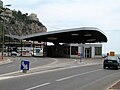 The Pont Saint-Ludovic / Ponte San Ludovico border checkpoint between Menton, France, and Ventimiglia, Italy (both countries are part of the Schengen Area)
 -
 Looking into Austria from Liechtenstein, with a joint border station. Since Liechtenstein joined the Schengen Area in 2011, this border station is for customs formalities only.
 -
 Nekhoteevka customs on the Russia–Ukraine border.
 -

-
 The former checkpoint in Johor Bahru, Malaysia at the Johor–Singapore Causeway. It was replaced by the much larger Sultan Iskandar Building 1 km further inland in 2008.
 -

-
 Posto Fronteiriço das Portas do Cerco on the Macanese side of the Zhuhai–Macau border.
 -
 The former customs and immigration station along the Canada–United States border at Noyes, Minnesota, built in 1931, one of the earliest purpose-built border stations in the United States and listed on the National Register of Historic Places.


.jpg)


.jpg)


See also
[edit]
- Alcabala
- Border
- Border control
- Border outpost
- Checkpoint Charlie and the Berlin Wall
- Customs
- Frontier Closed Area is the border area in Hong Kong with China
- Garitas in Mexico
- Israeli checkpoint
- Schengen Agreement
- The United States–Mexico border and Canada–United States border
- United States Border Patrol interior checkpoints
- List of Canada–United States border crossings
- List of Mexico–United States border crossings
Notes
[edit]- ^ Sultan / Woodlands: sum of 2012 daily average
- ^ a b San Diego / Tijuana: Northbound individual crossings are recorded, as listed in a workbook Archived 2019-07-15 at the Wayback Machine by the USDOT. As southbound border crossings counts are not formally produced and publicly available, it is estimated that a similar number of crossings occurs from San Diego to Tijuana, as has previously been done in a report Archived 2021-04-29 at the Wayback Machine by the SANDAG. Since this is an estimate, the resulting figure has been rounded off to the nearest 100,000.
- ^ a b c d Schengen Area: This airport or seaport is located in the Schengen Area, in which internal border checks have largely been abolished (particularly land borders), though there can be temporary checkpoints or passport requirements at check in. Thus, flights/ships within the area may have a large number of international passengers travel wholly within this area without passing through permanent border checkpoints within the airport or seaport facility, with those passengers potentially counted in domestic totals. The figures for airports and seaports in these tables represent international passengers, per breakdown data supplied by Airports Council International, and it is unclear whether these figures include or exclude intra-Schengen Area passengers as international.
- ^ Taipa Ferry Terminal: annual average of 2013 to 2017 five year total
References
[edit]- ^ "Clearing the Causeway". 2018-06-09. Retrieved 2019-02-07.
- ^ a b Lim, Yan Liang (2013-10-13). "A Look at Woodlands Checkpoint". The Straits Times. Archived from the original on 2020-03-23. Retrieved 2019-06-13.
- ^ "Regulation (EC) No 562/2006 of the European Parliament and of the Council of 15 March 2006 establishing a Community Code on the rules governing the movement of persons across borders (Schengen Borders Code)". 2006-04-13. Retrieved 2007-11-25.
- ^ "Point of Entry El Paso | 2018". Texas Comptroller of Public Accounts.
- ^ "Border Crossings Entry Data –Annual Data | 2018". USDOT.
- ^ "Macau | Gongbei Border crossings in 2018 highest ever in China – Zhuhai Gov't". Macau Business. 2019-01-03. Retrieved 2019-06-14.
- ^ a b c d e f "Immigration Department Annual Report 2017". www.immd.gov.hk. Retrieved 2019-06-14.
- ^ a b "Workbook: Border Crossing Annual Data". explore.dot.gov. Archived from the original on 2019-07-15. Retrieved 2019-06-14.
- ^ "ACI World releases preliminary 2018 world airport traffic rankings Passenger traffic: Passenger traffic remains resilient but cargo hubs see volume growth weaken India becomes world's third largest aviation market for passenger traffic". www.aci.aero. 2019-03-13. Archived from the original on 2020-05-17. Retrieved 2019-04-10.
- ^ "Taipa Ferry Terminal Now Operational". Macao Government Tourism Office. June 2017. Retrieved 15 June 2019.
- ^ "Govt to spend 80 million on upgrading Outer Harbour Ferry Terminal". Macau News. 25 July 2013. Retrieved 15 June 2019.
- ^ Tekniikka&Talous (17 January 2018). "The Port of Helsinki takes the top spot among European passenger ports". Port of Helsinki. Archived from the original on 16 December 2019. Retrieved 5 October 2019.
- ^ "About/Performance". Port of Dover. Archived from the original on 12 April 2022. Retrieved 10 July 2018.
- ^ Forgione, Mary (25 July 2017). "World's busiest cruise ports are in Florida". latimes.com. Retrieved 16 June 2019.
- ^ Barth, Cindy (16 November 2017). "Port Canaveral posts record cruise numbers for FY 2017". bizjournals.com. Retrieved 16 June 2019.
| International | |
|---|---|
| National | |
| Other | |

Border checkpoint
View on GrokipediaA border checkpoint is a designated facility at an international boundary where government officials inspect travelers, vehicles, and goods to enforce immigration laws, collect customs duties, and prevent security threats such as terrorism and smuggling.[1][2]
These checkpoints serve as primary ports of entry for air, land, and sea crossings, where authorities verify passports, visas, and declarations to regulate lawful movement while deterring unauthorized entry and illicit trade.[2][3]
Operations typically involve initial screenings for citizenship and basic inspections, with secondary examinations for suspicious cases, balancing facilitation of legitimate travel against the imperative of border sovereignty and public safety.[1][4]
In practice, effective checkpoint enforcement has empirically reduced illegal crossings and contraband flows, though challenges like high volumes and resource constraints can lead to delays and necessitate advanced technologies such as biometric scanners for efficiency.[1][5]
Definition and Legal Framework
Core Definition and Purpose
A border checkpoint is a fixed or temporary facility established at a national boundary where government officials systematically inspect persons, vehicles, conveyances, and merchandise attempting to cross into or out of the territory. These installations enforce the sovereign authority of states to regulate transboundary flows, verifying compliance with entry requirements such as valid passports, visas, and health declarations.[3][6] The core purpose of border checkpoints lies in safeguarding national security, public health, and economic interests by preventing unauthorized migration, smuggling of contraband including drugs and weapons, and the introduction of infectious diseases or invasive species. For instance, U.S. Customs and Border Protection operates checkpoints to interdict illicit entries, with interior checkpoints alone apprehending over 20,000 individuals annually in recent fiscal years as part of layered enforcement.[3] Internationally, such controls align with obligations under frameworks like the World Customs Organization standards, which emphasize risk-based inspections to balance facilitation of legitimate trade—valued at trillions globally—with threat mitigation.[7] Checkpoints also generate revenue through customs duties and taxes on imports, while enabling data collection for statistical and intelligence purposes; for example, Interpol-supported systems at these points track stolen vehicles and wanted persons via shared databases accessed by over 190 member countries. This multifaceted role underscores their function not merely as barriers but as nodes in integrated border management, where coordination between immigration, customs, and law enforcement agencies minimizes disruptions to lawful commerce, which constitutes over 90% of cross-border traffic in high-volume corridors.[8][9]Variations in International Law
International law affirms the sovereign right of states to establish border checkpoints for controlling the entry of persons, goods, and vehicles, rooted in the principle of territorial integrity under the UN Charter Article 2(4), which permits states to regulate crossings to prevent unauthorized migration, smuggling, and security threats. This baseline allows unilateral implementation of checkpoints without international mandate, as evidenced by widespread practice among non-integrated states, where checkpoints enforce visa requirements, customs duties, and health screenings independently.[10] Variations emerge primarily through treaties that either facilitate crossings or impose obligations modifying sovereign controls, such as non-refoulement under the 1951 UN Refugee Convention, which requires states to assess asylum claims at checkpoints rather than effecting immediate expulsions, applying to over 146 state parties as of 2023.[11] [12] Regional integration agreements represent significant deviations, notably the Schengen Agreement of 1985, implemented from 1995, which eliminates routine internal passport and immigration checks across 29 participating states (25 EU members plus Iceland, Liechtenstein, Norway, and Switzerland), substituting them with external border reinforcements and information-sharing via the Schengen Information System.[13] This framework, codified in EU Regulation 2016/399 (Schengen Borders Code), permits temporary reintroduction of internal controls for up to 30 days (extendable to six months) in cases of serious threats like terrorism or uncontrolled migration, as invoked by 18 Schengen states between 2015 and 2025 due to migration surges and security concerns.[14] [15] In contrast, customs unions like the European Union's, established by the 1957 Treaty of Rome and deepened via the 1992 Maastricht Treaty, abolish internal tariffs and customs checkpoints for goods while retaining immigration variances, allowing seamless freight movement but differentiated people flows outside full Schengen alignment (e.g., Bulgaria and Romania joined Schengen air/sea borders in 2024 but maintain land checks).[16] Other treaties introduce procedural facilitations without abolishing checkpoints, such as the UNECE Convention on the Facilitation of Border Crossing Procedures for International Rail Traffic (1980), ratified by 20 states, which standardizes documentation to expedite rail crossings while preserving national security inspections.[17] Bilateral arrangements further vary controls; for instance, the UK-Ireland Common Travel Area, originating in 1923 and formalized post-1945, permits passport-free travel between the two without formal checkpoints, relying on shared intelligence rather than physical barriers.[18] Human rights instruments, including the International Covenant on Civil and Political Rights (1966), overlay universal standards on checkpoint operations, mandating non-discriminatory screening and access to legal remedies for detainees, though enforcement varies due to state sovereignty, with UNHCR monitoring compliance in refugee contexts.[19] These variations underscore that while international law does not compel checkpoint abolition, treaty commitments can shift from stringent national enforcement to cooperative models, often balancing sovereignty with economic or humanitarian imperatives, yet subject to reassertion during crises.[20]Historical Development
Ancient and Pre-Modern Controls
In ancient civilizations, border controls primarily manifested through fortified installations and garrisons designed to regulate movement, deter incursions, and facilitate tribute or trade oversight, rather than modern-style passport inspections. During Egypt's New Kingdom (c. 1550–1070 BCE), pharaohs like Thutmose III established chains of fortresses along eastern and southern frontiers, such as the Ways of Horus route in Sinai, to monitor caravan paths, enforce loyalty oaths from nomads, and control access to the Nile Valley's resources; these outposts included administrative centers for logging travelers and goods, functioning as early de facto checkpoints.[21] Similarly, in China, the Qin dynasty (221–206 BCE) constructed segments of the Great Wall using rammed earth, extending from Gansu to southern Manchuria, with integrated beacon towers and garrisons that served to signal threats, tax merchants, and restrict nomadic incursions from groups like the Xiongnu, evolving into controlled passes by the Han era (206 BCE–220 CE). Though primarily defensive, these features enabled selective passage verification through military oversight.[22] The Roman Empire's limes system, developed from the 1st century CE, represented a more systematic frontier defense, comprising earthworks, ditches, palisades, watchtowers, and fortlets (e.g., the Upper Germanic-Raetian Limes spanning approximately 550 km across Germania and Raetia) to delineate provincial boundaries, monitor barbarian movements, and regulate commerce via designated crossing points manned by auxiliaries.[23] These installations, active until the 5th century CE, allowed for patrols, toll collection, and limited civilian transit under military scrutiny, prioritizing rapid response to raids over impermeable barriers; archaeological evidence from sites like the Lower Germanic Limes reveals infrastructure for processing authorized traders while impeding unauthorized ones.[24] In contrast to rigid walls, the limes emphasized a buffered zone of control, with formal gates at key forts enabling documented passage for allies or merchants bearing safe-conducts.[25] Medieval European controls were decentralized and feudal, centered on toll stations (Zollburgen or toll castles) at river crossings, mountain passes, and trade routes, where local lords exacted duties on goods and occasionally verified travelers' status via letters of protection or guild affiliations, rather than state-enforced borders. From the 9th to 15th centuries, such mechanisms generated revenue—e.g., pontage for bridges or murage for walls—while rudimentary checks prevented smuggling or banditry, as seen in Carolingian port regulations requiring manifests for foreign merchants.[26] These were not uniform national frontiers but fragmented enforcements, often contested, with Holy Roman Empire edicts like the 1152 Constitutio de Tollis standardizing rates at over 2,000 toll points to curb abuses.[27] In pre-modern Eurasia, empires like the Ottomans formalized controls amid territorial treaties; following the 1699 Treaty of Karlowitz, the Habsburg-Ottoman border was demarcated with pillars and guarded crossings by the early 18th century, imposing migration monitoring and quarantine at stations to manage plague risks and deserters, predating widespread European passport systems.[28] This shift toward defined checkpoints reflected causal pressures from warfare and disease, enabling selective enforcement over porous frontiers, though enforcement varied by region and ruler.[29]Modern Nation-State Era (19th-20th Centuries)
The consolidation of nation-states in Europe following the Napoleonic Wars and the Congress of Vienna in 1815 prompted the delineation of more precise territorial boundaries, often marked by customs posts to enforce tariffs and regulate trade flows.[30] These early checkpoints focused primarily on revenue collection rather than comprehensive personal movement controls, as exemplified by the German Zollverein customs union established in 1834, which streamlined internal trade while maintaining external border inspections for duties on goods.[31] Quarantine stations also emerged mid-century to combat disease spread, such as those implemented by the Ottoman Empire along its European frontiers to inspect travelers and cargo for epidemics like cholera.[32] Travel across borders typically required minimal documentation for individuals until the late 19th century, with porous controls relying on local gendarmes or revenue officers rather than dedicated immigration scrutiny.[33] By the 1860s and 1870s, rising nationalism and economic protectionism intensified border formalization, leading to the introduction of mandatory travel permits in several states. France enacted passport requirements for border crossings in 1867, followed by Britain and Italy, shifting from ad hoc safe-conduct letters to state-issued documents verifying identity and purpose.[34] Visas, as endorsements from destination authorities, began evolving concurrently to authorize entry, driven by fears of vagrancy, espionage, and labor competition amid industrialization.[35] In the United States, federal oversight of immigration emerged with the Act of March 3, 1891, establishing inspection stations at ports and land borders to screen arrivals for criminality and health risks, marking a transition from state-level to national checkpoint operations.[36] These measures reflected causal pressures from mass migration—over 12 million Europeans arrived in the U.S. between 1870 and 1900—and protectionist policies like the Chinese Exclusion Act of 1882, which deployed customs officials to enforce entry bans at Pacific Coast and land frontiers.[37][38] World War I (1914–1918) catalyzed a paradigm shift, transforming sporadic checkpoints into systematic barriers with universal document verification, as belligerents imposed exit and entry controls to prevent sabotage and monitor loyalties.[20] The 1920 standardization of passports under the League of Nations formalized these practices globally, embedding checkpoints with immigration officers, customs agents, and rudimentary security protocols at rail stations and road crossings.[34] Interwar economic turmoil and geopolitical instability further entrenched visa regimes; for instance, the U.S. Border Patrol was created in 1924 with 450 mounted inspectors to patrol the Mexican frontier against unauthorized entries, amid quotas limiting annual immigrants to 164,000 by the Immigration Act of 1924.[39] European land borders, redrawn by the Treaty of Versailles in 1919, featured fortified posts with armed guards, as seen in the demilitarized zones and passport inspections along the new Polish-German frontier.[40] The 1930s and World War II (1939–1945) amplified checkpoint militarization, with totalitarian regimes erecting barriers to control internal dissent and external threats; Nazi Germany's expansion involved annexing border facilities for ideological vetting, while Allied nations expanded screenings for contraband and spies.[20] Postwar decolonization and the Cold War onset rigidified divisions, exemplified by the Iron Curtain's checkpoints from 1946 onward, where East Bloc states deployed barbed wire, watchtowers, and visa scrutiny to stem defections—culminating in the Berlin Wall's construction on August 13, 1961, with its infamous Checkpoint Charlie for limited diplomatic and Allied passages.[40] In the Western hemisphere, U.S.-Mexico land crossings evolved into multi-agency stations by mid-century, processing vehicles and pedestrians for tariffs, narcotics interdiction, and migration enforcement under expanded 1952 Immigration and Nationality Act provisions.[36] These developments underscored checkpoints' dual role in sovereignty assertion and economic safeguarding, with empirical data showing U.S. apprehensions rising from sporadic pre-1924 incidents to systematic tallies exceeding 1 million annually by the 1970s.[39]Post-1945 and Contemporary Evolutions
Following World War II, border checkpoints evolved amid the Cold War's ideological divisions, with fortified crossings like Checkpoint Alpha on the inner German border serving as primary transit points between West Germany and West Berlin from 1945 to 1990, enforcing strict visa and inspection regimes to prevent defections and espionage.[41] Similarly, Checkpoint Charlie in Berlin became a symbol of East-West confrontation, where Allied personnel conducted rigorous document checks and vehicle searches under constant Soviet oversight until the Berlin Wall's fall in 1989.[42] These checkpoints exemplified heightened militarization, with armed guards, watchtowers, and minefields prioritizing containment over facilitation, reflecting causal priorities of state security amid superpower rivalry. The end of the Cold War prompted shifts toward regional integration, most notably the Schengen Agreement signed in 1985 by Belgium, France, Germany, Luxembourg, and the Netherlands, which abolished systematic internal border checks while mandating compensatory external controls and common visa policies formalized in the 1990 Schengen Convention.[43] Implementation began in 1995 among initial signatories, expanding to 29 European states by 2025, including non-EU members like Switzerland, where checkpoints at external frontiers—such as those with non-Schengen neighbors—now integrate shared databases for real-time risk assessment to offset internal openness.[44] This model influenced global trends, though it faced strains from migration surges, leading to temporary reimpositions of internal controls in response to events like the 2015-2016 influx exceeding 1 million asylum seekers.[43] Post-9/11 security imperatives drove widespread enhancements, particularly in the United States, where the 2002 creation of the Department of Homeland Security consolidated agencies into U.S. Customs and Border Protection (CBP), expanding checkpoint staffing to over 60,000 personnel by 2021 and integrating pre-screening programs like US-VISIT for biometric entry-exit tracking initiated in 2004.[45] Globally, this era emphasized counter-terrorism, with the International Organization for Migration (IOM)—established in 1951 for post-war resettlement—promoting Integrated Border Management (IBM) frameworks by the 2000s, which coordinate multi-agency operations at checkpoints to balance mobility, security, and human rights under UN-aligned principles.[46] In practice, IBM has supported capacity-building in over 50 countries, emphasizing data-sharing and risk-based profiling to process increasing volumes—global air passenger traffic rose from 2 billion in 2000 to 4.5 billion in 2019—without uniform success, as evidenced by persistent irregular crossings.[9] Contemporary evolutions incorporate advanced technologies for efficiency and detection, including biometric e-gates deployed at major airports like those in the EU's Schengen external borders since 2010, using facial recognition and fingerprints to automate processing for low-risk travelers, reducing manual inspections by up to 70% in high-volume sites.[47] U.S. Border Patrol has integrated autonomous sensors, radar, and AI-driven analytics along land frontiers since 2010, enabling real-time threat identification across 5,000 miles of southwest border, supplemented by drone surveillance logging over 1 million flight hours annually by 2023.[48] These tools reflect a causal shift toward data-centric control, though challenges persist in verifying identities amid sophisticated forgeries, with IOM reporting that irregular migration accounted for 10-15% of global flows in 2020 despite tech investments.[49] Regional variations endure, such as Singapore's Woodlands Checkpoint employing AI for vehicle scanning since the 2000s, processing 300,000 daily crossings with minimal delays.[50]Classification by Type
Land Border Checkpoints
Land border checkpoints are designated facilities at international land frontiers where authorities inspect travelers, vehicles, and cargo to enforce immigration, customs, and security regulations prior to granting or denying entry. These checkpoints accommodate diverse modes of overland travel, including automobiles, commercial trucks, passenger buses, trains, bicycles, and pedestrians, necessitating specialized infrastructure such as multiple inspection lanes, pedestrian bridges, vehicle scales, and cargo scanning equipment. Unlike air or maritime ports, land checkpoints often manage high volumes of daily commuters and freight, with procedures adapted for rapid throughput while mitigating risks like smuggling and unauthorized migration.[51][3] Operational protocols at land checkpoints typically commence with primary inspection booths where officers verify passports, visas, and travel declarations, querying individuals on purpose of visit and inspecting luggage superficially. Suspected irregularities trigger referral to secondary inspection areas for thorough searches, including vehicle disassembly for hidden compartments, canine detection for narcotics or explosives, and non-intrusive imaging like X-ray scanners for trucks. In the United States, U.S. Customs and Border Protection (CBP) manages over 300 land ports of entry along the northern and southern borders, processing millions of vehicles annually; for instance, interior Border Patrol checkpoints, located 25 to 100 miles from the border on highways, focus on immigration enforcement by briefly halting traffic to detect undocumented individuals without warrantless searches beyond brief questioning unless probable cause exists. Customs duties, agricultural inspections to prevent pest introduction, and counter-terrorism screenings, including watchlist database queries, complete the multifaceted process.[1][52][53] Prominent examples illustrate the scale and challenges of land border operations. The San Ysidro Port of Entry between San Diego, California, and Tijuana, Mexico, stands as the busiest land crossing in the Western Hemisphere, handling approximately 14.8 million inbound vehicles in 2024 alone, alongside pedestrian and commercial traffic exceeding 50 million personal crossings annually in peak years. The U.S.-Mexico border as a whole facilitates over 300 million legal crossings per year, underscoring its status as the world's most trafficked land frontier. In Europe, external Schengen Area checkpoints, such as those between Switzerland and neighboring EU states, enforce rigorous controls despite internal passport-free zones, employing biometric gates for registered travelers to expedite processing. These facilities often integrate advanced technologies like facial recognition for pedestrians, deployed at all U.S. land crossings since 2025, to enhance verification accuracy and reduce wait times amid surging volumes.[54][55][53] Challenges unique to land checkpoints include congestion from bidirectional commuter flows, vulnerability to vehicular breaches or tunnel smuggling, and balancing trade facilitation with security; for example, U.S. southern border ports processed nearly 3 million inbound trucks from Mexico in 2023 at hubs like Laredo, Texas, requiring efficient cargo inspections to avert supply chain disruptions. Bilateral agreements, such as joint patrols or shared intelligence, mitigate transborder threats, while infrastructure investments under acts like the U.S. Infrastructure Investment and Jobs Act aim to modernize aging facilities for higher capacity.[56][51]Air Border Checkpoints
Air border checkpoints, also known as airport ports of entry, are dedicated facilities at international airports where arriving and departing passengers undergo immigration, customs, and related border controls to verify admissibility, prevent unauthorized entry, and regulate the movement of goods. These checkpoints function as the primary interface for air travel across national boundaries, processing millions of passengers annually through structured queues, automated gates, and manual inspections by border officials. Unlike land borders, air checkpoints concentrate high-volume flows from aircraft arrivals and departures, necessitating efficient, technology-assisted processing to minimize delays while upholding security imperatives such as identity verification and threat detection.[2] Upon arrival at an international airport, passengers typically proceed through immigration control first, where officers examine passports, visas, and entry permissions, often collecting biometric data like fingerprints and facial scans to confirm identity and check against watchlists. This is followed by baggage retrieval and customs inspection, where travelers declare goods via forms or digital submissions, with selective examinations for prohibited items, duties, or agricultural risks. Departure procedures vary by jurisdiction but commonly include exit immigration checks in countries requiring them, such as those tracking residency or tax compliance, integrated with pre-flight security screening. Advance passenger information systems, mandated internationally, allow pre-screening of manifests to flag risks before landing. A distinctive feature of air border checkpoints is preclearance, where the destination country's officials operate at the origin airport to conduct full inspections prior to boarding, enabling passengers to bypass controls upon arrival and treat the flight as domestic. The United States maintains preclearance facilities at 15 airports across six countries, including Dublin, Toronto, and Abu Dhabi, as of 2025, processing over 24 million travelers yearly to enhance security by identifying inadmissibles abroad and reducing domestic congestion. This contrasts with land checkpoints, which lack equivalent pre-departure vetting due to the immediacy of cross-border movement and involve vehicle-specific inspections absent in air contexts. Air checkpoints thus emphasize passenger-centric flows, with e-gates and mobile apps accelerating low-risk processing, though peak-hour bottlenecks persist from flight schedules.[57][58] International standards for air border controls are outlined in ICAO Annex 9 (Facilitation), which requires states to streamline procedures without compromising security, including timely processing within 60 minutes for most passengers and coordination with airlines for document verification. These guidelines promote risk-based approaches, prioritizing thorough checks on high-risk individuals over universal scrutiny, and facilitate data sharing via systems like the ICAO Traveller Identification Programme. Variations exist; for instance, the European Union's external Schengen borders apply uniform asylum and visa rules at airports, while non-Schengen states like the UK maintain independent controls. Empirical data from high-traffic hubs underscore efficiency gains from automation, with U.S. airports processing over 1.1 billion passengers in fiscal year 2023 through such checkpoints, though surges in irregular migration have strained resources.[59]Maritime and Other Checkpoints
Maritime border checkpoints primarily comprise seaports, harbors, and designated terminals where international vessels undergo immigration, customs, and security inspections upon entering a country's territorial waters or docking. These facilities enforce entry requirements for passengers, crew, and cargo, often requiring advance electronic submission of manifests via systems like the U.S. Integrated Passenger and Vessel Manifest System (IMPVS), which mandates reporting at least 60 minutes prior to arrival for non-commercial vessels.[2] Procedures mirror those at land and air ports but adapt to maritime logistics, including dockside or onboard examinations by officers from agencies such as U.S. Customs and Border Protection (CBP), which operates at approximately 59 seaports designated for such controls, handling millions of cruise passengers annually— for example, PortMiami processed over 7 million in 2019 before pandemic disruptions.[60] International conventions, including the International Ship and Port Facility Security (ISPS) Code under the SOLAS treaty ratified in 2004, standardize security protocols, mandating vessel-port communication and risk assessments to prevent unauthorized access. In practice, controls occur either in port or through at-sea interdiction; for instance, the U.S. Coast Guard patrols 31,000 miles of maritime borders, boarding suspect vessels for immigration checks and denying entry to inadmissible individuals under 8 U.S.C. § 1324b. Ferry terminals exemplify hybrid maritime operations, where short-sea routes like the Dover-Calais crossing between the UK and France involve pre-departure passport checks and EU Entry/Exit System (EES) biometric registration for non-EU travelers since its rollout in late 2024, processing up to 12 million passengers yearly.[61] Similarly, U.S. ferry ports such as those between Washington state and British Columbia require CBP inspections upon arrival, with no COVID-19 testing mandates post-2023 but ongoing verification of vaccination or exemption status for certain entries until policy shifts.[62] Other checkpoints encompass riverine and lacustrine borders, where navigable waterways form boundaries and fixed or mobile controls regulate crossings. Along the Rio Grande, which delineates the U.S.-Mexico border for 1,255 miles, U.S. Border Patrol maintains 39 riverine units equipped with patrol boats for intercepting unauthorized entries, supplemented by barriers like Texas-installed floating buoys deployed since July 2023 to deter swims across the 100- to 200-yard-wide channel, reducing detected crossings in targeted sectors by up to 90% in initial assessments.[63] [64] Fixed river checkpoints often coincide with bridges or locks, such as those on the St. Lawrence Seaway between the U.S. and Canada, where CBP and Canada Border Services Agency jointly inspect commercial and pleasure craft for compliance with bilateral agreements dating to the 1954 Seaway Treaty. These sites prioritize cargo manifests and crew visas, with violations leading to vessel detention; for example, in 2022, U.S. agencies inspected over 1,000 vessels on Great Lakes borders, seizing contraband valued at millions.[1] Lake borders, like those on Lake Ontario, employ similar boat patrols, though volumes remain lower than oceanic routes, emphasizing environmental and fisheries enforcement alongside immigration.[3]Operational Procedures
Immigration and Traveler Processing
Immigration processing at border checkpoints entails the inspection of arriving travelers by designated officers to ascertain admissibility under national laws, focusing on identity verification, document authenticity, and compliance with entry requirements. Officers review passports, visas, or equivalent authorizations, cross-referencing them against international standards for machine-readable travel documents to detect forgeries or alterations.[65] This step ensures the traveler's claimed nationality and personal details align with issued credentials, with discrepancies triggering further scrutiny.[66] Biometric data collection forms a core component, typically involving digital photographs for facial recognition and ten-fingerprint scans to confirm identity against pre-vetted records from visa applications or prior entries.[67] These measures, implemented at air, land, and sea ports of entry, enable real-time matching to databases like the Automated Targeting System, flagging potential security risks, prior overstays, or criminal histories.[68] For instance, U.S. Customs and Border Protection officers integrate facial biometrics into primary inspections, automating initial verification while retaining human oversight for edge cases.[69] During primary inspection, brief interviews assess the traveler's purpose—such as tourism, business, or transit—verifying ties to home country, sufficient funds, and intended itinerary to mitigate risks of unauthorized work or prolonged stays.[70] Admissibility determinations reference statutory grounds, excluding individuals with communicable diseases, prior deportations, or terrorism links, though exemptions apply for citizens, lawful permanent residents, or pre-approved programs like Visa Waiver.[71] Suspicious indicators, such as inconsistent statements or incomplete documentation, route travelers to secondary inspection for extended questioning, device searches, or inter-agency coordination.[72] Processing volumes strain resources at high-traffic checkpoints; for example, U.S. ports handled over 1.5 billion inspections from fiscal years 2017 to 2021, underscoring the need for automated tools to maintain throughput without compromising vetting rigor.[73] Variations exist by jurisdiction and transport mode—land borders may prioritize vehicle manifests alongside pedestrian checks, while maritime arrivals involve crew manifests—but the objective remains preventing unlawful entry through layered, evidence-based assessments.[65] Inadequate vetting capabilities, as noted in audits, can hinder complete background checks for certain noncitizen flows, highlighting causal dependencies on data-sharing agreements and technological integration across borders.[74]Customs and Goods Inspection
Customs and goods inspection at border checkpoints entails verifying declarations, assessing compliance with import/export regulations, collecting applicable duties and taxes, and interdicting prohibited or restricted items such as narcotics, weapons, counterfeit products, and endangered species derivatives.[75][76] This process mitigates risks of smuggling, protects domestic economies from unfair trade practices, and enforces sanitary, phytosanitary, and intellectual property standards.[3][77] Risk-based targeting determines inspection intensity, prioritizing high-risk shipments via manifest data analysis, traveler profiling, and intelligence to avoid inspecting every item, as comprehensive physical checks of all goods are impractical.[78][79] Travelers and commercial entities must submit advance declarations—often electronically—detailing goods' value, origin, and contents, followed by primary screening where officers review documents and conduct cursory visual or verbal assessments.[80] Non-compliant or flagged entries proceed to secondary inspection, involving detailed examination of luggage, vehicles, or cargo holds.[81] Customs authorities, such as the U.S. Customs and Border Protection, seize contraband detected during these stages, with seizures including over 27,000 pounds of fentanyl precursors in fiscal year 2023 alone at ports of entry.[82] Inspection techniques blend non-intrusive and intrusive methods to balance efficiency and thoroughness. Non-intrusive tools, including X-ray and gamma-ray scanners, enable rapid imaging of container interiors without unpacking, detecting anomalies like hidden compartments or dense materials suggestive of contraband.[83] Canine units, trained for scents associated with narcotics, explosives, or agricultural pests, provide high-sensitivity screening, often deployed in vehicle or baggage queues.[84][82] Physical searches, reserved for escalated risks, involve manual unpacking and sampling, ensuring duties are levied accurately—e.g., U.S. customs collected $80.2 billion in duties and fees in fiscal year 2022.[83][85] Variations exist by checkpoint type and jurisdiction; land borders emphasize vehicle scans for bulk smuggling, while air and maritime focus on cargo manifests and container seals.[86] International frameworks, like those from the World Customs Organization, promote standardized risk management to facilitate legitimate trade amid rising illicit flows, estimated at $2.2 trillion annually in counterfeit goods alone.[87] Enforcement challenges persist, including sophisticated concealment tactics, underscoring the need for integrated intelligence sharing across borders.[88]Security Screening Protocols
Security screening protocols at border checkpoints constitute a critical layer of defense against threats such as terrorism, weapons smuggling, and other illicit activities, distinct from immigration verification or customs duties on commercial goods. These protocols typically employ a risk-based, layered approach, beginning with primary inspections for rapid threat assessment and escalating to secondary examinations for higher-risk cases. Officers rely on empirical indicators like inconsistent responses, behavioral anomalies, or database hits to trigger intensified scrutiny, prioritizing causal links between observed indicators and potential dangers over uniform application to all travelers.[89][19] In primary screening, border agents conduct brief interviews to probe travel purpose, itinerary, and background, cross-referencing declarations against travel documents and real-time queries to national watchlists or international databases like INTERPOL's Stolen and Lost Travel Documents system. Physical observations include visual checks for concealed items, supplemented by non-intrusive tools such as metal detectors or canine units trained to detect explosives and narcotics, with data indicating canine detection rates exceeding 80% in controlled U.S. Customs and Border Protection (CBP) tests for hidden threats. For vehicles at land crossings, protocols mandate undercarriage inspections and density scans to identify anomalies suggestive of smuggling compartments, as evidenced by CBP seizures of over 2,400 pounds of fentanyl precursors in vehicle screenings during fiscal year 2024.[90][91][7] Secondary screening escalates to pat-down searches, detailed baggage examinations, and, where warranted, advanced imaging or manual disassembly of suspicious items, guided by protocols that minimize false positives through officer training in probabilistic risk assessment rather than rote checklists. In the United States, CBP secondary inspections at ports of entry resulted in the interdiction of 27,000 pounds of narcotics in FY 2023, underscoring the efficacy of targeted protocols over broad sweeps, which could overwhelm resources without proportional security gains. Internationally, similar practices align with UN Security Council resolutions mandating advance passenger information checks to flag potential foreign terrorist fighters, though implementation varies, with European Schengen external borders emphasizing database interoperability via the Schengen Information System for real-time alerts on over 1 million security-relevant entries as of 2024. Protocols explicitly authorize device searches at borders without warrants in jurisdictions like the U.S., enabling forensic analysis of electronics for encrypted threats, as upheld in federal policy since 2018.[1][92][93] These measures reflect first-principles prioritization of verifiable threat vectors—such as historical patterns of smuggling routes or terrorist travel modalities—over politically influenced narratives that downplay enforcement efficacy, with independent audits confirming that rigorous screening has thwarted entry attempts by individuals on terrorist watchlists numbering in the thousands annually across major borders. Limitations persist, including resource constraints at high-volume crossings where wait times averaged 30-60 minutes in peak periods at U.S.-Mexico facilities in 2024, potentially incentivizing evasion tactics absent adaptive protocols.[3][7]Technological Advancements
Detection and Surveillance Tools
Detection and surveillance tools at border checkpoints encompass a range of technologies designed to monitor perimeters, detect unauthorized entries, and identify potential threats such as vehicles, individuals, or illicit goods approaching or crossing controlled points. These systems integrate optical, thermal, radar, and sensor-based methods to provide real-time data to border agents, enabling rapid response to incursions. In the United States, the Customs and Border Protection (CBP) deploys Border Surveillance Systems (BSS) that include fixed and mobile video surveillance units, thermal imaging devices, and radar for persistent monitoring along land borders.[94] Similarly, the European Union's Frontex agency utilizes interconnected surveillance frameworks like EUROSUR, which aggregates data from infrared cameras, drones, and satellite imagery to enhance detection of irregular crossings at external borders.[95] Video and optical surveillance forms a foundational layer, with camera towers and mobile units equipped with high-resolution day/night cameras and thermal imagers capable of detecting heat signatures up to several kilometers away. CBP's Remote Video Surveillance System (RVSS), operational since the early 2000s and expanded with over 300 towers by 2024, uses remotely controlled pan-tilt-zoom cameras with a detection radius of up to five miles to track movements and classify targets as human, vehicle, or animal.[48] [96] Ground-based seismic and acoustic sensors, often buried along approach routes to checkpoints, complement these by vibrating or sound-detection to alert on footsteps or engine noise, with systems like those in BSS integrating infrared for low-light conditions.[94] In Europe, deployable technologies tested by Frontex include multi-sensor platforms on vehicles or towers that fuse radar for motion detection with optical feeds, improving accuracy in adverse weather.[97] Radar systems provide all-weather, day-night capability for volume surveillance, distinguishing moving objects through foliage or darkness. Mobile Surveillance Systems (MSS) trailers, used by U.S. Border Patrol, incorporate ground surveillance radars that detect targets up to 5 kilometers distant, integrated with electro-optical cameras for verification.[48] Emerging integrations, such as DHS's 2025 solicitations for AI-enhanced trucks combining radar, lidar, and cameras, aim to automate threat classification at checkpoints by analyzing trajectories and behaviors in real time.[98] Aerial tools, including unmanned aerial vehicles (UAVs or drones), extend coverage; Frontex's 2025 drone pilots in Bulgaria demonstrated persistent aerial surveillance with thermal payloads, detecting small groups approaching checkpoints over 10-20 km ranges.[99] These technologies, while effective for initial detection, face challenges like maintenance issues—e.g., 30% of U.S. RVSS towers reported non-operational in 2024 assessments—and environmental limitations, underscoring the need for redundant layered systems.[100]- Key Tool Categories:
- Optical/Thermal Cameras: Provide visual identification; e.g., stabilized optics on U.S. DOD-contributed systems along southern borders detect at multi-mile ranges.[101]
- Radar and Sensors: Weather-penetrating detection; ground sensors use seismic/infrared for covert monitoring.[102]
- Mobile and Aerial Platforms: Drones and towers for dynamic surveillance; EU projects emphasize sensor fusion for reduced false positives.[103]
Biometric and Digital Verification
Biometric verification at border checkpoints involves the automated capture and comparison of unique physiological or behavioral characteristics, such as facial features, fingerprints, or iris patterns, to confirm an individual's identity against travel documents or databases.[104] This process enhances security by detecting identity fraud and unauthorized entries, with systems like facial recognition achieving match rates exceeding 99% in controlled environments when calibrated properly.[67] Digital verification complements biometrics through electronic data exchange, including radio-frequency identification (RFID) chips in e-passports and advance passenger information (API) systems that cross-reference traveler details against watchlists prior to arrival.[47] In the United States, U.S. Customs and Border Protection (CBP) deploys facial biometric technology at over 113 land ports of entry for pedestrian processing, comparing live images to passport photos in real-time to verify identities.[53] As of October 2025, CBP expanded requirements to photograph nearly all non-U.S. citizens, including green card holders, upon departure at air, land, and sea ports, integrating these into biometric databases to track overstays and exits more accurately.[105] This builds on earlier initiatives like the Office of Biometric Identity Management (OBIM), which stores fingerprints and facial data for vetting against immigration and law enforcement records, reducing manual inspections and enabling "on-the-move" verification at eGates.[106] The European Union's Entry/Exit System (EES), operational from October 2025, mandates biometric registration—fingerprints and facial scans—for non-EU nationals crossing Schengen external borders, replacing manual passport stamps with automated tracking of stay durations up to 90 days in 180.[107] Children under 12 are exempt from fingerprinting, but facial images are captured for all, stored centrally to detect overstays and visa fraud, with data retention up to five years post-final exit.[61] Digital elements include integration with the Schengen Information System (SIS) for real-time alerts on alerts, though initial rollout delays in 2025 highlighted interoperability challenges across member states.[108] Effectiveness relies on multimodal approaches combining biometrics with digital checks to minimize errors; for instance, false positive rates in facial systems have dropped below 0.1% with AI enhancements, though environmental factors like lighting can elevate mismatches to 1-2% without calibration.[109] Iris biometrics, increasingly adopted for high-security land crossings, offer near-zero false acceptance rates due to the eye's unique vascular patterns, outperforming fingerprints in dusty or wet conditions common at borders.[110] However, systemic biases in training datasets have prompted audits, revealing higher false negative rates for certain ethnic groups, necessitating diverse data updates for equitable application.[111] Overall, these technologies have expedited processing times by up to 50% at automated gates while bolstering threat detection, as evidenced by increased interceptions of fraudulent documents.[112]Automation and Emerging Technologies
Automated border control systems, including electronic gates (e-gates) and self-service kiosks, enable travelers to process immigration and customs declarations without direct officer interaction, verifying identities against passport data and biometric scans. These systems have proliferated at airports and land borders since the early 2010s, with global deployment projected to expand the market from USD 2.56 billion in 2025 to USD 5.03 billion by 2030 at a compound annual growth rate of 14.4%.[113] In the United States, U.S. Customs and Border Protection (CBP) implemented automated passenger processing at Los Angeles International Airport's Tom Bradley Terminal in August 2025, allowing low-risk travelers to complete routine checks via kiosks while officers focus on higher-risk cases.[114] Artificial intelligence enhances automation by analyzing data for risk assessment and anomaly detection in cargo and passenger flows. CBP employs AI models to screen shipments at ports of entry, identifying contraband through pattern recognition in manifests and imaging data, which reduces manual inspections by prioritizing threats.[115] In China, intelligent customs inspection systems, deployed widely by 2024, integrate AI with machine vision to automate container scans, achieving detection rates for prohibited goods that surpass traditional methods, though effectiveness depends on data quality and training sets.[116] Robotic systems, such as AI-equipped scanners for vehicles, were contracted by CBP in December 2023 to Pangiam for non-intrusive inspections, enabling automated threat identification without physical disassembly.[117] Emerging technologies include autonomous unmanned aerial vehicles (UAVs) for perimeter monitoring around checkpoints and drone-in-a-box systems for rapid deployment. U.S. Border Patrol integrates Skydio autonomous drones, which launch in under 20 seconds upon alerts and provide real-time video feeds, covering vast areas to detect incursions before they reach processing facilities.[118] Legislation like the Emerging Innovative Border Technologies Act, introduced in March 2025, promotes adoption of AI, machine learning, and fiber-optic sensors to automate threat response, aiming to enhance agent safety and operational efficiency amid rising cross-border traffic.[119] These advancements, while improving throughput—e.g., e-gates processing up to 300 passengers per hour per lane—raise concerns over false positives in AI decisions, necessitating human oversight for accountability.[120]Busiest Global Checkpoints
High-Volume Land Crossings
High-volume land border crossings process tens of millions of vehicles and pedestrians annually, often leading to extended wait times and necessitating advanced infrastructure for immigration, customs, and security checks. These checkpoints typically feature multiple lanes for vehicles, dedicated pedestrian facilities, and automated systems to manage peak-hour surges driven by commuters, tourists, and trade. Congestion arises from economic disparities, urban proximity, and limited crossing points, prompting investments in expansion and technology.[56] The San Ysidro Port of Entry, located between San Diego, California, United States, and Tijuana, Baja California, Mexico, stands as one of the world's busiest land borders, handling approximately 15.8 million cars entering the U.S. from Mexico in 2023 alone, marking a 3.2% increase from the prior year. Daily northbound traffic includes about 70,000 vehicles and 20,000 pedestrians, reflecting its role in facilitating cross-border commerce and daily commutes. In fiscal year 2017, it processed over 32 million total entries, underscoring its scale despite periodic disruptions from policy changes and infrastructure limitations.[56][121][122] The Woodlands Checkpoint in Singapore, connecting to Johor Bahru, Malaysia via the Causeway, manages one of the highest daily volumes globally, with an average of 327,000 travelers in 2024, up 22% from 269,000 in 2023, and peaking at 376,000 on December 20, 2024. This land crossing, alongside Tuas, contributed to Singapore's Immigration & Checkpoints Authority clearing 192.8 million travelers across all checkpoints in 2023, with Woodlands bearing the brunt of land traffic from buses, cars, and motorcycles. Projections indicate daily volumes could reach 400,000 by 2050, driving ongoing expansions to alleviate bottlenecks.[123][124][125] Other notable high-volume crossings include El Paso, Texas, United States, the second-busiest U.S.-Mexico port, which saw nearly 30 million people and 12 million vehicles pre-pandemic, highlighting regional patterns of intense bilateral movement. These facilities often integrate biometric scanners and license plate readers to expedite processing, yet face challenges from illicit crossings and smuggling, with U.S. Customs and Border Protection data showing millions of encounters annually at southwest land borders.[126][127]Major Air Entry Points
Dubai International Airport (DXB) in the United Arab Emirates functions as the world's busiest international air entry point, handling 92.3 million passengers in 2024, nearly all of whom arrive via international flights requiring immigration and customs processing.[128] As a central hub for Emirates and other carriers, it processes arrivals from over 100 countries, with border facilities equipped for high-volume biometric screening and visa checks, contributing to its role in global transit traffic exceeding 40 million connecting passengers annually.[129] London Heathrow Airport (LHR) in the United Kingdom ranks as a leading European air gateway, managing 79.2 million passengers in 2024, predominantly international arrivals subject to UK Border Force inspections.[128] Its five terminals feature advanced e-gates and manual counters to handle peak transatlantic and intra-European flows, with daily international arrivals often surpassing 100,000 passengers, underscoring its significance for economic migration and tourism entry.[130] Incheon International Airport (ICN) in South Korea processed 70.7 million passengers in 2024, serving as Asia's premier border checkpoint for East Asian and transpacific routes.[128] Equipped with automated immigration kiosks and AI-driven surveillance, it manages high densities of business and leisure travelers, while Singapore Changi Airport (SIN), with 67.1 million passengers, exemplifies efficient tropical hub operations, integrating seamless customs declarations for arrivals from Southeast Asia and beyond.[128] In the United States, John F. Kennedy International Airport (JFK) in New York emerges as a primary eastern entry point, with international arrivals driving substantial U.S. Customs and Border Protection workloads, including preclearance partnerships that alleviate on-site bottlenecks.[131] Similarly, Miami International Airport (MIA) handles dense Latin American inflows, contributing to national immigration volumes where top ports like these accounted for over 30% of air inspections in prior fiscal years.[132] These facilities highlight the interplay of volume and enforcement, where processing delays can exceed 60 minutes during peaks despite technological aids.[131]Significant Maritime Ports
The Port of Dover in the United Kingdom and the Port of Calais in France represent one of the world's busiest maritime border checkpoints, facilitating the English Channel crossing via ferry services operated by companies such as P&O Ferries and DFDS. In 2023, Dover handled 8.9 million passengers, marking a 35% increase from the previous year, with the Dover-Calais route accounting for approximately 45% of the UK's international short-sea passenger traffic as of 2021.[133][134] This route processes millions of travelers annually, involving coordinated border controls for immigration, customs, and security between the UK and the European Union, with peak volumes exceeding pre-2019 levels despite post-Brexit adjustments to protocols.[135] In Asia, the ferry terminals connecting Hong Kong and Macau serve as a high-volume maritime border point, given the distinct immigration regimes of the two Special Administrative Regions under China's "one country, two systems" framework. Services like TurboJET operate frequent high-speed ferries from Hong Kong's Macau Ferry Terminal to Macau's Outer Harbour and Taipa terminals, handling substantial daily passenger flows that require separate exit and entry clearances, often without mainland Chinese visas for many nationalities.[136] These crossings support tourism and business travel, with integrated processing that can involve biometric verification, though exact annual volumes fluctuate with regional travel policies and were significantly impacted by COVID-19 restrictions.[137] Other notable examples include the Helsingborg-Helsingør route between Sweden and Denmark, recognized as Europe's busiest international ferry passenger link, and various Baltic Sea and Adriatic Sea ferry ports such as those connecting Finland to Sweden or Italy to Greece, which collectively process tens of millions of passengers yearly across EU external and internal borders with varying degrees of control.[138] These maritime checkpoints emphasize efficient passenger screening to manage high throughput, often integrating automated gates and vehicle inspections to balance trade and travel demands.[139]Security and Enforcement Role
National Security Contributions
Border checkpoints function as essential barriers against transnational security threats, including terrorism, by enabling systematic screening of individuals, vehicles, and cargo at official entry points. U.S. Customs and Border Protection (CBP) officers at ports of entry prioritize preventing the entry of terrorists and their weapons, utilizing advanced databases such as the Terrorist Screening Dataset to flag and interdict watchlisted subjects.[59] In fiscal year 2023, CBP recorded terrorism-related encounters, including referrals for further vetting, demonstrating checkpoints' role in identifying potential threats before they penetrate interior territories.[140] A 2009 Government Accountability Office (GAO) analysis of Border Patrol interior checkpoints found they contributed to screening potential terrorists, with data from fiscal years 2005-2007 indicating over 1,300 referrals for terrorism-related investigations, some resulting in entry denials or arrests.[141] Beyond individual screening, checkpoints facilitate the seizure of materials that could support terrorist activities, such as precursor chemicals, explosives components, or funds derived from illicit trade. CBP's enforcement actions at land ports intercepted significant quantities of such contraband in fiscal year 2024, aligning with the agency's mandate to disrupt networks enabling weapons of mass destruction proliferation.[140] Empirical assessments underscore that structured inspections at checkpoints yield higher detection rates than ad hoc patrols, as they leverage fixed infrastructure for biometric verification and intelligence integration, thereby enhancing overall border security efficacy against coordinated threats.[141] These operations also yield actionable intelligence on smuggling routes and affiliations, informing counterterrorism strategies and reducing vulnerabilities to cross-border incursions by state or non-state actors.[3]Immigration Control Effectiveness
Border checkpoints, encompassing ports of entry and interior traffic checkpoints, serve as critical nodes in immigration enforcement by screening entrants, detecting fraudulent documents, and apprehending unauthorized migrants post-crossing. In the United States, U.S. Customs and Border Protection (CBP) reports that enhanced checkpoint operations, combined with barriers and patrols, have contributed to sharp declines in illegal southwest border encounters, with fiscal year 2025 marking record lows—such as February's 1,629 apprehensions between ports of entry, a 94% drop from February 2024.[142] Similarly, January 2025 encounters were nearly 50% lower than in January 2021, reflecting sustained policy measures including Mexico's cooperation in interdicting northward flows.[143] Empirical evidence from barrier deployments underscores localized effectiveness: in Yuma Sector's Zone 1, completion of border wall systems yielded a 79% reduction in apprehensions, while San Diego Sector saw a 26% decrease, disrupting smuggling routes and deterring repeat attempts.[144] Peer-reviewed analyses confirm that such enforcement raises crossing risks and costs, reducing unauthorized migration volumes; for example, border fencing construction in adjacent Mexican municipalities correlated with a 15% drop in U.S. migration rates relative to baseline.[145][146] Interior checkpoints further amplify control, apprehending individuals who evaded initial border crossings, though U.S. Government Accountability Office reviews highlight data gaps in tracking outcomes, limiting precise quantification of deterrence versus displacement.[147] Challenges persist, including "got-away" estimates (unapprehended entrants) and migrant adaptation via riskier routes, which elevate fatalities but do not negate net reductions in successful entries—U.S. unauthorized inflows plummeted from peaks exceeding 1.8 million annually pre-2020 to under 2 million encounters in fiscal year 2024, with successful illegal entries far lower after removals.[148] Ports of entry, handling legal traffic, effectively deny inadmissible aliens via biometric screening and intelligence, preventing an estimated majority of visa fraud attempts, though overall illegal immigration includes significant visa overstays beyond checkpoint purview.[149] Globally, analogous controls demonstrate causal deterrence: European Union frontier agencies report reduced irregular Mediterranean crossings post-2016 Frontex expansions, with apprehension probabilities deterring low-risk migrants, while empirical models affirm that heightened enforcement correlates with 20-50% drops in attempted entries without proportional internal migration surges.[20] Institutional biases in academic assessments, often affiliated with pro-migration advocacy, may understate these gains by emphasizing humanitarian costs over enforcement outcomes, yet raw operational data from agencies like CBP consistently evidences control efficacy when resourced adequately.[150]Crime and Threat Mitigation
Border checkpoints play a pivotal role in interdicting illicit goods and individuals involved in transnational crime, including drug smuggling, human trafficking, and weapons trafficking, through inspections, canine detection, and intelligence-led operations. In the United States, U.S. Customs and Border Protection (CBP) at ports of entry seized approximately 27,000 pounds of fentanyl in fiscal year 2023, with the majority occurring at southwest land borders where vehicles and pedestrians are screened for concealed narcotics.[151] These seizures, often hidden in commercial cargo or personal vehicles, demonstrate checkpoints' capacity to disrupt supply chains operated by cartels, as evidenced by CBP's nationwide drug seizure dashboard tracking over 17,000 events annually at interior checkpoints alone.[152][153] Human smuggling and trafficking networks are similarly targeted, with checkpoints enabling the identification of coerced migrants or fraudulent documents. CBP's fiscal year 2024 operations resulted in the arrest of over 3,600 individuals linked to narcotics trafficking events, many of whom facilitated broader criminal enterprises including human smuggling across borders.[154] Globally, the European Union's Frontex agency reports that border checks have intercepted firearm smuggling routes, which fuel organized crime and pose risks to public safety across member states.[155] In mitigating terrorism threats, checkpoints employ biometric screening and database queries to deny entry to watchlisted individuals. CBP's Office of Field Operations encounters noncitizens matching terrorism-related records at land ports, preventing potential operatives from exploiting legitimate crossings; in fiscal year 2024, this contributed to apprehending 86 wanted criminals daily at ports of entry.[59][156] Weapons seizures further underscore this function, with CBP confiscating ammunition and firearms parts inbound from high-risk origins to curb proliferation.[157]| Fiscal Year | Key Metric | Value | Source |
|---|---|---|---|
| 2023 | Fentanyl seized at U.S. ports/checkpoints | 27,000 pounds | [151] |
| 2024 | Daily wanted criminal arrests at U.S. ports | 86 | [156] |
| 2024 | Subjects arrested in fentanyl-related events | 3,600+ | [154] |