Hubbry Logo
search
logo

Boxer Codex

logo
Community Hub0 Subscribers
Read side by side
from Wikipedia

Reception of the Manila galleon by the Chamorro in the Ladrones Islands, from the Boxer Codex, c. 1590

The Boxer Codex is a late-16th-century Spanish manuscript produced in the Philippines. It contains 75 colored illustrations of the peoples of China, the Philippines, Japan, Java, the Moluccas, the Ladrones, and Siam. About 270 pages of Spanish text describe these places, their inhabitants and customs. An additional 88 smaller drawings show mythological deities and demons, and both real and mythological birds and animals copied from popular Chinese texts and books in circulation at the time.

The English historian Charles Ralph Boxer purchased the manuscript in 1947 from the collection of Lord Ilchester in London. Boxer recognized the importance of what he called the "Manila Manuscript" and published a paper in 1950 with a detailed description of the codex. He made the manuscript freely available to other researchers for study, and it became known as the Boxer Codex. Boxer eventually sold it to Indiana University, where it is held by the Lilly Library.

Description and contents

[edit]

The manuscript was written around circa 1590[1] in primarily Early Modern Spanish with some labels in Early Manila Hokkien written in Spanish orthography and Classical Chinese and contains illustrations of ethnic groups in the Philippines, across Southeast Asia, and in East Asia and Micronesia at the time of early Spanish contact. It also contains Taoist mythological deities and demons, and both real and mythological birds and land animals copied from popular Chinese texts and books in circulation at the time. Aside from a description of and historical allusions to what are now the Philippines and various other Far Eastern countries, the codex also contains 97 hand-drawn color paintings and illustrations depicting peoples and animals of the Philippines, the Indonesian Archipelago, Japan, Taiwan, China, and Mainland Southeast Asia. The first illustration is an oblong fold-out, 74 are full-page colored illustrations, and the remaining are arranged four to a page on 22 pages (with some of the quarters remaining blank). Most of the drawings appear to have been copied or adapted from materials brought to the Philippines from China by Martín de Rada: the Classic of Mountains and Seas and books from the shenmo genre, which depict deities and demons. The remaining drawings represent individuals, often a male and female pair, as inhabitants from tributaries of China and Taiwan with their distinctive costume; some of these have been refashioned as warriors. The depictions of inhabitants from Chinese tributaries may have been copied from a pre-existing source, drawn from memory, or perhaps even drawn according to instruction given by Rada or one of the other Europeans who visited China.[2] At least 15 illustrations deal with the inhabitants of the Philippine Archipelago.[3]

History and provenance

[edit]

The Boxer Codex does not bear any direct statement of authorship or dates of production and there is no dedication that might indicate who was the patron of the work or for whom the work was intended. Its contents indicate that it was written in Manila in the early 1590s. The manuscript was likely compiled at the direction of Gómez Pérez Dasmariñas, the Spanish Governor-General of the Philippines, or his son, Luis Pérez Dasmariñas.[2]

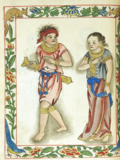
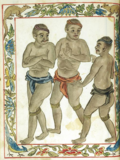
The Boxer Codex depicts the Tagalogs, Visayans, Zambals, Cagayanes or possibly Ibanags, and Negritos of the Philippines in vivid color. The paintings' technique and the use of Chinese paper, ink, and paints suggests that the artist may have been Chinese.[4][2]

It is believed that the original owner of the manuscript was Luis Pérez Dasmariñas, son of Governor General Gómez Pérez Dasmariñas,[5] the Spanish Governor-General of the Philippines. Luis succeeded his father in office as governor-general. Since Spanish colonial governors kept extensive written reports of the territories they governed, it is likely that the manuscript was written on the governor's orders.[4]

The manuscript's earliest known modern owner was Lord Ilchester. The codex was among what remained in his collection when his estate, Holland House in London, was bombed on September 27, 1940, during the Blitz. It was auctioned in 1947 and came into the possession of Charles Ralph Boxer, an authority on the Far East, and whom it is named. It is now owned by the Lilly Library at Indiana University.[3]

Illustrations in the Boxer Codex

[edit]

Natives of the Philippines

[edit]

(All captions below based on source)[2]

Foreigners

[edit]

(All captions below based on source)[2]

See also

[edit]

Notes

[edit]

References

[edit]
[edit]
Revisions and contributorsEdit on WikipediaRead on Wikipedia
from Grokipedia
The Boxer Codex is an illustrated Spanish manuscript compiled in the Philippines circa 1590, comprising approximately 270 pages of text in Spanish accompanied by 75 colored illustrations depicting the ethnic groups, social structures, customs, and attire of peoples from the Philippines, China, Japan, Java, the Moluccas, the Mariana Islands, Siam, and other East and Southeast Asian regions.[1][2][3] Its contents draw from multiple sources, including eyewitness accounts by Spanish missionaries and officials such as Martín de Rada's 1575 voyage to China, integrated with descriptive narratives on geography, ethnography, and history across the Pacific and Asian polities encountered during early Spanish expansion.[4][2] Assembled in Manila amid Sino-Hispanic interactions and colonial book cultures, the codex offers the earliest known visual representations of pre-Hispanic Philippine societies, including Tagalog nobility, Visayan warriors, and indigenous hunters, alongside Ming dynasty Chinese elites and officials, highlighting cultural exchanges and hybrid artistic influences in the colonial entrepôt.[5][6][2] Rediscovered and described by historian Charles R. Boxer in 1950, who owned it until donating to Indiana University's Lilly Library, the manuscript has since informed scholarly analyses of entangled colonial ethnographies, visual rhetoric in imperial documentation, and the material history of early modern knowledge production in Southeast Asia.[6][3][2]

Description

Physical and Material Features

The Boxer Codex consists of 306 folios of Chinese paper, measuring quarto in format, with text inscribed in a simplified procesal handwriting style typical of late sixteenth-century Spanish colonial documents.[7][8] The paper's origin reflects Sino-Hispanic interactions in the Manila galleon trade, where Chinese materials were readily available for European-style manuscript production.[7] The volume includes approximately 75 to 95 pages of hand-colored illustrations, executed in watercolors and inks that have retained vibrancy due to the manuscript's preserved state.[9] Originally compiled in Manila between 1591 and 1595, the codex's pages show evidence of having been transported unbound or loosely gathered from the Philippines to Macao, where binding occurred around 1614 using materials consistent with Portuguese colonial practices in East Asia.[10] The binding features intact margins and minimal wear, indicating careful handling post-assembly, in contrast to contemporaneous manuscripts that suffered greater degradation from tropical climates and repeated use.[6] Spectral analysis confirms the illustrations' pigments derive from both local and imported sources, including mineral-based blues and organic reds, without signs of later retouching.[9] The manuscript's overall physical condition remains remarkably robust, with no significant foxing, insect damage, or ink fading attributable to its storage history in European libraries prior to acquisition by the Lilly Library in 1960.[6] This preservation underscores the codex's value as a primary artifact, though minor edge trimming during rebinding has not altered the content layout.[10]

Linguistic and Structural Composition

The Boxer Codex consists of textual descriptions written primarily in Spanish, the administrative language of Spanish colonial authorities in the Philippines during the late 16th century. This linguistic choice aligns with the manuscript's compilation in Manila around 1591–1595, drawing from reports by Spanish explorers, missionaries, and interpreters who documented encounters with indigenous and Asian peoples.[11][2] The text incorporates borrowed terms from local languages such as Visayan, Tagalog, Malay, and Cantonese, reflecting the multilingual environment of early colonial Manila and the challenges of translating ethnographic details from oral or non-Spanish sources.[11] Some accounts appear to originate from translated materials, possibly from Chinese or Southeast Asian intermediaries, evidenced by occasional Mexican Spanish orthographic conventions and phrasing atypical of peninsular Castilian.[4] Structurally, the codex is organized as a bound manuscript of approximately 306 folios, integrating 75 full-page colored illustrations with accompanying prose narratives in a sequential, ethnographic format.[12] Content progresses thematically from descriptions of Philippine indigenous groups—such as Tagalogs, Visayans, and Negritos—to broader Southeast Asian, East Asian, and Pacific peoples, suggesting a deliberate compilation for informational or administrative purposes rather than a unified narrative.[13] Each section typically pairs a central illustration of representative figures (often couples or warriors) with textual elaboration on customs, attire, social hierarchies, and warfare, though the manuscript remains unfinished, with abrupt transitions and incomplete entries indicating assembly from disparate sources.[4] This interleaved text-image composition facilitated rapid visual and verbal cross-referencing, adapting European manuscript traditions to colonial documentation needs.[8]

Historical Context

Spanish Colonial Expansion in the Philippines

The expedition of Miguel López de Legazpi, departing from Navidad in New Spain on November 21, 1564, marked the inception of sustained Spanish colonization in the Philippines, reaching the island of Cebu on February 13, 1565, where the first permanent settlement was founded amid resistance from local chieftain Tupas.[14] Legazpi's forces, numbering around 500 men across five ships, secured alliances with some indigenous groups while subduing others through military action and diplomacy, establishing Cebu as the initial colonial outpost and introducing Catholic missionary efforts under Andrés de Urdaneta.[15] In May 1570, Martín de Goiti, Legazpi's master-of-camp, led an advance force of approximately 300 Spaniards and Mexican allies northward to Luzon, engaging and defeating native defenders under Rajah Sulayman in the Battle of Manila on May 24, which involved artillery and infantry assaults on fortified positions along the Pasig River.[16] Legazpi reinforced the position the following year, arriving with additional ships in May 1571 and compelling Sulayman's successor, Lakan Dula of Tondo, to submit through a combination of blockade, tribute demands, and selective alliances, thereby formalizing Spanish control over Manila Bay and designating the city as the colonial capital.[14] From Manila as a fortified base, Spanish expansion radiated outward in the 1570s and 1580s, with expeditions pacifying coastal lowlands of Luzon—such as Ilocos, Cagayan, and Bicol—and returning to consolidate Visayan holdings, often relying on encomienda grants to loyal indigenous elites for tribute collection in rice, gold, and labor.[15] By the 1590s, approximate Spanish garrisons of 200-400 soldiers maintained oversight over an estimated 150,000-200,000 Christianized natives in core areas, though interior highlands and the Moro sultanates of Mindanao and Sulu repelled deeper incursions, necessitating ongoing naval campaigns against piracy and slave-raiding.[14] This phase of territorial consolidation involved cataloging diverse ethnic polities—from tattooed Visayan warriors to stratified Tagalog barangays—for strategic intelligence, amid a broader imperial strategy linking Manila to Acapulco via annual galleon trade for silver and Asian goods.[16]

Motivations for Ethnographic Documentation

The ethnographic documentation in the Boxer Codex arose from the Spanish colonial imperative to catalog the diverse populations of the Philippines and surrounding regions for effective administration following the conquest of Manila in 1571. Spanish officials, operating in a fragmented archipelago with over 7,000 islands and hundreds of ethnolinguistic groups, required detailed accounts of indigenous social hierarchies, kinship systems, attire, weaponry, and rituals to enforce tribute collection, allocate encomiendas—land grants assigning indigenous labor and taxes to Spanish settlers—and suppress resistance.[13] This practical necessity stemmed from the challenges of governing without prior local knowledge, as early expeditions like Miguel López de Legazpi's in 1565 encountered polities ranging from centralized barangays led by datus to nomadic hunter-gatherer bands, necessitating classification to integrate them into the colonial framework.[14] A secondary motivation involved military and strategic intelligence, particularly amid ongoing conflicts with Muslim sultanates in Mindanao and Sulu, as well as potential threats from Ming China and regional powers. The Codex's illustrations of warriors, tattoos, and combat practices among groups like the Visayans and Tagalogs provided visual aids for assessing martial prowess and tactics, informing campaigns of pacification that subdued major resistance by 1600.[17] Descriptions of non-Philippine peoples, including Chinese merchants and Japanese samurai, reflected Manila's role as a entrepôt in the galleon trade, enabling Spanish authorities to monitor foreign influences and mitigate espionage or uprisings, such as the 1603 Chinese revolt.[18] Evangelization further drove documentation, as Franciscan and Augustinian friars, arriving from 1577 onward, used ethnographic details to identify pagan beliefs—such as animism and ancestor veneration—for targeted conversion efforts under the patronage system, which tied indigenous communities to missions.[19] By 1590, when the Codex was likely compiled, over 300,000 baptisms had occurred, but resistance persisted, prompting records that highlighted customs like headhunting to justify interventions as civilizing measures.[14] These motivations aligned with broader Habsburg imperial practices, where such manuscripts served as informational compendia for the Council of the Indies in Seville, prioritizing empirical observation over speculative theory to sustain long-term dominion.[12]

Contents

Textual Narratives

The textual narratives in the Boxer Codex form a compilation of Spanish-language prose spanning roughly 270 pages across 22 sections, encompassing ethnographic descriptions, historical summaries, geographical notes, and cultural observations on peoples from the Philippines, Southeast Asia, East Asia, and the Pacific islands. These accounts detail social hierarchies, attire, weaponry, rituals, and interactions with Europeans, often serving as captions or extended commentaries alongside illustrations, and are drawn from a mix of eyewitness reports, prior missionary writings, and local knowledge gathered during early Spanish colonization.[13][11][2] Most sections remain anonymous, reflecting an unfinished editorial process likely conducted in Manila between 1590 and 1595, though five are attributed to identifiable authors, including the Augustinian friar Martín de Rada's relation of his 1575 embassy to the Ming court in China, which recounts diplomatic protocols, urban life in Fujian ports, and perceptions of Chinese governance and idolatry. Other authored segments cover Moro customs in Mindanao and Brunei, emphasizing raiding practices, slavery, and Islamic influences among maritime groups. The narratives portray Philippine indigenous societies in hierarchical terms, such as Tagalog royalty clad in red finery symbolizing status, Visayan tumao warriors valued for tattooed prowess and kampilan swords, and uripon dependents adorned with gold despite servile roles, highlighting pre-colonial distinctions in dress, adornment, and martial culture before widespread Christianization.[12][2][20] East Asian portrayals focus on Ming Chinese elites, from the emperor and empress in imperial regalia to mandarin officials and military generals, underscoring bureaucratic examinations, familial structures, and trade networks extending to Manila's sangley communities, where narratives note hanfu attire and economic roles amid Spanish oversight. Southeast Asian and Pacific entries describe Javanese, Moluccan, and Chamorro islanders' seafaring, headhunting, and animist beliefs, framing them through a lens of strategic utility for colonial expansion, such as potential alliances or subjugation. These texts exhibit a pragmatic ethnographic intent, prioritizing verifiable customs over moralizing, yet filtered through Iberian observers' biases toward paganism and hierarchy.[20][2]

Visual Illustrations

The Boxer Codex contains approximately 75 full-page colored illustrations that depict various ethnic groups encountered by Spanish colonizers in the late 16th century, primarily focusing on inhabitants of the Philippine archipelago alongside representations of Chinese, Southeast Asian, and other Asian peoples.[2] These visuals, executed in a hybrid artistic style blending European manuscript traditions with Ming Chinese painting techniques, feature outlined figures rendered in flat, vibrant watercolors or gouache on European paper, set against plain white backgrounds without landscape or perspective elements.[21] Scholars attribute the artwork to Chinese migrant artists in Manila, evidenced by the use of ink outlines, stylized facial features, and compositional similarities to contemporary Chinese ethnographic illustrations, reflecting cultural convergence in the multicultural port city.[22] [23] The illustrations typically portray individuals or couples in traditional attire, emphasizing social status through color coding—such as red for Philippine royalty—and accessories like weapons, jewelry, and tattoos, which align with the accompanying Spanish textual descriptions of customs, warfare, and hierarchies.[10] This visual ethnography serves both documentary and imperial purposes, providing the earliest extant images of pre-colonial Philippine societies at the point of Spanish contact, though filtered through colonial observers' lenses and local artistic mediation.[5] The manuscript's unfinished state is apparent in some incomplete figures and inconsistent detailing, suggesting assembly between 1590 and 1595 in Manila.[4]

Depictions of Philippine Indigenous Groups

The Boxer Codex contains colored illustrations of indigenous Philippine ethnic groups encountered by early Spanish colonizers, including Tagalogs, Visayans (Bisayans or Pintados), Cagayans, Sambals (Zambals), Negritos (Negrillos), and Moros, dating to circa 1590. These visuals depict pre-colonial attire, body adornments, weapons, and indicators of social hierarchy, providing the earliest known artistic records of these peoples at the onset of European contact.[2][23] Visayan depictions emphasize extensive tattoos (patok or batok), earned through warfare and status, covering men's bodies almost entirely while women received them primarily on the hands; the Spanish termed them Pintados ("painted ones") for this practice, executed using heated iron or brass rods to imprint elegant figures. Illustrations show Visayan kadatuan (royals) in red attire denoting nobility, timawa or tumao (martial class) warriors with minimal cotton cloth serving as "clothing" alongside tattoos, and uripon (slaves) adorned with gold despite lower status. Weapons such as kampilan swords with distinctive hilts appear in warrior figures, reflecting martial culture.[2][24] Tagalog illustrations highlight class distinctions via color-coded garments: royalty in red, maginoo (nobles) in blue, and commoners in simpler wraps or headscarves, with some women possibly from Muslim-influenced Maynila shown in modest coverings. Cagayan Valley figures, potentially Ibanag, include warriors and women in bahagi loincloths for men and chinina collarless garments with short skirts for women, alongside childbirth and ritual scenes. Sambal (Zambal) images portray hunter-warriors engaged in falconry and pursuits with bows, arrows tipped in fishbone, and javelins, often nude or minimally clad. Negrito hunters are shown in basic loincloths, emphasizing their foraging lifestyle. Moro depictions feature more elaborate silk and linen attire, with men carrying scimitars, distinguishing them from highland or animist groups.[2][25]

Representations of Southeast Asian and East Asian Peoples

The Boxer Codex features detailed illustrations of East Asian peoples, predominantly from Ming dynasty China, alongside select representations of other groups such as Mongols and Southeast Asian ethnicities including Siamese, Javanese, and Moluccans. These depictions, totaling around 44 ethnographic images outside Philippine subjects, emphasize social hierarchies through attire, accessories, and poses, often executed by Chinese artists in the Spanish Philippines, blending local and imported artistic techniques.[24][22][1] Chinese representations dominate, with six specific illustrations verified against Ming-era sources: the emperor and empress in dragon- and phoenix-embroidered robes signifying imperial authority; a noble prince and consort in layered silk garments; a mandarin bureaucrat and wife displaying rank badges (buzi) on square-collared jackets; a general with an attendant, the former in armor-like robes; and merchant couples, including Sangleys in Manila, shown in hanfu variants like changshan for men and ruqun skirts for women, reflecting overseas trade networks.[26] These portrayals capture mid-to-late 16th-century Ming fashion, including wide sleeves, embroidered motifs, and hairpieces, likely derived from Chinese pictorial records encountered by Spanish explorers.[4] A single illustration depicts a Tatar noble couple from Tartary (likely Mongolia or Manchuria), attired in fur-lined coats, feathered headdresses, and vibrant colors like green, yellow, blue, and pink, evoking nomadic steppe traditions amid the codex's broader ethnographic scope.[27] Southeast Asian illustrations, though fewer, include Siamese in turbans and wrapped garments, Javanese with batik-like sarongs and kris daggers, and Moluccans with island attire, underscoring Spanish reconnaissance of regional trade partners and rivals circa 1590.[1][24] These visuals served imperial documentation, highlighting cultural distinctions for navigational and diplomatic purposes in the Pacific.[2]

Provenance and Preservation

Creation and Early Circulation

The Boxer Codex, an illustrated Spanish manuscript comprising 306 folios on rice paper, was assembled in Manila, Philippines, circa 1590–1591.[6] Its textual narratives, written anonymously in Spanish, draw from eyewitness accounts and prior reports to document the ethnography, customs, and governance of indigenous Philippine groups alongside Southeast and East Asian peoples.[13] The illustrations, executed by Chinese artisans familiar with Ming dynasty conventions such as zhigong tu ethnographic albums, reflect a collaborative Sino-Hispanic production process amid Manila's role as a hub for Chinese trade and migration.[4] Scholars attribute its commissioning to Governor-General Gómez Pérez Dasmariñas (in office 1590–1593), who sought detailed intelligence on regional threats and allies to bolster Spanish colonial administration, though direct evidence remains circumstantial.[6] [28] Following Gómez Pérez Dasmariñas's murder in October 1593 during a campaign against Muslim forces in Mindanao, the manuscript likely passed to his son, Luis Pérez Dasmariñas, who briefly served as governor from 1593 to 1596 before returning to Spain.[6] Hernando de los Ríos Coronel, a Manila-based merchant and advocate for Philippine interests, transported the unbound codex to Spain around 1605, integrating it into efforts to inform the royal court on colonial matters.[6] By no later than 1610, explorer Pedro Fernández de Quirós referenced its contents in Madrid, indicating limited circulation among Spanish officials and navigators concerned with Pacific expansion.[6] The codex was formally bound in Madrid no earlier than 1614 by the Royal Company of Printers and Booksellers, suggesting archival handling within bureaucratic or private elite networks rather than broad dissemination.[6] Its early provenance underscores a utilitarian purpose for imperial decision-making, with no evidence of publication or wide sharing prior to the 17th century.[6]

Acquisition, Loss, and Rediscovery

The Boxer Codex was assembled in Manila between 1590 and 1591, likely commissioned by Spanish Governor-General Gómez Pérez Dasmariñas upon his arrival in the Philippines or by his son Luis Pérez Dasmariñas, who succeeded him as governor from 1593 to 1603.[6] The manuscript was conveyed to Spain in 1605 by the Augustinian friar and diplomat Hernando de los Ríos Coronel, who presented it at the royal court; it was bound in Madrid and documented there by 1614.[6] After departing the Spanish court post-1614, the codex vanished from historical records, entering an undocumented period of private ownership that persisted for over three centuries. It reemerged in the library of the fourth Earl of Ilchester at Holland House in London, where it survived the estate's partial destruction by German bombing during World War II in 1940–1941.[6][29] British military historian and orientalist Charles Ralph Boxer acquired the manuscript in 1947 at a Sotheby's auction of the Ilchester collection.[6][30] Recognizing its value as a late-16th-century ethnographic record, Boxer publicized it through a 1950 article in the Journal of the Royal Asiatic Society of Great Britain and Ireland, marking its modern scholarly rediscovery.[3] The codex, comprising 306 folios, is now preserved at the Lilly Library of Indiana University in Bloomington.[6]

Scholarly Analysis

Transcription and Translation Efforts

The Boxer Codex, a late-16th-century Spanish manuscript held at the Lilly Library of Indiana University since its donation by Charles Ralph Boxer in 1965, saw limited scholarly engagement with its textual content prior to the 21st century, with early efforts focusing on select excerpts rather than comprehensive treatment.[20] In 1979, Charles Boxer and Pierre-Yves Manguin published a partial transcription—without translation—of the section attributed to Miguel Roxo de Brito's Relaçion on Maluku and the Raja Ampat islands, highlighting the manuscript's composite nature but leaving the bulk untranslated and unanalyzed.[12] This fragmentary approach reflected the challenges of the codex's archaic Spanish orthography, anonymous authorship, and reliance on copied sources from Portuguese and Spanish explorers, which complicated full decipherment without contextual annotation.[11] The first complete transcription and English translation appeared in 2016, edited by George Bryan Souza and Jeffrey S. Turley, published by Brill as a 711-page volume that reproduces the original Spanish text alongside a facing-page translation and extensive annotations.[20] [31] This edition addresses the manuscript's 306 folios, including ethnographic descriptions, geographical accounts, and historical narratives drawn from Pacific, Southeast Asian, and East Asian contexts circa 1590–1595, while clarifying derivations from earlier Iberian sources like those of Tomé Pires and Martín de Rada.[20] [1] The editors' annotations incorporate cross-references to primary documents, linguistic analysis of terms (e.g., indigenous nomenclature for social classes and customs), and evaluations of the text's reliability, noting biases from colonial perspectives and potential secondhand sourcing.[11] Turley's translation prioritizes fidelity to the original's structure and vocabulary, avoiding anachronistic interpretations, while Souza's contributions emphasize maritime and economic contexts, such as trade routes linking Manila to China and Japan.[31] [1] Prior to the Brill edition, Isaac Donoso produced a modern Spanish transcription with partial English translation in 2011, published by the University of Santo Tomas Publishing House, focusing on expedition accounts but lacking the comprehensive annotations and full integration of illustrations found in later works.[32] These efforts collectively enabled broader access, though scholars caution that the codex's texts often blend empirical observations with hearsay, necessitating corroboration with archaeological and archival evidence for historical accuracy.[20] [33] Ongoing digital initiatives, such as those by Indiana University's Lilly Library, have since facilitated high-resolution scans, supporting further paleographic studies without altering the primacy of the 2016 scholarly edition.[20]

Artistic and Cultural Influences

The illustrations in the Boxer Codex demonstrate predominant Chinese artistic influences, employing techniques such as fine brushwork, ink application, and color palettes typical of Ming dynasty painting traditions.[8] Scholars attribute this style to the work of anonymous Chinese artists, likely migrants known as Sangleys resident in Manila, who utilized imported Chinese paper, inks, and pigments for the manuscript's production around 1590–1595.[22] This aligns with the multicultural environment of late sixteenth-century Manila, where Chinese artisans contributed to colonial image-making amid Spanish oversight.[18] Hybrid elements emerge in the codex's visual composition, blending Chinese figural depiction with European conventions like structured layouts and occasional shading to convey depth, reflecting Sino-Hispanic cultural convergence in the colonial entrepôt.[10] Analysis of the 75 colored illustrations reveals variations in technique across sections, suggesting input from multiple artists, yet unified by an overarching Chinese aesthetic that prioritizes ethnographic detail over realism.[22] These features underscore the codex's role as a product of imperial collaboration, where Spanish textual narratives were paired with Chinese visual interpretations of Southeast Asian and East Asian subjects.[24] Culturally, the codex encapsulates influences from the Ming dynasty's expansive trade networks and Manila's role as a hub for Chinese merchants, evident in depictions of Chinese nobility, officials, and local hybrids that mirror contemporary Sino-centric worldviews adapted to Spanish colonial imperatives.[34] The absence of overt indigenous artistic motifs in the illustrations points to a filtered representation, mediated through Chinese lenses that emphasized hierarchical and exoticized portrayals, informed by pre-existing Ming ethnographic traditions rather than direct local emulation.[8] This synthesis not only facilitated Spanish understanding of regional polities but also preserved elements of Ming visual culture in a colonial context.[10]

Evidence of Chinese Artistic Contributions

The illustrations in the Boxer Codex exhibit distinct Chinese artistic techniques, including brushwork characteristic of Ming dynasty painting, which scholars attribute to the work of a Chinese artist, likely a Christianized Sangley resident in Manila.[34][5] This attribution stems from the use of ink lines and minimalist shading that align with traditional Chinese ethnographic and costume albums, rather than the detailed oil-based realism of European contemporaries.[22] The codex's 97 pages of illustrations include sections with borders in explicitly Chinese styles, such as floral and cloud motifs typical of late Ming decorative art, covering dedicated portrayals of East Asian subjects.[22] Evidence of Chinese influence is further evident in the incorporation of figures and motifs derived from Ming literary and pictorial traditions, including depictions of Chinese deities like Zhu Rong and imperial personages that mirror contemporary Chinese sources on foreign peoples.[35][26] These elements suggest the artist drew upon Sinic visual repertoires, adapting them into a hybrid format that fused Chinese brush techniques with Spanish textual organization and occasional European spatial layouts, such as perspective in group scenes.[10] The resulting Sino-Hispanic convergence reflects the multicultural environment of late sixteenth-century Manila, where Chinese artisans contributed to colonial knowledge production by illustrating Southeast Asian ethnographies for Spanish patrons around 1590-1595.[21] Scholarly analyses confirm the undeniable Sinic contribution, as the codex's images of Chinese elites and migrants—such as mandarins, generals, and merchants—employ stylized poses and attire faithful to Ming hanfu representations, distinct from the more interpretive styles applied to non-Chinese groups.[34] This precision in rendering familiar subjects underscores the artist's cultural origins, while adaptations for unfamiliar Philippine indigenous figures reveal a cross-cultural synthesis rather than pure importation.[18]

Interpretations of Hybrid Styles

The hybrid styles in the Boxer Codex's illustrations are interpreted by scholars as a deliberate Sino-Iberian artistic fusion, resulting from Chinese painters in Manila adapting Ming dynasty techniques to meet Spanish colonial demands for ethnographic documentation around 1590–1595. This blending manifests in the precise ink brushwork and fluid contours characteristic of Chinese gongbi painting, combined with European-inspired shading for volume and a structured, frontal layout reminiscent of Renaissance portraiture, which together produce vivid, symmetrical depictions of diverse peoples.[10][22] Analyses emphasize that this hybridity evidences cultural convergence in early colonial Manila, where over 20,000 Chinese migrants interacted with Spanish administrators and indigenous artisans, enabling Chinese artists—likely from Fujian province—to innovate by overlaying indigenous Southeast Asian motifs, such as tattoo patterns and weaponry, onto a framework informed by imperial Spanish visual ethnography. For instance, the codex's 75 colored folios avoid purely European naturalism, instead employing Chinese color symbolism (e.g., red for nobility) while incorporating shadow gradients unusual in traditional East Asian art, suggesting patronage-driven experimentation to convey hierarchical and exotic "otherness" to European audiences.[23][24] Critics of overly Eurocentric readings argue that the styles prioritize Chinese technical mastery over mere imitation, as seen in the consistent use of fine-line detailing for clothing and accessories that defies Spanish artistic norms of the era, positioning the codex as a product of cross-cultural agency rather than unidirectional imposition. This interpretation aligns with evidence from contemporary Manila records of Chinese workshops producing maps and portraits for galleon trade oversight, underscoring the codex's role in hybrid knowledge production amid Manila's role as a Pacific entrepôt.[36][21]

Significance and Debates

Contributions to Understanding Pre-Colonial Philippines

The Boxer Codex, compiled circa 1590–1595 in Manila, furnishes rare visual and textual records of pre-colonial Philippine ethnic groups, capturing social hierarchies, attire, and customs shortly after initial Spanish contact but prior to widespread cultural transformation.[12] Its 75 illustrations, likely executed by a Chinese Christian artist, depict indigenous peoples with attention to class-specific regalia, such as Tagalog royals in red garments symbolizing nobility and gold ornaments denoting wealth, alongside maginoo (nobles) in blue attire.[25] These portrayals evidence a stratified society with hereditary elites distinguished by color-coded clothing and accessories, corroborated by archaeological finds of gold artifacts from sites like Cebu dating to the 14th–16th centuries.[25] Illustrations of Visayans highlight regional variations, showing kadatuan (royals) in red finery, timawa or tumao (martial freemen) with extensive tattoos (patok) signifying valor, and uripon (dependents or slaves) adorned with gold despite lower status, indicating a feudal structure where even subordinates accessed prestige goods through patronage.[25] Weapons like the kampilan sword and carabao-hide shields appear consistently, underscoring martial traditions across Luzon and Visayan groups, while body modification practices among "Pintados" (tattooed ones) from Bohol or Cebu reflect warrior ethos tied to headhunting and status elevation.[2] Such details align with ethnohistoric accounts from early Spanish chroniclers but provide independent, non-missionary visuals less prone to religious filtering. Depictions of northern groups, including Cagayan Valley peoples (possibly Ibanag) with tied long hair and kampilan hilts, and Zambals as falconry-practicing hunter-warriors, reveal ecological adaptations and inter-ethnic trade networks, with the latter's use of birds of prey suggesting specialized subsistence in mountainous terrains.[25] Negrito (Aeta) illustrations portray bow-wielding foragers in minimal garb, preserving representations of pre-Austronesian inhabitants amid dominant Malayic polities.[25] Moro (likely Mindanao Muslims) entries note Islamic influences via red turbans and swords, evidencing pre-colonial maritime connections to Borneo and beyond. As a primary source assembled before systematic friar-led iconoclasm, the Codex counters later colonial narratives by documenting sophisticated material culture—goldwork, textiles, and metallurgy—indicative of advanced craftsmanship and trade with China and Southeast Asia, supported by Ming-era porcelain shards from Philippine sites.[24] Its outsider perspective, blending Spanish text with Chinese artistic idiom, minimizes indigenous self-censorship, offering a baseline for reconstructing pre-Hispanic diversity against the backdrop of oral traditions vulnerable to post-conquest erosion.[2] Scholars value it for illuminating causal links between ecology, warfare, and hierarchy, such as tattooing's role in social cohesion, though interpretations must account for the compiler's imperial context.[22]

Criticisms of Bias and Reliability

The Boxer Codex has faced scholarly scrutiny for its inherent colonial biases, stemming from its production in Spanish-controlled Manila around 1590–1595 for a European audience. Descriptions of indigenous groups frequently employ an ethnocentric framework, framing pre-colonial Philippine societies as primitive or idolatrous, with practices like tattooing (pintados) and animist rituals cast as evidence of barbarism to align with missionary imperatives for conversion and colonial domination.[25] [2] This perspective exoticizes native customs, such as betel nut chewing, by attributing lethal consequences to abstinence, revealing European prejudices over empirical observation.[37] Illustrations reinforce these biases through visual hierarchies, contrasting the nudity or minimal attire of "uncivilized" ethnic groups—such as Visayans or Negritos—with the clothed figures of Spanish or Chinese elites, thereby underscoring racial and cultural superiority.[2] Skin tones are differentially rendered, with lighter shades for "civilized" women and darker for marginalized warriors, exaggerating distinctions to serve imperial narratives of otherness rather than fidelity to lived realities.[2] Such depictions, while potentially informed by local artists like sangleys (Chinese migrants), remain entangled in Iberian gazes that prioritize colonial utility over neutral ethnography.[2] [38] Regarding reliability, the codex's anonymity and compilation from disparate informants—likely including Chinese converts and Spanish officials—undermine its status as an unmediated record, introducing risks of hearsay, stylistic hybridization, and selective emphasis.[13] Although some sections claim depictions "al vivo" (from life), textual blanks and narrative inconsistencies suggest incomplete or second-hand sourcing, limiting its use without corroboration from archaeology or indigenous oral traditions.[2] Critics argue that over-reliance on the codex perpetuates distorted views of pre-colonial diversity, as its hybrid Sino-Hispanic influences may conflate authentic traits with artistic conventions, such as idealized Chinese bureaucratic attire imposed on Philippine contexts.[35] These flaws highlight the need for contextual skepticism, particularly given the manuscript's alignment with broader Relación Geográfica genres that prioritized administrative utility over objective accuracy.[12]

Impact on Modern Historiography

The Boxer Codex has profoundly influenced modern historiography of Southeast Asia, particularly by offering one of the earliest detailed visual and ethnographic records of pre-colonial Philippine societies, enabling reconstructions of indigenous social structures, attire, and cultural practices that were often underrepresented in Spanish colonial texts. Scholars utilize its 75 illustrations and accompanying Spanish narratives to document distinctions among groups such as the Tagalogs, Visayans, Cagayans, and Zambals, revealing stratified hierarchies with nobility marked by red or blue garments, gold ornaments, and weapons like the kampilan sword, which evidence advanced metallurgy and warrior traditions predating European arrival.[25][13] This has countered mid-20th-century narratives that portrayed pre-Hispanic Philippines as uniformly primitive, instead highlighting causal links between local chieftaincies and regional trade networks with China and Brunei, as inferred from depictions of falconry, tattooing, and maritime attire.[23] The 2018 critical transcription and translation by George Bryan Souza and Jeffrey S. Turley marked a pivotal advancement, providing the first complete edition with annotations that integrate paleographic, linguistic, and art historical evidence, thereby expanding its utility beyond ethnohistory to analyses of early global interactions.[13][12] This edition has spurred interdisciplinary research, including spectral analyses of pigments confirming Ming Chinese artistic influences in the illustrations, which underscore Manila's 1590s role as a Sino-Iberian cultural nexus and challenge Eurocentric views of colonial knowledge as unidirectional imposition.[9] Recent interpretations emphasize "entangled ethnographies," where the codex's hybrid styles—blending Chinese ink techniques with Spanish textual framing—reveal collaborative knowledge production involving local converts and migrants, informing causal models of cultural convergence rather than mere assimilation.[2][24] In Philippine historiography, the codex has fueled revivalist movements, such as efforts to reclaim pre-colonial scripts like baybayin through comparisons with its visual motifs of indigenous literacy and regalia, dated to circa 1590–1595.[39] It also contributes to debates on Islam's early modern spread, with depictions of "Moros" informing timelines of coastal conversions tied to trade rather than solely conquest.[3] However, historiographers caution against overreliance on its potentially mediated authorship—possibly by a Chinese Christian artist under Spanish patronage—urging cross-verification with archaeological data, such as Lingayen Gulf artifacts mirroring codex imagery, to mitigate interpretive biases from colonial filtering.[4][21] Overall, its rediscovery in 1940 and subsequent digitization have democratized access, prompting a shift toward empirically grounded, multi-perspective narratives that prioritize indigenous agency in global entanglements.[1]

References

User Avatar
No comments yet.