


Community hub
Recent from talks
Contribute something
Nothing was collected or created yet.
Branch line
View on Wikipedia | This article has multiple issues. Please help improve it or discuss these issues on the talk page. (Learn how and when to remove these messages)
|


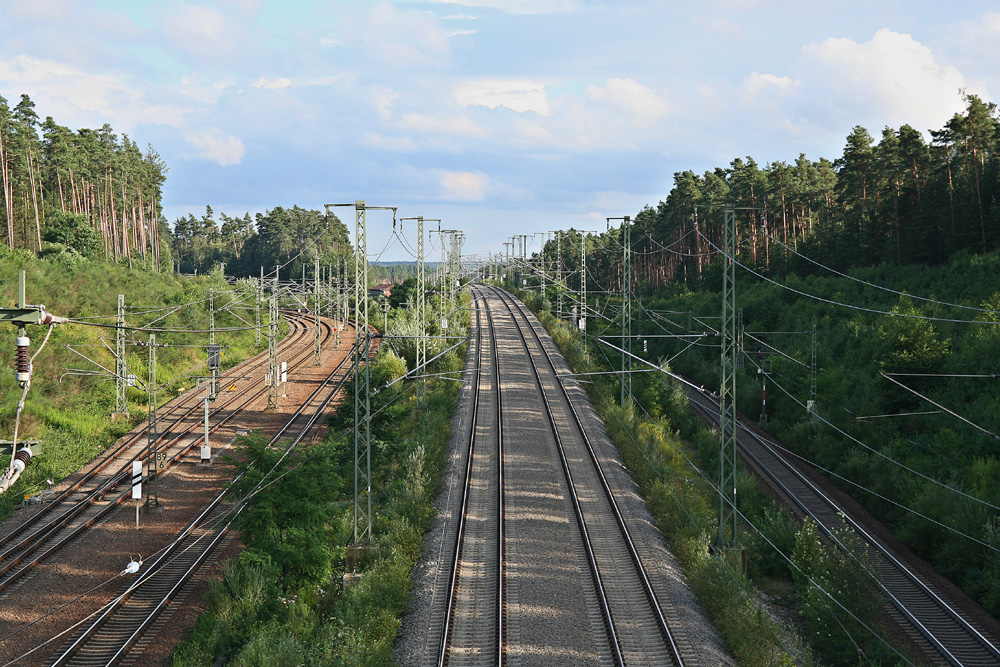
A branch line is a secondary railway line which branches off a more important through route, usually a main line. A very short branch line may be called a spur line. Branch lines may serve one or more industries, or a city or town not located on a main line. Branch lines may also connect two or more main lines.
Industrial spur
[edit] |
An industrial spur is a type of secondary track used by railroads to allow customers at a location to load and unload freight vehicles without interfering with other railroad operations.
Industrial spurs can vary greatly in length and freight vehicle capacity, depending on the requirements of the customer the spur is serving. In heavily industrialized areas, it is not uncommon for one industrial spur to have multiple sidings to several different customers. Typically, spurs are serviced by local trains responsible for collecting small numbers of rail vehicles and delivering them to a larger yard, where they are sorted and dispatched in larger trains with other cars destined to similar locations. Because industrial spurs generally have less capacity and traffic than a mainline, they tend to have lower maintenance and signalling (train control) standards.
Before the rise of moving freight long distances by road, starting in the 1930s, railroads were the primary means of transportation around the world. Industries of the era were commonly built along rail lines specifically to allow for easy access to shipping. Short (under a mile, often only several hundred yards) industrial spurs with very small (under ten car) capacities were a common sight along railroads in industrial and rural cities alike. As automobile and roadway technology improved throughout the early and mid-20th century, most low-volume industry spurs were abandoned in favour of the greater flexibility and economic savings of road transport. Today, railroads remain the most economical way to ship large quantities of material, a fact that is reflected in industrial spurs. Most modern day spurs serve very large industries that require hundreds, if not thousands, of carloads a year.
Around the world
[edit]Europe
[edit]There is an international branch line between Italy and Vatican: the 300-metre Vatican Railway, connecting from the Pisa-Rome railway mainline at Roma San Pietro railway station, to Vatican City station.
United Kingdom
[edit]Many British railway branch lines were closed as a result of the "Beeching cuts" in the 1960s, although some have been re-opened as heritage railways.
The smallest branch line that is still in operation in the UK is the Stourbridge Town Branch Line from Stourbridge Junction going to Stourbridge Town. Operating on a single track, the journey is 0.8 miles (1.3 kilometres) long.
North America
[edit]
In North America, little-used branch lines are often sold by large railroads to become new common carrier short-line railroads of their own. Throughout the United States and Canada, branch lines link smaller towns too distant from the main line to be served efficiently, or to serve a certain industrial site such as a power station either because of a location away from the main line or to reduce congestion. They were typically built to lower standards, using lighter rail and shallow roadbeds when compared to main lines.
Canada
[edit]Much of Canada's branch line history relates to large rail transport conglomerates (such as the Grand Trunk, Canadian National, or Canadian Pacific) which would acquire formerly independent short line railways for use as branch lines, with the short line often continuing to exist as a subsidiary. For example, when the Canadian Pacific acquired the Algoma Eastern Railway (a short line) in 1930,[1]: 373 it soon after abandoned much of the Algoma Eastern mainline, but retained sections close to Algoma Eastern–Canadian Pacific junctions as short branch lines or spurs.[1]: 374
The National Transportation Act of 1967 provided government subsidies for branch lines.[2]: 2 Western railway development in Canada worked in concert with land settlement and cultivation, as pioneers were settled near railway lines, often on land the railways had owned. However, by the mid-20th century, railways began neglecting lines in western agricultural regions. This was historically driven by factors such as the Crow Rate, which regulated the price railways could charge for shipping grain. Railways had little incentive to invest in rural Prairie branch lines, but were legally unable to abandon them under the National Transportation Act, which also did not provide a subsidy for grain transport, and instead allowed railways to absorb branch line subsidies freely without making effort to improve the profitability of the lines.[2]: 2 The term "grain-dependent branch lines" began being used as early as 1978 to refer to the special case of these branch lines in agricultural areas whose viability depended on the economics of grain transport.[3] The Western Grain Transportation Act of 1983 addressed this case specifically, but was repealed in 1994 in the wake of the North American Free Trade Agreement and budget-balancing initiatives in favour of a one-time payout by the federal government directly to farmers, to arrange transport of grain themselves. From the mid-1970s to the late 2010s, more than 9,300 kilometres (5,800 mi) of Prairie branch lines were abandoned or had a discontinuance of service.[4]: 10
David Blyth Hanna, the first president of the Canadian National Railway, said that although most branch lines cannot pay for themselves, they are even essential to make main lines pay.[5][6]
United States
[edit]In the United States, abandonment of unproductive branch lines was a byproduct of deregulation of the rail industry through the Staggers Act.
The Princeton Branch is a commuter rail line and service owned and operated by New Jersey Transit (NJT) in the U.S. state of New Jersey. The line is a short branch of the Northeast Corridor Line, running from Princeton Junction northwest to Princeton with no intermediate stops. Also known as the "Dinky Line",[7] at 2.9 mi (4.7 km) it is the shortest scheduled commuter rail line in the United States.[8][9] The run takes 4 minutes, 47 seconds.[10]
Other than the Princeton Line, other surviving branch lines include the Gladstone Branch in New Jersey; as well as the New Canaan Branch, Danbury Branch, and Waterbury Branch in Connecticut. The Long Island Rail Road also refers to its services as "branches".
South America
[edit]Chile
[edit]In Chile, there are many branch lines on its main line, but only a few remain operational. Most only operating in touristic services (like the Antilhue-Valdivia branch line), others have been taken over by other railways (like the San Rosendo-Talcahuano branch line, which has been taken over by Biotrén and the Laja-Talcahuano train service) however, there is one branch line that still remains as fully operative. The Talca-Constitución branch line, which uses trains with bus motors.
Asia
[edit]Hong Kong
[edit]Two extensions to the MTR rapid transit network were built as branches of existing lines: the Lok Ma Chau Spur Line to Lok Ma Chau station, which opened in 2007; and the South Tseung Kwan O Spur Line to LOHAS Park station, opened in 2009.
Earlier, a spur line was built in 1985 on the East Rail line to serve Racecourse station, bypassing Fo Tan station.
Also, the Tsim Sha Tsui Extension was built in 2004 on the East Rail line to serve East Tsim Sha Tsui station. However, after the Kowloon Southern Link was completed in 2009, this spur line turns into a section of the West Rail line (now Tuen Ma line).
Discontinued services include the Sha Tau Kok Railway and the Wo Hop Shek Branch.
India
[edit]On the Delhi Metro, the Blue Line has a Branch Line with 8 Stations, linking Yamuna Bank to Ghaziabad via Anand Vihar ISBT and terminating at Vaishali.
The first section of the Branch opened in 2010 with Anand Vihar as its terminal with six stations. It was further extended to Vaishali in 2011. The line is planned to be extended from Vaishali to Mohan Nagar via Sahibabad Station to link with the main line.
Singapore
[edit]The East West Line of the MRT system in Singapore has a two-station branch to Changi Airport. The first station, Expo, opened in 2001. It was extended to Changi Airport station the next year.
From 1990 to 1996, the section of the North South Line between Jurong East and Choa Chu Kang stations was operated as a separate line, known as the Branch line. It was merged into the North–South Line with the opening of the Woodlands Extension in 1996. The future Jurong Region Line and Cross Island Line will also have branch lines.
Thailand
[edit]There are two notable spur lines within the various rapid transit systems in Bangkok, of which one is under construction and one has been tendered.
The MRT Pink Line will have a spur line reaching into "Impact, Muang Thong Thani", a commercial complex. This spur line, known as the Mueang Thong Thani Line, or the Impact Link, is currently under a soft launch, and is accessible via the Muang Thong Thani station.
The SRT Light Red Line will have a branch line heading towards Siriraj Hospital and the adjacent MRT Station. This branch line has been tendered, and will be constructed along with the main line, which will go to Salaya and possibly beyond.
Oceania
[edit]New Zealand
[edit]New Zealand once had a very extensive network of branch lines, especially in the South Island regions of Canterbury, Otago, and Southland. Many were built in the late 19th century to open up inland regions for farming and other economic activities. The branches in the South Island regions were often general-purpose lines that carried predominantly agricultural traffic, but lines elsewhere were often built to serve a specific resource: on the West Coast, an extensive network of branch lines was built in rugged terrain to serve coal mines, while in the central North Island and the Bay of Plenty Region, lines were built inland to provide rail access to large logging operations.
Today, many of the branch lines have been closed, including almost all of the general-purpose country lines. Those that remain serve ports or industries far from main lines such as coal mines, logging operations, large dairying factories, and steelworks. In Auckland and Wellington, two branch lines in each city exist solely for commuter passenger trains. For more, see the list of New Zealand railway lines.
References
[edit]- ^ a b Wilson, W. A. "Dale" (December 1973). "Algoma Eastern: The Line to Little Current" (PDF). Canadian Rail. 263. Canadian Railroad Historical Association: 350–379. Archived from the original (PDF) on 29 July 2020.
- ^ a b Earl, Paul D.; Prentice, Barry E. (2016). "Western Grain Exceptionalism: Transportation Policy Change Since 1968" (PDF). Canadian Transport Research Forum.
- ^ Mason, Greg (Spring 1978). "The Grain Handling and Transportation Commission" (PDF). Canadian Public Policy. 4 (2). University of Toronto Press: 235–245. doi:10.2307/3549347. JSTOR 3549347.
- ^ Barney, Darin (10 April 2018). "To Hear the Whistle Blow: Technology and Politics on the Battle River Branch Line" (PDF). TOPIA: Canadian Journal of Cultural Studies. 25. Archived from the original (PDF) on 25 August 2021. Retrieved 9 May 2021.
- ^ Hanna, David Blyth, Macmillan 1924
- ^ Dow, Andrew, Dow's Dictionary of Railway Quotations, JHU Press 2006.
- ^ Rosenbaum, Joel; Tom Gallo (1997). NJ Transit Rail Operations. Railpace Newsmagazine. Archived from the original on 3 October 2011. Retrieved 20 July 2013.
- ^ "Picks and Pans Review: Princeton Junction & Back", People, vol. 11, no. 13, 2 April 1979, retrieved 15 April 2012
- ^ Schultz, Bonnie (June 2011). "Arts and Transit: NJ Transit Weighs In". AllPrinceton.com. Archived from the original on 18 October 2012. Retrieved 15 April 2014.
- ^ Frassinelli, Mike (25 June 2013). "Historic Princeton 'Dinky' line train station to move for arts center". The Star-Ledger. Retrieved 26 June 2013.
| International | |
|---|---|
| National | |
| Other | |

Branch line
View on GrokipediaDefinition and Characteristics
Technical Definition
A branch line in rail transport is a secondary railway route that diverges from a main line at a junction to serve local destinations, such as smaller towns, rural areas, or specific industrial sites.[11][1] These lines typically function as feeder routes, channeling freight and passengers to and from the primary network rather than forming part of high-capacity through corridors.[11][12] Technically, branch lines are distinguished by their connection to one or more stations beyond the divergence point, often operating with reduced infrastructure demands compared to main lines, including potentially single-track configurations and lower design speeds.[12] They may incorporate standard running lines equipped with signaling or safeworking systems to manage train movements, enabling scheduled or on-demand services.[13] Unlike very short spurs used primarily for loading or maneuvering, branch lines extend to support ongoing operational needs over distances sufficient for multiple stops or dedicated purposes.Distinctions from Main Lines, Sidings, and Short Lines
Branch lines differ from main lines primarily in their role, capacity, and infrastructure. Main lines constitute the primary arteries of a rail network, designed for high-volume, high-speed through traffic with features such as multiple tracks, advanced signaling systems, and heavier rail weights to accommodate frequent and heavy freight or passenger services.[11] In contrast, branch lines serve as secondary feeders, branching from main lines to connect remote communities, industries, or smaller markets, typically featuring single tracks, lighter rail, and lower speed limits due to reduced traffic volumes and simpler geometries.[14] Unlike sidings, which are short auxiliary tracks diverging from main or branch lines for temporary purposes such as train passing, car storage, or loading/unloading without scheduled through service, branch lines function as running lines extending to serve multiple stations or endpoints with regular operations.[14] Sidings lack the continuous operational intent of branch lines, often being dead-end spurs or loops limited to a few hundred yards, whereas branch lines may span tens or hundreds of miles to deliver freight or passengers to destinations beyond the junction point.[11] Branch lines are distinguished from short lines in terminology and scope, with the former referring to the physical track configuration as a secondary route off a primary line, regardless of operating entity, and the latter denoting independent Class III railroads—defined by the Surface Transportation Board as carriers with annual revenues under $289.4 million in 2023—that often manage former branch lines over short distances to link local shippers to Class I networks.[6] While short line operators may run branch line services, the terms are not synonymous; a branch line can be part of a larger railroad's network, whereas short lines emphasize operational independence and localized focus.Historical Development
Origins in the 19th Century
The origins of branch lines trace to the early expansion of steam-powered public railways in Britain, where secondary routes diverged from initial trunk lines to serve localized industrial demands. The Stockton and Darlington Railway, opened on 27 September 1825 as the first public line to employ steam locomotives for passengers and freight, incorporated short branches to collieries along its 26-mile route, enabling efficient coal haulage from mines to ports and demonstrating the practical advantages of such extensions over standalone lines.[15] These early branches typically featured lighter construction, single tracks, and minimal infrastructure compared to main lines, prioritizing cost-effective access to resources like coal, which comprised the bulk of early traffic. The proliferation of branch lines accelerated during Britain's railway construction boom of the 1830s and 1840s, spurred by over 1,000 parliamentary acts authorizing extensions amid speculative fervor known as railway mania. By 1845, the network had grown to approximately 2,400 miles, with many new authorizations targeting branches to inland districts for mining, quarrying, and agriculture, thereby integrating peripheral economies into national transport. A key example is the Taff Vale Railway, constructed from 1840 to 1841 over under 30 miles to connect South Wales coalfields to Cardiff docks, dismantling canal monopolies and boosting output from 205,200 tons of coal in 1856 to 1,250,000 tons by 1869 after the 1855 Rhondda Valley extension augmented connectivity.[16] In the United States, branch lines emerged concurrently with regional network growth post-1830, often as short feeders to emerging trunk systems amid industrialization and territorial expansion. The Aurora Branch Railroad, chartered on 12 February 1849 by the Illinois General Assembly, exemplified this with its six-mile track linking Batavia to the Aurora line, facilitating local freight to broader markets.[17] Such developments reflected causal drivers like resource extraction and settlement, with branches comprising a growing share of the roughly 9,000 miles of track laid by 1850, though they remained subordinate to high-capacity main lines in design and operation.Expansion and Peak Usage (Late 19th to Mid-20th Century)
Following the establishment of extensive main line networks in the mid-19th century, branch lines underwent significant expansion in the late 19th and early 20th centuries to connect peripheral regions, local industries, and rural communities to broader rail systems. In the United States, this period saw railroad track mileage surge from 93,262 miles in 1880 to 193,346 miles by 1900, with a substantial portion consisting of branch lines that facilitated the transport of agricultural goods, timber, and minerals from remote areas to major markets.[18] [19] These extensions supported westward settlement and industrial growth, peaking at approximately 254,000 miles of total track by 1916, many of which were secondary feeders.[20] In Great Britain, the Light Railways Act 1896 streamlined the approval process for constructing lighter, more economical branch lines, exempting them from stringent engineering standards required for main lines and enabling local authorities and promoters to develop routes in underserved districts.[21] This legislation spurred the building of over 1,000 miles of light railways by 1914, primarily as branches serving agriculture, quarries, and small towns, which complemented the maturing trunk network that had reached near-completion by the 1870s.[22] Across Europe, similar developments integrated regional economies, with railway density increasing markedly between 1870 and 1910, as branch lines extended access to about 70% of the networks operational by 1900.[23] Peak usage of branch lines occurred from the 1910s through the mid-20th century, when they handled peak volumes of freight and passengers before competition from automobiles and trucks eroded demand. In the U.S., branch lines were critical for hauling bulk commodities like coal and grain during World War I and the interwar period, sustaining rural economies until the 1940s.[24] In Britain, these lines operated at capacity during the same era, supporting wartime logistics in World War I and essential peacetime services, with passenger and goods traffic reflecting the height of rail dependency prior to post-1945 declines.[25] This zenith underscored branch lines' role in economic connectivity, though their lighter construction often limited speeds and capacity compared to main lines.[26]Post-World War II Shifts
Following World War II, branch lines worldwide faced accelerated decline due to intensified competition from road transport, as governments prioritized highway construction and subsidies that favored trucks and automobiles over rail for short-haul and rural services. In the United States, non-commuter rail passenger traffic plummeted 84 percent between 1945 and 1964, reflecting a shift toward personal vehicles and buses that rendered many low-density branch lines obsolete for passengers.[27] Freight on branch lines similarly eroded, as diesel trucks offered greater flexibility for serving dispersed industries and farms, leading to a wave of abandonment petitions approved by the Interstate Commerce Commission; by the 1960s, thousands of miles of secondary trackage had been dismantled, particularly those connecting small towns where rail's fixed infrastructure could not compete with road access.[28] In the United Kingdom, the 1948 nationalization of railways under British Railways inherited a network burdened by wartime wear and pre-existing losses, with annual deficits escalating to £140 million by 1962 amid rising road usage.[29] The 1963 Beeching Report, commissioned to rationalize operations, identified branch lines as prime candidates for closure due to their inability to generate sufficient revenue—often operating at under 20 percent capacity utilization—and recommended eliminating around 5,000 miles of predominantly rural and secondary routes.[30] Implementation through the mid-1960s resulted in over 2,000 station closures, disproportionately affecting branch lines that lacked integration with mainline electrification or high-volume freight corridors, as policy shifted toward concentrating resources on viable trunk lines. These shifts were underpinned by causal factors including uneven regulatory environments—railroads bore full track maintenance costs while roads received public funding—and technological mismatches, where branch lines' single-track, low-speed designs proved inefficient against trucks' adaptability. Empirical analyses of closure data indicate that post-1945 abandonments correlated strongly with proximity to expanding highway networks, with surviving branches often repurposed for specialized freight or preserved through local advocacy, though global mileage reductions exceeded 20 percent in many networks by 1970.[20]Operations and Infrastructure
Typical Design and Features
Branch lines are typically constructed as single-track lines branching from a main line via a turnout or junction, designed for lower traffic volumes and speeds compared to main lines. This configuration reduces material and land requirements, with track geometry allowing sharper curves—often with radii as low as 300 meters or less—and steeper grades up to 2% or more, accommodating terrain while limiting speeds to 40-60 km/h.[31][32] Track components emphasize cost-effective, lighter-duty materials: rails weigh 42-50 kg/m (approximately 85-100 lb/yd), typically jointed rather than continuously welded, to handle reduced axle loads of around 150 kN. Sleepers are predominantly timber, spaced 610-760 mm apart, with dimensions such as 178 x 229 x 2590 mm, providing adequate support under lower stresses (e.g., longitudinal stress limited to 34.5 MPa). Ballast depths are shallower, around 150 mm, using gravel for stability on subgrades with bearing pressures of 150-300 kPa.[31][33] Stations and infrastructure on branch lines feature simplified designs, including small platforms, basic shelters or halts without extensive buildings, and occasional passing loops or sidings spaced every 10-20 km for overtaking. Level crossings predominate over grade-separated junctions, and fencing or signaling is minimal, often relying on manual or token systems rather than automatic block signaling. These elements reflect economical construction prioritizing functionality for local freight or passenger services over high-capacity operations.[31][32]Signaling, Maintenance, and Safety Protocols
Branch lines, owing to their secondary status and often single-track nature with infrequent services, utilize simplified signaling compared to high-capacity main lines. Common systems include the electric token block, which requires train crews to hold a unique physical or electronic token for each section to authorize entry and ensure no opposing movements occur, thereby preventing collisions on low-traffic routes.[34] Traditional variants, such as the one-train staff or train staff and ticket methods, similarly restrict sections to a single train, historically applied to simple shuttle services on dead-end branches where only one token or staff per section exists.[35] [36] These manual or semi-automatic approaches contrast with the absolute block or route signaling prevalent on main lines, prioritizing cost-effectiveness over complex interlocking for sparse operations. Maintenance on branch lines follows standardized railway practices but is scaled to lower traffic densities, with inspections focusing on track geometry, rail wear, and ballast stability through visual, ultrasonic, and geometry car methods at intervals determined by usage—typically less frequent than on main lines but no less rigorous for safety. Preventive tasks encompass vegetation clearance to maintain visibility, periodic rail grinding to mitigate fatigue, and ballast renewal to support alignment, often conducted during off-peak periods to minimize service disruptions.[37] [38] Corrective repairs, such as tie replacement or joint welding, address defects identified via mandated federal or regulatory checks, with branch-specific challenges like rural isolation necessitating mobile crews and contingency planning for weather-impacted access. Safety protocols emphasize collision avoidance via token adherence, speed restrictions tailored to track classification—frequently Class 2 (maximum 25 mph for freight) or Class 3 (40 mph)—and infrastructure limits like curve radii or bridge conditions to account for lighter construction.[39] Operators must confirm clear sections before proceeding, supplemented by on-board warnings and, where retrofitted, positive train control for automated enforcement, though many branches rely on procedural rules like one-engine-in-steam working. Level crossings, more prevalent on rural branches, require passive signage or basic gates with regular testing, while emergency protocols mandate immediate halts for signals or obstructions to uphold causal risk mitigation in variable terrain.[40][41]Economic Role
Freight and Passenger Services
Branch lines have primarily facilitated freight services by extending rail access to remote or specialized industrial sites, enabling the haulage of bulk commodities such as coal, lumber, ore, agricultural products, and minerals from production areas to main lines or distribution hubs.[42] In the United States, these lines support key sectors like agriculture, which depend on rail for transporting over 15% of farm products, food, and kindred goods, including wheat, soybeans, corn, and animal feed, thereby linking rural producers to national and export markets.[43][44] Short branch lines, often classified as Class III railroads, connect local shippers—such as paper mills, lumber yards, and quarries—to larger Class I networks, handling one or few daily trains of heavy freight to optimize costs for low-volume origins.[6] Passenger services on branch lines historically provided essential local connectivity for rural communities, operating frequent but low-capacity trains to regional centers before the mid-20th century dominance of automobiles and highways rendered them uneconomical.[28] U.S. rail passenger traffic plummeted from 770 million riders in 1946 to 298 million by 1964, with branch lines bearing disproportionate losses as services shifted to 3 days per week or were eliminated entirely outside dense corridors.[28][45] By 1966, rail accounted for under 2% of intercity passengers, prompting widespread abandonment of unprofitable branch passenger routes in favor of subsidized mainline expresses.[27] Economically, freight sustained most branch lines through dedicated spurs to extractive industries, while passenger operations often required cross-subsidization from freight revenues until deregulation and modal shifts decoupled them; for example, post-1950s policies prioritized freight viability, leading to passenger-only branches closing en masse.[28] Today, surviving branches emphasize freight for commodities like timber and grain, with passenger revival limited to commuter extensions in urban fringes rather than traditional rural services.[42]Industrial Spurs and Specialized Uses
Industrial spurs, short railway extensions branching from main lines or longer branch lines, provide direct access to specific industrial facilities for freight loading and unloading. These tracks, often under one mile in length, connect factories, mines, quarries, and warehouses to the rail network, enabling efficient handling of bulk commodities like coal, ore, lumber, and chemicals where rail's capacity advantages reduce per-ton-mile costs compared to trucking.[46] Unlike full branch lines serving multiple communities, spurs prioritize single-site or localized industrial needs, typically featuring minimal infrastructure such as a single track, derailers for safety, and on-site sidings for car storage.[47] Historically, industrial spurs proliferated during the late 19th and early 20th centuries as railroads facilitated manufacturing expansion; for example, investments in rail networks demonstrably spurred factory development in rural areas by lowering transport barriers for heavy inputs.[48] In regions like northern New Jersey, approximately 70% of industrial properties constructed before 1920 incorporated rail spurs to support operations reliant on frequent, high-volume shipments.[49] Spurs to steel mills, grain elevators, and oil refineries exemplified this, with railroads delivering raw materials inward and hauling products outward, often via dedicated switching locomotives.[42] Specialized applications extended spurs beyond general manufacturing. In mining districts, spurs accessed remote ore deposits, as seen in spurs serving quarries and metal extraction sites where rail hauled overburden and concentrates over distances impractical for wagons. Forestry operations deployed temporary spurs into timberlands for log loading, with narrow-gauge examples in the U.S. Pacific Northwest facilitating seasonal harvests until trucking supplanted them post-1940s.[47] Military uses peaked during World War II, with spurs constructed to ammunition plants and shipyards—such as those branching to defense facilities in the Midwest—to expedite strategic materiel movement under wartime production demands.[50] ![NS Mt. Holly Branch Line at Mt. Laurel showing freight operations][float-right][51] In contemporary settings, spurs support niche freight like aggregate transport to construction sites or biomass to power plants, though many legacy spurs face maintenance challenges and conversion pressures from road competition. Recent projects, such as a Union Pacific spur to an electric vehicle battery facility in Arizona completed in 2023, illustrate ongoing viability for high-volume industries seeking to mitigate highway congestion and fuel costs.[52][53] These installations often require site-specific engineering, including grade separations and transloading for non-rail-served segments, to integrate with modern supply chains.[54]Decline and Abandonment
Primary Causes
The primary causes of branch line decline and abandonment stemmed from the mid-20th-century shift toward road-based transportation, which eroded the economic viability of low-traffic secondary rail routes. Following World War II, widespread adoption of affordable automobiles and buses drastically reduced passenger volumes on branch lines, as travelers favored the flexibility and door-to-door convenience of personal vehicles; in the United States, non-commuter rail passenger travel fell by 84% between 1945 and 1964 amid this modal shift.[27] Concurrently, trucks displaced rail for short-haul freight—precisely the niche branch lines served—due to lower labor requirements, easier last-mile access, and investments in interstate highways that subsidized road competition, leaving rails burdened with fixed infrastructure costs without proportional revenue.[27] Compounding this was the inherent unprofitability of branch lines, characterized by sparse traffic density, high maintenance demands for aging infrastructure, and outdated operational rules that inflated crew expenses relative to declining loads. In the UK, British Railways faced annual losses exceeding £300 million by 1962, prompting the 1963 Beeching Report, which recommended closing over 2,300 stations and numerous branch lines deemed incapable of covering even marginal costs, as raising fares to economic levels would further deter ridership.[55] Across Europe and North America, similar rationalizations occurred, with U.S. railroads abandoning approximately 25% of their route miles between 1960 and 1980 through mergers and regulatory approvals, often targeting underutilized branches amid deferred maintenance and lost ancillary revenues like mail contracts phased out by the U.S. Postal Service by 1977.[27] Industrial contractions, such as mine closures, further diminished freight origins, but the core driver remained the failure to adapt to road dominance without equivalent public subsidies for rail upkeep.[56]Major Closure Initiatives
One of the most systematic major closure initiatives affecting branch lines occurred in the United Kingdom with the Beeching cuts, stemming from the 1963 report The Reshaping of British Railways by Richard Beeching, chairman of the state-owned British Railways board.[57] The report analyzed traffic data and financial losses, identifying 2,363 stations and 5,000 miles of track—representing 55% of stations and 30% of route mileage—for potential closure to eliminate unprofitable operations, with branch lines prioritized due to their low passenger and freight volumes relative to maintenance costs.[57] Implementation began in 1964 under government approval via the Transport Act 1962, leading to the shutdown of over 2,000 stations and roughly 4,000 miles of track by 1970, disproportionately impacting rural branch lines that served isolated communities and minor industries.[58] These closures were justified by British Railways' annual deficits exceeding £300 million by 1962 (equivalent to over £6 billion in 2023 terms), driven by competition from road transport and subsidized bus services, though critics argued the analysis undervalued social and strategic benefits of retaining lines for potential future demand.[58] Branch lines like the Somerset and Dorset Joint Railway's rural spurs were among the first targeted, with passenger services withdrawn and tracks lifted to prevent reopening, resulting in severed connections for towns such as Minehead and Swanage.[59] By the late 1960s, the initiative had reduced the network's branch line extent by over 40%, accelerating rural depopulation and shifting freight to lorries, though some lines persisted for freight until later rationalizations.[60] In the United States, branch line closures lacked a singular national program akin to Beeching but accelerated through Interstate Commerce Commission (ICC) approvals amid railroad bankruptcies and mergers from the 1960s to 1970s, with over 10,000 miles abandoned annually at peak in the early 1970s due to declining coal and agricultural traffic.[61] The 1968 Penn Central merger, combining New York Central and Pennsylvania Railroad, prompted rationalization of duplicate branch lines in the Northeast, culminating in the carrier's 1970 bankruptcy and transfer of 17,000 miles to Conrail in 1976, which further pruned low-density spurs serving fading industries like anthracite mining.[62] These actions, regulated under the Interstate Commerce Act, reflected causal pressures from trucking deregulation and highway expansion rather than centralized policy, preserving main lines while eliminating many short branches under 100 miles.[63]Modern Applications and Revivals
Heritage and Tourist Operations
Heritage railways frequently repurpose disused branch lines, transforming them into tourist-oriented operations that emphasize historical recreation over commercial freight or commuter service. These lines, often restored by volunteer organizations, employ vintage steam and diesel locomotives alongside period-appropriate carriages to offer scenic excursions through rural landscapes formerly served by the original infrastructure. Maintenance of tracks, signals, and stations adheres to historical standards where feasible, supported by dedicated funding from fares, donations, and grants.[64][65] Tourist schedules typically include themed events such as seasonal festivals, gala days with multiple locomotives in steam, and educational programs detailing railway engineering and operations from the pre-electrification era. Passenger numbers on such lines underscore their appeal; in the United Kingdom alone, heritage railways facilitate around 18.5 million journeys per year, with up to 95% from domestic visitors drawn to the nostalgic experience of slower-paced, non-electrified travel. Safety protocols mirror those of active railways but incorporate volunteer training programs to manage lower traffic volumes and heritage equipment limitations.[66][67] Economically, these operations sustain local communities by generating revenue through ticket sales, onboard catering, and adjacent attractions like museums or gift shops, while preserving skills in locomotive restoration and trackwork that would otherwise be lost. Challenges include balancing authenticity with regulatory compliance for passenger safety and funding capital-intensive repairs on aging infrastructure, often addressed via partnerships with national rail authorities. In regions with extensive branch line closures, such as post-1960s rationalizations, these tourist railways serve as cultural anchors, demonstrating viable alternatives to full abandonment by leveraging public interest in industrial heritage.[68][65]Contemporary Freight and Commuter Branches
In the United States, short line and regional railroads maintain extensive networks of branch lines primarily for freight transport, serving local industries, agricultural shipments, and connections to larger Class I carriers. These operators handle approximately one in every five rail cars annually across 47,500 route miles, representing 29% of the nation's freight rail infrastructure.[69] This decentralized model, bolstered by post-1980 deregulation, enables efficient last-mile delivery to rural and industrial sites, supporting 478,000 jobs and contributing $56.2 billion in economic value-add.[70] Specific examples include the Norfolk Southern Mt. Holly Branch Line in New Jersey, where short freight trains, such as those powered by GP40-2 locomotives, transport goods across industrial areas in Mount Laurel as recently as 2017.[71] European freight branch lines, while facing competition from road haulage—with rail modal share often below 20% in major western countries—continue to operate for specialized cargo to ports and factories.[72] Infrastructure upgrades, such as Switzerland's Gotthard Base Tunnel completed in 2016, have enhanced capacity for heavier and longer trains on connecting branches, reducing unit costs and boosting throughput for cross-Alpine freight.[73] In eastern Europe, recent projects like Ukraine's 22 km Uzhhorod-Chop line, opened in 2025 with European-standard 1,435 mm gauge, integrate branch connections to facilitate both freight and cross-border flows.[74] Commuter branch lines remain active in select urban regions, often branching from electrified main corridors to serve suburbs or institutions. In North America, systems like New Jersey Transit's Princeton Branch diverge from the Northeast Corridor to provide daily service to Princeton, accommodating peak-hour demands with diesel or electric multiple units. European examples include Paris's RER branches, which extend from central hubs to outer suburbs, carrying over 1.1 billion passengers annually across networked lines including secondary routes.[75] These operations prioritize frequency and integration with urban transit, though many originated as freight branches repurposed for passenger use post-deregulation or electrification initiatives.[76]Recent Developments (2000–Present)
In the United Kingdom, government-backed initiatives have driven several branch line reopenings to address capacity constraints and regional connectivity. The Northumberland Line, a former freight and passenger branch closed to passengers since the 1960s, resumed services on December 15, 2024, linking Ashington, Blyth, and Newcastle upon Tyne with upgraded infrastructure including new stations and electrification compatibility.[77] Similarly, the Cowley Branch Line in Oxfordshire, dormant for passenger use since 1963 and currently limited to freight to the BMW plant, was approved for a £120 million restoration in October 2025, with services expected by 2029 to serve up to 340,000 annual passengers via two new stations at Littlemore and Oxford Science Park.[78] In Wales, the Treherbert branch, part of the Rhondda lines, underwent electrification and signaling upgrades as part of the South Wales Metro project, reopening fully to passengers in February 2024 after temporary closures for works.[79] In the United States, freight-oriented revivals have emphasized short line operations and resource-specific branches amid ongoing deregulation effects from the 1980 Staggers Rail Act. Norfolk Southern rehabilitated a 21-mile coal-hauling branch in Alabama's 3-B Corridor by May 2025, constructing new sidings, yard expansions, and track to resume service to mines previously idled.[80] Since 2004, over 50 initiatives have restored or proposed rail access to small towns and cities, often converting abandoned branches to short line freight or commuter services, with economic analyses showing benefits in logistics efficiency and local employment. Short line railroads, managing many surviving branches, have expanded operations, as evidenced by awards to operators like the Napoleon, Defiance & Western in 2023 for rehabilitating underutilized lines serving agriculture and manufacturing.[81] Globally, resource-driven and heritage projects have sustained branch line activity. In the Middle East, sections of the historic Hejaz Railway, including branches from Damascus to Medina completed in 1908, have been partially revived since the early 2000s for freight and pilgrimage tourism, with Saudi Arabia investing in track rehabilitation and station restorations by 2025 despite geopolitical interruptions.[82] In developing regions like Ethiopia, new branch extensions such as the Awash-Woldia line, operational since 2019, support agricultural exports and connect rural areas to main networks, reflecting a trend toward infrastructure expansion in emerging economies.[83] These developments contrast with continued abandonments in low-traffic areas but highlight branch lines' adaptability to niche demands like renewables logistics and urban fringe commuting.Regional Examples
Europe
Branch lines formed a critical component of Europe's railway networks during the 19th and early 20th centuries, extending main lines to serve rural areas, local industries, and secondary passenger routes. In the United Kingdom, expansion accelerated from the 1870s onward, with many such lines constructed to fill gaps in connectivity and support economic development in underserved regions.[16] These branches often operated as light railways under permissive legislation, enabling cost-effective construction for freight and sparse passenger traffic. Continental Europe followed a parallel trajectory, with early secondary lines emerging alongside trunk routes; France's Saint-Étienne to Lyon line, opened between 1830 and 1832 as the continent's first public passenger railway, exemplified how branches integrated into broader systems for goods and commuter transport.[84] Post-World War II, Europe's branch lines faced existential challenges from rising automobile use, subsidized road infrastructure, and shifting freight patterns, leading to widespread rationalization. The United Kingdom experienced the most acute contraction through the Beeching Report of 1963, which targeted unprofitable routes and precipitated a dramatic increase in closures, eliminating thousands of miles of track and over 2,000 stations by the 1970s.[57] In continental countries, state-owned networks like those in France and Germany pursued similar economies, though with less centralized severance; many lines closed gradually from the 1930s, often repurposed for trails or military use during conflicts.[85] Revivals have been sporadic but notable in recent decades, driven by tourism, commuter demand, and policy shifts. France, for example, restored passenger services on a southwest branch line serving the Luchon area in September 2025, utilizing bi-mode trains to enhance regional connectivity.[86] Cross-border projects, such as the reactivation of elements around Spain's Canfranc station by 2020, underscore potential for heritage and freight reuse, though full-scale reopenings remain constrained by costs and competing transport modes.[87] These efforts contrast with ongoing closures, like the 33 km Nouvelle-Aquitaine branch shuttered in August 2025 due to low patronage, highlighting persistent viability tensions.[88] Overall, Europe's surviving branch lines now emphasize niche roles in sustainable transport and leisure, preserving fragments of a once-expansive secondary network.United Kingdom
Branch lines proliferated in the United Kingdom during the 19th century as extensions from main lines to serve rural districts, collieries, quarries, and market towns, integral to the rapid expansion of the rail network authorized by parliamentary acts.[16] By the early 20th century, these secondary routes comprised a substantial portion of the system, with light railways under the 1896 Act facilitating cheaper construction for low-traffic areas.[89] The network peaked in extent around 1923 under the Railways Act 1921, which grouped companies into the "Big Four," but branch lines often operated at low volumes, subsidized by main line profits.[90] Following nationalization in 1948 under British Railways, mounting deficits—exacerbated by competition from road transport and post-war fuel costs—led to initial closures, but the 1963 Beeching Report, "The Reshaping of British Railways," accelerated the process by identifying unremunerative lines for elimination.[57] The report targeted closure of about 5,000 miles of track (roughly one-third of the network) and 2,363 stations, with branch lines bearing the brunt due to their sparse passenger numbers and dependence on freight from declining industries like coal mining.[91] Implementations from 1964 onward closed over 8,000 miles total by the 1970s, though protests saved select routes like the Settle-Carlisle line, retained for freight until partial passenger revival in 1986.[91] Preservation efforts emerged concurrently, with volunteer groups rescuing segments for heritage operation; the Keighley and Worth Valley Railway, a 4.5-mile former Lancashire and Yorkshire branch closed in 1962, reopened in 1968 as the first such preserved passenger line, now attracting over 200,000 visitors annually via steam traction.[92] Similarly, the Bluebell Railway, originating as a 1920s branch to local industries and closed in 1958, became Europe's first preserved standard-gauge line in 1960, spanning 9 miles with operational vintage signaling.[93] In the contemporary network, surviving or revived branches support commuter flows and logistics; examples include the 7-mile Stourbridge Town branch, electrified in 2018 for diesel-multiple-unit shuttles from the main line, serving 0.5 million passengers yearly.[94] Recent initiatives counter Beeching-era losses, such as the 2025 reopening of the 2.5-mile Cowley Branch in Oxfordshire—dormant since 1963—to link new residential areas with Oxford station, funded by local growth charges and projected to carry 1,200 daily users by 2035.[95] These restorations prioritize viability metrics like ridership forecasts over nostalgia, reflecting ongoing tension between retention costs and alternative transport modes.[57]Continental Europe
Branch lines in continental Europe expanded rapidly during the late 19th and early 20th centuries to connect rural areas, industrial sites, and smaller towns to main trunk routes, often under local or departmental initiatives. In France, the Plan Freycinet of 1879 authorized the construction of approximately 18,000 km of secondary lines, many of which were narrow-gauge or light railways known as chemins de fer d'intérêt local, peaking the national network at around 63,000 km by the early 20th century.[96] Similarly, in Germany, Nebenbahnen proliferated, with the total rail network reaching 52,900 km by the mid-20th century, including numerous local branches serving agriculture and mining.[97] Switzerland developed a dense web of branch and mountain lines, totaling 5,300 km today, many operated by private companies to navigate alpine terrain.[98] Post-World War II, branch lines faced severe decline due to rising automobile and truck usage, higher operational costs, and competition from subsidized roads, leading to widespread closures. France dismantled thousands of secondary lines from the 1930s onward, with the network shrinking dramatically by the 1960s as many were converted to paths or abandoned.[99] In Germany, over 5,400 km of lines, predominantly branches, were removed since 1994, reducing the network to 39,900 km amid underinvestment and modal shift.[100][97] The Netherlands and Belgium retained denser interurban networks with fewer absolute closures, but secondary spurs similarly declined.[101] Preservation efforts have focused on scenic or historically significant routes for tourism and heritage. In France, the Chemin de fer de la Baie de Somme, a former secondary line closed in 1963, was saved by volunteers in 1969 and now operates as a heritage railway. Switzerland maintains operational branch lines like those of the Rhaetian Railway, supported by federal subsidies and UNESCO status, emphasizing connectivity in remote areas.[102] Germany preserves select Nebenbahnen sections, such as narrow-gauge lines in Saxony, through associations amid broader network rehabilitation prioritizing main corridors.[103] These revivals contrast with the EU's focus on high-speed and freight mainlines, where branch lines often serve niche freight or commuter roles if viable.[104]North America
Branch lines in North America proliferated during the 19th-century railroad expansion to link main lines with rural communities, farms, and industries, facilitating economic growth in agriculture and resource extraction. By the early 20th century, the network included thousands of miles of such secondary tracks, but competition from highways and trucking led to widespread abandonments, particularly after World War II, with regulatory changes like the U.S. Staggers Rail Act of 1980 enabling short-line operators to preserve or revive segments for local freight.[20][105] In both the United States and Canada, surviving branch lines primarily handle freight, with occasional heritage or commuter revivals.United States
In the United States, early branch lines emerged alongside trunk lines, such as those extending from the Baltimore & Ohio Railroad chartered in 1827, to serve emerging industrial and agricultural demands.[20] Rail companies like the Great Northern Railway constructed branches to access timber, mining, and farming regions, exemplified by lines built in the late 19th century to Spokane and Portland.[106] A notable contemporary example is the Norfolk Southern Railway's Mt. Holly Branch Line in New Jersey, which operates short freight trains to industrial sites, as observed in 2017 operations crossing Ark Road in Mount Laurel.[71] Revivals of abandoned branches have occurred for freight purposes, such as RJ Corman's reactivation of a historic line in Myrtle Beach, South Carolina, in 2018, restoring service after decades of disuse.[107] Similarly, the Rumford Branch in Maine saw restoration efforts by 2019, reopening segments abandoned since 1938 to support paper mills and local industry.[108]Canada
Canada's branch lines developed to connect population centers with the vast interior, particularly during the late 19th-century push to settle the prairies and exploit resources, with networks radiating from cities to farms and towns like spokes on a wheel.[105] The Canadian Pacific Railway, founded in 1881, built extensive branches to link eastern provinces with western frontiers, while the Canadian Northern Railway expanded lines from Quebec City to Vancouver, incorporating secondary tracks for local service by 1923.[109][110] Government-led rationalization in the mid-20th century closed many uneconomic branches, but remnants persist for freight, such as those operated by Canadian National and Canadian Pacific serving remote logging and mining areas.[111] Recent developments include limited revivals for commuter or tourist use, though freight remains dominant, reflecting the shift from passenger-oriented branches to specialized cargo routes.[112]United States
Branch lines in the United States emerged extensively during the 19th-century railroad boom, linking rural locales, farms, mines, and factories to trunk lines for transporting commodities like grain, coal, and timber. The network peaked at 254,251 route miles in 1916, with numerous secondary routes comprising a significant portion dedicated to local service.[113] Post-World War II shifts toward motor transport prompted mass abandonments of low-traffic branches, shrinking the system to roughly 140,000 route miles by the late 20th century.[42] The Rail Revitalization and Regulatory Reform Act of 1976 and the Staggers Rail Act of 1980 eased regulatory barriers, enabling Class I carriers to divest marginal lines to independent operators rather than fully abandon them, thereby sustaining service on many routes.[20] Contemporary freight branch lines, frequently managed by shortline railroads, handle essential local hauls including chemicals, aggregates, and intermodal transfers, with over 600 such operators covering 47,500 route miles—about 29% of the national network.[69] These lines connect shippers to Class I mains, supporting industries in regions like the Northeast and Midwest; for instance, Norfolk Southern maintains branches such as the Mount Holly Industrial Track in New Jersey for daily freight movements. In passenger service, commuter systems utilize branch lines radiating from central cities, exemplified by Metro-North Railroad's Hudson and Harlem Lines serving suburbs north of New York City.[20][42]Canada
In Canada, branch lines historically extended from main trunk railways to serve sparsely populated agricultural regions, particularly in the Prairie provinces of Manitoba, Saskatchewan, and Alberta, where they facilitated grain shipments from farms to export ports. These secondary lines, often narrow spurs or short feeders operated by the Canadian National Railway (CN) and Canadian Pacific Railway (CP), expanded rapidly during the early 20th century amid westward settlement and wheat booms, forming radial networks from divisional points to local elevators and sidings.[105] By the mid-20th century, thousands of kilometers of such lines supported rural economies but faced declining viability as truck competition grew and farm consolidation reduced loading volumes.[114] Under the Canada Transportation Act (1996), specific grain-dependent branch lines received statutory protections against hasty abandonment, including revenue thresholds and mediation processes, to safeguard prairie grain flows. CN operates several such lines listed in Schedule I, including the 32.5 km Miami Subdivision from Miami to Morris, Manitoba (M 0.0 to M 2.0), and the Neepawa Subdivision serving western Manitoba elevators; CP maintains analogous feeders in Alberta and Saskatchewan for similar commodity traffic.[115] These protections stem from federal recognition of branch lines' role in national food security, though operators must demonstrate unprofitability—defined as revenues below 25% of avoidable costs over three years—before discontinuation.[116] Widespread abandonments occurred post-World War II, accelerated by the 1987 National Transportation Act, which eased regulatory barriers; in Saskatchewan alone, the 1960 Robson Committee endorsed scrapping 845 km of high-cost branches deemed economically unsustainable amid subsidized grain transport rates.[114] Shortline operators acquired some remnants for local freight, but many reverted to prairie trails, reflecting causal shifts from rail to road dominance in low-density logistics. CN has pursued further rationalizations, filing in 2025 to discontinue segments of the former British Columbia Railway (acquired 2004), including underused trackage north of Prince George due to negligible traffic.[117] Contemporary operations emphasize efficiency over expansion, with grain branches retaining viability through unit-train protocols and export demand; CN reinstated a voluntary abandonment moratorium on western lines in March 2024 amid disputes over competitive access, underscoring ongoing tensions between operator autonomy and public-interest safeguards.[118] Tourist heritage lines, such as short preserved spurs in Ontario and British Columbia, occasionally repurpose abandoned alignments, but freight remains the core function for active branches.[117]Asia and Oceania
Key Examples in Asia
India's railway network, operated by Indian Railways, features extensive branch lines designed as feeders to main trunk routes, primarily to tap traffic from underdeveloped regions and support agricultural and industrial growth.[119] These branches often serve rural areas with limited industrial activity, where competition from roadways has impacted viability, as seen in lines like the Ubl branch spanning agricultural zones.[120] Examples include the Madhupur-Giridih branch under Eastern Railway, which connects to coal-rich areas, and the Andal-Sainthia line facilitating regional freight and passenger services.[121] Historical expansions, such as the Ahmedabad-Khed Brahma section opened on May 1, 1897, highlight early efforts to extend connectivity into remote terrains.[122] In Japan, branch lines typically serve rural or suburban routes, often integrated into larger JR networks or operated by private entities facing patronage declines. The Sunahara Branch Line, part of the JR Hakodate Main Line in Hokkaido, exemplifies a short rural spur with eight stations dedicated to local access.[123] Similarly, the Tatsuno Branch Line on the JR Chuo Main Line in Nagano Prefecture provides connectivity to six stations in mountainous areas, underscoring the role of such lines in serving isolated communities.[124] These branches, like the Wakasa Railway's rural route into Tottori Prefecture's heartland, rely on modest infrastructure but contend with depopulation and automobile competition.[125]Examples in Oceania
New Zealand's rail system, managed by KiwiRail, includes a mix of main lines supplemented by branch lines primarily for freight to ports, industries, and rural districts, with many historical spurs now rationalized due to economic shifts. The network comprises branches such as the Port Chalmers Branch (61 km), linking Dunedin to its port facilities for containerized cargo, and the Gracefield Branch (73 km), supporting industrial operations near Wellington.[126] Other examples include the Kapuni Branch (44 km) for resource extraction and the Castlecliff Branch, a short industrial spur from Wanganui totaling under 10 km.[127] These lines, totaling part of the 4,000+ km network, emphasize freight efficiency over passenger services in post-1950s consolidations.[128] In Australia, branch lines often branch from interstate trunks to serve agriculture, mining, and coastal recreation, with examples reflecting colonial-era expansions. The Coleraine-Casterton line, a 51 km single-track branch from the Portland main line in Victoria opened in 1884, facilitated dairy and wool transport until later freight declines.[129] The Emu Park branch, extending 47 km from Rockhampton on Queensland's North Coast line, provided access to seaside resorts and rural hinterlands starting in the late 19th century.[130] Shorter tourist-oriented spurs, like the 1.9 km Royal National Park branch from Loftus in New South Wales, opened for park access and exemplify niche passenger roles amid broader freight dominance.[131] Geoscience Australia maps document these as integral to the national infrastructure, though many face underutilization outside resource corridors.[132]Key Examples in Asia
The Darjeeling Himalayan Railway, constructed between 1879 and 1881 by the British, serves as a prominent example of an Asian branch line, diverging from the broad-gauge main line at New Jalpaiguri and ascending 2,000 meters over 88 kilometers of 610 mm narrow-gauge track featuring helical loops and reverse inclines to negotiate gradients up to 1:100 without rack assistance.[133] This engineering innovation supported tea estate logistics and passenger access to Darjeeling's hill stations, with operations persisting amid electrification challenges and landslides; it was designated a UNESCO World Heritage Site in 1999 for pioneering economical mountain rail construction using adhesion alone.[133] Complementing this, the Nilgiri Mountain Railway, initiated in 1891 and fully operational by 1908, branches 46 kilometers from Mettupalayam on the plains to Ooty in the Western Ghats via a 1,000 mm gauge rack-assisted system employing Abt gearing to surmount 52.9 per mille inclines across 208 curves and 16 tunnels.[133] Designed for freight and commuter traffic in a tea- and coffee-producing region, it remains a diesel-hauled heritage route under Indian Railways management, underscoring early 20th-century adaptations for tropical terrain.[133] The Kalka–Shimla Railway, engineered from 1898 to 1903, exemplifies another colonial-era branch, extending 96 kilometers from Kalka on the Delhi–Ambala main line to Shimla with 102 tunnels, 864 bridges, and zig-zag patterns to handle 5-kilometer elevation gains on 762 mm narrow gauge.[133] Primarily for administrative and tourist transport to the British summer capital, its bar-lipped rail and stone-block viaducts highlight precision grading; UNESCO recognition in 2008 affirmed its role in advancing lightweight mountain infrastructure.[133] These Indian hill branches, collectively inscribed under UNESCO's Mountain Railways of India serial site, represent Asia's most enduring heritage examples, preserving steam-era techniques amid modernization pressures, while broader networks in Japan and China prioritize integrated high-speed trunks over isolated spurs, with many rural branches consolidated post-1980s reforms for efficiency.[133]Examples in Oceania
In Australia, the Brisbane Valley railway line served as a prominent branch line extending 166 kilometres from Wulkuraka (near Ipswich) to Murgon in Queensland, branching off the main Brisbane-to-Toowoomba route. Opened in stages between 1912 and 1914, it was constructed primarily to transport timber from the resource-rich Brisbane River Valley, supporting logging operations and local freight needs. Passenger services operated until 1993, with full closure to rail traffic in 1998 amid declining usage from road competition; the corridor has since been repurposed as the Brisbane Valley Rail Trail for recreational use.[134] Another example is the Amiens branch line in Queensland's Darling Downs region, which extended approximately 6.5 kilometres from Cottonvale to the Amiens soldier settlement area. Opened on 2 December 1920 by Prince of Wales (later Edward VIII) to facilitate post-World War I veteran farming, it handled agricultural produce like maize and dairy until closure in 1959 due to uneconomic volumes. The line exemplified government efforts to integrate returned servicemen into rural economies via rail access, though maintenance costs and road alternatives led to its abandonment.[135] In New Zealand, the Ngakawau-Seddonville branch line in the West Coast region of the South Island was developed exclusively for coal extraction, branching from the Main North Line at Ngakawau to serve the Stockton opencast mine. Constructed in the 1920s and extended progressively, it transported coal output vital to regional industry, with operations peaking during wartime demand but facing rationalization in the late 20th century; the Seddonville extension closed in 1967, reflecting broader branch line contractions from freight shifts to trucks.[136] The Southbridge Branch in Canterbury, extending 18 kilometres from Prebbleton, illustrates light rural service patterns. Opened in 1875 to link farming districts, it carried peak annual passengers of 34,000 in 1926, supporting grain and livestock haulage, but patronage fell sharply post-1930s Depression, leading to closure in 1962 as automobile ownership rose and branch economics deteriorated. Such lines underscore New Zealand's historical reliance on rail for inland connectivity before network streamlining reduced mileage from over 5,000 km in the 1950s.[137][138]Other Regions
South America and Africa
In South America, branch lines have primarily facilitated freight transport for commodities like minerals and agricultural products, with some repurposed for tourism amid widespread network contraction. Brazil's rail system features numerous secondary lines branching from main trunks to serve regional economies, such as those connected to the Leopoldina Railway's 1,918-mile network originating in Rio de Janeiro.[139] In Peru, a narrow-gauge branch diverges from the Ollantaytambo station on the Cusco line to reach Machu Picchu, spanning approximately 20 kilometers and handling tourist traffic exclusively since the 1990s revival.[140] Argentina's historical branch lines, integral to its once-expansive network exceeding 40,000 kilometers by the mid-20th century, supported rural connectivity but underwent mass closures post-1990s privatization, leaving remnants like the Esquel line for heritage operations.[141] Africa's branch lines, largely legacies of colonial development, connect peripheral areas to main corridors for resource extraction, though underinvestment has led to deterioration and rationalization. South Africa's network encompassed 7,278 kilometers of branch lines by 1954, linking magisterial districts to ports and markets for agricultural and mining freight, but national operators have contemplated closures since the 2000s due to stakeholder profitability demands and competition from roads.[142][143] Examples include the Avontuur Railway, a 285-kilometer Cape gauge line built in 1918 for fruit exports from the Langkloof Valley, which operated until 2009 before partial tourist reuse. In West Africa, Ghana's early 20th-century branches extended 1901-1923 coastal lines inland to mining zones and Kumasi, boosting cocoa production along routes by enabling labor mobility and market access.[144] Broader patterns show colonial branches fostering economic geography, with rural populations and cash crop cultivation concentrating near lines due to transport efficiencies, as evidenced in econometric studies of pre-independence networks.[145] Modern challenges persist, with sub-Saharan lines averaging fair-to-poor condition and limited expansion beyond mineral export spurs.[146]South America and Africa
In South America, branch lines proliferated alongside main trunk routes in the late 19th and early 20th centuries, primarily to transport agricultural exports and mining outputs in nations like Argentina and Brazil, where railways enabled the integration of vast interior regions with ports. Argentina's network once extended over 46,000 kilometers, concentrated north of 40° south latitude, with numerous lightly constructed branches serving pampas grain, livestock, and sugar estates via narrow-gauge feeders.[141] These lines, often single-track and industrial in nature, supported commodity booms but declined post-1940s due to highway competition and nationalizations, leaving many abandoned or converted for tourism, such as extensions from Esquel in Patagonia.[141] In Brazil, branch lines radiated from central corridors like the São Paulo-Rio Grande do Sul axis, aiding coffee and iron ore shipment, though freight prioritization over passengers mirrored continental patterns.[139] In Africa, branch lines emerged during colonial expansion after 1885, linking resource-rich peripheries—especially mines and plantations—to coastal main lines, with South Africa's Cape gauge (1,067 mm) dominating designs for cost efficiency in rugged terrain.[147] South African examples include the Richmond Branch and spurs from the Cape-Natal main line to Kokstad and Underberg, which hauled timber, wool, and passengers until truck dominance eroded viability by the mid-20th century, resulting in widespread closures and "streaks of rust" across the veld.[148] [149] By the 2010s, Transnet Freight Rail faced pressures to shutter underused branches due to low profitability, though some mining feeders persisted for bulk commodities like coal and ore.[143] [150] Elsewhere, such as in former British East Africa, branches extended from the Uganda Railway (meter gauge) to support settler farms and inland trade, but post-independence underinvestment limited revival.[151]References
- https://commons.wikimedia.org/wiki/File:NS_Mt_Holly_Branch_Line_at_Mt_Laurel.jpg
- https://en.wikivoyage.org/wiki/Rail_travel_in_the_Netherlands