


Community hub
Recent from talks
Contribute something
Nothing was collected or created yet.
Bruneck
View on WikipediaBruneck (German pronunciation: [ˈbrunɛk] ⓘ;[3] Italian: Brunico [bruˈniːko] or [ˈbruːniko] Ladin: Bornech or Burnech; Latin: Brunecium or Brunopolis) is the largest town in the Puster Valley in the Italian province of South Tyrol.
Key Information


Geography
[edit]
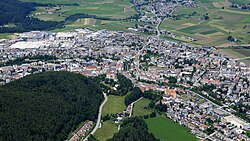
Bruneck rises up in the middle of a wide valley (perhaps an ancient lake basin) and lies at the confluence of the Ahr with the Rienz, which itself flows into the Eisack river. Here the northern Tauferer Ahrntal side valley and the southern Val Badia of the Gran Ega creek join the broad Pustertal. Bruneck wide valley, located between the two straits of Kiens downstream and Percha upstream, delimited to the South by the circular elevation of Kronplatz and opened to the North in the Tauferer Tal (Val di Tures), owes its conformation and extent to the action of glaciers and, subsequently, to the erosive action of the waters. [4]The municipal area stretches from the slopes of the Zillertal Alps in the west to the Rieserferner Group of the High Tauern range in the east. In the south rises the Kronplatz massif, part of the Dolomites, the Bruneck Hausberg with the Messner Mountain Museum Corones building designed by Zaha Hadid on top at an elevation of 2,275 metres (7,464 ft) and a popular ski area.
The Bruneck town centre is located about 35 kilometres (22 mi) east of Brixen and 70 kilometres (43 mi) of the regional capital Bolzano. To the east, the town is 40 kilometres (25 mi) from Winnebach (part of Innichen) on the border with East Tyrol in Austria.
Linguistic distribution
[edit]According to the 2024 census, 78.71% of the population speak German, 19.31% Italian and 1.98% Ladin as first language.[5]
History
[edit] |
The wide valley where today the city of Bruneck rises up was initially uninhabited until it was occupied by the Romans; the local populations, because of the danger of flooding of the river Rienz, used to live on the sides of the valley or in the neighbouring hills. The valley floor was soon to be populated since the Puster Valley was the main arterial road used to connect Northern Italy to the Danube area of Europe. In 1901, following the passage of the Pustrissa countship from Henry IV to the Bishop of Brixen Altvino, the episcopal administration was established in the village of St. Caterina. Nearby the small village of Ragen rose up as well as some farmsteads, which, after a donation from the noblewoman Svainilde, around 1000, became part of the possessions of the Brixen bishops.[4]

The town was probably named after its founder, the Brixen prince-bishop Bruno von Kirchberg, and first appeared as Bruneke in a deed issued on 23 February 1256. At that time, the town consisted of two rows of houses forming a narrow lane. During the turbulent times of the interregnum upon the death of the Hohenstaufen emperor Frederick II in 1250, the prince-bishop had a fortress erected above the town, which was first mentioned in 1276. The castle was significantly enlarged under Prince-Bishop Albert von Enn, who also had the town walls and moat completed until 1336.

Soon thereafter, further rows of houses were built outside the eastern gate. These led to the small Church of Our Lady (today's Church of the Assumption of Mary). The first church inside the town walls (at first only a small chapel) was built beneath the castle by the Brunecker burgher Niklas von Stuck. This church is today the Rainkirche. In 1358, Heinrich von Stuck, brother of Niklas, brother, funded the hospital/almshouse that was built in the following years. Soon the town received the right to hold a weekly market and impose high justice. A castle leader occupied the fortress as the bishop's representative.
In the 14th and 15th centuries, there was brisk trade between Augsburg and Venice. Some of the traded goods were brought through the Puster Valley and often stored long-term in Bruneck on the Ballplatz. This soon brought the town prosperity and fame. In this time, the Puster Valley painting school was founded by the painter Hans von Bruneck and others. The great masters Michael and Friedrich Pacher studied at this school. In 1500, the Puster Valley was reunited with Tyrol because of a testamentary contract between the house of Habsburg and the counts of Görz. The town of Bruneck remained an episcopal possession.
In 1610, Bruneck, which had previously belonged to the parish of St. Lorenzen, became a parish in its own right. The first parish priest documented was Johann Herlin in 1613. In 1626, the Capuchin order came to Bruneck. The Fathers built themselves a monastery at the "Spitalangerle", which still exists today. On 11 April 1723, the worst fire in the town's history occurred. In 1741, a convent was built by the Ursulines. In Oberragen, not far from the church, a fire broke out, which soon spread by the strong east wind across a large part of the town, mostly destroying it. During the long-lasting Napoleonic Wars the town suffered no material damage, but as a marching station went into great debt because of housing and feeding soldiers and infantrymen for many years.
After World War I, South Tyrol and so also Bruneck became part of the Italian State, getting the Italian name. The city was spared damage in World War I, but in World War II the town was bombed, leading to loss of both life and property.
Coat of arms
[edit]The emblem is a tower with a sloping roof, on an embattled wall with the silver gate lifted. The gules tower and the wall are placed on a vert hill with three peaks: the castle was built by Bishop Bruno von Kirchberg in the second half of the 13th century. The castle appeared on the coat of arms for the first time in the second half of the 15th century. The emblem was adopted in 1931.[6]
Climate
[edit]Due to its high elevation, with a mean height of around 830 metres above sea level, the town of Bruneck has a warm-summer humid continental climate (Köppen: "Dfb"), with warm summers and chilly winters in Italian standards. Its alpine geography heavily contributes to its weather, as it brings large diurnal temperature variations.
| Climate data for Brunico, Italy | |||||||||||||
|---|---|---|---|---|---|---|---|---|---|---|---|---|---|
| Month | Jan | Feb | Mar | Apr | May | Jun | Jul | Aug | Sep | Oct | Nov | Dec | Year |
| Mean daily maximum °C (°F) | 1.3 (34.3) |
4.1 (39.4) |
9 (48) |
13.8 (56.8) |
18.2 (64.8) |
21.8 (71.2) |
24.1 (75.4) |
22.7 (72.9) |
20.2 (68.4) |
13.6 (56.5) |
7 (45) |
2.6 (36.7) |
13.2 (55.8) |
| Daily mean °C (°F) | −3.2 (26.2) |
−1.0 (30.2) |
3.5 (38.3) |
7.9 (46.2) |
12.1 (53.8) |
15.5 (59.9) |
17.5 (63.5) |
16.6 (61.9) |
14.1 (57.4) |
8.3 (46.9) |
2.8 (37.0) |
−1.5 (29.3) |
7.7 (45.9) |
| Mean daily minimum °C (°F) | −7.8 (18.0) |
−6.2 (20.8) |
−2.0 (28.4) |
2.1 (35.8) |
6.1 (43.0) |
9.3 (48.7) |
11.0 (51.8) |
10.6 (51.1) |
8.0 (46.4) |
3.0 (37.4) |
−1.3 (29.7) |
−5.5 (22.1) |
2.3 (36.1) |
| Average precipitation mm (inches) | 129.4 (5.09) |
174.7 (6.88) |
191.3 (7.53) |
52.9 (2.08) |
64.8 (2.55) |
102.1 (4.02) |
131.7 (5.19) |
100.0 (3.94) |
72.3 (2.85) |
69.9 (2.75) |
57.6 (2.27) |
125.9 (4.96) |
1,272.6 (50.11) |
| Average precipitation days | 6 | 6 | 8 | 11 | 13 | 16 | 14 | 14 | 10 | 9 | 8 | 7 | 122 |
| Source: World Weather Online[7] | |||||||||||||
Economy
[edit] |
After the war, industrial zones, workshops, and department stores were built, permitting the town considerable economic and geographic growth. In the 1960s, tourism was especially important to the town, resulting in the building of numerous new hotels and guest houses.
Bruneck is characterized by the manufacturing and service industries. Important tourist centers are found all around Bruneck. Especially worthy of mention is the ski resort on Kronplatz mountain. As of 22 October 2001, the day of the Italian population and employment census, Bruneck had 10,692 employed people in 1,678 workplaces, making it the second-largest employer of the province. It lay only just after Brixen (Bressanone), which on census day employed 239 fewer people. Five companies in the town employ more than 250 people each, and five more companies employ more than 100 people each.
Tourism
[edit] |
All year round many famous markets and festivals take place here. For example, the popular Stegener Market at the end of October, the largest market in Tyrol.
International relations
[edit]


Sports
[edit]The locality is home to HC Pustertal Wölfe, a professional ice hockey team currently playing in the ICE Hockey League.
Notable people
[edit]
- Michael Pacher (c. 1435–1498) a painter and sculptor
- Albert Knoll (1796–1863) an Austrian Capuchin dogmatic theologian.[8]
- Alfred Amonn (1883–1962) economist
- Jiří Potůček (1919–1942) member of the Resistance in German-occupied Czechoslovakia, born to Czech parents in Bruneck, who soon moved back to Bohemia[9]
- Karl Baumgartner (1949–2014) film producer[10]
- Norbert Pallua (born 1952) plastic surgeon
- Greti Schmid (born 1954) former Austrian politician
- Nanni Moretti (born 1953) film director, producer, screenwriter and actor[11]
- Markus Lanz (born 1969) TV presenter and producer in Germany

- Sport
- Norbert Huber (born 1964) luger, competed in four Winter Olympics, won silver in 1994 and bronze in 1992
- Kurt Brugger (born 1969) luger and coach; gold medallist at the 1994 Winter Olympics, competed in four Winter Olympics
- Dagmar Mair unter der Eggen (born 1974) snowboarder, competed at the 1998 Winter Olympics
- Manfred Reichegger (born 1977) ski mountaineer, sky runner and mountain runner
- Christof Innerhofer (born 1984) World Cup alpine ski racer, world champion in super-G
- Karin Knapp (born 1987) retired tennis player
- Dominik Windisch (born 1989) biathlete, bronze medallist in the 2014 and 2018 Winter Olympics
- Lukas Hofer (born 1989) biathlete, bronze medallist in the 2014 and 2018 Winter Olympics
- Dorothea Wierer (born 1990) biathlete, bronze medallist at the 2014 Winter Olympics
Gallery
[edit]-
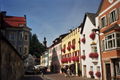 Via Centrale - pedestrian area
 -
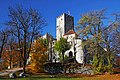 Bruneck castle
 -
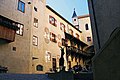 Bruneck castle – courtyard
 -
 Ursulinen-Gate seen from southwest
 -
 The river Rienz
 -
 Bruneck Cemetery


References
[edit]- ^ "Superficie di Comuni Province e Regioni italiane al 9 ottobre 2011". Italian National Institute of Statistics. Retrieved 16 March 2019.
- ^ "Popolazione Residente al 1° Gennaio 2018". Italian National Institute of Statistics. Retrieved 16 March 2019.
- ^ Kleiner, Stefan; Knöbel, Ralf, eds. (2015). Duden: Das Aussprachewörterbuch (7 ed.). Berlin: Dudenverlag. p. 253. ISBN 978-3-411-04067-4.
- ^ a b Paolo, Rovati (1983). "Brunico, una piccola città della media valle della Rienza". Annali di Ricerche e Studi di Geografia. 1–4. hdl:11393/37202.
- ^ "Ergebnisse Sprachgruppenzählung 2024/Risultati Censimento linguistico 2024". astat info (56). Provincial Statistics Institute of the Autonomous Province of South Tyrol. December 2024. Retrieved 2024-12-09.
- ^ Heraldry of the World: Bruneck Archived 2012-08-01 at the Wayback Machine, ngw.nl; accessed 12 December 2014.
- ^ "Brunico, Italy Weather Averages". World Weather Online. Retrieved July 1, 2012.
- ^ Donovan, Stephen (1910). . Catholic Encyclopedia. Vol. 8.
- ^ Czech Wiki, Jiří Potůček
- ^ IMDb Database retrieved 21 June 2019
- ^ IMDb Database retrieved 20 June 2019
External links
[edit] Media related to Bruneck at Wikimedia Commons
- (in German and Italian) Homepage of the municipality

| International | |
|---|---|
| National | |
| Geographic | |
| Other | |

Bruneck
View on GrokipediaBruneck (Italian: Brunico) is a town and comune in the Puster Valley of the autonomous province of South Tyrol, northern Italy, functioning as the region's primary economic and cultural hub.[1] Established around 1250 through the construction of its castle by Bruno von Kirchberg, Prince-Bishop of Brixen, the town spans approximately 45 square kilometers at an elevation of 835 meters above sea level along the Rienz River and has a population of about 17,000 inhabitants.[1][2] Its predominantly German-speaking community reflects the historical Tyrolean heritage of the area, which was incorporated into Italy following the First World War.[3] The town's defining landmark is Bruneck Castle, a medieval fortress first documented in 1271 that now hosts the Messner Mountain Museum Ripa, dedicated to mountain history and ethnography.[2] Bruneck's compact old town, centered on the Stadtgasse pedestrian street lined with colorful historic merchants' houses, underscores its longstanding role in regional trade and commerce.[1] Economically, it features significant manufacturing and service sectors alongside tourism, bolstered by proximity to the Kronplatz ski resort and Dolomite hiking trails, making it a key entry point for visitors to the surrounding alpine landscapes.[1][4]
Geography
Location and Topography
Bruneck is located in the Puster Valley (Val Pusteria) of South Tyrol, northern Italy, at geographic coordinates 46°47′45″N 11°56′11″E.[5] The town center sits at an elevation of 835 meters (2,740 feet) above sea level within a broad Alpine valley basin.[6] The Rienza River (Italian: Rienza), originating in the Dolomites, flows westward through the Puster Valley and traverses the basin adjacent to Bruneck, shaping the local fluvial landscape.[7] Topographically, Bruneck occupies a relatively flat valley floor surrounded by steep mountain slopes characteristic of the Dolomites region. To the south, the Kronplatz (Plan de Corones) mountain rises sharply to a summit elevation of 2,275 meters, dominating the southern horizon and marking a transition from the settled plain to higher, rugged terrain used for skiing and hiking.[8] The surrounding topography includes enclosing ranges to the north and west, such as those near the Antholz Valley, creating a sheltered basin conducive to settlement amid the Alpine environment.[9]Climate
Bruneck exhibits a warm-summer humid continental climate (Köppen Dfb), shaped by its position in the Puster Valley at an elevation of approximately 835 meters above sea level. This alpine setting results in cold, snowy winters and mild summers, with significant year-round precipitation influenced by orographic effects from surrounding mountains. The average annual temperature stands at 4.2 °C, reflecting the moderating yet chilly highland conditions. Annual precipitation averages 1146 mm, with a mix of rain and snow that supports the region's forested landscapes but can lead to occasional flooding in the Rienz River valley.[10][11] Winters, from November to March, feature frequent sub-zero temperatures and snowfall, with January as the coldest month: average highs of 2.2 °C, lows of -5.6 °C, and about 69 mm of precipitation, much of it as snow (equivalent to roughly 69 mm water depth plus 2.7 inches of snow). Snow cover typically accumulates to depths enabling winter sports, peaking in January. Summers, peaking in July, bring the warmest conditions with average highs of 22.8 °C and lows of 12.8 °C, though diurnal variations are pronounced due to elevation. Precipitation is highest in the summer wet season (May to September), driven by thunderstorms, reaching 114 mm in July. The region experiences virtually no muggy days year-round, maintaining comfortable humidity levels below 0% perceived mugginess.[11]| Month | Avg. High (°C) | Avg. Low (°C) | Precipitation (mm) |
|---|---|---|---|
| January | 2.2 | -5.6 | 15 |
| February | 3.9 | -4.4 | 18 |
| March | 8.3 | -0.6 | 30 |
| April | 12.2 | 2.8 | 51 |
| May | 17.2 | 7.2 | 81 |
| June | 20.6 | 10.6 | 112 |
| July | 22.8 | 12.8 | 114 |
| August | 22.2 | 12.2 | 102 |
| September | 18.3 | 8.9 | 84 |
| October | 12.8 | 5.0 | 69 |
| November | 6.7 | 0.0 | 51 |
| December | 2.2 | -3.9 | 23 |
Linguistic Distribution
In Bruneck, the predominant language is German, reflecting its historical ties to the Tyrolean cultural and linguistic sphere. According to the 2024 linguistic census by the Autonomous Province of South Tyrol's Istituto Provinciale di Statistica (ASTAT), 78.71% of residents declared affiliation with the German language group, 19.31% with the Italian language group, and 1.98% with the Ladin language group. These self-declared affiliations, based on mother tongue or primary language use, determine proportional representation in public administration and services under the provincial autonomy statute. The German-speaking majority supports bilingual (German-Italian) signage, education, and official communications, with German serving as the working language in most local institutions. Italian-language services cater primarily to the minority group, often concentrated in urban commercial areas, while Ladin usage remains marginal, limited to cultural or familial contexts without dedicated municipal infrastructure. This distribution has remained relatively stable since the 2011 census, where German speakers comprised approximately 80%, indicating limited shifts amid ongoing internal migration and tourism influences.| Language Group | Percentage (2024 Census) |
|---|---|
| German | 78.71% |
| Italian | 19.31% |
| Ladin | 1.98% |
History
Medieval Founding and Early Development
In the mid-13th century, Prince-Bishop Bruno von Kirchberg of Bressanone commissioned the construction of Bruneck Castle around 1250 to protect the bishopric's territories in the Puster Valley amid regional power struggles.[12][13] The castle, first documented as castrum Bruneke in 1271, was strategically positioned on a hill overlooking the valley, serving as a defensive stronghold and later as a summer residence for the bishops.[14] Concurrently, the town of Bruneck was established as a fortified settlement below the castle walls, marking the medieval founding of the urban center.[3][15] The town's layout reflected its defensive origins, with walls and gates enclosing the emerging community, which benefited from its location on the historic trade route linking Munich to Venice.[16] Early development centered on agriculture, craftsmanship, and commerce, supported by the Stegona district's longstanding market traditions tracing back to Roman-era settlements in the vicinity.[17] By the late 13th century, under Bruno's successor, the settlement had solidified as a key ecclesiastical outpost, with the bishopric exerting administrative control over local affairs.[18] This foundational period laid the groundwork for Bruneck's growth as a regional hub, insulated by the castle's fortifications against feudal incursions.[19]Habsburg Era and Pre-WWI Period
In 1500, following the death of Count Leonhard of Gorizia without heirs, the judicial districts of the Pustertal, including Bruneck, reverted to the Habsburg dynasty through prior testamentary arrangements linking them to the County of Tyrol.[20] This integration solidified Habsburg overlordship, with Bruneck functioning as a key administrative hub under the secular authority of the Tyrolean counts, while ecclesiastical governance remained with the Prince-Bishopric of Brixen. The castle served as the residence for the bishop's representative, the Schlosshauptmann, overseeing local affairs.[21] During the German Peasants' War of 1524–1525, Archduke Ferdinand I extended protection to the Bressanone diocese, thereby safeguarding Bruneck from the revolting peasants, as Habsburg forces intervened to maintain order in the region.[22] The town retained its status as a market settlement, facilitating trade along the east-west valley route connecting Tyrol to Carinthia. This period saw limited urban expansion, with the economy centered on agriculture, forestry, and transit commerce, characteristic of Habsburg Tyrol's rural periphery. The Napoleonic Wars disrupted Habsburg control when Tyrol was ceded to Bavaria in 1805 under the Peace of Pressburg. Bruneck, as part of the broader Tyrolean uprising led by Andreas Hofer in 1809, contributed to the regional resistance against Bavarian occupation and forced conscription, aligning with Habsburg loyalist efforts before French reinforcements quelled the revolt.[23] Restored to Austria in 1814 via the Congress of Vienna, Bruneck experienced stability under the restored empire, though it remained a modest administrative and ecclesiastical center without significant industrialization. The late 19th century brought infrastructural advancements, notably the opening of the Pustertal Railway in 1871 by the Südbahn-Gesellschaft, linking Franzensfeste to Lienz and facilitating goods transport to Villach.[24] This connection enhanced Bruneck's role as a valley hub, supporting population growth and commerce while preserving its German-speaking, Catholic character within the multi-ethnic Austro-Hungarian Monarchy. Pre-World War I, the town avoided major conflicts, focusing on local governance and economic ties to Innsbruck, with no notable separatist movements in the predominantly loyal Tyrolean populace.Annexation to Italy and Fascist Italianization
Following the Treaty of Saint-Germain-en-Laye, signed on 10 September 1919, the southern portion of the County of Tyrol, including the municipality of Bruneck, was ceded from Austria to the Kingdom of Italy as part of the post-World War I territorial settlements.[25] This transfer incorporated a region where German-speakers comprised approximately 87-90% of the population, justified by Allied powers primarily on strategic grounds to establish the Brenner Pass as Italy's "natural" northern frontier, despite Woodrow Wilson's principle of ethnic self-determination outlined in his Fourteen Points.[26] Initial Italian administration from 1919 to 1922 involved provisional military governance, which began restricting German-language usage in public administration and education, closing some German schools as early as October 1919 and replacing them with Italian-medium institutions to promote assimilation.[27] The rise of Benito Mussolini's Fascist regime in October 1922 accelerated coercive Italianization efforts, targeting the suppression of German cultural and linguistic identity to integrate South Tyrol fully into the Italian state. Key measures included the July 1923 proposals by irredentist Ettore Tolomei, formalized in a Royal Decree of October 1923, which mandated the replacement of German toponyms with Italian equivalents across the province; Bruneck was officially redesignated Brunico, reflecting Tolomei's compilation of purportedly historical Italian names in his Prontuario dei nomi locali dell'Alto Adige.[28] By 1925, all remaining German-language schools had been shuttered, with compulsory education shifted exclusively to Italian, prompting local German-speakers to establish clandestine "catacomb schools" (Katakombenschulen) in private homes to preserve their language and heritage, often under threat of fines or imprisonment.[29] German was prohibited in courts, media, and official correspondence, while fascist authorities dissolved German cultural associations, banned newspapers like Der Tiroler, and incentivized migration of Italian settlers—particularly from Veneto and Trentino—to dilute the ethnic German majority, with over 70,000 Italians arriving by the 1930s.[30] [31] These policies elicited passive resistance among Bruneck's residents, who maintained informal German usage despite surveillance by fascist podestà (appointed mayors) and militia, but overt opposition risked violent reprisals, as seen in province-wide fascist raids and arrests. Economic discrimination compounded cultural suppression, with German-owned businesses facing boycotts and preferences given to Italian firms in public contracts. By 1939, amid alliance with Nazi Germany, Mussolini's regime offered South Tyroleans the "Option" to retain Italian citizenship or emigrate to the Reich, a dilemma that underscored the era's forced choices: approximately 86% of eligible residents in areas like Bruneck opted for German repatriation, though logistical failures and family ties led only about 75,000 to depart by 1943, leaving behind confiscated properties.[32] This period's assimilation drive, rooted in fascist nationalism rather than ethnic reconciliation, systematically eroded local autonomy until Allied liberation in 1945.[33]Post-WWII Autonomy Negotiations and Separatist Violence
Following the end of World War II, the 1946 Paris Peace Treaty confirmed South Tyrol's status within Italy while obligating the Italian government to safeguard the linguistic and cultural rights of the German-speaking population through autonomous administration, with Austria granted consultative oversight to ensure compliance.[34] This agreement, negotiated by Italian Foreign Minister Alcide De Gasperi and Austrian counterpart Karl Gruber, aimed to address ethnic tensions exacerbated by fascist-era Italianization policies, yet its implementation proved protracted amid Italian reluctance to cede substantial control.[35] The 1948 Italian Constitution further enshrined regional autonomy for Trentino-Alto Adige/Südtirol, bundling the German-majority Alto Adige with the Italian-majority Trentino, which diluted South Tyrolean self-governance and fueled demands for territorial separation within the region.[36] The Südtiroler Volkspartei (SVP), founded in 1948 as the dominant German-speaking political force, pursued autonomy through parliamentary channels, securing proportional representation and cultural protections but facing Italian resistance to fully decoupling South Tyrol from Trentino. Negotiations intensified in the 1950s, with Austria repeatedly invoking the Paris Treaty at the United Nations; a 1960 UN General Assembly resolution reaffirmed Italy's duties, prompting bilateral talks that yielded incremental concessions, such as bilingual administration and schooling.[37] However, persistent delays—attributed by South Tyrolean leaders to central government foot-dragging—eroded faith in diplomatic progress, as Italian policies continued favoring economic integration over ethnic safeguards, including state-encouraged immigration from southern Italy that altered demographic balances.[38] Frustration with stalled negotiations birthed separatist militancy in the mid-1950s, culminating in the formation of the Befreiungsausschuss Südtirol (BAS, South Tyrol Liberation Committee) around 1956 under Sepp Kerschbaumer, a fringe group rejecting the SVP's moderation in favor of sabotage to compel reunification with Austria.[39] From 1956 to 1969, BAS and affiliates executed over 400 attacks, primarily non-lethal dynamiting of infrastructure symbolizing Italian dominion, such as high-voltage pylons (more than 300 destroyed), rail lines, and aqueducts, with operations peaking in 1961–1967 to coincide with autonomy talks.[40] These acts, designed to minimize casualties while maximizing disruption and international scrutiny, drew condemnation from mainstream South Tyrolean figures yet pressured Italy amid Austrian diplomatic campaigns; Italian counterinsurgency, including arrests and alleged excesses, escalated tensions, as seen in the 1967 Cima Vallona ambush where BAS militants killed two Italian forest rangers.[41] The violence, resulting in fewer than a dozen deaths overall but widespread property damage estimated in millions of lire, catalyzed the 1969–1971 Grüber-De Gasperi II package, approved as the 1972 Autonomy Statute, which granted South Tyrol province-level powers over education, taxation, and cultural policy, effectively fulfilling core Paris Treaty aims after decades of contention.[42] While BAS claimed tactical success in accelerating reforms, Italian authorities and some analysts viewed the unrest as counterproductive, exacerbating divisions without altering underlying legal commitments, though it underscored the limits of purely electoral advocacy against central inertia.[43] In Bruneck, a key German-speaking hub, the unrest manifested in local support for SVP autonomy drives and sporadic BAS recruitment, though no major bombings were recorded there, reflecting the province-wide pattern of targeted sabotage over urban confrontation.[38]Economic and Political Stabilization Post-1972
The implementation of the Second Autonomy Statute in 1972 provided South Tyrol, including Bruneck, with extensive legislative powers in areas such as education, culture, and economic policy, fostering political stability by addressing ethnic grievances through proportional representation and bilingual administration.[44] This framework ended the separatist violence that had plagued the region in the 1950s and 1960s, as German-speakers gained safeguards for language rights and local control, reducing incentives for irredentism.[45] By 1992, the full realization of the statute, including Austria's withdrawal of international objections under the Gruber-De Gasperi Agreement, solidified peaceful coexistence between linguistic groups, with the South Tyrolean People's Party (SVP) maintaining dominance in local governance while sharing power with Italian representatives.[46] In Bruneck, this translated to stable municipal politics under SVP-led coalitions, emphasizing infrastructure and cultural preservation without resurgence of ethnic conflict.[47] Economically, the statute's financial autonomy—allowing South Tyrol to retain a growing share of tax revenues, reaching 90% by the 2000s—enabled targeted investments that drove provincial GDP per capita from approximately €10,000 in 1972 to over €40,000 by 2020, outpacing Italy's national average.[48] Bruneck, as the commercial hub of the Puster Valley, benefited from this through expansion in retail, services, and light industry, including wood processing and furniture manufacturing, which capitalized on local timber resources and skilled labor.[49] Tourism surged, with developments like the Kronplatz ski resort infrastructure boosting annual overnight stays in Bruneck to around 420,000 by the late 20th century, diversifying from agriculture-dependent economies and achieving unemployment rates below 3% province-wide.[50] These gains stemmed from provincial policies prioritizing vocational training in German and infrastructure modernization, rather than central Italian subsidies, yielding sustained prosperity amid Italy's broader stagnation.[44]Demographics and Society
Population Trends and Ethnic Composition
The population of Bruneck municipality has exhibited consistent growth since the early 2000s, driven by regional economic factors including tourism and employment opportunities in South Tyrol. In the 2001 Italian census, the resident population totaled 13,019, rising to 15,518 by the 2011 census and 16,995 by the 2021 census.[51] Official provincial records indicate a figure of 17,143 as of the most recent update.[52] This represents an average annual growth rate of approximately 1.4% over the 2001–2021 period, exceeding national averages but aligning with broader South Tyrolean demographic expansion.[51] Ethnic composition in Bruneck is closely tied to linguistic affiliation, as determined by South Tyrol's decennial Sprachgruppenzählung (language group census), which serves as the basis for ethnic proportionality in public administration and resource allocation under provincial autonomy statutes. The 2024 census reported 78.71% of residents declaring German as their first language, 19.31% Italian, and 1.98% Ladin.[53] These proportions reflect the town's location in the predominantly German-speaking Puster Valley, with the Italian-speaking minority concentrated in urban and administrative sectors, a pattern consistent since post-World War II demographic shifts. Ladin speakers form a small enclave, primarily linked to historical Val Pusteria communities. No significant non-official ethnic groups, such as recent immigrants, are separately enumerated in these censuses, though foreign residents comprise under 10% of the total population per ISTAT data.Language Policies and Cultural Preservation
In Brunico, language policies are shaped by the South Tyrolean Autonomy Statute of 1972, which grants parity to German alongside Italian as official languages, with protections for the German-speaking majority's right to use their language in public administration, courts, and education.[36] Municipalities like Brunico, where German speakers predominate, designate German as the primary administrative language while requiring bilingual proficiency for public employees to serve Italian speakers proportionally.[36] Education follows a segregated model, with primary and secondary schooling conducted in German for most residents, supplemented by mandatory Italian instruction to foster multilingualism without eroding mother-tongue proficiency.[36] These policies stem from post-World War II agreements, including the 1946 Gruber-De Gasperi Agreement under the Paris Peace Treaty, which safeguarded German cultural and linguistic identity against prior Italianization efforts.[54] In practice, Brunico's public signage, services, and documentation prioritize German, with Italian equivalents, reflecting the demographic reality of over 90% German affiliation in the Pustertal valley, though exact municipal figures align with provincial trends of 60-70% German speakers overall.[55] Challenges persist, including appeals against linguistic shifts from ideological influences, emphasizing preservation of traditional South Tyrolean German dialects.[56] Cultural preservation in Brunico centers on institutions like the South Tyrolean Folklore Museum in nearby Dietenheim, an open-air site featuring relocated Tyrolean farmhouses, workshops, and artifacts that reconstruct rural life from the 16th to 19th centuries, highlighting self-sufficient agrarian customs and alpine architecture.[57] Local efforts maintain Tyrolean heritage through festivals such as alpine cattle drives (Viehleg), where decorated livestock returns from summer pastures, and region-specific traditional attire unique to the Pustertal, characterized by embroidered dirndls and leather shorts.[58] These practices, alongside the Messner Mountain Museum Corones on nearby Kronplatz, which documents alpine mountaineering and pastoral traditions, reinforce ethnic identity amid autonomy frameworks that allocate funding for cultural initiatives tied to linguistic groups.[13]Government and Autonomy
Local Governance Structure
The local governance of Brunico follows the standard structure for Italian municipalities (comuni), comprising a directly elected mayor (sindaco), an executive board (giunta comunale), and a legislative city council (consiglio comunale).[59] The mayor holds executive authority, including policy implementation and administrative oversight, while the giunta assists in decision-making. The current mayor, Bruno Wolf of the Südtiroler Volkspartei (SVP), was elected on May 4, 2025, securing 51.8% of valid votes (3,712 out of 7,151) in the first round, avoiding a runoff.[60] [61] Wolf assumed office on May 5, 2025, succeeding Roland Griessmair, also of the SVP.[62] The city council includes 26 elected councilors alongside the mayor, serving five-year terms aligned with national electoral cycles.[59] Elections occur via proportional representation within linguistic categories (German, Italian, Ladin), mandated by provincial regulations to mirror demographic proportions from the latest census, thereby safeguarding minority representation in this predominantly German-speaking area (approximately 82% German speakers per 2011 data, with updates via periodic declarations). The 2025 election saw a turnout of 52.1%. Reinhard Weger serves as council president, with Wilma Huber as vice-president, elected at the inaugural session on May 22, 2025.[63] [64] The giunta comunale consists of the mayor and six assessors drawn from the council, handling operational execution of council-approved policies. Antonio Bovenzi holds the vice-mayoral position, with other members including Julia Engl.[65] [63] This structure integrates with South Tyrol's broader autonomy under Statute No. 6/1972 and subsequent reforms, allowing municipalities like Brunico enhanced fiscal and cultural competencies, such as bilingual administration and language-based proportionalism, distinct from mainland Italian communes where elections favor majoritarian systems.[66] Council meetings occur regularly, with the most recent documented on July 30, 2025, addressing local ordinances and commissions.[67]Integration with South Tyrolean Autonomy Framework
Bruneck's municipal governance integrates with the South Tyrolean autonomy framework through the delegation of administrative competencies from the Autonomous Province of Bolzano, as outlined in the 1972 Statute of Autonomy for Trentino-Alto Adige, which empowers the province with exclusive legislative authority over areas such as local administration, cultural policy, and economic development.[68] The municipality exercises these delegated powers in domains like urban planning, local policing, and social services, while adhering to provincial standards that prioritize linguistic proportionality and cultural preservation for the German-speaking majority.[46] This structure embodies vertical subsidiarity, enabling Bruneck to tailor initiatives to local needs—such as German-language public services—under provincial oversight to maintain uniformity across the territory.[69] A key aspect of this integration is participatory mechanisms, where municipalities contribute to provincial decision-making processes, including consultations on legislation affecting local competencies like spatial development and environmental management.[69] For instance, Bruneck collaborates with the province on regional initiatives, such as the Pustertal development association, which coordinates economic and infrastructural projects among municipalities to align with autonomous fiscal and planning policies funded partly by provincial tax revenues.[70] In 2025, Bruneck became the first South Tyrolean municipality to secure provincial approval for a comprehensive municipal development program addressing spatial ordering, mobility, energy, and social welfare, illustrating how local strategies are embedded within and validated by the broader autonomy regime to promote sustainable growth.[71] This framework also ensures fiscal alignment, with Bruneck receiving allocations from the province's autonomous revenue sources, including shares of income and property taxes, to support municipal operations without direct central government intervention.[46] Provincial laws further mandate bilingual administration in municipalities, though German predominates in practice in Bruneck due to its demographic composition, reinforcing the autonomy's role in safeguarding ethnic-linguistic equilibrium at the local level.[68] Overall, this integration fosters local self-governance while embedding it in provincial mechanisms that protect against centralist encroachments, contributing to the stability of South Tyrol's consociational model.[72]Economy
Primary Industries and Employment
The primary economic sector in Brunico, encompassing agriculture, forestry, and related extractive activities, plays a limited role in local employment compared to industry and services. Agriculture, focused on livestock rearing—particularly dairy cattle on alpine pastures—and fodder production, constitutes approximately 2.8% of total employment in the municipality according to the 2011 Italian census data.[73] This sector supports regional cooperatives such as Mila, which operates a production facility in Brunico for milk processing, though primary production remains upstream in farming.[74] Forestry involves sustainable management of the Puster Valley's woodlands, overseen by the local Forststation Bruneck, which handles conservation, timber harvesting, and environmental protection.[75] Employment in forestry is sparse, integrated into broader provincial efforts where the primary sector overall employs around 1,000–1,100 workers province-wide as of 2019, reflecting mechanization and seasonal labor patterns.[76] Overall, primary sector jobs in Brunico are characterized by low incidence amid high regional employment rates—74.2% for ages 15–64 in South Tyrol in 2024—driven by commuting to nearby industrial zones and out-migration for non-primary work.[44][77] The sector's modest scale underscores a shift toward secondary and tertiary activities, with agriculture and forestry serving more as foundational inputs than major employers.Tourism and Seasonal Economy
Tourism forms a cornerstone of Brunico's economy, leveraging the town's location in the Puster Valley as a base for winter sports at the nearby Kronplatz resort and summer outdoor pursuits. Official statistics from the South Tyrolean provincial institute ASTAT report 743,772 overnight stays in the municipality, with a balanced seasonal distribution of 377,302 in summer (May-October) and 366,470 in winter (November-April).[78][79] This pattern exemplifies the dual-peak seasonality prevalent in South Tyrol, where tourism activity surges during ski season and high summer months, influencing employment in hotels, restaurants, and transport.[80] Winter tourism centers on Kronplatz, approximately 10 km from Brunico, which offers 121 km of ski slopes, modern lifts, and snowmaking coverage across elevations from 935 to 2,275 meters, drawing skiers primarily from Germany, Austria, and Italy.[81] The resort's infrastructure, managed by Kronplatz Holding since the mid-20th century, supports economic spillovers into Brunico through accommodation and après-ski facilities, though precise local revenue shares remain tied to regional aggregates where tourism directly contributed 11.4% to South Tyrol's GDP in 2019.[80][82] In summer, visitors engage in hiking trails, mountain biking on over 400 km of paths in the Kronplatz region, and cultural exploration of Brunico's medieval castle and pedestrian zones, sustaining occupancy during July and August peaks.[83] This seasonality results in variable labor demands, with hospitality jobs fluctuating alongside guest volumes, prompting initiatives like extended cable car operations and the Kronplatz Guest Pass for year-round access to reduce off-season dependency. Regional overnight stays in South Tyrol reached 36.1 million in 2023, amplifying Brunico's role in a province where tourism intensity hit 18.8 guests per 100 residents in 2024.[84]