Hubbry Logo
logo
Canting arms
Community hub

Canting arms

logo
0 subscribers
Read side by side
from Wikipedia
A famous early example of canting arms: the castle representing the Kingdom of Castile and the lion representing the Kingdom of León.[1]

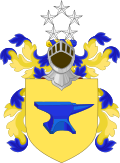
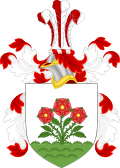
Canting arms are heraldic bearings that represent the bearer's name (or, less often, some attribute or function) in a visual pun or rebus.

The expression derives from the latin cantare (to sing). French heralds used the term armes parlantes (English: "talking arms"), as they would sound out the name of the armiger. Many armorial allusions require research for elucidation because of changes in language and dialect that have occurred over the past millennium.

Canting arms – some in the form of rebuses – are quite common in German civic heraldry. They have also been increasingly used in the 20th century among the British royal family.[citation needed] When the visual representation is expressed through a rebus, this is sometimes called a rebus coat of arms.[citation needed] An in-joke among the Society for Creative Anachronism heralds is the pun, "Heralds don't pun; they cant."[2]

Examples of canting arms

[edit]

Personal coats of arms

[edit]

A famous example of canting arms are those of Queen Elizabeth The Queen Mother's paternal family, the Bowes-Lyon family. The arms (pictured below) contain the bows and blue lions that make up the arms of the Bowes and Lyon families.

Municipal coats of arms

[edit]

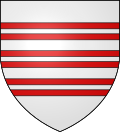
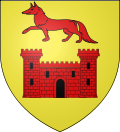
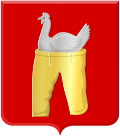
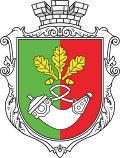
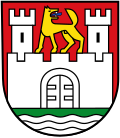
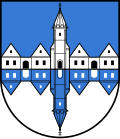
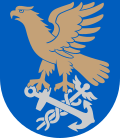
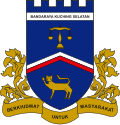
Municipal coats of arms which interpret the town's name in rebus form are also called canting. Here are a few examples.

Ecclesiastical coats of arms

[edit]

In fiction

[edit]

On the Harry Potter film series, the coat of arms of Ravenclaw house at Hogwarts School of Witchcraft and Wizardry features a raven, which also figures on the arms of the school. On the Harry Potter book series, however, the coat of arms of Ravenclaw depicts an eagle.

See also

[edit]

Notes

[edit]

Sources

[edit]
  • Winifred Hall: Canting and Allusive Arms of England and Wales. 1966. ISBN 9780900023019

References

[edit]
[edit]
Revisions and contributorsEdit on WikipediaRead on Wikipedia
from Grokipedia
Canting arms, also known as armes parlantes in French, Sprechende Wappen in German, or armas parlantes in Spanish, are coats of arms designed as visual puns or rebuses that allude to the bearer's name, title, occupation, estate, or other attributes through their blazon or heraldic description.[1][2] These devices were particularly valued in medieval heraldry for their mnemonic qualities in an era of low literacy, serving as identifiable emblems akin to modern logos while incorporating contemporary humor through wordplay.[2][3] Originating in Western Europe by the 12th century, canting arms became widespread among nobility and kingdoms, with estimates suggesting they comprise 20–25% of all medieval heraldic devices, and even higher proportions in Germanic regions.[3] Their popularity stemmed from the rise of hereditary surnames and the need for quick visual recognition in tournaments, battles, and seals, often reflecting linguistic shifts or regional dialects.[1] In France, following the 1696 edict on armorial registrations, many new arms were deliberately assigned punning designs to generate fees, further proliferating the style.[1] While common across England, France, Germany, Spain, and Italy, interpretations could become obscure over time due to obsolete words or unfamiliar languages, leading to some lost meanings.[2][3] Canting arms vary in complexity, from simple designs featuring a single charge—like the Kingdom of Castile's gules, a castle or (pun on "castillo," Spanish for castle) or the Kingdom of León's argent, a lion purpure (pun on "león," Spanish for lion)—to composite rebuses combining multiple elements, such as the de Lucy family's depiction of a pike fish (alluding to "lus" or luce, an old term for pike).[1][2] More intricate examples include the Quatremayne arms (gules, a fess between four hands, playing on "quatre mains" or "four hands" in French) or regional styles like Anglo-Norman arms emphasizing the full surname (e.g., Arches with three arches) versus Germanic ones often using partial name elements or indirect symbols (e.g., Wuerfel with dice).[1][3] Other variations encompass field-only cants based on tinctures (e.g., quarterly argent and azure for Blanc de Simiane, punning on "white and blue"), heraldic terminology puns, or allusions to attributes beyond names, such as Pierre Pépin's argent, three grape stones sable (referencing "pépin," French for grape seed).[1] These elements highlight the playful yet functional nature of canting arms in encapsulating identity within the rigid conventions of heraldry.[2]

Definition and Principles

Definition

Canting arms are heraldic bearings that incorporate visual puns, rebus-like elements, or symbolic representations playing on the bearer's name, title, or attributes, such as a depiction of foxes to evoke the surname "Fox."[4] These designs function as visual rebuses, where the arrangement of charges and tinctures directly alludes to the holder's identity through phonetic, visual, or etymological associations, distinguishing them from the more abstract or conventional symbolism found in other heraldic devices.[4][5] The term "canting" derives from the Latin cantare, meaning "to sing" or "to speak," reflecting the punning or "speaking" quality of these arms, as if they chant or proclaim the bearer's name.[6] In French heraldry, they are known as armes parlantes ("speaking arms"), emphasizing this verbal allusion.[5] At their core, canting arms are structured through combinations of charges—heraldic symbols like animals, objects, or geometric forms—that collectively evoke the referenced name, often categorized as simple (a single charge), composite (multiple related charges), or complex (indirect allusions via sound or meaning).[1] This rebus-like composition ensures the arms serve both as identifiers and mnemonic devices within the practice of heraldry.[4]

Principles of Design

Canting arms rely on the core principle of incorporating charges—heraldic symbols such as animals, objects, or geometric forms—that phonetically, visually, or symbolically mimic components of the bearer's name, thereby creating a punning allusion within the coat of arms.[1] This design approach leverages the visual language of heraldry to encode personal identity, ensuring the emblem serves both as a mnemonic device and an artistic expression.[2] Heraldic conventions are adapted for canting arms by requiring all punning elements to remain identifiable and precisely blazonable, meaning they must be describable using standardized heraldic terminology without ambiguity.[1] Charges selected for their punning value must adhere to fundamental rules like the tincture rule—no metal upon metal or color upon color—to maintain visual clarity and contrast, while avoiding designs that introduce excessive complexity or non-traditional elements that could hinder recognition.[7] Overly obscure puns are discouraged, as they risk violating the clarity essential to heraldic identifiability, ensuring the arms can be accurately reproduced and distinguished in various media.[1] The types of wordplay in canting arms encompass allusive, rebus, and paronomastic forms, each employing distinct mechanisms to integrate puns into the design. Allusive wordplay involves indirect references, where charges evoke broader associations or attributes linked to the name rather than a direct pictorial match, allowing for symbolic depth while preserving heraldic simplicity.[2] Rebus wordplay, in contrast, functions as a pictorial pun by combining visual elements to represent name components literally, such as through the arrangement of objects or figures that together form a rebus-like riddle solvable in heraldic terms; this type often prioritizes a single or unified charge for balance.[1] Paronomastic wordplay relies on sound-alikes or phonetic similarities, incorporating charges whose names in heraldic blazon echo the bearer's nomenclature, thereby embedding the pun within the descriptive language itself rather than solely in the visual composition.[3] Despite their playful nature, canting arms face limitations to ensure they do not undermine the practical functionality of armorial bearings, particularly for identification in battle or official contexts.[1] Designs must strike a balance between witty allusion and adherence to tradition, avoiding puns that rely on archaic, dialectal, or foreign linguistic elements that could obscure meaning over time or across regions.[3] Furthermore, the emphasis on simplicity prevents overcrowding with multiple punning charges, which might compromise the emblem's distinctiveness and reproducibility.[2]

Historical Development

Origins in Heraldry

Canting arms, known as armes parlantes in French, emerged in the 12th and 13th centuries across Europe as a form of visual wordplay within the nascent system of heraldry, where charges on a shield alluded to the bearer's name or title.[1] This development coincided with the broader rise of heraldry during the Crusades (circa 1147–1291), a period when knights required distinctive identifiers on shields, surcoats, and seals amid the chaos of armored combat and tournaments.[8] The practice reflected the medieval penchant for puns and rebuses, aiding recognition in low-literacy societies where heraldic designs served as shorthand for identity.[3] The influence of medieval naming conventions played a pivotal role in the adoption of canting arms, as hereditary surnames began solidifying among the nobility in the 12th century, often derived from occupations, locations, or personal traits that lent themselves to pictorial representations.[3] For instance, Anglo-Norman elites, who pioneered many early heraldic innovations, frequently incorporated elements echoing these surnames into their arms, transforming abstract names into memorable visual emblems.[3] By the 13th century, an estimated 20–25% of heraldic devices employed such canting elements, particularly in regions like England and France where feudal hierarchies emphasized clear lineage and status.[3] Key early adopters were the nobility of England and France, where canting arms appeared in some of the oldest surviving rolls of arms, such as the Armorial Wijnbergen (c. 1270–1280), a French manuscript documenting vassals' shields under Louis IX and Philip III.[9] This roll exemplifies the integration of canting motifs in official records, showcasing how nobility used them to evoke family names amid the proliferation of hereditary arms.[1] In the cultural context of the era, heraldry's utility in tournaments and on seals underscored the value of canting arms for instant recognition; during jousts or battles, a punning design could swiftly convey a knight's identity to allies and foes alike, reinforcing social and martial bonds in medieval Europe.[8] Seals bearing these arms on legal documents further embedded canting elements in administrative practices, ensuring their memorability in feudal governance.[1]

Evolution and Usage

Following their emergence in medieval Europe, canting arms expanded significantly during the post-medieval period, particularly from the 14th to 16th centuries, as Renaissance humanism fostered an appreciation for intellectual wordplay and visual puns in art and symbolism. In England, this coincided with the Tudor era's heraldic proliferation, where the College of Arms, incorporated in 1484, oversaw numerous grants that often incorporated canting elements to reflect family names or occupations, such as arrows for the Fletcher family denoting arrow-makers.[4] Across Europe, an estimated 20-25% of armorial bearings featured such allusions, with their prevalence linked to the growing use of hereditary surnames amid feudal expansion.[3] Regional variations in canting styles emerged distinctly during this era. In Germanic heraldry, designs tended toward literal rebuses, such as dice (Würfel) for the Würfel family or a deer on a mountain (Hirschberg) for Hirschberg, emphasizing direct visual representations of name components.[3] English and Anglo-Norman arms favored phonetic or whole-name cants, like three arches for Arches or trumpets for Trumpington, with about 60% of 13th-14th century examples using complete name allusions and simpler animal or object charges.[3] French heraldry, by contrast, employed subtler, more complex rebuses, such as grape stones (pépins) for Pierre Pépin or fleurs-de-lis evoking "lis" (lily) for names like Louis, often integrating layered puns that aligned with the era's sophisticated courtly culture.[1] The practice declined from the 17th to 19th centuries amid broader shifts in heraldry toward standardization and reduced societal emphasis. The College of Arms' heraldic visitations, conducted between 1530 and 1688, required families to register and prove ancient arms, limiting the creation of new punning designs and favoring inherited, non-allusive coats to avoid challenges.[10] This formalization, coupled with the "Decadence" period's artistic stagnation and waning chivalric interest, led to a steady diminishment in the perceived value and innovation of heraldry overall, including canting elements.[4] In the 20th and 21st centuries, canting arms experienced a revival, particularly in personal, corporate, and institutional contexts, influenced by modern graphic design principles that emphasize memorable, symbolic branding. The Heraldry Society notes numerous grants to livery companies, such as the 1991 arms of the Fan Makers' Company featuring a griffin with a jet engine fan as a pun on their trade, and the 1956 arms of the Guild of Air Pilots incorporating aviation motifs.[11] In the United States, early 20th-century corporate heraldry saw a resurgence, with organizations adopting punning elements to evoke identity, as seen in municipal arms like Oxford's ox and ford rebus.[12] This contemporary use extends to fictional and personal designs, blending traditional puns with digital adaptability while adhering to heraldic guidelines from bodies like the American Heraldry Society.[13]

Categories of Canting Arms

Personal Coats of Arms

Personal coats of arms incorporating canting elements are heraldic designs granted to individuals such as nobility, knights, or gentry, where the charges visually pun on the bearer's surname, first name, or occasionally a motto to evoke personal identity.[1] These arms function as visual rebuses, aligning with broader heraldic principles of symbolic representation through charges that allude to the holder's name or attributes.[1] Such designs emphasize individuality within the hereditary system, distinguishing the bearer in tournaments, seals, and official documents. The granting process for personal canting arms in England, Wales, and Northern Ireland is overseen by the College of Arms, where the three Kings of Arms—Garter, Clarenceux, and Norroy and Ulster—hold delegated authority from the Sovereign to approve and issue grants to suitable petitioners.[14] Petitioners submit a formal memorial to the Earl Marshal, drafted with assistance from an officer of arms, who collaborates on the design to ensure it adheres to heraldic rules, including the integration of canting motifs if proposed, while maintaining distinctiveness and propriety.[14] This process, formalized since the 15th century, evaluates the petitioner's eminence and refines the arms to reflect personal significance without conflicting with existing grants.[14] Common motifs in personal canting arms include animals, objects, or landscape elements directly tied to the etymology or phonetics of the bearer's name, such as beasts representing faunal terms in surnames or tools evoking occupational origins.[1] These can range from simple single charges, like structures alluding to place-based names, to combinations forming phonetic puns, often using the blazon's language for layered allusions.[1] Field divisions or tinctures may also contribute, partitioning colors to mimic name components for subtler effects.[1] In medieval heraldry, canting arms were a predominant form among personal devices, estimated to comprise 20-25% of surviving examples across Europe based on analyses of historical rolls of arms.[3] Studies of Anglo-Norman rolls from the 13th-14th centuries identify around 80 such instances, primarily phonetic puns on full names or initial syllables, underscoring their frequency in early noble and gentry usage.[3] This prevalence highlights canting as a key method for memorable personal heraldry during the period.[3]

Municipal and Corporate Coats of Arms

Canting arms for municipalities and corporations adapt the visual pun principle to represent collective identities, often drawing on place names, founding figures, or associated trades to foster communal recognition. For instance, a coastal town named Fischbach might incorporate fish charges to allude to its name, emphasizing geographic or economic ties rather than individual lineage. These designs serve to unify civic or corporate groups by embedding symbolic references that are accessible to members and outsiders alike.[2] Historically, municipal coats of arms were frequently granted through royal charters between the 14th and 17th centuries, particularly in Europe, where sovereigns authorized civic emblems to affirm local autonomy and loyalty. In the Holy Roman Empire and the Low Countries, such grants were prevalent, reflecting a decentralized heraldic tradition that encouraged canting elements in urban insignia. Corporate arms for guilds or companies followed similar processes, evolving from medieval trade associations. In contrast, British heraldry standardized more rigidly, with fewer canting features in municipal designs due to centralized oversight by bodies like the College of Arms. Modern corporate grants, such as those in Scotland, are issued by heraldic authorities like the Court of the Lord Lyon, which petitions the Crown for legal entities including businesses and societies.[3][15] Variations in these arms often blend canting elements with local symbols to enhance unity and relevance, such as combining a name-based pun with regional motifs like rivers or industries. This approach evolved from personal arms of lords or benefactors, which, upon inheritance or extinction of lines, transitioned to municipal use, adapting individual puns to broader territorial identities. Studies indicate canting arms comprised 20-25% of medieval heraldic devices overall, with higher rates in Germanic regions, underscoring their role in civic heraldry across the Holy Roman Empire and Low Countries compared to more restrained British examples.[2][3]

Ecclesiastical Coats of Arms

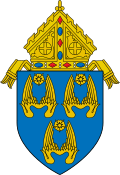
Ecclesiastical coats of arms incorporating canting elements emerged in the 13th century as the Catholic Church adopted heraldry, initially using personal or familial arms on seals and later developing institutional designs for sees, abbeys, and orders. This adoption paralleled the broader evolution of heraldry during the Crusades, with early examples appearing on episcopal seals by the late 12th century and becoming standardized by around 1300 across Christian Europe.[16] In ecclesiastical contexts, canting arms are uniquely adapted through impalement, where a bishop's personal shield is combined with the diocesan arms to signify pastoral authority, often integrating Christian symbols such as the crosier or keys of St. Peter to evoke doctrinal themes. For instance, the arms of the Archdiocese of Hartford feature a golden hart (male deer) wading through blue and white waves, a direct visual pun on "Hartford" that alludes to the biblical hart as a symbol of piety and thirst for God from Psalm 42. Similarly, personal arms of bishops frequently blend name-based puns with sacred motifs, as seen in the shield of Bishop Timothy Senior of Harrisburg, where crossed staves—a golden crosier and silver pilgrim's staff—pun on "senior" (Latin for elder) while referencing 1 Peter 5:1-2 on shepherding the flock and supporting the vulnerable.[17][18] Motifs in these arms often combine saints' attributes with name puns to reinforce spiritual significance, prioritizing religious iconography over mere wordplay. Bishop Michael McCarthy of Rockhampton's arms include a red Cross of St. Michael in the chief and a silver stag in the base, canting on his surname through the McCarthy clan badge while invoking the archangel's protective role as patron of the diocese. Another example is Bishop Bernard Hebda of St. Paul and Minneapolis, whose shield depicts an elderberry tree as a canting allusion to his Polish surname "Hebda" (resembling "bez hebd," meaning elderberry), with berry clusters symbolizing the cardinal virtues and evoking the Rosary in Marian devotion.[19][20] Following the Reformation, Vatican oversight formalized ecclesiastical heraldry in the 16th century and beyond, with modern guidelines emphasizing doctrinal and liturgical appropriateness over witty or secular puns, as outlined in the Church's heraldic traditions that subordinate heraldic ingenuity to expressions of faith and piety. This approach ensures designs avoid profane elements, focusing instead on symbols that affirm ecclesiastical hierarchy and spiritual mission, such as mitres, crosiers, and saintly emblems.[16][21]

Notable Examples

Historical Personal Examples

One prominent example of historical personal canting arms is that of the Fox family in England, whose coat features ermine, on a chevron azure three fox's heads erased or, directly punning on the surname "Fox." This design exemplifies the use of animal charges to allude to the bearer's name, a common canting device in medieval heraldry where the visual element mirrors the phonetic or literal meaning of the family name. The arms are documented in 14th-century English rolls of arms, such as those compiled in heraldic collections from the period, illustrating how such punning elements were integrated into personal identifiers for knights and gentry.[2] In France, the arms of the Dauphin of Viennois evolved in the first half of the 13th century to include dolphins (dauphins in French), a direct canting reference to the title "Dauphin," meaning "dolphin" and symbolizing the heir to the throne. The blazon quarters the French royal arms (azure semé of golden fleurs-de-lis) with a golden field (or) bearing a blue dolphin haurient, crested and finned in red (gules), visually depicting the creature in a stylized, embowed pose typical of heraldic marine charges. This design, first adopted by Guigues IV, Count of Vienne (d. 1142), but standardized in the 13th century, underscores how canting arms reinforced dynastic identity and legitimacy in medieval Europe.[22] These examples illustrate core principles of canting arms in personal heraldry, where charges like animals or objects directly evoke the bearer's name without relying on abstract symbolism, ensuring immediate recognition on shields and seals. The Fox arms use fox heads on a chevron for emphasis, common in English styles to avoid simplicity; and the Dauphin's dolphin integrates with royal quarterings to blend personal punning with inherited prestige. Visually, the fox heads appear erased against the azure chevron on ermine, evoking cunning; and the dolphin curves gracefully, its red accents adding vibrancy to the gold field—all tailored to medieval artistic conventions without anachronistic embellishments.[2][22]

Modern and Fictional Examples

In contemporary heraldry, personal coats of arms continue to incorporate canting elements, particularly in grants issued by official bodies like the College of Arms in England. A notable example is the arms granted to Princess Beatrice of York in July 2006, upon her 18th birthday, which feature a label with three bees, a visual pun on her name ("Beatrice" interpreted as "bee" + "trice" or three times). This design alludes to both her personal identity and her mother Sarah Ferguson's arms, which include a single bee. Such modern grants emphasize personal significance while adhering to heraldic traditions. In the United States and other regions, genealogy and historical reenactment societies promote canting arms as a way to connect individuals to their heritage. The Society for Creative Anachronism (SCA), a prominent international organization focused on pre-17th-century history, registers thousands of modern armorial designs, many of which are canting. For instance, the registered arms of Ælfwynn Fiske (registered May 1990 in the Kingdom of An Tir) include a fish, directly punning on her surname "Fiske."[2] These examples illustrate how canting arms foster creativity and identity in contemporary genealogical contexts, with thousands of SCA armory registrations since 1971 incorporating such puns.[2] Corporate heraldry in the 20th and 21st centuries often adapts canting principles for branding, though formal grants remain rare and typically non-punning. The College of Arms has granted arms to modern companies like Tesco (1979) and Marks & Spencer (2003), using symbolic elements to evoke heritage rather than strict name puns.[14] However, informal corporate logos sometimes employ canting-like visuals; for example, brewery brands may incorporate hops to allude to names involving "hop," blending heraldic style with commercial identity. In fictional works, canting arms enrich world-building by mirroring real heraldic puns while serving narrative purposes. J.R.R. Tolkien's Rohirrim in The Lord of the Rings (1954–1955) bear a white horse on a green field as their emblem, a canting allusion to their name meaning "horse-lords" in Tolkien's constructed language, symbolizing their equestrian culture.[23] Similarly, in George R.R. Martin's A Song of Ice and Fire series (1996–present), houses frequently use canting sigils: House Haigh's pitchfork on yellow evokes "hay," while House Ironsmith's forge and anvil pun on their name, highlighting the prevalence of such devices in Westerosi nobility.[24] In role-playing games like Dungeons & Dragons (first published 1974), players often devise canting arms for characters and factions, such as a house with fish charges for a "Fisher" lineage, drawing from heraldic traditions to enhance immersion.[1] Recent trends in canting arms reflect technological advances and cultural shifts. Digital design tools, such as vector graphics software used by firms like Digital Heraldry, enable intricate puns that would be challenging in traditional media, allowing for personalized and complex compositions in both personal and commercial applications.[25] This has democratized heraldry, with online generators and apps facilitating custom canting designs for genealogy enthusiasts and fantasy creators. However, critics argue that the commercialization of heraldic elements in branding—evident in logos for brands like those in Modern Heraldry (Counter-Print, 2020)—dilutes traditional significance, turning symbolic puns into mere marketing gimmicks without historical depth.[26]

Cultural and Symbolic Significance

Interpretations and Variations

Canting arms are subject to diverse cultural interpretations, ranging from literal visual puns to more allegorical representations that evoke broader attributes or histories associated with the bearer's name. In English heraldry, interpretations tend to emphasize straightforward visual elements, such as charges directly depicting name components, reflecting the practical needs of identification in a multilingual post-Conquest society.[27] By contrast, Italian heraldry often incorporates more elaborate punning with insects, body parts, or composite charges, allowing for allegorical layers that tie into familial narratives, though mottos occasionally reinforce these without being formally integrated into the shield itself.[27] Linguistic variations significantly influence the design and interpretation of canting arms, particularly in regions with historical language shifts. In English heraldry, Norman-French influences introduced challenges with name translations, where surnames derived from French terms (e.g., phonetic adaptations like "de la Roche" rendered as rock-like charges) created obscure or hybrid puns that blend Old French and Middle English elements, complicating literal readings across dialects.[3] Similarly, in Germanic traditions, canting arms may employ rebuses drawing on archaic or regional pronunciations, such as combining elements for compound names, leading to variations that prioritize phonetic allusion over strict visual fidelity.[3] These linguistic hurdles often result in obscure cants using obsolete terms or rare languages, as seen in Breton-derived arms like apple trees for "aval gor," which resist straightforward interpretation without historical context.[1] Beyond mere puns, canting arms possess symbolic depth, layering personal identity with references to family virtues, historical deeds, or feudal roles. For instance, a charge might visually allude to a name while allegorically signifying loyalty or prowess, as in charges evoking chivalric ideals during the Crusades era. This multifaceted symbolism served low-literacy medieval societies by encoding not just nomenclature but also inherited status and moral attributes, transforming a simple rebus into a narrative device.[1] Scholarly debates on canting arms, particularly in 19th-century antiquarian studies, center on whether they prioritize humorous wordplay or serve as markers of noble identity. Michel Pastoureau further challenged notions of canting as a late or low-status practice, estimating that 20–25% of medieval devices employ allusive elements to affirm feudal lineage rather than mere amusement.[3]

Influence on Heraldic Art

Canting arms, by incorporating visual puns and rebuses into heraldic designs, spurred artistic innovations in medieval heraldry, particularly through the introduction of unusual charges such as everyday objects and plants that deviated from traditional beasts and symbols. This creative approach expanded the visual vocabulary of coats of arms, allowing for greater complexity in blazons and enhancing their role in illuminated manuscripts and seals, where such motifs aided identification in a low-literacy society.[1] In the Renaissance, canting arms influenced the development of personal emblems known as imprese, as documented in Paolo Giovio's Dialogo dell'imprese militari et amorose (1555), which explored the metamorphosis of heraldic badges into more intellectual and symbolic devices. This transition bridged medieval punning traditions with Renaissance visual culture, inspiring allegorical representations in art that emphasized personal identity and ambiguity through animal and hybrid motifs.[28] The legacy of canting arms persists in modern graphic design, where heraldic elements like shields and symbolic charges inform branding and logos, adapting punning motifs for contemporary visual identity. Digital tools now preserve and recreate these heraldic motifs, enabling their study and application in vector-based designs that maintain historical accuracy while supporting new artistic expressions.[29][30] Criticisms of canting arms have centered on their potential to impose overly complex or punning elements, as seen in the 1696 French royal edict that required registration of arms and led heralds to assign punning designs to generate fees, causing resentment among those affected.[1]

References

User Avatar
No comments yet.