Hubbry Logo
Christ Church, OxfordChrist Church, OxfordMain
Open search
Christ Church, Oxford
Community hub
Christ Church, Oxford
logo
8 pages, 0 posts
0 subscribers
Be the first to start a discussion here.
Christ Church, Oxford
from Wikipedia

Christ Church (Latin: Ædes Christi, the temple or house, ædes, of Christ, and thus sometimes known as "The House") is a constituent college of the University of Oxford in England.[4] Founded in 1546 by King Henry VIII, the college is uniquely a joint foundation of the university and the cathedral of the Oxford diocese, Christ Church Cathedral, which also serves as the college chapel and whose dean is ex officio the college head.

Key Information

As of 2022, the college had 661 students.[4] Its grounds contain a number of architecturally significant buildings including Tom Tower (designed by Sir Christopher Wren), Tom Quad (the largest quadrangle in Oxford), and the Great Dining Hall, which was the seat of the parliament assembled by King Charles I during the English Civil War. The buildings have inspired replicas throughout the world in addition to being featured in films such as Harry Potter and The Golden Compass, helping Christ Church become the most popular Oxford college for tourists with almost half a million visitors annually.[5]

The college's alumni include 13 British prime ministers (the highest number of any Oxbridge college), as well as former prime ministers of Pakistan and Ceylon. Other notable alumni include King Edward VII, King William II of the Netherlands, William Penn, writers Lewis Carroll (author of Alice in Wonderland) and W. H. Auden, philosopher John Locke, and scientist Robert Hooke. Two Nobel laureates, Martin Ryle and John Gurdon, studied at Christ Church.[6] Albert Einstein is also associated with the college. The college has several cities and places named after it.[7]

History

[edit]
Hall of Christ Church
Christ Church's library in the early 19th century

In 1525, at the height of his power, Cardinal Thomas Wolsey, Lord Chancellor of England and Archbishop of York, suppressed St Frideswide's Priory in Oxford and founded Cardinal College on its lands, using funds from the dissolution of Bayham Old Abbey, Wallingford Priory and other minor priories.[8] He planned the establishment on a magnificent scale, but fell from grace in 1529, with the buildings only three-quarters complete, as they were to remain for 140 years.[citation needed]

In 1531 the college was itself suppressed, but it was refounded in 1532 as King Henry VIII's College by Henry VIII, to whom Wolsey's property had escheated. Then in 1546 the King, who had broken from the Church of Rome and acquired great wealth through the dissolution of the monasteries in England, refounded the college as Christ Church as part of the reorganisation of the Church of England, making the partially demolished priory church the cathedral of the recently created Diocese of Oxford.[citation needed]

Christ Church's sister college in the University of Cambridge is Trinity College, Cambridge, founded the same year by Henry VIII. Since the time of Queen Elizabeth I the college has also been associated with Westminster School. The dean remains to this day an ex officio member of the school's governing body.[9][10]

Major additions have been made to the buildings through the centuries, and Wolsey's Great Quadrangle was crowned with the famous gate-tower designed by Christopher Wren. To this day, the bell in the tower, Great Tom, is rung 101 times at 9 pm measured by Oxford time, meaning at 9:05 pm GMT/BST every night, once for each of the 100 original scholars of the college, plus one more stroke added in 1664. In former times this was done at midnight, signalling the close of all college gates throughout Oxford. Since it took 20 minutes to ring the 101, the Christ Church gates, unlike those of other colleges, did not close until 12:20 am. When the ringing was moved back to 9:00 pm, Christ Church gates still remained open until 12.20, 20 minutes later than any other college. Although the clock itself now shows GMT/BST, Christ Church still follows Oxford time in the timings of services in the cathedral.[11]

King Charles I made the Deanery his palace and held his Parliament in the Great Hall during the English Civil War.[12] In the evening of 29 May 1645, during the second siege of Oxford, a "bullet of IX lb. weight" shot from the Parliamentarians' warning-piece at Marston fell against the wall of the north side of the Hall.[13]

Several of Christ Church's deans achieved high academic distinction, notably Owen under the Commonwealth, Aldrich and Fell in the Restoration period, Jackson and Gaisford in the early 19th century and Liddell in the high Victorian era.[citation needed]

For more than four centuries Christ Church admitted men only; the first female students at Christ Church matriculated in 1980.[14]

Organisation

[edit]

Christ Church, formally titled "The Dean and Chapter of the Cathedral Church of Christ in Oxford of the Foundation of King Henry the Eighth",[1] is the only academic institution in the world which is also a cathedral, the seat (cathedra) of the Bishop of Oxford. The visitor of Christ Church is the reigning British sovereign[15] (currently King Charles III), and the Bishop of Oxford is unique among English bishops in not being the visitor of his own cathedral.[citation needed]

The head of the college is the Dean of Christ Church.[16] Christ Church is unique among Oxford colleges in that its head of house, who is head of both college and cathedral, must be an Anglican cleric appointed by the Crown as dean of the cathedral church. The dean lives on site in a grand 16th-century house in the main quadrangle. The college's activities are managed by a senior and a junior censor (formally titled the Censor Moralis Philosophiae and the Censor Naturalis Philosophiae) the former of whom is responsible for academic matters, the latter for undergraduate discipline. They are chosen from among the members of the governing body. A censor theologiae is also appointed to act as the dean's deputy.

The form "Christ Church College" is considered incorrect, in part because it ignores the cathedral, an integral part of the unique dual foundation.[citation needed]

Governing body

[edit]

The governing body of Christ Church consists of the dean and chapter of the cathedral, together with the "Students of Christ Church", who are not junior members but rather the equivalent of the fellows of the other colleges. Until the later 19th century, the students differed from fellows in that they had no governing powers in their own college, as those resided solely with the dean and chapter. The governing body of Christ Church now has around 60 members. Serving alongside the seven members of chapter, the other members include statutory professors and associate professors with joint appointments (employed both by the University and Christ Church) as well as early-career career development fellows on fixed-term contracts. Sir John Bell and Sir Tim Berners-Lee are both members of the governing body of Christ Church.[17]

Buildings and grounds

[edit]
Hall of Christ Church
Tom Tower as seen from Tom Quad
Ducks Tom and Peck in Tom Quad on a sunny day.
The Meadow Building
The Meadow Building on a sunny autumn day

Christ Church sits in approximately 175 acres (71 hectares) of land.[18] This includes the Christ Church Meadow (including Merton Field and Boathouse Island), which is open to the public all year round. In addition Christ Church own Aston's Eyot (purchased from All Souls College in 1891),[19] Christ Church recreation ground (including the site of Liddell Building), and School Field which has been leased to Magdalen College School since 1893.[20] The meadow itself is inhabited by English Longhorn cattle.[21] In October 1783 James Sadler made the first hot air balloon ascent in Britain from the meadow.[22] The college gardens, quadrangles, and meadow are Grade I listed on the Register of Historic Parks and Gardens.[23]

Christ Church has a number of architecturally significant buildings. These include:

Grade I listed:

Grade II* listed:

Others:

  • The Meadow Building (Grade II)
  • The Old Library
  • The Lee Building/Anatomy School (Grade II)
  • Christ Church Kitchen & Scullery (Grade II)
  • Old Brew House (Grade II)
  • Liddell Building
  • The Pococke Garden, named after Edward Pococke, Regius Professor of Hebrew (1648–91)[27]

Influences

[edit]
Christ Church Cathedral from the east across Christ Church Meadow

The college buildings and grounds are the setting for parts of Evelyn Waugh's Brideshead Revisited, as well as a small part of Lewis Carroll's Alice's Adventures in Wonderland.[28][29] More recently it has been used in the filming of the movies of J. K. Rowling's Harry Potter series and also the film adaptation of Philip Pullman's novel Northern Lights (the film bearing the title of the American edition of the book, The Golden Compass). Distinctive features of the college's architecture have been used as models by a number of other academic institutions, including the NUI Galway, which reproduces Tom Quad. The University of Chicago, Cornell University, and Kneuterdijk Palace have reproductions of Christ Church's dining hall (in the forms of Hutchinson Hall, the dining hall of Risley Residential College, and the Gothic hall of Kneuterdijk Palace,[30][31] respectively). ChristChurch Cathedral in New Zealand, after which the City of Christchurch is named, is itself named after Christ Church, Oxford. Stained glass windows in the cathedral and other buildings are by the Pre-Raphaelite William Morris group with designs by Edward Burne-Jones.[32][33]

Resident animals on grounds

[edit]

Historically, there has been a resident tortoise for the annual Oxford tortoise races.[34] However, since 2020, due to the pandemic, there has not been a tortoise. Recently, there have been two "resident" ducks, which can be seen in Tom Quad, affectionately named "Tom" and "Peck" after two of the famous quadrangles in Christ Church.[35][36]

The Mercury fountain also houses carp, notably a large koi carp named George, which was a gift from the Empress of Japan. A heron may also be frequently seen visiting the pond as their hunting ground. This stopped, in September 2022, when the fishes were moved to a spacious lake home somewhere in Oxfordshire while the College perform essential maintenance on the pond.[37]

Outside the Meadow Building in the Christ Church Meadow, there are also cows present during the day. The cows are of rare English Longhorn breed.[38]

Cathedral choir

[edit]
Choir and organ of Christ Church Cathedral

Long associated with high church Anglicanism,[39] Christ Church is unique in that it has both a cathedral choir and a college choir. The cathedral choir comprises twelve adults and sixteen boys. The adults are made up of lay clerks and choral scholars, or academical clerks. The choir was all male until 2019, when they welcomed alto Elizabeth Nurse, the first female clerk of Christ Church Cathedral Choir.[40] The boys, whose ages range from eight to thirteen, are chosen for their musical ability and attend Christ Church Cathedral School. Aside from the director, Peter Holder, there is also a sub-organist and two organ scholars. The college choir, however, is always a student-run society, and sings Evensong once a week in term time. In vacations the services are sung by the Cathedral Singers of Christ Church – a choir drawn from semi-professional singers in and around Oxford. The cathedral also hosts visiting choirs from time to time during vacations.[citation needed]

Nave of Christ Church Cathedral looking to the altar

Throughout its history, the cathedral choir has attracted many distinguished composers and organists – from its first director, John Taverner, appointed by Cardinal Wolsey in 1526, to William Walton in the twentieth century. In recent years, the choir have commissioned recorded works by contemporary composers such as John Tavener, William Mathias and Howard Goodall, also patron of Christ Church Music Society.[citation needed]

The choir, which broadcasts regularly, have many recordings to their credit and were the subject of the Channel 4 television documentary Howard Goodall's Great Dates (2002). The documentary was nominated at the Montreux TV Festival in the arts programme category – and has since been seen internationally. The choir's collaboration with Goodall has also led to their singing his TV themes for Mr. Bean and Vicar of Dibley. They appeared in Howard Goodall's Big Bangs, broadcast in the United Kingdom on Channel 4 in March 2000. Treasures of Christ Church (2011) is an example of the choir's recording and debuted as the highest new entry in the UK Specialist Classical chart.[41] The disc featured on BBC Radio 3's In Tune on 26 September 2011 and on Radio 3's Breakfast Show on 27 September that year.[citation needed]

[edit]

Christ Church holds one of the most important private collections of drawings in the UK, including works by Leonardo da Vinci, Raphael and Michelangelo. The collection is composed of approximately 300 paintings and 2,000 drawings, a rotated selection of which are available to the public for viewing in the purpose-built Christ Church Picture Gallery. Many of the works were bequeathed by a former member of the college, General John Guise (1682/3-1765), enabling the creation of the first public art gallery in Britain.[42][43][44]

Coat of arms

[edit]

College arms

[edit]
College arms

The college arms are those of Cardinal Wolsey and were granted to him by the College of Arms on 4 August 1525.[45] They are blazoned: Sable, on a cross engrailed argent, between four leopards' faces azure a lion passant gules; on a chief or between two Cornish choughs proper a rose gules barbed vert and seeded or. The lion refers to Leo X who created Wolsey a Cardinal.[46][47] The arms are depicted beneath a red cardinal's galero with fifteen tassels on either side, and sometimes in front of two crossed croziers.[citation needed]

Cathedral arms

[edit]
Christ Church Cathedral arms

There are also arms in use by the cathedral, which were confirmed in a visitation of 1574. They are emblazoned: "Between quarterly, 1st & 4th, France modern (azure three fleurs-de-lys or), 2nd & 3rd, England (gules in pale three lions passant guardant or), on a cross argent an open Bible proper edged and bound with seven clasps or, inscribed with the words In principio erat Verbum, et Verbum erat apud Deum and imperially crowned or."[citation needed]

Graces

[edit]

The college preprandial grace reads:

Latin English
Nōs miserī hominēs et egēnī, prō cibīs quōs nōbis ad corporis subsidium benignē es largītus, tibi, Deus omnipotēns, Pater cælestis, grātiās reverenter agimus; simul obsecrantēs, ut iīs sobriē, modestē atque grātē ūtāmur.

Īnsuper petimus, ut cibum angelōrum, vērum panem cælestem, verbum Deī æternum, Dominum nostrum Iēsum Christum, nōbis impertiāris; utque illō mēns nostra pascātur et per carnem et sanguinem eius fovēāmur, alāmur, et corrōborēmur. Āmen. [48]

"We unhappy and unworthy men do give thee most reverent thanks, Almighty God, our heavenly Father, for the victuals which thou hast bestowed on us for the sustenance of the body, at the same time beseeching thee that we may use them soberly, modestly and gratefully.

And above all we beseech thee to impart to us the food of angels, the true bread of heaven, the eternal Word of God, Jesus Christ our Lord, so that the mind of each of us may feed on him and that through his flesh and blood we may be sustained, nourished and strengthened. Amen."

Christ Church from the south- east across Christ Church Meadow

The first part of the grace is read by a scholar or exhibitioner before formal hall each evening, ending with the words Per Iēsum Christum Dominum nostrum ("Through Jesus Christ our Lord.") The remainder of the grace, replacing Per Iēsum Christum etc., is usually only read on special occasions.[citation needed]

There is also a long postprandial grace intended for use after meals, but this is rarely used. When High Table rises (by which time the Hall is largely empty), the senior member on High Table simply says Benedictō benedīcātur ("Let the Blessed One be blessed", or "Let a blessing be given by the Blessed One"), instead of the college postprandial grace.

Student life

[edit]
Christ Church Great Hall

As well as rooms for accommodation, the buildings of Christ Church include the cathedral, one of the smallest in England, which also acts as the college chapel, a great hall, two libraries, two bars, and separate common rooms for dons, graduates and undergraduates. There are also gardens and a neighbouring sports ground and boat-house.[citation needed]

Accommodation is usually provided for all undergraduates, and for some graduates, although some accommodation is off-site. Accommodation is generally spacious with most rooms equipped with sinks and fridges. Many undergraduate rooms comprise 'sets' of bedrooms and living areas. Members are generally expected to dine in hall, where there are two sittings every evening, one informal and one formal (where gowns must be worn and Latin grace is read). The college offers subsidies on the costs of accommodation and dinners for UK and ROI students from families with lower household incomes.[49] The buttery next to the Hall serves drinks around dinner time. There is also a college bar (known as the Undercroft), as well as a Junior Common Room (JCR) and a Graduate Common Room (GCR), equivalent to the Middle Common Room (MCR) in other colleges.[citation needed]

There is a college lending library that supplements the university libraries (many of which are non-lending). Law students have the additional facility of the Burn Law Library, named for Edward Burn.[50] Most undergraduate tutorials are carried out in the college, though for some specialist subjects undergraduates may be sent to tutors in other colleges.[citation needed]

Croquet is played in the Masters' Garden in the summer. The sports ground is mainly used for netball, cricket, tennis, rugby and football and includes Christ Church cricket ground. In recent years the Christ Church Netball Club, which competes on the inter-college level in both mixed and women's matches, has become known as a popular and inclusive sport. Rowing and punting is carried out by the boat-house across Christ Church Meadow – the Christ Church Boat Club is traditionally strong at rowing, having been Head of the River more than all other colleges except Oriel College. The college also owns its own punts which may be borrowed by students or dons.[citation needed]

The college beagle pack (Christ Church and Farley Hill Beagles), which was formerly one of several undergraduate packs in Oxford, is no longer formally connected with the college or the university but continues to be staffed and followed by some Oxford undergraduates.[citation needed]

Christ Church references

[edit]

People associated with the college

[edit]

Deans

[edit]

Cardinal College

King Henry VIII's College

Christ Church

Alumni

[edit]

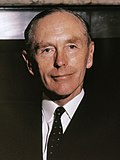
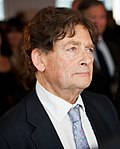
Notable former students of the college have included politicians, scientists, philosophers, entertainers and academics. Thirteen British prime ministers have studied at the college including, Anthony Eden (Prime Minister 1955–1957), William Ewart Gladstone (1828–1831), Sir Robert Peel (1841–1846) and Archibald Primrose (1894–1895). Other former students include Charles Abbot (Speaker of the House of Commons 1802–1817), Frederick Curzon (Conservative Party statesman 1951–), Nicholas Lyell (Attorney General 1992–1997), Nigel Lawson (Chancellor of the Exchequer 1983–1989), Quintin Hogg (Lord Chancellor 1979–1987) and William Murray (Lord Chief Justice 1756–1788 and Chancellor of the Exchequer 1757). From outside the UK, politicians from Canada (Ted Jolliffe), Pakistan (Zulfikar Ali Bhutto), Sri Lanka (S. W. R. D. Bandaranaike), Pakistan (Bilawal Bhutto Zardari) and the United States (Charles Cotesworth Pinckney) have attended the college.

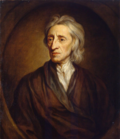
Prominent philosophers including John Locke, John Rawls, A. J. Ayer, Gilbert Ryle, Michael Dummett, John Searle and Daniel Dennett studied at Christ Church.

There are numerous former students in the fields of academia and theology, including George Kitchin (the first Chancellor of the University of Durham 1908–1912 and Dean of Durham Cathedral 1894–1912), John Charles Ryle (first Bishop of Liverpool 1880–1900), John Wesley (leader of the Methodist movement), Rowan Williams (Archbishop of Canterbury 2002–2012), Richard William Jelf (Principal of King's College London 1843–1868), Ronald Montagu Burrows (Principal of King's College London 1913–1920) and William Stubbs (Bishop of Oxford 1889–1901 and historian).

Two Olympic rowing gold medallists studied at the college: Jonny Searle and Spanish Civil War volunteer Lewis Clive.[51][52]

In the sciences, polymath and natural philosopher Robert Hooke, developmental biologist John B. Gurdon (co-winner of the 2012 Nobel Prize in Physiology or Medicine), physician Sir Archibald Edward Garrod, the Father of Modern Medicine Sir William Osler, biochemist Kenneth Callow, radio astronomer Sir Martin Ryle, psychologist Edward de Bono and epidemiologist Sir Richard Doll are all associated with the college. Albert Einstein was a learned research fellow.

In other fields, Cameron and Tyler Winklevoss, twins associated with the founding of Facebook, King Edward VII (1841–1910), King of the United Kingdom and Emperor of India, King William II of the Netherlands, Prince Paul of Yugoslavia, entrepreneur and founder of Pennsylvania William Penn, broadcaster David Dimbleby, MP Louise Mensch, BBC composer Howard Goodall, actor Riz Ahmed, the writer Lewis Carroll, poet W. H. Auden, and the former officer of arms Hubert Chesshyre are other notable students to have previously studied at Christ Church.

[edit]

References

[edit]
[edit]
Revisions and contributorsEdit on WikipediaRead on Wikipedia
from Grokipedia
Christ Church is a constituent college of the , founded by King Henry VIII in 1546 as a refounding of Cardinal College established by in 1525. It uniquely combines the roles of an academic college and Christ Church Cathedral, the smallest cathedral in and the seat of the , with the college's dean also serving as dean of the cathedral. The college's grounds feature prominent architecture, including —the largest quadrangle among colleges—and Tom Tower, a completed by Sir in 1682 housing Great Tom, a seven-ton bell recast from Oseney Abbey. With an endowment valued at approximately £580 million, Christ Church ranks among the wealthiest colleges in Oxford, supporting its academic and research activities through prudent investment and historical benefactions. The college has a storied history of educating influential figures, including multiple British prime ministers such as William Gladstone and Alec Douglas-Home, as well as authors like Lewis Carroll, whose Alice's Adventures in Wonderland drew inspiration from the college's surroundings. Its Great Hall served as a model for the Hogwarts dining hall in the Harry Potter film series, enhancing its cultural prominence. Christ Church maintains a strong academic reputation, emphasizing undergraduate and graduate education across disciplines, while its hosts musical traditions, including the renowned for broadcasts and recordings. Recent reviews have addressed internal challenges, reflecting efforts to sustain its institutional integrity amid evolving standards.

Historical Foundations

Origins and Establishment (1524–1546)

Cardinal , at the height of his influence as Henry VIII's and , initiated the foundation of what would become Christ Church by suppressing the ancient Augustinian Priory of St Frideswide in . The priory, tracing its origins to the as a to the local saint Frideswide, occupied a strategically central site with substantial endowments from surrounding lands. In April 1524, Wolsey secured a authorizing the suppression, redirecting the priory's resources—including its church, cloisters, and revenues—to finance a grand new college aimed at training scholars in , Latin, Greek, and to reform and elevate the English clergy. On 15 July 1525, Wolsey formally laid the foundation stone for Cardinal College (also known as Cardinal's College), marking the official establishment of the institution on the cleared priory grounds. Wolsey's ambitious vision included a large governing body comprising a dean, subdean, up to 60 canons, 40 petty canons, six lecturers in key disciplines, and a choir of 13 priests, 12 clerks, and 16 choristers, supplemented by undergraduates and choirboys under a schoolmaster. Construction progressed rapidly under masons like Thomas Redman, with the hall and kitchen completed by 1529, while plans for the expansive Tom Quadrangle—measuring 264 by 261 feet—embodied Wolsey's intent to create Oxford's most magnificent college, funded partly by suppressing additional smaller priories such as Wallingford. Wolsey's draft statutes emphasized humanist education over medieval scholasticism, prioritizing causal reasoning in theology and classical languages to produce church leaders capable of addressing contemporary doctrinal challenges. Wolsey's political downfall in 1529, triggered by his failure to secure an for 's marriage to , led to the cardinal's and death in 1530; the unfinished college was promptly suppressed, its assets confiscated by . , recognizing the project's value amid his own reforms, refounded it in 1532 as King Henry VIII's College, retaining the dean-canon structure but scaling back some of Wolsey's grander elements to eight canons initially, while continuing construction and appointing Richard Cox as the first dean. The college operated under provisional governance, with the priory church serving as its chapel. In 1546, as Henry consolidated his ecclesiastical restructuring—including the creation of the in 1542— he issued a on 4 November refounding the institution as Christ Church, uniquely integrating it as both a constituent college of the and the for the new , with the dean holding episcopal oversight. A subsequent of Dotation on 11 December endowed it with lands and revenues from recently dissolved religious houses, ensuring but leaving formal statutes unissued before Henry's in 1547. This establishment reflected Henry's pragmatic of Wolsey's vision, prioritizing royal control and utility in the post-Reformation landscape over the cardinal's original papal-aligned ambitions.

Early Development and Royal Patronage (1546–1700)

Following the dissolution of Cardinal Thomas Wolsey's Cardinal College in 1529, King Henry VIII refounded the institution as Christ Church on 19 December 1546 through a dated 4 November 1546, uniquely establishing it as a joint foundation of the University and the cathedral for the newly created . A subsequent of dotation on 11 December 1546 endowed the college with lands and revenues formerly belonging to Wolsey's foundation, supporting a structure comprising one dean, six canons (or chapter), eight minor canons, and 100 students divided into categories for and , each receiving annual stipends based on seniority. This arrangement emphasized theological education while integrating collegiate and ecclesiastical governance under the dean's dual authority. The physical development continued Wolsey's ambitious designs, with the Great Quadrangle (Tom Quad), measuring 264 by 261 feet and the largest in , having its three southern sides largely completed by 1529; the northern range remained unfinished until the late . The , featuring a , was finalized around the same period and has served continuously since the mid-16th century for communal dining and academic ceremonies. Early deans oversaw modest expansions amid religious upheavals, including the reigns of and Mary I, which tested the college's Protestant refoundation. Royal patronage sustained and elevated Christ Church's status. Henry VIII's foundational role positioned it as a crown-supported bastion of reformed learning, while visited in 1566, residing in the east range of , attending theatrical performances in the Hall (at a cost of £148 for preparations), and later instituting four annual Westminster Studentships in 1561 to draw promising scholars from . James I reinforced ties by appointing influential deans such as John King in 1605. Charles I hosted court at Christ Church during visits in 1625 and 1629 to evade plague, and again in 1636, underscoring its role as a royal residence during national crises; during the , the college served as a key royalist stronghold with Charles I establishing headquarters there from 1642 to 1646. By the late , Dean John Fell (1660–1686) completed 's northern side and commissioned Christopher Wren's Tom Tower (1681–1682), housing the Great Tom bell that signals curfew with 101 chimes nightly, symbolizing the original 101 members.

Institutional Growth and Reforms (1700–1900)

During the early eighteenth century, Christ Church experienced growth in admissions under Dean Henry Aldrich, necessitating the reconstruction of Peckwater Quadrangle, completed in 1707. A new library was constructed in the early 1700s, with its ground floor adapted as a gallery by the to house the bequest of paintings. Student numbers declined markedly by mid-century, halving from earlier levels amid broader trends of academic stagnation, though Christ Church maintained higher standards than popularly assumed. Recovery began in the late eighteenth century under Deans William Markham (1768–1777) and Richard Bagot (1777–1783), who elevated academic rigor and produced alumni including future MPs and prime ministers, followed by Cyril Jackson (1783–1809), who further enforced discipline and influenced ecclesiastical and political leaders. Quadrangle was completed in 1783 by , enhancing residential capacity. In the nineteenth century, Christ Church adapted to university-wide pressures for modernization while resisting some external impositions. Dean Thomas Gaisford (1831–1855) prioritized internal college examinations over university degrees, reflecting conservative governance amid the 1850 on Oxford's critiques of collegiate autonomy. The curriculum expanded to include natural sciences from 1850, with later additions in , modern , and English by 1893. Agitation from 1863 culminated in the Christ Church (Oxford) Act of 1867, which overhauled governance by establishing formal statutes, integrating "Students" (senior fellows) into a broader , curbing the Dean's unilateral authority, permitting tutors to marry, and formalizing the —transformations aligning the college with emerging Oxford norms of merit-based , where one-third of undergraduates were selected as scholars via competitive exams. Under Dean Henry Liddell (1855–1891), non-Anglicans and international students increased, diversifying intake. Physical expansions supported rising undergraduate numbers, with Meadow Buildings (1862–1865), a Venetian Gothic structure by T. N. Deane, providing on-site housing for growing student populations. The cathedral underwent restoration by starting in 1870, addressing decay while preserving its dual role. Sports infrastructure, including a in the 1860s and a Boat Club barge, reflected evolving extracurricular emphases. These changes positioned Christ Church as a leading institution, balancing tradition with adaptation to industrial-era demands for educated and administrators. ![Meadow Building, constructed 1862–1865 for undergraduate housing][float-right]

Modern Era and 20th-Century Changes (1900–2000)

In the early 20th century, under Dean Henry Leighton Goudge Strong (1901–1920), Christ Church enhanced its cathedral choir, notably supporting the young composer , who served as an undergraduate chorister. The college continued to attract aristocratic and international students, maintaining its traditional role in educating elites. During the First World War (1914–1918), Christ Church experienced significant disruption, with its quads temporarily hosting soldiers and many undergraduates receiving delayed call-ups to allow degree completion. The college lost numerous members, commemorated by a roll of honour in the listing over 200 names. In 1926, the Garden was established east of St Aldate's to honor these casualties, incorporating salvaged elements like a 14th-century from the site. The Second World War (1939–1945) similarly reduced student numbers and claimed lives, with another cathedral memorial recording 208 fallen members, including staff. Post-war recovery saw steady growth in undergraduate and postgraduate enrollments, driven by broader university expansion and a shift toward more diverse socioeconomic backgrounds amid declining affordable private lodgings in . Mid-century developments focused on infrastructure to accommodate rising numbers. In the , the Blue Boar Quadrangle was constructed by architects Powell and Moya to provide additional student housing. Between 1964 and 1967, a new Picture Gallery was built nearby, housing the relocated Guise collection of paintings previously stored insecurely. The 1976 opening of a dedicated law library further supported specialized academic needs. A pivotal change occurred in , when Christ Church admitted its first women undergraduates, ending over four centuries of male-only junior membership and aligning with Oxford's broader co-educational shift. Women integrated rapidly, with the college completing the St Aldate's Quadrangle in the late 1980s for expanded facilities and constructing the Liddell Building in the early 1990s near the sports grounds, shared with Corpus Christi College. These expansions reflected pragmatic responses to enrollment pressures rather than doctrinal shifts, preserving the college's amid secularizing trends in higher education.

Governance and Administration

Governing Bodies and Leadership Structure

The of Christ Church serves as the primary decision-making authority for the institution, encompassing both its collegiate and cathedral functions. It comprises approximately 63 members, including the Dean, five Cathedral Canons, and 57 Students—predominantly tutorial fellows, research fellows, and supernumerary fellows—who collectively oversee strategic direction, financial management, and academic policies. This structure stems from the Christ Church Oxford Act 1867, which centralized administration and assets under the to enhance operational efficiency following earlier fragmented oversight. Leadership is headed by the Dean, who holds the dual role of Head of for the and Dean of , a position appointed by on the advice of the . The current Dean, The Very Revd Professor , assumed office on 8 July 2023 as the first woman in the role, bringing expertise in medieval history and . Administrative duties are delegated to key officers, including the Senior Censor, who manages academic affairs akin to a senior tutor in other , and the Junior Censor, supporting undergraduate welfare and discipline; the current Senior Censor is Professor Jennifer Yee. Day-to-day operations are executed through an extensive network of sub-committees, such as the Finance Committee—chaired by the Treasurer and reporting to the —and specialized bodies for estates, education, and cathedral activities. In response to internal challenges, including high-profile disputes over and , the commissioned an independent review by KC in June 2022, culminating in a report published on 17 May 2023. The review critiqued the intertwined ecclesiastical and academic governance as outdated, recommending the separation of the Dean's role from the Head of position to broaden selection criteria beyond and improve . On 19 September 2023, the voted to endorse this separation in principle, allowing non-clerical candidates for Head of . By October 2025, substantial progress toward implementation had been achieved through consultations, though the Dean continued to hold both roles pending full statutory changes requiring approval from the , , and authorities. These reforms aim to align Christ Church's structure with contemporary collegiate standards while preserving its unique foundation as a .

Unique Dual Role of the Dean

The Dean of , occupies a singular position as the head of a joint foundation that encompasses both the academic college within the and Christ Church Cathedral, the seat of the . This dual structure originated with the institution's re-founding by King Henry VIII in 1546, transforming the earlier Cardinal College (established 1525) into an integrated entity combining educational and ecclesiastical functions under royal patronage. In the college capacity, the Dean acts as Head of House, chairing the —a body of approximately 65 members including canons and student fellows—and bearing primary responsibility for order, discipline, and the overall superintendence of the . This includes appointing deputies such as the Censor Theologiae for disciplinary support and exercising a in decisions. Concurrently, as Dean of the , the Dean presides over the Chapter, which exercises exclusive authority over the cathedral's fabric, liturgical services, officers (including chaplains, organist, and choristers), and dedicated funds like the Cathedral Fabric Fund and Chapter Fund, with accountability solely to as rather than the . The Dean's appointment, made by upon recommendation by the , underscores the role's ecclesiastical nature, requiring ordination in the . This arrangement, codified in statutes from the Christ Church, Oxford Act 1867 and subsequent legislation, distinguishes Christ Church from other Oxford colleges, where heads lack clerical duties and cathedral oversight. While enabling a seamless fusion of academic rigor and religious tradition—such as the cathedral doubling as the college —the dual responsibilities have periodically strained by juxtaposing secular educational imperatives against obligations.

Recent Reforms and Secularization Proposals (2023 Onward)

In May 2023, KC published an independent governance review of Christ Church, commissioned in June 2022 to assess and modernize the institution's leadership structure amid prior internal disputes and a Charity Commission warning. The review recommended separating the Dean's dual role as head of both the and the (known as the Foundation), proposing a new lay Head of House for the side without requiring as an , marking a departure from the 1546 precedent. This change aimed to expand the candidate pool for leadership while preserving the joint Foundation's shared assets, such as the Tom Tower, and maintaining the Dean's exclusive oversight of affairs under a fixed five-year term for the Head of House, renewable once. The proposals emphasized clarifying responsibilities through a new Liaison Committee co-chaired by the Head of House and Dean to foster cooperation, alongside mechanisms for via the (). While not advocating full separation of the college and —deemed impractical due to intertwined governance under the 1867 Oxford University Act—the reforms sought to reduce ecclesiastical influence over academic and fundraising operations, enabling a more secular administrative head without altering the cathedral's Anglican status or the Dean's ecclesiastical freehold. On October 19, 2023, the voted to accept Grieve's core recommendation, approving the split in responsibilities and the eligibility of non-clergy for the Head of House role, subject to amendments requiring a two-thirds majority vote, consultation with the and , and final approval by the and . Implementation remained pending as of late 2023, with the review suggesting a five-year evaluation post-adoption to assess efficacy. These changes, if enacted, would represent the most significant shift since the , prioritizing operational efficiency over traditional clerical leadership while upholding the institution's charitable objects.

Architecture and Grounds

Tom Quadrangle and Great Hall

The Tom Quadrangle, commonly known as Tom Quad, forms the core of Christ Church and stands as the largest quadrangle in Oxford, measuring 264 feet by 261 feet. Construction began in 1525 under Cardinal Thomas Wolsey as part of his Cardinal College project, with three sides completed during his tenure in a Gothic style before his fall in 1529. The fourth side was finished later under King Henry VIII after the college's refounding as Christ Church in 1546. At the center lies a fountain featuring a statue of Mercury, added in the 17th century. Dominating the western entrance is Tom Tower, designed by Sir Christopher Wren and constructed between 1681 and 1682 in a Gothic Revival style. The tower houses Great Tom, a seven-ton bell recast from one originally at Oseney Abbey, which chimes 101 times each evening at 9:05 p.m. to signal for the college's 101 original students. Adjoining the quadrangle to the north is the , constructed between 1529 and the 1550s under Wolsey's masons, including , and featuring an ornate crafted by joiners Gilbert van Vyenna and Richard Reve. This Grade I listed structure serves as the college's dining hall, lined with portraits of notable alumni and benefactors, and remains in daily use for meals.

Christ Church Cathedral

Christ Church Cathedral functions as the mother church of the and simultaneously serves as the chapel for Christ Church college, a distinctive arrangement formalized in 1546 when King refounded the institution on the site of the former Augustinian of St Frideswide. The site's religious significance dates to the early eighth century, when St Frideswide, Oxford's , established a community of nuns around 727 AD, which evolved into a Benedictine and later an Augustinian by 1122. The was dissolved in 1524 under Cardinal Wolsey's reforms to fund his new Cardinal College, but following Wolsey's fall, repurposed the priory church as the cathedral for the newly created in 1542, integrating it into the college foundation three years later. The cathedral's architecture predominantly reflects late Norman or Romanesque styles, with construction of the current structure commencing in the 1160s on foundations possibly predating 1150, incorporating elements up to the period. The was completed prior to the 1180 translation of St Frideswide's relics, while later additions include a 13th-century retrochoir and 15th-century , with the featuring characteristic Norman arcading and a rebuilt after a 13th-century fire. In the , a medieval-style was installed in the choir ceiling in 1638, enabled by contemporary engineering advances, and significant restorations occurred in the 1870s under Sir , who addressed structural decay without major stylistic alterations. Recognized as England's smallest , its compact form—measuring approximately 170 feet in length—preserves medieval proportions amid urban constraints. Notable interior features include a large 10-part in the west front, exemplifying botanical tracery, and the shrine of St Frideswide, a focal point for since its medieval reconstruction. The cathedral maintains an active liturgical role, hosting daily services with its renowned of 16 men and up to 30 boy choristers drawn from the college's , emphasizing its dual ecclesiastical and academic heritage. Recent enhancements, such as a new stained-glass window dedicated in 2025, continue to augment its artistic legacy while preserving historical integrity.

Gardens, Meadows, and Resident Wildlife

Christ Church's gardens and grounds, encompassing quads, formal gardens, and the expansive Christ Church Meadow, constitute a Grade I listed landscape registered by for its historic parks and gardens. The Tom Quadrangle features expansive grass lawns laid out in the mid-16th century with minimal alterations since the 1870s. Peckwater Quadrangle, developed in the early , includes lawns added in 1936. Specialized areas include the Cathedral Garden, remnants of St Frideswide’s and inspiration for scenes in ; the Pococke Garden, site of an Oriental Plane tree possibly planted in 1636 with a 9-meter girth; the Masters Garden, established 1926–1929 in a recreational style; the Cloister Garden, redesigned in 2008 featuring lavender, an olive tree, and a fountain; and Memorial Gardens in Arts and Crafts style from the 1920s honoring Great War casualties. Christ Church Meadow spans 46 acres as a flood-meadow bounded by the River Thames (Isis) to the south and the River Cherwell to the east, serving as a for walks, picnics, and sports since the . Key features include the Broad Walk, a tree-lined gravel path from the mid-17th century overlaying Civil War earthworks; the New Walk, planted in 1865 and replanted in 2015 with 21 lime trees (Tilia x europaea ‘Pallida’); Dean’s Ham, a perimeter path along the Thames densely planted since the ; and the Cherwell Path, a winding route established by 1578 with grassy banks. The meadow is managed through low-intensity practices, including no chemical use or fertilizers, to preserve its floodplain ecology. Resident livestock consists of a herd of pedigree cattle grazing the two fields, contributing to via natural grazing. Wildlife includes protected species such as bats, badgers, water voles, otters, reptiles, and amphibians, supported by restoration projects like the initiative that has revived floral diversity. Roe deer occasionally visit from adjacent areas, swimming across waterways, while common waterfowl like ducks frequent the paths and riverbanks. Bird species, including occasional sightings of black redstarts, benefit from the corridors. The Christopher Lewis Fund, established for perpetual management, underscores ongoing conservation efforts. The Picture Gallery at Christ Church maintains a collection of approximately 300 paintings and nearly 2,000 drawings, with a core strength in Italian works from the 14th to 18th centuries. This holdings distinguish Christ Church as unique among and colleges for its dedicated assembly of such materials. The collection's foundation traces to 1765, when General John Guise, an alumnus and military figure, bequeathed over 200 paintings and almost 2,000 drawings acquired during his travels and service in . Subsequent donors expanded the holdings, including William Fox-Strangways, who gifted 37 paintings in 1828 and 1834, among them Filippino Lippi's The Wounded Centaur (c. 1483–1493). The gallery's works on paper encompass around 2,000 Old Master drawings and 3,000 prints, primarily by Italian masters from the Renaissance and Baroque periods. Select paintings are exhibited in the purpose-built gallery structure and the Great Hall, open to visitors year-round, though access to storage-held items requires scholarly application. In March 2020, three paintings—valued collectively in the millions—were stolen from the premises, prompting enhanced security measures. Beyond pictorial art, Christ Church's broader collections include the library's special holdings of manuscripts, printed music, rare books, and pamphlets dating from the medieval period onward, cataloged for academic consultation. These encompass early printed editions and archival materials tied to the college's , with ongoing efforts to improve . The library also preserves items like 18th- and 19th-century integrated into the art corpus. Conservation and research initiatives, supported by the gallery's staff, ensure the preservation of these assets against environmental and security risks.

Religious and Cultural Traditions

Cathedral Choir and Musical Heritage

The Cathedral Choir of Christ Church, Oxford, was established in 1546 by King as part of the refoundation of the institution, building on earlier musical provisions dating to Cardinal Wolsey's Cardinal College in 1525. This choir has maintained a continuous of daily choral worship for nearly five centuries, forming a core element of the 's liturgical and cultural life. The choir consists of 16 boy choristers drawn from Christ Church Cathedral School, six professional lay clerks, and six academical clerks who are undergraduate choral scholars from the college. It is directed by the and Director of , a position held since autumn 2024 by Peter Holder, previously Sub-Organist at , supported by a sub-organist and organ scholars. The choir's primary duty is to lead services, including Choral from to at 6:00 p.m. and Sung on Sundays at 11:00 a.m., with public access to these events. Beyond , the engages in an extensive program of concerts, international tours, radio and television broadcasts, and commercial recordings, encompassing repertoire from to modern compositions. It has commissioned new works, such as those by Frances-Hoad, and performed pieces including Fauré’s Requiem and Bach’s . In , the introduced Frideswide , the first Anglican girls' of chorister age in , which alternates with the boys for term-time services and participates in separate tours and recordings. The musical heritage traces to early figures like , the inaugural Organist and Informator Choristarum from 1526 to 1539, a key whose works remain performed. Later associations include conductors like , whose recordings with the on Argo and L’Oiseau-Lyre labels preserved mid-20th-century interpretations, and composers such as and , who contributed to its repertoire. This legacy underscores the 's role in sustaining England's s' choral excellence, with 2025 marking 500 years since Wolsey's founding through anniversary events and festivals.

Graces, Ceremonies, and Symbols

Christ Church maintains several longstanding Anglican-influenced graces and ceremonies rooted in its dual role as a college and cathedral foundation. Formal Hall dinners, held during term time in the Great Hall, commence with a Latin grace recited by a designated scholar or member, invoking divine blessing on the meal in accordance with Oxford collegiate tradition. A postprandial grace exists but is seldom invoked. These practices underscore the institution's historical ties to ecclesiastical ritual, though attendance is not mandatory for students. Key ceremonies include daily Choral Evensong in the Cathedral, featuring the choir's performance of Anglican chants and anthems, typically at 6:00 PM during term, drawing on a heritage of liturgical music since the 16th century. The annual Court Sermon and Glove Ceremony, dating to at least the early 16th century, marks the opening of the legal year and convenes judges, the High Sheriff of Oxfordshire, and civic leaders in the Cathedral for a sermon followed by the symbolic presentation of gloves in the Dean's drawing room, signifying judicial authority and possibly originating from medieval customs of rewarding service. Gaudies, periodic feasts for alumni and fellows, incorporate evensong, pre-dinner receptions, and banquets in Hall, preserving connections to the college's benefactors and members. The college's primary symbol is its , adopted from those granted to founder Cardinal : Sable, on a engrailed argent, a passant gules between four leopards' faces azure; on a chief or, a between two Cornish choughs proper. The engrailed and leopards evoke Wolsey's ecclesiastical arms, the denotes nobility or strength, the affirms loyalty to the crown under , and the choughs—black birds associated with St. —reference Wolsey's personal emblem and see of . In 2023, the visual representation was modernized for branding while retaining heraldic integrity. These elements appear on official seals, flags, and , embodying the college's Wolsey-era origins and royal refoundation.

Coat of Arms and Heraldry

The coat of arms of Christ Church, Oxford, derives from those granted to Cardinal Thomas Wolsey for his intended Cardinal College, established in 1525. Following Wolsey's downfall, King Henry VIII refounded the institution as Christ Church in 1546, retaining the original arms as a mark of continuity. The blazon of the arms is: Sable, on a engrailed argent a passant gules between four leopards' faces azure, on a chief or a gules barbed and seeded proper imperially crowned between two Cornish choughs proper. The field represents Wolsey's ecclesiastical dignity, the engrailed alludes to his cardinal's hat, the leopards' faces evoke royal associations, and the chief incorporates Tudor elements including the crowned symbolizing Henry VIII's dynasty, flanked by Wolsey's personal choughs. These arms were formally entered at the Heraldic Visitation of in 1574. The arms appear prominently in college heraldry, including 48 carved bosses in the fan-vaulted of the Tom Tower gateway, dating to the , which commemorate benefactors and early members. They are also used on the college flag, often simplified as a featuring the field, white engrailed , and chief elements with choughs and . In 2023, the college introduced a modernized visual identity system by design firm SomeOne, which stylized the traditional crest for contemporary applications while preserving the core heraldic elements.

Academic and Intellectual Contributions

Educational Role and Academic Excellence

Christ Church fulfills its educational role within the by providing tutorial-based instruction to undergraduates, where small groups or individual students meet weekly with specialist tutors to discuss essays, problems, or texts, enabling personalized feedback and intellectual development. This system, integral to Oxford's teaching model, supplements university lectures and practicals, with Christ Church tutors often drawn from its resident fellows who are leading researchers in their fields. The college admits students for nearly all undergraduate courses offered by the university, emphasizing rigorous, theoretical training across disciplines such as , , , and sciences. For students, Christ Church supports advanced study and research through supervision by faculty experts, access to its extensive resources, and integration into the 's academic community, though primary teaching occurs at the departmental level. The 's 18th-century library, one of Oxford's largest college libraries with over 100,000 volumes, bolsters this role by providing specialized collections for and preparation. Christ Church demonstrates academic excellence through consistent strong performance in undergraduate examinations, as measured by the , which aggregates degree class outcomes across colleges. In 2014, it ranked 16th with a score of 71.11%, reflecting a high proportion of first-class and upper-second-class degrees. Historical data show frequent top-10 placements, underscoring the efficacy of its in producing high-achieving graduates. In 2023, four Christ Church academics—Sarah Mortimer in , Malcolm McCulloch in engineering science, Belinda Jack in modern languages, and Amin Benaissa in —received the University of Oxford's Recognition of Distinction, awarded to associate professors for outstanding contributions. These honors highlight the college's faculty strength, which directly informs its teaching quality. Analyses of Norrington rankings indicate a between college endowments and academic results, with wealthier institutions like Christ Church—endowed with significant resources—tending to outperform others, potentially due to enhanced recruitment of top tutors and student support. In 2021, despite ranking 21st, the college's results aligned with this pattern among affluent peers. The discontinuation of the in 2024 by college heads reflects debates over its methodology and incentives, yet it remains a key historical benchmark for comparative excellence.

Notable Academic Achievements and Influences

Christ Church has fostered significant academic advancements, particularly in the sciences and , through its faculty and research initiatives. Sir John Gurdon, an undergraduate and early-career lecturer at the college, received the 2012 in Physiology or Medicine for discoveries concerning nuclear reprogramming, which demonstrated that mature cells can be reprogrammed to become pluripotent, influencing and research. The college maintains strengths in divinity and early modern studies, exemplified by Carol Harrison, Lady Margaret Professor of Divinity and Canon of Christ Church, whose work on patristic earned her a chair at , highlighting the institution's role in advancing historical . Recent faculty achievements underscore Christ Church's impact across disciplines. In 2023, four academics—Sarah (early modern and politics), Malcolm McCulloch (engineering for sustainable energy), Belinda Jack ( and women's writing), and Amin Benaissa ( epigraphy)—received the University of Oxford's Recognition of Distinction for exceptional scholarship. Further awards in subsequent years went to Alexander Vasudevan (), Yarin Gal (), and Yuji Nakatsukasa (), reflecting contributions to social sciences and computational fields. In engineering, Lecturer Dr. Chenying Liu earned two national awards in August 2025 for on advanced materials and public engagement. These efforts extend to early-career support, with Junior Research Fellowships enabling projects in (e.g., lichen ecology for ) and (e.g., the 2023 Vocabulous trial, which improved vocabulary acquisition via Latin and Greek roots in schools). Such initiatives perpetuate Christ Church's influence on interdisciplinary scholarship, blending traditional humanistic inquiry with contemporary scientific and technological innovation.

Student Life and Community

Undergraduate and Graduate Experience

Christ Church maintains a student body of approximately 455 undergraduates and 225 graduates. Undergraduates, numbering around 130 new admissions annually, engage in the university's , which provides intensive, small-group teaching typically involving one to two students per session with a dedicated tutor who assesses weekly essays or problem sets. This method fosters rapid intellectual development through direct feedback, though it demands significant independent preparation, often consuming most of a 's weekly workload. Accommodation for undergraduates prioritizes central college rooms, with first-years allocated to the Blue Boar Quad on the main site; subsequent years may include Peckwater Quad, Meadow Building, or nearby self-catering annexes like 117 St Aldate's, equipped with basic furnishings, en-suite options in some cases, and utilities included in termly rents starting at £1,973 for 58 nights. Income-based subsidies reduce costs by 25% or 50% for eligible students, and the college endeavors to house as many as possible across all years despite space constraints. Social life revolves around the Junior Common Room (JCR), subsidized hall meals in the historic , and diverse clubs, enabling community bonds amid the college's central location and facilities like the and meadows. Graduate students, with 80–85 new admissions yearly, pursue research degrees or taught master's programs, supported by assigned Advisors for academic and welfare guidance, at least one meeting per term. They access dedicated spaces including the Graduate Common Room for study and socializing, the college libraries, and events like guest dinners, alongside shared undergraduate facilities such as sports grounds and the picture gallery. Accommodation availability varies, often in college rooms or external options, with emphasis on interdisciplinary networking across the roughly 225 graduate cohort. The experience suits self-directed scholars, integrating them into a vibrant yet formal collegiate environment distinct from the more structured undergraduate routine.

Traditions, Societies, and Extracurriculars

The Junior Common Room (JCR) serves as the primary hub for undergraduate social life at Christ Church, coordinating events such as discos (known as bops), band nights, quiz evenings, charity fundraisers, and free film screenings with popcorn, while also managing student welfare. The JCR facilities include table tennis and pool tables, a widescreen television with satellite channels and DVD player, and two bars offering draught beers, wines, and soft drinks. Undergraduates also participate in traditions like formal hall dinners, held daily in the historic Great Hall, where students don subfusc academic dress and grace is recited in Latin. Christ Church supports a range of subject-specific societies that organize dinners, guest speakers, and discussions, including the Society for geography, the Society for , and the S.R. Gardiner Society for . Other clubs encompass the Chess Club and Christian Union, with students having access to over 300 university-wide societies for broader engagement. The college's dramatic society stages regular theatrical productions, contributing to extracurricular arts activities. Sports facilities include the college's Iffley Road ground with two football pitches, two rugby pitches, a with artificial nets, tennis courts, a floodlit artificial court, and a multi-use games area (MUGA), alongside two squash courts in St Aldates Quad. Undergraduates enjoy free access to the of Oxford's Iffley Road Pulse and Rosenblatt . The Christ Church Boat Club is particularly prominent in , providing punts and rowing boats for recreational and competitive use, with teams competing in intercollegiate bumps races. Music extracurriculars feature the Christ Church Music Society, which hosts an annual festival and termly nights, alongside access to a dedicated Music Room equipped with a Steinway grand . The College Choir is open to all undergraduates regardless of prior experience, complementing the professional Choir, with regular concerts ranging from chamber ensembles to full orchestras held in the .

Notable Individuals

Deans and Administrators

The Dean of Christ Church, Oxford, serves as the head of the college and chair of the , a role combining and academic leadership since the institution's foundation in 1546. Appointed by , the Dean oversees governance, discipline, and the integration of the college's with duties. Administrators, including censors responsible for student welfare and academic standards, support this structure, with the Senior Censor managing day-to-day operations alongside the Dean. Among historical deans, John Fell (1625–1686) stands out for his scholarly reforms during his tenure from 1660 to 1686. A classical philologist and of , Fell revitalized the college's , expanded its holdings—including Hebrew manuscripts—and played a pivotal role in founding the by commissioning key texts like the 1672 Greek New Testament. His rigorous administration enforced discipline amid Restoration-era challenges, though it drew criticism for severity. Cyril Jackson (1746–1819), dean from 1783 to 1819, emphasized educational excellence and declined the Bishopric of Oxford to remain at Christ Church. As tutor to the Prince Regent (later ), he influenced royal education and focused on tutor-student relations, fostering a merit-based academic environment amid late-Enlightenment reforms. His devotion prioritized college autonomy over higher preferment. Henry George Liddell (1811–1898) held the deanship from 1855 to 1891, during which he co-authored the authoritative Liddell-Scott Greek Lexicon (1843, revised 1889), a standard reference still in use. As Vice-Chancellor of (1870–1874), he navigated administrative expansions, including infrastructure improvements, while maintaining traditional governance. A skilled linguist and , Liddell devoted over 50 years to the college, balancing scholarship with oversight of its unique student body. The current Dean, , appointed in 2023 and installed on 8 July, is the first woman in the role, bringing expertise as of Ecclesiastical History at . Her follows a period of transition, emphasizing historical research and institutional continuity.

Alumni and Associates

Christ Church, Oxford, counts among its alumni thirteen British prime ministers, exceeding the number from any other Oxford college. These leaders include , who served from 1763 to 1765 as the first prime minister educated at the college; , who occupied the office in four separate terms between 1868 and 1894; , prime minister from 1955 to 1957 after studying there following the First World War; and , who held the position briefly in 1963–1964. In literature and philosophy, notable alumni encompass Charles Lutwidge Dodgson, known as , who joined Christ Church as a student in 1850 and remained as a mathematical and fellow until his death in 1898, during which time he authored . , the poet, read English at the college from 1925 to 1928, earning a third-class degree before achieving prominence in modernist . , author of the 1621 , served as vicar of St Thomas the in while affiliated with Christ Church. Scientific alumni include , the polymath who secured a chorister's place at Christ Church in 1653, contributing to early , mechanics, and amid the Oxford scientific milieu. , philosopher and physician, matriculated in 1652 and resided there until 1667, developing empiricist ideas during his studies and fellowship. Among international figures, , who became president and , graduated with honours from Christ Church in 1952 before being called to the bar at . Royalty is represented by , who matriculated as in October 1859 but departed after four months due to , later receiving honorary degrees from the university.

Controversies and Disputes

The Martyn Percy Tenure and Tribunals (2015–2022)

Martyn Percy was appointed Dean of Christ Church in May 2014. Early in his tenure, tensions arose over safeguarding reforms following the December 2016 Lavinia Woodward incident, where Percy advocated for clearer staff responsibilities in meetings during early 2017. Relations with senior academics deteriorated by the end of 2017, exacerbated by leaked emails and Percy's pursuit of a pay rise after a salary review revealed his £90,000 annual earnings. By summer 2018, former censors attempted a no-confidence vote against him. In September 2018, the lodged a formal complaint against alleging "immoral, scandalous or disgraceful conduct," leading to his suspension in November 2018 and the initiation of tribunal proceedings. A campaign raised £92,000 toward his legal fees. In January 2019, the senior censor denied the suspension related to , attributing it partly to salary disputes. A tribunal convened in July 2019 under Sir Andrew Smith dismissed 27 charges against Percy, noting only one breach of fiduciary duty, and lifted his suspension, reinstating him. Despite this, the governing body passed a 38-2 no-confidence vote in December 2019. Percy launched two employment tribunal claims in February 2020, including case 3310878/2019, amid ongoing mediation. Subsequent safeguarding allegations emerged in March 2020, reported to the Church of England's National Safeguarding Team, but an independent investigation on 8 September 2020 found had acted appropriately. Police took no further action on a by 8 December 2020, yet the college announced another internal in January 2021. On 6 November 2020, won a affirming his status. Dame Sarah Asplin ruled on 1 June 2021 that the did not warrant a . failed by 14 July 2021, with the Charity Commission criticizing the in September 2021 for reputational damage and warning governors in November 2021 of potential misleading inquiries. The dispute concluded with a settlement announced on 4 February 2022, under which agreed to resign effective 26 April 2022, dropping all claims including a allegation; the college agreed to a confidential payment reported as £1.5 million net of taxes. The college had incurred over £6.6 million in legal and fees from August 2018 to January 2022, prompting a Charity Commission warning for financial mismanagement and trustee misconduct.

Financial and Governance Implications

The protracted legal disputes surrounding Dean Martyn Percy's tenure imposed substantial financial burdens on Christ Church, with total costs exceeding £6.6 million in legal fees, , and settlements drawn from charitable funds. This expenditure included approximately £1.9 million for the 2018 under Sir Andrew Smith, which unanimously dismissed all 27 allegations of misconduct against Percy, finding no evidence to support claims of immorality, impropriety, or failure to safeguard charitable assets. Further costs arose from subsequent claims and a second core group process in 2021, which also cleared Percy, exacerbating the drain on resources amid unsuccessful attempts to remove him. In November 2022, the Charity Commission issued an official warning to Christ Church's trustees for this "serious mismanagement" of funds, noting failures in processes and risk assessment that prioritized internal conflicts over duties. A 2022 settlement agreement facilitated Percy's departure, providing him with £1.5 million net of taxes in exchange for dropping all claims against the college, while Christ Church agreed to cease further proceedings. These financial outlays, equivalent to roughly 10% of the college's annual income at the time, drew criticism for diverting resources from educational and charitable purposes, with initial refusals to reimburse Percy's personal legal costs—estimated at £400,000—intensifying the fiscal strain until resolved through . The controversies exposed governance vulnerabilities in Christ Church's hybrid structure, where the Dean serves dually as head of the and the college's , leading to conflicts between and academic authority. An independent governance review commissioned post-settlement and chaired by KC in 2023 recommended "sweeping changes" to secularize leadership, including decoupling the Dean's cathedral responsibilities from the Head of role to enable non-clerical appointments and reduce jurisdictional overlaps. In October 2023, the voted to implement this separation, pending approvals from the , , and , marking a shift toward more streamlined, professionalized administration. These reforms, informed by the Percy's tribunals' revelations of procedural flaws and factional divisions, aim to enhance accountability and prevent recurrence, though implementation requires balancing statutory heritage with modern oversight demands from bodies like the Charity Commission.

Broader Debates on Tradition vs. Modernity

The governance disputes at Christ Church, particularly those involving former Dean Martyn Percy from 2015 to 2022, have exemplified broader tensions between preserving the college's historic ecclesiastical and collegiate traditions and adapting to contemporary demands for transparency, accountability, and professional management. Christ Church's statutes, originating from the Oxford University Act 1867 and subsequent legislation, embed a dual structure where the Dean serves as both head of the cathedral chapter and the college's Head of House, fostering a governance model that prioritizes canonical oversight alongside academic trusteeship. This arrangement, while safeguarding traditions such as the maintenance of the cathedral choir and Canon Professorships established in the 16th century, has been critiqued for inefficiency in a modern regulatory environment overseen by the Charity Commission, which in November 2022 issued an Official Warning citing mismanagement and excessive legal costs exceeding £7 million in the Percy tribunals. Supporters of Percy positioned the conflict as a push for reform against entrenched hierarchies, with one anonymous source describing the college as a "medieval fiefdom" resistant to changes in pay equity and inclusivity that Percy advocated, such as aligning dean salaries with market rates after discovering his £95,000 remuneration lagged behind peers. Critics of the governing body, comprising 65 fellows, argued that opposition stemmed from a desire to uphold traditional privileges, including opaque decision-making and limited external scrutiny, amid Percy's efforts to professionalize operations and address wealth disparities in an institution endowed with assets like the £300 million-plus endowment. Conversely, defenders of the status quo emphasized the value of organic, consensus-driven governance honed over 500 years, warning that rapid modernization risks eroding the college's cultural and intellectual heritage, including its role as a "crossroads between history and contemporary life." The 2023 independent governance review led by KC, commissioned post-Percy to align structures with 21st-century needs, recommended decoupling the Dean's college leadership role—proposing a lay Head of House on a renewable five-year term—and establishing a smaller of around 16 members to enhance strategic focus and compliance with charity law. These proposals aim to balance preservation of the cathedral's autonomy under the 1867 Act with secular reforms, such as independent audit committees and staff contracts for officers, while retaining the full for ultimate authority. However, implementation faced backlash from fellows who decried it as imposing a "management blob" that undermines collegial traditions, reflecting ongoing resistance to external pressures for seen in other ancient universities. The Charity Commission's broader 2024 guidance to colleges urged similar modernization, underscoring how Christ Church's debates mirror national discussions on whether historic institutions should prioritize efficiency over time-tested, decentralized models.

References

Add your contribution
Related Hubs
User Avatar
No comments yet.