
Ceramic glaze
View on Wikipedia


Ceramic glaze, or simply glaze, is a glassy coating on ceramics. It is used for decoration, to ensure the item is impermeable to liquids and to minimize the adherence of pollutants.[1]
Glazing renders earthenware impermeable to water, sealing the inherent porosity of earthenware. It also gives a tougher surface. Glaze is also used on stoneware and porcelain. In addition to their functionality, glazes can form a variety of surface finishes, including degrees of glossy or matte finish and color. Glazes may also enhance the underlying design or texture either unmodified or inscribed, carved or painted.
Most pottery produced in recent centuries has been glazed, other than pieces in bisque porcelain. Tiles are often glazed on the surface face, and modern architectural terracotta is often glazed. Glazed brick is also common. Sanitaryware is invariably glazed, as are many ceramics used in industry, for example ceramic insulators for overhead power lines.
The most important groups of traditional glazes, each named after its main ceramic fluxing agent, are:
- Ash glaze, traditionally important in East Asia, simply made from wood or plant ash, which contains potash and lime.
- Feldspathic glazes of porcelain.
- Lead glazes, plain or coloured, are glossy and transparent after firing, which need only about 800 °C (1,470 °F). They have been used for about 2,000 years in China e.g. sancai, around the Mediterranean, and in Europe e.g. Victorian majolica.
- Salt-glaze, mostly European stoneware. It uses ordinary salt.
- Tin-glaze, which coats the ware with lead glaze made opaque white by the addition of tin.[2] Known in the ancient Near East and then important in Islamic pottery, from which it passed to Europe. Includes Hispano-Moresque ware, Italian Renaissance maiolica (also called majolica), faience and Delftware.
Glaze may be applied by spraying, dipping, trailing or brushing on an aqueous suspension of the unfired glaze. The colour of a glaze after it has been fired may be significantly different from before firing. To prevent glazed wares sticking to kiln furniture during firing, either a small part of the object being fired (for example, the foot) is left unglazed or, alternatively, special refractory "spurs" are used as supports. These are removed and discarded after the firing.
History
[edit]Historically, glazing of ceramics developed rather slowly, as appropriate materials needed to be discovered, and also firing technology able to reliably reach the necessary temperatures was needed. Glazes first appeared on stone materials in the 4th millennium BC, and Ancient Egyptian faience (fritware rather than a clay-based material) was self-glazing, as the material naturally formed a glaze-like layer during firing. Glazing of pottery followed the invention of glass around 1500 BC, in the Middle East and Egypt with alkali glazes including ash glaze, and in China, using ground feldspar. By around 100 BC lead-glazing was widespread in the Old World.[3]
Glazed brick goes back to the Elamite Temple at Chogha Zanbil, dated to the 13th century BC. The Iron Pagoda, built in 1049 in Kaifeng, China, of glazed bricks is a well-known later example.[4]
Lead glazed earthenware was probably made in China during the Warring States period (475 – 221 BC), and its production increased during the Han dynasty. High temperature proto-celadon glazed stoneware was made earlier than glazed earthenware, since the Shang dynasty (1600 – 1046 BCE).[5]
During the Kofun period of Japan, Sue ware was decorated with greenish natural ash glazes. From 552 to 794 AD, differently colored glazes were introduced. The three colored glazes of the Tang dynasty were frequently used for a period, but were gradually phased out; the precise colors and compositions of the glazes have not been recovered. Natural ash glaze, however, was commonly used throughout the country.
In the 13th century, flower designs were painted with red, blue, green, yellow and black overglazes. Overglazes became very popular because of the particular look they gave ceramics.
From the eighth century, the use of glazed ceramics was prevalent in Islamic art and Islamic pottery, usually in the form of elaborate pottery.[citation needed] Tin-opacified glazing was one of the earliest new technologies developed by the Islamic potters. The first Islamic opaque glazes can be found as blue-painted ware in Basra, dating to around the 8th century. Another significant contribution was the development of stoneware, originating from 9th century Iraq.[6][full citation needed] Other places for innovative pottery in the Islamic world included Fustat (from 975 to 1075), Damascus (from 1100 to around 1600) and Tabriz (from 1470 to 1550).[citation needed]
Composition
[edit]Raw materials for ceramic glazes generally include silica, which will be the main glass former. Various metal oxides, such as those of sodium, potassium and calcium, act as flux and therefore lower the melting temperature. Alumina, often derived from clay, stiffens the molten glaze to prevent it from running off the piece.[7] Colorants, such as iron oxide, copper carbonate or cobalt carbonate,[7] and sometimes opacifiers including tin oxide and zirconium oxide, are used to modify the visual appearance of the fired glaze.
Glazes need to include a ceramic flux which functions by promoting partial liquefaction in the clay bodies and the other glaze materials. Fluxes lower the high melting point of the glass forms silica, and sometimes boron trioxide.[clarification needed]
Process
[edit]
Most commonly, glazes in aqueous suspension of various powdered minerals and metal oxides are applied by dipping pieces directly into the glaze.[8] Other techniques include pouring the glaze over the piece, spraying it onto the piece with an airbrush or similar tool, or applying it directly with a tool such as a brush. Though mostly obsolete, salt glaze pottery is another form of glazing. Dry-dusting a mixture over the surface of the clay body or inserting salt or soda into the kiln at high temperatures creates an atmosphere rich in sodium vapor. This interacts with the aluminium and silica oxides in the body to form and deposit glass.[9]
To prevent the glazed article from sticking to the kiln during firing, either a small part of the item is left unglazed, or it is supported on small refractory supports such as kiln spurs and stilts. The supports are then removed and discarded after the firing. Small marks left by these spurs are sometimes visible on finished ware.
Colour and decoration
[edit]Underglaze decoration is applied before the glaze, usually to unfired pottery ("raw" or "greenware") but sometimes to "biscuit"-fired (an initial firing of some articles before the glazing and re-firing).[10][11][12] A wet glaze—usually transparent—is applied over the decoration. The pigment fuses with the glaze, and appears to be underneath a layer of clear glaze; generally the body material used fires to a whitish colour. The best known type of underglaze decoration is the blue and white porcelain first produced in China, and then copied in other countries. The striking blue color uses cobalt as cobalt oxide or cobalt carbonate.[13] However many of the imitative types, such as Delftware, have off-white or even brown earthenware bodies, which are given a white tin-glaze and either inglaze or overglaze decoration. With the English invention of creamware and other white-bodied earthenwares in the 18th century, underglaze decoration became widely used on earthenware as well as porcelain.


Overglaze decoration is applied on top of a fired layer of glaze, and generally uses colours in "enamel", essentially glass, which require a second firing at a relatively low temperature to fuse them with the glaze. Because it is only fired at a relatively low temperature, a wider range of pigments could be used in historic periods. Overglaze colors are low-temperature glazes that give ceramics a more decorative, glassy look. A piece is fired first, this initial firing being called the glost firing, then the overglaze decoration is applied, and it is fired again. Once the piece is fired and comes out of the kiln, its texture is smoother due to the glaze.
Other methods are firstly inglaze, where the paints are applied onto the glaze before firing, and then become incorporated within the glaze layer during firing. This works well with tin-glazed pottery, such as maiolica, but the range of colours was limited to those that could withstand a glost firing, as with underglaze. Coloured glazes, where the pigments are mixed into the liquid glaze before it is applied to the pottery, are mostly used to give a single colour to a whole piece, as in most celadons, but can also be used to create designs in contrasting colours, as in Chinese sancai ("three-colour") wares, or even painted scenes.
Many historical styles, for example Japanese Imari ware, Chinese doucai and wucai, combine the different types of decoration. In such cases the first firing for the body, any underglaze decoration and glaze is typically followed by a second firing after the overglaze enamels have been applied.
Environmental impact
[edit]
Heavy metals are dense metals used in glazes to produce a particular color or texture.[11] Glaze components are more likely to be leached into the environment when non-recycled ceramic products are exposed to warm or acidic water.[14] Leaching of heavy metals occurs when ceramic products are glazed incorrectly or damaged.[14] Lead and chromium are two heavy metals which can be used in ceramic glazes that are heavily monitored by government agencies due to their toxicity and ability to bioaccumulate.[14][15]
Metal oxide chemistry
[edit]Metals used in ceramic glazes are typically in the form of metal oxides.
Lead(II) oxide
[edit]Ceramic manufacturers primarily use lead(II) oxide (PbO) as a flux for its low melting range, wide firing range, low surface tension, high index of refraction, and resistance to devitrification.[16] Lead used in the manufacture of commercial glazes are molecularly bound to silica in a 1:1 ratio, or included in frit form, to ensure stabilization and reduce the risk of leaching.[17]
In polluted environments, nitrogen dioxide reacts with water (H
2O) to produce nitrous acid (HNO
2) and nitric acid (HNO
3).[15]
H
2O + 2NO
2 → HNO
2 + HNO
3
Soluble Lead(II) nitrate (Pb(NO
3)
2) forms when lead(II) oxide (PbO) of leaded glazes is exposed to nitric acid (HNO
3)
PbO + 2HNO
3 → Pb(NO
3)
2 + H
2O
Because lead exposure is strongly linked to a variety of health problems, collectively referred to as lead poisoning, the disposal of leaded glass (chiefly in the form of discarded CRT displays) and lead-glazed ceramics is subject to toxic waste regulations.
Barium carbonate and strontium carbonate
[edit]Barium carbonate (BaCO3) is used to create a unique glaze color known as barium blue. However, the ethical nature of using barium carbonate for glazes on food contact surfaces has come into question. Barium poisoning by ingestion can result in convulsions, paralysis, digestive discomfort, and death.[18] It is also somewhat soluble in acid,[19] and can contaminate water and soil for long periods of time. These concerns have led to attempts to substitute strontium carbonate (SrCO3) in glazes that require barium carbonate.[20] Unlike barium carbonate, strontium carbonate is not considered a safety hazard by the NIH.[21][19] Experiments in strontium substitution tend to be successful in gloss type glazes, although there are some effects and colors produced in matte type glazes that can only be obtained through use of barium.[20]
To reduce the likelihood of leaching, barium carbonate is used in frit form and bound to silica in a 1:1 ratio. It is also recommended that barium glazes not be used on food contact surfaces or outdoor items.[22]
Chromium(III) oxide
[edit]Chromium(III) oxide (Cr
2O
3) is used as a colorant in ceramic glazes. Chromium(III) oxide can undergo a reaction with calcium oxide (CaO) and atmospheric oxygen in temperatures reached by a kiln to produce calcium chromate (CaCrO
4). The oxidation reaction changes chromium from its +3 oxidation state to its +6 oxidation state.[23] Chromium(VI) is very soluble and the most mobile out of all the other stable forms of chromium.[24]
Cr
2O
3 + 2CaO + 3⁄2O
2 → CaCrO
4[23]
Chromium may enter water systems via industrial discharge. Chromium(VI) can enter the environment directly or oxidants present in soils can react with chromium(III) to produce chromium(VI). Plants have reduced amounts of chlorophyll when grown in the presence of chromium(VI).[24]
Urania-based ceramic glazes are dark green or black when fired in a reduction or when UO2 is used; more commonly it is used in oxidation to produce bright yellow, orange and red glazes[25] Uranium glazes were used in the 1920s and 1930s for making uranium tile, watch, clock and aircraft dials.[26]
Uranium dioxide is produced by reducing uranium trioxide with hydrogen.
- UO3 + H2 → UO2 + H2O at 700 °C (973 K)
Prevention
[edit]Chromium oxidation during manufacturing processes can be reduced with the introduction of compounds that bind to calcium.[23] Ceramic industries are reluctant to use lead alternatives since leaded glazes provide products with a brilliant shine and smooth surface. The United States Environmental Protection Agency has experimented with a dual glaze, barium alternative to lead, but they were unsuccessful in achieving the same optical effect as leaded glazes.[citation needed]
Gallery
[edit]- Ceramic glazes
-
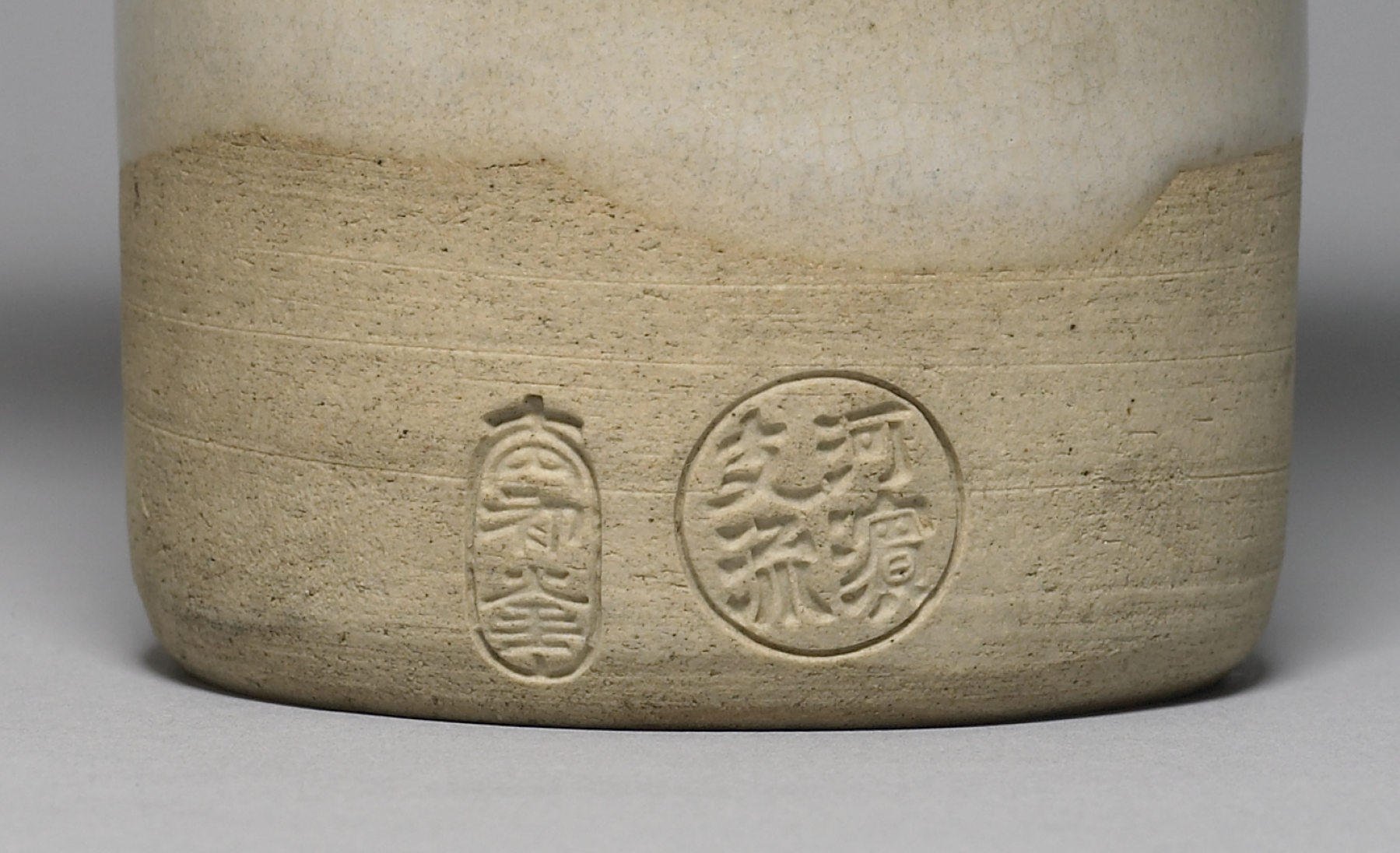
 Pottery, Nara period
 -
 Meissen porcelain, with blue underglaze decoration on porcelain
 -
 Mug with blue underglaze decoration on porcelain.
 -
 Coloured lead glazes majolica circa 1870
 -
 Test slabs of different glazes
 -
 Tin-glazed majolica decorated with metallic oxide colours, Mintons, circa 1870.
 -
 20th century glazing technique


See also
[edit]References
[edit]- ^ Division, Company Statistics. "Statistics of U.S. Businesses Main Page". www.census.gov. Archived from the original on 26 November 2015. Retrieved 27 November 2015.
- ^ C D Fortnum, 1875, Maiolica, Chapter II on Enamelled or Stanniferous Glazed Wares "It was found that by the addition of a certain portion of the oxide of tin to the composition of glass and oxide of lead the character of the glaze entirely alters. Instead of being translucent it becomes, on fusion, an opaque and beautifully white enamel..."
- ^ Paul T. Craddock (2009). Scientific Investigation of Copies, Fakes and Forgeries. Routledge. p. 207. ISBN 978-0-7506-4205-7.
Pottery only began to be glazed from the mid second millennium BC, coincident with the first production of glass.
- ^ Daiheng, Gao (2002). Chinese Architecture – The Lia, Song, Xi Xia and Jin Dynasties (English ed.). Yale University Press. pp. 166, 183. ISBN 978-0-300-09559-3.
- ^ Zhiyan, Li (2002). Chinese Ceramics -- From the Paleolithic Period through the Qing Dynasty (English ed.). New York & London, Beijing: Yale University Press, Foreign Languages Press. pp. 144, 145, 152. ISBN 978-0-300-11278-8.
- ^ Mason (1995), p. 5
- ^ a b Madan, Gaurav (2005). S.Chands Success Guide (Q&A) Inorganic Chemistry. S. Chand Publishing. ISBN 9788121918572.
- ^ "Oxide Painting". Glendale Community College. Retrieved 9 November 2024.
- ^ Dictionary Of Ceramics. Arthur Dodd & David Murfin. 3rd edition. The Institute Of Minerals. 1994.
- ^ "Cleaning Biscuit Fired Ceramic Ware" Hulse D.K, Barnett W.C. UK Pat.Appl.GB2287643A
- ^ a b Denio, Allen A. (1 April 1980). "Chemistry for potters". Journal of Chemical Education. 57 (4): 272. Bibcode:1980JChEd..57..272D. doi:10.1021/ed057p272.
- ^ "Roller Kilns For The Fast Biscuit And Glost Firing Of Porcelain" Rodriguez Mamolar M.J., De La Fuente Revuelta J. Ceram. Inf.(Spain) 20, No.202. 1994. Pg. 25–27
- ^ 'Ceramics Glaze Technology.' J.R.Taylor & A.C.Bull. The Institute Of Ceramics & Pergamon Press. Oxford. 1986
- ^ a b c Omolaoye, J.A,, A. Uzairu, and C.E. Gimba. "Heavy Metal Assessment of Some Ceramic Products Imported into Nigeria from China." Archives of Applied Science Research 2.5 (2010): 120-25. Web. 15 October 2015
- ^ a b Baltrusaitis, Jonas; Chen, Haihan; Rubasinghege, Gayan; Grassian, Vicki H. (4 December 2012). "Heterogeneous Atmospheric Chemistry of Lead Oxide Particles with Nitrogen Dioxide Increases Lead Solubility: Environmental and Health Implications". Environmental Science & Technology. 46 (23): 12806–12813. Bibcode:2012EnST...4612806B. doi:10.1021/es3019572. ISSN 0013-936X. PMC 3518381. PMID 23057678.
- ^ Lehman, Richard. Lead Glazes for Ceramic Foodware. 1st ed. Research Triangle Park: International Lead Management Center, 2002. International Lead Management Center Archived 27 January 2018 at the Wayback Machine
- ^ Pan, De'an (20 February 2018). "Characteristics and properties of glass-ceramics using lead fuming slag". Journal of Cleaner Production. 175: 251–256. Bibcode:2018JCPro.175..251P. doi:10.1016/j.jclepro.2017.12.030 – via Elsevier Science Direct.
- ^ "ATSDR - Public Health Statement: Barium". www.atsdr.cdc.gov. Retrieved 28 April 2020.
- ^ a b PubChem. "Barium carbonate". pubchem.ncbi.nlm.nih.gov. Retrieved 28 April 2020.
- ^ a b Semler, Daniel (17 November 2009). "Leaving Bariumville: Replacing Barium Carbonate in Cone 10 Glazes". Ceramic Arts Daily. Retrieved 27 April 2020.
- ^ PubChem. "Strontium carbonate". pubchem.ncbi.nlm.nih.gov. Retrieved 7 May 2020.
- ^ Hansen, Tony. "Barium in Materials and Fired Glazes (hazard)". digitalfire.com. Retrieved 7 May 2020.
- ^ a b c Verbinnen, Bram; Billen, Pieter; Van Coninckxloo, Michiel; Vandecasteele, Carlo (4 June 2013). "Heating Temperature Dependence of Cr(III) Oxidation in the Presence of Alkali and Alkaline Earth Salts and Subsequent Cr(VI) Leaching Behavior". Environmental Science & Technology. 47 (11): 5858–5863. Bibcode:2013EnST...47.5858V. doi:10.1021/es4001455. ISSN 0013-936X. PMID 23635007.
- ^ a b Oliveira, Helena (20 May 2012). "Chromium as an Environmental Pollutant: Insights on Induced Plant Toxicity". Journal of Botany. 2012: 1–8. doi:10.1155/2012/375843.
- ^ Örtel, Stefan. Uran in der Keramik. Geschichte - Technik - Hersteller
- ^ Uranium tile
Bibliography
[edit]
- Hamer, Frank; Hamer, Janet (1991). The Potter's Dictionary of Materials and Techniques (Third ed.). London, England: A & C Black Publishers, Limited. ISBN 0-8122-3112-0.
| International | |
|---|---|
| National | |
| Other | |

Ceramic glaze
View on GrokipediaHistorical Development
Origins in Ancient Civilizations
The earliest evidence of glazed clay pottery emerges in Mesopotamia around 3000 BCE, where potters applied primitive alkaline glazes formulated with fluxes from plant ash or natron to low-fired earthenware bodies. These glazes, fired at temperatures below 1000°C, produced thin, often uneven vitreous coatings that sealed the porous clay, improving water resistance and allowing decorative coloration through copper oxide for green or turquoise hues. Artifacts from Sumerian sites, such as vessels and tiles, demonstrate this technique's initial use for both functional and ornamental purposes, marking a causal advancement from unglazed pottery slips toward true vitrification driven by empirical trial in flux-clay interactions.[9][12] In ancient Egypt, glazing on true clay pottery followed Mesopotamian precedents but built upon the earlier, distinct faience tradition dating to circa 4000 BCE in the Predynastic period. Faience, composed of quartz-frit bodies rather than clay, utilized self-glazing or applied alkaline-silica mixtures with soda fluxes to yield opaque, brilliant blue-green surfaces symbolizing rebirth; this process involved efflorescence or cementation methods, where soluble salts migrated to the surface during drying and firing. True glazed Egyptian pottery, appearing by the Middle Kingdom (circa 2000 BCE), adapted similar fluxes but on Nile silt clays, evidencing technological transfer from faience experimentation, though Egyptian sources emphasize faience's prevalence due to its lower clay purity requirements.[10] Parallel developments occurred in China during the Shang Dynasty (circa 1600–1046 BCE), with proto-porcelain stoneware featuring high-fired lime-alkaline glazes on kaolin-rich bodies, matured at over 1200°C for translucent effects. Archaeological finds from Yinxu sites reveal uneven, droplet-like glaze layers from wood-ash fluxes, indicating independent innovation rooted in high-temperature kiln capabilities rather than diffusion from the Near East. These regional origins highlight glazing's empirical evolution: flux discovery enabling melt-flow over clay matrices, constrained by local mineral availability and firing control, without reliance on later metallic oxides.[13][14]Key Advancements in Asia, Mesopotamia, and Europe
In ancient Mesopotamia, glazed ceramics emerged around 3000 BCE, with early examples featuring alkaline-based fluxes such as natron or plant ash applied to low-fired earthenware bodies, creating a vitreous, protective coating when fired at approximately 1000°C.[9] These glazes, often colored with copper or other metallic oxides, were used on small vessels and tiles, representing the region's initial mastery of vitrification techniques for both functionality and decoration, as evidenced by artifacts from sites like Tell Asmar.[12] By the mid-second millennium BCE, advancements included more consistent application methods and experimentation with fritted materials, laying foundational techniques that influenced subsequent Near Eastern traditions, though tin-opacification appeared later and is debated in origin relative to Mesopotamian contexts.[15][16] In East Asia, China pioneered high-temperature glaze formulations compatible with stoneware bodies during the Eastern Zhou period (771–256 BCE), utilizing wood ash and feldspar fluxes to achieve durable, semi-vitreous surfaces fired in dragon kilns exceeding 1200°C.[17] Key advancements culminated in the Song dynasty (960–1279 CE), where celadon glazes—iron-rich compositions yielding jade-like green hues through reduction atmospheres—were refined at sites like Longquan, enabling translucent effects and crackle patterns that prioritized aesthetic subtlety over opacity.[18] Korean potters in the Goryeo dynasty (918–1392 CE) adapted these, developing celadon with inlaid sanggam techniques under matte glazes for intricate designs, while Japan's Nara period (710–794 CE) saw initial ash-based glazes on imported continental wares, evolving into natively formulated temmoku glazes by the 12th century for tea ceramics.[19][20] European glaze development accelerated in the medieval era with widespread lead flux usage on red earthenware, as seen in 14th–17th century northern Italian and French pots, where the addition of 20–30% lead oxide produced glossy finishes but introduced variable solubility risks confirmed by modern chemical analyses.[21] The 13th-century transmission of tin-opacified glazes from Islamic Mediterranean traditions via Hispano-Moresque wares enabled maiolica production in Italy, featuring a white opaque tin-lead layer (typically 5–10% tin oxide) that supported overglaze painting and second firings at 900–1000°C for vibrant metallic oxide colors.[22] Post-medieval innovations included the 18th-century adaptation of feldspathic glazes for hard-paste porcelain at Meissen, Germany, firing at 1300–1400°C to mimic Chinese translucency without lead, marking a shift toward high-alumina formulations for industrial scalability.[23]Industrial and Technological Evolution
The Industrial Revolution, commencing in Britain around 1760, marked a pivotal shift in ceramic production by introducing steam-powered machinery for grinding and mixing glaze ingredients, enabling the consistent formulation and large-scale application of glazes on pottery, tiles, and tableware.[9] This mechanization replaced labor-intensive manual processes, allowing factories such as those operated by Josiah Wedgwood to standardize glossy lead-based glazes for durable, mass-produced earthenware exported globally by the early 19th century.[9] In the mid-19th century, advancements in glaze chemistry facilitated vibrant, multi-layered effects, exemplified by Minton's development of lead-glazed majolica around 1860–1870, which employed opaque, colored slips under transparent overglazes fired at lower temperatures for decorative sanitary ware and architectural tiles.[24] Concurrently, the adoption of transfer printing and early decal techniques enhanced glaze decoration efficiency, reducing hand-painting labor in industrial settings.[25] The early 20th century saw the proliferation of fritted glazes, where pre-melted glassy frits—initially rooted in medieval Islamic techniques—were industrialized to incorporate fluxes like borates and avoid solubility issues in raw glazes, supporting higher-volume production with improved safety and uniformity.[24] Firing technologies evolved with gas and electric kilns, enabling precise temperature control and the introduction of roller hearth kilns by the mid-20th century, which reduced cycle times to under 30 minutes for tiles and prompted glaze reformulations with 40–50% frit content to ensure bubble-free maturity during rapid heating.[24] Post-1970s regulatory pressures, including U.S. FDA restrictions on lead for food-contact surfaces, accelerated the transition to lead-free glazes relying on frits, zinc, and calcium borosilicates, often comprising 90–95% frit in fully fritted systems for tableware and sanitaryware.[24] Application methods automated further, with spray glazing—via airless pumps and bell waterfalls for tiles—and robotic sprayers for sanitaryware ensuring even coverage on complex shapes, minimizing defects in high-throughput lines.[24] Single-firing processes, combining bisque and glaze stages, became standard in dinnerware by the late 20th century, cutting energy use and enhancing productivity.[24] In contemporary industrial practice, computer-aided formulation and testing, including thermal analysis for predicting glaze behavior, optimize recipes for segments like fast-fire tiles (requiring late-melting profiles) and engobe-undercoated sanitaryware, while restrictions on materials like crystalline silica drive further frit reliance and eco-friendly alternatives.[24] Automation extends to full-line integration, with sensors and AI-guided systems monitoring glaze viscosity and application thickness, as implemented in European tile factories since the 1990s, yielding defect rates below 1% in output exceeding millions of square meters annually.[26]Chemical Composition
Core Components: Silica, Alumina, and Fluxes
Ceramic glazes are primarily composed of silica (SiO₂), alumina (Al₂O₃), and fluxes, which together form a molten glass upon firing that adheres to and vitrifies the ceramic body.[5] Silica serves as the primary glass former, creating the structural network of the glaze by linking into a tetrahedral silicate matrix that provides durability and transparency when fused.[27] Its high melting point, typically above 1700°C in pure form, necessitates fluxes to achieve practical firing temperatures in ceramic processes.[28] Alumina acts as a refractory stabilizer, increasing the viscosity of the molten glaze to prevent excessive flow and runoff, while enhancing mechanical strength and craze resistance by matching the thermal expansion of the underlying clay body.[29] In formulation, alumina modifies surface texture—higher silica-to-alumina ratios (e.g., 1:8) promote glossiness, whereas lower ratios (e.g., 1:5) yield matte finishes—due to its role in inhibiting crystallization and stiffening the melt.[30] Typical durable glazes maintain alumina levels yielding molecular ratios of 0.25–0.5 relative to silica, balancing fluidity with adherence.[31] Fluxes, including alkali metal oxides (e.g., Na₂O, K₂O from feldspars or frits), alkaline earth oxides (e.g., CaO, MgO), and boron compounds (e.g., from borax or Gerstley borate), lower the fusion temperature of silica by disrupting its silicate bonds, enabling glaze maturation at 800–1300°C depending on the flux type and concentration.[11] Alkaline fluxes like sodium carbonate promote early melting but can increase solubility if overused, while boron fluxes offer thermal stability and are common in low-fire formulations for their volatility control.[32] The balance of fluxes to silica and alumina is critical; excessive fluxing leads to devitrification or leaching, whereas insufficient amounts result in underfired, powdery surfaces.[33]Colorants, Opacifiers, and Modifiers
Colorants in ceramic glazes are predominantly transition metal oxides that impart hue through electron transitions or crystal field effects within the glassy matrix during firing, with outcomes dependent on firing atmosphere, temperature, and interactions with base oxides. Iron oxide (Fe₂O₃), the most prevalent colorant, yields reds, browns, or blacks at concentrations of 1-10%, shifting to greens in reduction firings due to partial conversion to ferrous iron.[34] Cobalt oxide (CoO) produces stable blues at 0.5-2%, prized for intensity even in low amounts.[35] Copper oxide (CuO) generates greens or turquoises at 1-4%, though it risks volatile copper blooms in high-fire reduction.[6] Chromium oxide (Cr₂O₃) delivers olive or pinkish greens at 0.5-3%, often combined with tin for stable pinks.[36] Manganese dioxide (MnO₂) contributes violets or browns at 1-5%, while nickel oxide (NiO) yields grays or avocados at similar levels. These raw oxides can flux or stiffen the melt, necessitating recipe adjustments to maintain glaze fit.[34] Ceramic stains, manufactured by calcining metal oxides with fluxes and encapsulants, offer reproducible colors resistant to leaching or firing variations, typically added at 3-10% for hues like vibrant yellows from vanadium or stable reds from encapsulated iron-chrome.[37] Unlike raw oxides, stains minimize solubility issues in lead-free or food-safe glazes.[35] Opacifiers induce opacity by refracting or scattering light via dispersed particles or induced crystallization, converting transparent glazes to white or colored hides at 4-15% addition. Tin oxide (SnO₂), effective across cone 06-10, scatters light through its high refractive index (1.99) and forms stannic particles, historically key in maiolica since the 14th century but limited by cost exceeding $50/kg.[38][39] Zirconium silicate (ZrSiO₄, as Zircopax), cheaper at under $10/kg, opacifies via dissociated zircon crystals (refractive index 1.92-2.01), suitable for both low- and high-fire but less effective below cone 04 without fluxes.[40][41] Titanium dioxide (TiO₂, rutile or anatase) provides partial opacity at 5-12%, often synergizing with zircon for cost savings, though it can promote crystallization mottling.[41] Antimony oxide (Sb₂O₃) was once used but declined due to toxicity and volatility. Opacifiers increase required colorant doses by blocking light transmission, raising formulation costs.[42] Modifiers adjust glaze rheology, surface texture, or crystallization without dominating color or opacity, typically at 1-8%. Zinc oxide (ZnO) fosters matte finishes or zinc silicate crystals in boric or high-silica glazes, enhancing opacity in combination but risking crawling if overused.[6] Titanium dioxide mattifies glossy bases by elevating viscosity or inducing micro-crystals, while also stabilizing certain colors.[41] Lithium carbonate (Li₂CO₃) lowers melt viscosity for smoother flows at 1-3%, aiding high-alumina recipes but increasing thermal expansion risks.[43] Bone ash (Ca₅(PO₄)₃(OH,F)) introduces phosphate for soft, matte whites in bone china, modifying flux balance.[6] These interact causally with core components—e.g., excess alumina from kaolin additions mattifies via network stiffening—demanding empirical testing for durability and fit.[43]| Common Colorants | Oxide Formula | Typical Concentration (%) | Primary Colors Produced |
|---|---|---|---|
| Iron oxide | Fe₂O₃ | 1-10 | Red, brown, black, green (reduction) |
| Cobalt oxide | CoO | 0.5-2 | Blue |
| Copper oxide | CuO | 1-4 | Green, turquoise |
| Chromium oxide | Cr₂O₃ | 0.5-3 | Green, pink (with tin) |
| Common Opacifiers | Material | Typical Concentration (%) | Refractive Index | Notes |
|---|---|---|---|---|
| Tin oxide | SnO₂ | 4-10 | 1.99 | High efficacy, expensive |
| Zirconium silicate | ZrSiO₄ | 5-15 | 1.92-2.01 | Cost-effective, crystal-based |
| Titanium dioxide | TiO₂ | 5-12 | 2.5-2.7 | Partial, synergistic |