Hubbry Logo
DPSIRDPSIRMain
Open search
DPSIR
Community hub
DPSIR
logo
8 pages, 0 posts
0 subscribers
Be the first to start a discussion here.
DPSIR
DPSIR
from Wikipedia

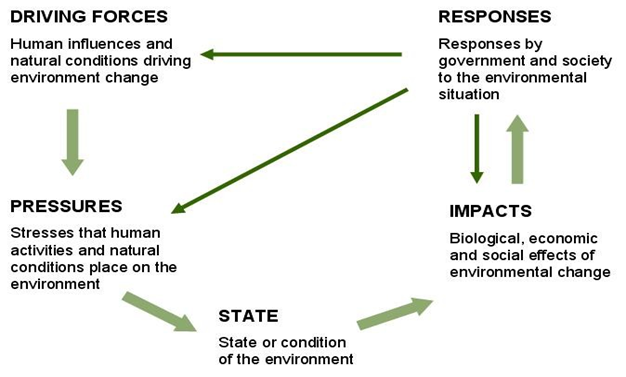
DPSIR (drivers, pressures, state, impact, and response model of intervention) is a causal framework used to describe the interactions between society and the environment.[1] It seeks to analyze and assess environmental problems by bringing together various scientific disciplines, environmental managers, and stakeholders, and solve them by incorporating sustainable development. First, the indicators are categorized into "drivers" which put "pressures" in the "state" of the system, which in turn results in certain "impacts" that will lead to various "responses" to maintain or recover the system under consideration.[2] It is followed by the organization of available data, and suggestion of procedures to collect missing data for future analysis.[3] Since its formulation in the late 1990s, it has been widely adopted by international organizations for ecosystem-based study in various fields like biodiversity, soil erosion, and groundwater depletion and contamination. In recent times, the framework has been used in combination with other analytical methods and models, to compensate for its shortcomings. It is employed to evaluate environmental changes in ecosystems, identify the social and economic pressures on a system, predict potential challenges and improve management practices.[4] The flexibility and general applicability of the framework make it a resilient tool that can be applied in social, economic, and institutional domains as well.[3]

The Driver-Pressure-State-Impact-Response Framework

History

[edit]

The Driver-Pressure-State-Impact-Response framework was developed by the European Environment Agency (EEA) in 1999. It was built upon several existing environmental reporting frameworks, like the Pressure-State-Response (PSR) framework developed by the Organization for Economic Co-operation and Development (OECD) in 1993, which itself was an extension of Rapport and Friend's Stress-Response (SR) framework (1979). The PSR framework simplified environmental problems and solutions into variables that stress the cause-effect relationship between human activities that exert pressure on the environment, the state of the environment, and society's response to the condition. Since it focused on anthropocentric pressures and responses, it did not effectively factor natural variability into the pressure category. This led to the development of the expanded Driving Force-State-Response (DSR) framework, by the United Nations Commission on Sustainable Development (CSD) in 1997. A primary modification was the expansion of the concept of "pressure" to include social, political, economic, demographic, and natural system pressures. However, by replacing "pressure" with "driving force", the model failed to account for the underlying reasons for the pressure, much like its antecedent. It also did not address the motivations behind responses to changes in the state of the environment. The refined DPSIR model sought to address these shortcomings of its predecessors by addressing root causes of the human activities that impact the environment, by incorporating natural variability as a pressure on the current state and addressing responses to the impact of changes in state on human well-being. Unlike PSR and DSR, DPSIR is not a model, but a means of classifying and disseminating information related to environmental challenges.[5] Since its conception, it has evolved into modified frameworks like Driver-Pressure-Chemical State-Ecological State-Response (DPCER),[6] Driver-Pressure-State-Welfare-Response (DPSWR),[7] and Driver-Pressure-State-Ecosystem-Response (DPSER).[8][9]

The DPSIR Framework

[edit]

Driver (Driving Force)

[edit]

Driver refers to the social, demographic, and economic developments which influence the human activities that have a direct impact on the environment.[3] They can further be subdivided into primary and secondary driving forces. Primary driving forces refer to technological and societal actors that motivate human activities like population growth and distribution of wealth. The developments induced by these drivers give rise to secondary driving forces, which are human activities triggering "pressures" and "impacts", like land-use changes, urban expansion and industrial developments. Drivers can also be identified as underlying or immediate, physical or socio-economic, and natural or anthropogenic, based on the scope and sector in which they are being used.[1]

Pressure

[edit]

Pressure represents the consequence of the driving force, which in turn affects the state of the environment. They are usually depicted as unwanted and negative, based on the concept that any change in the environment caused by human activities is damaging and degrading.[3] Pressures can have effects on the short run (e.g.: deforestation), or the long run (e.g.: climate change), which if known with sufficient certainty, can be expressed as a probability. They can be both human-induced, like emissions, fuel extraction, and solid waste generation, and natural processes, like solar radiation and volcanic eruptions.[1] Pressures can also be sub-categorized as endogenic managed pressures, when they stem from within the system and can be controlled (e.g.: land claim, power generation), and as exogenic unmanaged pressures, when they stem from outside the system and cannot be controlled (e.g.: climate change, geomorphic activities).[9]

State

[edit]

State describes the physical, chemical and biological condition of the environment or observable temporal changes in the system. It may refer to natural systems (e.g.: atmospheric CO2 concentrations, temperature), socio-economic systems (e.g.: living conditions of humans, economic situations of an industry), or a combination of both (e.g.: number of tourists, size of current population).[3] It includes a wide range of features, like physico-chemical characteristics of ecosystems, quantity and quality of resources or "carrying capacity", management of fragile species and ecosystems, living conditions for humans, and exposure or the effects of pressures on humans. It is not intended to just be static, but to reflect current trends as well, like increasing eutrophication and change in biodiversity.[9]

Impact

[edit]

Impact refers to how changes in the state of the system affect human well-being. It is often measured in terms of damages to the environment or human health, like migration, poverty, and increased vulnerability to diseases,[3] but can also be identified and quantified without any positive or negative connotation, by simply indicating a change in the environmental parameters.[9] Impact can be ecologic (e.g.: reduction of wetlands, biodiversity loss), socio-economic (e.g.: reduced tourism), or a combination of both.[3] Its definition may vary depending on the discipline and methodology applied. For instance, it refers to the effect on living beings and non-living domains of ecosystems in biosciences (e.g.: modifications in the chemical composition of air or water), whereas it is associated with the effects on human systems related to changes in the environmental functions in socio-economic sciences (e.g.: physical and mental health).[9]

Response

[edit]

Response refers to actions taken to correct the problems of the previous stages, by adjusting the drivers, reducing the pressure on the system, bringing the system back to its initial state, and mitigating the impacts. It can be associated uniquely with policy action, or to different levels of the society, including groups and/or individuals from the private, government or non-governmental sectors. Responses are mostly designed and/or implemented as political actions of protection, mitigation, conservation, or promotion. A mix of effective top-down political action and bottom-up social awareness can also be developed as responses, such as eco-communities or improved waste recycling rates.[9]

Criticisms and Limitations

[edit]

Despite the adaptability of the framework, it has faced several criticisms. One of the main goals of the framework is to provide environmental managers, scientists of various disciplines, and stakeholders with a common forum and language to identify, analyze and assess environmental problems and consequences.[3] However, several notable authors have mentioned that it lacks a well-defined set of categories, which undermines the comparability between studies, even if they are similar.[10] For instance, climate change can be considered as a natural driver, but is primarily caused by greenhouse gases (GSG) produced by human activities, which may be categorized under "pressure".  A wastewater treatment plant is considered a response while dealing with water pollution, but a pressure when effluent runoff leading to eutrophication is taken into account. This ambivalence of variables associated with the framework has been criticized as a lack of good communication between researchers and between stakeholders and policymakers.[11] Another criticism is the misguiding simplicity of the framework, which ignores the complex synergy between the categories. For instance, an impact can be caused by various different state conditions and responses to other impacts, which is not addressed by DPSIR.[1][9] Some authors also argue that the framework is flawed as it does not clearly illustrate the cause-effect linkage for environmental problems.[12] The reasons behind these contextual differences seem to be differences in opinions, characteristics of specific case studies, misunderstanding of the concepts and inadequate knowledge of the system under consideration.[11]

DPSIR was initially proposed as a conceptual framework rather than a practical guidance, by global organizations. This means that at a local level, analyses using the framework can cause some significant problems. DPSIR does not encourage the examination of locally specific attributes for individual decisions, which when aggregated, could have potentially large impacts on sustainability. For instance, a farmer who chooses a particular way of livelihood may not create any consequential alterations on the system, but the aggregation of farmers making similar choices will have a measurable and tangible effect. Any efforts to evaluate sustainability without considering local knowledge could lead to misrepresentations of local situations, misunderstandings of what works in particular areas and even project failure.[11]

While there is no explicit hierarchy of authority in the DPSIR framework, the power difference between "developers" and the "developing" could be perceived as the contributor to the lack of focus on local, informal responses at the scale of drivers and pressures, thus compromising the validity of any analysis conducted using it. The "developers" refer to the Non-Governmental Organizations (NGOs), State mechanisms and other international organizations with the privilege to access various resources and power to use knowledge to change the world, and the "developing" refers to local communities. According to this criticism, the latter is less capable of responding to environmental problems than the former. This undermines valuable indigenous knowledge about various components of the framework in a particular region, since the inclusion of the knowledge is almost exclusively left at the discretion of the "developers".[11]

Another limitation of the framework is the exclusion of social and economic developments on the environment, particularly for future scenarios. Furthermore, DPSIR does not explicitly prioritize responses and fails to determine the effectiveness of each response individually, when working with complex systems. This has been one of the most criticized drawbacks of the framework, since it fails to capture the dynamic nature of real-world problems, which cannot be expressed by simple causal relations.[4]

Applications

[edit]

Despite its criticisms, DPSIR continues to be widely used to frame and assess environmental problems to identify appropriate responses. Its main objective is to support sustainable management of natural resources. DPSIR structures indicators related to the environmental problem addressed with reference to the political objectives and focuses on supposed causal relationships effectively, such that it appeals to policy actors. Some examples include the assessment of the pressure of alien species,[13] evaluation of impacts of developmental activities on the coastal environment and society,[14] identification of economic elements affecting global wildfire activities,[15] and cost-benefit analysis (CBA) and gross domestic product (GDP) correction.[16]  

To compensate for its shortcomings, DPSIR is also used in conjunction with several analytical methods and models. It has been used in conjunction with Multiple-Criteria Decision Making (MCDM) for desertification risk management,[17] with Analytic Hierarchy Process (AHP) to study urban green electricity power,[18] and with Tobit model to assess freshwater ecosystems.[19] The framework itself has also been modified to assess specific systems, like DPSWR, which focuses on the impacts on human welfare alone, by shifting ecological impact to the state category.[10] Another approach is a differential DPSIR (ΔDPSIR), which evaluates the changes in drivers, pressures and state after implementing a management response, making it valuable both as a scientific output and a system management tool.[20] The flexibility offered by the framework makes it an effective tool with numerous applications, provided the system is properly studied and understood by the stakeholders.[9]

References

[edit]
[edit]
Revisions and contributorsEdit on WikipediaRead on Wikipedia
from Grokipedia
The DPSIR framework, denoting Driving forces, Pressures, State, Impacts, and Responses, constitutes a structured causal model in environmental science for dissecting the chain of interactions from human-induced drivers to ecological alterations and subsequent policy interventions. Originating as an extension of the Pressure-State-Response (PSR) paradigm proposed in the late 1970s, it gained prominence through adoption by the Organisation for Economic Co-operation and Development (OECD) and the European Environment Agency (EEA) during the 1990s to organize environmental indicators and facilitate integrated assessments. In this schema, driving forces—such as demographic expansion and industrial expansion—exert pressures like resource extraction and emissions, which modify the environmental state, yielding impacts on ecosystems and human well-being, thereby eliciting responses encompassing mitigation strategies, regulatory frameworks, and adaptive technologies. Widely applied in policy formulation and research, DPSIR aids in pinpointing leverage points for sustainability but has encountered critiques for oversimplifying complex, nonlinear dynamics in socio-ecological systems.

Origins and Evolution

Precursor Frameworks

The Stress-Response (SR) framework emerged in 1979, developed by statisticians Tony Friend and David Rapport at as a foundational approach to environmental . It conceptualized through "stresses"—human-induced alterations to ecosystems—and "responses," encompassing both ecological feedbacks and human interventions like policy measures. This model emphasized between anthropogenic stressors and environmental changes, providing an early structure for tracking in regions like the Laurentian , but it lacked explicit integration of socioeconomic drivers or welfare impacts. Building directly on the SR model, the Pressure-State-Response (PSR) framework was formalized by the in the early 1990s, specifically through its 1993 Core Set of Indicators for Environmental Performance Reviews.179/en/pdf) PSR refined the causal chain by distinguishing "pressures" (direct human activities such as emissions or resource extraction) from the "state" of the environment (measurable conditions like air quality or levels), with "responses" capturing and societal actions to mitigate pressures. Adopted for international environmental reporting, PSR enabled structured indicator sets for performance assessments across OECD member countries, addressing limitations in SR by incorporating quantifiable pressures but still omitting upstream socioeconomic forces and downstream human-centric consequences. These frameworks laid the groundwork for DPSIR by establishing a linear causal for human-environment interactions, influencing subsequent adaptations in global environmental agencies. The transition from SR to PSR highlighted the need for policy-relevant indicators, while both underscored empirical over normative assumptions, prioritizing data on observable pressures and states derived from national statistics and monitoring programs.

Development of DPSIR

The DPSIR framework emerged in the late through the efforts of the (EEA) to enhance environmental reporting and policy analysis across . Building directly on the OECD's Pressure-State-Response (PSR) model, the EEA introduced "Drivers" to capture underlying socio-economic forces initiating environmental changes and "Impacts" to explicitly link environmental degradation to effects on human , ecosystems, and welfare. This expansion aimed to provide a more complete causal chain for structuring indicators and assessing policy effectiveness in reports like the EEA's State of the Environment assessments. The framework was first systematically outlined in the EEA's 1999 technical report, Environmental Indicators: Typology and Overview, which proposed DPSIR as a typology for classifying environmental data to support . This document emphasized DPSIR's role in integrating diverse indicators—ranging from economic drivers like and consumption patterns to responsive measures such as regulations and technological innovations—into a unified analytical structure. The development process involved collaboration among EEA experts, drawing on pilot applications in sectoral reports, such as and environment linkages, to refine the model's applicability for multi-scale environmental problems. Subsequent refinements in the early 2000s focused on operationalizing DPSIR for practical use, including its adaptation for integrated environmental assessments and indicator sets under the European Union's environmental action programs. For instance, the EEA's 2003 report on Europe's environment incorporated DPSIR to evaluate progress toward , highlighting its utility in identifying feedback loops between human activities and ecological states. Despite its institutional origins within the EEA, the framework's development reflected broader international influences, including input from and UNEP indicator systems, though EEA documentation underscores its tailored evolution for European policy contexts.

Key Milestones and Institutional Adoption

The Pressure-State-Response (PSR) model, a precursor to DPSIR, was formalized by the Organisation for Economic Co-operation and Development (OECD) in 1993 to structure environmental reporting by linking human activities to ecological conditions and policy responses. This framework built on earlier stress-response approaches dating to 1979, emphasizing causal chains in environmental degradation. The DPSIR framework emerged in 1999 when the (EEA) expanded PSR by explicitly adding "Drivers" (societal forces like economic activities) and "Impacts" (effects on human welfare and ecosystems), creating a more comprehensive for and indicator development. This adaptation was detailed in EEA's early reporting mechanisms, such as those introduced in Europe's Environment assessments around 1998–1999, where DPSIR criteria guided indicator selection for integrated environmental evaluation. A subsequent milestone occurred in 2012 with the Environment Programme's (UNEP) adoption of DPSIR in its Mediterranean Marine and Coastal Environment report, applying it to regional assessments of and . Institutionally, DPSIR gained traction through the EEA, which integrated it as a core tool for annual environmental signaling and thematic reports starting in the late , influencing EU-wide policy under directives like the . The (EPA) incorporated a PSR/DPSIR variant in 1994 for risk assessments, while UNEP and the EU's marine projects (e.g., DEVOTES and ELME in the ) extended its use to global and , with over 152 peer-reviewed studies and 27 funded projects documenting applications by 2016. This adoption reflects DPSIR's role in bridging science and , though critiques note its linear assumptions limit handling of complex feedbacks in adaptive governance.

Core Components of the Framework

Drivers

In the DPSIR framework, drivers, also termed driving forces, constitute the foundational social, economic, demographic, technological, and cultural processes that propel human activities and generate pressures on environmental systems. These elements initiate the causal chain by reflecting broader societal dynamics, such as the pursuit of or fulfillment of , which indirectly influence natural resources and ecosystems. Drivers are often categorized into primary and secondary types. Primary drivers encompass inherent societal imperatives like the demand for , , , , and accumulation, alongside macro-level factors including expansion and technological progress. Secondary drivers emerge as derivatives, such as heightened requirements for transportation, , or , which stem from primary forces and manifest in specific sectoral activities. For example, in has driven increased rates, with urban rising from 68.6% in 1990 to 75.3% in 2020, amplifying demands. Empirical applications highlight drivers like and lifestyle shifts. In agricultural contexts, rising global , projected to increase by 50% by 2050 due to to 9.7 billion, serves as a key driver leading to intensified farming practices. Similarly, in energy sectors, (GDP) growth correlates with higher consumption; European final use rose alongside GDP expansion post-2008 recovery, underscoring economic drivers' role. These are quantified through indicators such as GDP per capita, which in the averaged €35,000 in 2022, and consumption patterns tracked via material footprint metrics. The analysis of drivers emphasizes their dynamic nature, influenced by , , and global events. For instance, technological advancements in have begun mitigating traditional dependency drivers, though challenges persist from emerging economies' industrialization. This component's focus on root causes enables targeted responses, distinguishing transient pressures from enduring systemic forces.

Pressures

Pressures in the DPSIR framework denote the direct biophysical stresses imposed on environmental systems by human activities, serving as the intermediary link between broader driving forces—such as economic sectors or consumption patterns—and observable changes in environmental conditions. These pressures manifest as tangible outputs from societal actions, including emissions, , and physical alterations to ecosystems, which collectively strain natural capacities without immediate feedback loops to drivers. The concept originated in adaptations of earlier models by organizations like the and was formalized by the (EEA) in the mid-1990s to facilitate structured environmental assessments. Common categories of pressures include atmospheric, aquatic, and terrestrial stressors. Atmospheric pressures encompass (e.g., 36.8 billion metric tons of CO2-equivalent globally in 2022 from combustion and industrial processes) and air pollutants like oxides from transportation. Aquatic pressures involve loading from , with Europe's rivers receiving over 1.5 million tons of annually via runoff, alongside discharges contributing to . Terrestrial pressures feature land conversion for and urban expansion, which fragmented 75% of global temperate forests by , alongside resource extraction such as 92 billion tons of , , and metal ores harvested worldwide in 2017. Indicators for monitoring pressures emphasize measurable proxies to quantify these stresses, enabling causal tracing to drivers. Examples include metrics (e.g., kilograms of oil equivalent per unit of GDP), generation rates (e.g., 2.01 billion tons of globally in 2016), and fishery extraction volumes (e.g., 96 million tons of wild-caught annually as of recent FAO data). These indicators, often derived from national statistics and satellite monitoring, highlight pressures' scalability across local to global levels, though data gaps persist in underreported sectors like informal . The EEA's typology classifies pressure indicators as those capturing "emissions, , and use," underscoring their role in predicting state degradation without conflating them with socioeconomic drivers.

State

The State component of the DPSIR framework refers to the observable condition of the environment, capturing its physical, chemical, biological, and sometimes socio-economic attributes as altered by human-induced pressures. This stage quantifies how environmental systems have changed, providing a baseline for evaluating degradation or improvement through measurable indicators such as concentrations, extent, populations, and functionality. State indicators serve as diagnostic tools to link pressures to tangible environmental outcomes, often derived from empirical monitoring to assess compliance with regulatory thresholds. For instance, in aquatic ecosystems, state is commonly measured by parameters like dissolved oxygen levels (typically below 5 mg/L indicating hypoxia), nutrient concentrations (e.g., exceeding 50 mg/L in ), and biological metrics such as the Ecological Quality Ratio under the EU Water Framework Directive, which scored only 40% of European surface waters as achieving good status in 2018 assessments. In terrestrial contexts, state encompasses soil organic carbon content (global averages declining by 0.6% annually in croplands from 1960-2010) and vegetation cover indices from like NDVI, reflecting pressures from conversion. The measurement of state relies on standardized protocols to ensure comparability, such as those from the European Environment Agency's indicator database, which tracks air quality via annual mean PM2.5 concentrations (EU average 12.7 μg/m³ in 2022, exceeding WHO guidelines of 5 μg/m³). Challenges in state assessment include gaps in under-monitored regions and the lag between pressures and detectable changes, necessitating long-term series for ; for example, state, measured by pH declines of 0.1 units since pre-industrial times, stems from cumulative CO2 absorption but requires decadal observations for precision. These indicators inform whether environmental states cross tipping points, such as rates exceeding natural background by 100-1000 times in recent decades per IPBES assessments integrated into DPSIR analyses.

Impacts

In the DPSIR framework, impacts represent the direct and indirect consequences of alterations in the environmental state on human , ecosystems, , welfare, and economic productivity. These effects arise from the degradation or transformation of environmental conditions driven by upstream pressures, such as pollution-induced respiratory illnesses from elevated particulate matter levels or leading to species declines. For instance, in assessments of air quality, impacts include an estimated 400,000 premature deaths annually in attributable to fine particulate matter exposure exceeding WHO guidelines, as quantified through exposure-response functions in epidemiological studies. Impacts are typically evaluated using indicators that capture both biophysical and socioeconomic dimensions, such as disability-adjusted life years (DALYs) lost due to environmental hazards or monetary valuations of losses from decline. In marine contexts, state changes like from CO2 absorption result in impacts including reduced rates, which disrupt fisheries yielding economic losses exceeding €1 billion yearly in affected regions, based on bioeconomic models integrating data and market values. Similarly, land-use pressures altering state can manifest as impacts on agricultural yields, with reducing global crop productivity by up to 0.3% annually, compounded by nutrient depletion effects documented in long-term field trials. Quantifying impacts requires causal attribution, often challenged by confounding factors like synergistic stressors, yet frameworks employ integrated modeling to link state metrics (e.g., indices) to endpoint outcomes, such as eutrophication-driven algal blooms correlating with events and revenue drops of 20-50% in coastal areas. Peer-reviewed applications highlight human-centered impacts, including disruptions from resource scarcity, where, for example, degradation has led to heightened vulnerability for 15 million coastal dwellers through lost storm protection services valued at $500-1,000 per annually. Ecosystem-focused impacts emphasize functional losses, like diminished services from declines, reducing fruit set by 3-5% in crops and incurring global costs of $235-577 billion yearly, derived from yield gap analyses. The framework underscores that impacts are not merely endpoints but feedback triggers for responses, with from case studies showing delayed realizations, such as climate-induced state shifts manifesting in impacts decades after initial pressures, necessitating time-lagged indicators for accurate assessment. In river basin evaluations, impacts from hydrological alterations include reduced water availability affecting 2.4 billion people globally, with socioeconomic costs including GDP losses of 0.5-1% in water-stressed economies, supported by integrated hydrological-economic simulations. Overall, impacts in DPSIR facilitate prioritization of interventions by revealing the human and ecological toll of unmitigated state changes, grounded in verifiable indicator sets from agencies like the EEA.

Responses

In the DPSIR framework, responses denote the deliberate actions, policies, and societal measures implemented to counteract , targeting upstream elements like drivers or pressures, or downstream aspects such as state changes and impacts. These interventions form a feedback mechanism, enabling policymakers to adapt strategies based on observed outcomes, with the goal of restoring or enhancing . Developed as part of the European Environment Agency's (EEA) approach, responses emphasize proactive , including regulatory enforcement, economic incentives, and technological innovations. Responses can be categorized into institutional, technical, and behavioral types. Institutional responses involve legal and policy frameworks, such as emission standards under the European Union's (2000/60/EC), which mandate member states to achieve good ecological status in water bodies by reducing pollution pressures. Technical responses encompass innovations like upgrades or adoption to alleviate resource depletion. Behavioral responses promote shifts in consumption patterns, often through public education or market-based tools like carbon pricing, as seen in the EU Emissions Trading System established in 2005, which has reduced greenhouse gas emissions by incentivizing lower-carbon production. The effectiveness of responses is evaluated via dedicated indicators, which track and outcomes rather than mere intent. EEA response indicators include metrics on adoption rates, such as the proportion of industrial facilities complying with integrated pollution prevention and control directives, or levels in sustainable , reported annually since the framework's formalization in 1999. These indicators facilitate iterative assessment, revealing gaps like delayed response to emerging pressures from , where only 25% of urban areas met air quality standards in 2022 despite targeted measures. from applications, such as river basin management under the DPSIR model, shows that combined responses—e.g., regulatory caps and restoration projects—have improved states in 40% of monitored European catchments since 2010. Challenges in response formulation arise from causal complexities, where single interventions may insufficiently address interconnected drivers; for instance, agricultural subsidy reforms in the EU's (updated 2023) aim to curb fertilizer pressures but require complementary monitoring to avoid unintended impacts on . Nonetheless, the framework's strength lies in its promotion of evidence-based responses, prioritizing those with verifiable causal links to improved states, as demonstrated in EEA assessments linking policy responses to a 15% decline in impacts across from 1990 to 2020.

Extensions and Comparative Analysis

Temporal and Modified Versions

In 2022, researchers proposed the temporal DPSIR (tDPSIR) framework as an adaptation of the original model to explicitly account for time-dependent dynamics, including lags between stages such as the delay from pressures to state changes or from responses to mitigated impacts. This modification addresses the static limitations of standard DPSIR by incorporating interval durations and simplified time-dependent modeling, enabling quantification of temporal mismatches in environmental processes, such as prolonged accumulation of pollutants before impacts manifest. For example, tDPSIR was applied to analyze from polyethylene terephthalate (PET) bottles, revealing governance lags of years between waste generation (drivers/pressures) and effective cleanup responses, which informed recommendations for databases tracking time delays in policy implementation. Other temporal extensions emphasize dynamic evolution in DPSIR applications, integrating time-series data to evaluate changing ecological security patterns. In assessments of regional sustainability, such as in China's Province from 2005 to 2019, DPSIR models incorporated temporal indicators to track shifts in urban states and impacts, highlighting accelerating pressures from economic drivers over decades. Similarly, spatial-temporal DPSIR variants have modeled coordinated development dynamics, using subsystem interactions to predict future states based on historical trends, as in ecological studies from 2005 to 2018, where response efficacy was found to lag state degradation by 5–10 years on average. Modified versions beyond temporal focus include the DPSWR framework (Drivers-Pressures-State-Welfare-Responses), introduced in 2013 to replace impacts with welfare metrics for clearer linkage to human well-being outcomes in socio-ecological accounting. This adaptation improves indicator alignment by emphasizing welfare changes over vague impact definitions, facilitating integrated assessments of environmental pressures on social systems. Additional variants extend DPSIR with iterative loops and uncertainty elements for policy design, incorporating risk assessments to handle non-linear feedbacks, as proposed in 2022 analyses of sustainable development where traditional linear causality was deemed insufficient for adaptive management. These modifications, while enhancing flexibility, require empirical validation of added parameters to avoid overcomplication, with applications showing improved problem-structuring in coastal and urban contexts from 2015 onward.

Comparisons with PSR and DSR Frameworks

The Pressure-State-Response (PSR) framework, developed by the in the early 1990s, structures environmental analysis around human-induced pressures—such as emissions or resource extraction—that alter the state of environmental systems, prompting policy or societal responses aimed at mitigation. This model emphasizes from direct anthropogenic stresses to observable environmental conditions and reactive measures, but it conflates underlying socio-economic drivers with immediate pressures, limiting its ability to trace root causes. The Driver-State-Response (DSR) framework, advanced by the United Nations Commission on (CSD) in the mid-1990s, modifies PSR by prioritizing "driving forces"—broad socio-economic factors like , economic activity, or —as the initiators of environmental state alterations, followed by responses. Unlike PSR, DSR distinguishes ultimate drivers from their effects on state, enhancing focus on preventive interventions, yet it omits explicit links to ecological or human impacts, potentially underrepresenting consequences beyond state changes. In contrast, the DPSIR framework, formalized by the (EEA) in 1999, builds on both PSR and DSR by inserting "pressures" (specific outputs like or habitat loss) between drivers and state, and adding "impacts" (effects on , , or welfare) between state and responses, forming a fuller causal chain with feedback loops. This structure addresses PSR's merger of drivers and pressures by separating root socio-economic forces from proximate stressors, while extending DSR's driver focus with impacts to better illuminate human-environment interdependencies and inform targeted policies. DPSIR's inclusion of impacts facilitates evaluation of state changes' real-world ramifications, which PSR and DSR largely imply but do not isolate, making it more adaptive for complex, dynamic systems like policy or .
FrameworkKey ComponentsPrimary StrengthsLimitations Relative to DPSIR
PSRPressures → State → ResponsesSimple causality for indicator development; links direct human actions to needs.Lacks distinction between root drivers and pressures; no explicit impacts, reducing feedback clarity.
DSRDrivers → State → ResponsesEmphasizes socio-economic origins over mere pressures; aids reporting.Omits pressures as intermediaries and impacts, potentially overlooking intermediate mechanisms and outcomes.
DPSIRDrivers → Pressures → State → Impacts → ResponsesComprehensive causal mapping with feedbacks; better for interdisciplinary .More complex, requiring detailed data across chains, which can challenge application in data-scarce contexts.
Empirical applications demonstrate DPSIR's superiority in handling multifaceted issues; for instance, in assessments, it reveals how drivers like generate s leading to state degradation and impacts, enabling responses beyond DSR's state-centric view or PSR's focus. However, all frameworks share challenges in quantifying feedbacks, with DPSIR's added layers demanding robust to avoid oversimplification.

Empirical Applications and Evidence

Policy and Assessment Uses

The DPSIR framework facilitates environmental policy development by structuring causal chains from human drivers to environmental impacts, enabling policymakers to identify targeted interventions at pressure or state levels. Adopted by the (EEA) since the mid-1990s, it underpins indicator sets for assessing policy effectiveness, such as tracking reductions in pressures like nutrient emissions under the EU Water Framework Directive. In integrated environmental assessments, DPSIR supports the synthesis of data across sectors, as seen in EEA's Transport and Environment Reporting Mechanism (TERM), which uses the framework to link transport-related drivers (e.g., vehicle kilometers traveled, up 25% in the from 1990 to 2020) to air quality states and health impacts, informing responsive measures like emission standards. This approach aids policy evaluation by modeling potential response outcomes, such as scenario analyses projecting mitigation through land-use regulations. For broader policy cycles, DPSIR integrates with tools like the OECD's policy assessment methodologies, emphasizing feedback loops where responses (e.g., subsidies for ) are monitored for their influence on upstream drivers like farming intensification, which contributed to a 20% rise in EU agricultural pressures from 2000 to 2018. Empirical applications reveal its utility in marine policy, where it operationalizes ecosystem-based by quantifying pressures like effort (e.g., over 30% of stocks overfished in ) to justify spatial closures. Critically, while DPSIR enhances transparency in assessments—evidenced by its role in over 500 EEA indicator reports since 2000—its linear structure may underemphasize feedback dynamics, prompting calls for iterative applications in adaptive policy frameworks to address uncertainties in long-term impacts. In climate policy contexts, extensions link DPSIR to System of Environmental-Economic Accounting (SEEA) for response evaluation, as in UN assessments quantifying economic drivers' contributions to (e.g., 70% from energy sectors globally in 2022).

Case Studies from 2020 Onward

In the assessment of freshwater ecosystems, the DPSIR framework was applied to in to evaluate dynamics and barriers to sustainability. Drivers included and , exerting pressures through nutrient runoff and , which degraded the lake's state by reducing and . Impacts manifested as diminished and livelihoods for local communities dependent on fisheries, prompting responses such as policy reforms for sustainable harvesting quotas implemented by 2021. The analysis used Tobit regression to quantify barriers, revealing that socioeconomic drivers accounted for 62% of variance in decline from 2015 to 2020, underscoring the need for integrated management. Marine litter pollution on beaches was analyzed via DPSIR in a 2022 Italian case study focusing on stranded materials in the Mediterranean. Primary drivers were tourism and coastal waste mismanagement, generating pressures from plastic debris accumulation, altering the state through habitat contamination affecting 70% of surveyed sites. Impacts included risks to wildlife and human health from microplastics, with responses emphasizing local cleanup initiatives and recycling policies that reduced litter density by 25% in monitored areas post-intervention. This application highlighted the framework's utility in linking local pressures to scalable responses, though data gaps in long-term state monitoring were noted as limitations. Water resource security in Province, , served as a 2024 DPSIR amid rapid . Drivers such as industrial expansion and agricultural intensification imposed pressures via excessive extraction, leading to a state of depletion averaging 1.2 meters annually from 2015 to 2022. Impacts encompassed reduced agricultural yields and heightened vulnerability affecting 15 million residents, eliciting responses including the South-to-North Water Diversion Project expansions and efficiency regulations that improved security indices by 18% in pilot regions by 2023. The framework identified response efficacy as contingent on addressing underlying driver inequities, with empirical indicators validating causal chains through entropy-weighted models. Tourism eco-security in China's Basin was evaluated using DPSIR from 2003 to , with post- extensions emphasizing resilience amid variability. Drivers like fueled tourism pressures, straining the state through habitat fragmentation and spikes during peak seasons, resulting in impacts such as 12% in vulnerable zones. Responses involved regulations and eco-certification programs, which stabilized security levels at 0.45 on a 0-1 scale by , though projections indicated risks from unmitigated drivers. This longitudinal application demonstrated DPSIR's role in , integrating spatial for basin-wide calibration.

Criticisms and Methodological Challenges

Causal and Structural Limitations

The DPSIR framework posits a unidirectional causal chain from driving forces through pressures, state changes, impacts, and responses, yet this linearity often fails to represent the bidirectional, synergistic, and non-linear dynamics prevalent in socio-ecological systems. Critics argue that environmental processes frequently involve feedback loops where responses influence earlier stages, such as mitigation measures altering driving forces, which the standard model does not explicitly accommodate. For instance, in marine ecosystems, multiple pressures like and interact cumulatively, producing emergent effects that defy simple sequential causation, rendering DPSIR's causal pathways conceptually limited without supplementary tools like modeling. Quantifying causal linkages within DPSIR remains challenging, as the framework struggles to empirically verify connections between pressures and state changes amid variables and gaps. This limitation is evident in applications where pressures do not consistently lead to predictable impacts due to unmodeled synergies or thresholds, leading to oversimplified assessments that may misguide policy. Furthermore, the model's deterministic assumptions overlook probabilistic elements and time lags in , such as delayed responses in climate-driven state changes, which necessitate extensions like temporal DPSIR variants to approximate real-world contingencies. Structurally, DPSIR's compartmentalized categories exhibit interpretive inconsistencies, particularly for pressures, states, and impacts, where natural and social scientists diverge on definitions, complicating cross-disciplinary use. The absence of built-in hierarchies or spatial scales further restricts its applicability to nested systems, potentially biasing analyses toward single-sector views and ignoring broader interconnections, such as socio-economic feedbacks not confined to the prescribed order. These rigid elements can foster deterministic narratives that underrepresent system complexity, though proponents note that flexible implementations mitigate some issues.

Empirical and Epistemological Critiques

Critics have argued that the DPSIR framework's assumption of unidirectional linear causality lacks empirical substantiation in complex socio-ecological systems, where feedback loops, non-linear dynamics, and emergent properties predominate, rendering causal chains difficult to verify through observation or experimentation. For instance, applications attempting to model environmental pressures from drivers often fail to account for variables or adaptive human behaviors, leading to overstated or inaccurate predictions of state changes, as evidenced in case studies where projected impacts did not materialize due to unmodeled interactions. Empirical testing of DPSIR-derived models, such as through post-hoc validation in scenarios, has revealed inconsistencies in indicator reliability, with pressures and responses frequently showing weak statistical correlations to observed outcomes rather than robust causation. Quantification challenges further undermine empirical rigor, as metrics for "state" and "impact" often rely on aggregated proxies susceptible to measurement error or , without standardized protocols for cross-context validation. In marine and coastal assessments, for example, DPSIR applications from the early onward have struggled to empirically link socioeconomic drivers to losses amid data scarcity and variability, resulting in descriptive rather than predictive analyses that evade . These limitations persist despite extensions, as real-world data rarely supports the framework's sequential logic, with responses sometimes exacerbating pressures through not captured in empirical evaluations. Epistemologically, DPSIR embodies a positivist orientation that privileges measurable, realist causal narratives while marginalizing alternative interpretive frameworks, such as those emphasizing cultural or constructivist understandings of environmental change. This bias manifests in its prioritization of preservationist discourses—favoring interventionist responses over market-based or traditionalist approaches—potentially skewing knowledge production toward predefined policy agendas rather than open-ended inquiry. The framework's epistemological foundation assumes observer-independent truths in categorizing phenomena, yet definitional ambiguities across drivers, pressures, and impacts introduce subjective judgments that undermine claims to universality, as seen in divergent applications across disciplines where the same data yields conflicting interpretations. Moreover, by framing responses as reactive endpoints, DPSIR epistemologically downplays proactive or systemic uncertainties, such as threshold effects or irreducible in long-term environmental , limiting its utility for generation in uncertain domains. Critics contend this structure inhibits pluralism, as it structurally excludes non-positivist epistemologies that might incorporate qualitative narratives or ethical deliberations, thereby constraining the framework's adaptability to multifaceted landscapes. Such foundational constraints highlight DPSIR's role more as a for consensus-building among like-minded experts than a neutral tool for advancing causal understanding.

Broader Implications and Debates

Role in Environmental Policy

The DPSIR framework plays a central role in environmental policy by offering a causal chain model that links human activities (Driving forces) through environmental pressures and changes (Pressures, State, Impacts) to targeted interventions (Responses), enabling policymakers to diagnose problems systematically and evaluate mitigation strategies. Developed initially by the Organisation for Economic Co-operation and Development (OECD) in the early 1990s, it was formalized for policy analysis to structure complex interactions between society and ecosystems, promoting integrated assessments over siloed approaches. The European Environment Agency (EEA) adopted DPSIR in the late 1990s for environmental reporting, using it to generate indicators that inform EU-wide policies, such as the Transport and Environment Reporting Mechanism (TERM) established in 1999, which applies the framework to assess transport's environmental effects and response efficacy. In practice, DPSIR facilitates policy formulation by identifying leverage points for responses, such as regulatory measures or technological innovations, directly addressing root causes rather than symptoms. For instance, the EEA employs it in ecosystem assessments to classify data needs and support decision-making under directives like the Marine Strategy Framework Directive (2008), where it structures analyses of anthropogenic pressures on marine environments and evaluates policy outcomes like habitat restoration efforts. The (UNEP) has integrated DPSIR into global environmental reporting, adapting it for transboundary issues to align international agreements with empirical state-impact data, as seen in assessments of coastal and marine systems. This structured approach enhances stakeholder communication and feedback loops in policy cycles, though its linear depiction has prompted extensions for dynamic, nonlinear applications in . By 2022, applications in policy contexts demonstrated its utility in sustainability transitions, linking socioeconomic drivers to measurable response indicators across sectors like water and biodiversity management. DPSIR's policy role extends to supporting evidence-based , where responses are calibrated against verified state and impact metrics to prioritize cost-effective interventions, as evidenced in EEA's use for avoiding assessment gaps through systematic data organization. In the U.S., the Environmental Protection Agency (EPA) has applied it in conceptual modeling for decisions, providing a manual for decision-makers to operationalize the framework in local and regional policies. Its adoption underscores a for causal realism in policy design, emphasizing empirical linkages over narrative-driven assessments, with peer-reviewed evaluations confirming its value in structuring transdisciplinary research for actionable outcomes.

Controversies Over Bias and Effectiveness

Critics have argued that the DPSIR framework embeds discursive by privileging a technocratic, managerial that emphasizes measurable causal chains from drivers to environmental responses, thereby marginalizing alternative discourses such as those focused on social power dynamics or . This structure, rooted in positivist assumptions of objective, linear , is said to block competing interpretive frameworks that question anthropocentric dominance or incorporate normative ethical considerations beyond empirical indicators. Such biases arise from the framework's origins in European policy contexts, like the European Environment Agency's adoption in the , which may embed region-specific assumptions about state intervention and . Regarding effectiveness, the framework's linear progression from drivers to responses has been faulted for oversimplifying socio-ecological complexities, including feedback loops, non-linear dynamics, and multi-causal interactions that defy unidirectional modeling. Definitional ambiguities across categories—such as overlapping boundaries between pressures and state changes—undermine consistent application, leading to subjective interpretations in empirical assessments. Additionally, its static indicator sets fail to capture temporal dynamics, including lagged effects or evolving pressures, which can misinform policy timing and resource allocation. A review of 21 DPSIR applications found inconsistent support for , with challenges in quantifying links between pressures and impacts often resulting in vague or unsubstantiated policy recommendations. Predominantly European usage, with over 80% of documented applications originating there as of 2016, raises questions about its transferability to diverse global contexts, potentially reducing effectiveness in non-Western settings where cultural or economic drivers differ. Despite modifications like temporal extensions proposed in 2022, core limitations persist, prompting debates on whether DPSIR truly unifies analysis or merely repackages descriptive tools without advancing . Proponents counter that many criticisms stem from misapplications rather than inherent flaws, yet the framework's two-decade evolution has not resolved foundational issues in handling feedbacks or integrating social variables robustly.

References

Add your contribution
Related Hubs
User Avatar
No comments yet.