Hubbry Logo
DinophyceaeDinophyceaeMain
Open search
Dinophyceae
Community hub
Dinophyceae
logo
8 pages, 0 posts
0 subscribers
Be the first to start a discussion here.
Dinophyceae
Dinophyceae
from Wikipedia

Dinophyceae
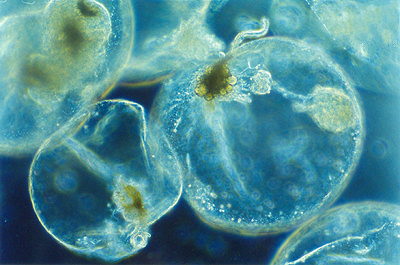
Noctiluca scintillans, dinoflagellate that exhibits bioluminescence
Scientific classification Edit this classification
Domain: Eukaryota
Clade: Sar
Clade: Alveolata
Clade: Dinozoa
Division: Dinoflagellata
Class: Dinophyceae
Pascher, 1914
Orders

Dinophyceae is a class of dinoflagellates.[1][2][3]

Taxonomy

[edit]

References

[edit]
Revisions and contributorsEdit on WikipediaRead on Wikipedia
from Grokipedia
Dinophyceae, commonly known as dinoflagellates, are a diverse class of unicellular eukaryotic protists within the Alveolata phylum, characterized by two dissimilar flagella inserted in perpendicular grooves (cingulum and sulcus), a unique dinokaryotic nucleus with permanently condensed chromosomes lacking typical packaging, and a or membrane often composed of plates in thecate species. With approximately 3,800 living across over 550 genera, they exhibit a wide range of sizes from 0.5 to 2,000 μm and nutritional modes, including autotrophy via chloroplasts (in about 50% of ), heterotrophy through predation or , and mixotrophy combining both. Predominantly marine but also inhabiting freshwater, estuaries, and even or , dinoflagellates play pivotal roles in aquatic ecosystems as primary producers, symbionts, and occasional bloom-formers. Morphologically, dinoflagellates are distinguished into thecate (armored) forms with rigid thecal plates arranged in specific patterns and athecate (naked) forms lacking such armor, enabling via a distinctive spinning or helical swimming motion powered by the flagella. Their chloroplasts, when present, often contain peridinin as the primary pigment, conferring a golden-brown color, though some have acquired plastids from other through serial endosymbiosis. is primarily asexual via binary fission, but sexual cycles involving isogametes and resting cysts (hypnozygotes) allow for and dispersal, contributing to their resilience in fluctuating environments. Taxonomically, the class is subdivided into orders such as Gonyaulacales, Peridiniales, and Noctilucales, based on thecal plate arrangement, flagellar insertion, and , with fossils indicating an ancient origin around 650 million years ago in the era. Ecologically, dinoflagellates are foundational to marine food webs, contributing significantly to global and carbon cycling, particularly through symbiotic associations with corals, , and mollusks—such as the Symbiodiniaceae family providing photosynthates to reef-building corals. However, certain , including Alexandrium spp. and Dinophysis spp., form harmful algal blooms (HABs) known as red tides, which can deplete oxygen, disrupt fisheries, and produce potent neurotoxins like saxitoxins causing in humans. Their , observed in genera like Noctiluca, adds to nocturnal marine displays, while their cysts serve as valuable proxies for paleoclimate and biostratigraphic studies, highlighting their evolutionary success and ongoing environmental impacts.

General Characteristics

Cell Structure and Morphology

Dinophyceae, commonly known as dinoflagellates, are predominantly unicellular, biflagellate protists exhibiting a wide range of cell shapes, from spherical and ovoid to more complex forms with epitheca and hypotheca separated by a transverse girdle or cingulum. Cells are typically 5–500 μm in size, often compressed dorsoventrally, and can be solitary or form temporary chains in some species. A key structural feature is the amphiesma, a complex cortical layer underlying the plasma membrane composed of alveoli—flattened submembrane vesicles that provide structural support and facilitate cell shape maintenance. In thecate (armored) species, these alveoli contain cellulosic thecal plates arranged in specific patterns, while athecate (naked) forms lack plates but retain the vesicular amphiesma, which may hold fibrous or amorphous material instead. Some species possess highly specialized organelles, such as the ocelloid in warnowiacean dinoflagellates, which functions as a complex photoreceptor resembling a camera eye. The thecal plates, when present, are primarily composed of and organized into a diagnostic tabulation system, such as the Kofoid formula Po, 3', 0a, 6'', 6c, 5s, 5''', 0p, 4'''' observed in many peridinialean dinoflagellates, where Po denotes the pore plate, primes (') indicate apical plates, double primes ('') epitecal plates, and so forth for other series. This plate arrangement encases the cell, providing rigidity and protection, and varies across taxa to reflect evolutionary adaptations. The amphiesma's dynamic nature allows for , where old plates are shed and new ones formed during growth or stress responses. Motility in dinoflagellates is enabled by two heteromorphic inserted ventrally, typically near the junction of the epicone and hypocone or in a subapical position. The transverse flagellum, often ribbon-like with mastigonemes (fine hairs), lies in the cingulum and propels the cell in a spiral trajectory through undulating waves; the longitudinal (or trailing) flagellum extends posteriorly in the sulcus, aiding steering and thrust with a whip-like motion. These undulipodia, homologous to eukaryotic , insert from a shared complex and enable the characteristic dinokont swimming pattern at speeds up to 500 μm/s. The nucleus, termed the dinokaryon in most species, features permanently condensed chromosomes throughout the cell cycle, lacking typical histone packaging and instead organized in a liquid-crystalline state with high DNA content (up to 250 pg per cell). This chromatin remains fibrillar and visible even in interphase, distinguishing it from standard eukaryotic nuclei. However, basal lineages like Noctiluca and some Blastodiniales possess more conventional eukaryotic-like nuclei with decondensing chromosomes during interphase. In phototrophic dinoflagellates, chloroplasts are typically derived from secondary endosymbiosis of a red alga, resulting in a three-membrane envelope and thylakoids arranged in lamellae of three. These organelles contain chlorophylls a and c, with peridinin as the dominant that transfers energy efficiently to , enabling in low-light marine environments. Non-peridinin types occur in some derived lineages through tertiary endosymbioses, but the peridinin-chloroplast remains the ancestral form in core Dinophyceae.

Reproduction and Life Cycle

Dinophyceae exhibit a complex life cycle characterized by both asexual and sexual reproduction, with alternation between haploid and diploid phases. Vegetative cells are typically haploid and motile, while sexual processes lead to diploid zygotes that may undergo meiosis upon germination. Asexual reproduction occurs primarily through binary fission, the dominant mode for population growth in favorable conditions. During this process, the dinokaryotic nucleus undergoes a unique closed mitosis, where the nuclear envelope remains intact, chromosomes stay permanently condensed in a liquid crystalline state, and an extranuclear spindle facilitates segregation without typical histone involvement. In thecate species, thecal plates replicate within the parent cell prior to cytokinesis, ensuring each daughter cell inherits a complete set of plates for structural integrity. Sexual reproduction involves the fusion of haploid gametes, which can be isogamous (similar in and ) or anisogamous (differing in ), depending on the . Gametes, often morphologically similar to vegetative cells, pair and fuse to form a diploid , typically a motile planozygote with four flagella that swims briefly before encysting or dividing. This stage initiates , enhancing adaptability. The life cycle includes distinct stages: motile planktonic cells (e.g., gymnodinioid forms), which dominate active phases, and non-motile resting cysts for . Encystment produces thick-walled hypnozygotes (sexual resting cysts) or hypnocysts, triggered by environmental stresses such as limitation, high cell density, or shifts, allowing survival of adverse conditions like those preceding red tides. Excystment occurs when cysts germinate under favorable cues, including optimal (often 15–25°C) and availability, releasing a new motile cell after a mandatory period of weeks to months. Some also form thin-walled pellicle cysts asexually for temporary division. Parthenogenesis, where unfused gametes develop into viable offspring, has been observed in certain species, particularly under laboratory conditions, contributing to clonal propagation alongside sexual cycles. This haplontic-diplontic alternation underscores the flexibility of Dinophyceae life histories, linking pelagic and benthic phases.

Nutrition and Metabolism

Dinophyceae, commonly known as dinoflagellates, display a remarkable diversity of nutritional strategies, encompassing phototrophy, heterotrophy, and mixotrophy, which enable them to thrive in varied aquatic environments. Phototrophic species harness light energy through chloroplasts containing peridinin as an alongside , facilitating efficient light harvesting in marine settings. Heterotrophic modes include osmotrophy, where dissolved organic compounds are absorbed directly across the , and phagotrophy, involving the ingestion of particulate prey such as , , or protists. Mixotrophy, the simultaneous use of phototrophy and heterotrophy, is particularly prevalent, allowing approximately half of dinoflagellate species to switch or combine strategies based on environmental conditions, such as . Phagotrophy in dinoflagellates is executed through specialized mechanisms that reflect their morphological adaptations. Many species employ a peduncle, a tubular extension of the cell, to perform myzocytosis, wherein they pierce prey cells and extract partial cytoplasmic contents without full engulfment, targeting nutrient-rich organelles or fluids. Alternatively, pallium feeding involves the formation of a temporary pseudopod-like that envelops the prey, allowing before the liquefied material is absorbed, as seen in genera like Protoperidinium. These feeding strategies enable efficient predation on a range of particle sizes, from to larger protists, and are inducible under nutrient stress, enhancing survival in oligotrophic waters. Key metabolic pathways in dinoflagellates include and toxin production, both linked to unique enzymatic processes. Bioluminescence arises from the oxidation of dinoflagellate luciferin, an open-chain tetrapyrrole, catalyzed by dinoflagellate luciferase within scintillons—specialized vesicles—triggered by mechanical disturbance and involving . Toxin synthesis, responsible for compounds like and brevetoxins, proceeds via synthases (PKS), modular enzymes that perform iterative condensations of acyl units to build complex carbon skeletons; transcriptomic studies have identified both type I modular and single-domain PKS genes associated with these pathways in toxigenic species. In phototrophic and mixotrophic dinoflagellates, carbon fixation occurs via form II Rubisco, a homodimeric enzyme encoded in the plastid genome with lower CO₂ affinity compared to form I, necessitating high intracellular CO₂ concentrations often achieved through carbon-concentrating mechanisms. Symbiotic dinoflagellates, such as those in Symbiodinium, rely partly on host-supplied carbon, supplementing their photosynthetic output in nutrient-limited coral environments. Mixotrophy confers advantages in nutrient-poor habitats by integrating bacterial predation, which provides essential nitrogen and phosphorus, thereby boosting growth rates and enabling blooms where pure phototrophs or heterotrophs falter.

Ecology and Distribution

Habitats and Global Distribution

Dinophyceae, commonly known as dinoflagellates, primarily inhabit marine planktonic environments, where they constitute a significant portion of the community in both neritic and oceanic waters. Approximately 75% of the ~2,800 described (as of 2024) are marine planktonic, dominating in coastal zones where nutrient-rich waters support their proliferation during periods of upwelling relaxation. They also occur in freshwater habitats (~10% of ) and benthic environments (~10% of ), including epiphytic and episammic forms on substrates in both marine and freshwater systems. Globally, dinoflagellates exhibit a , with ~90% of being marine (as of 2024) and widespread across oceans from polar to tropical regions. Higher is observed in warm-temperate and tropical waters, particularly in benthic assemblages featuring genera like Coolia and Gambierdiscus. For instance, species are prevalent in ecosystems of tropical and Atlantic regions, where they thrive in the associated with reef-building corals. Many species demonstrate and eurythermal tolerances, enabling adaptation to variable abiotic conditions. Optimal growth typically occurs at temperatures of 15–25°C and of 20–35 ppt, though some species endure broader ranges, such as 7–30°C and 5–40 ppt, as seen in genera like Alexandrium and Chattonella. These tolerances facilitate their presence in estuarine and coastal systems with fluctuating . In terms of vertical distribution, most dinoflagellates are surface-dwelling, driven by positive phototaxis that positions them in the euphotic zone for photosynthesis during daylight hours. This behavior often results in diel vertical migrations, with cells descending at night to access nutrients below the thermocline, as observed in species like Karenia brevis and Margalefidinium polykrikoides. While some taxa, such as certain Alexandrium species, occur in deeper waters up to 50 m, the majority remain concentrated in the upper 20 m of the water column. Dinoflagellates often form blooms in stratified waters following spring thermal stratification or relaxation, where stable water columns reduce mixing and allow motile cells to aggregate in nutrient-enriched layers. This adaptation is evident in coastal systems like , where post- stratification promotes dominance of dinoflagellates over diatoms.

Symbiotic and Parasitic Interactions

Dinoflagellates of the class Dinophyceae engage in diverse interspecies interactions, prominently featuring mutualistic symbioses where they serve as intracellular partners to various marine invertebrates. The genus Symbiodinium, commonly known as zooxanthellae, establishes symbioses with corals, foraminifera, and mollusks such as nudibranchs and giant clams (Tridacna spp.). In these associations, Symbiodinium cells reside within host-derived vacuoles in gastrodermal or mantle tissues, performing photosynthesis to produce organic carbon compounds like glycerol, glucose, and lipids, which are translocated to the host to support its energy needs and calcification. In exchange, the host provides inorganic nutrients, including ammonium (NH₄⁺), nitrate (NO₃⁻), and dissolved inorganic carbon (HCO₃⁻ or CO₂), enabling algal growth and replication. This bidirectional nutrient exchange underpins the metabolic foundation of coral reefs, where symbionts can supply over 90% of the host's respiratory demands. Parasitic interactions represent another key aspect of Dinophyceae ecology, with certain species adopting obligate or facultative parasitism that can regulate protist populations and influence bloom dynamics. Pfiesteria piscicida and related species in the Pfiesteriaceae family are heterotrophic dinoflagellates that target finfish in estuarine environments, releasing toxins that induce ulcerative lesions characterized by necrotic muscle tissue, inflammatory infiltrates, and secondary bacterial infections. These lesions manifest as solitary ulcers on species like menhaden (Brevoortia tyrannus), contributing to massive fish mortality during blooms. Similarly, members of the order Syndiniales, such as Amoebophrya ceratii, function as intracellular parasites of other dinoflagellates and protists, including bloom-forming taxa like Alexandrium and Prorocentrum. Infection begins with free-swimming dinospores penetrating host cells, leading to trophic stages that consume host cytoplasm and culminate in host lysis, releasing new infective stages; a single infection can produce hundreds of propagules, exerting top-down control on microbial communities. Additional mutualistic examples highlight the nutritional versatility of Dinophyceae, as seen in Noctiluca scintillans, a heterotrophic dinoflagellate that harbors diverse endocytic bacterial symbionts within its vacuole. These bacteria, affiliated with genera like Sulfitobacter and Roseovarius, facilitate nutrient synthesis, including nitrogen fixation through pathways that convert atmospheric or organic nitrogen into bioavailable forms like ammonia, thereby supplementing the host's requirements in nutrient-poor waters. This symbiosis enhances Noctiluca's competitive edge during blooms by promoting bacterial degradation of complex carbohydrates and active participation in the nitrogen cycle. On the physiological front, symbiotic nutrient translocation profoundly affects host performance; in coral-Symbiodinium partnerships, disruptions under thermal stress (e.g., +3–4°C above ambient) elevate reactive oxygen species (ROS) by 45%, catabolize host amino acids, and reduce carbon transfer to the host by 26%, shifting the symbiosis toward algal retention and eventual expulsion—manifesting as bleaching before visible symbiont loss. Evolutionarily, these symbiotic and parasitic interactions have driven genomic innovations in Dinophyceae, particularly through (HGT) associated with endosymbiotic associations. In peridinin-containing plastids, bacterial genes—such as those for ribosomal proteins (rpl28, rpl33) and iron-sulfur cluster assembly (ycf16, ycf24) from Bacteroidetes—have been integrated into minicircle genomes, suggesting transfer events facilitated by close microbial contacts during or predation. This HGT contributes to the chimeric architecture of dinoflagellate plastids, blending red algal nuclear-encoded components with bacterial elements, and underscores how interspecies relationships have shaped evolution and adaptive plasticity in diverse environments.

Role in Marine Ecosystems

Dinophyceae, commonly known as dinoflagellates, play a pivotal role in , often comprising a substantial portion of in coastal and environments. In certain regions, such as systems, they can account for up to 50% of during blooms, significantly contributing to global carbon fixation and oxygen generation through . This productivity is essential for the , where dinoflagellates fix atmospheric CO₂ into organic matter, contributing to the that accounts for approximately half of Earth's oxygen . Their varies with environmental conditions, but they remain key drivers of new in nutrient-rich waters. As foundational producers in marine food webs, dinoflagellates serve as a primary food source for grazers, including copepods and other zooplankton, facilitating energy transfer to higher trophic levels. This position enables efficient trophic transfer of biomass, though some species produce toxins that can accumulate in predators, influencing food web dynamics and potentially affecting fisheries. Mixotrophic dinoflagellates, capable of both autotrophy and heterotrophy, enhance their resilience and role by grazing on bacteria and smaller protists, thereby remineralizing phosphorus and nitrogen back into bioavailable forms that fuel further production. Additionally, many dinoflagellate species are major producers of dimethylsulfoniopropionate (DMSP), a compound cleaved to form dimethylsulfide (DMS), which contributes to cloud formation and aerosol production, indirectly influencing climate regulation. Dinoflagellate blooms, often manifesting as red tides, profoundly alter structure by reducing light penetration through dense cell layers, which shades underlying waters and suppresses in other . These events can also deplete dissolved oxygen via high respiration rates during bloom , leading to hypoxic zones that diminish local and disrupt benthic communities. In terms of climate interactions, resting cysts formed by many dinoflagellates sink to sediments, facilitating by exporting organic carbon to deeper layers. Furthermore, dinoflagellates exhibit varied responses to ; while some species, like forms, experience reduced growth and under elevated CO₂, others maintain , potentially shifting community composition in acidified waters.

Classification and Taxonomy

Historical Classification

The classification of dinoflagellates, now recognized as the class Dinophyceae, has evolved significantly since their initial descriptions in the , marked by debates over their placement in the animal or plant kingdoms due to their mixed morphological and physiological traits. Early microscopists, including Christian Gottfried Ehrenberg, observed these organisms in the and classified them as animal-like , emphasizing their motility and lack of clear plant-like features such as rigid cell walls. This animal affinity persisted in zoological treatments, where dinoflagellates were grouped with protozoans based on flagellar locomotion and heterotrophic capabilities observed in many . Throughout the 19th century, taxonomic debates intensified, with botanists advocating for their inclusion among algae due to photosynthetic forms containing chlorophyll, while zoologists maintained their position in the animal kingdom as flagellates. Ernst Haeckel, in his 1885 systematic works, contributed to this discourse by classifying dinoflagellates within the flagellate orders, aligning them more closely with animal protists but acknowledging their transitional characteristics between plant and animal realms. These conflicting views highlighted the challenges of binary kingdom classifications for protists, leading to fragmented groupings that often separated photosynthetic and heterotrophic forms. A pivotal shift occurred in the early when Alfred Pascher formally established the class Dinophyceae in 1914, incorporating them into the algal kingdom (as part of his "Algenreihen" system) based on shared pigmentation and features with other , despite their unique flagellar arrangement. This botanical framing gained traction, though zoological perspectives lingered. Émile Fauré-Fremiet advanced armored dinoflagellate in 1929 by developing a detailed thecal tabulation system, which mapped the arrangement of plates on the cell surface to distinguish genera and among thecate forms, providing a morphological foundation for subordinal divisions. By the mid-20th century, pre-molecular classifications relied heavily on light microscopy of morphological traits like thecal plate patterns, flagellar insertion, and nuclear structure, often resulting in polyphyletic groupings that conflated unrelated lineages based on superficial similarities. Key milestones included F.J.R. Taylor's 1987 compendium, The Biology of Dinoflagellates, which synthesized these morphological approaches into a comprehensive systematic framework, emphasizing evolutionary relationships inferred from ultrastructure and ecology while bridging botanical and zoological traditions. These efforts laid the groundwork for later revisions but underscored the limitations of phenotype-driven taxonomy in capturing dinoflagellate diversity.

Modern Taxonomic Framework

Dinophyceae is recognized as a class within the phylum Dinoflagellata, which falls under the subphylum Dinozoa and the phylum , itself part of the superphylum Alveolata. This placement reflects the monophyletic nature of dinoflagellates, supported by shared ultrastructural features such as alveoli and a unique nuclear organization known as the dinokaryon. Recent studies using (eDNA) metabarcoding (as of 2024) continue to uncover cryptic diversity, suggesting the total number of species may exceed 5,000. The modern classification organizes Dinophyceae into several major orders, primarily based on morphological and molecular criteria, including Dinophysiales, Gonyaulacales, Peridiniales, Gymnodiniales, and Noctilucales. For instance, Gonyaulacales includes genera like and , known for their robust thecal plates and often toxic species, while Peridiniales encompasses Peridinium with similar armored structures. Dinophysiales features elongated cells like Dinophysis, Gymnodiniales comprises unarmored forms such as Gymnodinium, and Noctilucales includes bioluminescent Noctiluca. These orders highlight the diversity in organization and motility. Within Dinophyceae, key subgroups are delineated by nutritional mode and cell covering: photosynthetic taxa possess chloroplasts derived from secondary endosymbiosis, enabling autotrophy, whereas aplastidic forms are heterotrophic, relying on or osmotrophy. Additionally, thecate dinoflagellates have a cellulose-based forming plates for protection and shape, contrasting with athecate species that lack this armor and exhibit more flexible morphologies. Phylogenetic studies employ molecular markers such as small subunit (SSU rRNA) and large subunit (LSU rRNA) genes to resolve evolutionary relationships, with the LSU D1-D3 domains particularly useful for species-level delimitation due to their variable regions. Integrated combines these genetic data with morphological and ultrastructural analyses, as seen in the reclassification of the polyphyletic genus Symbiodinium into distinct genera like Durusdinium (formerly clade D), based on multi-locus phylogenies that reveal ecological and . This approach has refined classifications across symbiotic dinoflagellates, emphasizing functional adaptations.

Diversity and Number of Species

The class Dinophyceae comprises approximately 3,800 living , reflecting a diverse array of unicellular protists primarily adapted to aquatic environments. Among these, the majority are marine, with estimates around 3,000 dominating planktonic and benthic habitats, while approximately 300 are freshwater forms, often inhabiting lakes and rivers. (eDNA) sequencing has revealed substantial undescribed diversity, with estimates suggesting a total of 4,000 to 5,000 when accounting for cryptic and novel lineages detected in marine and freshwater samples. This indicates that current taxonomic knowledge captures only a fraction of the group's true , particularly in underrepresented parasitic and symbiotic niches. Species richness is highest in the orders Gonyaulacales and Peridiniales, which together account for a significant portion of described free-living and photosynthetic dinoflagellates. In contrast, parasitic orders like Syndiniales exhibit lower described diversity, limited by challenges in culturing and observing their intracellular life stages. is notable in symbiotic dinoflagellates, with regional hotspots in the , where diverse lineages associate with and invertebrate hosts. Although Dinophyceae lack formal assessments as microbial eukaryotes, reef-associated symbiotic species face heightened vulnerability from climate-driven and habitat degradation.

Evolutionary History

Fossil Record

The fossil record of Dinophyceae, commonly known as dinoflagellates, provides key insights into their evolutionary trajectory, primarily through preserved organic-walled cysts known as dinocysts. While molecular and geochemical evidence suggests an ancient origin for dinoflagellates as early eukaryotes around 650 million years ago, the paleontological record is more conservative. Possible ancestral forms are represented by (485–443 Ma) acritarchs, such as galeate types exhibiting dinoflagellate-like archeopyle openings and paratabulation patterns, which may reflect early life-cycle stages of algal precursors to modern dinoflagellates. However, the earliest definite dinoflagellate fossils appear as dinocysts in sediments (approximately 240–230 Ma), marking the onset of a reliable body fossil record dominated by resting cysts with gonyaulacoid or peridinioid tabulation. Dinocysts are typically organic-walled microfossils that preserve the thecal plate patterns of their motile progenitors, offering morphological continuity with extant species. Prominent examples include the genus Gonyaulacysta, characterized by bicavate cysts with an apical horn, parasutural crests, and a precingular archeopyle, which reflect the tabulation of gonyaulacacean dinoflagellates. Similarly, Spiniferites species, such as S. ramosus, feature processes and membranes that mirror the excystment structures of modern forms like Gonyaulax spinifera. These fossils are recovered from marine sediments worldwide, providing a proxy for ancient dinoflagellate morphology and ecology. However, the dinocyst record primarily captures cyst-forming species and likely underestimates total dinoflagellate diversity, as many extant lineages, particularly athecate forms, do not produce preservable cysts. Dinoflagellate abundance in the fossil record expanded markedly during the and eras, with a notable peak in the period (145–66 Ma), where dinocysts are abundant in organic-rich black shales indicative of ancient algal blooms and anoxic events. For instance, (approximately 94–90 Ma) black shales in various basins contain diverse dinocyst assemblages, suggesting heightened productivity and stratification in marine environments during this time. This radiation followed the group's survival through the Permian– mass extinction (252 Ma), after which dinoflagellates diversified as part of the modern recovery, though their record shows no major disruptions at this boundary. In the , dinocyst diversity continued to decline from the peak through the , reaching a minimum of approximately 140 in the Late Eocene (~37–34 Ma), before showing some recovery in the , influenced by cooling climates and changing ocean circulation. Spiniferites , for example, are common in Paleogene sediments and serve as markers for this interval. These fossils are invaluable for , particularly in , where dinocyst zonations help correlate sedimentary layers and identify source rocks in basins.

Phylogenetic Relationships

Dinophyceae, commonly known as dinoflagellates, are positioned within the supergroup Alveolata, a diverse of protists characterized by cortical alveoli. Within Alveolata, dinoflagellates belong to the subclade , where they form the Dinozoa group and are closely related to , the parasitic lineage that includes major human pathogens like . Ciliophora represents the sister to Myzozoa in Alveolata, with molecular phylogenies consistently supporting this topology based on analyses of and protein-coding genes. The evolution in dinoflagellates highlights complex endosymbiotic events. The majority possess peridinin-containing s acquired through secondary endosymbiosis of a , resulting in organelles bounded by three membranes and encoding a minimal set of genes on minicircles. However, certain lineages, such as Karenia species, have undergone tertiary endosymbiosis, engulfing and replacing the ancestral peridinin plastid with one containing and , as evidenced by multiprotein phylogenies of nuclear-encoded plastid-targeted genes. This serial replacement underscores the dynamic nature of organelle acquisition in dinoflagellates, contrasting with the more stable red algal-derived plastids in related apicomplexans like Chromera. Dinoflagellates exhibit distinctive nuclear features, including the dinokaryon—a derived trait featuring permanently condensed without canonical nucleosomes, a low protein-to-DNA ratio, and liquid-crystalline organization. This nuclear architecture supports unique gene regulation, such as widespread trans-splicing mediated by variant spliced leader RNAs organized in tandem repeats, which process polycistronic transcripts and distinguish dinoflagellates from other . Evolutionary reconstructions indicate that the dinokaryon arose after divergence from apicomplexan ancestors, involving genome expansion and recruitment of histone-like proteins from bacterial and viral sources. Phylogenetic resolution of dinoflagellates has advanced significantly through molecular data. Early trees derived from 18S rRNA sequences often depicted polyphyletic groupings, scattering dinoflagellates among other due to long-branch attraction artifacts. In contrast, multi-gene and phylotranscriptomic approaches, incorporating hundreds of protein loci, have firmly established dinoflagellate , with basal branches like Noctiluca and Oxyrrhis clarifying the transition to core dinoflagellate traits. The close kinship with apicomplexans is further illuminated by shared traits in predatory dinoflagellates, which employ myzocytotic feeding—piercing prey cells to suck out —mirroring the invasive strategies of apicomplexan parasites. Groups like Perkinsus and colpodellids, positioned near the dinoflagellate-apicomplexan split, retain ancestral features such as an apical complex with rhoptries, suggesting that the last common ancestor of was a myzocytotic predator. These parallels highlight conserved morphostatic elements in .

Economic and Biological Importance

Harmful Algal Blooms and Toxins

Certain species within the Dinophyceae class, particularly dinoflagellates such as and Alexandrium spp., are responsible for harmful algal blooms (HABs) that proliferate under conditions of nutrient enrichment from anthropogenic sources like agricultural runoff and sewage discharge, a process known as . These blooms often manifest as red tides, discoloring coastal waters due to high cell densities; for instance, K. brevis blooms in the have covered areas up to 14,000 km², as observed in historical events. provides excess and , fueling rapid population growth, while favorable physical factors like calm winds and stratification exacerbate bloom formation. Dinophyceae produce potent biotoxins that accumulate in marine webs, posing risks to and ecosystems. Key toxins include brevetoxins from K. brevis, which cause (NSP) through aerosolized respiratory irritation or ingestion, leading to symptoms like coughing, nausea, and neurological effects. Saxitoxins, produced by Alexandrium spp., induce (PSP) by blocking sodium channels, resulting in and potentially fatal if contaminated is consumed. , from species like Dinophysis spp., triggers diarrhetic shellfish poisoning (DSP) with gastrointestinal distress such as diarrhea and vomiting. Additionally, ciguatoxins from Gambierdiscus toxicus cause ciguatera fish poisoning (CFP), a affecting tropical consumers, with symptoms including temperature reversal and chronic fatigue; incidence is projected to rise 200-400% in the by 2100 due to warming oceans. These toxins also lead to massive kills through direct or oxygen depletion from bloom decay, with K. brevis responsible for over 21 million deaths in the during 1997-1998. HABs inflict substantial economic burdens globally, estimated at approximately US$4 billion annually by the , encompassing losses from fisheries closures, shutdowns, and declines. In the United States alone, annual costs reach about US$82 million, driven by events like the 1987-1988 red tide, which caused $25 million in damages from fish kills and beach closures. operations face prolonged harvesting bans to prevent bioaccumulation, while suffers from beach advisories and reduced visitor numbers, as seen in Florida's recurrent K. brevis events. Monitoring and mitigation efforts target early detection and control to minimize impacts. Satellite imagery and in-situ sensors detect bloom signatures like chlorophyll anomalies, complemented by toxin assays using enzyme-linked immunosorbent assays (ELISA) or liquid chromatography for precise quantification in water and shellfish. Forecasting systems, such as NOAA's HAB Operational Forecast System, integrate hydrodynamic models with real-time data to predict bloom trajectories, enabling timely advisories. Mitigation strategies include clay flocculation, where phyllosilicate clays aggregate algal cells for sedimentation and removal, as demonstrated effective in field trials without harming non-target organisms. Broader approaches focus on reducing nutrient inputs through watershed management to prevent eutrophication at the source.

Applications in Biotechnology and Medicine

Dinoflagellate luciferases have emerged as valuable tools in biotechnology for bioluminescent reporting in gene expression assays. These enzymes, derived from bioluminescent species such as Pyrocystis lunula, catalyze the oxidation of luciferin to produce light, enabling sensitive detection of transcriptional activity in mammalian cells without interference from endogenous factors. Unlike firefly or bacterial luciferases, dinoflagellate luciferases offer advantages in dual-reporter systems due to their distinct substrate specificity and spectral properties, facilitating quantitative analysis of promoter activity and protein interactions. In toxin research, brevetoxins produced by serve as key models for studying voltage-gated (VGSC) function, providing insights into neuronal excitability and potential therapeutic targets for neurological disorders. These polyether toxins bind to site 5 on VGSCs, prolonging channel open time and enhancing sodium influx, which has been exploited in electrophysiological assays to map channel gating mechanisms. Similarly, amphidinolides from Amphidinium species exhibit potent cytotoxic effects by targeting dynamics, positioning them as candidates for anticancer drug development through induction of in tumor cell lines. Non-toxic dinoflagellate strains, such as the heterotrophic Crypthecodinium cohnii, are utilized in aquaculture as a sustainable feed source rich in docosahexaenoic acid (DHA), an essential omega-3 fatty acid that enhances larval growth and survival in fish and shellfish production. This strain's high lipid content, up to 50% DHA, supports nutritional requirements without the risks associated with toxic blooms, improving feed efficiency in commercial hatcheries. Additionally, Symbiodinium species play a critical role in coral restoration efforts, where heat-tolerant strains are inoculated into coral larvae or fragments to enhance symbiosis resilience against climate-induced bleaching, promoting reef recovery in vulnerable ecosystems. Industrial applications leverage peridinin, the dominant in dinoflagellate light-harvesting complexes, for biomimetic designs in technologies. Peridinin-chlorophyll proteins exhibit near-unity energy transfer efficiency in the blue-green spectrum, inspiring antenna systems for dye-sensitized solar cells to broaden light absorption and improve photovoltaic performance. Furthermore, alginate-like exopolysaccharides from dinoflagellates such as Heterocapsa contribute to production by serving as fermentable substrates for bioethanol, with their high yield under nutrient stress enabling integrated processes alongside extraction. As research tools, dinoflagellates like Pfiesteria piscicida are employed as model organisms to investigate mechanisms, particularly in assessing environmental toxin impacts on nervous systems through controlled exposure studies that reveal behavioral and physiological deficits. These models help elucidate pathways of toxin-induced lesions in fish and mammalian models, informing for marine pollutants.

References

Add your contribution
Related Hubs
User Avatar
No comments yet.