


Community hub
Recent from talks
Contribute something
Nothing was collected or created yet.
Orcein
View on Wikipedia
Orcein, also called archil, orchil, lacmus and C.I. Natural Red 28, is any dye extracted from several species of lichen, commonly known as "orchella weeds", found in various parts of the world. A major source is the archil lichen, Roccella tinctoria.[1] Orcinol is extracted from such lichens. It is then converted to orcein by ammonia and air. In traditional dye-making methods, urine was used as the ammonia source. If the conversion is carried out in the presence of potassium carbonate, calcium hydroxide, and calcium sulfate (in the form of potash, lime, and gypsum in traditional dye-making methods), the result is litmus, a more complex molecule.[2] The manufacture was described by Cocq in 1812 [3] and in the UK in 1874.[4] Edmund Roberts noted orchilla as a principal export of the Cape Verde islands, superior to the same kind of "moss" found in Italy or the Canary Islands, that in 1832 was yielding an annual revenue of $200,000.[5]: pp.14, 15 Commercial archil is either a powder (called cudbear) or a paste. It is red in acidic pH and blue in alkaline pH.
History and uses
[edit]
The chemical components of orcein were elucidated only in the 1950s by Hans Musso.[6] The structures are shown below. A paper originally published in 1961, embodying most of Musso's work on components of orcein and litmus, was translated into English and published in 2003[7] in a special issue of the journal Biotechnic & Histochemistry (Vol 78, No. 6) devoted to the dye.
Orcein is a reddish-brown dye, orchil is a purple-blue dye. Orcein is also used as a stain in microscopy to visualize chromosomes,[8] elastic fibers,[9] Hepatitis B surface antigens,[10] and copper-associated proteins.[11]
Orcein is not approved as a food dye (banned in Europe since January 1977), with E number E121 before 1977 and E182 after.[12][13] Its CAS number is 1400-62-0.[14] Its chemical formula is C28H24N2O7. It forms dark brown crystals. It is a mixture of phenoxazone derivates - hydroxyorceins, aminoorceins, and aminoorceinimines.
Cudbear
[edit]Cudbear is a dye extracted from orchil lichens that produces colours in the purple range. It can be used to dye wool and silk, without the use of mordant. The lichen is first boiled in a solution of ammonium carbonate. The mixture is then cooled and ammonia is added and the mixture is kept damp for 3–4 weeks. Then the lichen is dried and ground to powder.
Cudbear was the first dye to be invented in modern times, and one of the few dyes to be credited to a named individual: Dr Cuthbert Gordon of Scotland: production began in 1758, and it was patented in 1758, British patent 727.[15][16] John Glassford invested in the new process with funds from his slave-labor tobacco business by establishing a dyeworks in Dennistoun in 1777.[17][18] The manufacture details were carefully protected, with a ten-feet high wall being built around the manufacturing facility, and staff consisting of Highlanders sworn to secrecy.[17] The lichen consumption soon reached 250 tons per year and import from Norway and Sweden had to be arranged.[19]
A similar process was developed in France. The lichen is extracted by urine or ammonia, then the extract is acidified, the dissolved dye precipitates out and is washed. Then it is dissolved in ammonia again, the solution is heated in air until it becomes purple, then it is precipitated out with calcium chloride. The resulting insoluble purple solid is known as French purple, a fast lichen dye that was much more stable than other lichen dyes.
Gallery
[edit]-
 α-amino orcein
 -
 α-hydroxy orcein
 -
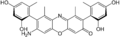 β-amino orcein
 -
 β-hydroxy orcein
 -
 β-amino orceinimine
 -
 γ-amino orcein
 -
 γ-hydroxy orcein
 -
 γ-amino orceinimine


See also
[edit]References
[edit]- ^ St. Clair, Kassia (2016). The Secret Lives of Colour. London: John Murray. p. 165. ISBN 9781473630819. OCLC 936144129.
- ^ Beecken, H; E-M Gottschalk; U v Gizycki; et al. (2003). "Orcein and litmus". Biotechnic & Histochemistry. 78 (6): 289–302. doi:10.1080/10520290410001671362. PMID 15473576. S2CID 41944320.
- ^ Cocq M. (1812). Mémoire sur la fabrication et l'emploi de l'orseille. Annales de Chimie 81:258–278. Cited in: Chevreul ME. (1830). Leçons de chimie appliquée à la teinture. Paris: Pichon et Didier. p 114–116.
- ^ Workman, A Leeds (1874). "Manufacture of Archil and Cudbear". Chemical News. 30 (173): 143.
- ^ Roberts, Edmund (12 October 2007) [First published in 1837]. Embassy to the Eastern courts of Cochin-China, Siam, and Muscat : in the U. S. sloop-of-war Peacock ... during the years 1832-3-4. Harper & brothers. OCLC 12212199.
- ^ Musso, H (1960). "Orcein- und Lackmusfarbstoffe: Konstitutionsermittlung und Konstitutionsbeweis durch die Synthese. (Orcein and litmus pigments: constitutional elucidation and constitutional proof by synthesis.)". Planta Medica. 8 (4): 431–446. doi:10.1055/s-0028-1101580. S2CID 85077252.
- ^ Beecken, H; Gottschalk, EM; von Gizycki, U; Kramer, H; Maassen, D; Matthies, HG; Musso, H; Rathjen, C; Zdhorsky, UI (2003). "Orcein and litmus". Biotechnic & Histochemistry. 78 (6): 289–302. doi:10.1080/10520290410001671362. PMID 15473576. S2CID 41944320.
- ^ La Cour, L (1941). "Acetic-orcein: a new stain-fixative for chromosomes". Stain Technology. 16 (4): 169–174. doi:10.3109/10520294109107302.
- ^ Friedberg, SH; Goldstein, DJ (1969). "Thermodynamics of orcein staining of elastic fibres". Histochemical Journal. 1 (4): 261–376. doi:10.1007/BF01003279. PMID 4113287. S2CID 11125308.
- ^ Fredenburgh, JL; Edgerton, SM; Parker, AE (1978). "A modification of the aldehyde fuchsin and orcein stains for hepatitis B surface antigen in tissue and a proposed chemical mechanism". Journal of Histotechnology. 1 (6): 223–228. doi:10.1179/his.1978.1.6.223.
- ^ Henwood, A (2003). "Current applications of orcein in histochemistry. A brief review with some new observations concerning influence of dye batch variation and aging of dye solutions on staining". Biotechnic & Histochemistry. 78 (6): 303–308. doi:10.1080/10520290410001671335. PMID 15473577. S2CID 425825.
- ^ "Additifs alimentaires – Accueil". Archived from the original on 2018-10-26. Retrieved 2013-12-27.
- ^ "Color Additive Status List". FDA. 3 February 2020.
- ^ "Orcein". CAS Common Chemistry.
- ^ "The Cudbear Manufactory". www.scottisharchivesforschools.org. Retrieved 2021-10-19.
- ^ "Preparation of cudbear, a patent". Archived from the original on 2001-02-21.
- ^ a b Quinton, Rebecca (3 December 2019). "Glasgow Merchants' Investment in Purple". Legacies of Slavery in Glasgow Museums and Collections. Retrieved 2021-10-19.
- ^ Campsie, Alison (10 October 2021). "9 objects that link Scotland to slavery". www.scotsman.com. Retrieved 2021-10-19.
- ^ "Curiosities of Glasgow citizenship: George Macintosh of Dunchattan".
External links
[edit]| Techniques |  | |
|---|---|---|
| Types of dyes | ||
| Traditional textile dyes | ||
| History | ||
| Craft dyes | ||
| Reference | ||
Orcein
View on GrokipediaChemical Structure and Properties
Molecular Composition
Orcein constitutes a mixture of phenoxazinone compounds, including α-aminoorcein, β-aminoorcein, γ-aminoorcein, and their hydroxy and imine derivatives, characterized by a central 2-amino- or 2-hydroxy-phenoxazinone core substituted with two (2,4-dihydroxy-6-methylphenyl)amino groups.[7] These isomers arise from variations in amino, hydroxy, or imino substitutions at positions corresponding to R1, R2, and R3 on the phenoxazinone scaffold, with α-aminoorcein featuring NH₂ at R1, H at R2, and H at R3.[7] The primary molecular formula across these components is C₂₈H₂₄N₂O₇, exemplified by the systematic name 4,12-bis((2,4-dihydroxy-6-methylphenyl)amino)-3,13-dimethyl-8-oxatricyclo(7.4.0²,⁷)trideca-1,3,6,9,12-pentaene-5,11-dione for the core structure.[10] The compounds derive biosynthetically from orcinol (3,5-dihydroxytoluene) through oxidative condensation, forming the xanthone-like tricyclic system fused with the phenoxazine ring.[11] Structures of these lichen metabolites were fully elucidated in the 1950s by Hans Musso via spectroscopic analysis, confirming the tautomeric equilibria and substitution patterns responsible for the dye's color and stability.[12] Multiple forms coexist due to proton shifts between amino/hydroxy and imino/keto tautomers at the 2- and 7-positions of the phenoxazinone.[13]
Physical and Chemical Characteristics
Orcein manifests as a reddish-brown to violet powder or dark brown crystals, exhibiting weak acidity.[5][14] Its molecular formula is C28H24N2O7, with a molecular weight of 500.5 g/mol.[10][5] The compound demonstrates pH-dependent coloration, shifting from blue-violet in alkaline conditions to red in acidic environments, a property stemming from its phenoxazone derivative structure.[5][15] It is designated as CI Natural Red 28 in dye nomenclature.[15] Solubility characteristics include high solubility in alcohol, acetone, and acetic acid—yielding a red hue in the latter—while remaining insoluble in water; it dissolves in dilute aqueous alkali to produce a blue-violet solution.[5] Estimated density is approximately 1.32 g/cm³, with a boiling point around 591°C under rough calculation.[5]Stability and Variations
Orcein dye solutions exhibit limited stability, maintaining effective staining selectivity for up to 7 days before degradation leads to diminished contrast and reduced visibility of target structures such as elastin fibers.[16] Beyond 10 days, non-specific binding increases, further compromising reagent reliability, while certain reactivities, like those with copper-associated proteins, are lost after 14 days.[16] Natural lichen-derived orcein generally yields more consistent results than synthetic variants, attributed to its complex mixture of native phenolic components, though procurement challenges limit availability.[17] Synthetic orcein provides enhanced batch-to-batch uniformity due to controlled production but can introduce impurities that alter reactivity profiles.[17] Batch variations in orcein significantly influence hue and overall efficacy, with differences in isomer composition—such as α-, β-, and γ- forms—affecting chromophore stability and binding affinity.[8] Histochemical evaluations recommend pre-use testing of each batch against known positive controls to ensure reliability, as discrepancies arise from manufacturing inconsistencies rather than degradation alone.[16][8]Historical Development
Origins in Lichen Dyes
Orchil, also termed archil or French purple, originated as a natural purple dye extracted from lichens such as Roccella tinctoria and Lecanora parella, species harvested from Mediterranean and Atlantic coastal areas.[18] While lichen dyes were employed by ancient Egyptians, the techniques for producing orchil faded in Europe post-Roman Empire and were rediscovered around 1300, with evidence of Italian production by the 14th century.[19][20] This revival marked orchil's role as an economical substitute for rare Tyrian purple, leveraging the lichens' orcinol content to yield orcein pigment through oxidative processes.[20] The traditional extraction relied on ammonia fermentation, where pulverized lichens were steeped in solutions derived from urine to supply ammonia, then exposed to air for oxidation over periods ranging from days to weeks, developing the dye's violet to red-purple tones.[21][22] Potash, or potassium carbonate, was sometimes added during fermentation to produce brighter red-purple variants by aiding the chemical conversion.[1] These methods, centered in medieval Italy and France, transformed the lichens' phenolic compounds into a substantive colorant without requiring mordants for fixation on fibers.[23] Primarily applied to textiles, orchil dyed wool and silk in purple shades valued for their direct affinity to protein fibers, enabling mordant-free coloration in pre-modern workshops.[23] Despite the dye's relative fastness on animal fibers, its sensitivity to light limited longevity, yet it sustained a niche in European dyeing trades through the late Middle Ages.[20]Invention of Cudbear
In 1758, Scottish chemist Cuthbert Gordon, in collaboration with his uncle George Gordon, patented a refined process for producing a purple lichen dye known as cudbear, named as a play on Cuthbert's own name.[24] This development marked a key advancement in dye standardization by yielding a more consistent, vibrant, and colorfast product compared to earlier artisanal methods, facilitating its commercial viability.[25] The patent protected the extraction technique applied to lichens like Ochrolechia tartarea, emphasizing improved efficacy for dyeing applications.[26] The cudbear process enhanced traditional fermentation and oxidation steps, converting lichen depsides such as lecanoric acid into orcein, the primary chromophore responsible for the dye's purple tones.[27] This resulted in higher yields and greater stability, addressing limitations of prior lichen dyes like archil, which often suffered from variability in color intensity and fastness.[19] Production commenced in Scotland prior to the patent, with the Gordons establishing a manufactory in Leith to supply the emerging textile industry, particularly for wool and silk fabrics.[28] Cudbear's invention represented a transition toward industrialized natural dye production, enabling scalable output while retaining the core chemistry of orcein-based purples derived from lichen sources.[29] Its success in the Scottish market underscored the potential for chemical refinements to commercialize historically variable biological extracts, though overharvesting of source lichens later posed sustainability challenges.[27]Elucidation and Synthetic Advances
The chemical components of orcein, a mixture of phenoxazinone derivatives, were elucidated in the 1950s primarily by Hans Musso using partition chromatography and spectroscopic techniques.[13] This work separated orcein into up to 14 distinct dyes, confirming structures based on a core 7-amino- or 7-hydroxy-2-phenoxazone scaffold.[12] In 1957, Musso and Hans-Georg Matthies published a comprehensive analysis of the primary chromophores from orcein lichens, establishing their spectroscopic signatures and biosynthetic links to orcinol oxidation.[30] A key 1961 publication by Musso in Angewandte Chemie expanded on these findings, detailing tautomeric equilibria such as that in α-hydroxy-orcein, which exists as a mixture of phenoxazone-2 and phenoxazone-7 forms via quinonoid intermediates.[13] This clarified the dynamic structural variations influencing color and reactivity, grounded in first-principles of keto-enol tautomerism and oxidative coupling.[31] These elucidations underpinned synthetic advances, replicating natural formation through controlled oxidation of orcinol with ammonia and air or hydrogen peroxide.[32] Post-1950s, such methods yielded purified, consistent orcein analogs for research, bypassing variability in lichen-derived material while preserving the phenoxazinone framework's causal role in chromophore assembly.[33]Production Methods
Natural Extraction Processes
The primary lichens used for natural orcein extraction are species such as Roccella tinctoria, Lecanora spp., and Ochrolechia spp., which contain depsides and depsidones that serve as precursors to orcinol.[1][2] These lichens are harvested from coastal or rocky substrates where they accumulate orcinol derivatives under specific environmental stresses, including salinity and desiccation.[2] Extraction commences with cleaning and grinding the collected lichens into a coarse powder to maximize surface area for subsequent reactions.[2] The powder is then macerated in an aqueous ammoniacal solution—historically sourced from stale urine providing 1-5% ammonia, or modern equivalents like ammonium hydroxide—and placed in shallow, aerated vessels to promote oxygen exposure.[1][2] During this fermentation phase, ammonia catalyzes the hydrolysis of lichen polyphenols into orcinol, which undergoes oxidative coupling and cyclization to yield phenoxazinone chromophores, including orcein isomers.[1][2] The process requires 2-12 weeks of intermittent stirring and air exposure at ambient temperatures (typically 15-25°C), during which the mixture transitions from greenish to reddish-purple as oxidation proceeds.[2][34] Post-fermentation, the liquor is filtered to separate insoluble residues, and orcein is precipitated or concentrated by acidification or evaporation, yielding a crude dye extract containing 5-20% active pigment depending on protocol.[35] Yields vary significantly with lichen species (R. tinctoria produces deeper purples via higher erythrolitmin content), harvest conditions (lichens from nutrient-poor sites yield more precursors), and process variables like ammonia concentration and oxygenation rate, with suboptimal aeration reducing efficiency by limiting phenoxazinone formation.[2][35] Extended fermentation beyond optimal duration risks pigment degradation from over-oxidation.[34]Synthetic Manufacturing
Synthetic orcein is manufactured via the oxidative coupling of orcinol (3,5-dihydroxytoluene) in the presence of ammonia and an oxidant, typically hydrogen peroxide, under controlled laboratory conditions.[7] This process replicates the ammoniacal oxidation occurring naturally in lichens but yields a standardized mixture of orcein pigments, including amino- and hydroxy-substituted phenoxazone derivatives, without the inconsistencies of biological extraction.[7][17] The reaction proceeds by dissolving orcinol in an ammoniacal solution, followed by aeration or addition of hydrogen peroxide to facilitate dimerization and polymerization into the characteristic reddish-brown dye complex.[7] Orcinol, the key precursor, is commercially produced through synthesis from petrochemical feedstocks such as toluene via sulfonation and hydrolysis, enabling scalable production independent of lichen sourcing.[36] This synthetic route addresses variability in natural orcein, where batch-to-batch differences from lichen species or environmental factors can lead to uneven dye quality.[17] Commercially, synthetic orcein is purified and certified by organizations like the Biological Stain Commission to meet standards for purity, solubility, and staining efficacy, ensuring reliability for laboratory applications.[37] These certified products offer advantages in purity control and cost-effectiveness, reducing ecological pressure on lichen populations while supporting consistent output for industrial and research demands.[37][17]Applications and Uses
Histological and Cytological Staining
Orcein serves as a standard histological stain for elastic fibers in paraffin-embedded tissue sections, where it is typically applied as a 1-2% solution in acidified alcohol (such as 70% ethanol with hydrochloric acid) for 30-60 minutes, resulting in brown to black visualization of fibers against a yellow background after differentiation and counterstaining with hematoxylin or van Gieson.[38] [39] This method highlights elastin in connective tissues of organs like skin, lungs, and blood vessels, enabling evaluation of fiber integrity in conditions such as emphysema or arteriosclerosis.[40] [41] In liver histopathology, a modified orcein procedure, originally described by Shikata et al. in 1974, detects hepatitis B surface antigen (HBsAg) following oxidative pretreatment of sections with 0.02% potassium permanganate in 1% sulfuric acid for 2-5 minutes and subsequent bleaching with 0.1% oxalic acid.[42] [43] HBsAg inclusions in hepatocytes stain reddish-brown, offering a sensitive alternative to immunohistochemistry for confirming chronic infection in up to 90% of paraffin-embedded biopsies from antigen-positive patients.[44] [45] The same acid-orcein solutions also stain rough endoplasmic reticulum in HBsAg-bearing "ground glass" hepatocytes, accentuating cytoplasmic alterations.[7] [46] Orcein further identifies copper-associated proteins in liver pathology, staining lysosomal granules brown in hepatocytes overloaded with copper, as seen in 90.9% of biliary disease cases across 1361 biopsies analyzed in one series.[47] This is valuable for distinguishing chronic cholestatic conditions like primary biliary cholangitis from other etiologies, with positivity rates exceeding 90% in longstanding cholestasis.[48] [49] Cytologically, acetic orcein (1-2% in 45% acetic acid) stains polytene chromosomes in larval salivary glands of insects such as Drosophila melanogaster, producing red-purple bands and interbands for mapping genetic loci; the technique was introduced in 1941 as an improvement over aceto-carmine for clearer visualization of puffed regions and heterochromatin.[50] [51] Preparations involve squashing glands in the stain for 10-30 minutes, followed by mounting, to reveal chromosome morphology in developmental and mutational studies.[52]Textile and Dyeing Applications
Orcein, derived from orchil lichens, has been employed historically for dyeing protein-based fibers such as wool and silk, yielding hues in the purple spectrum without the need for mordants.[53][20] This application leveraged the dye's ability to bind directly to these fibers, producing vibrant colors prized in pre-industrial textile production for their resemblance to costlier Tyrian purple.[20] Laboratory analyses of orcein-dyed wool and silk threads confirm its affinity for these materials, with spectral properties enabling color characterization even after aging.[54] The prominence of orcein in textile dyeing waned following the commercialization of synthetic aniline dyes in the 1860s, which offered brighter, more consistent colors at lower costs and displaced natural alternatives like orchil and cudbear.[55][56] By the late 1850s, innovations such as mauveine accelerated the synthetic dye industry's growth, leading to a collapse in demand for lichen-based purples.[57] Cudbear, a processed variant of orcein, similarly saw reduced industrial use as manufacturers shifted to cheaper, scalable chemical options.[27] Despite these limitations, orcein's color fastness issues—particularly its sensitivity to light, resulting in rapid fading, and pH-dependent color shifts akin to litmus—restricted its suitability for durable applications.[58][20] Orchil-dyed textiles from medieval periods, such as 14th- and 15th-century liturgical paraments, exhibit these vulnerabilities, with light exposure causing notable degradation.[58] In contemporary contexts, orcein persists in niche natural dyeing practices, appealing to artisans seeking eco-friendly, historical methods, though its instability precludes widespread commercial revival.[59]Other Industrial and Research Uses
Orcein functions as a mordant in specialized microbiological staining protocols for bacterial flagella, enabling their visualization by coating these slender structures to enhance contrast under light microscopy.[33] This application leverages orcein's affinity for proteinaceous components, distinguishing it from primary histological roles.[60] In fibrosis research, orcein acts as a histochemical adjunct to evaluate the qualitative aspects of advanced hepatic fibrosis, such as distinguishing mature elastic-rich deposits from regressive or immature collagenous changes, often in conjunction with Masson's trichrome.[61] Studies from 2023 demonstrate its utility in identifying fibrosis regression post-etiology removal, where orcein-positive elastic fibers signal persistent structural alterations not fully captured by collagen-specific stains.[62] Comparative analyses confirm orcein's sensitivity in chronic hepatitis C contexts, correlating with transient elastography scores for fibrosis staging.[63] As a lichen-extracted phenazine dye, orcein supports bio-based colorant development for sustainable textiles, imparting reddish-purple hues to wool and silk without requiring additional mordants, aligning with efforts to revive natural alternatives to synthetic azo dyes.[60] Its historical extraction from Roccella species underscores potential in mycopigment-inspired formulations, though commercial scalability remains limited by yield variability in lichen sourcing.[33]Staining Mechanisms and Biological Interactions
Interaction with Elastic Fibers
Orcein's biophysical interaction with elastic fibers primarily involves hydrogen bonding between the dye's phenolic hydroxyl groups and the carbonyl or amide groups in elastin polypeptides, as evidenced by histochemical analyses showing stability against solvents that disrupt weaker associations.[64] This mechanism is augmented by non-polar forces, including van der Waals interactions and hydrophobic contributions from orcein's aromatic phenoxazinone rings aligning with elastin's apolar valine- and proline-rich domains.[65] Acidic conditions (typically pH 1-2 in alcoholic media) protonate elastin's basic residues, inducing partial denaturation that exposes buried hydrophobic cores and peptide sites, thereby enhancing dye penetration and binding affinity over untreated tissues.[39][66] The resulting complexes exhibit high stability, resisting destaining in alkaline or aqueous washes, which attributes to the cooperative strengthening of hydrogen bonds and hydrophobic desolvation effects within elastin's cross-linked microfibril-amorphous core structure.[64] This yields the characteristic reddish-brown hue from electron delocalization in the bound phenoxazinone chromophores, with absorbance shifts confirming molecular-level association rather than mere adsorption.[17] Thermodynamic measurements indicate elastic fibers possess marginally higher binding free energy (ΔG ≈ -5 to -7 kcal/mol) for orcein in acid-alcohol compared to collagen or cartilage matrix, driven by enthalpic contributions from bond formation outweighing entropic penalties.[66] Selectivity for elastic fibers arises from elastin's unique composition—high in non-polar residues (≈70% hydrophobic amino acids) and mature cross-links like desmosine and lysinonorleucine—which provide complementary sites absent in collagen's glycine-proline-hydroxyproline repeats and hydrophilic triple helices.[65] Orcein binds preferentially to these cross-linked lamellae in mature elastin, showing diminished affinity for immature elaunin or oxytalan fibers with higher microfibril content and fewer amorphous elastin segments.[67] Collagen, even when modified (e.g., acetylated), requires harsher conditions for comparable staining, underscoring orcein's causal targeting of elastin's aggregated, desolvated hydrophobic interfaces over collagen's solvent-exposed polar surfaces.[68]Detection of Pathological Markers
Orcein staining, particularly via the Shikata modification, enables visualization of hepatitis B surface antigen (HBsAg) in hepatocytes, appearing as brown cytoplasmic inclusions or a "ground glass" effect in chronic carriers and hepatocellular carcinoma.[44][38] This method outperforms serological tests in sensitivity for tissue-bound antigen detection, with orcein affinity binding directly to HBsAg polypeptides, facilitating retrospective diagnosis in archived paraffin-embedded liver biopsies from 1974 onward.[42][69] In Wilson's disease, orcein detects copper-associated proteins (CAP) as cola-colored cytoplasmic granules in periportal hepatocytes, accumulating due to lysosomal copper overload rather than free copper, which requires rhodanine or rubeanic acid stains.[70][71] This distinguishes chronic cholestatic conditions from acute hepatitis, where CAP is absent, though negative orcein does not exclude early Wilson's due to variable protein expression.[48] Pathological elastic fiber alterations are highlighted by orcein in cirrhosis, revealing thickened, fragmented bundles in fibrotic septa and regenerative nodules, aiding differentiation from hepatic collapse.[72] In atherosclerosis, orcein delineates disrupted elastic laminae in arterial walls, contrasting with intact fibers in normal media.[17] Oral squamous cell carcinomas show reduced orcein-positive elastic fibers in tumor stroma versus precancerous lesions, correlating with invasive progression and basement membrane degradation.[73] Compared to Verhoeff-Van Gieson, which requires iodine oxidation and may understain altered or fine elastic fibers in diseased tissue, orcein provides superior contrast for elaunin and oxytalan components without pretreatment, enhancing detection of subtle pathological derangements.[45][67]Factors Affecting Staining Efficacy
The efficacy of orcein staining, particularly for elastic fibers in histological sections, is highly sensitive to the dye solution's chemical parameters. Optimal staining requires an acidic environment with a pH of 1 to 2, achieved by adjusting the alcoholic orcein solution with hydrochloric acid, as this promotes selective binding to elastin through hydrogen bonding and hydrophobic interactions.[38] Dye concentrations typically range from 0.5% to 2% w/v in 70-100% ethanol, with lower concentrations yielding subtler differentiation but higher ones risking non-specific background staining; reproducibility demands precise measurement to avoid variability in fiber intensity.[74] Incubation times of 30 to 60 minutes at room temperature are standard for paraffin-embedded sections, balancing affinity with over-staining risks, though extension to overnight may enhance contrast in dense tissues at the cost of protocol efficiency.[75] Batch-to-batch inconsistencies in commercial orcein preparations significantly impact staining uniformity, as variations in dye purity, isomer composition (e.g., α- and β-orcein fractions), and residual impurities from natural lichen extraction or synthesis lead to erratic depth and selectivity.[8] Aging of prepared solutions further diminishes efficacy, with oxidation and precipitation reducing dye solubility and affinity over weeks, necessitating fresh filtration and storage in amber bottles to maintain performance; empirical tests show aged solutions (>1 month) yield 20-50% weaker elastic fiber visualization.[76] These factors underscore the need for quality control, such as pilot staining on control tissues, to mitigate assumptions of dye uniformity. Tissue preparation, especially fixation, introduces artifacts that can alter orcein uptake. Formalin fixation preserves elastic fibers adequately for orcein reactivity, but prolonged exposure (>48 hours in 10% neutral buffered formalin) induces cross-linking that hardens tissues, impeding dye penetration and resulting in patchy or faded staining of deeper fibers.[77] Over-fixation may also mask subtle elastin epitopes by altering protein conformation, though orcein's non-immunological mechanism confers relative resilience compared to antibody-based stains; under-fixation, conversely, risks autolysis and fiber degradation prior to staining.[78] Optimal fixation limits (24-48 hours) followed by proper dehydration and embedding minimize these effects, ensuring causal consistency in diagnostic outcomes.[79]Recent Research and Developments
Advances in Histopathology
A 2024 retrospective study examined elastic fiber alterations in oral squamous cell carcinoma (OSCC), oral submucous fibrosis (OSMF), and oral epithelial dysplasias using Shikata's modified orcein stain, revealing progressive fragmentation and reduction in fiber density correlating with lesion severity, which aids in distinguishing precancerous from invasive stages.[80] This modification, involving permanganate oxidation prior to orcein application, enhances contrast for elastic tissues in formalin-fixed paraffin-embedded sections, providing superior visualization over standard hematoxylin-eosin staining for prognostic assessment in oral pathologies.[73] The technique's diagnostic advantages include improved specificity for stromal remodeling, enabling pathologists to quantify fiber disruption as a marker of malignant potential without relying on subjective morphological criteria alone.[81] In liver histopathology, a 2023 analysis of advanced fibrosis cases demonstrated orcein's utility as an adjunct to Masson's trichrome, highlighting qualitative differences in elastic fiber deposition and sclerosis within cirrhotic nodules, which standard stains often underrepresent.[61] This approach refines fibrosis staging by identifying periseptal elastic accumulation indicative of chronic progression, correlating with clinical outcomes in non-alcoholic steatohepatitis and viral etiologies.[72] When integrated with periodic acid-Schiff (PAS) for glycogen and basement membrane evaluation, orcein contributes to a multimodal staining protocol that differentiates regenerative nodules from dysplastic changes, enhancing accuracy in biopsy interpretation for transplant candidacy.[82] Such combinations mitigate interpretive variability, with orcein specifically targeting elastin to complement PAS-digested highlights of hyaline droplets in hepatocytes.[83]Market and Commercial Aspects
The global orcein market, encompassing stain kits and dyes primarily for histological applications, was valued at approximately USD 112 million in 2023, with projections indicating expansion driven by rising demand in pathology laboratories for elastic fiber detection in vascular diseases and liver diagnostics.[84][85] Orcein stain kit segments are anticipated to reach USD 150 million by 2025, reflecting a compound annual growth rate influenced by increased histopathological testing volumes amid global healthcare infrastructure expansions.[86] Commercial availability relies on established suppliers offering certified synthetic variants, such as Sigma-Aldrich's Biological Stain Commission-approved orcein, which provides reliable purity for research and clinical use without dependence on natural extraction.[37] This synthetic production supports scalable supply chains, with products distributed in quantities like 10g bottles for laboratory procurement.[15] Sustainability challenges in traditional lichen sourcing, including slow lichen regrowth rates and risks of overharvesting leading to ecosystem depletion, have accelerated the commercial pivot to synthetics, addressing supply constraints and regulatory pressures on natural resource extraction.[87][88] Limited infrastructure for sustainable lichen procurement further underscores this transition, ensuring market stability while minimizing environmental externalities.[88]References
- https://pubchem.ncbi.nlm.nih.gov/compound/Orcein