


Community hub
Recent from talks
Contribute something
Nothing was collected or created yet.
Ellipsometry
View on Wikipedia | This article includes a list of general references, but it lacks sufficient corresponding inline citations. (December 2010) |

Ellipsometry is an optical technique for investigating the dielectric properties (complex refractive index or dielectric function) of thin films. Ellipsometry measures the change of polarization upon reflection or transmission and compares it to a model.
It can be used to characterize composition, roughness, thickness (depth), crystalline nature, doping concentration, electrical conductivity and other material properties. It is very sensitive to the change in the optical response of incident radiation that interacts with the material being investigated.
A spectroscopic ellipsometer can be found in most thin film analytical labs. Ellipsometry is also becoming more interesting to researchers in other disciplines such as biology and medicine. These areas pose new challenges to the technique, such as measurements on unstable liquid surfaces and microscopic imaging.
Etymology
[edit]The name "ellipsometry" stems from the fact that elliptical polarization of light is used. The term "spectroscopic" relates to the fact that the information gained is a function of the light's wavelength or energy (spectra). The technique has been known at least since 1888 by the work of Paul Drude[1] and has many applications today.
The first documented use of the term "ellipsometry" was in 1945.[2][non-primary source needed]
Basic principles
[edit]The measured signal is the change in polarization as the incident radiation (in a known state) interacts with the material structure of interest (reflected, absorbed, scattered, or transmitted). The polarization change is quantified by the amplitude ratio, Ψ, and the phase difference, Δ (defined below). Because the signal depends on the thickness as well as the material properties, ellipsometry can be a universal tool for contact free determination of thickness and optical constants of films of all kinds.[3]
Upon the analysis of the change of polarization of light, ellipsometry can yield information about layers that are thinner than the wavelength of the probing light itself, even down to a single atomic layer. Ellipsometry can probe the complex refractive index or dielectric function tensor, which gives access to fundamental physical parameters like those listed above. It is commonly used to characterize film thickness for single layers or complex multilayer stacks ranging from a few angstroms or tenths of a nanometer to several micrometers with an excellent accuracy.
Experimental details
[edit]Typically, ellipsometry is done only in the reflection setup. The exact nature of the polarization change is determined by the sample's properties (thickness, complex refractive index or dielectric function tensor). Although optical techniques are inherently diffraction-limited, ellipsometry exploits phase information (polarization state), and can achieve sub-nanometer resolution. In its simplest form, the technique is applicable to thin films with thickness of less than a nanometer to several micrometers. Most models assume the sample is composed of a small number of discrete, well-defined layers that are optically homogeneous and isotropic. Violation of these assumptions requires more advanced variants of the technique (see below).
Methods of immersion or multiangular ellipsometry are applied to find the optical constants of the material with rough sample surface or presence of inhomogeneous media. New methodological approaches allow the use of reflection ellipsometry to measure physical and technical characteristics of gradient elements in case the surface layer of the optical detail is inhomogeneous.[4]
Experimental setup
[edit]
Electromagnetic radiation is emitted by a light source and linearly polarized by a polarizer. It can pass through an optional compensator (retarder, quarter wave plate) and falls onto the sample. After reflection the radiation passes a compensator (optional) and a second polarizer, which is called an analyzer, and falls into the detector. Instead of the compensators, some ellipsometers use a phase-modulator in the path of the incident light beam. Ellipsometry is a specular optical technique (the angle of incidence equals the angle of reflection). The incident and the reflected beam span the plane of incidence. Light which is polarized parallel to this plane is named p-polarized. A polarization direction perpendicular is called s-polarized (s-polarised), accordingly. The "s" is contributed from the German "senkrecht" (perpendicular).
Data acquisition
[edit]Ellipsometry measures the complex reflectance ratio of a system, which may be parametrized by the amplitude component and the phase difference . The polarization state of the light incident upon the sample may be decomposed into an s and a p component (the s component is oscillating perpendicular to the plane of incidence and parallel to the sample surface, and the p component is oscillating parallel to the plane of incidence). The amplitudes of the s and p components, after reflection and normalized to their initial value, are denoted by and respectively. The angle of incidence is chosen close to the Brewster angle of the sample to ensure a maximal difference in and .[5] Ellipsometry measures the complex reflectance ratio (a complex quantity), which is the ratio of over :


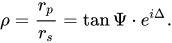
Thus, is the amplitude ratio upon reflection, and is the phase shift (difference). (Note that the right side of the equation is simply another way to represent a complex number.) Since ellipsometry is measuring the ratio (or difference) of two values (rather than the absolute value of either), it is very robust, accurate, and reproducible. For instance, it is relatively insensitive to scatter and fluctuations and requires no standard sample or reference beam.

Data analysis
[edit]Ellipsometry is an indirect method, i.e. in general the measured and cannot be converted directly into the optical constants of the sample. Normally, a model analysis must be performed, for example the Forouhi Bloomer model. This is one weakness of ellipsometry. Models can be physically based on energy transitions or simply free parameters used to fit the data.
Direct inversion of and is only possible in very simple cases of isotropic, homogeneous and infinitely thick films. In all other cases a layer model must be established, which considers the optical constants (refractive index or dielectric function tensor) and thickness parameters of all individual layers of the sample including the correct layer sequence. Using an iterative procedure (least-squares minimization) unknown optical constants and/or thickness parameters are varied, and and values are calculated using the Fresnel equations. The calculated and values which match the experimental data best provide the optical constants and thickness parameters of the sample.
Definitions
[edit]Modern ellipsometers are complex instruments that incorporate a wide variety of radiation sources, detectors, digital electronics and software. The range of wavelength employed is far in excess of what is visible so strictly these are no longer optical instruments.
Single-wavelength vs. spectroscopic ellipsometry
[edit]Single-wavelength ellipsometry employs a monochromatic light source. This is usually a laser in the visible spectral region, for instance, a HeNe laser with a wavelength of 632.8 nm. Therefore, single-wavelength ellipsometry is also called laser ellipsometry. The advantage of laser ellipsometry is that laser beams can be focused on a small spot size. Furthermore, lasers have a higher power than broad band light sources. Therefore, laser ellipsometry can be used for imaging (see below). However, the experimental output is restricted to one set of and values per measurement. Spectroscopic ellipsometry (SE) employs broad band light sources, which cover a certain spectral range in the infrared, visible or ultraviolet spectral region. By that the complex refractive index or the dielectric function tensor in the corresponding spectral region can be obtained, which gives access to a large number of fundamental physical properties. Infrared spectroscopic ellipsometry (IRSE) can probe lattice vibrational (phonon) and free charge carrier (plasmon) properties. Spectroscopic ellipsometry in the near infrared, visible up to ultraviolet spectral region studies the refractive index in the transparency or below-band-gap region and electronic properties, for instance, band-to-band transitions or excitons.
Standard vs. generalized ellipsometry (anisotropy)
[edit]Standard ellipsometry (or just short 'ellipsometry') is applied, when no s polarized light is converted into p polarized light nor vice versa. This is the case for optically isotropic samples, for instance, amorphous materials or crystalline materials with a cubic crystal structure. Standard ellipsometry is also sufficient for optically uniaxial samples in the special case, when the optical axis is aligned parallel to the surface normal. In all other cases, when s polarized light is converted into p polarized light and/or vice versa, the generalized ellipsometry approach must be applied. Examples are arbitrarily aligned, optically uniaxial samples, or optically biaxial samples.
Jones matrix vs. Mueller matrix formalism (depolarization)
[edit]There are typically two different ways of mathematically describing how an electromagnetic wave interacts with the elements within an ellipsometer (including the sample): the Jones matrix and the Mueller matrix formalisms. In the Jones matrix formalism, the electromagnetic wave is described by a Jones vector with two orthogonal complex-valued entries for the electric field (typically and ), and the effect that an optical element (or sample) has on it is described by the complex-valued 2×2 Jones matrix. In the Mueller matrix formalism, the electromagnetic wave is described by Stokes vectors with four real-valued entries, and their transformation is described by the real-valued 4x4 Mueller matrix. When no depolarization occurs both formalisms are fully consistent. Therefore, for non-depolarizing samples, the simpler Jones matrix formalism is sufficient. If the sample is depolarizing the Mueller matrix formalism should be used, because it also gives the amount of depolarization. Reasons for depolarization are, for instance, thickness non-uniformity or backside-reflections from a transparent substrate.


Advanced experimental approaches
[edit]Imaging ellipsometry
[edit]Ellipsometry can also be done as imaging ellipsometry by using a CCD camera as a detector. This provides a real time contrast image of the sample, which provides information about film thickness and refractive index. Advanced imaging ellipsometer technology operates on the principle of classical null ellipsometry and real-time ellipsometric contrast imaging. Imaging ellipsometry is based on the concept of nulling. In ellipsometry, the film under investigation is placed onto a reflective substrate. The film and the substrate have different refractive indexes. In order to obtain data about film thickness, the light reflecting off of the substrate must be nulled. Nulling is achieved by adjusting the analyzer and polarizer so that all reflected light off of the substrate is extinguished. Due to the difference in refractive indexes, this will allow the sample to become very bright and clearly visible. The light source consists of a monochromatic laser of the desired wavelength.[6] A common wavelength that is used is 532 nm green laser light. Since only intensity of light measurements are needed, almost any type of camera can be implemented as the CCD, which is useful if building an ellipsometer from parts. Typically, imaging ellipsometers are configured in such a way so that the laser (L) fires a beam of light which immediately passes through a linear polarizer (P). The linearly polarized light then passes through a quarter wavelength compensator (C) which transforms the light into elliptically polarized light.[7] This elliptically polarized light then reflects off the sample (S), passes through the analyzer (A) and is imaged onto a CCD camera by a long working distance objective. The analyzer here is another polarizer identical to the P, however, this polarizer serves to help quantify the change in polarization and is thus given the name analyzer. This design is commonly referred to as a LPCSA configuration.
The orientation of the angles of P and C are chosen in such a way that the elliptically polarized light is completely linearly polarized after it is reflected off the sample. For simplification of future calculations, the compensator can be fixed at a 45 degree angle relative to the plane of incidence of the laser beam.[7] This set up requires the rotation of the analyzer and polarizer in order to achieve null conditions. The ellipsometric null condition is obtained when A is perpendicular with respect to the polarization axis of the reflected light achieving complete destructive interference, i.e., the state at which the absolute minimum of light flux is detected at the CCD camera. The angles of P, C, and A obtained are used to determine the Ψ and Δ values of the material.[7]
- and


where A and P are the angles of the analyzer and polarizer under null conditions respectively. By rotating the analyzer and polarizer and measuring the change in intensities of light over the image, analysis of the measured data by use of computerized optical modeling can lead to a deduction of spatially resolved film thickness and complex refractive index values.
Due to the fact that the imaging is done at an angle, only a small line of the entire field of view is actually in focus. The line in focus can be moved along the field of view by adjusting the focus. In order to analyze the entire region of interest, the focus must be incrementally moved along the region of interest with a photo taken at each position. All of the images are then compiled into a single, in focus image of the sample.
In situ ellipsometry
[edit]In situ ellipsometry refers to dynamic measurements during the modification process of a sample. This process can be used to study, for instance, the growth of a thin film,[8] including calcium phosphate mineralization at the air-liquid interface,[9] etching or cleaning of a sample. By in situ ellipsometry measurements it is possible to determine fundamental process parameters, such as, growth or etch rates, variation of optical properties with time. In situ ellipsometry measurements require a number of additional considerations: The sample spot is usually not as easily accessible as for ex situ measurements outside the process chamber. Therefore, the mechanical setup has to be adjusted, which can include additional optical elements (mirrors, prisms, or lenses) for redirecting or focusing the light beam. Because the environmental conditions during the process can be harsh, the sensitive optical elements of the ellipsometry setup must be separated from the hot zone. In the simplest case this is done by optical view ports, though strain induced birefringence of the (glass-) windows has to be taken into account or minimized. Furthermore, the samples can be at elevated temperatures, which implies different optical properties compared to samples at room temperature. Despite all these problems, in situ ellipsometry becomes more and more important as process control technique for thin film deposition and modification tools. In situ ellipsometers can be of single-wavelength or spectroscopic type. Spectroscopic in situ ellipsometers use multichannel detectors, for instance CCD detectors, which measure the ellipsometric parameters for all wavelengths in the studied spectral range simultaneously.
Ellipsometric porosimetry
[edit]Ellipsometric porosimetry measures the change of the optical properties and thickness of the materials during adsorption and desorption of a volatile species at atmospheric pressure or under reduced pressure depending on the application.[10] The EP technique is unique in its ability to measure porosity of very thin films down to 10 nm, its reproducibility and speed of measurement. Compared to traditional porosimeters, Ellipsometer porosimeters are well suited to very thin film pore size and pore size distribution measurement. Film porosity is a key factor in silicon based technology using low-κ materials, organic industry (encapsulated organic light-emitting diodes) as well as in the coating industry using sol gel techniques.
Magneto-optic generalized ellipsometry
[edit]Magneto-optic generalized ellipsometry (MOGE) is an advanced infrared spectroscopic ellipsometry technique for studying free charge carrier properties in conducting samples. By applying an external magnetic field it is possible to determine independently the density, the optical mobility parameter and the effective mass parameter of free charge carriers. Without the magnetic field only two out of the three free charge carrier parameters can be extracted independently.
Applications
[edit]This technique has found applications in many different fields, from semiconductor physics to microelectronics and biology, from basic research to industrial applications. Ellipsometry is a very sensitive measurement technique and provides unequaled capabilities for thin film metrology. As an optical technique, spectroscopic ellipsometry is non-destructive and contactless. Because the incident radiation can be focused, small sample sizes can be imaged and desired characteristics can be mapped over a larger area (m2).
Advantages
[edit]Ellipsometry has a number of advantages compared to standard reflection intensity measurements:
- Ellipsometry measures at least two parameters at each wavelength of the spectrum. If generalized ellipsometry is applied up to 16 parameters can be measured at each wavelength.
- Ellipsometry measures an intensity ratio instead of pure intensities. Therefore, ellipsometry is less affected by intensity instabilities of the light source or atmospheric absorption.
- By using polarized light, normal ambient unpolarized stray light does not significantly influence the measurement, no dark box is necessary.
- No reference measurement is necessary.
Ellipsometry is especially superior to reflectivity measurements when studying anisotropic samples.
See also
[edit]References
[edit]- ^ P. Drude, Ueber die Gesetze der Reflexion und Brechung des Lichtes an der Grenze absorbirender Krystalle, Annalen der Physik, Volume 268, Issue 12, 1887, Pages: 584–625, DOI: 10.1002/andp.18872681205; Ueber Oberflächenschichten. I. Theil, Annalen der Physik, Volume 272, Issue 2, 1889, Pages: 532–560, DOI: 10.1002/andp.18892720214; Ueber Oberflächenschichten. II. Theil, Annalen der Physik, Volume 272, Issue 4, 1889, Pages: 865–897, DOI: 10.1002/andp.18892720409 (in German).
- ^ Rothen, Alexandre (1945). "The Ellipsometer, an Apparatus to Measure Thicknesses of Thin Surface Films". Review of Scientific Instruments. 16 (2): 26–30. Bibcode:1945RScI...16...26R. doi:10.1063/1.1770315. ISSN 0034-6748.
- ^ Harland Tompkins; Eugene A Irene (6 January 2005). Handbook of Ellipsometry. William Andrew. ISBN 978-0-8155-1747-4.
- ^ Gorlyak A.N.; Khramtsovky I.A.; Solonukha V.M. (2015). "Ellipsometry method application in optics of inhomogeneous media". Scientific and Technical Journal of Information Technologies, Mechanics and Optics. 15 (3): 378–386. doi:10.17586/2226-1494-2015-15-3-378-386.
- ^ Butt, Hans-Jürgen, Kh Graf, and Michael Kappl. "Measurement of Adsorption Isotherms". Physics and Chemistry of Interfaces. Weinheim: Wiley-VCH, 2006. 206-09.
- ^ Tompkins, Harland (2005). Handbook of Ellipsometry. pp. 13. Bibcode:2005hael.book.....T.
- ^ a b c Tompkins, Harland (2005). Handbook of Ellipsometry. pp. 329. Bibcode:2005hael.book.....T.
- ^ P. Koirala, D. Attygalle, P. Aryal, P. Pradhan, J. Chen, S. Marsillac, A.S. Ferlauto, N.J. Podraza, R.W. Collins, "Real time spectroscopic ellipsometry for analysis and control of thin film polycrystalline semiconductor deposition in photovoltaics"
- ^ R. Shahlori, A. R. J. Nelson, G. I. N. Waterhouse, D. J. McGillivray, "Morphological, chemical and kinetic characterisation of zein protein-induced biomimetic calcium phosphate films"
- ^ "Semilab | Products". semilab.com.
Further reading
[edit]- R. M. A. Azzam and N. M. Bashara, Ellipsometry and Polarized Light, Elsevier Science Pub Co (1987) ISBN 0-444-87016-4
- A. Roeseler, Infrared Spectroscopic Ellipsometry, Akademie-Verlag, Berlin (1990), ISBN 3-05-500623-2
- H. G. Tompkins, A Users's Guide to Ellipsometry, Academic Press Inc, London (1993), ISBN 0-12-693950-0
- H. G. Tompkins and W. A. McGahan, Spectroscopic Ellipsometry and Reflectometry, John Wiley & Sons Inc (1999) ISBN 0-471-18172-2
- I. Ohlidal and D. Franta, Ellipsometry of Thin Film Systems, in Progress in Optics, vol. 41, ed. E. Wolf, Elsevier, Amsterdam, 2000, pp. 181–282
- M. Schubert, Infrared Ellipsometry on semiconductor layer structures: Phonons, Plasmons, and Polaritons, Series: Springer Tracts in Modern Physics, Vol. 209, Springer (2004), ISBN 3-540-23249-4
- H. G. Tompkins and E. A. Irene (Editors), Handbook of Ellipsometry William Andrews Publications, Norwich, NY (2005), ISBN 0-8155-1499-9
- H. Fujiwara, Spectroscopic Ellipsometry: Principles and Applications, John Wiley & Sons Inc (2007), ISBN 0-470-01608-6
- M. Losurdo and K. Hingerl (Editors), Ellipsometry at the Nanoscale, Springer (2013), ISBN 978-3-642-33955-4
- K. Hinrichs and K.-J. Eichhorn (Editors), Ellipsometry of Functional Organic Surfaces and Films, Springer (2014), ISBN 978-3-642-40128-2
| Authority control databases: National |
|---|

Ellipsometry
View on GrokipediaIntroduction
Etymology
The term "ellipsometry" derives from "ellipse," referring to the elliptical polarization state of light produced upon reflection, combined with the Greek suffix -metry (μέτρον), meaning "measure." "Ellipse" itself comes from the Greek elleipsis (ἔλλειψις), meaning "deficiency" or "omission," in the geometric sense of a curve "falling short" of a circle.[6][7] In 19th-century scientific literature, studies of polarized light reflection laid the groundwork for the technique, with the term "ellipsometry" later coined in 1945 by Alexandre Rothen to describe instruments measuring changes in polarization states.[8][9] Early descriptions by French physicists in the mid-1800s focused on instruments and measurements of elliptical polarization akin to modern ellipsometers.[4]Historical Development
The foundations of ellipsometry trace back to the early 19th century in France, where Étienne-Louis Malus discovered the polarization of light by reflection in 1808, establishing the cosine-squared law that quantifies intensity changes for polarized light at oblique angles.[10] This breakthrough provided the experimental groundwork for observing polarization alterations upon reflection.[9] Building on Malus's findings, Augustin-Jean Fresnel developed the theoretical framework for polarized light reflection and refraction in the 1810s and 1820s, deriving equations that predict the elliptical polarization arising from unequal reflection coefficients for s- and p-polarized components at non-normal incidence.[10] Fresnel's laws enabled initial experiments on refractive indices through reflected polarized light in the 1820s.[11] In the mid-19th century, French physicist Jules Jamin advanced the technique by inventing the first ellipsometer around 1847–1850, an instrument featuring a rotatable polarizer, analyzer, and adjustable quarter-wave compensator to quantify the polarization ellipse of reflected light for measuring refractive indices of transparent media.[4] Jamin's design, detailed in his 1850 publication, marked the practical birth of ellipsometry as an optical characterization method, with commercial versions like the "Grand cercle de Jamin et Sernarmont" produced in the 1870s by instrument makers such as Duboscq.[4] The late 19th century saw significant theoretical and applied progress in Germany under Paul Drude, who in 1889–1890 derived the core equations linking the ellipsometric parameters—phase difference δ and amplitude ratio tan ψ—to the complex dielectric function of reflecting materials, applying them to metals and establishing single-wavelength ellipsometry for thin-film studies.[9] Drude's contributions, including precise measurements on metallic surfaces, solidified ellipsometry as a quantitative tool for optical constants and film thicknesses down to monolayers.[11] Twentieth-century developments enhanced precision and versatility, beginning with the adoption of photoelectric detection in the 1930s–1940s to replace subjective visual nulling, allowing more accurate intensity measurements in ellipsometers.[12] In 1945, Alexandre Rothen coined the term "ellipsometry" and described a dedicated apparatus for measuring thicknesses of thin surface films on metals, typically below 100 nm, using polarized light reflection.[8] The 1960s brought computational innovations, such as Frank L. McCrackin's 1963 methods and 1969 Fortran program for inverting ellipsometric data to extract film thickness and refractive index, addressing the ill-posed nature of the inverse problem through iterative least-squares fitting.[13] The first international conference on ellipsometry convened in 1963 at the National Bureau of Standards, promoting global exchange and evolving into the International Conference on Spectroscopic Ellipsometry (ICSE) series, which began in 1993 and continues biennially.[14] Spectroscopic ellipsometry emerged in the early 1970s through innovations at Bell Laboratories, where David E. Aspnes developed rotating-analyzer and rotating-compensator configurations for broadband wavelength measurements, enabling determination of wavelength-dependent optical functions and detailed thin-film modeling without assuming prior dielectric dispersion.[15] This variant, often using grating monochromators, revolutionized material characterization by providing spectral sensitivity to electronic structure and composition.[16] Since 2000, ellipsometry has integrated deeply with computational modeling, incorporating advanced regression algorithms, genetic optimization, and machine learning to resolve complex multilayer inversions and reduce ambiguities in data interpretation for nanostructures and anisotropic materials. Commercialization accelerated with automated, user-friendly spectroscopic systems from manufacturers like J.A. Woollam Co. and Horiba Scientific, embedding real-time modeling software and expanding adoption in semiconductor fabrication, photovoltaics, and biotechnology for in-situ process control.[17]Fundamental Principles
Light Polarization Basics
Polarization refers to the orientation of the electric field vector in an electromagnetic wave, which propagates as a transverse wave where the electric field and magnetic field are perpendicular to the direction of propagation .[18] For plane waves, the electric field can be expressed as , where is a complex vector determining the polarization state.[18] Light polarization can be linear, circular, or elliptical, depending on the relative amplitudes and phase difference between the orthogonal components of the electric field, typically resolved into x and y directions. Linear polarization occurs when the electric field oscillates along a fixed direction, such as for horizontal polarization, with no phase difference between components.[18] Circular polarization arises when the two orthogonal components have equal amplitudes and a phase difference of , for example, left-handed circular polarization given by .[18] Elliptical polarization is the general case, where unequal amplitudes and an arbitrary phase difference trace an ellipse in the plane perpendicular to propagation; this polarization ellipse is characterized by its major and minor axes, orientation, and axial ratio, fully describing the state.[18] At interfaces between optical media, the behavior of polarized light is governed by the Fresnel equations, which provide the reflection and transmission coefficients for light polarized parallel (p, or TM) and perpendicular (s, or TE) to the plane of incidence.[19] The s-polarization has the electric field perpendicular to the plane of incidence, while p-polarization has it parallel.[19] The reflection coefficients are for s-polarized light and for p-polarized light, where and are the complex refractive indices of the incident and transmitting media, is the angle of incidence, and is the angle of refraction related by Snell's law.[19] These coefficients are generally complex, accounting for both amplitude changes and phase shifts. Upon reflection at an interface between optical media, linearly polarized incident light can become elliptically polarized due to differing phase shifts between the p- and s-components.[20] For external reflection (from lower to higher index, e.g., air to glass), both components experience a phase shift if the reflection coefficient is negative, but the magnitudes differ, and at oblique angles, the relative phase difference introduces ellipticity.[20] This phase shift arises from the boundary conditions at the interface, where the reflected wave's phase depends on the refractive index contrast , transforming the linear input into an elliptical output state.[20] The polarization state of light, including elliptical forms, can be mathematically represented using Stokes parameters, a set of four quantities that fully describe the polarization for partially polarized or unpolarized light.[21] These are defined as (total intensity), (difference between horizontal and vertical linear polarizations), (difference between linear polarizations), and (difference between right- and left-circular polarizations), where is the phase difference between x and y components.[21] The parameters satisfy , with equality for fully polarized light.[21]Ellipsometric Parameters and Reflection
Ellipsometry measures the change in the polarization state of light upon reflection from a sample at oblique incidence, quantified by the complex ellipsometric ratio , where and are the complex Fresnel reflection coefficients for p-polarized (parallel to the plane of incidence) and s-polarized (perpendicular) light, respectively.[22] This ratio is conventionally expressed as , with representing the amplitude ratio and the phase difference between the p- and s-components after reflection.[23] The parameters and thus encode the relative amplitude and phase shift induced by the interaction of polarized light with the sample's optical properties.[24] For a bare, isotropic, homogeneous interface between two semi-infinite media with complex refractive indices (incident medium) and (substrate), the Fresnel reflection coefficients are derived from boundary conditions on the electromagnetic fields: where is the angle of incidence and the angle of transmission, related by Snell's law .[25] The ellipsometric ratio then follows directly as , providing a sensitive indicator of the refractive index contrast at the interface.[22] In the presence of thin films on a substrate, the reflection process involves multiple internal reflections and interference, altering relative to the bare substrate case. For an isotropic, homogeneous thin film of thickness and complex refractive index , the effective reflection coefficients and are obtained by recursively applying Fresnel coefficients at each interface (ambient-film and film-substrate) and incorporating the phase shift due to propagation through the film, where is the angle inside the film and the wavelength.[24] This yields a modified that depends on the film's optical constants and thickness, enabling characterization of structures down to atomic scales through the interference-induced changes in polarization.[23] A single ellipsometric measurement yields only and (two real numbers), but determining film properties requires solving for multiple parameters such as thickness and refractive index, resulting in inherent ambiguity with infinitely many solutions satisfying the data.[24] Resolving this necessitates optical modeling, where theoretical is computed for assumed layer structures and fitted to experimental values using regression techniques.[26]Variants of Ellipsometry
Single-Wavelength vs. Spectroscopic
Single-wavelength ellipsometry employs a monochromatic light source, typically a helium-neon (HeNe) laser emitting at 632.8 nm, to measure the change in polarization of light reflected from a sample.[27] This approach enables rapid data acquisition, often in microseconds, making it suitable for real-time monitoring of processes such as thin-film growth or etching where the optical properties are well-characterized and dispersion is assumed constant.[28] However, its limitation to a single wavelength restricts its ability to capture spectral variations, potentially leading to ambiguities in determining parameters like refractive index and thickness for complex or absorbing materials.[15] In contrast, spectroscopic ellipsometry scans a broad wavelength range, commonly from ultraviolet to near-infrared (e.g., 200–1700 nm), using sources like deuterium lamps for UV-Vis and halogen lamps for NIR, often dispersed via grating monochromators or Fourier transform spectrometers.[29] This variant yields datasets of ellipsometric parameters Ψ(λ) and Δ(λ) across the spectrum, allowing extraction of wavelength-dependent complex refractive indices n(λ) + i k(λ) without relying on Kramers-Kronig relations.[16] By providing dispersion curves, it resolves ambiguities inherent in single-wavelength measurements, such as distinguishing between similar multilayer configurations or accurately characterizing semiconductors and dielectrics with varying absorption.[15] Historically, single-wavelength ellipsometry dominated from the early 20th century through the 1960s, with automated instruments emerging in the 1970s for industrial applications like silicon oxidation monitoring.[28] The shift toward spectroscopic methods accelerated in the early 1970s, driven by advancements in digital computing and multichannel detectors pioneered by researchers like D. E. Aspnes, enabling routine spectral analysis that has since become the standard for precise material characterization.[16] Today, spectroscopic ellipsometry is preferred for research and metrology in complex systems, while single-wavelength remains valuable for high-speed, low-cost quality control.[15] The primary trade-offs involve speed and data volume: single-wavelength setups are faster and simpler but yield limited information, whereas spectroscopic approaches, though slower (milliseconds per spectrum) and more data-intensive, offer superior sensitivity and uniqueness in parameter fitting for multilayer films.[28] For instance, in analyzing absorbing films, spectroscopic data mitigates errors from first-order absorption sensitivity that plague single-wavelength methods.[30] The complex ratio ρ = r_p / r_s, where r_p and r_s are reflection coefficients for p- and s-polarized light, varies with wavelength in dispersive media, underscoring why spectral coverage enhances interpretive accuracy.[16]Standard vs. Generalized Ellipsometry
Standard ellipsometry is applicable to isotropic media or uniaxial materials where the optical axis is aligned parallel to the surface normal, assuming no coupling between s- and p-polarized light components. In this approach, the technique measures a single pair of ellipsometric parameters, Ψ and Δ, at a given angle of incidence, defined through the scalar reflection coefficients as , where and are the complex Fresnel reflection coefficients for p- and s-polarized light, respectively.[27] This simplification relies on the symmetry of the sample, enabling determination of properties like film thickness and refractive index without accounting for polarization conversion.[31] Generalized ellipsometry addresses limitations in standard methods by extending measurements to anisotropic or patterned samples, such as uniaxial or biaxial crystals, liquid crystals, or sub-wavelength gratings, where cross-polarization effects arise due to broken symmetry. Unlike standard ellipsometry, it captures four key parameters—Ψ_pp, Ψ_ss, Ψ_ps, and Ψ_sp—to characterize both diagonal and off-diagonal reflection behaviors, providing a complete description of the sample's response to polarized light.[32] These parameters derive from the full Jones reflection matrix elements, allowing quantification of phenomena like birefringence and dichroism in materials where s-to-p or p-to-s polarization conversion occurs.[31] Mathematically, generalized ellipsometry normalizes the reflection coefficients relative to the s-polarized component to handle anisotropy, defining ratios for , where the off-diagonal terms and quantify cross-polarization in cases like tilted optic axes or periodic structures.[31] This formulation extends the standard scalar approach using 4×4 matrix algebra, such as the Berreman method, to model layered anisotropic systems accurately.[33] Such extensions are particularly triggered by applications involving liquid crystals, where chiral or aligned structures induce strong cross-polarization, or strained semiconductors exhibiting induced birefringence, and sub-wavelength patterns like gratings that mimic anisotropic effective media.[33] Generalized ellipsometry emerged prominently in the 1990s, driven by advances in computational power that enabled inversion of the complex datasets for parameter extraction in spectroscopic implementations.[33]Jones vs. Mueller Matrix Formalism
In ellipsometry, the Jones formalism provides a mathematical framework for describing the polarization state of fully coherent and polarized light interacting with a sample. It represents the electric field vectors before and after reflection using 2×2 complex matrices, where the output field is related to the input field by , with denoting the Jones matrix whose elements capture amplitude and phase changes in the parallel (p) and perpendicular (s) polarization components.[34] This approach is particularly suited for ideal, non-scattering systems like smooth thin films on substrates, as it efficiently models deterministic polarization transformations without accounting for intensity variations from incoherence.[35] However, the Jones formalism has significant limitations when applied to real-world samples that introduce depolarization, such as rough surfaces, scattering media, or partially polarized incident light, because it assumes complete coherence and full polarization, leading to inaccurate representations of mixed polarization states.[36] In such cases, the formalism fails to capture the loss of polarization coherence, resulting in unphysical predictions for phenomena like diffuse reflection or multiple scattering events common in complex materials.[34] The Mueller matrix formalism addresses these shortcomings by extending the description to partially polarized and depolarized light using 4×4 real matrices that operate on Stokes vectors, which encode both polarization and total intensity information. The output Stokes vector is given by , where is the Mueller matrix, and its off-diagonal elements (for ) quantify depolarization effects arising from incoherent superpositions in the sample.[34] This makes it more general for ellipsometric measurements involving scattering or biological tissues, where depolarization metrics derived from provide insights into surface roughness or subsurface inhomogeneities.[37] Mueller matrices can be derived from corresponding Jones matrices for non-depolarizing cases through a linear transformation involving the Kronecker product: , where denotes the Kronecker product, is the complex conjugate of , and is a fixed 4×4 transformation matrix that maps between the vector spaces of Jones and Stokes representations.[35] Although this conversion is exact only for fully polarized light, the Mueller approach remains applicable even when depolarization occurs, offering a superset of the Jones formalism's capabilities.[38] In practice, Jones matrices are preferred for precise modeling of coherent thin-film stacks in controlled environments, while Mueller matrices are essential for analyzing scattering-dominated samples like powders or biomaterials, enabling comprehensive characterization of depolarization without assumptions of perfect coherence.[30] This distinction also allows Mueller ellipsometry to fully characterize anisotropic materials in generalized setups, in addition to handling partial coherence and depolarization.[34]Experimental Procedures
Instrumentation and Setup
The basic instrumentation for ellipsometry consists of a coherent or broadband light source, a polarizer to define the input polarization state, an optional compensator to introduce phase shifts, a sample stage positioned at an oblique angle of incidence (typically around 70° near the Brewster angle for many materials), an analyzer to probe the output polarization, and a detector to measure the intensity.[12][1] For single-wavelength ellipsometry, a laser (e.g., He-Ne at 632.8 nm) serves as the light source, while broadband sources such as xenon arc lamps or deuterium lamps are used for spectroscopic variants to cover UV-vis-NIR ranges (typically 190–2500 nm).[26] Polarizers, often Glan-Thompson prisms or dielectric sheet polarizers, are set to produce linearly polarized light at approximately 45° to the plane of incidence, and compensators like quarter-wave plates (e.g., mica or achromatic) can be inserted to generate circular or elliptical input polarization for enhanced sensitivity.[12] Detectors include photodiodes, photomultiplier tubes, or CCD arrays, depending on the wavelength range and required resolution.[1] Common configurations modulate polarization elements to extract the ellipsometric parameters Ψ (amplitude ratio) and Δ (phase difference) from the reflected light intensity. In the rotating analyzer ellipsometer (RAE), the polarizer remains fixed while the analyzer rotates at high speed (e.g., 10–100 Hz), allowing Fourier analysis of the detector signal to determine both parameters simultaneously.[39] Alternative setups include the rotating polarizer ellipsometer (RPE), where the input polarizer rotates to vary the incident polarization, or the rotating compensator ellipsometer (RCE), which uses a continuously rotating quarter-wave plate after the sample for superior phase sensitivity and accuracy in spectroscopic applications.[1] These configurations enable real-time measurements with minimal mechanical complexity, though the RCE is preferred for its ability to handle a wider range of sample reflectivities without additional adjustments.[39] For spectroscopic ellipsometry, the setup incorporates wavelength-dispersive elements such as a monochromator or grating spectrometer between the light source and polarizer, or Fourier transform infrared (FTIR) spectrometers for mid-IR extensions (e.g., 1.7–30 μm).[26] Sample stages are designed for precise goniometric control, often with vacuum compatibility for in situ studies under controlled atmospheres or cryogenic capabilities for low-temperature measurements down to 10 K.[12] Calibration typically involves zone measurements on standard samples like oxidized silicon wafers to determine instrument offsets and achieve accuracies of 0.01° in Ψ and Δ, ensuring reliable determination of optical constants.[1] Generalized ellipsometry variants require additional polarization controls, such as achromatic retarders, to measure anisotropic or chiral samples.[39]Data Acquisition
In ellipsometry, data acquisition begins with the modulation of the incident light's polarization state, often achieved using rotating polarizers or analyzers at frequencies ranging from 10 to 100 Hz, which generates a time-varying intensity signal upon reflection from the sample surface. The reflected beam is then directed to a detector that records the intensity as a function of rotation angle or time, capturing the changes in amplitude and phase induced by the sample. This sequence allows for the sensitive measurement of polarization alterations without direct contact, typically at oblique incidence angles near the Brewster angle to maximize contrast. To enhance signal quality, lock-in amplifiers are employed to separate the DC component, representing the average intensity, from the AC components at modulation harmonics, effectively suppressing environmental noise and improving measurement precision. Fourier analysis of the acquired intensity waveform further extracts these multi-harmonic signals, such as the fundamental and second-harmonic terms, which directly relate to the ellipsometric parameters by isolating contributions from different polarization states. Various scanning modes are utilized depending on the sample complexity: fixed-angle, single-wavelength measurements provide rapid assessments for uniform thin films, often completing in seconds, while variable angle spectroscopic ellipsometry (VASE) systematically varies the incidence angle (e.g., 55° to 75°) and wavelength (e.g., 200–1700 nm) across multiple spectra to enable depth-resolved profiling and resolution of multilayer structures. Common error sources in data acquisition include beam alignment inaccuracies, which can shift the effective incidence angle and introduce systematic biases in the polarization response, mechanical vibrations that perturb the optical path and degrade temporal stability, and sample non-uniformity, which causes spatial variations in the reflected signal leading to averaging artifacts. Under controlled laboratory conditions, these are mitigated to achieve typical signal-to-noise ratios (SNR) exceeding 1000:1, ensuring reliable data for subsequent analysis. Photodiode or CCD detectors capture these signals, converting them to electrical outputs for processing. The resulting raw intensity data are immediately converted to preliminary ellipsometric parameters Ψ and Δ through arctangent functions applied to the ratios of the extracted AC and DC components, where tan Ψ represents the relative amplitude of the p- and s-polarized reflection coefficients, and Δ denotes their phase difference.Data Analysis and Modeling
Data analysis in ellipsometry involves interpreting measured ellipsometric parameters, such as amplitude ratio Ψ and phase difference Δ, to extract physical properties like film thickness d and complex refractive index ñ = n + ik, where n is the real part and k the imaginary part. This process typically begins with forward modeling to generate theoretical spectra, followed by an inverse fitting procedure to match these to experimental data. The ill-posed nature of the inverse problem, due to correlations between parameters, requires careful model selection and validation techniques.[40] Forward modeling simulates the expected Ψ(λ) and Δ(λ) spectra for a given structural model using the transfer matrix method (TMM), which computes the propagation of electromagnetic waves through multilayer stacks by multiplying interface and layer matrices. In TMM, each layer is represented by a 2×2 matrix relating the electric field components at the input and output interfaces, allowing efficient calculation of reflection coefficients for p- and s-polarized light from assumed values of n(λ), k(λ), and d. This method is particularly suited for isotropic or anisotropic thin films on substrates, enabling rapid iteration during fitting.[41] The inverse problem is solved through nonlinear least-squares regression, where parameters are optimized to minimize the reduced chi-squared statistic: Here, N is the number of data points, M the number of fitted parameters, and σ denotes measurement uncertainties; the Levenberg-Marquardt algorithm is widely used for this optimization due to its balance of gradient descent and Gauss-Newton steps, ensuring convergence even for noisy data. A good fit yields χ² ≈ 1, indicating model-data agreement within experimental error.[42][43] Dispersion relations parameterize the wavelength-dependent optical constants to reduce the number of free variables in the model. For transparent films in the visible-near UV range, the Cauchy model ñ(λ) = A + B/λ² + C/λ⁴ approximates low absorption, while the Sellmeier equation ñ²(λ) - 1 = Σ (B_i λ²)/(λ² - C_i) accounts for resonances from electronic transitions. Absorbing materials, such as semiconductors, are better described by the Tauc-Lorentz model, which combines a Tauc joint density of states for the bandgap with Lorentzian oscillators: ε(ω) = (A E_0 C (E - E_g))/(E² - (E_0 + iΓ)²) for E > E_g (extended via Kramers-Kronig relations below the gap), where E_g is the bandgap energy; for films with Urbach tails, the Cody-Lorentz variant modifies the absorption edge. Genie models, incorporating Gaussian lineshapes, or parametric forms like the Herzinger-Johs generalized oscillator, extend applicability to complex dielectrics.[44][45][46] Parameter ambiguities arise from mathematical correlations, such as trade-offs between thickness and refractive index, which can yield multiple solutions with similar χ². These are resolved by acquiring data at multiple angles of incidence or wavelengths, providing overdetermined datasets that constrain the solution space; for instance, spectroscopic ellipsometry across 300-1700 nm reduces degeneracy compared to single-wavelength measurements. Confidence in fitted parameters is assessed via correlation matrices from the Hessian of χ², highlighting pairwise sensitivities (e.g., strong correlation between d and n for thin films <50 nm).[47][48] Commercial software like WVASE from J.A. Woollam implements TMM-based modeling with extensive dispersion libraries and Levenberg-Marquardt fitting, supporting anisotropic and graded structures. Open-source alternatives, such as REFIT (also known as RefFit), offer similar capabilities for Windows/Linux, including scripting for custom models. Recent post-2020 advances integrate machine learning, such as neural networks trained on simulated datasets, to accelerate inversion—bypassing traditional regression for near-instantaneous predictions of n, k, and d with accuracies comparable to least-squares methods, particularly for high-throughput applications.[49][50][40][51]Advanced Techniques
Imaging Ellipsometry
Imaging ellipsometry combines the principles of traditional ellipsometry with optical microscopy to enable spatially resolved measurements of thin film properties across a sample surface. By integrating an ellipsometer setup with a microscope, it measures the ellipsometric parameters Ψ and Δ as two-dimensional maps, Ψ(x,y) and Δ(x,y), revealing variations in thickness, refractive index, or surface topology. This technique typically employs a polarizer-compensator-sample-analyzer (PCSA) configuration or coherent phase modulation (CPM) using photoelastic modulators to analyze polarized light reflected from the sample, with polarization states modulated to capture intensity images that are processed to yield ellipsometric data.[52] The setup utilizes focal plane array detectors, such as CCD or CMOS sensors, to record images at a fixed wavelength and angle of incidence, allowing parallel acquisition of ellipsometric signals over large areas. High numerical aperture (NA) objective lenses, often with NA around 0.35–0.4, focus the beam onto the sample and collect the reflected light, enabling lateral resolutions from approximately 0.5 μm to 10 μm depending on wavelength and NA—for instance, 1.7 μm at 530 nm with NA 0.4. Pixelated polarization imaging is achieved through liquid crystal modulators or rotating polarizers in the polarization state generator (PSG) and analyzer (PSA), which generate multiple intensity images per frame for decoding into Ψ and Δ maps. This configuration supports applications like thickness mapping of thin films (0–30 nm) in microelectronics, where it visualizes non-uniform oxide layers, or biomolecular arrays, detecting protein binding with sensitivities down to 5 Å thickness variations.[53][52] Data handling involves local modeling for each pixel, applying optical models tailored to the sample's structure to invert Ψ and Δ into thickness or index profiles, often correcting for angle-of-incidence averaging across the field of view. Contrast enhancement techniques, such as imaging in the Δ or Y parameter (related to phase shift), highlight interfaces or defects by exploiting small changes in ellipsometric response, for example, a linear relation δΔ ≈ k δT for thin films where k depends on material properties. Quantitative analysis processes large datasets—up to millions of pixels—in minutes using specialized software, ensuring accurate mapping without scanning.[52] Developments in imaging ellipsometry began in the late 1980s and gained momentum in the 1990s with the shift from qualitative visualization to quantitative metrology, driven by advances in detector arrays and modulation techniques. Early systems focused on null ellipsometry for transparent films, evolving to photometric and CPM methods for broader wavelength coverage (180–2000 nm). Recent innovations include hyperspectral variants, such as ultra-wide-field imaging Mueller matrix spectroscopic ellipsometry (IMMSE), which acquires over 10 million spectra across a 20 mm × 20 mm field at 6.5 μm resolution, with speeds 662 times faster than conventional point measurements (0.001 s per point) using sCMOS sensors and machine learning for data inversion. These advances, up to 2025, enhance throughput for semiconductor metrology, enabling wafer-scale thickness and critical dimension mapping with sub-nm accuracy.[54]In Situ Ellipsometry
In situ ellipsometry enables real-time, non-destructive monitoring of thin film growth, etching, or modification processes by integrating the ellipsometer optics with specialized reaction chambers that accommodate vacuum, elevated temperatures up to 1000°C, or liquid environments.[29] This compatibility arises from adaptations such as vacuum-compatible ports for light entry and exit, allowing the polarized light beam to probe the sample surface without interrupting the process.[55] The technique measures changes in the ellipsometric parameters Δ (phase difference) and Ψ (amplitude ratio) to track evolving film thickness and optical properties, providing insights into dynamic surface phenomena.[29] A primary application involves real-time tracking of thin film deposition techniques like chemical vapor deposition (CVD) and atomic layer deposition (ALD), where oscillations in Δ signal cyclic growth steps and enable precise thickness control at the angstrom level. For instance, during ALD of materials such as TiN or Al2O3, in situ ellipsometry reveals growth rates and interface formation by analyzing spectral changes in the 1-5 eV range, facilitating process optimization for semiconductor fabrication.[56] In liquid environments, it monitors polymer film swelling or electrochemical interfaces, quantifying solvent uptake and refractive index shifts with sub-nanometer resolution.[57] Key challenges include correcting for birefringence induced by chamber windows, which can distort polarization measurements and require advanced modeling or multi-zone configurations to isolate sample signals.[58] Fiber-optic coupling addresses remote sensing needs in harsh conditions, such as high-temperature reactors, by transmitting light to and from the sample while minimizing alignment issues, though it introduces potential signal attenuation that demands calibration.[59] Data acquisition occurs continuously during processing, often at rates of seconds per spectrum, supporting feedback loops for automated process control, such as adjusting precursor flows in ALD to maintain uniform growth.[29] Recent advances since 2010 emphasize operando applications in electrochemistry and catalysis, where ellipsometry combined with electrochemical cells tracks catalyst surface evolution under working conditions, revealing oxide formation or adsorption dynamics.[60] By 2025, integrations with complementary in situ tools like X-ray diffraction (XRD) have enhanced multimodal analysis, correlating optical changes with structural transformations in catalytic materials.[61]Specialized Approaches
Ellipsometric porosimetry is a specialized technique developed in the late 1990s to characterize porosity in thin films, particularly low-k dielectrics used in microelectronics. It involves exposing the sample to probe gases, such as toluene vapor, in a vacuum chamber to induce adsorption and desorption cycles, while monitoring changes in the film's refractive index and thickness via spectroscopic ellipsometry. The open porosity is calculated from changes in the effective refractive index during these cycles using the Lorentz-Lorenz effective medium approximation via the Clausius-Mossotti factor , typically , where and are for the adsorbate-saturated and dry film, and for the bulk condensed adsorbate (e.g., liquid toluene with ). This method enables precise determination of open porosity, pore size distribution, and specific surface area, with cyclic dosing typically performed at pressures around 10-100 mbar to ensure controlled infiltration. Since its inception for evaluating porous silica and organosilicate glasses in low-k interconnects, the technique has become essential for optimizing material integration in semiconductor fabrication.[62][63][64] Magneto-optic generalized ellipsometry, often incorporating the magneto-optical Kerr effect (MOKE), targets the magnetic properties of ferromagnetic thin films by applying external magnetic fields and measuring changes in the polarization state of reflected light. In this approach, an off-diagonal element of the film's conductivity tensor induces Kerr rotation and ellipticity, quantified through generalized Mueller matrix analysis to probe magnetization orientation and magneto-optical coupling. The polar MOKE configuration, common for perpendicular magnetization studies, uses a setup with incident light normal to the sample surface, electromagnets for field application (up to several kOe), and rotating analyzers or compensators to detect rotation angles as small as microradians. This variant has advanced spintronics research in the 2020s, enabling non-destructive characterization of spin Hall effects, magnon polaritons, and multilayer structures for data storage and sensors.[65][66][67][68] Other niche approaches extend ellipsometry to extreme wavelengths for targeted dielectric measurements. Vacuum ultraviolet (VUV) ellipsometry, operating below 200 nm, characterizes high-k gate dielectrics like HfO and ZrO by resolving sharp absorption edges and band structures not accessible in the visible range, aiding the development of sub-100 nm CMOS devices. Terahertz ellipsometry, in contrast, probes low-frequency dielectrics and phononic responses in materials such as SrTiO films, revealing soft-mode behaviors and complex permittivity up to 3 THz for applications in ferroelectrics and insulators. These methods complement standard ellipsometry by providing spectral insights into electronic and vibrational properties under specialized conditions.[69][70]Applications
Thin Film and Material Characterization
Ellipsometry provides sub-nanometer precision in measuring the thickness of thin films, particularly those thinner than 100 nm, by analyzing changes in the polarization state of reflected light. For single-layer films, such as SiO₂ on Si, spectroscopic ellipsometry (SE) fits measured ψ and Δ parameters to optical models, achieving resolutions down to 0.1 nm. In multilayer stacks common in semiconductors, inversion techniques resolve individual layer thicknesses by combining multiple-angle or multiple-sample data to decouple parameters, as demonstrated in analyses of 10–40 nm chromium films where interference enhancement via thick underlayers improves sensitivity. The technique extracts optical constants, including the refractive index (n) and extinction coefficient (k), across spectral ranges like 240–1700 nm, enabling characterization of diverse materials. For dielectrics and organics, variable-angle SE (VASE) employs isotropic or anisotropic models to derive dispersion relations, while metals like ultrathin gold films (3–50 nm) reveal plasma frequencies around 8.45 eV and reduced relaxation times due to quantum confinement effects. Bandgap estimation follows from Tauc plots of the absorption coefficient derived from k values, relating photon energy to interband transitions in semiconductors via Lorentz oscillator models.[71][72] Composition in alloys or composites is determined using effective medium approximations like the Bruggeman model, which treats heterogeneous films as homogeneous equivalents with volume fractions of components. This approach models optical response in systems such as AlGaAs interfaces, though it shows limitations in accuracy for graded compositions compared to alloy models and transmission electron microscopy benchmarks. Data inversion for these properties involves fitting ellipsometric data to such parameterized models to resolve effective dielectric functions.[73] In photovoltaics, ellipsometry ensures quality control of anti-reflective coatings, such as SiNₓ or TiO₂ layers (around 70–100 nm), by verifying thickness uniformity and optical constants to minimize reflection losses below 30% and boost efficiency. For polymer films, it assesses uniformity with relative standard deviations as low as 1.2% across spots, tracking thickness changes like 20% swelling in polystyrene under solvents, vital for coating applications.[74][57] Recent advances in the 2020s extend ellipsometry to 2D materials, with Fourier imaging micro-ellipsometry enabling angstrom-level thickness mapping and layer counting for graphene and van der Waals heterostructures like MoS₂ or hBN. This method resolves monolayer thicknesses (e.g., 0.32 nm for hBN) and lateral inhomogeneities (±0.04 nm) at sub-5 μm resolution, supporting precise van der Waals layer assembly without substrate dependence.[75]Surface and Interface Studies
Ellipsometry's high surface sensitivity, capable of detecting thickness changes as small as 0.1 Å, makes it particularly suited for analyzing ultrathin layers at depths typically ranging from 1 to 10 nm. This capability enables precise characterization of native oxide layers on metal surfaces, such as those formed on silicon or aluminum, where ellipsometry measures the optical properties and growth kinetics of these monolayers without destructive sampling. Similarly, self-assembled monolayers (SAMs) of alkanethiols on gold substrates can be quantified for thickness and refractive index, revealing molecular orientation and packing density essential for applications in nanotechnology and sensor design.[29][76] Interface roughness, often arising at boundaries between substrates and overlayers, introduces optical blurring that ellipsometry models using the effective medium approximation (EMA). In this approach, the rough interface is represented as an effective layer with a porosity-dependent dielectric function, allowing estimation of roughness height and its impact on overall reflectivity; for instance, EMA has been applied to rough silicon surfaces to derive effective thicknesses on the order of 1-5 nm. This modeling is crucial for distinguishing true surface modifications from artifacts due to topographic irregularities.[29][77] Adsorption kinetics at surfaces are monitored in real time through shifts in the ellipsometric parameter Δ, which reflects changes in phase difference due to accumulating mass. For protein binding, such as fibrinogen adsorption on titanium oxide, ellipsometry tracks the rapid initial attachment followed by conformational rearrangements, yielding adsorption rates on the scale of ng/cm² per minute. Surfactant layers, like those of polyethylene glycol derivatives, exhibit similar Δ variations during self-assembly, providing insights into hydrophobic interactions and layer stability.[29][78] In corrosion studies on alloys, ellipsometry quantifies the formation and composition of protective oxide films on Fe- and Ni-based materials exposed to oxygen, revealing thicknesses of 2-8 nm and their role in inhibiting further degradation. For biomolecule immobilization on sensors, it assesses the uniform attachment of proteins like those used in PCA3 detection assays, ensuring monolayer coverage for reliable biosensing performance. The multiple angle of incidence (MAI) technique enhances these analyses by acquiring data at angles from 45° to 75°, enabling decoupling of surface-specific signals from bulk substrate contributions through regression modeling. In situ ellipsometry further supports dynamic monitoring of these processes under operational conditions.[79][29][29]Emerging Fields
Ellipsometry has found significant applications in nanotechnology for characterizing nanostructures such as quantum dots and nanowires. Spectroscopic ellipsometry enables precise determination of optical properties in Si/Ge superlattices embedded with Ge quantum dots, revealing insights into their electronic structure and potential for quantum devices.[80] In nanowire systems, temperature-dependent ellipsometry studies on hybrid quantum dot-nanowire structures provide data on refractive indices and absorption coefficients, aiding the design of optoelectronic components.[81] For plasmonic structures, spectroscopic ellipsometry measures dielectric functions and senses sub-monolayer changes, as demonstrated in configurations where molecular spacers create nanoscale gaps, highlighting quantum mechanical effects in light-matter interactions.[82] Mid-infrared ellipsometry further enhances sensitivity in plasmonic nanoantennas, allowing characterization of localized surface plasmons in nanostructures.[83] In biology and medicine, ellipsometry supports label-free detection of biomolecular interactions, particularly DNA hybridization and cell membrane studies. Total internal reflection ellipsometry assesses DNA hybridization kinetics in microfluidic environments, offering real-time monitoring without fluorescent labels.[84] Polarization-modulated spectroscopic ellipsometry, integrated with microfluidics, detects selective DNA-DNA hybridization through changes in surface plasmon resonance, achieving high specificity for mismatched sequences.[85] For cell membranes, evanescent light-scattering microscopy combined with ellipsometry enables time-resolved, label-free imaging of membrane dynamics and protein adsorption in microfluidic chips.[86] These approaches facilitate biosensor development for rapid diagnostics, such as quantifying hybridization efficiency on gold surfaces modified for biocompatibility.[87] Ellipsometry contributes to energy research by characterizing materials in solar cells and batteries, especially through in operando measurements. In perovskite solar cells, spectroscopic ellipsometry monitors interfacial degradation during operation, revealing thickness changes and stability improvements via passivation layers that extend device lifetimes beyond 1000 hours under illumination.[88] For battery electrodes, operando ellipsometry tracks lithium intercalation in indium tin oxide electrodes, quantifying electrochromic shifts and failure mechanisms in real-time electrochemical cycling.[89] This technique also probes ion activities in aqueous batteries, correlating optical parameter variations with electrode swelling and electrolyte interactions during charge-discharge cycles.[90] Such insights support the development of durable electrodes for lithium-ion systems, identifying degradation pathways at the nanoscale. In photonics, ellipsometry characterizes advanced structures like metamaterials, photonic crystals, and chiral systems for manipulating light properties. Metasurface arrays enable single-shot spectroscopic ellipsometry, rapidly determining thin-film parameters in metamaterials with sub-nanometer precision.[91] For photonic crystals, ellipsometry derives permittivity in negative-index metamaterials formed by periodic hole arrays, confirming band structures and refractive indices across visible wavelengths.[92] In chiral structures, L-shaped silicon metamaterials exhibit broadband chiroptical responses, measured via ellipsometry to quantify circular dichroism exceeding 0.5 in the near-infrared.[93] Twisted optical metamaterials detect enantiomers with high sensitivity, using ellipsometry to verify film thicknesses and plasmonic chirality for biosensing applications.[94] In situ ellipsometry during growth of gold nanorod metamaterials monitors hyperbolic dispersion, guiding fabrication of tunable photonic devices.[95] Beyond core areas, ellipsometry aids environmental monitoring and cultural heritage preservation. For pollutant detection, spectroscopic ellipsometry analyzes copper oxide films implanted with chromium ions, evaluating their photocatalytic degradation of organic contaminants under visible light, with efficiency rates up to 90% for methylene blue removal.[96] Operando ellipsometry on indium tin oxide electrodes detects electrochemical responses to environmental stressors, supporting sensor design for water quality assessment.[89] In cultural heritage, ellipsometry characterizes metal-organic framework thin films for artifact protection, monitoring adsorption of corrosive species in operando to prevent degradation without invasive sampling.[97] It also studies medieval stained glass, quantifying birefringence and layer thicknesses to reconstruct historical production techniques and assess environmental impact on artifacts.[98]Advantages and Limitations
Key Advantages
Ellipsometry excels in sensitivity, capable of detecting thickness changes below 0.1 nm and refractive index variations as small as 0.001, making it invaluable for analyzing ultra-thin films and subtle optical modifications.[24] This high precision stems from the technique's measurement of the ellipsometric parameters Ψ (amplitude ratio) and Δ (phase difference), where even sub-monolayer alterations produce measurable shifts, such as Δ changes of approximately 0.3° per 1 Å thickness variation.[99][30] A primary strength of ellipsometry is its non-destructive and non-contact nature, which eliminates the need for sample preparation and allows characterization of delicate, valuable, or in-process specimens without any risk of alteration or contamination.[100][99] This feature is particularly advantageous for real-time studies in controlled environments like vacuum chambers or liquid media. The technique enables rapid data acquisition, with single-spot measurements often achievable in milliseconds to seconds using modern spectroscopic setups, facilitating efficient process monitoring and high-throughput analysis.[36][29] Such speed supports applications in dynamic scenarios, including thin film growth observation. Ellipsometry demonstrates broad versatility, applicable to diverse materials such as insulators, conductors, semiconductors, organics, and liquids, over an extensive spectral range from ultraviolet to mid-infrared wavelengths.[36][100] This adaptability extends to complex structures like multilayers and anisotropic samples, enhancing its utility in thin film characterization across various fields. Furthermore, the direct acquisition of Ψ and Δ parameters provides model-independent measurements that can indicate changes in interface quality and optical properties. Quantitative assessment of surface roughness or composition changes typically requires optical modeling, such as effective medium approximations.[24][29]Limitations and Challenges
Ellipsometry's reliance on optical models for data interpretation introduces significant model dependence, as the technique yields indirect measurements of sample properties that must be fitted using predefined models such as Cauchy or Lorentz oscillators. Accurate results require prior knowledge of the sample's structure, composition, and optical constants, which can be challenging to establish for complex systems. In particular, ambiguities arise in absorbing materials or samples with surface roughness, where factors like depolarization, optical anisotropy, and spatial dispersion complicate unique parameter extraction, often leading to multiple possible solutions.[29][101][102] The surface sensitivity of ellipsometry limits its applicability to buried layers, as the probe depth is typically on the order of λ/10 (where λ is the incident wavelength), restricting effective characterization to the top few hundred nanometers depending on the material's refractive index and wavelength range. Deeper interfaces or layers beyond this depth contribute minimally to the reflected signal due to diminishing interference effects, rendering ellipsometry insensitive without additional modeling assumptions. Consequently, for comprehensive analysis of multilayer structures with buried features, complementary techniques such as transmission electron microscopy (TEM) are essential to validate or extend ellipsometric findings.[29][103][104] Data interpretation in ellipsometry presents notable challenges due to the nonlinear nature of the fitting process, which involves minimizing the difference between measured ellipsometric parameters (Ψ and Δ) and model predictions through regression algorithms. This optimization is prone to convergence at local minima, especially for multilayer or inhomogeneous samples, requiring substantial user expertise to select appropriate initial parameters and avoid erroneous results. Recent advancements, including machine learning approaches like deep neural networks, have emerged to mitigate these issues by automating inverse problem solving and improving accuracy, with applications demonstrated in 2024–2025 studies on thin-film characterization.[40][105][51] High equipment costs pose a barrier to widespread adoption, particularly for spectroscopic and imaging ellipsometry systems, which typically exceed $100,000 per unit due to the need for precise monochromators, detectors, and alignment optics. Critical alignment of the light beam and sample is essential for reliable measurements, as misalignment can introduce systematic errors that amplify interpretation difficulties in advanced configurations.[106] Ellipsometry often relies on assumptions of material isotropy and homogeneity, which are frequently violated in real-world samples such as biomolecules or nanostructured films exhibiting anisotropy or gradients. These violations can lead to systematic errors in derived parameters like thickness or refractive index unless effective medium approximations are applied, though such corrections introduce additional model uncertainties. For biomolecular layers, the inherent heterogeneity and orientation effects further challenge these assumptions, limiting the technique's standalone reliability without supplementary validation.[29][23]References
- https://en.wiktionary.org/wiki/ellipsometry