Recent from talks
All channels
Be the first to start a discussion here.
Welcome to the community hub built to collect knowledge and have discussions related to Fingerprint.
Nothing was collected or created yet.
Fingerprint
View on Wikipediafrom Wikipedia
Not found
Fingerprint
View on Grokipediafrom Grokipedia
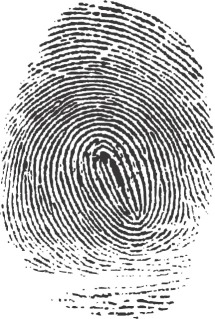
A fingerprint is the impression produced by the friction ridges—raised portions of skin interspersed with valleys—on the pads of the fingers and thumbs, forming a unique pattern that remains constant from formation in fetal development through adulthood.[1] These patterns arise from mechanical buckling instabilities in the basal cell layer of the epidermis during embryogenesis, influenced by differential growth rates rather than solely genetics, explaining their individuality even among identical twins.[2][3] Classified empirically into three primary types—arches, loops, and whorls—along with subtypes based on ridge configurations, fingerprints enable reliable personal identification due to the probabilistic rarity of matching minutiae points across sufficient area.[4] First systematically employed for verification in 19th-century British India by William Herschel to combat fraud, their forensic application expanded globally by the early 20th century, supplanting anthropometry as the standard for criminal identification.[4] While foundational principles of permanence and uniqueness hold under empirical scrutiny, latent print matching in investigations has faced challenges, with peer-reviewed studies revealing low but non-zero false positive rates (approximately 0.1% in controlled tests) and underscoring the need for examiner proficiency to mitigate cognitive biases.[5]
Whorls reached their peak at 38.71% in Asians, compared to 23.82% in Whites, underscoring the trend of higher whorl prevalence in East Asian ancestries, potentially linked to polygenic factors influencing ridge flow during fetal development. Arches, the rarest pattern, were most frequent among Blacks at 16.77%, aligning with observations of elevated plain and tented arches in African populations relative to Europeans (around 5-8%) and Asians (2-5%).[38][49][51]
Subtype variations further delineate differences; radial loops, which curve toward the thumb, occur at higher rates in Whites (up to 5-6% overall) than in African groups (1-4%), while ulnar loops dominate universally but with reduced totals in whorl-heavy Asian cohorts. These inter-population disparities, documented since early 20th-century analyses of English Whites versus West African samples, persist in modern datasets and aid anthropological classification, though they lack forensic utility for individual racial assignment due to overlap and within-group variability. Genetic studies cluster dermatoglyphic traits by ancestry, with Asian groups showing distinct whorl enrichment compared to Caucasian baselines.[50][49][52]
Digital live scanning, commonly referred to as live scan fingerprinting, captures fingerprint images electronically by placing a finger on a flat optical or capacitive sensor surface—often a glass plate—which records the ridge patterns in real-time without ink or paper cards.[128] The process generates high-resolution digital images compliant with standards such as the FBI's Electronic Fingerprint Transmission Specification (EFTS), typically at 500 pixels per inch (ppi) resolution using Wavelet Scalar Quantization (WSQ), a wavelet-based compression system developed by the FBI, Los Alamos National Laboratory, and the National Institute of Standards and Technology (NIST), enabling immediate electronic transmission to criminal justice databases for verification. For fingerprints recorded at 1000 ppi spatial resolution, law enforcement agencies including the FBI use JPEG 2000 instead of WSQ.[100] The technology originated in the 1970s when the FBI funded the development of automated fingerprint scanners for minutiae extraction and classification, marking a shift from manual inking to digital capture.[42] By the 1990s, live scan systems became widespread for law enforcement and background checks, integrating with the FBI's Integrated Automated Fingerprint Identification System (IAFIS), launched in 1999, which digitized national fingerprint records.[86] Modern devices use optical scanners employing frustrated total internal reflection (FTIR) or silicon sensors detecting capacitance variations from skin ridges, producing images less susceptible to distortions than traditional rolled ink prints.[128] Compared to ink-based methods, live scan offers superior accuracy with rejection rates under 1% due to minimized smudges and human error in rolling, alongside processing times reduced to 24-72 hours via electronic submission versus weeks for mailed cards.[129][130] FBI guidelines emphasize image quality metrics, including contrast and ridge flow, to ensure legibility for automated biometric matching, with live scan facilitating over 90% of U.S. federal background checks by the 2010s.[131] Captured fingerprint images in live scanning exhibit distortions, noise, and inconsistencies due to the quantity and direction of pressure applied by the user, skin conditions, and the projection of the irregular 3D finger onto a 2D plane; these factors introduce inconsistent and non-uniform irregularities, rendering each acquisition unique and uncontrollable, thereby increasing the complexity of fingerprint matching in biometric systems.[100] Despite these benefits, challenges persist in capturing dry or scarred fingers, often requiring moisturizers or manual adjustments to meet NIST-recommended image quality scores above 70 on the National Voluntary Laboratory Accreditation Program (NVLAP) scale.[100][125]
Biological Basis
Formation and Development
The scientific study of fingerprints is called dermatoglyphics or dactylography. Human fingerprints develop during fetal gestation through the formation of friction ridges, which are raised portions of the epidermis, also known as epidermal ridges, on the digits (fingers and toes), the palm of the hand, or the sole of the foot, consisting of one or more connected ridge units of friction ridge skin. These friction ridges form on the volar surfaces of the fingers and toes due to the underlying interface between the dermal papillae of the dermis and the interpapillary (rete) pegs of the epidermis. A ledge-like formation appears at the bottom of the epidermis beside the dermis around the 13th week of gestation, with cells along these ledge-like formations beginning to rapidly proliferate. Primary epidermal ridges, the foundational structures of fingerprints, begin to emerge around 10 to 12 weeks of estimated gestational age (EGA), and friction ridges form by approximately the 15th week of fetal development due to accelerated cell proliferation in the basal layer of the epidermis, driven by interactions with the underlying dermis.[1] [6] These ridges initially form as shallow thickenings on the dermal-epidermal junction, influenced by mechanical forces from skin tension and the developing volar pads—temporary subcutaneous elevations on the fingertips that shape the overall ridge trajectory.[7] The directional patterns of fingerprints, such as loops, whorls, and arches, arise from the spatiotemporal dynamics of ridge initiation, which starts at the apex and center of the terminal phalanx and propagates outward in wave-like fronts. A February 2023 study identified the WNT, BMP, and EDAR signaling pathways as regulators of primary ridge formation, with WNT and BMP exhibiting an opposite relationship established by a Turing reaction-diffusion system.[7] [8] [9] By approximately 13 to 17 weeks EGA, primary ridge formation completes, with ridges maturing and extending deeper into the dermis over a roughly 5.5-week period, establishing the basic layout before significant volar pad regression.[1] [7] Secondary ridges develop between primaries, adding finer detail while the epidermis differentiates into stratified layers capable of leaving durable impressions.[7] Epidermal ridges on fingertips amplify vibrations when brushing across uneven surfaces, better transmitting signals to sensory nerves involved in fine texture perception. While unlikely to increase gripping ability on smooth dry surfaces in general, fingerprint ridges may assist in gripping on rough surfaces and improve surface contact in wet conditions. This process reflects a genetically programmed blueprint modulated by local intrauterine environmental factors, including nutrient gradients and mechanical stresses, which introduce variability even among monozygotic twins, ensuring individuality. Friction ridges persist until after death, when decomposition begins, maintaining core permanence post-formation.[1] [10] Full ridge configuration stabilizes by 20 to 24 weeks EGA, after which postnatal growth proportionally enlarges the patterns without changing their topological features.[11] [12] Disruptions during this critical window, such as from chromosomal anomalies, can manifest in atypical ridge arrangements detectable at birth.[13]Genetics and Heritability
Genes primarily determine the general characteristics and type of fingerprint patterns, including arches, loops, and whorls, which arise from the interaction of genetic factors directing epidermal ridge development during fetal weeks 10 to 16, while environmental factors cause slight differentiation in each individual fingerprint. Current models of dermatoglyphic trait inheritance suggest Mendelian transmission, with additional effects from either additive or dominant major genes. One suggested mode posits the arch pattern on the thumb and other fingers as an autosomal dominant trait, with further research implicating a major gene or multifactorial inheritance; a separate model attributes whorl pattern inheritance to a single gene or group of linked genes, though distributed seemingly randomly and asymmetrically among the ten fingers of an individual, with comparisons between left and right hands indicating asymmetry in genetic effects that requires further analysis. Several models of finger ridge formation mechanisms have been proposed to explain the vast diversity of fingerprints, including a buckling instability in the basal cell layer of the fetal epidermis, potentially influenced by blood vessels and nerves. This process is modulated by intrauterine environmental influences such as mechanical stresses from finger positioning and volar pad morphology, with changes in amniotic fluid surrounding each developing finger creating different microenvironments that cause corresponding cells to grow differently, affecting each finger uniquely. The relative influences of genetic versus environmental effects on fingerprint patterns are generally unclear. Basic ridge spacing, orientation, and overall pattern type exhibit substantial genetic control, while finer minutiae details show greater environmental modulation, explaining why even monozygotic twins, sharing identical DNA, possess fingerprints that are very similar but not identical, with patterns considerably less similar between dizygotic twins.[2] Multiple genes contribute polygenically, with genome-wide association studies identifying at least 43 loci linked to pattern variation, including the EVI1 (also called MECOM) gene, variants of which were correlated with dermatoglyphic patterns in mice and which is associated with limb development and arch-like patterns—though in humans EVI1 expression does not directly influence fingerprint patterns but may indirectly via effects on limb and digit formation—and signaling pathways like WNT and BMP that drive Turing-pattern formation of ridges; specific genes have been implicated in fingertip pattern formation, though their exact mechanisms remain under research. Genome-wide association studies have identified single nucleotide polymorphisms in ADAMTS9-AS2 (located at 3p14.1, encoding antisense RNA potentially inhibiting ADAMTS9 expressed in skin) as influencing the whorl pattern on all digits, though no model has yet been proposed for how its genetic variants directly influence whorl development.[14] [15] Multivariate linkage analysis has revealed associations for finger ridge counts on the ring, index, and middle fingers with chromosome 5q14.1. Heritability estimates for dermatoglyphic traits vary by feature but are generally high, reflecting strong additive genetic effects. Total finger ridge count demonstrates near-complete heritability (h² ≈ 1.0), as do total pattern intensity and counts of whorls or ulnar loops on fingers, though one study estimated roughly 5% of total fingerprint variability, measured by total ridge count, due to small environmental effects.[16] Twin studies confirm this: in a cohort of 2,484 twin pairs, the presence of at least one fingertip arch pattern yielded high heritability (h² > 0.90 after adjusting for ascertainment), with monozygotic concordance exceeding dizygotic, indicating dominant genetic influence over shared environment.[17] Broader dermatoglyphic heritability ranges from 0.65 to 0.96 across summed ridge counts on fingers, palms, and toes, underscoring polygenic inheritance rather than simple Mendelian traits.[18] Family studies further support multifactorial inheritance, with mid-parent-offspring regressions for pattern intensity index showing h² ≈ 0.82, though spouse correlations suggest minor cultural transmission biases in pattern frequency.[19] These patterns do not follow single-gene dominance, as evidenced by inconsistent inheritance of specific hypothenar true patterns lacking complete penetrance.[20] Environmental factors, including fetal movement and amniotic fluid dynamics, introduce variability that reduces concordance in identical twins to about 60-70% for pattern type, emphasizing that genetics set the framework but do not dictate absolute outcomes.[2] Quantitative traits like ridge counts integrate both heritable and non-shared environmental components, with monozygotic twin intra-pair variances lower than dizygotic, partitioning roughly 80-90% to genetics in some analyses.[21] Ongoing research implicates epigenetic regulators like ADAMTS9-AS2 in modulating early digit identity, potentially bridging genetic predispositions and phenotypic diversity.[18]Uniqueness and Persistence
Human fingerprints exhibit uniqueness arising from the highly variable formation of friction ridge patterns during fetal development, influenced by stochastic environmental factors within the womb rather than solely genetic inheritance. This results in distinct configurations of minutiae—such as ridge endings and bifurcations—that differ between individuals, including monozygotic twins, with no recorded instances of identical full fingerprint matches among billions of comparisons.[22][23] Statistical models estimate the probability of two unrelated individuals sharing identical fingerprints at approximately 1 in 64 billion, based on combinatorial analysis of minutiae points and ridge characteristics.[24] While recent artificial intelligence analyses have identified subtle angle-based similarities across different fingers of the same person, these do not undermine inter-individual uniqueness but rather refine intra-person matching techniques.[25] The persistence of fingerprint patterns stems from their anchorage in the stable dermal papillae layer beneath the epidermis, which forms between the 10th and 24th weeks of gestation and resists postnatal alteration. Although the human skin is a regenerating organ until death, friction ridges persist from their formation until after death, when decomposition begins. Core ridge structures remain invariant throughout an individual's lifetime, enabling consistent identification even after decades, as demonstrated by longitudinal studies showing stable recognition accuracy in repeat captures spanning 5 to 12 years.[26][27] Minor superficial changes, such as smoothing or wrinkling due to aging or manual labor, may affect print quality but do not alter the underlying minutiae configuration sufficiently to prevent forensic matching. With advancing age, skin elasticity decreases, ridges thicken, and the height between the top of the ridge and the bottom of the furrow narrows, resulting in less prominent ridges and making fingerprints difficult to capture, particularly in senior citizens.[28][29] Empirical evidence from large-scale databases confirms this durability, with friction ridge impressions retaining identifiable traits over extended periods absent catastrophic injury or disease. Severe trauma can introduce permanent scars or distortions, yet even these modifications are unique and incorporated into the individual's permanent record for comparison purposes. Probabilistic forensic assessments, rather than claims of absolute certainty, align with the empirical foundation of uniqueness and persistence, acknowledging rare potential for coincidental partial matches in populations exceeding tens of millions but deeming full identity errors negligible for practical identification.[30][31]Patterns and Features
Major Ridge Patterns
Friction ridge patterns in human fingerprints are primarily classified into three major categories: arches, loops, and whorls, based on the overall flow and structure of the ridges. In the Henry Classification System, these are the three basic fingerprint patterns. Some classification systems distinguish four patterns: non-tented (plain) arch, tented arch, loop, and whorl. The subtypes of arches are plain arches and tented arches.[32] This tripartite system, refined by Francis Galton in the late 19th century from earlier observations by Jan Evangelista Purkyně, forms the foundation of fingerprint classification in forensic science.[33] Arches feature ridges that enter and exit from opposite sides of the impression without forming loops or circles; loops involve ridges that recurve to enter and exit on the same side; and whorls exhibit circular or spiral ridge arrangements.[34] Arches constitute the simplest pattern, comprising about 5% of fingerprints, where ridges flow continuously from one side to the other, rising slightly in the center like a wave.[35] They lack a core (the central point of the fingerprint pattern, often appearing as a circle in the ridge flow) or delta (a Y-shaped point where three ridge paths meet). Subtypes include plain arches, with a gradual ascent, and tented arches, characterized by an abrupt, steep peak resembling a tent.[36] Empirical studies confirm arches as the least prevalent major pattern across diverse populations.[37] Loops, the most common pattern at 60-65% prevalence, feature a single ridge that enters from one side, recurves, and exits on the same side, forming one delta and a core.[35] They are subdivided into ulnar loops, where the loop opens toward the ulna bone (pinky side of the hand), predominant on the right hand, and radial loops, opening toward the radius (thumb side), which are rarer.[32] Loops dominate in most ethnic groups examined, with frequencies varying slightly by digit position and handedness.[38] Whorls account for 30-35% of patterns and involve ridges forming concentric circles, ovals, or spirals around a central core, with at least two deltas.[35] Subtypes include plain whorls (simple circular flow), central pocket loops (a loop within a whorl-like structure), double loops (two intertwined loops forming deltas), peacock's eye whorls, composite whorls, and accidental whorls (irregular combinations).[34] Whorl frequency shows minor population variations, such as higher rates in some Asian cohorts compared to arches.[39] These patterns are determined empirically by tracing ridge paths, with classification aiding initial sorting in large databases before minutiae analysis.[40]Minutiae and Level 3 Features
Fingerprint minutiae, classified as level 2 features in hierarchical analysis frameworks, refer to specific discontinuities in the friction ridge flow, enabling individualization beyond global pattern types. In 2024 deep learning research, ridge orientation provided the most information for identifying whether prints from different fingers belong to the same person, particularly near the center of the fingerprint. The primary minutiae types are ridge endings, where a ridge terminates abruptly, and bifurcations, where a single ridge divides into two parallel branches.[41][42] Additional minutiae include variants such as short or independent ridges, which commence, travel a short distance, and then end; islands or dots, a single small ridge inside a short ridge or ridge ending that is not connected to other ridges; lakes or enclosures, a single ridge that bifurcates and reunites shortly afterward to continue as a single ridge; spurs, a bifurcation with a short ridge branching off a longer ridge; and bridges or crossovers, a short ridge that runs between two parallel ridges. Though over 100 types have been cataloged, with endings and bifurcations comprising the majority used in practice due to their prevalence and detectability.[34] These features are quantified by their position (x, y coordinates), orientation (angle relative to a reference), and type, forming the basis for matching algorithms in both manual forensic examination and automated biometric systems.[43] Extraction typically requires fingerprint images at a minimum resolution of 500 pixels per inch to reliably resolve minutiae spacing, which averages 0.2 to 0.5 mm between adjacent points.[42] Level 3 features encompass the microscopic attributes of individual ridges, including pore location and shape, ridge edge contours (such as curvature and scarring), and variations in ridge width and thickness.[44] Unlike minutiae, which focus on ridge path interruptions, level 3 details examine intra-ridge properties, necessitating high-resolution imaging above 800 dpi—often 1000 dpi or higher—for accurate visualization of sweat pores spaced approximately 0.1 to 0.3 mm apart along ridges.[45] In forensic contexts, these features supplement level 1 (pattern) and level 2 (minutiae) analysis when print quality permits, providing additional discriminatory power; for instance, pore counts and alignments within corresponding minutiae-bearing regions can corroborate matches.[46] However, surveys of practitioners indicate variability in level 3 feature classification and reproducibility, attributed to factors like tissue distortion, environmental deposition effects, and subjective interpretation, limiting their standalone reliability compared to minutiae.[47] Advances in imaging, such as multispectral and terahertz techniques, aim to enhance level 3 feature recovery from latent prints, though empirical validation of their forensic weight remains ongoing.[48]Variations Across Populations
Fingerprint pattern frequencies exhibit statistically significant variations across ethnic populations, reflecting underlying genetic and developmental influences on dermatoglyphic formation. Loops predominate in most groups, typically comprising 50-70% of patterns, followed by whorls (20-40%) and arches (3-17%), but the relative proportions differ. For instance, European-descended (Caucasian or White) populations show the highest loop frequencies and lowest whorl frequencies, while Asian populations display the opposite trend with elevated whorls and reduced loops. African-descended (Black) groups often have intermediate loop and whorl rates but higher arch frequencies in some samples.[38][49][50] A study of 190 university students in Texas quantified these differences across four ethnic groups, revealing distinct distributions:| Ethnic Group | Loops (%) | Whorls (%) | Arches (%) |
|---|---|---|---|
| White | 69.92 | 23.82 | 6.36 |
| Hispanic | 59.06 | 30.38 | 10.57 |
| Black | 54.52 | 28.71 | 16.77 |
| Asian | 49.41 | 38.71 | 11.88 |
Classification and Analysis Systems
Historical Systems
Fingerprint classification systems were developed to group fingerprints according to their characteristics, primarily based on the general ridge patterns—including the presence or absence of circular patterns such as whorls—of several or all fingers. The primary function of a fingerprint classification system is to enable efficient matching of a query fingerprint by allowing comparison against a subset of fingerprints in a large database rather than the entire collection. Before computerization, large fingerprint repositories relied on manual filing systems organized according to these classification schemes.[53] The earliest known systematic classification of fingerprints was proposed by Czech physiologist Jan Evangelista Purkyně in 1823, who identified nine distinct patterns based on ridge configurations observed in his anatomical studies. These included variations such as the primary loop, central pocket loop, and lateral pocket loop, among others, though Purkyně's work focused on physiological description rather than forensic application and did not gain practical use for identification.[33][4] In the late 19th century, British scientist Francis Galton advanced fingerprint classification by defining three primary pattern types—arches, loops, and whorls—in his 1892 book Finger Prints, establishing a foundational tripartite system that emphasized pattern frequency and variability for individual differentiation.[54] Galton's approach incorporated alphabetical notation (A for arch, L for loop, W for whorl) and rudimentary subgrouping, providing the first statistically grounded framework that influenced subsequent forensic methods, though it required expansion for large-scale filing.[53] Parallel to Galton's efforts, Argentine police official Juan Vucetich developed an independent classification system in 1891, termed dactyloscopy—a term also used synonymously for fingerprint identification or ridgeology—which categorized fingerprints into primary groups (arches, loops, whorls, composites) with secondary extensions based on minutiae and ridge counts, enabling efficient searching in police records.[55] Vucetich's method was validated in the 1892 Rojas murder case, where a child's bloody fingerprint matched the mother's, leading to its adoption in Argentina by 1903 and implementation throughout South America.[56][53] Sir Edward Henry refined Galton's principles into a practical numerical system in 1897 while serving in Bengal, India. The Henry Classification System assigned values of 1 to fingers with whorls and 0 otherwise, using notations "R" or "L" for right or left hand, with subscripts "t" (thumb), "i" (index), "m" (middle), "r" (ring), and "l" (little). These values were weighted as follows to calculate the primary classification:-
Numerator: 16R_i + 8R_r + 4L_t + 2L_m + L_l + 1
(16 for right index, 8 for right ring, 4 for left thumb, 2 for left middle, 1 for left little, plus 1) -
Denominator: 16R_t + 8R_m + 4R_l + 2L_i + L_r + 1
(16 for right thumb, 8 for right middle, 4 for right little, 2 for left index, 1 for left ring, plus 1)
Modern Automated Systems
Automated Fingerprint Identification Systems (AFIS) represent the core of modern fingerprint technology, enabling rapid digital classification, searching, and matching of fingerprints against large databases. These systems digitize fingerprint images, extract key features such as minutiae—ridge endings and bifurcations—and employ algorithms to compare them for potential matches. Initial development of AFIS concepts began in the early 1960s by agencies including the FBI, UK Home Office, Paris Police, and Japanese National Police Agency, focusing on automating manual classification to handle growing volumes of records.[59] The first operational large-scale AFIS with latent fingerprint matching capability was deployed by NEC in Japan in 1982, marking a shift from purely manual analysis to computer-assisted identification. In the United States, the FBI implemented the Integrated Automated Fingerprint Identification System (IAFIS) on July 28, 1999, which supported automated tenprint and latent searches, electronic image storage, and responses across over 80,000 law enforcement agencies. IAFIS processed millions of records, significantly reducing search times from days to minutes. By 2014, the FBI transitioned to the Next Generation Identification (NGI) system, incorporating advanced matching algorithms that elevated tenprint identification accuracy from 92% to over 99%.[60][61][62] Modern AFIS algorithms rely on minutiae-based matching, where features are represented as coordinates and orientations, then aligned and scored for similarity using metrics like distance and angular deviation thresholds. Contemporary systems, such as those used by INTERPOL, can search billions of records in under a second with near-100% accuracy for clean tenprint exemplars. For latent prints—partial or distorted impressions from crime scenes—automation assists by ranking candidates, but human examiners verify matches due to challenges like distortion and background noise, with studies showing examiner error rates below 1% in controlled validations.[59][63][64][5] Recent advancements integrate artificial intelligence and machine learning to enhance feature extraction and handle poor-quality images, improving latent match rates and enabling multi-modal biometrics combining fingerprints with iris or facial data. Cloud-based AFIS deployments facilitate real-time international sharing, as seen in INTERPOL's system supporting 195 member countries. Despite high reliability, systems incorporate probabilistic scoring to account for variability, ensuring no fully automated conclusions without oversight to mitigate rare false positives.[65][66]History of Fingerprinting
Pre-Modern and Early Uses
The use of fingerprints for identification dates back to ancient times, though scholars continue to debate whether ancient peoples in Babylon, China, and elsewhere realized that fingerprints could uniquely identify individuals. Some scholars argue that these early impressions hold no greater significance than an illiterate's mark on a document or an accidental remnant akin to a potter's mark on clay. Fingerprints were impressed into clay tablets in ancient Babylon circa 1900 BC to authenticate business transactions and deter forgery by ensuring the physical presence of parties to contracts.[67] In ancient China, friction ridge skin impressions served as proof of identity as early as 300 BC. With records from the Qin Dynasty (221–206 BC) documenting their use on clay seals for burglary investigations and official seals—including hand prints, foot prints, and fingerprints—officials authenticated government documents with fingerprints, and after the advent of silk and paper, parties to legal contracts impressed handprints on documents.[68] In 650 CE, Chinese historian Kia Kung-Yen remarked that fingerprints could be used as a means of authentication. Chinese merchants used fingerprints to authenticate loans, as witnessed by the Arab merchant Abu Zayd Hasan in China by 851 CE. These practices relied on the tangible mark of the finger rather than any recognition of uniqueness, functioning primarily as a primitive signature equivalent to prevent impersonation or document tampering.[69] In the 14th century, Iranian physician Rashid-al-Din Hamadani (1247–1318) referred to the Chinese practice of identifying people via fingerprints in his work Jami al-Tawarikh (Universal History), commenting that "Experience shows that no two individuals have fingers exactly alike." He documented the utility of fingerprints in distinguishing individuals, recommending their use on criminals' palms to track recidivists, drawing from observed Chinese practices of handprint authentication.[70] Such applications remained sporadic and non-systematic, limited to sealing documents or rudimentary identification without scientific analysis of ridge patterns. In Europe, academics began attempting to include fingerprints in scientific studies from the late 16th century onwards, with plausible conclusions about fingerprints first established from the mid-17th century onwards. In 1686, Marcello Malpighi, Professor of Anatomy at the University of Bologna, identified ridges, spirals, and loops in fingerprints on surfaces. In 1788, Johann Christoph Andreas Mayer became the first European to conclude that fingerprints are unique to each individual.[67] In 1823, Czech physiologist Jan Evangelista Purkyně identified nine fingerprint patterns, including the tented arch, loop, and whorl. In 1840, following the murder of Lord William Russell, provincial doctor Robert Blake Overton wrote to Scotland Yard suggesting that fingerprints be checked for identification. In 1853, German anatomist Georg von Meissner (1829–1905) studied friction ridges. The transition to more deliberate early uses occurred in colonial India under British administrator Sir William James Herschel. In July 1858, as magistrate of the Hooghly District, Herschel required a local contractor, Rajyadhar Konai, to provide a handprint alongside his signature on a supply contract to discourage repudiation or fraud by impostors.[57] Herschel expanded this method over the following years, implementing fingerprints for pension payments to elderly locals by 1877, prison records, and anthropometric measurements, observing that the impressions remained consistent over time and unique to individuals, thus preventing proxy collections or identity substitution.[71] These innovations marked an initial shift toward fingerprints as a reliable personal identifier in administrative contexts, predating their forensic classification.[72]19th Century Foundations
In 1858, British administrator William James Herschel, serving as a magistrate in the Hooghly district of India, initiated the systematic use of fingerprints to authenticate contracts and prevent fraud by impersonation among local populations.[57] Herschel required contractors, pension recipients, and prisoners to affix their handprints or fingerprints to documents, observing over two decades that these marks remained consistent and unique to individuals, thus laying early practical groundwork for biometric identification in colonial administration.[73] By 1877, he had extended this to routine fingerprinting of pensioners to curb proxy claims, documenting changes in prints over time to affirm their permanence.[57] Following Herschel's administrative applications, in 1897, the Council of the Governor General approved a committee report recommending the use of fingerprints for the classification of criminal records, leading to the establishment of a fingerprint bureau in Kolkata. Azizul Haque and Hem Chandra Bose, two employees at the bureau under their supervisor Sir Edward Richard Henry, are credited with the primary development of a fingerprint classification system, which was eventually named after Henry. During the 1870s, Scottish physician and surgeon Henry Faulds, while working at Tsukiji Hospital in Tokyo, Japan, examined friction ridge patterns on ancient pottery shards and contemporary fingerprints, proposing their utility for personal identification and criminal investigations.[57] In a 1880 letter to Nature, Faulds asserted that fingerprints were unique, permanent, and classifiable into arches, loops, and whorls—ideas derived from empirical observation of impressed marks—proposed using printing ink to record fingerprints, and advocated dusting latent prints at crime scenes with powders for detection, marking a shift toward forensic application.[4] Faulds' work emphasized the potential to link suspects to scenes via ridge details, though it initially received limited adoption in Europe. Upon returning to Great Britain in 1886, Faulds offered the concept of fingerprint identification to the Metropolitan Police in London, but the proposal was dismissed.[74] British polymath Francis Galton advanced fingerprint science in the 1880s through statistical analysis of thousands of prints, publishing Finger Prints in 1892. The book presented a detailed statistical model of fingerprint analysis and identification, demonstrating their individuality and immutability via probabilistic evidence, including an estimate that the chance of two different individuals having the same fingerprints was about 1 in 64 billion. Galton defined a "false positive" in fingerprint identification as two different individuals having the same fingerprints.[75] He devised an early classification scheme based on pattern types—loops, whorls, and arches—and minutiae counts, facilitating systematic filing and comparison, which influenced later forensic systems despite his primary focus on inheritance rather than crime-solving.[53] Until the early 1890s, police forces in the United States and on the European continent could not reliably identify criminals to track their criminal records.[4] Concurrently, in 1891, Argentine chief police officer Juan Vucetich created the first systematic method of recording the fingerprints of individuals on file for criminal identification purposes. He developed a ten-finger classification method inspired by European studies, applying it to criminal records in Buenos Aires.[56] Vucetich's system gained validation in 1892 in the case of Francisca Rojas, who was found with neck injuries in her home while her two sons were discovered dead with their throats cut. She accused a neighbor of the murders, but the neighbor would not confess despite brutal interrogation. Inspector Álvarez, a colleague of Vucetich, investigated the scene and discovered a bloody thumb mark on a door. This mark was found to be identical to Rojas's right thumb print, leading her to confess to murdering her sons. This established fingerprints as court-admissible evidence and challenged anthropometric alternatives like Bertillonage, which were less reliable for identifying persons with prior criminal records who often used false names or aliases, as fingerprints are unique regardless of name changes.[56] These late-19th-century innovations collectively transitioned fingerprints from administrative tools to foundational elements of scientific identification, with police agencies around the world beginning to use fingerprint identification methods to identify suspected criminals as well as victims of crime.[4] Early literary works reflected growing cultural awareness of fingerprints for identification, predating widespread forensic adoption; Mark Twain's 1883 memoir Life on the Mississippi includes a melodramatic anecdote of a murder solved by a thumbprint, while his 1894 novel Pudd'nhead Wilson centers on a courtroom drama resolved via fingerprint evidence.[76][77]20th Century Adoption and Standardization
The adoption of fingerprinting for criminal identification accelerated in the early 20th century following its validation in Europe. In July 1901, the Metropolitan Police at Scotland Yard began fingerprinting individuals and identifying criminals using fingerprints, enabled by the iodine fuming method developed by French scientist Paul-Jean Coulier for transferring latent fingerprints on surfaces to paper; this led to the establishment of the world's first dedicated fingerprint bureau, employing the Henry classification system to catalog impressions from suspects and scenes.[78] Police departments in the United States adopted the iodine fuming method soon after, establishing fingerprint identification as standard practice. This initiative supplanted anthropometric measurements (Bertillonage) after successful identifications in cases like the 1902 Scheffer case in France, which involved a theft and murder in a dentist's apartment where the dentist's employee was found dead. Alphonse Bertillon identified the thief and murderer Scheffer using fingerprint evidence, as he had previously been arrested and his fingerprints filed some months before. The court proved that the fingerprints on the fractured glass showcase had been made after the showcase was broken. The case is known for the first identification, arrest, and conviction of a murderer based on fingerprint evidence in France, and the 1902 conviction of Harry Jackson for burglary in England, where latent prints matched known exemplars.[78] By 1905, fingerprint evidence had secured its first conviction in the United Kingdom, solidifying its role in policing across British territories and influencing continental Europe, where Paris police began systematic filing in 1902. In 1910, Edmond Locard established the first forensic laboratory in France, in Lyon, where fingerprint analysis was among the techniques used.[79][80] Coinciding with this adoption, Arthur Conan Doyle's 1903 Sherlock Holmes short story "The Norwood Builder" featured a bloody fingerprint exposing the real criminal and exonerating Holmes's client. Similarly, R. Austin Freeman's 1907 novel "The Red Thumb-Mark" featured a bloody thumbprint on paper inside a safe containing stolen diamonds, where protagonist Dr. Thorndyke defends the accused whose print matches it.[81][82] In the United States, local law enforcement agencies pioneered fingerprint integration amid the 1904 St. Louis World's Fair, where police first collected prints from attendees and suspects, establishing the nation's inaugural fingerprint bureau in October 1904. Departments in New York, Baltimore, and Cleveland followed suit by late 1904, adopting the Henry system for routine suspect processing and replacing less reliable methods.[83][84] In 1928, female clerical employees of the Los Angeles Police Department were fingerprinted and photographed, representing an early example of fingerprinting applied to administrative and non-criminal personnel in law enforcement.[85] In the 1930s, U.S. criminal investigators first discovered latent fingerprints on the surfaces of fabrics, specifically the insides of gloves discarded by perpetrators. Federal standardization advanced with the FBI's creation of the Identification Division in 1924 under J. Edgar Hoover, which centralized fingerprint records from state and local agencies, amassing over 8 million cards by 1940 and enabling interstate identifications.[86] This repository grew to include civil service and military prints, with mandatory submissions from federal prisoners by 1930. Standardization efforts emphasized the Galton-Henry classification, which assigned numerical indices based on whorl, loop, and arch patterns across ten fingers, facilitating searchable filing cabinets.[83] The International Association for Identification (IAI), founded in 1915 as the first professional organization focused on fingerprinting and criminal identification, endorsed this system and developed protocols for print quality and comparison, culminating in resolutions against arbitrary minutiae thresholds for matches by 1973.[87] By the mid-20th century, the FBI enforced uniform card formats, such as the FD-249 standard introduced in 1971, ensuring interoperability across agencies; this manual framework processed millions of annual searches until automated transitions in the late century.[78] These measures established fingerprints as a cornerstone of forensic science, with error rates minimized through dual examiner verification.[4]Post-2000 Technological Advances
The transition from the Integrated Automated Fingerprint Identification System (IAFIS), operational since 1999, to the FBI's Next Generation Identification (NGI) system in the 2010s marked a significant advancement in automated fingerprint processing, enabling multimodal biometric searches including fingerprints, palmprints, and facial recognition across over 161 million records by 2024.[86][88] NGI incorporated probabilistic genotyping and improved algorithms for latent print matching, reducing search times from hours to seconds while enhancing accuracy through integration of level 3 features like sweat pore details.[89] These upgrades addressed limitations in earlier AFIS by automating minutiae extraction and ridge flow analysis with higher throughput, leading to a tenfold increase in latent print identifications in some jurisdictions.[90] Advancements in imaging technologies post-2000 included multispectral and hyperspectral methods, which capture fingerprints across multiple wavelengths to reveal subsurface friction ridges invisible under standard illumination, improving detection on difficult surfaces like those contaminated by oils or blood.[91] Developed commercially in the mid-2000s, multispectral systems enhanced liveness detection by distinguishing live tissue reflectance from synthetic replicas, with studies showing error rates reduced by up to 90% compared to monochrome sensors.[92] Concurrently, 3D fingerprint reconstruction techniques emerged around 2010, using structured light or optical coherence tomography to model ridge heights and valleys, providing volumetric data for more robust matching against 2D exemplars and mitigating distortions from pressure or angle variations.[93] The integration of deep learning since the 2010s revolutionized feature extraction and matching, with convolutional neural networks automating minutiae detection in latent prints at accuracies exceeding 99% in controlled tests, surpassing traditional manual encoding.[94][95] End-to-end automated systems for forensics, deployed in the late 2010s, combine enhancement, alignment, and scoring without human intervention for initial candidates, though human verification remains standard to maintain error rates below 0.1% false positives.[96] These innovations, driven by computational power increases, have expanded applications to mobile devices and border control, but challenges persist in handling partial or smudged prints, where hybrid AI-human workflows yield the highest reliability.[97]Identification Techniques
Exemplar Print Collection
Exemplar prints, also referred to as known prints or reference prints, consist of deliberate, high-quality impressions collected from an individual's fingers or palms to serve as standards for comparison against latent prints in forensic examinations. These exemplars, deliberately collected from a subject and typically made on paper using ink, enable friction ridge analysts to assess identifications, exclusions, or inconclusives by providing a complete and clear record of the donor's ridge detail, typically encompassing all ten fingers with both rolled and flat impressions. Fingerprint records normally contain impressions from the pad on the last joint of fingers and thumbs, with fingerprint cards also typically recording portions of lower joint areas of the fingers.[98][99] Collection commonly occurs for enrollment in biometric identification systems or when under arrest for a suspected criminal offense, as well as during background checks or voluntary submissions, ensuring the prints meet quality thresholds for minutiae visibility and overall clarity to support reliable database enrollment or casework analysis. Exemplar prints can be collected using live scan or ink on paper cards.[100] The standard format for exemplar collection is the ten-print card, measuring 8 by 8 inches, which allocates space for two rows of five rolled fingerprints—each capturing the full nail-to-nail area by rolling the finger from one edge of the nail to the other—alongside plain impressions (also known as slap impressions) of the four fingers of each hand taken simultaneously, and separate plain impressions of each thumb, for positional verification. In the traditional inked method, a thin layer of black printer's ink is applied to the subject's fingers using a roller or ink plate, followed by rolling each finger outward from the nail edge across the card in a single smooth motion to avoid smearing or distortion. The subject's palms may also be imprinted flat or rolled if required for major case prints. Proper technique emphasizes even pressure, with the recording surface positioned approximately 39 inches from the floor to align the average adult forearm parallel to the ground, and downward rubbing from palm to fingertip to enhance ink adhesion and ridge definition.[99][100] For living subjects, collectors verify finger sequence (right thumb first, progressing to left pinky) and correct anomalies like missing digits by noting them on the card, while ensuring no cross-contamination from adjacent fingers. Postmortem exemplars demand adaptations, such as applying lotions or K-Y Jelly to dehydrated skin for better ink transfer, using electric rolling devices for stiff fingers, or resorting to photography and casting with silicone molds if decomposition hinders direct printing. Quality assessment post-collection involves checking for sufficient contrast, minimal voids, and discernible Level 1 (pattern) through Level 3 (pore) details, with substandard prints often re-recorded to prevent erroneous comparisons.[99][99] Modern exemplar collection increasingly employs electronic live scanners compliant with FBI and NIST standards, such as ANSI/NIST-ITL 1-2007 for image format and quality metrics, capturing plain and rolled impressions sequentially without ink via optical or capacitive sensors. These digital records, encoded using Wavelet Scalar Quantization (WSQ), the compression system used by most American law enforcement agencies for efficient storage of compressed fingerprint images at 500 pixels per inch, facilitate direct upload to systems such as the FBI's Next Generation Identification (NGI), reducing errors from manual handling while maintaining interoperability across agencies. Hybrid approaches combine scanned exemplars with inked cards for redundancy in high-stakes cases.[42][101]Latent Print Detection and Enhancement
The recovery of partial fingerprints—latent fingerprints lifted from surfaces—from a crime scene is an important method of forensic science. Latent fingerprints, also known as latent prints, are the chance recordings of friction ridges deposited on the surface of an object or a wall, unintentional impressions of friction ridge skin left through contact, typically comprising a substantial proportion of water with small traces of amino acids and chlorides mixed with a fatty, sebaceous component containing fatty acids and triglycerides, derived from aqueous-based secretions from the eccrine glands of the fingers and palms (95–99% water, with organic components including amino acids, proteins, glucose, lactic acid, urea, pyruvate, fatty acids, and sterols, as well as inorganic ions including chloride, sodium, potassium, and iron), sebaceous oils—often contaminated with oils from cosmetics, drugs and their metabolites, food residues, and material primarily from the forehead due to common behaviors like touching the face and hair—and environmental contaminants such as perspiration, grease, ink, or blood. Detection of reactive organic substances such as urea and amino acids is far from easy because they are present in small proportions. These impressions result from moisture and grease on the fingers depositing onto surfaces such as glass. These prints are often fragmentary and invisible or barely visible to the naked eye (for example, on a knife), though an ordinary bright flashlight can sometimes make them visible via oblique illumination; to render latent fingerprints visible by producing a high degree of visual contrast between the ridge patterns and the surface on which a fingerprint has been deposited so they can be photographed, a developer—usually a powder or chemical reagent—is required, with fingerprints detectable directly at a crime scene by simple powders or by chemicals applied in situ, and more complex fingerprint detection techniques applied in specialist laboratories to appropriate articles removed from a crime scene, as latent fingerprints are typically not clearly visible and may require chemical development for detection. The method of rendering is complex due to the type of surfaces on which they have been left and the effectiveness of developing agents depending on the presence of organic materials, inorganic salts, or deposited water. In contrast to patent prints or plastic prints, which are viewable with the unaided eye. Patent prints are partial fingerprints rendered visible by contact with substances such as chocolate, toner, paint, or ink. Plastic prints are impressions formed in soft or pliable materials such as soap, cement, or plaster. These impressions are formed by the transfer of moisture (sweat) and grease (oils) from the finger to surfaces such as glass or metal. The quality of friction ridge impressions is affected by factors including pliability of the skin, deposition pressure, slippage, the material from which the surface is made, the roughness of the surface, and the substance deposited, which can cause a latent print to appear differently from any known recording of the same friction ridges. Correct positive identification of friction ridge patterns and their features depends heavily on the clarity of the impression, which limits the analysis of friction ridges. One of the main limitations in collecting friction ridge impressions is the surface environment, particularly its porosity. On non-porous surfaces, the residues are not absorbed into the material but remain on the surface and can be smudged by contact with another surface. On porous surfaces, the residues are absorbed into the surface, which can render the impression of no value to examiners or lead to its destruction through improper handling or environmental factors. Improper handling or environmental exposure can result in impressions of no value or the destruction of friction ridge impressions on both porous and non-porous surfaces.[102] Hundreds of fingerprint detection techniques have been reported, but only around 20 are really effective and currently in use in the more advanced fingerprint laboratories around the world, with many others of primarily academic interest. Detection and enhancement aim to visualize these residues for forensic comparison using techniques such as powder dusting, chemical development through methods like spraying with ninhydrin, iodine fuming, or silver nitrate soaking, or alternative light sources, prioritizing non-destructive methods to preserve evidence integrity before applying sequential techniques that could alter or obscure prints.[103] The process follows a logical progression: initial visual and optical examination, followed by physical adhesion methods, and culminating in chemical reactions tailored to surface porosity and residue composition.[102] Optical detection employs alternate light sources (ALS) such as ultraviolet, visible, or infrared wavelengths to induce fluorescence or contrast in print residues, particularly effective for bloody or oily prints on non-porous surfaces without physical alteration.[102] The introduction of argon ion lasers in the late 1970s significantly advanced fluorescence techniques for fingerprint detection by enabling the excitation of inherent or enhanced fluorescence in residues. For instance, lasers or forensic light sources tuned to 450 nm can reveal amino acid-based fluorescence in eccrine residues, with filters enhancing visibility; this method, refined since the 1980s, achieves detection rates up to 70% on certain substrates when combined with photography.[104] Physical enhancement follows, using powders like black granular (developed mid-20th century for dark backgrounds) or magnetic variants that adhere to sebaceous deposits and possibly aqueous deposits in fresh fingerprints via electrostatic and mechanical forces, allowing prints to be lifted with adhesive sheets for laboratory analysis. The aqueous component can initially comprise over 90% of a fingerprint's weight but evaporates quite quickly, often mostly after 24 hours, reducing powder effectiveness on older prints. On nonporous surfaces such as glass, metal, or plastic, the dusting process—commonly associated with burglary scenes—applies fine powder with a brush to adhere to latent residues, followed by lifting the developed print using transparent tape.[102] Electrostatic dust print lifters apply high-voltage fields to attract dry residues on porous surfaces, recovering fragmented prints with minimal distortion. The scanning Kelvin probe (SKP) fingerprinting technique is a non-contact electrostatic scanning method that makes no physical contact with the fingerprint and does not require the use of chemical developers. It detects variations in surface potential caused by fingerprint residues and is particularly effective on curved or round metallic surfaces such as cartridge cases. This offers the potential benefit of allowing fingerprints to be recorded while leaving intact material that could subsequently be subjected to DNA analysis. A forensically usable prototype of the scanning Kelvin probe fingerprinting technique was under development at Swansea University in 2010, attracting significant interest from the British Home Office, a number of different police forces across the UK, and international parties, with the long-term hope that it could eventually be manufactured in sufficiently large numbers to be widely used by forensic teams worldwide.[102] Chemical methods target specific biochemical components for porous and semi-porous substrates. Ninhydrin, first applied to fingerprints in 1954 by Swedish chemist Sven Oden, reacts with amino acids in eccrine sweat to produce Ruhemann's purple dye, yielding high-contrast development on paper with success rates exceeding 80% under controlled humidity. Diazafluorenone (DFO) also reacts with amino acids to produce a fluorescent product.[105] Ninhydrin, diazafluorenone, and vacuum metal deposition are described as showing great sensitivity and are used operationally. For non-porous surfaces, ethyl cyanoacrylate ester fuming—pioneered in forensic use by the Japanese National Police Agency in 1978 and adopted widely by 1982—undergoes water-based catalysis and polymer growth on watery residues to form a polymer lattice, subsequently dyed with powders like rhodamine 6G for fluorescence under ALS, effective on up to 90% of plastic and glass items.[102] Iodine fuming, developed by the French scientist Paul-Jean Coulier to transfer latent fingerprints on surfaces to paper and dating to 1912, sublimes vapor that temporarily stains lipids brown, requiring fixation for permanence, while silver nitrate (introduced 1887 by Guttman) photoreduces to silver chloride on chloride ions, suited for wet paper but risking background interference.[102] Physical developer solutions, based on silver colloid aggregation with fatty acids since the 1970s, excel on wetted porous items like bloodstained fabrics, outperforming ninhydrin in some degraded samples.[105] Advanced vacuum techniques like vacuum metal deposition (VMD), a non-specific method utilizing gold and zinc evaporation since the 1970s, deposit thin metallic films that contrast with print residues on smooth non-porous surfaces, capable of detecting fat layers as thin as one molecule and achieving sensitivities comparable to cyanoacrylate on clean substrates.[102] Emerging immunoassay techniques have been developed to detect specific chemical residues and metabolites in latent fingerprints for forensic purposes. Traces of nicotine and cotinine (a nicotine metabolite) can be detected in the fingerprints of tobacco smokers. Caution should be exercised when interpreting the presence of nicotine, as it may result from mere contact with tobacco products rather than use. The method involves treating the fingerprint with gold nanoparticles attached to cotinine antibodies, followed by a fluorescent agent attached to cotinine antibodies. This causes smokers' fingerprints to become fluorescent, while non-smokers' remain dark. As of 2010, this cotinine antibody-based method was being tested to identify heavy coffee drinkers, cannabis smokers, and users of various other drugs.[106] Post-enhancement, digitized imaging and software-based contrast adjustment further refine ridge detail for comparison, with FBI protocols emphasizing sequential testing to maximize recovery without over-processing.[107] Surface type dictates method selection—porous favors amino-acid reagents, non-porous lipid-targeted processes—to optimize causal linkage between residue chemistry and visualization efficacy.[104] A comprehensive manual of operational methods of fingerprint enhancement was last published by the UK Home Office Scientific Development Branch in 2013 and is widely used around the world.Matching and Comparison Principles
![Workflow for latent print analysis][float-right] Fingerprint identification, also known as dactyloscopy or ridgeology, involves an expert or an expert computer system operating under threshold scoring rules determining whether two friction ridge impressions from the fingers, toes, palms, or soles are likely to have originated from the same finger, palm, toe, or sole, thereby establishing if they come from the same individual—a process referred to as individualization. Matching and comparison in forensic science is grounded in the principles of individuality and persistence. The principle of individuality asserts that the friction ridge patterns on the fingers of no two individuals are identical, and no two impressions are exactly alike in every detail—even from the same source—due to the flexibility of the skin and the randomized formation of the friction ridges, a fact supported by extensive empirical examination of millions of prints without finding duplicates, including among identical twins whose fingerprints differ due to environmental factors in utero.[32][108] The principle of persistence holds that these patterns remain unchanged from formation in fetal development through adulthood, barring severe injury, as new skin cells replicate the underlying ridge structure.[32][109] These principles enable reliable identification when sufficient ridge detail is present for comparison. The conditions surrounding every instance of friction ridge deposition are unique and never duplicated, requiring fingerprint examiners to undergo extensive training to interpret variations reliably. Correct positive identification of friction ridge patterns and their features depends heavily on the clarity of the impression, which primarily limits the analysis of friction ridges. Even successive impressions recorded from the same hand may differ slightly. Criminals may wear gloves during crimes to avoid leaving their own fingerprints. However, gloves can leave impressions on touched surfaces that are considered as unique as human fingerprints for matching to a specific glove in forensic contexts due to manufacturing defects, wear patterns, and other characteristics. These glove impressions can be compared and matched to gloves recovered as evidence or to impressions from other crime scenes using analogous matching and comparison principles. Additionally, in many jurisdictions, wearing gloves while committing a crime can be prosecuted as an inchoate offense.[110] The standard methodology for fingerprint examination is the ACE-V process: Analysis, Comparison, Evaluation, and Verification. In the analysis phase, the examiner assesses the quality and quantity of ridge detail in both the latent print (from a crime scene) and the exemplar print (known reference), determining if sufficient features exist for meaningful comparison; insufficient detail leads to an exclusion of identification.[111][112] During comparison, the prints are systematically aligned and examined for correspondence in ridge flow and minutiae points, which are specific events such as ridge endings, bifurcations (where a ridge splits), dots, islands, and enclosures.[113][114] Evaluation follows, where the examiner concludes whether the prints originate from the same source (identification), different sources (exclusion), or if insufficient information prevents a decision (inconclusive), based on the totality of similarities and absence of unresolvable differences rather than a fixed number of matching minutiae—though historically 12-16 points were referenced, modern practice emphasizes holistic assessment. Even successive impressions recorded from the same source are not exactly identical due to factors such as pliability of the skin, deposition pressure, slippage, surface material, roughness, and deposited substance, requiring expert judgment or algorithmic thresholds operating under scoring rules to determine origin from the same friction ridge skin.[112][115] Verification requires an independent examination by a second qualified examiner to confirm the conclusion, enhancing reliability. Other forensic disciplines have also established their own certification programs.[116] This process operates across three levels of detail: Level 1 for overall pattern type (e.g., loop, whorl, arch); Level 2 for minutiae configuration and spatial relationships; and Level 3 for fine details like edge shapes and pore positions when magnification allows.[113] While the ACE-V method yields high accuracy in controlled studies, with false positive rates below 1% for high-quality prints, error rates increase with poor-quality latents or examiner subjectivity, as evidenced by proficiency tests showing occasional discrepancies among experts.[117] Empirical validation of uniqueness draws from databases like the FBI's with over 100 million records showing no identical matches, though foundational claims rely on probabilistic rarity rather than exhaustive proof of absolute uniqueness.[36] Automated systems assist by scoring minutiae alignments but defer final decisions to human examiners due to the need for contextual judgment.[118]Capture Methods
Traditional Inking and Rolling
Deliberate impressions of entire fingerprints can be obtained by transferring ink or other substances from the peaks of friction ridges on the skin to a smooth surface such as paper. Black printer's ink is usually used to intentionally record friction ridges, typically on a contrasting white background such as a white card. The traditional inking and rolling method, also referred to as the ink-and-roll technique, captures exemplar fingerprints by coating the subject's fingers with black printer's ink and systematically rolling them onto a standardized card—typically a white card providing a contrasting white background—to record the full friction ridge patterns across the distal, middle, and proximal phalanges of each digit. This approach, in use since the late 19th century, produces high-contrast impressions suitable for manual classification, archival storage, and comparison in forensic and identification contexts.[119] [120] The procedure commences with preparation of the subject's hands: fingers are cleaned with alcohol to eliminate sweat, oils, or contaminants that could distort the print, then thoroughly dried to ensure ink adhesion.[121] Each finger is then rolled across a flat inking plate or pad—typically made of glass or metal with a thin, even layer of ink—to uniformly cover the fingerprint pattern area without excess buildup, which could cause smearing.[100] The inked finger is immediately rolled onto the card in a single motion from the outer nail edge across the pad to the opposite nail edge, applying light pressure to transfer the ridges while avoiding slippage; this captures the complete pattern, including core, deltas, and minutiae, over an area approximately 1.5 times the finger's width.[122][123] Standardization follows FBI guidelines for forms such as the FD-258 card, which includes designated blocks for rolled impressions of all 10 fingers—starting with the right thumb, followed by right index through pinky, left thumb, and left index through pinky—and simultaneous flat (plain) impressions of the four fingers per hand alongside the thumbs for verification.[124] The process typically requires 10-15 minutes per subject and utilizes equipment like a hinged ink slab, roller, and pre-printed cards with boundary lines to guide placement.[125] Despite the advent of digital alternatives, this method remains prescribed for certain applications, such as international submissions or environments lacking live-scan capability, due to its proven legibility and universal acceptance in databases like those maintained by the FBI.[126][127]Digital Live Scanning
Digital live scanning, commonly referred to as live scan fingerprinting, captures fingerprint images electronically by placing a finger on a flat optical or capacitive sensor surface—often a glass plate—which records the ridge patterns in real-time without ink or paper cards.[128] The process generates high-resolution digital images compliant with standards such as the FBI's Electronic Fingerprint Transmission Specification (EFTS), typically at 500 pixels per inch (ppi) resolution using Wavelet Scalar Quantization (WSQ), a wavelet-based compression system developed by the FBI, Los Alamos National Laboratory, and the National Institute of Standards and Technology (NIST), enabling immediate electronic transmission to criminal justice databases for verification. For fingerprints recorded at 1000 ppi spatial resolution, law enforcement agencies including the FBI use JPEG 2000 instead of WSQ.[100] The technology originated in the 1970s when the FBI funded the development of automated fingerprint scanners for minutiae extraction and classification, marking a shift from manual inking to digital capture.[42] By the 1990s, live scan systems became widespread for law enforcement and background checks, integrating with the FBI's Integrated Automated Fingerprint Identification System (IAFIS), launched in 1999, which digitized national fingerprint records.[86] Modern devices use optical scanners employing frustrated total internal reflection (FTIR) or silicon sensors detecting capacitance variations from skin ridges, producing images less susceptible to distortions than traditional rolled ink prints.[128] Compared to ink-based methods, live scan offers superior accuracy with rejection rates under 1% due to minimized smudges and human error in rolling, alongside processing times reduced to 24-72 hours via electronic submission versus weeks for mailed cards.[129][130] FBI guidelines emphasize image quality metrics, including contrast and ridge flow, to ensure legibility for automated biometric matching, with live scan facilitating over 90% of U.S. federal background checks by the 2010s.[131] Captured fingerprint images in live scanning exhibit distortions, noise, and inconsistencies due to the quantity and direction of pressure applied by the user, skin conditions, and the projection of the irregular 3D finger onto a 2D plane; these factors introduce inconsistent and non-uniform irregularities, rendering each acquisition unique and uncontrollable, thereby increasing the complexity of fingerprint matching in biometric systems.[100] Despite these benefits, challenges persist in capturing dry or scarred fingers, often requiring moisturizers or manual adjustments to meet NIST-recommended image quality scores above 70 on the National Voluntary Laboratory Accreditation Program (NVLAP) scale.[100][125]
Advanced and Specialized Techniques
Advanced fingerprint capture techniques extend beyond traditional contact-based methods by incorporating non-contact optical systems and three-dimensional imaging to improve accuracy, hygiene, and applicability in diverse conditions. Contactless scanners, such as those employing multi-camera arrays, acquire fingerprint images without physical touch, mitigating issues like sensor contamination and latent print residue. These systems often capture multiple fingers simultaneously through a simple hand gesture, enabling rapid enrollment in biometric systems. For instance, the MorphoWave XP device scans four fingers in under one second using optical technology tolerant to finger positioning variations, including wet or dry conditions.[132] Three-dimensional (3D) fingerprint scanning, with non-contact or touchless variants developed around 2010, represents a specialized evolution that acquires detailed 3D information by modeling distances between neighboring points on the skin surface to achieve high-resolution imaging, replacing the analog process of pressing or rolling the finger with a digital approach and reconstructing the full topographic structure of friction ridges rather than relying on two-dimensional impressions. This approach utilizes structured light projection or photometric stereo techniques to map ridge heights and valleys, enhancing spoofing resistance by verifying subsurface features invisible in flat scans. Devices like the TBS 3D AIR scanner achieve high-resolution 3D models with sub-millimeter accuracy, supporting applications in high-security access control where traditional methods fail due to finger damage or environmental factors. The National Institute of Standards and Technology (NIST) evaluates such contactless devices for fidelity in preserving ridge detail comparable to inked exemplars, noting that 3D data reduces distortion from pressure variations.[133][134] Ultrasonic fingerprint sensors constitute another advanced category, employing high-frequency sound waves to penetrate the skin surface and generate detailed 3D images of internal ridge structures. Unlike optical methods, ultrasonics detect echoes from tissue boundaries, allowing capture through thin barriers or in low-light environments, with demonstrated false acceptance rates below 0.001% in controlled tests. Integrated into mobile devices since 2018, such as Qualcomm's 3D Sonic Sensor, these systems offer superior performance on non-ideal finger conditions compared to capacitive alternatives. Peer-reviewed evaluations confirm their efficacy in extracting minutiae points with minimal error, though deployment remains limited by hardware costs.[135][42] Post-mortem fingerprint collection can be conducted during autopsies. For cadavers in later stages of decomposition with dried skin, the fingertips may be boiled to rehydrate the skin, permitting moisture to penetrate and restore visibility of the friction ridges. Alternatively, a powder such as baby powder can be brushed over the dry fingertips, embedding into the furrows to lift and visualize the ridges.Forensic Applications
Fingerprints have served as the fundamental tool in police agencies worldwide for the identification of individuals with criminal histories for approximately the past 100 years. In forensic science, fingerprints collected at crime scenes or on items of evidence are used to identify suspects, victims, and other persons who touched a surface.[64][136]Crime Scene Integration
Latent fingerprints, formed by invisible deposits of sweat and oils from friction ridge skin, are integrated into crime scene investigations through targeted search, non-destructive visualization, and careful preservation to identify suspects, victims, and other persons who may have touched surfaces at the crime scene or on items of evidence, thereby linking them to the event without contaminating other evidence. Forensic specialists follow protocols emphasizing surface prioritization—such as entry/exit points, handled objects, and weapons—during initial scene surveys to maximize recovery while coordinating with biological and trace evidence collection.[137][138] Detection begins with physical methods on non-porous surfaces like glass or metal, where fine powders such as black granular or aluminum flake are lightly brushed to adhere selectively to ridge contours, revealing patterns for subsequent lifting with transparent adhesive tape onto contrasting backing cards. For porous substrates like paper, chemical reagents including ninhydrin, which reacts with amino acids to produce purple discoloration after heating, or 1,8-diazafluoren-9-one (DFO) for fluorescent enhancement under blue-green light, are applied via dipping or fuming cabinets post-photographic documentation.[113][40] Cyanoacrylate ester fuming, polymerizing vapors onto non-porous items in enclosed chambers at approximately 60°C, develops white casts on plastics and firearms, often followed by fluorescent dye staining for oblique lighting visualization; vacuum metal deposition using gold and zinc layers under high vacuum suits polyethylene bags. Alternate light sources at 350-450 nm wavelengths with barrier filters detect inherent or enhanced fluorescence without surface alteration, aiding preliminary triage.[113][40] Each developed print is photographed in place using high-resolution digital cameras at minimum 1000 pixels per inch with ABFO No. 2 scales for metric reference, capturing orientation and context before lifting or casting with silicone-based materials for textured surfaces; labels denote sequence (e.g., L1), location, and method to maintain chain of custody. Packaging employs breathable envelopes or boxes to avert moisture-induced degradation during laboratory transport.[138][40] Integration demands sequential processing to preserve evidentiary value, such as documenting patent bloody prints with amido black dye prior to DNA swabbing, and mitigating environmental degradation from heat, humidity, or blood that can obscure ridges within hours. Recovered impressions feed into workflows like ACE-V analysis and AFIS database searches, where partial latents—often 20-30% complete—are encoded for candidate matching against known tenprints.[137][40][138]Laboratory Analysis Processes
In forensic laboratories, recovered latent fingerprints are subjected to the ACE-V methodology, a standardized process encompassing Analysis, Comparison, Evaluation, and Verification, to determine their evidentiary value and potential for individualization.[139] This method, endorsed by organizations such as the Scientific Working Group on Friction Ridge Analysis, Study, and Technology (SWGFAST), ensures systematic examination by qualified practitioners who assess friction ridge impressions at multiple levels of detail: Level 1 for overall pattern and flow, Level 2 for minutiae such as ridge endings and bifurcations, and Level 3 for finer features like edge shapes and pore structure.[140][40] During the Analysis phase, examiners evaluate the latent print's quality, quantity of ridge detail, substrate effects, development technique influences, and any distortions from pressure or movement to determine suitability for comparison.[139] Exemplar prints from suspects or databases undergo parallel analysis to identify corresponding features.[140] If sufficient, the print proceeds to Comparison, involving side-by-side magnification—often using digital tools at resolutions of at least 1000 pixels per inch—to align and scrutinize ridge paths, minutiae positions, and sequences for correspondences or discrepancies within tolerances for natural variation.[40] Quantitative-qualitative thresholds guide sufficiency assessments, balancing detail count against clarity.[140] Evaluation follows, yielding one of three conclusions: individualization (source identification via sufficient matching minutiae and absence of discordants), exclusion (demonstrated differences precluding same-source origin), or inconclusive (insufficient comparable detail).[140] Verification mandates independent re-examination by a second qualified examiner, particularly for individualizations, to mitigate error; blind verification may be employed in some protocols to reduce cognitive bias.[139] Throughout, documentation is rigorous, capturing markups, notes on observations, and rationale, with digital imaging preserving originals for court admissibility and peer review.[40] Proficiency testing and adherence to standards like those from SWGFAST ensure examiner competency, with annual evaluations required in accredited labs. The International Association for Identification's (IAI) Certified Latent Print Examiner (CLPE) program, established in 1977 as the first professional certification program for forensic scientists in this field, issues certificates to those meeting stringent criteria and can revoke certification where an individual's performance warrants it.[140][141] Laboratory workflows may integrate automated systems for initial candidate selection prior to manual analysis, though final determinations remain human-led to account for contextual factors like print orientation or partial impressions.[139] Chemical or digital enhancements, if not performed at the scene, occur here under controlled conditions to optimize ridge visibility without introducing artifacts, using techniques validated for minimal alteration.[40] Case complexity dictates documentation depth, with non-routine examinations requiring charts of aligned minutiae for transparency.[140]National and International Databases
The United States' Office of Biometric Identity Management (OBIM), administered by the Department of Homeland Security and formerly known as U.S. VISIT, operates the Automated Biometric Identification System (IDENT), which holds the largest repository of biometric identifiers in the U.S. government, encompassing over 330 million individual identities.[142] Deployed in 2004 and initially storing two-finger records, IDENT transitioned to a ten-print standard between 2005 and 2009 to establish interoperability with the FBI's Integrated Automated Fingerprint Identification System (IAFIS).[143][144] The United States' Next Generation Identification (NGI) system, administered by the Federal Bureau of Investigation (FBI), constitutes a cornerstone national fingerprint database, encompassing automated searches of tenprint and latent prints, electronic storage of images, and interstate exchanges of biometric data. Operational as an upgrade to the earlier Integrated Automated Fingerprint Identification System (IAFIS), which became fully functional in 1999, NGI integrates fingerprints with additional modalities such as palm prints and facial recognition to support criminal justice and civil background checks. It maintains records for both criminal offenders and non-criminal applicants, positioning it among the world's largest biometric repositories with enhanced accuracy in matching through advanced algorithms.[145][146][147] In the United Kingdom, the IDENT1 database serves as the centralized national repository for fingerprints obtained primarily from arrests, immigration encounters, and other police contacts, enabling automated matching and retrieval for investigative purposes. Managed by the Forensic Information Databases Service under the Home Office, IDENT1 holds over 28.3 million fingerprint records as of October 2024, supporting real-time searches across UK law enforcement agencies.[148][149][150] Numerous other countries operate analogous national Automated Fingerprint Identification Systems (AFIS), such as those in Canada (Canadian Criminal Real Time Identification Services) and Australia (National Automated Fingerprint Identification System), which store and process prints for domestic law enforcement while adhering to varying retention policies based on legal standards for arrest disposition and conviction status. These systems typically interface with local police networks to expedite identifications, with database sizes scaling to national populations and crime volumes.[59] On the international level, Interpol's AFIS facilitates cross-border fingerprint sharing among its 196 member countries, allowing authorized users to submit and compare prints against a centralized repository via the secure I-24/7 communication network or Biometric Hub. Established to aid in identifying fugitives, terrorism suspects, and victims, the system processes latent prints from crime scenes against tenprint records contributed nationally, with matches reported back to originating agencies for verification. This framework has enabled thousands of identifications annually, though participation depends on member compliance with data quality standards to minimize false positives from disparate collection methods.[64][151][152]Non-Criminal Forensic Uses
Fingerprint identification methods have been used by police agencies around the world since the late nineteenth century to identify both suspected criminals and victims of crime. Fingerprint analysis in non-criminal contexts primarily facilitates the identification of individuals in humanitarian crises, civil disputes over identity, and administrative verifications where legal certainty is required without criminal intent. Human fingerprints are used by police or other authorities to identify individuals who wish to conceal their identity or who are incapacitated or dead, such as in the aftermath of a natural disaster. Civil fingerprint records, maintained separately from criminal databases, enable matches against prints from government employment applications, military service, or licensing to resolve cases involving amnesia victims, missing persons, or unidentified deceased outside of suspected crimes.[153] These applications leverage the permanence and individuality of friction ridge patterns, which persist post-mortem and resist environmental degradation better than many other biometric traits.[154] A key non-criminal forensic use is disaster victim identification (DVI), where fingerprints provide a rapid, reliable primary identifier in mass fatality events such as aircraft crashes, tsunamis, or earthquakes. In DVI protocols standardized by organizations like INTERPOL, fingerprint experts recover and compare ante-mortem records—often from national civil registries—with post-mortem impressions taken from victims' fingers, even if macerated or desiccated.[155] This method proved effective in incidents like the 2004 Indian Ocean tsunami, where over 1,000 identifications were made using fingerprints alongside DNA and dental records, as coordinated by international teams.[156] Postmortem fingerprinting techniques, including chemical enhancement for decomposed tissue and portable live-scan devices for field use, have reduced identification timelines from months to days in large-scale operations.[157] In civil litigation, forensic fingerprint examination verifies identity in inheritance claims, contract disputes, or pension entitlements by comparing questioned prints from documents or artifacts against known exemplars, ensuring evidentiary standards akin to those in criminal courts but without prosecutorial burdens.[158] For instance, latent prints on historical wills or sealed artifacts have been analyzed to authenticate authorship or handling, supporting probate resolutions. Such uses underscore fingerprints' role in causal attribution of physical traces to specific persons, grounded in the empirical rarity of identical ridge configurations across populations exceeding 10^60 possible variations.[153] Additional applications include non-criminal missing persons investigations, where voluntary civil print submissions aid in matching against hospital or shelter records for living amnesiacs or long-term unclaimed deceased, bypassing criminal database restrictions. Some police services, such as the Ottawa Police Service in Canada, recommend that parents maintain fingerprint records of their children as a precautionary measure for identification if the child goes missing or is abducted.[159][153] Limitations persist, such as dependency on pre-existing ante-mortem data—absent in undocumented migrants or children—which can necessitate supplementary identifiers like DNA, yet fingerprints remain preferred for their non-invasive recovery and low error rates in controlled comparisons, estimated below 0.1% for trained examiners on quality prints.[160] These practices highlight forensic fingerprinting's utility in truth-seeking identity resolution, independent of punitive motives.Limitations and Controversies
Error Rates and Misidentification Cases
In forensic latent fingerprint examination, empirical studies have quantified error rates through controlled black-box tests, where examiners analyze prints without contextual knowledge of ground truth. A 2011 study by the National Institute of Standards and Technology (NIST), involving 169 examiners and over 1,000 decisions, reported a false positive rate of 0.1%—defined as erroneous individualizations of non-matching prints—and a false negative rate of 7.5%, where matching prints were not identified.[161] Independent verification in the same study confirmed these rates, with five examiners committing the false positives across mated and non-mated comparisons. A more recent 2022 black-box study on decisions from automated fingerprint identification system (AFIS) searches, involving over 1,100 latent prints, found a slightly higher false positive rate of 0.2% for non-mated comparisons, alongside 12.9% inconclusive results and 17.2% insufficient quality exclusions.[162] These rates reflect human judgment applied after AFIS candidate generation, where algorithmic false positives can be filtered but are not eliminated, as thresholds in systems like the FBI's Integrated Automated Fingerprint Identification System (IAFIS) are set to prioritize recall over precision. Error rates elevate in challenging scenarios, such as "close non-matches"—prints from different sources with superficial similarities. A 2020 study testing 96 to 107 examiners on two such pairs reported false positive rates of 15.9% (95% CI: 9.5–24.2%) and 28.1% (95% CI: 19.5–38.0%), highlighting vulnerability to perceptual bias or insufficient ridge detail.[163] Proficiency tests, mandated by organizations like the Scientific Working Group on Friction Ridge Analysis, Study and Technology (SWGFAST), consistently show variability, with some labs reporting operational false positive rates near 0.1% but false negatives up to 8–10% due to conservative criteria for individualization.[164] Some academics have argued that error rates in fingerprint matching have not been adequately studied. These findings underscore that while false positives remain rare in routine cases, they are not zero, contradicting historical claims of absolute certainty in fingerprint evidence. Notable misidentification cases illustrate real-world consequences. In the 2004 Madrid train bombings, the FBI Laboratory identified a latent print (LFP-17) from a detonator bag as matching Portland attorney Brandon Mayfield with "100% certainty," leading to his detention as a material witness; Spanish National Police later matched it to an Algerian suspect, Ouhnane Daoud, after re-examination revealed overlooked discrepancies in ridge counts and minutiae.[165] The U.S. Department of Justice investigation attributed the error to confirmation bias, inadequate verification, and overreliance on AFIS candidates. Similarly, in 2004, Boston police misidentified a fingerprint from a murder weapon as belonging to Stephan Cowans, contributing to his conviction; DNA exoneration in 2006 prompted review, revealing examiner error in source attribution.[166] In the UK, Scottish officer Shirley McKie was accused in 1997 of leaving a print at a crime scene based on a Scottish Crime Service identification, but inquiry found it mismatched her known prints, citing procedural flaws and human error rather than conspiracy.[167] Such incidents, though infrequent, have prompted reforms like mandatory blind verification under the FBI's Quality Assurance protocol since 2013, reducing but not eradicating risks.[168]Scientific Validation Challenges
The core assumptions underlying fingerprint identification—uniqueness of ridge patterns across individuals, their persistence over a lifetime, and the accuracy of comparative matching—rest on empirical observations rather than comprehensive probabilistic validation. No documented case exists of identical fingerprints from two different individuals in over a century of records, yet statistical proof of uniqueness requires examining an impractically large sample of the global population, estimated at over 8 billion people as of 2025; current databases, such as the FBI's Integrated Automated Fingerprint Identification System with approximately 100 million records, cover only a fraction and cannot falsify the hypothesis definitively. It is theoretically possible to forge fingerprints and plant them at crime scenes, which could replicate ridge patterns artificially and challenge practical reliability. Ridge formation during fetal development, influenced by genetic and environmental factors around weeks 10-16 of gestation, supports individuality through non-deterministic processes, but lacks quantification of the probability of coincidental matches in latent prints, which are often partial, distorted, or contaminated. Academics have argued that fingerprint evidence has no secure statistical foundation.[23] Additionally, 2024 deep learning research found the features used in traditional fingerprint identification methods to be non-predictive for determining whether prints from different fingers belong to the same person. Only a limited number of studies have been conducted to confirm the science behind friction ridge identification. Methodological challenges center on the ACE-V process (Analysis, Comparison, Evaluation, Verification), which relies on examiner judgment without standardized thresholds for sufficient corresponding minutiae or ridge detail. One issue with point-counting methods in fingerprint identification is that there are no uniform standards. In the United States, fingerprint examiners have not developed uniform standards for identification based on a fixed number of matching points, whereas in some other countries, examiners are required to match a specific number of identification points before accepting a match, such as 16 points in England and 12 in France. Some fingerprint examiners have challenged point-counting methods because they focus solely on the location of particular characteristics in fingerprints that are to be matched, potentially overlooking holistic ridge flow and other qualitative features. Fingerprint examiners may uphold the "one dissimilarity doctrine," which holds that if there is one unresolvable dissimilarity between two fingerprints, the fingerprints are not from the same finger. The clarity of the impression primarily limits the analysis of friction ridges, with correct positive identification depending heavily on sufficient detail. The 2009 National Academy of Sciences report critiqued this subjectivity, stating that fingerprint analysis produces conclusions from experience but lacks foundational validity research, including reproducible error rates across diverse print qualities and examiner populations; it recommended developing objective criteria and black-box proficiency testing to mitigate cognitive biases. Post-report studies, such as a 2011 collaborative exercise with 169 latent print examiners assessing 744 latent-known pairs, yielded a false positive rate of 0.1% (5 errors out of 4,798 comparisons) and false negative rates up to 8.7% for true matches, but these used relatively clear prints rather than typical forensic latents, limiting generalizability to crime scenes where distortion from pressure, surface, or age reduces clarity.[169][5] Proficiency testing exacerbates validation gaps, as tests often feature non-representative difficulty levels and contextual information that cues examiners, inflating perceived accuracy; a 2020 analysis of close non-match pairs found false positive rates of 15.9% to 28.1% among experts, highlighting vulnerability in ambiguous cases. Claims of "certain" source identification conflict with probabilistic realities, as partial latents (averaging 12-15 minutiae points) matched to exemplar prints cannot exclude random overlap without Bayesian likelihood ratios, which remain underdeveloped due to insufficient ground-truth data on population ridge frequencies. In court contexts, many have argued that friction ridge identification and ridgeology should be classified as opinion evidence rather than fact, and assessed accordingly.[170] While post-2009 advances include statistical feature-based models reducing subjectivity, critics from bodies like the American Association for the Advancement of Science note that experiential claims outpace empirical support, urging large-scale, blinded validation akin to DNA profiling.[171][170]Claims of Bias and Subjectivity
The validity of forensic fingerprint evidence has been challenged by academics, judges, and the media. Fingerprint examination, particularly latent print analysis, has been criticized for inherent subjectivity, as examiners rely on qualitative assessments of ridge detail correspondence rather than objective, quantifiable thresholds. The ACE-V (Analysis, Comparison, Evaluation, Verification) methodology, standard in the field, involves human judgment in determining sufficient similarity for individualization, with no universally fixed minimum number of matching minutiae required.[172] This discretion allows for variability, as demonstrated in proficiency tests where examiners occasionally disagree on the same prints, with discordance rates around 1-10% in controlled studies.[173] Critics, including reports from the National Academy of Sciences (2009), argue this subjectivity undermines claims of absolute certainty, potentially leading to overstatements of reliability in court. In court contexts, friction ridge identification and ridgeology are classified and assessed as opinion evidence rather than fact, with admissibility attributable to relatively low standards prevailing at the time of its introduction.[174] Research has examined whether fingerprint experts can objectively focus on feature information without being misled by extraneous information, such as contextual cues. Claims of cognitive bias, particularly contextual and confirmation bias, assert that extraneous case information—such as knowledge of a suspect's guilt or prior matches—influences examiners' conclusions. Experimental studies have shown that exposing the same examiner to the same print pair under different contextual cues (e.g., labeling one as from a crime scene versus a non-crime) can shift decisions toward identification or exclusion by up to 15-20% in some trials.[175] For instance, research by Dror and colleagues demonstrated that forensic experts, when primed with biasing narratives, altered evaluations of fingerprint evidence presented in isolation, highlighting vulnerability to unconscious influences despite training.[176] These findings, replicated in simulated environments, suggest motivational factors or expectancy effects can propagate errors, though real-world casework studies indicate such biases rarely lead to verifiable miscarriages of justice, with false positive rates below 0.1% in large-scale black-box validations.[177] Proponents of bias claims often cite institutional pressures, such as prosecutorial expectations, as amplifying subjectivity, drawing parallels to other forensic disciplines critiqued for foundational weaknesses. However, empirical data from organizations like the FBI and NIST emphasize that verification by independent examiners mitigates these risks, with inter-examiner agreement exceeding 95% in routine verifications.[178] Skeptics of widespread bias note that many studies rely on artificial scenarios detached from operational safeguards like sequential unmasking, where case details are withheld until analysis concludes, and question the generalizability given fingerprinting's track record of low error rates in adversarial legal contexts.[172] Despite these counterarguments, advocacy for blinding protocols has grown, informed by human factors research prioritizing empirical testing over anecdotal concerns.[179]Biometric and Commercial Applications
Sensors and Hardware
In automated fingerprint authentication systems, fingerprint image acquisition represents the most critical step, as it determines the final image quality, which exerts a drastic effect on overall system performance. Different types of fingerprint readers measure the physical differences between ridges and valleys to acquire images. All proposed fingerprint reader methods can be grouped into two major families: solid-state fingerprint readers and optical fingerprint readers. A finger can be used to capture a fingerprint by rolling or touching onto a sensing area. Fingerprint sensors utilize physical principles such as optical, ultrasonic, capacitive, or thermal to capture the difference between valleys and ridges. When a finger touches or rolls onto a surface, the elastic skin deforms. This introduces distortions, noise, and inconsistencies due to the quantity and direction of pressure applied by the user, skin conditions, and the projection of an irregular 3D object onto a 2D flat plane, resulting in inconsistent and non-uniform irregularities in the captured image. Consequently, the representation of the same fingerprint changes with each placement on the sensor, increasing the complexity of matching attempts and potentially impairing system performance. Fingerprint sensors in biometric systems typically consist of a sensing array, signal processing circuitry, and interface components integrated into devices such as smartphones, laptops, and access control systems. These hardware elements capture the unique ridge and valley patterns of fingerprints for authentication. Early commercial implementations appeared in mobile phones like the Pantech Gi100 in 2004, which used optical scanning technology.[180] The primary types of fingerprint sensors include optical, capacitive, ultrasonic, and thermal variants, each employing distinct physical principles to acquire biometric data, along with additional types such as radio-frequency (RF), piezoresistive, piezoelectric, and MEMS-based sensors. Optical sensors take a visual image of the fingerprint using a digital camera employing charge-coupled device (CCD) or complementary metal-oxide-semiconductor (CMOS) image sensor to capture the reflected light after illumination with light-emitting diodes (LEDs) or lasers, forming a digital image based on differences in light reflection from ridges and valleys. This method, common in standalone scanners, is cost-effective but susceptible to spoofing with high-quality images, including simple methods of deception such as fake fingerprints cast in gels, and performs poorly in dirty or wet conditions.[181][182][183] Capacitive sensors, widely adopted in consumer electronics, use capacitors and electric current to form an image by detecting the electrical capacitance variations between fingerprint ridges (which contact the sensor surface) and valleys (which do not), employing an array of micro-capacitors etched into a silicon chip. Introduced prominently in Apple's Touch ID with the iPhone 5s in 2013, these sensors offer higher accuracy and resistance to optical spoofs compared to optical types, though they require direct contact and struggle with very dry or scarred fingers. Less sophisticated variants of these sensors remain vulnerable to deception using fake fingerprints cast in gels.[184][185][183] Ultrasonic sensors generate high-frequency sound waves that penetrate the epidermal layer of the skin to map subsurface features, creating a three-dimensional representation of the fingerprint, including internal sweat pores for enhanced security. Qualcomm's 3D Sonic sensor, integrated into devices like the Samsung Galaxy S10 in 2019, enables in-display mounting under OLED screens, improving user experience but at higher cost and slower scanning speeds due to piezoelectric transducer arrays. Thermal sensors sense temperature differences on the contact surface, in between fingerprint ridges and valleys, via pyroelectric materials but are limited by environmental temperature influences and transience of heat patterns. Additional sensor types include RF sensors, which use radio frequency signals to capture data beneath the skin surface; piezoresistive sensors, which detect changes in electrical resistance due to mechanical pressure from ridges; piezoelectric sensors, which generate voltage from deformation caused by fingerprint contact; and MEMS sensors, which integrate micro-electro-mechanical structures for compact ridge-valley detection.[186][182][187][188]| Sensor Type | Principle | Advantages | Disadvantages | Example Applications |
|---|---|---|---|---|
| Optical | Light reflection imaging | Low cost, high resolution | Vulnerable to spoofs, affected by moisture/dirt | Standalone biometric readers[181] |
| Capacitive | Capacitance measurement | Fast, spoof-resistant | Requires clean contact, not under-display | Smartphones (e.g., Touch ID)[184] |
| Ultrasonic | Sound wave mapping | 3D imaging, works wet/dirty, under-display | Expensive, slower | In-display phone sensors[186] |
| Thermal | Heat differential detection | Simple hardware | Environment-sensitive, low permanence | Older access systems[182] |
