



Community hub
Recent from talks
Contribute something
Nothing was collected or created yet.
Flammability limit
View on Wikipedia
Flammability limits or explosive limits are the ranges of fuel concentrations in relation to oxygen from the air. Combustion can range in violence from deflagration through detonation.
Limits vary with temperature and pressure, but are normally expressed in terms of volume percentage at 25 °C and atmospheric pressure. These limits are relevant both in producing and optimising explosion or combustion, as in an engine, or to preventing it, as in uncontrolled explosions of build-ups of combustible gas or dust. Attaining the best combustible or explosive mixture of a fuel and air (the stoichiometric proportion) is important in internal combustion engines such as gasoline or diesel engines.
The standard reference work is still that elaborated by Michael George Zabetakis, a fire safety engineering specialist, using an apparatus developed by the United States Bureau of Mines.
Violence of combustion
[edit]Combustion can vary in degree of violence. A deflagration is a propagation of a combustion zone at a velocity less than the speed of sound in the unreacted medium. A detonation is a propagation of a combustion zone at a velocity greater than the speed of sound in the unreacted medium. An explosion is the bursting or rupture of an enclosure or container due to the development of internal pressure from a deflagration or detonation as defined in NFPA 69.
Limits
[edit]Any mixture of combustibles has specific lower and upper flammability limits. These limits are a function of the pressure, temperature and composition. These limits are often shown in flammability diagrams for which an example can be found in the work by Bee and Börner.[1]
Lower flammability limit
[edit]Lower flammability limit (LFL): The lowest concentration (percentage) of a gas or a vapor in air capable of producing a flash of fire in the presence of an ignition source (arc, flame, heat). The term is considered by many safety professionals to be the same as the lower explosive level (LEL). At a concentration in air lower than the LFL, gas mixtures are "too lean" to burn. Methane gas has an LFL of 4.4%.[2] If the atmosphere has less than 4.4% methane, an explosion cannot occur even if a source of ignition is present. From the health and safety perspective, the LEL concentration is considered to be Immediately Dangerous to Life or Health (IDLH), where a more stringent exposure limit does not exist for the flammable gas.[3]
Percentage reading on combustible air monitors should not be confused with the LFL concentrations. Explosimeters designed and calibrated to a specific gas may show the relative concentration of the atmosphere to the LFL—the LFL being 100%. A 5% displayed LFL reading for methane, for example, would be equivalent to 5% multiplied by 4.4%, or approximately 0.22% methane by volume at 20 degrees C. Control of the explosion hazard is usually achieved by sufficient natural or mechanical ventilation, to limit the concentration of flammable gases or vapors to a maximum level of 25% of their lower explosive or flammable limit.
Upper flammability limit
[edit]Upper flammability limit (UFL): Highest concentration (percentage) of a gas or a vapor in air capable of producing a flash of fire in the presence of an ignition source (arc, flame, heat). Concentrations higher than UFL or UEL are "too rich" to burn. Operating above the UFL is usually avoided for safety because air leaking in can bring the mixture into combustibility range.
Influence of temperature, pressure and composition
[edit]Flammability limits of mixtures of several combustible gases can be calculated using Le Chatelier's mixing rule for combustible volume fractions :

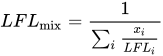
and similar for UFL.
Temperature, pressure, and the concentration of the oxidizer also influences flammability limits. Higher temperature or pressure, as well as higher concentration of the oxidizer (primarily oxygen in air), results in lower LFL and higher UFL, hence the gas mixture will be easier to explode.
Usually atmospheric air supplies the oxygen for combustion, and limits assume the normal concentration of oxygen in air. Oxygen-enriched atmospheres enhance combustion, lowering the LFL and increasing the UFL, and vice versa; an atmosphere devoid of an oxidizer is neither flammable nor explosive for any fuel concentration (except for gases that can energetically decompose even in the absence of an oxidizer, such as acetylene). Significantly increasing the fraction of inert gases in an air mixture, at the expense of oxygen, increases the LFL and decreases the UFL.
Controlling explosive atmospheres
[edit]Gas and vapor
[edit]Controlling gas and vapor concentrations outside the flammable limits is a major consideration in occupational safety and health. Methods used to control the concentration of a potentially explosive gas or vapor include use of sweep gas, an unreactive gas such as nitrogen or argon to dilute the explosive gas before coming in contact with air. Use of scrubbers or adsorption resins to remove explosive gases before release are also common. Gases can also be maintained safely at concentrations above the UEL, although a breach in the storage container can lead to explosive conditions or intense fires.
Dusts
[edit]Dusts also have upper and lower explosion limits, though the upper limits are hard to measure and of little practical importance. Lower flammability limits for many organic materials are in the range of 10–50 g/m3, which is much higher than the limits set for health reasons, as is the case for the LEL of many gases and vapours. Dust clouds of this concentration are hard to see through for more than a short distance, and normally only exist inside process equipment.
Flammability limits also depend on the particle size of the dust involved, and are not intrinsic properties of the material. In addition, a concentration above the LEL can be created suddenly from settled dust accumulations, so management by routine monitoring, as is done with gases and vapours, is of no value. The preferred method of managing combustible dust is by preventing accumulations of settled dust through process enclosure, ventilation, and surface cleaning. However, lower flammability limits may be relevant to plant design.
Volatile liquids
[edit]Situations caused by evaporation of flammable liquids into the air-filled void volume of a container may be limited by flexible container volume or by using an immiscible fluid to fill the void volume. Hydraulic tankers use displacement of water when filling a tank with petroleum.[4]
Examples
[edit]The flammable/explosive limits of some gases and vapors are given below. Concentrations are given in percent by volume of air.
- Class IA liquids with a flash point less than 73 °F (23 °C) and boiling point less than 100 °F (38 °C) have a NFPA 704 flammability rating of 4
- Class IB liquids with a flash point less than 73 °F (23 °C) and a boiling point equal to or greater than 100 °F (38 °C) and class IC liquids with a flash point equal to or greater than 73 °F (23 °C), but less than 100 °F (38 °C) have a NFPA 704 flammability rating of 3
- Class II liquids with a flash point equal to or greater than 100 °F (38 °C), but less than 140 °F (60 °C) and class IIIA liquids with a flash point equal to or greater than 140 °F (60 °C), but less than 200 °F (93 °C) have a NFPA 704 flammability rating of 2
- Class IIIB liquids with a flash point equal to or greater than 200 °F (93 °C) have a NFPA 704 flammability rating of 1
| Substance | Flammability limit (%vol.) | NFPA class |
Flash point |
Minimum ignition energy (mJ) @ proportion in air at which achieved[a][5] |
Autoignition temperature | ||
|---|---|---|---|---|---|---|---|
| Lower | Upper | ||||||
| Acetaldehyde | 4.0 | 57.0 | IA | −39 °C | 0.37 | 175 °C | |
| Acetic acid (glacial) | 4 | 19.9 | II | 39–43 °C | 463 °C | ||
| Acetic anhydride | II | 54 °C | |||||
| Acetone | 2.6–3 | 12.8–13 | IB | −17 °C | 1.15 @ 4.5% | 465 °C, 485 °C[6] | |
| Acetonitrile | IB | 2 °C | 524 °C | ||||
| Acetyl chloride | 7.3 | 19 | IB | 5 °C | 390 °C | ||
| Acetylene | 2.5 | 100[7] | IA | Flammable gas | 0.017 @ 8.5%; 0.0002 @ 40%, in pure oxygen | 305 °C | |
| Acrolein | 2.8 | 31 | IB | −26 °C | 0.13 | ||
| Acrylonitrile | 3.0 | 17.0 | IB | 0 °C | 0.16 @ 9.0% | ||
| Allyl chloride | 2.9 | 11.1 | IB | −32 °C | 0.77 | ||
| Ammonia | 15 | 28 | IIIB | 11 °C | 680 | 651 °C | |
| Arsine | 4.5–5.1[8] | 78 | IA | Flammable gas | |||
| Benzene | 1.2 | 7.8 | IB | −11 °C | 0.2 @ 4.7% | 560 °C | |
| 1,3-Butadiene | 2.0 | 12 | IA | −85 °C | 0.13 @ 5.2% | ||
| Butane, n-butane | 1.6 | 8.4 | IA | −60 °C | 0.25 @ 4.7% | 420–500 °C | |
| n-Butyl acetate, butyl acetate | 1–1.7[6] | 8–15 | IB | 24 °C | 370 °C | ||
| 2-Butanol | 1.7 | 9.8 | 29 °C | 405 °C | |||
| Isobutanol | 1.7 | 10.9 | 22–27 °C | 415 °C | |||
| n-Butanol | 1.4[6] | 11.2 | IC | 35 °C | 340 °C | ||
| n-Butyl chloride, 1-chlorobutane | 1.8 | 10.1 | IB | −6 °C | 1.24 | ||
| n-Butyl mercaptan | 1.4[9] | 10.2 | IB | 2 °C | 225 °C | ||
| Butyl methyl ketone, 2-hexanone | 1[10] | 8 | IC | 25 °C | 423 °C | ||
| Butylene, 1-butylene, 1-butene | 1.98[8] | 9.65 | IA | −80 °C | |||
| Carbon disulfide | 1.0 | 50.0 | IB | −30 °C | 0.009 @ 7.8% | 90 °C | |
| Carbon monoxide | 12[8] | 75 | IA | −191 °C Flammable gas | 609 °C | ||
| Chlorine monoxide | IA | Flammable gas | |||||
| 1-Chloro-1,1-difluoroethane | 6.2 | 17.9 | IA | −65 °C Flammable gas | |||
| Cyanogen | 6.0–6.6[11] | 32–42.6 | IA | Flammable gas | |||
| Cyclobutane | 1.8 | 11.1 | IA | −63.9 °C[12] | 426.7 °C | ||
| Cyclohexane | 1.3 | 7.8–8 | IB | −18 – −20 °C[13] | 0.22 @ 3.8% | 245 °C | |
| Cyclohexanol | 1 | 9 | IIIA | 68 °C | 300 °C | ||
| Cyclohexanone | 1–1.1 | 9–9.4 | II | 43.9–44 °C | 420 °C[14] | ||
| Cyclopentadiene[15] | IB | 0 °C | 0.67 | 640 °C | |||
| Cyclopentane | 1.5–2 | 9.4 | IB | −37 – −38.9 °C[16][17] | 0.54 | 361 °C | |
| Cyclopropane | 2.4 | 10.4 | IA | −94.4 °C[18] | 0.17 @ 6.3% | 498 °C | |
| Decane | 0.8 | 5.4 | II | 46.1 °C | 210 °C | ||
| Diborane | 0.8 | 88 | IA | −90 °C Flammable gas[19] | 38 °C | ||
| o-Dichlorobenzene, 1,2-dichlorobenzene | 2[20] | 9 | IIIA | 65 °C | 648 °C | ||
| 1,1-Dichloroethane | 6 | 11 | IB | 14 °C | |||
| 1,2-Dichloroethane | 6 | 16 | IB | 13 °C | 413 °C | ||
| 1,1-Dichloroethene | 6.5 | 15.5 | IA | −10 °C Flammable gas | |||
| Dichlorofluoromethane | 54.7 | Non flammable,[21] −36.1 °C[22] | 552 °C | ||||
| Dichloromethane, methylene chloride | 16 | 66 | Non flammable | ||||
| Dichlorosilane | 4–4.7 | 96 | IA | −28 °C | 0.015 | ||
| Diesel fuel | 0.6 | 7.5 | IIIA | >62 °C | 210 °C | ||
| Diethanolamine | 2 | 13 | IB | 169 °C | |||
| Diethylamine | 1.8 | 10.1 | IB | −23 – −26 °C | 312 °C | ||
| Diethyl disulfide | 1.2 | II | 38.9 °C[23] | ||||
| Diethyl ether | 1.9–2 | 36–48 | IA | −45 °C | 0.19 @ 5.1% | 160–170 °C | |
| Diethyl sulfide | IB | −10 °C[24] | |||||
| 1,1-Difluoroethane | 3.7 | 18 | IA | −81.1 °C[25] | |||
| 1,1-Difluoroethylene | 5.5 | 21.3 | −126.1 °C[26] | ||||
| Difluoromethane | 14.4[27] | ||||||
| Diisobutyl ketone | 1 | 6 | 49 °C | ||||
| Diisopropyl ether | 1 | 21 | IB | −28 °C | |||
| Dimethylamine | 2.8 | 14.4 | IA | Flammable gas | |||
| 1,1-Dimethylhydrazine | IB | ||||||
| Dimethyl sulfide | IA | −49 °C | |||||
| Dimethyl sulfoxide | 2.6–3 | 42 | IIIB | 88–95 °C | 215 °C | ||
| 1,4-Dioxane | 2 | 22 | IB | 12 °C | |||
| Epichlorohydrin | 4 | 21 | 31 °C | ||||
| Ethane | 3[8] | 12–12.4 | IA | Flammable gas, −135 °C | 515 °C | ||
| Ethanol, ethyl alcohol | 3–3.3 | 19 | IB | 12.8 °C | 365 °C | ||
| 2-Ethoxyethanol | 3 | 18 | 43 °C | ||||
| 2-Ethoxyethyl acetate | 2 | 8 | 56 °C | ||||
| Ethyl acetate | 2 | 12 | IA | −4 °C | 460 °C | ||
| Ethylamine | 3.5 | 14 | IA | −17 °C | |||
| Ethylbenzene | 1.0 | 7.1 | 15–20 °C | ||||
| Ethylene | 2.7 | 36 | IA | 0.07 | 490 °C | ||
| Ethylene glycol | 3 | 22 | 111 °C | ||||
| Ethylene oxide | 3 | 100 | IA | −20 °C | |||
| Ethyl chloride | 3.8[8] | 15.4 | IA | −50 °C | |||
| Ethyl mercaptan | IA | ||||||
| Fuel oil No.1 | 0.7[8] | 5 | |||||
| Furan | 2 | 14 | IA | −36 °C | |||
| Gasoline (100 octane) | 1.4 | 7.6 | IB | < −40 °C | 246–280 °C | ||
| Glycerol | 3 | 19 | 199 °C | ||||
| Heptane, n-heptane | 1.05 | 6.7 | −4 °C | 0.24 @ 3.4% | 204–215 °C | ||
| Hexane, n-hexane | 1.2 | 7.5 | −22 °C | 0.24 @ 3.8% | 225 °C, 233 °C[6] | ||
| Hydrogen | 4/18.3[28] | 75/59 | IA | Flammable gas | 0.016 @ 28%; 0.0012, in pure oxygen | 500–571 °C | |
| Hydrogen sulfide | 4.3 | 46 | IA | Flammable gas | 0.068 | ||
| Isobutane | 1.8[8] | 9.6 | IA | Flammable gas | 462 °C | ||
| Isobutyl alcohol | 2 | 11 | 28 °C | ||||
| Isophorone | 1 | 4 | 84 °C | ||||
| Isopropyl alcohol, isopropanol | 2[8] | 12 | IB | 12 °C | 398–399 °C; 425 °C[6] | ||
| Isopropyl chloride | IA | ||||||
| Kerosene Jet A-1 | 0.6–0.7 | 4.9–5 | II | >38 °C, as jet fuel | 210 °C | ||
| Lithium hydride | IA | ||||||
| 2-Mercaptoethanol | IIIA | ||||||
| Methane (natural gas) | ISO10156 | 5.0 | 14.3 | IA | Flammable gas | 0.21 @ 8.5% | 580 °C |
| IEC60079-20-1 | 4.4 | 17 | |||||
| Methyl acetate | 3 | 16 | −10 °C | ||||
| Methyl alcohol, methanol | 6–6.7[8] | 36 | IB | 11 °C | 385 °C; 455 °C[6] | ||
| Methylamine | IA | 8 °C | |||||
| Methyl chloride | 10.7[8] | 17.4 | IA | −46 °C | |||
| Methyl ether | IA | −41 °C | |||||
| Methyl ethyl ether | IA | ||||||
| Methyl ethyl ketone | 1.8[8] | 10 | IB | −6 °C | 505–515 °C[6] | ||
| Methyl formate | IA | ||||||
| Methyl mercaptan | 3.9 | 21.8 | IA | −53 °C | |||
| Mineral spirits | 0.7[6] | 6.5 | 38–43 °C | 258 °C | |||
| Morpholine | 1.8 | 10.8 | IC | 31–37.7 °C | 310 °C | ||
| Naphthalene | 0.9[8] | 5.9 | IIIA | 79–87 °C | 540 °C | ||
| Neohexane | 1.19[8] | 7.58 | −29 °C | 425 °C | |||
| Nickel tetracarbonyl | 2 | 34 | 4 °C | 60 °C | |||
| Nitrobenzene | 2 | 9 | IIIA | 88 °C | |||
| Nitromethane | 7.3 | 22.2 | 35 °C | 379 °C | |||
| Octane | 1 | 7 | 13 °C | ||||
| iso-Octane | 0.79 | 5.94 | |||||
| Pentane | 1.5 | 7.8 | IA | −40 – −49 °C | 0.18 @ 4.4%, as 2-pentane | 260 °C | |
| n-Pentane | 1.4 | 7.8 | IA | 0.28 @ 3.3% | |||
| iso-Pentane | 1.32[8] | 9.16 | IA | 420 °C | |||
| Phosphine | IA | ||||||
| Propane | 2.1 | 9.5–10.1 | IA | Flammable gas | 0.25 @ 5.2%; 0.0021, in pure oxygen | 480 °C | |
| Propyl acetate | 2 | 8 | 13 °C | ||||
| Propylene | 2.0 | 11.1 | IA | −108 °C | 0.28 | 458 °C | |
| Propylene oxide | 2.9 | 36 | IA | ||||
| Pyridine | 2 | 12 | 20 °C | ||||
| Silane | 1.5[8] | 98 | IA | <21 °C | |||
| Styrene | 1.1 | 6.1 | IB | 31–32.2 °C | 490 °C | ||
| Tetrafluoroethylene | IA | ||||||
| Tetrahydrofuran | 2 | 12 | IB | −14 °C | 321 °C | ||
| Toluene | 1.2–1.27 | 6.75–7.1 | IB | 4.4 °C | 0.24 @ 4.1% | 480 °C; 535 °C[6] | |
| Triethylborane | −20 °C | −20 °C | |||||
| Trimethylamine | IA | Flammable gas | |||||
| Trinitrobenzene | IA | ||||||
| Turpentine | 0.8[29] | IC | 35 °C | ||||
| Vegetable oil | IIIB | 327 °C | |||||
| Vinyl acetate | 2.6 | 13.4 | −8 °C | ||||
| Vinyl chloride | 3.6 | 33 | |||||
| Xylenes | 0.9–1.0 | 6.7–7.0 | IC | 27–32 °C | 0.2 | ||
| m-Xylene | 1.1[6] | 7 | IC | 25 °C | 525 °C | ||
| o-Xylene | IC | 17 °C | |||||
| p-Xylene | 1.0 | 6.0 | IC | 27.2 °C | 530 °C | ||
- ^ Note that for many chemicals it takes the least amount of ignition energy halfway between the LEL and UEL.
ASTM E681
[edit]In the U.S. the most common method of measuring LFLs and UFLs is ASTM E681.[27] This standard test is required for HAZMAT Class 2 Gases and for determining refrigerant flammability classifications. This standard uses visual observations of flame propagation in 5 or 12 L spherical glass vessels to measure the flammability limits. Flammable conditions are defined as those for which a flame propagates outside a 90° cone angle.
See also
[edit]
References
[edit]- ^ Bee, A.; Börner, M. (2023). "Laminar Burning Speeds and Flammability Limits of CH4/O2 Mixtures With Varying N2 Dilution at Sub-Atmospheric Conditions" (PDF). Combustion Science and Technology. 195 (8). Taylor & Francis: 1910–1929. doi:10.1080/00102202.2021.2006191.
- ^ "Gases - Explosion and Flammability Concentration Limits".
- ^ "Current Intelligence Bulletin #66: Derivation of Immediately Dangerous to Life or Health (IDLH) Values" (PDF). The National Institute for Occupational Safety and Health (NIOSH). November 2013. Retrieved 11 February 2018.
- ^ Morrell, Robert W. (1931). Oil Tankers (Second ed.). New York: Simmons-Boardman Publishing Company. pp. 305&306.
- ^ Britton, L. G "Using Material Data in Static Hazard Assessment." as found in NFPA 77 - 2007 Appendix B
- ^ a b c d e f g h i j Working with modern hydrocarbon and oxygenated solvents: a guide to flammability Archived June 1, 2009, at the Wayback Machine American Chemistry Council Solvents Industry Group, pg. 7, January 2008
- ^ Matheson Gas Products. Matheson Gas Data Book (PDF). p. 443. Archived from the original (PDF) on 30 September 2019. Retrieved 30 October 2013.
- ^ a b c d e f g h i j k l m n o "Gases - Explosive and Flammability Concentration Limits". Retrieved 9 September 2013.
- ^ "ICSC 0018 - n-BUTYL MERCAPTAN". www.inchem.org. Retrieved 18 March 2018.
- ^ "2-HEXANONE ICSC:0489". oit.org. Retrieved 18 March 2018.
- ^ "IPCS INTOX Site Closed". www.intox.org. Retrieved 18 March 2018.
- ^ Yaws, Carl L.; Braker, William; Matheson Gas Data Book Published by McGraw-Hill Professional, 2001 pg. 211
- ^ Yaws, Carl L.; Braker, William; Matheson Gas Data Book Published by McGraw-Hill Professional, 2001 pg. 216
- ^ "ICSC 0425 - CYCLOHEXANONE". www.inchem.org. Retrieved 18 March 2018.
- ^ "MSDS Cyclopentadiene". ox.ac.uk. Archived from the original on 7 December 2010. Retrieved 18 March 2018.
- ^ Yaws, Carl L.; Braker, William; Matheson Gas Data Book Published by McGraw-Hill Professional, 2001 pg. 221
- ^ "ICSC 0353 - CYCLOPENTANE". www.inchem.org. Retrieved 18 March 2018.
- ^ Yaws, Carl L.; Braker, William; Matheson Gas Data Book Published by McGraw-Hill Professional, 2001 pg. 226
- ^ Yaws, Carl L.; Braker, William; Matheson Gas Data Book Published by McGraw-Hill Professional, 2001 pg. 244
- ^ Walsh (1989) Chemical Safety Data Sheets, Roy. Soc. Chem., Cambridge.
- ^ "Encyclopedia.airliquide.com" (PDF). Archived from the original (PDF) on 26 May 2020. Retrieved 25 June 2023.
- ^ Yaws, Carl L.; Braker, William; Matheson Gas Data Book Published by McGraw-Hill Professional, 2001 pg. 266
- ^ Yaws, Carl L.; Braker, William; Matheson Gas Data Book Published by McGraw-Hill Professional, 2001 pg. 281
- ^ Yaws, Carl L.; Braker, William; Matheson Gas Data Book Published by McGraw-Hill Professional, 2001 pg. 286
- ^ Yaws, Carl L.; Braker, William; Matheson Gas Data Book Published by McGraw-Hill Professional, 2001 pg. 296
- ^ Yaws, Carl L.; Braker, William; Matheson Gas Data Book Published by McGraw-Hill Professional, 2001 pg. 301
- ^ a b c Kim, Dennis K.; Klieger, Alexandra E.; Lomax, Peter Q.; Mccoy, Conor G.; Reymann, Jonathan Y.; Sunderland, Peter B. (14 September 2018). "An improved test method for refrigerant flammability limits in a 12 L vessel". Science and Technology for the Built Environment. 24 (8): 861–866. Bibcode:2018STBE...24..861K. doi:10.1080/23744731.2018.1434381. ISSN 2374-4731. S2CID 139489210.
- ^ "Periodic Table of Elements: Hydrogen - H (EnvironmentalChemistry.com)". environmentalchemistry.com. Retrieved 18 March 2018.
- ^ "Combustibles" (PDF). afcintl.com. Archived from the original (PDF) on 3 March 2016. Retrieved 18 March 2018.
Further reading
[edit]- David R. Lide, Editor-in-Chief; CRC Handbook of Chemistry and Physics, 72nd edition; CRC Press; Boca Raton, Florida; 1991; ISBN 0-8493-0565-9


Flammability limit
View on GrokipediaFundamentals
Definition and Concept
Flammability limits denote the range of concentrations between the lower flammability limit (LFL) and the upper flammability limit (UFL) of a combustible gas or vapor in air or another oxidant, within which the mixture can ignite and support flame propagation upon exposure to an ignition source. These limits represent the boundary conditions for combustion, where the LFL marks the minimum fuel concentration necessary for sustained burning, and the UFL indicates the maximum beyond which flame propagation fails due to insufficient oxidant.[7] The ignition process within flammability limits involves an external energy source, such as a spark, hot surface, or pilot flame, that raises the mixture temperature to initiate the exothermic chain reactions of combustion, enabling the flame front to propagate through the premixed gases. Outside these limits, mixtures below the LFL are too lean, with inadequate fuel to maintain the reaction heat balance, while those above the UFL are too rich, lacking sufficient oxidant to complete oxidation and sustain the flame.[8][7] The concept originated from early 20th-century experimental investigations aimed at enhancing mine safety by understanding explosive gas mixtures, with key contributions from Herbert F. Coward and George W. Jones through collaborative U.S. Bureau of Mines studies starting in 1925. Their work, building on 19th-century foundations, systematically determined limits for numerous substances using controlled apparatus like tubes and vessels, culminating in comprehensive reports that established standardized approaches.[7] Conceptually, a flammability diagram plots fuel concentration against oxidant level, outlining distinct regions: a lean zone below the LFL where ignition cannot propagate due to fuel deficiency, a central flammable envelope between the LFL and UFL supporting combustion, and a rich zone above the UFL where excess fuel inhibits burning. These diagrams, often triangular for multi-component mixtures, highlight the boundaries influenced by inert diluents like nitrogen.[7]Related Terminology
The terms lower flammability limit (LFL) and lower explosive limit (LEL) are frequently used interchangeably to describe the minimum concentration of a flammable gas or vapor in air capable of igniting and propagating a flame under specified conditions.[9] Similarly, the upper flammability limit (UFL) and upper explosive limit (UEL) refer to the maximum concentration beyond which ignition does not occur, with no formal distinction made between the flammable and explosive descriptors in regulatory contexts.[10] However, the LFL terminology emphasizes the concentration required to sustain flame propagation and combustion, whereas LEL may highlight the potential for explosive deflagration in confined spaces, though the numerical values remain identical.[11] Related concepts include the autoignition temperature, defined as the minimum temperature at which a substance spontaneously ignites in air without an external ignition source, supporting self-sustained combustion.[12] The flash point represents the lowest temperature at which a liquid produces sufficient vapor to form an ignitable mixture with air, allowing momentary ignition but not necessarily sustained burning.[10] Explosive limits serve as a broader term for the concentration range where rapid pressure buildup can occur during combustion in enclosures, incorporating effects of confinement that extend beyond open-air flammability behaviors.[13] Flammability limits encompass a wider range of fuel-oxidizer concentrations than the stoichiometric ratio, which denotes the ideal proportion for complete combustion with no excess reactants.[14] While the stoichiometric mixture maximizes energy release efficiency, flammability limits include lean and rich mixtures where partial combustion still propagates a flame, albeit less efficiently.[11] Flammability limits for gases are typically expressed in volume percent (% vol) of the fuel in air, reflecting the volumetric mixing ratio under standard conditions.[15] For combustible dusts, limits are often given in mass percent or grams per cubic meter (g/m³), accounting for particle dispersion in air.[16]Types of Limits
Lower Flammability Limit
The lower flammability limit (LFL) represents the minimum concentration of a flammable substance in a mixture with air or oxygen at which a flame can propagate after ignition under specified conditions, such as ambient temperature and pressure. At the LFL, the heat generated by the combustion reaction precisely balances the heat losses to the surrounding environment through conduction, convection, and radiation, enabling marginal flame propagation; below this limit, the fuel concentration is insufficient to produce enough exothermic energy for a self-sustaining reaction, leading to flame quenching. This thermal balance is central to classical theories of flammability, where the flame's adiabatic temperature must exceed a critical threshold to overcome losses, as derived from energy conservation principles in premixed combustion models.[17][5] Key characteristics of the LFL include its sensitivity to diluents, where the addition of inert gases such as nitrogen or carbon dioxide increases the LFL by absorbing heat and reducing the effective oxygen availability, thereby narrowing the overall flammable range until the limits converge at high inert concentrations. For many hydrocarbons, the LFL typically falls in the range of 1-5% by volume in air, reflecting the lean-side boundary where fuel deficiency limits combustion efficiency. An approximate estimation for the LFL of pure gases or simple mixtures can be obtained using LFL ≈ C_{st} / 2, where C_{st} is the stoichiometric fuel concentration (the volume percent at complete combustion); this arises because the equivalence ratio at the LFL is often around 0.5, derived from empirical correlations and Le Chatelier's principle, which linearly interpolates limits for multicomponent mixtures via 1/LFL_{mix} = \sum (y_i / LFL_i), with y_i as the mole fraction of component i.[18][19][20] In safety contexts, gas or vapor concentrations below the LFL are generally considered non-ignitable under standard conditions, providing a margin against accidental fires or explosions in industrial settings. However, such lean mixtures can pose hazards if heated, as elevated temperatures lower the LFL, potentially shifting the mixture into the flammable regime and reducing safety margins—for instance, a concentration safe at room temperature may approach 60% of the LFL at 220°C, necessitating temperature-compensated monitoring.[21]Upper Flammability Limit
The upper flammability limit (UFL) represents the maximum concentration of a flammable substance in a mixture with air or an oxidizer at which flame propagation can still occur; beyond this limit, combustion cannot be sustained due to insufficient oxygen availability. At the UFL, excess fuel molecules displace the necessary oxygen, resulting in incomplete oxidation reactions that produce lower flame temperatures and radical concentrations insufficient to maintain chain-branching reactions, thereby quenching the flame. Above the UFL, the mixture is deemed too rich, as the high fuel-to-oxygen ratio prevents the heat release required for sustained propagation, leading to flame extinction shortly after ignition.[22][23] Key properties of the UFL include its sensitivity to diluents, where the addition of inert gases such as nitrogen reduces the UFL by further limiting oxygen availability and heat transfer in the reaction zone. For many hydrocarbons, the UFL typically falls within a range of approximately 5-15% by volume under standard conditions (25°C and atmospheric pressure), as exemplified by methane at 15% vol, propane at 10.1% vol, and n-butane at 8.41% vol. Derived from thermal theory, which posits that flammability boundaries correspond to minimum adiabatic flame temperatures for self-sustaining propagation, an approximation for the UFL can be expressed as , where is the stoichiometric fuel concentration and is a fuel excess factor accounting for the dilution effect on flame temperature (often around 0.5-1.5 for hydrocarbons based on equilibrium calculations).[5][24][25] Mixtures exceeding the UFL pose significant safety implications beyond non-flammability, including asphyxiation risks from oxygen displacement by high fuel concentrations in confined spaces, which can reduce breathable oxygen below 19.5% vol and endanger personnel. Additionally, such rich mixtures may present pre-ignition hazards if cooling or dilution occurs, potentially shifting the composition into the flammable range and enabling ignition from residual heat sources. Recent studies from the 2020s, particularly in aerospace applications, have highlighted elevated UFL values in high-oxygen environments (e.g., >23.5% vol O₂ under hyperbaric conditions), where oxygen saturation in materials increases flammability risks during diffusion and permeation, necessitating specialized testing for spacecraft components.[26][27]Influencing Factors
Effects of Temperature and Pressure
The flammability range of combustible gases and vapors widens with increasing temperature at constant pressure, as higher temperatures lower the lower flammability limit (LFL) and raise the upper flammability limit (UFL). This expansion occurs because elevated temperatures enhance molecular collision rates and reaction kinetics, reducing the minimum fuel concentration required for ignition and allowing propagation at higher fuel levels before heat loss quenches the flame. For instance, in hydrogen-air mixtures, the flammable range broadens significantly as temperature rises from ambient conditions.[28][5] The temperature dependence of the LFL can be modeled using empirical relations based on Arrhenius kinetics, where LFL decreases with increasing temperature due to enhanced reaction rates. While the UFL also increases with temperature, its variation is less pronounced and more tied to adiabatic flame temperature limits rather than direct kinetic scaling.[29][30] Elevated pressure similarly widens the flammability limits by decreasing the LFL and increasing the UFL, primarily through enhanced molecular density that promotes chain-branching reactions and flame stability. The pressure effect on the UFL generally increases it, following empirical observations from experiments, though the exact dependence varies by gas. For certain mixtures, at sufficiently high pressures, the LFL and UFL may converge, narrowing the flammable range as excessive compression inhibits propagation by altering transport properties.[31][5][32] In temperature-pressure (T-P) space, flammability envelopes form triangular regions on logarithmic plots, with the base representing the flammable range at low pressures and the apex indicating convergence at high pressures and low temperatures. These diagrams illustrate how the flammable zone expands upward and rightward from standard conditions (e.g., 25°C and 1 atm), bounded by isotherms and isobars where flame extinction occurs due to insufficient heat release or excessive dilution effects. Such representations are essential for predicting ignition risks in pressurized systems like pipelines or reactors.[33][31] Recent post-2020 research highlights limitations of traditional flammability limits in supercritical fluids, particularly for CO₂ sequestration applications involving residual hydrocarbons. In supercritical CO₂-hydrocarbon mixtures under high-pressure storage conditions (e.g., >7.4 MPa and >31°C), phase transitions and altered diffusivity disrupt conventional limit behaviors, potentially eliminating distinct LFL and UFL as the fluid's gas-like and liquid-like properties homogenize the mixture and suppress ignition. These findings underscore the need for specialized models in carbon capture and storage to assess explosion risks in dense-phase environments.[34][35]Effects of Composition and Mixtures
The flammability limits of multi-component mixtures can be estimated using Le Chatelier's mixing rule, an empirical approach originally proposed in 1891 for predicting the lower flammability limit (LFL) of blended combustible gases in air.[36] The rule assumes that the reciprocal of the mixture LFL is the sum of the reciprocals of the individual component LFLs weighted by their mole fractions in the fuel mixture: where is the mole fraction of the -th combustible component in the total fuel mixture, and LFL is the LFL of the pure -th component.[37] A similar form applies to the upper flammability limit (UFL), though with reduced accuracy for rich mixtures.[38] This linear approximation derives from thermodynamic considerations, assuming constant specific heat capacities, ideal gas behavior, and that the adiabatic flame temperature at the mixture limit equals that of the pure components at their limits; the proof equates the heat release required for flame propagation across components via enthalpy balances.[37] However, limitations arise for non-ideal mixtures, such as those involving components with disparate flame speeds, heat capacities, or dissociation effects, where deviations up to 20% can occur, particularly for UFL predictions in halogenated or oxygenated blends.[5] Additives significantly alter flammability boundaries by influencing reaction kinetics and thermodynamics. Inert gases like nitrogen or carbon dioxide narrow the flammable range by diluting the oxidizer concentration and increasing the mixture's heat capacity, which lowers the adiabatic flame temperature below the threshold for sustained propagation; for instance, adding nitrogen to a methane-air mixture shifts both LFL and UFL inward, eventually converging at a critical inert fraction where flammability ceases.[39] Chemical inhibitors, such as halons (e.g., CF₃Br), suppress limits through catalytic interference with radical chain reactions, reducing flame speeds and extending the minimum ignition energy; halons can raise the LFL of hydrocarbons by 50% or more at concentrations as low as 5% by volume.[40] Variations in fuel composition also modify limits based on molecular structure: oxygenated fuels like alcohols exhibit wider ranges than saturated alkanes due to enhanced reactivity and lower stoichiometric air requirements; for example, ethanol's LFL-UFL span (3.3-19 vol%) exceeds that of propane (2.1-9.5 vol%), reflecting the oxygen atom's role in facilitating leaner combustion.[5] Ternary composition diagrams visualize these shifts in fuel-air-inert systems, plotting mole fractions on an equilateral triangle where vertices represent pure fuel, air (or oxygen), and inert. The flammable region forms a curved envelope bounded by LFL, UFL, and limiting oxygen concentration curves; increasing inert content contracts this envelope toward the inert vertex, illustrating how dilution progressively restricts the operable flammable domain until non-flammability is achieved.[41] Recent studies on biofuels and e-fuels highlight evolving composition effects, particularly for sustainable aviation applications. Hydrogen blends with conventional jet fuels widen flammability limits, extending the LFL downward by up to 1-2 vol% at 10-20% H₂ addition due to hydrogen's high diffusivity and reactivity, which enhances lean mixture ignition; this necessitates adjusted safety margins in aircraft fuel systems.[42] Similarly, hydroprocessed esters and fatty acids (HEFA) sustainable aviation fuels show broader limits than fossil kerosene, with LFL reductions of 0.5-1 vol% attributed to branched paraffins and aromatics that improve vapor-phase mixing.[5]Measurement and Standards
ASTM E681 Procedure
The ASTM E681 standard test method provides a standardized laboratory procedure for determining the lower and upper concentration limits of flammability (LFL and UFL) of chemicals, particularly gases and vapors, in air at atmospheric pressure and ambient or elevated temperatures up to approximately 150°C.[43] This method relies on visual observation of flame propagation in a controlled environment to identify the concentration range where a mixture can sustain combustion upon ignition, aiding in hazard assessment for storage, handling, and ventilation design.[44] It is applicable to substances with sufficient vapor pressure to form ignitable mixtures but excludes strong oxidants beyond air and materials that are thermally unstable or highly reactive.[45] The test apparatus consists of a spherical glass flask, typically 5 L in volume (12 L for materials with large quenching distances per Annex A1), to minimize wall quenching effects and allow for upward flame propagation observation.[45] The flask is housed in an insulated explosion-proof chamber equipped with ports for evacuation, gas introduction, mixing via a magnetic stirrer, temperature control (±3°C), and pressure monitoring.[45] Ignition occurs at the geometric center using an electrical spark (10-20 J energy) or an exploding fuse wire to provide a point source without directional bias, promoting symmetric outward flame expansion.[46][44] The criterion for flammability is upward propagation, where the flame front reaches within 13 mm (0.5 inch) of the flask wall in the upper hemisphere.[45] The procedure begins with evacuating the flask to remove residual air and contaminants, achieving a vacuum of approximately 13 kPa or better.[45] The test mixture is then prepared by introducing the vapor or gas via partial pressure addition—often using a liquid sample in a separate chamber for evaporation—followed by admitting dry air to reach the target concentration, typically starting near expected limits and bracketing in 0.5-1% increments.[47] The mixture is stirred for uniformity and allowed to equilibrate at the test temperature.[43] Ignition is initiated, and flame behavior is visually observed through flask windows or via high-speed video, noting propagation distance, speed, and any quenching; non-propagating tests may require purging and repetition to avoid residue interference.[48] Multiple replicate tests (typically several) are conducted per concentration to ensure consistency and account for variability.[49][45] Data analysis involves compiling results from multiple runs to plot flammability (propagation yes/no) against concentration, identifying the LFL as the average of the highest non-propagating ("no-go") and lowest propagating ("go") concentrations, and similarly for the UFL; limits are reported with uncertainty based on bracketing width, typically ±0.5%.[44] Corrections are applied for buoyancy effects in upward propagation tests and quenching distances near walls, especially for weakly flammable mixtures, using empirical factors or larger flask sizes if needed.[50] Temperature and pressure adjustments follow ideal gas law scaling if tests deviate from 25°C and 101 kPa.[45] Originally developed and approved in 1979 as E681-79 T (tentative), the standard was first published in full in 1981 and has undergone revisions to enhance precision, including updates in 1994, 1998, 2001, 2004, and 2009, with reapproval in 2023 (E681-09(2023)).[51] Recent efforts in the 2020s, driven by mildly flammable refrigerants, have proposed refinements to ignition energy, observation criteria (e.g., flame angle of 90°), and vessel size to reduce variability, though core elements remain unchanged in the 2023 reapproval.[49] The method is not applicable to dusts or mists, for which ASTM E1515 is recommended, as dust layering and dispersion alter propagation dynamics.[45]Alternative Testing Methods
Alternative testing methods for determining flammability limits extend beyond standard laboratory procedures by incorporating specialized experimental setups and computational tools that address limitations in flame propagation assessment, particularly under non-ambient conditions or for rapid evaluation. These approaches emphasize flame speed, extinction strain rates, and predictive modeling to provide deeper insights into ignition and propagation behaviors. Tube methods, including horizontal and vertical configurations, facilitate the measurement of flame speed and propagation velocity, offering advantages over ignition-only tests by quantifying dynamic flame behavior. In the vertical tube method outlined in EN 1839, gas or vapor mixtures are ignited in a tube with a volume of at least 1.52 L, where flammability is determined by observing flame propagation over a distance of 10 cm or more, allowing evaluation of limits influenced by buoyancy and stretch effects.[5] For combustible dusts, the Hartmann tube test per ISO/IEC 80079-20-2 disperses a dust cloud in a 1.2 L vertical glass tube and ignites it with a spark; ignition and flame propagation indicate combustibility, enabling assessment of explosion hazards through velocity measurements in confined spaces.[52] Horizontal tube tests complement these by isolating gravity's influence, revealing narrower flammability ranges and slower flame speeds compared to vertical orientations due to reduced buoyancy-driven mixing.[53] Burner techniques, such as flat flame and counterflow configurations, precisely control aerodynamic strain to probe extinction limits that correlate with overall flammability boundaries, particularly useful for low-pressure or microgravity environments. Flat flame burners, often porous or matrix-stabilized, generate uniform velocity profiles to measure burning velocities near limits; for instance, studies using these setups establish that flammability extinction occurs at strain rates around 100-200 s⁻¹ for hydrocarbon-air mixtures, linking directly to propagation thresholds.[54] Tubular flame burners extend this by forming annular flames around a central air jet, where limits are determined by incremental mixture adjustments until extinction; experiments show consistent lower and upper limits across burner diameters from 20-50 mm, with advantages in minimizing wall quenching effects.[55] NASA adaptations of counterflow burners in microgravity, such as those aboard the International Space Station, study non-premixed diffusion flames to define flammability under reduced gravity; results indicate expanded oxygen concentration limits (down to 14-16% versus 18% in normal gravity) due to diminished buoyancy, informing spacecraft safety protocols.[56] Computational fluid dynamics (CFD) simulations predict flammability limits by integrating chemical kinetics, diffusion, and heat transfer, validated against experimental benchmarks for efficient screening of mixtures. Using open-source software like Cantera, these models solve one-dimensional freely propagating flame equations to compute adiabatic flame temperatures and speeds; for example, simulations of methane-air mixtures yield lower limits of 5.0-5.5 vol% at 1 atm and 298 K, aligning within 5% of tube test data when employing mechanisms like GRI-Mech 3.0.[5] Validation studies confirm accuracy for hydrocarbons and syngas under varying pressures (0.5-10 atm), where predicted limits deviate by less than 10% from burner experiments, enabling extrapolation to untested conditions like elevated temperatures.[57] Emerging artificial intelligence and machine learning (AI/ML) methods leverage post-2023 datasets for rapid, data-driven predictions of limits, bypassing extensive physical testing for high-throughput applications. For refrigerant mixtures, ML models trained on molecular descriptors and experimental data from over 500 compounds use algorithms like random forests and support vector machines; these achieve R² values exceeding 0.95 for lower and upper flammability limits, enabling point-based or composition-based predictions with errors under 0.5 vol%.[58] In polymer assessment, platforms such as POLYCOMPRED apply gradient boosting on datasets of 1,000+ materials to forecast flammability classes (e.g., UL 94 V-0 versus HB), incorporating structural features for 90% accuracy in screening low-flammability candidates, as demonstrated in 2024 validations against combustion tests.[59]Practical Applications
Gases and Vapors
Gases and vapors, being in a fully gaseous state, readily achieve homogeneous mixing with air, resulting in uniform concentration distributions that enable rapid flame propagation across the entire mixture when an ignition source is present and concentrations fall within the flammable range. This characteristic contrasts with heterogeneous systems and heightens the risk of deflagrations or explosions in enclosed spaces, as the liberated heat from combustion sustains chain reactions without significant settling or separation.[60][31] In practice, the lower flammability limit (LFL) and upper flammability limit (UFL) delineate the safe operational boundaries for these substances; for instance, methane—a prevalent component in natural gas—has an LFL of 5% by volume and a UFL of 15% by volume in air at standard conditions. These limits vary slightly with temperature and pressure but provide essential benchmarks for hazard assessment in gaseous fuel applications.[61] Within industrial contexts like petrochemical plants and natural gas handling operations, controlling gas and vapor concentrations is paramount to avert ignition, particularly during processes involving hydrocarbon releases or leaks. Ventilation strategies are employed to dilute potential accumulations, targeting concentrations below 10% of the LFL to incorporate a conservative safety margin against measurement inaccuracies or transient spikes.[62][9] Detection systems play a vital role in real-time monitoring, with catalytic sensors utilizing the oxidation of flammable gases on a heated catalyst bead to quantify concentrations relative to the LFL, offering broad-spectrum sensitivity for hydrocarbons. Infrared sensors, conversely, detect specific gases like methane by measuring absorption at characteristic wavelengths, providing poison-resistant operation suitable for continuous industrial surveillance.[63][64] Emerging regulations address the hydrogen economy's growth, where hydrogen's broad flammability range (4–75% by volume) amplifies risks; the EU's ATEX Directive 2014/34/EU guidelines, updated in November 2022, reinforce requirements for explosion-proof equipment certification in zoned areas to mitigate ignition sources in hydrogen production and distribution facilities.[65][66]Dusts and Solids
Flammability limits for dusts and solids differ fundamentally from those of gases and vapors due to the particulate nature of the material, requiring suspension in air to form an explosible cloud. A dust explosion occurs only when five key elements are present, known as the dust explosion pentagon: combustible dust as fuel, sufficient oxygen, an ignition source, dispersion of the dust particles to create a uniform cloud, and confinement to allow pressure buildup.[67] The lower flammability limit for dusts is defined by the minimum explosible concentration (MEC), the lowest mass concentration of suspended dust in air that can propagate a deflagration, analogous to the lower flammable limit (LFL) for gases.[68] Unlike homogeneous gas mixtures, dust clouds must achieve adequate dispersion to expose particle surfaces to oxygen, making flammability highly dependent on cloud uniformity and particle settling dynamics. Several factors unique to dusts influence the MEC and overall explosibility. Finer particle sizes generally lower the MEC by increasing surface area for combustion and improving suspension, with particles below 100 micrometers posing higher risks than coarser ones.[69] Moisture content also plays a critical role; higher levels cause particle agglomeration, reducing dispersibility and raising the MEC, often rendering damp dusts non-explosible under standard conditions.[70] Explosion severity is characterized by the maximum rate of pressure rise (Kst) and maximum pressure (Pmax), used to classify dusts into St classes per NFPA standards: St 1 (Kst 0–200 bar·m/s, weak), St 2 (201–300 bar·m/s, strong), and St 3 (>300 bar·m/s, very strong), helping assess potential damage in confined spaces. Organic dusts, such as those from wood, sugar, or plastics, typically exhibit MEC values in the range of 20–100 g/m³, though exact values vary by material and test conditions.[71] Standard testing for dust flammability limits employs the 20-liter sphere apparatus to measure MEC, Kst, and Pmax by dispersing a known dust mass in air, igniting it, and recording pressure development, as outlined in ASTM E1515 and E1226.[68] The Godbert-Greenwald furnace complements this by determining minimum ignition temperature (MIT) for dust clouds, heating a small sample in a vertical tube to assess autoignition risks at elevated temperatures.[72] Metal dusts, such as aluminum used in battery production, present elevated hazards due to their low MEC (often below 50 g/m³) and high Kst values classifying them as St 3, exacerbating explosion violence in manufacturing environments.[73] As of 2025, NFPA 660 provides updated requirements for performance-based design in combustible dust handling, including enhanced mitigation strategies for facilities processing fine metal dusts like those in lithium-ion battery electrode manufacturing.[74]Safety and Control
Preventing Explosive Atmospheres
Preventing explosive atmospheres involves engineering controls that maintain fuel concentrations outside the lower and upper flammability limits (LFL and UFL) in enclosed spaces, thereby eliminating ignition risks. One primary strategy is inerting, which introduces non-reactive gases such as nitrogen (N₂) or carbon dioxide (CO₂) to dilute oxygen levels below the limiting oxygen concentration (LOC) or to shift the overall flammability envelope beyond operational ranges. This method is widely applied in chemical processing, storage tanks, and reactors to prevent oxidation and ignition during normal operations or startups. For instance, continuous blanketing with N₂ maintains an inert atmosphere in solvent containers, while intermittent inerting extinguishes potential fire sources in silos. The required inert fraction can be estimated using an extended Le Chatelier's principle, which accounts for dilution effects on mixture flammability limits by incorporating inert gas coefficients into the standard mixing rule for LFL and UFL calculations. This approach ensures the combustible mixture remains non-flammable, with typical inert gas volumes calculated based on vessel size and desired oxygen reduction (e.g., dilution purging requiring approximately 3-5 times the vessel volume for effective mixing).[75][76][77] Ventilation systems provide another key prevention measure by diluting flammable vapors or gases with fresh air to keep concentrations below 25% of the LFL, accounting for variations in operating conditions such as leaks or temperature changes. This dilution approach is standard in enclosed areas like paint booths or chemical handling facilities, where exhaust rates are designed to prevent accumulation (e.g., maintaining airflow at levels that limit maximum flammable gas to 25% LFL). Complementing ventilation, explosion-proof designs per the National Electrical Code (NEC) ensure that electrical equipment in hazardous locations contains any internal ignition without propagating to the surrounding atmosphere, using enclosures rated for Class I locations where flammable gases may be present. These designs, governed by NEC Article 500, classify areas and specify protection techniques like flameproof housings to mitigate spark or heat sources.[78][79] Purging involves pre-startup sweeps of vessels and piping with inert gas to displace flammable mixtures, ensuring safe conditions before introducing process materials or energizing equipment. This technique, often using displacement or dilution methods, reduces oxygen to safe levels (e.g., below 5-8% in air mixtures) and is critical for reactors and pipelines in petrochemical plants. Post-purging, continuous monitoring with lower explosive limit (LEL) detectors—calibrated sensors that measure combustible gas concentrations as a percentage of LFL—verifies that atmospheres remain below ignition thresholds, triggering alarms or shutdowns if limits are approached. LEL detectors, typically employing catalytic bead or infrared technologies, provide real-time feedback in fixed installations to sustain prevention efforts.[75][80] Advancements in 2025 industry standards incorporate AI-based predictive controls to enhance these strategies, enabling proactive adjustment of inerting, ventilation, or purging based on real-time data analysis for hazard prevention. Per ISA guidelines, AI integrates with safety instrumented systems (aligned with ISA-84 for functional safety) to predict potential explosive conditions through machine learning models that forecast gas accumulation from sensor inputs, reducing response times and improving reliability in automated processes. These systems, as outlined in ISA's Industrial AI Position Paper, support predictive maintenance and risk assessment in hazardous environments, ensuring compliance with explosion prevention protocols.[81][82][83]Volatile Liquids and Mists
Volatile liquids pose significant flammability risks primarily through the evaporation of vapors, where the flash point serves as a critical indicator of the lower flammability limit (LFL) under ambient conditions. The flash point represents the lowest temperature at which a liquid produces sufficient vapor to form an ignitable mixture with air near its surface, directly correlating with vapor pressure and the potential to reach the LFL.[84] For liquids with high vapor pressure, such as solvents, this temperature is low, enabling rapid formation of flammable concentrations even at room temperature.[85] When volatile liquids are atomized into mists, particularly those with boiling points that facilitate fine droplet formation, the flammability limits expand considerably beyond those of pure vapors. Mists can ignite and propagate flames at temperatures well below the liquid's flash point—up to 60–125°C lower—due to the combustion of individual droplets, which vaporize locally and sustain propagation through droplet-to-droplet interactions, unlike the homogeneous burning of vapors.[86] This results in broader flammable ranges, with no defined upper limit for settling mists of droplets larger than 20–30 μm, as gravitational settling does not preclude ignition.[86] Even liquids classified as non-flammable in bulk form, such as certain hydraulic oils with flash points exceeding 200°C, become hazardous when atomized into aerosols, forming explosive mixtures susceptible to ignition from sparks or hot surfaces.[87] For instance, pressurized leaks in hydraulic systems can generate fine mists that ignite below ambient flash points, leading to fires or explosions. The minimum explosive concentration (MEC) for such liquid mists typically ranges from 10 to 50 g/m³, with kerosene mists showing values as low as 3–69 g/m³ depending on droplet size and ignition conditions.[87] To mitigate these risks, inert gas blanketing—using nitrogen to maintain a non-oxidizing atmosphere above the liquid surface—prevents oxygen from contacting vapors or mists, reducing the likelihood of flammable mixtures.[88] Additionally, keeping liquid temperatures below the flash point ensures insufficient vapor generation to reach the LFL, providing a fundamental control layer in storage and processing.[89] Recent studies highlight evolving concerns with specific volatile liquids. E-liquids used in vaping, composed mainly of propylene glycol (flash point ~99°C, LFL 2.4 vol%), can form flammable mists during aerosolization, contributing to fire risks in devices and underscoring the need for atomization-aware safety assessments.[90] Similarly, biofuel spills, such as biodiesel with high flash points (>100°C), present low bulk flammability but elevated mist hazards during spraying or evaporation in spills, as noted in 2020s analyses of alternative fuel behaviors.[91]Examples and Case Studies
Common Substances
Flammability limits vary significantly among common substances, reflecting their chemical properties and potential hazards in everyday and industrial settings. For gases, hydrogen exhibits one of the widest ranges, with lower flammability limit (LFL) at 4% by volume and upper flammability limit (UFL) at 75% by volume in air at standard conditions of 25°C and 1 atm, making it highly prone to ignition across a broad concentration spectrum. In contrast, methane, a common natural gas component, has a narrower range of 5-15% by volume, limiting its explosive potential to specific mixtures. For vapors from volatile liquids, gasoline typically ranges from 1.4% to 7.6% by volume, illustrating how fuels in enclosed spaces like vehicle tanks can form ignitable atmospheres easily. Emerging fuels like ammonia, gaining attention for hydrogen economy applications as of 2025, show limits of 15-28% by volume, narrower than hydrogen but still hazardous in storage and transport. Dusts from organic materials present different challenges, measured by minimum explosive concentration (MEC) rather than volume percentages. For instance, sugar dust has an MEC of approximately 30 g/m³, indicating that even low airborne concentrations in food processing facilities can lead to deflagrations if ignited. Aluminum dust, used in manufacturing, has a lower MEC around 30-45 g/m³ but higher explosion severity due to its reactivity. These values are determined under standardized testing, such as those outlined in NFPA 69, which emphasize conditions at 25°C and 1 atm to ensure comparability, though real-world factors like temperature can shift limits. The following table summarizes representative flammability limits for selected common substances, highlighting the diversity across gases, vapors, and dusts:| Substance | Type | LFL (% vol in air) | UFL (% vol in air) | MEC (g/m³) | Notes/Source |
|---|---|---|---|---|---|
| Hydrogen | Gas | 4 | 75 | N/A | Widest range; low ignition energy ~0.017 mJ. NFPA 69. |
| Methane | Gas | 5 | 15 | N/A | Common in natural gas. NFPA 69. |
| Gasoline | Vapor | 1.4 | 7.6 | N/A | Automotive fuel; varies by composition. OSHA. |
| Ammonia | Gas/Vapor | 15 | 28 | N/A | Emerging clean fuel; 2025 data. Fuel Journal. |
| Sugar | Dust | N/A | N/A | 30 | Food industry hazard. NFPA 654. |
| Aluminum | Dust | N/A | N/A | 30-45 | Metal processing. Powder Technology. |