Hubbry Logo
FortuynismFortuynismMain
Open search
Fortuynism
Community hub
Fortuynism
logo
8 pages, 0 posts
0 subscribers
Be the first to start a discussion here.
Fortuynism
Fortuynism
from Wikipedia
Pim Fortuyn

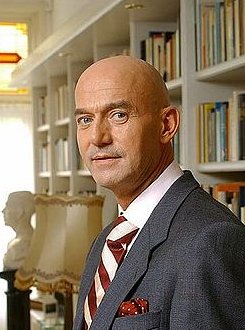
Fortuynism (Dutch: Fortuynisme) is the political ideology of Dutch politician Pim Fortuyn. Observers variously saw him as a political protest targeting the alleged elitism and bureaucratic style of the Dutch purple coalitions, whereas he was offering "openness, directness and clearness", populism simply as charisma. Another school holds Fortuynism as a distinct ideology, with an alternative vision of society. Some argue that Fortuynism is not just one ideology, but that it contained liberalism, populism and nationalism.

Fortuyn was highly critical of Islam and Muslim immigration to the Netherlands and was opposed to multicultural policies of the Dutch government at the time.[1] However, some political commentators noted that ethnic nationalism and racist sentiments did not play a part of Fortuyn's ideology and in comparison to other European national-populist politicians of the era, he held socially liberal stances on matters such as LGBT rights.[2] Following his assassination in the run up to the 2002 Dutch general election, his party, the Pim Fortuyn List formed the second largest party in parliament and government after the election. Although the party would fade from relevance and eventually dissolve in 2008, Fortuyn is noted for influencing anti-immigrant parties and politicians in the Netherlands and elsewhere in Europe.[3]

History

[edit]

Fortuyn was assassinated in the run-up to the 2002 Dutch general election after which the Pim Fortuyn List saw a sudden rise in support before going into decline and disbanding itself in 2008. However, the ideology of Fortuynism has continued to have an impact upon Dutch politics. Following Fortuyn's death, conservative and right-wing politicians such as VVD Minister for Integration Rita Verdonk gained influence and tightened some of the Netherlands' immigration policies. There were also attempts to create new Fortuynist parties ahead of the 2006 general election, which included One NL founded by Marco Pastors and Party for the Netherlands formed by former LPF politician and minister Hilbrand Nawijn. These parties did not meet any success. However, other politicians such as Geert Wilders and his Party for Freedom gained traction and inherited many of Fortuyn's former supporters by focusing on some of the issues Fortuyn championed, such as stricter stances on integration and immigration.[4] Newer political parties described as inheriting Fortuyn's influence have included Thierry Baudet's Forum for Democracy[5] and JA21 founded by former LPF representative Joost Eerdmans.[6]

Outside of the Netherlands, Fortuyn also had an influence on Belgian politicians such as lawyer and Open VLD member Hugo Coveliers who incorporated Fortuynism into his VLOTT party and Jean-Marie Dedecker who founded Libertair, Direct, Democratisch.[3]

Ideology

[edit]

Fortuynism has generally been characterized as based on "populism" by political commentators. Dutch political author Cas Mudde defined Fortuynism as containing elements of liberalism, populism and nationalism. Others have defined it as opposition and a reaction to the perceived bureaucratic and elitist governing style of the purple coalitions, particularly under Dutch Labour Party Prime Minister Wim Kok.[7][8] Gerrit Boerman, the head of the Document Center for Dutch Political Parties at the University of Groningen described Fortuyn's ideology as a "cocktail of elements stemming from different directions" which included conservative and communitarian values to restore "norms and values" from the 1950s, less government interference in the economy, while also holding a liberal and libertarian attitude on sexual freedom and soft drugs and a nationalistic stance towards immigration and protecting core Dutch principles against multiculturalism.[9]

Fortuyn had been a Marxist during his studies and early academic career before joining the Labour Party in the 1970s. However, his views shifted to the right in response to what he saw as failed policies on crime, immigration and integration. In his 1995 book De verweesde samenleving ("The orphaned society"), Fortuyn claimed that the progressive movement of the 1960s had eroded traditional norms and values. He wrote the roles of the "symbolic father" and the "caring mother" had been lost, leaving an orphaned population without guidance, to live out a meaningless decadent existence.[10]

Fortuyn also documented much of his own beliefs and proposals in his book De puinhopen van acht jaar Paars which criticized many of the policies of the purple coalitions and instead argued for a reduction in state bureaucracy, improvements to the health system, restrictions on immigration and stricter law and order policies. Fortuyn also favoured greater direct democracy, including elected mayors, police chiefs and an elected head of state.[11][12] In foreign policy, Fortuyn and his party supported Dutch participation in NATO and were not opposed to the principle of European integration in theory, but opposed what they saw as the excessive bureaucracy and threat to national sovereignty posed by the European Union. Fortuyn also proposed ending Dutch participation in the Eurozone and the Schengen Agreement.[13]

Other commentators have noted opposition to Islam, multiculturalism and immigration as forming a significant part of Fortuynism. In August 2001, Fortuyn was quoted in the Rotterdams Dagblad newspaper saying, "I am also in favour of a Cold War with Islam. I see Islam as an extraordinary threat, as a hostile religion."[14] He also argued that if legally possible, he would not allow any more Muslim immigrants into the Netherlands. However, Fortuyn also maintained that he did not oppose immigrants on the basis of their ethnic background and supported a pluralistic society in theory, but opposed what he saw as an unwillingness to integrate and a rejection of Dutch secular liberal values within existing Muslim communities.[15][16] Jens Rydgren noted that while Fortuyn used anti-immigration rhetoric, he did not position himself as a far-right nationalist or a supporter of racial ethno-nationalism, and as such Fortuyn differed from other European national-populist leaders at the time. Instead, Fortuyn sought to defend Dutch values such as tolerating gay rights (Fortuyn was openly homosexual and an outspoken supporter of gay rights himself) which he saw as threatened by immigration. Fortuyn's ideas also differed from the more socially conservative and traditional values stances espoused by other nationalist politicians through holding liberal opinions regarding same-sex marriage, abortion and euthanasia. Fortuyn's party also won support from some ethnic minority voters and included candidates from immigrant backgrounds on its list for the 2002 election.[2]

Political scientist Rudy Andeweg noted that Fortuynism can also be defined by the following positions:[17]

Reception

[edit]

Prior to Fortuyn's assassination, other Dutch politicians and journalists, particularly on the left, criticized Fortuyn and his ideas as extremist or racist, with some comparing Fortuyn's stances to that of European far-right politicians such as Jörg Haider and Jean-Marie Le Pen. An explicit comparison with Le Pen was made by Ad Melkert, the former leader of the Labour Party who stated 2002: "If you flirt with Fortuyn, then in the Netherlands the same thing will happen as happened in France. There they woke up with Le Pen, soon we will wake up with Fortuyn."[18] GroenLinks leader Paul Rosenmöller claimed Fortuyn's policies were "not just right but extreme right". Some commentators such as columnist Jan Blokker attempted to draw parallels between Fortuyn and Dutch hard-right politicians such as Hans Janmaat. Following Fortuyn's death, some opponents of Fortuyn including Rosenmöller, Thom de Graaf, and Melkert have objected to what they think is a harsher political and social climate, especially towards immigrants and Muslims, as a result of Fortuyn's legacy.[19]

Fortuyn himself strongly disputed comparisons drawn between him and Dutch or foreign far-right leaders, contending that he was mislabeled and accused the Dutch political establishment of endangering his life by demonizing him and his beliefs.[8] Following Fortuyn's death, Dutch political leaders such as former Prime Minister Jan Peter Balkenende retrospectively expressed agreement with some of Fortuyn's criticisms of the purple coalitions and multiculturalism.[20] Other commentators, such as former Muslim feminist author Ayaan Hirsi Ali and journalist Douglas Murray have defended some of Fortuyn's beliefs.[21][22]

Fortuyn's book Puinhopen also inspired Flemish politician Geert Bourgeois to write De puinhoop van paars-groen (The wreckage of purple-green) in 2002 which featured similar critiques of Belgian politics, particularly accusations of misgovernment against the Verhofstadt I Government.[23]

References

[edit]
Revisions and contributorsEdit on WikipediaRead on Wikipedia
from Grokipedia
Fortuynism is a Dutch political ideology and populist movement inspired by the views of (19 February 1948 – 6 May 2002), a sociologist-turned-politician who critiqued and advocated for assimilationist policies while championing personal liberties such as and gay rights. Fortuyn, openly homosexual, positioned his ideology as a defense of Dutch secular values against what he saw as incompatible aspects of , calling it a "backward " and proposing to halt from Muslim-majority countries to preserve and freedoms. Emerging in the early 2000s amid dissatisfaction with the political elite's handling of integration and , Fortuynism emphasized , bureaucratic reduction, and prioritizing native citizens' interests, blending neoliberal economic reforms with . Fortuyn's rapid ascent began with his leadership of before founding the (LPF) in February 2002 after expulsion for controversial statements on ; polls projected LPF as the largest party in the May 2002 election. His assassination by environmental activist , who cited Fortuyn's threat to vulnerable minorities, shocked the nation and propelled LPF to 26 seats, the strongest debut for a new party in Dutch history, though internal chaos soon led to its decline. The movement's legacy includes mainstreaming open debate on immigration's cultural impacts, contributing to a rightward shift in Dutch and influencing successors like , while sparking controversies over accusations of despite Fortuyn's insistence on valuing individual rights over group identities.

Origins and Historical Development

Pim Fortuyn's Early Influences and Career

Wilhelmus Simon Petrus Fortuyn was born on February 19, 1948, in , , into a conservative middle-class Roman Catholic family; his father worked as a traveling salesman for a trading company. The family environment emphasized traditional values, though Fortuyn later described his upbringing as strict and disciplined, shaping his early exposure to social hierarchies and community norms. Fortuyn pursued studies in at , earning his degree in 1972 with a focus on . In the mid-1970s, he obtained a PhD from the for a dissertation on the socio-economic reconstruction of the after , analyzing regulatory frameworks and market interventions. During this period, his intellectual influences included Marxist theory, reflecting the dominant leftist paradigms in Dutch academia at the time, which emphasized class struggle and state-directed social engineering. Following his doctorate, Fortuyn lectured in sociology at the , where he taught courses on and contributed columns to the university newspaper on socio-political topics. He joined the Labour Party (PvdA) in the 1970s, aligning with its social-democratic platform, but grew disillusioned with its bureaucratic tendencies and ideological rigidity over time. In the 1980s, he transitioned to and advisory roles, including positions at the Nijenrode Business School and work on urban development projects. By 1990, Fortuyn secured a part-time professorship in social sciences at , where his teaching style—characterized by theatrical flair and direct engagement—earned him popularity among students despite his evolving critiques of progressive orthodoxies. Concurrently, he built a media as a for outlets like magazine, penning provocative pieces on societal changes, , and cultural shifts that foreshadowed his later political . He also advised government bodies on efforts in the late , applying sociological insights to advocate for market-oriented reforms in public sectors like housing and transport. This phase marked a gradual ideological shift from collectivist principles toward emphasizing individual agency and pragmatic governance, influenced by observed failures in state-heavy models.

Emergence as a Political Force (1998–2002)

Pim Fortuyn began articulating views that would define Fortuynism through public commentary in the late 1990s, including columns and books criticizing Dutch multiculturalism and immigration policies under the "" coalition government of Labour (PvdA), VVD, and D66. In 1997, he published Tegen de islamisering van onze cultuur, warning of cultural threats from Islamic immigration and advocating restrictions on further inflows. These writings positioned him as a contrarian voice against elite consensus, though he remained outside formal politics until 2001. By 2000, amid growing public discontent with crime and integration failures, Fortuyn sought electoral entry, aligning with the anti-establishment Leefbaar Nederland (LN) party, founded in 1999 to challenge bureaucratic stagnation. Fortuyn's breakthrough occurred on November 25, 2001, with his "At your service" speech at an LN congress, where he pledged bold reforms on , , and , framing himself as a pragmatic outsider. Elected as LN's lead candidate that day, the party rocketed in opinion polls, reaching up to 20% support by early 2002, drawing voters disillusioned with the incumbent coalition's perceived tolerance excesses. However, tensions escalated after a February 9, 2002, Elsevier interview in which Fortuyn declared Islam "a backward culture" and rejected as untenable, prompting the LN board to demand retraction on ; his refusal led to immediate dismissal. Undeterred, Fortuyn founded the Lijst Pim Fortuyn (LPF) on February 16, , registering it hastily to contest national elections while simultaneously leading Leefbaar Rotterdam in municipal polls. On , , Leefbaar Rotterdam secured 31.9% of the vote (11 of 45 seats) in 's city council elections, a reflecting urban frustrations with safety and welfare strains from . This victory propelled LPF nationally, with polls projecting 17-28 seats, establishing Fortuynism as a disruptive force challenging depillarized Dutch ' consensus model. The rapid ascent highlighted voter demand for direct language on integration limits, though critics in academia and media labeled it populist demagoguery without engaging underlying empirical issues like rising in immigrant-heavy areas.

Assassination and the 2002 Elections

Pim Fortuyn was assassinated on May 6, 2002, in a at Mediapark in , , immediately after exiting a radio interview. The assailant, 32-year-old , an environmental and animal rights activist affiliated with activist groups, fired multiple shots at Fortuyn, striking him in the head and body, leading to his death at the scene. Van der Graaf was apprehended minutes later near the site. During his 2003 trial, Van der Graaf confessed to the murder, articulating his motive as preventing Fortuyn from politically exploiting and other vulnerable societal elements as scapegoats for broader issues. He portrayed Fortuyn's critiques of and as threats to marginalized groups, aligning with his activist background focused on and opposition to perceived right-wing excesses. The court sentenced Van der Graaf to 18 years imprisonment in April 2003, rejecting a life term despite the premeditated nature of the , which marked the first such political killing in the since 1672, excluding events. The assassination transpired nine days before the scheduled general elections on May 15, 2002, yet the List Pim Fortuyn (LPF) campaign persisted under temporary leadership. In a remarkable showing for a nascent party deprived of its charismatic founder, the LPF secured 26 seats in the 150-member , the largest electoral debut for any Dutch party and second-place finish overall. This surge, drawing from voter discontent with established parties on and integration, propelled sentiments and contributed to the defeat of the incumbent center-left coalition led by the Labour Party (PvdA). The results underscored Fortuyn's influence, with the LPF's success enabling a center-right coalition government formation involving the (CDA), LPF, and People's Party for Freedom and Democracy (VVD).

Post-Assassination Fragmentation of the LPF

The Lijst Pim Fortuyn (LPF) secured 26 seats in the Dutch general election on May 15, 2002, nine days after Fortuyn's , propelling it into a coalition government with the (CDA) and People's Party for Freedom and Democracy (VVD), sworn in on July 22, 2002, under . Despite this initial success, the party rapidly fragmented due to a leadership vacuum, inexperienced parliamentarians, and intense internal rivalries, exacerbated by the absence of Fortuyn's unifying presence. Central to the instability were personal and political conflicts among LPF ministers, particularly between and Health Minister Eduard Bomhoff and Economic Affairs Minister Herman Heinsbroek, who refused to communicate and vied for influence within the party. On October 16, 2002, less than three months after taking office—the shortest-lived Dutch cabinet since —the government collapsed when Balkenende declared the infighting intolerable, following the resignations of Bomhoff and Heinsbroek earlier that day in a failed bid to salvage the coalition. LPF Mat Herben publicly lamented the party's self-destructive tendencies, stating it was "brilliant at carrying wood to its own funeral pyre." The crisis triggered snap elections on January 22, 2003, in which the LPF's support plummeted from 17% to around 6.9%, reducing its seats to eight amid voter disillusionment with the chaos and perceived incompetence. Subsequent leadership transitions, including Herben's replacement by figures like , failed to stabilize the party, leading to expulsions, defections, and the formation of splinter groups such as the Pim Fortuyn Group and later entities like the . By 2008, the LPF had effectively dissolved at the national level, its fragmentation attributed by analysts to structural weaknesses in populist movements reliant on a single charismatic figure rather than institutionalized organization.

Ideological Foundations

Critique of Multiculturalism and Immigration Policy

Pim Fortuyn argued that the ' longstanding policy of had undermined national cohesion by promoting over assimilation, leading to the emergence of parallel societies where immigrants, particularly from Muslim-majority countries, failed to adopt core Dutch values such as , , and tolerance for . He contended that this approach suppressed expressions of Dutch cultural identity and allowed incompatible practices to flourish, exemplified by his assertion that the country's tradition of tolerance had been stretched to the breaking point. Fortuyn's critique was rooted in observations of rising ethnic tensions and integration failures, including higher rates in immigrant communities and resistance to liberal norms among some Muslim groups. Central to Fortuyn's position was his characterization of as a "backward culture" that rejected and clashed with Enlightenment-derived Dutch principles, including and LGBTQ+ freedoms, which he viewed as hallmarks of Western superiority. In his 1997 book Tegen de islamisering van onze cultuur (Against the Islamization of Our Culture), he warned that unchecked Muslim threatened these values, advocating for a halt to further influxes until existing residents integrated fully. This stance drew from empirical patterns of non-integration, such as the persistence of arranged marriages and honor-based violence in certain communities, which he saw as evidence of multiculturalism's impracticality rather than mere diversity. Fortuyn proposed concrete immigration restrictions, including closing borders to asylum seekers from non-Western countries, ending automatic family reunification for low-skilled migrants, and deporting foreign nationals convicted of serious crimes to prioritize and cultural preservation. His Lijst Pim Fortuyn (LPF) platform called for barring new immigrants until integration of the existing 1.5 million non-Western residents—concentrated in urban areas like and —was achieved, aiming to restore social harmony without abandoning liberal freedoms. These measures reflected a shift from permissive policies that had allowed net migration of over 100,000 annually in the , which Fortuyn blamed for straining welfare systems and public services.

Positions on Islam and Cultural Integration

Pim Fortuyn positioned as fundamentally incompatible with core Dutch values, including individual freedoms, , and tolerance for , which he argued were eroded by Islamic doctrines and practices. As an openly man, Fortuyn highlighted personal threats from Islamist attitudes, such as fatwas against figures like , and empirical instances of violence against gays in Muslim immigrant communities, including attacks in Amsterdam's . He described as a "backward religion" that resisted modernization and clashed with Enlightenment principles, rejecting that equated Dutch with Sharia-influenced norms. In his 1997 book Tegen de islamisering van onze cultuur: Nederlandse identiteit als fundament, Fortuyn warned of Islamization as an existential risk to Dutch identity, citing rising constructions, parallel societies in immigrant enclaves, and failure of state policies to enforce assimilation. He contended that unchecked Muslim immigration—numbering over 300,000 from and by the late 1990s—fostered isolation rather than integration, with data showing higher welfare dependency and crime rates among non-Western immigrants compared to natives. Fortuyn rejected as naive, arguing it enabled demands for separate legal systems and suppressed criticism of illiberal practices like forced marriages and honor killings, which he linked causally to Islamic cultural imports. Fortuyn advocated strict cultural integration policies, proposing a temporary halt to from Islamic countries and requiring existing Muslim residents to adopt Dutch norms unequivocally, including renouncing practices antithetical to . His Lijst Pim Fortuyn (LPF) platform called for revoking residency permits for non-assimilating immigrants, mandatory civic emphasizing Dutch and values, and prioritizing integration over diversity quotas in and to prevent ghettoization. These measures aimed to preserve a cohesive national culture, with Fortuyn emphasizing that true integration demanded immigrants prioritize host-society laws over imported traditions, supported by evidence of failed multicultural experiments in cities like where ethnic segregation persisted despite subsidies.

Social Libertarianism and Personal Freedoms

Pim Fortuyn advocated a socially libertarian approach rooted in Dutch traditions of tolerance, emphasizing individual autonomy in areas such as sexuality, end-of-life choices, and recreational substances, while distinguishing these freedoms from unchecked multiculturalism. As an openly gay man, Fortuyn consistently supported robust protections for LGBT rights, including , which the legalized in 2001 prior to his political prominence; he positioned these liberties as core elements of Dutch identity threatened by incompatible cultural imports. His platform integrated personal freedoms with a critique of state overreach, framing as compatible with national cultural preservation rather than universal relativism. Fortuyn championed expanded access to euthanasia, campaigning for further liberalization beyond the 2001 Dutch law that permitted voluntary termination under strict conditions, viewing it as an extension of self-determination over bodily autonomy. On drug policy, he endorsed the existing tolerance of soft drugs like cannabis through regulated coffee shops, established since the 1976 Opium Act's distinction between soft and hard substances, and advocated for broader legalization to reduce criminality and affirm personal choice, aligning with his anti-bureaucratic ethos. He similarly upheld regulated prostitution, legalized in the Netherlands in 2000 via the General Act Regulating the Sex Industry, as a pragmatic exercise of individual liberty, provided it did not undermine public order or integrate with exploitative immigrant networks. This blend of social libertarianism with cultural conservatism distinguished Fortuynism from both progressive universalism and traditional authoritarianism, prioritizing freedoms for native citizens while arguing that mass immigration from illiberal societies eroded the societal preconditions for such tolerances—evident in his warnings about Islam's incompatibility with homosexuality and gender equality. Fortuyn's positions reflected a first-mover defense of established Dutch experiments in personal autonomy, post-1960s pillarization breakdown, against perceived reverse causation from demographic shifts that could curtail them, as seen in rising tensions over public expressions of sexuality in immigrant-heavy areas by the early 2000s. His assassination in May 2002, motivated partly by environmentalist opposition but amid debates on these issues, underscored the friction between his libertarian advocacy and collectivist critiques.

Economic Liberalism and Anti-Bureaucracy

Pim Fortuyn's drew from neoliberal principles, advocating for free-market mechanisms to enhance individual freedoms and , a shift in his views that began in the 1980s as he sought alternatives to perceived stagnation in Dutch . He positioned himself against the entrenched of tripartite consensus among government, employers, and unions, arguing it fostered inefficiency and insulated elites from market realities. This stance reflected a broader critique of , favoring and competition to drive prosperity, which Fortuyn believed would complement his by empowering personal agency over state . Central to Fortuynism's anti-bureaucracy agenda was a push to streamline government operations, exemplified by proposals to dismiss up to 25% of civil servants—potentially tens of thousands of positions—to eliminate redundancies and refocus resources on core services. Fortuyn targeted bureaucratic bloat in public sectors like healthcare and , contending that excessive administration hindered service delivery despite high spending; he advocated slashing regulations to allow market-oriented reforms, such as greater in utilities and transport, while maintaining universal access through efficiency gains rather than expansion. The Lijst Pim Fortuyn (LPF) platform in 2002 emphasized reducing the ' financial contributions to the by at least 10%, redirecting funds domestically to cut taxes and invest in without increasing overall state size. These positions blended populist appeals to overburdened taxpayers with neoliberal faith in markets, critiquing the "purple" coalition governments of the 1990s for complacency amid economic growth, where bureaucracy had ballooned without proportional benefits. Fortuyn argued that leaner government would boost entrepreneurship and public sector performance, countering left-leaning analyses that framed his reforms as austerity; instead, he framed them as liberation from "meddlesome" state overreach, aligning economic liberalism with his rejection of multiculturalist welfare expansions that he saw as fiscally unsustainable. This approach influenced LPF's rapid electoral breakthrough, capturing 17% of the vote in May 2002 by promising tangible relief from regulatory burdens on small businesses and households.

Advocacy for Direct Democracy and Euroscepticism

Pim Fortuyn advocated for the introduction of binding referendums (bindende referenda) as a mechanism to empower Dutch citizens and address perceived democratic deficits in the representative system, arguing that the political elite had become disconnected from public sentiment on issues like immigration and governance. In his public statements and writings, he emphasized the need for direct popular input to override parliamentary decisions, famously declaring it "high time" to implement such tools to restore sovereignty to the people against bureaucratic overreach. This stance reflected his broader critique of the post-war Dutch consensus model, which he viewed as stifling debate and accountability, positioning referendums not as a replacement for parliament but as a corrective to elite-driven policies. The Lijst Pim Fortuyn (LPF), Fortuyn's party, incorporated these ideas into its 2002 election platform, proposing nationwide binding referendums on major legislative changes, including constitutional amendments and international treaties, to ensure alignment with voter will. Fortuyn's assassination on May 6, 2002, prevented full implementation, but his advocacy influenced subsequent debates, contributing to the consultative referendum on the EU Constitutional Treaty in 2005 and ongoing calls for direct democratic instruments by successor movements. Critics, including established parties, dismissed this as populist destabilization, yet Fortuyn framed it as essential for legitimacy in a multi-party system prone to coalition compromises that ignored majority views. On , Fortuyn expressed skepticism toward the EU's federalizing tendencies, favoring a "Europe of nation-states" over a centralized that eroded national sovereignty and imposed undue financial burdens on the . He supported economic cooperation and alignment but opposed unchecked supranational authority, advocating reduced Dutch net contributions to the EU —estimated at around €5 billion annually at the time—and greater parliamentary scrutiny of decisions. The LPF platform called for halting "eurofederalization" and conditioning further integration on explicit public approval via referendums, reflecting Fortuyn's view that the EU's stemmed from elite-driven expansion without citizen consent. Unlike outright rejectionists, Fortuyn envisioned reform toward , critiquing the EU as technocratic and distant while acknowledging benefits like the . This Eurosceptic tilt, milder than that of later figures like , intertwined with advocacy, as Fortuyn proposed using referendums to veto EU policies perceived as infringing on Dutch interests, such as open borders or fiscal transfers. His positions drew from pragmatic , prioritizing national welfare over ideological , and prefigured the 2005 Dutch "No" vote on the EU Constitution, where LPF successors amplified similar concerns. Sources close to Fortuyn, including his writings, underscore this as rooted in fiscal realism rather than , though often portrayed it as reactionary amid rising anti-immigration sentiment.

Political Manifestations and Key Figures

The Lijst Pim Fortuyn Party

The Lijst Pim Fortuyn (LPF) was founded on 14 February 2002 by after his dismissal from the party over remarks criticizing and advocating stricter controls. The party positioned itself as a populist alternative, emphasizing Fortuyn's personal brand and policy critiques of elite detachment from public concerns on crime, , and . Its platform combined social libertarianism—supporting , gay marriage, and reduced —with demands for halting asylum inflows and prioritizing Dutch values in integration. Fortuyn led the LPF as its list puller for the upcoming , rapidly gaining traction through media appearances that highlighted voter frustrations with established parties. On 6 May 2002, nine days before the vote, Fortuyn was assassinated by environmental activist , who cited concerns over Fortuyn's impact on vulnerable groups. Despite the shock, the party maintained momentum, with Mat Herben, a former Defense Ministry spokesman, appointed interim leader on 16 May. In the 15 May 2002 election, the LPF secured 26 seats in the 150-seat , becoming the second-largest behind the (CDA) and marking the strongest debut for a new Dutch in modern history. This outcome reflected sympathy votes post-assassination alongside genuine support for its message. The LPF joined a center-right under Prime Minister , with ministers including Hilbrand Nawijn for Immigration and Integration. However, internal divisions among inexperienced MPs led to public feuds and resignations. The coalition collapsed on 16 October 2002 amid LPF infighting, triggering snap elections on 22 January 2003 where the party plummeted to 8 seats amid voter disillusionment and leadership instability under Herben. Subsequent fragmentation saw splinter groups like the Group emerge, while the LPF struggled with further losses, exiting parliament after the 2006 election with 0 seats and formally dissolving by 2008. The party's brief prominence underscored Fortuynism's reliance on his , exposing challenges in institutionalizing populist movements without strong organizational structure.

Influence on Later Populist Movements (PVV and FvD)

The (PVV), established by on February 22, 2006, emerged in the political vacuum left by the fragmentation of Fortuyn's Lijst Pim Fortuyn (LPF), inheriting and amplifying his critique of , mass , and cultural incompatibility with . , who had served as a VVD parliamentarian during Fortuyn's 2002 campaign and briefly collaborated with him on policy ideas, positioned the PVV as a direct continuation of Fortuyn's challenge to the on tolerance, advocating strict immigration controls, assimilation requirements, and opposition to further EU enlargement—positions that echoed Fortuyn's calls for closing borders to non-Western immigrants and prioritizing Dutch norms. The PVV's rapid electoral ascent, securing 9 seats in the 2006 and peaking at 24 seats in 2010, demonstrated the enduring appeal of Fortuynist themes, particularly in mobilizing voters disillusioned with established parties' handling of integration failures, as evidenced by persistent high from and during the 2000s. While the PVV retained Fortuyn's defense of social liberties like gay rights and against Islamist influences, it intensified his Islam skepticism into explicit proposals such as banning the and closing mosques, reflecting a strategic evolution rather than departure from Fortuyn's foundational framing of Islam as a "backward " threatening liberal values. This shift, analysts argue, built on Fortuyn's in normalizing public discourse on these issues, enabling the PVV to achieve coalition influence, such as supporting the 2010-2012 on and asylum restrictions. However, the PVV's one-man structure under Wilders diverged from Fortuyn's charismatic but collaborative style, prioritizing rhetoric over the LPF's broader anti-bureaucracy platform. The Forum for Democracy (FvD), founded by Thierry Baudet in 2016 as a think tank before entering electoral politics, likewise drew ideological sustenance from Fortuynism, adopting its populist anti-elite posture and advocacy for direct democracy referendums to counter perceived overreach by Brussels and domestic technocrats. Baudet, who has invoked Fortuyn's legacy in speeches critiquing "globalist" multiculturalism and the erosion of Dutch sovereignty, channeled similar frustrations with immigration-driven demographic changes, though emphasizing cultural preservation and "oikophobia" (self-hatred of one's own civilization) more than Fortuyn's pragmatic libertarianism. The FvD's breakthrough, gaining 2 seats in the 2017 election and surging to lead provincial polls with 20% support by March 2019, mirrored Fortuyn's 2002 disruption by exploiting voter alienation from cordon sanitaire tactics against right-wing parties, resulting in tangible policy shifts like stricter EU migration pacts. FvD's influence extended Fortuynist into a broader civilizational , advocating nitrogen emission caps and reforms to halt "invasion" narratives akin to Fortuyn's integration warnings, but with less focus on personal freedoms and more on intellectual . Despite internal scandals leading to membership losses post-2020, the party's persistence underscores Fortuynism's role in fostering a populist ecosystem where anti-immigration stances, once marginalized, became viable for multiple formations, as seen in FvD's alliances with PVV on referenda like the 2016 Ukraine-EU treaty rejection. Both PVV and FvD thus represent adaptive offshoots of Fortuyn's paradigm, sustaining electoral viability through empirical appeals to and welfare strains linked to non-Western inflows, which rose from 1.2 million in 2000 to over 2 million by 2020.

Role of Geert Wilders and Other Successors

Geert Wilders, elected to parliament as a member of the center-right People's Party for Freedom and Democracy (VVD) in 1998, emerged as one of the few establishment politicians to endorse Pim Fortuyn's outsider challenge ahead of the May 2002 election, praising Fortuyn's forthright opposition to unchecked and despite VVD leadership's criticism of Fortuyn as divisive. Following Fortuyn's assassination on May 6, 2002, Wilders maintained advocacy for restrictive asylum policies and requirements within the VVD but resigned from the party on September 2, 2004, citing irreconcilable differences over its endorsement of Turkey's prospective accession—a position Fortuyn had rejected as incompatible with European values. Wilders established the (PVV) in February 2006, framing its platform as an extension of Fortuynist tenets, including demands for halting non-Western immigration, banning Islamic symbols in public spaces, and prioritizing Dutch identity over multicultural accommodation, while upholding Fortuyn's socially liberal stances on issues like and . The PVV debuted with 9 seats (5.9% of the vote) in the November 2006 , expanded to 24 seats (15.6%) in 2010—enabling temporary support for a minority center-right —and reached a peak of 37 seats (23.5%) in the , 2023, , reflecting sustained resonance with voter concerns over integration failures and detachment originally amplified by Fortuyn. Unlike Fortuyn's more nuanced distinction between Islamic doctrine and individual Muslims, Wilders adopted a sharper confrontation, advocating bans and "de-Islamization" measures, which propelled PVV's appeal but drew legal challenges, including a 2016 for group insult over calls to reduce Moroccan numbers in the (without penalty). Among other figures invoking Fortuyn's legacy, founded (FvD) in 2016, blending Fortuynist and advocacy with emphasis on civilizational preservation and anti-globalism, securing 2 seats (1.8%) in 2017 and peaking at 8 seats (5.0%) in 2021 before internal fractures. , formerly VVD immigration minister, launched the short-lived Proud of the Netherlands () in 2007, echoing Fortuyn's anti-bureaucracy and tough integration rhetoric to win 7 seats (4.0%) in 2010, though the party dissolved amid leadership disputes by 2012. These efforts underscore how Fortuynism's core critiques persisted through personalized vehicles, with Wilders achieving the most enduring institutionalization via PVV's organizational discipline and media-savvy confrontations.

Legacy and Long-Term Impact

Electoral Shifts in Dutch Politics

In the 2002 Dutch general election held on May 15, the Lijst Pim Fortuyn (LPF) achieved a breakthrough by securing 26 seats in the 150-seat Tweede Kamer, representing 17% of the vote and marking the strongest debut performance by any new party in Dutch parliamentary history up to that point. This result disrupted the longstanding dominance of the four traditional parties—PvdA, VVD, CDA, and D66—which had collectively held a majority of seats since World War II, reflecting widespread voter frustration with established politics on issues like immigration and governance inefficiency. Although the LPF fragmented rapidly after Fortuyn's , collapsing to 8 seats in the January 2003 and exiting national politics by 2008, its electoral success normalized populist critiques of and opened a persistent niche for , immigration-skeptical parties. Successor formations, notably ' Partij voor de Vrijheid (PVV)—founded in by a former Fortuyn associate—capitalized on this space, progressing from 9 seats in to 24 in and sustaining double-digit representation thereafter. The PVV's 2023 election haul of 37 seats, capturing 23.5% of the vote and becoming the largest party, exemplified the enduring Fortuynist momentum amid rising asylum inflows and cultural tensions. Parallel developments included the Forum voor Democratie (FvD), launched in 2016, which echoed Fortuyn's advocacy by gaining 8 seats in the 2019 provincial elections' indirect vote before national fluctuations. These gains correlated with the erosion of centrist pillars: the PvdA, for instance, plummeted from 42 seats in 2003 to 9 in 2017, as voters defected to parties addressing unmet demands on integration and . The CDA similarly declined from 43 seats in 2002 to 19 in 2017, underscoring a broader realignment where Fortuynism accelerated volatility and elevated right-populist vote shares from under 2% pre-2002 to over 20% by the . This shift manifested in heightened electoral competition on , with PVV and allied platforms routinely securing 15-25% support in polls since , compelling even mainstream parties like the VVD to adopt stricter asylum policies to stem losses. By 2023, the combined seats of PVV, FvD, and —a splinter—neared 50, signaling Fortuynism's role in reorienting the Dutch party system toward issue-driven fragmentation rather than ideological consensus.

Policy Reforms on Immigration and Integration

Fortuyn's critique of unchecked and failed prompted Dutch policymakers to prioritize assimilation over , leading to reforms that imposed stricter entry controls and mandatory integration obligations on newcomers. In the wake of his 2002 and the electoral success of his Lijst Pim Fortuyn (LPF) party, the incoming Balkenende I coalition—initially including LPF ministers—accelerated asylum processing to clear backlogs exceeding cases by mid-2002, while enforcing for rejected applicants through expanded detention capacity and bilateral readmission agreements. These measures reduced annual asylum inflows from 45,000 in 2000 to under 20,000 by 2005, reflecting a causal link between heightened public discourse on integration failures and tightening. Key legislative changes included the 2003 Civic Integration Act (Wet Inburgering), which mandated that non- immigrants aged 16-65 complete language courses and pass exams on Dutch society, with failure risking denial of or benefits; this built on 1998 frameworks but enforced them rigorously post-Fortuyn, shifting from voluntary multicultural support to compulsory adaptation. rules were also curtailed, requiring sponsors to prove sufficient income and housing, while labor migration from non-Western countries faced quotas and skill thresholds to prioritize economic contributors over welfare-dependent arrivals. Immigration Minister Hilbrand Nawijn, an LPF appointee in 2002, further proposed suspending asylum for non-European refugees except in dire cases, though moderated in implementation to comply with directives. Subsequent governments under Rita Verdonk's tenure from 2003-2006 amplified these reforms, introducing biometric registration for applicants and revoking for dual nationals convicted of , directly echoing Fortuyn's calls to halt inflows until existing immigrants integrated. Empirical data showed pass rates hovering around 50-60% initially, underscoring the policy's emphasis on verifiable cultural and linguistic assimilation rather than passive tolerance. While critics from academic and media outlets argued these changes stigmatized minorities, proponents cited declining among post-reform cohorts as evidence of causal efficacy in fostering self-sufficiency. This framework influenced later iterations, such as the 2013 Participatieverklaring requiring oaths of allegiance, embedding Fortuynist realism into enduring policy architecture despite opposition from left-leaning institutions.

Broader Cultural and Discursive Changes

Fortuynism catalyzed a significant shift in Dutch public discourse by challenging the long-standing consensus on and tolerance, which had previously stifled open criticism of immigration's cultural impacts. Prior to Fortuyn's 2002 campaign, discussions of immigrant-related , failed integration, and the incompatibility of certain Islamic practices with Dutch liberal values were often deemed , framed as threats to the nation's famed gedoogbeleid (tolerance policy). Fortuyn's explicit —declaring the "full" and a "backward "—broke these barriers, legitimizing public expressions of concern over cultural erosion and prioritizing in political debate. This rupture fostered the emergence of "new realism" (nieuw realisme), a discursive genre that emphasized empirical observations of integration failures over ideological commitments to diversity. Fortuyn's approach encouraged intellectuals, journalists, and politicians to confront on issues like honor killings, parallel societies, and disproportionate crime rates among certain immigrant groups, moving away from abstract toward demands for assimilation and cultural reciprocity. Media coverage adapted accordingly, with outlets increasingly scrutinizing multiculturalism's shortcomings rather than reflexively defending it, as evidenced by post-2002 analyses highlighting the policy's role in social fragmentation. Culturally, Fortuynism normalized skepticism toward unchecked , expanding the acceptable range of and reducing the stigma attached to advocating restrictions based on cultural rather than purely economic grounds. This paved the way for subsequent figures to frame Islamization as a core threat, influencing broader European discourses on . While critics attributed rising to his influence, supporters credited him with restoring honest dialogue, evidenced by sustained public support for stricter integration policies in surveys following his .

Reception, Controversies, and Debates

Achievements and Defenses from Supporters

Supporters of Fortuynism highlight the List Pim Fortuyn's (LPF) unprecedented electoral breakthrough in the May 15, , where the party, founded only months earlier, captured 26 of 150 seats in the with 17.7% of the vote, surging to become the second-largest parliamentary group and shattering the long-standing dominance of the Labour Party (PvdA) and (CDA). This outcome, achieved despite Fortuyn's nine days prior, reflected broad voter disillusionment with elite-driven policies on , , and , channeling sentiment into tangible representation. The LPF's brief participation in the Balkenende I coalition government from July to October 2002 further underscored its influence, as ministers like Eduard Bomhoff and Herman Heinsbroek advanced agendas for , reduced administrative burdens, and tougher integration measures. Defenders argue that Fortuynism's core achievement lay in legitimizing open critique of and mass immigration, which prior consensus had marginalized as taboo, thereby realigning Dutch politics toward empirical public concerns over cultural compatibility and social cohesion. By framing opposition to unchecked inflows—particularly from regions with fundamentalist Islamic norms—as a defense of Dutch liberal traditions like , , and sexual freedom, Fortuyn positioned his movement as a bulwark against illiberalism rather than ; supporters point to his personal identity as an openly man and his explicit rejection of as evidence of principled tolerance over ideological purity. This discursive shift compelled mainstream parties to adopt stricter asylum controls and civic integration requirements in subsequent years, marking a causal pivot from permissive to assimilationist realism. Proponents also praise Fortuyn's advocacy for , including referendums on EU treaties and , as a structural achievement in empowering citizens against technocratic elites, a stance that prefigured later populist reforms and enduring eurosceptic pressures in Dutch . While the LPF fragmented post-2002, supporters contend its ideas endured by normalizing voter priorities on crime reduction and bureaucratic streamlining, evidenced by sustained right-wing gains in subsequent elections and policy adaptations across the spectrum.

Criticisms from Opponents and Mainstream Views

Opponents from established parties, including the Labour Party (PvdA) and GreenLeft, frequently characterized Fortuyn's advocacy for halting from predominantly Muslim countries and his rejection of as xenophobic and divisive, arguing that such positions eroded the ' post-war consensus on tolerance and integration. Ad Melkert, PvdA leader during the 2002 election campaign, publicly clashed with Fortuyn in debates, framing his rhetoric as a threat to social harmony and accusing him of fostering polarization rather than constructive . These critiques often emphasized Fortuyn's statements, such as his 2002 manifesto claim that the was "full" and required , as evidence of intolerance toward minorities. Left-leaning and international media outlets amplified and , with some labeling Fortuyn a "bigot" or suggesting his views echoed fascist undertones by prioritizing over pluralism. For instance, noted in 2002 that Fortuyn's anti-Islam positions, including calls to limit Islamic due to incompatibilities with liberal values like rights, "sounded racist" in certain interpretive frameworks, despite his explicit distinctions between religious and racial prejudice. Publications like the , aligned with Trotskyist perspectives, denounced him as a "racist " whose platform appealed to reactionary sentiments amid rising and welfare strains in the late 1990s. Such characterizations were contested by defenders who highlighted Fortuyn's personal background as an openly man critical of Islamic homophobia, arguing the labels served to discredit empirical concerns over integration failures, including higher rates in immigrant-heavy neighborhoods documented in Dutch reports from the era. Mainstream academic and journalistic analyses often portrayed Fortuynism as a populist backlash against the "" coalition's (PvdA, VVD, D66) progressive policies, critiquing its neoliberal elements—such as proposals to reduce welfare benefits and deregulate labor markets—as exacerbating inequality under the guise of efficiency. Sociologists like those cited in European Journal of Political Research studies attributed his 2002 electoral surge (securing 17% of the vote for LPF) to media amplification of discontent, but warned that his risked undermining evidence-based , which had ostensibly supported economic growth through diverse labor inflows since the 1970s. Critics from centrist outlets, including , observed post-assassination that while Fortuynism tapped genuine public anxieties—polls in 2001-2002 showed 60-70% of Dutch voters favoring stricter controls—its lack of organizational depth led to the LPF's rapid decline, validating concerns over its sustainability as a coherent rather than transient . These views, prevalent in pre-2002 discourse, reflected institutional resistance to disrupting the consultative , though empirical data on persistent integration challenges, such as elevated among Moroccan and Turkish communities (peaking at 20-25% in 2002), later tempered some hyperbolic dismissals.

The Assassination's Political Ramifications

The on May 6, 2002, triggered widespread shock in the , marking the first political murder in the country since 1672 and prompting a temporary halt to campaigning. Nine days later, on , the Lijst Pim Fortuyn (LPF) achieved unprecedented success in the general , garnering 1,612,507 votes (17% of the total) and securing 26 seats in the 150-seat , making it the second-largest party behind the (CDA) with 43 seats. Analysts attributed this outcome primarily to a surge in sympathy votes for Fortuyn's fledgling movement, which capitalized on public outrage over the killing despite the party's organizational disarray and lack of a clear successor. The electoral upset dismantled the long-standing "purple" coalition of Labour (PvdA), People's Party for Freedom and Democracy (VVD), and (D66), ushering in the Balkenende I cabinet—a center-right of CDA, VVD, and LPF—formed on July 22, 2002. However, the inclusion of nine inexperienced LPF ministers led to rapid internal conflicts, culminating in the government's collapse after just 87 days on October 16, 2002, due to disputes over policy and leadership. This short-lived administration highlighted the fragility of hastily assembled populist coalitions, forcing snap elections in January 2003 where LPF plummeted to 8 seats amid voter disillusionment. Beyond immediate instability, the elevated Fortuyn's critique of unchecked and from fringe rhetoric to a legitimate political force, breaking long-held taboos in Dutch discourse. Subsequent CDA-led governments under adopted stricter measures, including tightened asylum procedures, mandatory integration courses, and reduced , reflecting a causal shift toward assimilationist policies influenced by the post-assassination consensus on cultural integration challenges. The event's martyrdom effect also paved the way for enduring populist currents, as evidenced by the later formation of parties like the (PVV), which echoed Fortuyn's emphasis on limiting Islamic while navigating heightened scrutiny of political extremism.

Ongoing Relevance in Contemporary Dutch Politics (Post-2023)

In the , 2023, general elections, ' (PVV) secured 37 seats in the 150-seat , marking the largest share of votes and reviving the populist momentum initiated by 's Lijst Pim Fortuyn (LPF) in 2002. This outcome reflected persistent public concerns over and cultural integration—core Fortuynist themes—amid rising asylum inflows exceeding 50,000 applications annually by 2023. Analysts attributed the PVV's surge to voter frustration with mainstream parties' perceived leniency on these issues, paralleling Fortuyn's critique of as incompatible with Dutch values. Following protracted negotiations, a comprising PVV, VVD, NSC, and BBB was sworn in on July 2, 2024, under Dick Schoof, with the pledging the "strictest asylum regime ever" including border closures to asylum seekers, reduced family reunifications, and caps on labor migration. These measures echoed Fortuyn's calls for halted non-Western and mandatory assimilation, as evidenced by provisions raising citizenship requirements to B1 level and prioritizing deportation of rejected asylum seekers. However, internal coalition tensions over migration enforcement led to PVV's withdrawal on June 3, 2025, precipitating the government's collapse and snap elections scheduled for October 29, 2025. The 2025 electoral campaign underscores Fortuynism's enduring influence, with topping voter priorities—polls showing 60% favoring stricter controls—and PVV maintaining leads despite the prior coalition's brevity. Wilders' rhetoric, framing Islamization as an existential threat akin to Fortuyn's warnings, continues to mobilize support, though critics from established parties argue such positions exacerbate polarization without addressing root causes like shortages. This cycle of electoral gains and governance challenges highlights how Fortuynist ideas have normalized anti-immigration discourse in Dutch politics, shifting rightward even as implementation falters against EU constraints and domestic opposition.

References

Add your contribution
Related Hubs
User Avatar
No comments yet.