Hubbry Logo
G alpha subunitG alpha subunitMain
Open search
G alpha subunit
Community hub
G alpha subunit
logo
8 pages, 0 posts
0 subscribers
Be the first to start a discussion here.
G alpha subunit
G alpha subunit
from Wikipedia
G-alpha
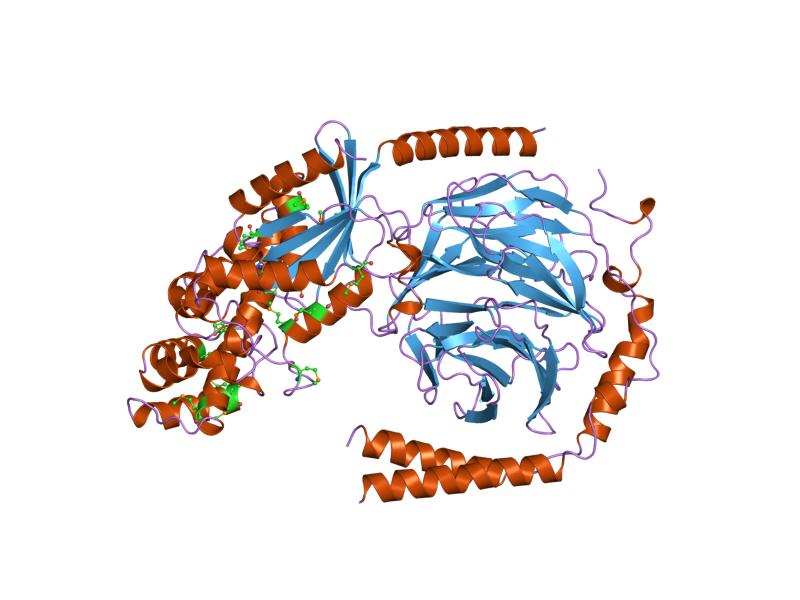
heterotrimeric complex of a gt-alpha/gi-alpha chimera and the gt-beta-gamma subunits
Identifiers
SymbolG-alpha
PfamPF00503
Pfam clanCL0023
InterProIPR001019
SCOP21gia / SCOPe / SUPFAM
CDDcd00066
Available protein structures:
Pfam  structures / ECOD  
PDBRCSB PDB; PDBe; PDBj
PDBsumstructure summary

G alpha subunits are one of the three types of subunit of guanine nucleotide binding proteins, which are membrane-associated, heterotrimeric G proteins.[1]

Background

[edit]

G proteins and their receptors (GPCRs) form one of the most prevalent signaling systems in mammalian cells, regulating systems as diverse as sensory perception, cell growth and hormonal regulation.[2] At the cell surface, the binding of ligands such as hormones and neurotransmitters to a GPCR activates the receptor by causing a conformational change, which in turn activates the bound G protein on the intracellular-side of the membrane. The activated receptor promotes the exchange of bound GDP for GTP on the G protein alpha subunit. GTP binding changes the conformation of switch regions within the alpha subunit, which allows the bound trimeric G protein (inactive) to be released from the receptor, and to dissociate into active alpha subunit (GTP-bound) and beta/gamma dimer. The alpha subunit and the beta/gamma dimer go on to activate distinct downstream effectors, such as adenylyl cyclase, phosphodiesterases, phospholipase C, and ion channels. These effectors in turn regulate the intracellular concentrations of secondary messengers, such as cAMP, diacylglycerol, sodium or calcium cations, which ultimately lead to a physiological response, usually via the downstream regulation of gene transcription. The cycle is completed by the hydrolysis of alpha subunit-bound GTP to GDP, resulting in the re-association of the alpha and beta/gamma subunits and their binding to the receptor, which terminates the signal.[3] The length of the G protein signal is controlled by the duration of the GTP-bound alpha subunit, which can be regulated by RGS (regulator of G protein signalling) proteins or by covalent modifications.[4]

Forms of subunit

[edit]

There are several isoforms of each subunit, many of which have splice variants, which together can make up hundreds of combinations of G proteins. The specific combination of subunits in heterotrimeric G proteins affects not only which receptor it can bind to, but also which downstream target is affected, providing the means to target specific physiological processes in response to specific external stimuli.[5][6] G proteins carry lipid modifications on one or more of their subunits to target them to the plasma membrane and to contribute to protein interactions.

This family consists of the G protein alpha subunit, which acts as a weak GTPase. G protein classes are defined based on the sequence and function of their alpha subunits, which in mammals fall into several sub-types: G(S)alpha, G(Q)alpha, G(I)alpha, transducin and G(12)alpha; there are also fungal and plant classes of alpha subunits.[citation needed] The alpha subunit consists of two domains: a GTP-binding domain and a helical insertion domain (InterProIPR011025). The GTP-binding domain is homologous to Ras-like small GTPases, and includes switch regions I and II, which change conformation during activation. The switch regions are loops of alpha-helices with conformations sensitive to guanine nucleotides. The helical insertion domain is inserted into the GTP-binding domain before switch region I and is unique to heterotrimeric G proteins. This helical insertion domain functions to sequester the guanine nucleotide at the interface with the GTP-binding domain and must be displaced to enable nucleotide dissociation.

References

[edit]
Revisions and contributorsEdit on WikipediaRead on Wikipedia
from Grokipedia
The G alpha subunit (Gα) is a family of guanine nucleotide-binding proteins that form the α subunit of heterotrimeric G proteins, which act as molecular switches to transduce signals from G protein-coupled receptors (GPCRs) into intracellular responses. These proteins cycle between an inactive GDP-bound state and an active GTP-bound state, regulating diverse physiological processes such as hormone signaling, , vision, and through interactions with effectors like adenylyl cyclases and . The discovery of G protein-mediated signal transduction began in the 1960s with studies on hormone-stimulated adenylyl cyclase activity, leading to the identification of a GTP-binding regulatory component in the 1970s. Key contributions came from Martin Rodbell and Alfred G. Gilman, who elucidated the role of G proteins as intermediaries, earning the Nobel Prize in Physiology or Medicine in 1994. Gα subunits are classified into four major families—Gαs/olf, Gαi/o, Gαq/11, and Gα12/13—based on sequence homology and effector specificity, enabling versatile signaling as over half of GPCRs can couple to multiple subtypes. Dysregulation of Gα signaling is implicated in diseases including cancer, hypertension, and neurological disorders, highlighting its therapeutic potential.

Overview

Definition and Role in Signaling

The G alpha subunit (Gα) is the guanine nucleotide-binding component of heterotrimeric G proteins, which are composed of Gα, Gβ, and Gγ subunits and function as key mediators in cellular signal transduction. These proteins are peripherally associated with the inner leaflet of the plasma membrane, where they are anchored through posttranslational lipid modifications such as myristoylation on Gα or prenylation on Gγ, facilitating their proximity to G protein-coupled receptors (GPCRs). In its inactive state, Gα is bound to guanosine diphosphate (GDP) and tightly associated with the Gβγ dimer, forming a stable heterotrimer that remains unresponsive to downstream effectors. Upon activation by an agonist-bound GPCR, which acts as a (GEF), the Gα subunit undergoes a conformational change that promotes the release of GDP and binding of (GTP), thereby switching to an active state. This GTP-bound Gα then dissociates from the Gβγ complex, allowing both the free Gα and Gβγ to independently interact with and modulate various intracellular effectors. For instance, certain Gα subunits stimulate or inhibit to regulate cyclic AMP levels, while others activate to generate second messengers like and diacylglycerol. The signaling is terminated when Gα hydrolyzes GTP to GDP via its intrinsic activity, often enhanced by regulators of signaling (RGS proteins), enabling reassociation with Gβγ. Evolutionarily, Gα subunits are highly conserved across eukaryotes, featuring a core Ras-like domain that is responsible for binding and , underscoring their fundamental role in pathways from to mammals. This domain architecture highlights the ancient origins of G protein-mediated signaling as a versatile for transducing diverse extracellular cues into intracellular responses.

Discovery and Historical Development

The discovery of G alpha subunits emerged from investigations into hormone-mediated regulation of in the 1970s, where researchers identified a GTP-dependent factor essential for across cell membranes. and his team at the demonstrated that (GTP) was required for the activation of by hormones in fat cell membranes, proposing the existence of a "G factor" that coupled receptor activation to enzymatic response. This work laid the groundwork for understanding G proteins as intermediaries in cellular signaling, with early experiments using frog and rat liver membranes to show GTP's role in modulating cyclic AMP production. Parallel efforts by at the resolved the components of this G factor through biochemical techniques. In , Gilman's group purified a GTP-binding protein from rabbit liver membranes that stimulated , identifying it as a heterotrimeric complex dissociable into alpha, beta, and gamma subunits upon activation. Key evidence came from studies on bacterial toxins: was found to ADP-ribosylate the , locking it in an active state and causing persistent stimulation, while similarly modified Gi alpha, inhibiting its function. These toxin effects, combined with resolution of subunit components, confirmed the alpha subunit's central role in GTP and signal termination. For their foundational contributions to discovery, Rodbell and Gilman shared the 1994 in or . Milestones in the 1980s advanced molecular identification of G alpha subunits. Reconstitution assays in lipid vesicles demonstrated GTP dependence for G protein-mediated adenylyl cyclase activation, isolating functional heterotrimers from native tissues. Cloning of G alpha genes began in the mid-1980s. The primary structure of the alpha subunit of (Gtα), a visual , was determined in 1985 from bovine cDNA. In 1986, cDNAs encoding the alpha subunits of Gs, , and Go were cloned and sequenced from rat brain, revealing a diverse family of related isoforms and enabling expression studies to elucidate their functions. This molecular era facilitated isoform-specific functional assays and solidified the GTP/GDP cycle as the core mechanism of G alpha signaling.

Molecular Structure

Domain Organization

The G alpha subunit exhibits a bipartite domain architecture, consisting of a Ras-like GTPase domain (G domain) of approximately 200 residues and an α-helical domain (AH domain) of about 150 residues, connected by two flexible linker regions (linker 1 and linker 2). This organization allows the domains to function semi-independently while coordinating binding and hydrolysis. The G domain shares structural homology with small such as Ras, enabling it to serve as the primary site for (GTP) binding and hydrolysis, while the AH domain acts as a regulatory insert unique to heterotrimeric G proteins. The GTPase domain features a central core of a six-stranded β-sheet flanked by five α-helices (α1–α5), with an additional C-terminal α-helix (αG), forming a compact fold responsible for catalyzing GTP hydrolysis. This domain's resemblance to the Ras GTPase fold underscores its evolutionary conservation across the GTPase superfamily, where the β-sheet and surrounding helices create pockets for nucleotide interaction and magnesium ion coordination. In contrast, the AH domain comprises six α-helices— a long central helix (αA) enveloped by five shorter ones (αB–αF)—that together form a lid-like structure positioned over the GTPase domain, contributing to the occlusion of the bound guanine nucleotide within the interdomain cleft. Crystal structures of G alpha subunits, first elucidated in the 1990s for isoforms such as Giα1 (PDB: 1GP2) and transducin α (PDB: 1TAD), reveal an overall compact fold with dimensions of approximately 50 Å × 40 Å, where the domains enclose the nucleotide-binding site. The linker regions impart flexibility, permitting the AH domain to open relative to the GTPase domain during nucleotide exchange, a motion critical for receptor-catalyzed activation without disrupting the core fold. For membrane association, the N-terminal region of the G alpha subunit undergoes post-translational lipid modifications, including myristoylation at the glycine residue in Gi/o family members or palmitoylation at cysteine residues in Gs and Gq/11 families, anchoring the protein to the plasma membrane.

Functional Motifs and Binding Sites

The G alpha subunit contains several conserved sequence motifs essential for its function as a GTPase and signal transducer. The P-loop, also known as the Walker A motif with the consensus sequence GXXXXGK[S/T], is located in the Ras-like GTPase domain and coordinates the β- and γ-phosphates of GTP or GDP through interactions with a bound Mg²⁺ ion, facilitating nucleotide binding and hydrolysis. The NKXD motif, situated in the Switch II region, provides specificity for guanine nucleotides by forming hydrogen bonds between the aspartate residue and the guanine base, ensuring selective binding over other nucleotides. Additionally, the DVGGQ sequence within the Switch II region contributes to the conformational dynamics of the GTPase domain, while the alpha-helical (AH) domain features conserved helices (αA–αF) that stabilize the overall structure and participate in nucleotide occlusion. The GTP/GDP binding pocket resides in a cleft between the and AH domains, rendering it largely solvent-inaccessible in the GDP-bound state. This pocket encompasses the P-loop for phosphate coordination and the Switch I (residues ~35–50) and Switch II (~60–80) regions, which undergo significant conformational rearrangements upon GTP binding: Switch I repositions to contact the γ-phosphate, while Switch II shifts to disrupt interactions with the Gβγ subunit. Switch III (~α5 region) further modulates these changes, linking state to downstream signaling. These switches are highly conserved across G alpha families, enabling precise allosteric control. Receptor contact sites on the G alpha subunit primarily involve the C-terminal α5 helix, which inserts into the intracellular cavity of activated GPCRs to stabilize the nucleotide-free intermediate and promote GDP release. Complementary sites include the intracellular loops of the GPCR interacting with the αN–β1 junction and β2–β3 loop of G alpha, while residues at the G alpha–Gβγ interface, such as those in the αN helix and Switch I, prevent premature dissociation until receptor engagement. Effector interaction surfaces are centered on the Switch I/II regions and α-helical insertions in the GTPase domain, which expose binding interfaces upon GTP binding. For instance, in the Gs family, the α5 helix and adjacent residues (e.g., Arg389) directly contact the catalytic domain of , stimulating its activity through conformational clamping. These surfaces vary slightly across isoforms to confer specificity, with conserved elements ensuring broad compatibility with effectors like in Gq.54890-5/fulltext) Mutations in these motifs often disrupt normal cycling, leading to pathological . A prominent example is the Q227L substitution in the Switch II region of Gs alpha, which impairs intrinsic activity by sterically hindering the γ-phosphate orientation for , resulting in constitutive signaling and oncogenic potential in endocrine tumors.

Activation and GTP/GDP Cycle

In the inactive state, the Gα subunit exists as part of a complex (Gαβγ), where Gα is bound to (GDP) with high affinity, stabilized by its interaction with the Gβγ heterodimer and association with the (GPCR) in the absence of . This GDP-bound form maintains low affinity for downstream effectors, ensuring signal quiescence. Activation begins when an agonist-bound GPCR, functioning as a (GEF), engages the heterotrimer, inducing conformational changes in Gα—such as a rotation of its α-helical domain relative to the Ras-like domain—that weaken GDP binding and promote its release. The nucleotide-free Gα then rapidly binds (GTP), which is abundant in the , due to GTP's higher cellular concentration compared to GDP. GTP binding triggers a conformational rearrangement in Gα's switch I, II, and III regions, reordering these motifs to expose binding sites and reduce affinity for Gβγ, leading to dissociation of the complex into active Gα-GTP and free Gβγ subunits. During the signaling phase, the lifetime of active Gα-GTP serves as a molecular timer, with its duration governed by the subunit's intrinsic activity, which hydrolyzes GTP to GDP plus inorganic (Pi). Hydrolysis rates vary by isoform, typically ranging from 0.1 min⁻¹ for Gαz to 4 min⁻¹ for most classes at physiological temperatures, corresponding to half-lives of seconds to minutes. This intrinsic involves a catalytic residue (Gln cat) that positions a water molecule for nucleophilic attack on the γ-phosphate of GTP, facilitated by an residue (Arg cat) that stabilizes the . Deactivation occurs upon GTP hydrolysis, which returns Gα to its GDP-bound conformation with high affinity for Gβγ, enabling reassociation into the inactive heterotrimer and termination of the signal. This cycle thus regulates the temporal precision of G protein-mediated signaling, with the nucleotide exchange and steps dictating the and duration of cellular responses.

Effector Interactions

Upon activation by GTP binding, the Gα subunit undergoes a conformational change that dissociates it from the Gβγ complex and exposes specific interaction surfaces for downstream effectors, thereby propagating the signal from (GPCRs). This GTP-bound state of Gα serves as the primary mediator of effector regulation, with binding typically occurring through hotspots on the Gα surface that become accessible post-activation. Gα subunits exhibit diverse effector interactions depending on their family classification. For instance, Gαs primarily activates (AC) isoforms, leading to increased cyclic AMP (cAMP) production, while Gαi inhibits AC activity, reducing cAMP levels, and also modulates ion channels such as G protein-gated inwardly rectifying potassium (GIRK) channels. In contrast, Gαq family members stimulate C-β (PLC-β), which hydrolyzes (PIP2) into inositol 1,4,5-trisphosphate (IP3) and diacylglycerol (DAG). These interactions highlight the role of Gα in tailoring to specific cellular responses. The binding mechanisms involve key structural elements on Gα, such as the α5 helix and the TCAT motif, which undergo rearrangement in the GTP-bound form to contact effector proteins. For example, in the Gαs-AC interaction, the α5 helix of Gαs inserts into the catalytic cleft of AC, stabilizing an active conformation through direct contacts with residues in the C1 and C2 domains of the enzyme. This allosteric engagement enhances AC catalysis, with similar hotspot exposures observed in Gαq-PLC-β binding, where the switch II region of Gαq interfaces with the effector to promote PIP2 hydrolysis. Specificity is family-dependent, arising from sequence variations in these regions that dictate preferential effector recognition; Gαs and Gαi compete at overlapping but distinct sites on AC, while Gαq engages PLC-β via unique electrostatic interactions. Although free Gβγ subunits can independently activate certain effectors, such as phosphoinositide 3-kinase (PI3K), the primary focus of Gα interactions remains its direct modulation of enzymes and channels to ensure precise signal fidelity.

Classification and Diversity

Major Families

G alpha subunits are classified into four major phylogenetic and functional families based on sequence homology in their GTPase domains and shared effector interaction profiles. These families—Gαs/olf, Gαi/o/t/z, Gαq/11, and Gα12/13—arose through ancient gene duplication events in metazoan evolution, with further diversification occurring via two rounds of whole-genome duplication (2R WGD) in early vertebrates, leading to paralog retention and subfunctionalization. Within each family, members exhibit greater than 50% amino acid identity in the GTPase domain, enabling conserved structural features while allowing specialized roles. The Gαs/olf family comprises two members: Gαs, encoded by the GNAS gene, and Gαolf, encoded by GNAL. This stimulatory family primarily regulates adenylyl cyclase to increase cyclic AMP (cAMP) levels, influencing processes like hormone-mediated signaling. Gαolf represents a post-2R WGD divergence from Gαs, adapting for olfactory-specific functions in sensory neurons. The largest family, Gαi/o/t/z, includes eight members: Gαi1 (GNAI1), Gαi2 (GNAI2), Gαi3 (GNAI3), Gαo (GNAO1), Gαz (GNAZ), and the transducins Gαt1 (GNAT1) and Gαt2 (GNAT2), along with gustducin (Gαgust, GNAT3). These inhibitory subunits generally suppress adenylyl cyclase activity to decrease cAMP or modulate ion channels and other effectors. Notably, transducins within this family specialize in phototransduction for vision, highlighting subfamily adaptations from ancestral duplications. The family expanded through tandem duplications predating the 2R WGD, with Gαz arising via retrotransposition in early vertebrates. The Gαq/11 family consists of four members: Gαq (GNAQ), Gα11 (GNA11), Gα14 (GNA14), and Gα15/16 (GNA15). These subunits activate phospholipase C-β, generating (IP3) and diacylglycerol to mobilize intracellular calcium (Ca²⁺). Phylogenetic analysis traces this family to a pre-2R , with duplications yielding the GNAQ/GNA11 and GNA14/GNA15 pairs. Finally, the Gα12/13 family has two members: Gα12 (GNA12) and Gα13 (GNA13), which regulate Rho guanine exchange factors (RhoGEFs) to influence cytoskeletal dynamics and cell morphology. This family likely originated from a retrotransposition event in early metazoans, diverging early from other Gα lineages.

Specific Isoforms and Variants

The Gs family includes two primary isoforms: Gαs, encoded by the gene, and Gαolf. Gαs is ubiquitously expressed across tissues and serves as a key stimulator of , thereby elevating intracellular cAMP levels to mediate diverse signaling pathways. It exists in splice variants, notably the long form (GαsL) and short form (GαsS), which differ by a 15-amino-acid insertion in GαsL at position 72 between the Ras-like domain and the α-helical domain; this insertion results in GαsL exhibiting lower GDP-binding affinity compared to GαsS, influencing receptor coupling efficiency at the . In contrast, Gαolf is restricted to olfactory sensory neurons in the , sharing high sequence similarity with Gαs but displaying faster activation kinetics to enhance rapid olfactory . Within the Gi/o family, the isoforms Gαi1, Gαi2, and Gαi3 are widely expressed and function primarily to inhibit activity, rendering them sensitive to ; Gαi2, for instance, plays a specialized role in insulin signaling regulation. Gαo predominates in neuronal tissues, providing broad inhibitory effects on and featuring splice variants GαoA and GαoB that differ in their C-terminal sequences, which modulate interactions with D2 receptors. The transducin isoforms, Gαt1 and Gαt2, are specialized for phototransduction: Gαt1 in rod photoreceptors and Gαt2 in photoreceptors, where activated Gαt·GTP binds and stimulates 6 (PDE6) to hydrolyze cGMP, thereby closing cGMP-gated channels essential for light detection. Gαz, expressed in neurons and platelets, exhibits unusually slow intrinsic activity and inhibits , contributing to prolonged signaling in processes like platelet aggregation. The Gq/11 family comprises Gαq and Gα11, which are broadly distributed and activate C-β (PLC-β) to generate and diacylglycerol, initiating calcium mobilization; these isoforms share high sequence homology but display subtle differences in GPCR coupling preferences. The related isoforms Gα14 and Gα16 exhibit tissue-restricted expression—Gα14 in , , and liver, and Gα16 (also known as Gα15 in mice) in hematopoietic cells—and similarly stimulate PLC-β, though with narrower functional scopes compared to Gαq and Gα11. In the G12/13 family, Gα12 and Gα13 share approximately 67% amino acid sequence identity and both promote RhoA activation through interaction with the p115RhoGEF, influencing cytoskeletal dynamics; however, Gα13 demonstrates greater potency in this pathway and shows preferential to certain GPCRs, such as protease-activated receptor 1 (PAR1). Gα12 exists in four isoforms varying in length (381, 305, 322, or 364 ), while Gα13 has two, including a shorter N-terminal variant, though functional distinctions among these remain less characterized beyond overall family roles.

Regulation

Intrinsic GTPase Activity

The intrinsic GTPase activity of Gα subunits hydrolyzes GTP to GDP + Pi, thereby deactivating the subunit and limiting the duration of G protein-mediated signaling. This enzymatic process relies on a catalytic mechanism where a conserved residue in the switch II region—such as Gln204 in Gαi1 or the Ras-homologous Gln61—orients a hydrolytic for inline nucleophilic attack on the γ-phosphate of GTP, forming a loose dissociative . The developing negative charge in this is stabilized by an intrinsic finger provided by the Gα subunit itself (e.g., Arg178 in Gαi1 or Arg201 in Gαs), which interacts with the β-γ bridging oxygen; this is positioned by the α-helical (AH) domain. A Mg²⁺ , coordinated to the β- and γ-phosphates and key active-site residues, further facilitates the reaction by enhancing GTP affinity and polarizing the γ-phosphate for departure. Basal catalytic rates (k_cat) for GTP hydrolysis vary across Gα families but are generally slow, on the order of 0.033–0.067 s⁻¹ (2–4 min⁻¹) at 30°C for Gαs, Gαi, and (Gαt), with Gαt exhibiting rates up to the higher end under physiological Mg²⁺ concentrations that optimize phosphate coordination. These rates reflect the unstimulated, autonomous activity inherent to the Gα , where Mg²⁺ binding stabilizes the while enabling the transition to . The switch II region's DXXGQ motif plays a pivotal role in this process, as the glutamine coordinates the nucleophilic water and the motif's conformational flexibility accommodates the ; disruptive mutations, such as R201C in Gαs (targeting the finger), abolish activity by preventing charge stabilization, resulting in constitutive . Conformationally, GTP hydrolysis is promoted when the AH domain adopts a closed orientation relative to the Ras-like GTPase domain, aligning the intrinsic arginine finger with the for effective transition-state stabilization. In the nucleotide-free open state during GDP/GTP exchange, the AH domain separates, displacing catalytic elements and inhibiting hydrolysis to favor binding. Compared to s like Ras, which exhibit much slower intrinsic rates (~0.0005 s⁻¹) without external GAPs, Gα hydrolysis is accelerated by the AH domain's integrated structural contribution to , though the overall process remains rate-limited relative to fully GAP-stimulated turnover.

Modulatory Proteins and Factors

Regulators of G protein signaling (RGS) proteins serve as GTPase-activating proteins (GAPs) for Gα subunits, dramatically accelerating the intrinsic GTP rate to terminate signaling. For instance, RGS4 enhances GTP on Gi/o family Gα subunits by up to 1000-fold through stabilization of the , involving mimicry of an arginine finger mechanism that positions catalytic residues for efficient . This GAP activity is mediated by the RGS domain, which binds to the switch regions of activated Gα, promoting domain closure and positioning essential for nucleophilic attack on GTP. G protein-coupled receptor kinases (GRKs) indirectly modulate Gα activity by phosphorylating the activated GPCR on serine and threonine residues in the C-terminal tail and intracellular loops. This phosphorylation recruits β-arrestins, which bind the receptor and sterically hinder further Gα interaction, thereby terminating Gα activation and promoting receptor desensitization. GRK-mediated phosphorylation is agonist-dependent, ensuring rapid signal shutoff specifically at stimulated receptors. Accessory factors such as the Gβγ subunits stabilize the inactive Gα-GDP conformation by increasing the affinity of Gα for GDP more than 100-fold, preventing premature nucleotide exchange and maintaining the heterotrimeric complex in a quiescent state. Additionally, certain effectors exhibit activity; for example, C-β (PLC-β) acts as a GAP for Gq family Gα subunits, accelerating by over 1000-fold and enabling rapid cycling between activation and deactivation during signaling. Recent research has identified receptor-independent regulators, such as C-terminal peptides from alpha-1-antitrypsin (e.g., mAAT-C 1-17), which bind directly to GDP-bound Gα13 to stabilize its active conformation and enhance interactions with effectors like p115-RhoGEF, without altering the cycle. Pharmacological modulators like bacterial toxins target specific Gα subtypes to alter activity. ADP-ribosylates the Gsα subunit at Arg201 in the GTPase domain, inhibiting intrinsic activity and locking Gsα in the GTP-bound, active state to persistently stimulate . In contrast, ADP-ribosylates Gi/oα subunits at a cysteine residue four from the C-terminus, preventing receptor-G protein coupling and blocking activation without affecting the GTPase cycle directly. Allosteric regulators, including phospholipids and ions, influence Gα conformational dynamics by modulating interdomain interactions between the helical and GTPase domains. For example, phospholipids such as (PIP2) and ions like Mg²⁺ promote domain closure in the GDP-bound state, enhancing nucleotide affinity and stability, while also tuning GAP interactions in a lipid-dependent manner.

Biological and Physiological Roles

Involvement in Key Pathways

G alpha subunits play pivotal roles in transducing signals from G protein-coupled receptors (GPCRs) to diverse downstream effectors, thereby modulating key cellular processes through specific signaling cascades. The Gs family of G alpha subunits, upon activation by GTP binding, directly stimulates adenylyl cyclase isoforms, catalyzing the conversion of ATP to cyclic AMP (cAMP). Elevated cAMP levels then activate protein kinase A (PKA), which phosphorylates target proteins to regulate processes such as gene expression via CREB transcription factor and glycogenolysis through activation of phosphorylase kinase. In contrast, Gq family subunits activate phospholipase C-β (PLC-β), which hydrolyzes (PIP2) into inositol 1,4,5-trisphosphate (IP3) and diacylglycerol (DAG). IP3 binds to receptors on the (ER), triggering the release of Ca²⁺ into the , which in turn activates calcium-dependent effectors like (PKC) and calmodulin-dependent kinases, amplifying signals for contraction, secretion, and proliferation. The G12/13 family engages Rho guanine nucleotide exchange factors (RhoGEFs), such as p115RhoGEF and LARG, to promote GTP loading on , a that reorganizes the . Activated RhoA then stimulates Rho-associated kinase (ROCK), leading to the formation of and focal adhesions, which are essential for and morphological changes. Gi/o family subunits contribute to modulation, primarily through their dissociated Gβγ subunits, which inhibit voltage-gated Ca²⁺ channels and activate inwardly rectifying K⁺ (GIRK) channels, thereby fine-tuning membrane excitability. This modulation dampens release and hyperpolarizes cells, respectively. Cross-talk between G alpha families enhances signaling specificity; for instance, Gi-mediated inhibition of counteracts Gs-stimulated cAMP production, as seen in the regulation of where parasympathetic Gi signaling opposes sympathetic Gs effects. Feedback mechanisms further refine these pathways, with PKA phosphorylating G alpha subunits to modulate their activity and prevent overstimulation, thereby maintaining signaling .

Expression Patterns and Tissue Specificity

The Gαs subunit, encoded by the gene, exhibits ubiquitous expression across nearly all human tissues, where it is biallelically active and plays a foundational role in regulating cyclic AMP (cAMP) levels through stimulatory signaling. Similarly, members of the Gαi family, including GNAI1, GNAI2, and GNAI3, demonstrate widespread distribution in diverse tissues, enabling inhibitory modulation of and maintenance of basal cAMP . For instance, GNAI2 mRNA levels are particularly elevated in the , as evidenced by transcriptomic data from the GTEx database, highlighting its prominence in endocrine tissues alongside moderate expression in and . Certain Gα isoforms display enriched expression in neural tissues, correlating with specialized roles in neuronal signaling. Gαo, encoded by GNAO1, is highly abundant in the , constituting up to 0.5% of membrane proteins and showing elevated levels in regions such as the hippocampus, , and cortex, where it supports modulation in neurons. Gαz (GNAZ) likewise predominates in tissue, particularly in neuronal populations involved in synaptic transmission. Gαolf, encoded by GNAL, is predominantly expressed in the , facilitating odorant , with additional presence in . Sensory systems feature isoform-specific expression patterns tailored to transduction processes. In the , Gαt1 (GNAT1) is restricted to rod photoreceptors, while Gαt2 (GNAT2) localizes to photoreceptors, both essential for phototransduction by coupling to opsins and modulating cGMP levels. Gustducin (GNAT3), a Gαi-like subunit, is selectively expressed in type II cells within , mediating bitter, sweet, and detection through G protein-coupled receptors. Hematopoietic and contractile tissues also exhibit targeted Gα expression. Gα13 (GNA13) is notably present in platelets, where it contributes to shape change and aggregation responses to stimuli like . Gαq (GNAQ) shows strong expression in cells, supporting contraction via activation in vascular and visceral tissues. Developmental regulation further shapes Gα expression through , particularly at the locus. The paternal allele is silenced in specific tissues, leading to maternal-biased Gsα expression; for example, in the and , this imprinting ensures monoallelic activity, influencing hormone responsiveness during development and adulthood. Such tissue-specific imprinting contrasts with biallelic expression in other sites like lymphocytes, underscoring the locus's role in fine-tuning Gsα levels across physiological contexts.

Pathophysiology

Associated Diseases and Mutations

Mutations in the gene encoding the Gsα subunit are associated with several endocrine disorders due to altered signaling. Activating mutations, such as R201H and R201C, known as gsp mutations, inhibit the intrinsic activity of Gsα, leading to constitutive activation of and elevated cyclic AMP levels. These somatic mutations are found in approximately 40% of growth hormone-secreting pituitary adenomas, contributing to uncontrolled hormone secretion and . In the context, similar activating mutations cause McCune-Albright syndrome, a disorder characterized by , café-au-lait spots, and , resulting from persistent Gsα signaling in affected tissues. In contrast, inactivating mutations in lead to loss-of-function of Gsα, particularly when maternally inherited, causing type 1a (PHP1a) and Albright hereditary osteodystrophy (AHO). These mutations impair Gsα coupling to G protein-coupled receptors, resulting in end-organ resistance to hormones like , with clinical features including , , , and subcutaneous ossifications. Paternally inherited mutations typically manifest as pseudo- (PPHP), featuring AHO without hormone resistance, highlighting the imprinted expression of . Defects in the Gi/o family, particularly GNAO1 mutations, are linked to neurodevelopmental disorders. Heterozygous loss-of-function or gain-of-function mutations in GNAO1 cause a spectrum of early-onset epileptic encephalopathies and hyperkinetic , including , , and , often accompanied by developmental delay and . Acquired disruption of Gi/o signaling occurs via from , which ADP-ribosylates Giα subunits, preventing their inhibition of and contributing to the severe coughing paroxysms in by dysregulating respiratory neural pathways. In the Gq/11 family, activating mutations in GNAQ and GNA11, such as Q209L (in GNAQ), constitutively activate downstream effectors like by blocking GTP hydrolysis, promoting oncogenic signaling. These mutations are present in over 80% of uveal melanomas, driving tumor initiation, proliferation, and through pathways including MAPK and PKC. For the G12/13 family, inactivating alterations in GNA13, including deletions and loss-of-function mutations, paradoxically promote cancer progression. In germinal center-derived B-cell lymphomas like , GNA13 loss impairs and enhances survival during , facilitating lymphomagenesis and potentially ; similar effects are observed in solid tumors where GNA13 deficiency disrupts RhoA-mediated suppression of invasion. Acquired modifications of Gsα also underlie infectious diseases, notably from , which ADP-ribosylates Gsα at Arg201, locking it in the GTP-bound active state and causing persistent activation in intestinal cells. This leads to massive secretion and watery , the hallmark of , with fluid losses up to 20 liters per day in severe cases.

Therapeutic Targeting

Therapeutic targeting of G alpha subunits primarily involves indirect modulation through G protein-coupled receptors (GPCRs) or direct intervention at the G alpha level to treat various diseases associated with dysregulated signaling. GPCR ligands, such as agonists and antagonists, control G alpha activation by altering receptor conformation and G protein coupling. For instance, beta-blockers like metoprolol and antagonize beta-adrenergic receptors coupled to the , reducing cyclic AMP production and in chronic therapy. Direct inhibitors targeting G alpha subunits have been developed, including toxin-based approaches. Pertussis toxin, which ADP-ribosylates and inhibits Gi/o alpha subunits, has been used experimentally to block Gi-mediated pathways in models of . Small molecule inhibitors represent a key strategy for direct G alpha modulation. BIM-46174 acts as a alpha inhibitor by trapping the subunit in its nucleotide-free state, exhibiting anticancer activity against multiple human lines, including drug-resistant variants. Similarly, YM-254890 selectively inhibits /11 alpha by preventing GDP release, showing antithrombotic effects in rat models of arterial at doses of 0.03 mg/kg intravenously. Efforts to mimic regulators of signaling (RGS) proteins, which accelerate G alpha activity, include small molecules designed to enhance hydrolysis and terminate signaling, with potential applications in cardiovascular and neurological disorders. Gene therapy approaches target G alpha mutations directly. CRISPR-based editing of GNAS mutations, which encode the Gs alpha subunit, is under investigation for pseudohypoparathyroidism, with ex vivo protocols validating correction of imprinting defects to restore hormone responsiveness. Challenges in G alpha targeting include achieving selectivity amid structural similarities across families, as seen with Gq inhibitors like YM-254890, which require careful dosing to avoid off-target effects on blood pressure. Emerging strategies focus on allosteric modulators that bind switch regions of G alpha subunits to alter G protein selectivity and downstream signaling, with compounds like SBI-553 demonstrating potential in switching neurotensin receptor coupling. As of 2025, research into G12/13 alpha inhibitors for fibrosis pathways, often via RhoA modulation, is advancing toward clinical evaluation in renal and pulmonary contexts.

References

Add your contribution
Related Hubs
User Avatar
No comments yet.